A complete issue · 36 pages · 1931
Life — September 11, 1931
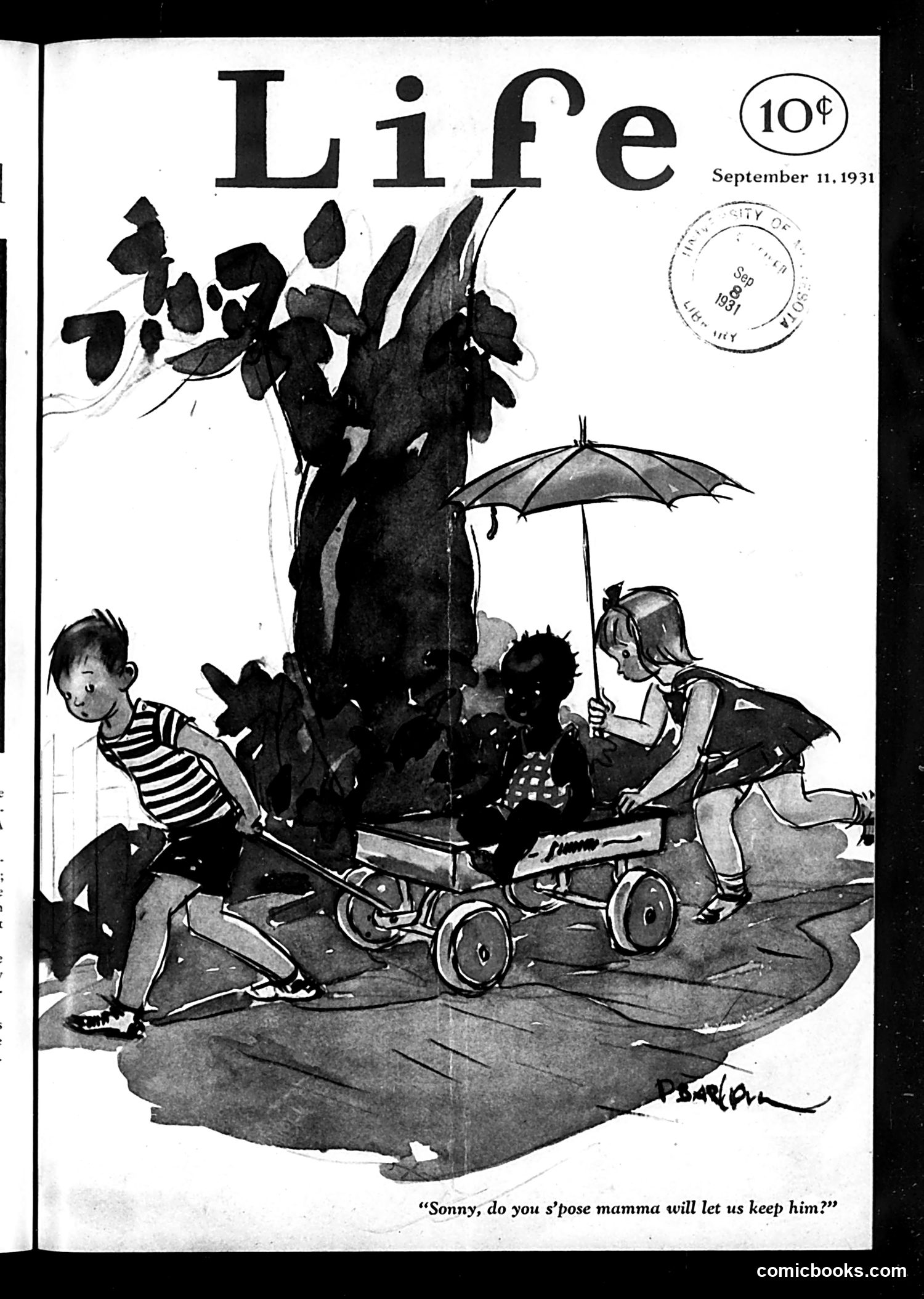
# Life Magazine, September 11, 1931 This cover illustration shows children playing with toy vehicles beneath a wilted tree during what appears to be rainy weather. One child holds an umbrella while others sit in small pedal cars or similar toys. The caption reads: "Sonny, do you s'pose mamma will let us keep him?" The cartoon likely satirizes Depression-era parenting and economic hardship. The wilted, dying tree and gloomy weather establish a bleak mood. The children's question suggests they've found something or someone (possibly a stray animal or homeless person, unclear from the image alone) and are hoping their mother will allow them to keep it despite financial constraints. The joke plays on Depression-era scarcity and parents' difficult choices about what they could afford to support.
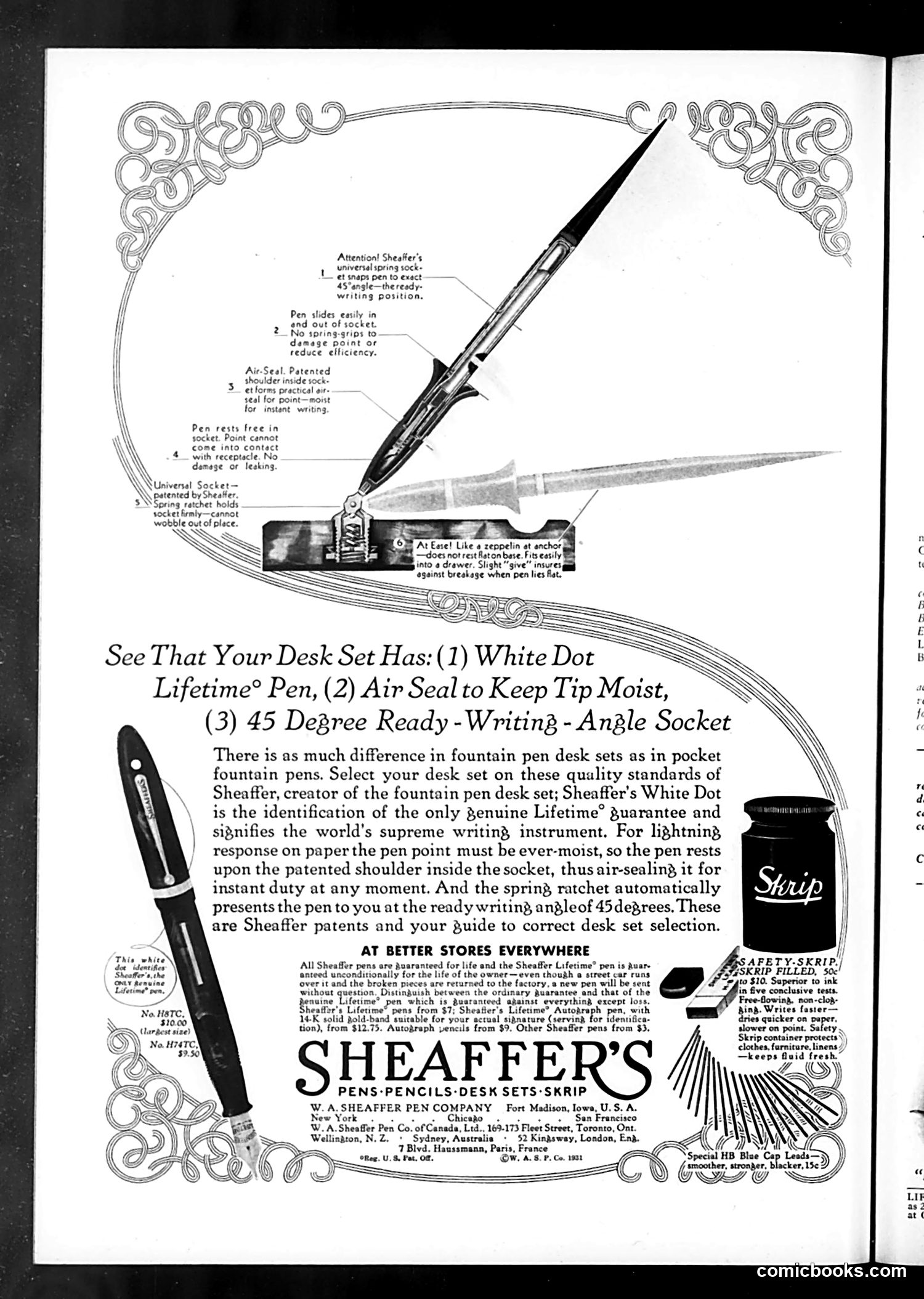
# Content Analysis This is **not a political cartoon or satirical content**—it's a full-page **advertisement for Sheaffer's fountain pens and desk sets**, circa early 20th century. The ad features detailed technical illustrations of a Sheaffer fountain pen with numbered callouts explaining features like the "Air-Seal" cap, the 45-degree writing angle socket, and the pen's ability to keep the tip moist. A small pen image on the left shows the "White Dot" branding. The text emphasizes quality standards and patented design features, positioning Sheaffer's as superior to competitors. Small product images show the pen itself and a "Safety Scrip" desk set component. The ornate decorative border is typical 1920s-era magazine design. This is purely commercial marketing, not satire.
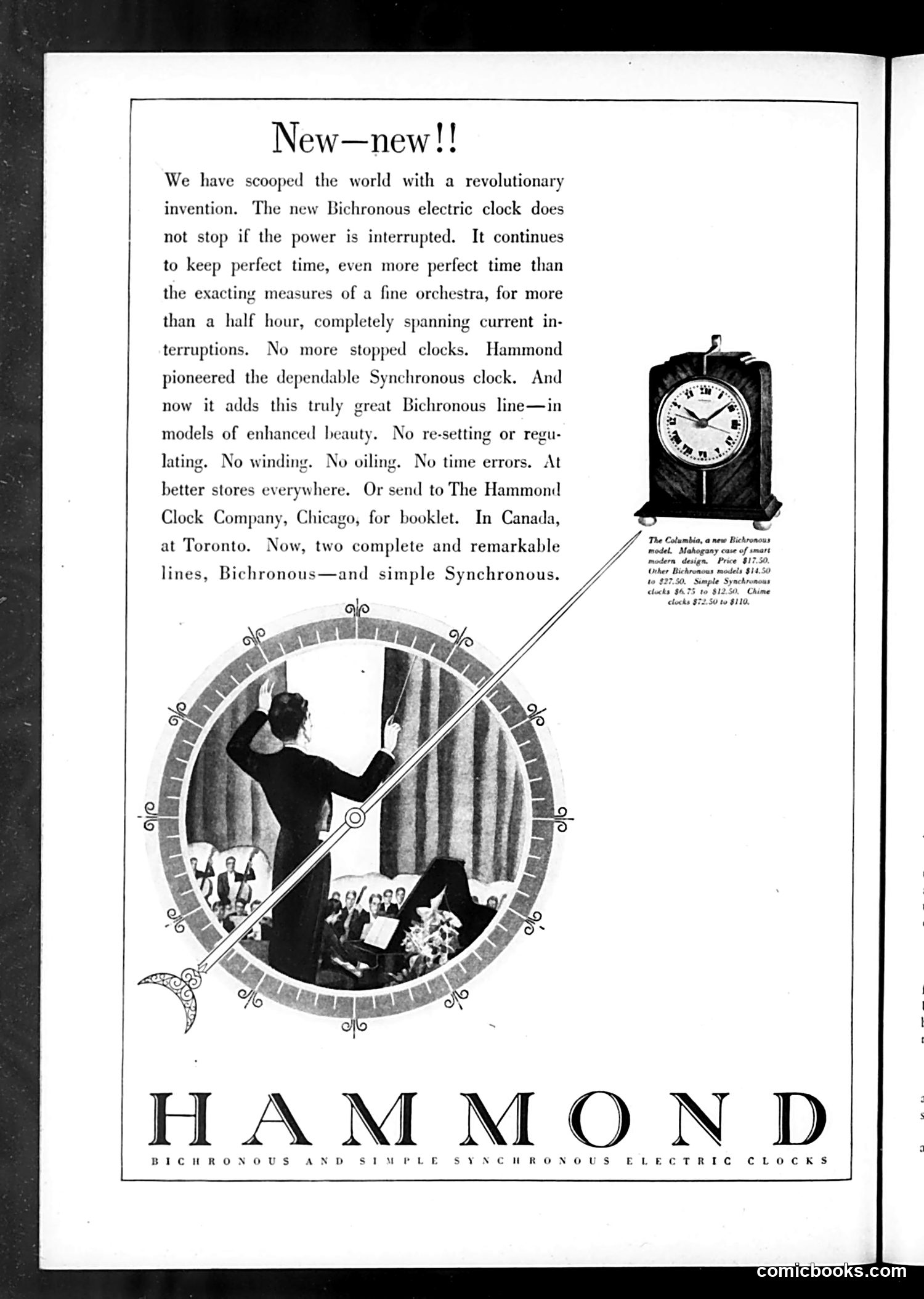
# Hammond Electric Clocks Advertisement This is a **product advertisement**, not political satire. It promotes Hammond's new "Bichronous" electric clocks, which represent a technological advancement: they continue keeping time even if power interrupts, maintaining accuracy for over half an hour without electricity. The surreal imagery depicts a conductor leading an orchestra inside a giant clock face, visualizing the advertisement's claim that these clocks keep "perfect time, even more perfect time than the exacting measures of a fine orchestra." The accompanying table-model clock shows pricing ($14.50-$37.50 for Bichronous; $9.75-$12.50 for Synchronous models). This illustrates early 20th-century advertising strategy: using artistic imagery and bold claims about technological superiority to market consumer electronics.
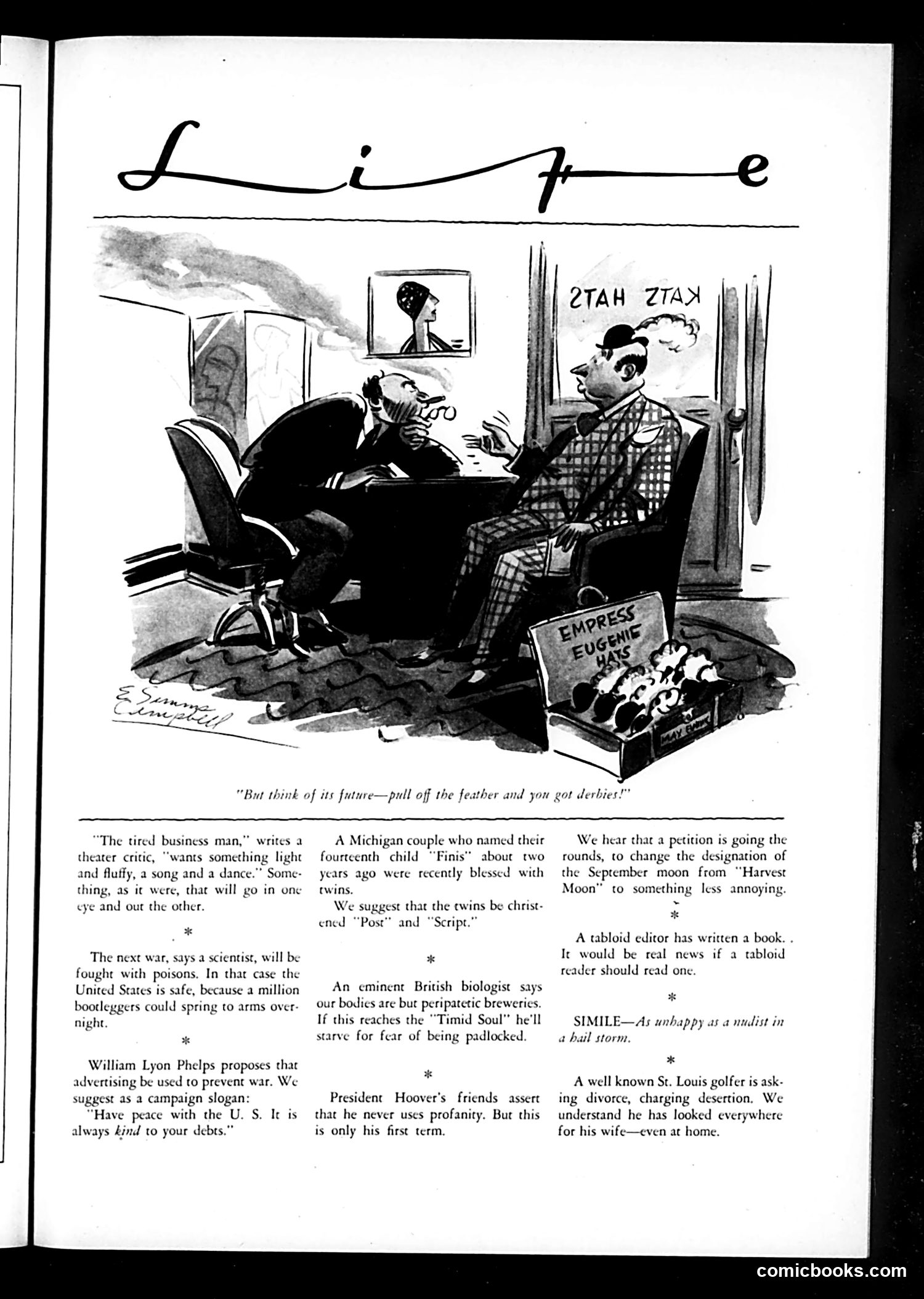
# "Life" Page Analysis The main cartoon depicts two men at a desk, with a box labeled "EMPRESS EUGENE'S HATS" visible. The caption reads: "But think of its future—pull off the feather and you got derbies!" This appears to be satirizing early 20th-century fashion trends. The joke concerns women's elaborate hats (associated with Empress Eugénie, wife of Napoleon III) being so extravagant that removing decorative feathers would leave plain men's hats underneath—mocking the excess of women's millinery fashion. The surrounding text contains brief miscellaneous humor items typical of *Life* magazine's format, including quips about business, science predictions, naming conventions, and marital situations. The overall page exemplifies the magazine's satirical commentary on contemporary American society and fashion.
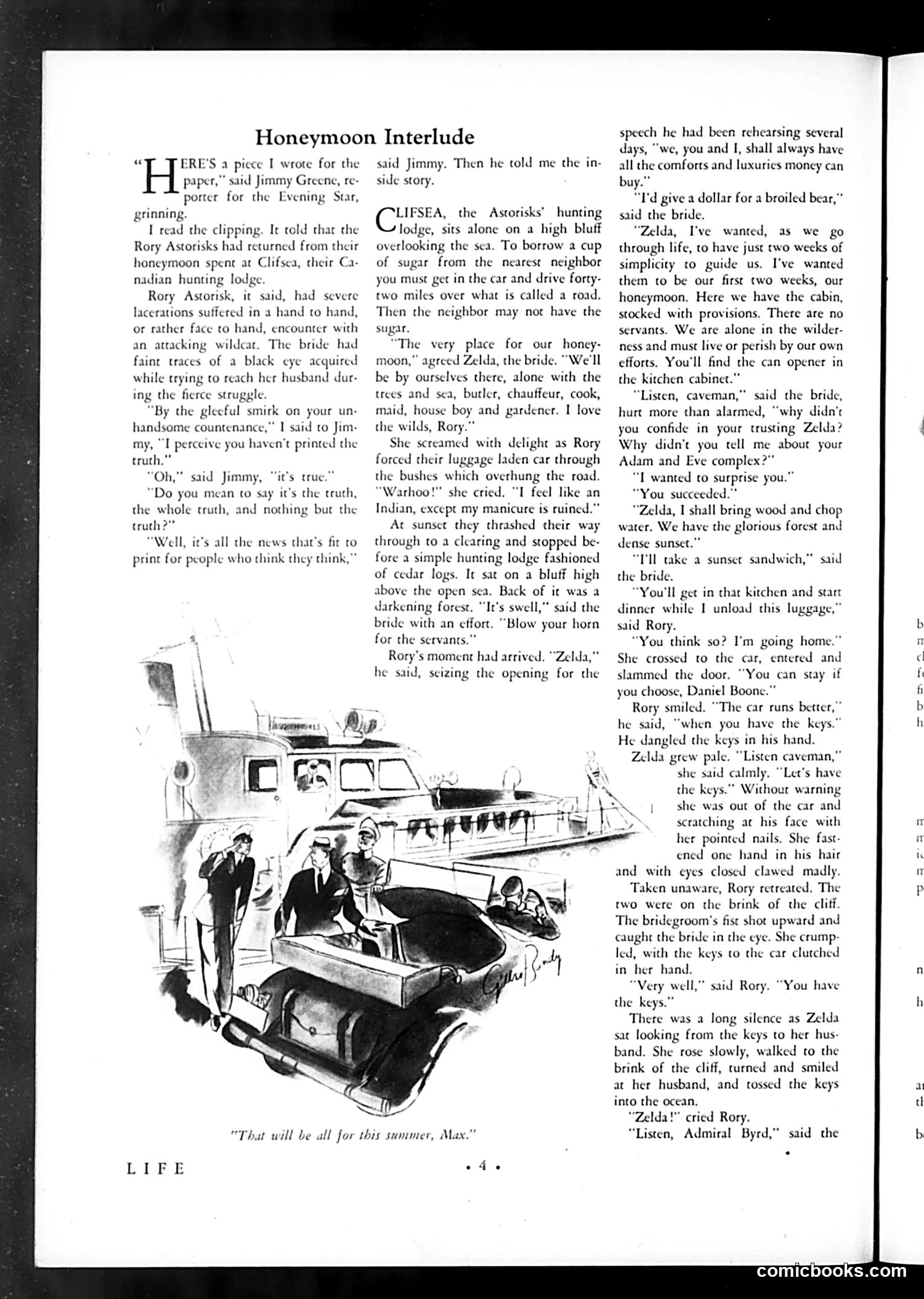
# "Honeymoon Interlude" This is a humorous short story with an accompanying illustration, not a political cartoon. The narrative satirizes newlywed dynamics through a domestic conflict: a bride and groom arrive at their honeymoon lodge, where the groom (Roy) prioritizes going home over staying, and the bride (Zelda) responds by throwing the car keys into the ocean in anger. The satire targets early 20th-century marriage expectations—the bride's desire for romantic isolation versus the groom's casual indifference, and the bride's dramatic, vengeful response to rejection. The illustration shows their car and boat at a coastal lodge, visualizing the story's setting. The piece appears to be light social commentary on honeymoon culture and marital conflict rather than political satire.
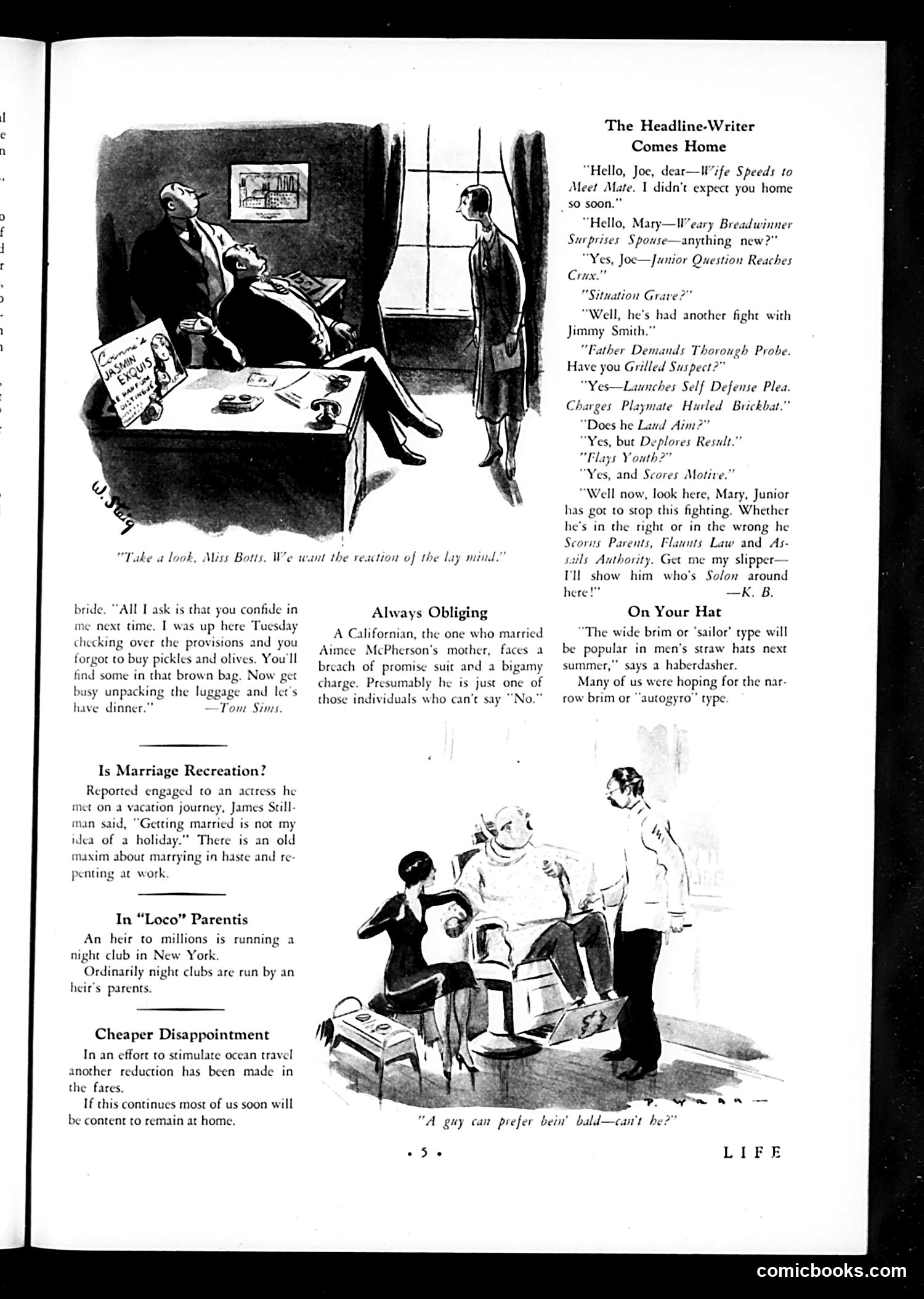
# "The Headline-Writer Comes Home" This satirical piece mocks sensationalist newspaper headlines of the era. The cartoon shows a husband returning home, where his wife greets him with domestic news. Rather than conversing normally, he responds by mentally translating her everyday remarks into exaggerated tabloid headlines—"Wife Speeds to Meet Mate," "Weary Breadwinner Surprises Spouse," "Junior Question Reaches Crisis," etc. The satire targets how headline-writers of the period reduced human experience to dramatic, inflated language. The joke is that this professional deformation has so consumed the man that he cannot perceive ordinary life without sensationalizing it. The accompanying brief items ("Always Obliging," "Is Marriage Recreation?") continue this theme of satirizing contemporary social customs and newspaper culture.
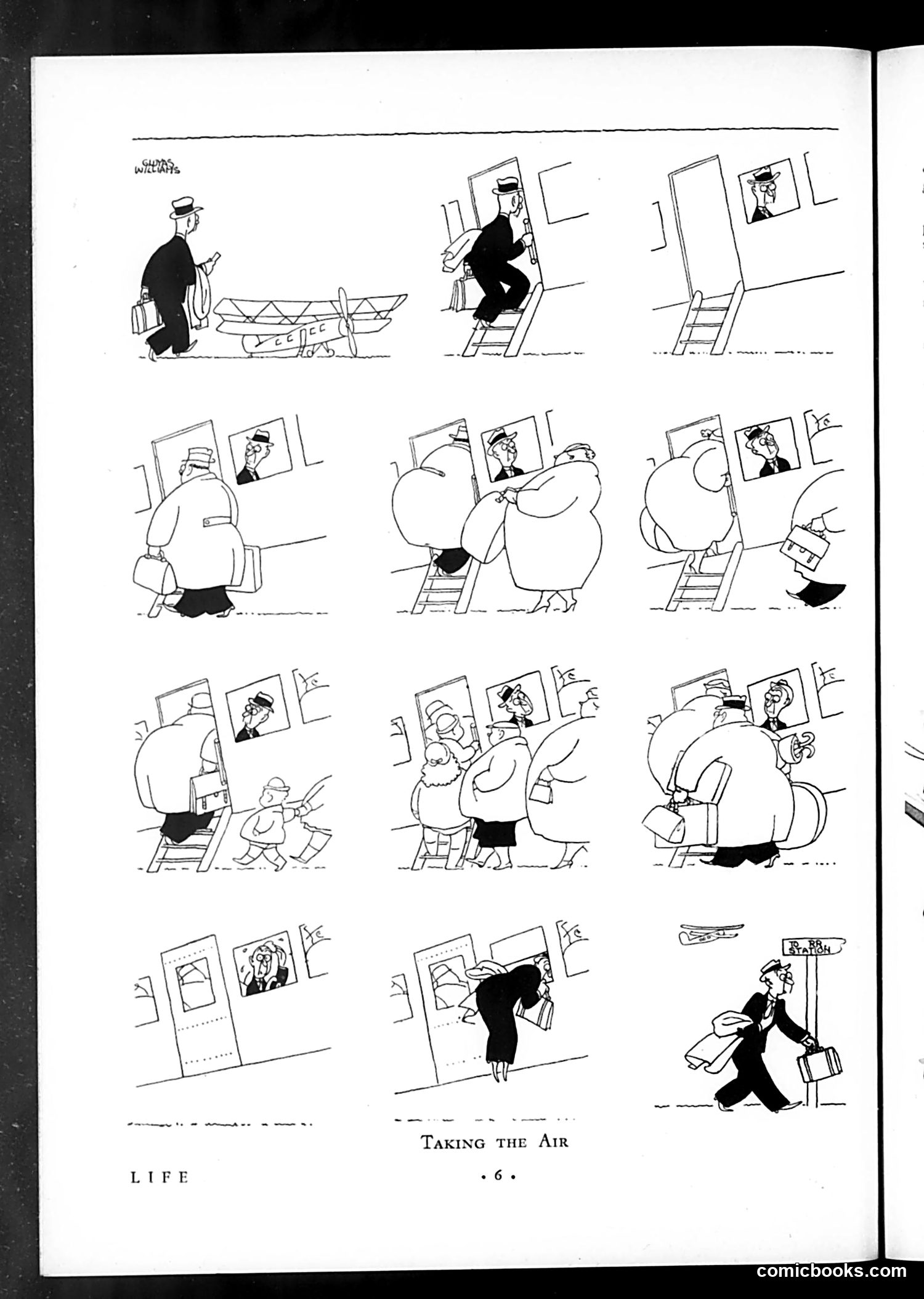
# "Taking the Air" - Life Magazine Cartoon This is a sequential comic strip satirizing airplane travel, likely from the early-to-mid 20th century when commercial aviation was novel and passengers were often portly businessmen. The narrative shows a well-dressed gentleman with a briefcase boarding an aircraft. As the plane fills with other passengers, they become increasingly squeezed together due to their generous proportions. The cramped conditions worsen progressively through the panels, with passengers literally wedged against each other. The joke critiques both the absurdity of early airplane design's limited capacity and the physical reality of transporting large numbers of overweight passengers in confined spaces. The satire mocks both the passengers' size and the aviation industry's optimistic expectations about passenger comfort.
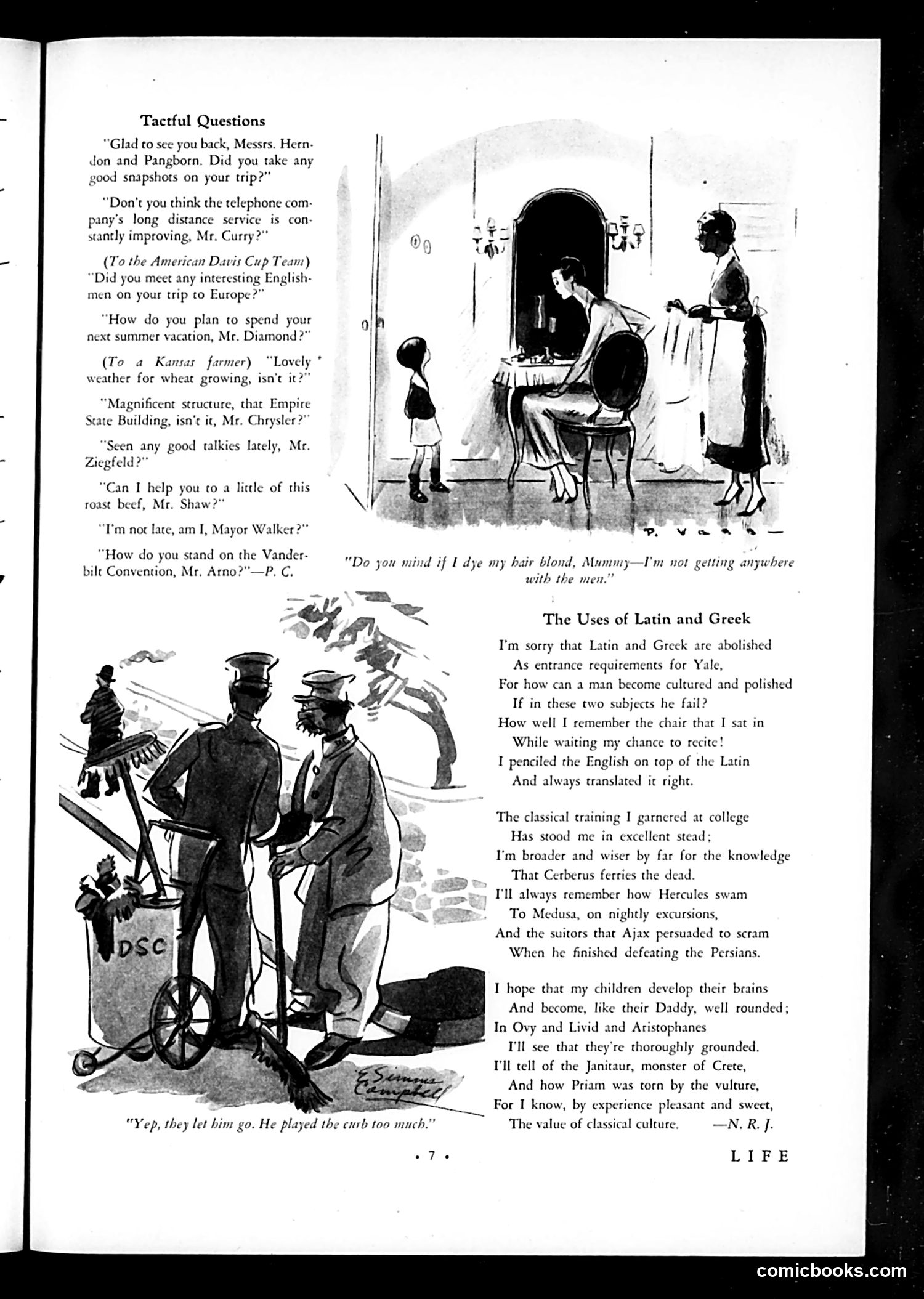
# Analysis of Life Magazine Page This page contains two distinct elements: **"Tactful Questions"** (top left): A collection of supposedly innocent but pointed questions asked to various businessmen and public figures—critiquing their recent trips, business practices, and public statements. The satire lies in feigning politeness while making barbed observations about corporate performance and leadership. **Top right cartoon**: Shows a woman at her hair salon, worried about hair dye staining. The humor plays on anxieties about women's grooming practices and cosmetic use. **Bottom cartoon**: Depicts what appears to be a disabled or injured man being escorted away, with the caption "Yep, they let him go. He played the curb too much"—dark satire about workplace accidents or disability. **"The Uses of Latin and Greek"**: A poem defending classical education's value despite changing curriculum requirements, reflecting early 20th-century debates about educational modernization versus traditional learning.
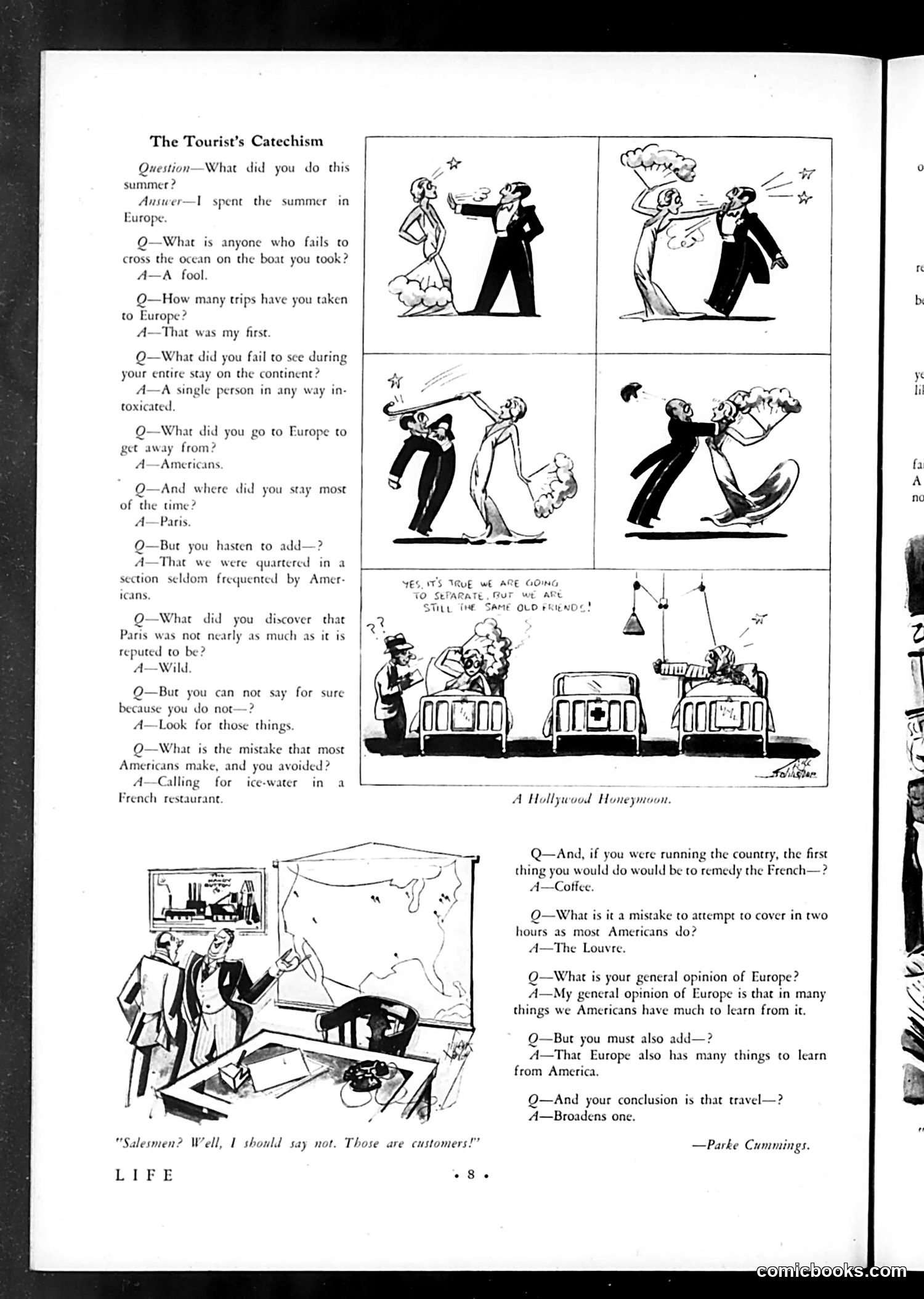
# "The Tourist's Catechism" - Life Magazine Satire This satirical Q&A mocks American tourists returning from European vacations. The humor targets: **Common tourist behaviors:** - Spending summers in Europe as a status symbol - Failing to experience authentic culture despite extensive travel - Quarreling with spouses during trips - The cliché of visiting Paris repeatedly **Specific American tourist mistakes:** - Ordering ice-water in French restaurants (culturally inappropriate) - Rushing through major sites like the Louvre in mere hours - Complaining about French customs **The cartoons** illustrate these stereotypes: couples arguing, women being "swept away," and the final image shows a "Hollywood Honeymoon" with separated cars—implying even newlyweds can't enjoy travel together. **The satire's point:** American tourists travel abroad not for genuine cultural understanding, but for bragging rights and status, while remaining fundamentally disconnected from—and critical of—foreign cultures.
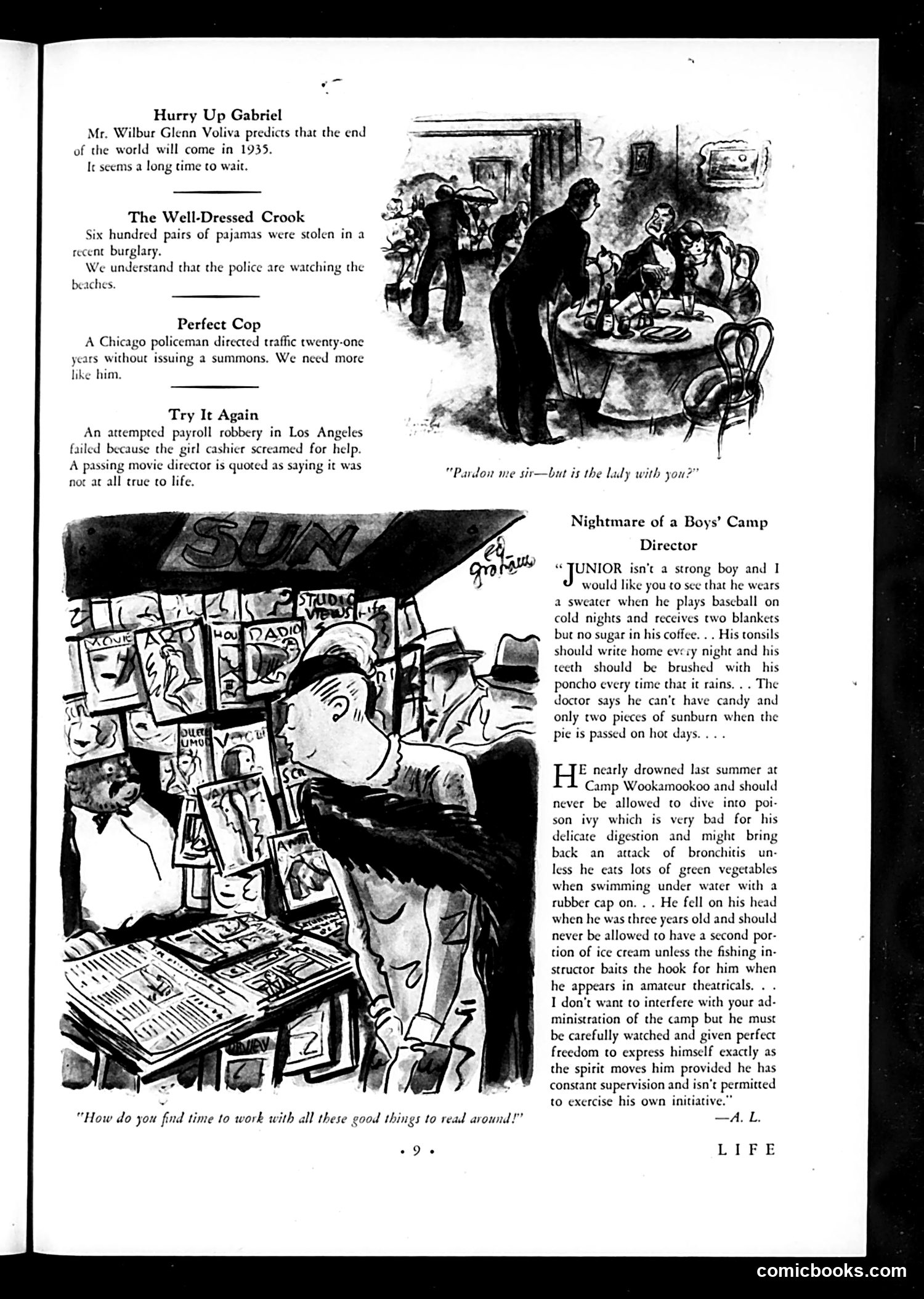
# Life Magazine Page Analysis This page contains brief humorous news items and two cartoons satirizing American life. **Top cartoon** depicts a dinner scene with the caption "Pardon me sir—but is the lady with you?" The joke plays on social awkwardness and assumptions about relationships. **Bottom cartoon** shows a newsstand vendor overwhelmed by reading materials, captioned "How do you find time to work with all these good things to read around!" This satirizes the explosion of available publications and media competing for people's attention—a modern consumer culture problem. The right-hand column features advice from a boys' camp director detailing absurdly overprotective instructions for a camper named "Junior," satirizing helicopter parenting and excessive parental anxiety about children's welfare and minor injuries.
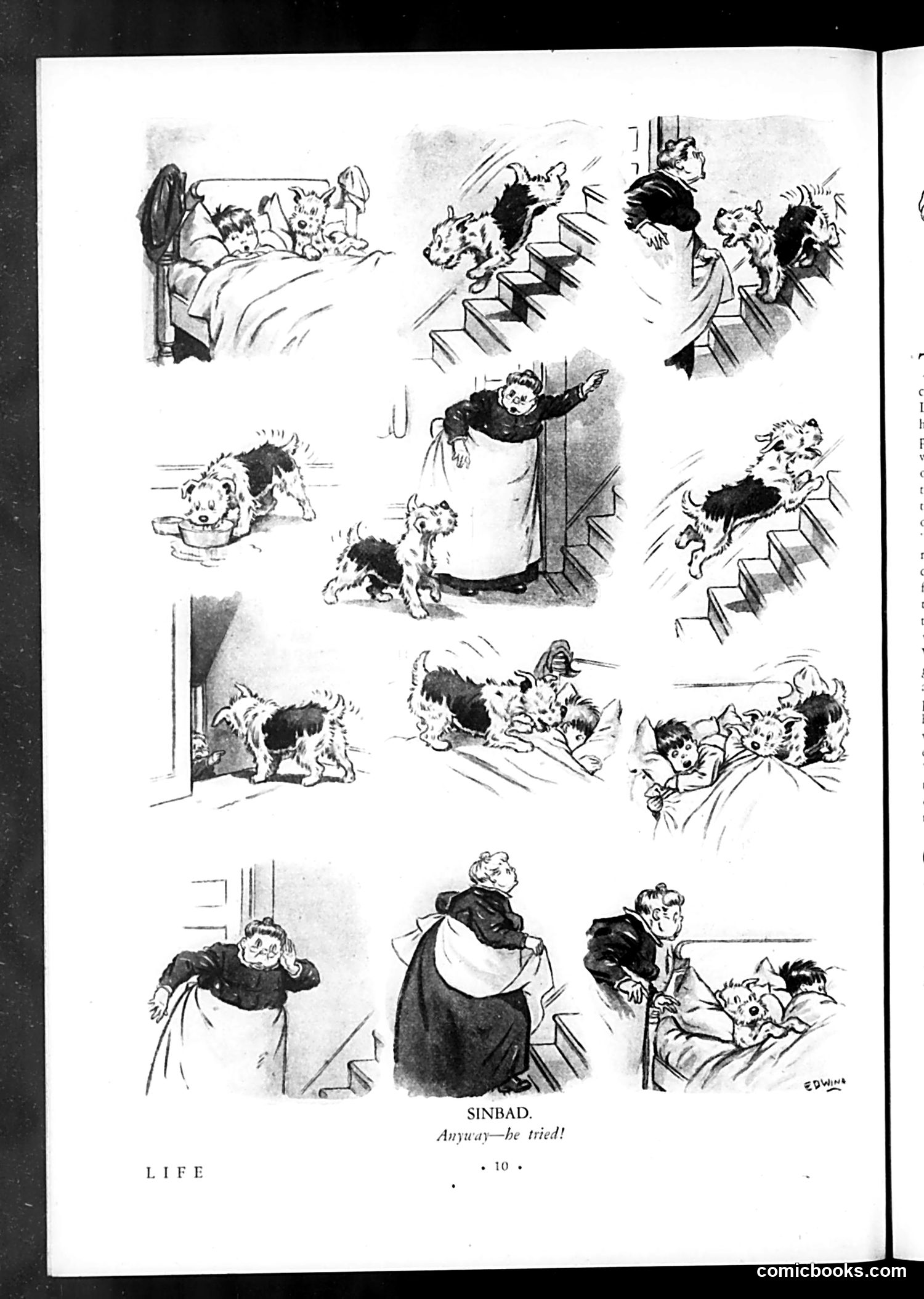
# Analysis of "Sinbad: Anyway—he tried!" This is a satirical comic strip about Sinbad the Sailor, the legendary character from *Arabian Nights*. The sequence depicts Sinbad repeatedly attempting various schemes or adventures, only to fail each time—shown through a series of panels where he encounters obstacles, gets chased by animals (appears to be dogs), is thrown down stairs, and otherwise comes to comedic grief. The phrase "Anyway—he tried!" suggests the humor lies in Sinbad's persistent but hapless efforts despite constant failure. This likely parodies both the famous adventurer's legendary exploits and contemporary attitudes about ambition versus reality. The artist's signature appears to be "EDWillard" or similar.