A complete issue · 37 pages · 1931
Life — August 28, 1931
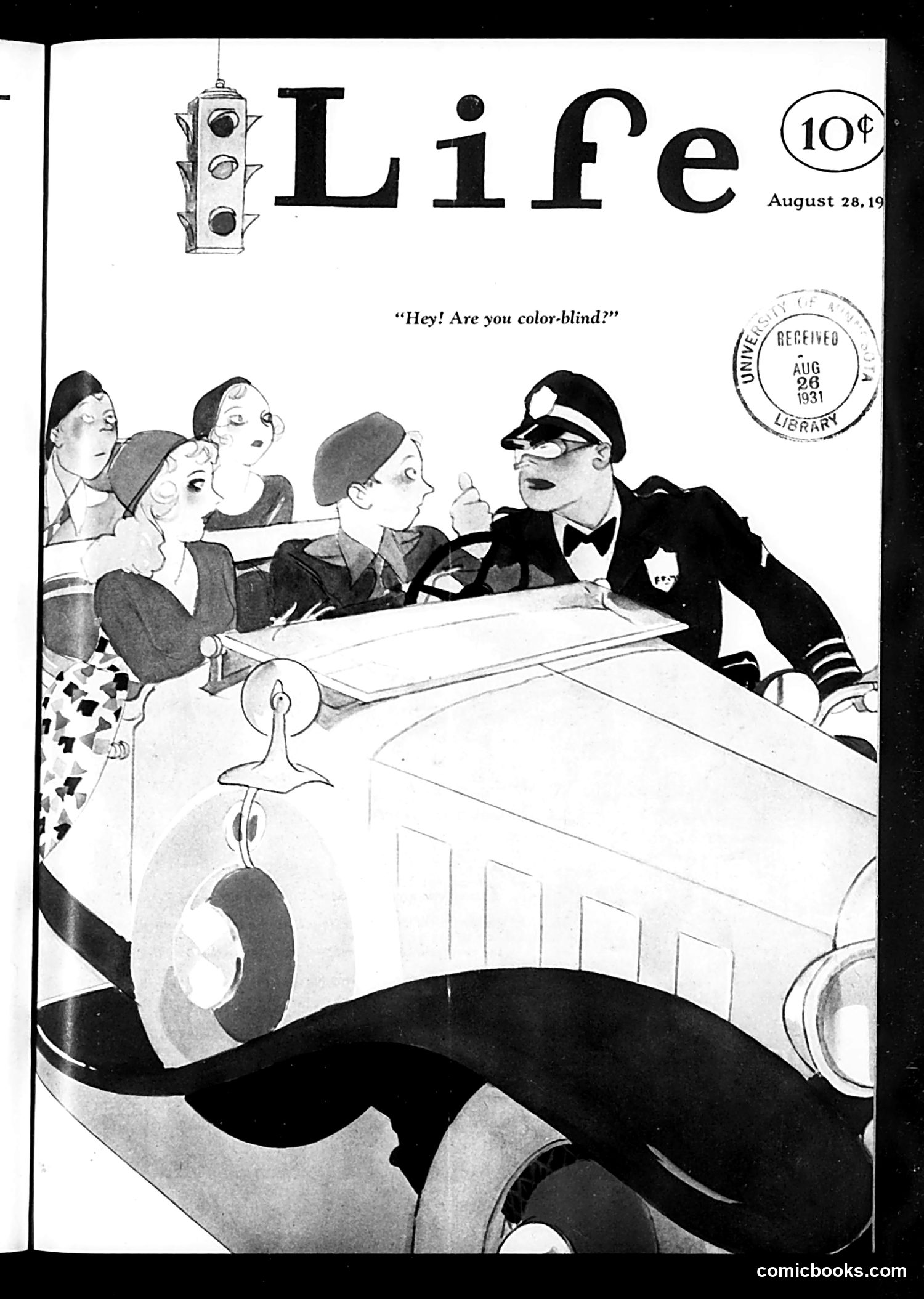
# Analysis of Life Magazine Cover, August 28, 1931 This cover satirizes traffic safety, specifically the then-new traffic light system. The caption "Hey! Are you color-blind?" appears to mock drivers who ignore signal lights. The illustration shows a formal dining scene where a uniformed traffic officer (right) confronts well-dressed patrons at what appears to be a restaurant or nightclub. The visual joke conflates traffic signals with dining etiquette—the officer questions whether the diners are "color-blind" to the signals, suggesting reckless driving behavior. The humor relies on 1930s automotive safety concerns and the novelty of standardized traffic control. The formal attire of the civilians contrasts with the officer's authority, emphasizing that even respectable citizens flouted traffic laws. The cartoon critiques public disregard for emerging traffic safety regulations during the automobile's rise.
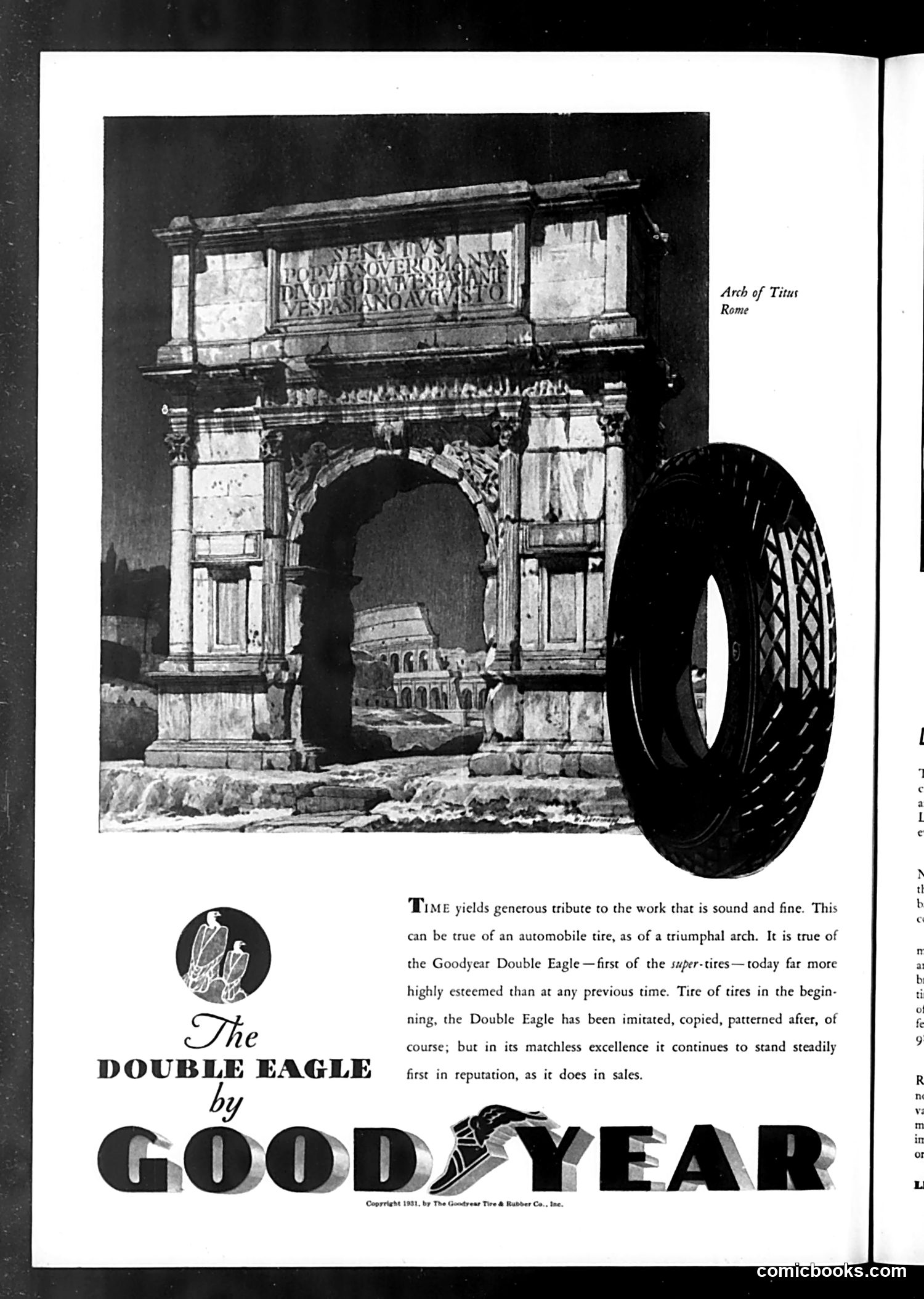
# Analysis This is primarily a **Goodyear tire advertisement**, not political satire. The page compares the Goodyear Double Eagle tire to the Arch of Titus, a famous Roman monument. The advertisement argues that just as time has validated the arch's architectural excellence, time has proven the Double Eagle tire's superiority. The text states the tire has been "imitated, copied, patterned after" but maintains its reputation for quality. The juxtaposition is meant to elevate the tire by association with enduring classical achievement—suggesting the Double Eagle is equally timeless and reliable. For modern readers, this reflects early 20th-century advertising's strategy of connecting commercial products to cultural prestige and permanence. There is no political or satirical commentary present.
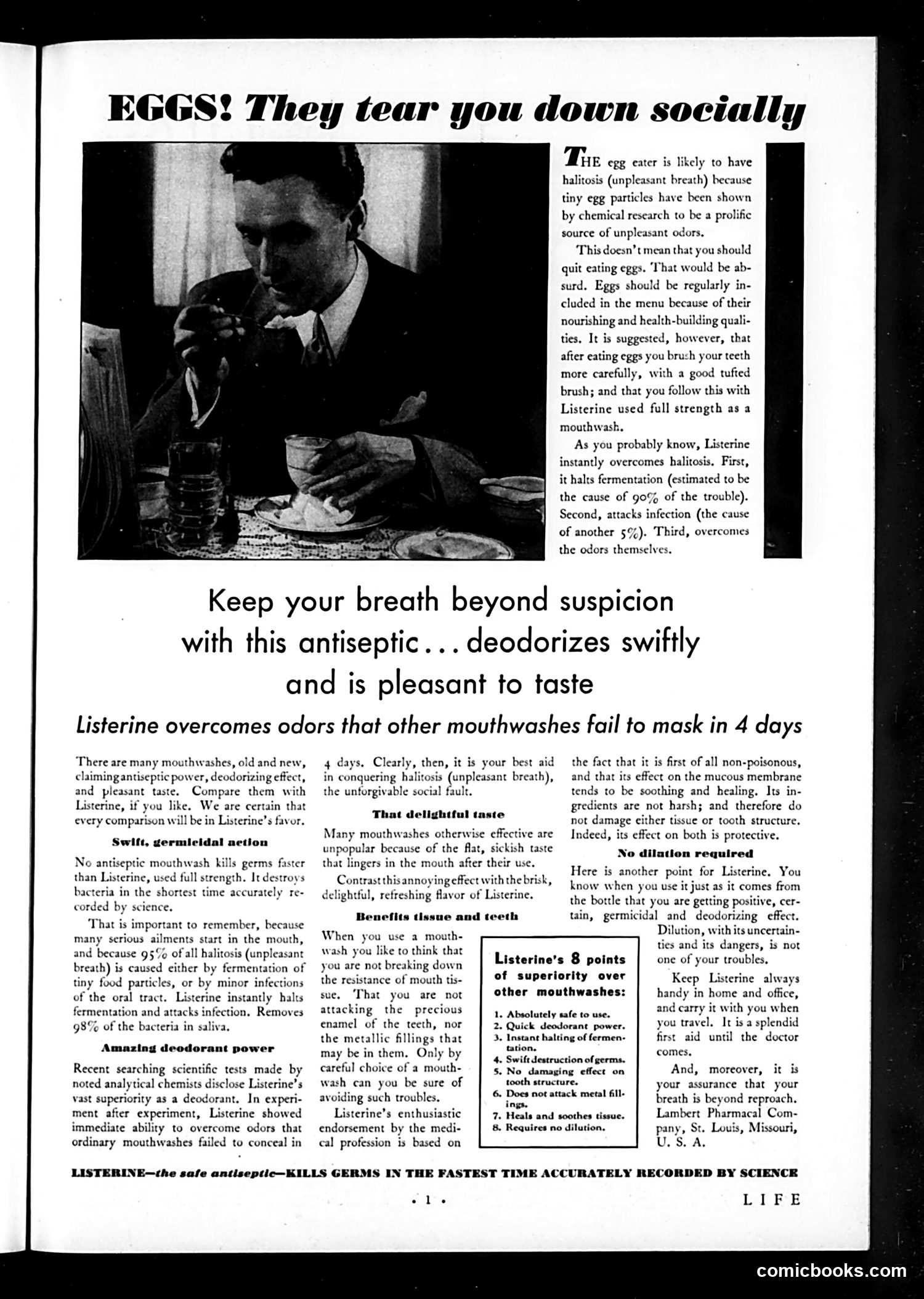
# Analysis This is a **Listerine advertisement**, not political satire. The page uses social shame as a marketing tactic, common in early-to-mid 20th-century advertising. The headline "EGGS! They tear you down socially" warns that eating eggs causes halitosis (bad breath), which leads to social embarrassment. The photo shows a man at a dining table, presumably self-conscious about his breath around others. The ad claims Listerine mouthwash uniquely overcomes egg-related odors within 4 days, listing "8 points of superiority" over competitors. It emphasizes the product is "safe," works quickly, and tastes pleasant—addressing common objections to antiseptic mouthwashes of that era. This reflects vintage advertising's reliance on social anxiety to sell hygiene products.
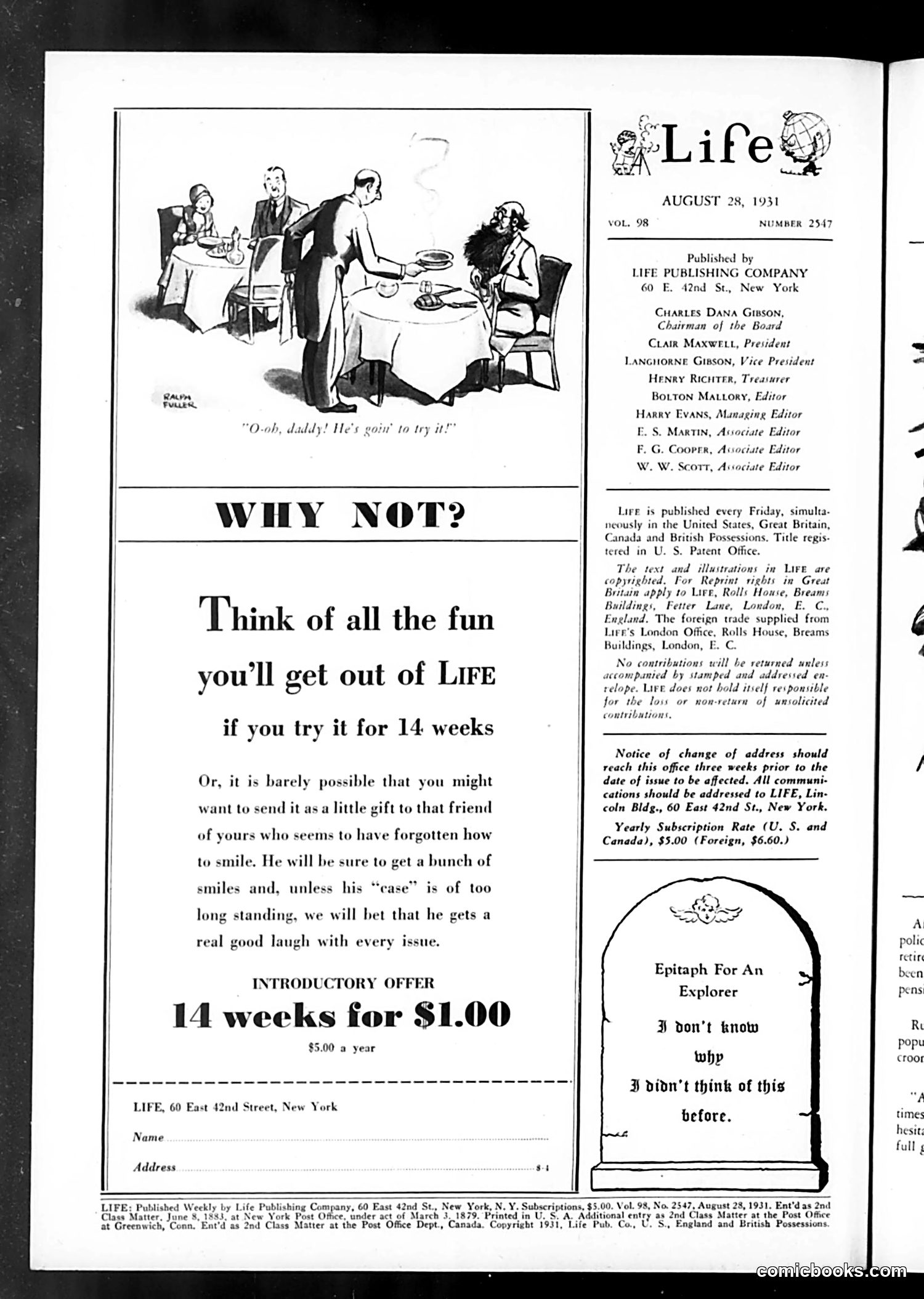
# Analysis This is primarily a **subscription advertisement page** for Life magazine (dated August 28, 1931), not a political cartoon. The main cartoon at the top shows a dinner scene with the caption "O-oh, daddy! He's goin' to try it?" — a domestic humor gag about someone attempting something risky or unusual at table, likely food-related. Below is an **introductory subscription offer**: 14 weeks for $1.00 (versus $5.00 yearly). The pitch emphasizes Life as humor/entertainment that brings smiles and laughs. The bottom right shows a humorous epitaph: "I don't know whap / I bidn't think of this before" — mock-serious wordplay typical of Life's style. This is **not satirical commentary** but rather magazine promotion using light humor to attract readers during the Great Depression era.
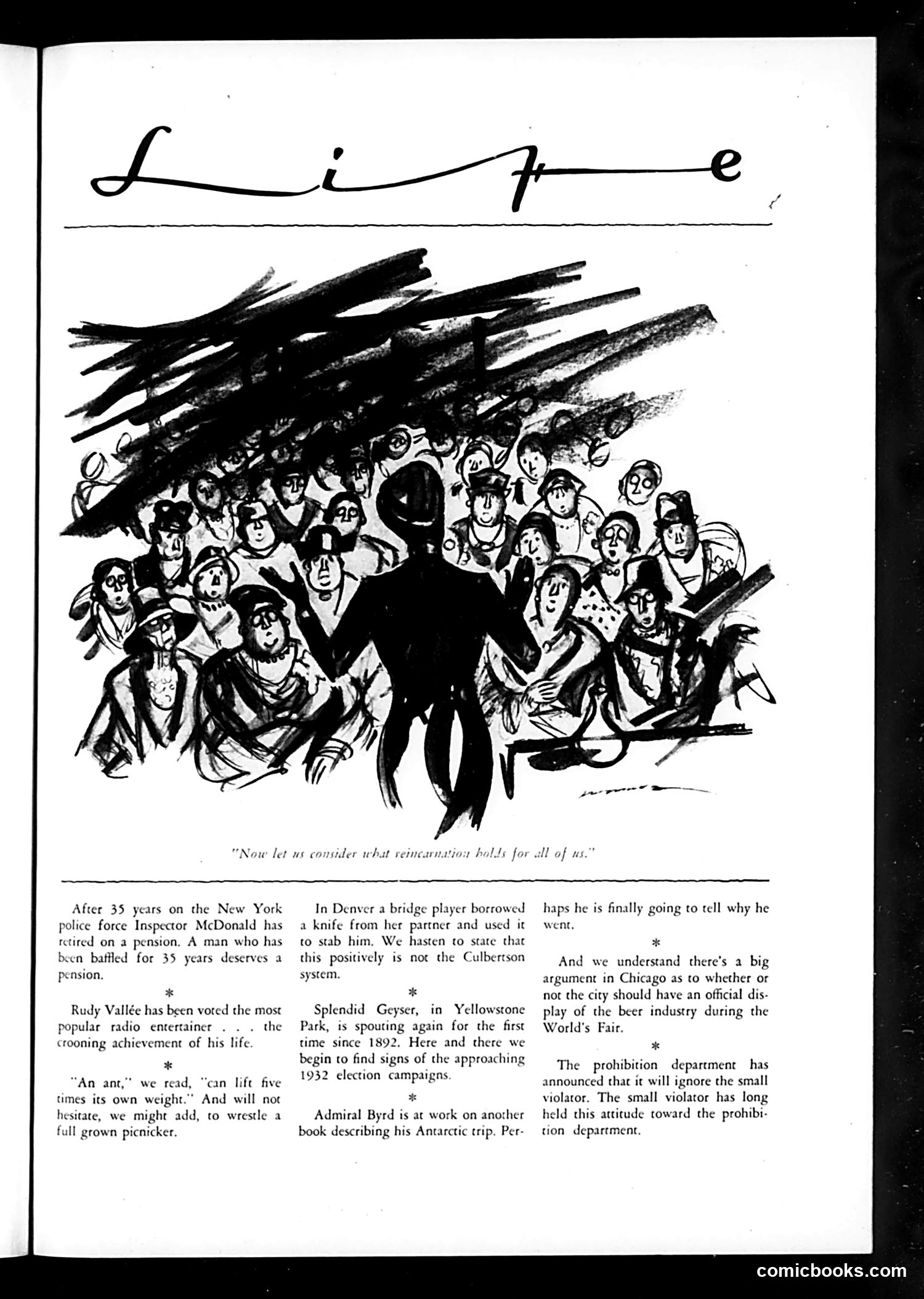
# "Life" Page Analysis The main cartoon depicts a silhouetted figure addressing a crowd of concerned citizens, with the caption "Now let us consider what reincarnation holds for all of us." This appears to be **political satire about reincarnation and afterlife philosophy**, though the specific target is unclear from the image alone. The crowd's anxious expressions suggest satirizing public anxiety about some contemporary issue. Below the cartoon, brief news items mock various figures and policies: - Inspector McDonald's 35-year police pension - Rudy Vallée as a popular radio entertainer - Splendid Geyser's return to campaigning (likely 1932 election-related) - Admiral Byrd's Antarctic expedition book - Chicago's beer industry debate during Prohibition - The Prohibition department ignoring minor violators The page combines political commentary with social observation typical of *Life* magazine's satirical approach.
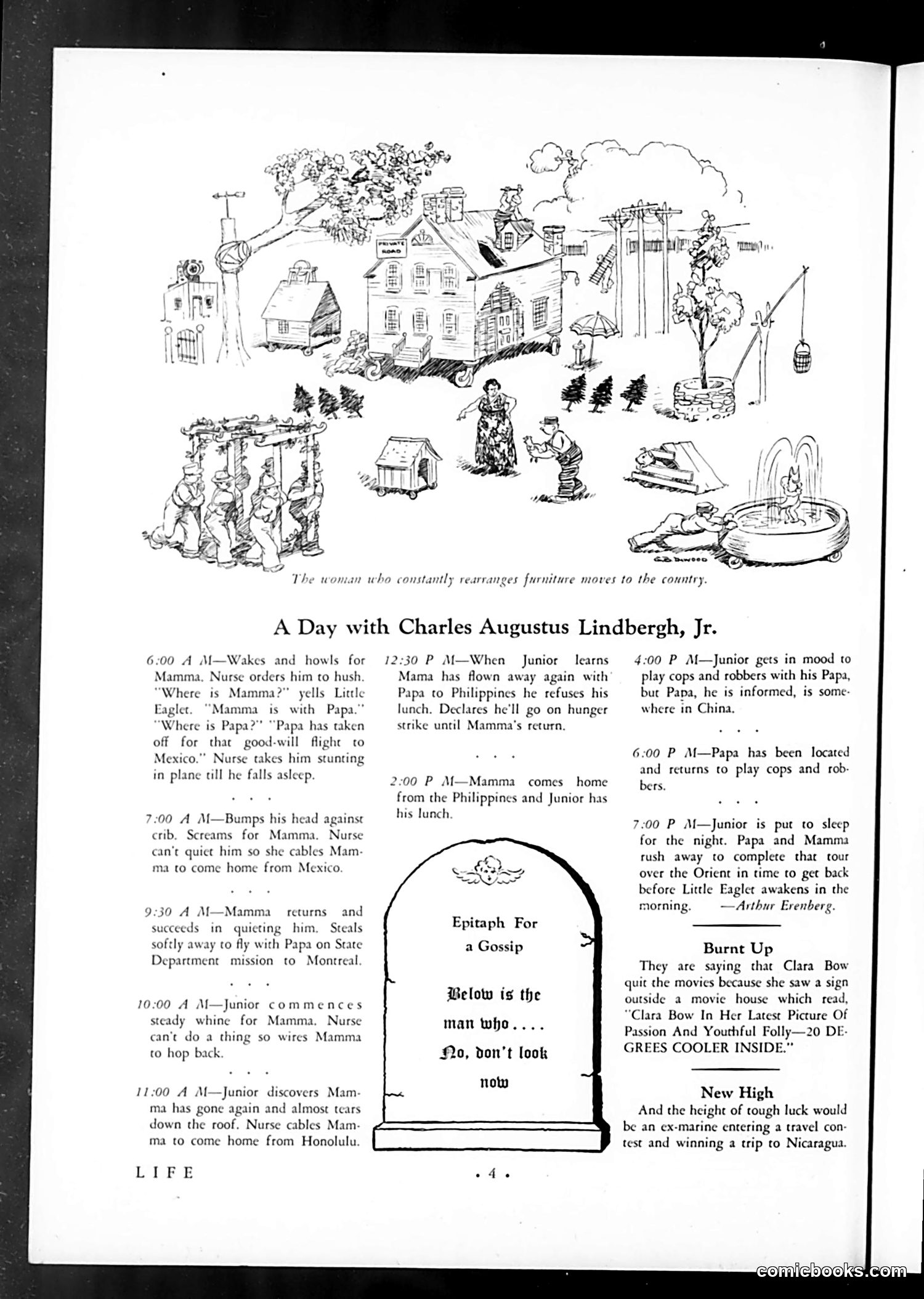
This page satirizes the daily chaos of Charles Augustus Lindbergh Jr.'s household. The illustration depicts a country estate with children, servants, and various domestic activities. The humor centers on Lindbergh's wife constantly rearranging furniture and moving to the country—a wealthy person's frivolous preoccupation. The day's schedule mockingly catalogs domestic absurdities: the child's nurse struggling with tantrums, parents constantly departing on trips (to Mexico, the Philippines, Honolulu), and the family perpetually playing catch-up. The satire targets upper-class excess and parental absenteeism during the 1920s-30s. By documenting every trivial household event in real-time, the piece ridicules both the Lindberghs' lifestyle and the era's celebrity culture obsession with documenting the famous family's mundane activities.
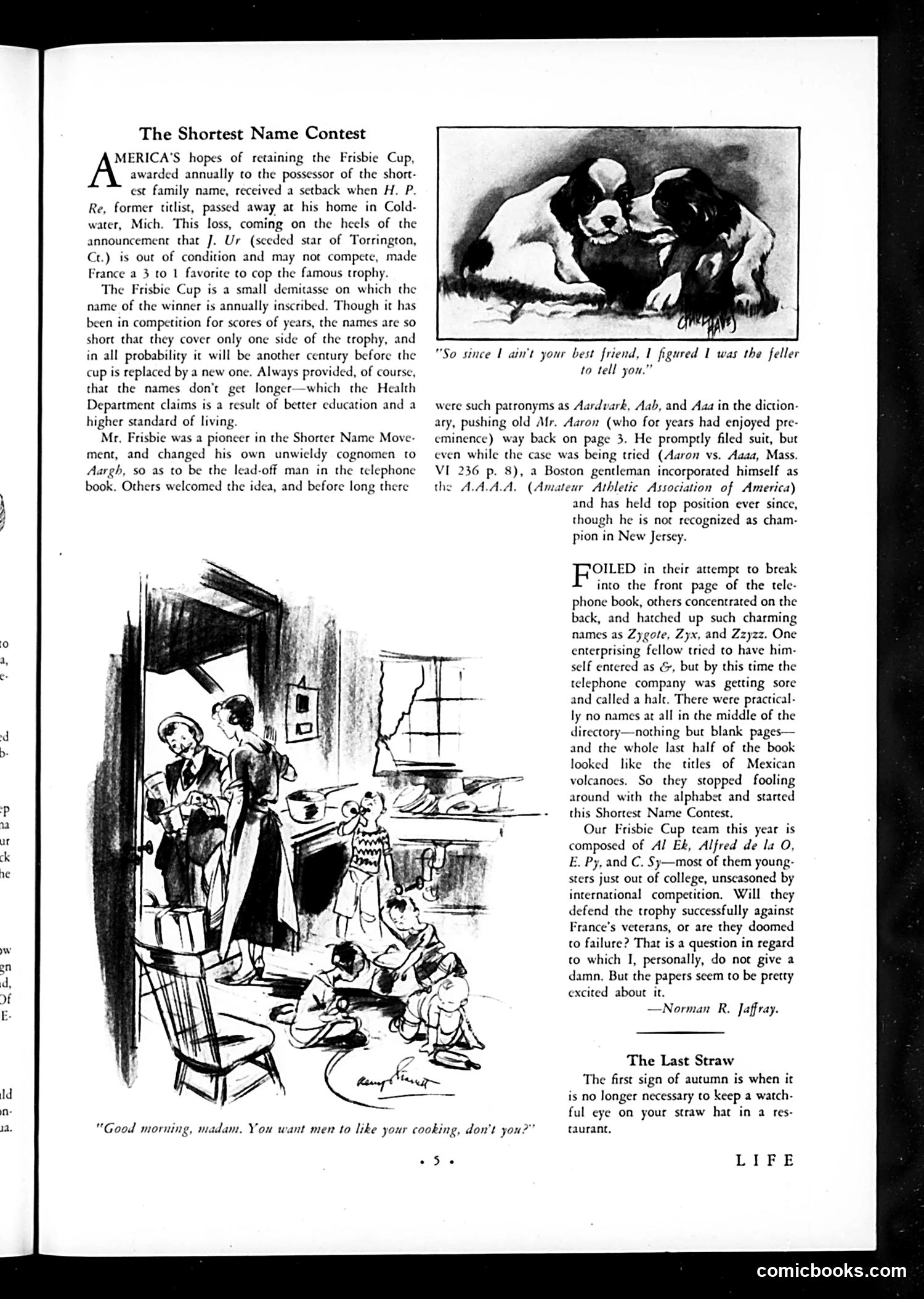
# Analysis of "The Shortest Name Contest" This article satirizes a real 1920s trend where Americans sought extremely short names to get listed first in telephone directories. The Frisbie Cup awards the shortest family name annually. The article mocks contestants who adopted absurd single or double-letter surnames like **Aardvark, Aah, Aaa, Zygote, Zyy, and Zzzz** to gain competitive advantage. One man incorporated himself as the **A.A.A.A.** (Amateur Athletic Association of America) to secure prominence, though he went unrecognized. The accompanying cartoon shows a domestic scene where a woman asks a man, "Good morning, madam. You want men to like your cooking, don't you?"—a joke about changing one's name for social advantage, reflecting the era's absurd status-seeking behavior around telephone book placement and alphabetical ordering.
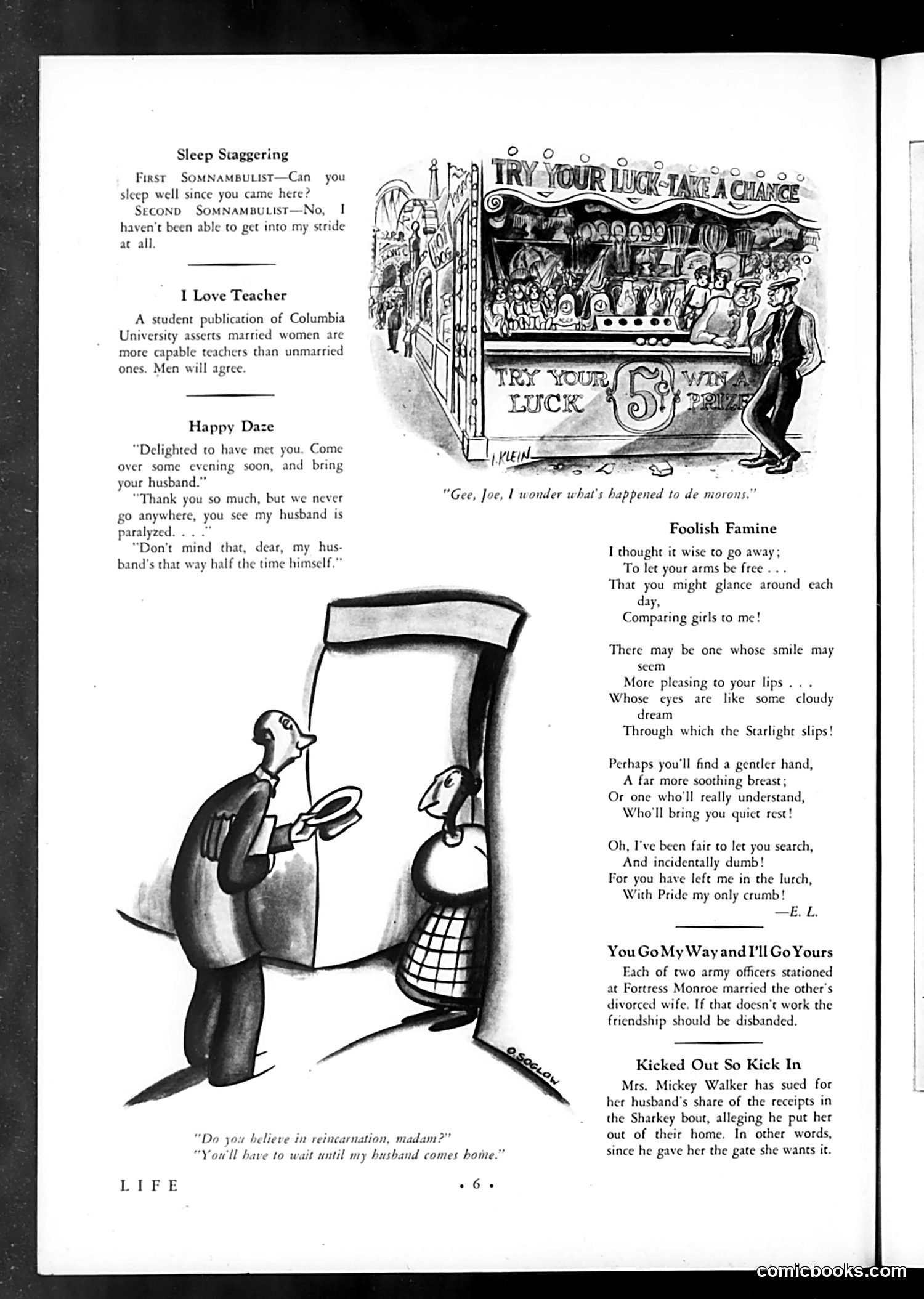
# Analysis of Life Magazine Page This page contains several satirical pieces mocking married life and gender relations. **"Sleep Staggering"** opens with a brief joke about a somnambulist (sleepwalker) struggling to adjust to married life. **"I Love Teacher"** sarcastically asserts that married female teachers are superior to unmarried ones—a jab at assumptions about women's capabilities changing with marital status. **"Happy Daze"** depicts a wife inviting a guest while her husband is paralyzed, with her dismissing his condition as merely "half" his normal state—humor rooted in henpecking husband tropes. **"Foolish Famine"** is a longer poem about a man leaving his girlfriend, regretting it as he realizes other women might appeal to her more than him. The cartoons employ common early 20th-century domestic humor: wives dominating husbands, marriage as entrapment, and anxious romance.
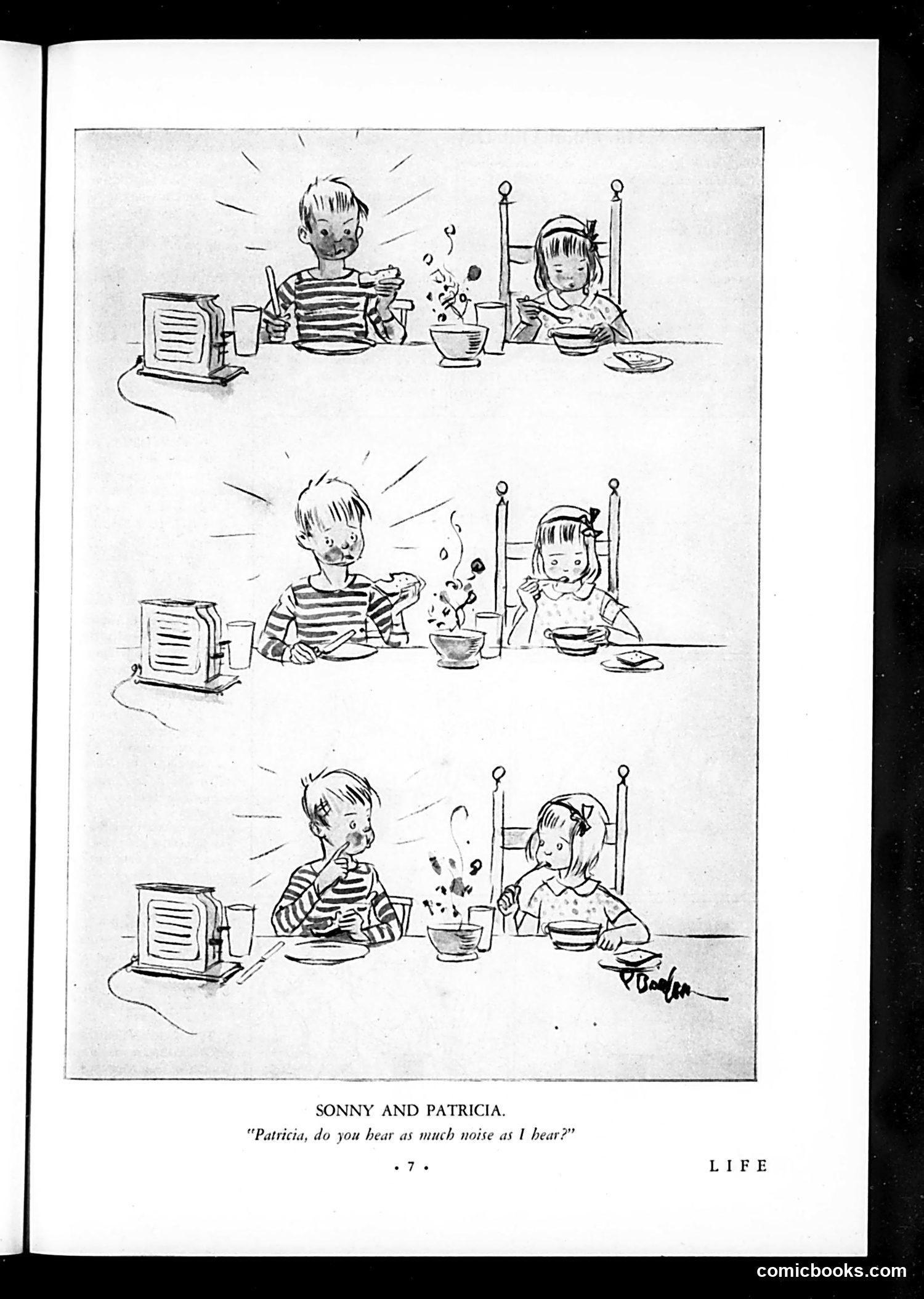
# Sonny and Patricia This comic strip shows two children eating meals together at a table with a toaster visible on the left. The caption reads: "Patricia, do you hear as much noise as I bear?" The joke depicts the boy (Sonny) making noise while eating—shown by the radiating lines and scattered food particles in the final panels—while the girl (Patricia) eats quietly. The humor contrasts their table manners: he creates considerable noise and mess during eating, while she eats neatly and silently. This appears to be a gentle domestic humor piece about children's behavior at mealtime, likely poking fun at common complaints parents have about noisy eaters. The strip uses three sequential panels to build the comedic observation about table etiquette differences between the two children.
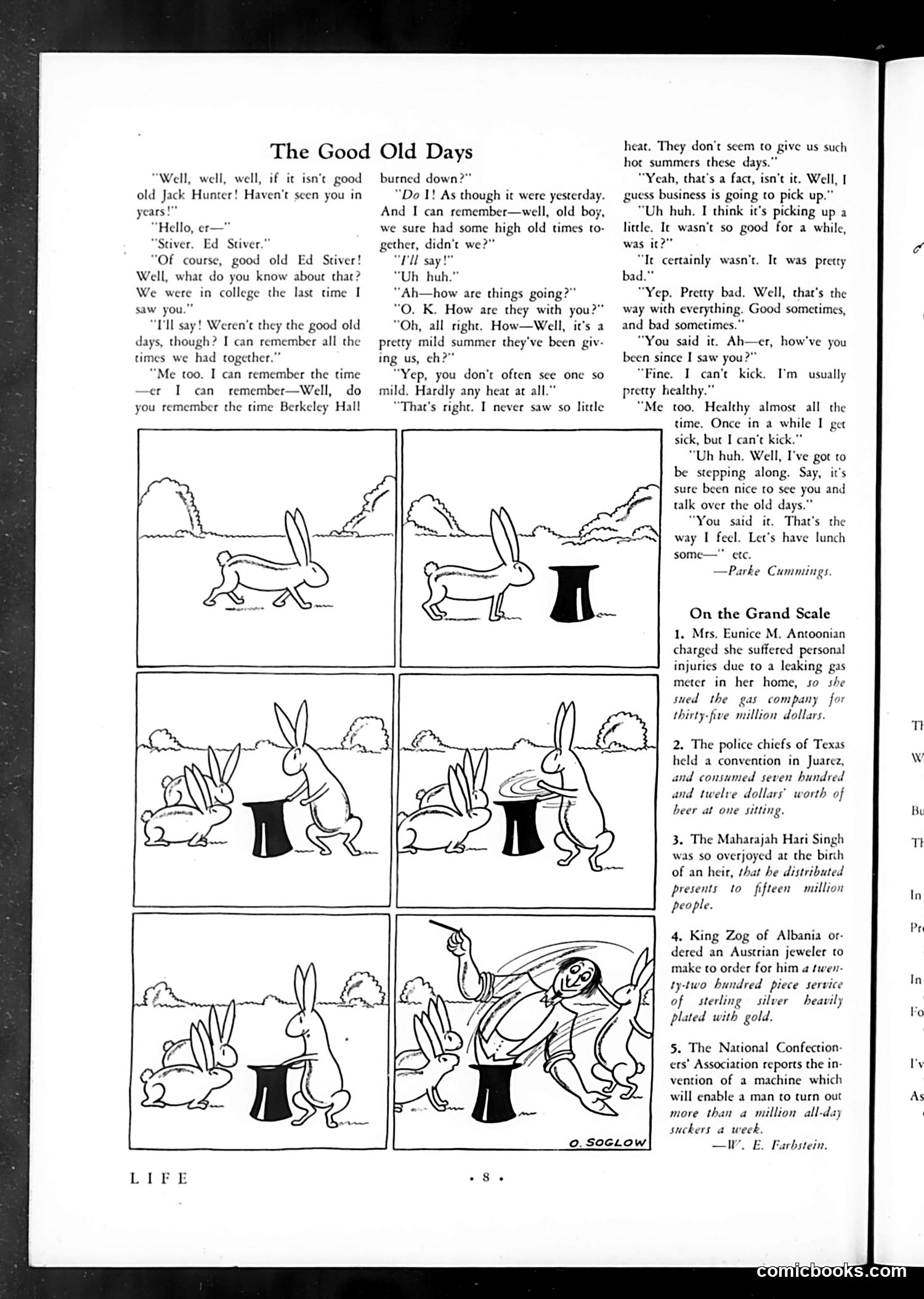
# Analysis of "The Good Old Days" Page This page from *Life* magazine features a dialogue between two men reminiscing about better times, illustrated by O. Soglow's comic strip showing a magician repeatedly pulling rabbits from a hat. **The Satire:** The conversation nostalgically compares past summers (cooler, milder) to present heat and economic conditions. One speaker mentions Berkeley Hall and college days, while they discuss how "business is going to pick up" despite current hardship. **The Point:** The cartoon juxtaposes the men's optimistic talk with Soglow's repetitive magic trick—suggesting their hopes for improvement are as illusory and circular as pulling endless rabbits from a hat. It's commentary on false optimism during economic difficulty, likely from the Depression era, when people clung to hope while conditions remained unchanged.
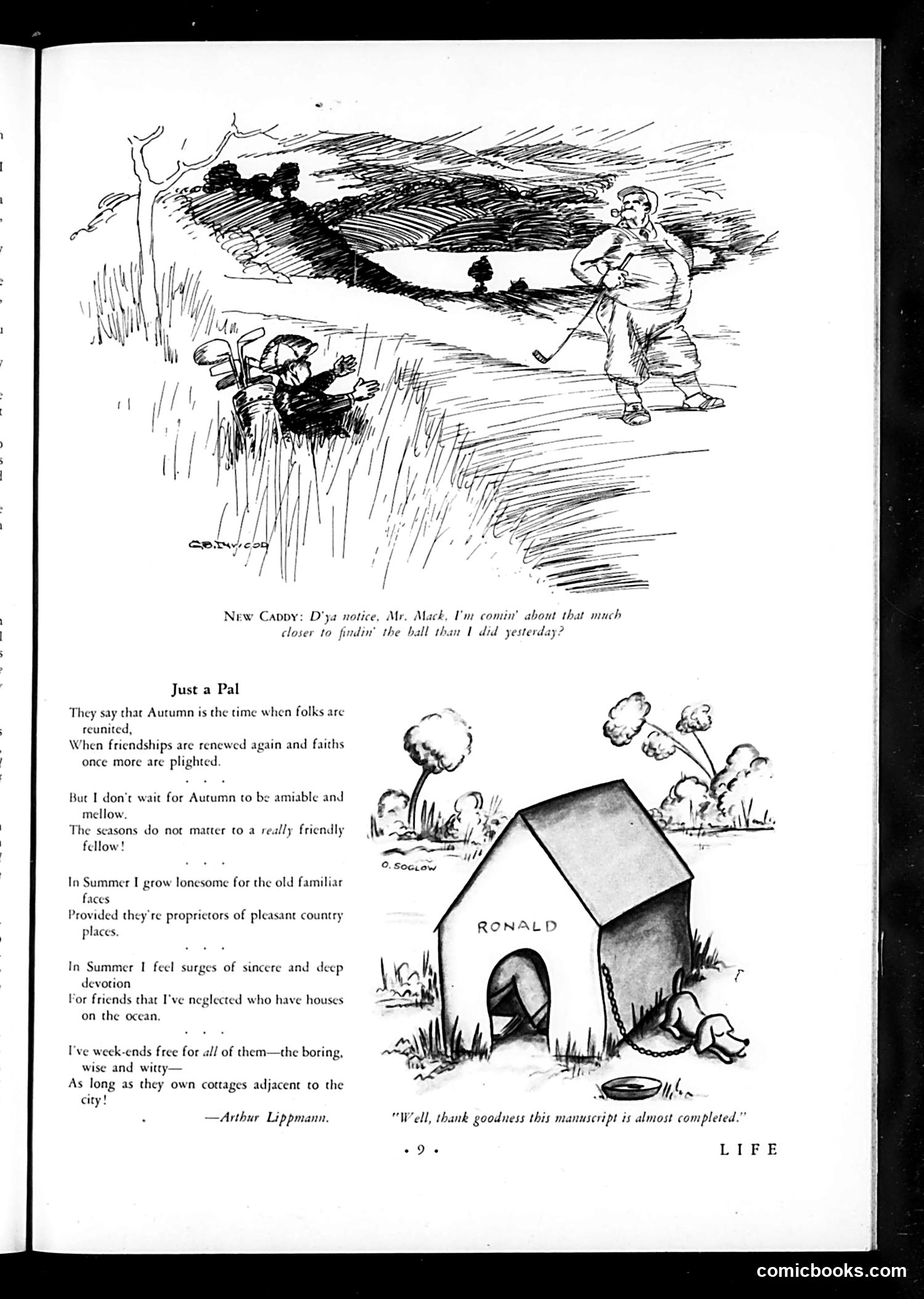
# Analysis of Life Magazine Page **Top Cartoon:** A golf scene depicting a "New Caddy" (young golfer's assistant) speaking to "Mr. Mark." The caddy claims to be finding the golf ball much closer to the hole than yesterday's shot. This is a joke about either the caddy's dishonesty or incompetence—suggesting he's either fabricating the ball's improved position or is genuinely confused about golf distances. **Bottom Section:** "Just a Pal" is a poem by Arthur Lippmann about maintaining friendships year-round, not just seasonally. The accompanying illustration shows a dog house labeled "RONALD" with a small dog inside—a visual pun emphasizing that true friendship is constant ("really friendly fellow") regardless of circumstances, even for a humble pet.
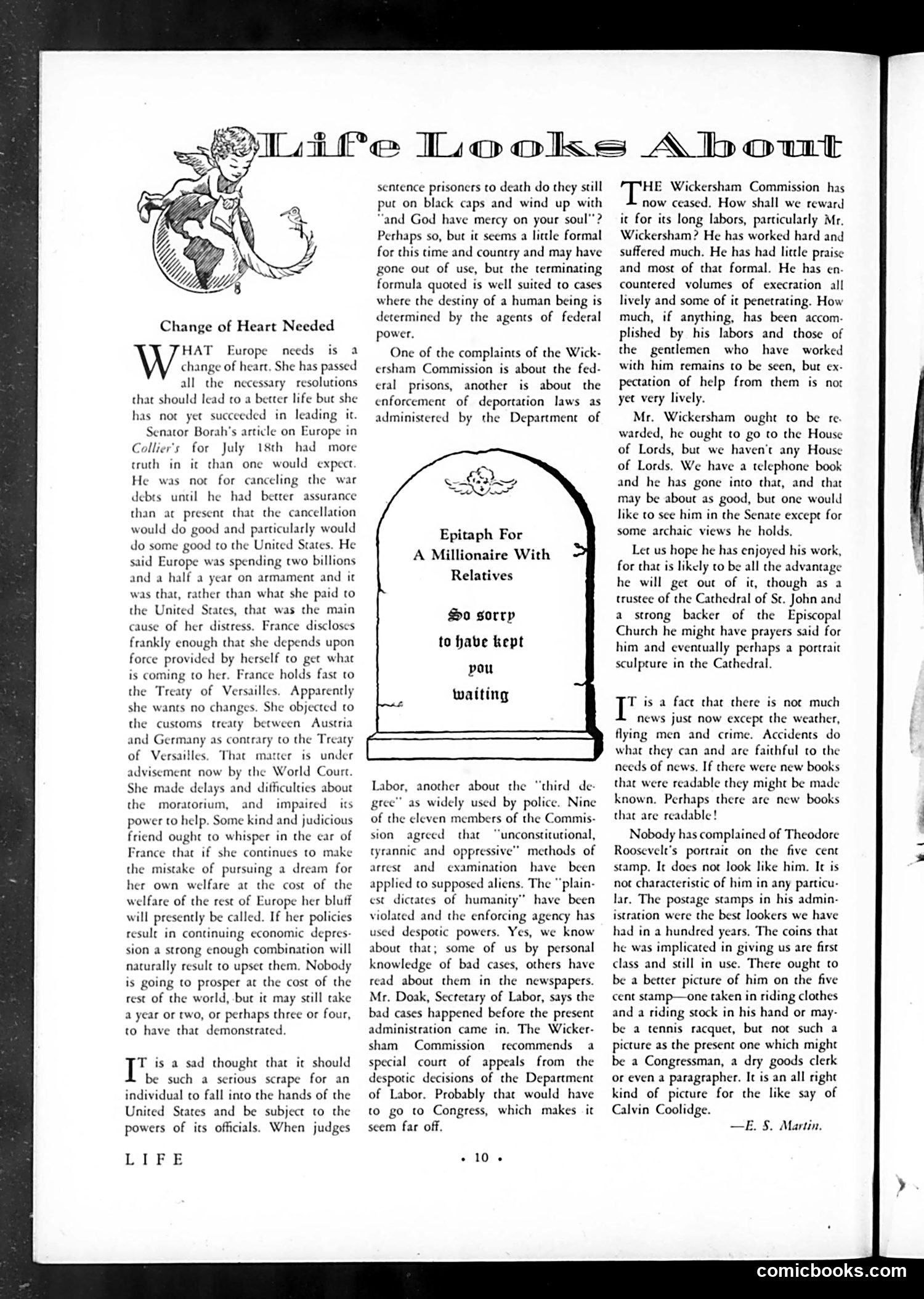
# Analysis of Life Magazine Page This page satirizes European political and economic issues post-WWI, centered on a "Change of Heart Needed" editorial about Europe's financial dependency on the United States. The main cartoon depicts an **epitaph for "A Millionaire With Relatives,"** showing a tombstone with the epitaph "So sorry to have kept you waiting." This appears to satirize wealthy individuals (likely American) whose delayed financial aid to desperate European nations prolongs their suffering—the "relatives" waiting for assistance. The editorial criticizes Europe's spending habits and dependence on American loans rather than achieving self-sufficiency. It argues Europe must reform economically rather than expect continued American financial rescue, particularly regarding post-war debt and reparations obligations. The sardonic humor mocks both European financial mismanagement and American reluctance to provide promised aid.