A complete issue · 36 pages · 1931
Life — August 21, 1931
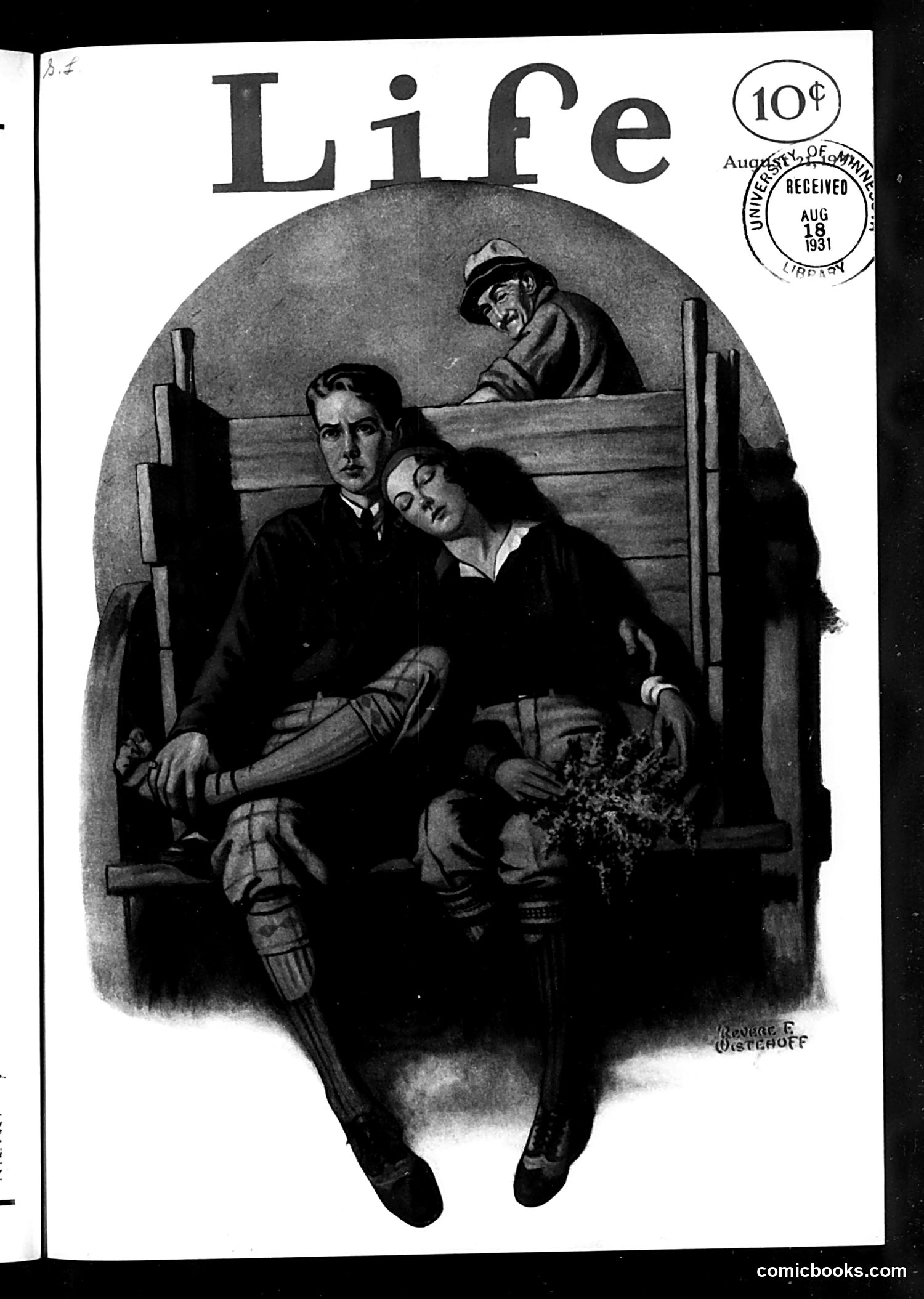
# Life Magazine Cover Analysis This is a Life magazine cover from August 18, 1931, priced at 10 cents. The illustration by Norman E. Ostrihoff depicts three figures in what appears to be a boat or confined space. The image shows two men in formal attire in the foreground—one conscious, one appearing to faint or swoon—with a woman leaning against one of them. A third figure (possibly a boatman or operator) is visible in the background. Without additional OCR text or caption information visible on this page, the specific satirical target is unclear. However, given the 1931 date during the Great Depression, this likely references contemporary social or political commentary, though the exact meaning requires additional context not fully legible in this image.
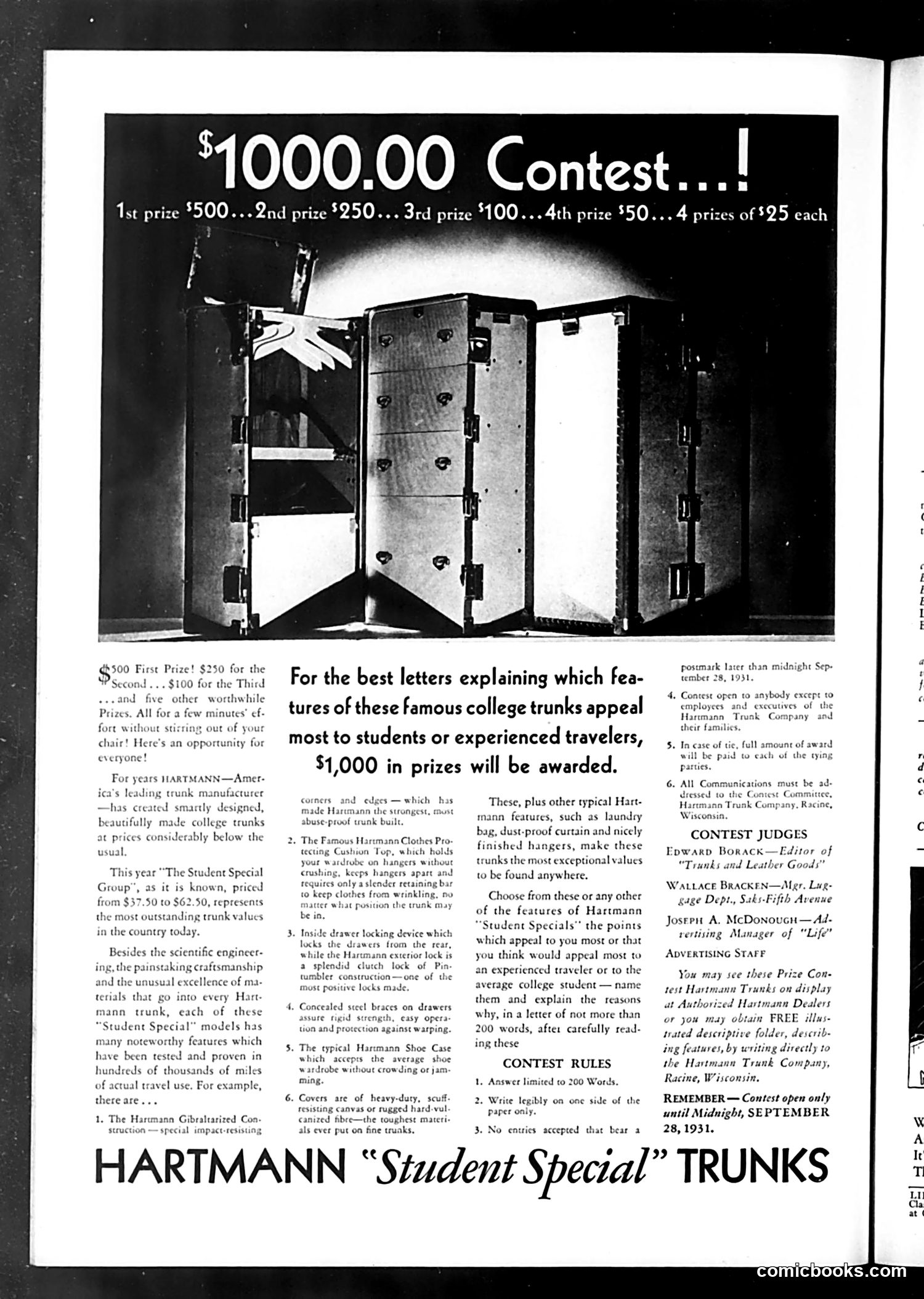
# Analysis This is a **straightforward advertisement**, not satirical content. It's a 1931 Hartmann Trunk Company contest offering $1,000 in prizes for letters explaining which features of their "Student Special" college trunks appeal most to students and travelers. The ad emphasizes practical trunk features like durability, security locks, and organizational compartments. The contest judges include Edward Boraek (editor of *Trunks and Leather Goods*) and Wallace Bracken (advertising manager of *Life*). The visual shows an open trunk displaying its interior construction and compartments. There's no political satire or caricature—this is typical period advertising designed to drive consumer engagement through a writing contest, with the entry deadline of September 28, 1931 printed clearly.
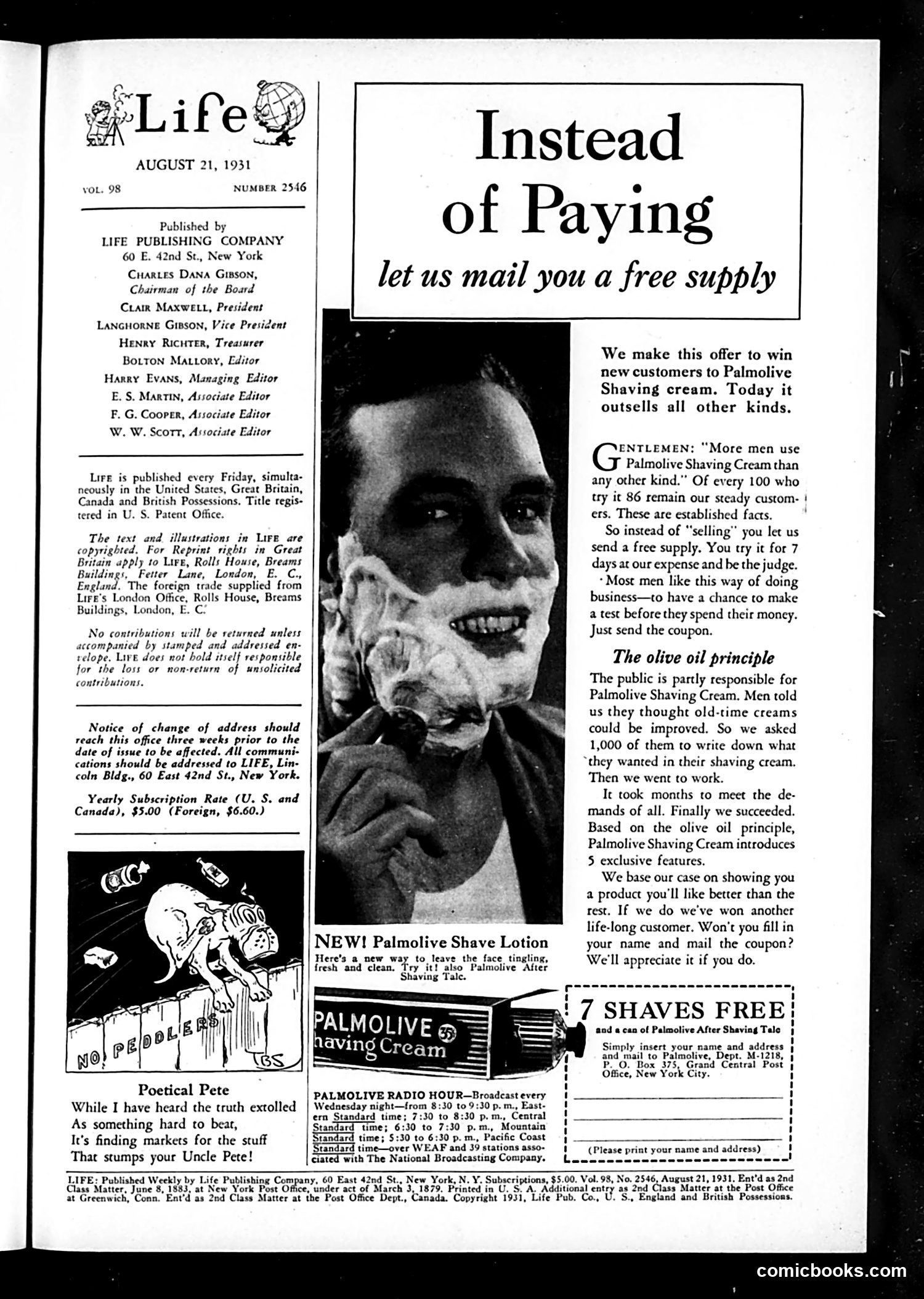
# Analysis This page is primarily a **Palmolive Shaving Cream advertisement** (1931), not political satire. The large photograph shows a man's face during shaving, used to advertise the product's benefits. The accompanying text employs a marketing strategy called "the olive oil principle"—offering free samples to let customers test the cream before purchasing, based on their belief that most users would become loyal customers. The small cartoon labeled "Poetical Pete" at bottom left appears to be unrelated humor about someone named "Uncle Pete," though the joke's context is unclear from the visible text. This represents **early 20th-century advertising strategy**: using testimonial-style arguments and free trial offers to build consumer confidence in branded personal care products.
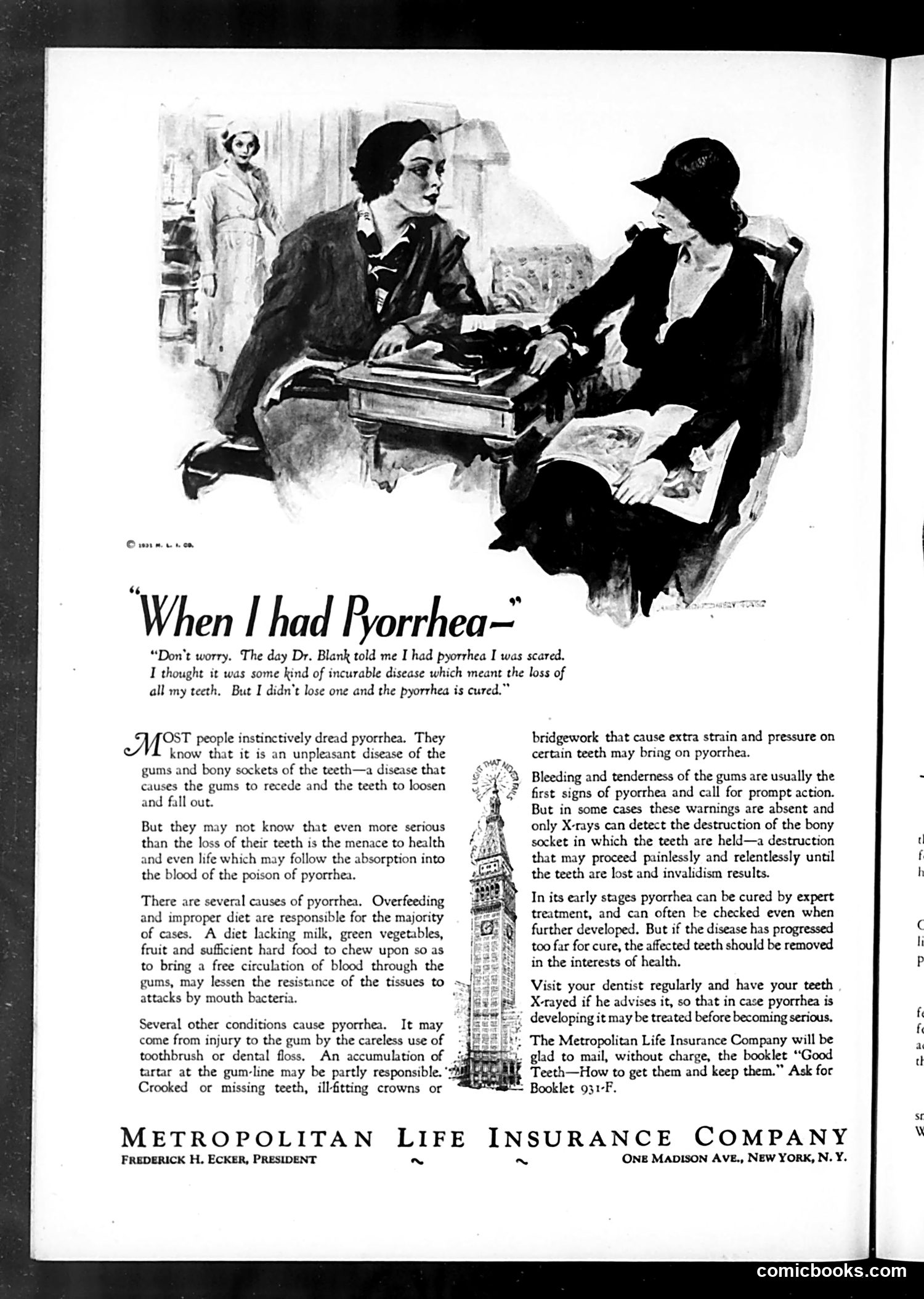
This is a health advertisement, not political satire. The Metropolitan Life Insurance Company uses a testimonial format to promote dental health awareness. A woman describes her experience with pyorrhea (now called periodontitis), a gum disease that causes tooth loss. The ad reassures readers that while pyorrhea sounds frightening, it's treatable with expert dental care and regular X-rays. The illustration shows two women—likely representing a patient consultation or social conversation about the condition. The advertisement emphasizes that insurance company literature ("Good Teeth—How to get them and keep them") is available free to readers. The piece reflects early-20th-century public health campaigns that used personal narratives and insurance companies' reach to educate Americans about preventive medicine and dental hygiene.
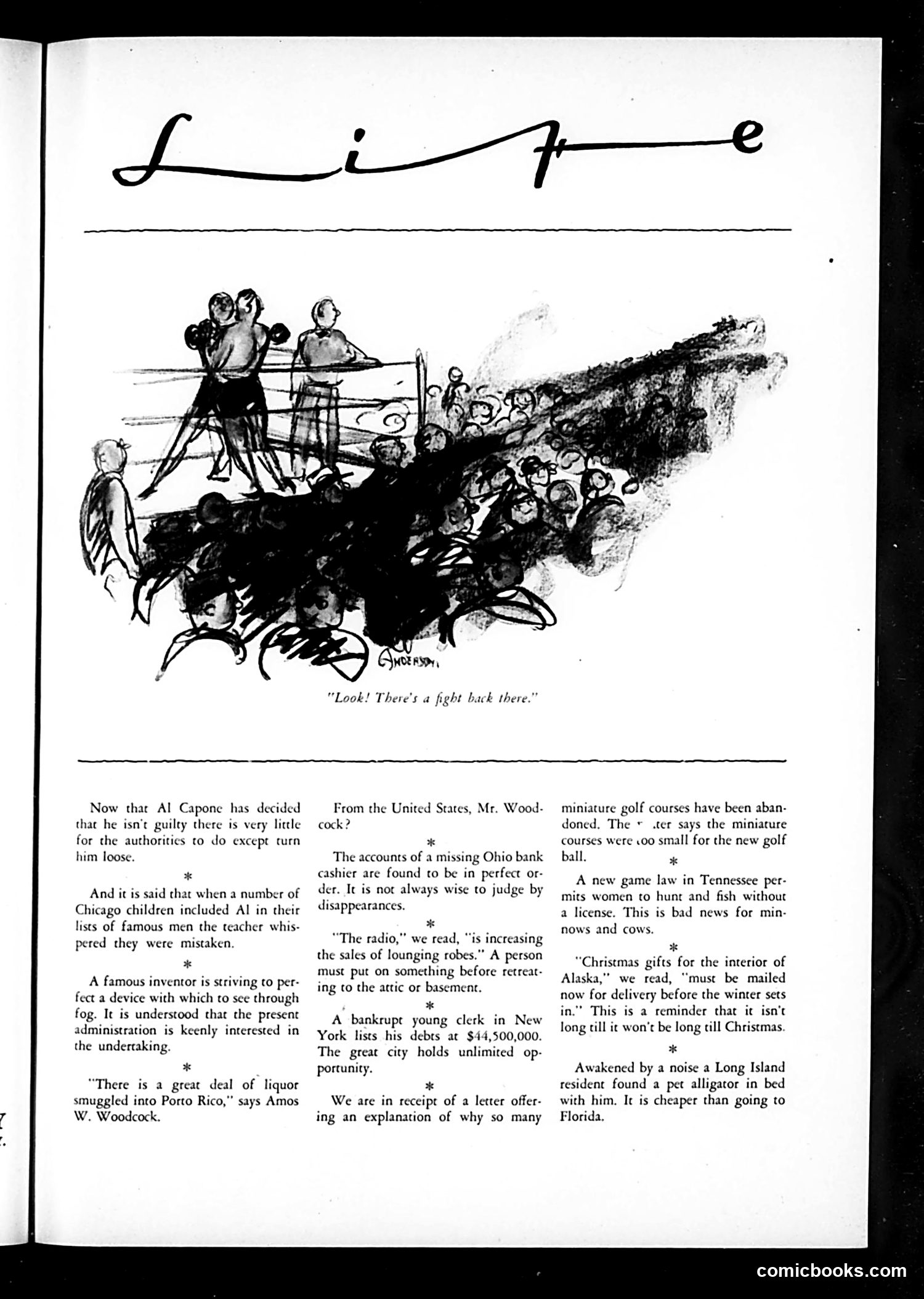
# "Life" Satirical Page Analysis The cartoon depicts a boxing ring scene with the caption "Look! There's a light back there," satirizing public attention and distraction. The image shows boxers in a ring while a large crowd gathers behind them, suggesting the cartoon comments on how spectators or the public can be diverted from the main event. The text snippets below appear to be brief satirical items about contemporary issues: Al Capone's legal troubles, a missing Ohio bank cashier, Chicago children mistaking famous men for criminals, an inventor's fog-prevention device, liquor smuggling into Puerto Rico, and other topical humor. Without publication date visible, the Prohibition-era references (smuggled liquor) suggest this is from the 1920s-early 1930s. The overall page exemplifies *Life* magazine's format of mixing visual satire with brief comedic news commentary.
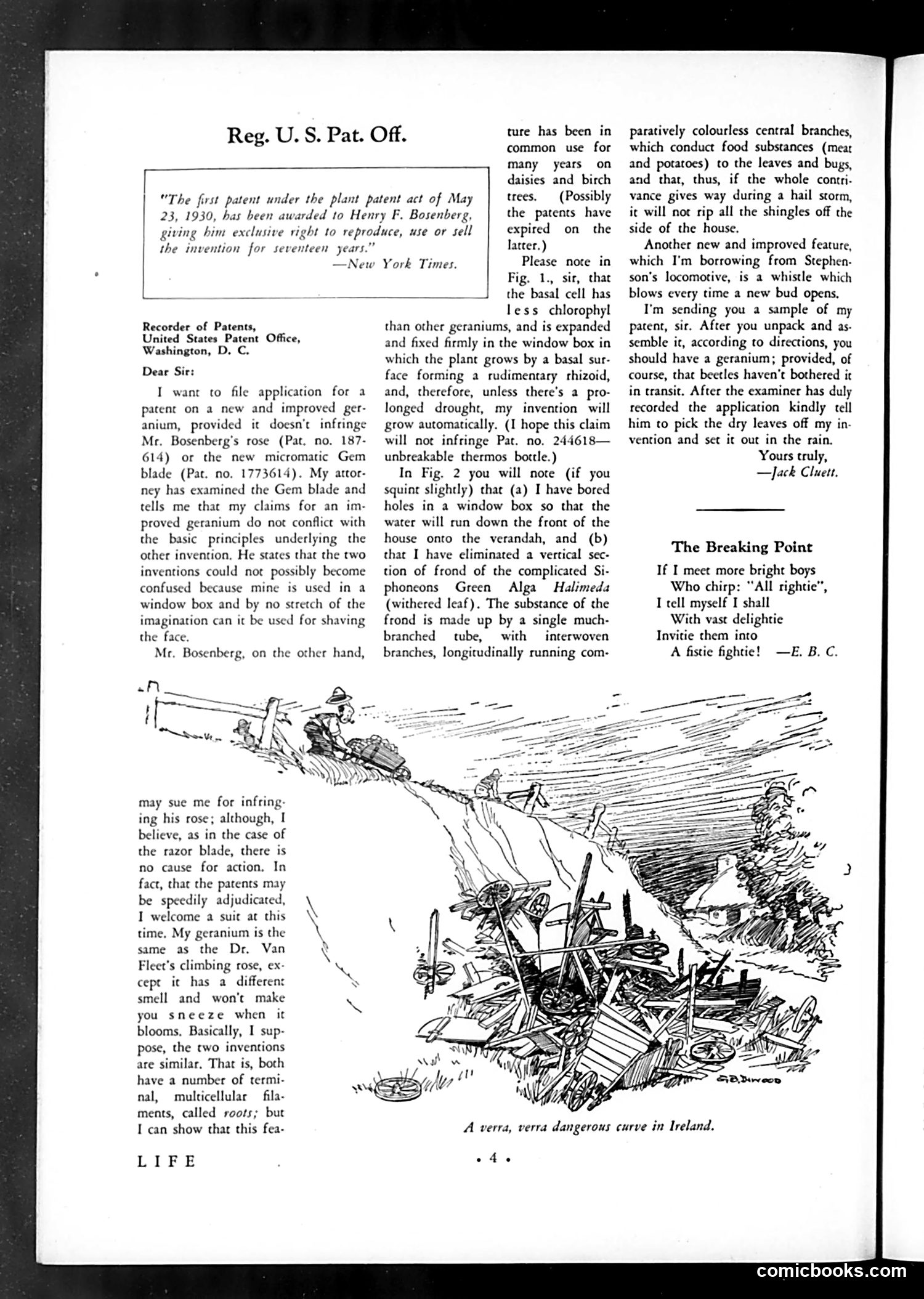
# Analysis This page contains a patent office letter and a humorous illustration, not a political cartoon. The letter discusses a geranium patent invention, with the writer defending their improved geranium against potential infringement claims from Mr. Rosenberg's rose patent. The writer argues their inventions are sufficiently different and shouldn't be confused. The illustration depicts a chaotic Irish road accident ("A terra, verra dangerous curve in Ireland"), showing a horse-drawn cart that has crashed near a cliff edge with figures tumbling about. This is a period ethnic stereotype joke: the humor relies on depicting Irish people and Irish driving as reckless and accident-prone—a common prejudicial trope in early 20th-century American humor magazines. The poem "The Breaking Point" at right is unrelated.
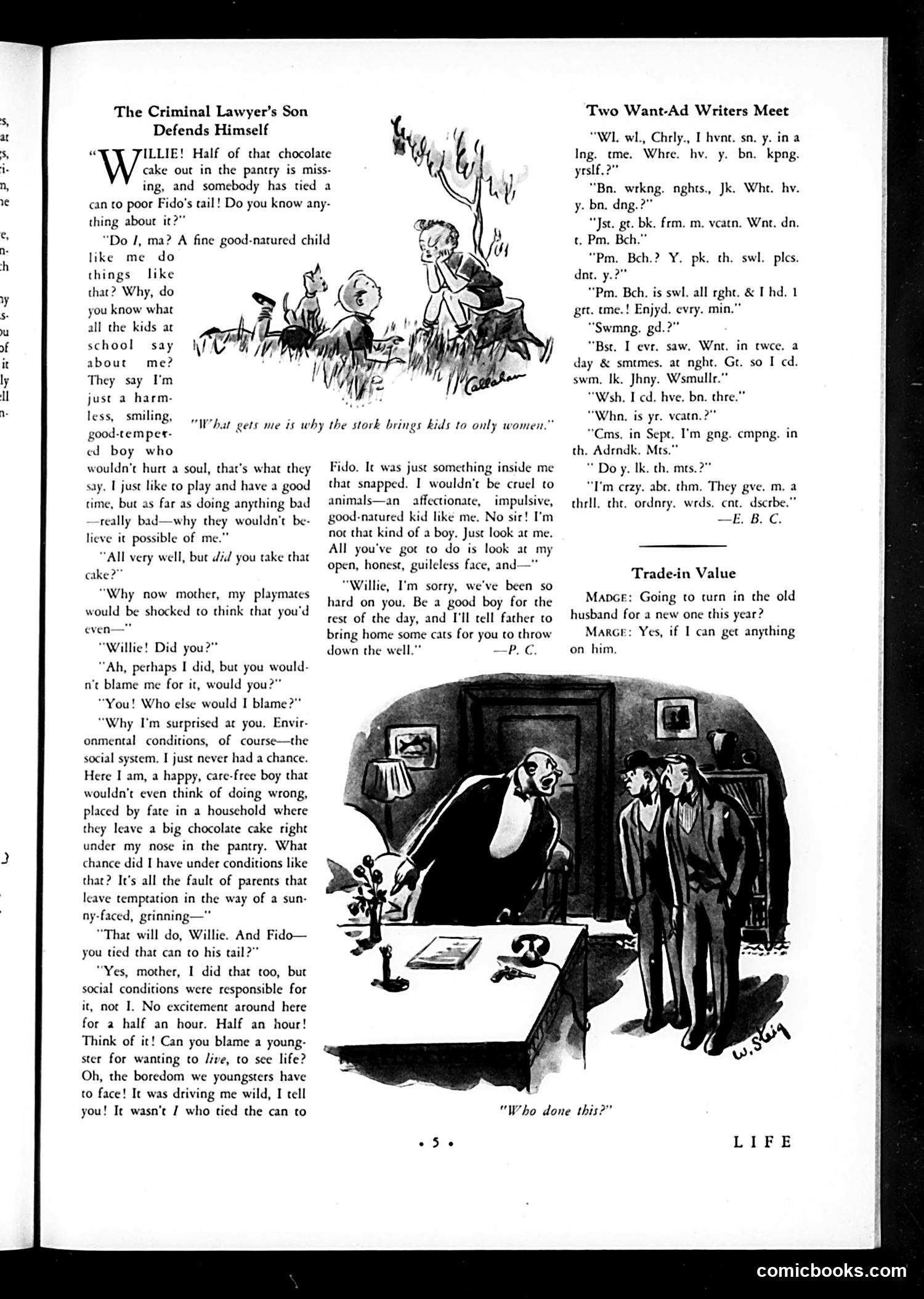
# Analysis of Life Magazine Page This page contains three separate humor pieces typical of early-20th-century Life magazine: 1. **"The Criminal Lawyer's Son Defends Himself"**: A dialogue where a boy, caught misbehaving, argues that environmental conditions—not his own nature—caused his wrongdoing. He blames "social system" and "parental conditions," suggesting satirical commentary on contemporary sociological arguments excusing criminal behavior. 2. **"Two Want-Ad Writers Meet"**: A joke featuring coded abbreviations from classified advertisements, mocking the cryptic, abbreviated language job seekers used. 3. **"Trade-in Value"**: A cartoon showing a wife proposing to trade in her old husband for a new one, satirizing consumer culture's "trade-in" concept applied to marriage—commentary on both consumerism and marital dissatisfaction. The humor reflects pre-1920s sensibilities and social anxieties.
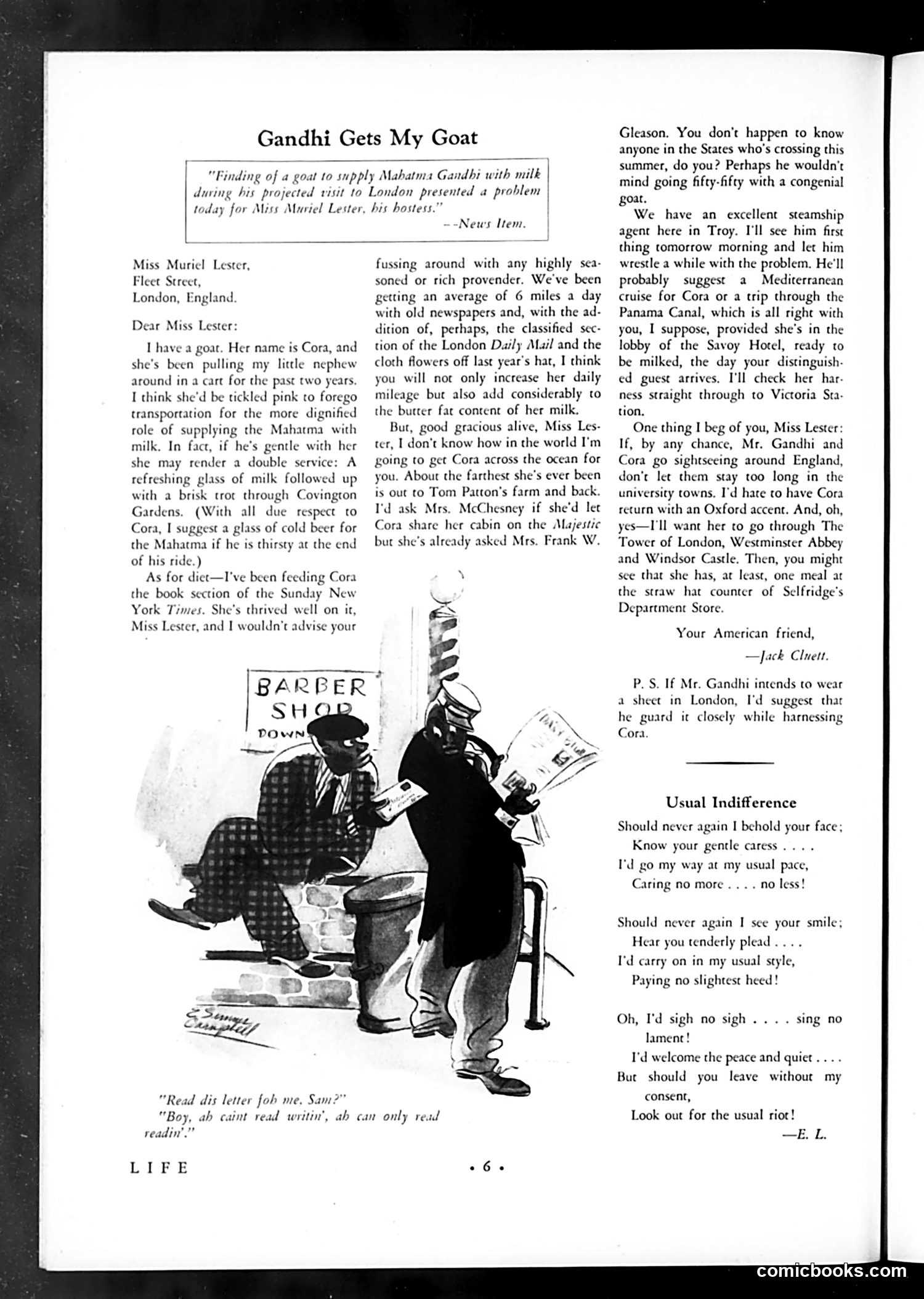
# "Gandhi Gets My Goat" - Life Magazine This page satirizes plans to supply Mahatma Gandhi with milk via a goat during his visit to England. The letter from "Jack Cluett" (an American) humorously suggests the goat "Cora" be transported across the Atlantic and toured throughout England—visiting Oxford, the Tower of London, Westminster Abbey, and Selfridge's Department Store—before reaching Gandhi. The cartoon depicts a barber reading the letter aloud to a customer, with the caption "Read dis letter fob me, Sam?" The satire mocks both the elaborate logistics of Gandhi's visit and the absurdity of the goat's proposed English tour. It reflects 1930s American amusement at Gandhi's ascetic lifestyle and dietary practices, treating his milk-drinking habits as exotic fodder for comedy.
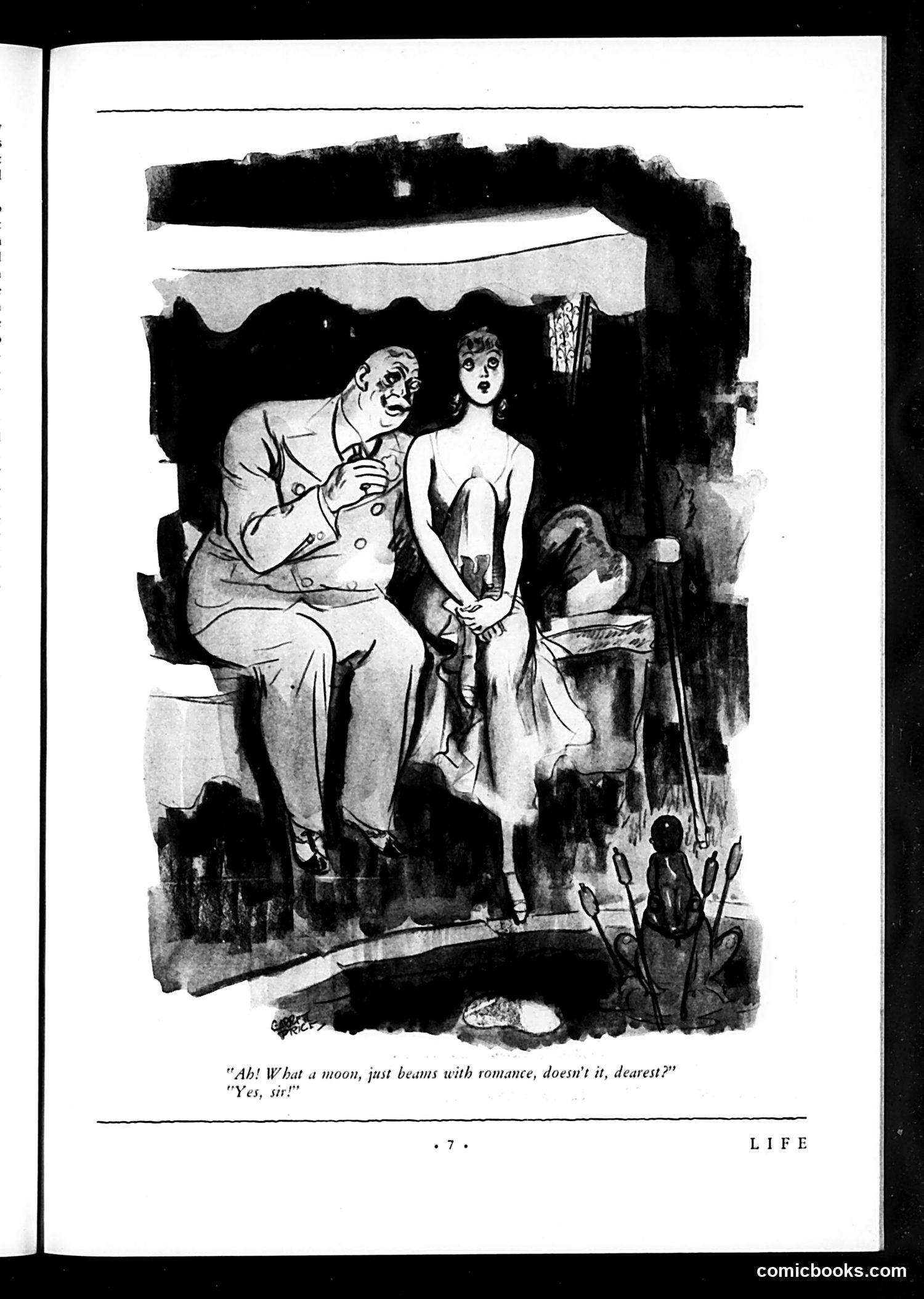
# Cartoon Analysis This is a single-panel cartoon from *Life* magazine depicting a romantic scene under the moon. An older, portly man in a suit sits beside a young woman in what appears to be a park or public setting at night. The man gestures romantically toward the moon, saying "Ah! What a moon, just beams with romance, doesn't it, dearest?" to which the woman responds "Yes, sir!" The humor relies on the awkward dynamic: the significant age and physical difference between the characters, combined with the woman's formal "Yes, sir" response, suggests she's complying with rather than genuinely reciprocating his romantic overtures. The cartoon satirizes older men's attempts at seduction and the transactional or power-imbalanced nature of such encounters, likely commenting on social climbing or financial motivation in romantic relationships.
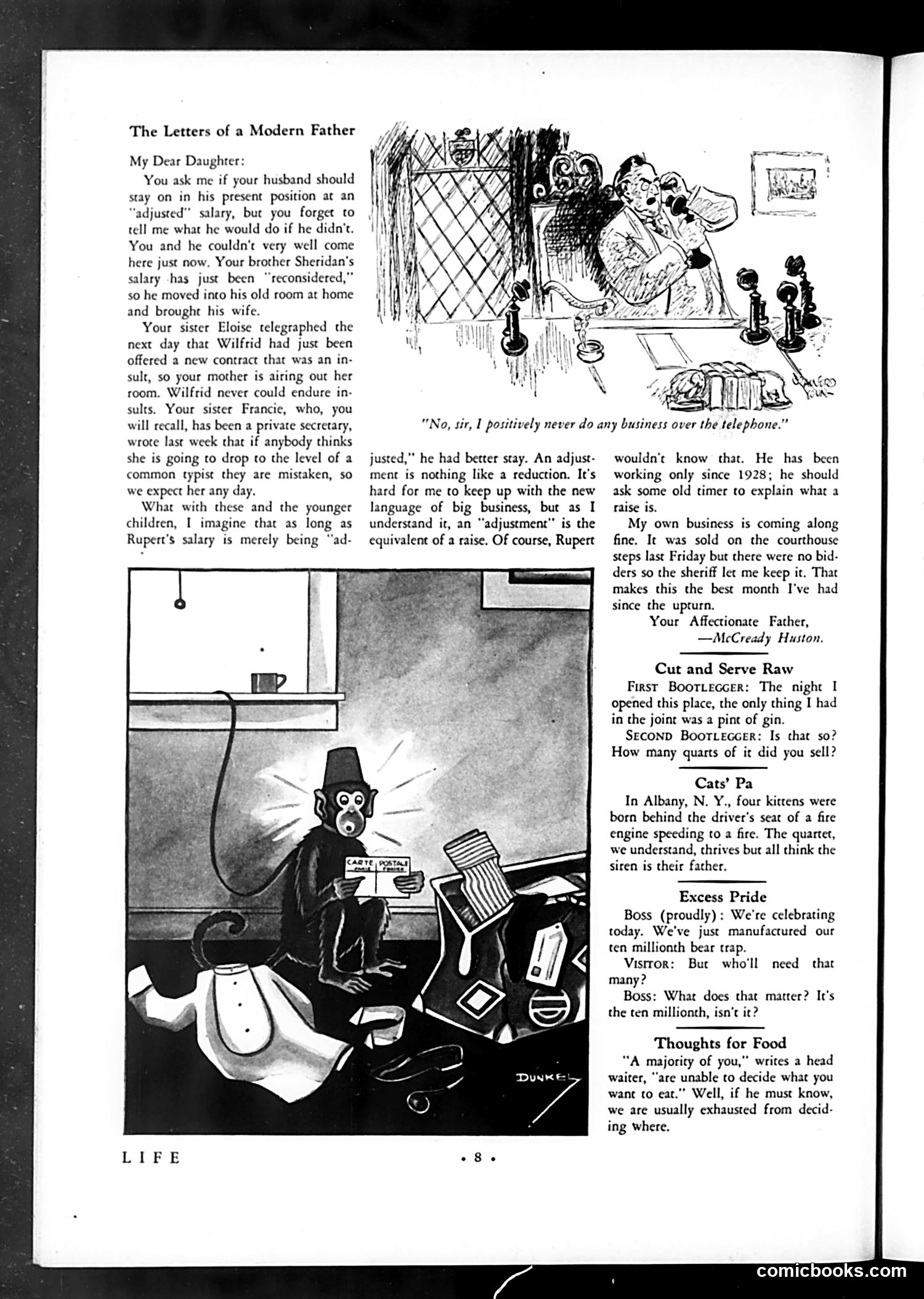
# Explanation for Modern Readers This page from *Life* magazine contains several satirical humor pieces: **Top Section:** A letter from "McCready Huston" advises his daughter about her husband's job situation, discussing whether an "adjustment" (salary cut) versus a "raise" matters during economic hardship. The accompanying cartoon shows a figure at a telephone, illustrating businessmen's reluctance to conduct serious matters by phone. **Middle Cartoon:** Features a gas-masked figure amid scattered bottles and containers labeled "CASTLE PORTER," satirizing Prohibition-era bootlegging and the dangerous, unregulated alcohol trade. **Bottom Sections:** Brief humorous anecdotes mock business jargon ("adjustment" vs. "raise"), absurdist animal stories, and workplace observations—typical of *Life's* satirical commentary on American culture and economic anxieties, likely from the 1920s-1930s era.
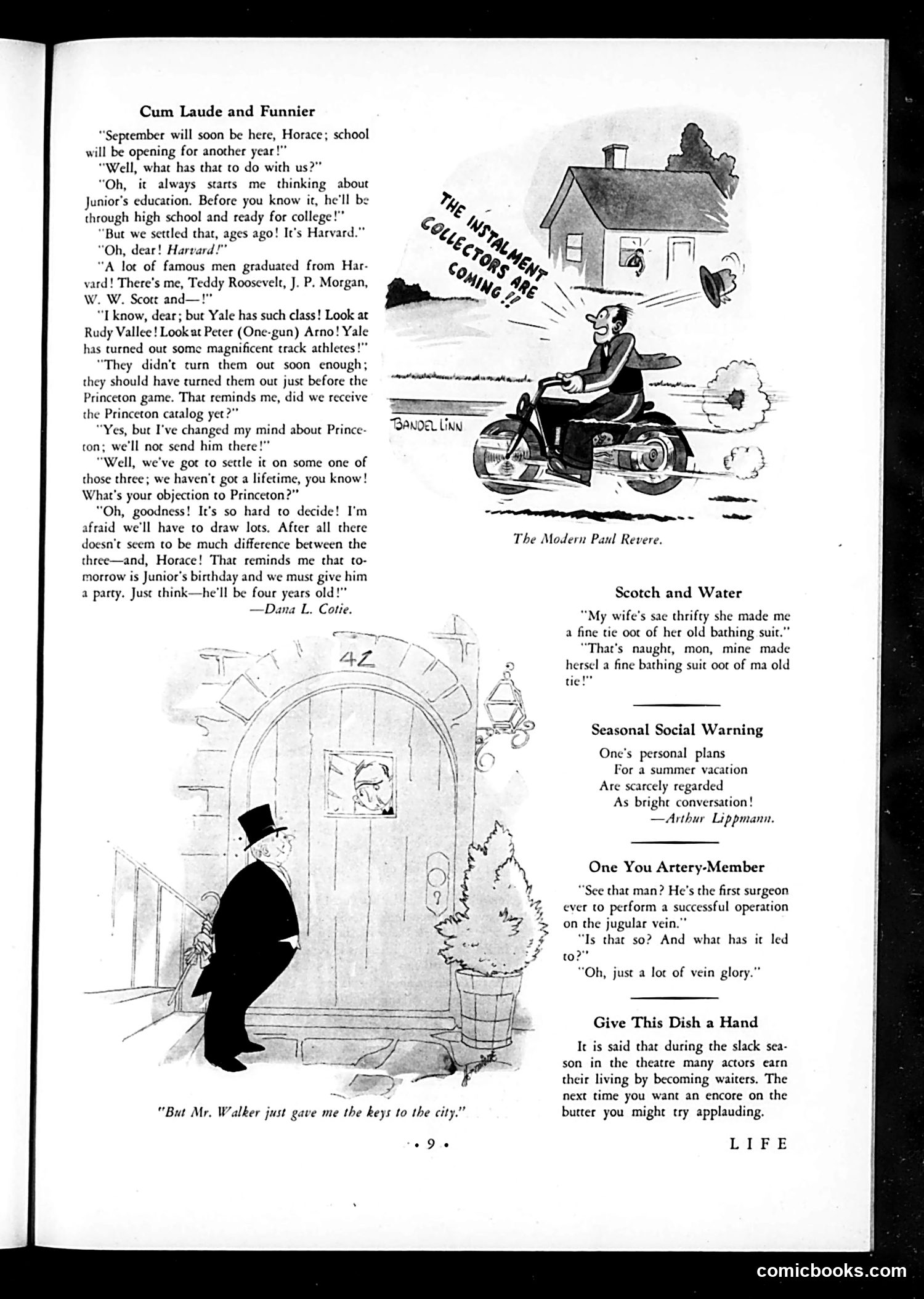
# Analysis of Life Magazine Page 9 This page contains humorous prose pieces and cartoons satirizing American upper-class life. The top cartoon titled "The Modern Paul Revere" shows a man on a motorcycle announcing "the inhabitants, collectors are coming!" — mocking wealthy art collectors as a social threat comparable to British forces in the Revolutionary War. The bottom cartoon depicts a gentleman presenting "the key to the city" to another man, satirizing urban political patronage and insider access. The prose sections offer brief jokes about Scottish thriftiness, summer vacation planning, and theatre actors working as waiters during slow seasons — all gentle social satire targeting established conventions and class behaviors of the magazine's affluent readership.
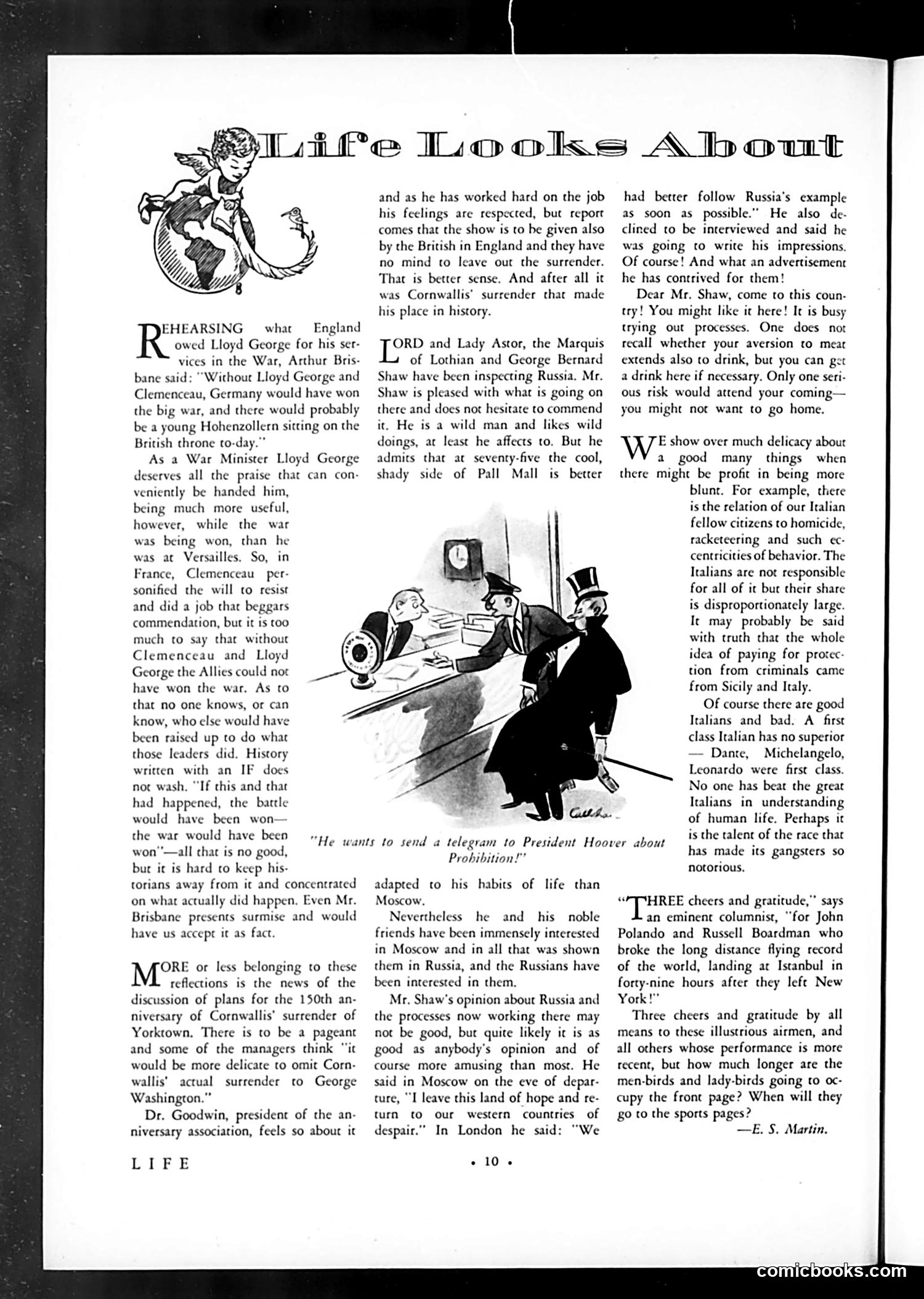
# "Life Looks About" - Political Commentary Page This page contains editorial commentary on post-WWI politics rather than traditional cartoons. The main cartoon shows three figures at a desk labeled "He wants to send a telegram to President Hoover about Prohibition!" The satire targets: **Cornwallis's surrender**: The text discusses Lloyd George's wartime leadership versus his post-war role, referencing the 1500 anniversary of Cornwallis's surrender at Yorktown—implying current political "surrenders" are equally shameful. **The cartoon**: Appears to mock diplomatic efforts around Prohibition enforcement, with figures attempting to communicate with President Hoover about this contentious policy. **Italian criminality**: The article discusses organized crime's Italian connections, distinguishing between Italian cultural achievements (Dante, Michelangelo) and contemporary gangsterism. The overall tone critiques political ineffectiveness and moral compromise in 1920s American governance.