A complete issue · 36 pages · 1931
Life — August 14, 1931
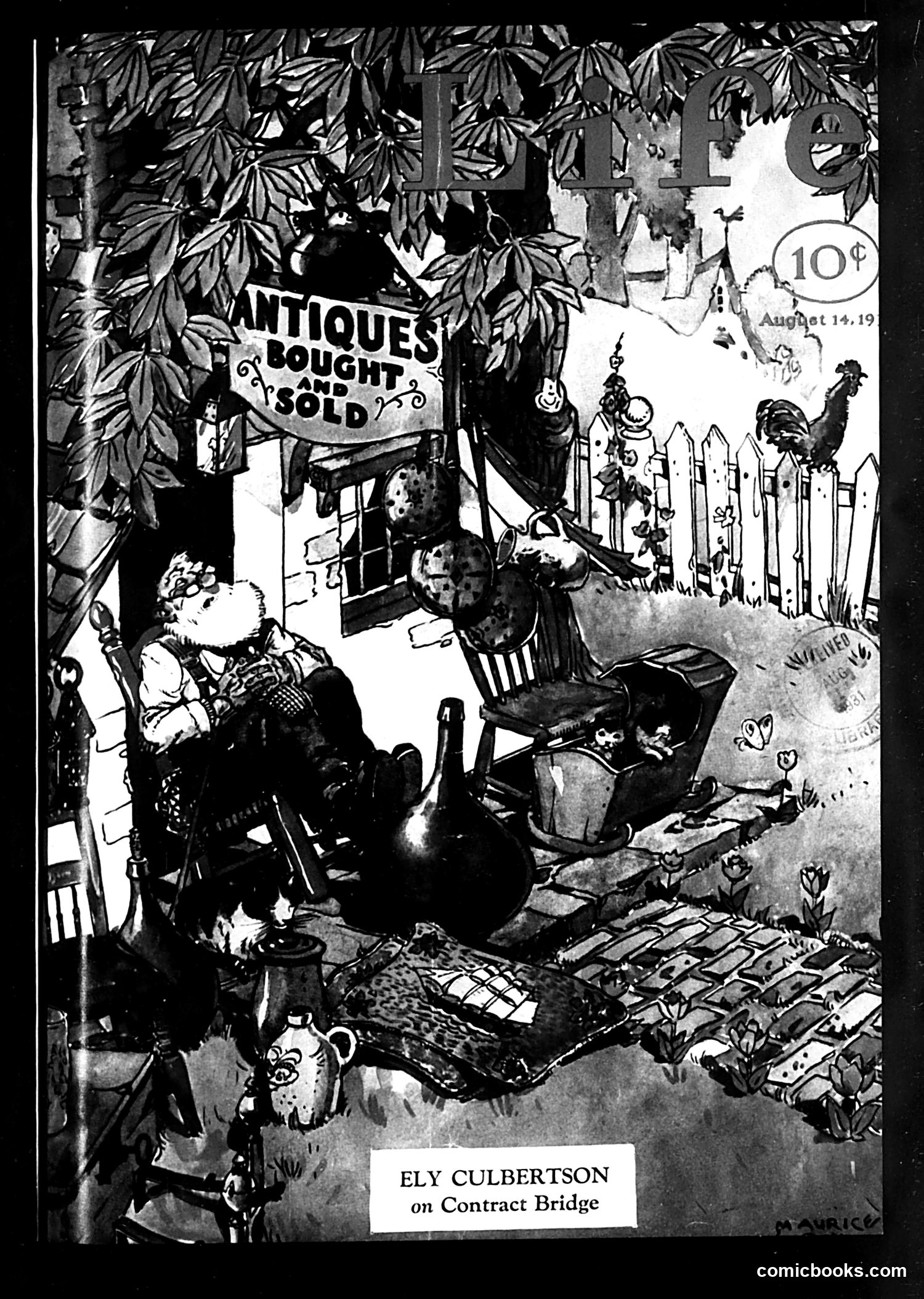
# Analysis This appears to be a Life magazine cover from August 14, 1919 (price 10¢). The illustration is credited to "ELY CULBERTSON on Contract Bridge" and depicts an antique shop scene with an "ANTIQUES BOUGHT & SOLD" sign. The cartoon likely satirizes the popularity of Contract Bridge, a newly fashionable card game in 1919. The joke appears to connect bridge-playing with accumulating antiques—possibly suggesting that bridge players are either wasting time collecting old items, or that the game itself was becoming as dated as antiques. The charming domestic scene with figures in the garden and shop setting provides the visual context for this social commentary on contemporary leisure habits and consumer culture among the American middle class.
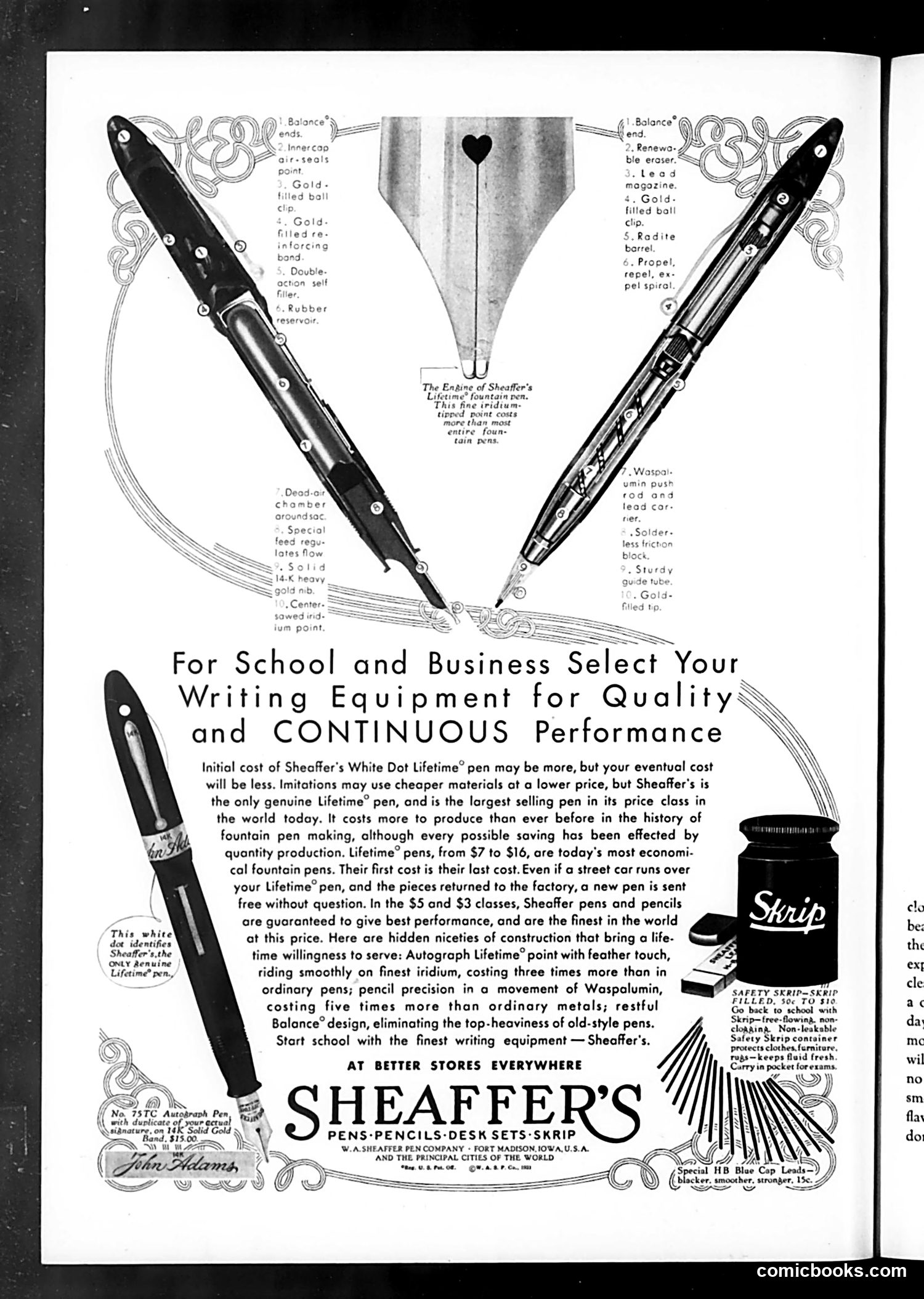
# Content Analysis This is a **full-page advertisement for Sheaffer's pens and writing supplies**, not a political cartoon. The page contains no satire or social commentary. The ad features detailed technical illustrations of Sheaffer's fountain pens (labeled "Lifetime" pens) with cross-sections showing internal mechanisms like the gold nib, ink feed system, and ball-clip. There's also an illustration of the "Skrip" ink bottle. The marketing message emphasizes durability and quality: though initially more expensive than competitors, Sheaffer pens allegedly cost less over time due to superior construction. The ad claims these are "the largest selling pen in the world" and recommends them for "school and business." This represents typical mid-20th-century advertising copy focusing on product longevity and professional reliability.
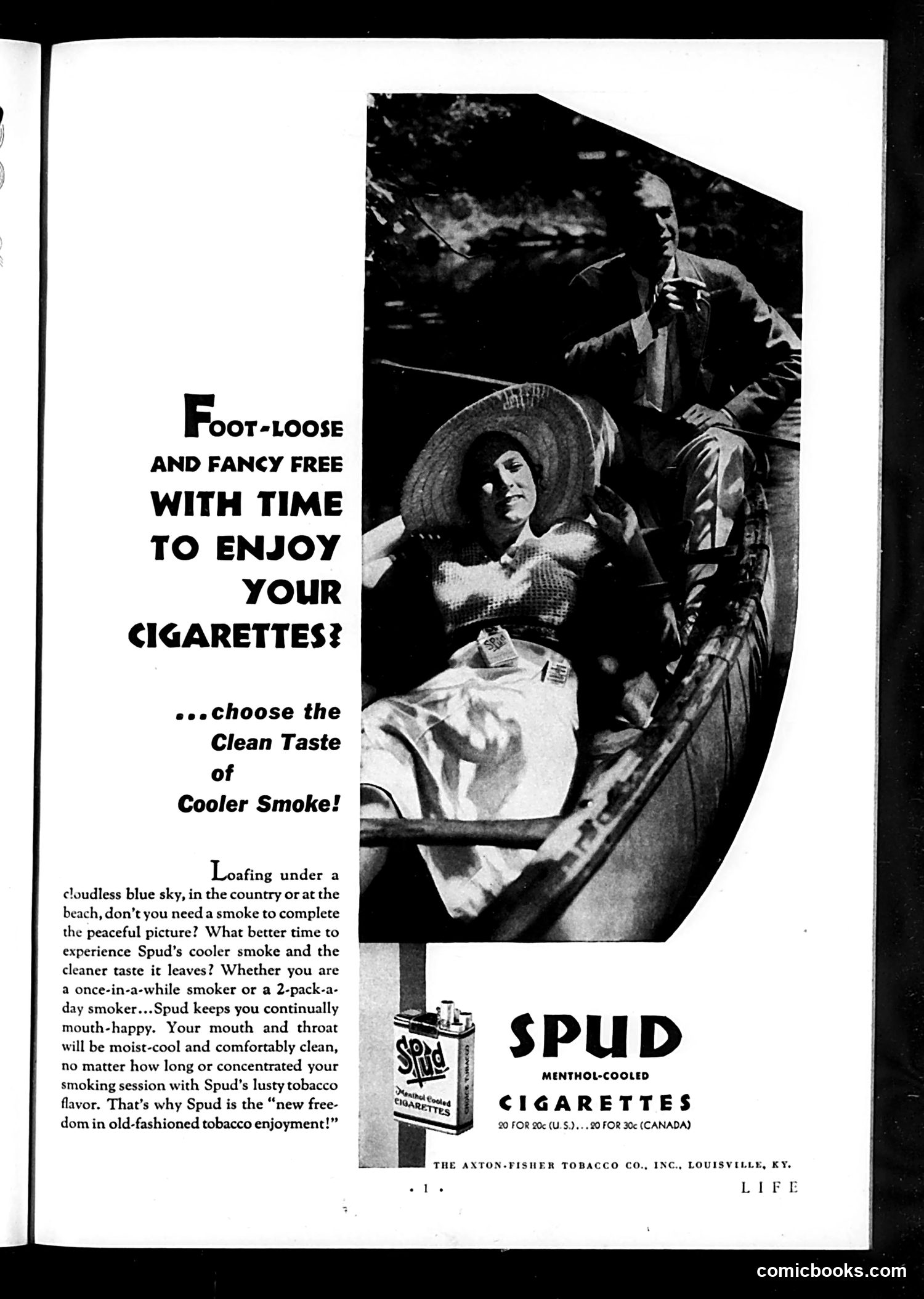
# Analysis This is a **cigarette advertisement**, not satirical content. It's a vintage Spud menthol cigarettes ad from Life magazine, promoting "the Clean Taste of Cooler Smoke!" The ad features a romantic scene: a couple relaxing outdoors—a woman in a wide-brimmed hat and the man in casual attire. The copywriting emphasizes leisure and comfort, claiming Spud cigarettes keep your mouth "moist-cool and comfortably clean" during smoking. **For modern readers:** This reflects mid-20th century advertising's brazen health claims (now banned). "Clean taste" and "cooler smoke" were marketing language suggesting health benefits. The lifestyle imagery—carefree relaxation—was standard cigarette marketing targeting leisure-oriented consumers. The product is presented as enhancing enjoyment and social situations, a common approach before tobacco's dangers were widely acknowledged.
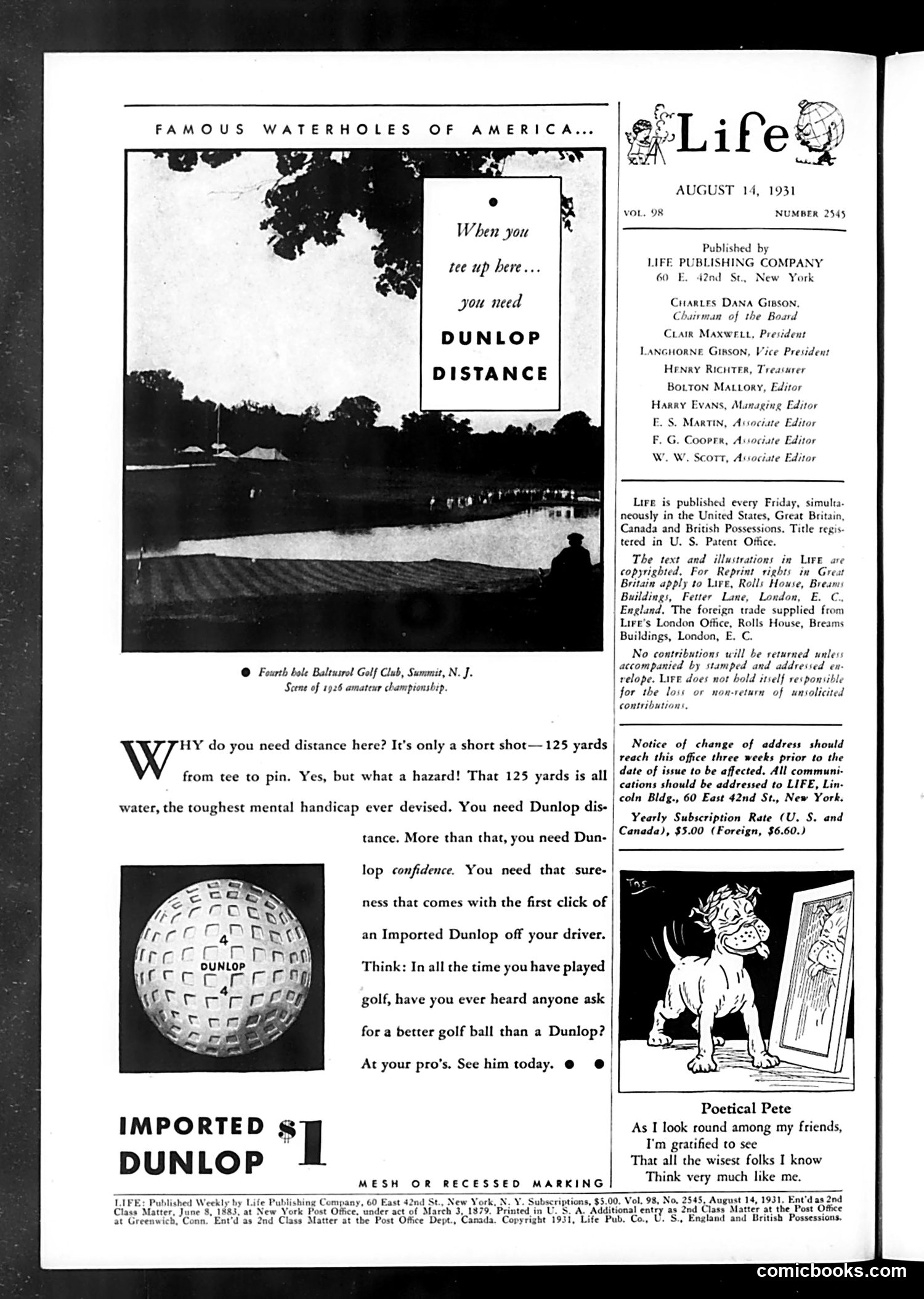
# Content Analysis This page is primarily **advertising**, not satire or political commentary. The main content is a **Dunlop golf ball advertisement** (imported model, priced at $1). The ad uses the setup of a water hazard at "Fourth Isle Ballroad Golf Club, Summit, N.J." to argue that golfers need Dunlop balls for confidence and distance—claiming 125 yards across water requires superior equipment and reliability. The small cartoon at bottom right, titled "Poetical Pete," appears to be unrelated filler humor—a dog looking at a mirror with a humorous poem about the dog thinking "all the wisest folks I know / Think very much like me." The page also includes masthead information for *Life* magazine (August 14, 1931, Vol. 98) and publication details. This is a commercial page with minimal satirical content.
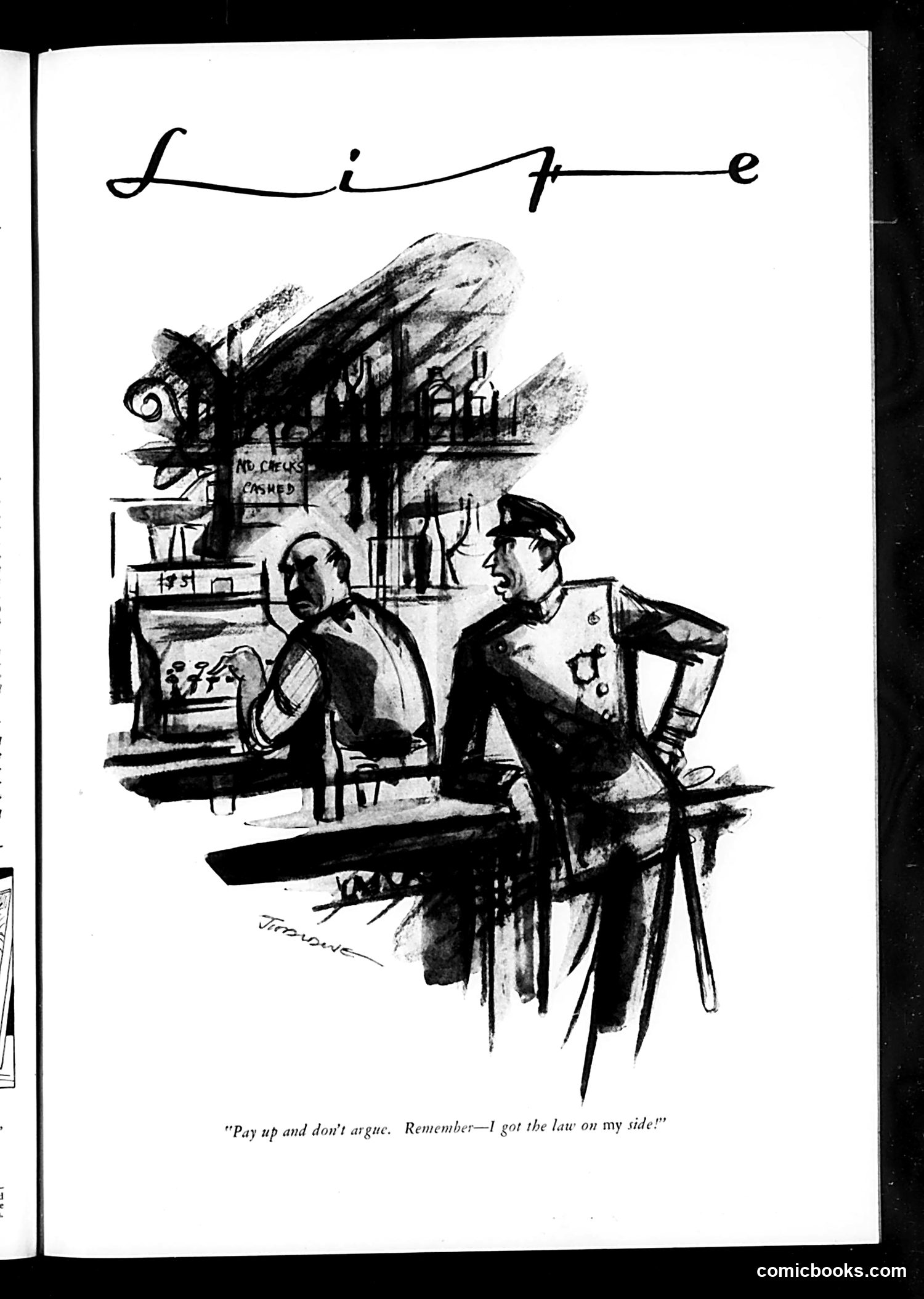
# Analysis This cartoon satirizes police corruption or abuse of authority. The scene shows two men in what appears to be a police station or official building (note the desk and "No Checks Cashed" sign). One figure, likely a corrupt official or police officer, demands payment from another man while asserting "Pay up and don't argue. Remember—I got the law on my side!" The satire targets how those with legal authority exploit their position for personal gain, using their power to intimidate and extort from ordinary citizens. The phrase "got the law on my side" is ironic—rather than protecting people, the law becomes a tool for corruption. This reflects early-to-mid 20th century concerns about police misconduct and institutional abuse of power in American cities.
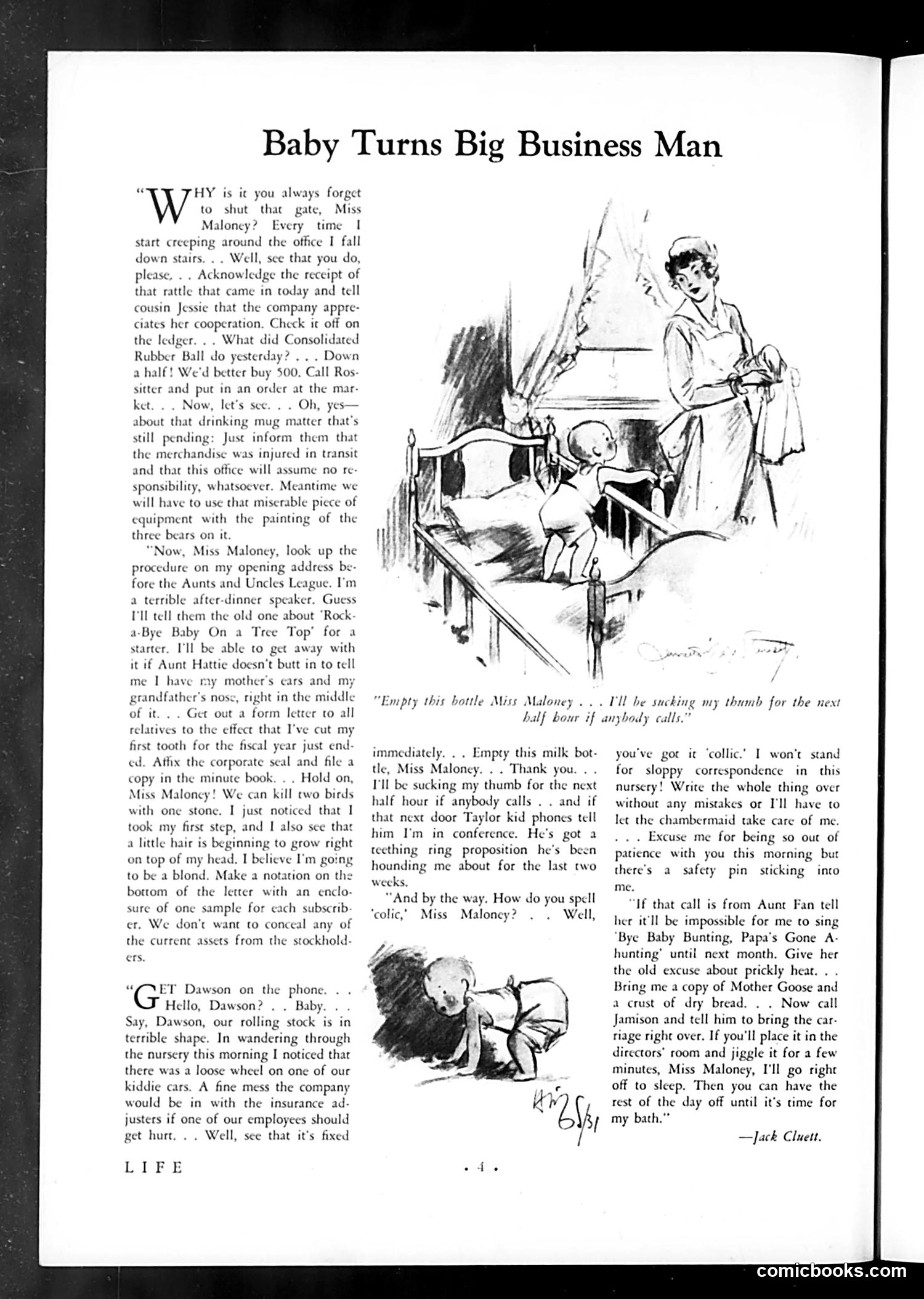
# "Baby Turns Big Business Man" This satirical piece mocks the absurdities of corporate bureaucracy through a baby's perspective. A harried office manager (Miss Maloney) addresses an infant, treating it as a serious employee while delivering mundane workplace complaints: forgotten gates, damaged merchandise, ledger discrepancies, and equipment maintenance. The humor derives from the incongruity of conducting professional business with a baby—discussing "colic," teething, and bottle-feeding alongside corporate procedures, insurance liability, and stockholder concerns. The satirist (Jack Cluett) suggests that corporate management has become so mechanized and depersonalized that even infants could perform these roles equally well. The cartoons show the baby sitting at a desk and in a crib, visually reinforcing how infantilized adult corporate work has become—a common modernist critique of early 20th-century industrialization.
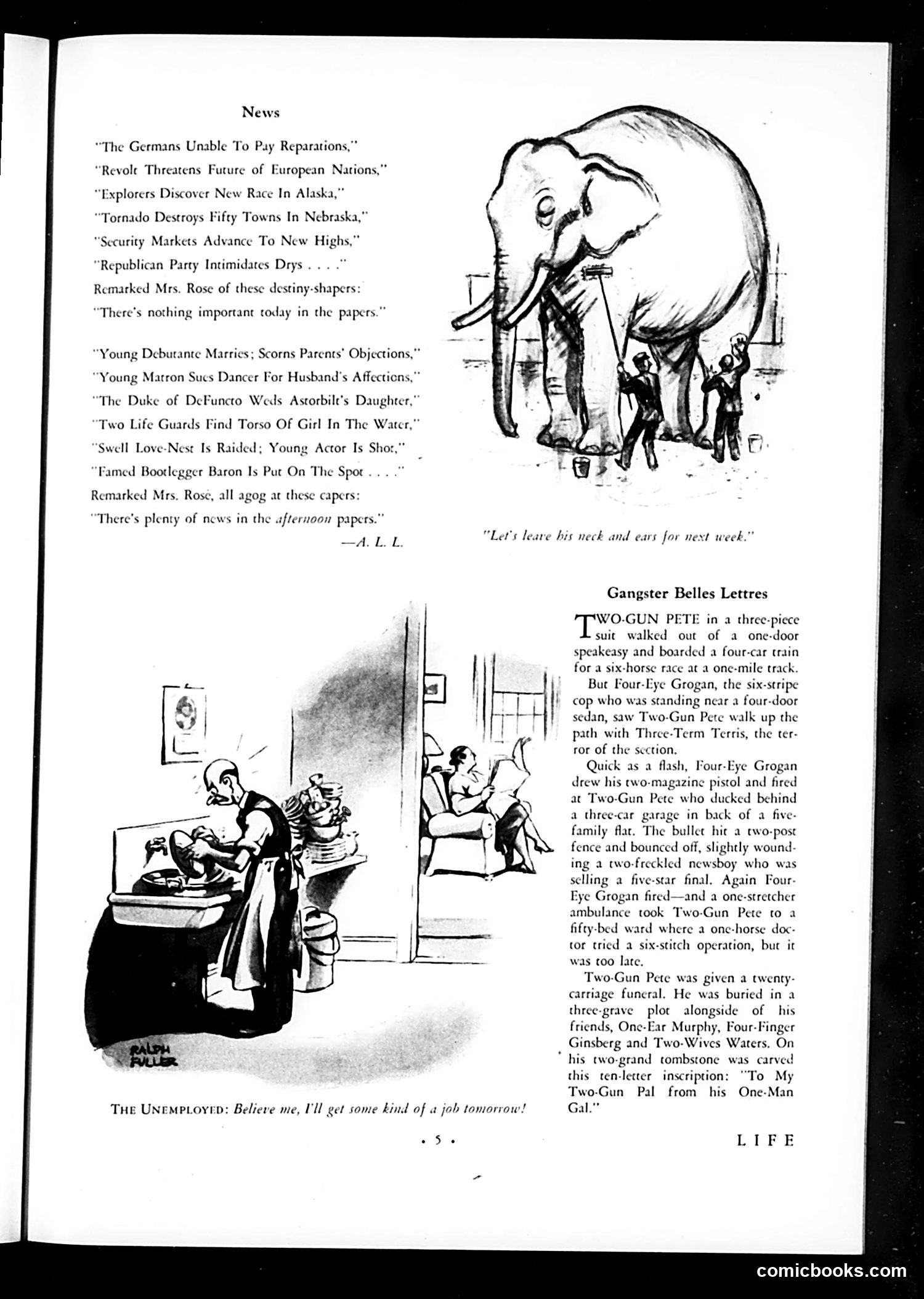
# Analysis of Life Magazine Page The page contains two distinct elements: **Top Section ("News"):** A satirical poem by A. L. L. mocking newspaper headlines. Mrs. Rose dismisses serious global news ("Germans Unable To Pay Reparations," "Revolt Threatens Future of European Nations") as unimportant, but finds afternoon papers full of gossip about debutantes, actors, and society marriages. The accompanying elephant cartoon reinforces this critique—trivial human concerns dwarf against larger realities. **Bottom Section ("Gangster Belles Letters"):** A humorous crime narrative about "Two-Gun Pete," a gangster shot by "Four-Eye Grogan" during a train robbery. The dark comedy details Pete's death and twenty-carriage funeral, with his tombstone inscription reading "To My Two-Gun Pal from his One-Man Gal." Together, these pieces satirize 1920s American culture: society's obsession with celebrity gossip over substantive news, and the era's romanticization of gangster violence.
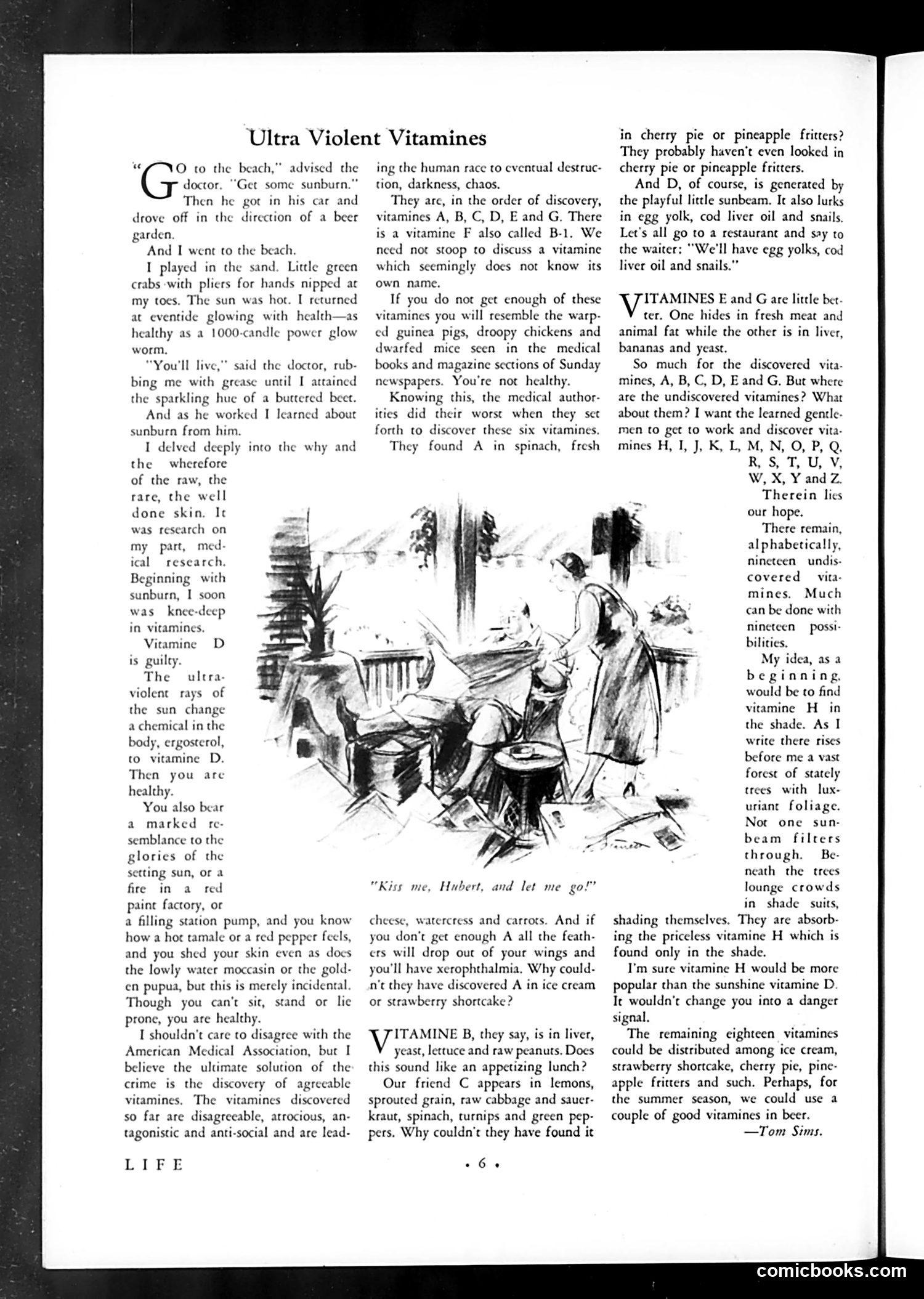
# "Ultra Violent Vitamines" - Life Magazine This satirical article mocks the American medical establishment's obsession with newly discovered vitamins in the early 20th century. The text humorously suggests that doctors enthusiastically prescribe vitamins A through G (and hint at undiscovered H through Z) as cure-alls for various ailments, often without solid evidence. The accompanying sketch depicts a domestic scene where someone appears to be consulting about vitamins, likely illustrating the era's vitamin-craze mentality. The satire targets how Americans eagerly adopted vitamin science—sometimes excessively—treating these substances as panaceas. The title "Ultra Violent" suggests the aggressive marketing and promotion of vitamins was absurdly intense, poking fun at both medical professionals overstating benefits and consumers' gullible acceptance of nutritional fads.
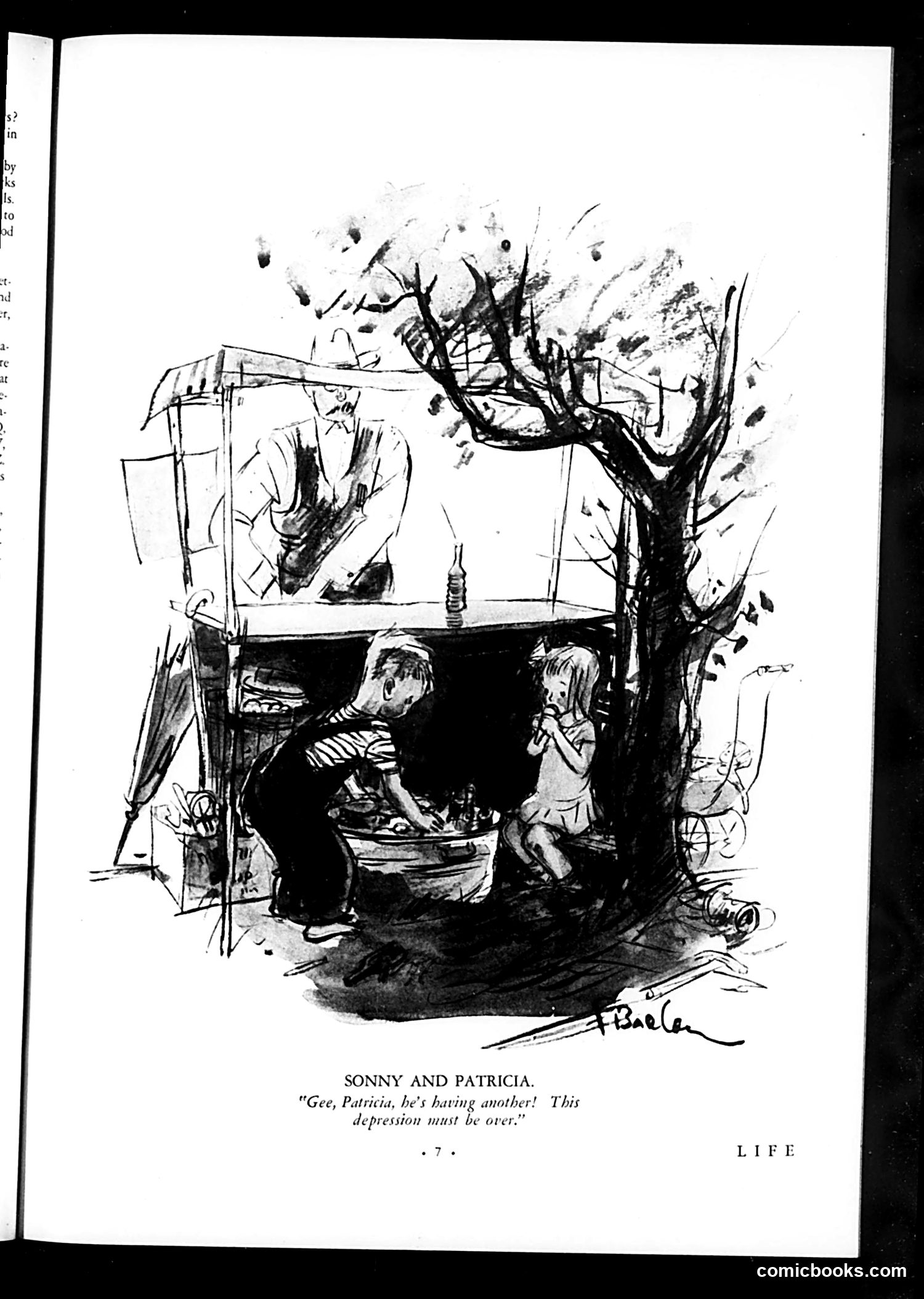
# Explanation for Modern Readers This is a humorous domestic cartoon titled "Sonny and Patricia." The illustration shows a man sitting with two young children near a bare tree, apparently living in makeshift or impoverished conditions (suggested by the skeletal tree and sparse shelter). The caption reads: "Gee, Patricia, he's having another! This depression must be over." The joke relies on Depression-era context: the man interprets his wife's pregnancy as a sign that economic conditions are improving—suggesting families felt more optimistic about their financial futures. However, the visual evidence (poverty, bare surroundings) contradicts this optimism, creating dark satire about the gap between hope and harsh reality during the Great Depression.
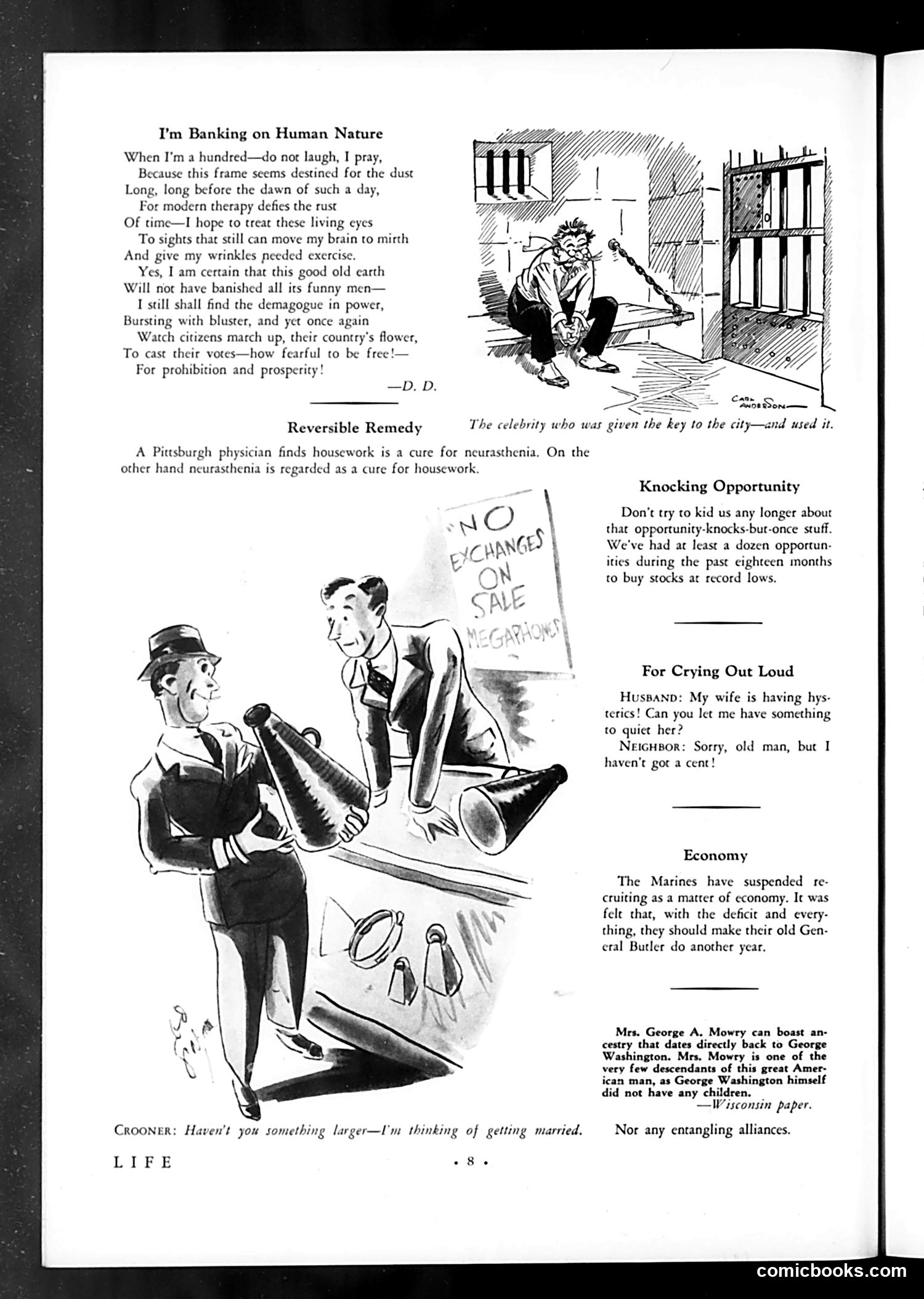
# Explanation for Modern Readers This *Life* magazine page contains several satirical short pieces typical of early-20th-century humor. **Top**: "I'm Banking on Human Nature" is a poem by D.D. expressing optimism that human nature will preserve democracy despite current challenges. The illustration shows an elderly person in a cell, suggesting imprisonment or confinement. **Middle**: "Reversible Remedy" jokes that a Pittsburgh doctor claims housework cures neurasthenia (anxiety/nervous exhaustion), while housework itself causes the condition—a circular contradiction mocking pseudo-medical claims popular at the time. **Bottom**: The stock-exchange cartoon depicts a man telling another about marriage while holding a sign reading "No Exchanges on Sale," satirizing both financial markets and marriage as irreversible transactions. The brief text items mock contemporary social issues: hysteria, Marine recruiting cuts, and genealogical pretension.
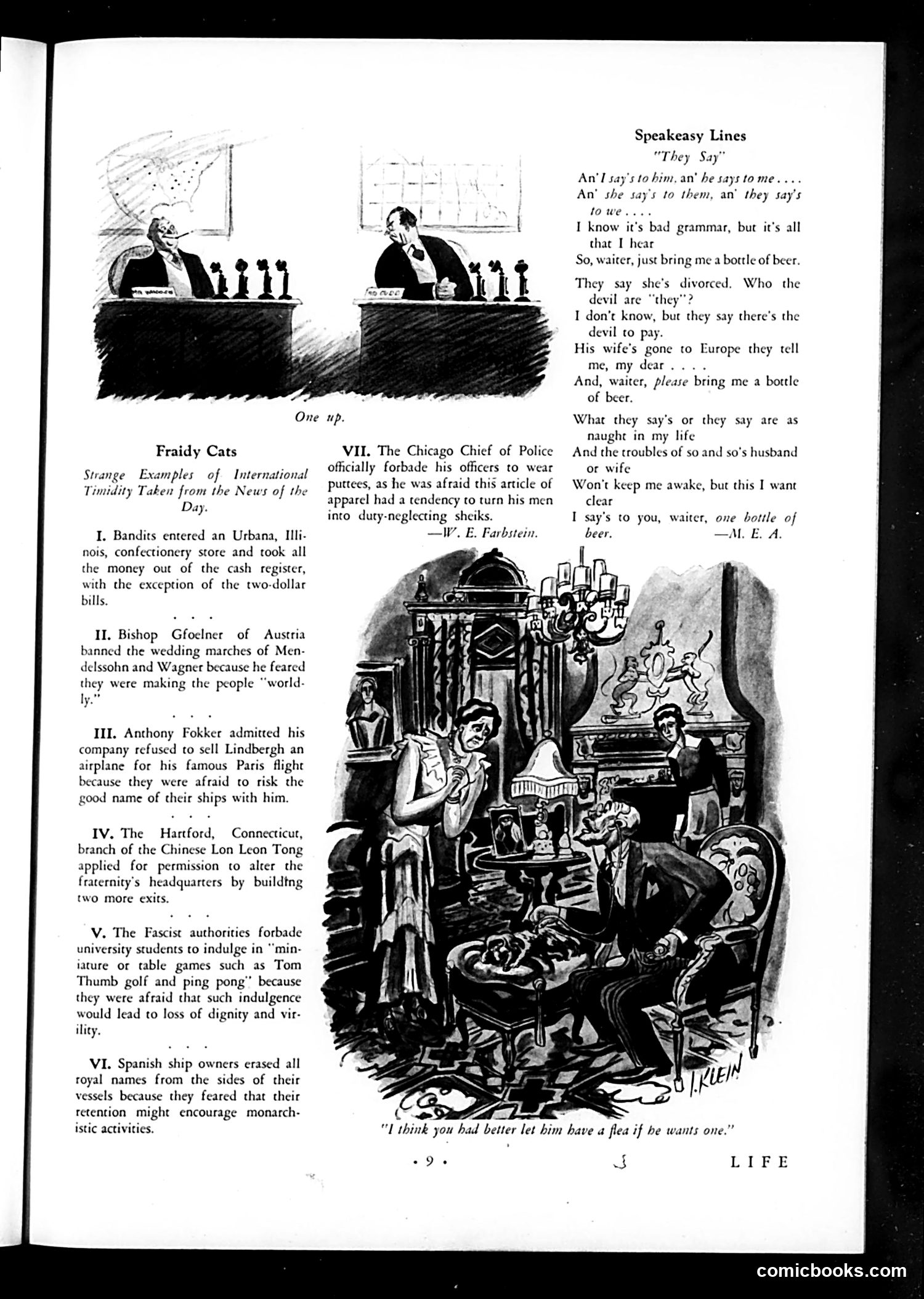
# Page Analysis This page combines humor about contemporary social anxieties with satirical observations about international governance. **"Speakeasy Lines"** (top cartoon) satirizes Prohibition-era bar culture, where rumor and gossip spread—the waiter hears conflicting gossip about "they" and must deal with patrons' drinking demands amid marital scandal. **"Fraidy Cats"** lists seven instances where authorities or institutions banned activities due to unfounded fears: bandits stealing from cash registers, Austrian bishops banning Wagner, Fokker refusing Lindbergh's plane, Chinese businesses avoiding exits, Fascist authorities forbidding student games, and Spanish ship owners erasing royal names. The satire targets how fear—often exaggerated—drives censorship and control. **Lower cartoon** depicts industrial chaos, captioning "I think you had better let him have a pea if he wants one," suggesting indulgence amid disorder. The page mocks how fear-based reasoning justifies institutional overreach.
# "Life Looks About" - Political Commentary Page This page from *Life* magazine contains three satirical pieces on American politics and society: **"Prosperity Coming; Dr. Butler Already Here!"** discusses Dr. Butler's optimistic economic predictions and his consistent Republican voting, suggesting his forecasts lack real political influence. **"Dr. Murray Butler Returning from Europe"** references Butler's observations about U.S. postwar obligations, particularly regarding Congress passing aid resolutions to war-affected nations. **"Tut, Tut! Magicians!"** satirizes the Society of American Magicians' reported campaign against fortune-tellers, estimating they spend $125 million annually on such services. The piece questions whether magicians should police what the author sees as a legitimate profession. The illustrations appear to be generic decorative cartoons rather than specific caricatures, supporting the text's satirical tone about credibility and influence.