A complete issue · 37 pages · 1931
Life — August 7, 1931
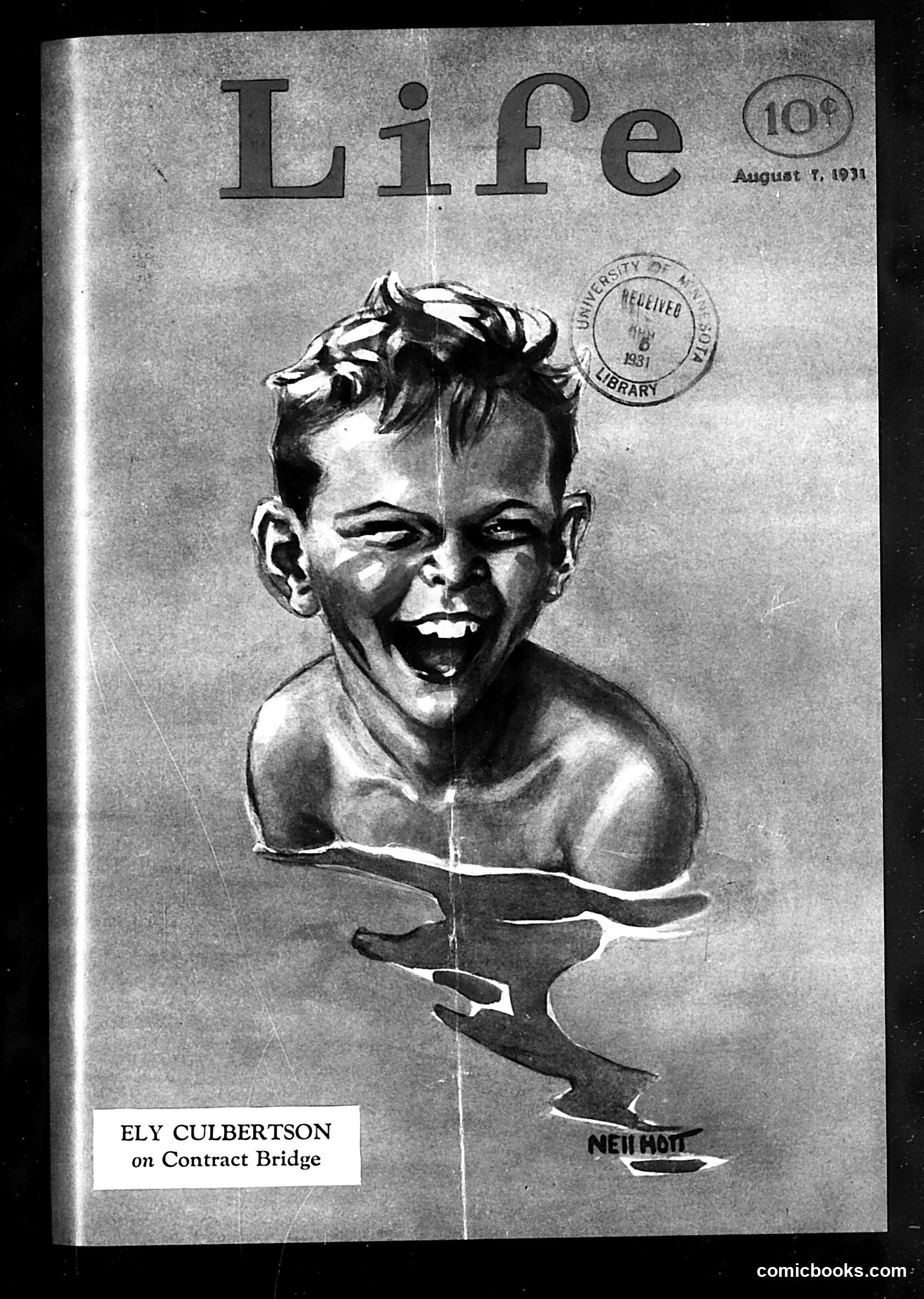
# Life Magazine Cover, August 1, 1931 This is a Life magazine cover featuring a caricature labeled "Ely Culbertson on Contract Bridge." The illustration shows a man's head and shoulders with an exaggerated, grinning expression emerging from what appears to be a lightning bolt or zigzag shape, signed "Neilson." The satire likely mocks Culbertson's prominence in popularizing contract bridge during the early 1930s. The dynamic, electric imagery suggests the intense enthusiasm—perhaps even frenzy—surrounding the card game at that time. The exaggerated facial expression and theatrical presentation poke fun at bridge's cultural obsession and Culbertson's role as its leading promoter. The magazine's 10-cent price and library stamp indicate this is an archived copy from the Depression era.
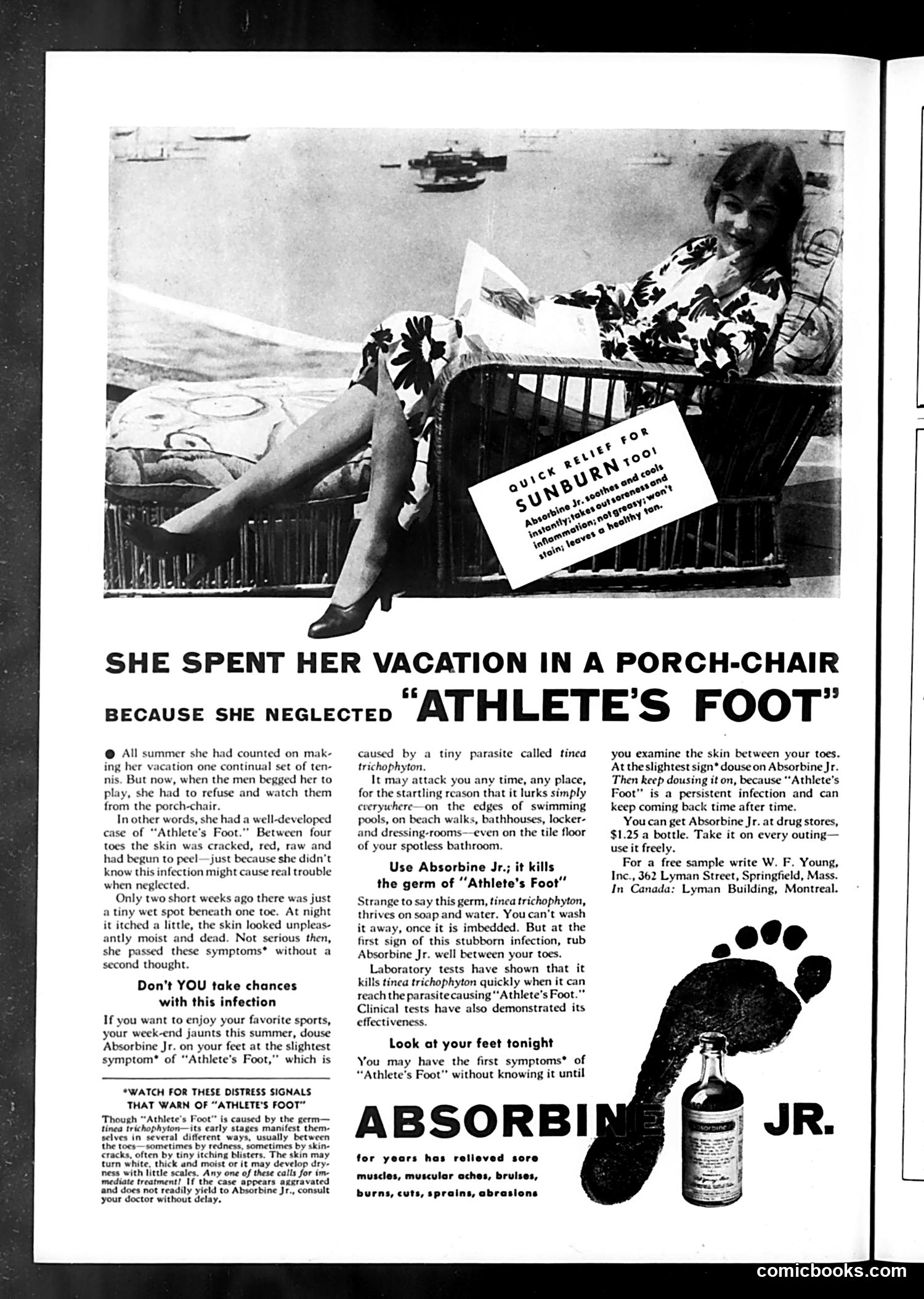
# Analysis This is a **vintage advertisement** (not satire or political cartoon) for Absorbine Jr., a topical medicinal product. The ad uses fear-based marketing common to mid-20th century advertising. The image shows a woman in a porch chair, seemingly unable to enjoy her vacation due to "Athlete's Foot"—a fungal infection caused by *tinea trichophyton*. The headline and text emphasize how she "neglected" this condition, implying personal irresponsibility ruined her leisure time. The advertisement promotes Absorbine Jr. as a solution, claiming it kills the fungus effectively. The ad includes pseudo-medical language and "distress signals" to identify athlete's foot symptoms, leveraging anxiety to drive consumer purchases. This reflects **1930s-1950s advertising strategy**: using shame and physical consequences to motivate buying behavior, particularly targeting middle-class consumers concerned with health and social respectability.
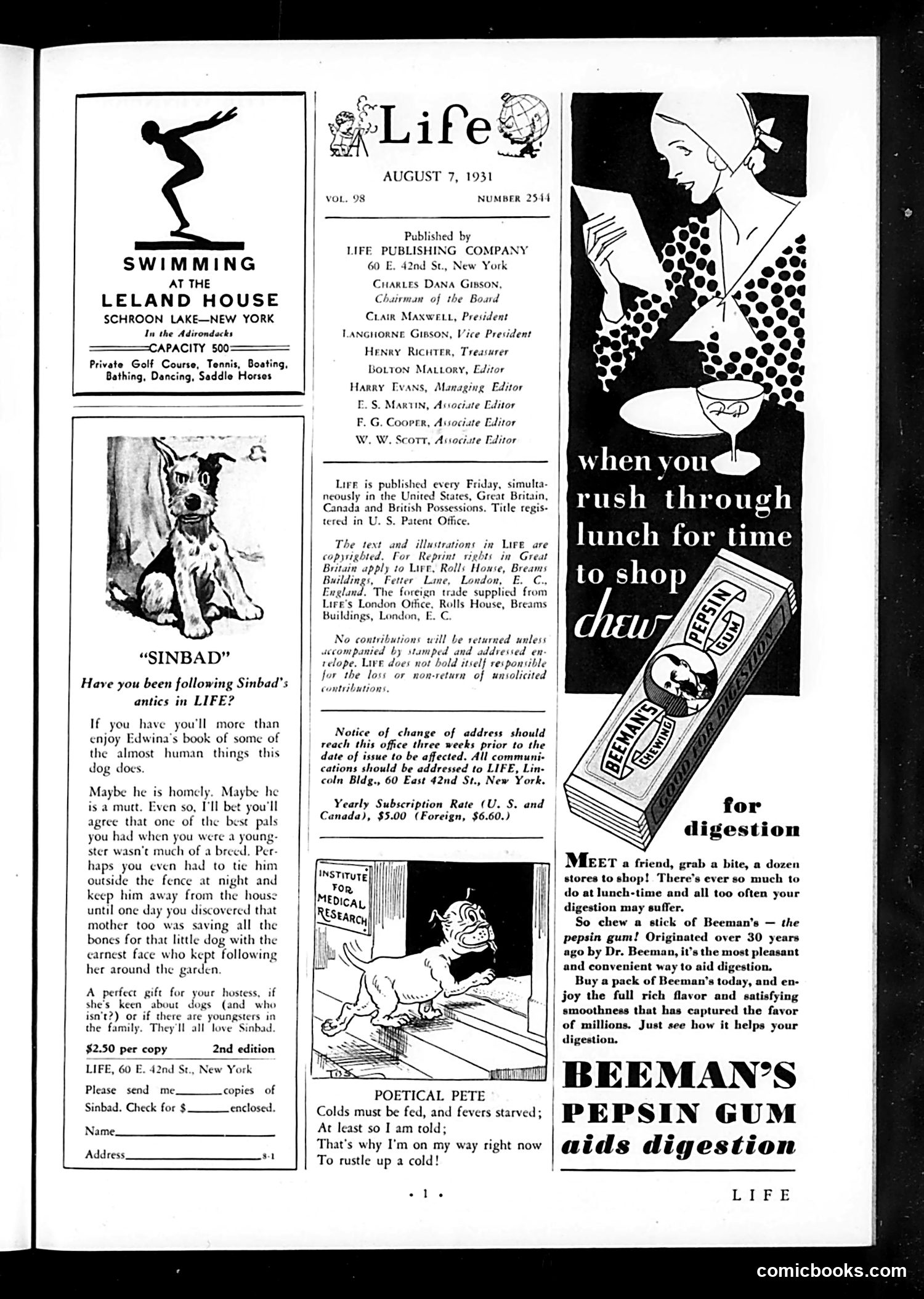
# Content Analysis This page is primarily **advertising and publication information** rather than political commentary. The main elements include: 1. **Leland House advertisement** (top left): A resort promoting swimming, golf, tennis, and boating in Schroon Lake, New York. 2. **"Sinbad" feature** (left): Promotes a book about a dog character, offering it for $2.50 per copy. 3. **"Poetical Pete" cartoon** (bottom center): A simple joke about a cold-afflicted character, not politically significant. 4. **Beeman's Pepsin Gum advertisement** (right): The largest ad, emphasizing the gum aids digestion—a common health claim from the 1930s era. The page reflects **1931 consumer culture** and advertising strategies targeting middle-class readers. No significant political satire or caricature is present.
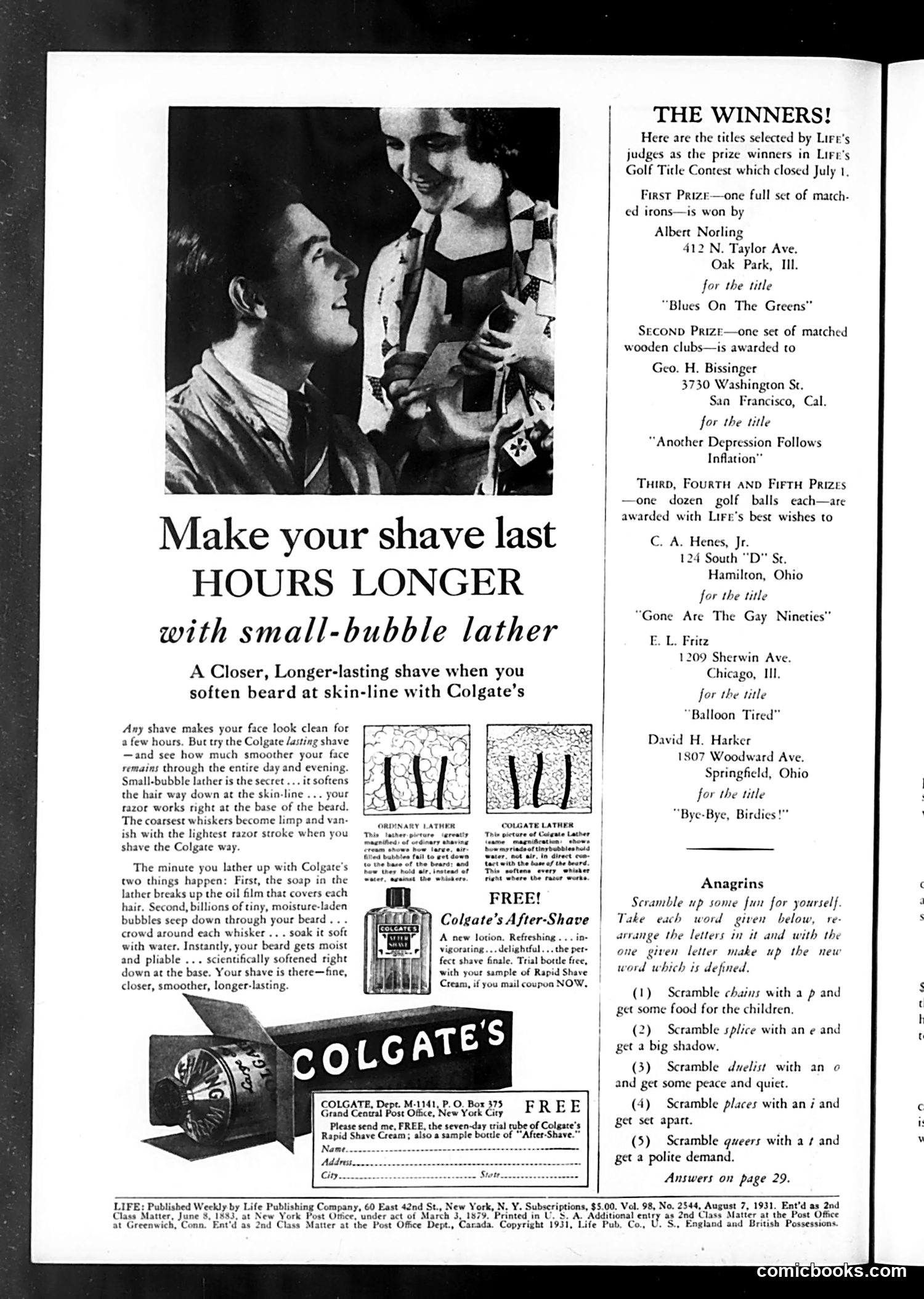
# Content Analysis This page is primarily **advertising**, not political satire. The dominant content is a Colgate shaving products advertisement featuring a man being shaved, with comparative diagrams showing "ordinary lather" versus "Colgate lather." The right column contains **contest results** from Life magazine's Golf Title Contest (closed July 1), listing winners who submitted golf-related titles. These appear to be humorous titles like "Blues On The Green" and "Gone Are The Gay Nineties." Below the contest results is a word puzzle called "Anagrins," where readers unscramble letters to form new words—standard puzzle content from this era. There is **no political cartoon or satire** on this page. It's a typical 1931 magazine layout mixing advertisements with reader contests and puzzles.
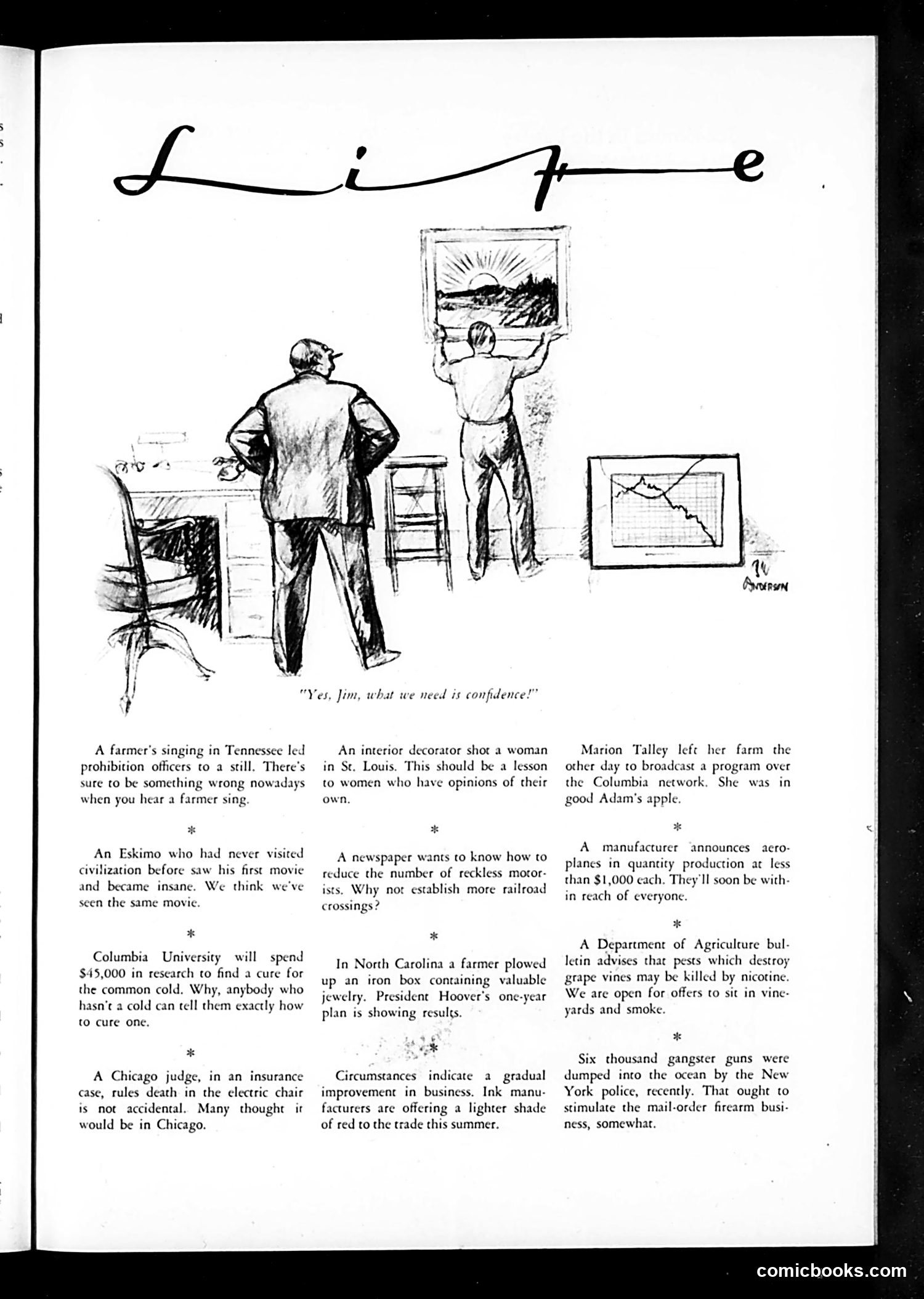
# "Life" Satire Page Analysis This page presents a cartoon titled "Lif**e**" (with the letters stylized) depicting two businessmen in an office. One stands at a desk while another hangs a framed landscape painting on the wall. The caption reads: "Yes, Jim, what we need is confidence!" The satire targets **business morale and economic psychology during uncertain times** (likely the Depression era, given the downward-trending graph visible on the office wall). The joke suggests that displaying pleasant imagery and expressing confidence won't address underlying economic problems—it's mere performative optimism masking real troubles. The accompanying brief items mock various American institutions: government inefficiency, judicial absurdity, academic waste, and agricultural advice. The overall theme critiques hollow confidence-building as a substitute for genuine problem-solving.
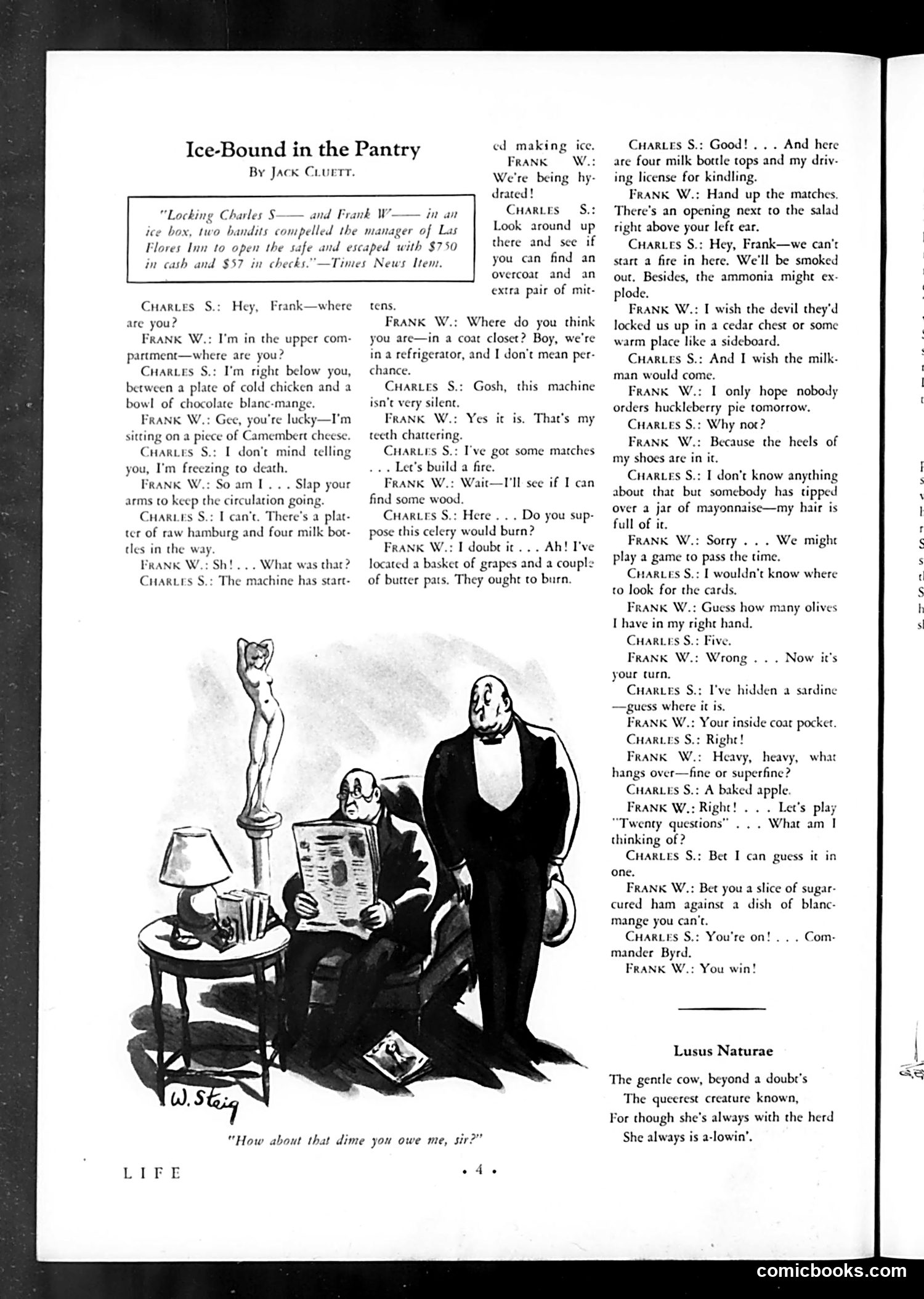
# Ice-Bound in the Pantry This is a humorous domestic dialogue by Jack Cluett about two men—Charles S. and Frank W.—trapped in a freezer or ice box during an emergency. The sketch depicts wartime rationing constraints: they're rationing milk bottles, hunting for matches and an overcoat, and worrying about fuel shortages (ammonia exploding, needing cedar chests for warmth). The satire targets home-front privations—the comedy comes from their increasingly desperate survival measures and trivial distractions (playing guessing games, betting on ham versus blanc-mange) while confined. The illustration shows them in formal dress beside a small table with a lamp, suggesting the absurdity of maintaining civility amid scarcity. This reflects 1940s wartime rationing anxieties and domestic inconvenience.
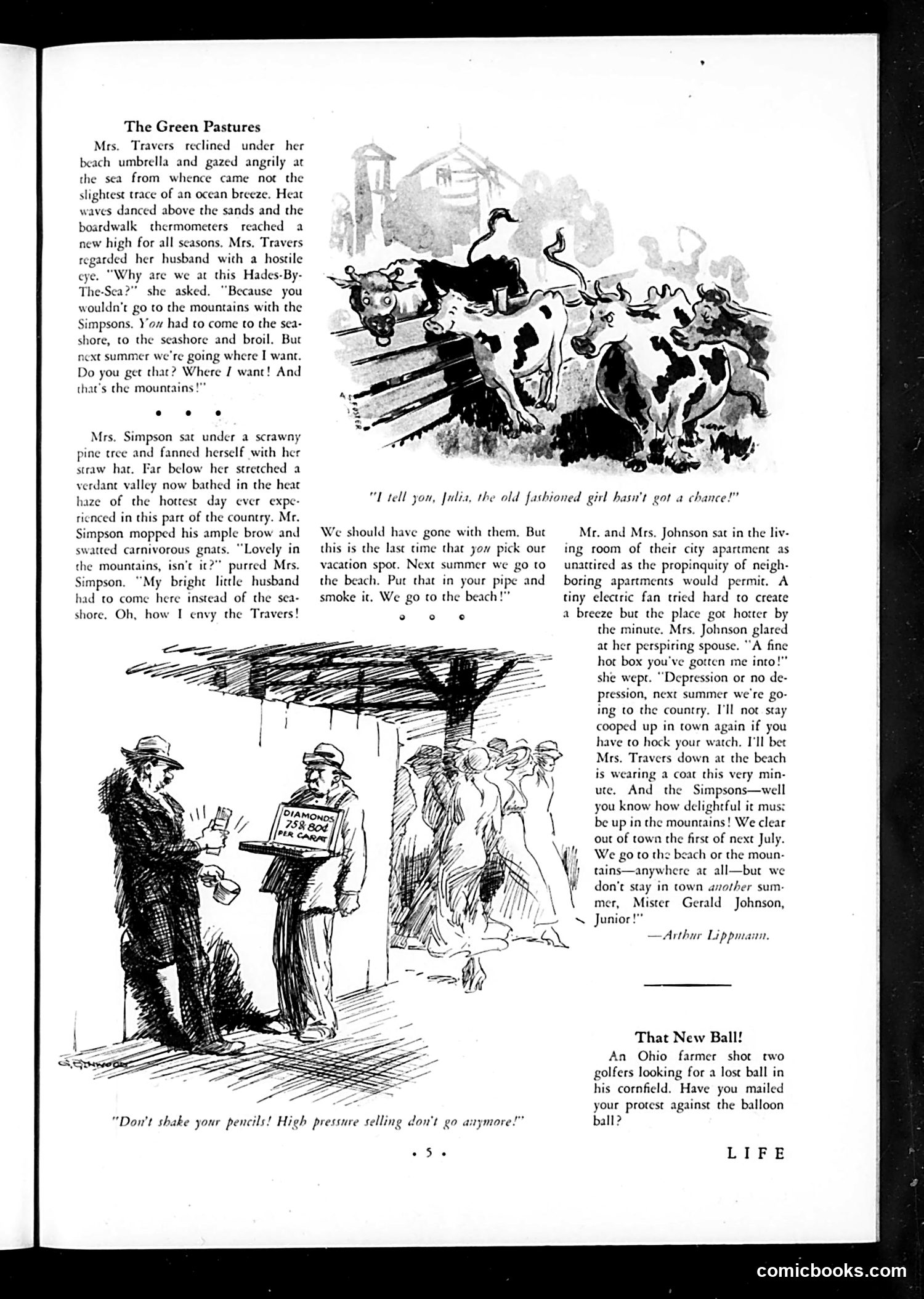
# "The Green Pastures" - Life Magazine Satire This page satirizes competing vacation preferences among early 20th-century urban Americans. Mrs. Travers wants to escape to the seaside; Mrs. Simpson prefers mountain retreats. Their husbands argue back, with Mr. Simpson mocking the "bright little husband" who must come to the seashore instead of mountains. The humor stems from class anxieties about vacation destinations and marital compromise. The illustrations show couples debating where to spend summer—beach versus country—reflecting a period when such leisure choices signaled social status and personal taste. The lower cartoon about "high pressure selling" appears unrelated, likely advertising satire. The page overall mocks domestic vacation disputes as a marker of middle-class aspirations and gender dynamics of the era.
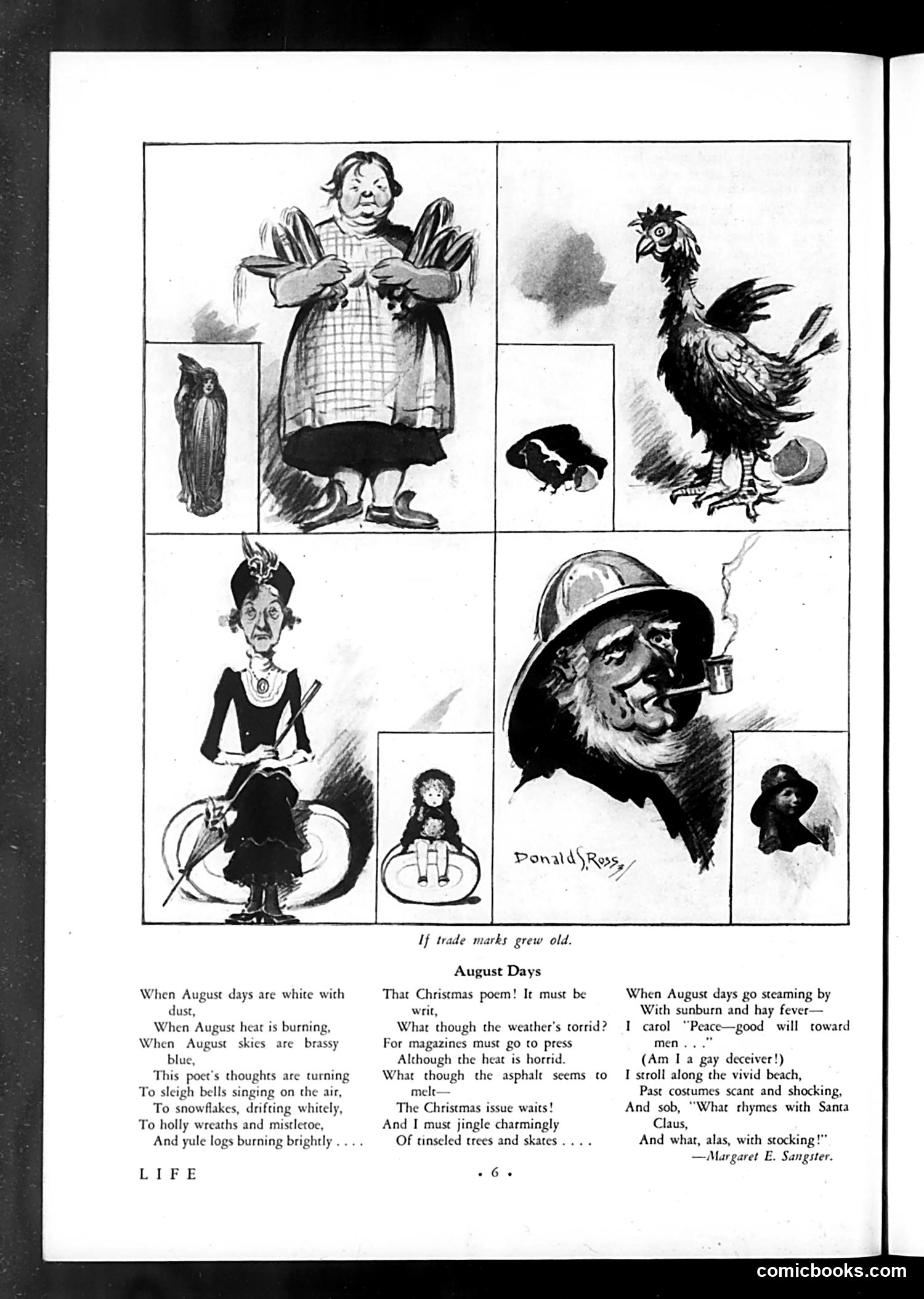
# August Days - Life Magazine Satire This page presents a visual essay titled "If trade marks grew old," illustrated by Donald Ross. The cartoon imagines famous commercial mascots and brand characters aging into elderly versions of themselves. The panels show recognizable figures—including what appears to be a plump woman holding bread loaves (likely a baking brand mascot), a rooster (possibly Cockerel brand imagery), and other vintage advertising characters depicted as wizened seniors. The final panel features a prominent elderly gnome or goblin character, smoking a pipe. The accompanying poem by Margaret E. Sangster humorously contrasts August heat and summer fatigue with Christmas deadlines, capturing the satirical tension between seasonal reality and commercial publishing demands. The satire comments on how eternal, ageless brand mascots would look if they actually aged like ordinary people.
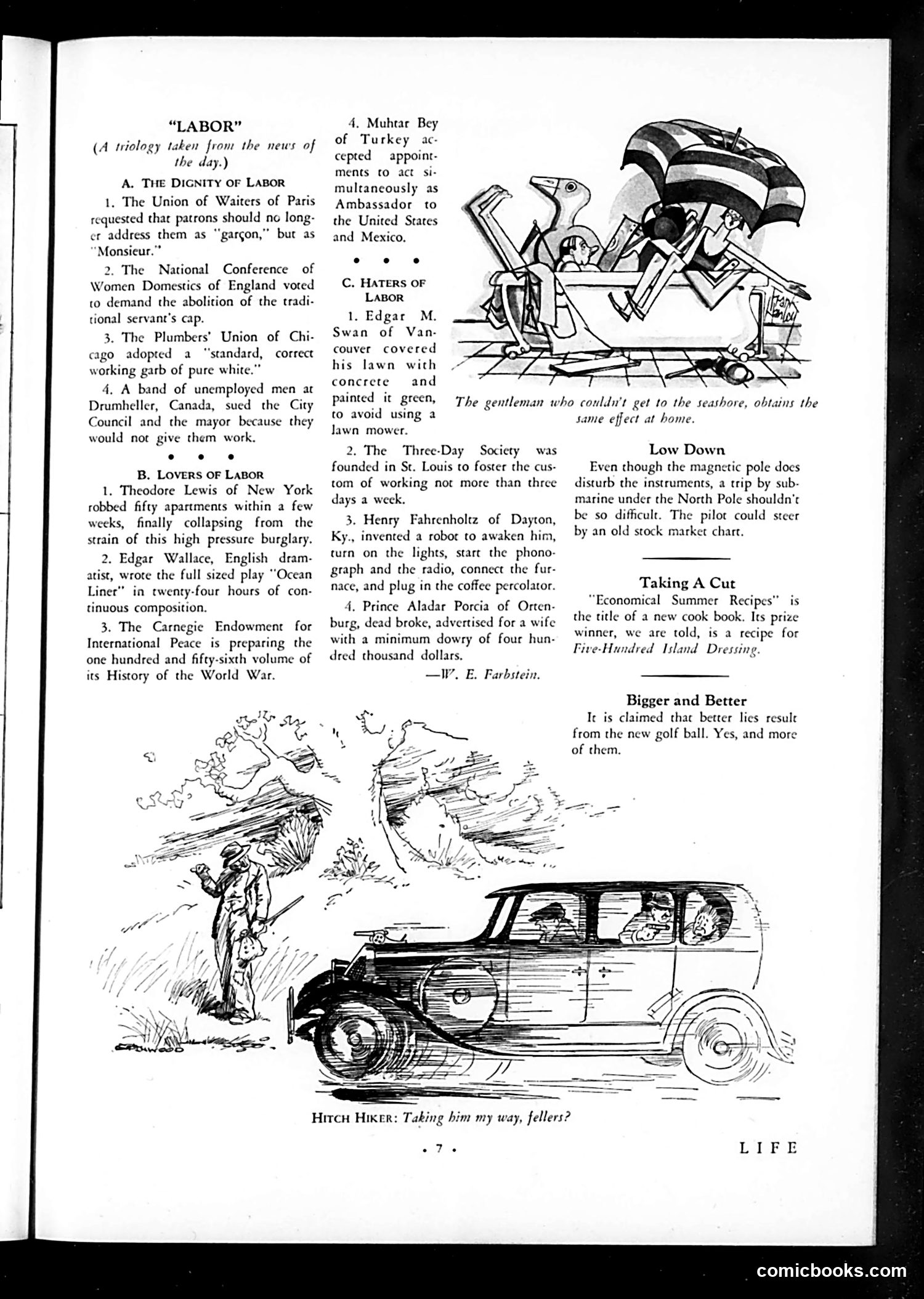
# "Labor" Page Analysis This page satirizes labor issues through three sections: **Section A ("Dignity of Labor")** mocks working-class dignity demands—a waiters' union wanting to be called "Monsieur" rather than "garçon," and women domestics seeking to abolish servants' caps. **Section B ("Lovers of Labor")** celebrates wealthy individuals exploiting workers: a burglar, a dramatist profiting from plagiarism, and a robber baron. **Section C ("Haters of Labor")** ridicules labor-saving inventions and schemes—including Henry Fabenholtz's bizarre robot to start coffee and turn on lights. The cartoon "Hitch Hiker" shows a motorist picking up a hitchhiker, captioned "Taking him my way, feller?"—likely commentary on exploitation or coercion. Overall, the page presents labor as comedy: workers' modest dignity demands are mocked equally with wealthy people's parasitism and impractical automation schemes.
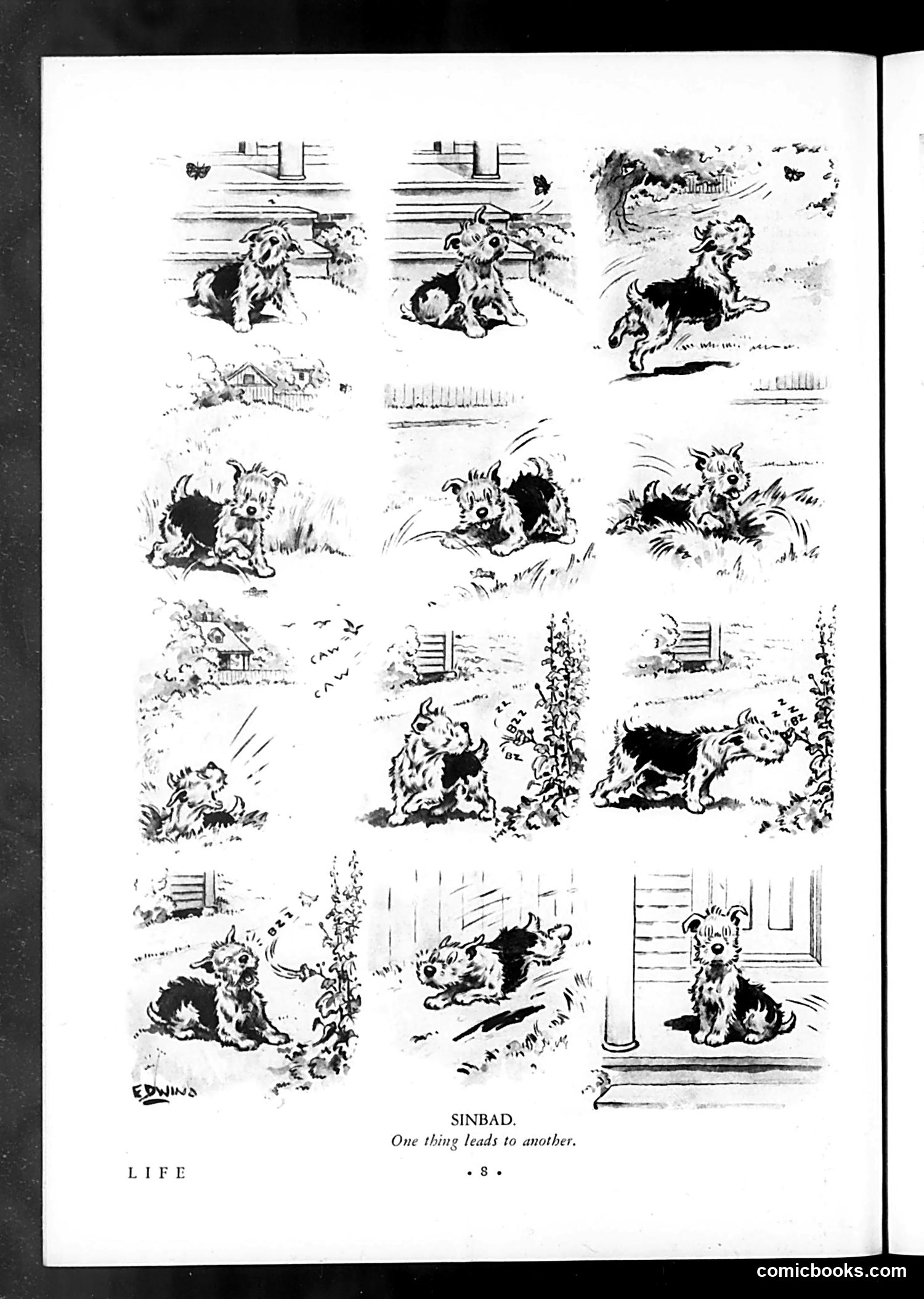
# "Sinbad: One thing leads to another" This is a comic strip by artist Edwins (signature visible) depicting a small, shaggy dog named Sinbad in a series of connected misadventures. The strip shows how a single incident cascades into escalating chaos—the dog gets into trouble (appears to chase something), which leads to more destruction, property damage, and increasingly frantic activity. The title "One thing leads to another" serves as the joke's moral: each panel demonstrates how one small mistake or misdeed snowballs into bigger problems. This is a straightforward humorous strip about everyday domestic comedy with a dog as the protagonist, rather than political satire. It appears designed for general entertainment in Life magazine's humor section.
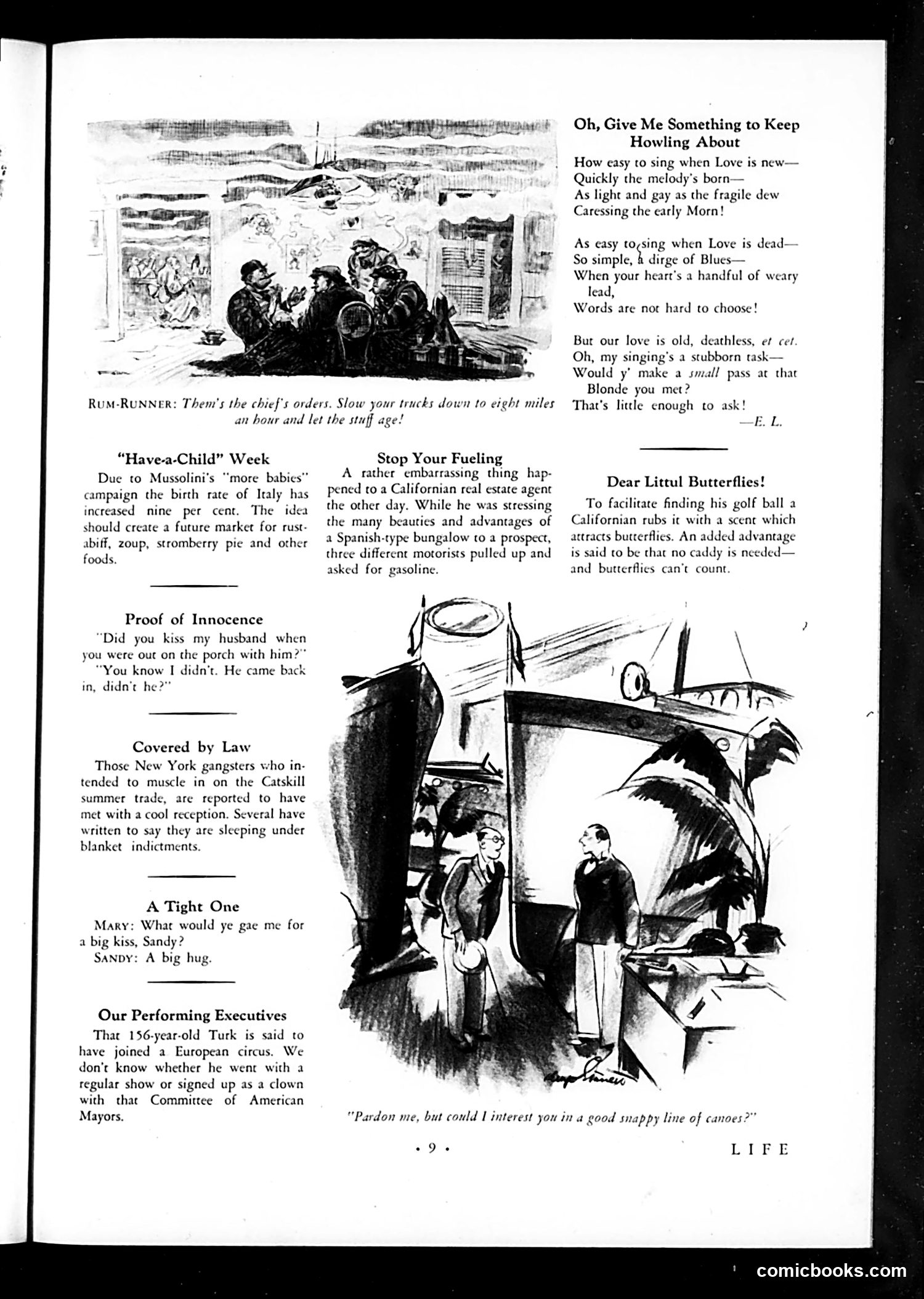
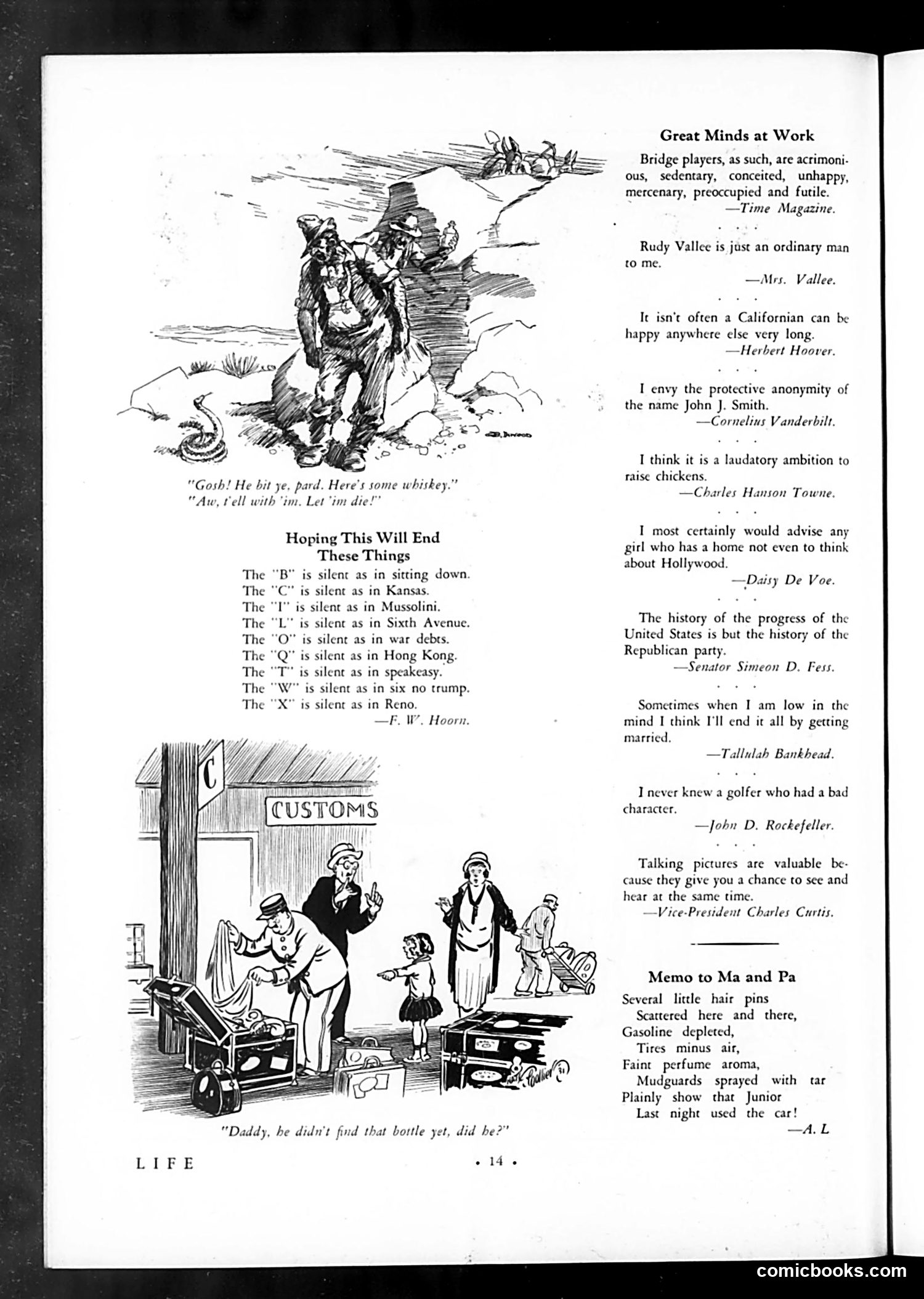
# Page Analysis: Life Magazine Satirical Content This page contains several brief humorous anecdotes and two cartoon illustrations typical of Life's satirical style. The cartoons mock everyday social situations: one depicts three figures huddled together (captioned about a "Rum-Runner"), referencing Prohibition-era bootleggers; another shows businessmen discussing "a good snappy line of canoes," satirizing salesmen's absurd pitches. The text items ridicule various topics: Mussolini's population campaign, a real estate agent's embarrassing sales pitch, New York gangsters operating under legal cover, and a 156-year-old Turkish performer joining an American circus. The poem "Oh, Give Me Something to Keep Howling About" appears to comment on romantic disappointment using metaphors of fleeting love. Overall, the page reflects early 20th-century American concerns: Prohibition enforcement, organized crime, commercial excess, and romantic disillusionment.
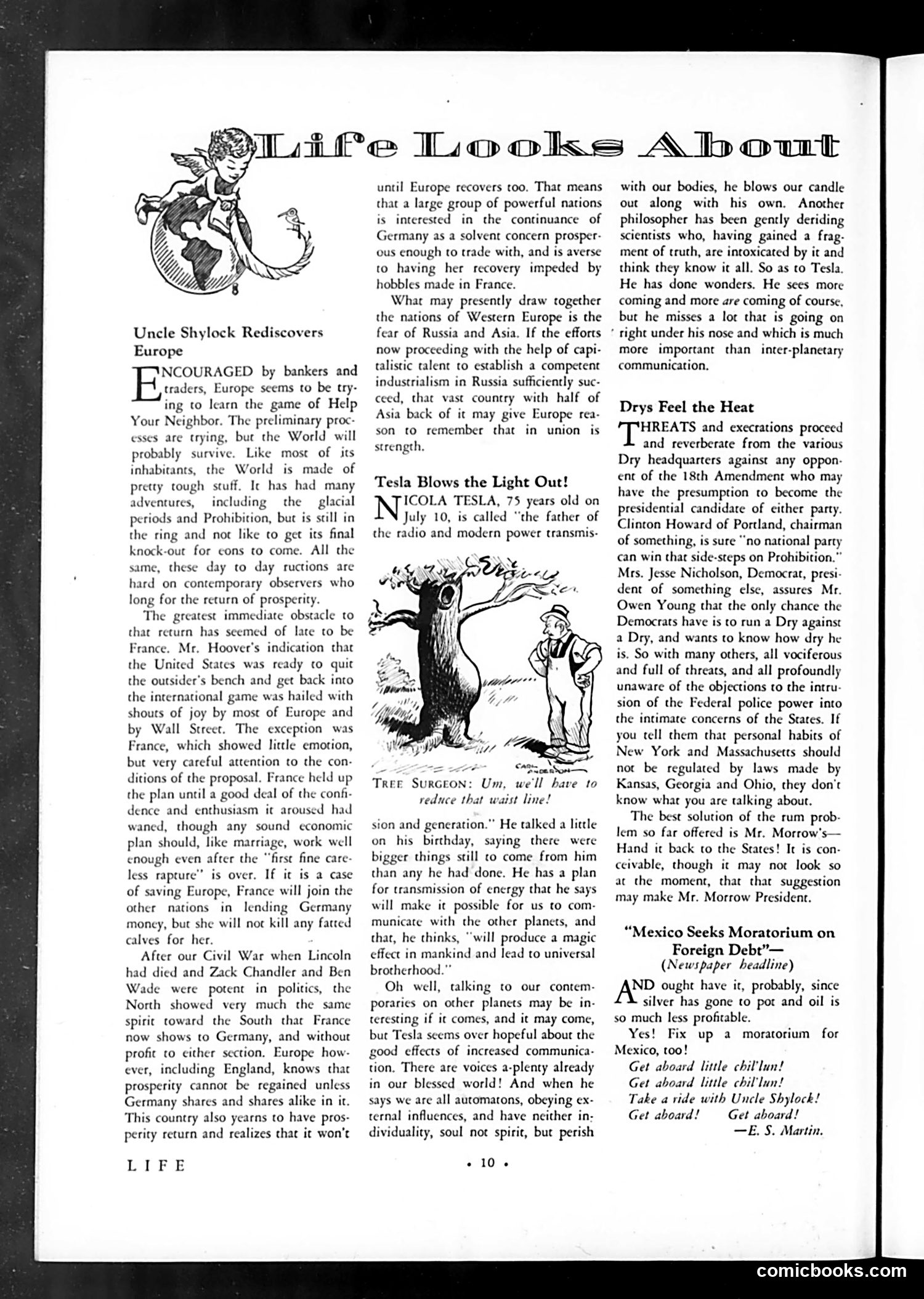
# Political Commentary on Post-WWI Europe This Life magazine page critiques American economic policy toward post-war Europe. The main article "Uncle Shylock Rediscovers Europe" sarcastically compares the U.S. to a greedy moneylender ("Shylock"), suggesting America demands repayment of war debts while Europe struggles to recover. The piece argues the U.S. should help Germany stabilize economically—viewing a solvent Germany as necessary for broader European prosperity and as a counterweight to Russian/Asian threats. The Tesla section celebrates the inventor's optimism about technology improving human communication, contrasting with the article's skepticism about international relations. The "Drys Feel the Heat" section addresses Prohibition enforcement, mocking Democratic efforts to maintain the policy while acknowledging widespread public opposition and state resistance.