A complete issue · 37 pages · 1931
Life — July 31, 1931
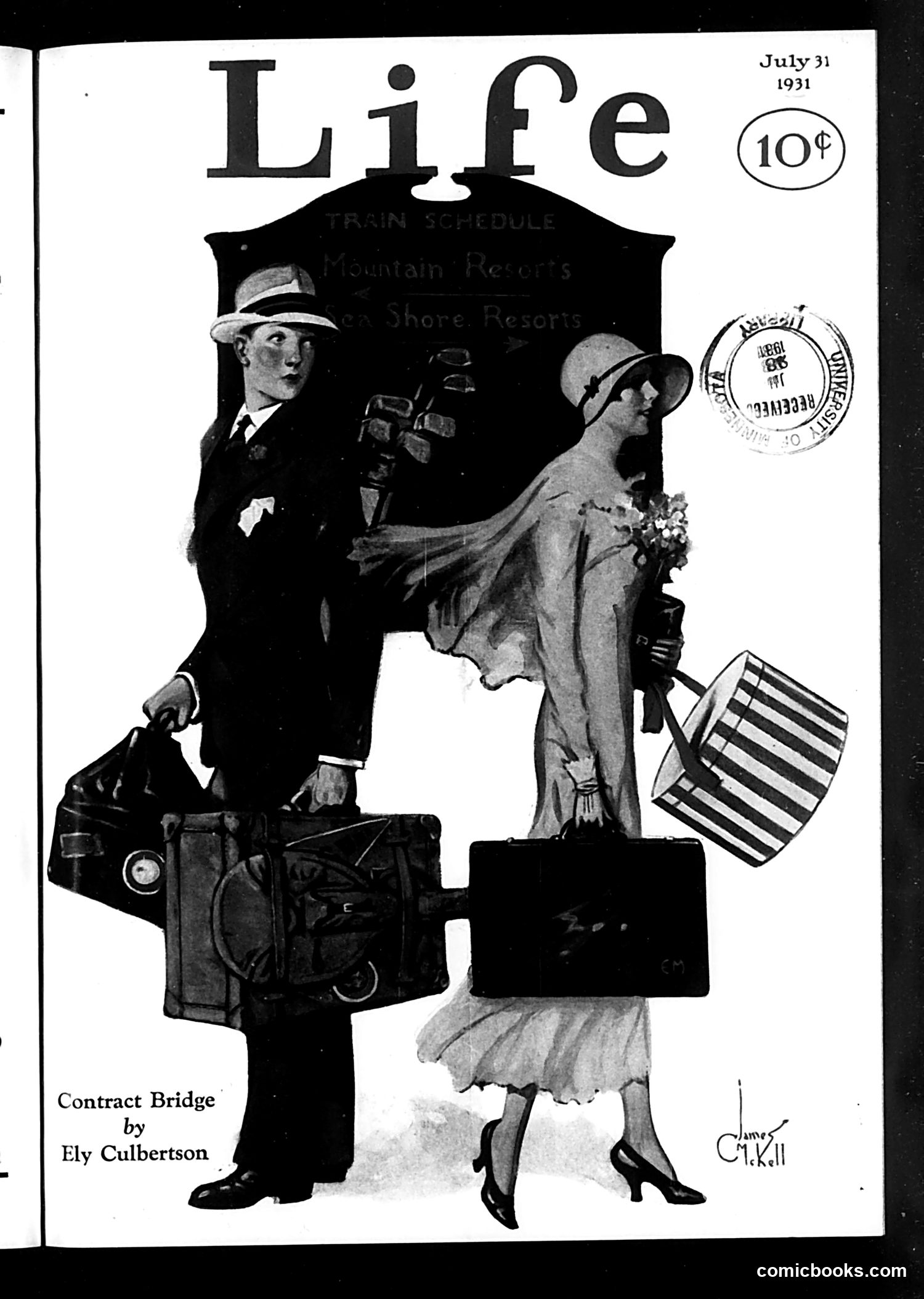
# Life Magazine Cover Analysis, July 31, 1931 This is the cover of *Life* magazine (10¢), featuring an illustration by James Montgomery Flagg. The cartoon depicts two travelers: a man in a business suit holding a suitcase and a woman in a light dress holding an American flag and a striped bag. Both wear hats and appear to be heading somewhere, with what appears to be a train schedule visible in the background (mentioning "Mountain Resorts" and "Shore Resorts"). The cover advertises "Contract Bridge by Ely Culbertson," referencing the popular card game sensation of the 1930s. The illustration likely satirizes American vacation travel and tourism trends during this era, showing the leisure activities of the middle class during the Depression period. The American flag suggests patriotic vacation patriotism or nationalist tourism themes.
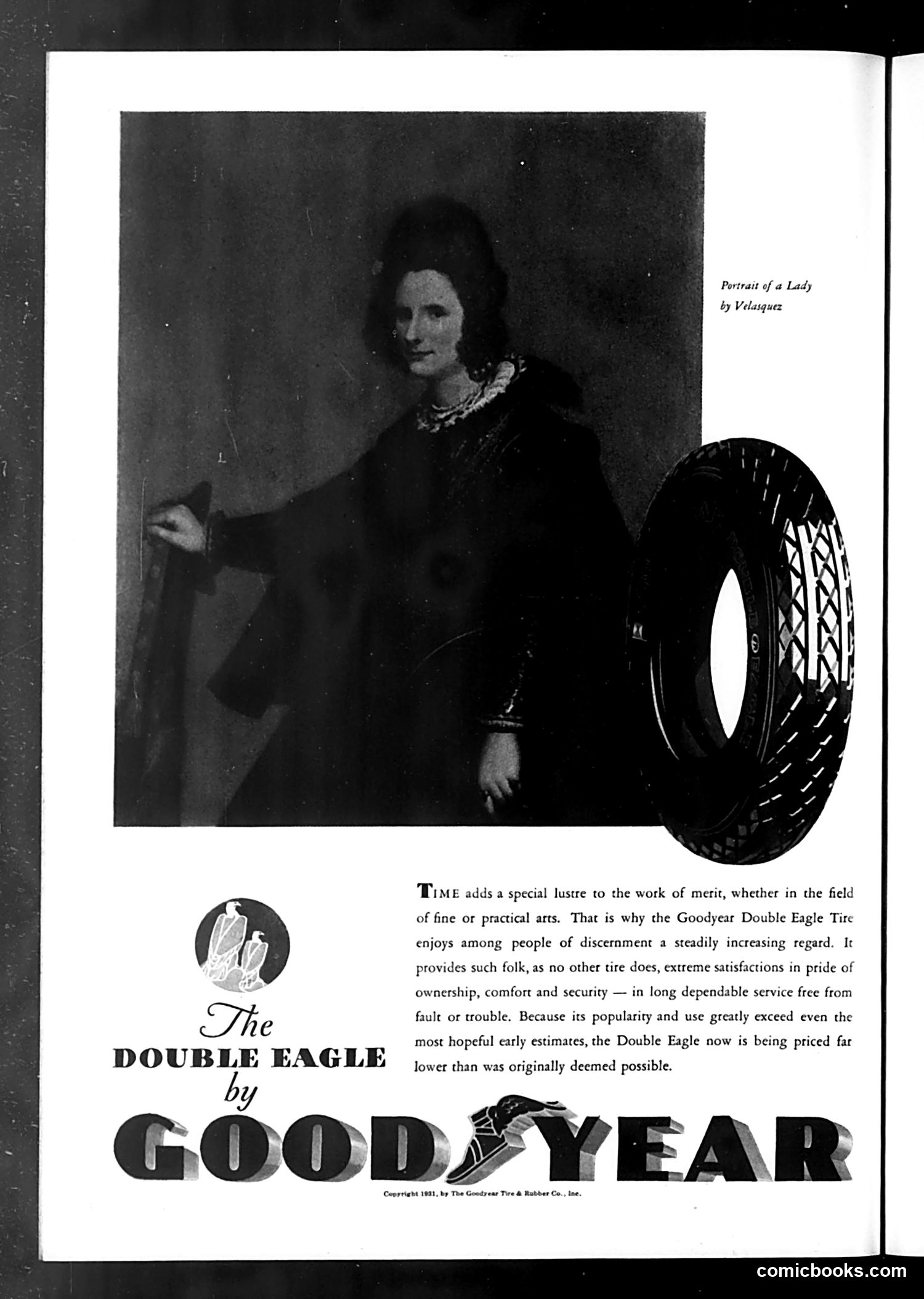
# Analysis This is **primarily a Goodyear tire advertisement**, not political satire. The page features a portrait labeled "Portrait of a Lady by Velasquez" (referencing the famous Spanish painter), positioned above marketing copy for the "Double Eagle" tire brand. The ad's strategy associates the tire with artistic merit and refinement—suggesting that owning Goodyear tires reflects good taste and discrimination, much like appreciating classical paintings. The text emphasizes durability ("long dependable service free from fault or trouble") and value, noting the Double Eagle is "being priced far lower than was originally deemed possible." There is no political cartoon or satire present. This is straightforward commercial advertising using cultural prestige as a sales tool.
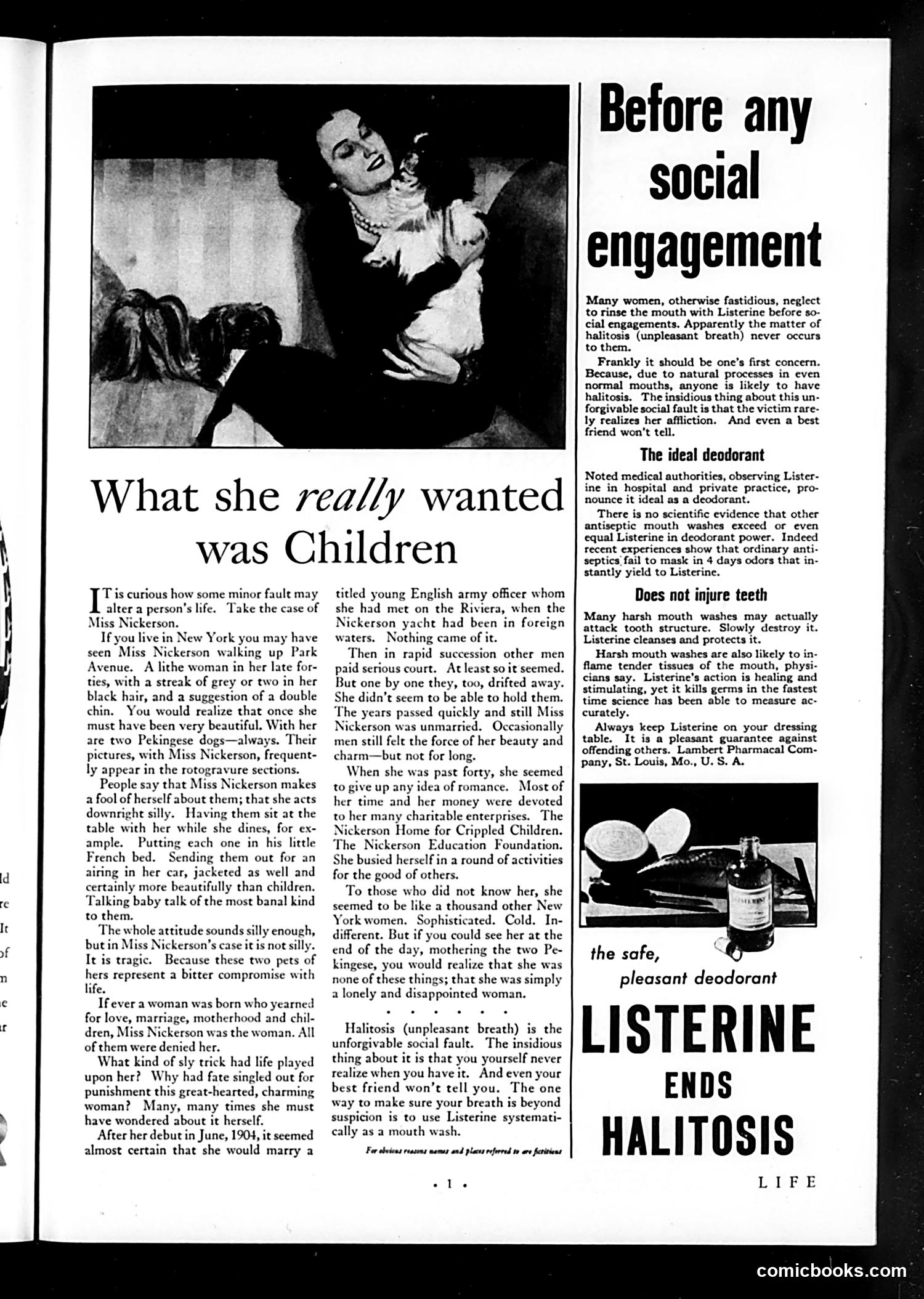
# Analysis of "What She Really Wanted Was Children" This appears to be a **satirical article about Miss Nickerson**, an apparently well-known socialite of the era. The piece mocks the gap between her public image (beautiful, fashionable, charitable) and her actual unfulfilled desire for motherhood and family life. The accompanying **Listerine advertisement** is the key to understanding the satire's darker point: it suggests Miss Nickerson remained unmarried because of "halitosis" (bad breath)—presented as an "unforgivable social fault" that prevented romantic prospects. The satire implies that despite her wealth, beauty, and good works, this one biological/social "deficiency" doomed her romantic prospects and maternal aspirations. It's a cruel joke weaponizing anxieties about female desirability and social acceptability to sell mouthwash.
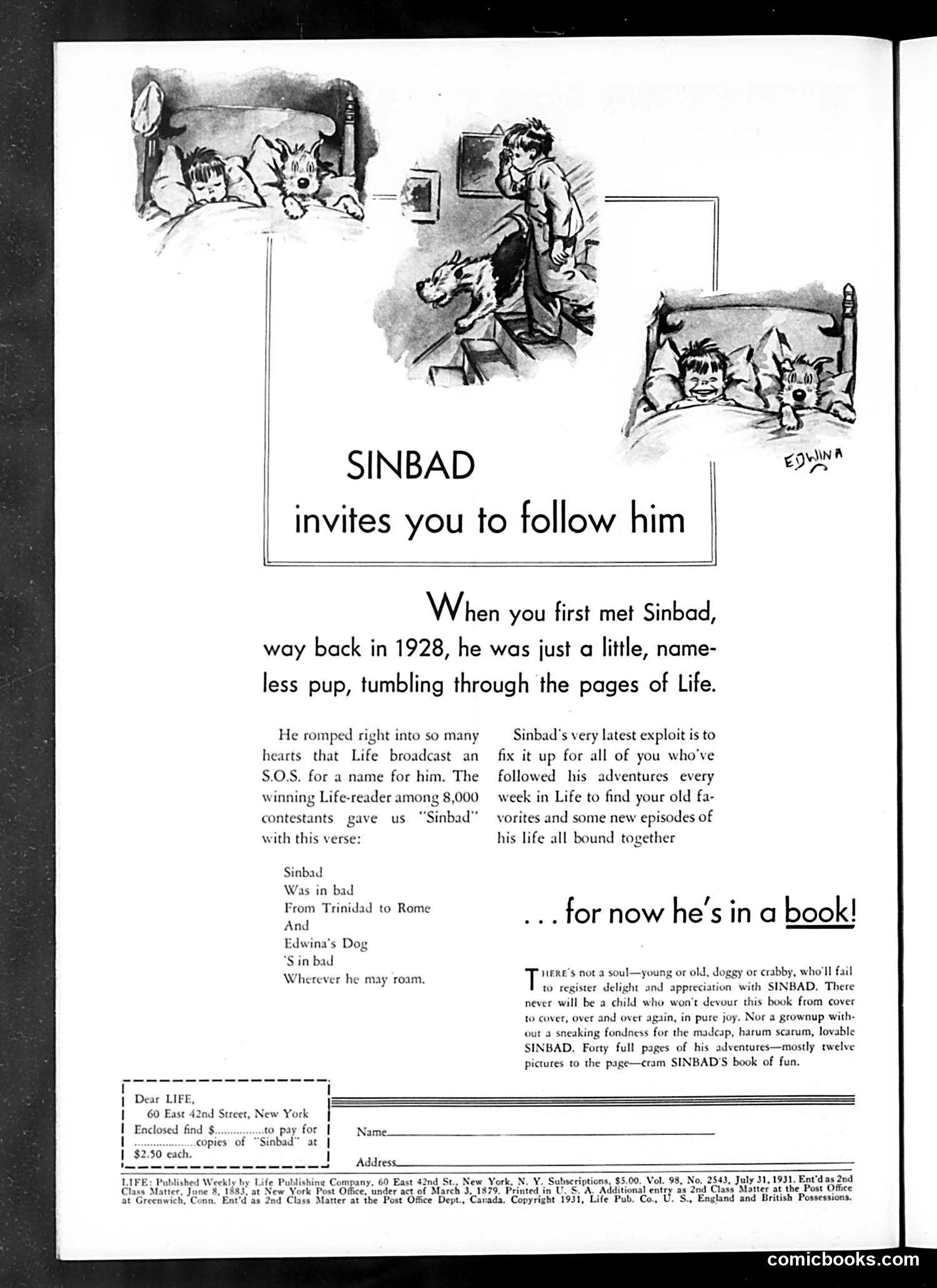
# Sinbad Advertisement, Life Magazine (circa 1931) This is a **book advertisement**, not political satire. It promotes a children's book collection called *Sinbad*, featuring the classic Arabian Nights character. The illustrations show a mischievous dog character (named Edwina) accompanying a young boy through bedtime adventures. The ad references Sinbad's origins in *Life* magazine—apparently a character that debuted in 1928 and became popular enough to warrant reader voting for a name. The humor targets both children and adults: the rhyming verse and chaotic bedroom scenes appeal to kids, while parents would appreciate the controlled chaos of a book that keeps children entertained "over and over again, in pure joy." The $2.50 price reflects 1930s economics. This is straightforward commercial promotion using whimsy and nostalgia rather than satire.
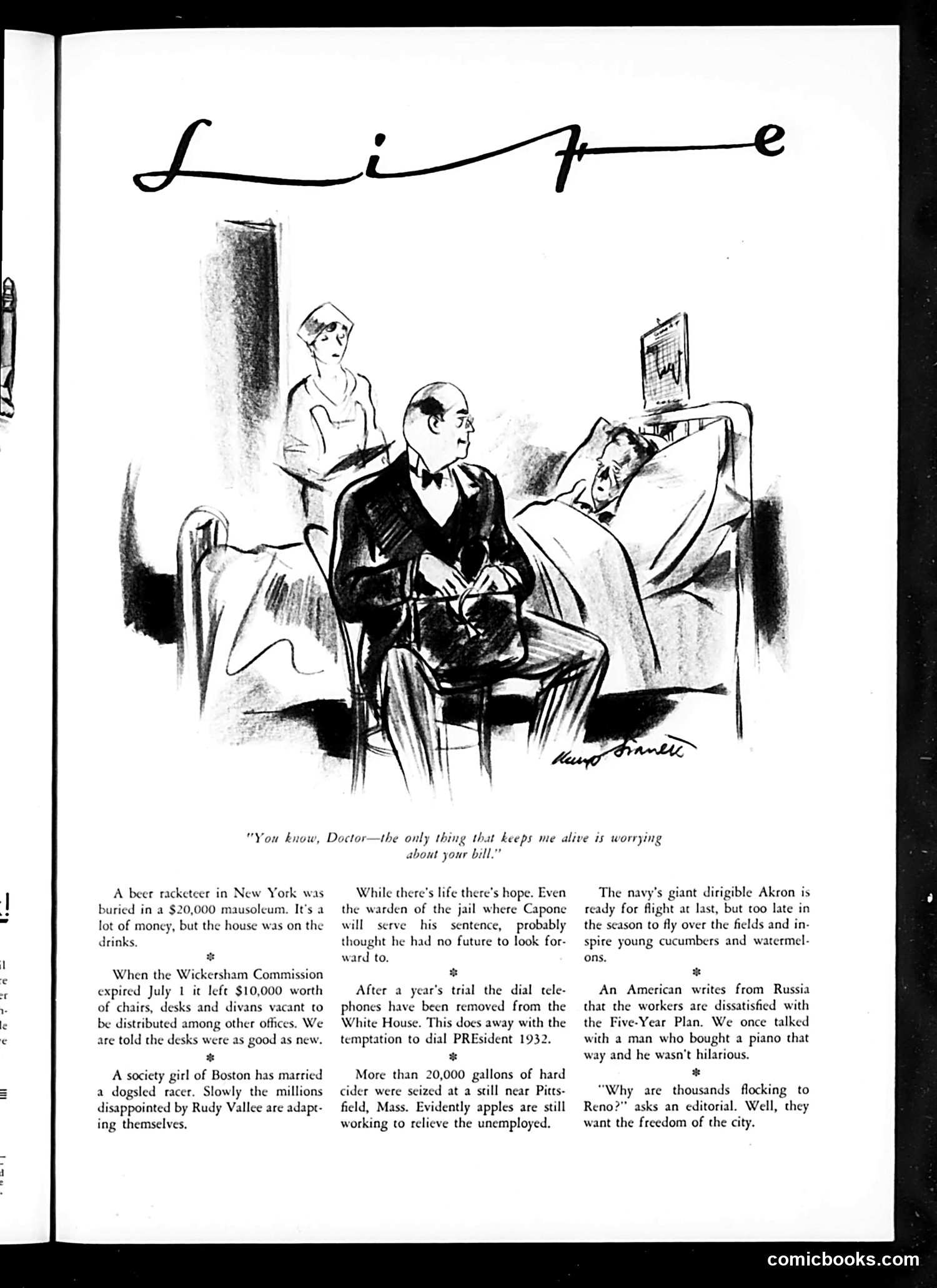
# Political Cartoon Analysis: "Life" Magazine The cartoon depicts a doctor attending to a wealthy patient in bed, with a nurse present. The patient's quote—"You know, Doctor—the only thing that keeps me alive is worrying about my bill"—is satirical commentary on Depression-era anxiety about medical costs. The accompanying text snippets discuss various 1930s social issues: a racketeer's buried fortune, Wickersham Commission furniture distribution, a society girl marrying a racer, seizures of illegal cider, and displaced millions adapting to unemployment. The cartoon's humor stems from the ironic reversal: typically, worry kills patients, but here the patient's obsession with debt paradoxically sustains him—darkly mocking both medical expenses and the financial desperation widespread during the Great Depression.
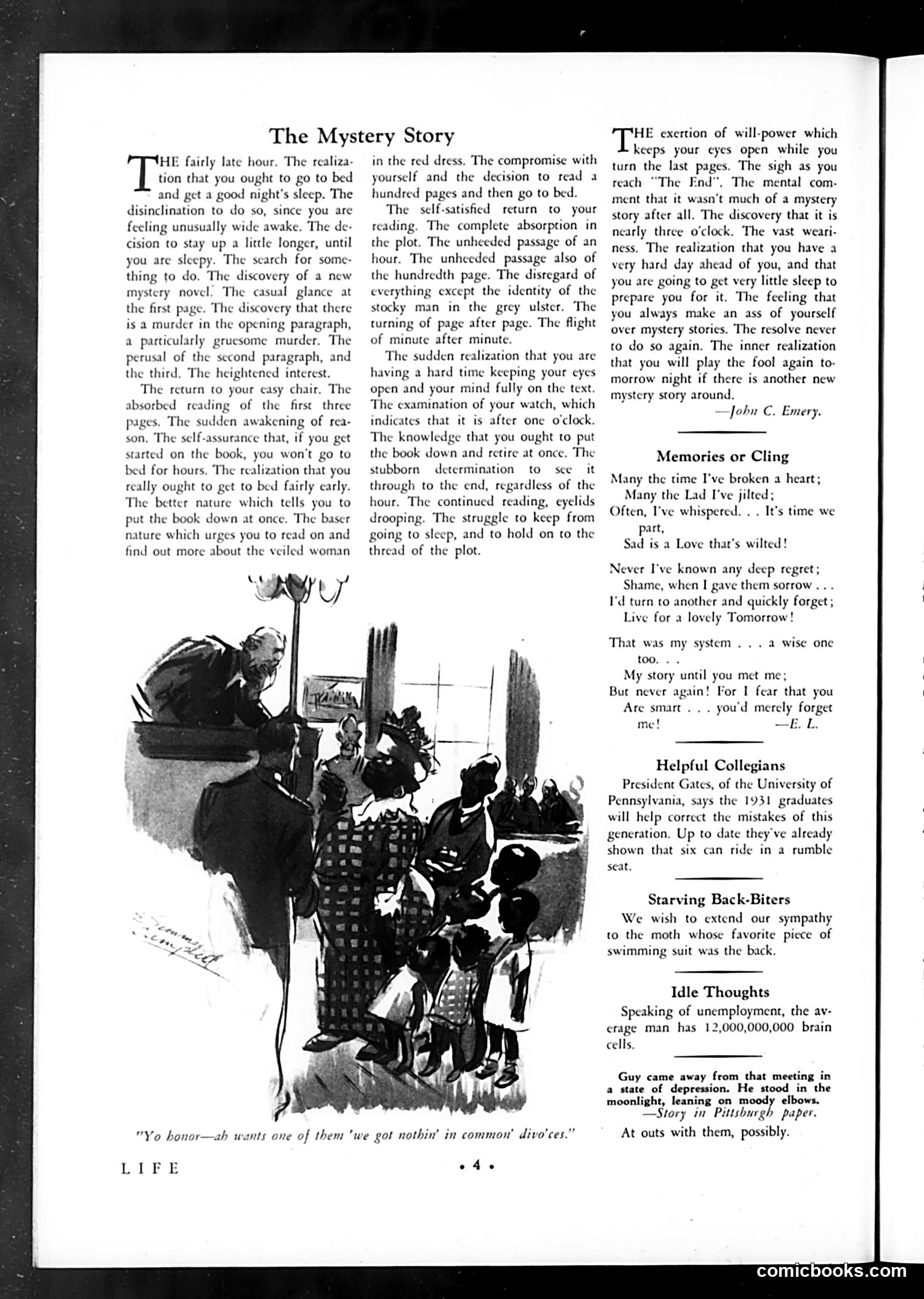
# Analysis of Life Magazine Page 4 This page features a satirical essay titled "The Mystery Story" by John C. Emery, critiquing readers' compulsive late-night reading habits. The accompanying illustration depicts a disheveled man surrounded by figures (appears to be creditors or concerned family members) climbing on furniture, suggesting the chaos caused by his obsessive book-reading behavior. The cartoon's joke: reading mystery novels creates such irresistible compulsion that neglecting sleep, responsibilities, and relationships becomes inevitable—a relatable social commentary on escapism during what appears to be the early 20th century. The page also contains lighter humor sections ("Helpful Collegians," "Starving Back-Biters," "Idle Thoughts") offering brief satirical observations about contemporary life, typical of Life's format as a humor and social commentary magazine.
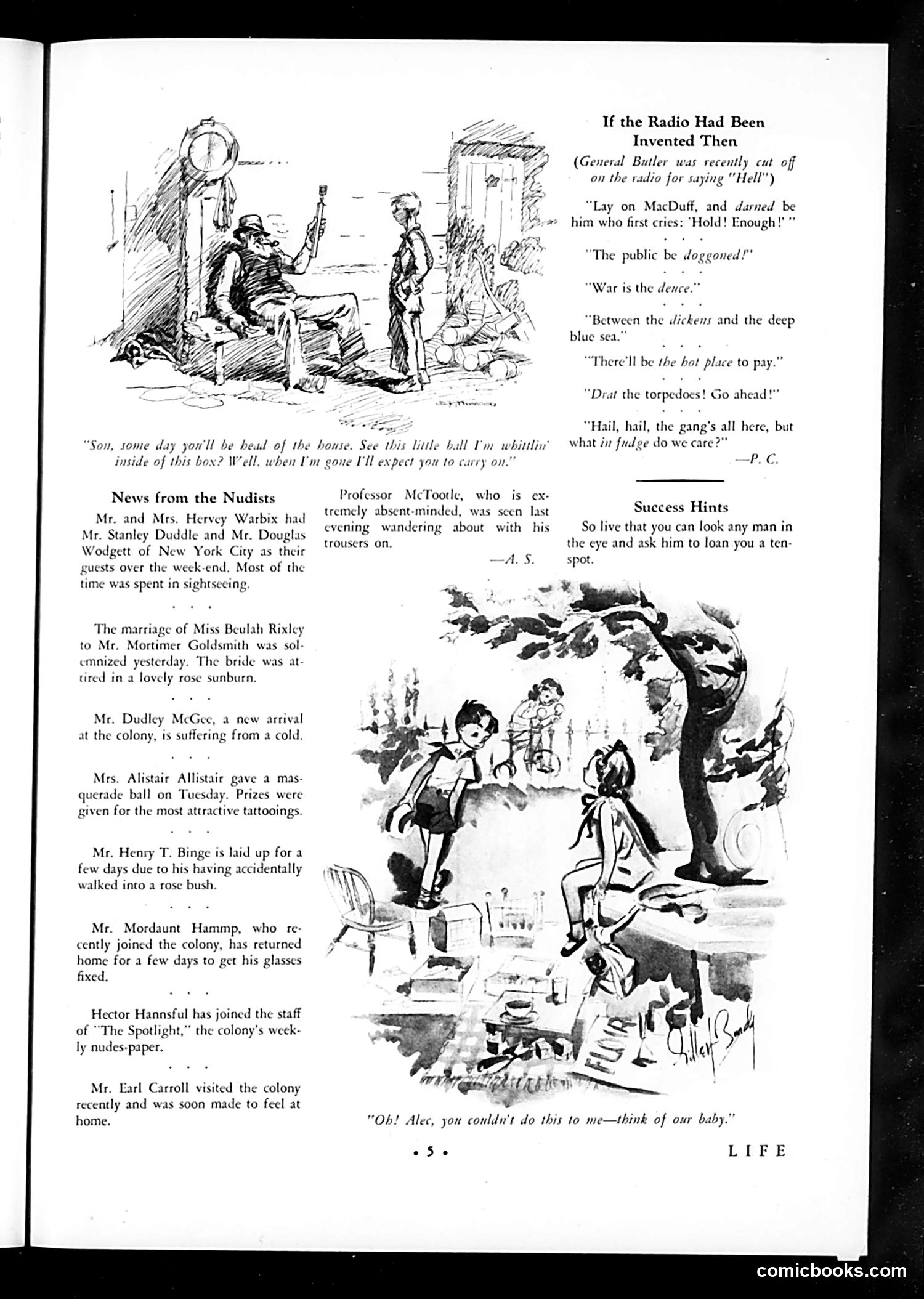
# Analysis This page contains two distinct sections: **Top section:** A satirical cartoon titled "If the Radio Had Been Invented Then" imagines how historical figures would have censored radio broadcasts. It presents fake quotes from General Butler allegedly cutting profanity from the airwaves, with increasingly absurd censorship examples (removing "Hell," calling war "the dance," etc.). The humor lies in mocking both Butler's strictness and the contemporary debate over radio content regulation—suggesting even historical figures would find modern speech shocking. **Bottom section:** "News from the Nudists" reports on a colony's social activities with light humor about nudism, a novelty lifestyle trend of the 1920s-30s. The accompanying cartoon shows nudists at leisure, with the caption poking fun at parental concerns about children in such colonies. Both sections reflect period anxieties about emerging technologies, changing social norms, and public morality.
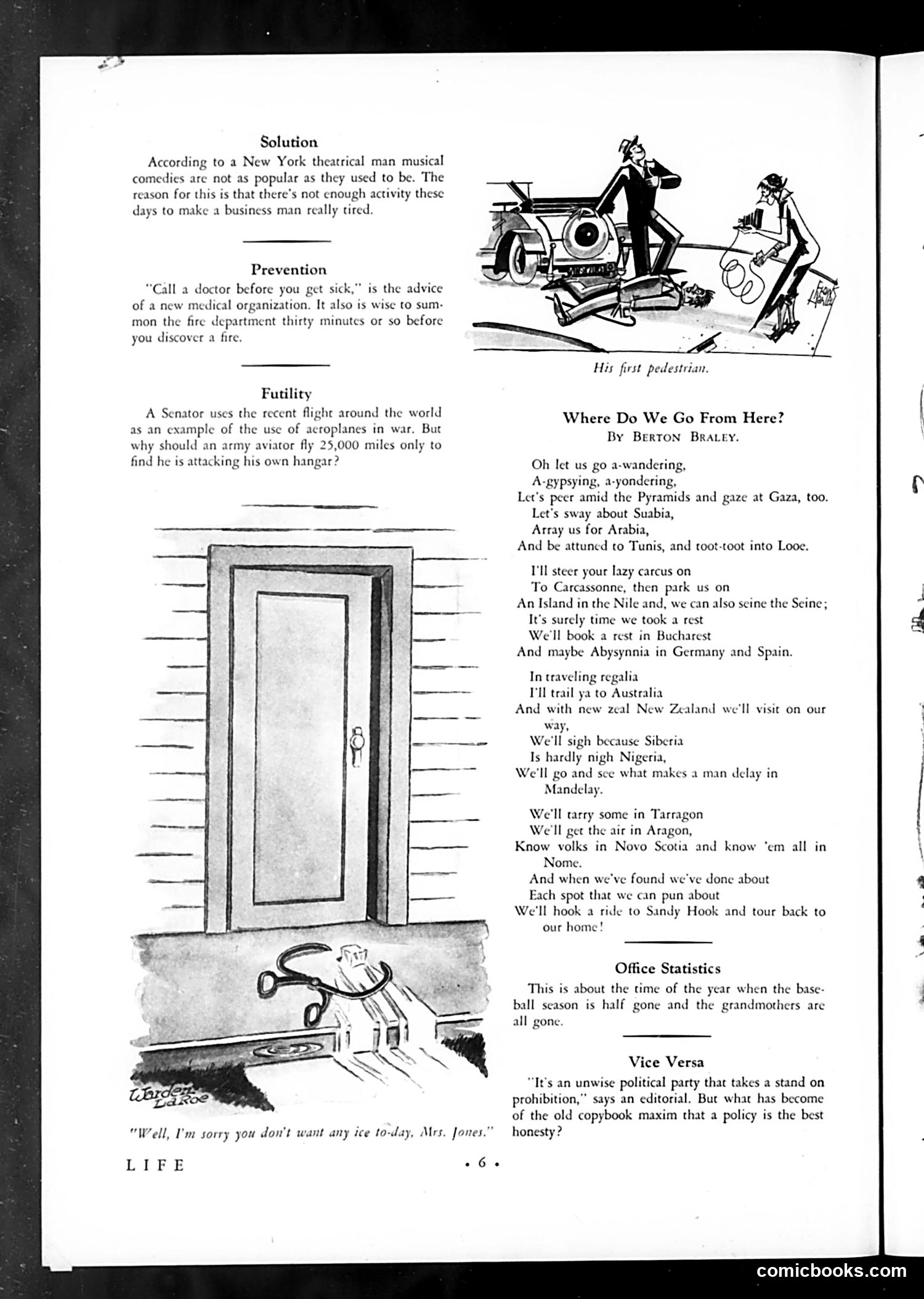
# Analysis of Life Magazine Page 6 This page contains several satirical pieces typical of early 20th-century Life magazine humor. **The cartoons:** - Upper right shows a man with a broken-down car labeled "His first pedestrian"—satirizing early automobiles as dangerous to pedestrians - Lower left depicts a figure in a doorway with the caption "Well, I'm sorry you don't want any ice to-day, Mrs. Jones"—likely mocking ice delivery services or door-to-door salesmen **The text sections** include commentary on: - Theatrical comedies' declining popularity - Medical prevention advice - Military aviation's utility (referencing a senator's flight around the world) **"Where Do We Go From Here?"** is a poem by Berton Braley listing exotic travel destinations, reflecting 1920s wanderlust and post-war interest in world exploration. The overall tone satirizes contemporary American life, technological change, and social trends of the era.
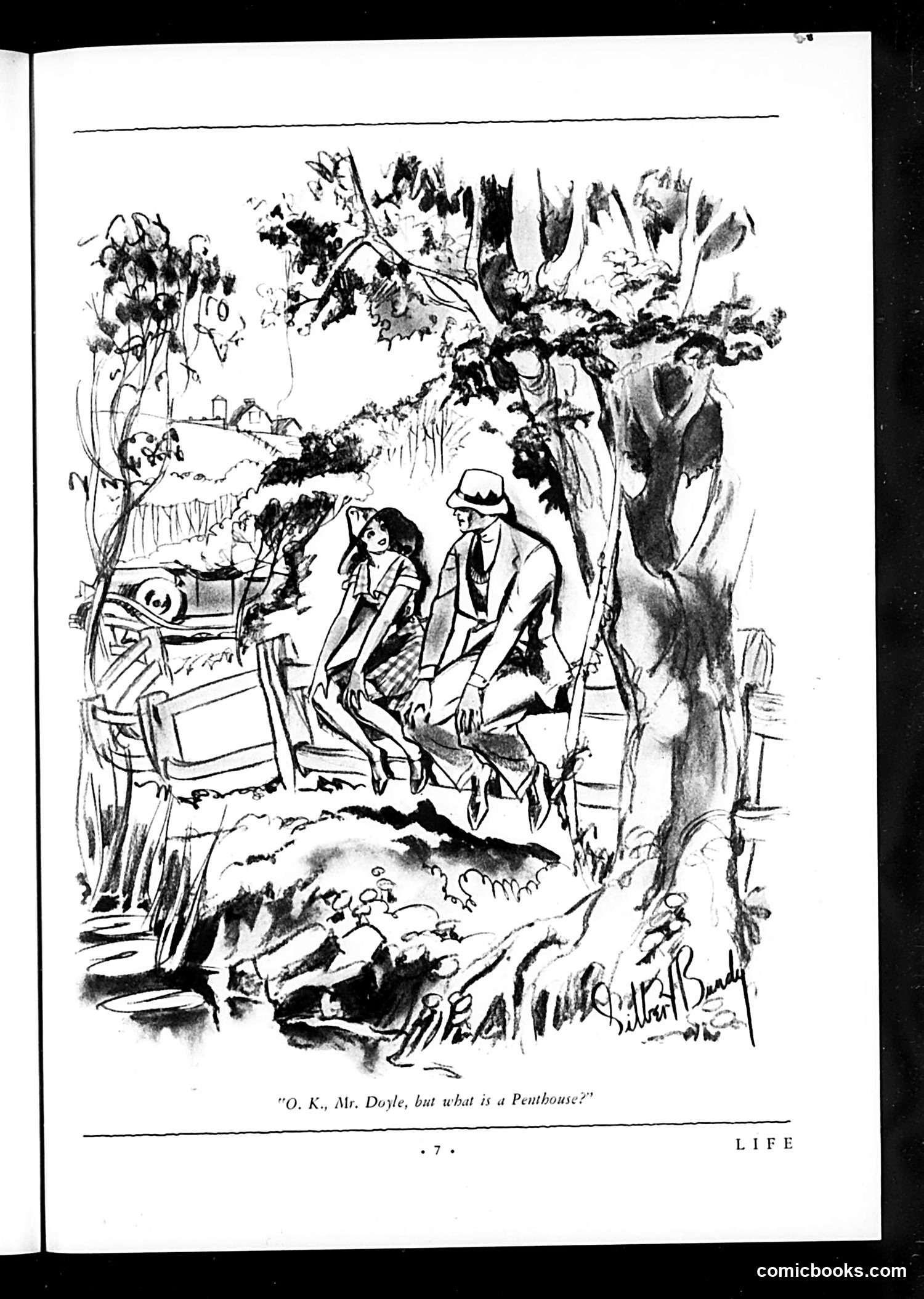
# Cartoon Analysis This single-panel cartoon from *Life* magazine depicts two men in a wooded setting, one appearing to dig while the other watches. The caption reads: "O.K., Mr. Doyle, but what is a Penthouse?" The cartoon appears to reference someone named Doyle and satirizes the concept of a "penthouse"—likely mocking either a misunderstanding of this luxury architectural term or making a social commentary about wealth and aspirations. Without additional context about which "Mr. Doyle" is referenced or the specific historical moment, the exact political or social target remains unclear. The sketch style and *Life* magazine format suggest this is early-to-mid 20th century satire, but the specific joke's relevance is not immediately apparent to modern readers without additional biographical or historical information.
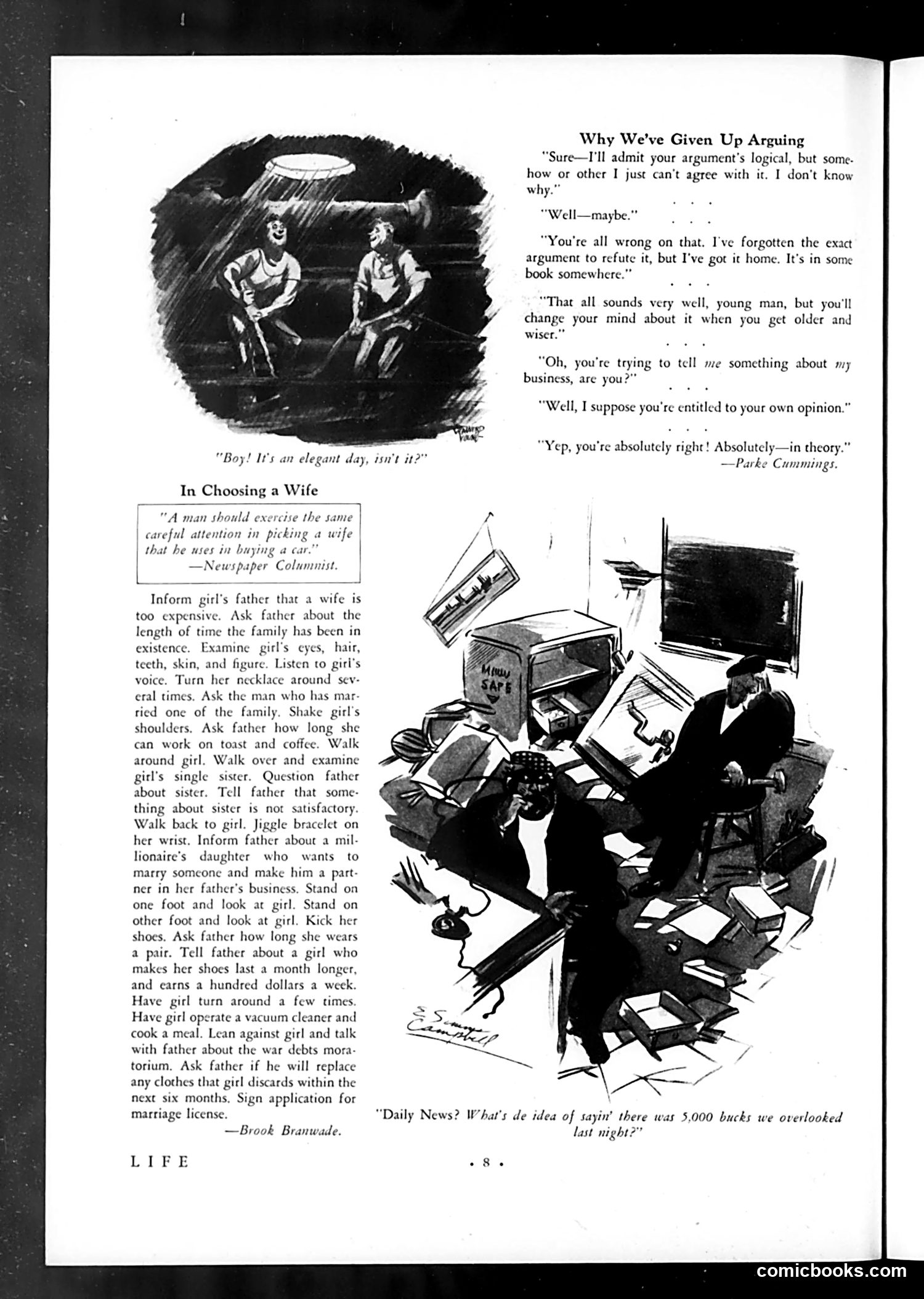
# Analysis of Life Magazine Page This page contains two satirical pieces about courtship and marriage: **Top Section ("Why We've Given Up Arguing"):** A cartoon dialogue between a young couple in a car shows modern dating where substantive disagreement has been replaced by passive acceptance. Rather than debate ideas, they simply defer to age, authority, or agree to disagree—reflecting post-WWI generational shifts where younger people questioned traditional values but lacked conviction to argue them through. **Bottom Section ("In Choosing a Wife"):** A humorous advice column by Brook Braunwacke parodies contemporary "how-to" articles. It sarcastically suggests evaluating potential wives through absurdly reductive inspections (examine her eyes, hair, teeth; shake her shoulders; check family history)—mocking both overly analytical approaches to marriage and paternalistic attitudes toward women as acquisitions rather than partners. Both pieces satirize modern dating conventions of the 1920s-30s era.
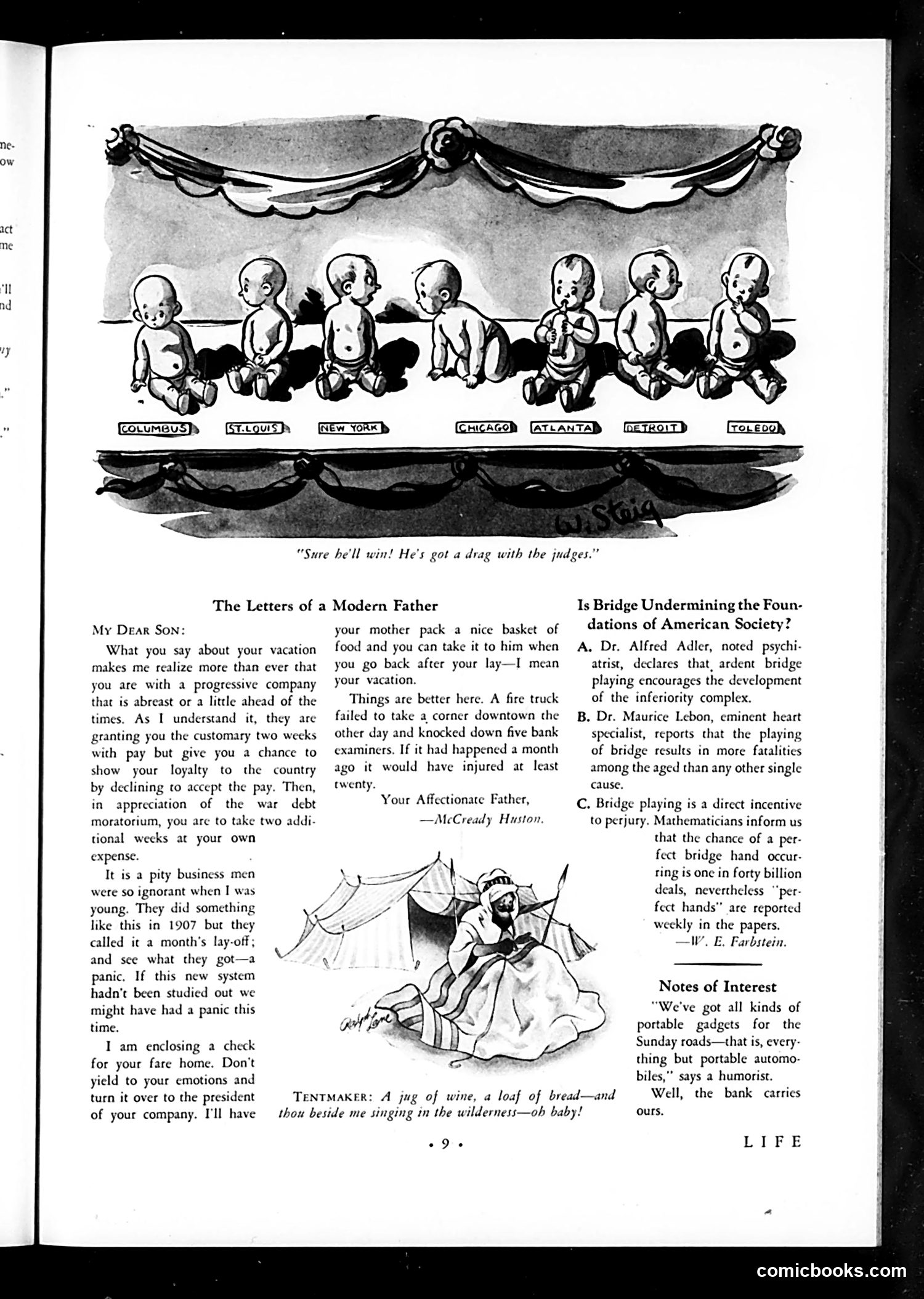
# Analysis The top cartoon depicts seven babies labeled with major American cities (Columbus, St. Louis, New York, Chicago, Atlanta, Detroit, Toledo). The caption reads: "Sure he'll win! He's got a drag with the judges." This appears to be satirizing a baby contest or competition—likely a real event from this era where cities competed for publicity. The humor suggests that winning depends on having "a drag" (influence or connections) with judges rather than actual merit. The cartoon mocks how American civic pride and competition could be determined through favoritism rather than fair judgment. The page also contains "The Letters of a Modern Father," advice columns, and bridge-playing commentary. The overall issue uses humor to critique American social customs, business practices, and leisure activities of the period.
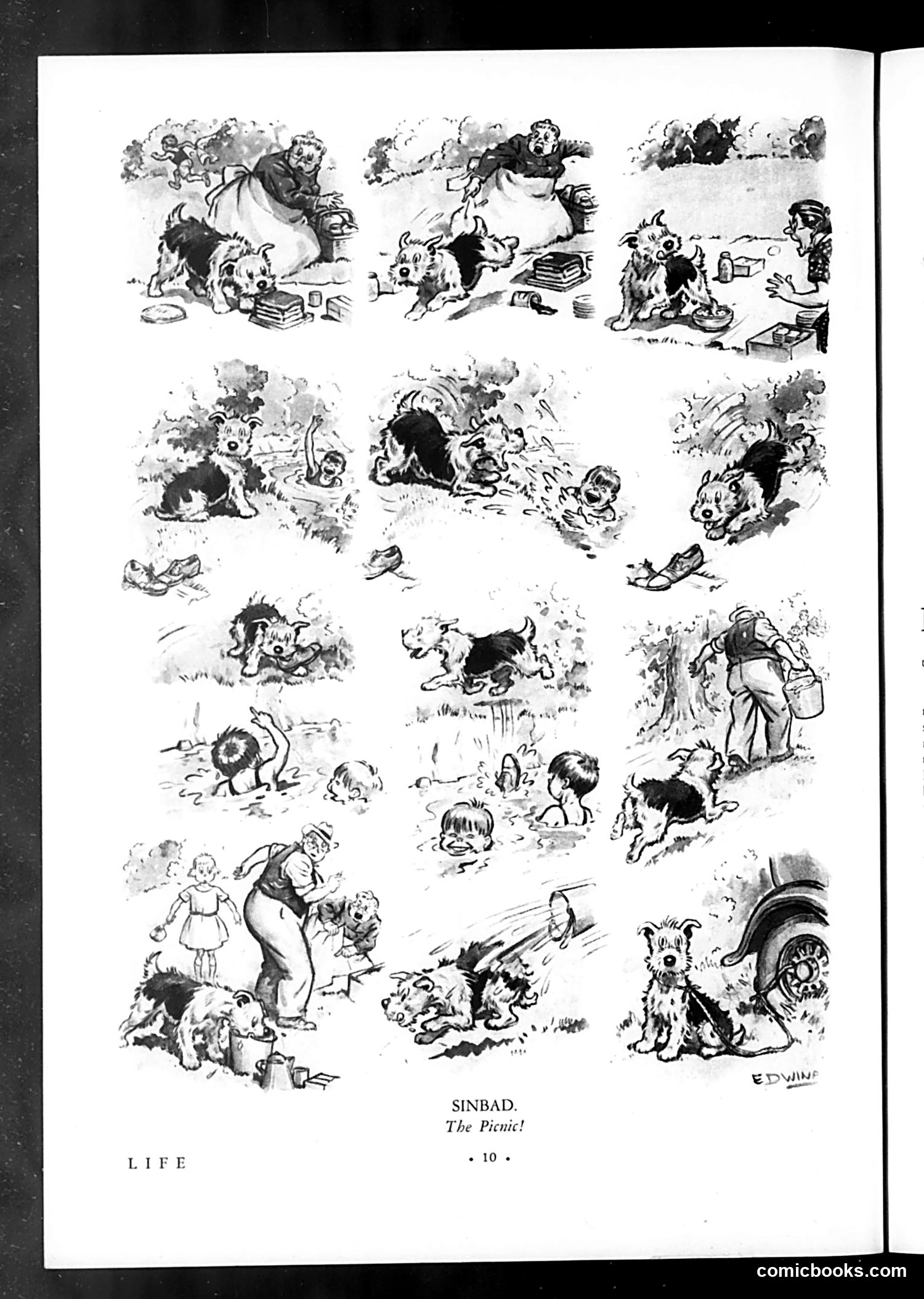
# "Sinbad: The Picnic!" - Life Magazine Cartoon This is a humorous illustrated sequence by Edwin (signed lower right) depicting anthropomorphized dogs causing chaos at a human family picnic. The dogs steal food, scatter belongings, chase children, overturn baskets, and generally wreak havoc throughout the outing. The satire works on a simple level: the "Sinbad" reference (likely the dog's name) suggests exotic adventure, but instead of grand tales, readers get the mundane domestic disaster of a ruined picnic. The joke is the contrast between the romantic associations of the name and the slapstick reality of uncontrolled pets destroying a family gathering. This type of gentle domestic humor was typical of Life's early satirical content, appealing to readers with pets and family experiences.