A complete issue · 36 pages · 1931
Life — July 17, 1931
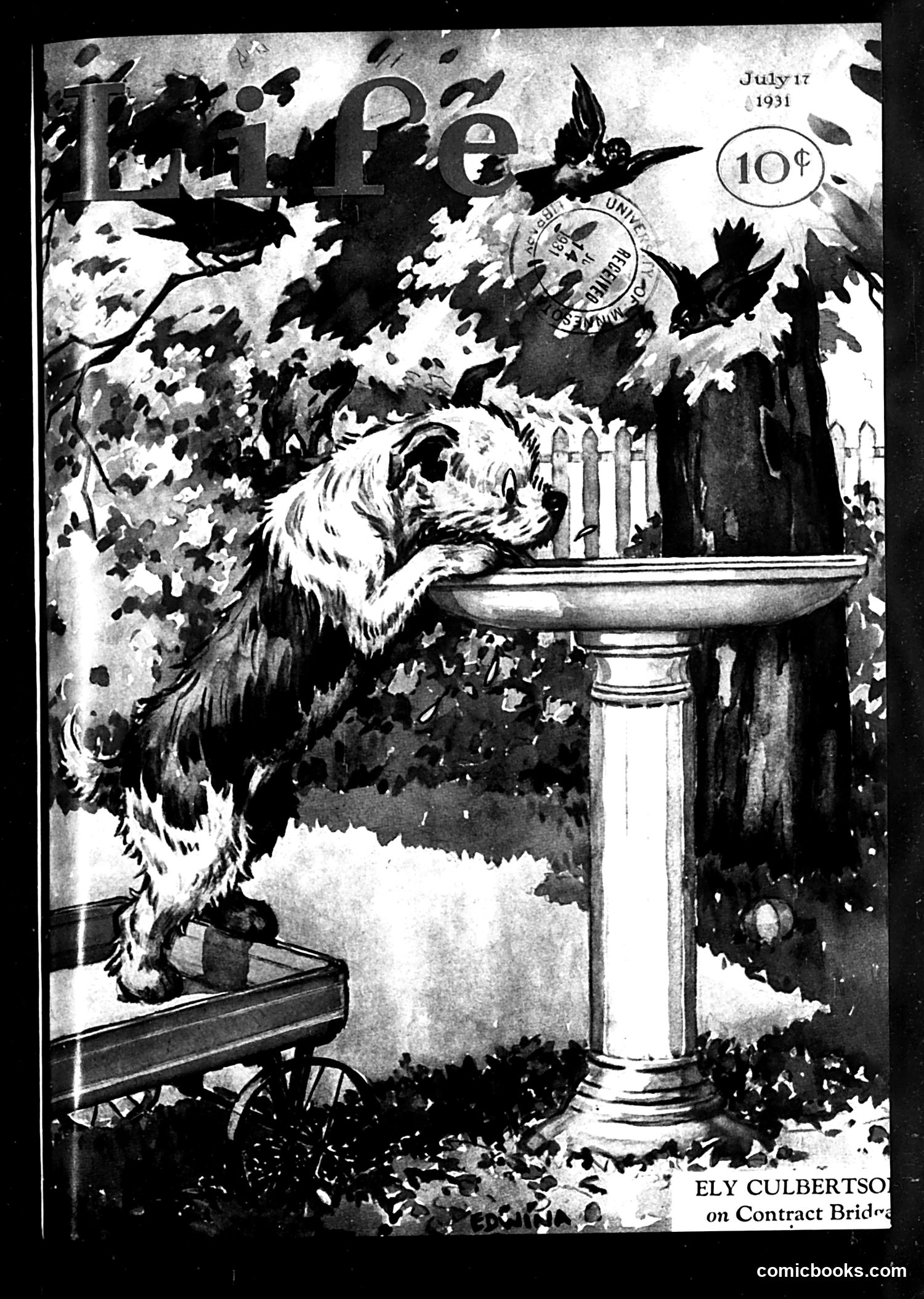
# Life Magazine Cover Analysis **July 17, 1931** This cover illustration by Ely Culbertson depicts a dog drinking from a birdbath in a garden. The title references "Contract Bridge," indicating this is about the card game. The satire appears to target bridge's popularity during the early 1930s. The dog—standing upright on hind legs in an absurdly human manner—suggests how obsessively people were adopting bridge, even to ridiculous extremes. The formal garden setting and the dog's dignified posture create comic incongruity: a animal behaving with human refinement. Culbertson was a famous bridge expert of the era, so this likely mocks the bridge craze he helped popularize. The message seems to be that Americans had become so devoted to contract bridge that even dogs were adopting the pastime—a humorous exaggeration of the game's widespread social influence.
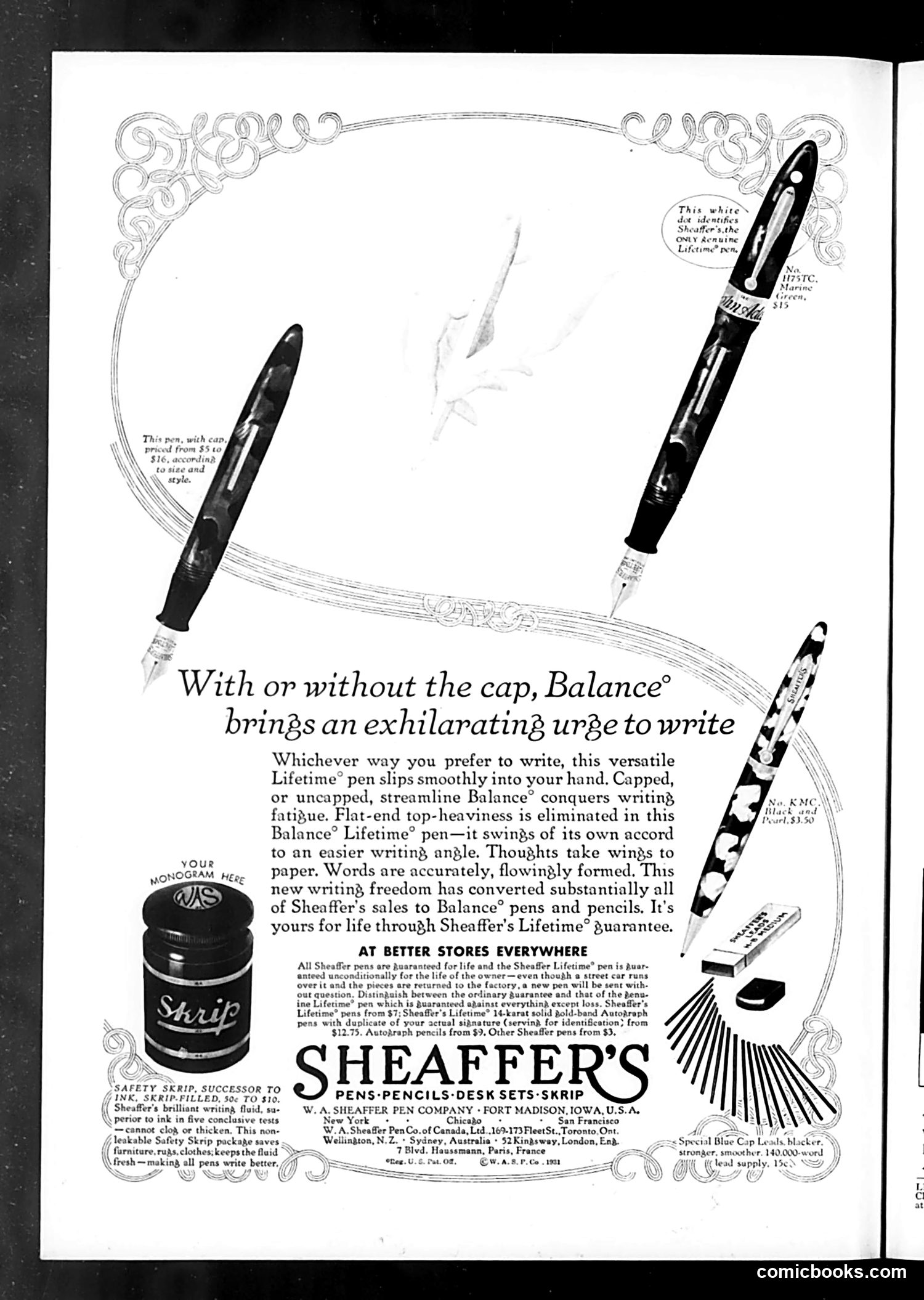
# Analysis This is **not a political cartoon or satire**—it's a **full-page advertisement for Sheaffer's Balance fountain pens and pencils**. The page showcases three writing instruments with decorative flourishes and includes testimonial text praising the pens' versatility ("with or without the cap") and smooth writing quality. There's also an image of Sheaffer's Scrip ink bottle. The ad emphasizes the "Lifetime" guarantee and the pens' ability to adapt to different writing angles without fatigue. The ornamental border design and italic typography reflect the aesthetic conventions of early 20th-century advertising. **No political figures, satire, or social commentary are present**—this is straightforward commercial promotion appearing in Life magazine's pages.
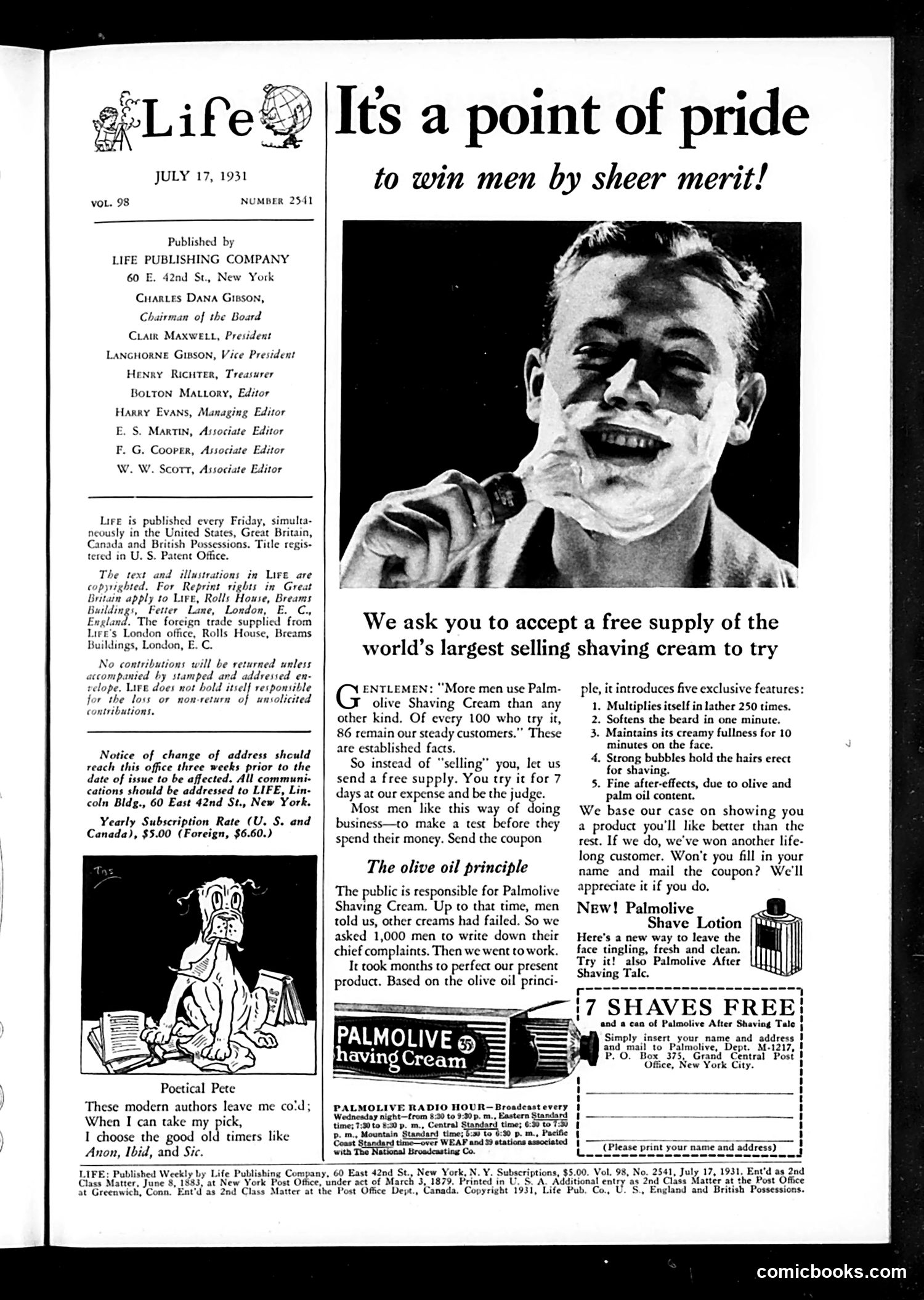
# Analysis: Life Magazine, July 17, 1931 This page is primarily a **Palmolive Shaving Cream advertisement** disguised as editorial content. The main image shows a man enthusiastically holding a razor, smiling broadly while endorsing the product. The satirical element appears in the **"Poetical Pete" cartoon** (lower left), which shows a disheveled dog reading rejection letters. The accompanying verse mocks struggling writers who romanticize poverty: "These modern authors leave me cold; When I can take my pick, I choose the good old timers like Anon, Ibid, and Src." The joke critiques contemporary authors who affect struggling-artist personas while claiming to work from purer motives than classic, anonymous literature. The Palmolive ad itself uses pseudo-scientific claims about "olive oil principle" and consumer testimonials—typical 1930s advertising tactics before modern regulation.
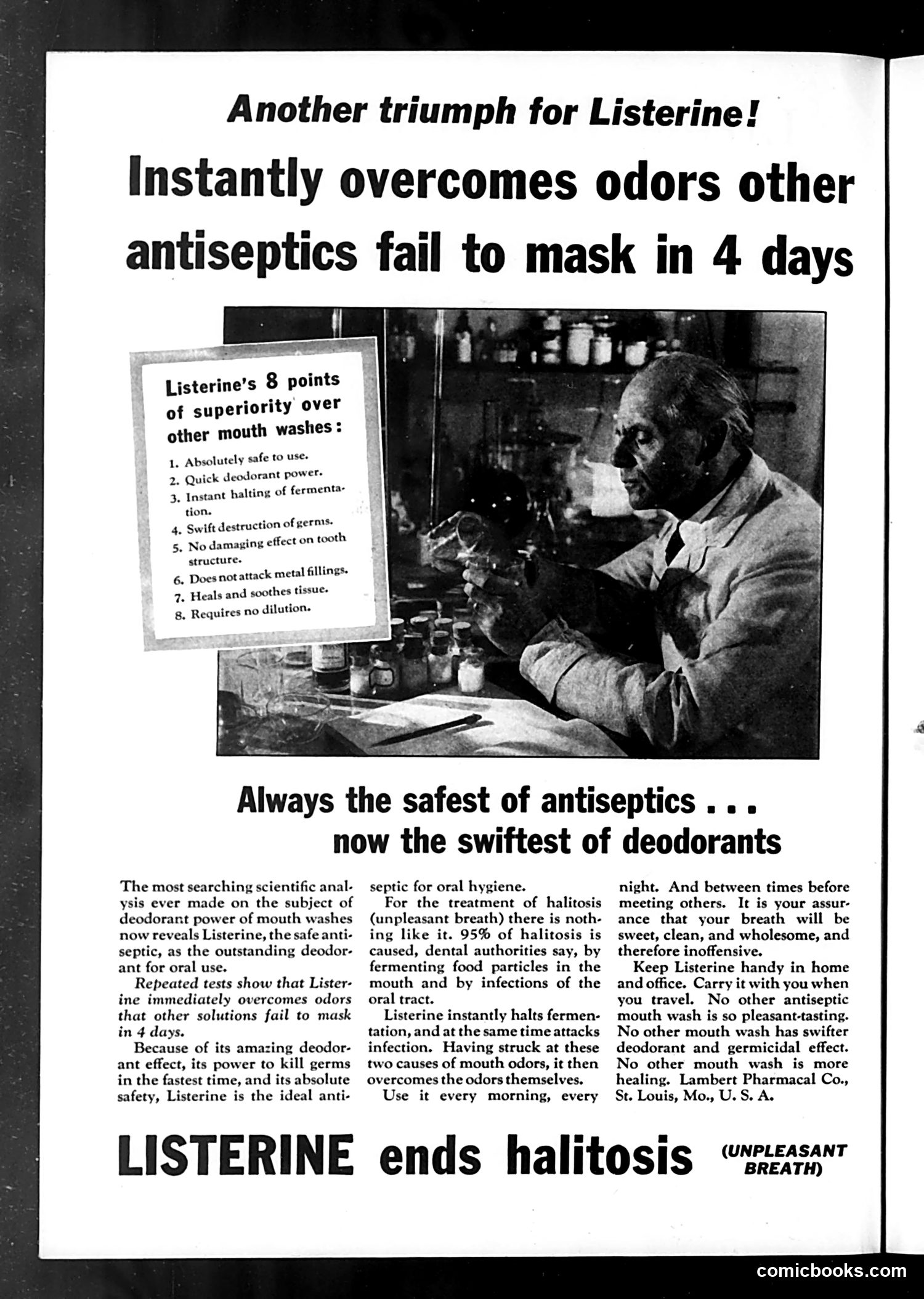
# Analysis This is a **Listerine advertisement**, not political satire or a cartoon. The page promotes Listerine mouthwash as a deodorant and antiseptic for oral hygiene. The central image shows a man in what appears to be a laboratory or professional setting, examining a bottle of Listerine. The ad claims Listerine "instantly overcomes odors other antiseptics fail to mask in 4 days" and lists "8 points of superiority." The advertisement addresses "halitosis" (bad breath), positioning Listerine as uniquely effective. The language emphasizes scientific authority ("most searching scientific analysis") and promises the product prevents social embarrassment from unpleasant breath. This reflects early-twentieth-century marketing that often manufactured health anxieties to sell products—a technique still common today.
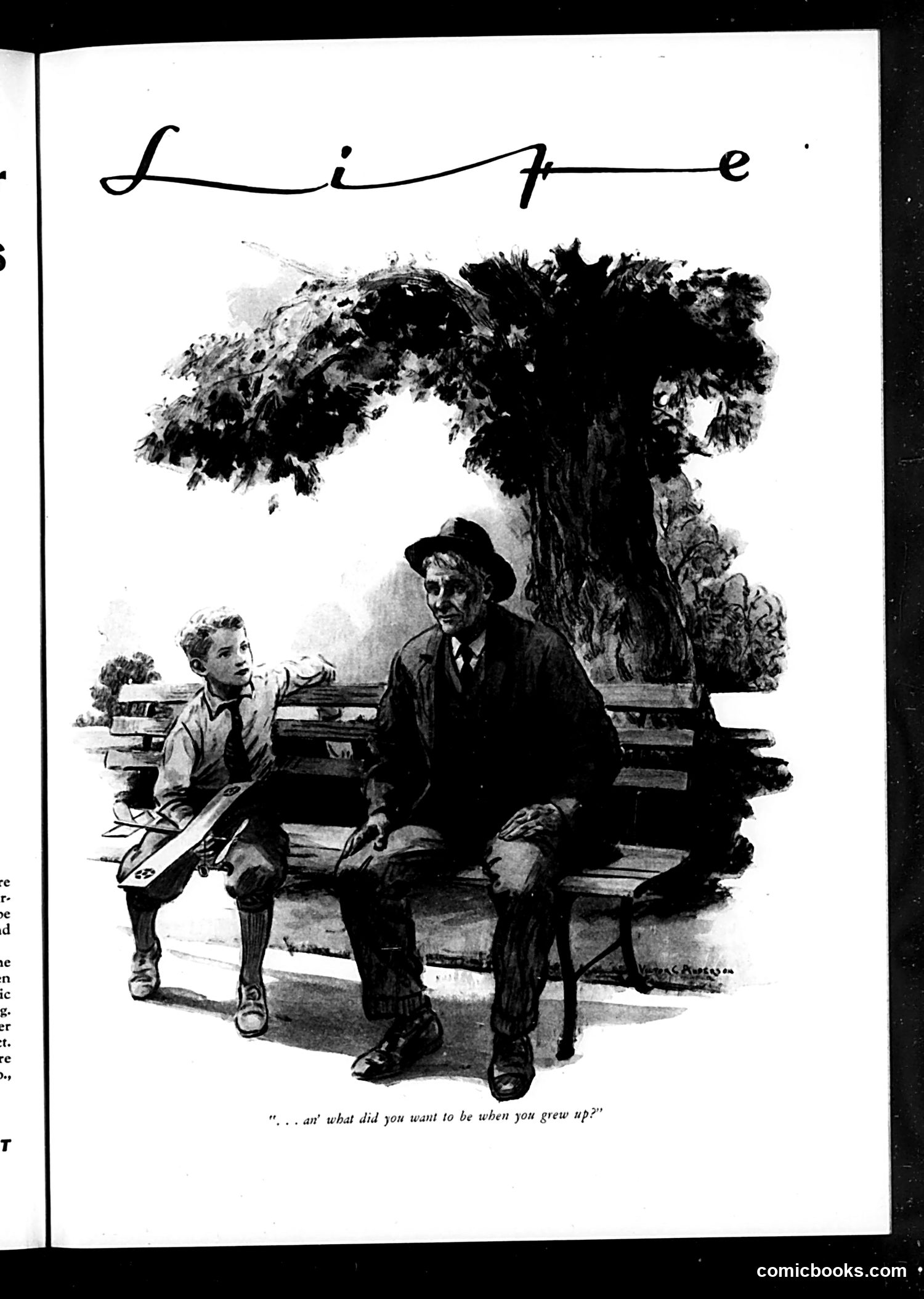
# Analysis of "Life" Magazine Page This page features a single illustration titled "Life" showing two figures—an adult man and a young boy—sitting on a bench beneath a large tree. The caption reads: "...air' what did you want to be when you grow up?" The cartoon appears to be a gentle, sentimental piece about childhood aspirations. The setting suggests a park or countryside scene. The artwork style and composition suggest this is likely a nostalgic reflection on how children's dreams evolve with age, or possibly commentary on interrupted or altered life plans—a common theme in early-to-mid 20th century American humor magazines. Without additional context or visible date information, the specific historical reference remains unclear, though the formal dress and illustration style suggest early-to-mid 1900s publication.
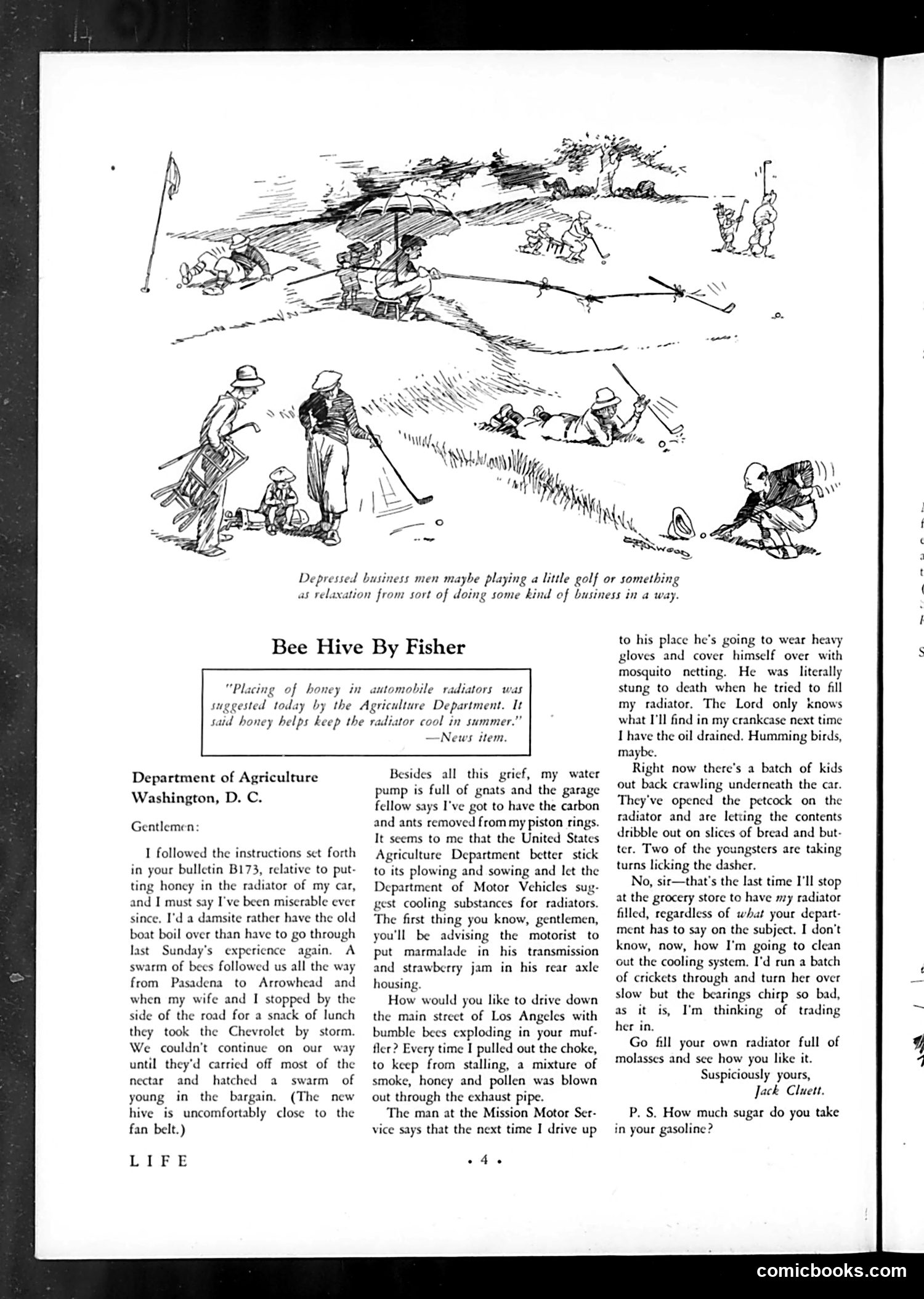
# "Bee Hive By Fisher" - Life Magazine Satire The cartoon depicts businessmen relaxing by playing golf, illustrating the column's humorous premise: putting honey in car radiators (suggested by the Agriculture Department as a cooling agent). The letter from "Jack Cluett" describes absurd consequences of this advice—bees swarming his car, gnats in the water pump, ants in the piston rings. He details escalating chaos: children licking the radiator cap, and requests to drive down Los Angeles streets with "bubbles exploding in your radiator." The satire mocks both the Agriculture Department's impractical wartime suggestion and the comedic desperation of motorists trying novel solutions during what appears to be a materials shortage. The joke relies on the ridiculousness of literal implementation of official advice.
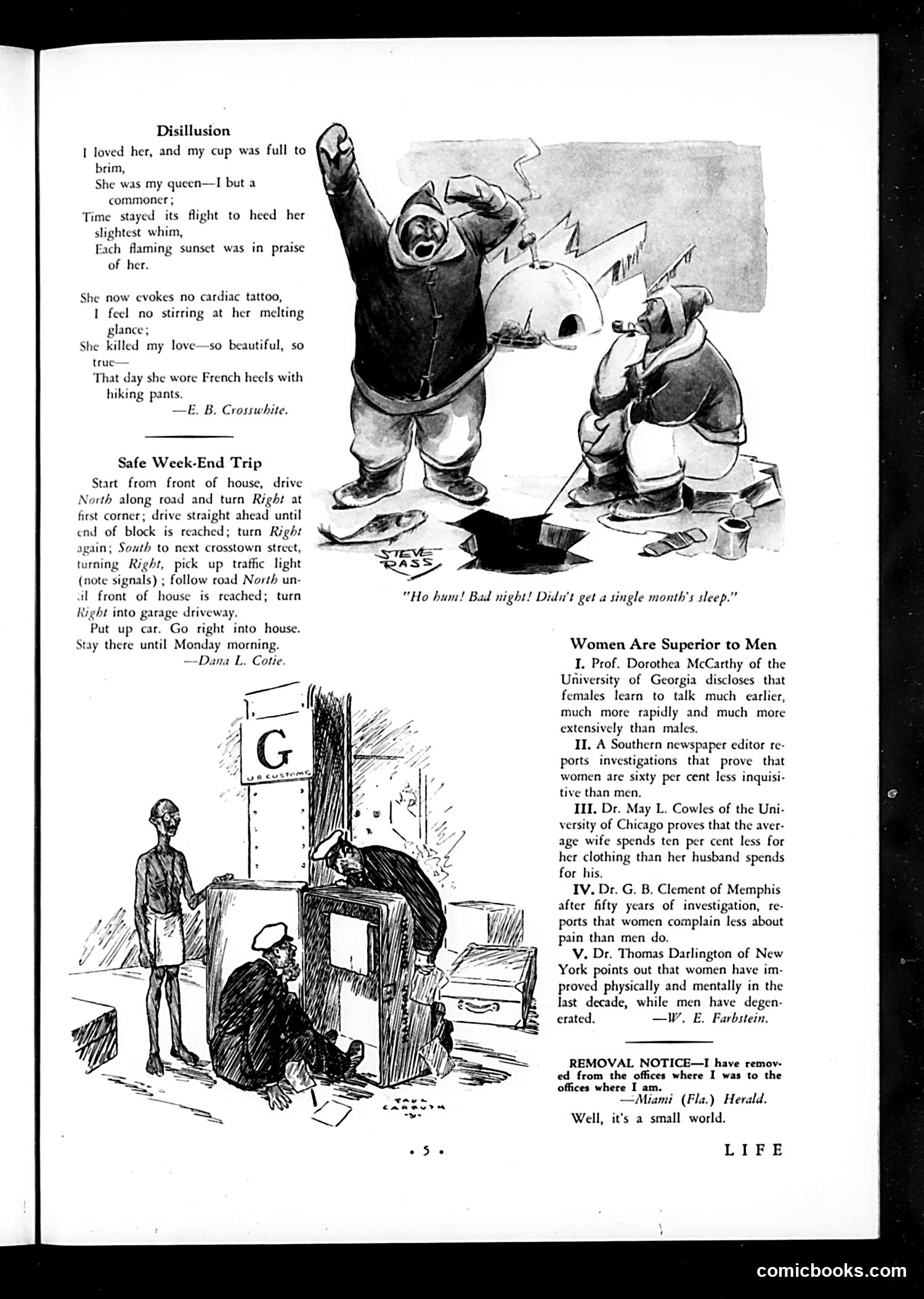
# Analysis of Life Magazine Page The page contains two cartoons and commentary satirizing domestic life and gender relations. The upper cartoon (signed "Steve Rass") depicts two rotund, exasperated figures arguing over a crib, with one saying "Ho hum! Bad night! Didn't get a single month's sleep." This appears to satirize the exhaustion of new parenthood and marital discord over childcare. The lower cartoon shows a figure crouched in what appears to be a makeshift shelter or doghouse, mocking domestic life or marital unhappiness. The text section "Women Are Superior to Men" ironically lists five purported scientific claims (from professors and doctors) asserting women's superiority in speech, questioning, physical health, pain tolerance, and mental improvement. This satire mocks pseudo-scientific arguments about gender while likely critiquing contemporary debates about women's roles and abilities.
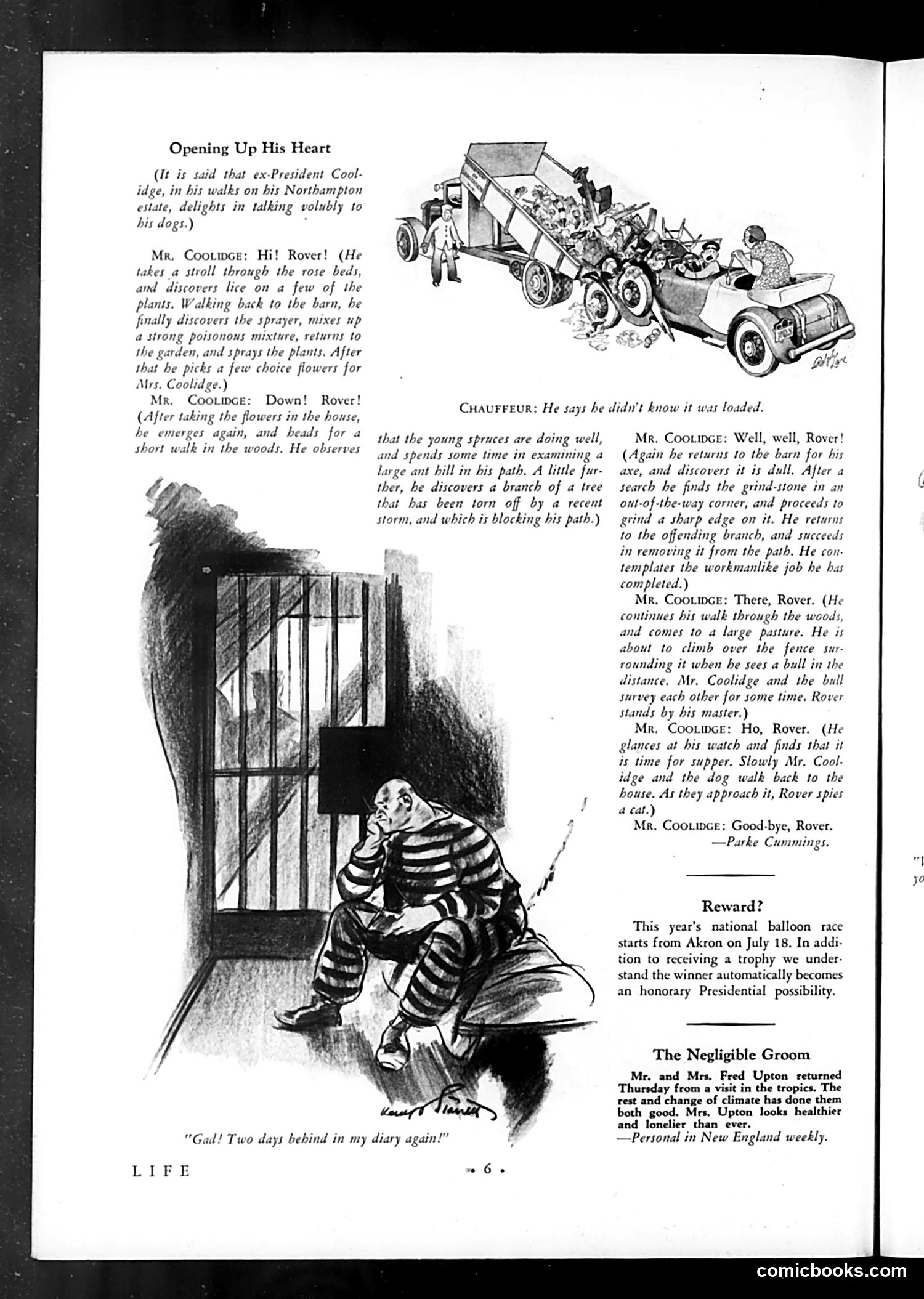
# "Opening Up His Heart" This satirical piece mocks **ex-President Coolidge** through a humorous narrative about his dog "Rover." The story depicts Coolidge on a walk discovering garden pests, then methodically spraying them—a tongue-in-cheek reference to his famously reserved personality and taciturn public manner. The cartoon's point: Coolidge was known for being emotionally distant and uncommunicative ("opening up his heart" is ironic). The detailed pest-removal narrative—grinding stones, mixing poison—parodies how he approaches even casual dog walks with mechanical precision rather than warmth or spontaneity. The accompanying sketch shows a prisoner, captioned "Two days behind in my diary again!"—unrelated social commentary on routine tedium. A minor item about balloon racing and one about Mr. and Mrs. Upton's tropical vacation round out the page.
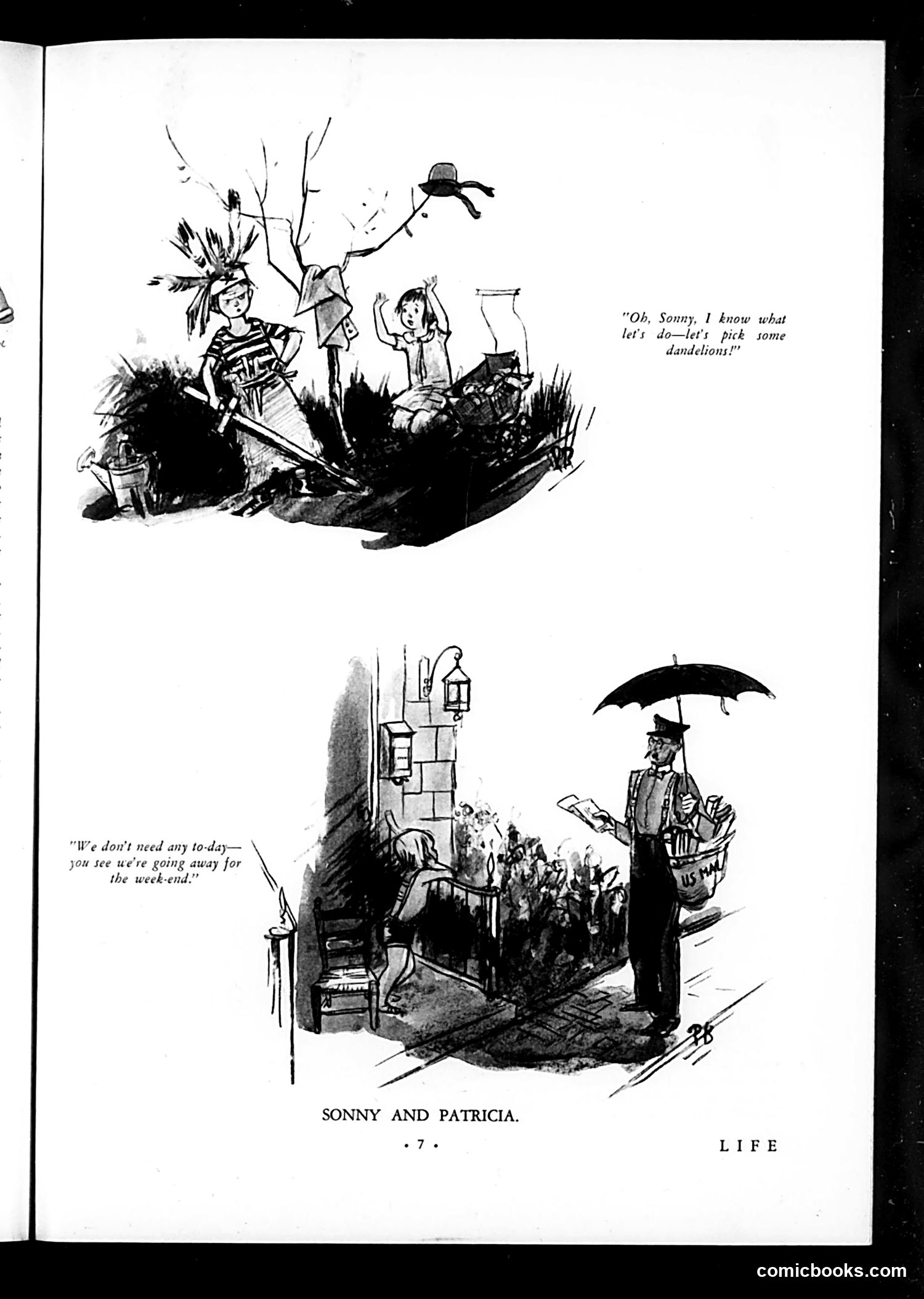
# "Sonny and Patricia" - Life Magazine Cartoon This page contains two cartoon vignettes titled "Sonny and Patricia" depicting children's activities. **Top cartoon:** Two children discover a bare tree and decide to pick dandelions, showing resourcefulness and innocent play despite environmental bleakness. **Bottom cartoon:** A man with an umbrella stands outside a building, telling someone inside "We don't need any to-do—you see we're going away for the week-end!" The scene suggests he's dismissing concerns about an upcoming absence or trip. The cartoons appear to illustrate everyday domestic humor and children's antics typical of Life magazine's satirical family-focused content. Without additional context about "Sonny" and "Patricia" as recurring characters, the precise satirical targets remain unclear, though both scenes play on relatable middle-class situations and generational attitudes.
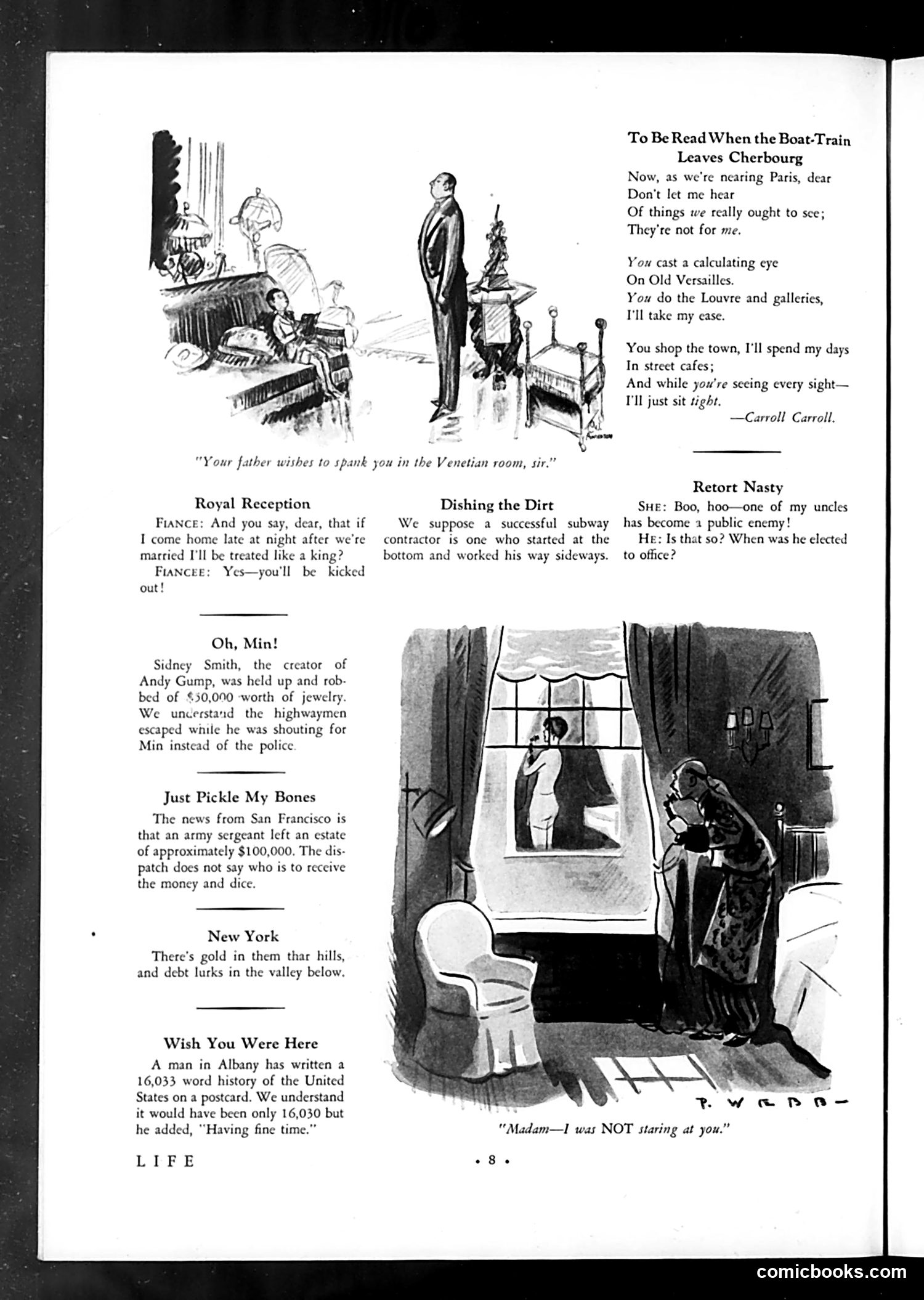
# Analysis of Life Magazine Page 8 This page contains several short humor pieces and one cartoon. The main cartoon, captioned "Madam—I was NOT staring at you," depicts a soldier or military man appearing to gaze out a window while a woman nearby looks accusatory. The joke plays on the woman's insecurity—she assumes he was staring at her when he wasn't. The surrounding text pieces are brief satirical anecdotes about contemporary life: a "Royal Reception" about marital dynamics, "Dishing the Dirt" about subway contractors, and "Retort Nasty" featuring quick-witted banter. Other items reference robbery, inheritance, and American regional humor. The overall tone is light domestic satire typical of Life's humor format—poking fun at social pretensions, relationships, and everyday situations rather than heavy political commentary.
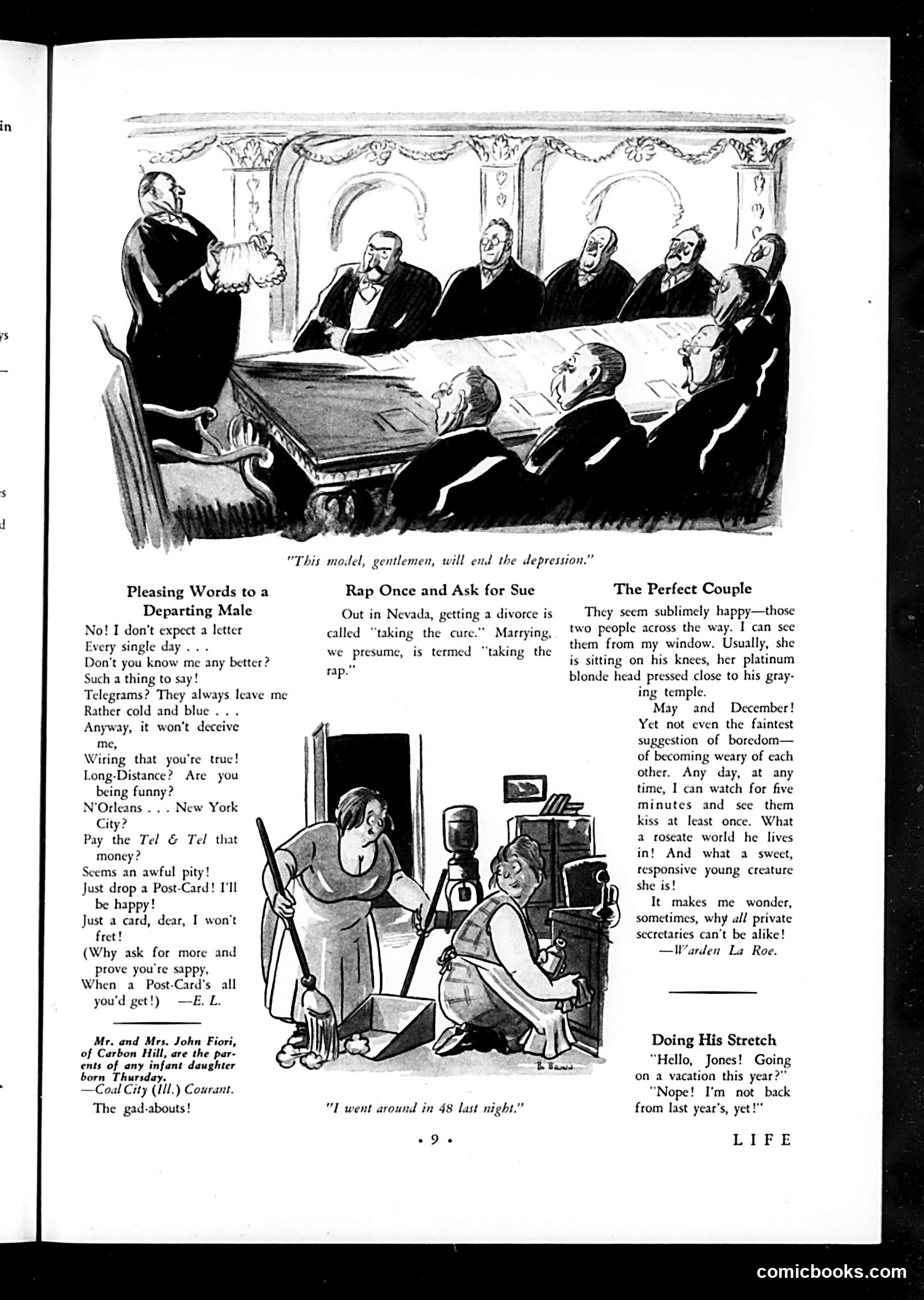
# Analysis of Life Magazine Page 9 This page contains three separate humor pieces typical of Life's satirical content. **Top cartoon** depicts businessmen in a boardroom. The caption "This model, gentlemen, will end the depression" suggests they're presenting some economic solution during the Great Depression era—likely mocking how confidently business leaders proposed ineffective remedies. **Middle cartoon** titled "I went around in 48 last night" shows domestic humor about a woman's nighttime activities, with no clear political meaning. **Text pieces** include personal advice columns and humorous letters—"Pleasing Words to a Departing Male," "Rap Once and Ask for Sue," and "The Perfect Couple"—offering satirical commentary on relationships and modern life through invented anecdotes. The overall tone is gentle social satire aimed at middle-class American readers, focusing on romance, marriage, and economic anxieties rather than hard political targets.
# Analysis of Life Magazine Page This page contains three opinion essays rather than cartoons. The header illustration shows a cherub or cupid figure, appropriate to the marriage-focused content. The essays discuss: 1. **"What Minds Accept, Bodies Endure"** — argues Russians accept hardship because their minds accept it; suggests Americans adopt similar mental discipline toward domestic economy and the motor car (Prohibition era reference). 2. **"Marriage Crowds Divorce"** — discusses whether divorced people should remarry, touching on Episcopal Church policy. 3. **"Ruth Nichols' Misfortune"** — appears to reference aviator Ruth Nichols, discussing her effort to fly across the Atlantic and relating her to Scandinavian ancestry and American history. The tone is characteristic of 1920s-30s Life magazine: satirical social commentary with moralistic undertones.