A complete issue · 36 pages · 1931
Life — July 3, 1931
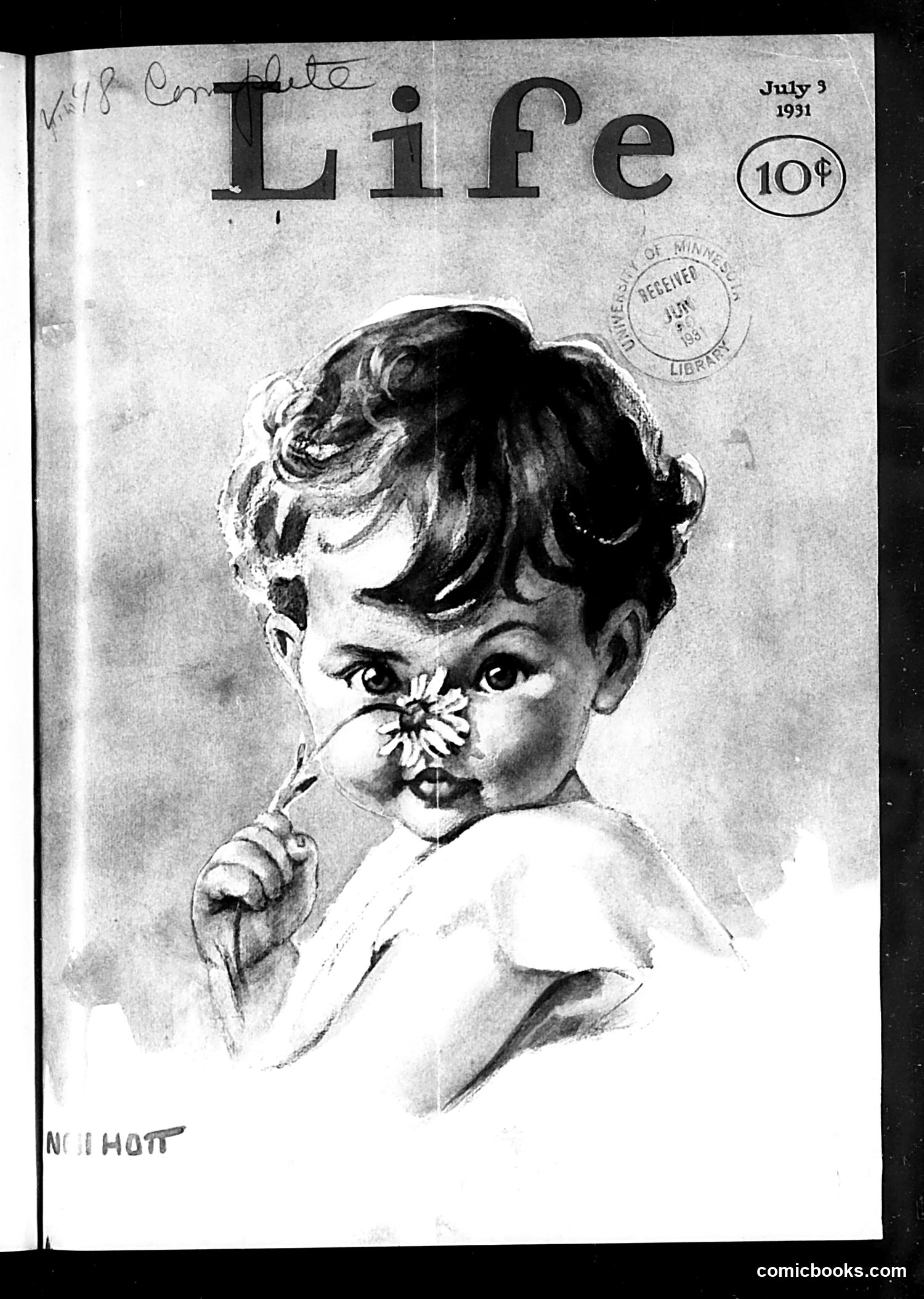
# Life Magazine Cover - July 9, 1931 This is a cover illustration signed "Noll Hott" (artist signature visible at bottom). It depicts a young child with a mischievous expression holding a daisy flower near their face. The image appears designed to be charming and innocent—capturing a candid moment of childhood. Given Life magazine's satirical nature and 1931 publication date, this likely functions as gentle social commentary rather than serious political satire. The cover suggests themes about childhood innocence, perhaps commenting on American attitudes toward children or domestic life during the Great Depression era. The 10-cent price reflects 1931 economics. Without accompanying text visible, the specific satirical intent remains unclear, though the subject matter appears apolitical and human-interest focused.
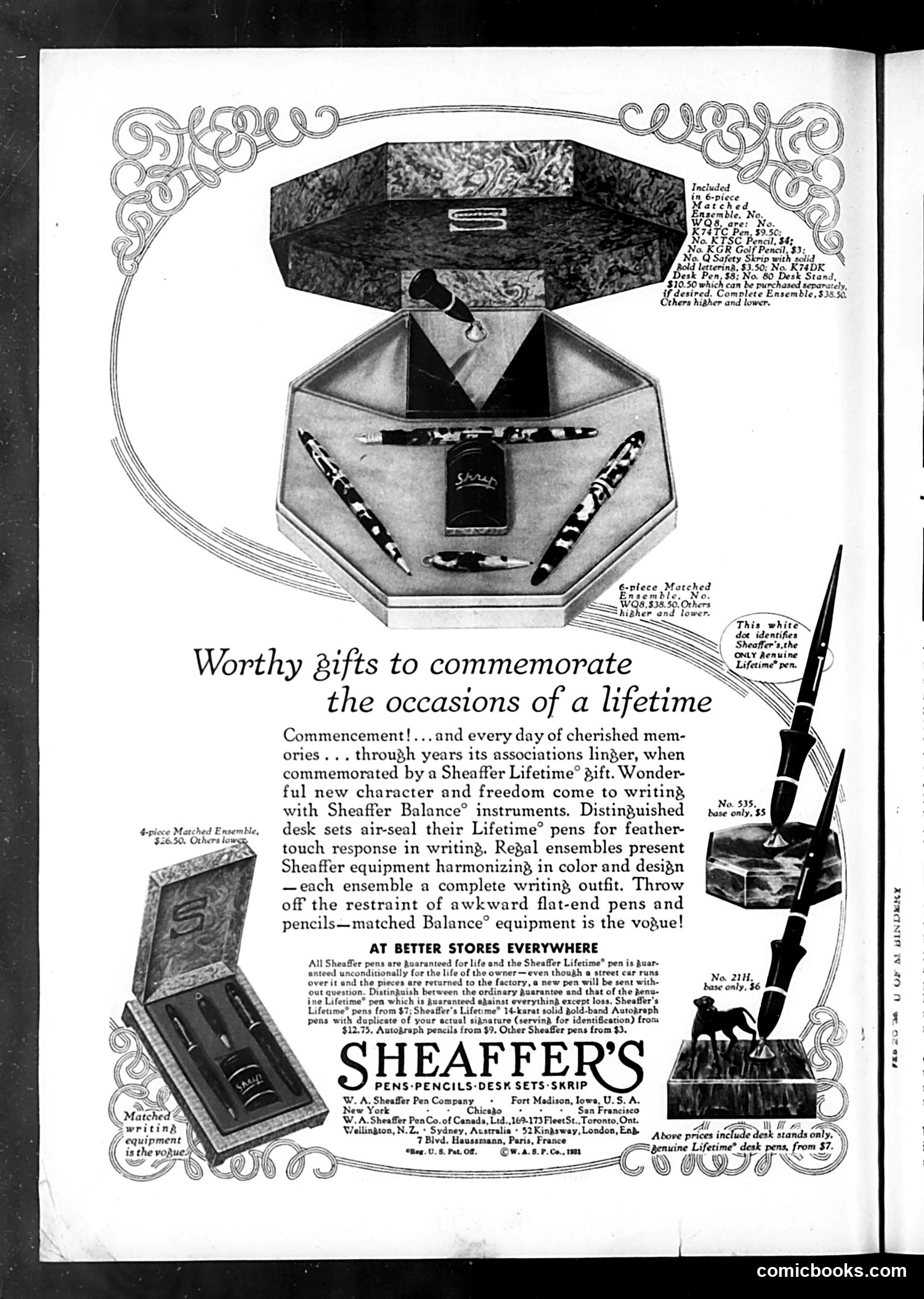
# Analysis This is a **Sheaffer pen advertisement**, not political satire. It shows luxury writing instrument gift sets marketed as "Worthy gifts to commemorate the occasions of a lifetime"—commencement, graduation, and other milestone moments. The ad displays several product configurations: an octagonal desk set with pens and pencils, a matched ensemble box, and individual "Lifetime" pens in black with gold accents. The ornamental border and elegant layout emphasize prestige and permanence. The advertisement emphasizes Sheaffer's "lifetime guarantee"—pens are warranted for life, with free replacements if damaged. This was a major selling point for expensive writing instruments in this era. The copy targets affluent consumers seeking meaningful gifts for important occasions.
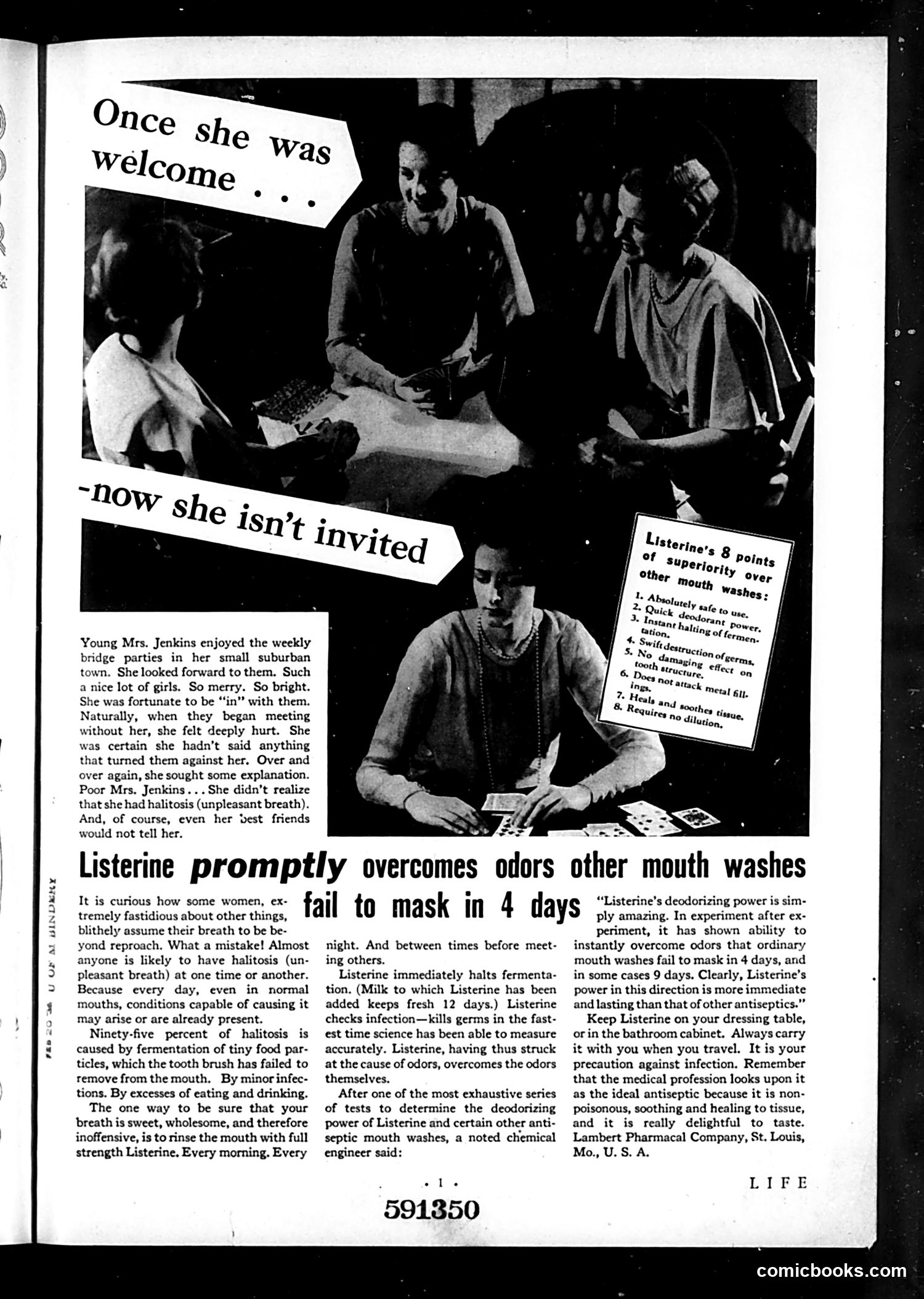
# Analysis This page is primarily **advertising** for Listerine mouthwash, not satire or political commentary. The advertisement uses a narrative format featuring "Mrs. Jenkins," a woman who lost her social standing ("once she was welcome...now she isn't invited") due to halitosis (bad breath). The accompanying photos show her excluded from a bridge party—a popular social gathering among middle-class women of the era. The ad's message: halitosis causes social rejection, and Listerine solves this problem. The accompanying text promotes Listerine's antiseptic properties and claims it overcomes odors in 4 days. This reflects **early-to-mid 20th century advertising strategy**: creating anxiety about social acceptability to sell hygiene products, particularly targeting women's fears about being ostracized.
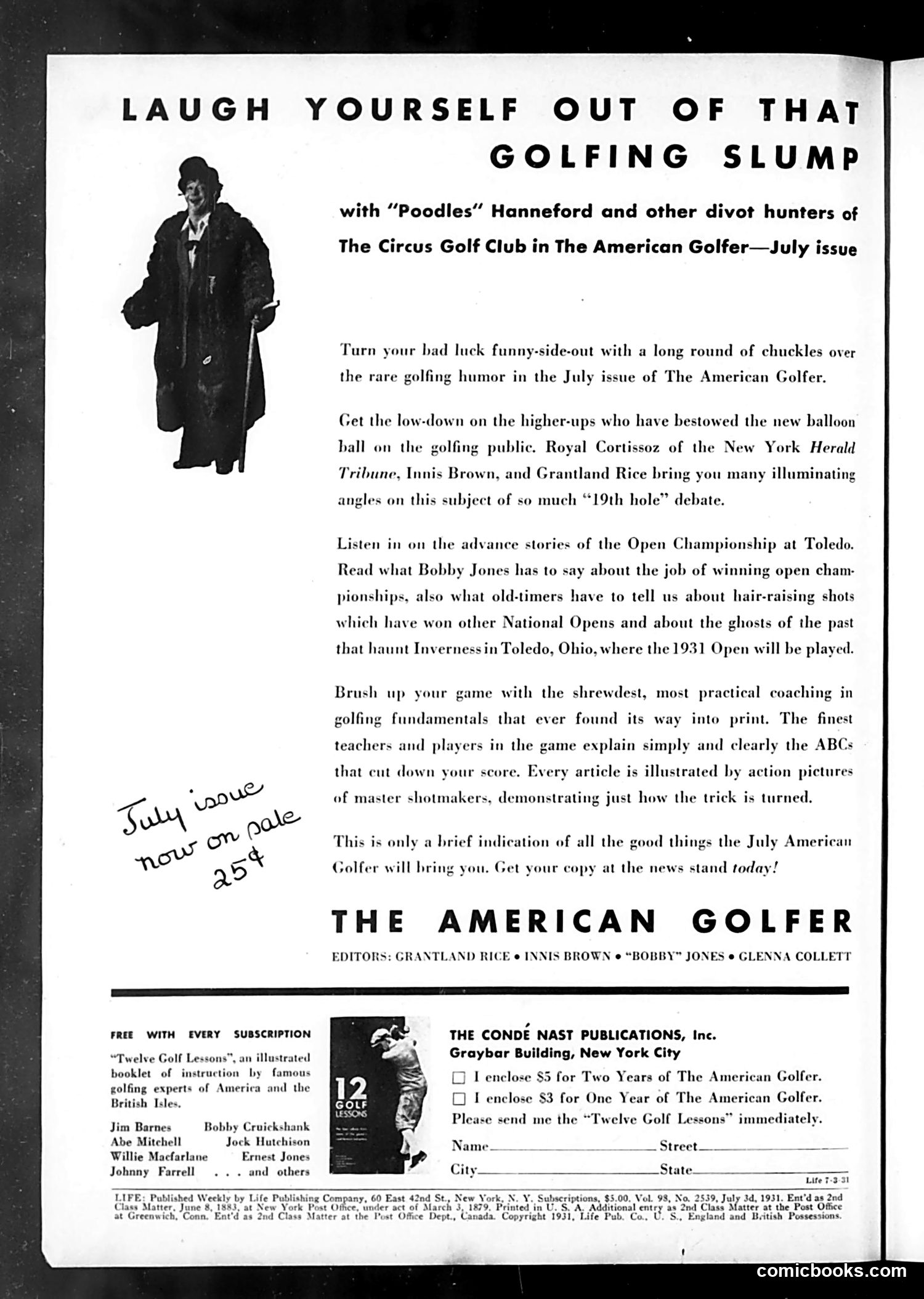
# Analysis This is primarily an advertisement for *The American Golfer* magazine's July 1931 issue. The page uses humor to promote golf content by featuring "Poodles" Hanneford (a circus performer shown in the photograph on the left) as a comic figure representing someone trying to escape a "golfing slump." The satire targets golf enthusiasts who take the sport too seriously. The ad promises humor about "divot hunters" and criticism of the newly popularized "balloon ball," while offering practical instruction from notable golfers like Bobby Jones. The reference to the 1931 Open Championship at Toledo, Ohio anchors this to contemporary golfing events. The handwritten note indicates this issue cost 25 cents and was available in July. The overall joke positions golf culture as humorous and self-aware—a leisure activity worth mocking gently.
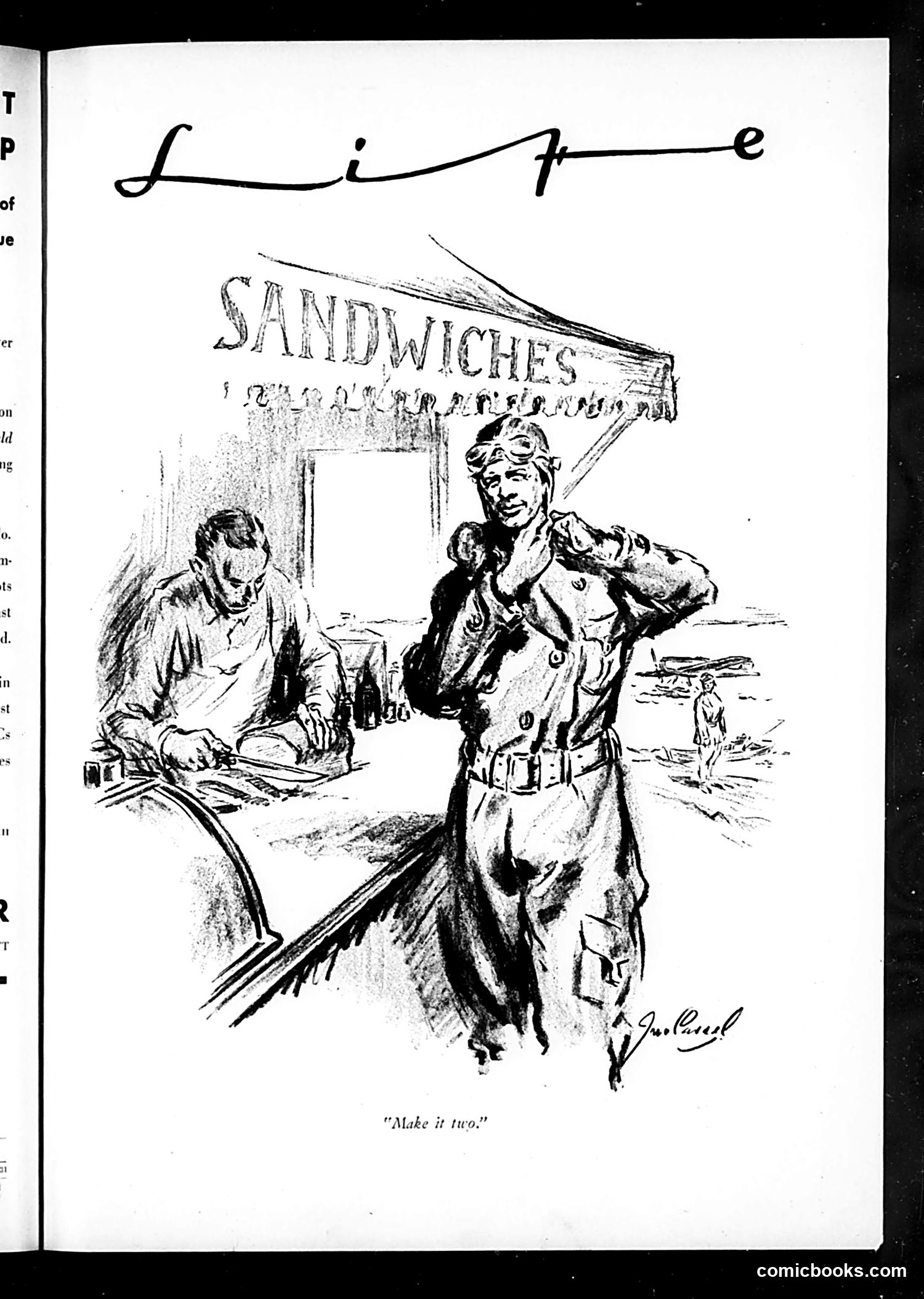
# "Life" Magazine Cartoon: "Make It Two" This cartoon depicts a wartime sandwich shop scene. A soldier in military uniform stands at a counter ordering from a proprietor, with the caption "Make it two." The shop's sign reads "SANDWICHES" overhead. The satire likely comments on soldier morale, rationing, or food availability during wartime (appears to be WWI or WWII era based on the uniform style). The humor suggests either the soldier's hearty appetite despite wartime shortages, or perhaps commentary on profiteering by businesses during military service. The proprietor's expression and the soldier's confident demeanor create a comedic tension about civilian-military economic interactions during wartime. The cartoon's point remains somewhat unclear without additional context about specific wartime food policies or conditions referenced.
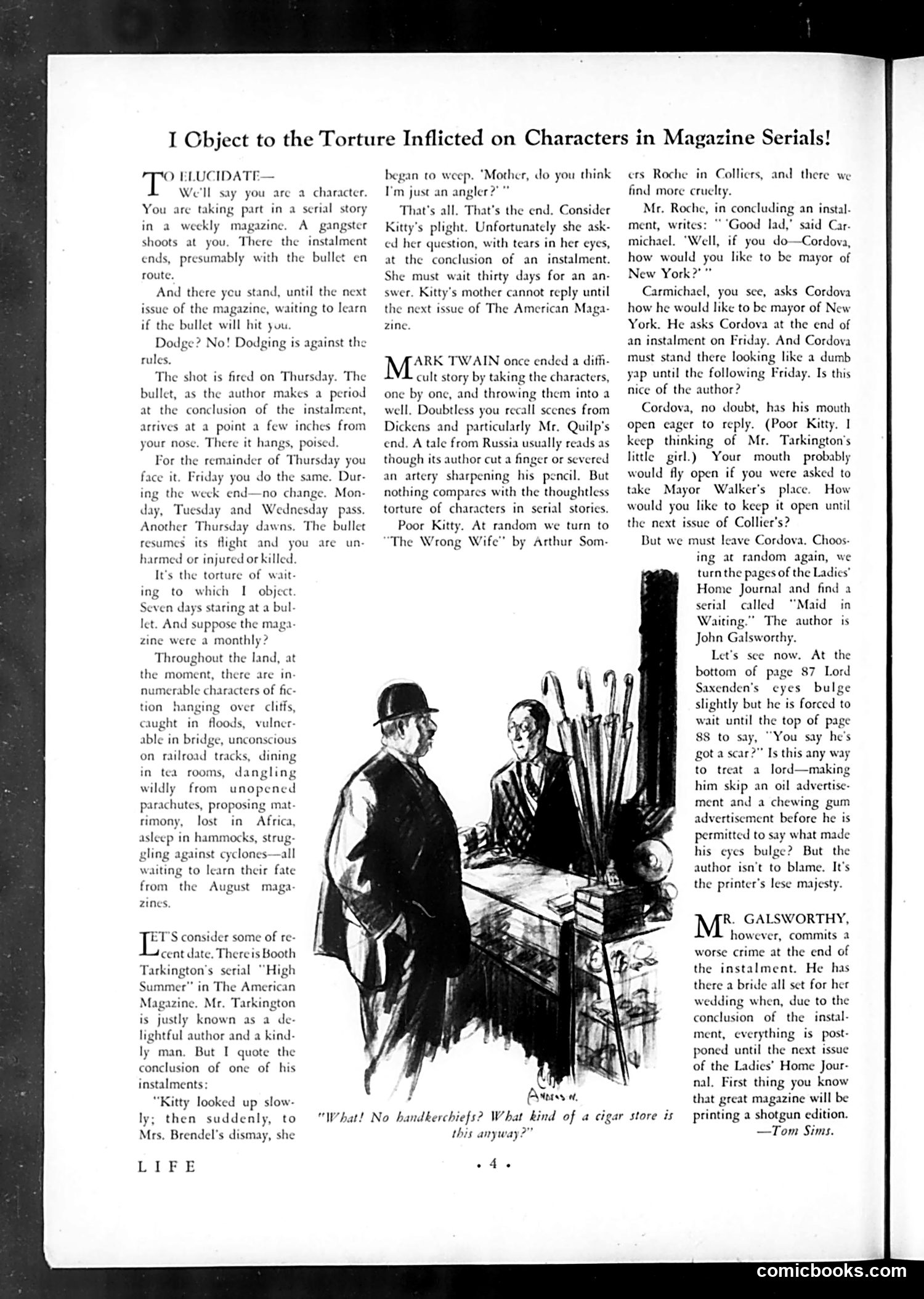
# Analysis of Life Magazine Page This page critiques the narrative structure of **serial fiction in weekly magazines**, a popular early 20th-century format. The author objects to the "torture of waiting"—the cliffhanger endings that leave characters in mortal danger (bullets fired, characters falling from cliffs) for seven days until the next installment. The illustration shows two men discussing a cigar store, likely depicting a scene from one of these serials. The satire mocks how serials artificially prolong suspense through contrived delays and how readers endure this waiting across multiple installments. The author cites specific examples like Mark Twain's stories and Arthur Somers Roche's work, arguing that such narrative techniques constitute "torture" of both characters and readers seeking resolution.
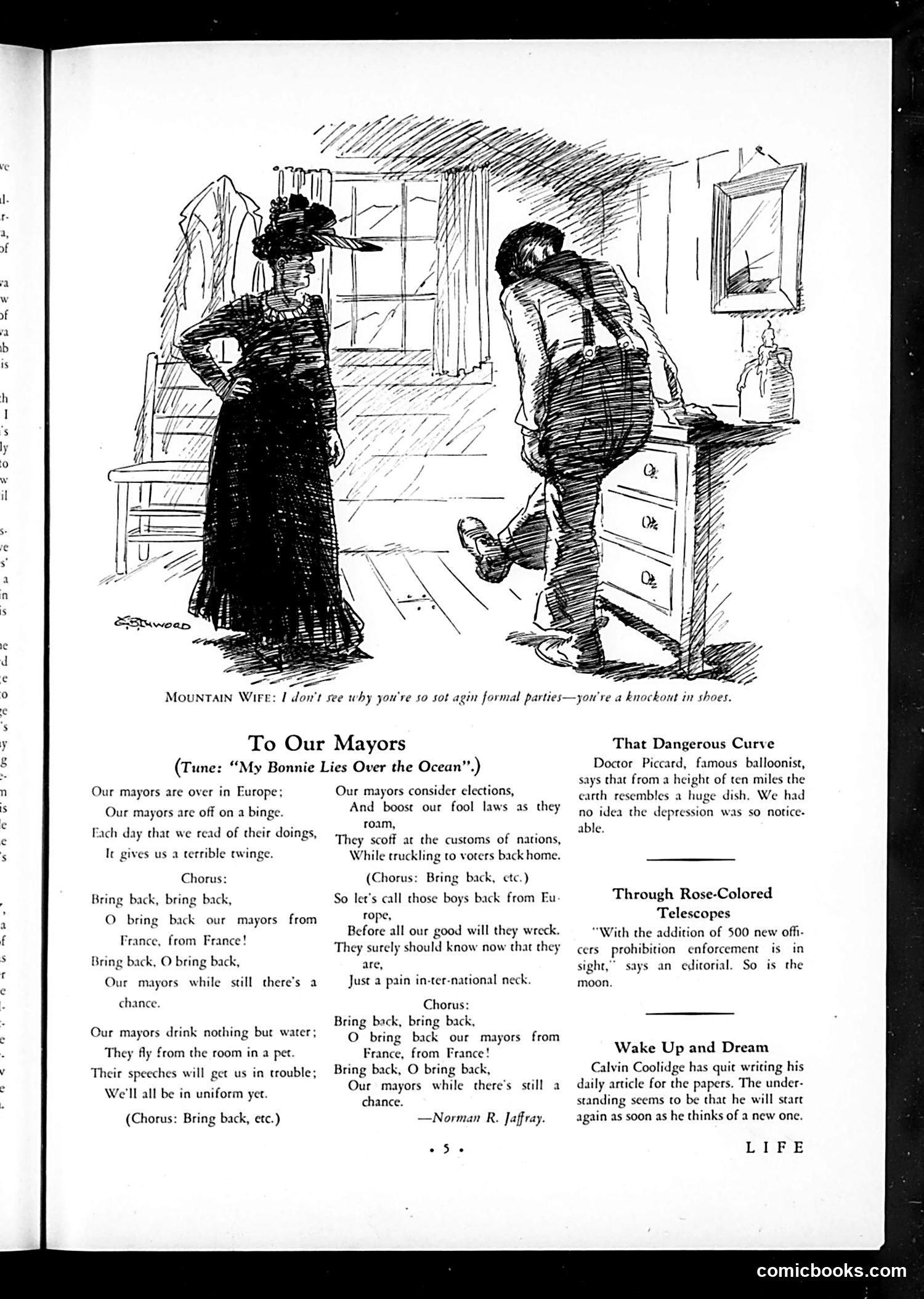
# Analysis of Life Magazine Page **The Cartoon:** The sketch depicts a woman in formal dress confronting a man in wrinkled, travel-worn clothes. The caption reads: "Mountain Wife: 'I don't see why you're so lot agin formal parties—you're a knockou in shoes.'" This is a humorous domestic scene mocking the husband's resistance to formal social events, with the wife's backhanded compliment suggesting his appearance is otherwise disheveled. **The Articles Below:** The page contains three satirical pieces: "To Our Mayors" (criticizing mayors absent in Europe), "That Dangerous Curve" (about a balloonist's Earth observations), and "Through Rose-Colored Telescopes" (regarding prohibition enforcement). These represent typical Life magazine social and political commentary from the Prohibition era.
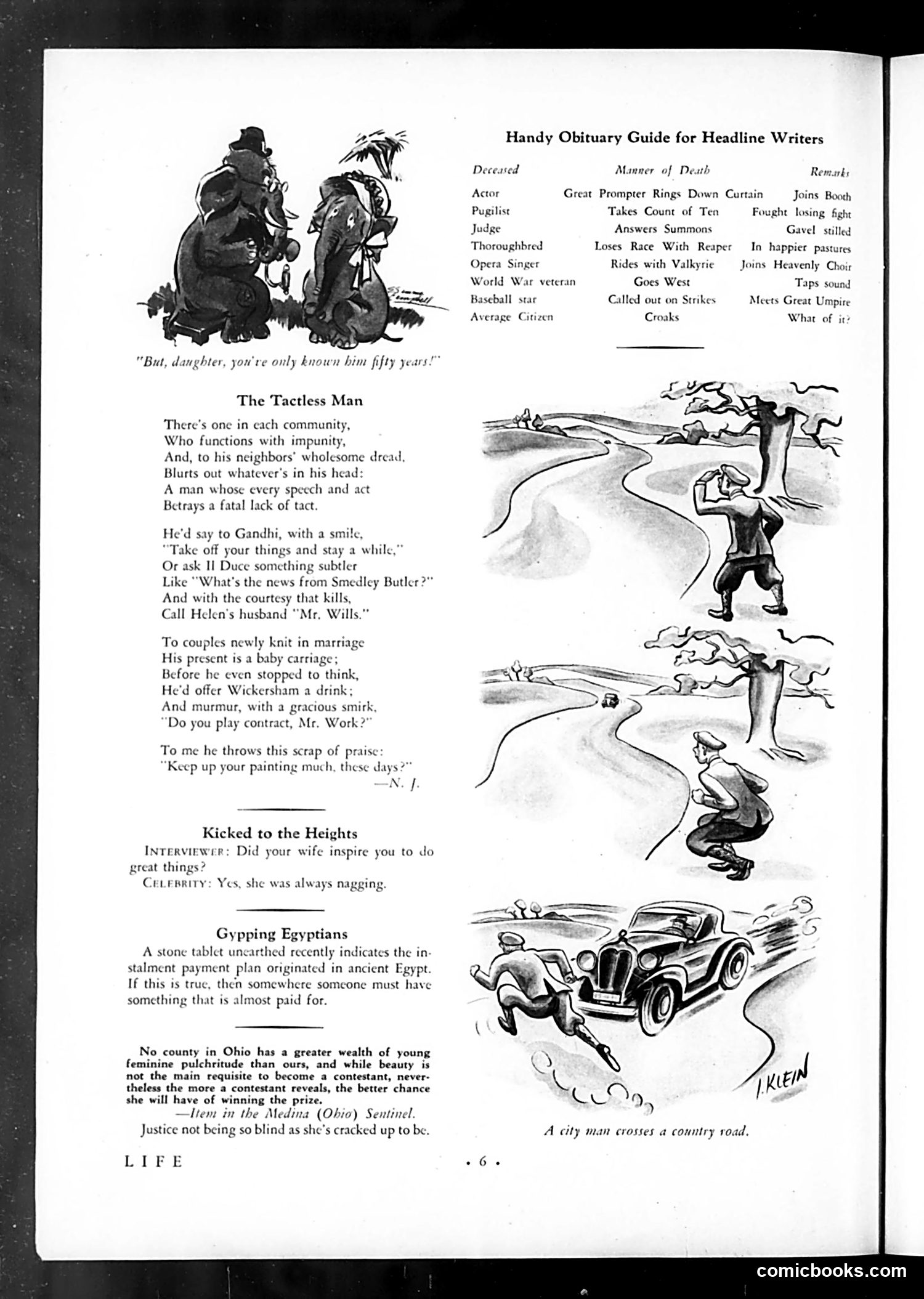
# Analysis of Life Magazine Page This page contains several satirical pieces mocking social types and behaviors: **"The Tactless Man"** is a poem about a community figure who lacks social discretion, making inappropriate comments to Gandhi, Mussolini, and others. The satire targets someone who thoughtlessly offends people through blunt speech. **"Kicked to the Heights"** is a brief joke mocking wives who nag their husbands into achievement—portraying nagging as paradoxically motivating. **"Gypping Egyptians"** references an ancient Egyptian payment plan discovery, using it as a setup for commentary. The three Klein cartoons on the right humorously depict a city man attempting to cross a country road, misjudging rural traffic and getting hit by a car—satirizing urban ignorance of rural life and dangers. Overall, the page mocks social awkwardness, marital dynamics, and class differences between city and country dwellers.
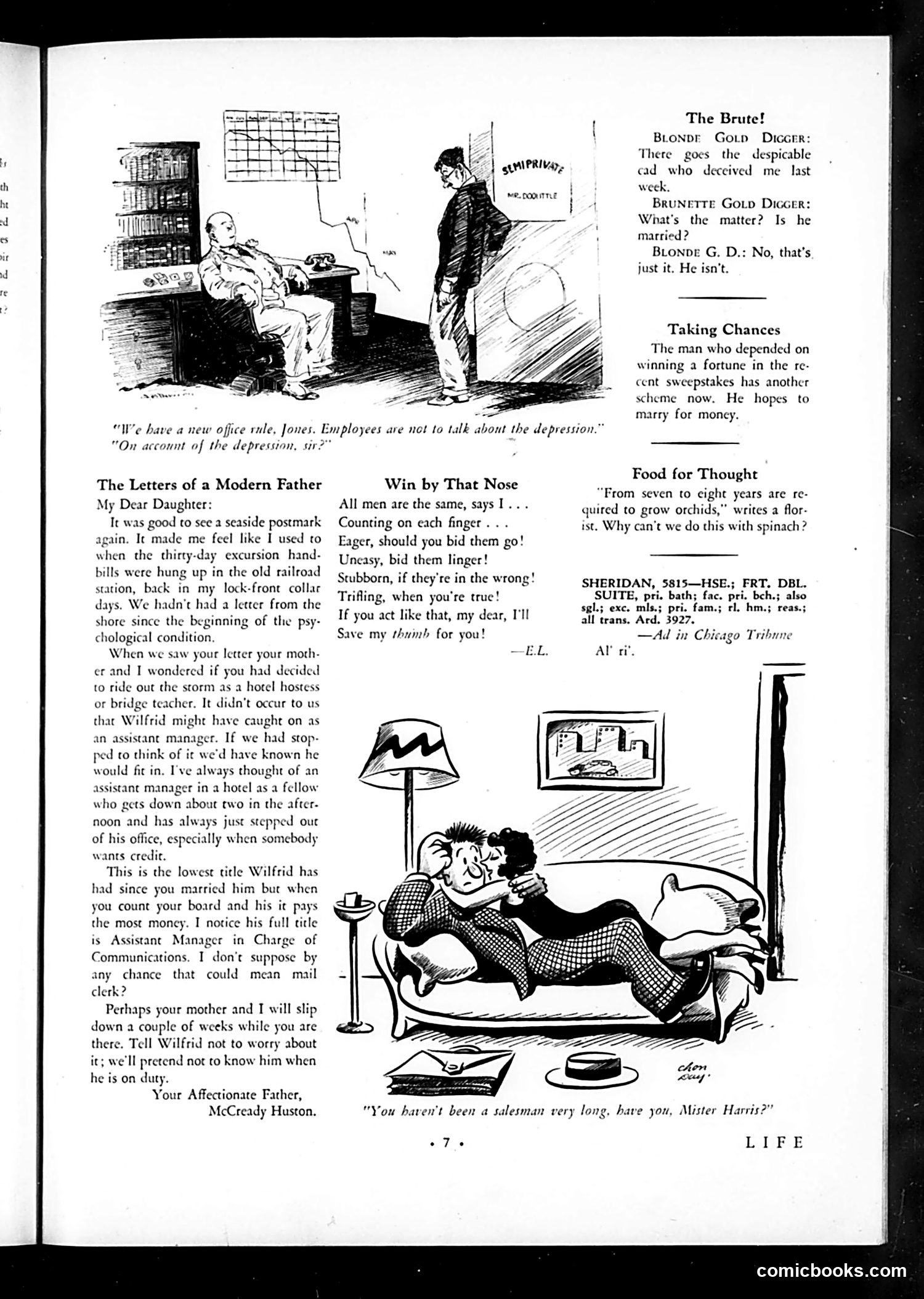
# Content Analysis This Life magazine page contains several satirical pieces from the Depression era: **"The Brutel"** presents a dialogue between two female characters discussing a man who isn't married—the "brutel" (brute) apparently being a man unwilling to commit. **"The Letters of a Modern Father"** is a letter from McCready Husson to his daughter, humorously detailing his modest hotel job and assuring her that her husband Wilfrid needn't worry about his low position—the satire mocking both economic anxiety and false pride during hard times. **"Win by That Nose"** appears to be light verse about men and bidding. **The cartoon** shows a man lounging on a couch with a woman, captioned "You haven't been a salesman very long, have you, Mister Harris?"—satirizing either incompetence or inappropriate workplace behavior during economically desperate times.
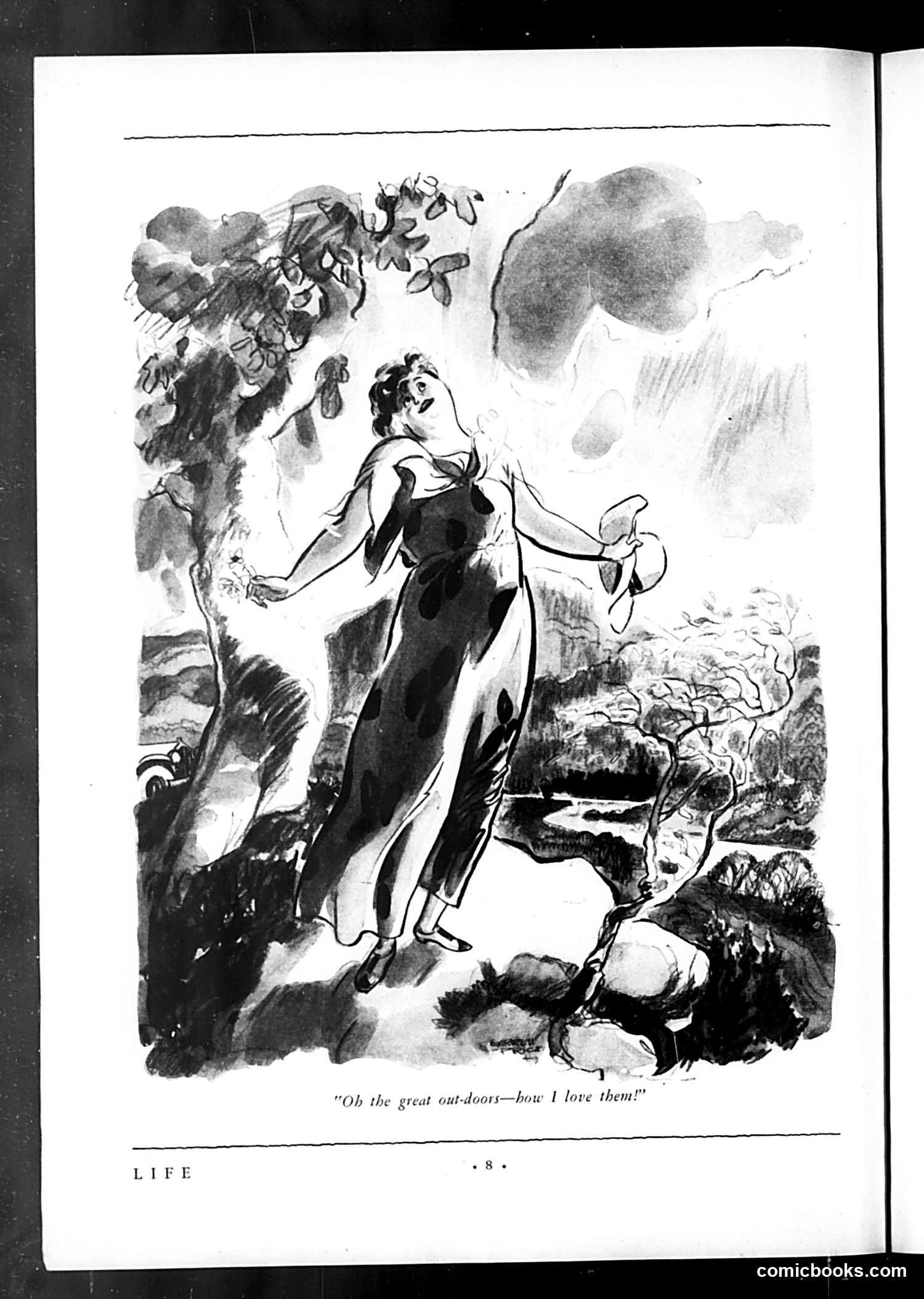
# Analysis This is a single illustration from *Life* magazine (page 8) depicting a woman in an elegant dress standing outdoors with her arms raised in joy or exultation. She's surrounded by natural scenery—trees, flowers, and a landscape vista. The caption reads: "Oh the great out-doors—how I love them!" The satire appears to target romantic or sentimental attitudes toward nature. The woman's theatrical pose and effusive declaration suggest she's expressing exaggerated enthusiasm typical of genteel society rhetoric about "the great outdoors." The illustration likely mocks either the pretentiousness of such romanticized nature appreciation or the performative quality of upper-class women's expressions of aesthetic feeling—contrasting elaborate clothing and posed sophistication with casual outdoor enjoyment.
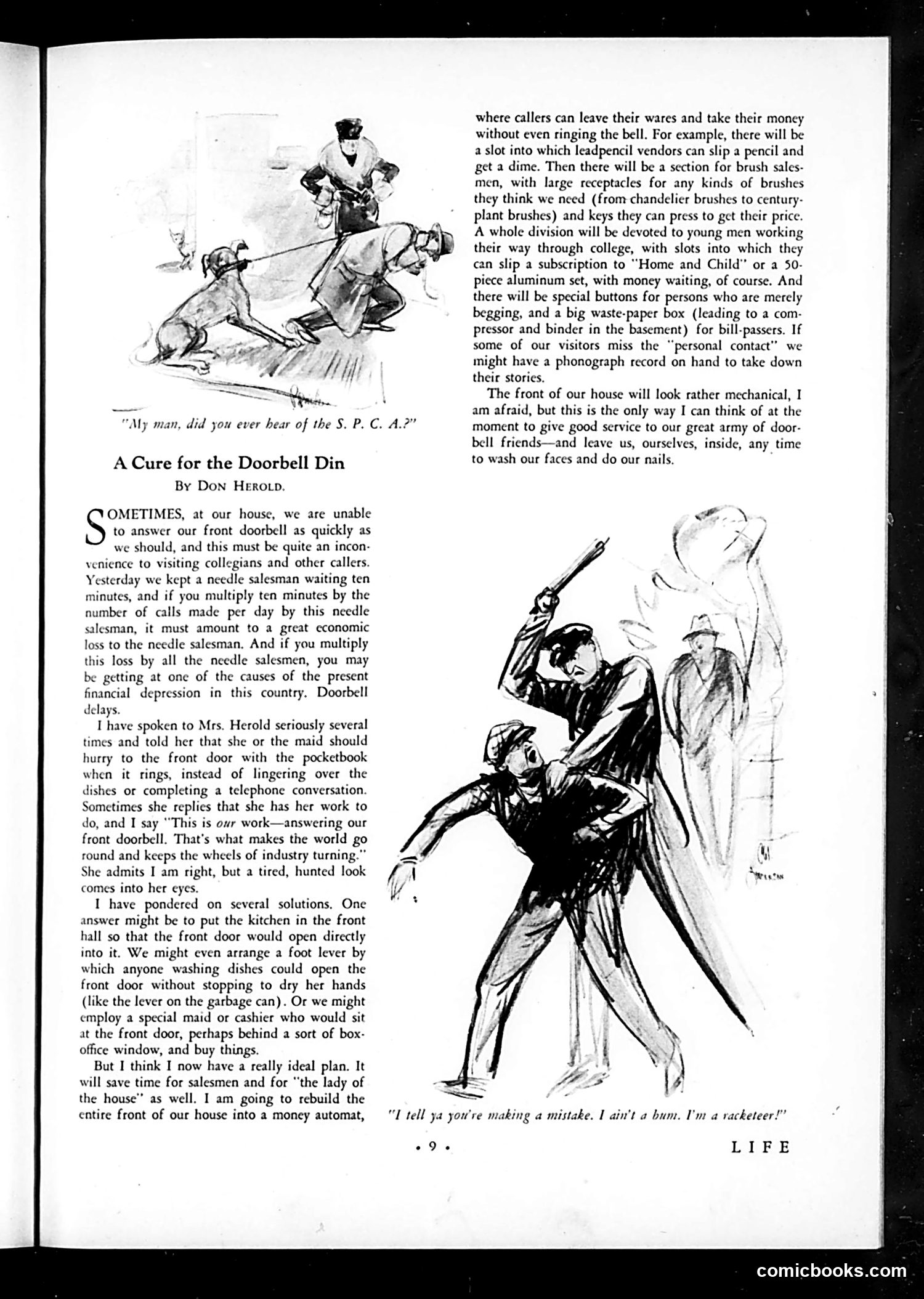
# Life Magazine Political Content Analysis This page contains three opinion pieces rather than cartoons proper. The main illustration shows a man in formal attire speaking with a woman, accompanying an article titled "A Voice from Paris" about Dr. Murray Butler's European observations. The article discusses Dr. Butler's views on combating Russian Communism and praises President Hoover as embodying the qualities needed to lead the nation—suggesting this is from the early Hoover presidency (late 1920s-early 1930s). Other sections address National Flag Day symbolism, a Boston book-theft ring, and police protection for families of officers killed in duty. The overall tone is conservative, emphasizing patriotism, law-and-order, and anti-Communist sentiment typical of that era's American establishment commentary.