A complete issue · 36 pages · 1931
Life — May 22, 1931
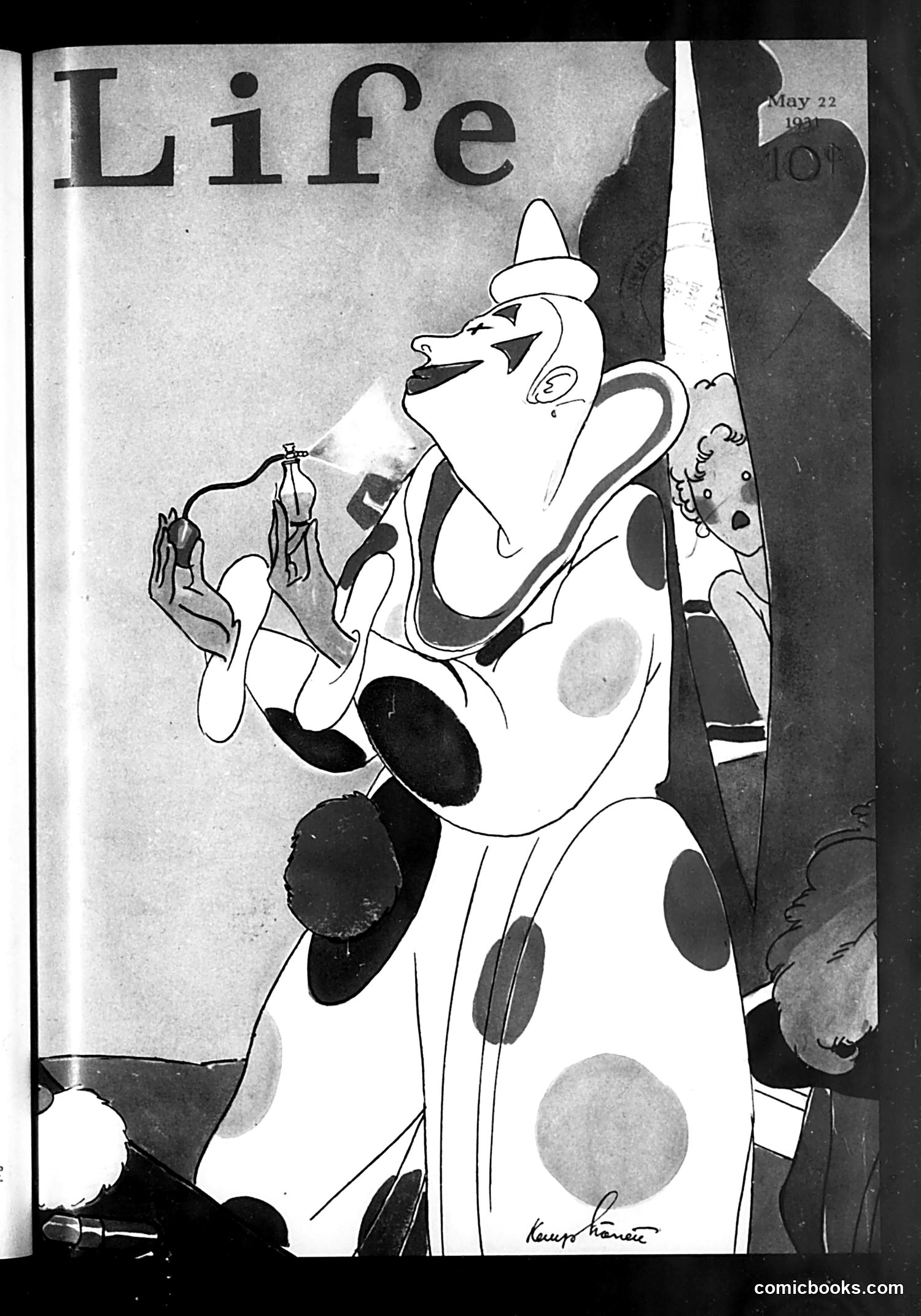
# Life Magazine Cover Analysis This is a Life magazine cover from **May 22, 1931** (visible in top right corner). The main illustration shows a clown character in a polka-dotted costume holding what appears to be a violin or musical instrument, depicted in a cartoonish, exaggerated style typical of early 20th-century satire. The clown's theatrical appearance—with the large smile, oversized features, and performance costume—likely represents **entertainment industry excess or frivolity during the Great Depression era**. The musical instrument may reference either artistic pretension or entertainment as escapism during economic hardship. Without additional OCR text from the page itself, the specific satirical target remains unclear, though the contrast between the clown's gaiety and the serious economic conditions of 1931 suggests social commentary on misplaced priorities or public distraction from pressing concerns.
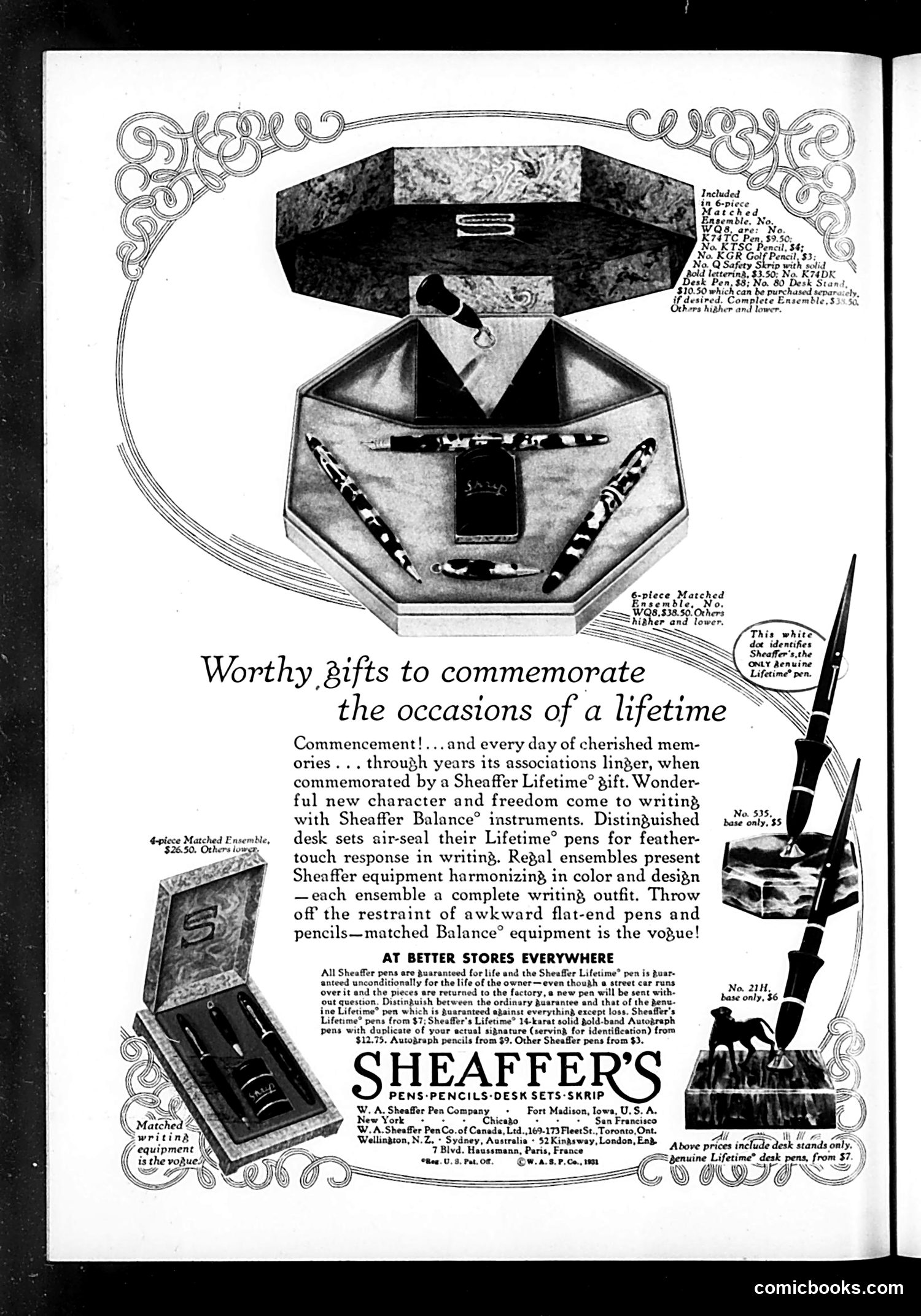
# Analysis This is primarily a **Sheaffer pen advertisement**, not a political cartoon. The page promotes Sheaffer's "Lifetime" line of writing instruments—pens, pencils, and desk sets—as commemorative gifts for major life occasions. The visual centerpiece depicts an open gift box displaying matched writing instruments (pens, pencils, and what appears to be a desk accessory). The decorative border and formal presentation suggest luxury and prestige. The accompanying text emphasizes that Sheaffer pens are "guaranteed for life," positioning them as enduring gifts suitable for "commencement...and every day of cherished memories." The ad appeals to buyers seeking quality, matched "ensembles" that harmonize "in color and design." This represents mid-20th-century advertising strategy: marketing practical items as status symbols and emotional keepsakes.
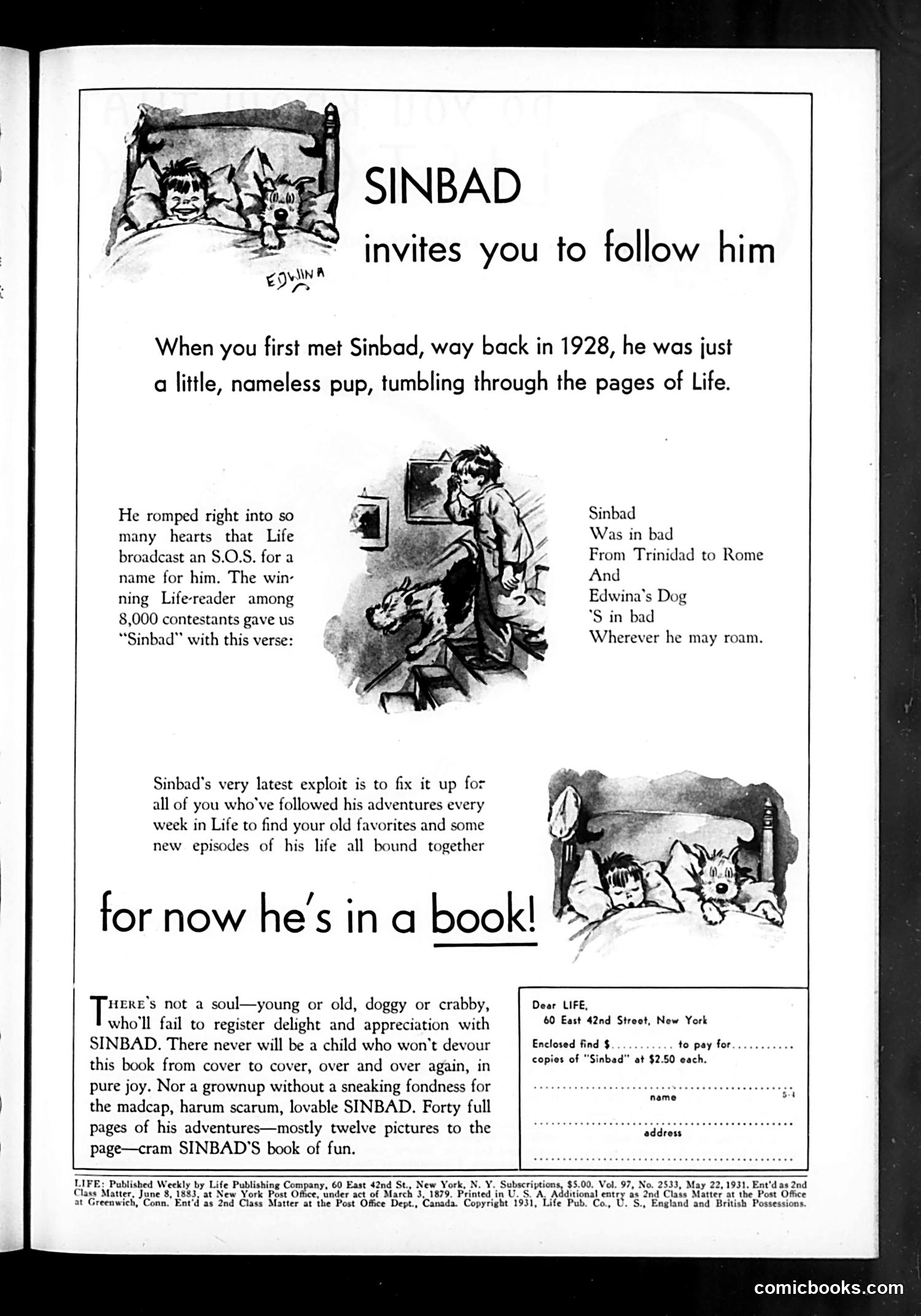
# Sinbad Book Advertisement This is a **book advertisement** rather than political satire. The page promotes a children's book collecting adventures of "Sinbad," a dog character that debuted in *Life* magazine in 1928. The ad explains that Sinbad was originally a unnamed puppy who became popular through the magazine—readers voted to name him via a contest that drew 8,000 entries. His winning name came from a verse submitted by a reader. The advertisement highlights that *Life* has now compiled Sinbad's weekly comic adventures (40 pages, mostly illustrated) into a bound book for $2.50. The copy emphasizes broad appeal, claiming "there's not a soul...who'll fail to register delight" with the character, positioning it as family entertainment for children and adults alike.
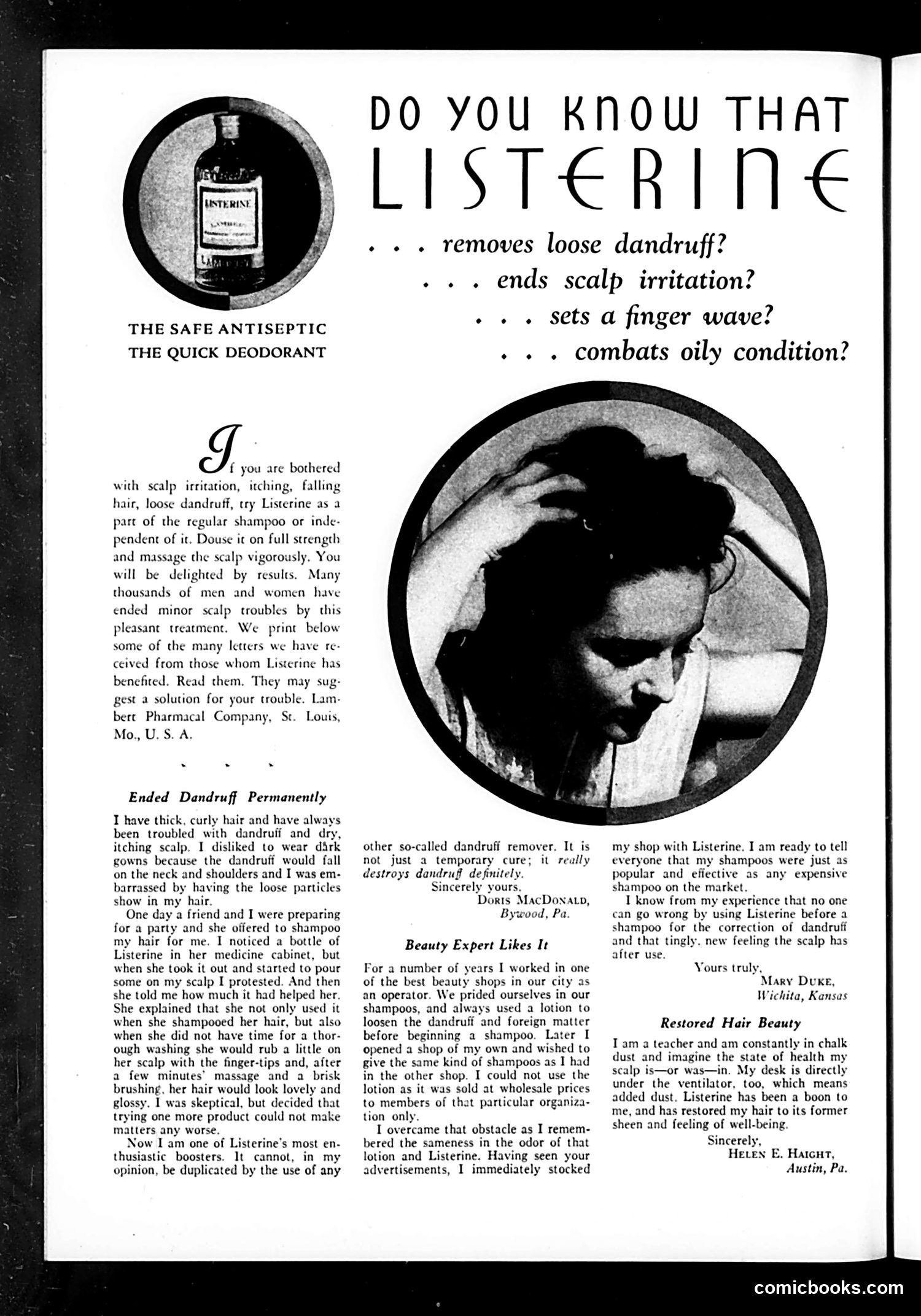
# Analysis This is **not a political cartoon** but rather a **vintage advertisement for Listerine mouthwash/antiseptic** (circa early 20th century, likely 1920s-30s based on styling). The page features: - **Product claims**: Listerine removes dandruff, ends scalp irritation, sets finger waves, and combats oily hair - **Testimonial letters** from satisfied customers (Doris MacDonald, Mary Duke, Helen E. Haight) describing results - **Circular photographs** showing a woman's profile and hands massaging scalp, demonstrating application The advertisement exploits common beauty anxieties of the era—dandruff, itching, and hair health—positioning Listerine as a multipurpose solution. The testimonials lend credibility through apparent "real user" experiences, a marketing strategy common to the period.
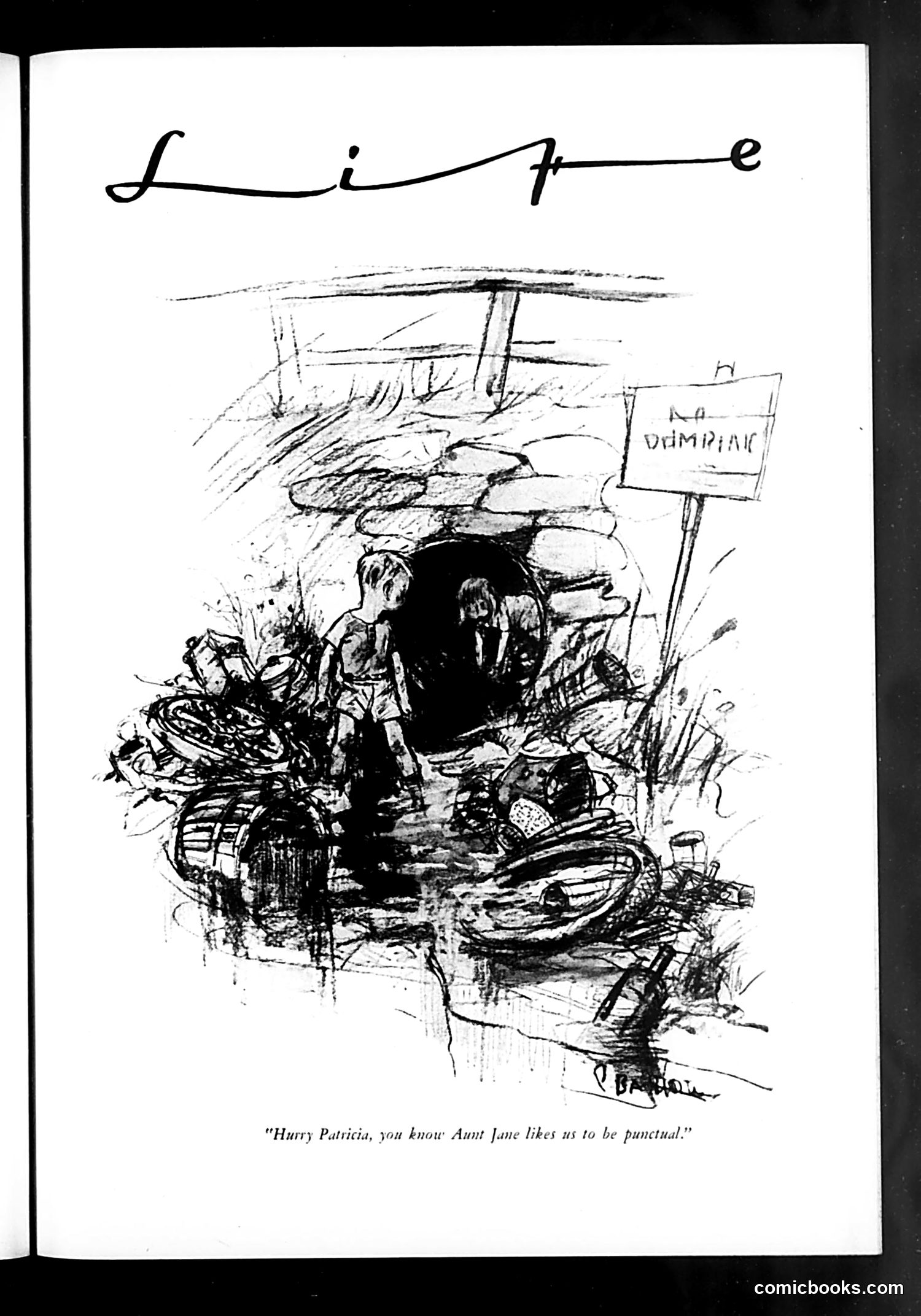
# Analysis This is a single cartoon depicting a domestic scene. The sketch shows figures in what appears to be a messy, cluttered interior space with a sign reading "DUMPING" visible. The caption reads: "Harry Patricia, you know Aunt Jane likes us to be punctual." The humor appears to derive from a contrast between social expectations (punctuality for a visit to Aunt Jane) and the chaotic domestic reality depicted—the cluttered, disorganized space suggesting the household is in disarray. The joke likely satirizes the tension between maintaining respectable appearances for relatives and the messiness of actual family life. Without additional context about specific individuals named Harry or Patricia, or details about Aunt Jane, the cartoon functions as general domestic satire on presenting oneself properly to family members.
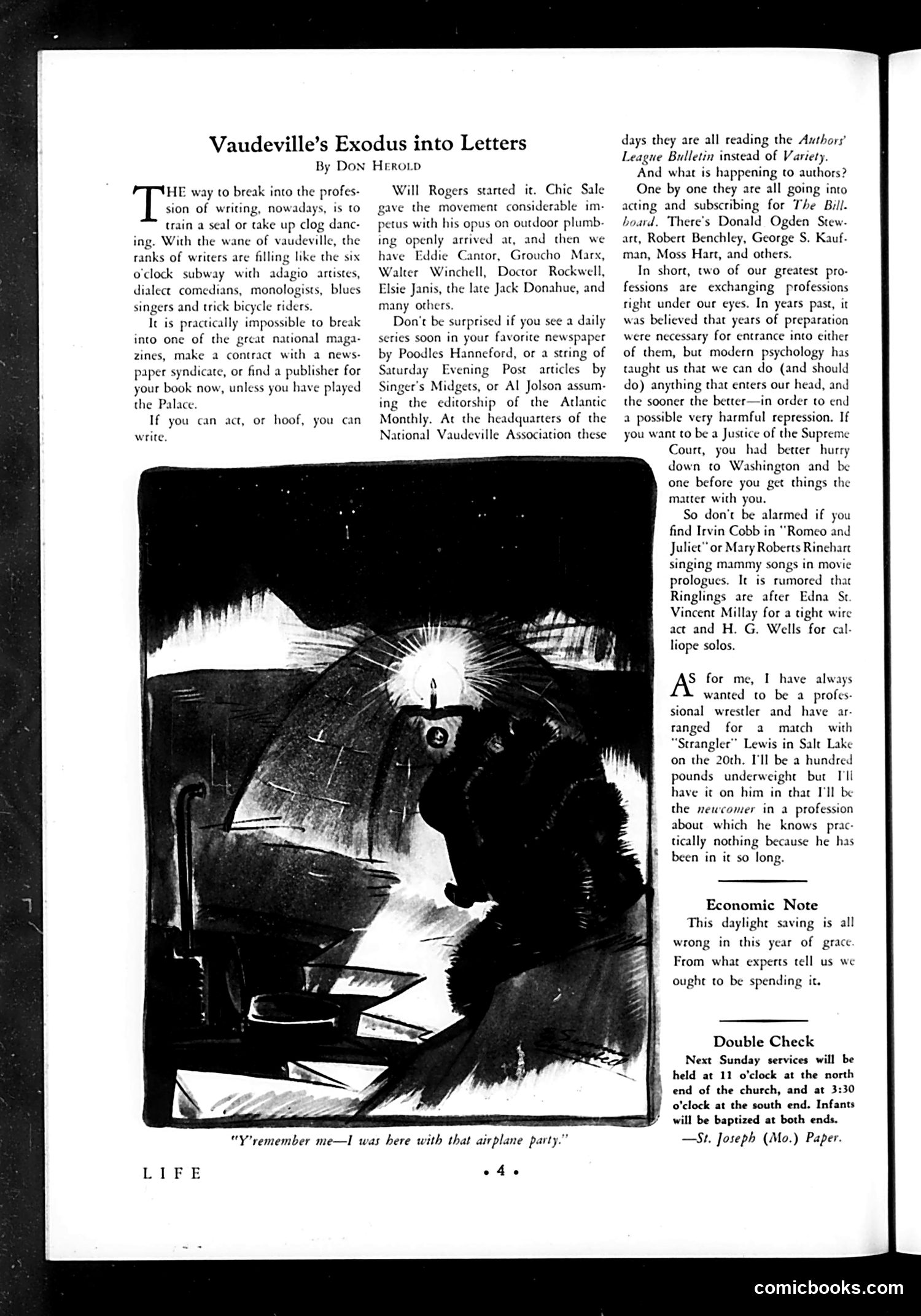
# "Vaudeville's Exodus into Letters" - Satire on Entertainment Industry Crossover This page satirizes the trend of vaudeville performers transitioning into writing. The article by Don Herald mocks how entertainers—listed as Will Rogers, Eddie Cantor, Groucho Marx, and others—are now publishing in prestigious magazines and newspapers rather than performing on stage. The cartoon depicts a figure hunched at a desk by candlelight, captioned "I remember me—I was here with that airplane party," suggesting nostalgia for a performer's past glory. The satire critiques this exodus as both the entertainment world's loss and literature's dubious gain—implying these performers lack literary credentials despite their fame. Herald humorously notes he himself plans to become a professional wrestler instead, inverting the trend toward absurdity.
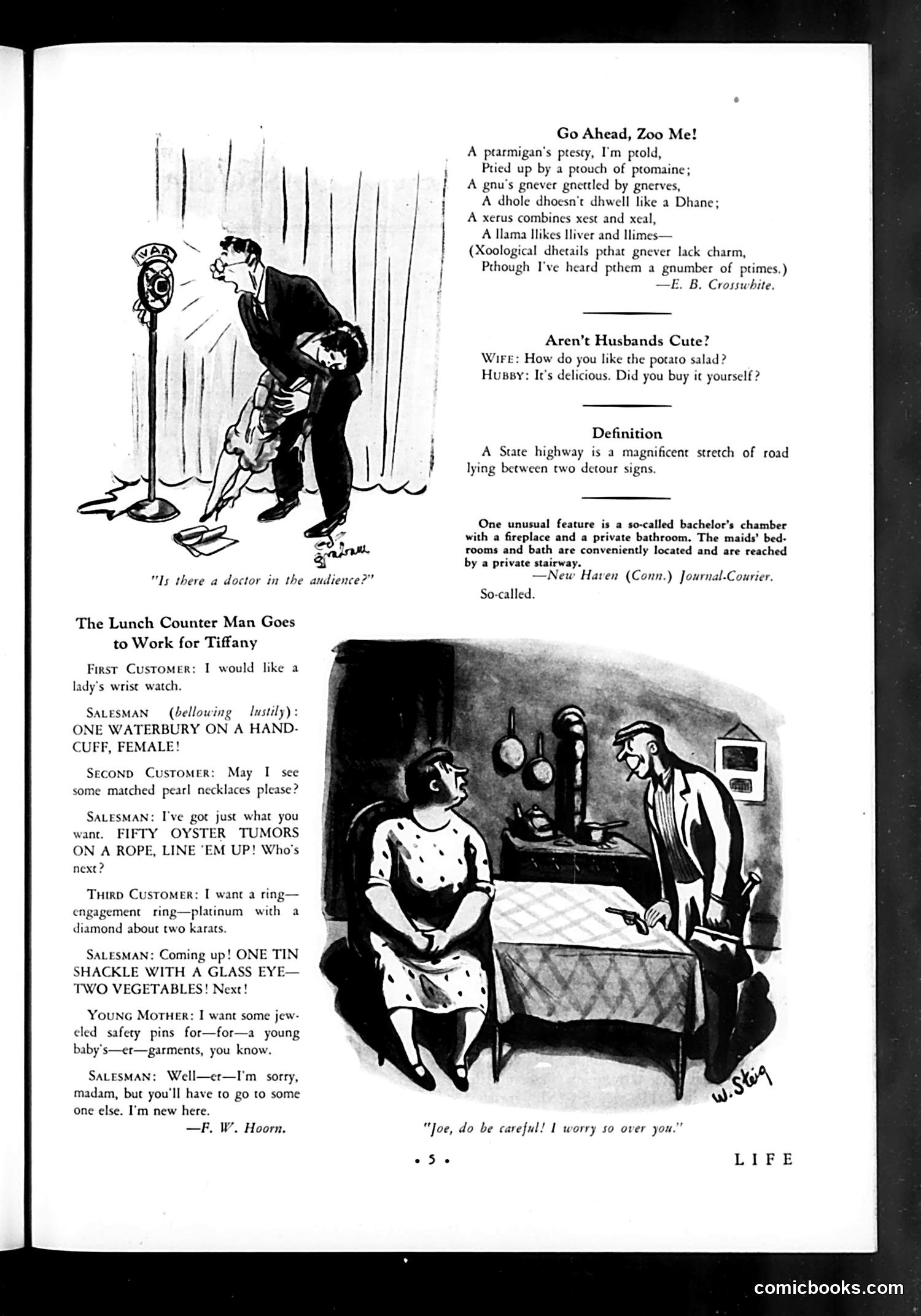
# Analysis of Life Magazine Page This page contains three satirical pieces targeting early 20th-century consumer culture and gender roles: 1. **"Go Ahead, Zoo Me!"** - A poem mocking exotic animals' supposed superiority, attributed to E.B. Crowhitte. 2. **"Aren't Husbands Cute?"** - A brief marital joke playing on gendered domestic expectations. 3. **"The Lunch Counter Man Goes to Work for Tiffany"** - The main satire. A salesman at the luxury jeweler Tiffany's shouts absurdly exaggerated product descriptions borrowed from lunch-counter slang ("ONE WATERBURY ON A HANDCUFF, FEMALE!"; "FIFTY OYSTER TUMORS ON A ROPE"). The joke mocks both working-class speech patterns and the pretensions of high-end retail, suggesting fine jewelry selling uses the same aggressive hawking techniques as cheap lunch counters. The cartoons illustrate these pieces with period-appropriate illustrations.
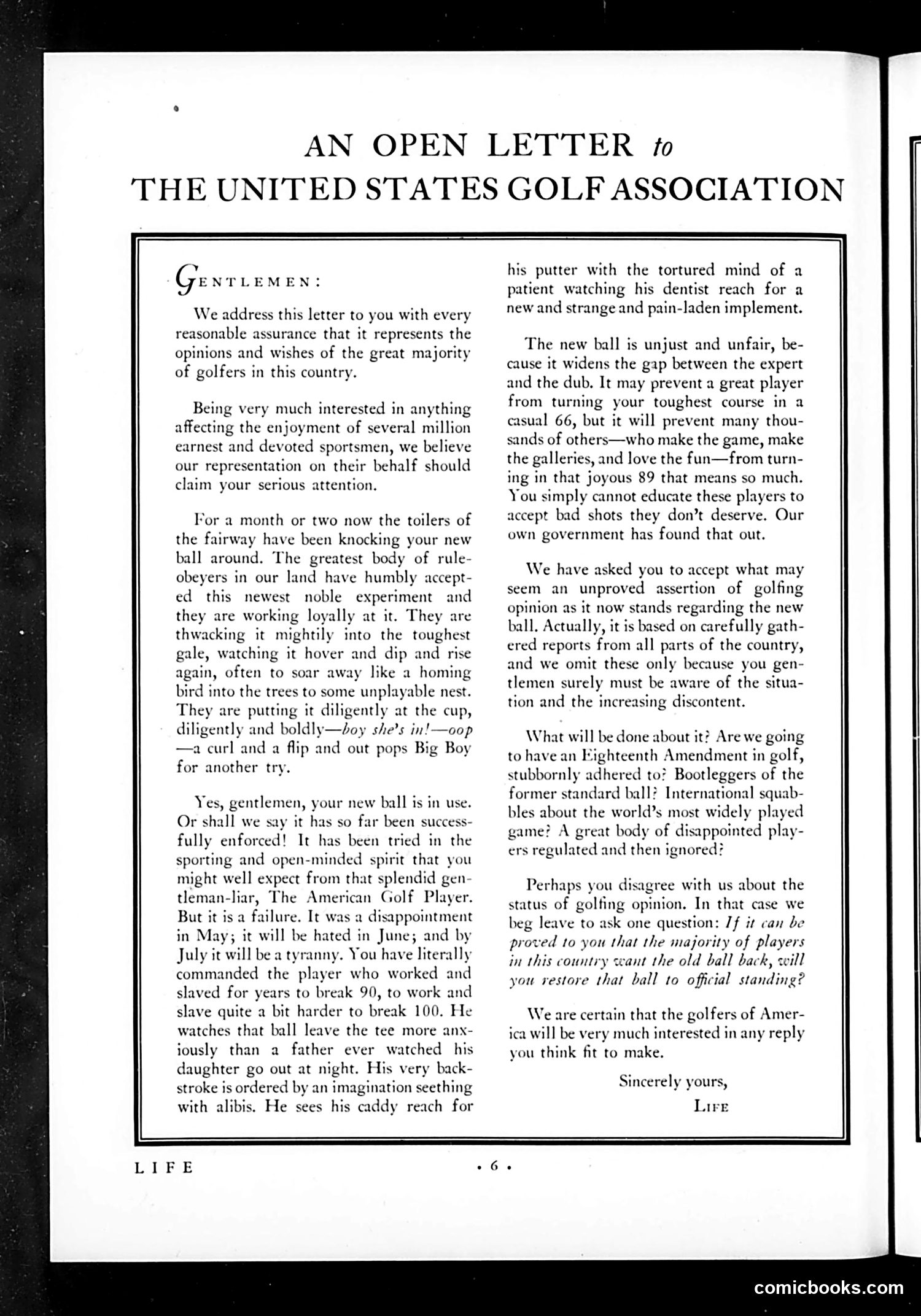
# Analysis This is an open letter from *Life* magazine to the United States Golf Association, satirizing the introduction of a new golf ball that travels farther than the old standard ball. **The satire's point:** The new ball is democratizing golf by allowing average players to hit longer distances, thus closing the skill gap between experts and casual golfers. *Life* argues this is *bad* — it prevents the USGA from maintaining golf as an elite sport where superior players dominate. **The social critique:** The letter mocks the USGA's snobbish gatekeeping, suggesting they want to preserve golf as exclusive to the naturally talented and wealthy ("Bootleggers of the former standard ball"). *Life* ridicules this elitism by noting the government has already intervened in other contexts, asking rhetorically whether the USGA will similarly resist progress. **The humor:** The letter's exaggerated tone and vivid descriptions of struggling golfers ("his putter with the tortured mind of a patient watching his dentist") emphasize how the new ball threatens the establishment's control over who deserves to enjoy the game.
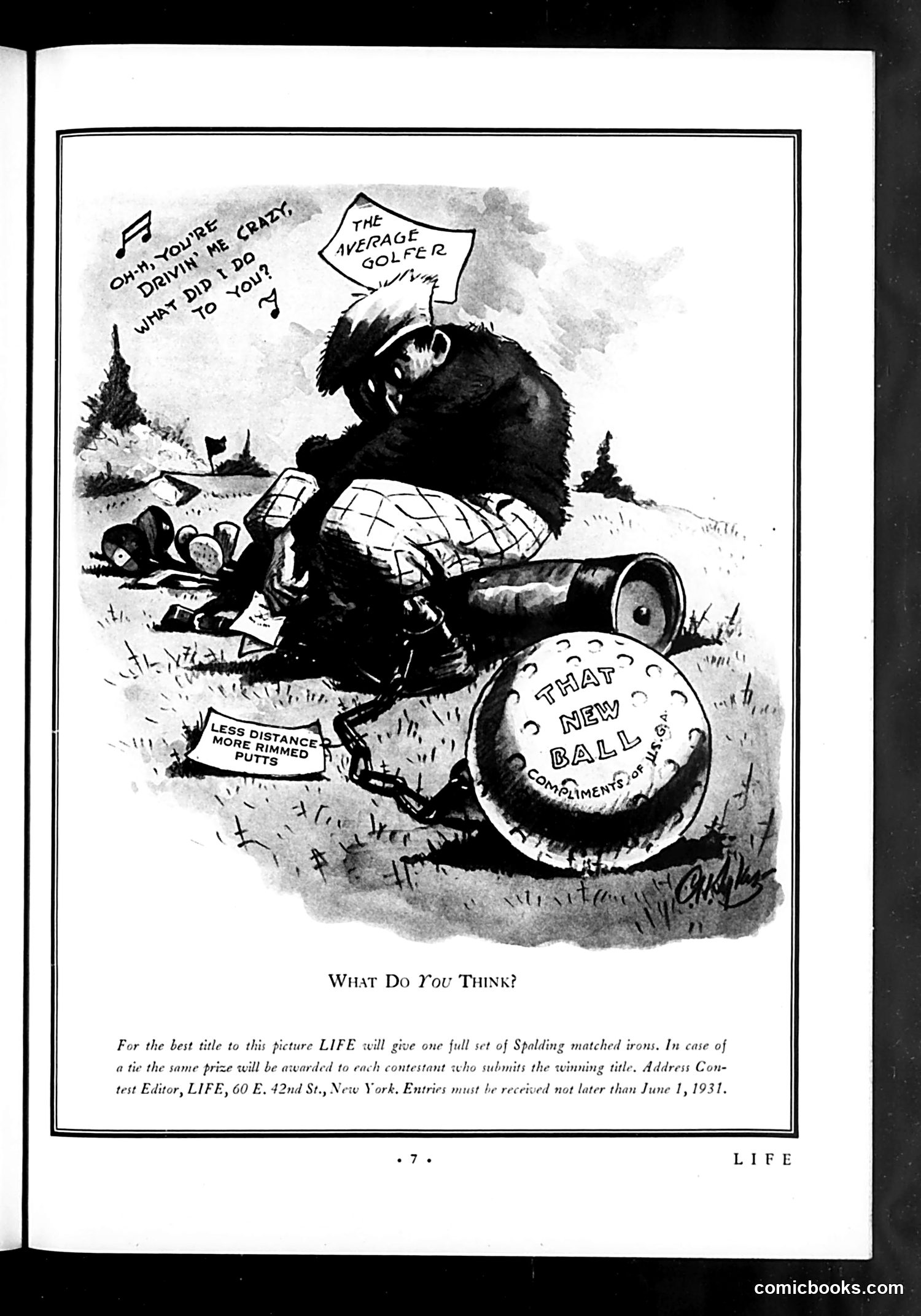
# Analysis This is a contest announcement disguised as satirical commentary on golf. The cartoon depicts a frustrated golfer—appearing to be an "average" or everyman type based on the caption—surrounded by golf equipment and a new ball labeled "That New Ball." The golfer's thought bubble reads "Oh! You're drivin' me crazy! What did you do to your?" while another speech bubble identifies him as "The Average Golfer." The satire critiques golf ball marketing claims. The sign reads "Less distance, more normalized putts," mocking manufacturers' competitive advertising about ball performance improvements. The joke suggests that despite marketing hype, equipment changes don't actually help the typical golfer. The page invites readers to suggest a caption title, offering Spalding matched irons as the prize. Entries were due by June 1, 1931.
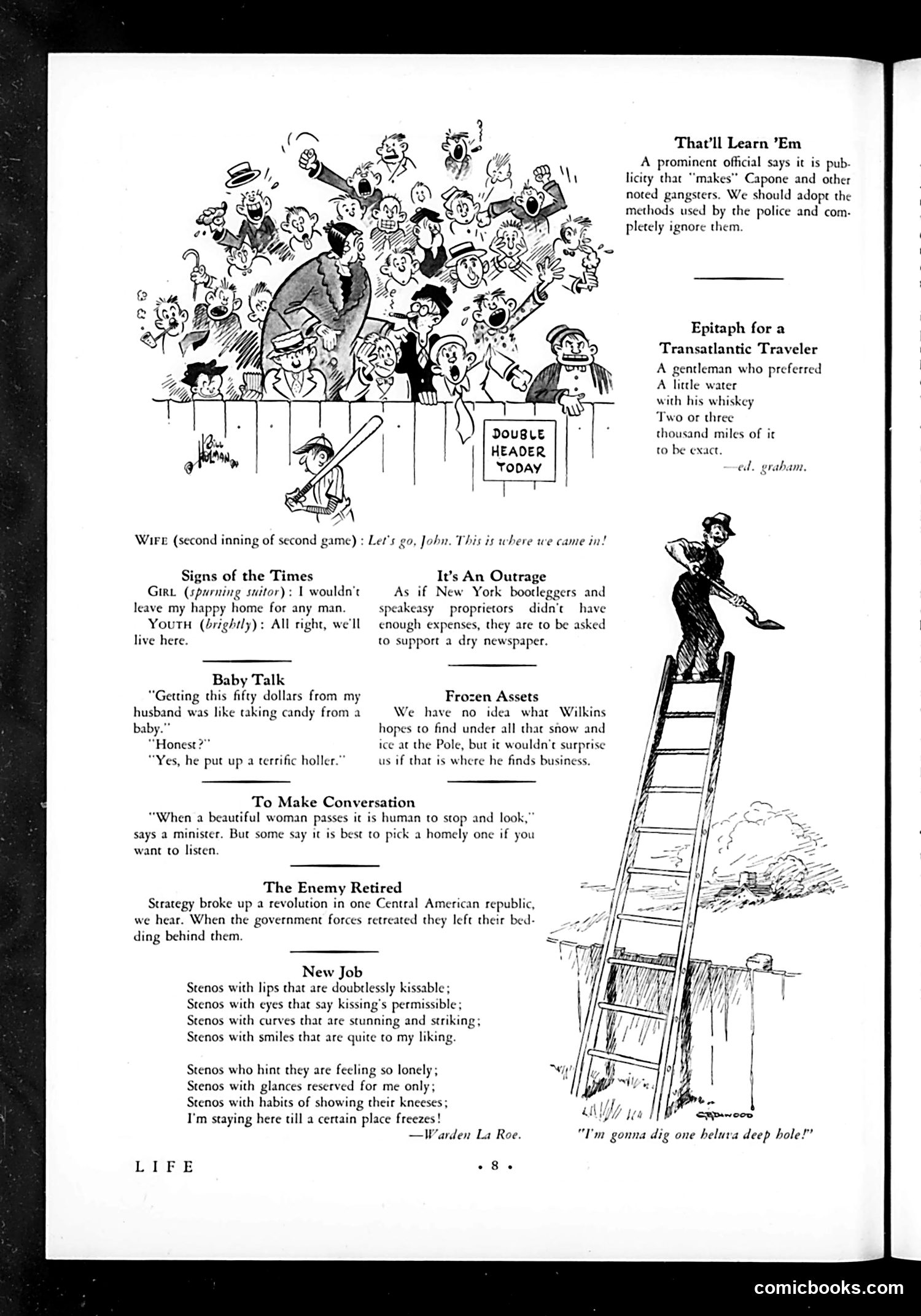
# Analysis of Life Magazine Page This page from *Life* magazine contains several brief humorous items and illustrations typical of the publication's satirical content. The main cartoon depicts a crowded bleachers scene labeled "Double Header Today," showing a wife telling her husband "Let's go, John. This is where we came in!"—a joke about repetitive entertainment or marital routine. The text sections address contemporary social issues: bootleggers and speakeasy owners (referencing Prohibition-era illegal drinking establishments), a humorous exchange about a husband's stinginess ("like taking candy from a baby"), and commentary on American politics and behavior. The right-side illustration shows someone climbing a ladder into snow, captioned "I'm gonna dig one helluva deep hole!"—likely satirizing Arctic exploration or similar ambitious ventures. The overall tone reflects 1920s-30s American culture, humor, and social commentary.
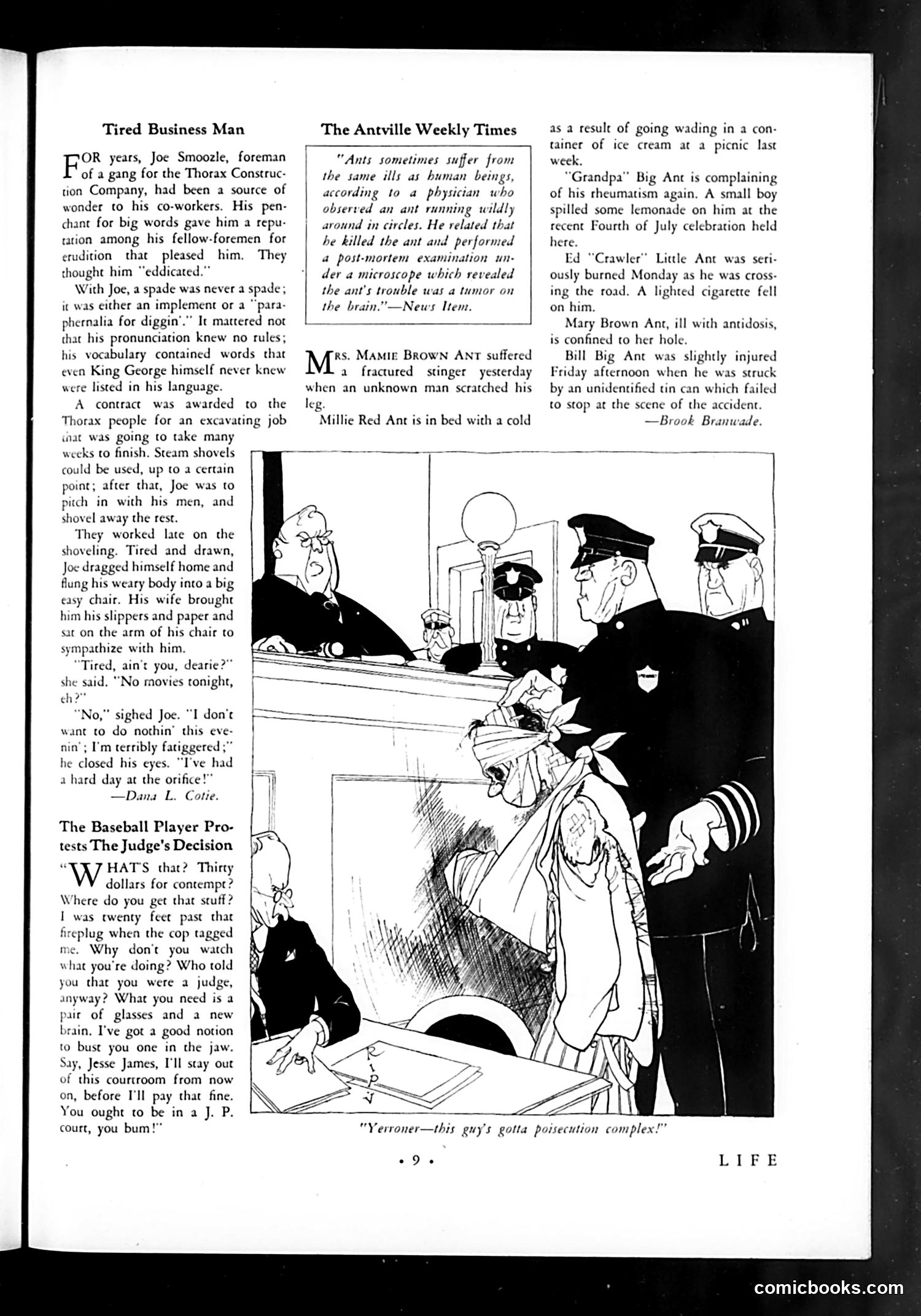
# Analysis of "The Antville Weekly Times" Page This page from *Life* magazine presents **satirical humor anthropomorphizing ants**. "The Antville Weekly Times" offers mock news items about ant society—Mrs. Mamie Brown Ant suffering a fractured stinger, Ed "Crawler" Little Ant injured by a cigarette, and others experiencing human-like ailments and social situations. The large cartoon depicts a police court scene where an ant defendant faces magistrates. The caption reads "Verroner—this guy's gotta possession complex!" The satire appears to mock both judicial proceedings and the defendant's apparent paranoia or psychological issues. The humor relies on applying human institutions (newspapers, courts, psychological diagnoses) to ant civilization, creating absurdist comedy through incongruous scale and anthropomorphism—a popular *Life* magazine formula of the era.
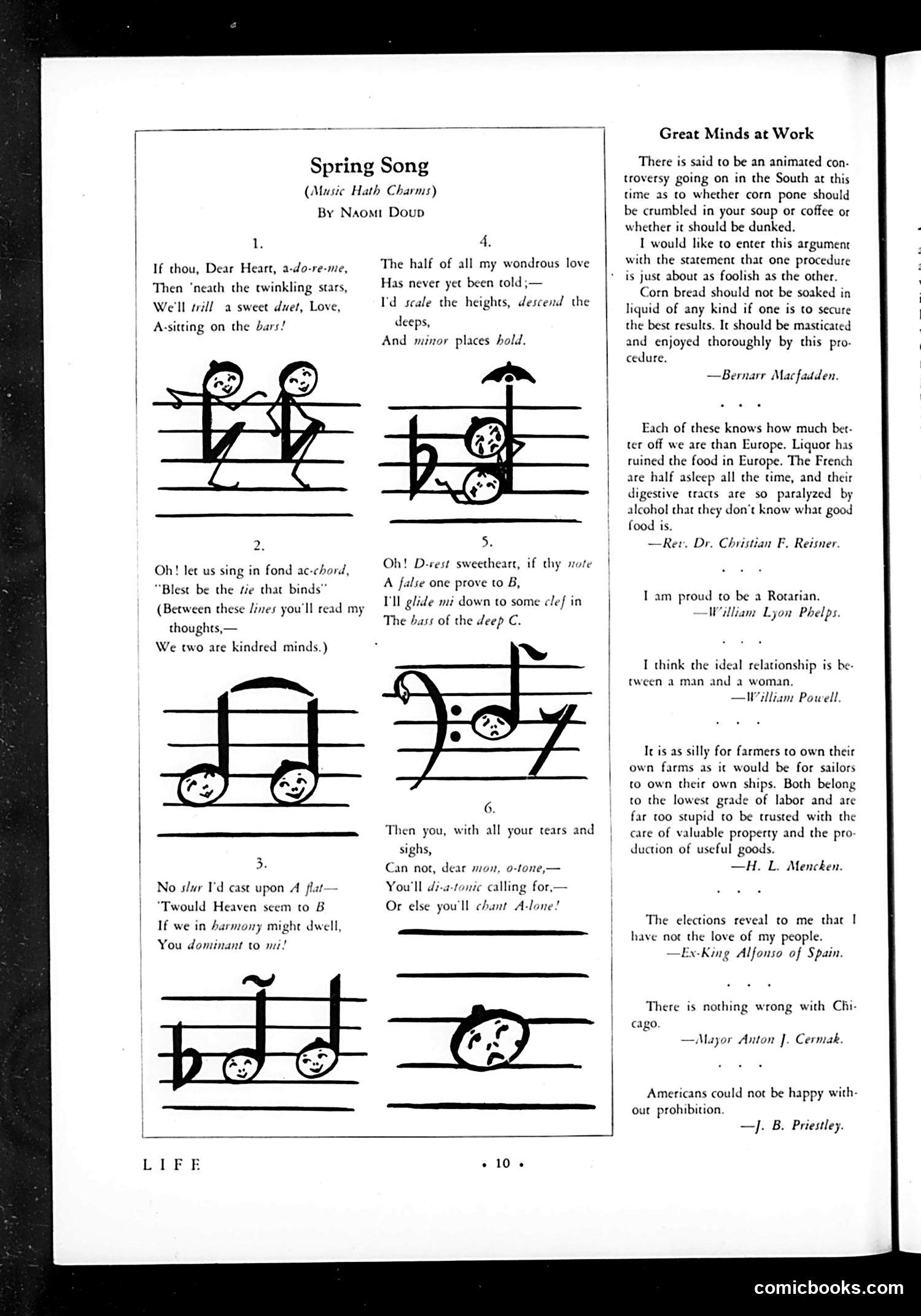
# Spring Song Analysis The left side presents "Spring Song" (Music and Lyrics by Naomi Doud)—a humorous musical composition shown through sheet music with stick-figure illustrations. The six numbered verses depict romantic situations: couples singing together, declarations of love, and musical declarations. The satire appears gentle, mocking conventional love songs and sentimental romance through deliberately simple illustrations and somewhat overwrought poetic language ("a-do-re-me," "tie that binds"). The right column, "Great Minds at Work," contains unrelated satirical quotes from notable figures discussing corn bread preparation, European food culture, farming, and politics. These appear designed to humorously juxtapose serious intellectuals with trivial or absurd positions, though specific historical context for some references remains unclear without additional dating information.