A complete issue · 36 pages · 1931
Life — May 1, 1931
# Life Magazine Calendar Page - May 1931 This is a calendar page from Life magazine (May 1, 1931) rather than a political cartoon. The design features charming illustrated cherubs or baby figures in flower pots marking each date from 1-31, with decorative line drawings of children playing at the bottom (around the 31st). The page appears to be purely decorative calendar content, likely by artist Mr. Cooper (signed at bottom). There's no political satire or social commentary visible—it's simply a whimsical, child-themed calendar design typical of family magazines of the 1930s era. The circular library stamp indicates this was part of an institutional archive.
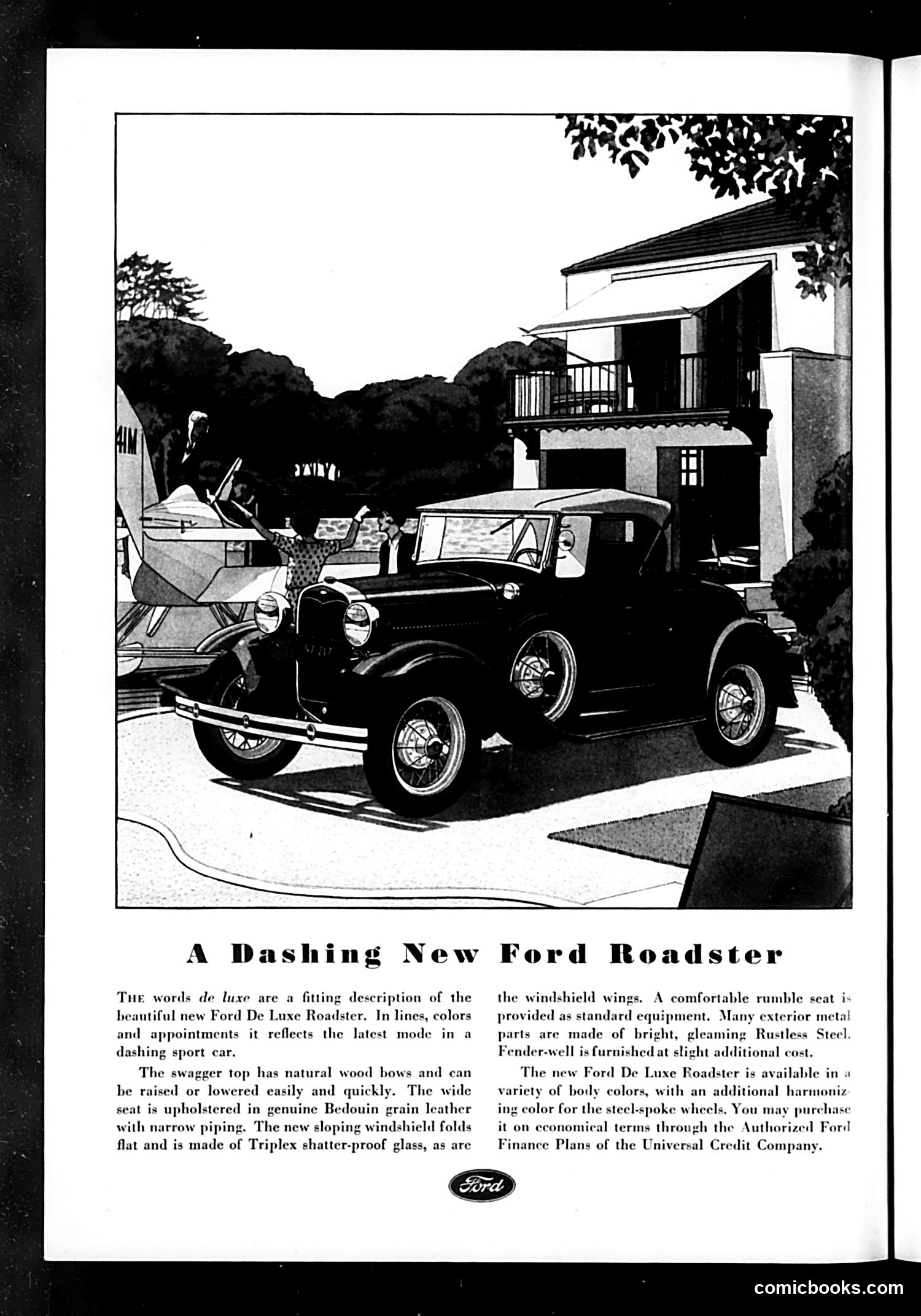
# Analysis This is **not a political cartoon or satire**, but rather a **Ford automobile advertisement** from Life magazine. The page promotes "A Dashing New Ford Roadster," emphasizing its de luxe styling, features like adjustable windshield wings, comfortable rumble seat, and Rustless Steel components. The illustration shows a wealthy couple with a baby carriage beside the parked Ford, positioned in front of an affluent suburban home—marketing imagery designed to associate the vehicle with prosperity and modern domestic life. The advertisement appeals to aspirational middle-class buyers, highlighting financing options through the Universal Credit Company. This represents typical 1920s-30s automotive marketing that equated car ownership with status and leisure.
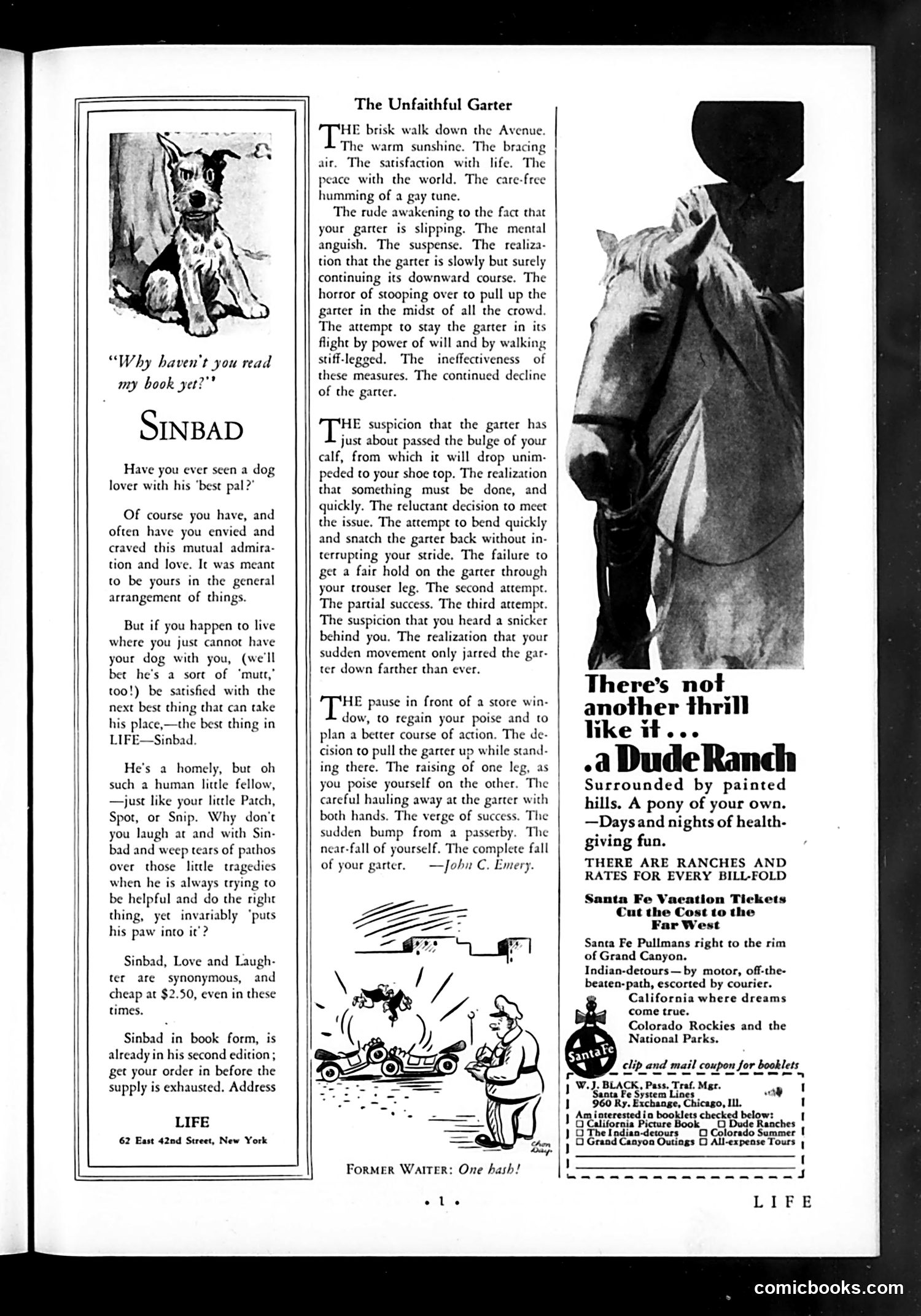
# "The Unfaithful Garter" - Explanation This is a humorous essay by John C. Emery about the universal frustration of a garter slipping down one's leg in public. There's no political content or caricature here—it's pure situational comedy relatable to mid-20th century readers who wore garters to hold up socks or stockings. The piece describes the escalating anxiety and failed attempts to discreetly hitch up a drooping garter while walking down the street, trying to maintain composure. The accompanying cartoon shows a man publicly struggling with this embarrassing wardrobe malfunction. The page also includes an advertisement for Dude Ranches and a Sinbad dog-themed book advertisement, but these are separate content items.
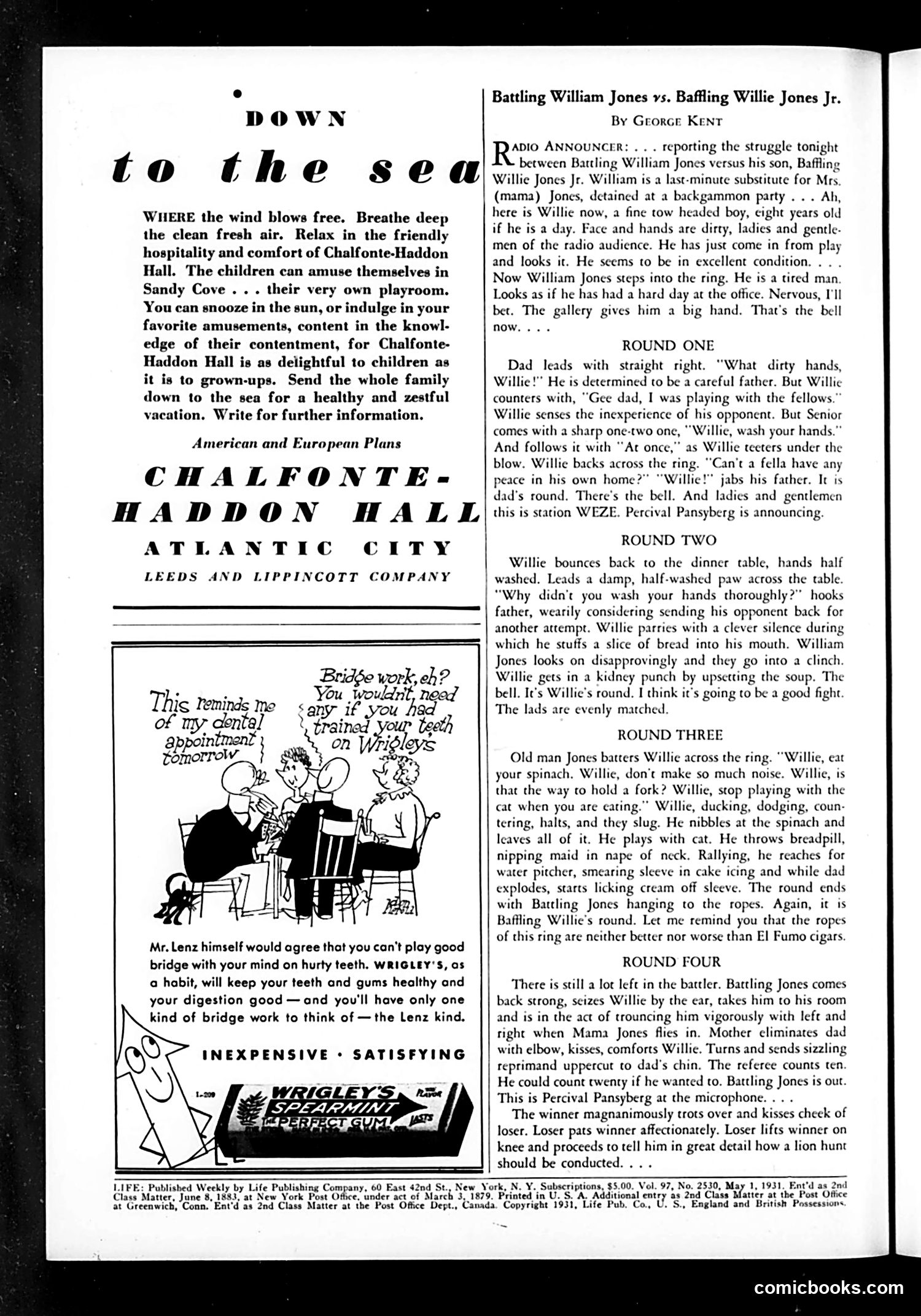
# Analysis of Life Magazine Page (May 1, 1931) This page contains two distinct elements: **Left side:** A Wrigley's gum advertisement featuring a cartoon about dental health and bridge-playing, with the tagline that chewing gum keeps teeth healthy—thus enabling better concentration for card games. The humor plays on the social importance of bridge among the leisure class. **Right side:** A humorous short story titled "Battling William Jones vs. Baffling Willie Jones Jr." by George Kent, presented as a mock radio boxing match. The narrative describes a comedic fight between father and son at a dinner table, with the son's misbehavior (dirty hands, poor table manners) portrayed as boxing rounds. It's satirical domestic humor typical of 1931 Life magazine—poking fun at generational differences and parenting challenges through the exaggerated lens of a boxing match.
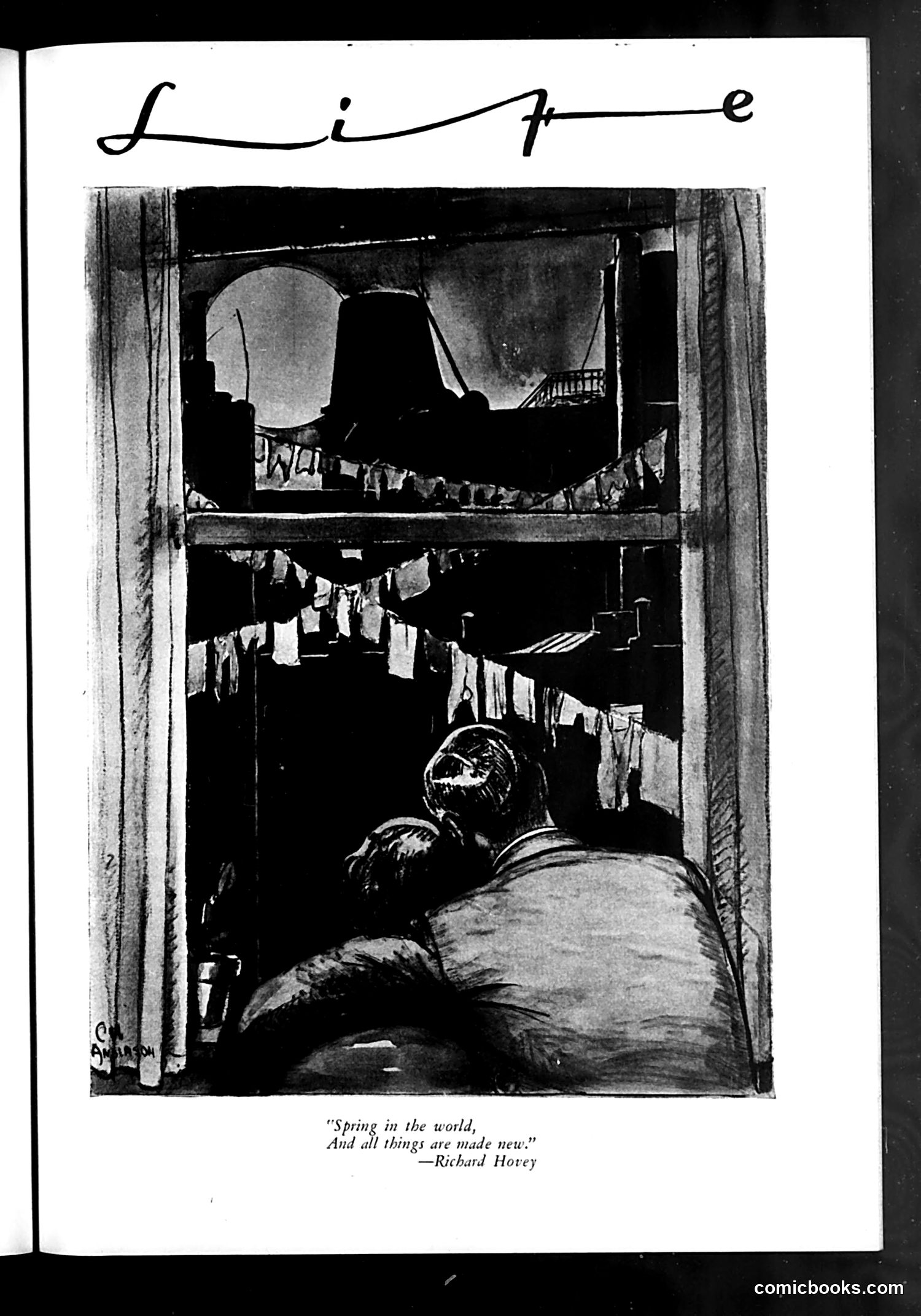
# Life Magazine Page Analysis This page features a black and white illustration titled "Life" (handwritten at top). The image shows a person viewed from behind, looking out a window or opening into an urban courtyard scene. Laundry hangs across multiple levels of tenement buildings, and a large moon or circular light dominates the upper background. The caption quotes Richard Hovey: "Spring in the world, / And all things are made new." **The satire**: This appears to contrast the poetic ideal of spring's renewal with the gritty reality of urban tenement life. The observer gazing at cramped, working-class housing contradicts Hovey's romantic sentiment—suggesting that not "all things are made new" for poor city dwellers. The work critiques the gap between literary idealism and actual conditions for lower classes.
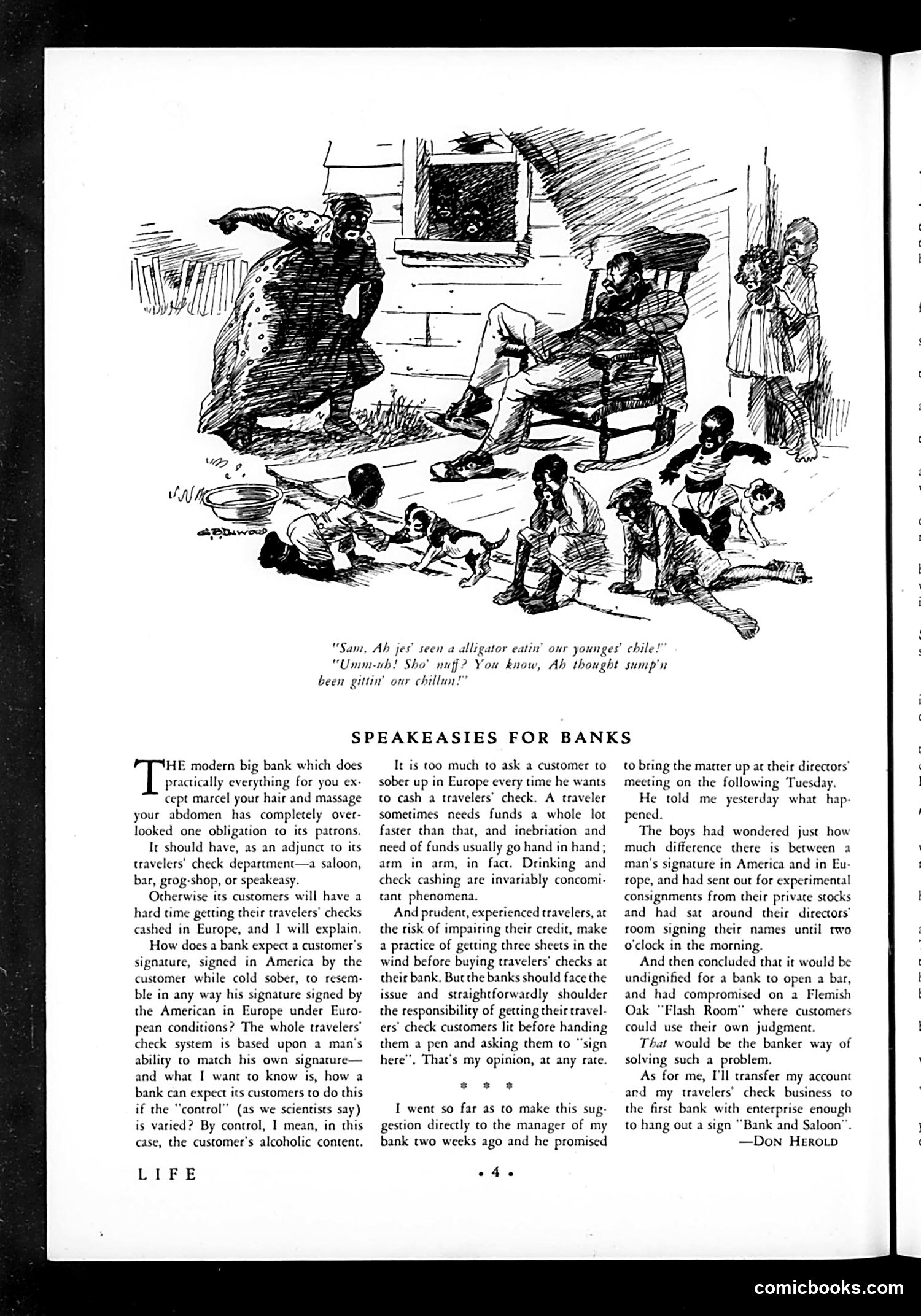
# "Speakeasies for Banks" This satirical piece critiques banks that have compromised their integrity by opening bars—a practice enabled by Prohibition-era workarounds. The cartoon depicts a ramshackle building where children play outside while adults engage in drinking inside, suggesting moral decay. The author argues that modern banks have eliminated their traditional responsibility to customers by refusing to cash travelers' checks or manage funds properly. He sarcastically proposes that if banks want to behave like speakeasies (illegal bars), they should simply operate as such openly. The piece mocks banks' loss of professional standards and suggests they've become as disreputable as Prohibition-era illegal establishments. The author threatens to move his business elsewhere, advocating for banks that maintain ethical standards rather than compromising dignity for profit.
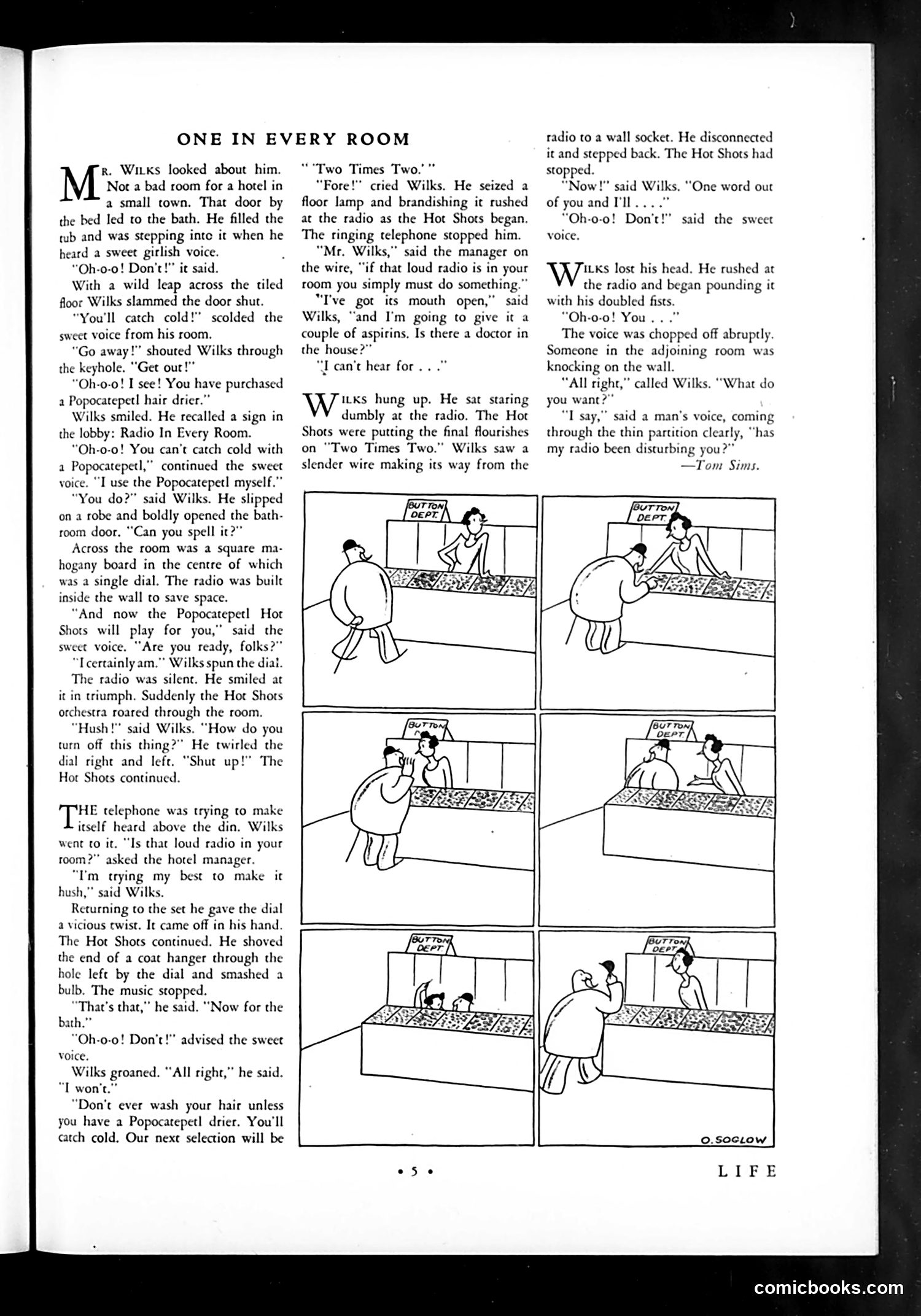
# "One in Every Room" - Life Magazine Satire This is a humorous story with comic strip illustrations about a man named Wilks who purchases a "Popocatepetl Hot Shots" radio - apparently a novelty product. The joke centers on the radio's intrusive nature: it plays loudly and uncontrollably throughout his hotel room, disrupting his attempts to bathe and sleep. The comic strip shows Wilks attempting increasingly desperate methods to silence the device - eventually smashing it with a coat hanger through a hole in the wall. The satire mocks both the product's poor design and the emerging culture of consumer gadgets that invade private spaces with unwanted noise and entertainment. The phrase "One in Every Room" sarcastically suggests these radios are becoming ubiquitous household nuisances, a commentary on 1920s-era technological proliferation.
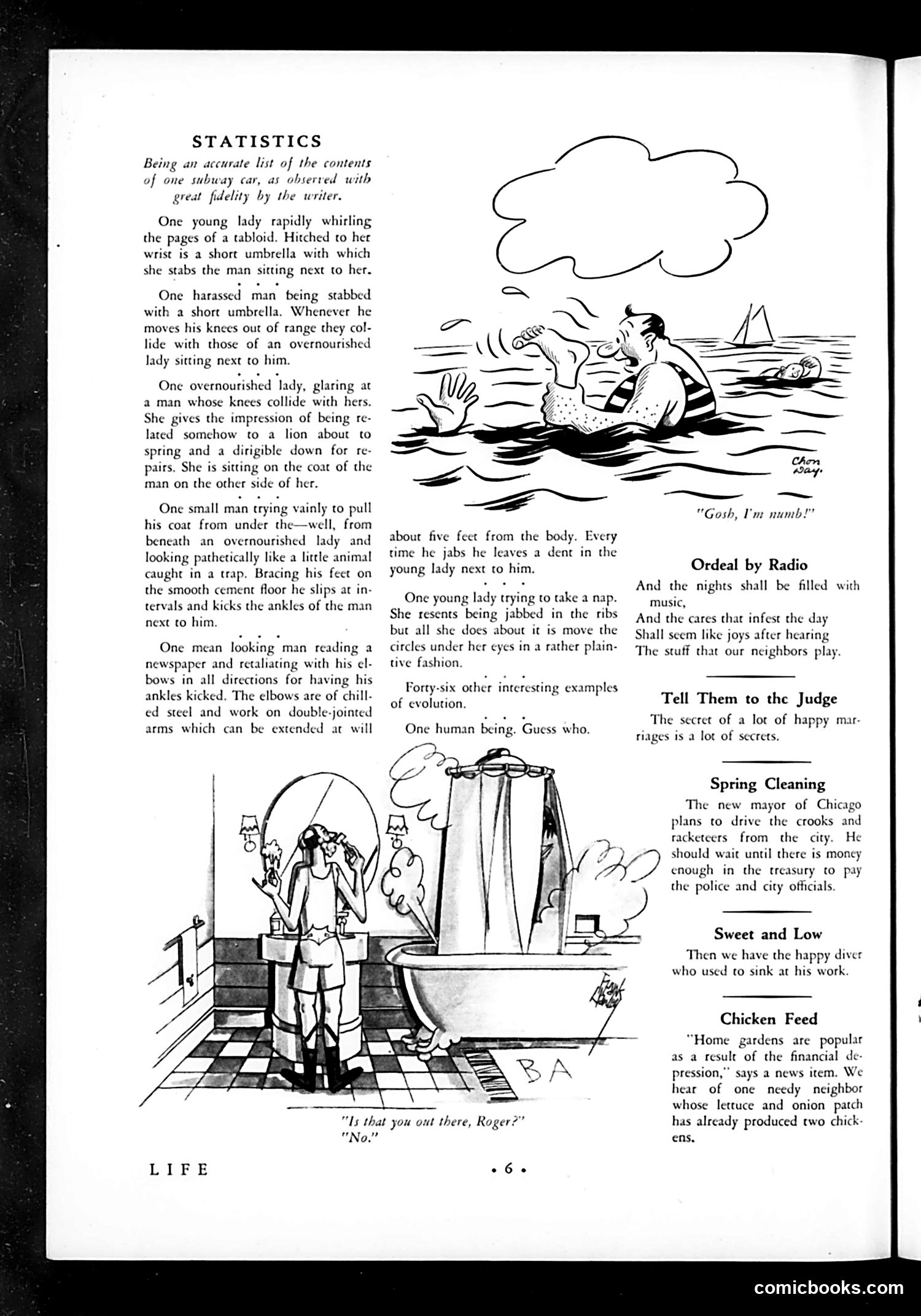
# Analysis of Life Magazine Page 6 This page contains satirical vignettes about crowded urban conditions, likely from the 1920s-30s era. The "Statistics" section humorously catalogs annoying subway and public space encounters: women jabbing men with umbrellas, people colliding while reading newspapers, and general physical discomfort from overcrowding. The two cartoons illustrate these scenarios. The first shows a man in water saying "Gosh, I'm numb!"—likely satirizing how even swimming offers no escape from crowds. The second cartoon depicts a woman in a bathtub, captioned "Is that you out there, Roger?"—suggesting even private bathroom spaces aren't secure from intrusions. The accompanying articles ("Ordeal by Radio," "Spring Cleaning," "Chicken Feed") represent typical light satirical commentary on modern life's frustrations and absurdities for contemporary readers.
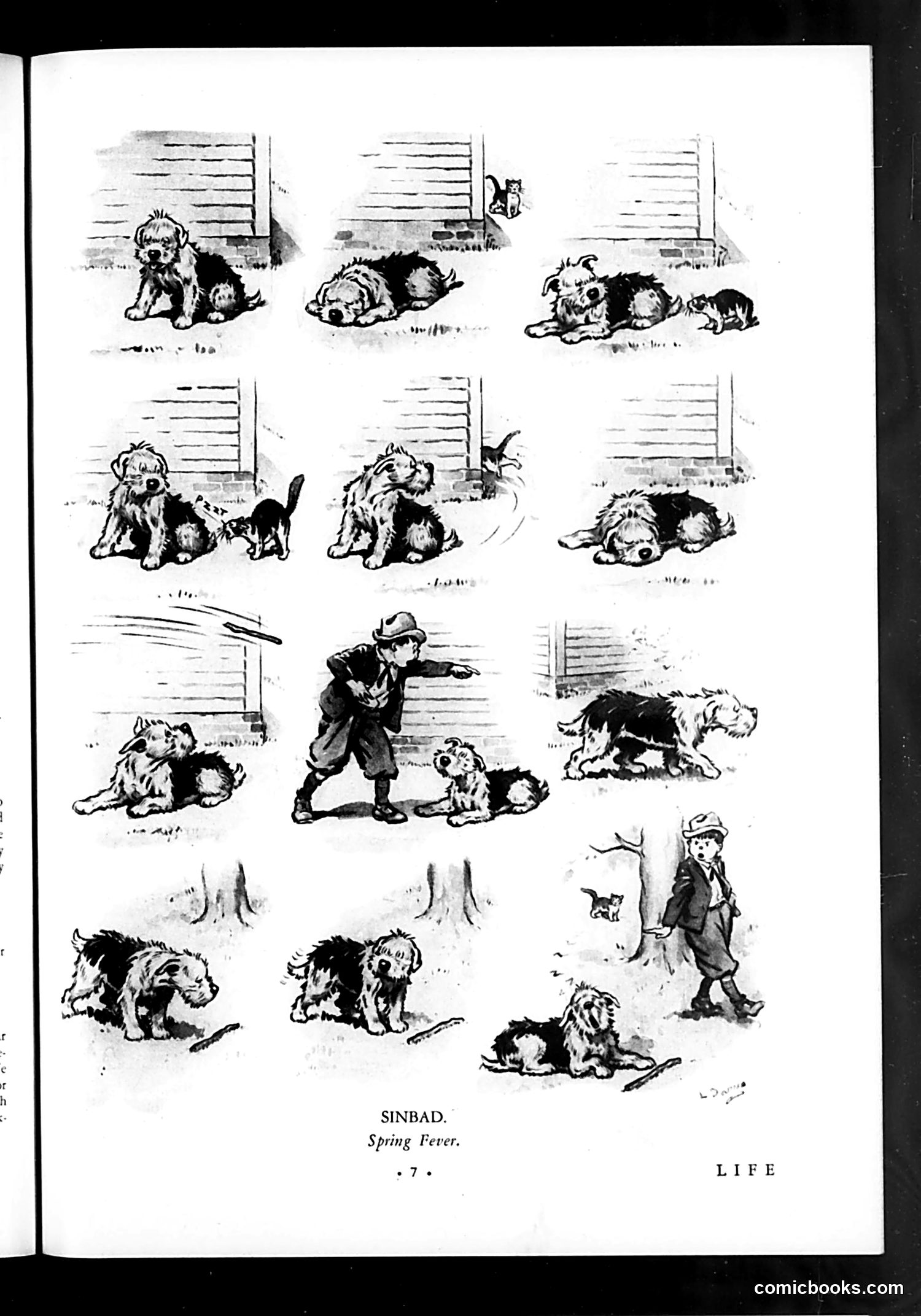
# "Sinbad: Spring Fever" - Life Magazine Comic Strip This is a comic strip sequence titled "Sinbad" depicting "Spring Fever," showing a shaggy dog and smaller animals (appears to be a cat or smaller dog) in various scenes around a wooden structure. The narrative follows the larger dog's increasingly erratic behavior—lying down, being distracted, and eventually chasing or playing with the smaller animal. A man in a hat and coat appears midway, seemingly trying to manage the chaos. The sequence culminates with the animals in more settled, exhausted positions. "Spring Fever" was a common period term for restlessness and romantic or mischievous urges triggered by springtime. The comic satirizes how animals (and by extension, humans) become uncontrollably energetic and unfocused during spring, unable to maintain normal routine or discipline.
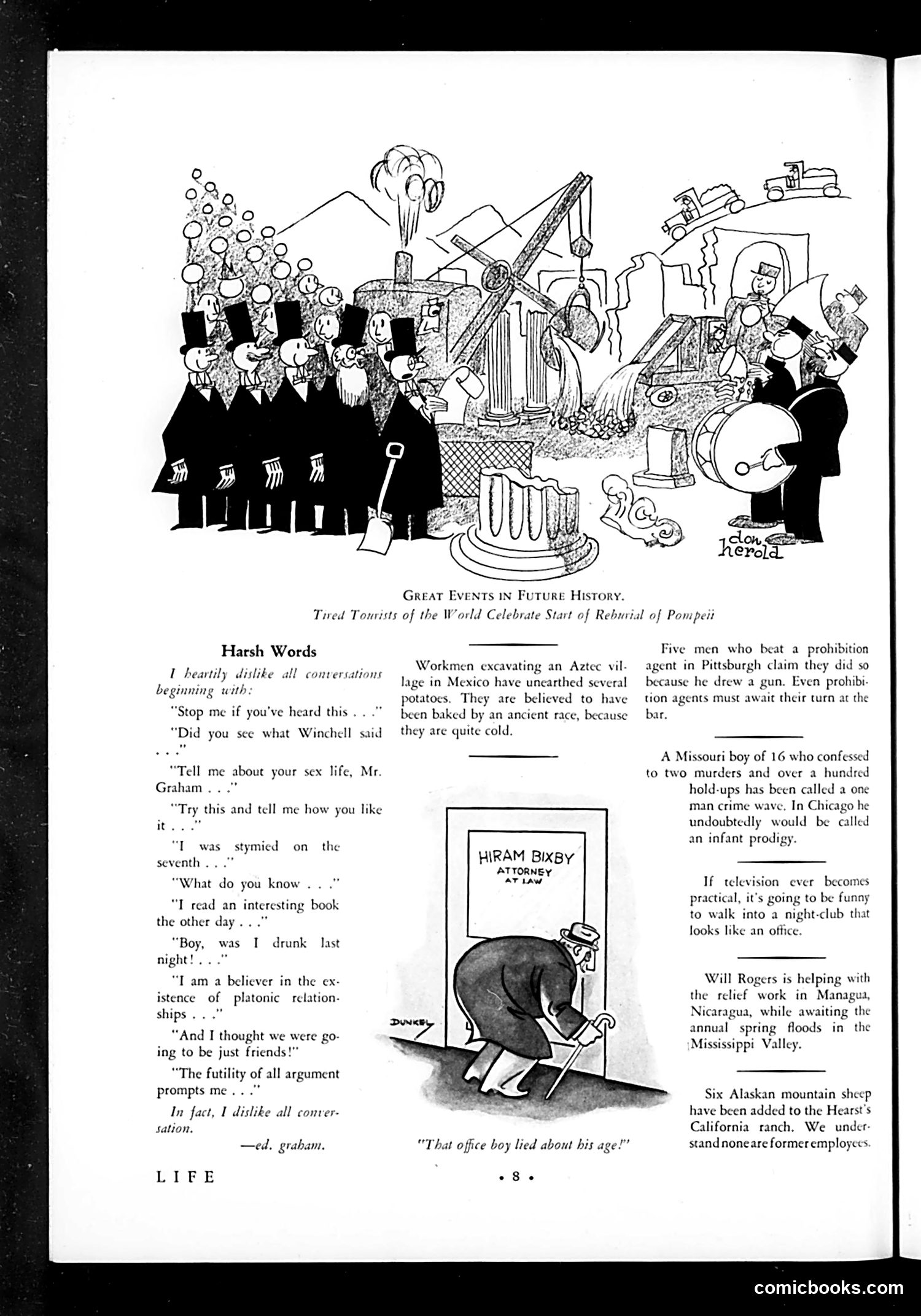
# Analysis The page contains a satirical cartoon titled "Great Events in Future History: Tired Tourists of the World Celebrate Start of Rebirth of Pompeii." The top illustration depicts well-dressed figures in top hats observing archaeological excavation equipment and ruins, satirizing how tourists and wealthy observers might celebrate the reconstruction of the ancient Roman city destroyed by Vesuvius. The cartoon mocks the commodification of historical tragedy—turning catastrophe into tourist spectacle. Below is an unrelated cartoon showing an elephant sitting outside an office labeled "Hiram Bixby, Attorney at Law," captioned "That office boy lied about his age!" This appears to be a visual pun about the elephant being absurdly young-looking despite obvious size, playing on job application deceptions. The "Harsh Words" section collects brief satirical observations about conversational clichés and social pretension.
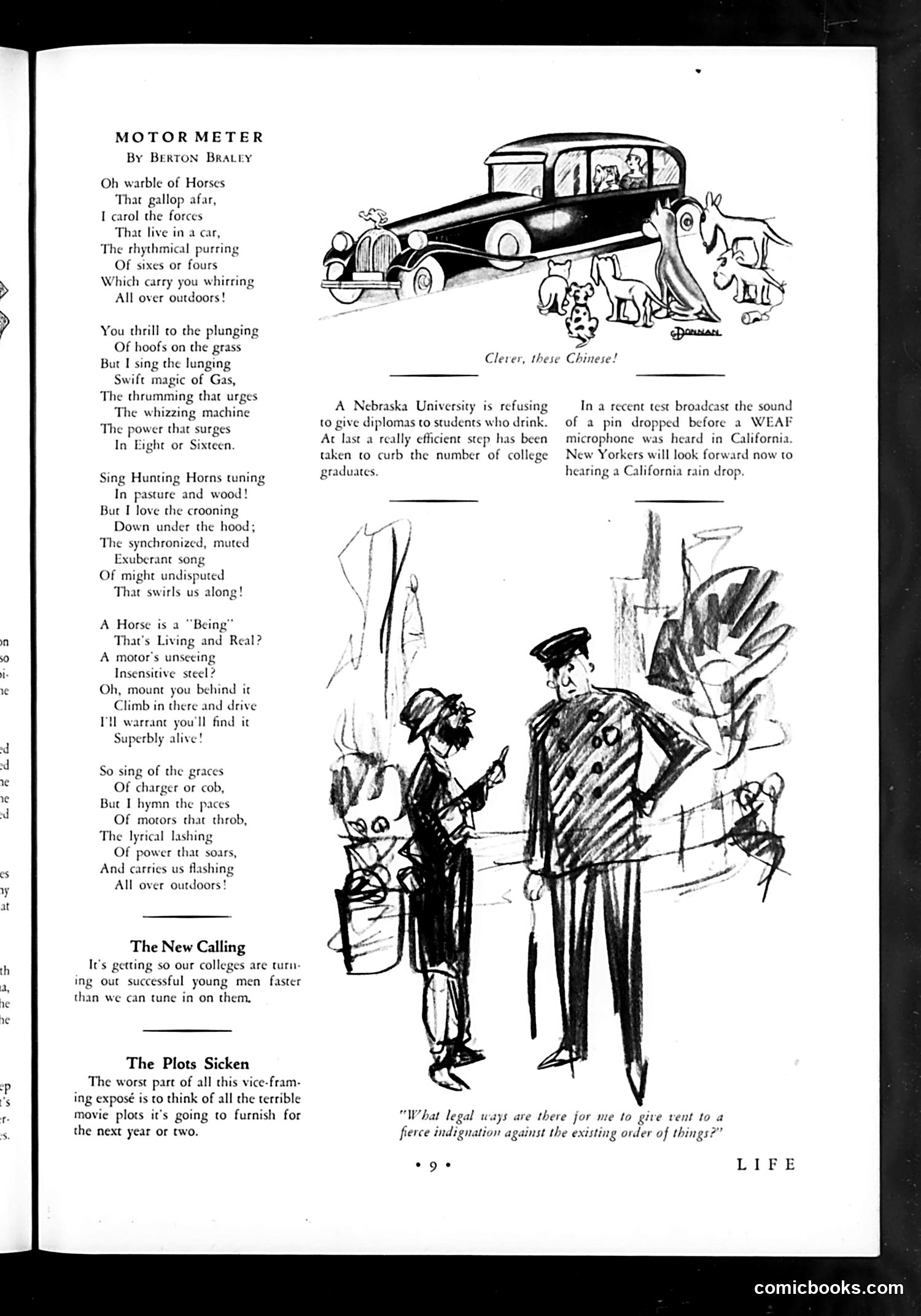
# "Motor Meter" Page Analysis This page features a poem by Berton Braley celebrating automobiles as superior to horses, alongside satirical news briefs and cartoons. The main cartoon depicts two figures in what appears to be a confrontation about "legal ways" to "give vent to fierce indignation against the existing order of things." The figures' formal dress and the reference to legal dissent suggest this mocks political activists or reformers of the era who sought change through established channels rather than more radical means. The accompanying news items include humor about Nebraska University refusing diplomas to drinking students and a California radio station's sound-effect experiment. These brief items typify Life magazine's satirical commentary on contemporary social trends and institutional policies, using light mockery to critique educational standards and emerging broadcast technology.
# "Life Looks About" - Analysis This page from *Life* magazine contains two satirical articles with a small decorative illustration at the top. **"Another Idle King"** criticizes Spain's King Alfonso for his ineffectiveness after losing political influence. The article suggests he's become a figurehead without real power, comparing him unfavorably to the Mayor of New York, and sarcastically proposing European monarchs establish "a Reno for swift and painless divorce" from their rulers. **"Population Problems"** discusses Germany's efforts to increase birth rates through the German Housewives Association, promoting larger families. The author expresses concern that uncontrolled population growth—dependent on social conditions rather than propaganda—could prove counterproductive, arguing instead that "checks and balances" should regulate such matters. Both pieces use satirical commentary on contemporary political and social issues in Europe.