A complete issue · 36 pages · 1931
Life — April 24, 1931
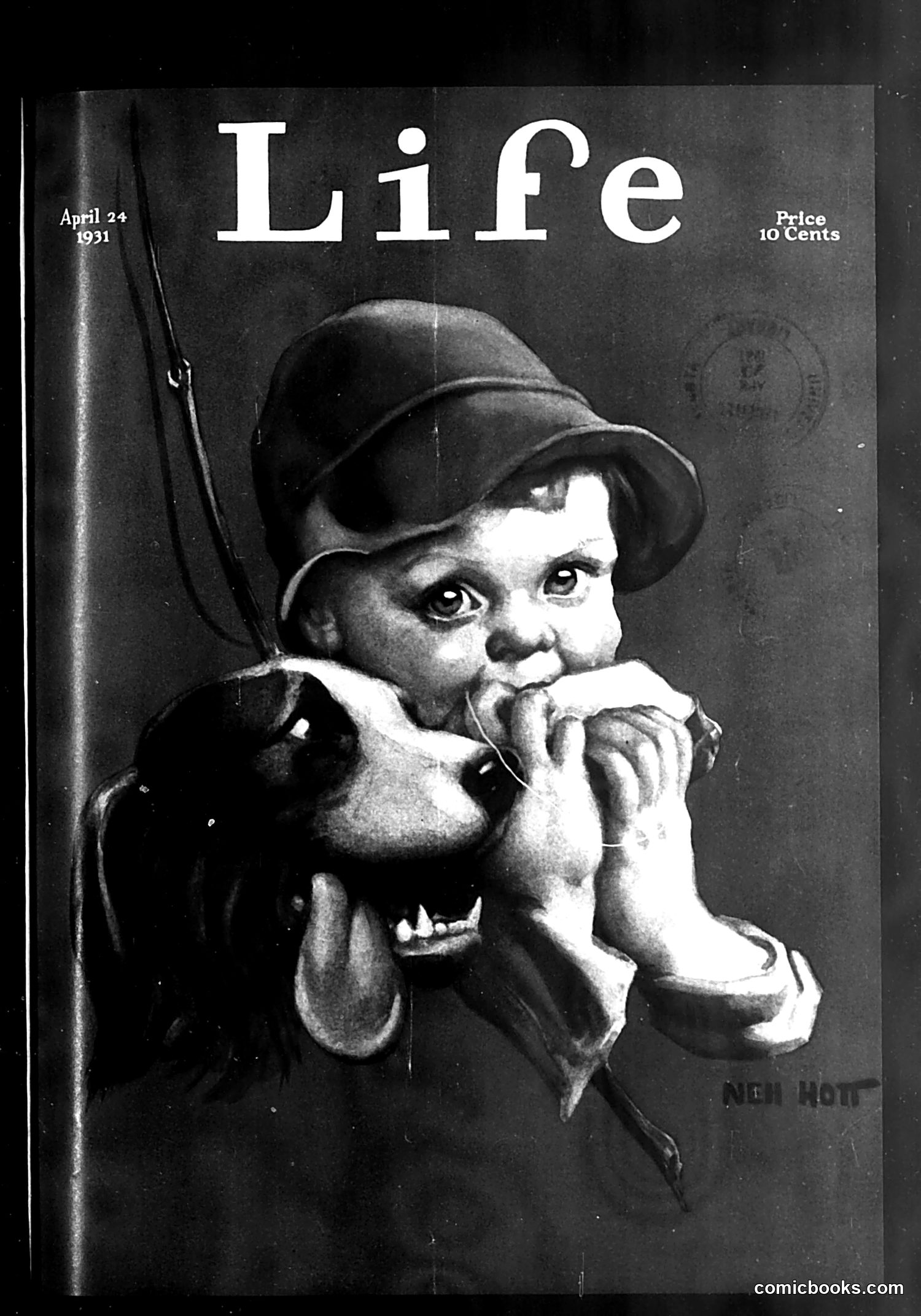
# Life Magazine Cover Analysis (April 24, 1931) This appears to be a Life magazine cover featuring a caricatured figure—likely a ventriloquist's dummy or puppet character—wearing a bowler hat and formal clothing, shown in an exaggerated, grotesque style typical of 1931 satirical illustration. The specific identity of the figure and the satirical subject matter are unclear from the image alone without additional context or visible text identifying the target. The distorted facial features and dummy-like appearance suggest social or political commentary, possibly targeting a public figure or trend of the era, but the exact reference requires additional documentation beyond what's visible in this cover image. The 10-cent price indicates Depression-era publication.
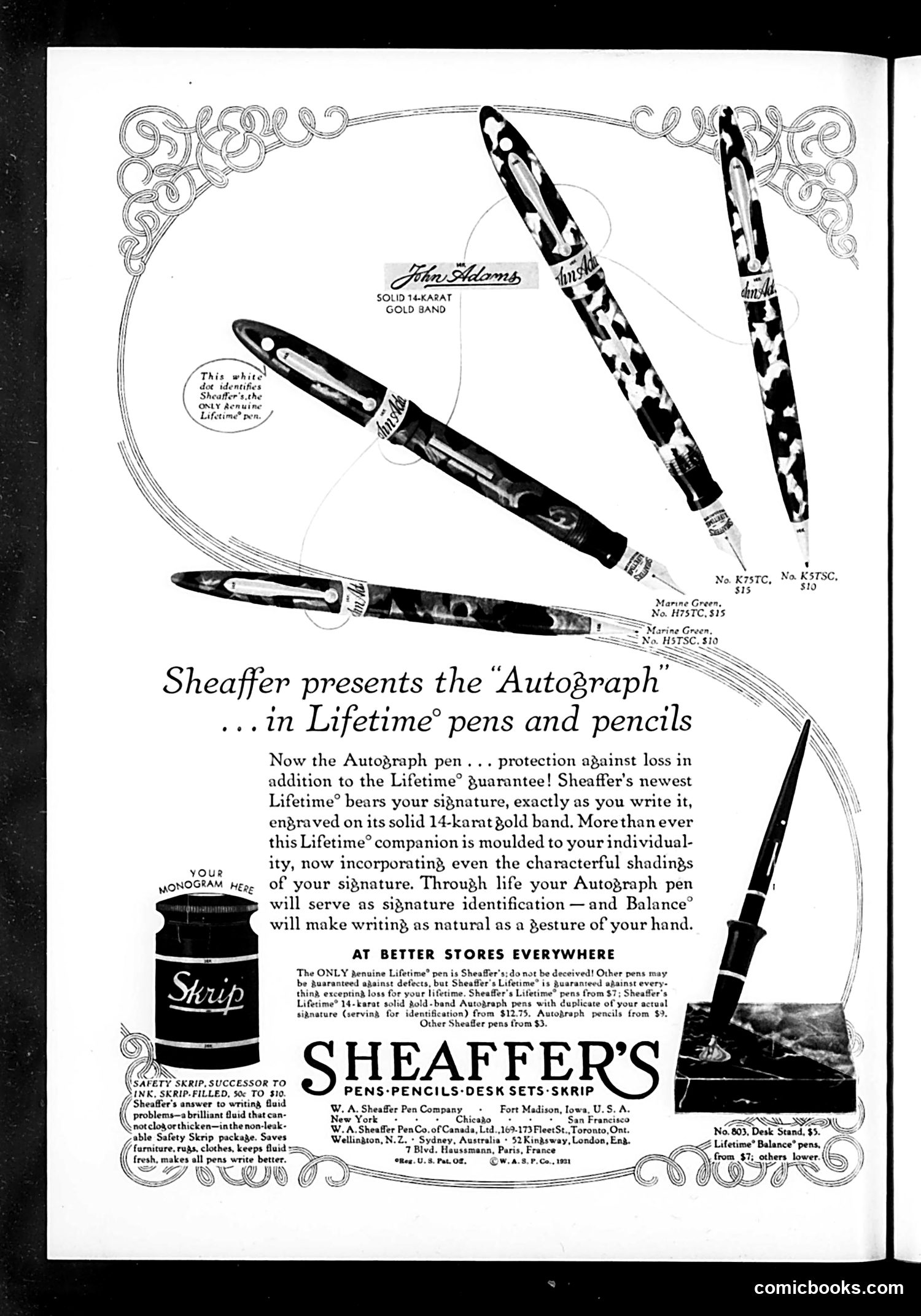
This page is primarily an **advertisement for Sheaffer's pens and pencils**, not satirical content. The ad promotes the "Autograph" line of Lifetime pens, featuring writing instruments with solid 14-karat gold bands. The marketing pitch emphasizes personalization—the pen supposedly bears your signature engraved on the gold band, making it a unique identifier and status symbol. The text highlights Sheaffer's "Lifetime" guarantee against defects and loss, positioning these pens as prestigious, long-lasting writing tools. A separate inset advertises Sheaffer's "Skrip" ink bottle as a "Safety Strip" product. The decorative border and fountain pen imagery are typical of 1920s-1930s luxury goods advertising in *Life* magazine. There is **no political satire or cartoon commentary** on this page—it is straightforward commercial promotion.
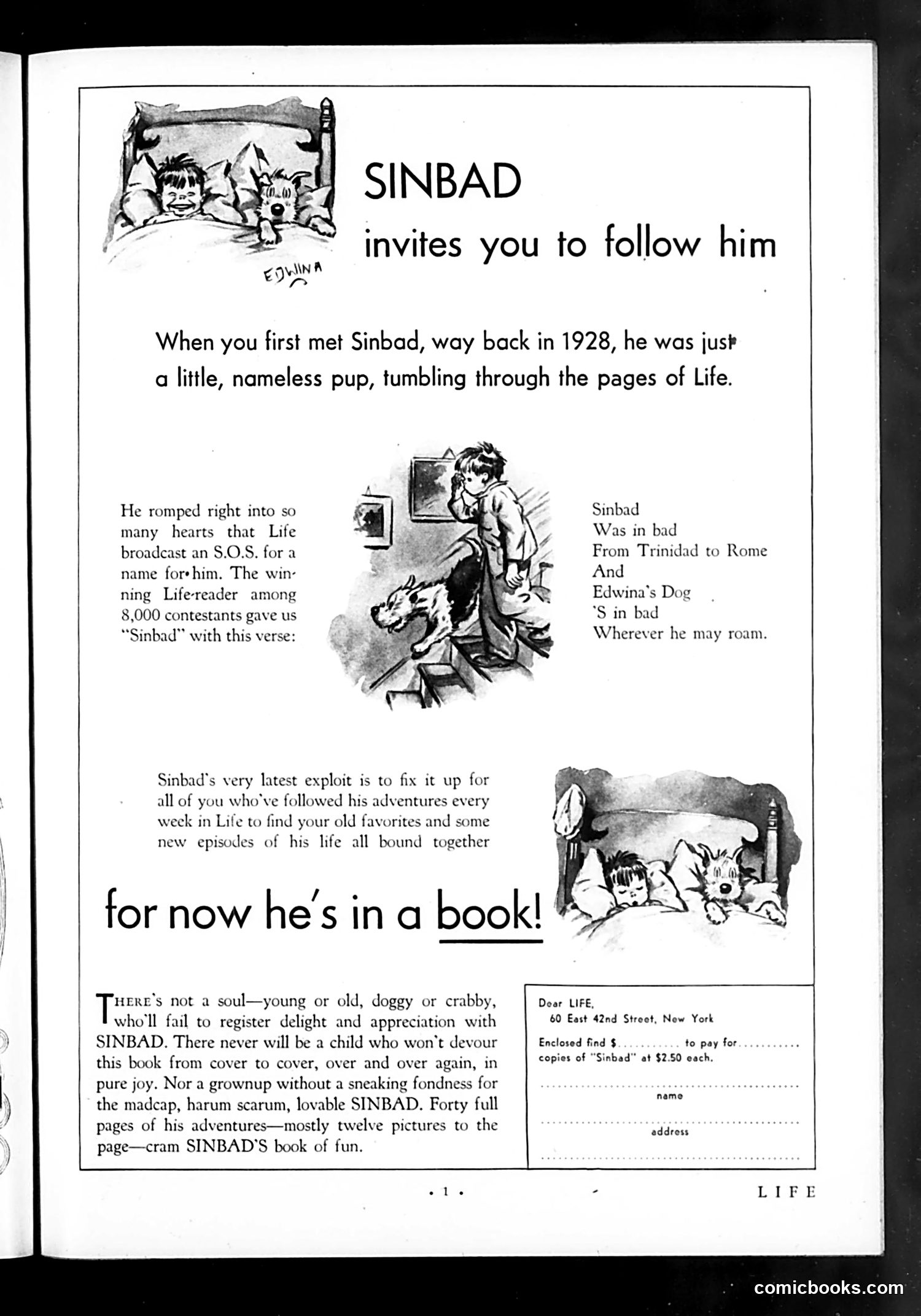
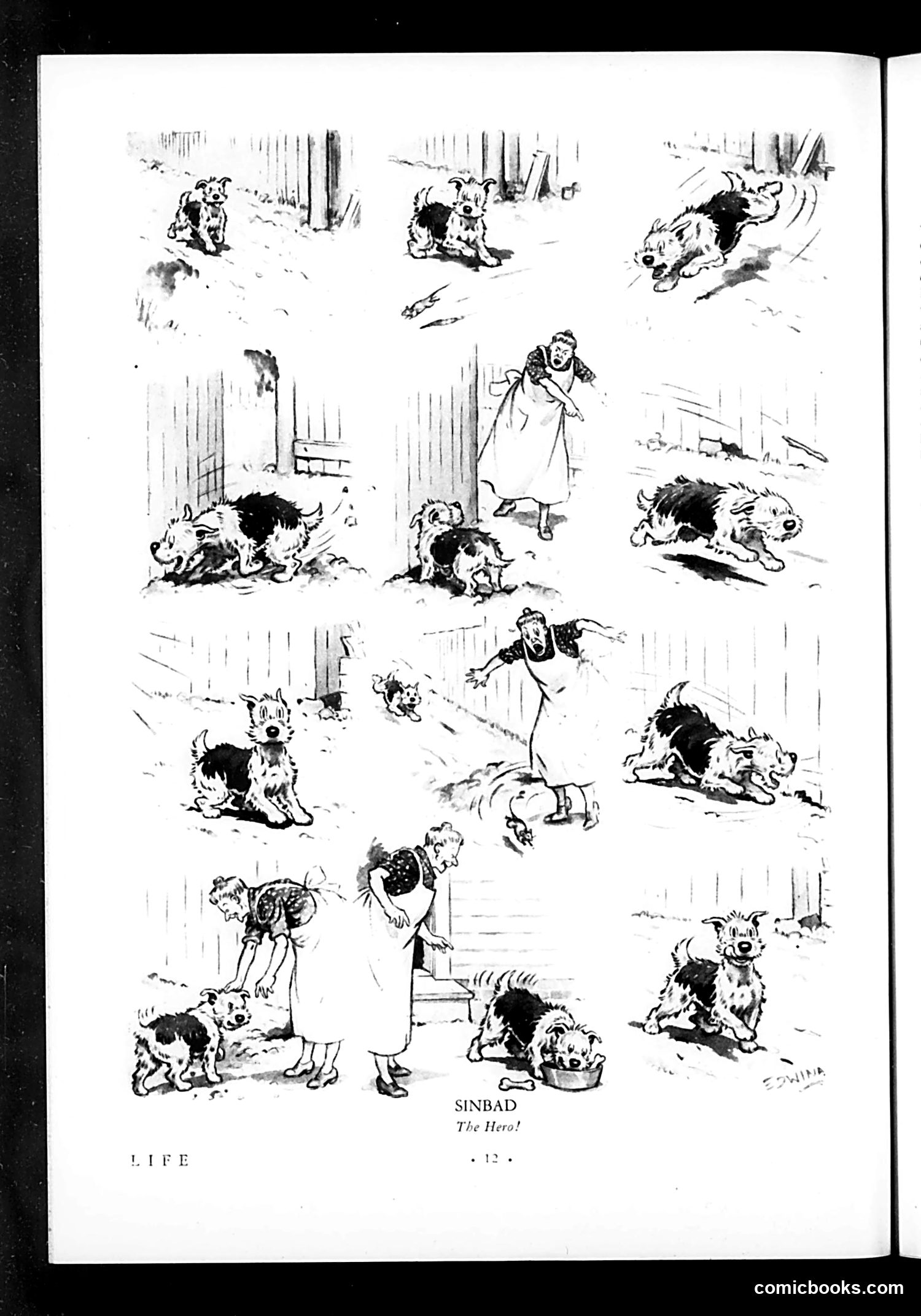
This is a **book advertisement**, not a political cartoon. The page promotes a children's book collection featuring "Sinbad," a mischievous dog character who had appeared in *Life* magazine's comic strips since 1928. The ad explains that Sinbad—described as having caused trouble "from Trinidad to Rome"—is now being compiled into a bound book. The illustrations show a playful pup getting into various mishaps (jumping on people, disrupting activities). The appeal targets both children and adults, promising "forty full pages of his adventures—mostly twelve pictures to the page." It's a straightforward promotional pitch to readers to purchase the compiled collection, using the character's established popularity in the magazine to drive book sales. No political satire is present.
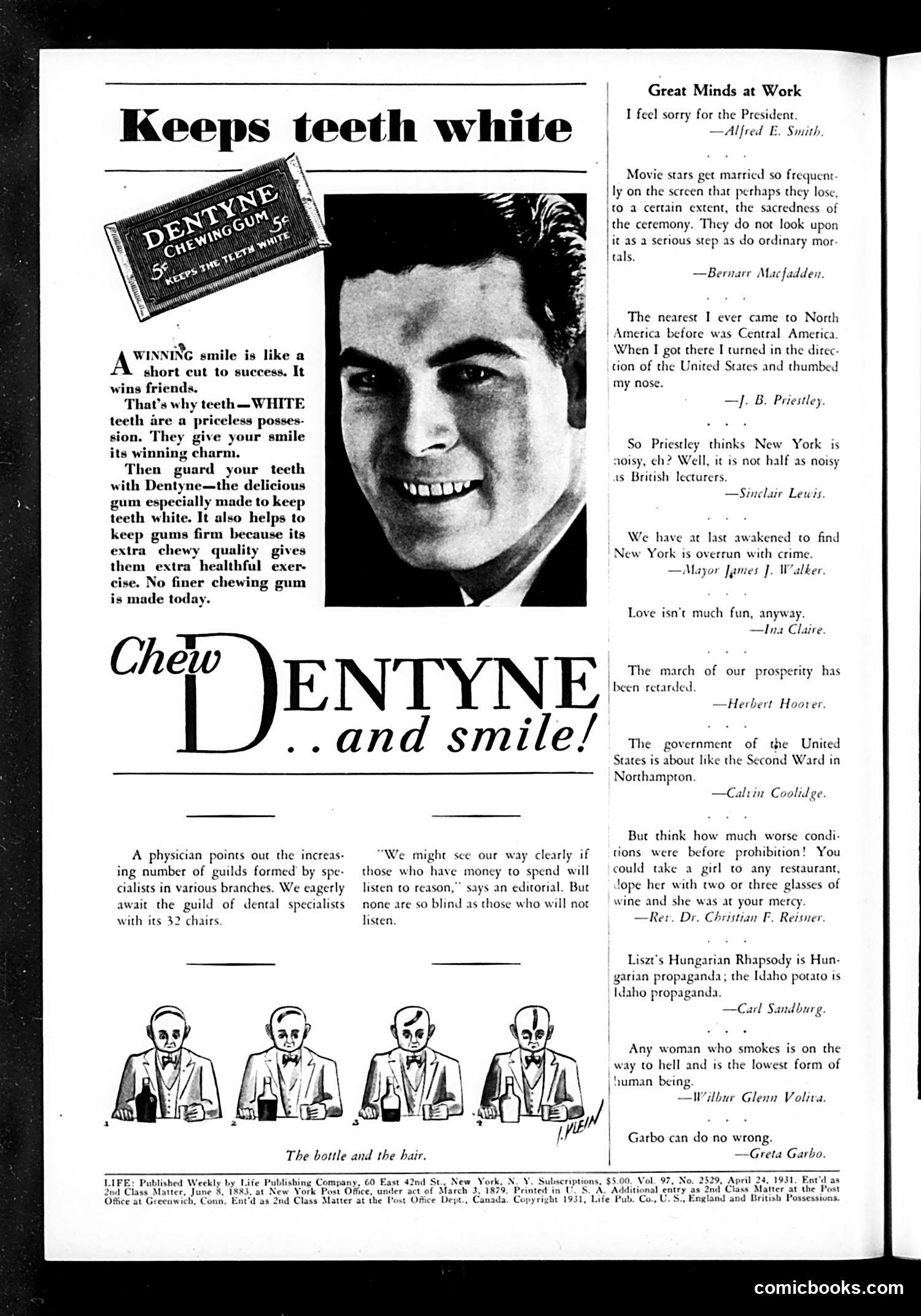
# Dentyne Gum Advertisement with Social Commentary This page is primarily a **Dentyne chewing gum advertisement** from 1931 (per the publication info). The ad features a smiling man promoting white teeth and includes a cartoon showing four identical men at a dinner table with bottles, captioned "The bottle and the hair." The bottom cartoon appears to satirize **Prohibition's effects**—showing how alcohol consumption was supposedly affecting men's appearance (hair loss). This is social satire about the ongoing national Prohibition era (1920-1933). The right column contains "Great Minds at Work"—brief satirical quotes from public figures mocking politics, New York City, and social issues. These are light political jabs at contemporary figures and conditions, though specific identities are difficult to verify without additional context.
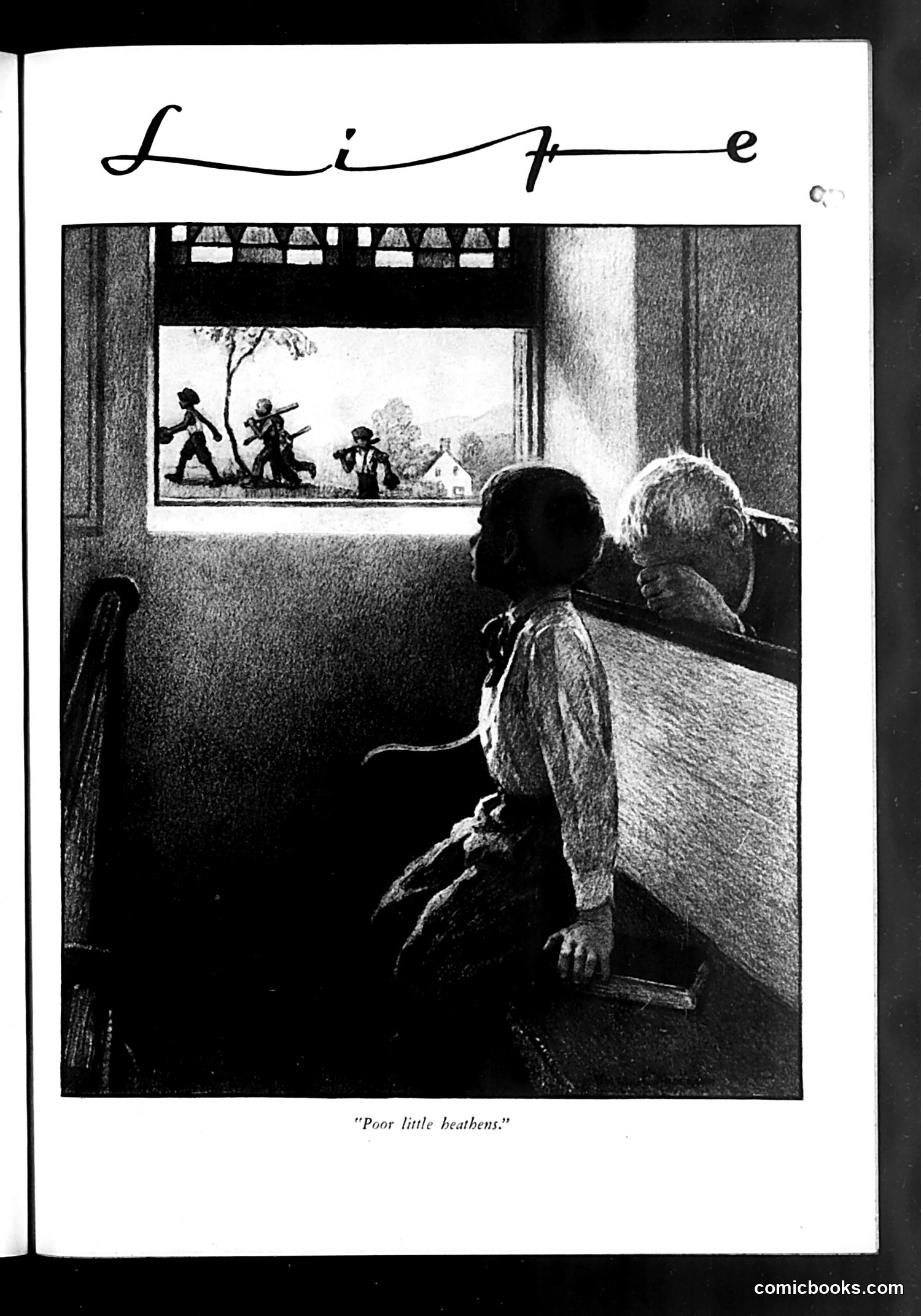
# Analysis This appears to be a satirical illustration from *Life* magazine depicting two elderly observers watching a theatrical or cinematic screen showing soldiers in combat. The caption reads "Poor little heathens." The satire likely critiques American attitudes toward foreign peoples, particularly in colonial or missionary contexts. The elderly figures' patronizing comment—"Poor little heathens"—appears directed at the soldiers on screen, suggesting mockery of American condescension toward non-Western populations depicted as violent or uncivilized. The contrast between the comfortable, sheltered observers and the depicted warfare emphasizes how distant audiences consumed narratives about foreign conflicts with sentimental superiority rather than genuine understanding or concern. The work satirizes American imperialism and the paternalistic attitudes accompanying it.
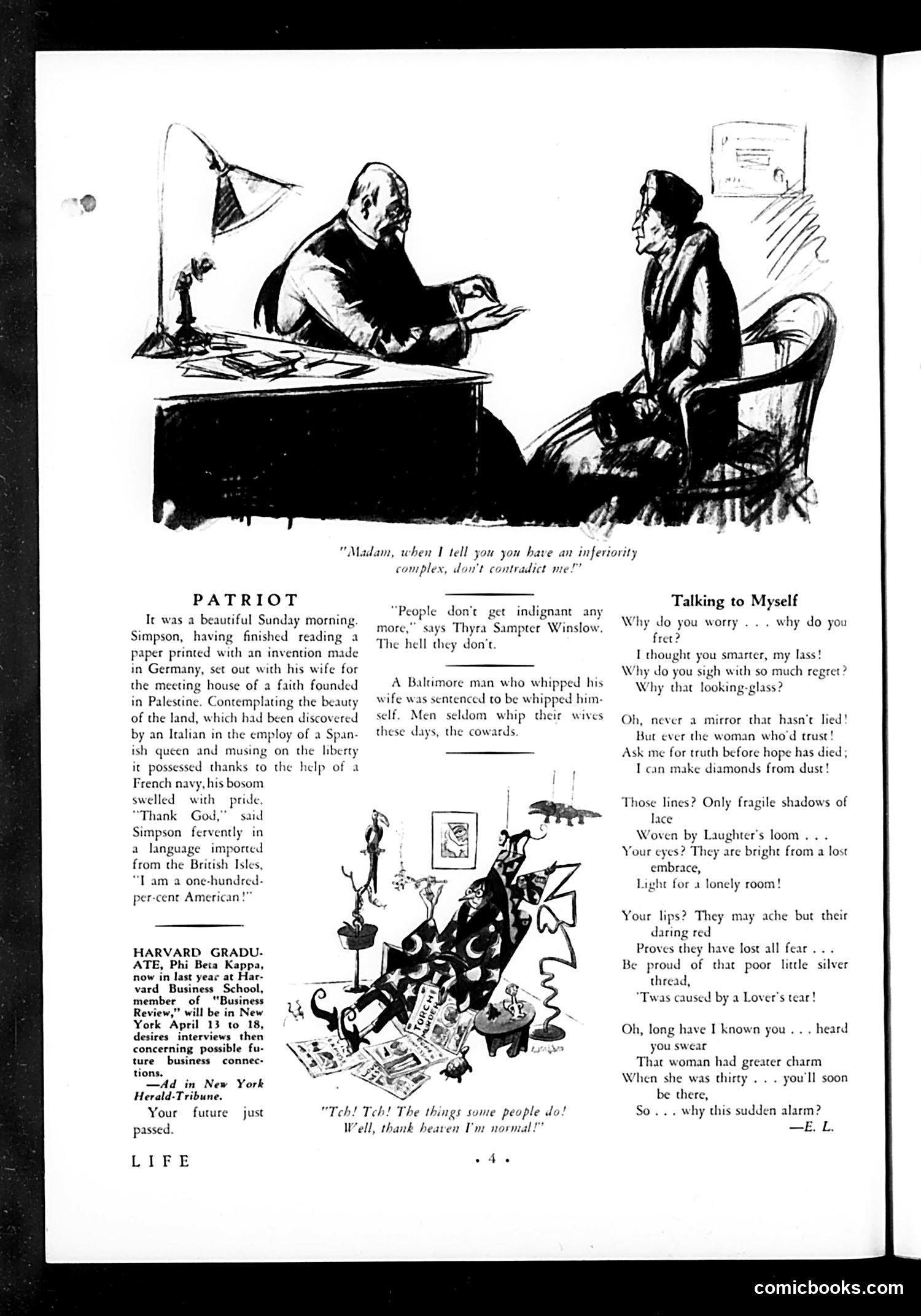
# Analysis of Life Magazine Page The top cartoon depicts a psychiatrist or doctor interviewing a patient, with the caption "Madam, when I tell you you have an inferiority complex, don't contradict me!" This satirizes early 20th-century psychology and psychoanalysis—a trendy field among the wealthy. The joke mocks therapists' authority and the irony of patients with inferiority complexes being told they *have* them, suggesting the absurdity of psychiatric diagnosis and the power dynamic between doctor and patient. The page also contains lighter humor pieces: "Patriot" (a humorous story), "Talking to Myself" (a poem), and a cartoon about someone's chaotic life ("Tch! Tch! The things some people do!"). These reflect Life's satirical approach to contemporary social anxieties and human folly.
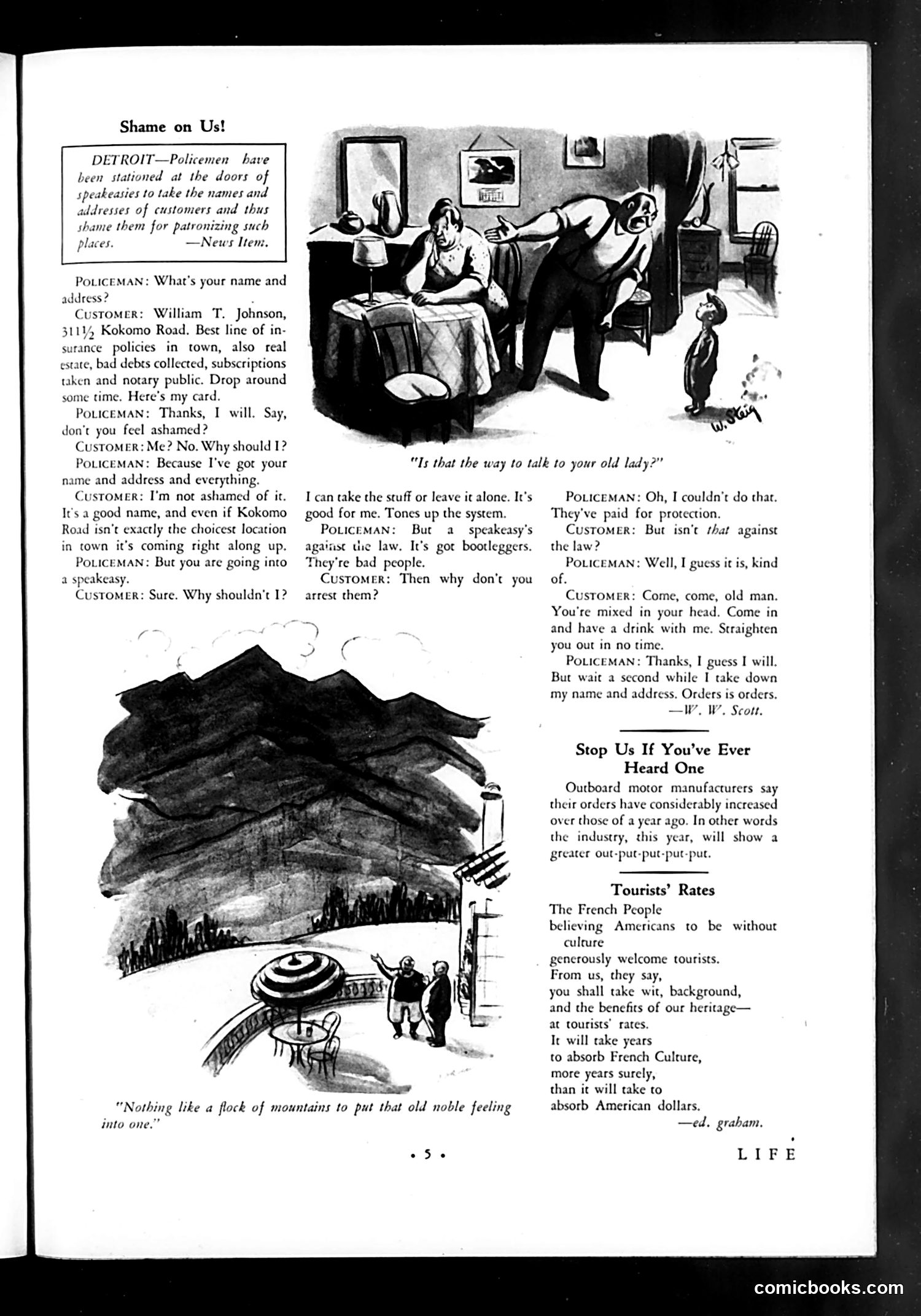
# Analysis of Life Magazine Page This page satirizes police corruption and speakeasy culture during Prohibition. The main cartoon depicts a policeman demanding identification from a customer at an illegal bar, ostensibly to shame patrons—but the customer exposes the hypocrisy: police were *paid* for "protection," making them complicit in lawbreaking. The joke hinges on the policeman's indignation being fraudulent. He pretends moral authority while actually enforcing illegal establishments for bribes. The customer's defiant response ("Why should I?") and subsequent invitation to drink highlight how police and speakeasy operators were corrupt partners, not adversaries. The surrounding satirical pieces mock motor manufacturers' profits and mock French attitudes toward American tourists—lighter social commentary compared to the corruption critique.
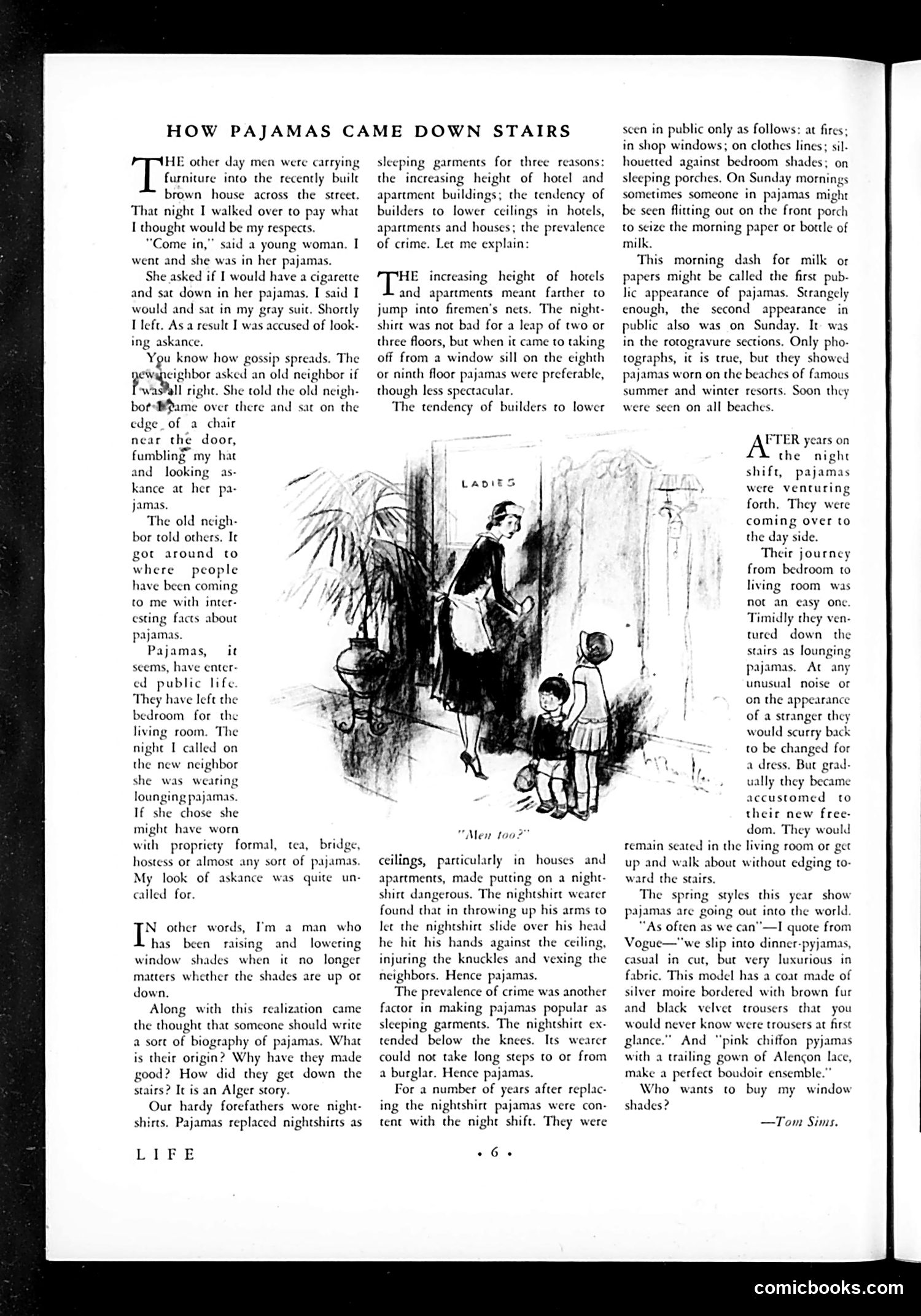
# "How Pajamas Came Down Stairs" This humorous article by Tom Sims satirizes the early 20th-century fashion trend of wearing pajamas in public spaces—particularly during daytime. The accompanying sketch shows a woman in pajamas descending stairs while a man peers around a doorway, apparently surprised or scandalized. The satire targets how pajamas, once exclusively sleepwear, gradually infiltrated acceptable public appearance through successive steps: first at beachside resorts, then in shop windows and on clotheslines, eventually appearing in daytime social settings. Sims humorously traces this social shift to practical and criminal factors—nightshift workers, builders lowering ceilings forcing residents into higher apartments, and crime prevention—claiming these mundane reasons explain fashion's most ridiculous trend: casual pajama-wearing as normal daytime attire.
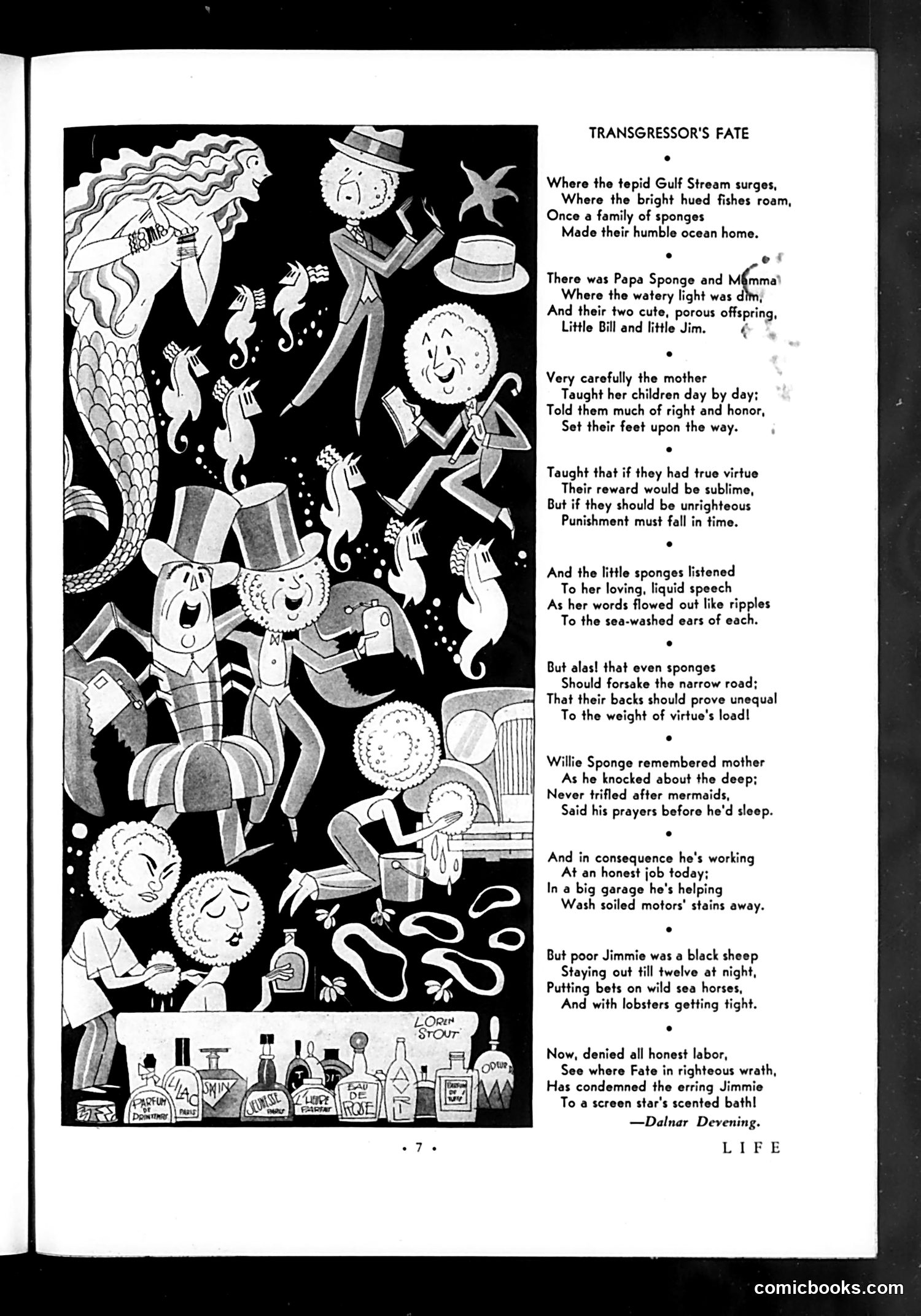
# "Transgessor's Fate" Analysis This is a morality tale in verse by Dalnar Devening, illustrated with whimsical underwater characters. The narrative follows a sponge family—Papa, Mamma, and their children Willie, Jim, and Bill—living in the Gulf Stream. The poem teaches that virtue brings reward while wrongdoing brings punishment. Willie Sponge heeds his mother's moral lessons and becomes a hardworking laborer ("washing soiled motors' stains away"). In contrast, his brother Jimmie becomes a "black sheep," gambling and consorting with loose morals ("mermaids," "wild sea horses"), ultimately condemned to a "screen star's scented bath"—apparently satirizing the shallow, dissolute lifestyle of entertainment celebrities. The satirical point: vice leads to degradation, virtue to honest labor.
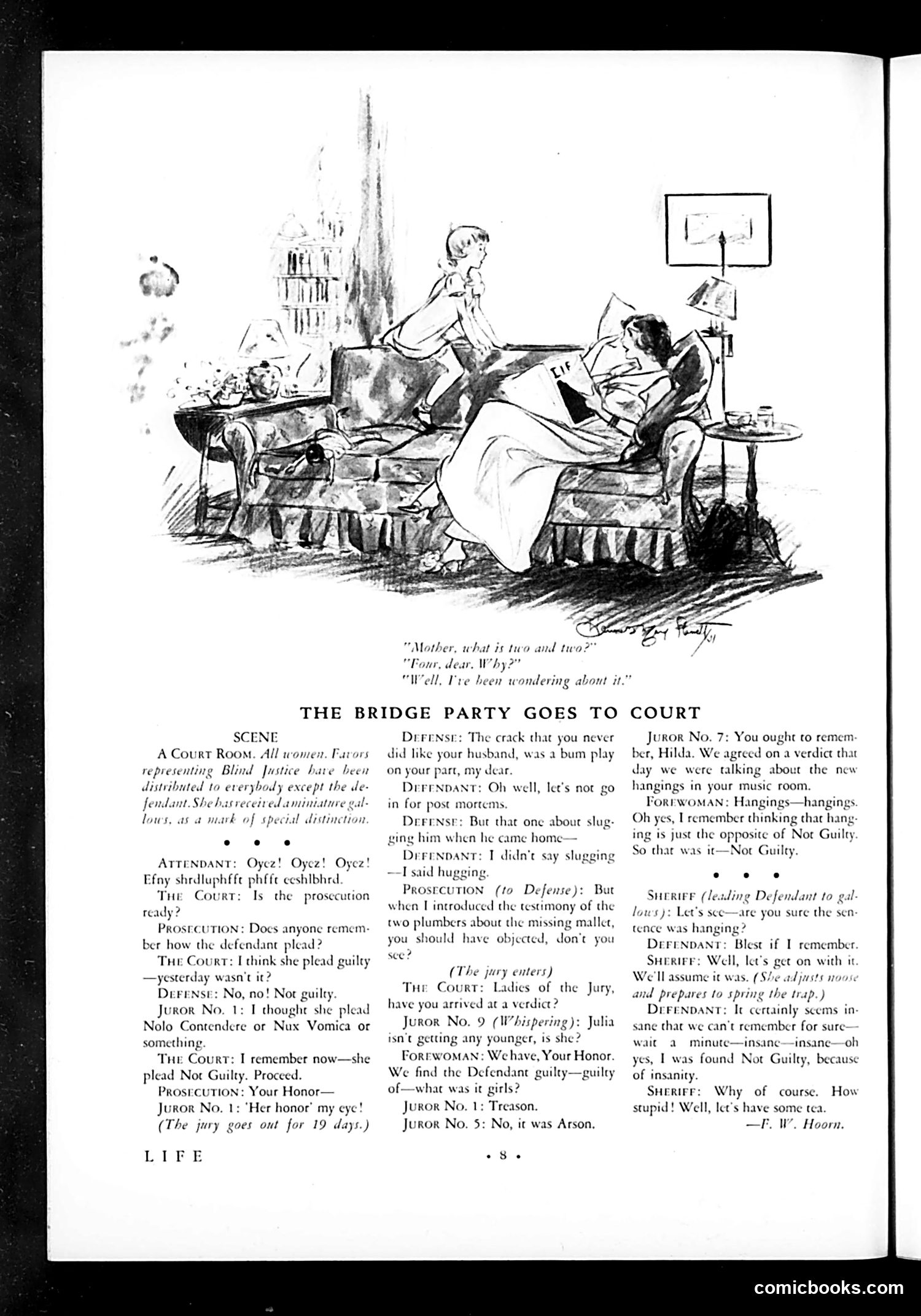
# "The Bridge Party Goes to Court" This is a humorous sketch about a bridge card game lawsuit. The scene depicts a courtroom where women in evening dress are testifying about a bridge game that apparently went wrong—possibly involving a missing mallet or disputed hand. The satire mocks both the triviality of taking a social card game to court and the absurdity of the legal proceedings themselves. The jury members appear confused or dismissive (one juror whispers), while different witnesses give contradictory testimony about whether someone was "guilty" of what appears to be a minor infraction during the game. The joke targets the leisure activities of wealthy women and the comedy of legal formality applied to petty domestic disputes. It's social satire on class and gender.
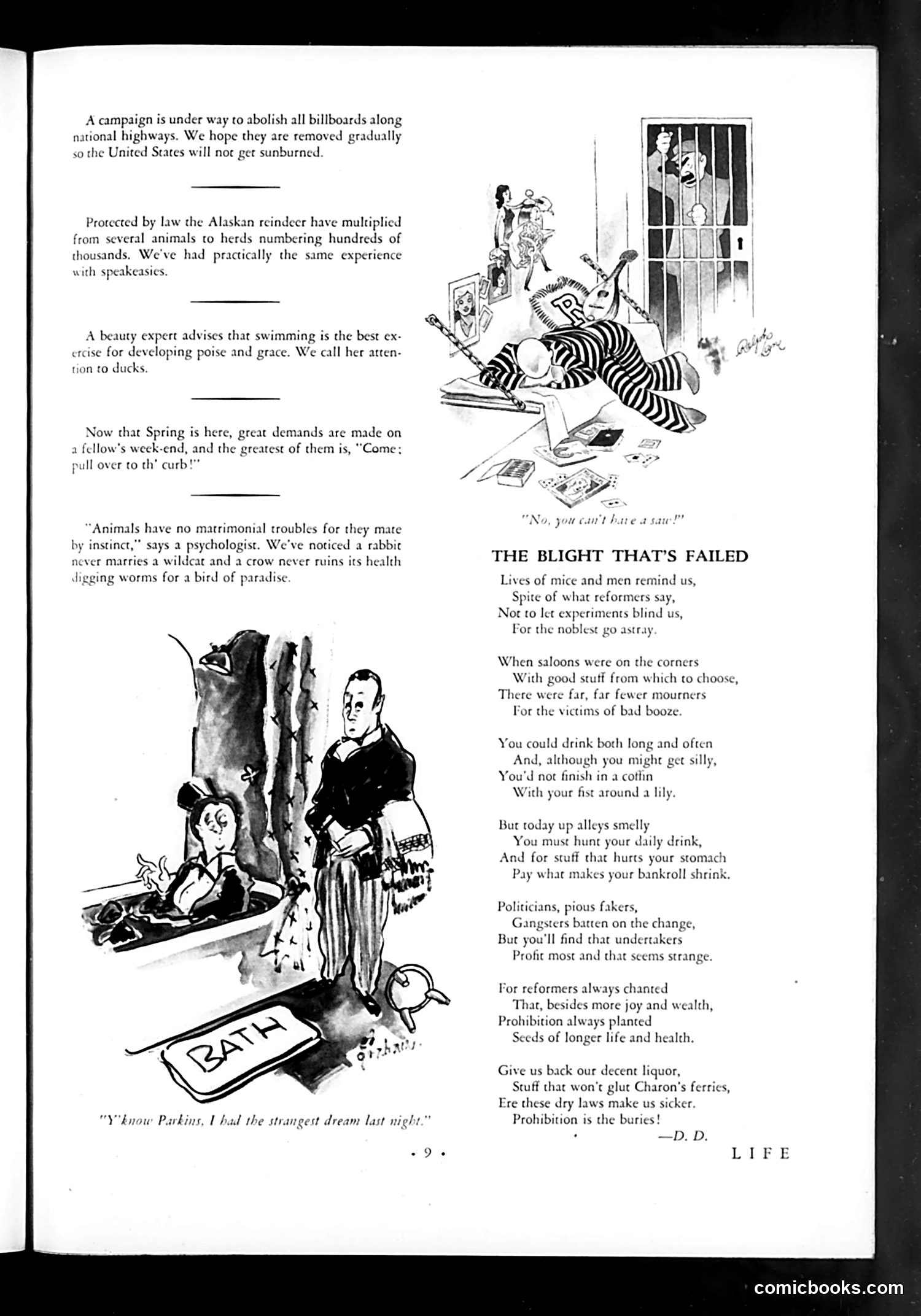
# Political Satire on Prohibition This Life magazine page satirizes American Prohibition (the ban on alcohol sales). The cartoons and poem mock reform movements that claimed moral virtue. **Left cartoon**: Shows a figure in a bathtub labeled "BATH," with the caption "Y'know Parkins, I had the strangest dream last night"—implying people are secretly bathing in or drinking alcohol illegally. **Right cartoon**: A woman looking at caged animals, captioned "No, you can't have a suit!"—appears to reference scarcity or rationing related to Prohibition's economic effects. **The poem "The Blight That's Failed"**: Directly attacks Prohibition, arguing reformers' promises of "longer life and health" have failed. Instead, it produced criminals, gangsters, and worse public health outcomes. The final lines express nostalgia for pre-Prohibition drinking culture and mock Prohibition as ineffective and harmful.
# "Life Looks About" - Political Commentary Page This page contains three opinion columns critiquing American politics and urban governance circa early 1930s. **"The Big Job"** attacks Mayor Jimmy Walker of New York City, addressing corruption and his ineffectiveness combating Prohibition-era crime. The author argues Walker is too glamorous and socially distracted to govern seriously, suggesting he should be removed. **"When the Mayor Ain't What He Used to Be"** continues criticism of Walker, noting his popularity despite poor performance—attributing this to his "good actor" appeal rather than actual competence. **"Vale Big Bill"** discusses Mayor Thompson of Chicago, noting his electoral defeat and comparing it to similar voter rejections of failed urban leadership. The cartoonish masthead illustration depicts a cherub-like figure, typical of Life magazine's satirical style.