A complete issue · 37 pages · 1931
Life — April 17, 1931
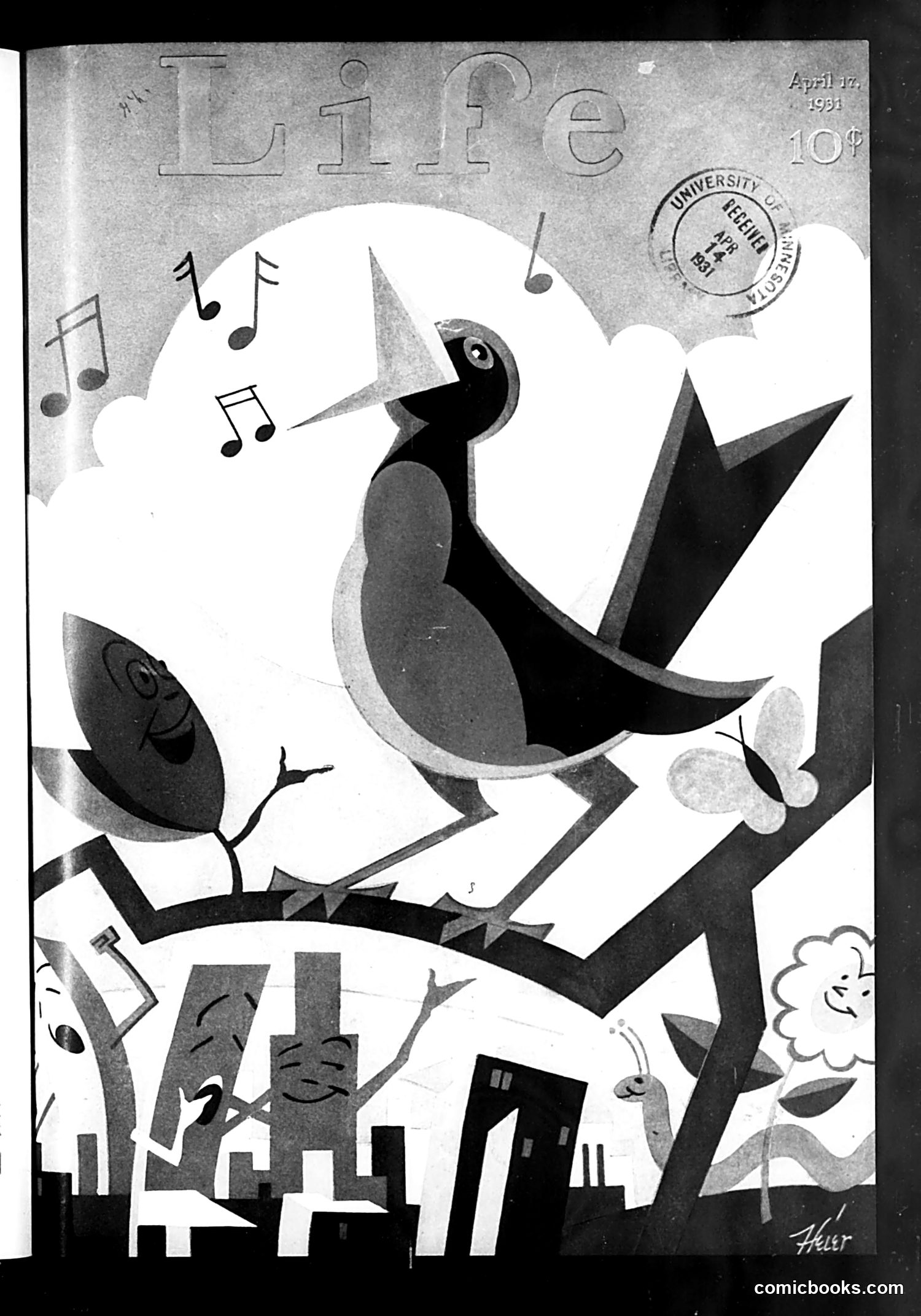
# Life Magazine Cover, April 17, 1924 This cover illustration depicts a stylized bird singing joyfully above a cityscape, with musical notes floating upward. The bird appears to be a cheerful, anthropomorphized character rendered in Art Deco style—geometric and modernist. The image likely celebrates urban life, entertainment, and optimism during the 1920s (the Jazz Age). The singing bird symbolizes happiness and artistic expression, while the cityscape below represents American modernity and progress. The musical theme aligns with the era's cultural emphasis on jazz, popular music, and entertainment as defining features of contemporary society. The cover conveys an optimistic, celebratory mood about American urban culture and leisure during this prosperous period.
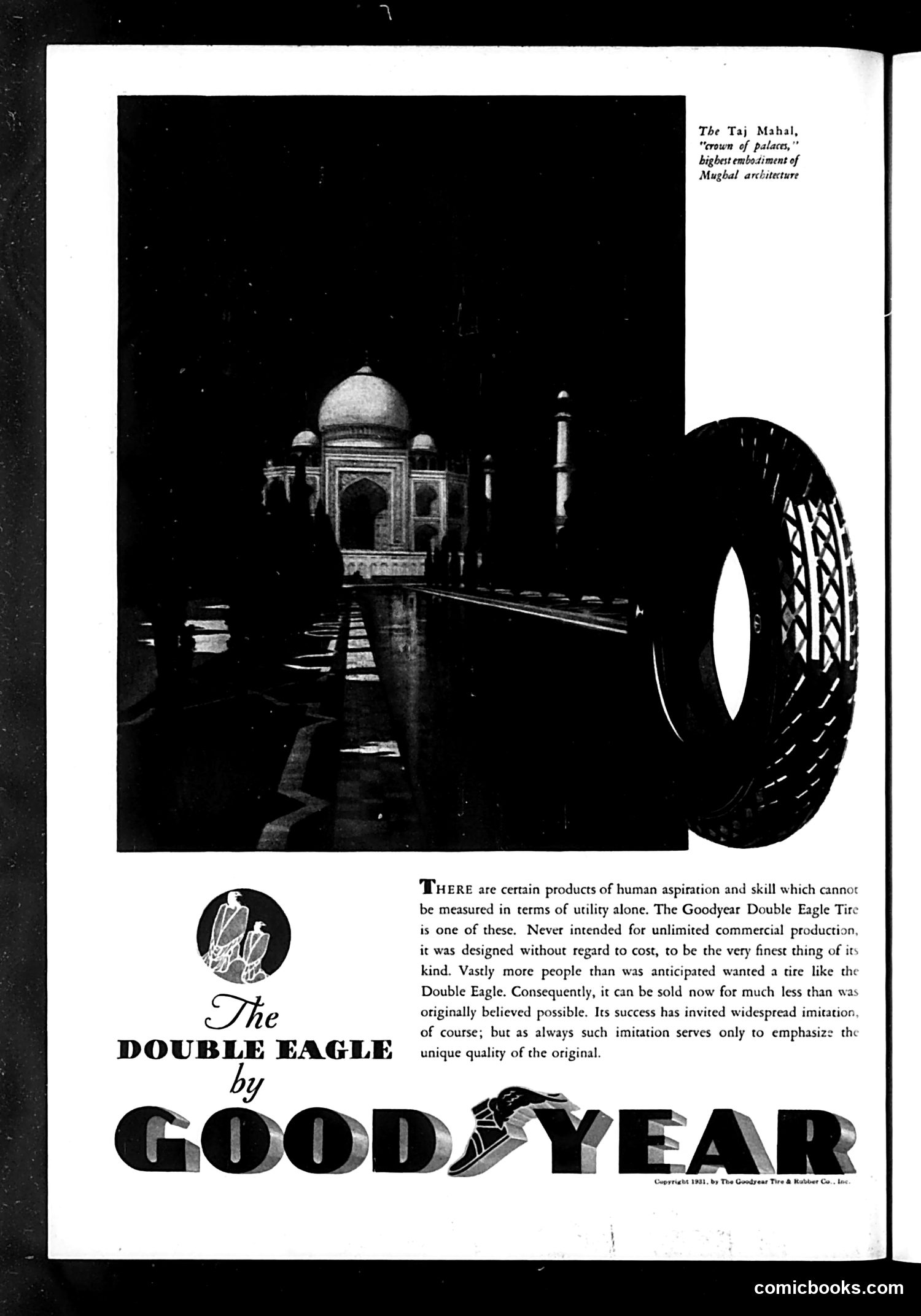
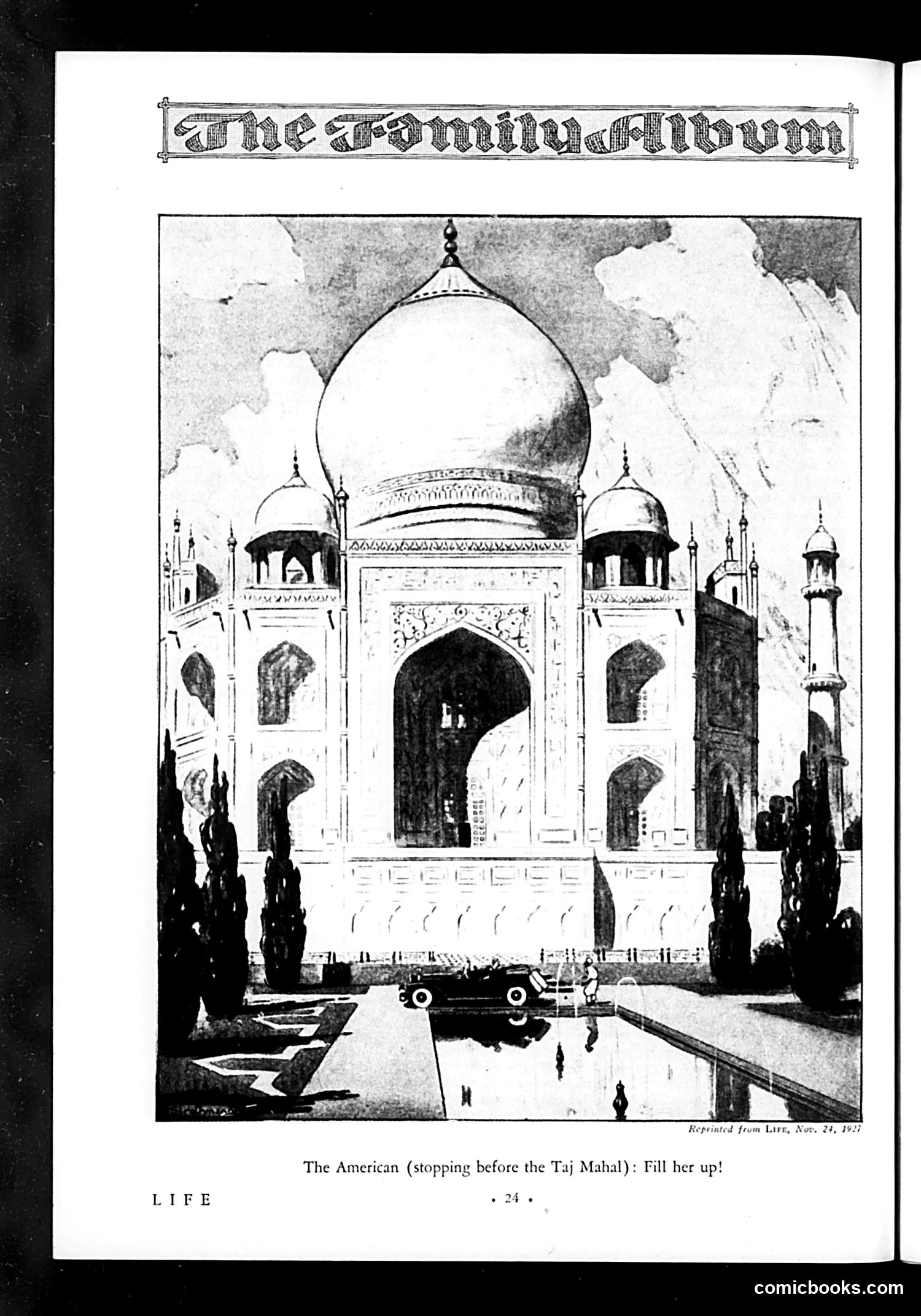
# Analysis This page is primarily a **Goodyear tire advertisement**, not a political cartoon. The ad features a dramatic nighttime photograph of the Taj Mahal, with a large tire visible on the right side of the composition. The text argues that the Goodyear Double Eagle Tire represents "products of human aspiration and skill which cannot be measured in terms of utility alone." It claims the tire was designed for quality rather than cost, and notes that imitations have appeared due to its success—but remain inferior to the original. This is a luxury brand appeal using iconic world architecture to elevate the tire's prestige and craftsmanship. The copyright date "1931" appears at the bottom. There is no political or satirical content—it's straightforward premium product marketing.
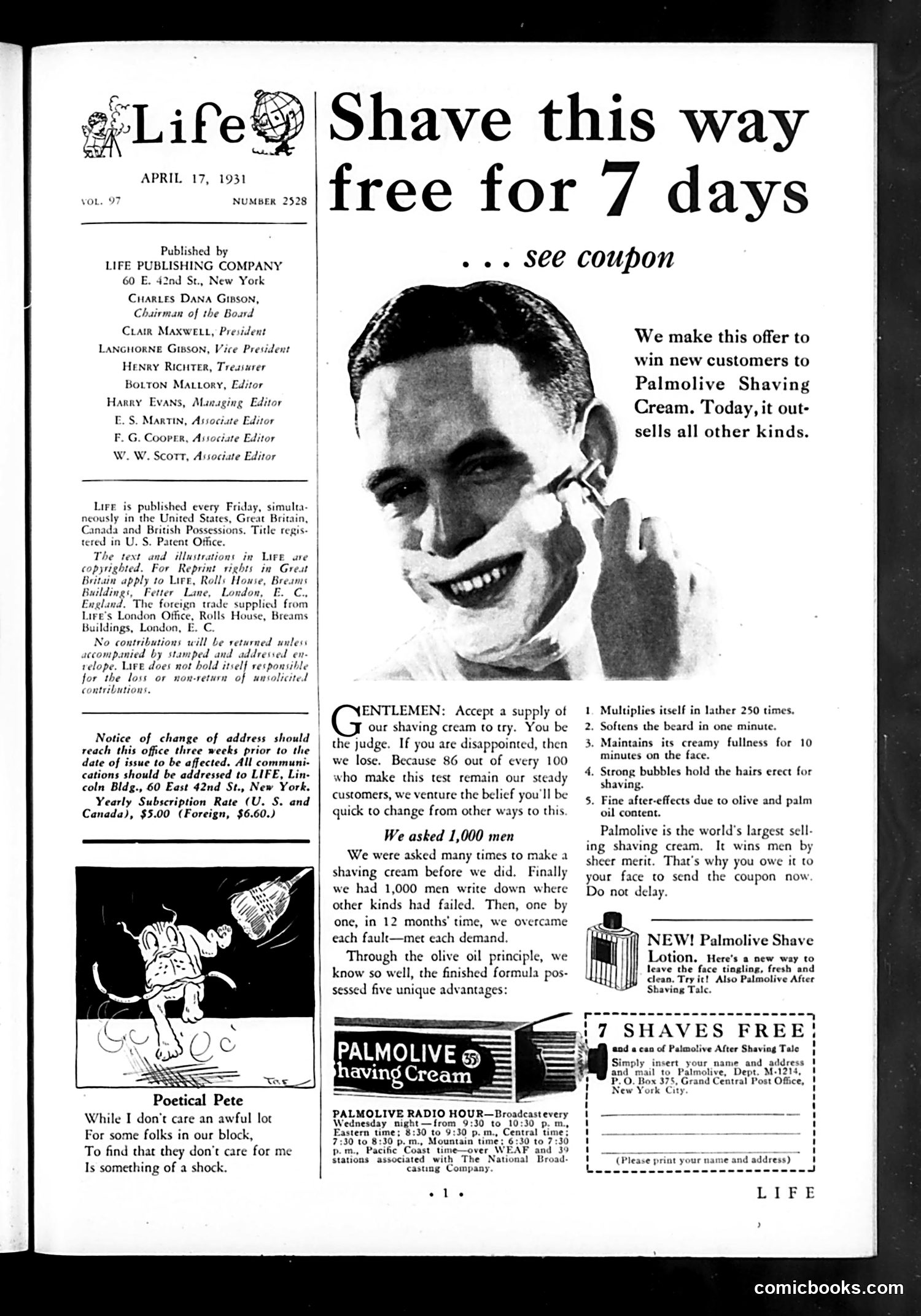
# Analysis of Life Magazine Page (April 17, 1931) This page is primarily a **Palmolive Shaving Cream advertisement** masquerading as editorial content. The large photograph shows a smiling man's face mid-shave, meant to demonstrate the product's effectiveness. The small cartoon labeled **"Poetical Pete"** (bottom left) is satirical verse mocking social hypocrisy—the speaker claims indifference to neighborhood gossip, yet finds it shocking when people don't care about him. It's a mild joke about vanity and selective social concern. The advertisement emphasizes Palmolive's market dominance ("world's largest selling shaving cream") and includes a coupon offering a free 7-day trial plus a can of "Palmolive After Shaving Tale" (likely "Talc"). The copy cites that 1,000 men tested the product before its formula was finalized.
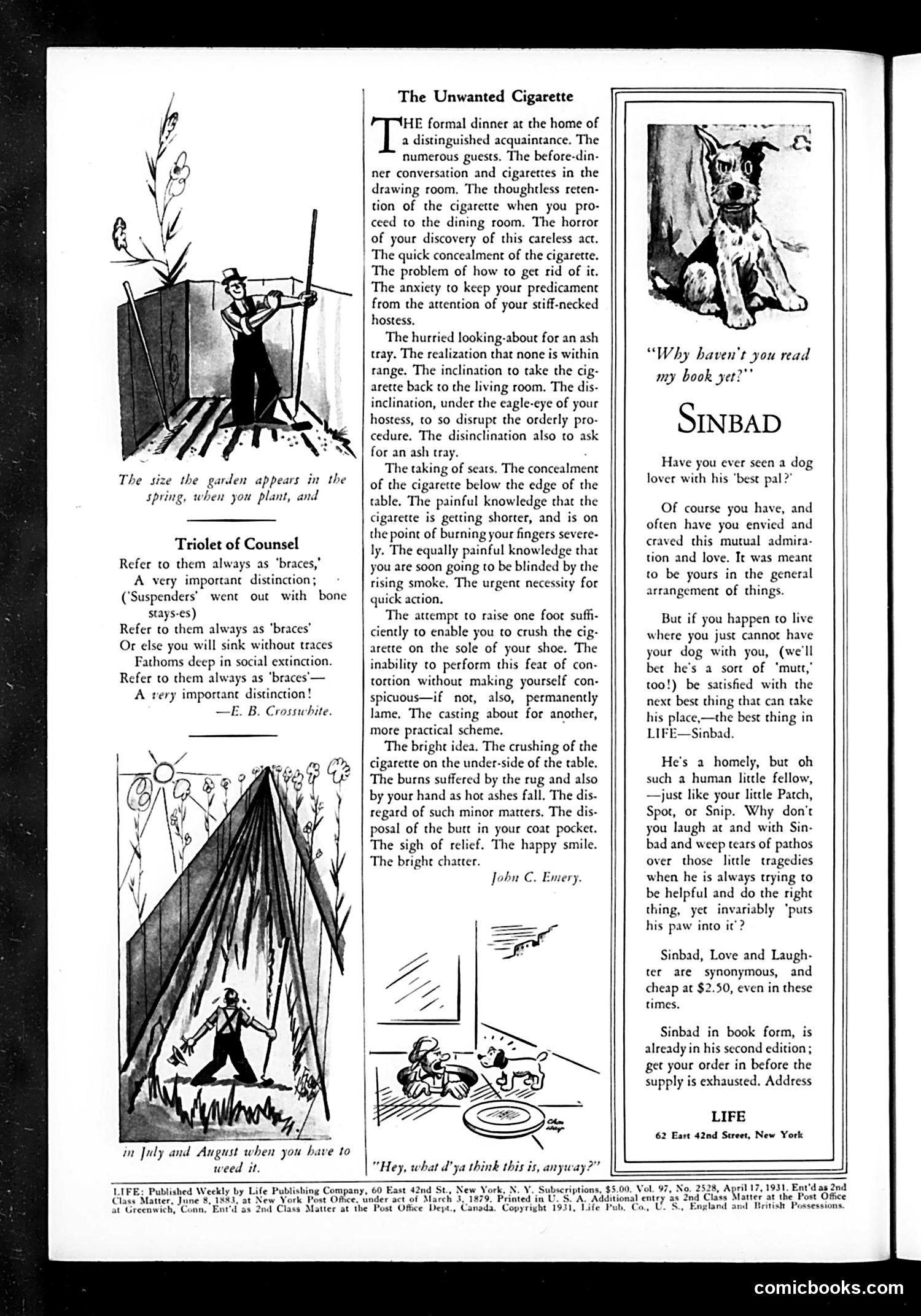
# "The Unwanted Cigarette" Analysis This page contains social satire about smoking etiquette at formal dinner parties. The main article by John C. Emery humorously catalogs the awkwardness of discovering you've brought a lit cigarette into the dining room—the anxiety of hiding it from your hostess, the search for an ashtray, accidentally burning yourself or the furniture, and the embarrassment of disrupting formal proceedings. The accompanying illustrations show a man struggling with cigarette disposal in increasingly absurd situations. On the right, an advertisement for "Sinbad," a humorous dog-themed book about a well-meaning but clumsy dog who causes mishaps. The humor parallels the cigarette article—both depict the comedy of social predicaments and good intentions gone wrong. The satire reflects 1920s-30s middle-class anxieties about maintaining social propriety.
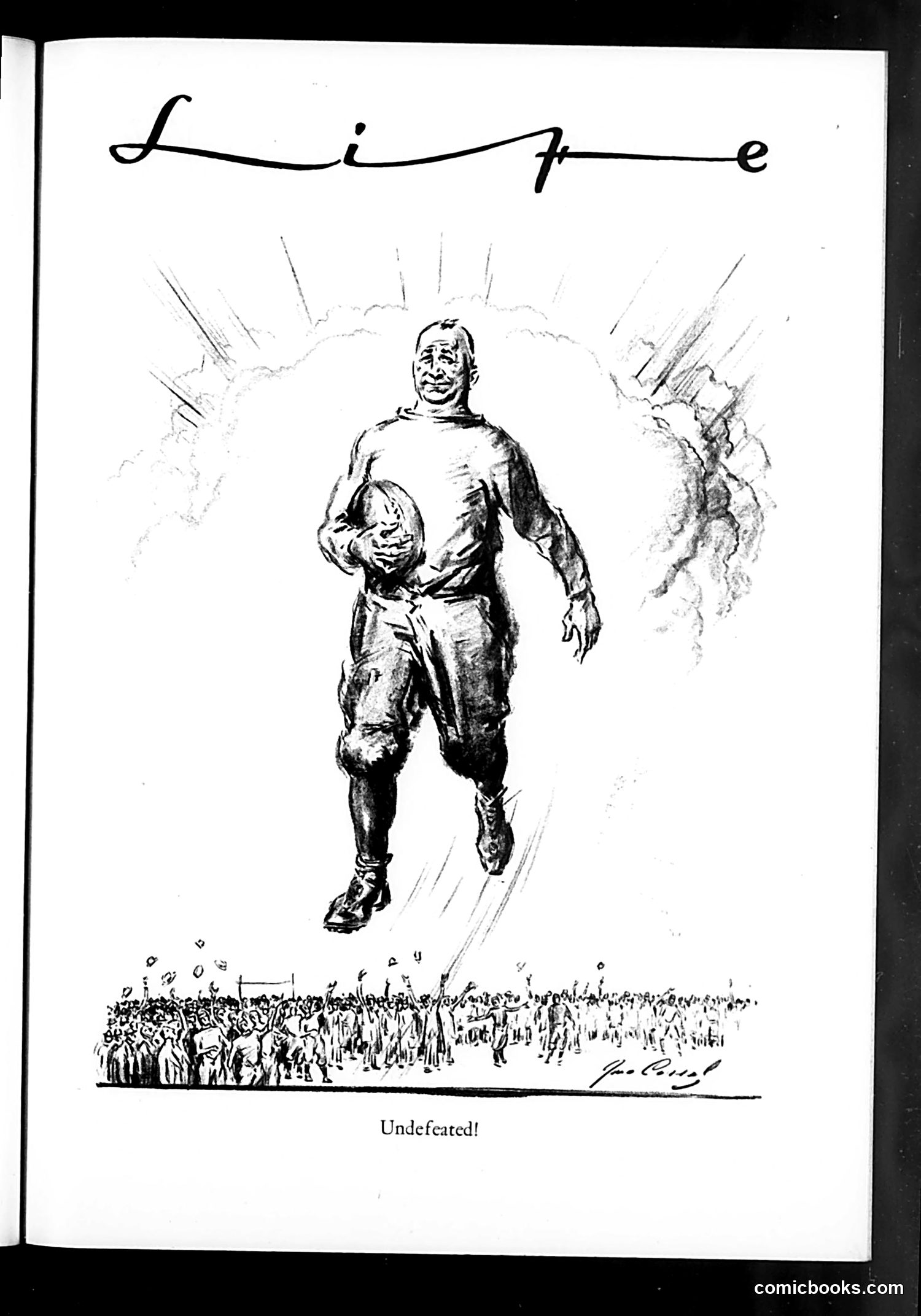
# Analysis of "Life" Magazine Cartoon This political cartoon depicts a heroic, larger-than-life figure striding forward while holding what appears to be a child or small figure. Below stands a crowd of ordinary people gazing upward. The caption reads "Undefeated!" The image employs classical heroic iconography—the glowing halo effect and commanding posture suggest triumph or vindication. The towering figure appears to represent a political or military leader being celebrated as undefeated despite some challenge or conflict. Without the publication date visible, the specific identity and context remain unclear. However, the satire likely critiques either exaggerated propaganda celebrating a leader's achievements, or ironic commentary on someone claiming victory despite actual setbacks. The contrast between the idealized giant figure and the crowd below suggests commentary on public perception versus reality.
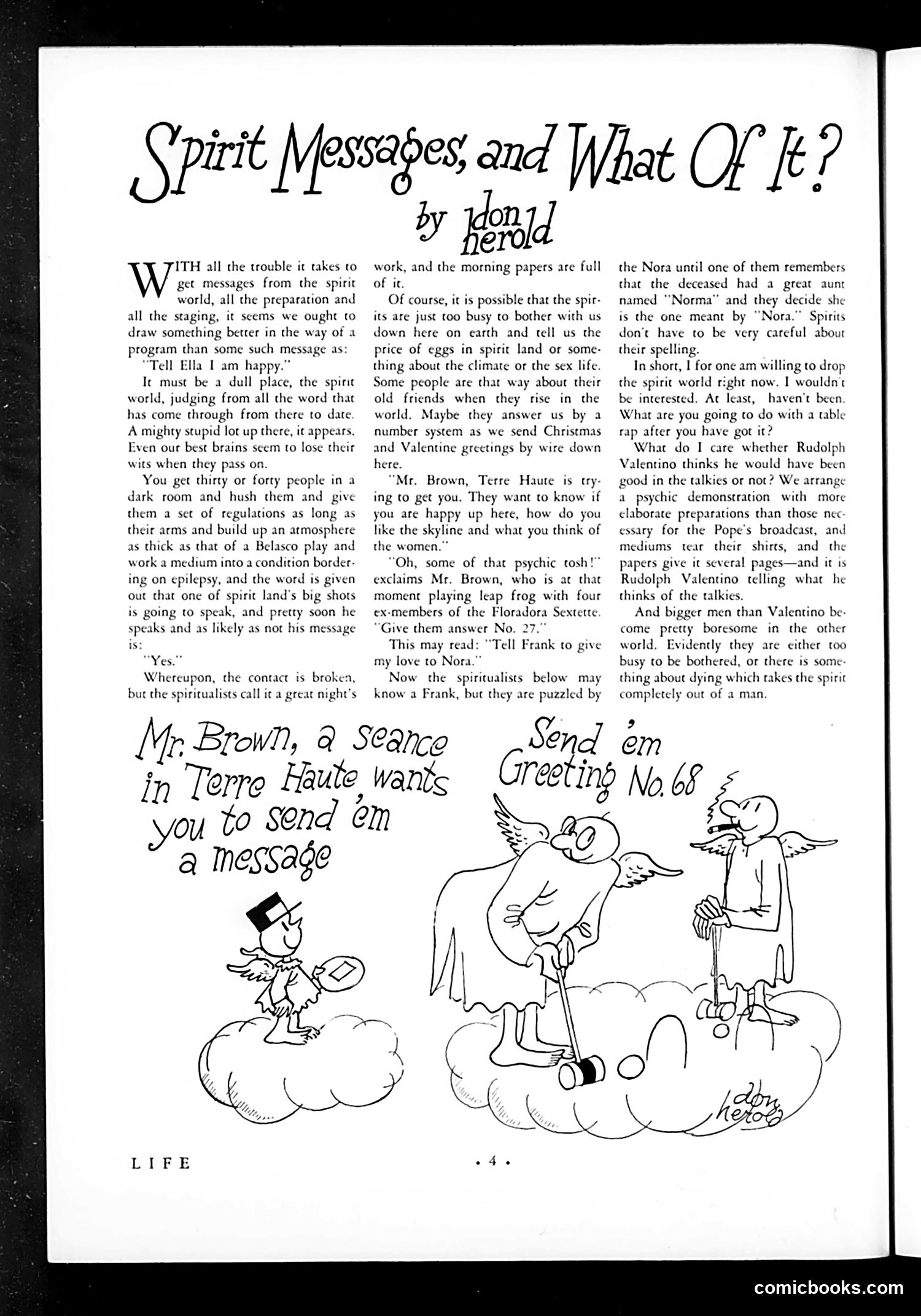
# "Spirit Messages, and What Of It?" by Don Herold This satire mocks the spiritualist craze of the early 20th century. The article ridicules séances and spirit communication, suggesting spiritualists are either frauds or delusional—they're too busy receiving trivial "messages" to provide genuine insight. The cartoon depicts angels in heaven receiving a message request from "Mr. Brown" (a spiritualist on earth) via "Terre Haute" (likely referencing spiritualist activity in that Indiana city). One angel appears confused or indifferent, suggesting heaven has better things to do than relay greeting messages. The satire targets spiritualism's absurdity: grown adults spending resources on elaborate rituals to contact the dead, only to receive mundane communications like "Tell Frank to give my love to Nora."
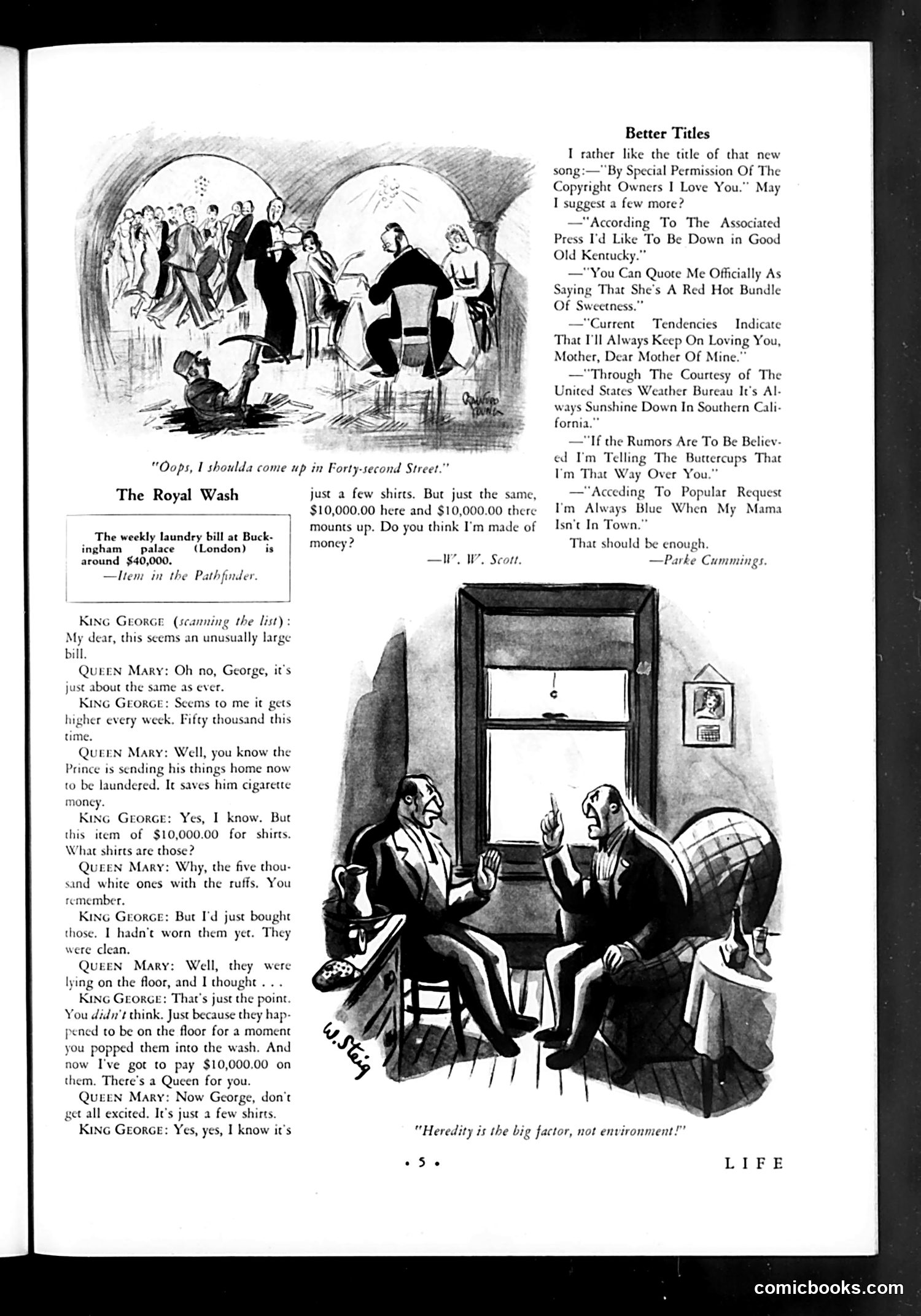
# Analysis of Life Magazine Page This page contains two satirical pieces: **"The Royal Wash"** depicts King George and Queen Mary discussing an outrageous laundry bill of £40,000 from Buckingham Palace. The joke centers on the absurdly high cost—the King protests he's only bought a few shirts, while the Queen points out that five thousand white shirts were already on the floor and she sent them to be laundered. The satire mocks royal extravagance and the disconnect between the monarch's spending and awareness of expenses. **"Better Titles"** is a humor column suggesting alternative song titles, poking fun at overly sentimental popular music of the era with deliberately ridiculous alternatives. The bottom cartoon about "heredity" versus "environment" appears to satirize a contemporary debate about nature versus nurture.
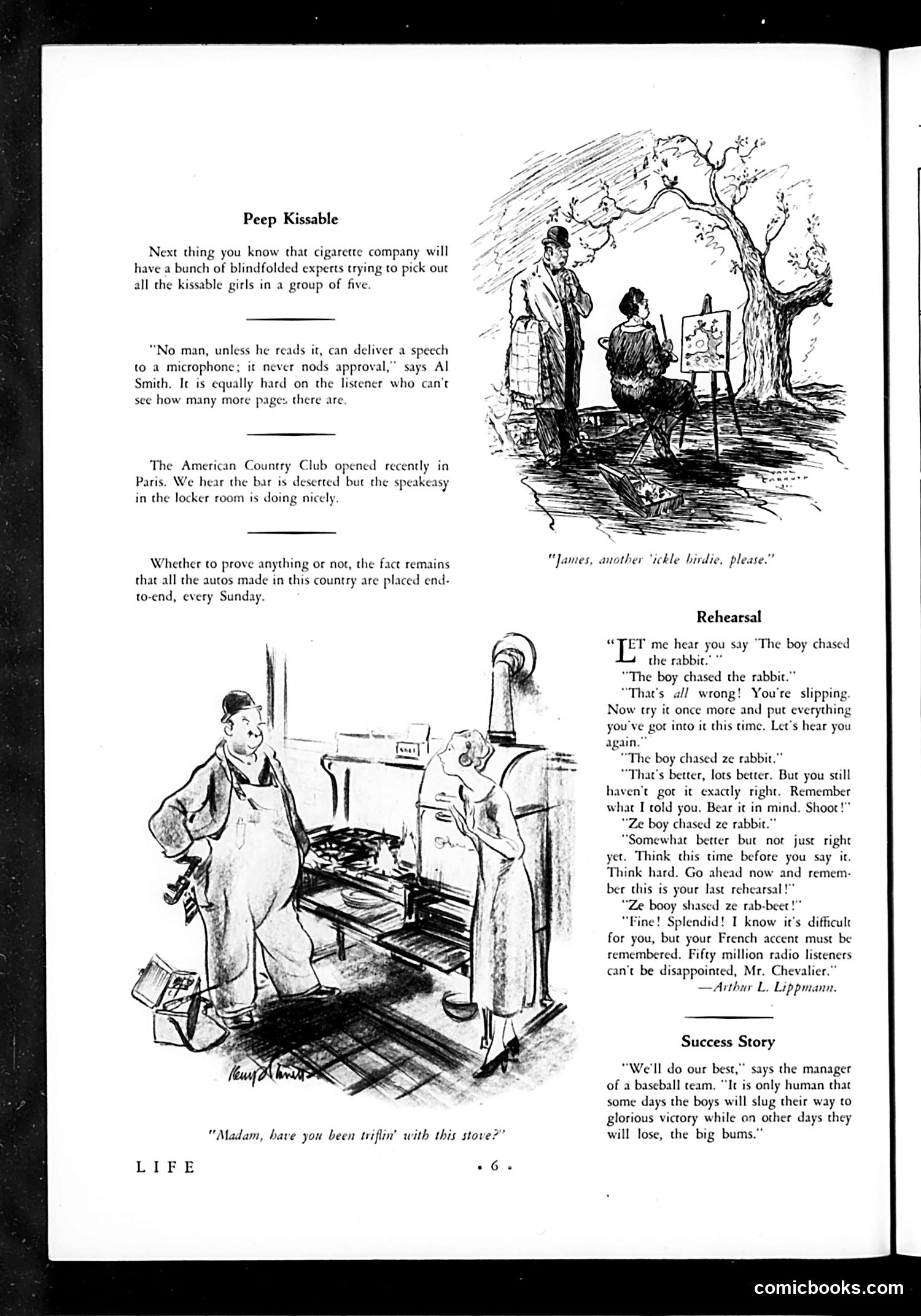
# "Peep Kissable" Page Analysis This page from *Life* magazine contains three distinct humor pieces: 1. **"Peep Kissable"** (top): A satirical item about cigarette companies conducting "blindfolded expert" tests to identify kissable girls—a commentary on absurd advertising claims and marketing pseudoscience of the era. 2. **"Rehearsal"** (middle cartoon): Shows a radio director coaching a French actor on pronunciation, mocking the difficulty of French accent and the demands of radio broadcasting, where precise diction matters greatly to unseen audiences. 3. **"Success Story"** (bottom): A brief anecdote about a baseball manager's philosophy that teams win some games and lose others—gentle satire of obvious platitudes masquerading as wisdom. The cartoons collectively mock advertising excess, broadcasting pretension, and management clichés through gentle, observational humor typical of *Life*'s approach.
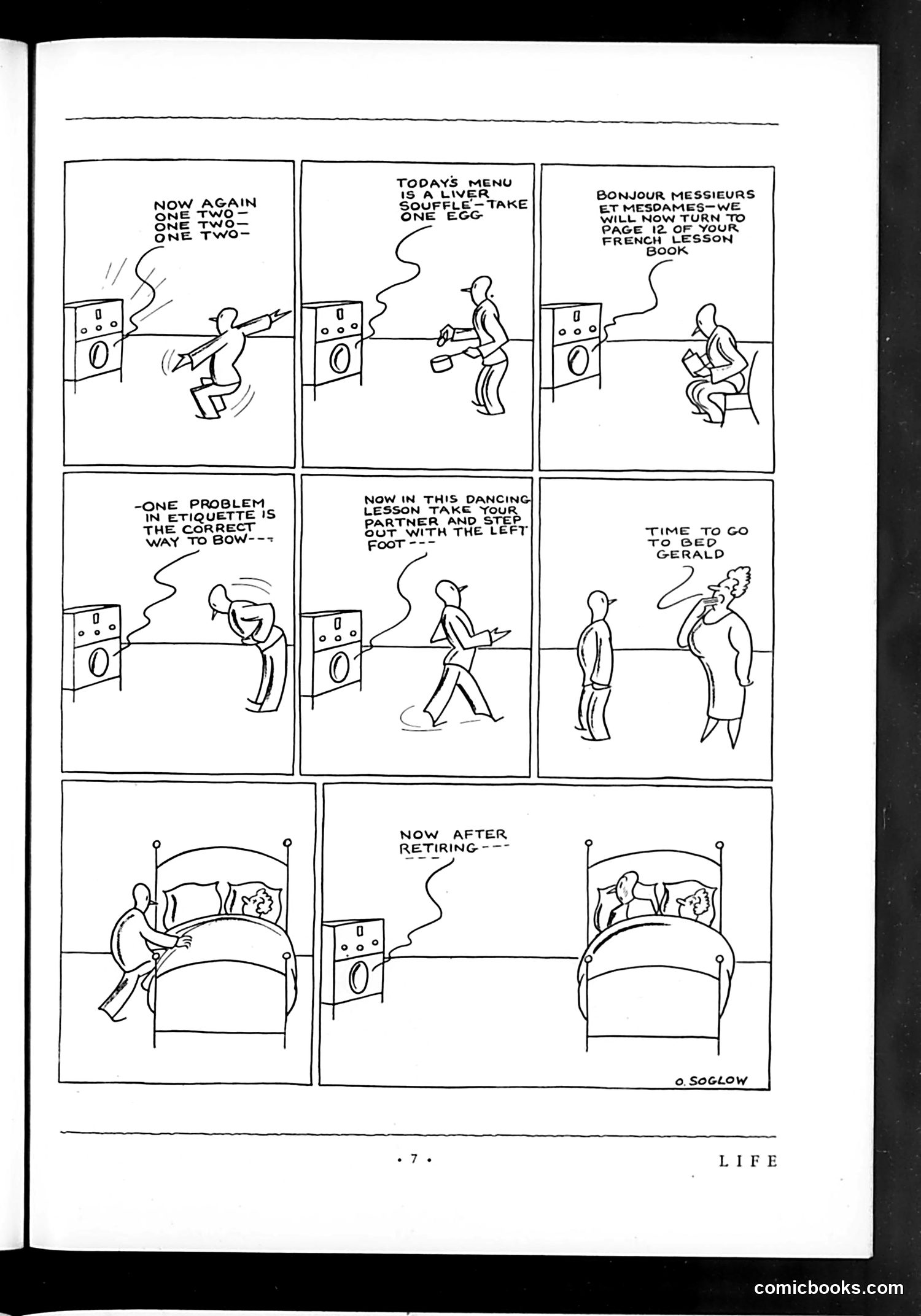
# Analysis This is a humorous domestic comic strip by O. Soglow about the challenges of home cooking and marriage. The narrative follows a spouse attempting to prepare a French soufflé from a cookbook while their partner offers unsolicited instructions—counting eggs aloud, reciting today's menu, insisting on a French lesson, and correcting etiquette about bowing. The joke satirizes the clash between domestic instruction manuals (the French lesson book, the cookbook) and real-life chaos. The wife's mounting frustration—evident in her increasingly exaggerated reactions—culminates in the couple sleeping separately "after retiring," suggesting the cooking disaster and nagging instruction have strained their marriage. The humor derives from the gap between idealized domestic standards (proper French cooking, etiquette) and messy reality.
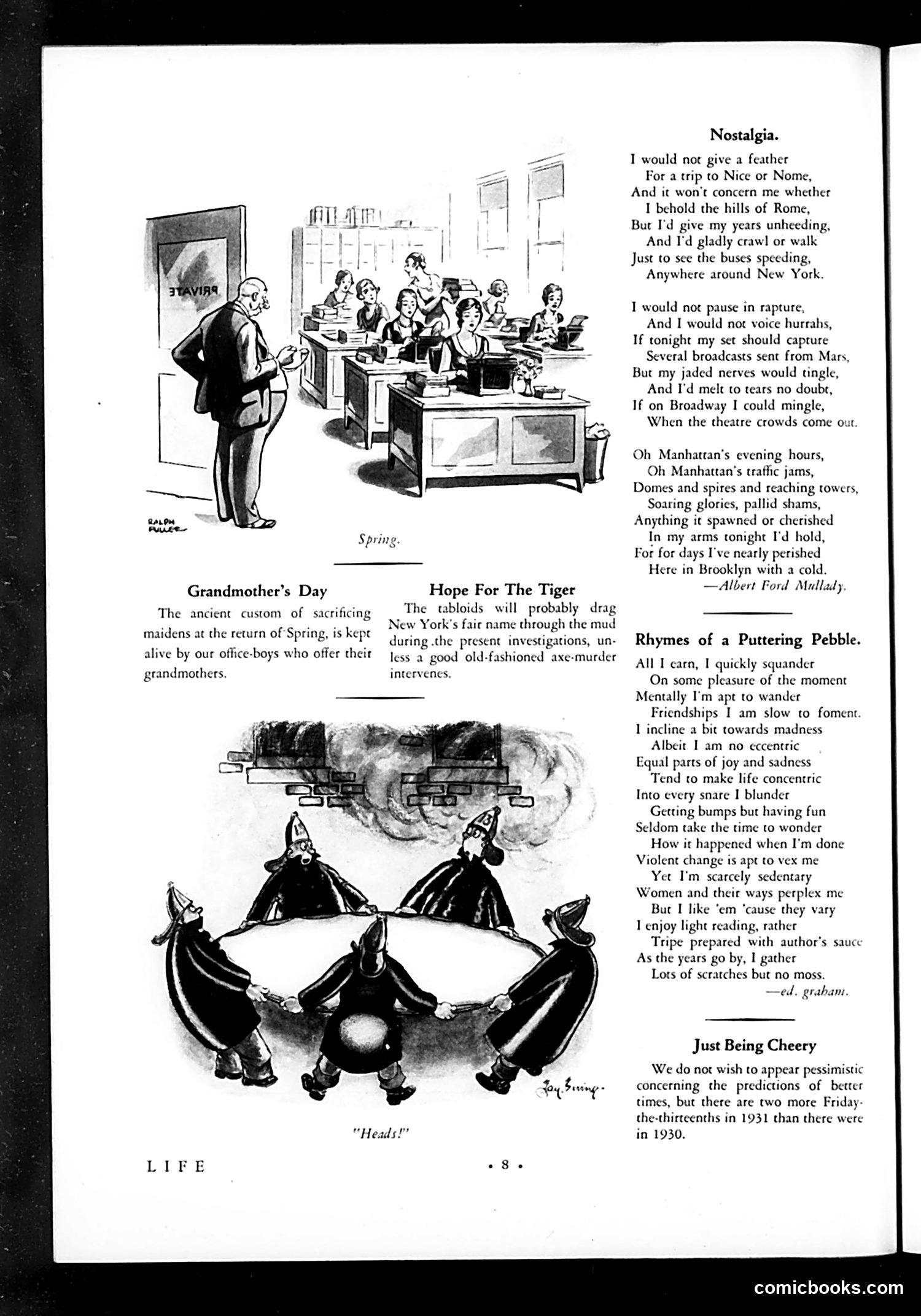
# Analysis of LIFE Magazine Page 8 This page contains three distinct pieces: **"Spring"** (top cartoon): Shows an office manager observing workers at their desks. The caption "Grandmother's Day" references an "ancient custom of sacrificing maidens at the return of Spring," sarcastically comparing office work to ritualistic sacrifice. The joke equates spring office work to exploitation of female employees. **"Heads!"** (center cartoon): Depicts figures in pointed hats (appearing KKK-related) playing with a ball. The caption "Hope For The Tiger" references tabloid investigations into New York's crime, sarcastically suggesting such organizations represent "good old-fashioned" solutions to problems. **Right side**: Contains poetry and satirical commentary on 1931 life, including nostalgia for New York and reflections on personal change. The page reflects early 1930s anxieties about modernization, crime, and social transformation.
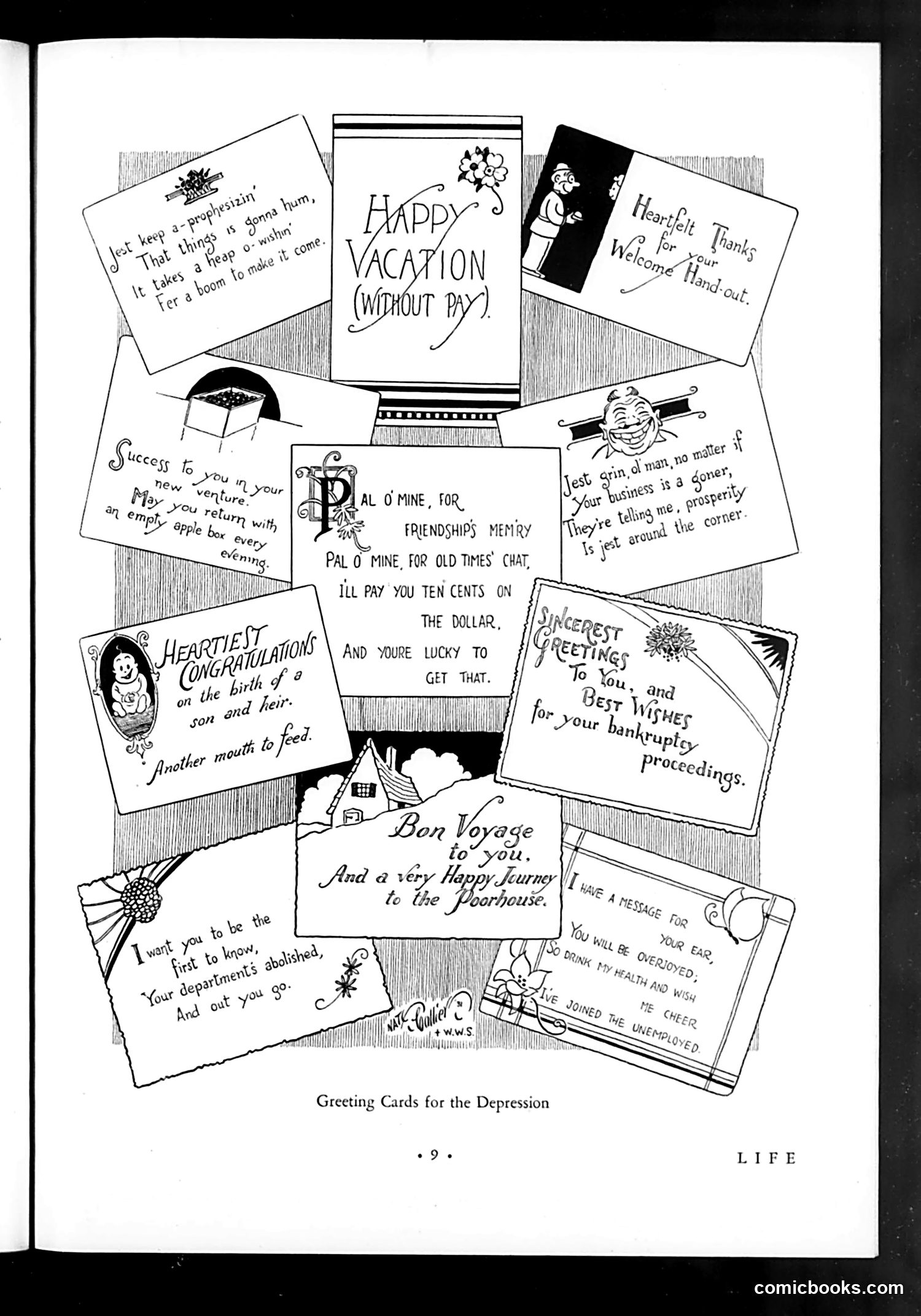
# Greeting Cards for the Depression This page satirizes insincere or darkly humorous greeting cards circulating during the Great Depression era. The collection displays cards with contradictory, mocking messages—"Happy Vacation (Without Pay)" and "Bon Voyage to you / And a very Happy Journey to the Poorhouse" are particularly pointed examples. The satire targets how greeting-card sentiment became absurd during economic collapse. Cards congratulating people on unemployment, bankruptcy proceedings, and job loss represent the grim reality many Americans faced. Rather than offering genuine comfort, these cards acknowledge Depression hardships through bitter humor—the only appropriate response when traditional platitudes about success and happiness rang hollow. The illustration documents how even commercial sentiment became darkly comedic during national crisis.
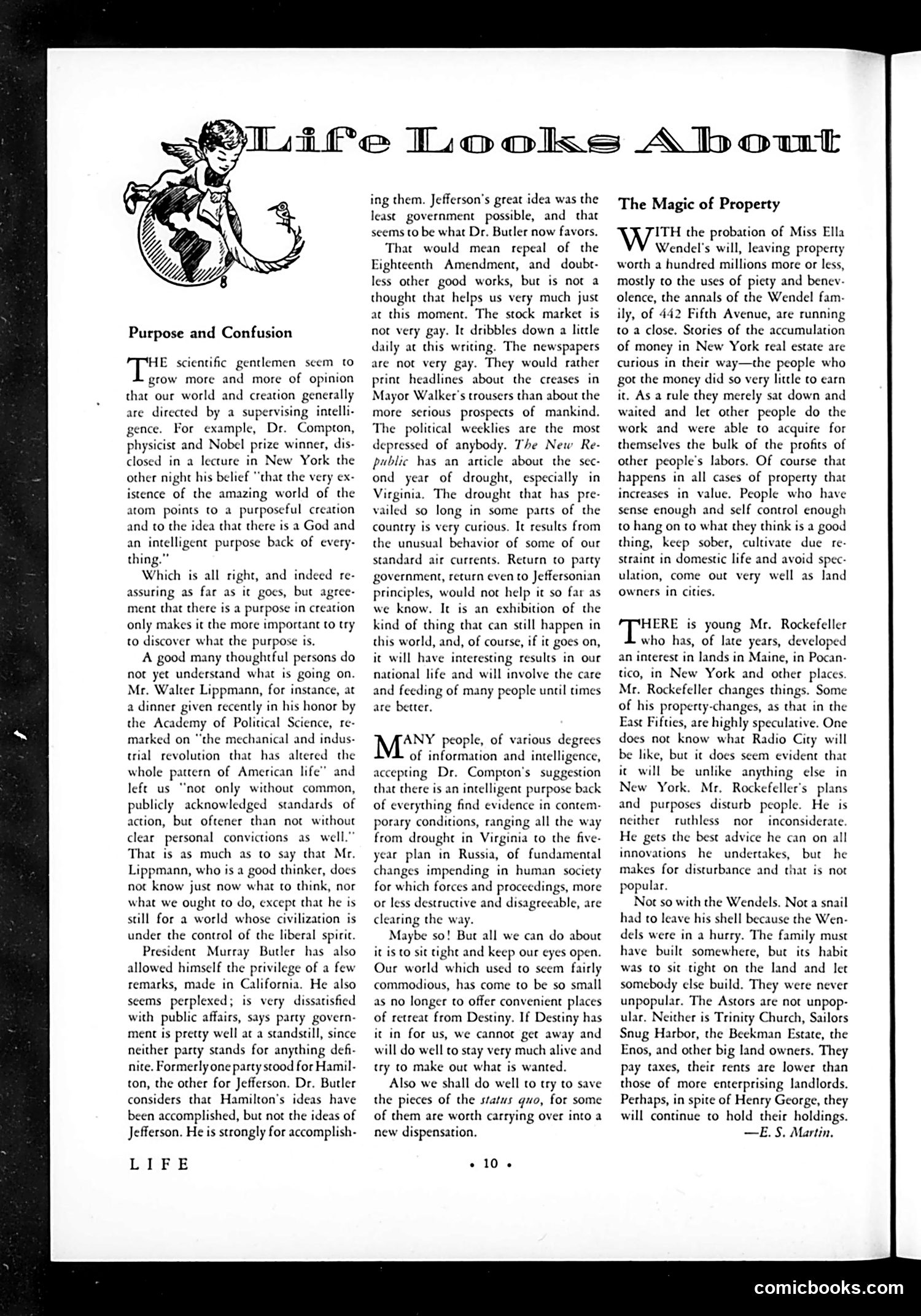
# Analysis of "Life Looks About" Page This page from *Life* magazine contains three opinion essays rather than cartoons. The header illustration shows a cherub-like figure, the magazine's mascot. The essays discuss: 1. **"Purpose and Confusion"**: References Dr. Compton (a physicist) and President Murray Butler, critiquing their views on civilization's purpose. The author suggests Butler favors Jeffersonian principles and the 18th Amendment (Prohibition). 2. **"The Magic of Property"**: Discusses Miss Ella Wendel's estate and property accumulation, using it to illustrate how wealthy landowners profit from others' labor. 3. Discusses young Rockefeller's real estate developments in Maine and New York, and the Wendels' property holdings, suggesting wealthy families concentrate land ownership. The satire critiques concentration of wealth and property among the elite during this period.