A complete issue · 52 pages · 1931
Life — April 10, 1931
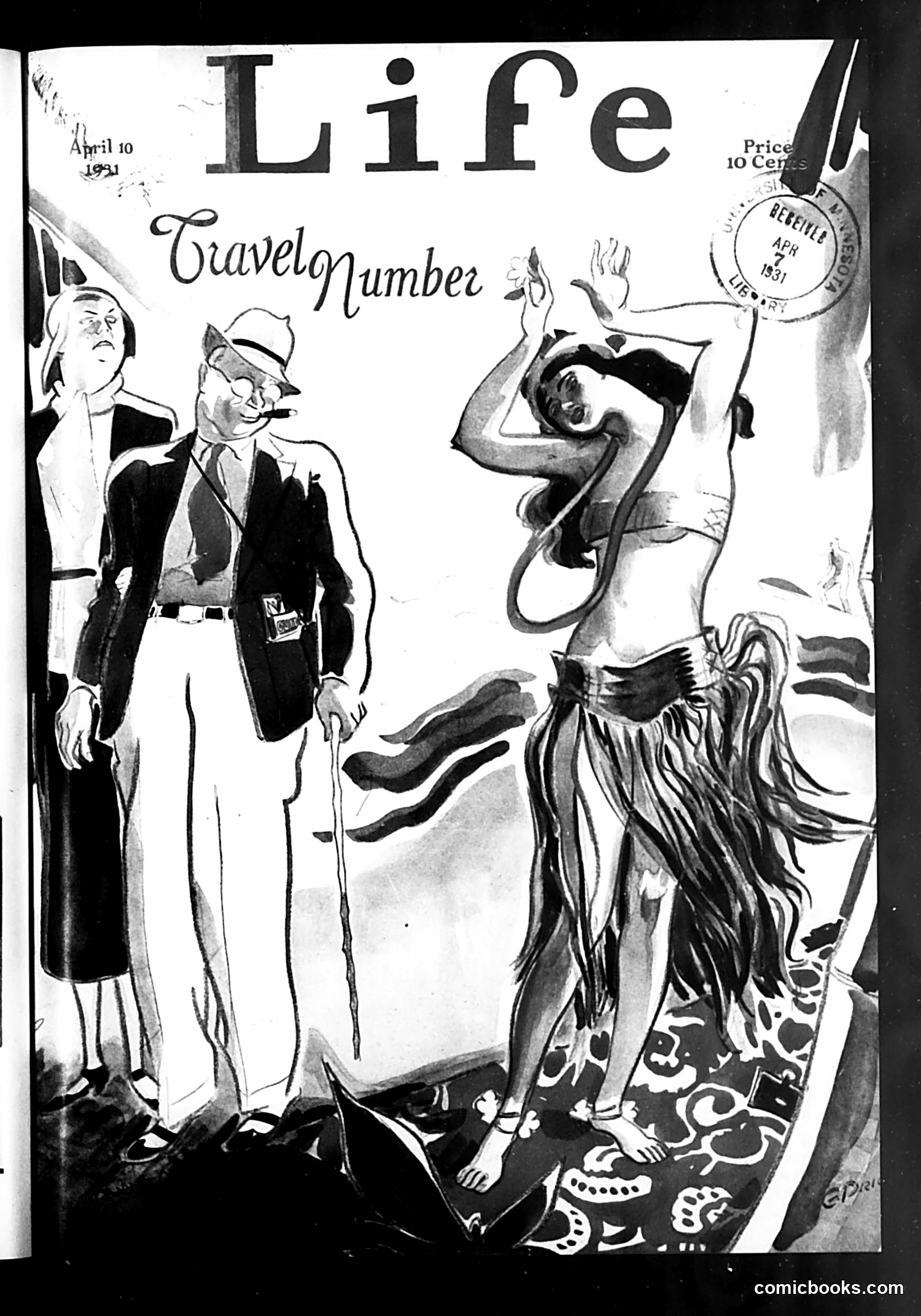
This is a Life magazine cover from April 10, 1921, labeled "Travel Number." The illustration depicts two well-dressed male tourists observing a belly dancer in what appears to be an exotic setting, likely meant to represent the Middle East or North Africa. The seated figures wear Western business attire and hats, while the dancer performs on a decorative carpet with ornamental patterns. The satire centers on early 20th-century American tourism and the fascination with "exotic" foreign entertainment. The cartoon mocks tourists who traveled abroad seeking sensual spectacles and cultural novelties as part of leisure travel. The contrast between the formal Western dress of the observers and the semi-nude performer emphasizes the cultural distance and voyeuristic nature of such tourism during the era.
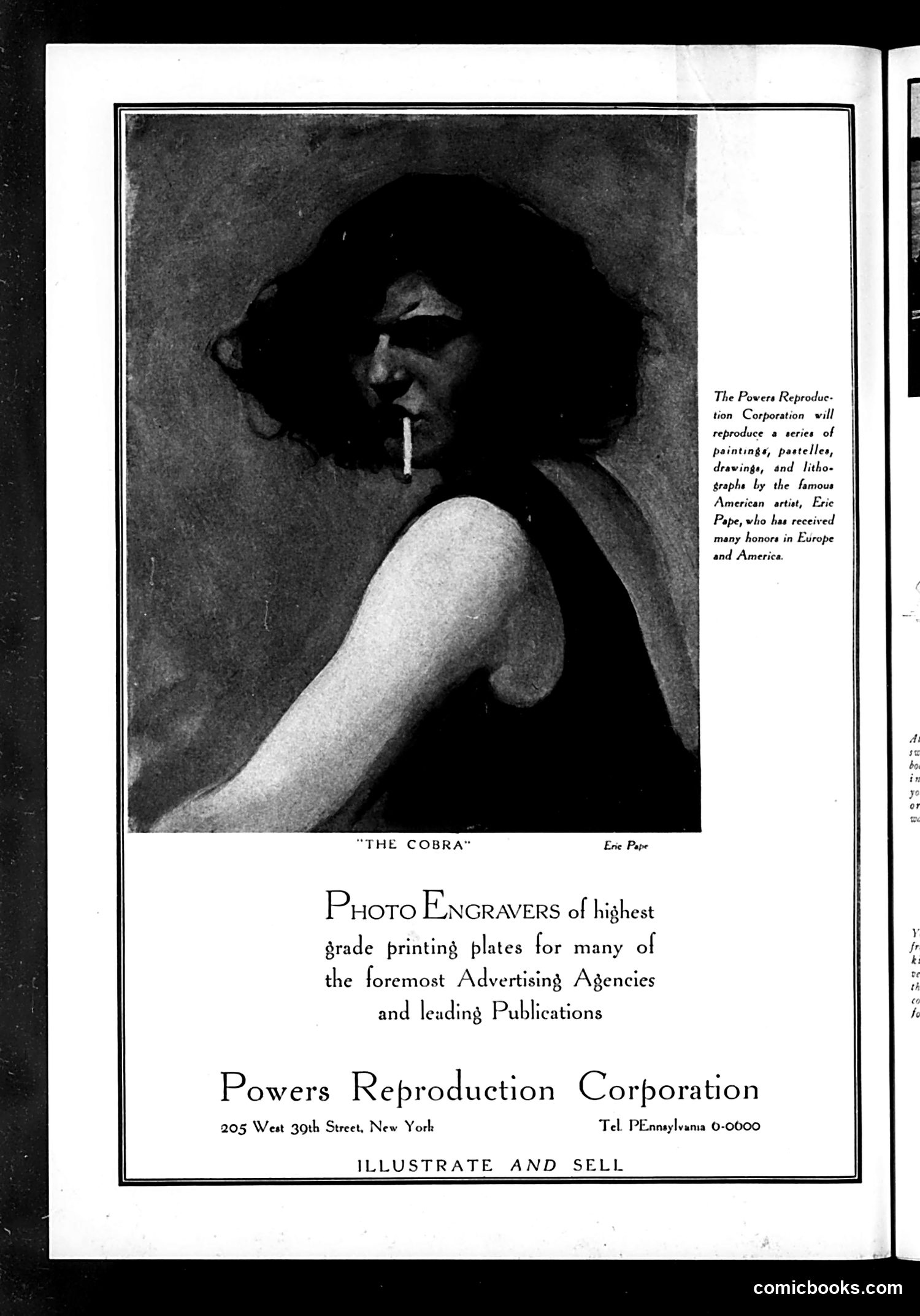
# Analysis This page is primarily an **advertisement**, not satirical content. It promotes the Powers Reproduction Corporation, a photo-engraving company located at 205 West 30th Street in New York. The featured image is titled **"The Cobra"** and is credited to **Eric Pape**, described as a famous American artist who received many honors in Europe and America. The photograph shows a figure in dramatic pose wearing sunglasses and smoking, styled to evoke danger or intrigue—fitting the "cobra" metaphor. The advertisement uses Pape's prestigious reputation and artistic work as marketing, demonstrating the quality of reproduction services the corporation provides for advertising agencies and publications. This is a straightforward commercial endorsement rather than political satire.
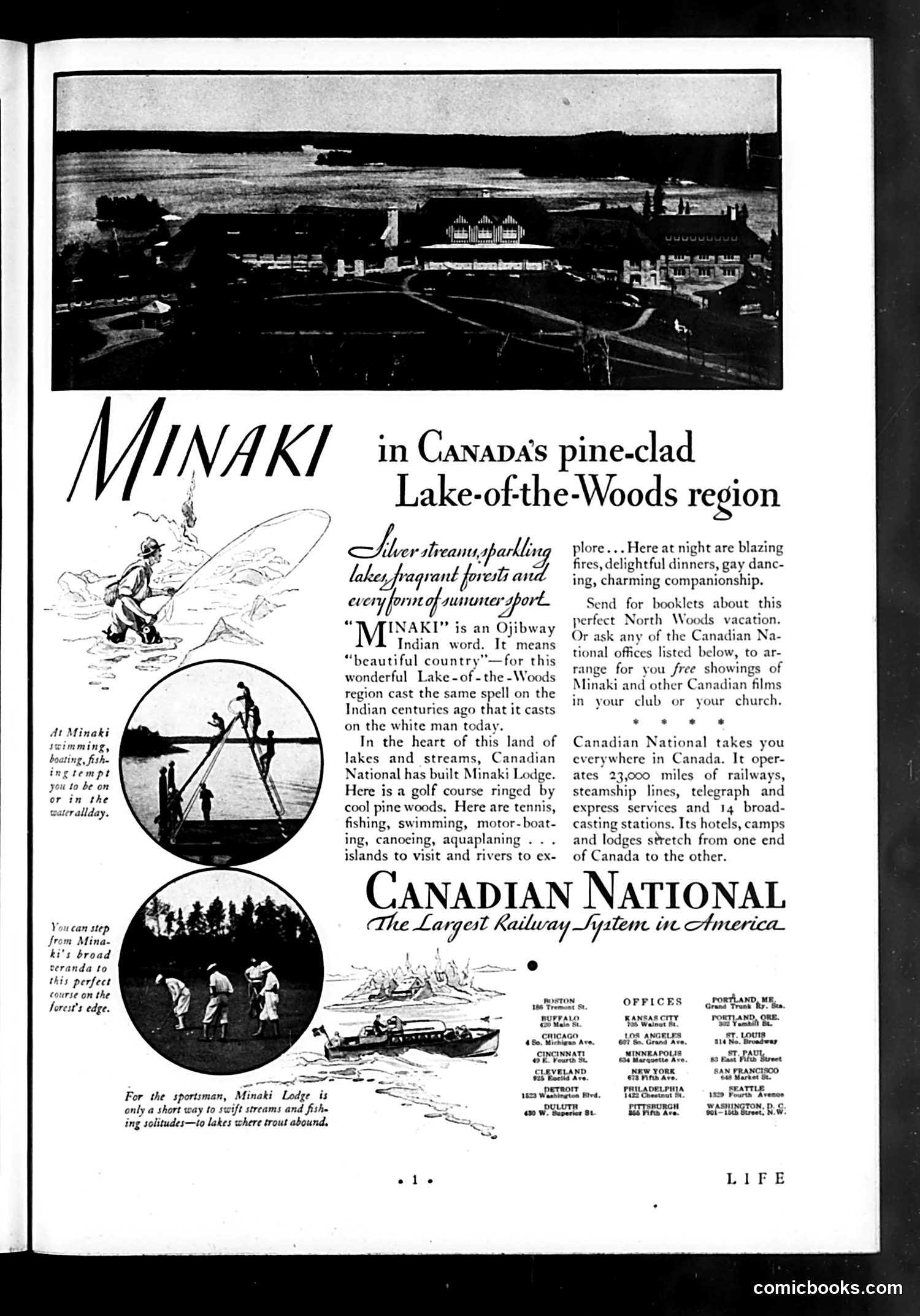
# Minaki Lodge Advertisement This page is primarily **advertising copy**, not satire or political commentary. It promotes Minaki Lodge, a vacation resort in Canada's Lake-of-the-Woods region operated by Canadian National Railways. The advertisement uses the word "Minaki"—an Ojibway term meaning "beautiful country"—to market the destination to wealthy American tourists seeking North Woods leisure activities: fishing, golf, tennis, motor-boating, and canoeing. The circular illustrations depict recreational activities (fishing, forest exploration, boating) meant to appeal to sportsmen. The copy emphasizes accessibility via Canadian National's 23,000 miles of railways and steamship lines. This reflects early-20th-century tourism marketing, positioning wilderness recreation as an aspirational vacation experience for affluent audiences.
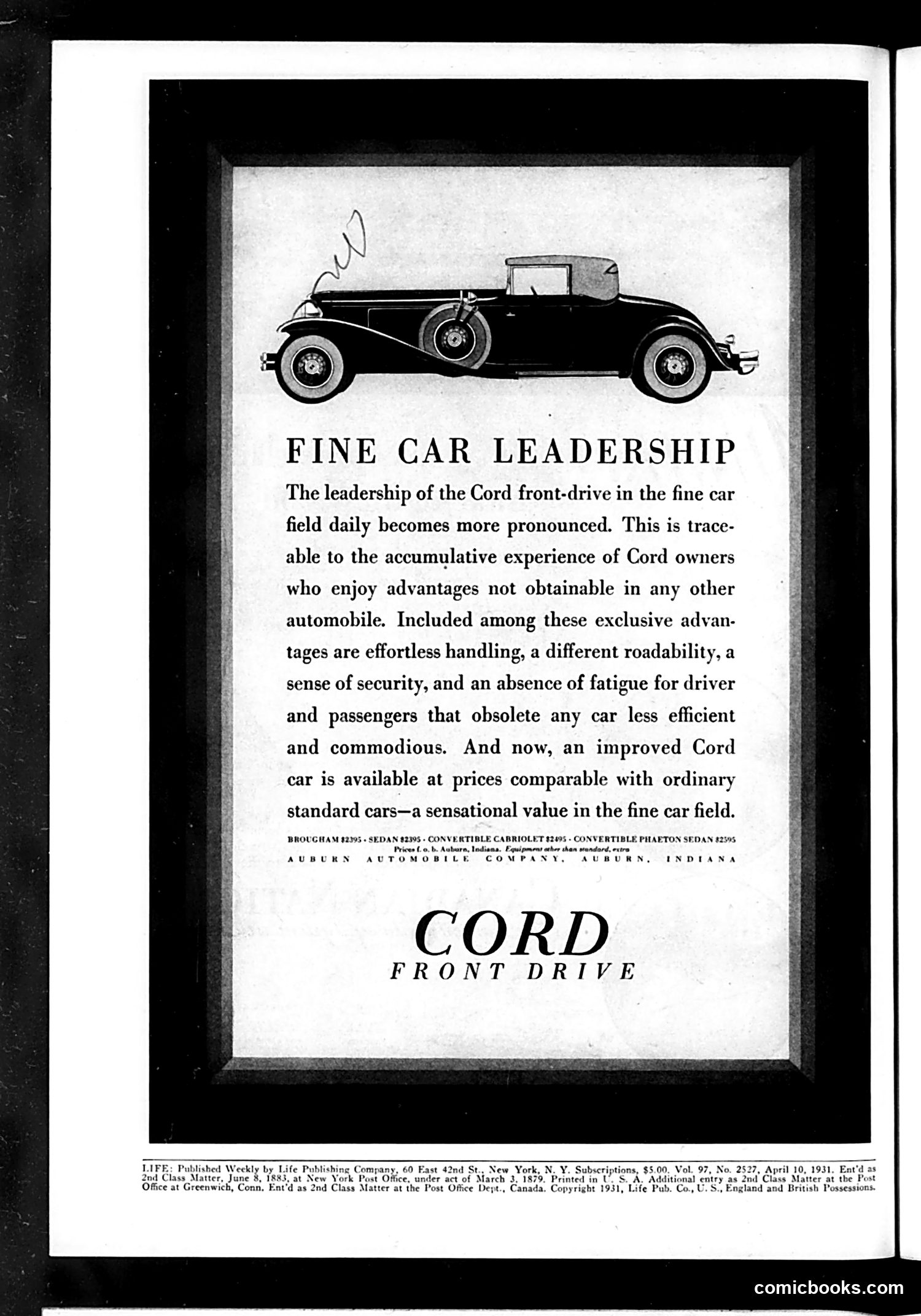
# Analysis This is a **full-page advertisement**, not satirical content. It promotes the Cord automobile's front-drive system to a luxury market. The ad claims the Cord's front-wheel drive offers exclusive advantages—"effortless handling," superior roadability, security, and reduced driver fatigue—unavailable in competing cars. The key sales pitch: these premium features are now available at prices comparable to "ordinary standard cars," positioned as exceptional value in the fine-car segment. The stylized illustration of a Cord sedan reinforces the vehicle's elegant, modern design. The text emphasizes that Cord owners possess accumulated experience proving superiority, effectively appealing to status-conscious buyers seeking both prestige and practicality. This reflects 1931 automotive marketing emphasizing technical innovation as a luxury differentiator.
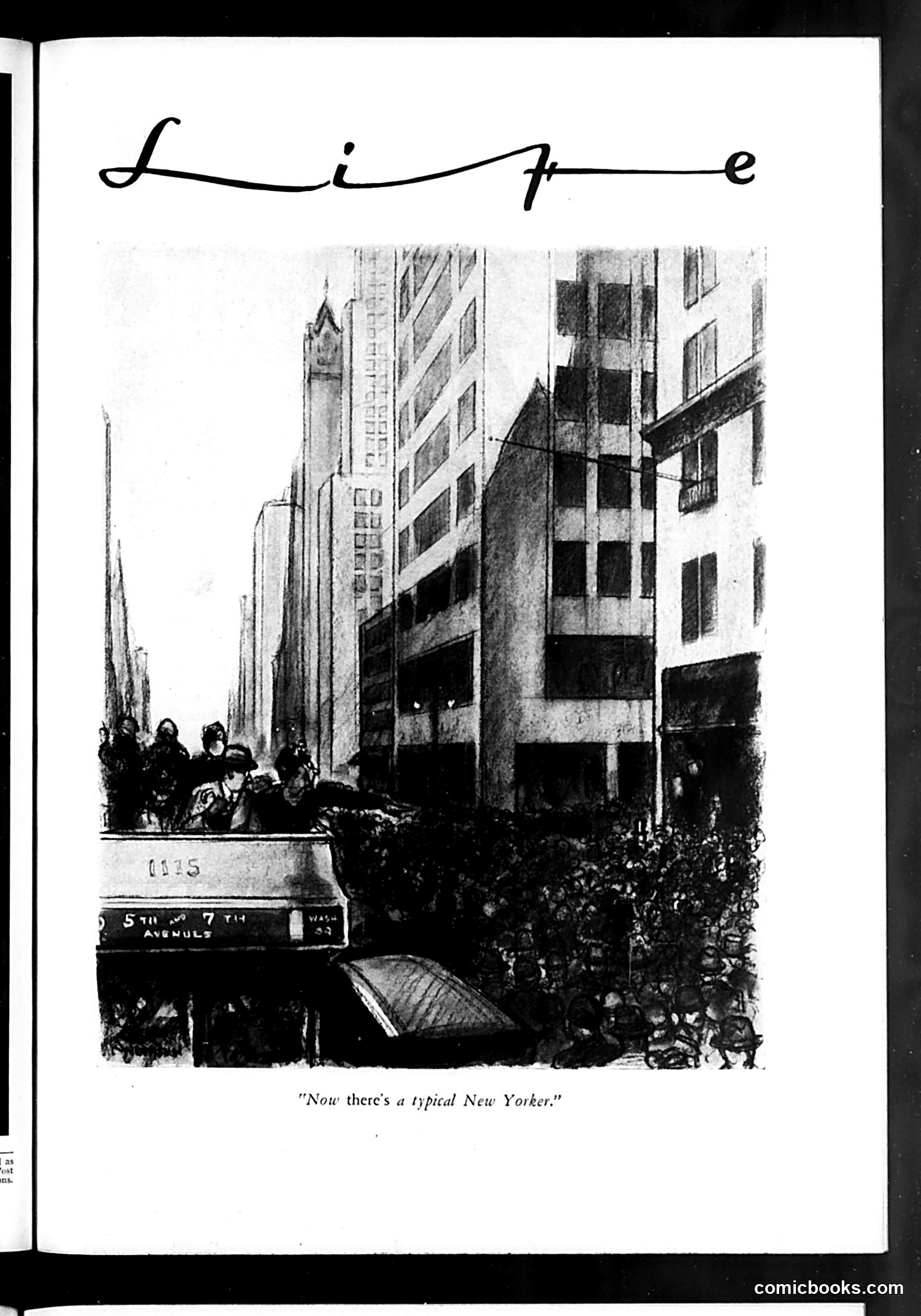
# Analysis This page from *Life* magazine presents a satirical cartoon titled "Now there's a typical New Yorker." The image shows a crowded street scene in Manhattan with tall buildings, construction, and dense crowds of pedestrians. A sign visible on a storefront reads "5TH AVE" and "AVENUE." The satire appears to target New York City's urban character—specifically the congestion, commercialism, and frenetic pace of Manhattan street life. By calling this chaotic scene "typical," the cartoonist is mocking both the city itself and the stereotypical New Yorker who navigates it. The crowded masses, modern architecture, and bustling commercial activity represent the dehumanizing aspects of early-20th-century urban American life that *Life* frequently satirized.
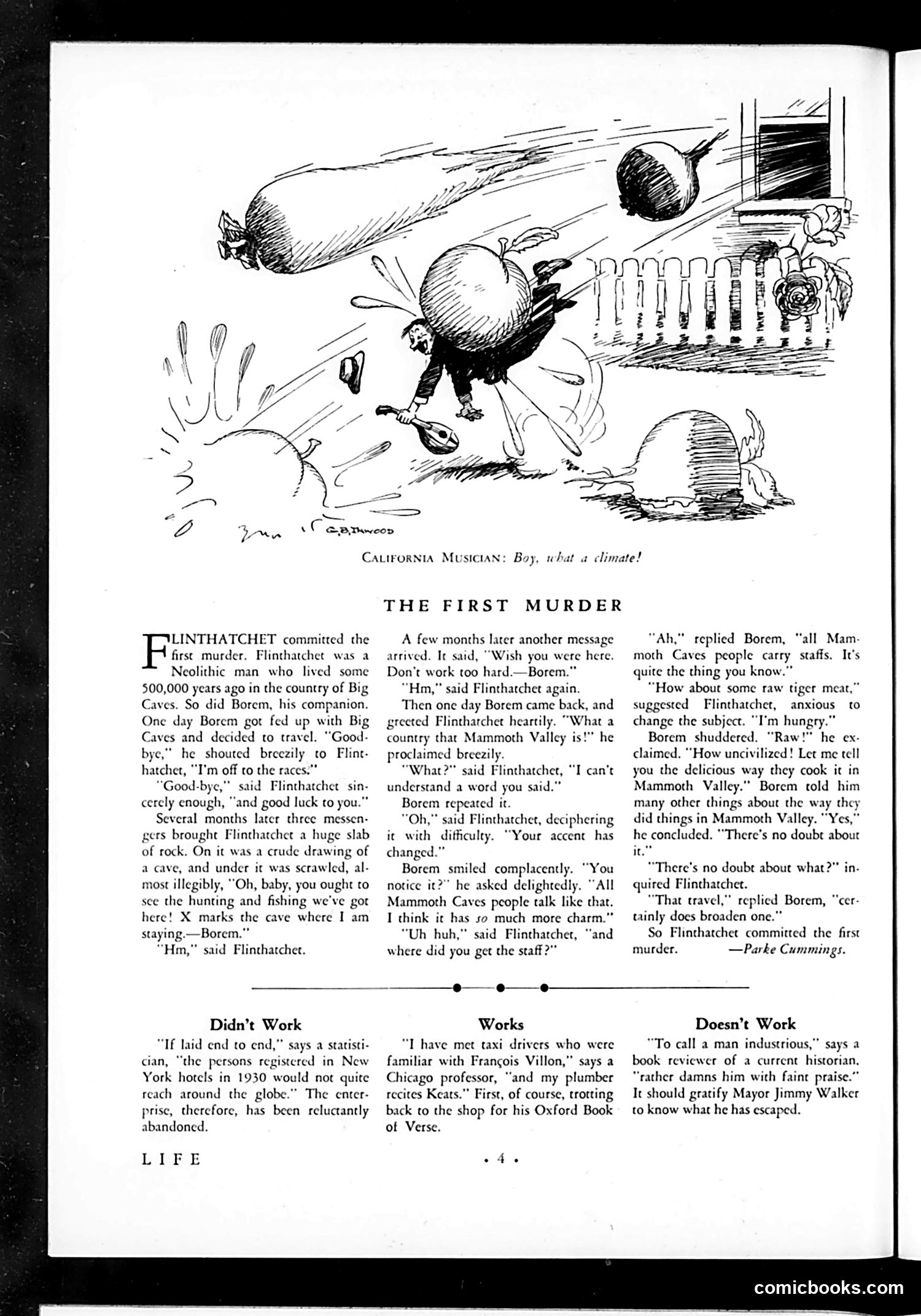
# "The First Murder" - Life Magazine Page The top illustration depicts a prehistoric scene with an anthropomorphic insect or creature with a round body striking at early humans near a cave dwelling. The caption reads "California Musician: Boy, what a climate!" The accompanying story "The First Murder" by Parke Cummings is a humorous fictional account of how the first murder occurred among Neolithic cave dwellers—Flinthatcher and Borem—apparently triggered by a disagreement over cooking methods for mammoth meat and use of staffs as tools. It's presented as satirical pseudo-historical fiction. Below are three brief commentary sections titled "Didn't Work," "Works," and "Doesn't Work," containing unrelated social observations about 1930s New York taxicabs, famous people, and book reviewing practices.
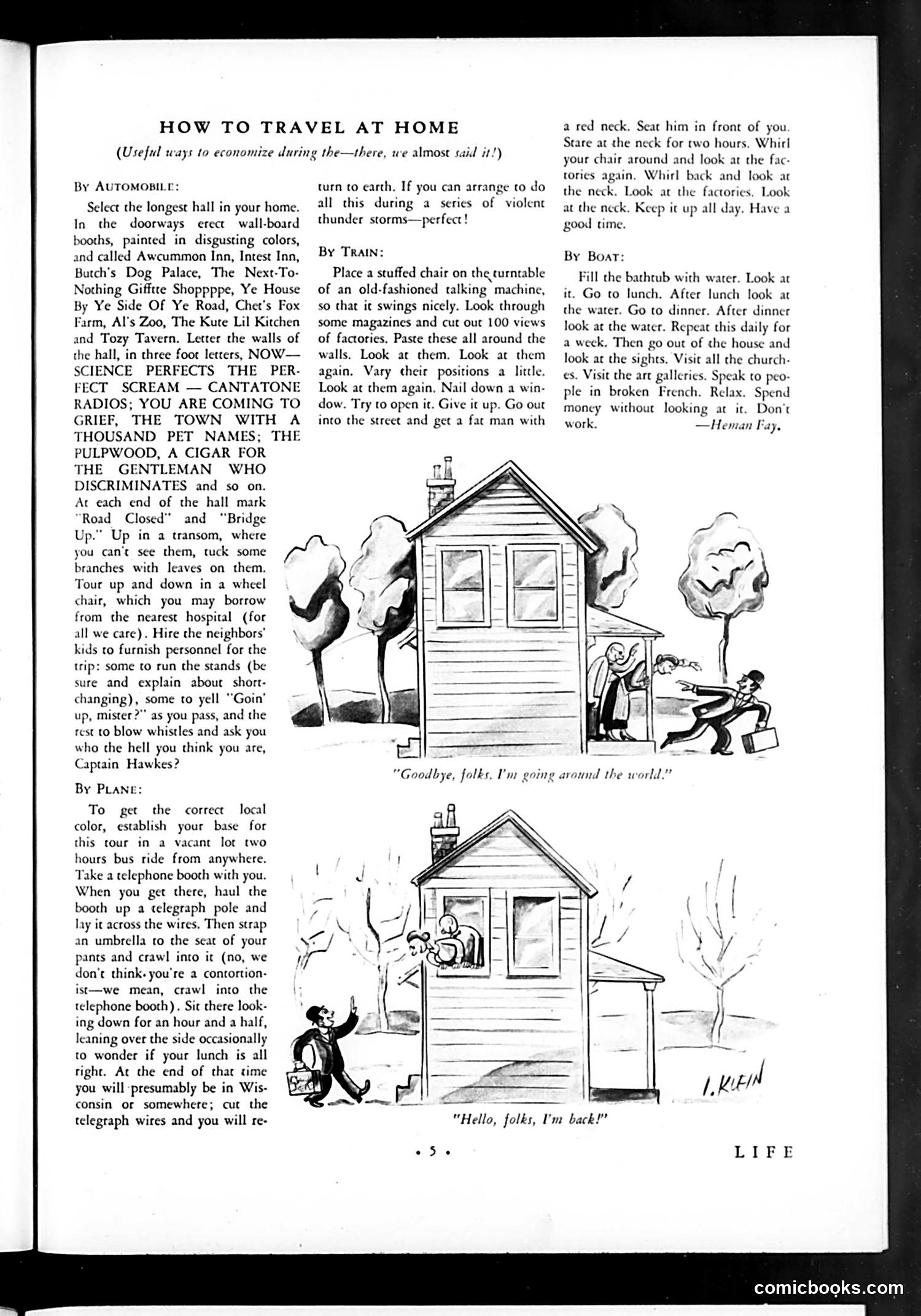
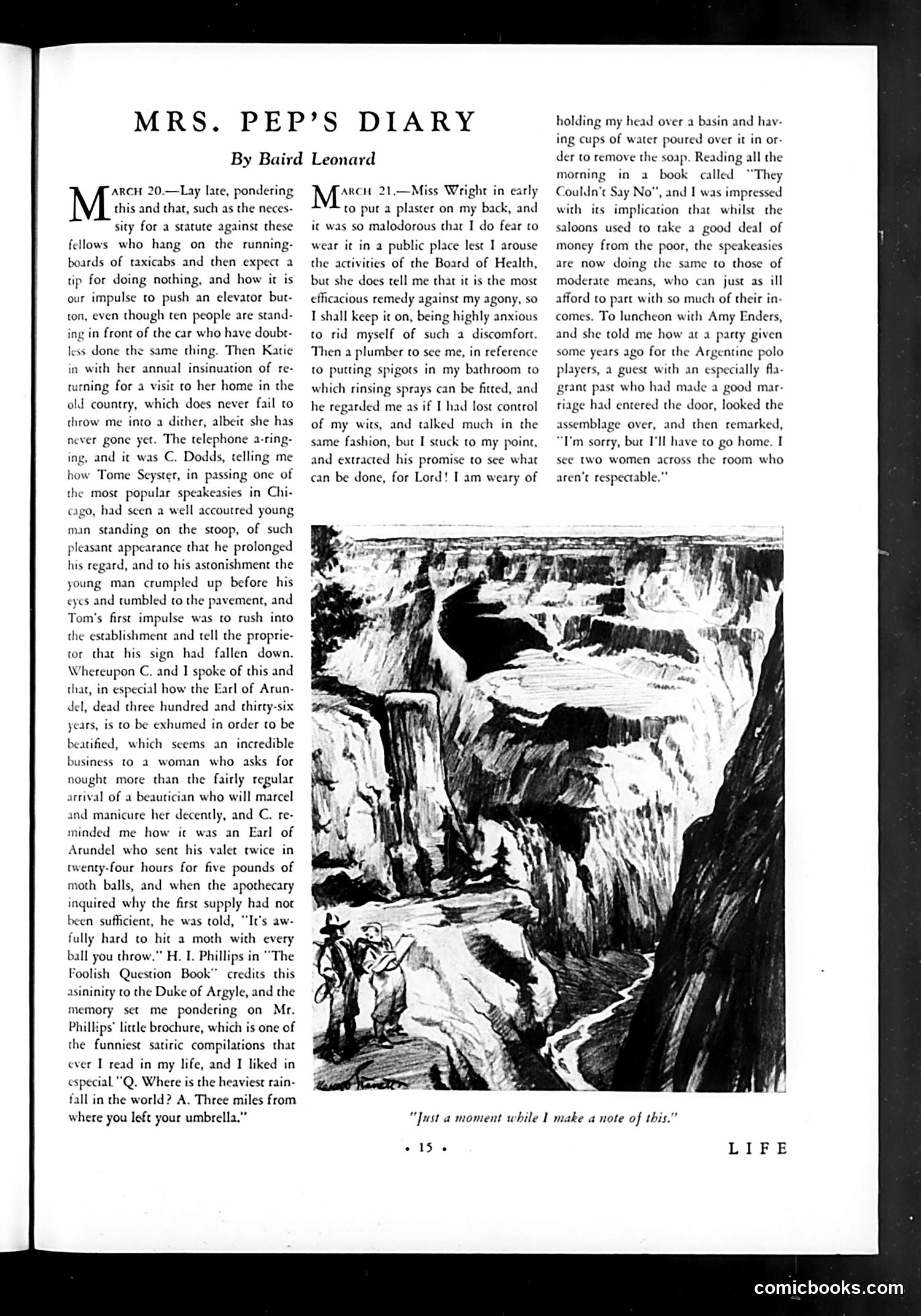
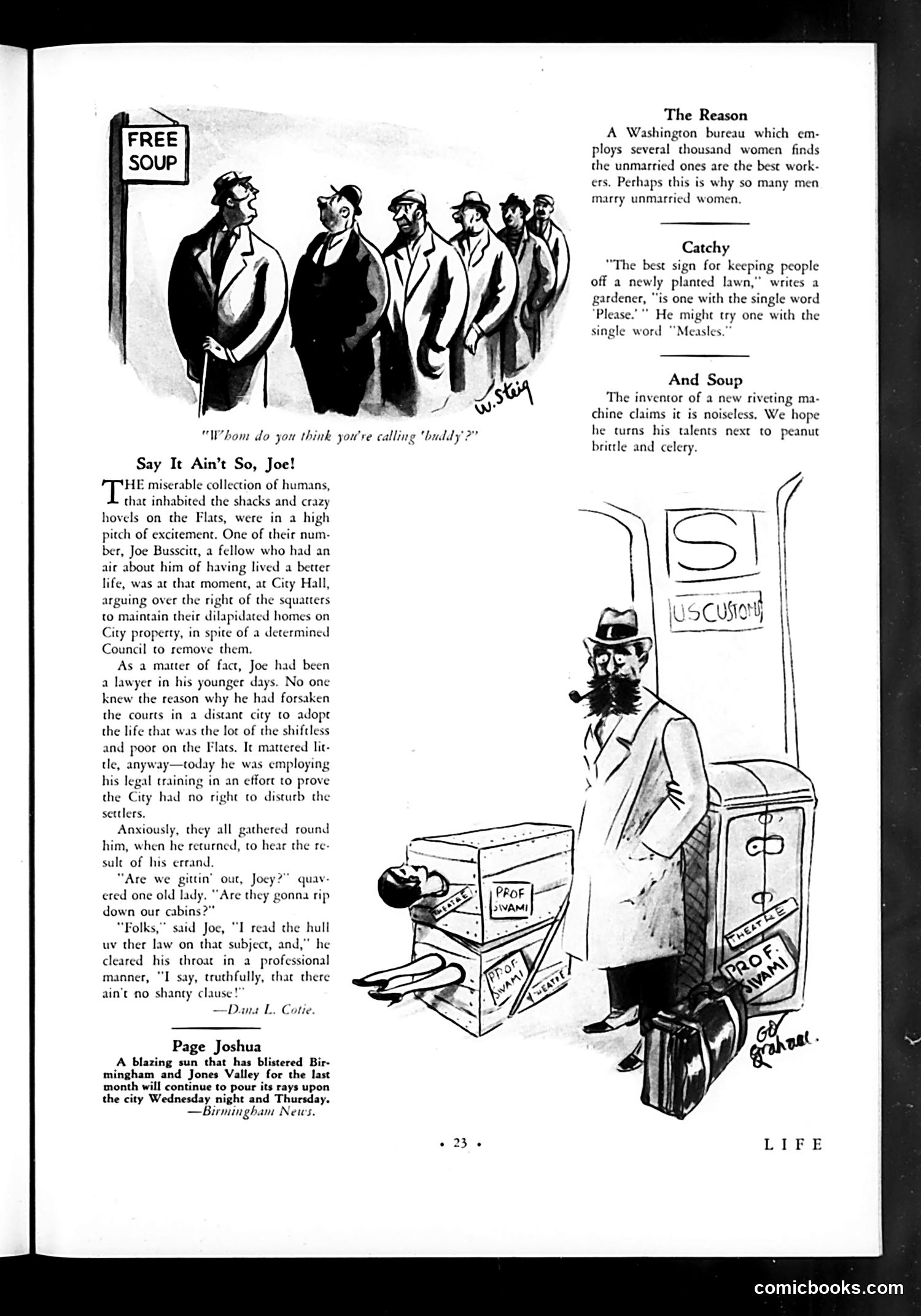
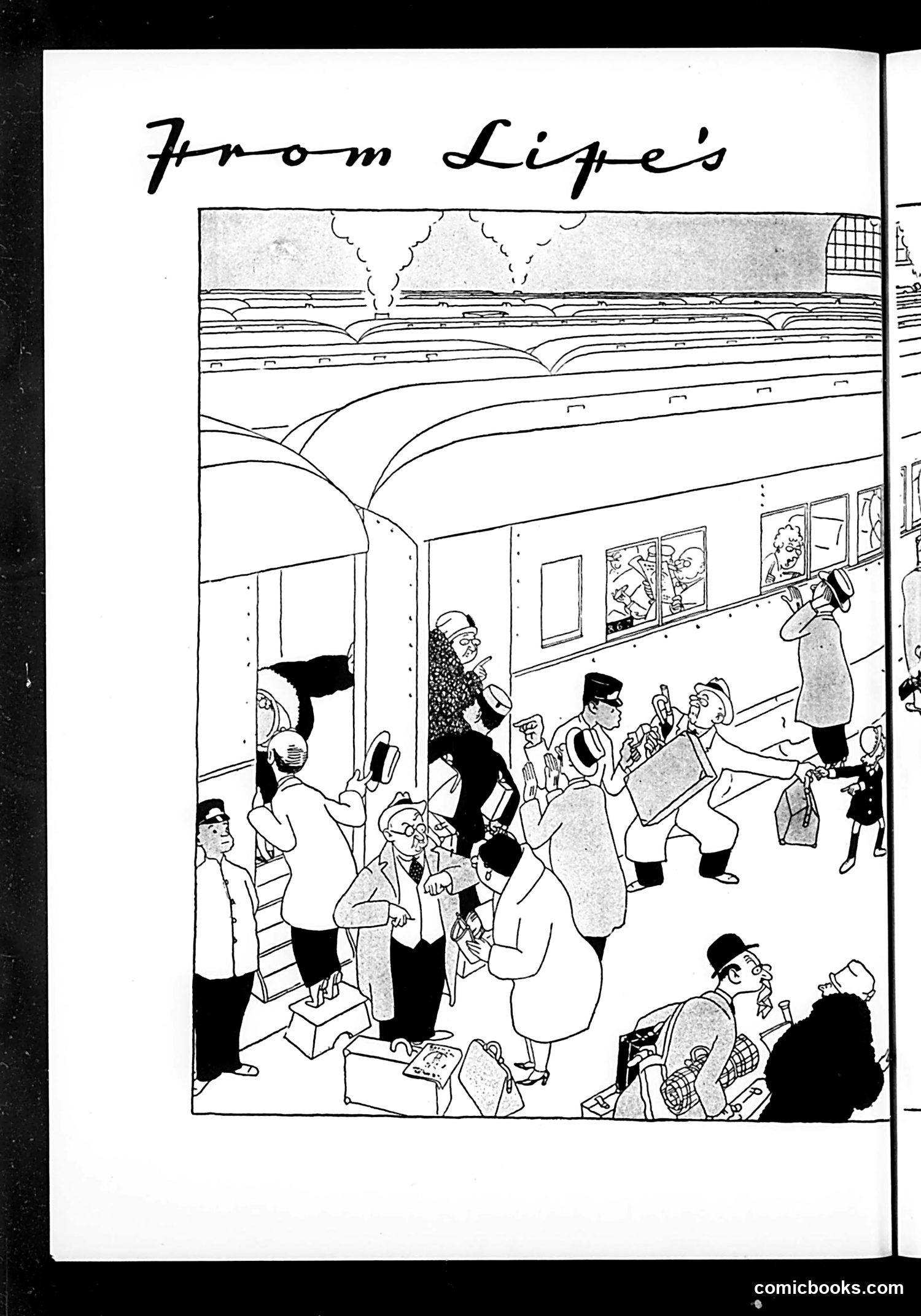
# Analysis of "How to Travel at Home" This satirical article offers humorous "budget travel" alternatives during economically difficult times (the subtitle notes "economize during the—there, we almost said it!"), likely referencing the Great Depression era. The five sections mock different transportation modes by suggesting absurd home-based substitutes: - **Automobile**: Create a fake car interior in your hall with wall-boards and signs mimicking factory names - **Train**: Use a turntable chair while viewing magazine factory images - **Plane**: Simulate flight using a telephone booth suspended by wires - **Boat**: Fill a bathtub and simulate a week-long voyage - **By foot**: Stare at someone's neck for entertainment The cartoons illustrate these ridiculous scenarios. The satire targets both Depression-era poverty and Americans' desire for leisure travel they cannot afford—suggesting people stay home while pretending to vacation.
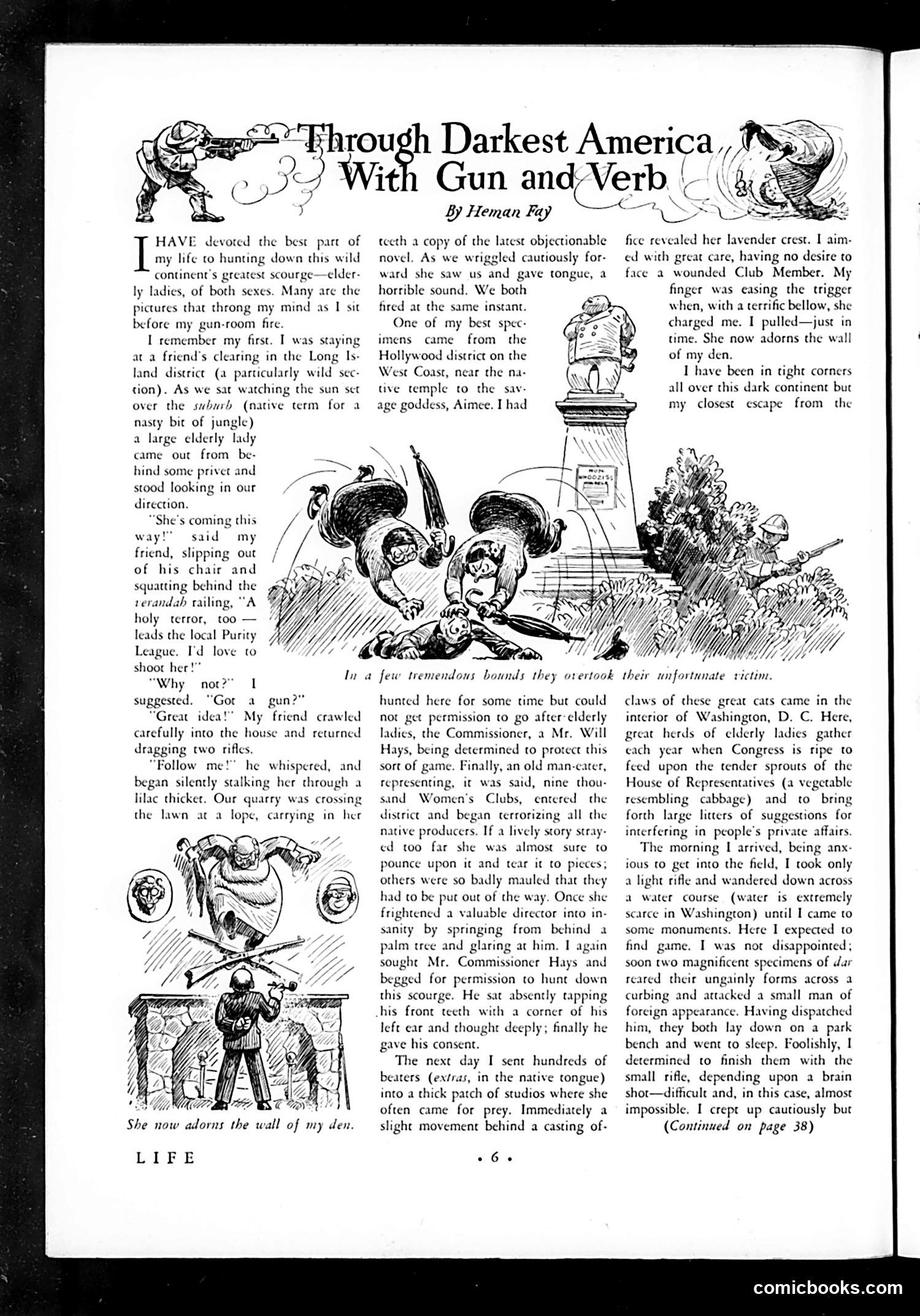
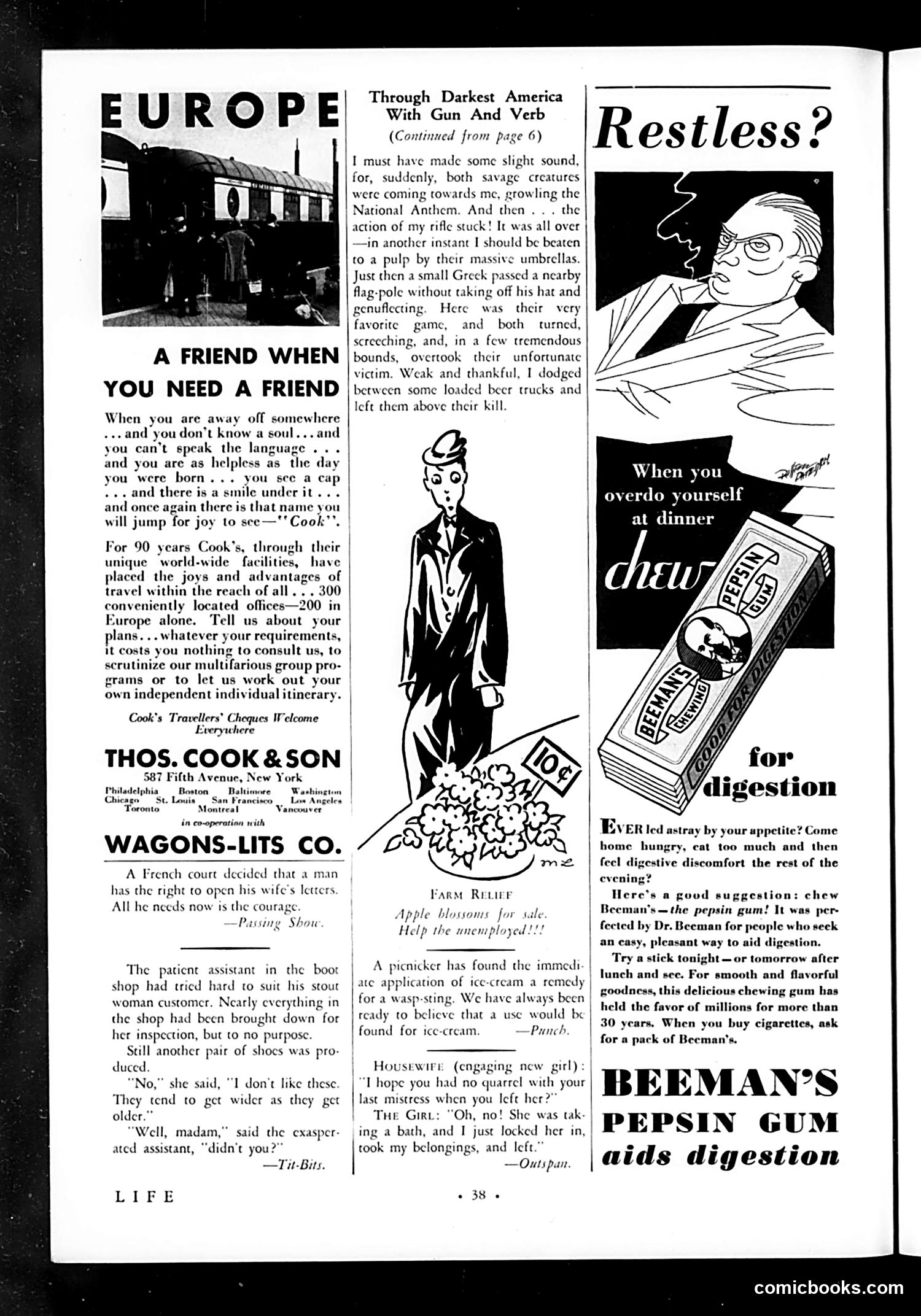
# "Through Darkest America With Gun and Verb" by Iteman Foy This satirical article mocks the trend of sensational "darkest Africa" adventure narratives popular in early 20th-century literature. The author humorously recounts hunting dangerous wildlife in America—apparently large predatory cats—while also targeting women's political activism. The central joke targets the Women's Clubs and their interference in "private affairs." The illustration shows the author and friend encountering ferocious beasts, which appear to represent militant suffragettes or women's rights activists as literal monsters threatening the outdoorsman's world. The satire ridicules both the overwrought adventure-story genre and contemporary women's political organizing, positioning female activism as an exotic "danger" equivalent to African wildlife—a common anti-feminist trope of the era.
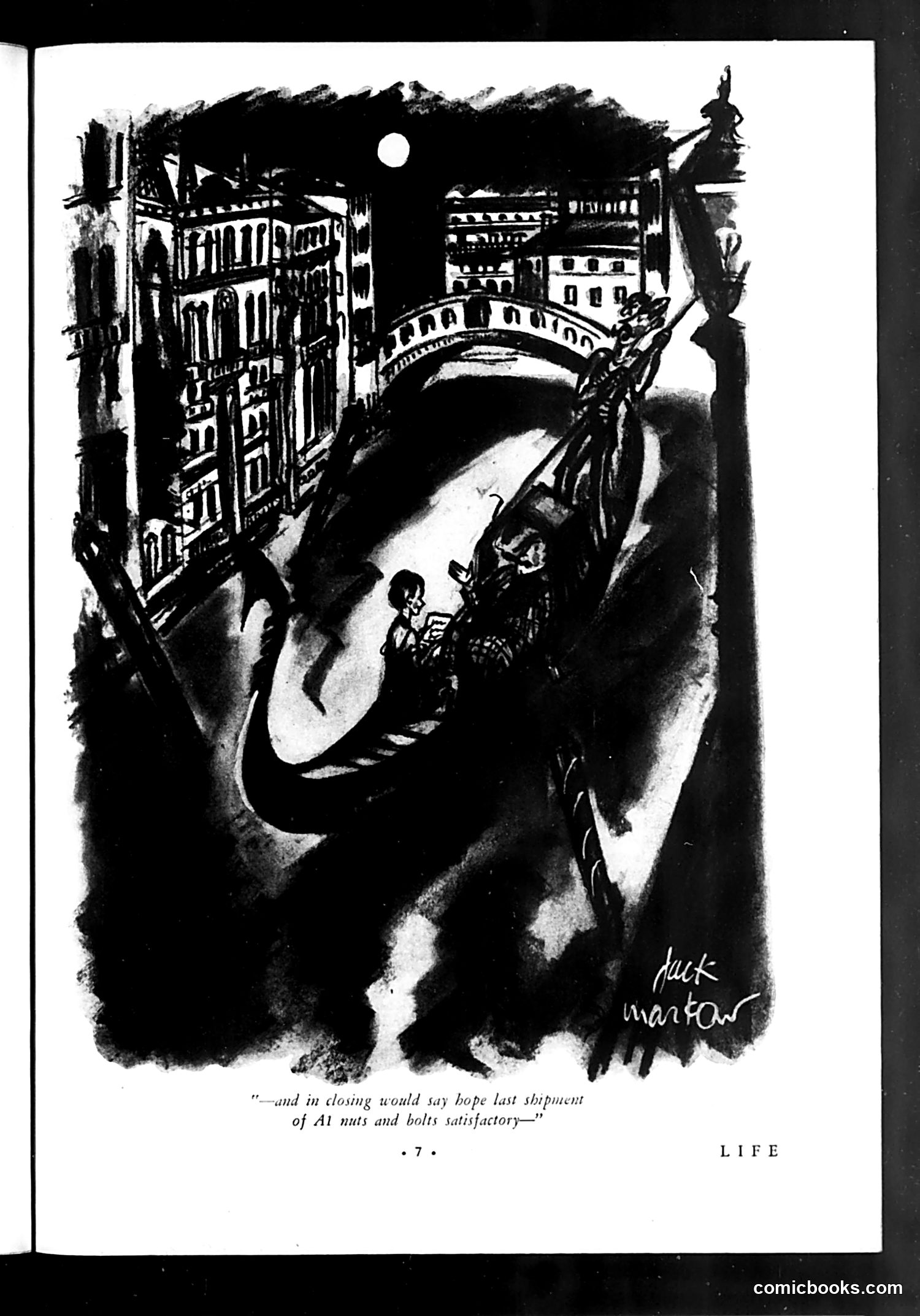
# Analysis This is a satirical illustration from *Life* magazine depicting a Venetian canal scene at night. The caption reads: "—and in closing would say hope last shipment of Al nuts and bolts satisfactory—" The cartoon appears to be business satire, likely mocking formal or stilted commercial correspondence. The speaker seems to be conducting mundane business (discussing "nuts and bolts") in an absurdly romantic, moonlit Venetian setting—the contrast between prosaic commercial language and the poetic Italian backdrop creates the humor. The signature reads "Al(?) Marlow" (artist attribution). Without additional context, the specific commercial reference or historical event being satirized is unclear, though the joke relies on incongruity between romantic atmosphere and banal business matters.
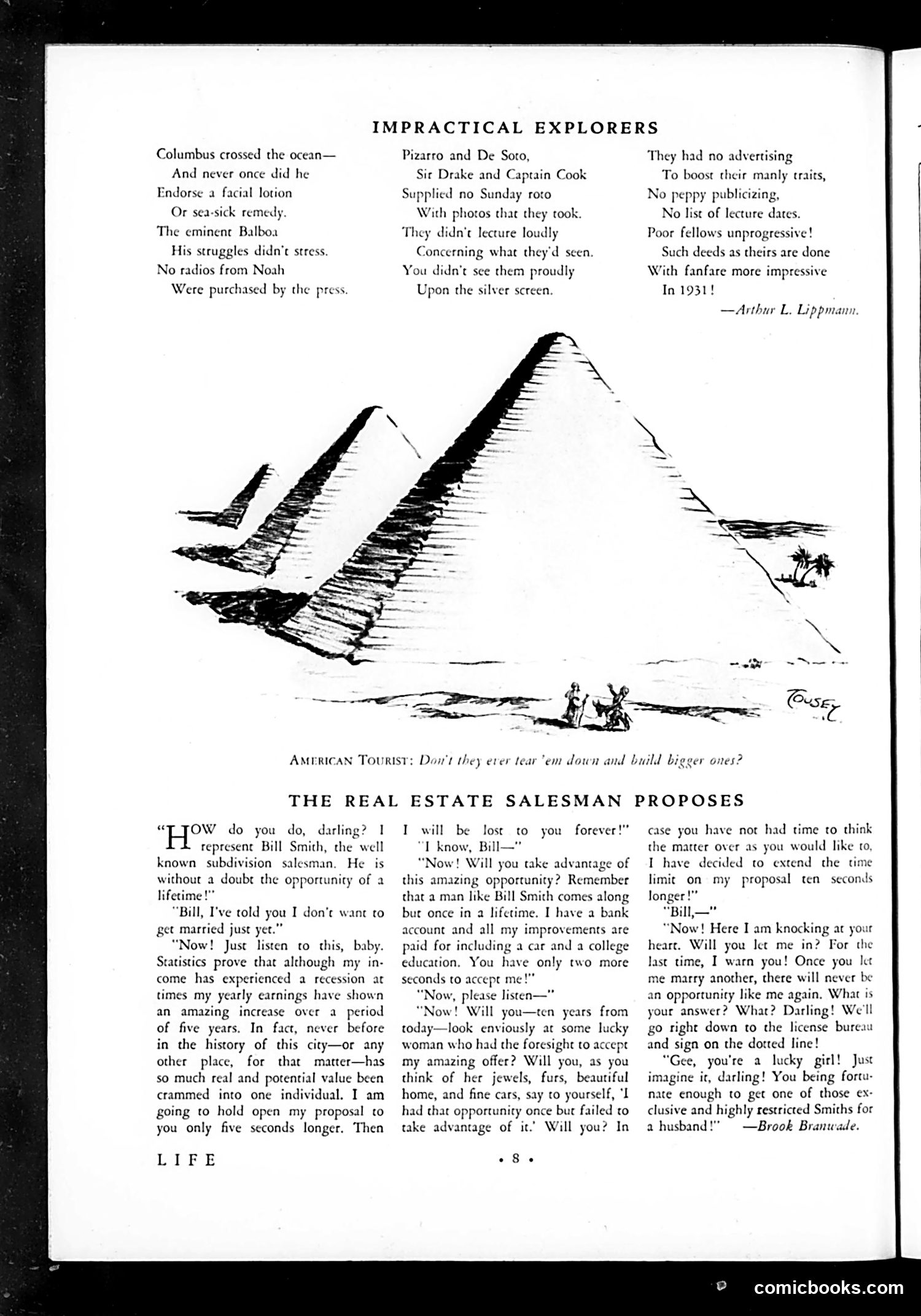
# Analysis The page contains two distinct pieces: **"Impractical Explorers"** (top): A poem by Arthur L. Lippmann satirizing famous explorers—Columbus, Balboa, Drake, Cook, and Pizarro—for lacking modern self-promotion. They conducted major expeditions without advertising, lectures, or media coverage. The satire targets 1931's commercial culture: even heroic achievements now require publicity and merchandising to matter. The accompanying cartoon shows massive pyramids dwarfing tiny explorers and a tourist, emphasizing how past accomplishments are reduced to tourist attractions. **"The Real Estate Salesman Proposes"** (bottom): A humorous short story by Brook Brawalde depicting an aggressive real estate pitch disguised as a marriage proposal. The salesman conflates romantic commitment with property investment, using high-pressure sales tactics on his reluctant girlfriend. It satirizes 1930s aggressive salesmanship and commercialism invading personal relationships.
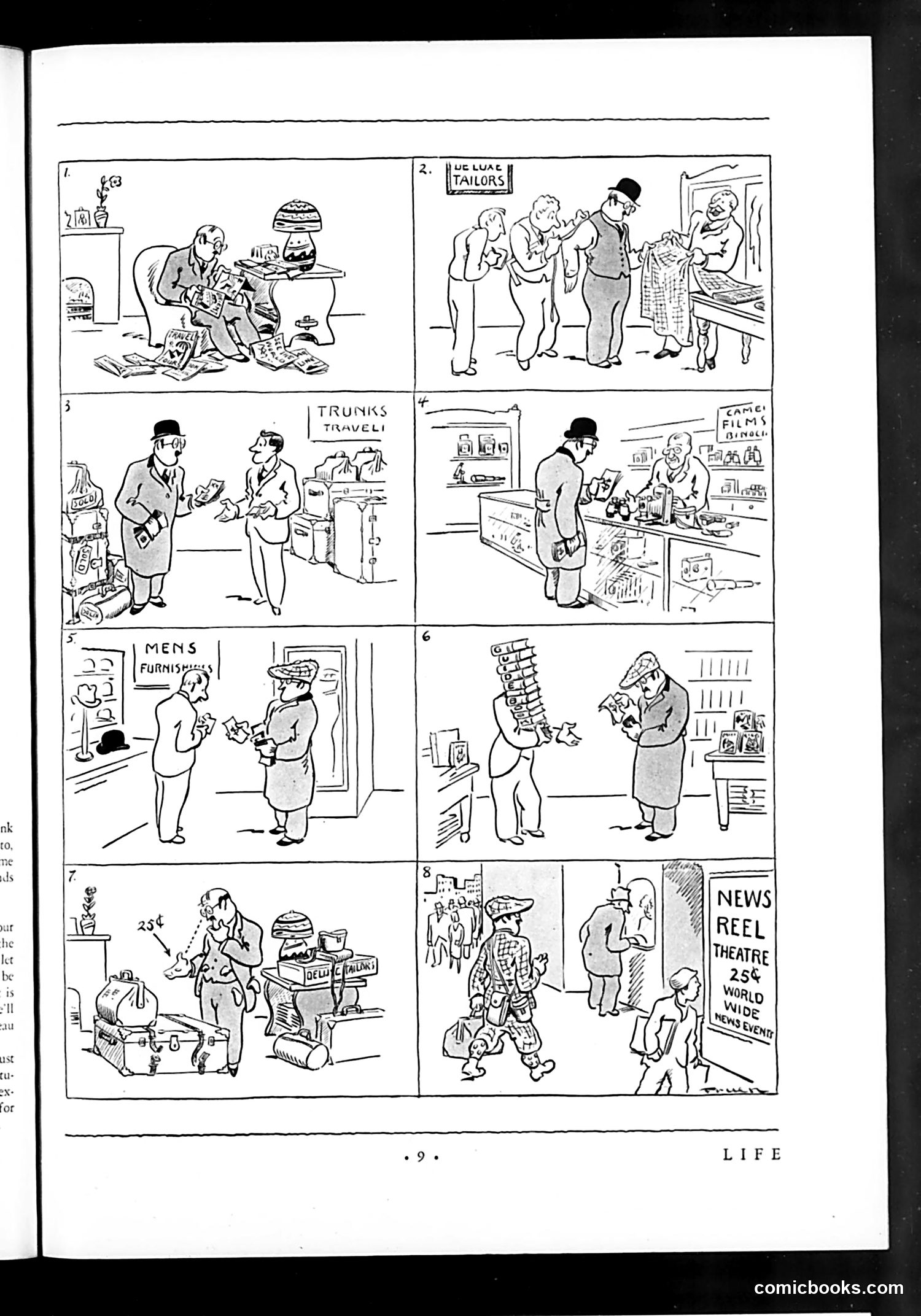
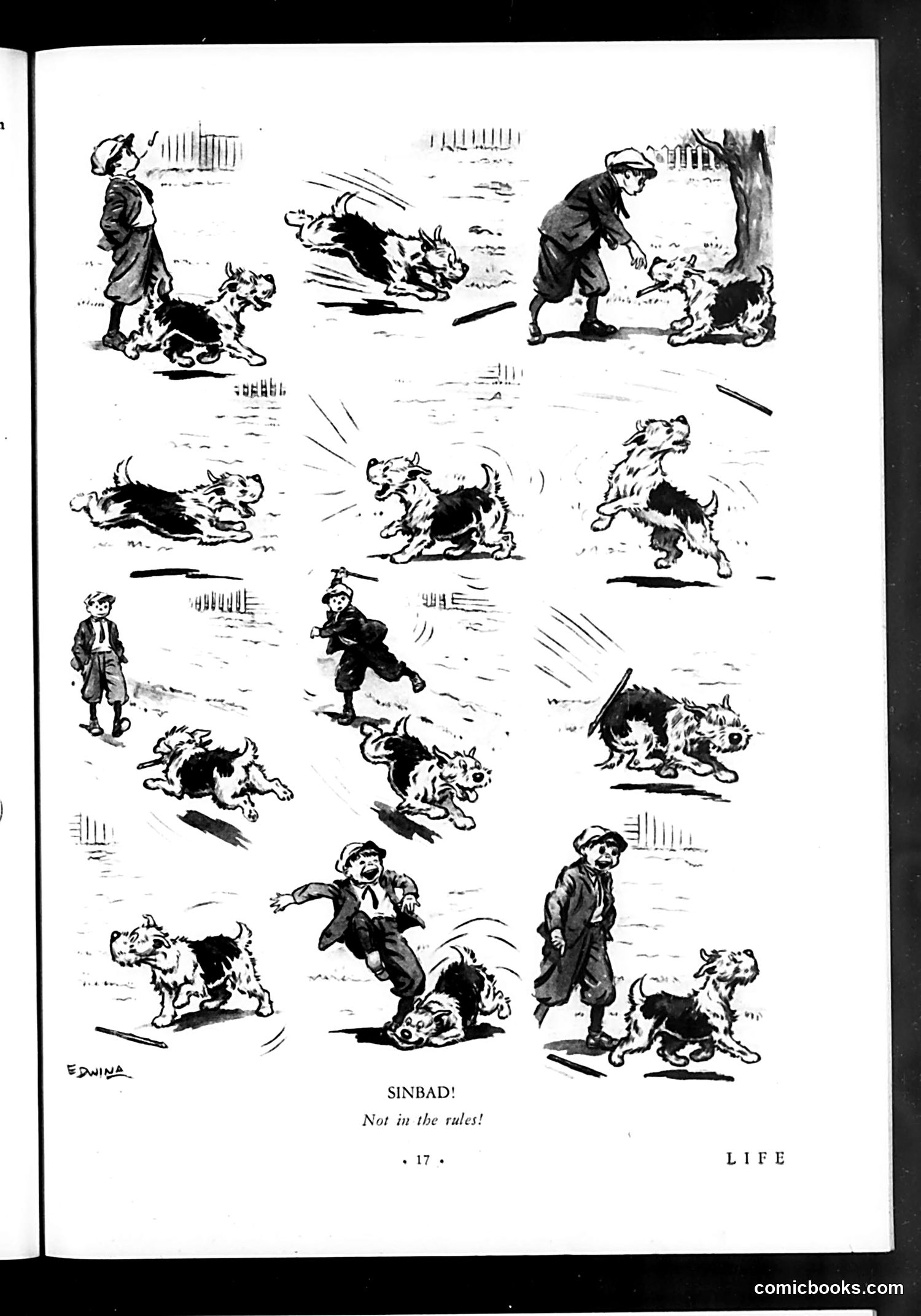
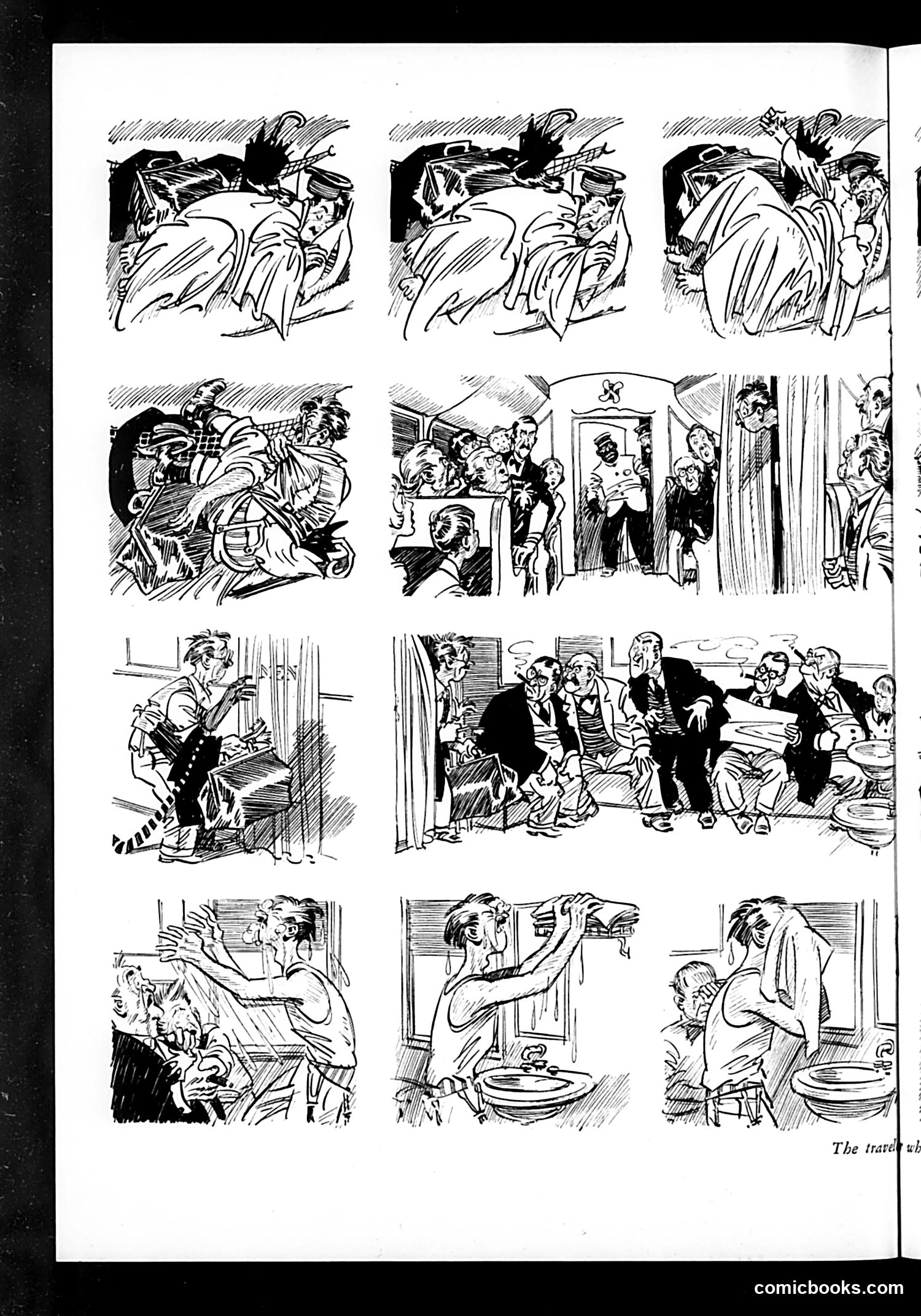
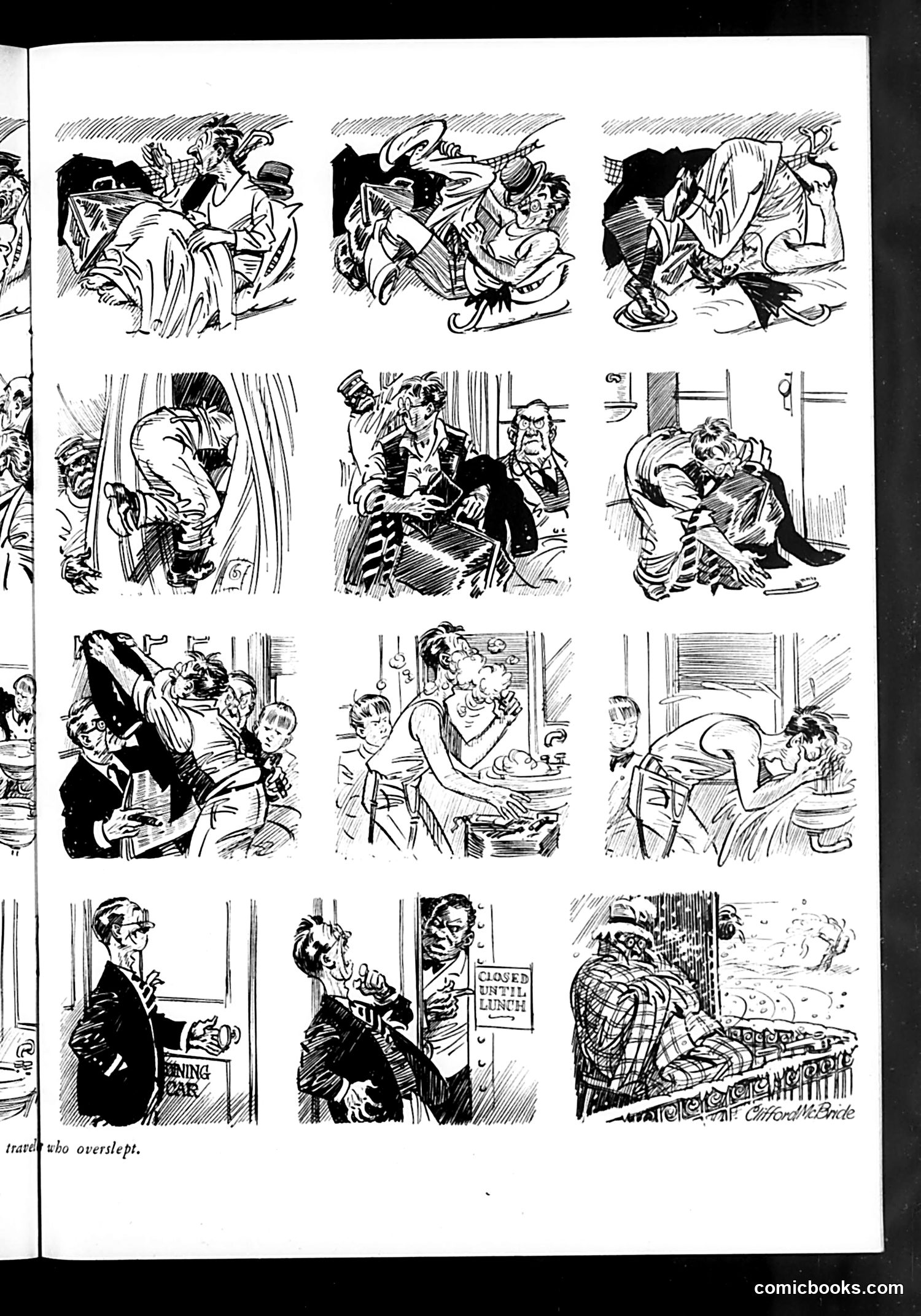
# Analysis of Life Magazine Comic Page This is a wordless comic strip sequence depicting a man's shopping expedition through various retail establishments. The panels show: 1. A shopper at home surrounded by merchandise catalogs 2. At a tailor shop ("Deluxe Tailors") 3. At a luggage store ("Trunks Travel") 4. At a camera/film shop ("Camel Films") 5. At a men's furnishings store 6. Purchasing stacked merchandise 7. At what appears to be a restaurant or food counter 8. At a movie theater The satirical point appears to be commentary on consumer culture and impulse buying—the protagonist accumulates increasingly absurd quantities of goods and experiences, suggesting the ease with which Americans could be persuaded to spend money on various commercial offerings. The humor derives from the escalating absurdity of his purchases and the contrast between initial catalogs and actual retail encounters.
# Analysis of Life Magazine Page This page presents satirical commentary on Prohibition-era America. The main illustration shows a cherub-like figure (representing Life magazine's editorial voice) holding what appears to be a broken vessel, symbolizing the failure of Prohibition policy. The articles critique: 1. **"Our Dwindling Moral Sense"** - argues that Prohibition's enforcement has paradoxically increased graft and corruption among officials (police, politicians) who profit from bootlegging and rule-breaking rather than reducing it. 2. **"Dry By Persuasion"** - skeptically examines Baptist efforts to persuade citizens to abstain from alcohol, suggesting moral persuasion alone cannot enforce laws. The satire suggests Prohibition created widespread hypocrisy and corruption rather than moral improvement—a common contemporary critique of the 18th Amendment.