A complete issue · 37 pages · 1931
Life — March 20, 1931
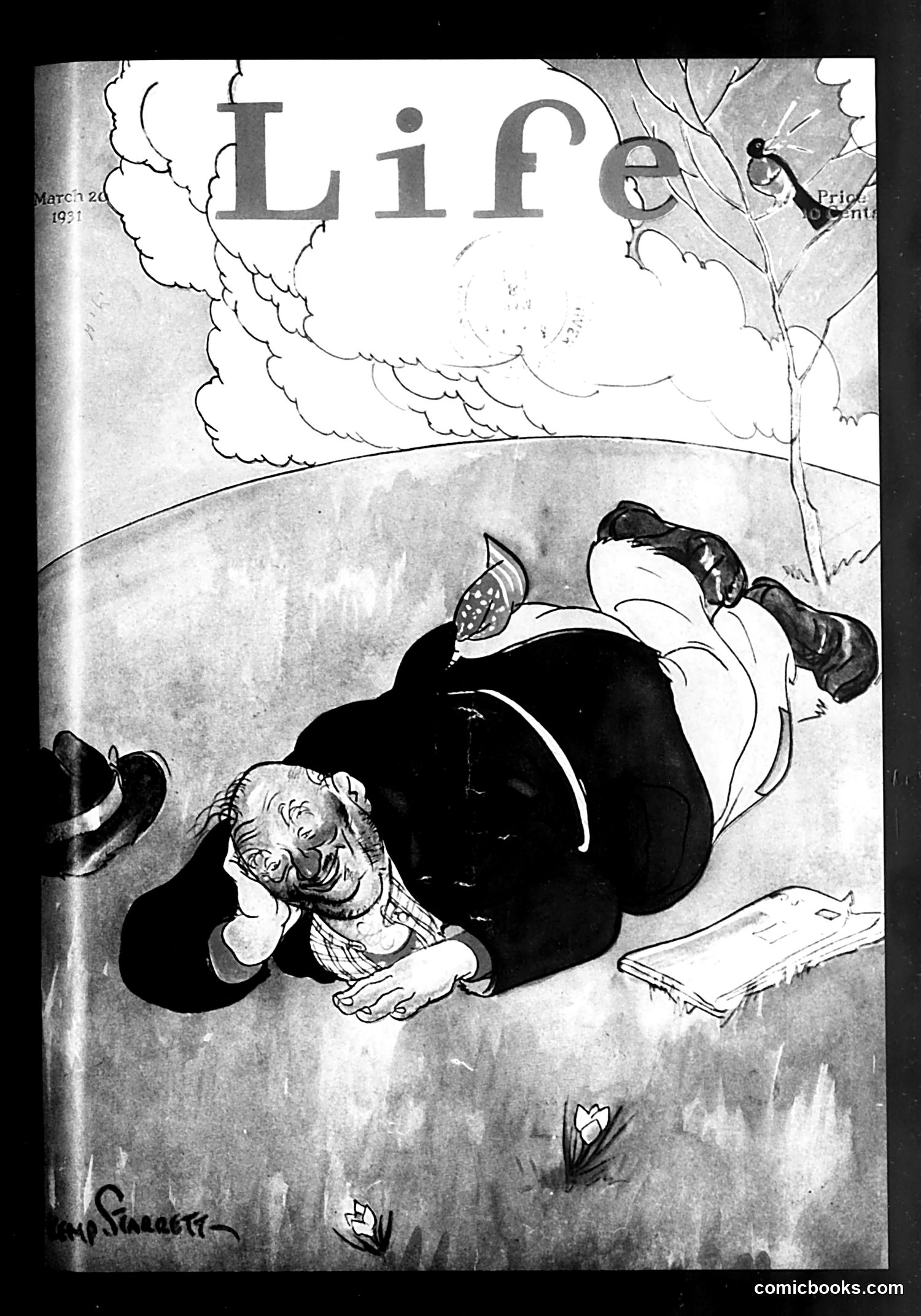
# Life Magazine Cover Analysis This appears to be a **Life magazine cover from March 1921** (visible in upper left corner). The main illustration shows a portly, older man lying on his back in what appears to be a relaxed, undignified pose on the ground, surrounded by spring foliage and bare tree branches. The word "**Life**" dominates the top in large letters. The figure's exaggerated features and corpulent form suggest **satirical caricature**, likely of a specific public figure or type of person representing a social commentary relevant to 1921. Without clearer identifying details visible, I cannot definitively name the subject, though the artistic style and composition suggest commentary on wealth, leisure, excess, or political figures of the post-WWI era. The spring setting may be thematically significant—perhaps suggesting renewal or rebirth in post-war America.
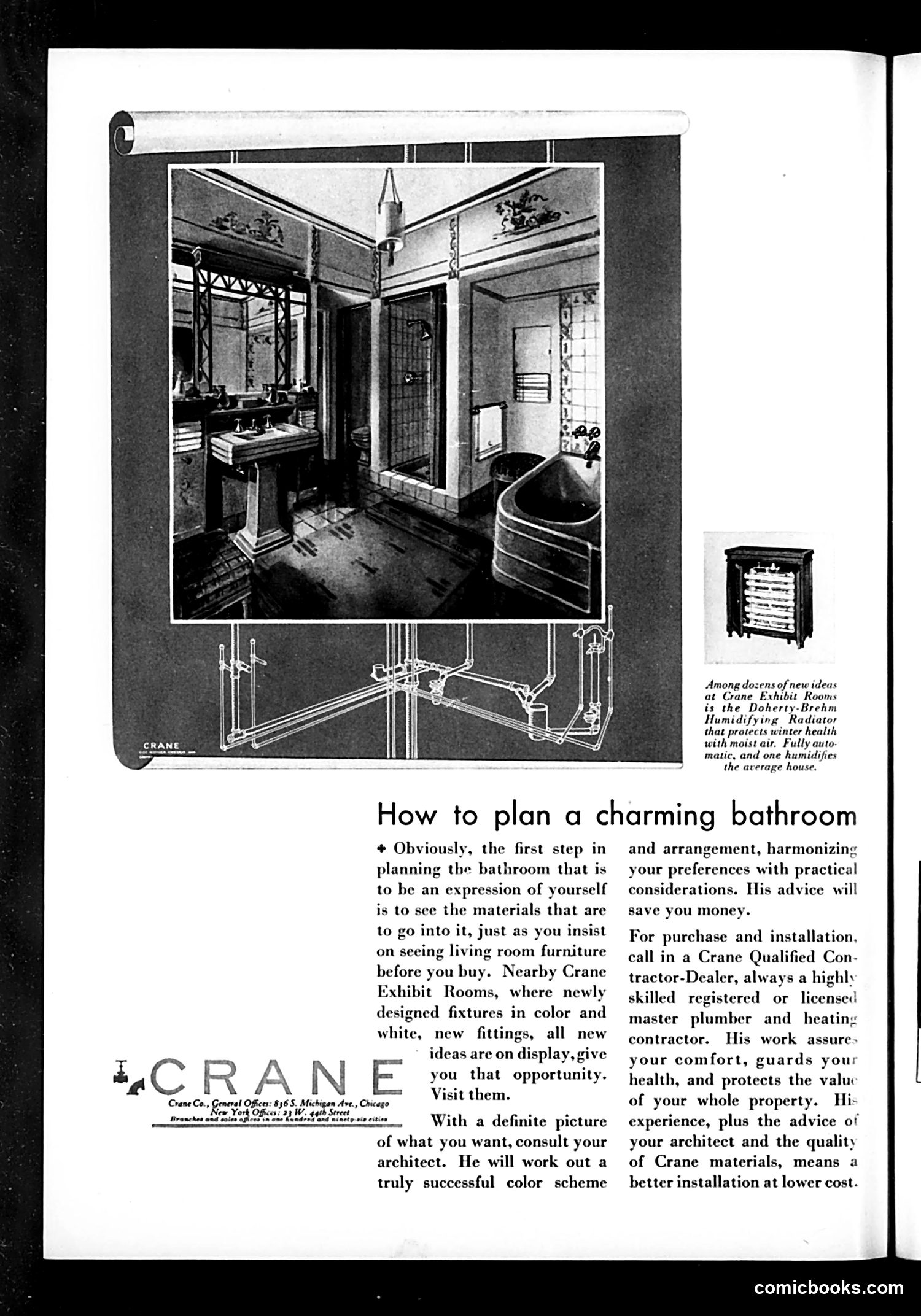
# Analysis This is not a cartoon or satirical content—it's a **straightforward advertisement for Crane plumbing fixtures**, likely from the 1920s-1930s based on the styling and design language. The page features: - A photograph/illustration of a modern bathroom layout with labeled plumbing components - Technical diagrams showing pipe installation and plumbing systems - A smaller product image of a "Doherty-Brekm Humidifying Radiator" The text promotes Crane's "Exhibit Rooms" where consumers could view bathroom fixtures in color and white, emphasizing that consulting a Crane-qualified contractor ensures proper installation and cost savings. **There is no satire, political content, or humor intended here.** It's purely commercial advertising designed to encourage bathroom modernization through professional installation.
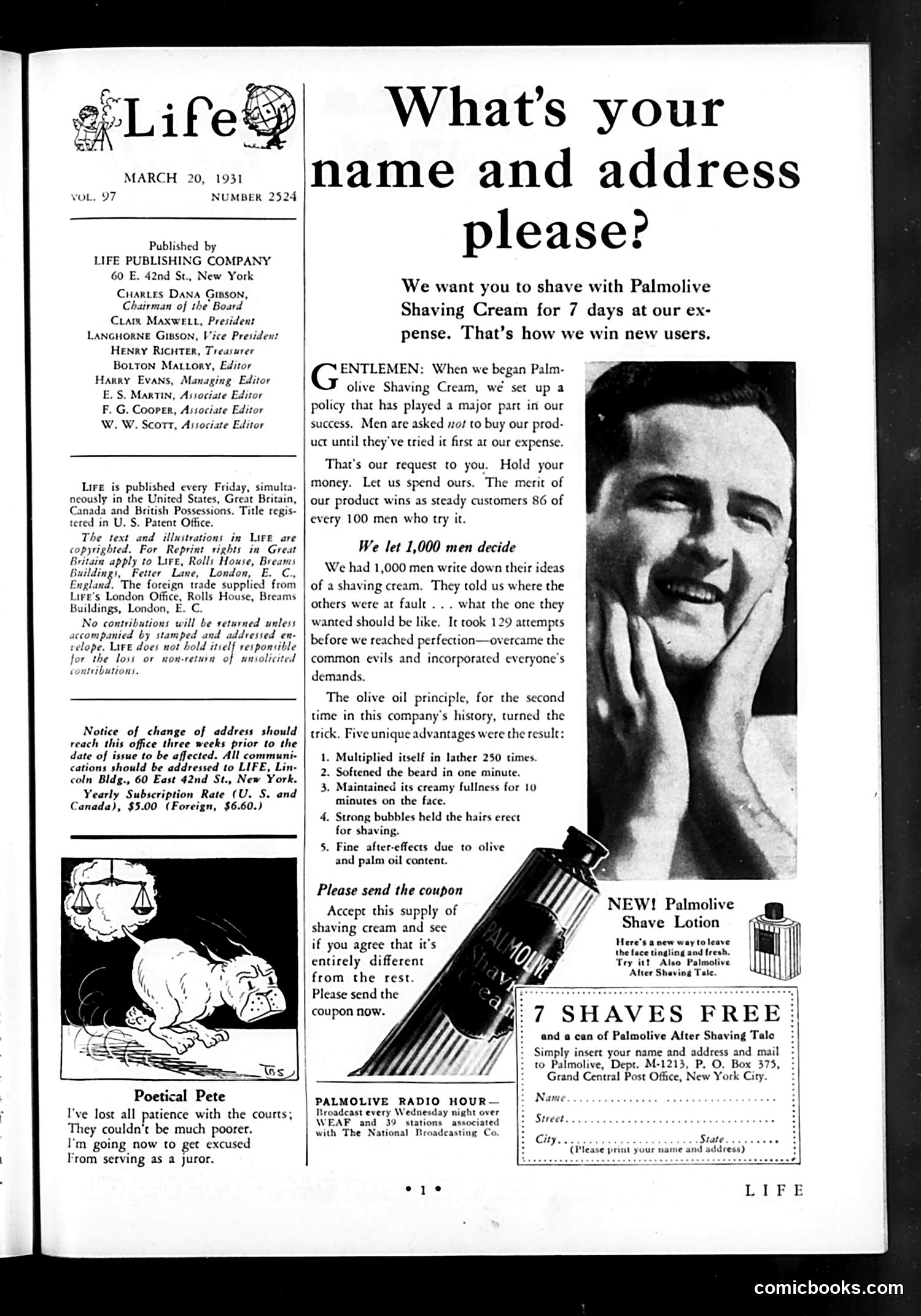
# "Poetical Pete" Cartoon Analysis This single-panel cartoon by "Cesare" (visible signature) depicts a judicial scales symbol above a dejected dog labeled "Poetical Pete." The accompanying verse reads: "I've lost all patience with the courts; / They couldn't be much poorer. / I'm going now to get excused / From serving as a juror." **Context:** This is satire about jury duty and public frustration with the court system, likely referencing widespread complaints about lengthy trials or poor judicial administration in 1931. The anthropomorphized dog represents an everyday citizen exhausted by civic obligation. The joke plays on "poetical"—Pete expresses his frustration poetically—while mocking both his desire to escape duty and, implicitly, the courts' inefficiency that makes such escape appealing to citizens.
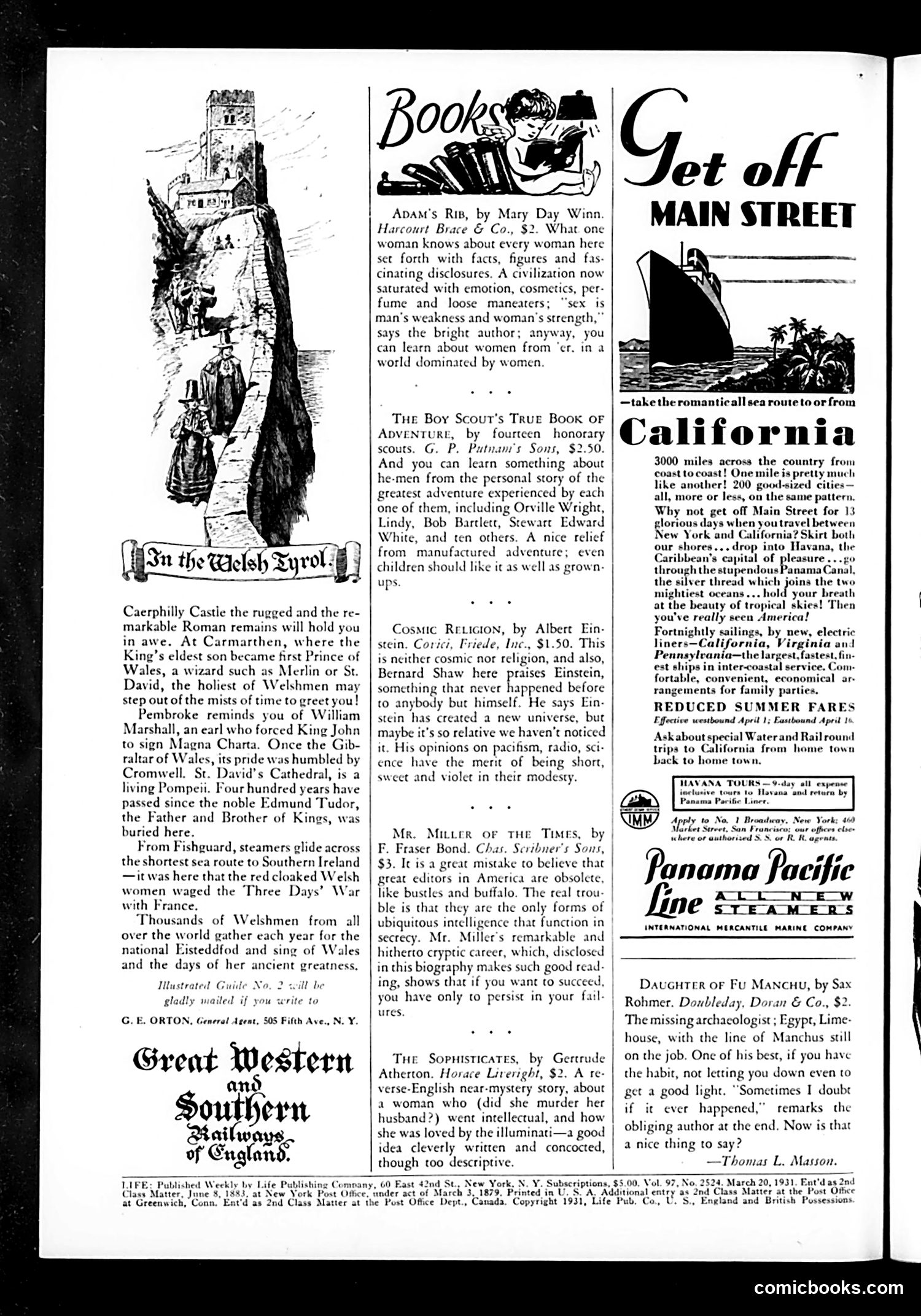
# Analysis This page is primarily a **book review section** with accompanying advertisements rather than political satire or cartoons. The left side features an illustration labeled "In the Welsh Tyrol" showing a castle and travelers, accompanying a travel guide review about Wales and historical sites like Caernarvon Castle. The central "Books" section reviews five literary works, including Mary Day Winn's *Adam's Rib* (about women's roles), a Boy Scout adventure book, and works by Albert Einstein and F. Fraser Bond on cosmic religion and journalism. The right side advertises California travel and the Panama Pacific Line steamship service, emphasizing leisure travel opportunities. There are no political cartoons or satirical figures visible. This appears to be a standard magazine page from March 1921 mixing book reviews with travel and transportation advertising—content typical of *Life* magazine during this era.
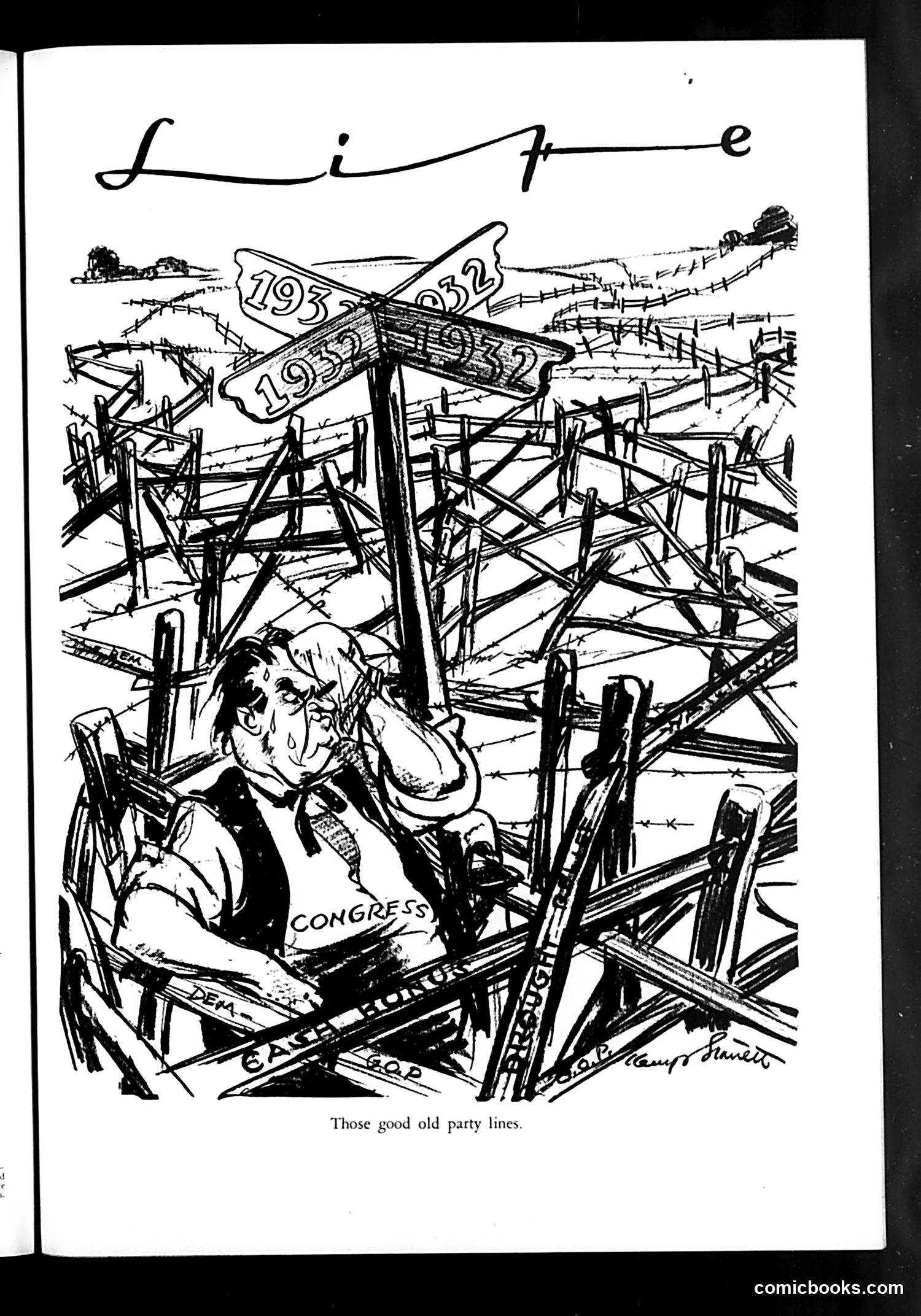
# Political Cartoon Analysis This is a satirical cartoon titled "Those good old party lines." The image depicts a figure labeled "Congress" trapped within a complex maze of interconnected fence rails and posts, each labeled with years (1932, 1933) and political party abbreviations ("G.O.P." visible). The figure appears distressed or confined. The satire critiques how Congressional members are constrained by rigid party loyalty and political factionalism during the early 1930s—likely referencing Depression-era gridlock. The "party lines" are depicted literally as physical barriers that trap and restrict Congress's ability to act freely or independently. The cartoon suggests that partisan divisions prevent effective governance, with lawmakers imprisoned by their own party affiliations rather than serving broader public interests.
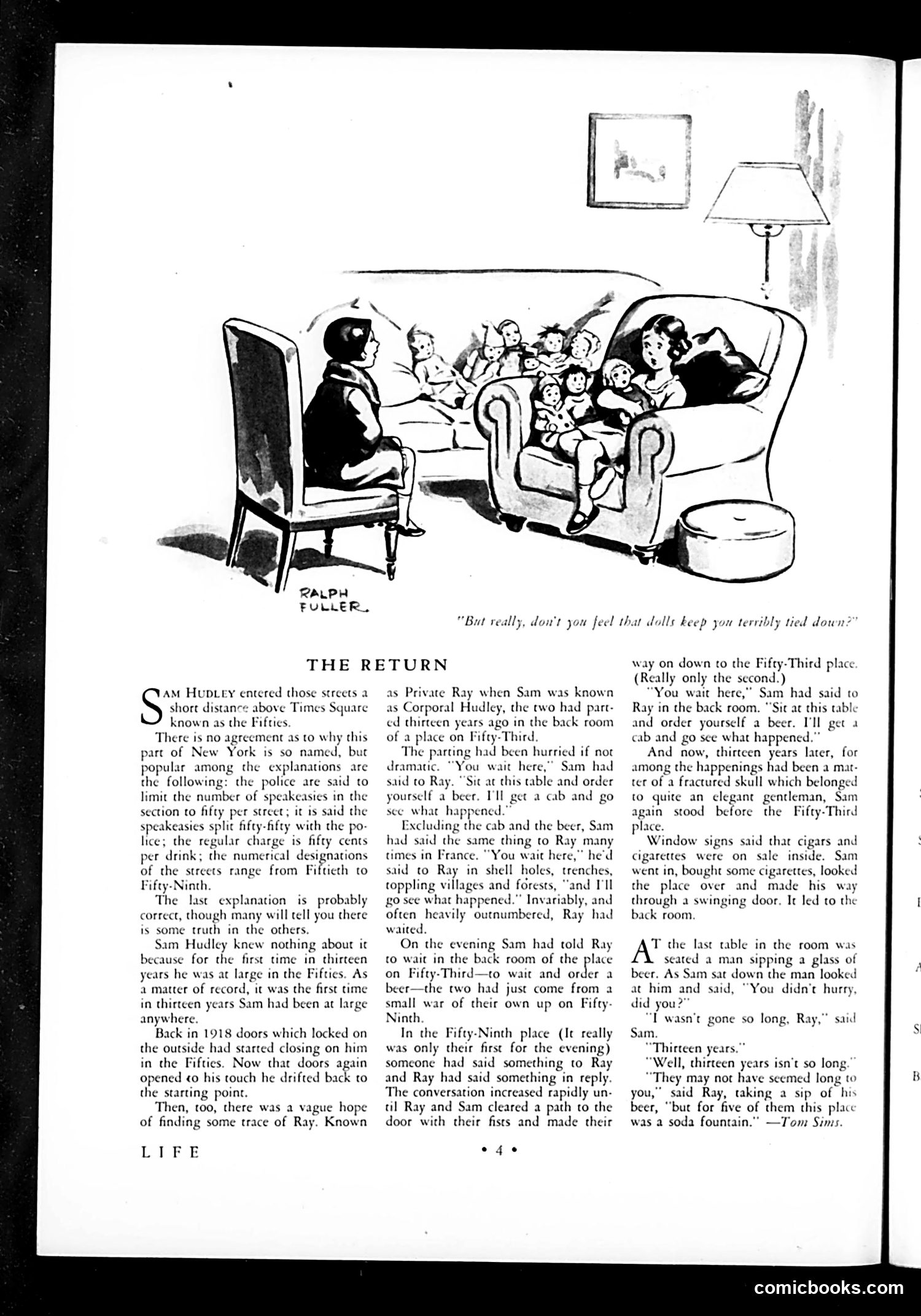
# Analysis: "The Return" by Ralph Fuller **The Cartoon:** The cartoon depicts a woman sitting alone on a chair facing a sofa crammed with numerous dolls and small figures. The caption reads: "But really, don't you feel that dolls keep you terribly tied down?" **The Satire:** This is likely satirizing the anxiety some women felt about motherhood and domestic responsibility during this era. The joke presents an absurd inversion: the woman treats dolls (not children, but their substitutes) as burdensome dependents. The satire appears to mock either women who complain about childcare duties or, conversely, societal expectations that women eagerly embrace unlimited domesticity. The crowded sofa emphasizes how overwhelming such responsibilities could feel, making it commentary on women's limited autonomy within domestic life. The accompanying short story "The Return" concerns two men reuniting in New York.
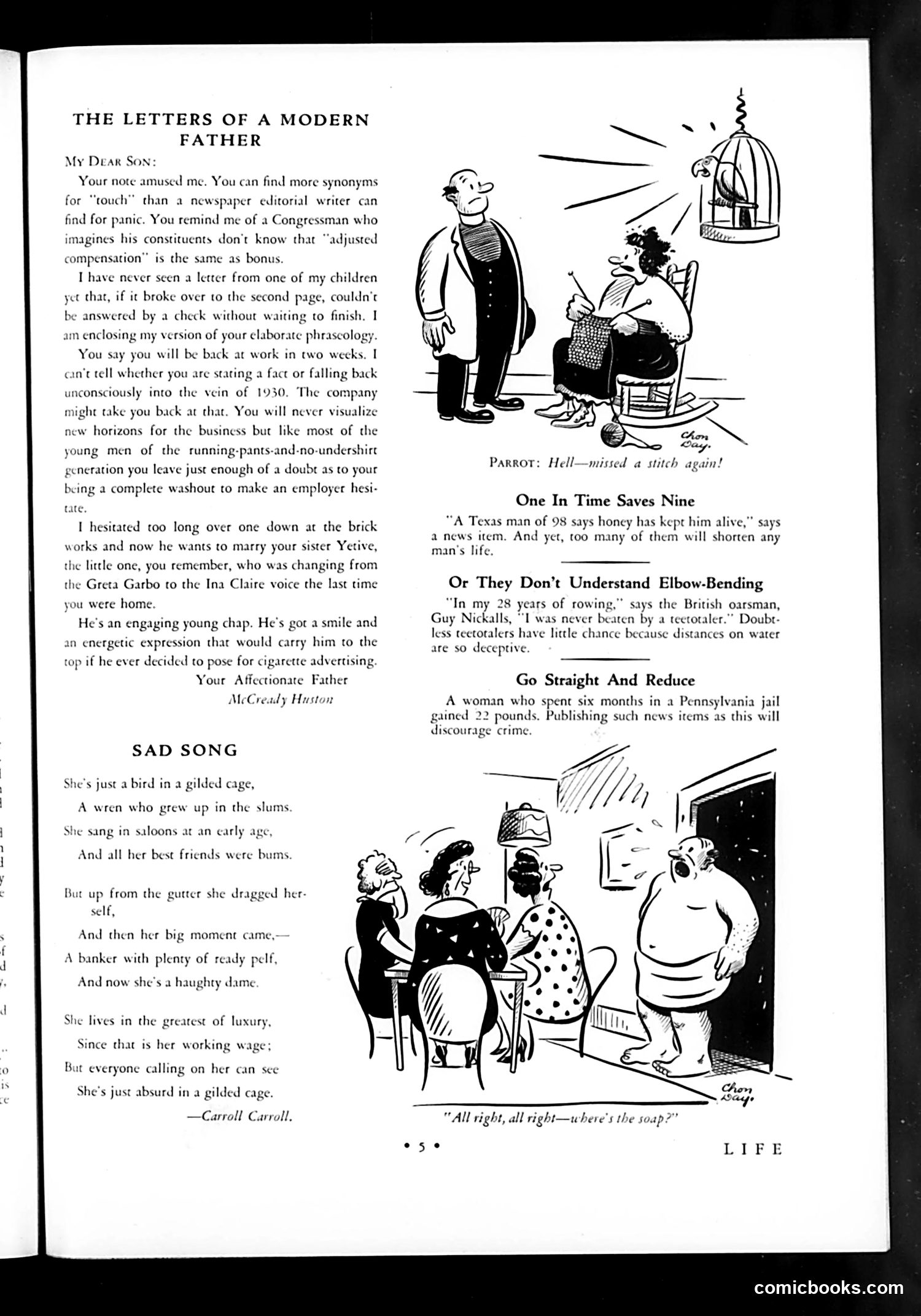
# Analysis of Life Magazine Page This page contains three distinct pieces of social satire: **"The Letters of a Modern Father"** mocks generational disconnect—a father complains his son uses elaborate business jargon like "adjusted compensation" instead of plain language like "bonus," and worries about young men becoming "running-pants-and-no-undershirt" degenerates. **"Sad Song"** is a cautionary poem about a woman who rose from poverty through a banker's marriage, now trapped in luxury despite her humble origins—satirizing both social climbing and the constraints of wealth. **"Go Straight and Reduce"** presents a cartoon joke: a woman gained 22 pounds during six months in jail, and the caption sardonically frames publishing this as crime prevention—mocking newspapers' sensationalism and absurd moral lessons. The cartoons critique pretension, generational anxiety, and media manipulation typical of 1920s American society.
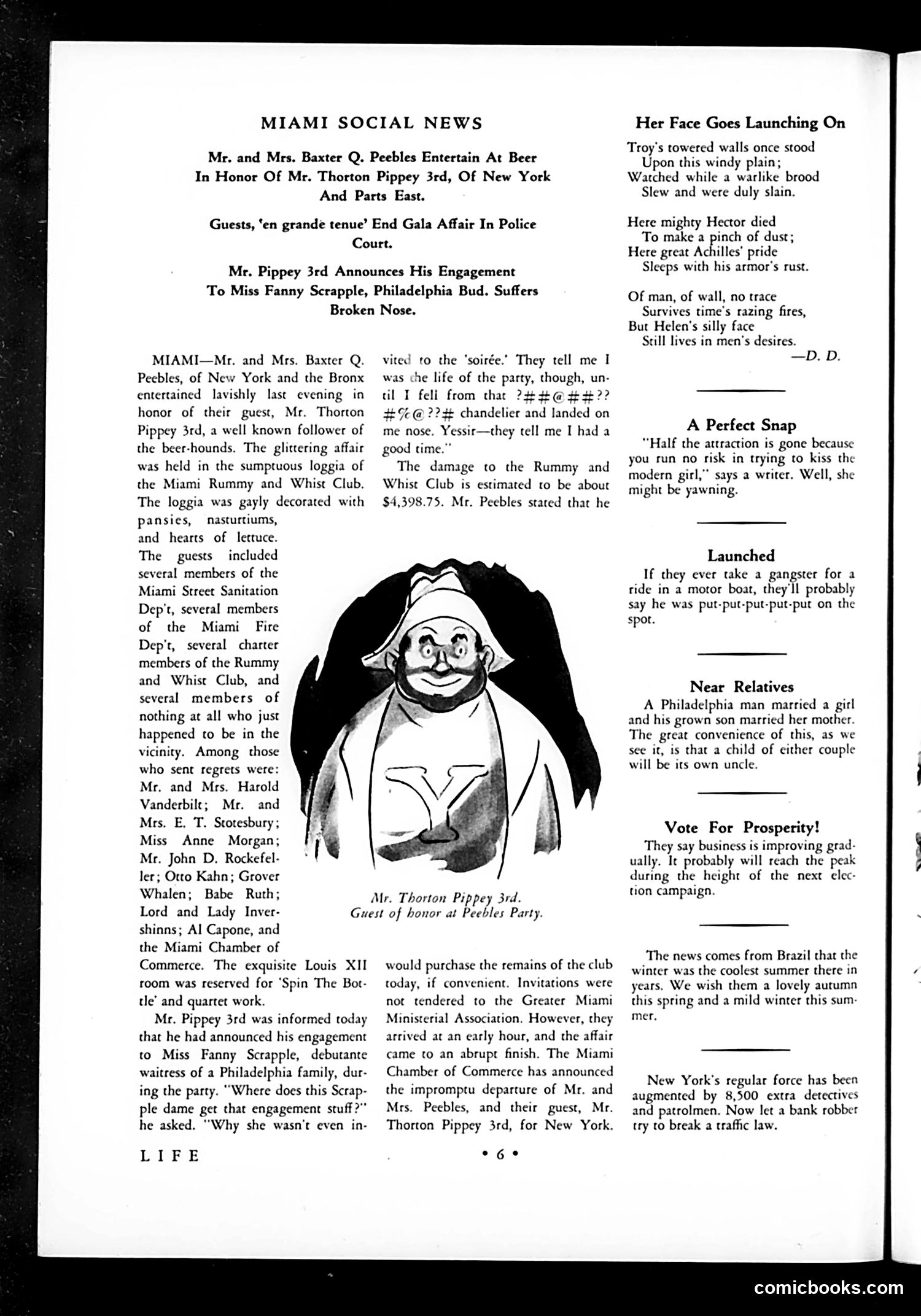
# Analysis of Life Magazine Page This page contains social news about Miami society figures, centered on a caricature labeled "Mr. Thorton Pippey 3rd, Guest of honor at Peebles Party." The main cartoon depicts a rotund, jovial man in formal attire with an exaggerated smile—typical of 1920s caricature style. The accompanying text humorously describes a party hosted by Mr. and Mrs. Baxter Q. Peebles honoring Pippey, where he allegedly broke his nose and announced his engagement to "Miss Fanny Scrapple" of Philadelphia. The satire mocks wealthy society's pretensions through absurdist humor: ridiculous names (Scrapple, Pippey), an implausibly dramatic accident at an elegant party, and the mock-serious tone covering trivial social events. Right-column poetry parodies classical literature, adding literary mockery to the social critique.
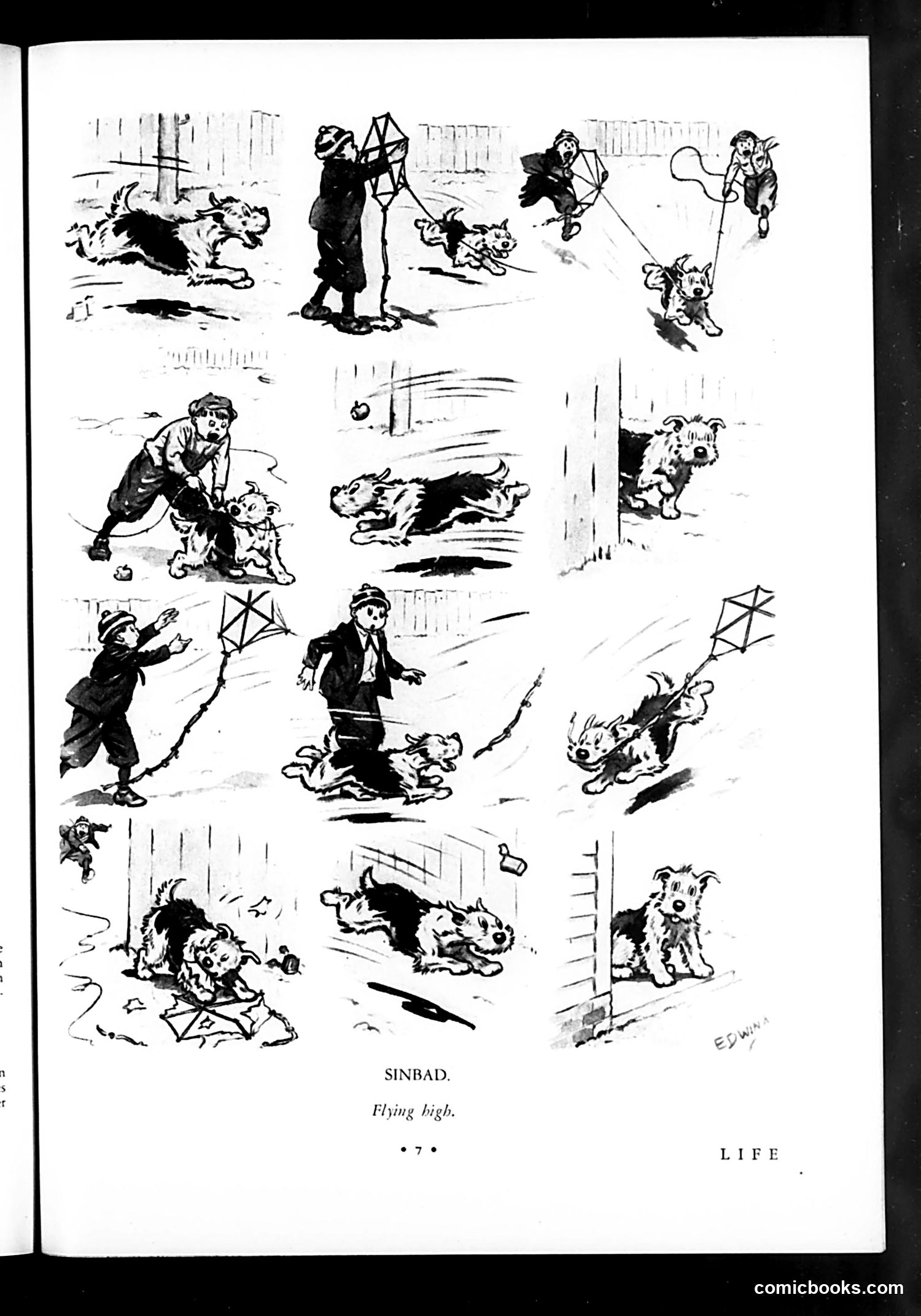
# Analysis of "Sinbad: Flying High" This is a comic strip sequence titled "Sinbad" with the subtitle "Flying high," referencing the famous Arabian Nights character known for fantastic adventures. The strip depicts a child flying a kite in various scenes—launching it, managing the string, and dealing with mishaps as the kite flies unpredictably. The humor comes from the classic childhood experience: the difficulty of controlling a kite, the tension on the string, and the kite's tendency to behave erratically despite the flyer's efforts. The satire likely plays on the phrase "flying high"—the child's aspirations of successful kite-flying contrasted with the reality of losing control, suggesting broader themes about ambition versus reality, popular in Life magazine's satirical commentary.
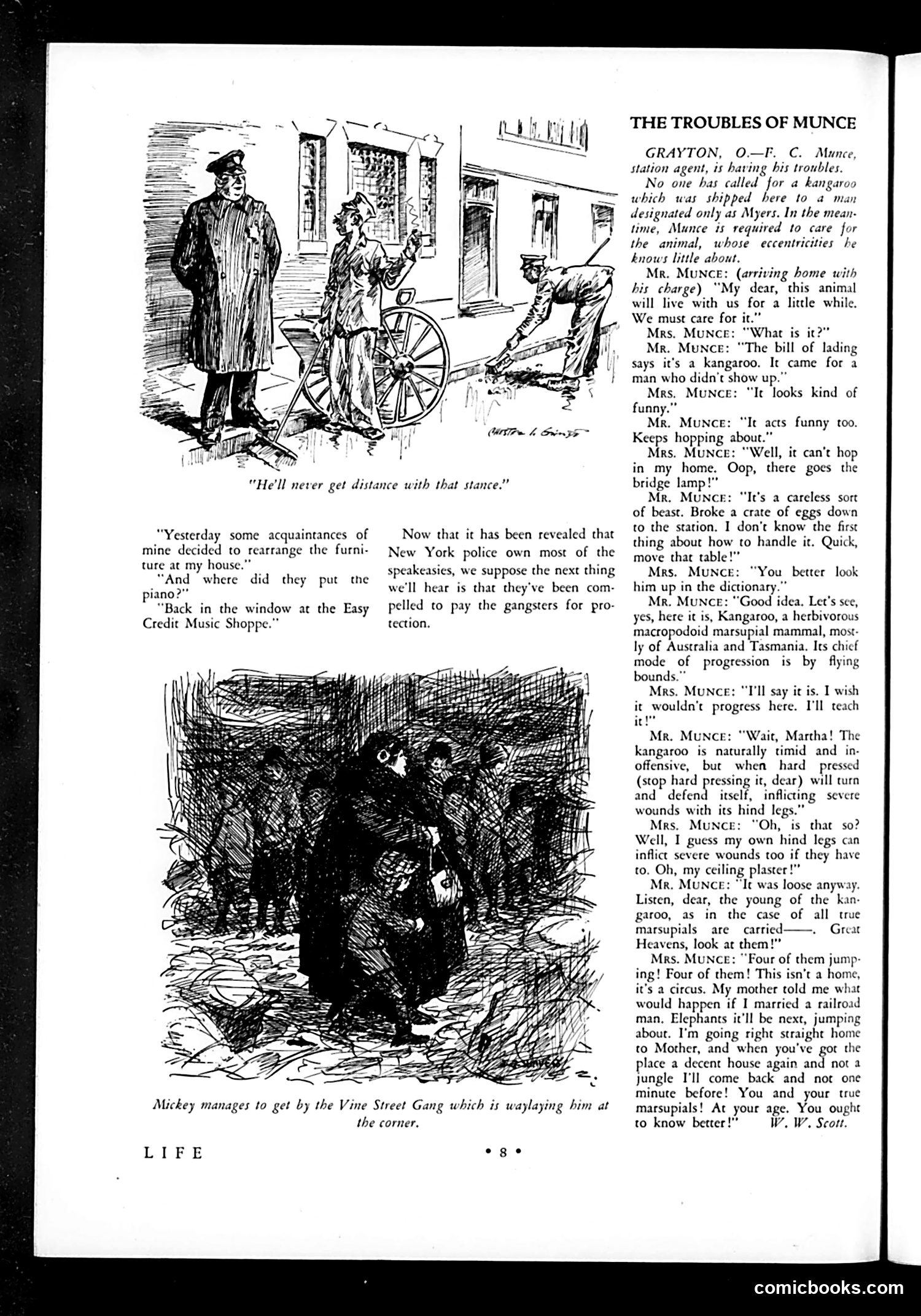
# "The Troubles of Munce" - Analysis This is a humorous story about **F.C. Munce, a railroad station agent** dealing with an unexpected kangaroo that arrived at his station. The satire centers on bureaucratic absurdity: Munce must care for the animal despite having no expertise, and discovers it was shipped as a "bill of lading" for a man who never showed up. The joke mocks official incompetence—Munce must consult a dictionary to learn what a kangaroo is, and the animal causes domestic chaos (breaking eggs, hopping through the house). Mrs. Munce's exasperation and threat to leave illustrates the disruption of normal life caused by administrative failure and lack of accountability. The accompanying illustration shows the kangaroo cornered by the "Vine Street Gang," adding physical comedy to the bureaucratic mishap.
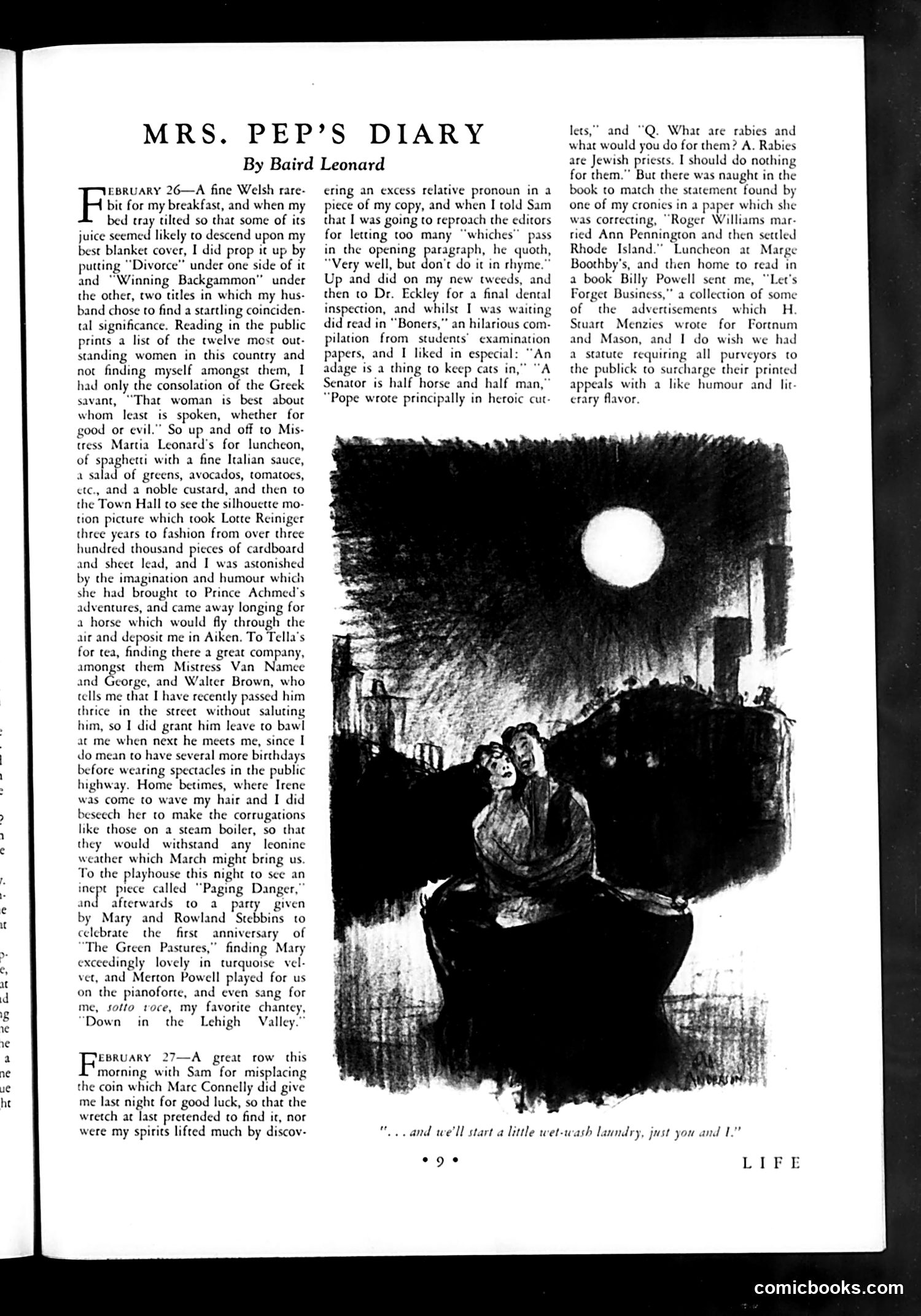
# Mrs. Pep's Diary by Baird Leonard This page contains a humorous diary entry by "Mrs. Pep" dated February 26-27. The illustration depicts a woman and man in what appears to be a basement or laundry room, with the caption: "...and we'll start a little wet-wash laundry, just you and I." The humor relies on the double entendre of "wet-wash"—a laundry term that also suggests gossip or scandal-mongering. The diary entries reference mundane social activities (lunches, theater visits, parties) and social commentary about women in society. The satire gently mocks upper-middle-class domestic life and women's social preoccupations of the era, presented through the fictional Mrs. Pep's observations about her circle and daily activities.
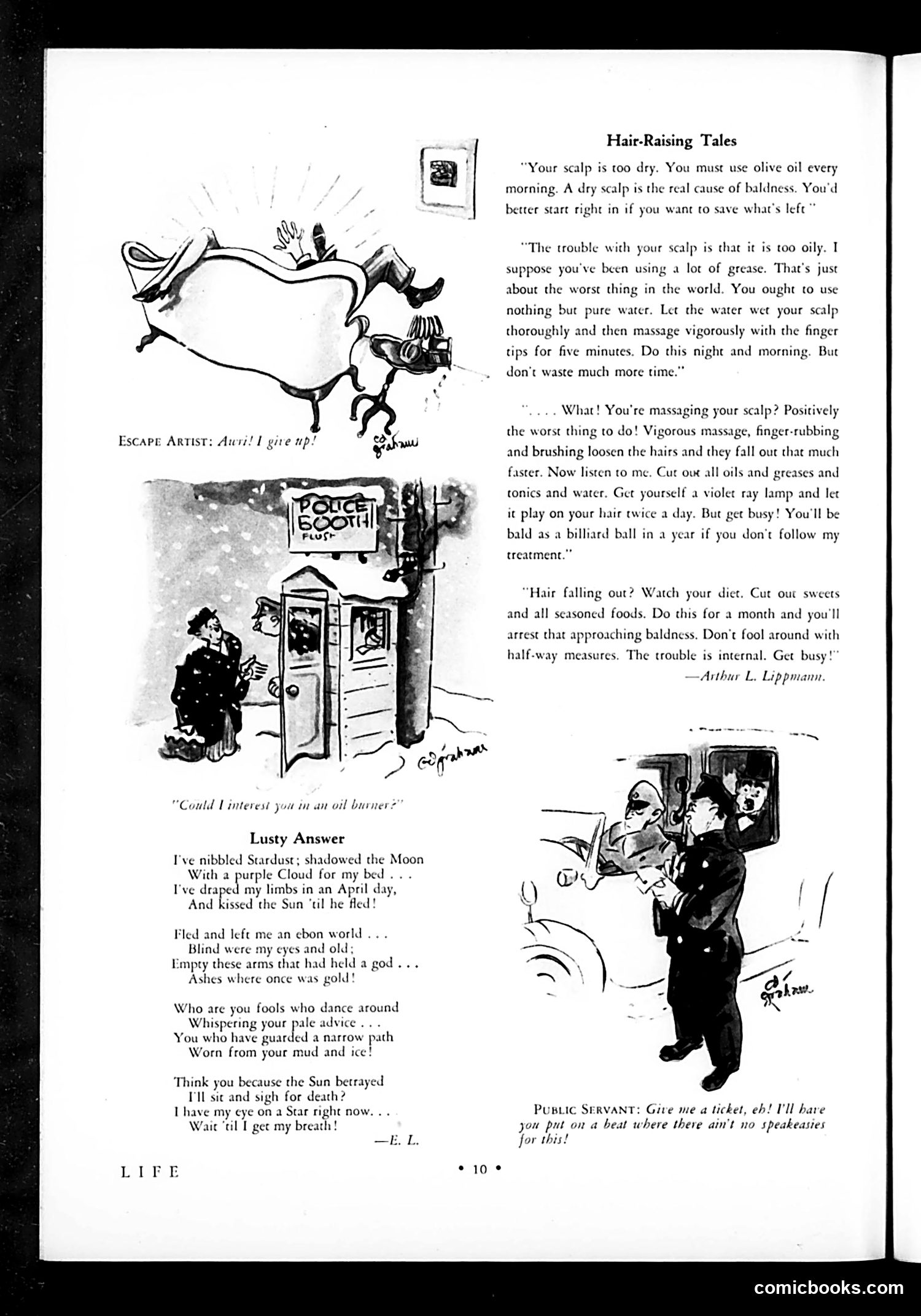
# Hair-Raising Tales Page Analysis This page satirizes conflicting hair-care advice popular in the early 20th century. The "Hair-Raising Tales" section presents exaggerated, contradictory recommendations from different supposed experts—one advocates olive oil daily, another condemns grease entirely and recommends water massage, a third warns that vigorous massage causes hair loss and prescribes violet ray lamps and tonics. The cartoons mock this confusion: "Escape Artist" shows someone tangled in hair-care implements; "Could I interest you in an oil burner?" depicts a dubious salesman at a "Police Booth" storefront. The accompanying poem "Lusty Answer" by E.L. appears unrelated—romantic/fantastical verse about cosmic adventures. The final cartoon shows a frustrated public servant dealing with transit complaints, illustrating everyday urban frustrations.