A complete issue · 37 pages · 1931
Life — March 13, 1931
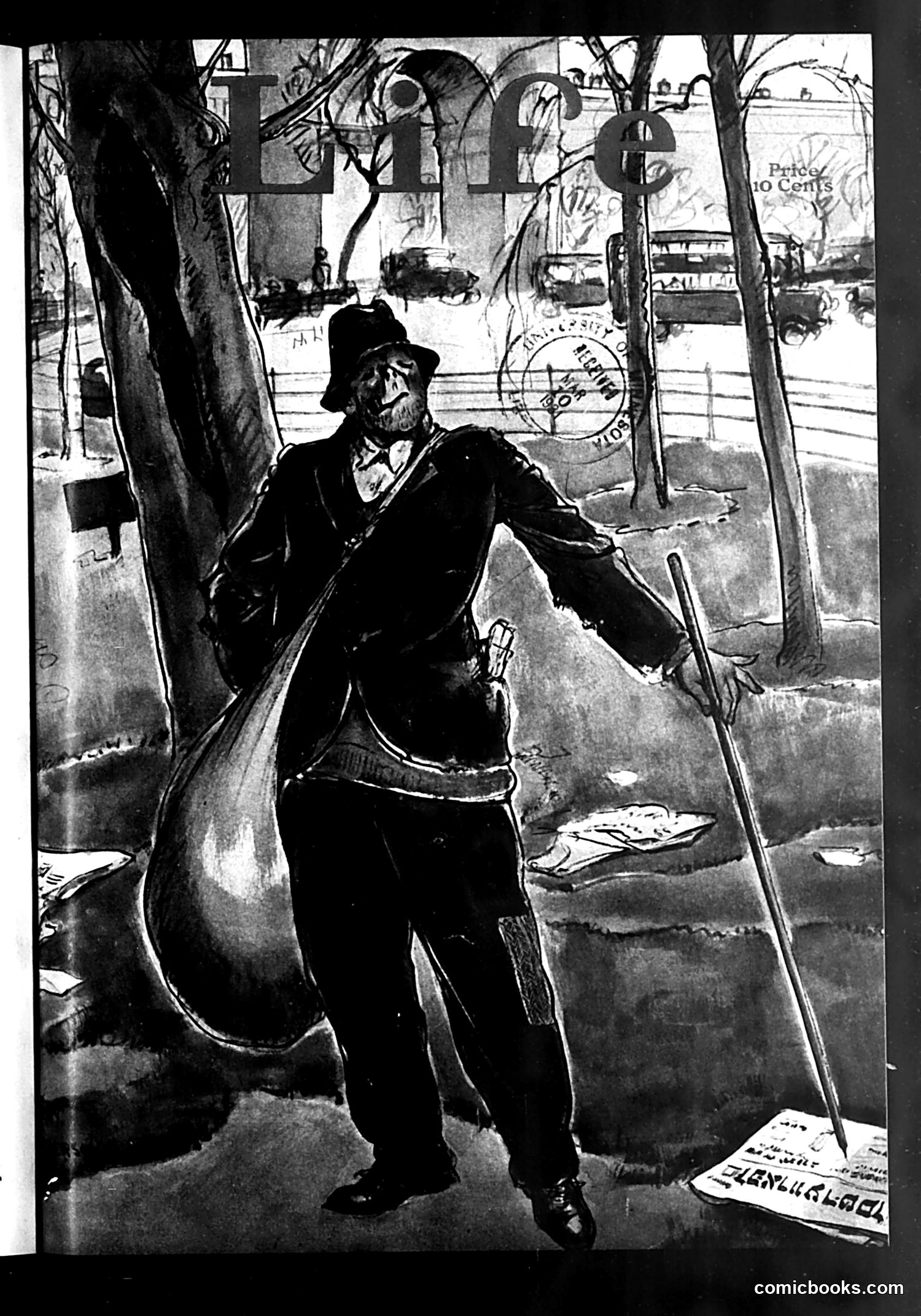
# Analysis This appears to be a political cartoon from Life magazine featuring a caricatured military or uniformed figure wielding a large club or bludgeon. The figure wears a hat and formal military-style clothing with a belt. The setting shows a park or public space with trees and vehicles visible in the background. The cartoon's satire seems to target authoritarian violence or police/military overreach, given the prominent display of the weapon as the figure's defining characteristic. Without clearer text or dating information visible on this page, I cannot definitively identify the specific historical figure, political event, or social issue being referenced. The style suggests early-to-mid 20th century American satirical commentary, likely commenting on abuse of power or militarism, but specific context remains unclear from the image alone.
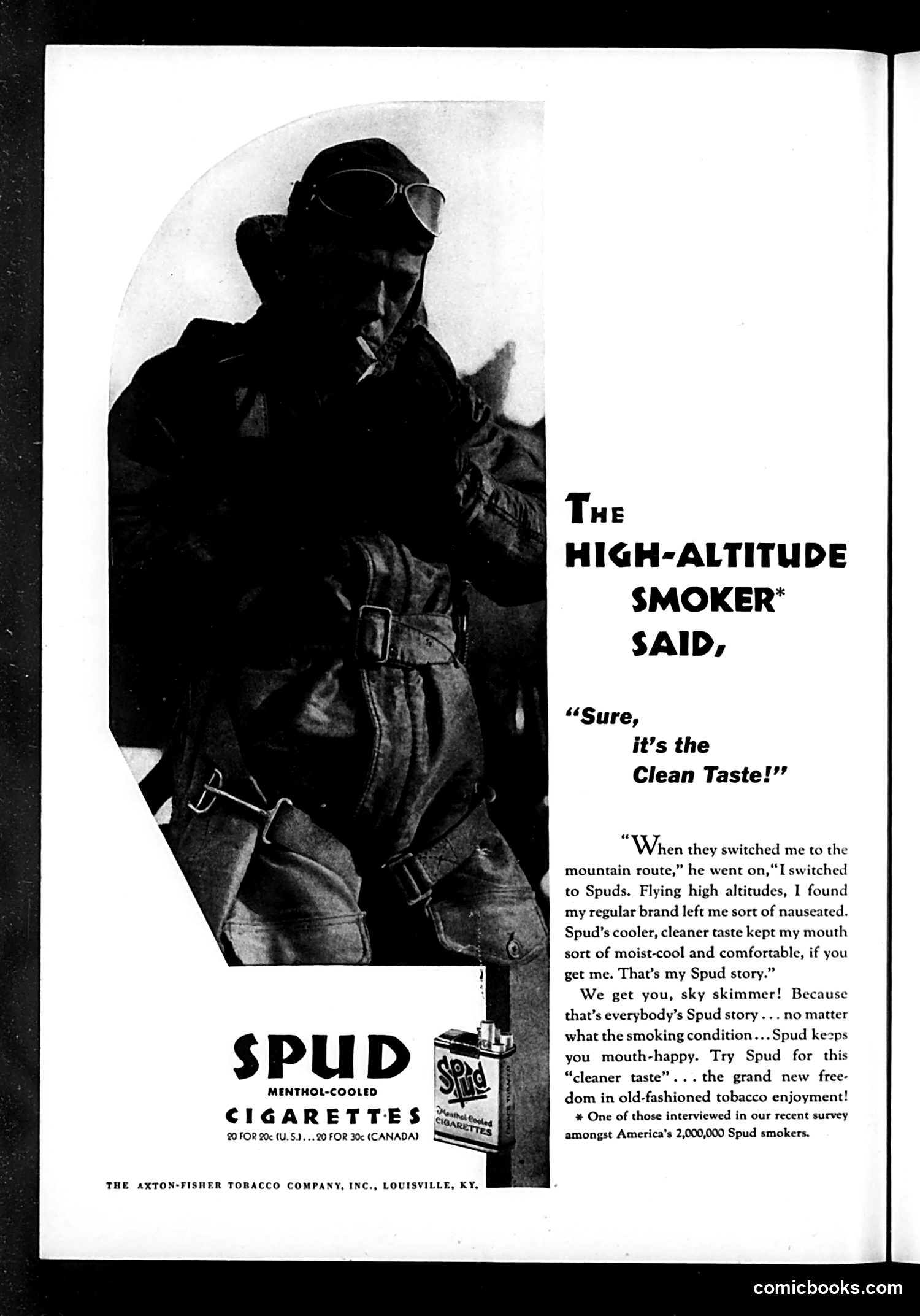
This is a vintage advertisement for Spud menthol-cooled cigarettes, not satirical content. The ad features a high-altitude pilot or mountain climber in full gear with goggles, positioned as a testimonial endorser. The "high-altitude smoker" claims that switching to Spud cigarettes resolved nausea caused by his regular brand, praising the product's "clean taste" and cooling menthol properties. The advertisement targets adventurous consumers by associating the product with extreme conditions and rugged pursuits. It includes pricing information (90 for 50¢ U.S.; 90 for 30¢ Canada) and is credited to the Axton-Fisher Tobacco Company in Louisville, Kentucky. This reflects mid-20th century cigarette marketing strategies that leveraged aspirational lifestyles and false health claims.
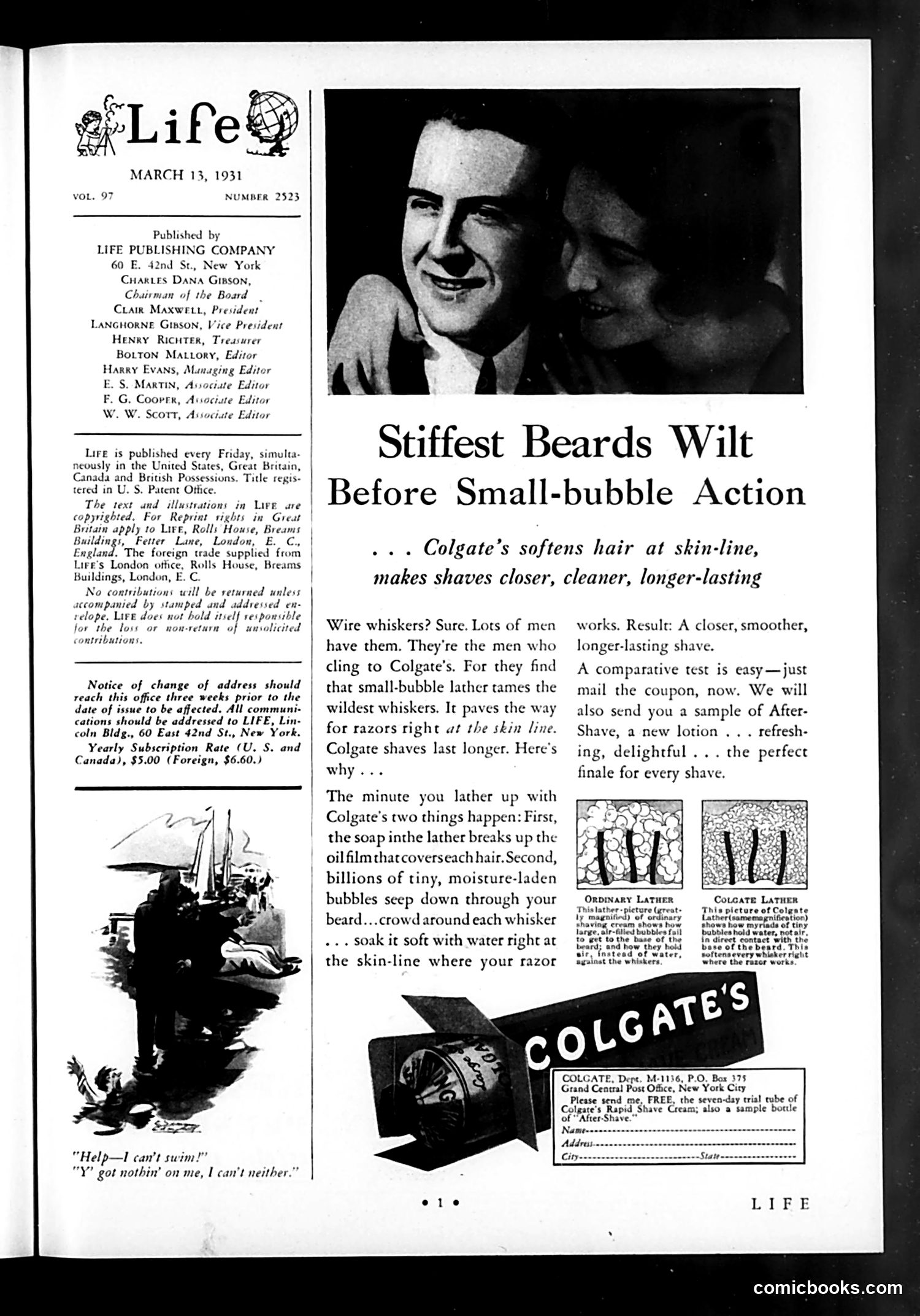
# Page Analysis This page is **primarily a Colgate shaving cream advertisement** disguised as editorial content, a common advertising practice in 1931 Life magazine. The main cartoon (lower left) shows a drowning figure crying "Help—I can't swim!" while another responds "V' got nothin' on me, I can't neither." This appears to be a generic humorous cartoon unrelated to the advertisement. The featured advertisement uses comparative diagrams to illustrate how Colgate's "small-bubble" lather supposedly differs from ordinary lather, claiming it softens whiskers and enables closer shaves. The ad includes a coupon offering free samples. The smiling man's photograph at top right likely represents a satisfied customer testimonial, typical of advertising conventions of the era.
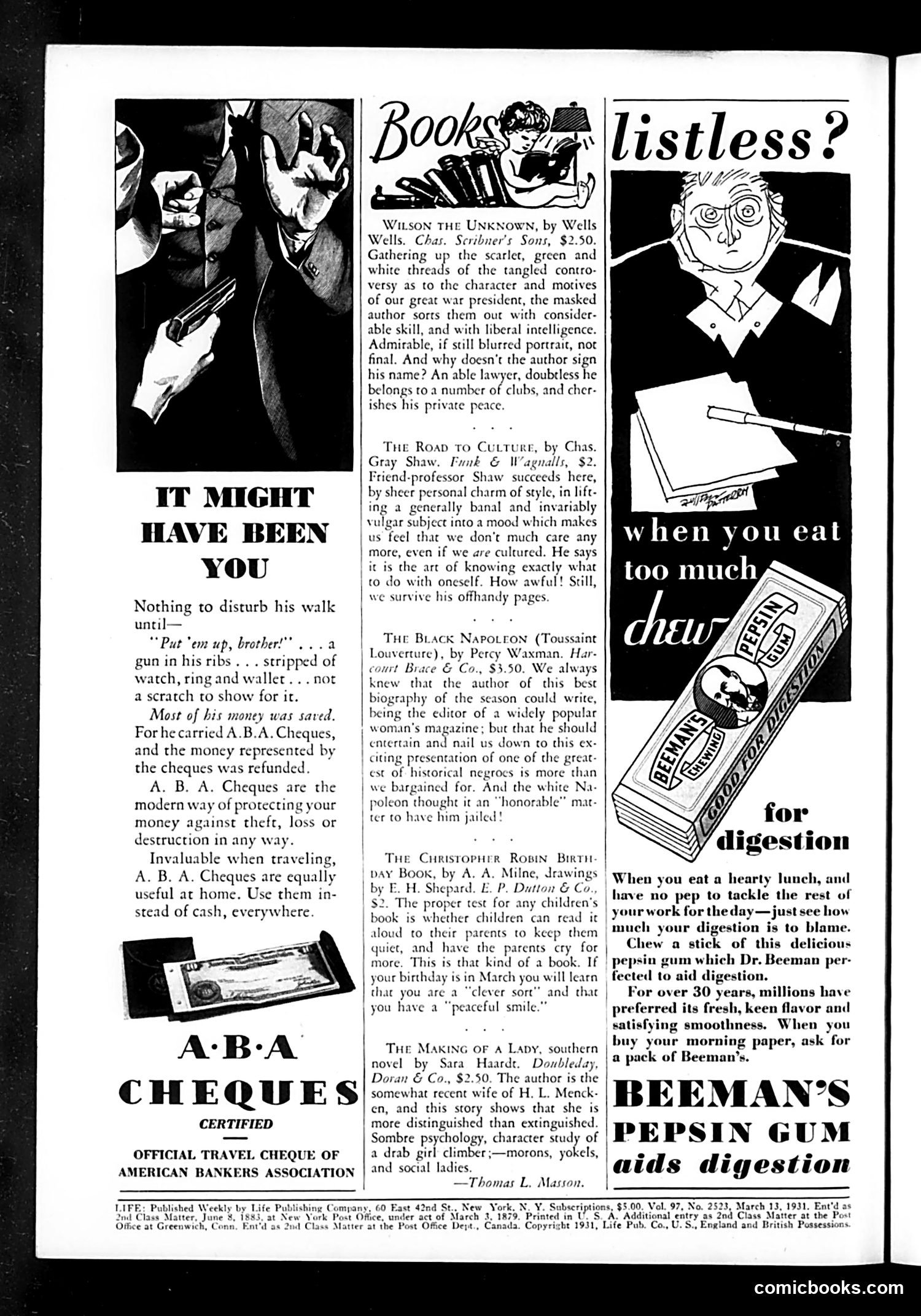
# "It Might Have Been You" Cartoon Analysis This political cartoon satirizes vulnerability to theft and crime. The image shows a well-dressed man who has been robbed—stripped of valuables like his watch, ring, wallet, and even the cheques from his ribs. The accompanying text emphasizes the shocking ease of such theft: "nothing to disturb his walk" before the robbery. The satire's point: the cartoon promotes **A.B.A. Cheques** (traveler's cheques from the American Bankers Association) as protection against theft. By depicting a man left with nothing after robbery, the ad argues these certified cheques are the "modern way of protecting your money" while traveling—safer than carrying cash, which offers no recourse if stolen.
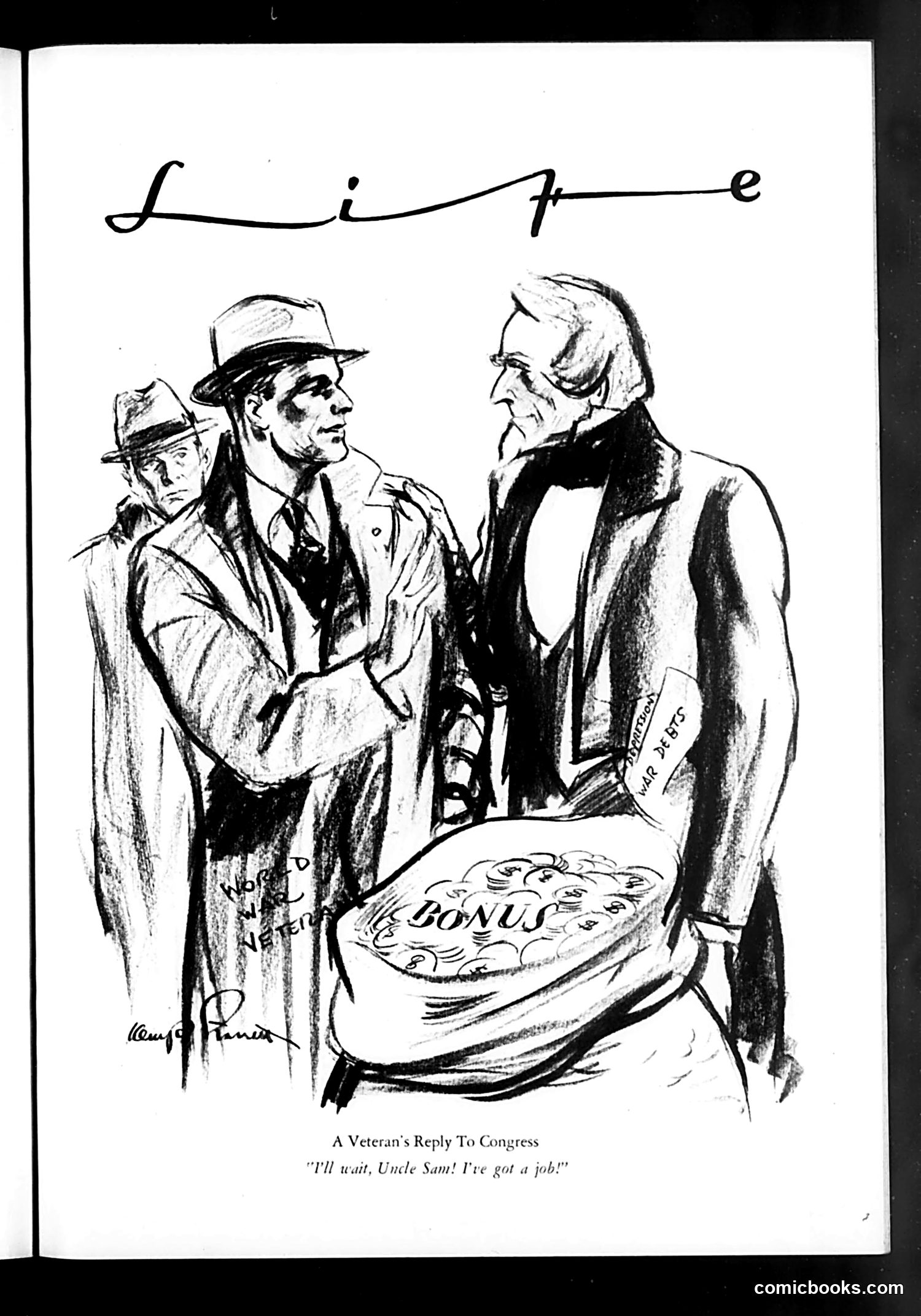
# "A Veteran's Reply to Congress" This cartoon depicts a World War I veteran (center, in military attire) confronting a well-dressed congressman (right) who offers a "Bonus" — likely referring to the contentious Veterans' Bonus debate of the 1920s-30s, when Congress debated compensating soldiers for wartime service. The veteran's reply — "I'll wait, Uncle Sam! I've got a job!" — expresses sardonic frustration. Rather than accept delayed bonus payments, the veteran asserts he's found employment, implying Congress's promises ring hollow. A younger soldier stands behind him (left), witnessing the exchange. The satire critiques Congress's stalling tactics on veteran benefits while working veterans struggle economically. The cartoon champions veterans' dignity and self-reliance while mocking government delay.
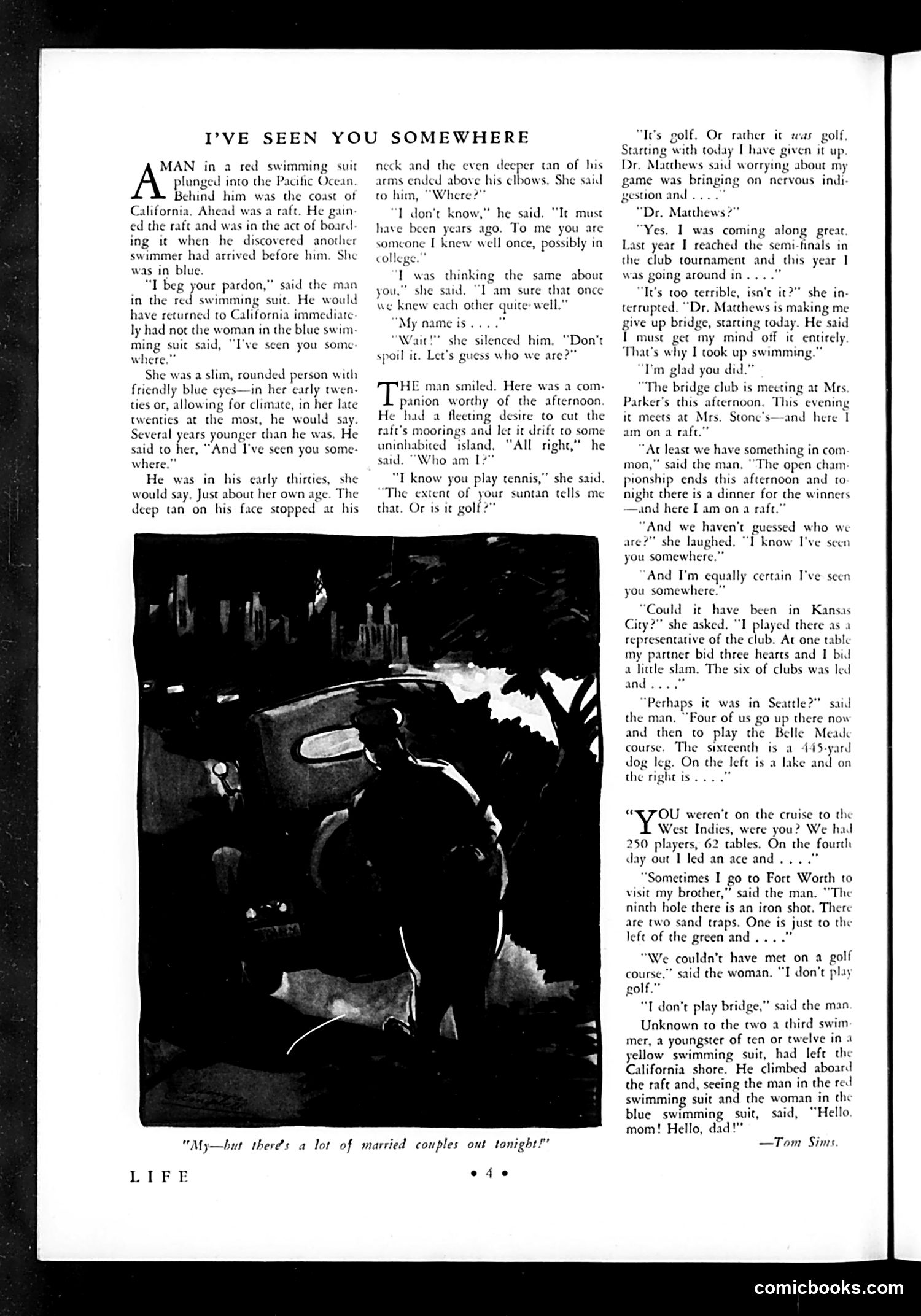
# Analysis of "I've Seen You Somewhere" This page presents a short story illustrated with a single photograph. The narrative depicts a chance encounter between a man in a red swimming suit and a woman in a blue suit who meet on a Pacific Ocean raft. Each claims to recognize the other from somewhere. The story humorously traces their failed attempts to place each other through various locations: California, college, a club tournament, Kansas City, Seattle, a cruise to the West Indies, and Fort Worth. Despite multiple shared reference points across different settings and social contexts, neither can definitively identify where they've met. The accompanying photograph shows two figures on what appears to be a raft, illustrating the story's opening premise. The humor derives from the common social awkwardness of partial recognition and the increasingly absurd accumulation of potential meeting places.
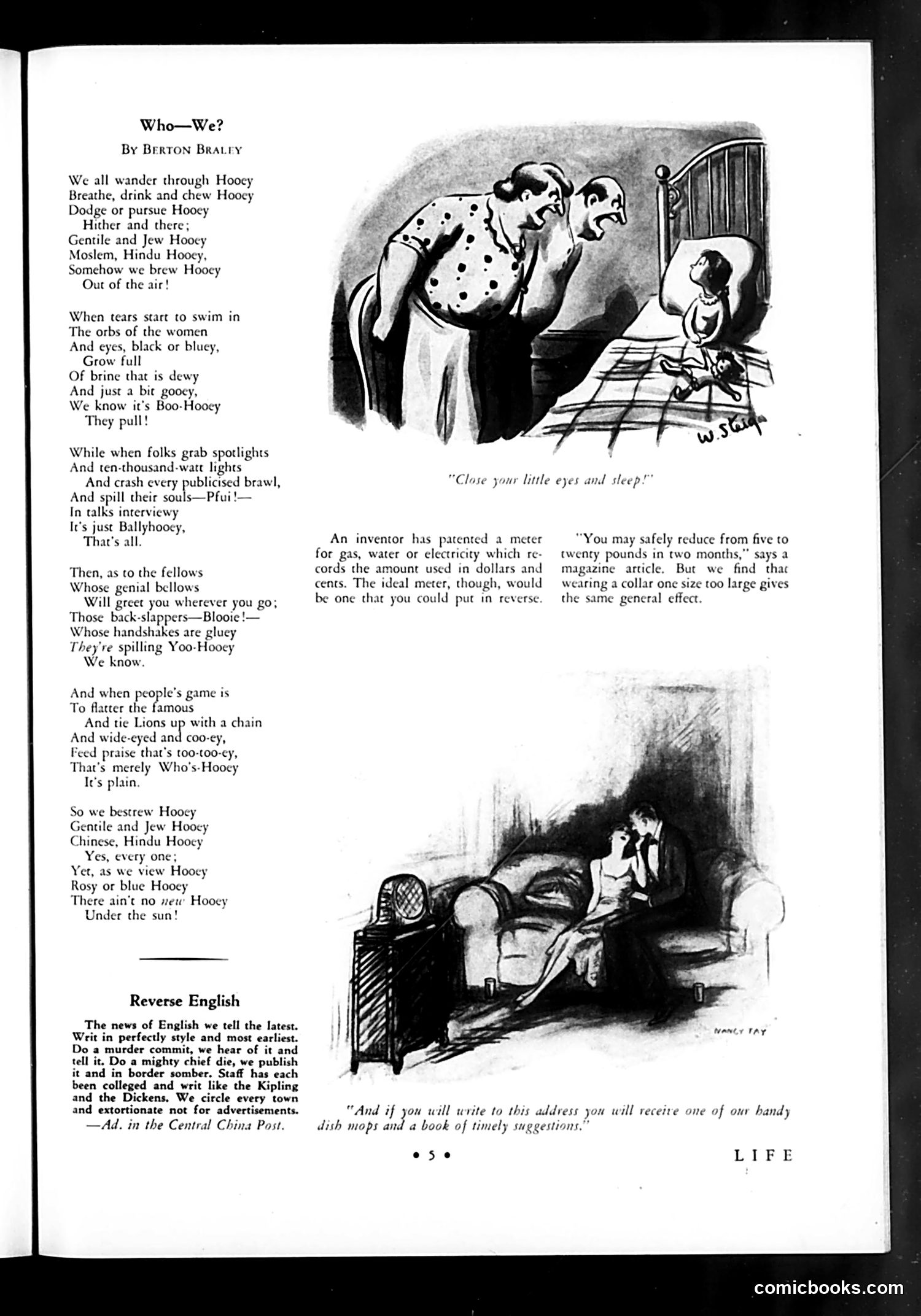
# "Who—We?" by Berton Braley This satirical poem mocks American hypocrisy regarding identity and behavior. The verse contrasts public self-perception with actual conduct: Americans claim moral superiority while engaging in "Hooey"—deception, flattery, and shallow performance. The two accompanying cartoons illustrate this theme. The upper sketch shows an adult telling a child to "Close your little eyes and sleep"—suggesting willful ignorance or innocence maintained through deception. The lower cartoon depicts someone reclining with a radio, likely referencing how mass media and entertainment distract from or obscure uncomfortable truths. The poem's final message is that American society constantly practices "Who's Hooey"—self-deceptive flattery and false presentation—regardless of ethnicity or class. It's a critique of widespread American insincerity.
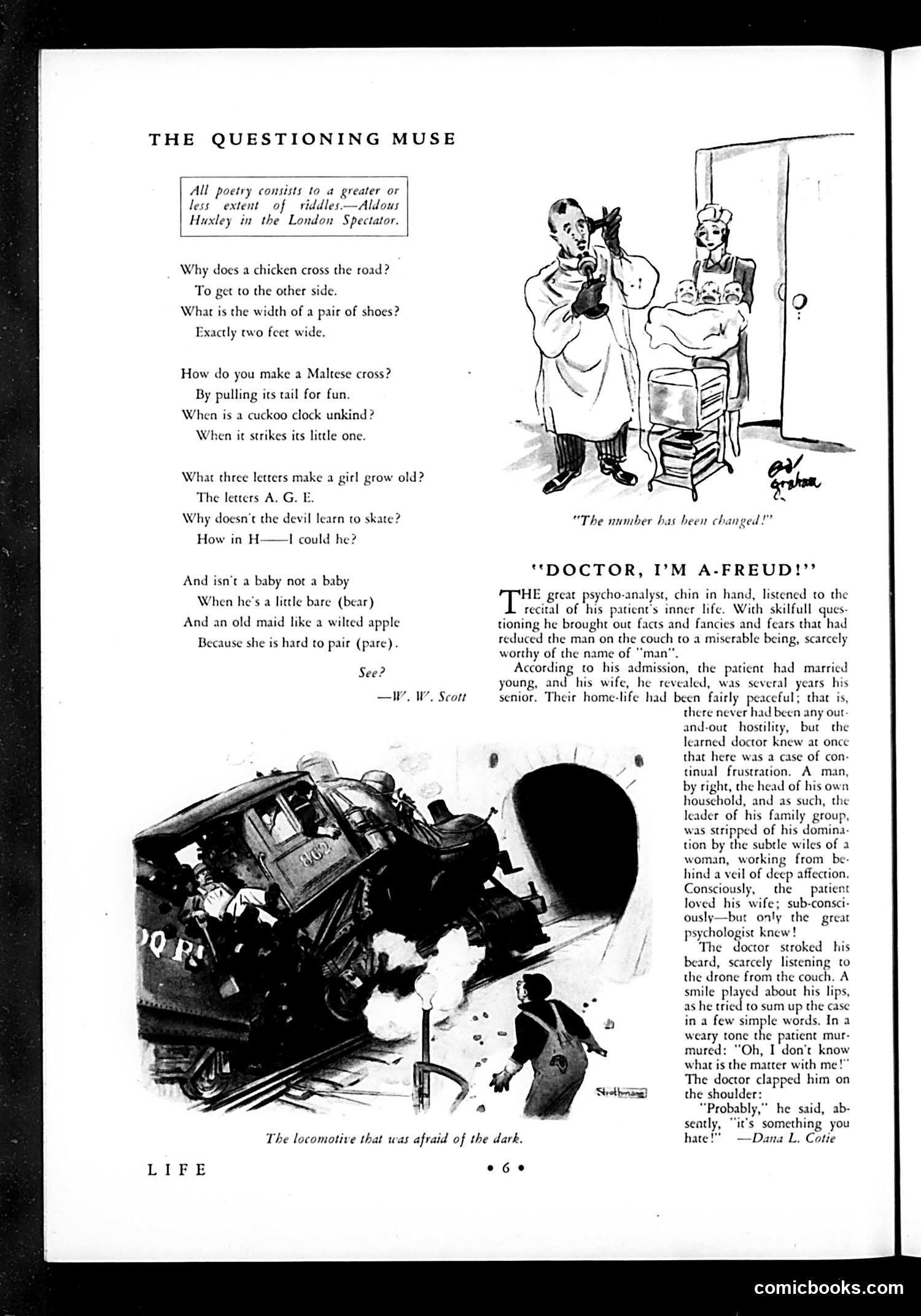
# Analysis of Life Magazine Page This page contains two distinct sections: **"The Questioning Muse"** (top left) presents riddling jokes and wordplay in the style of W.W. Scott, typical of early 20th-century humor magazines. The jokes rely on puns ("bare/bear," "parc/pare") and literal interpretations of common riddles. **"Doctor, I'm A-Freud!"** (right side) is a satirical story mocking psychoanalysis. The title puns on Sigmund Freud's name. The narrative describes a psychoanalyst treating a patient whose marital frustration stems from his wife's domination—a common satirical critique of psychology's emerging popularity. The accompanying illustration of a derailed locomotive appears to be a visual metaphor for the patient's psychological state. The overall page reflects early-20th-century skepticism toward Freudian psychology, presenting it as both pretentious and absurd through humor.
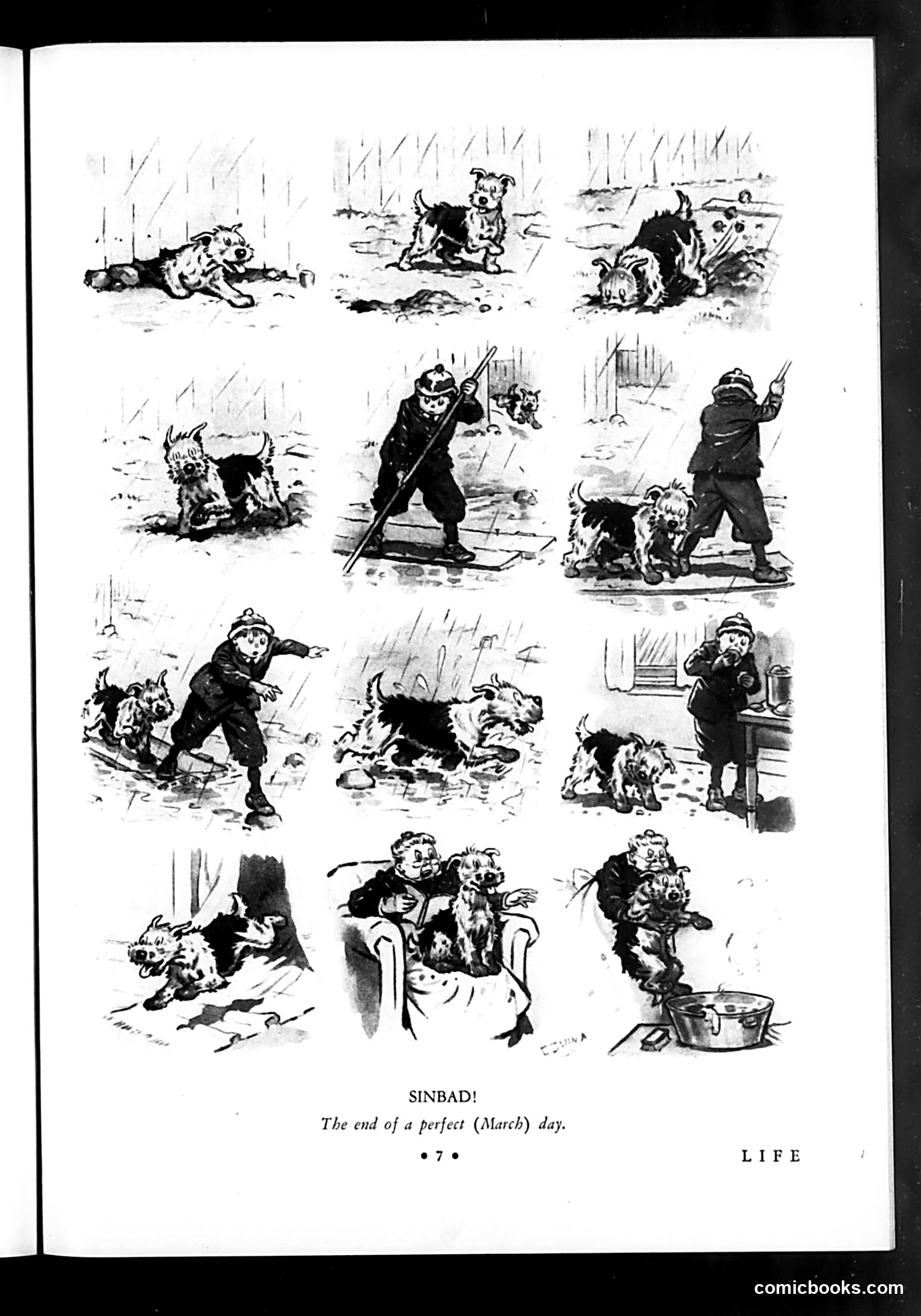
# "Sinbad! The End of a Perfect (March) Day" This is a humorous illustrated sequence from *Life* magazine showing a dog's eventful day. The title references both the fictional sailor Sinbad and the popular 1910 song "The End of a Perfect Day." The comic strips depict a terrier experiencing various misadventures: playing in rain and mud, encountering other dogs, interacting with a soldier or policeman, being chased, and finally returning home exhausted and bedraggled. The final panels show the dog with its owner—appearing muddy, wet, and thoroughly worn out. The satire humorously contrasts the owner's perspective of a "perfect day" with the dog's chaotic reality of outdoor adventures, dirt, and troublemaking. It's a gentle commentary on the gap between human expectations and animal behavior.
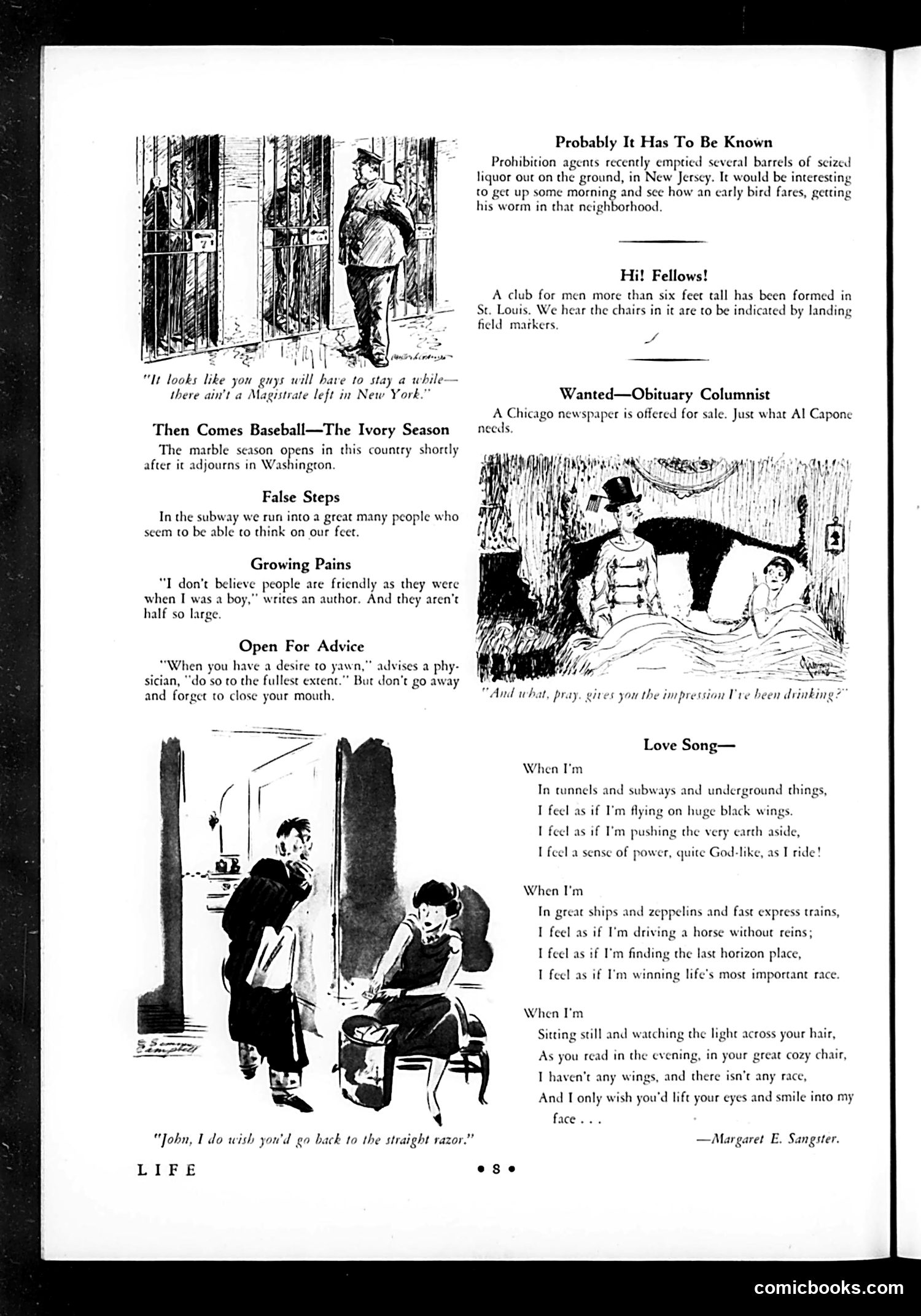
# Analysis of Life Magazine Page This page contains several short humorous pieces and illustrations typical of early 20th-century satirical journalism. **Top cartoon**: A man carrying empty liquor bottles encounters police, joking that "magistrates" have disappeared from New York—sarcastically suggesting Prohibition enforcement has made legal authority vanish. **Middle cartoon**: Shows a man in bed asking a woman "what pray, gives you the impression I've been drinking?"—a domestic humor piece about a husband denying inebriation. **Bottom cartoon**: Depicts two men, one asking the other to "go back to the straight razor"—likely referencing safety razors versus traditional straight razors, used humorously in a personal grooming context. The page also includes brief humorous observations about baseball, subway crowds, and growing pains, concluding with Margaret E. Sangster's "Love Song"—a sentimental poem about romantic longing.
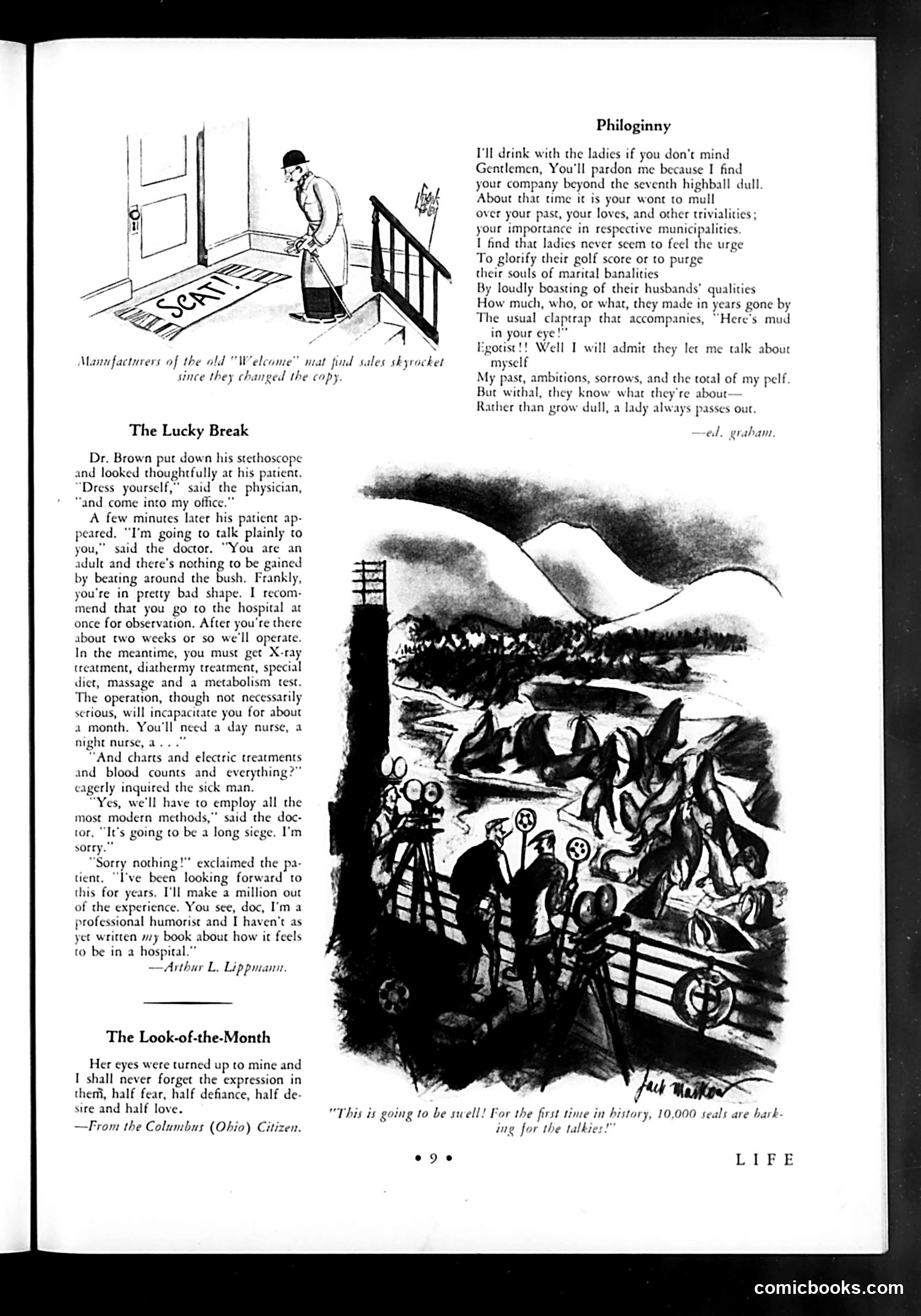
# Explanation for Modern Readers This page contains three separate pieces of humor: 1. **Top cartoon**: Shows a man at a doormat labeled "Welcome" that has apparently worn out from overuse. The caption jokes that sales of these doormats have skyrocketed "since they changed the copy"—suggesting the worn-out welcome reflects a social commentary on hospitality or perhaps business conditions. 2. **"The Lucky Break"**: A humorous anecdote by Arthur L. Lippmann about a patient visiting Dr. Brown. The doctor delivers bad news about the patient's health condition while matter-of-factly recommending hospitalization and various treatments. The joke's punchline involves the patient being a professional humorist looking for material about hospital experiences. 3. **"The Look-of-the-Month"**: A brief poetic quote about a woman's romantic expression. The page reflects early-to-mid 20th century Life magazine's blend of light satire and social observation.
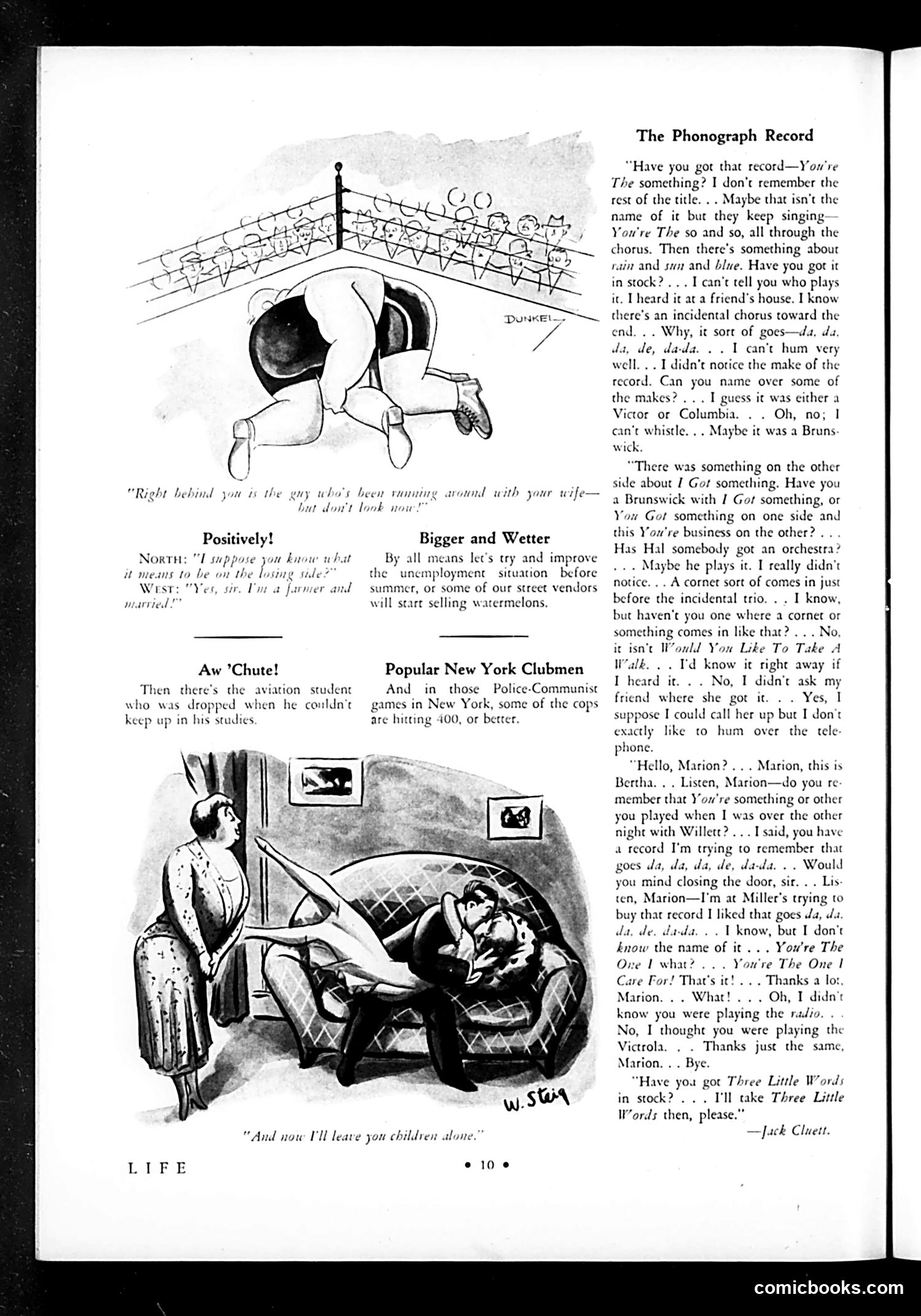
# Analysis of Life Magazine Page 10 This page contains humorous anecdotes and cartoons about everyday life circa the 1920s-30s era. The main cartoon by W. Steig depicts a domestic scene where a man relaxes while a woman stands nearby, with the caption "And now I'll leave you children alone." The surrounding text sections are brief comedic vignettes: - "Positively!" jokes about assuming someone's profession - "Aw 'Chute!" mocks an aviation student who failed his studies - "Bigger and Wetter" suggests improving unemployment by street vendors selling watermelons - "Popular New York Clubmen" references police corruption in NYC, where cops allegedly cheat at games The extended "Phonograph Record" section humorously depicts someone trying to identify a song over the telephone—a comedic reflection on the era's phonograph technology and popular music culture. The satire gently mocks everyday social situations and period-specific technologies.