A complete issue · 36 pages · 1931
Life — February 20, 1931
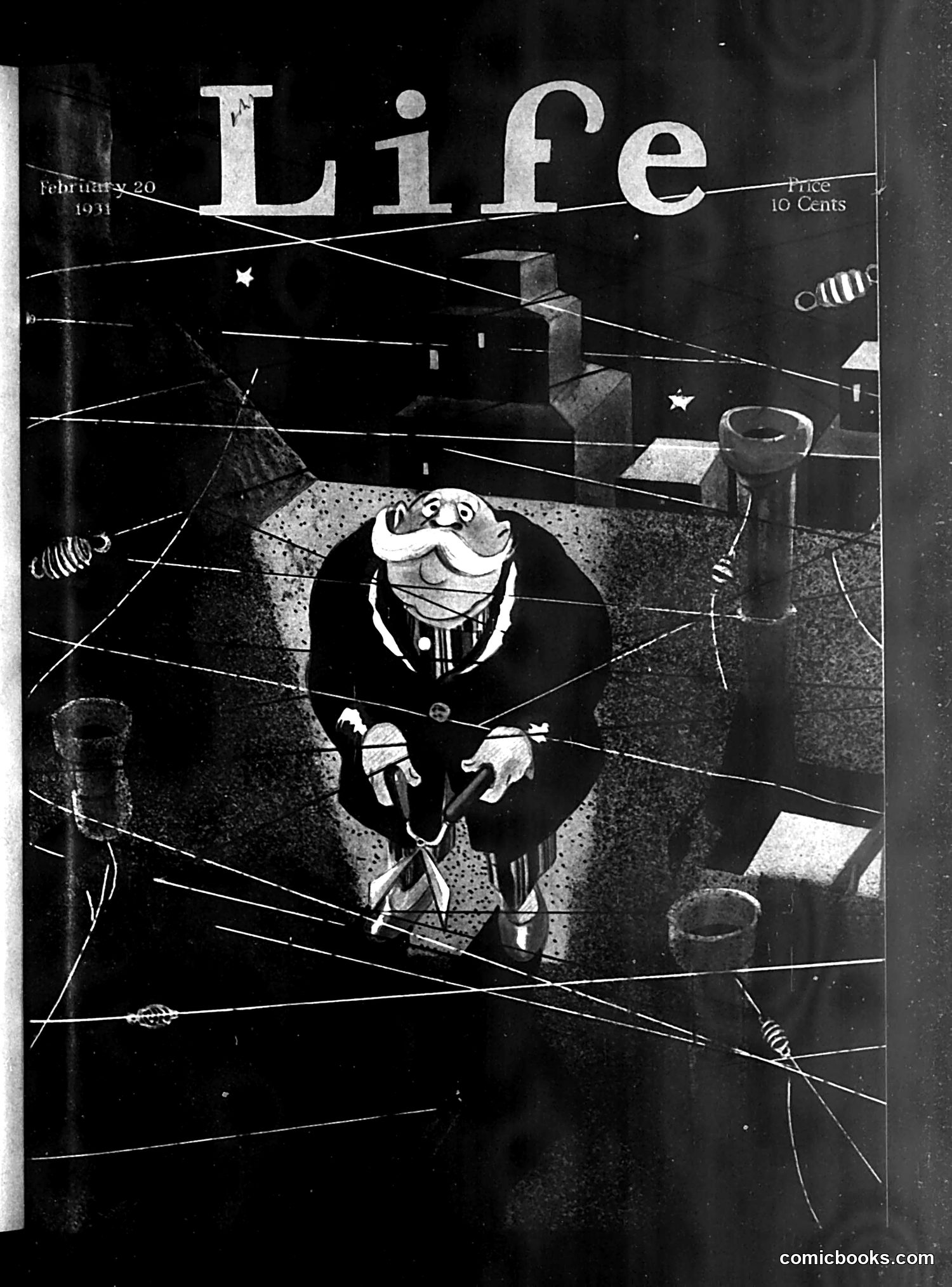
# Life Magazine Cover - February 20, 1931 This is a Life magazine cover from February 1931 featuring a caricatured character with an exaggerated mustache and formal attire, positioned centrally with various objects arranged around him in a geometric composition. The figure appears to be a satirical representation, likely of a political or public figure from that era, though the specific identity cannot be definitively stated from the image alone. The cover's artistic style uses dramatic perspective lines and scattered objects (vessels, geometric shapes) creating a somewhat surreal or theatrical arrangement. The "Life" masthead and "10 Cents" price notation frame the composition. Without additional context beyond what's visible, the exact satirical intent remains unclear, though the exaggerated facial features suggest commentary on a contemporary political or social figure.
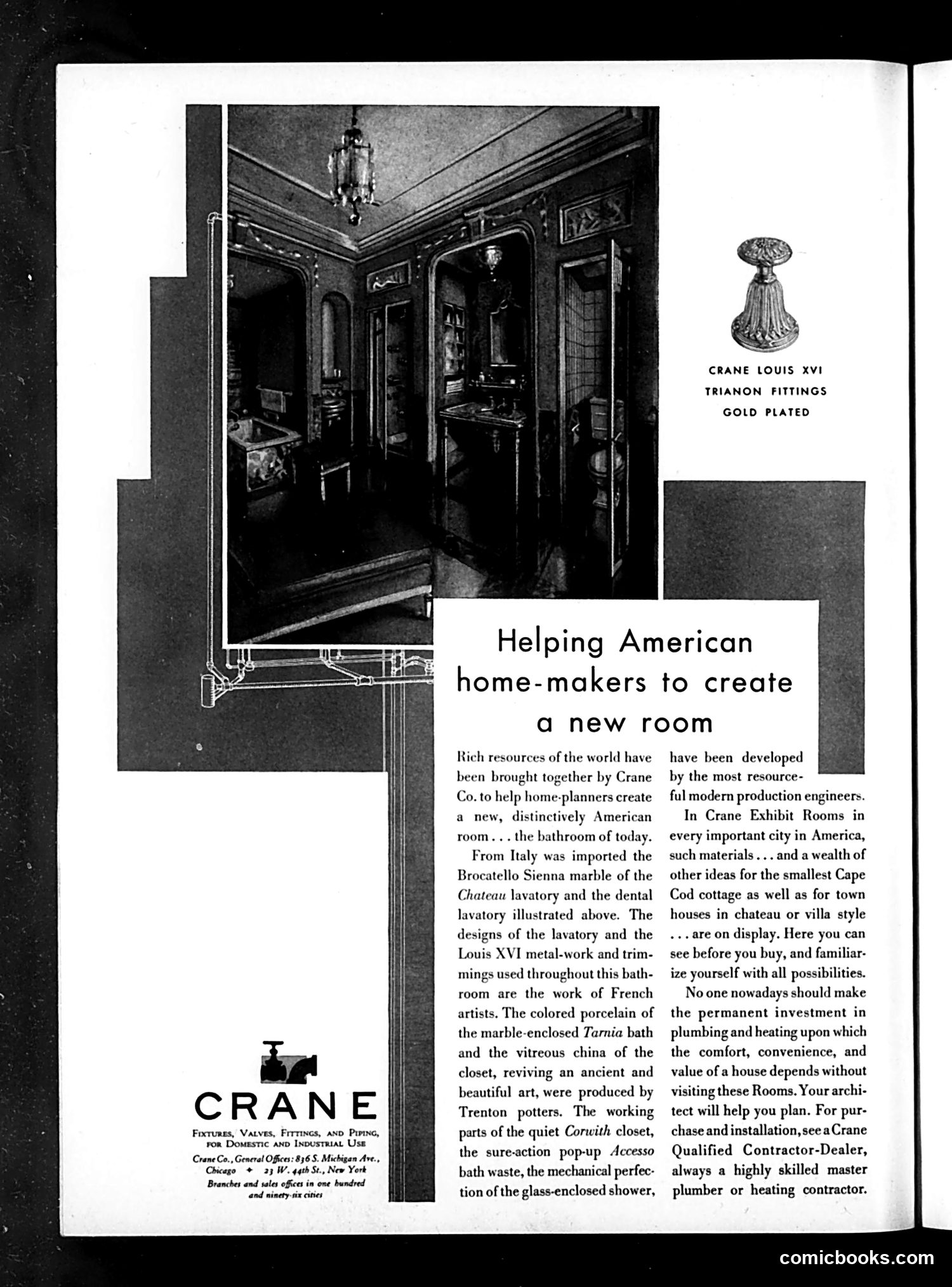
This page is primarily **advertising content, not satire or political commentary**. It features a Crane Co. advertisement for bathroom fixtures and plumbing supplies. The main image shows an elegantly appointed 1920s-30s bathroom with Italian marble, French metalwork, and Trenton pottery. The text promotes Crane's "Exhibit Rooms" in major American cities where homeowners could view and plan bathroom renovations before purchasing. It emphasizes that this was a new concept—allowing customers to see options in advance rather than committing blindly. The gold-plated "Trianon Fittings" shown at top represent the luxury end of Crane's product line. The advertisement targets affluent homemakers interested in modernizing their homes with quality imported materials and American manufacturing expertise.
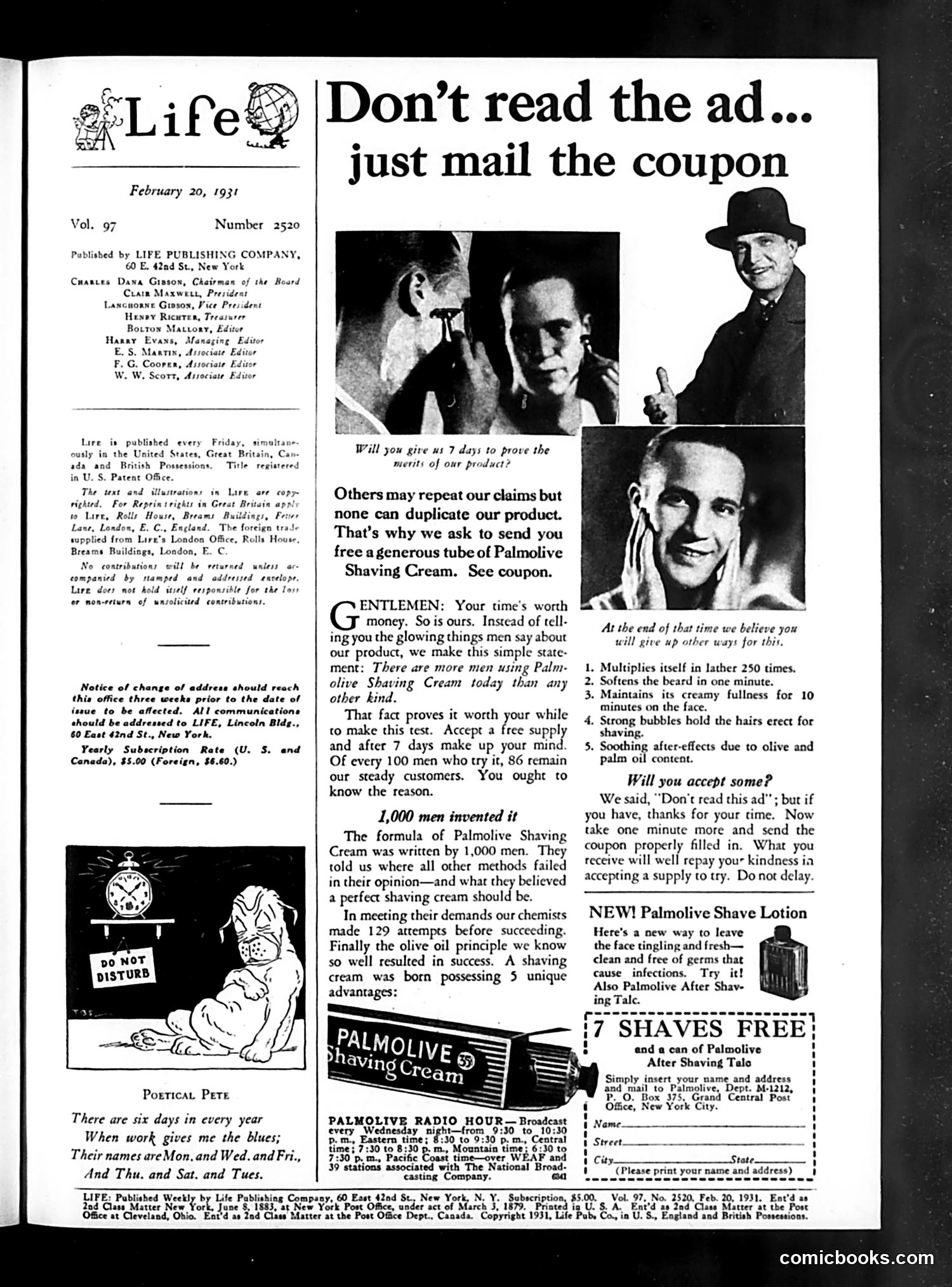
# Political Pete and Palmolive Advertisement This page contains two unrelated items: **Left side: "Political Pete" cartoon** shows a figure labeled "DO NOT DISTURB" sleeping through political events. The accompanying verse states there are six days in each week when such a person doesn't follow politics—only Monday, Wednesday, Friday, Thursday, Saturday, and Tuesday. The joke satirizes someone so detached from current events that they miss political news every single day, making their claimed disinterest absurd and hypocritical. **Right side: Palmolive Shaving Cream advertisement** featuring testimonials from men claiming the product's superiority. The ad offers a free sample and uses the headline "Don't read the ad...just mail the coupon"—a humorous meta-advertisement that acknowledges reader reluctance while promoting their product's alleged uniqueness among shaving creams.
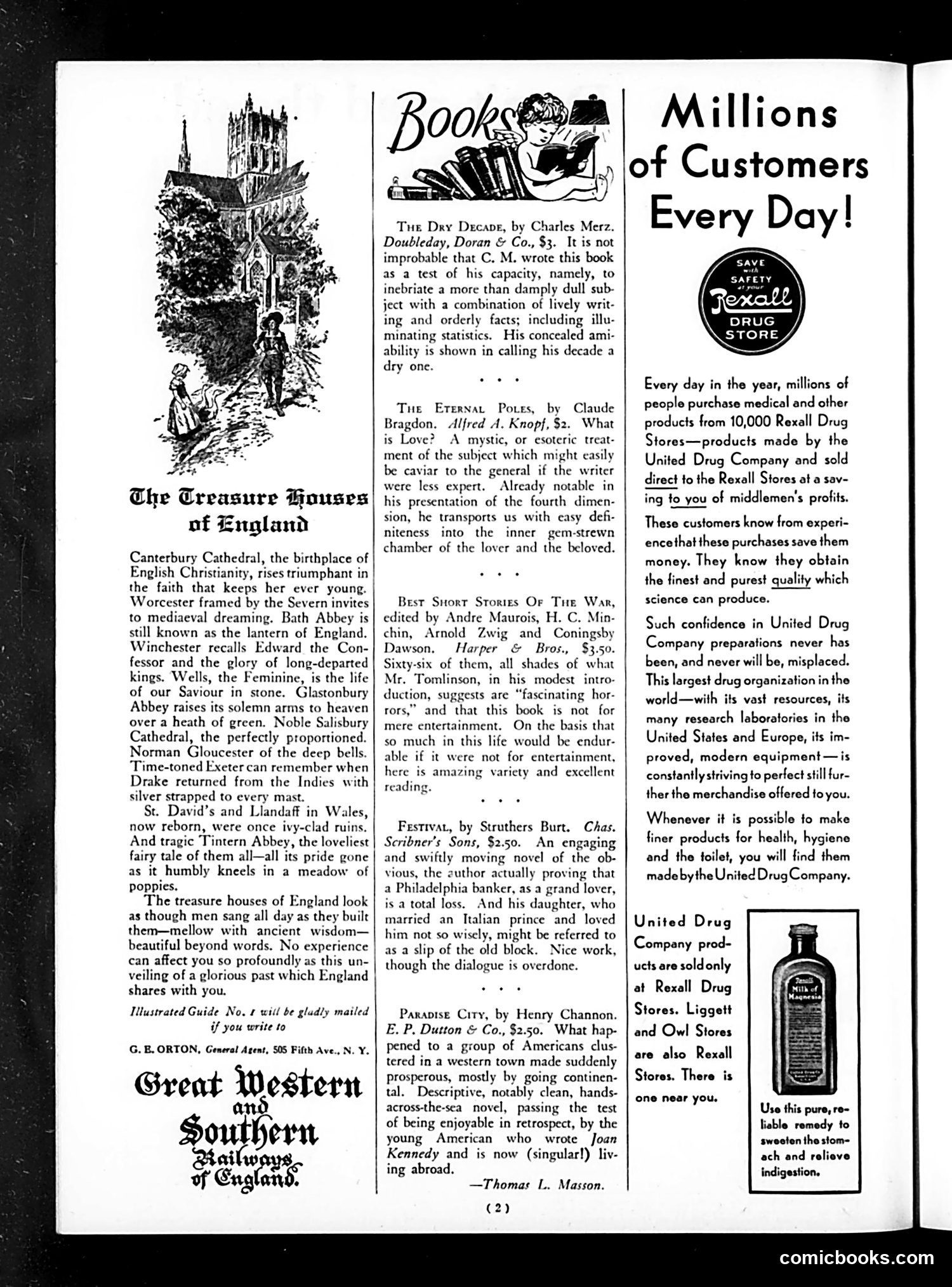
# Content Analysis This page is primarily **advertising and book reviews**, not political satire. The left side features an illustrated article titled "The Treasure Houses of England," celebrating English cathedrals and historic architecture like Canterbury Cathedral and Bath Abbey—presented nostalgically as repositories of cultural wisdom. The center contains book reviews by Thomas L. Mason, discussing recent literary works. The right side is a **Rexall Drug Store advertisement** emphasizing that millions of customers daily purchase products from 10,000 Rexall locations nationwide. The ad promotes the United Drug Company's size, research capabilities, and product quality, positioning Rexall as trustworthy and accessible. This reflects early 20th-century consumer culture marketing and nostalgia for European heritage among American readers.
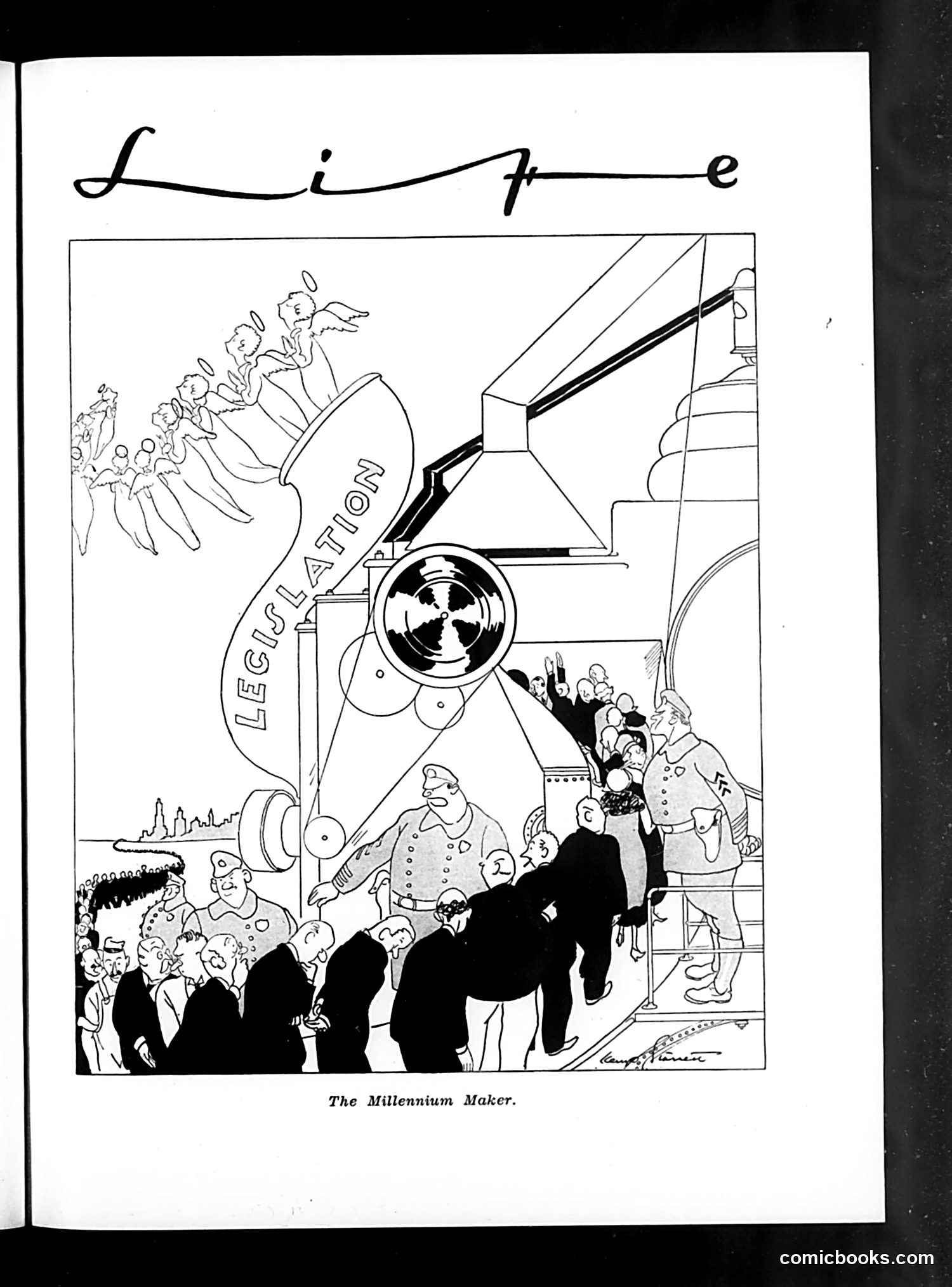
# "The Millennium Maker" - Life Magazine Cartoon This political cartoon satirizes electricity and technological progress as a transformative force. The title "Millennium Maker" and the word "LEGISLATION" on the machine suggest that electrical technology—represented by this imposing industrial apparatus with its large turbine—is being positioned as a solution to society's problems, even utopian salvation. The cartoon depicts crowds of formally-dressed dignitaries and citizens gathering around this machine, some ascending toward it hopefully. The imagery suggests both optimism about technology's potential and skepticism about over-reliance on mechanical solutions for social progress. This reflects early-20th-century debates about whether technological advancement alone could create a better future, or whether such faith was misplaced.
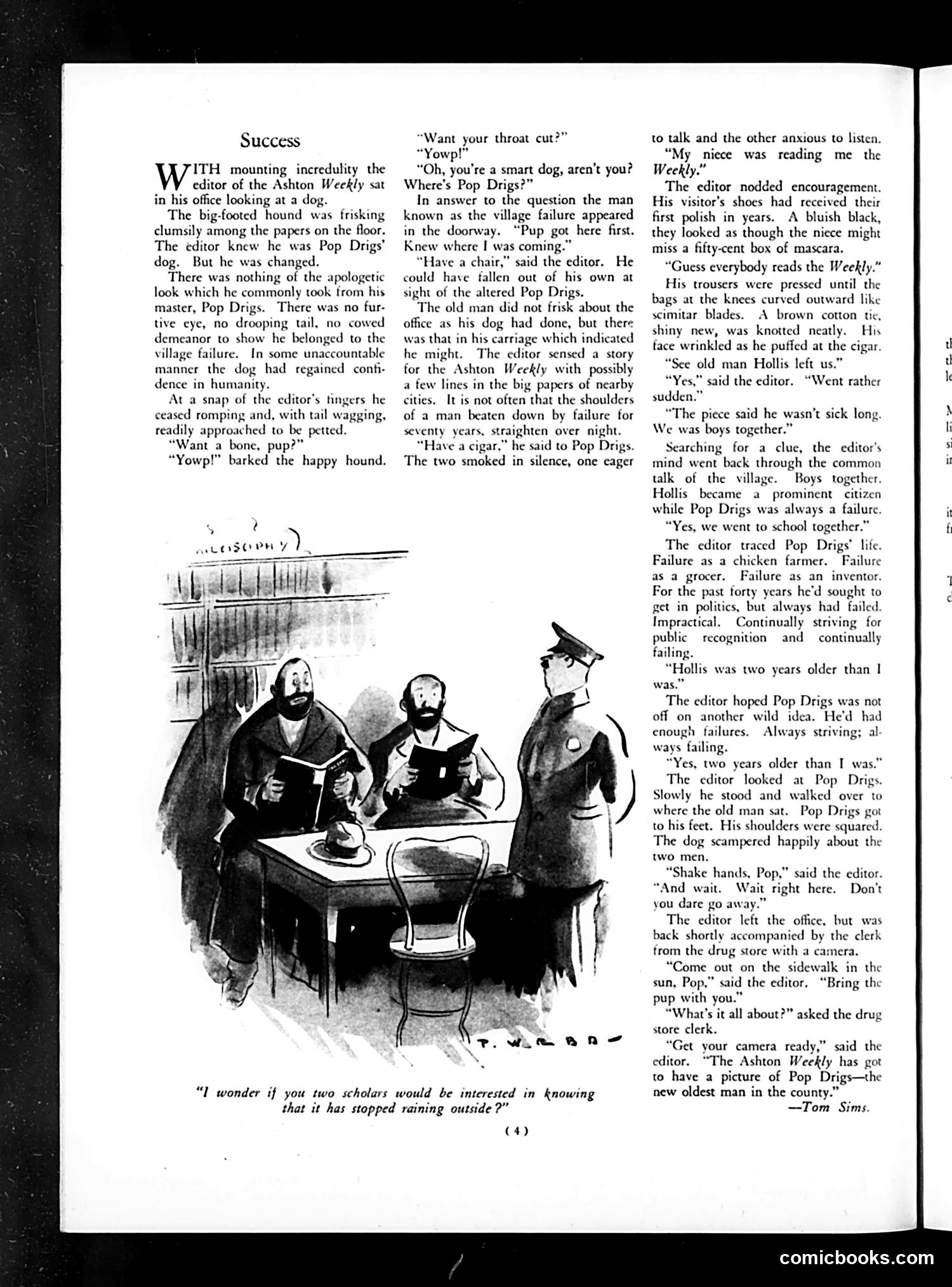
# "Success" - A Story About Pop Drigs This is a short story titled "Success" by Tom Simi, accompanying a cartoon illustration. The narrative follows an editor who discovers an old dog named Pop Drigs in his office—a dog that once belonged to the village failure, Hollis. The story uses Pop Drigs as a metaphor for failure and redemption. The editor learns that Hollis, despite forty years of striving, repeatedly failed as a farmer, grocer, and inventor. Through this reflection, the editor recognizes a parallel between his own struggling ambitions and Hollis's lifelong pattern of failure. The editor then photographs Pop Drigs for the Ashton *Weekly*, positioning the old dog as "the new oldest man in the county"—a humorous twist suggesting that persisting through perpetual failure might itself constitute a kind of success.
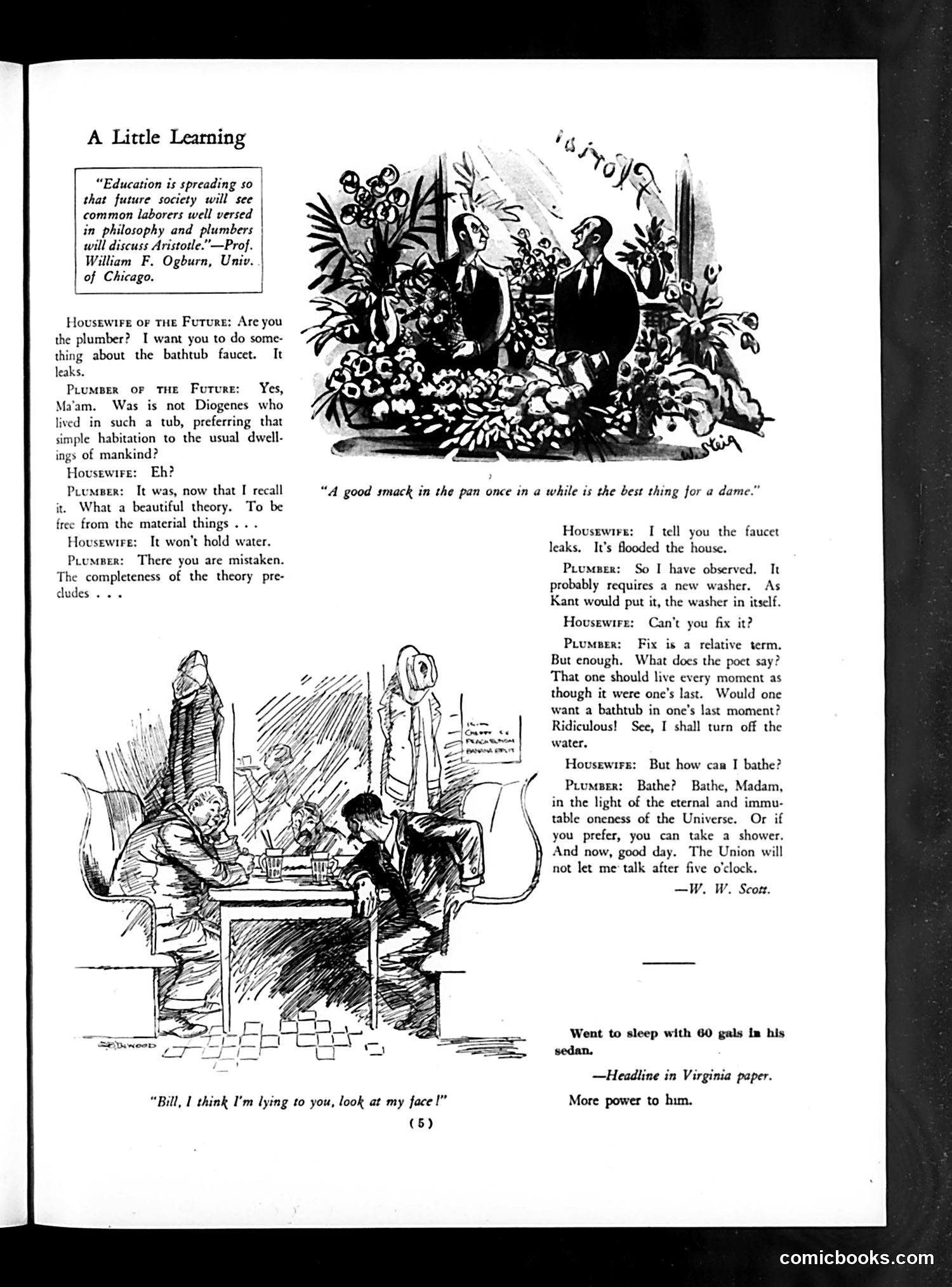
# "A Little Learning" - Life Magazine Satire This page satirizes philosophical pretension versus practical reality. The dialogue features a **Housewife of the Future** and a **Plumber of the Future** debating whether a bathtub without functioning plumbing represents enlightened simplicity or impractical idealism. The plumber invokes Diogenes and Kant, arguing that material comfort ("the washer in itself") matters despite philosophical theory. The housewife's complaint—the faucet leaks—grounds the joke in everyday practicality triumphing over abstract thought. The cartoon mocks both educated elites who romanticize poverty and trade workers who condescend to intellectuals. The lower cartoon shows domestic chaos, reinforcing that real life demands pragmatic solutions, not philosophical posturing. The satire critiques how "a little learning" produces absurd pretension detached from functioning reality.
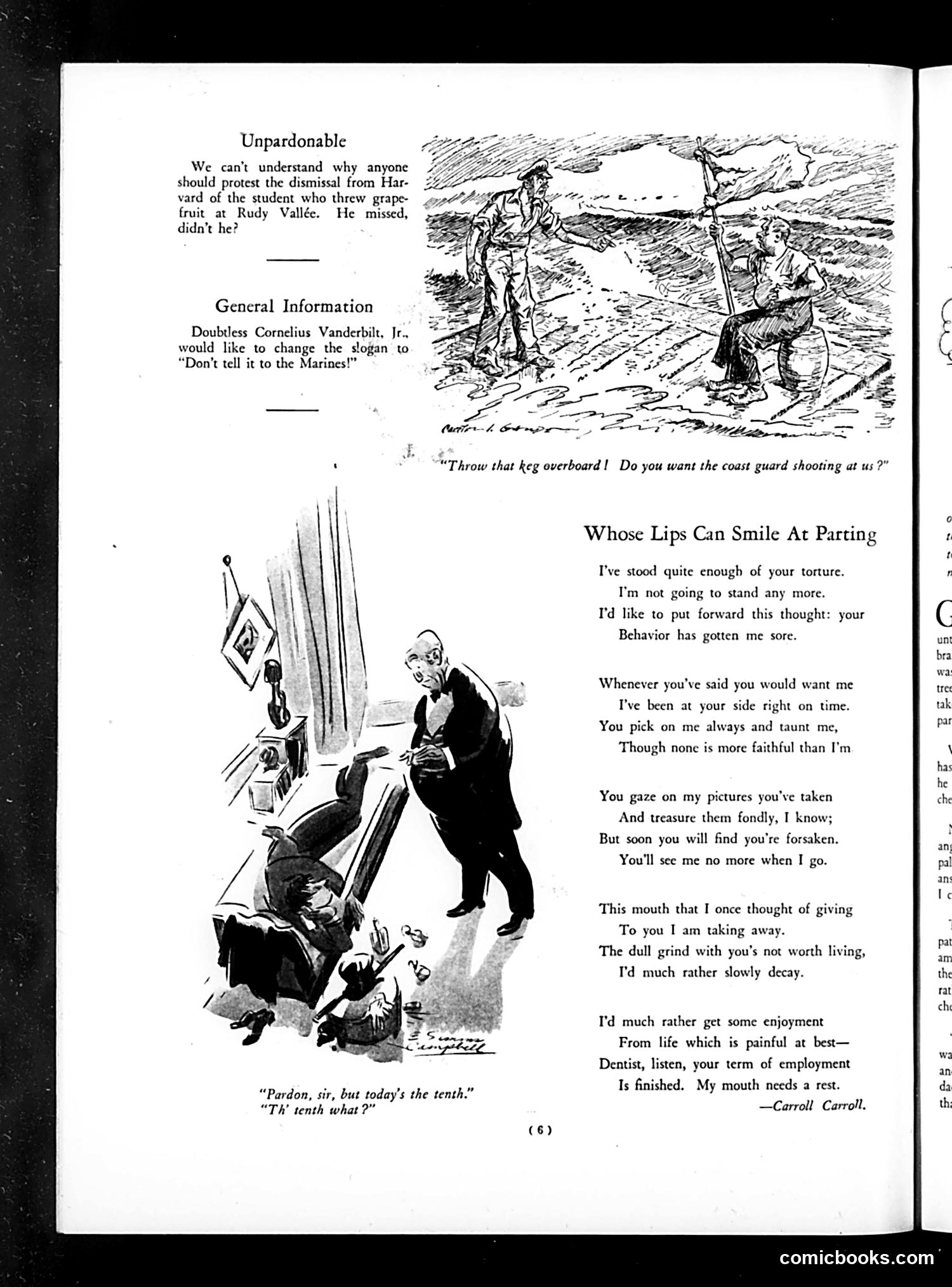
# Explanation for Modern Readers The page contains two unrelated satirical pieces: **"Unpardonable"** (top left): A brief joke mocking Harvard student Rudy Vallée for missing grapefruit at lunch—absurdist humor about a minor dining mishap. **Lower cartoon**: A dentist sits reading while a patient lies in the chair. The caption "Pardon, sir, but today's the tenth" / "Th' tenth what?" suggests the patient is complaining about payment timing or overdue bills—satirizing a dentist's indifference to patient discomfort or financial disputes. **"Whose Lips Can Smile At Parting"** (right): A poem by Carroll Carroll addressed to a departing employee (possibly a dentist, given context), expressing frustration with mistreatment and announcing resignation. The speaker reclaims their dignity by leaving rather than endure continued disrespect. The page satirizes workplace exploitation and professional callousness common to early 20th-century service industries.
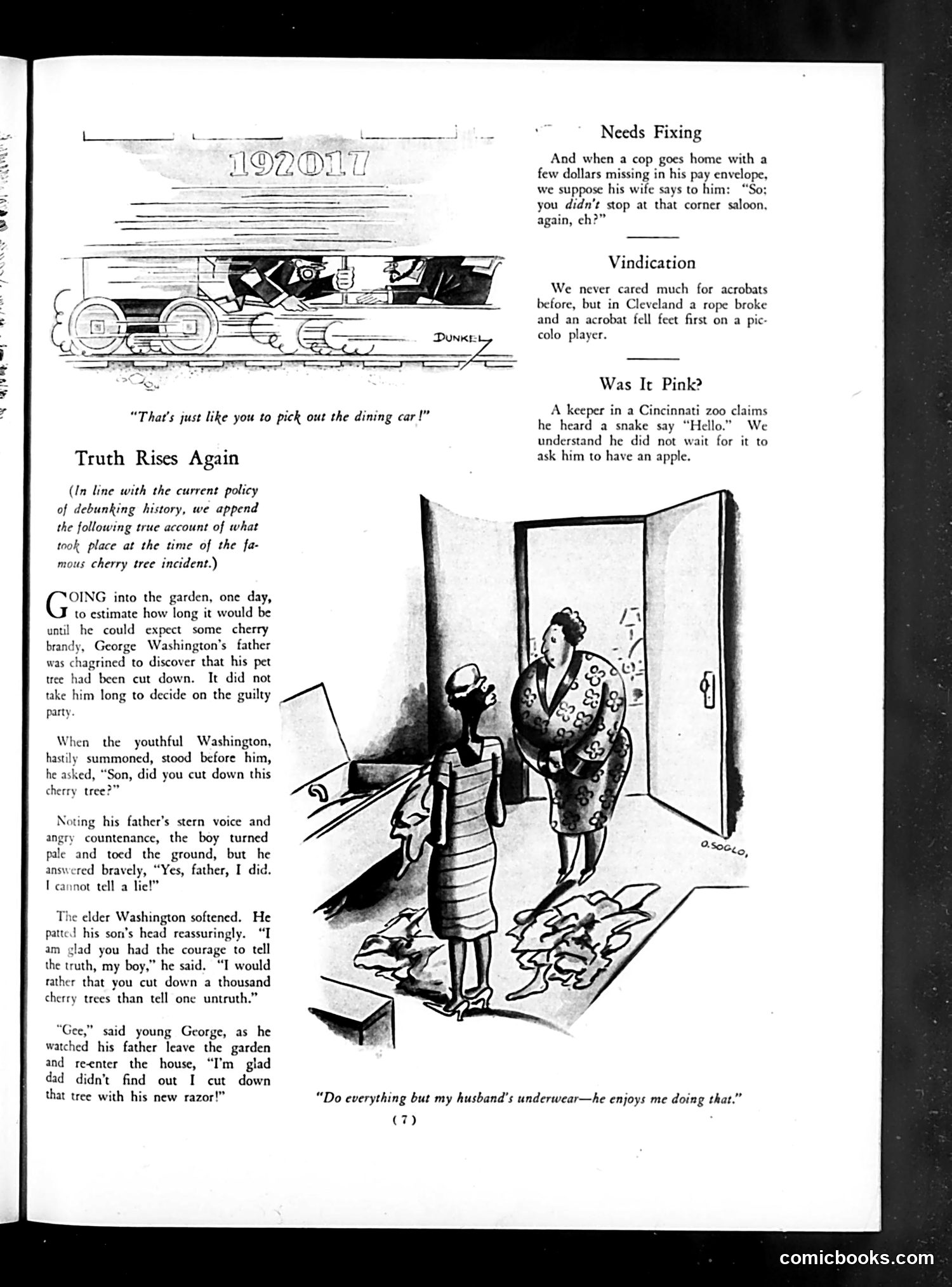
# Analysis of Life Magazine Page This page contains three satirical humor pieces typical of early 20th-century Life magazine: 1. **"Truth Rises Again"**: A retelling of the George Washington cherry tree legend, reframed as Washington *not* cutting down the tree with his father's new razor. The satire mocks the famous (apocryphal) story of young Washington's honesty, suggesting the original tale itself is a lie being "debunked" by the magazine. 2. **"Needs Fixing"**: A brief joke about a police officer's missing pay. 3. **"Vindication"** and **"Was It Pink?"**: Short quips about acrobats and a talking snake. The cartoon shows a domestic scene with a woman displaying what appears to be clothing or laundry to a visitor, captioned about the husband's underwear—a joke about marital embarrassment and domestic life typical of the era's humor magazines.
# Analysis of "Life Looks About" Page This page from *Life* magazine contains opinion columns signed by "E.S. Martin" discussing contemporary 1920s issues. The small illustration at the top shows a cherub or cupid figure, which is *Life*'s recurring mascot. The columns address: Red Cross operations in Arkansas during drought; debate over a three-billion-dollar war bonus for veterans; General Smedley Butler's character and fitness for command; alleged corruption in Chicago (judges, officials, criminals on payroll); and President Hoover's approach to governance. The satire is indirect—primarily critical commentary rather than visual caricature. The tone suggests skepticism toward government efficiency, veteran bonus proposals, and urban corruption, while noting Hoover's tendency to act when ahead of public opinion.
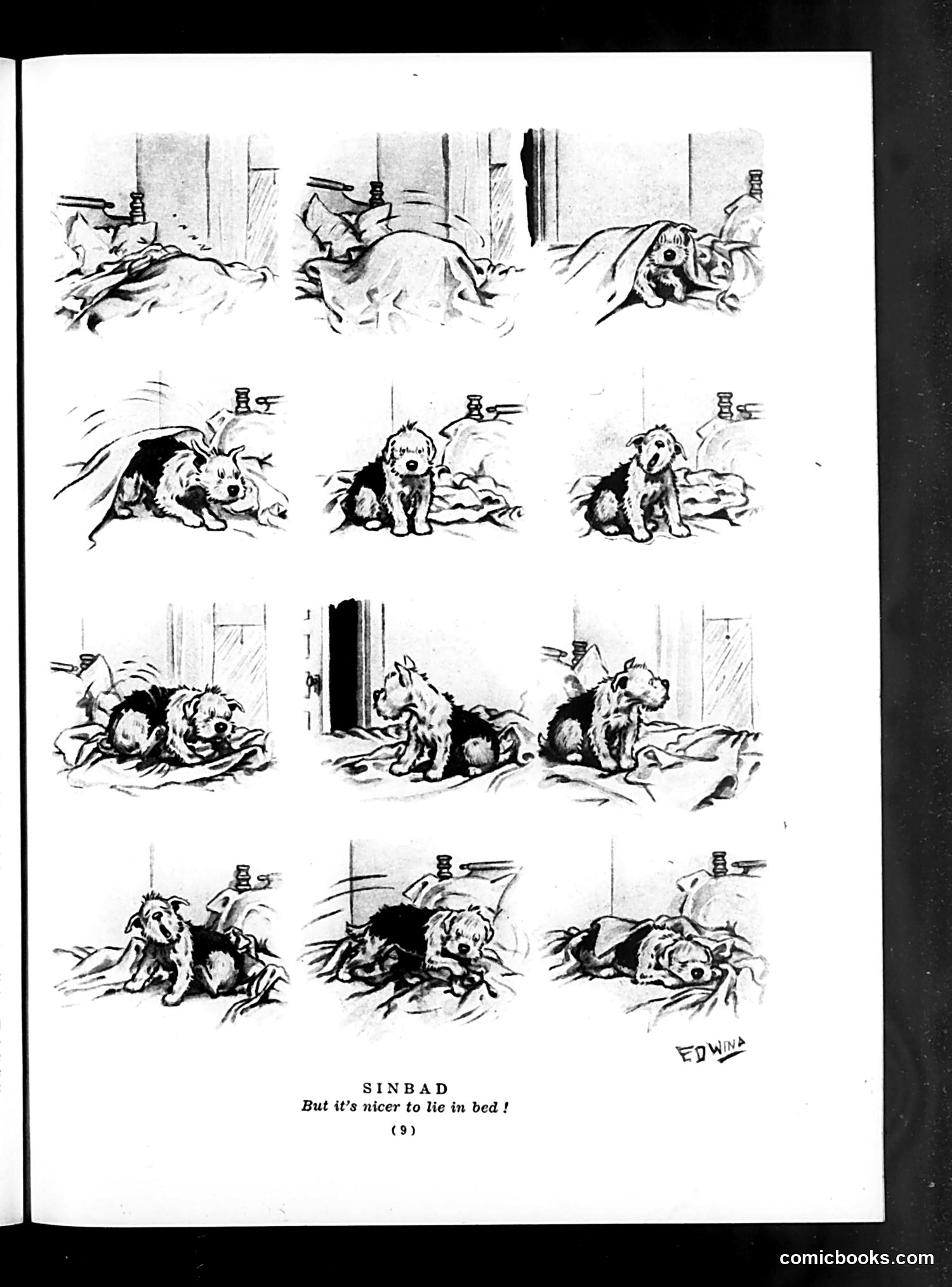
# "Sinbad: But It's Nicer to Lie in Bed!" This is a sequential comic strip featuring Sinbad, the legendary sailor from Arabian Nights tales. The strip shows a humorous domestic scene where Sinbad—traditionally depicted as an adventurous voyager facing exotic dangers—is contrasted with the comfort of simply staying in bed. The joke plays on Sinbad's famous reputation for perilous adventures across fantastical lands. Here, the cartoon subverts expectations by suggesting that despite all those legendary exploits, ordinary bed rest is actually preferable. It's a relatable bit of humor about preferring comfort and laziness to adventure—a common theme in early 20th-century American comic satire. The artist's signature reads "ED WINN" (visible lower right).
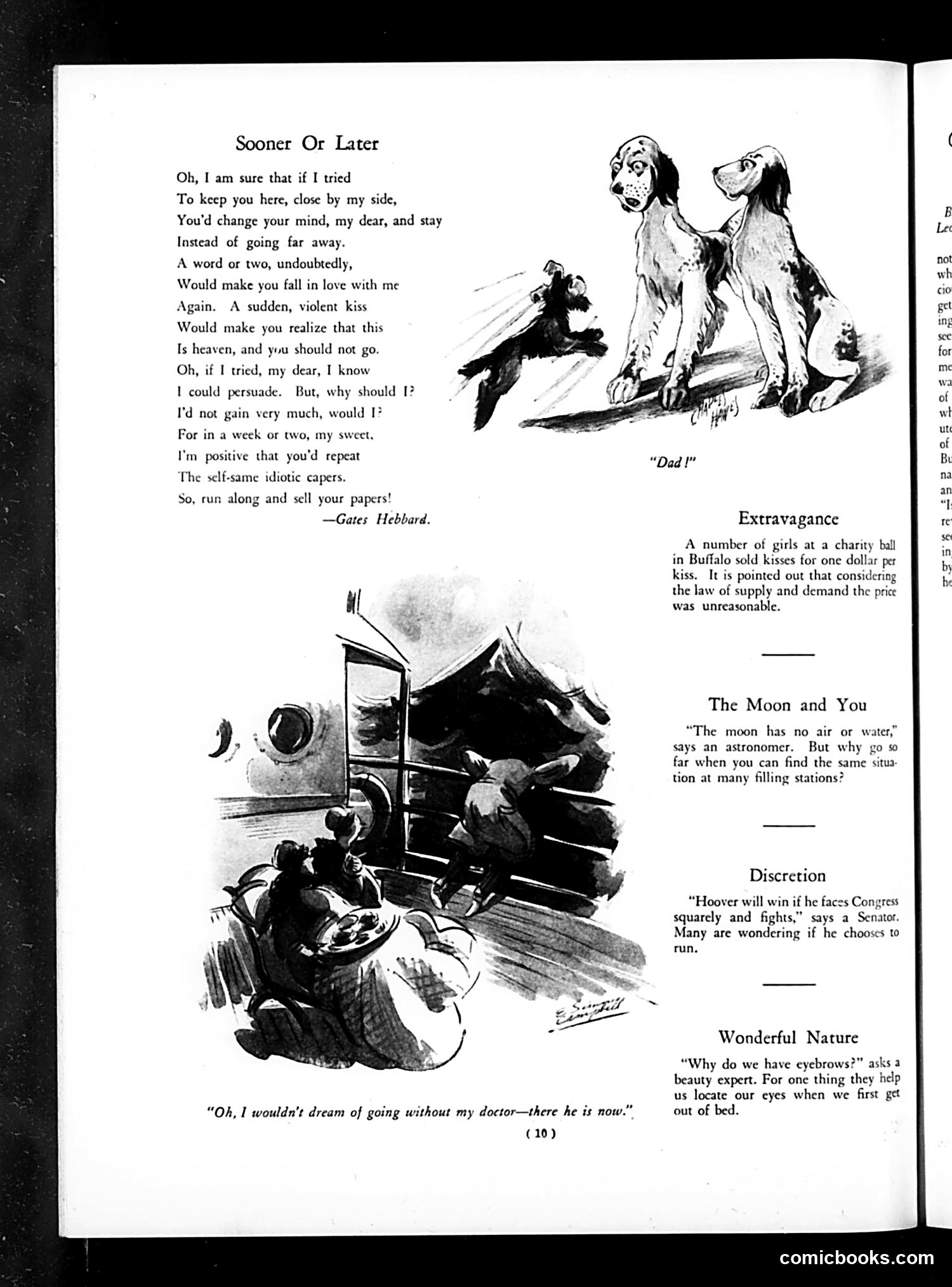
# Analysis of Life Magazine Page This page contains humorous short pieces and cartoons typical of Life's satirical format. The top poem "Sooner Or Later" by Gaëls Hebbard, accompanied by a dog cartoon labeled "Dad!", uses romantic rejection humor—a speaker tries to convince someone to stay, predicting they'll return within weeks repeating "idiotic capers." Below, a cartoon captioned "Oh, I wouldn't dream of going without my doctor—there he is now" shows a car crash with a doctor visible in the wreckage, joking darkly that the doctor is conveniently present during disaster. The right column contains brief humor items: "Extravagance" mocks wartime price-gouging at a charity ball; "The Moon and You" jokes about moon travel versus gas stations; "Discretion" references Hoover (likely Herbert Hoover) and Congressional elections; "Wonderful Nature" makes a light observation about eyebrows.