A complete issue · 36 pages · 1931
Life — February 13, 1931
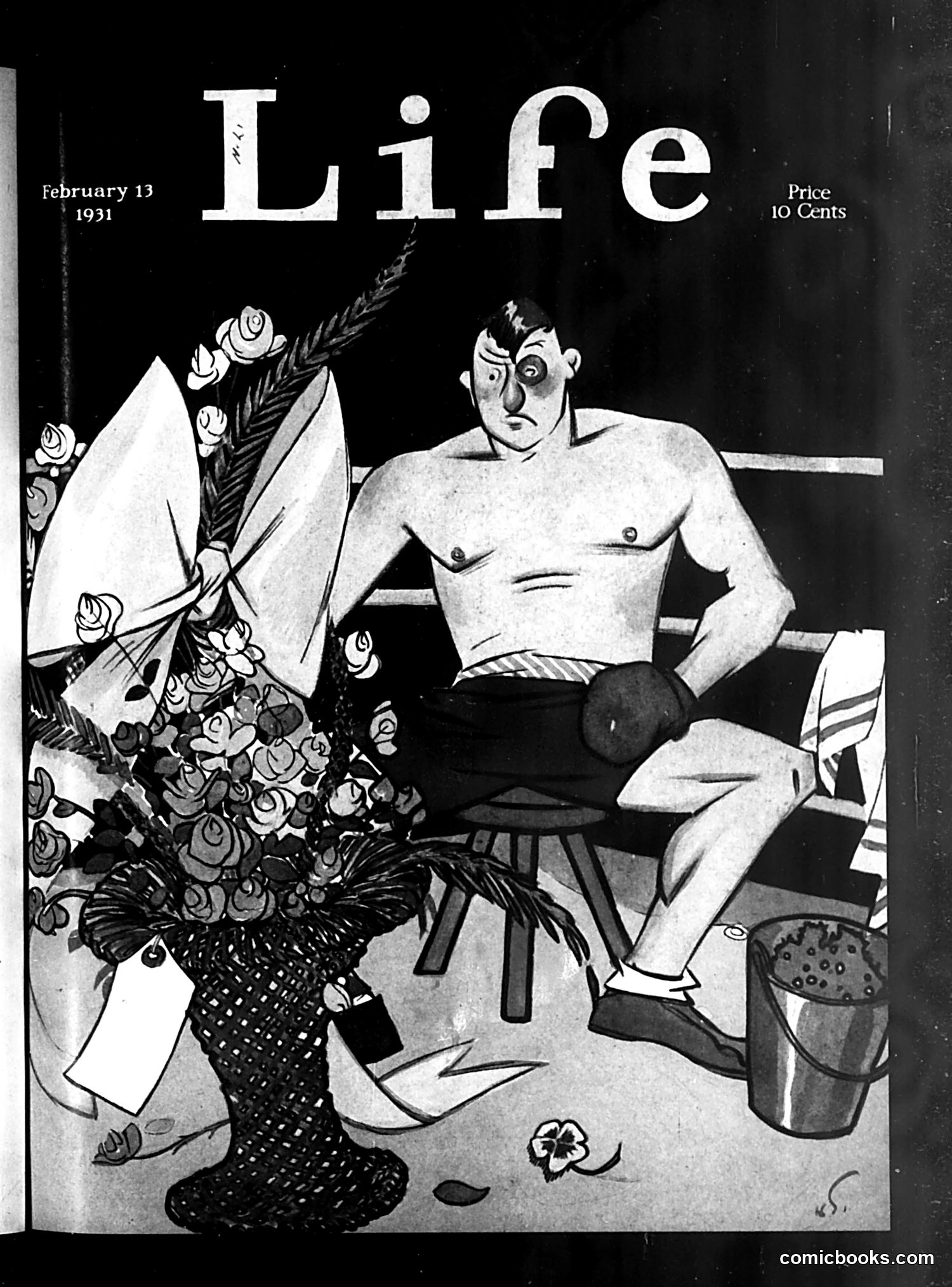
# Life Magazine Cover, February 13, 1931 This cover depicts a muscular, shirtless boxer sitting in a chair, holding boxing gloves. He has an exaggerated facial expression with dramatic makeup or scarring, suggesting either a caricature or someone in theatrical costume. The figure is surrounded by flowers in a basket and decorative elements, creating an incongruous contrast between masculine boxing imagery and romantic/feminine floral presentation. The satire likely comments on **romantic entanglement or distraction from athletic pursuits**—the flowers and domestic setting humorously undermine the boxer's tough, athletic identity. This was a common Depression-era satirical device: mocking how romance or domesticity could derail a man's professional ambitions or masculine persona. The specific boxer's identity remains unclear from the image alone.
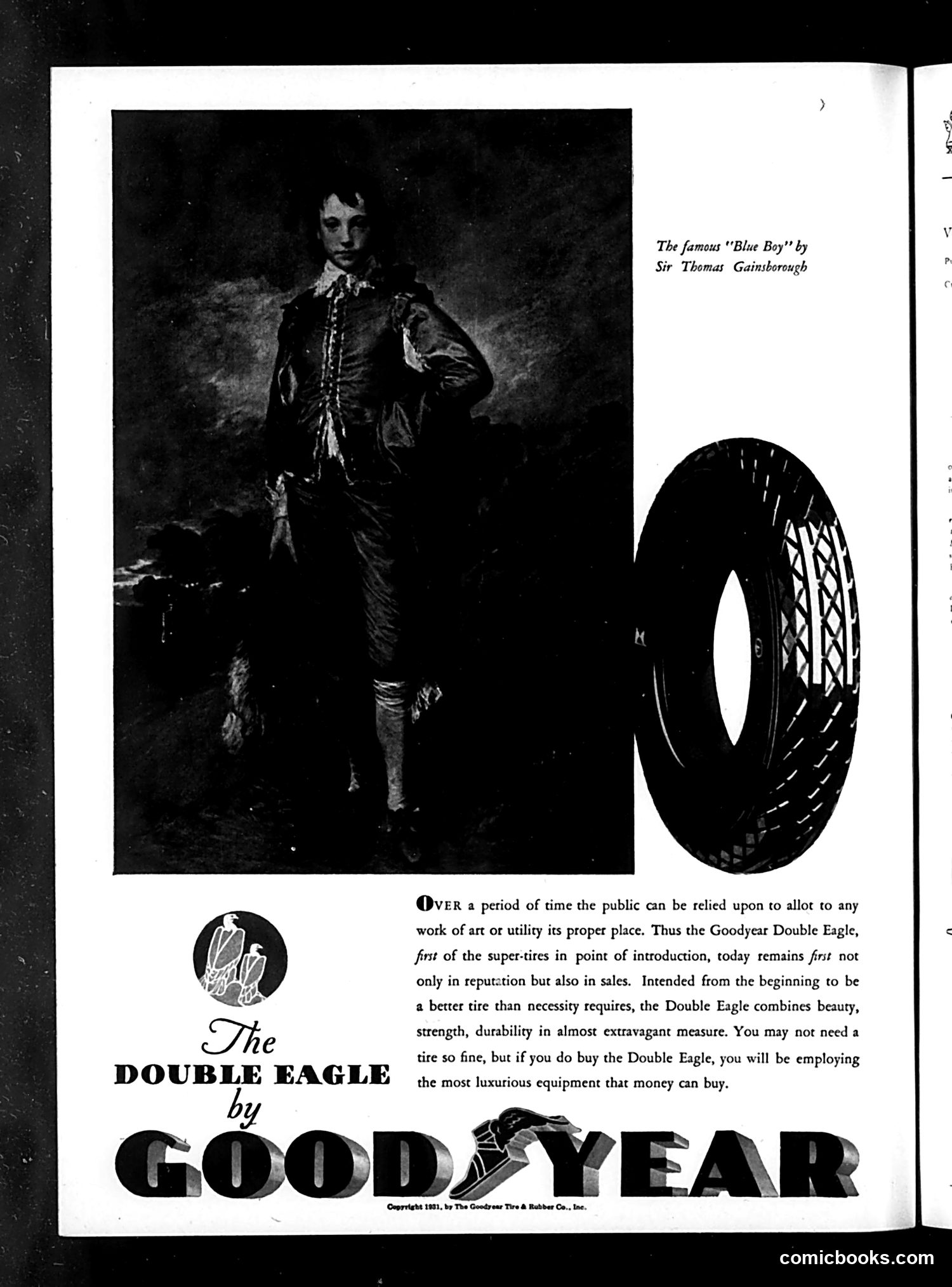
# Analysis This page is primarily **a Goodyear tire advertisement**, not political satire. It features a famous painting—"The Blue Boy" by Sir Thomas Gainsborough (noted in the caption)—repurposed as marketing copy. The ad argues that just as the public recognizes and trusts great artworks, Goodyear's "Double Eagle" tire has earned similar reputation and sales leadership through quality. The painting's elegant young subject in blue clothing serves merely as a visual anchor for the message about reliability and luxury. The tire image on the right shows the product itself. The text claims the Double Eagle combines "beauty, strength, durability" better than competitors, positioning it as a premium choice. This is straightforward product advertising exploiting cultural prestige, not commentary on politics or social issues.
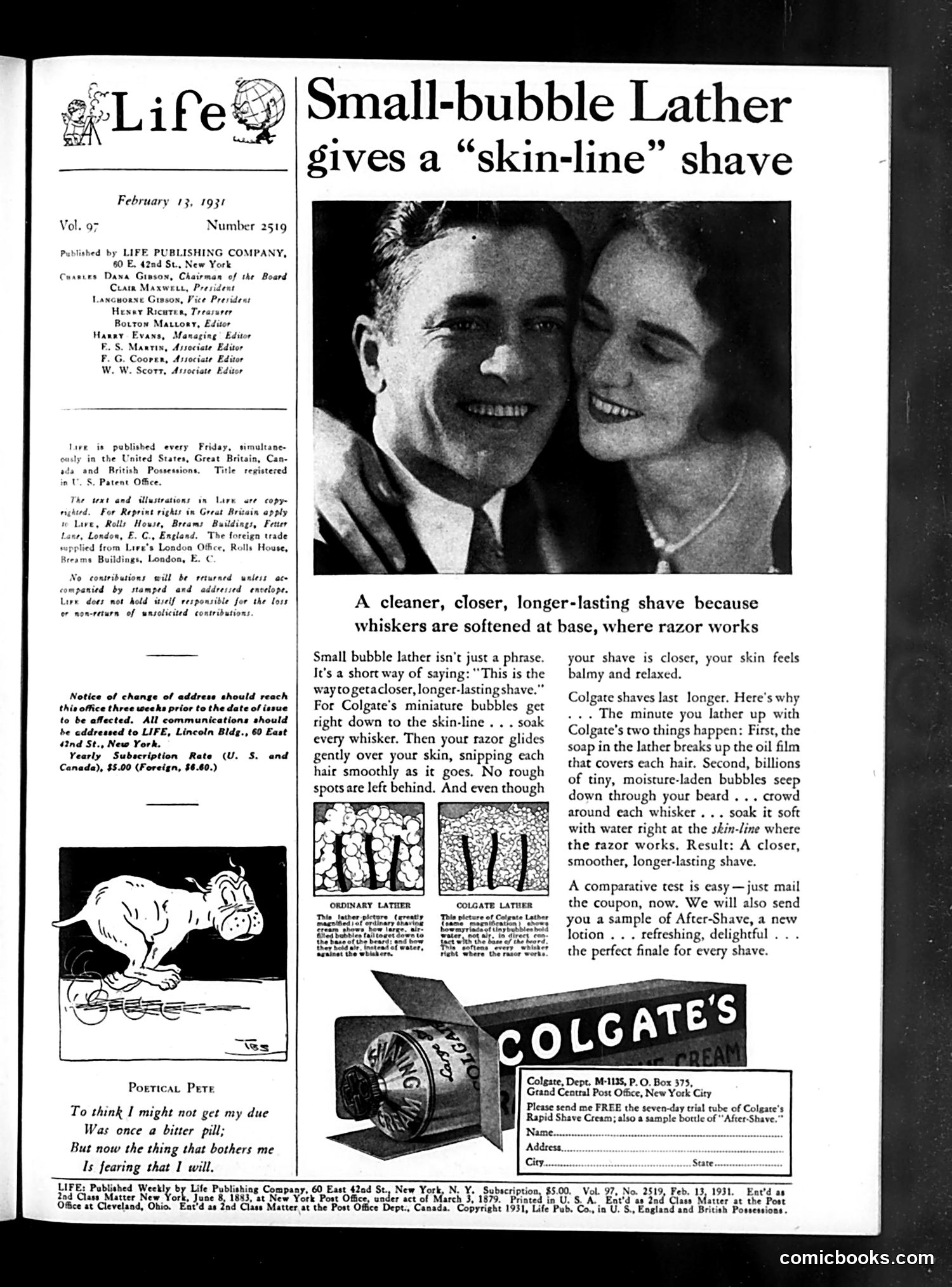
# Analysis This page is primarily **advertising**, not political satire. It features a Colgate shaving cream advertisement promoting their "small-bubble lather" for a closer shave. The only cartoon element is "Poetical Pete" at bottom left—a small humorous verse about bitter pills and fear, unrelated to the ad. The cartoon itself is generic comic filler, not satirical commentary. The advertisement uses comparative product photography (ordinary vs. Colgate lather) and testimonial photographs of two smiling men to demonstrate the superiority of Colgate's formula. The "skin-line" shave concept—where soap softens whiskers at their base—was the product's selling point. This reflects 1931 advertising conventions: visual product comparison and social aspiration through personal grooming.
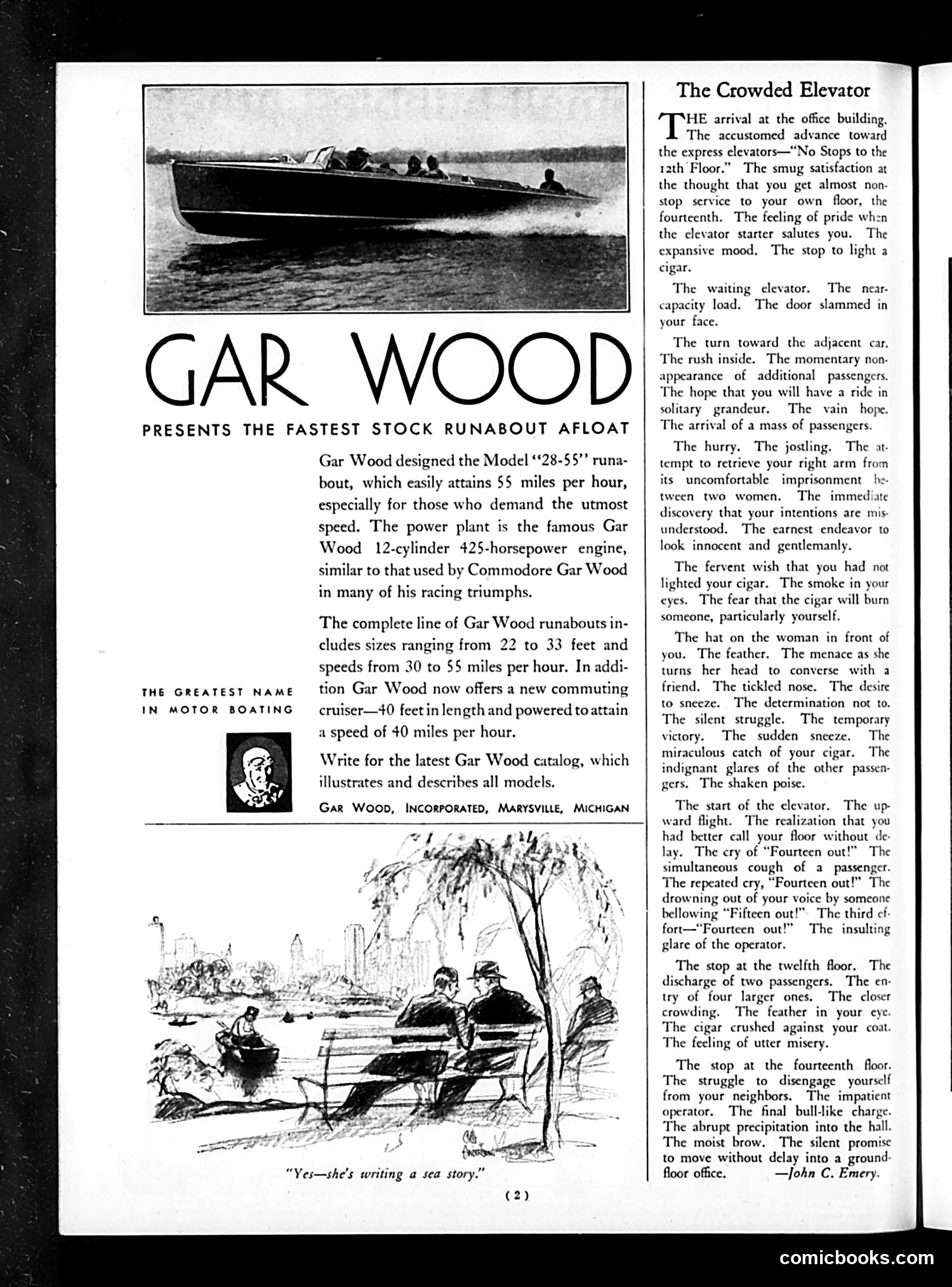
# "The Crowded Elevator" - Analysis This page is primarily a **Gar Wood speedboat advertisement** (left side) paired with **humorous editorial content** (right side). "The Crowded Elevator" is a satirical narrative poem by John C. Emery that mockingly catalogs the petty indignities and social awkwardness of riding a packed office building elevator. The humor derives from treating mundane annoyances—door-slamming, crowding, accidentally touching strangers, cigar smoke, feathers from women's hats—with exaggerated dramatic language, as if describing genuine catastrophes. The accompanying sketch depicts people relaxing by water, likely contrasting leisure with the urban office grind described in the text. The satire targets modern urban office culture and the claustrophobic experience of shared public transportation—a relatable complaint for the magazine's presumably urban, white-collar readership.
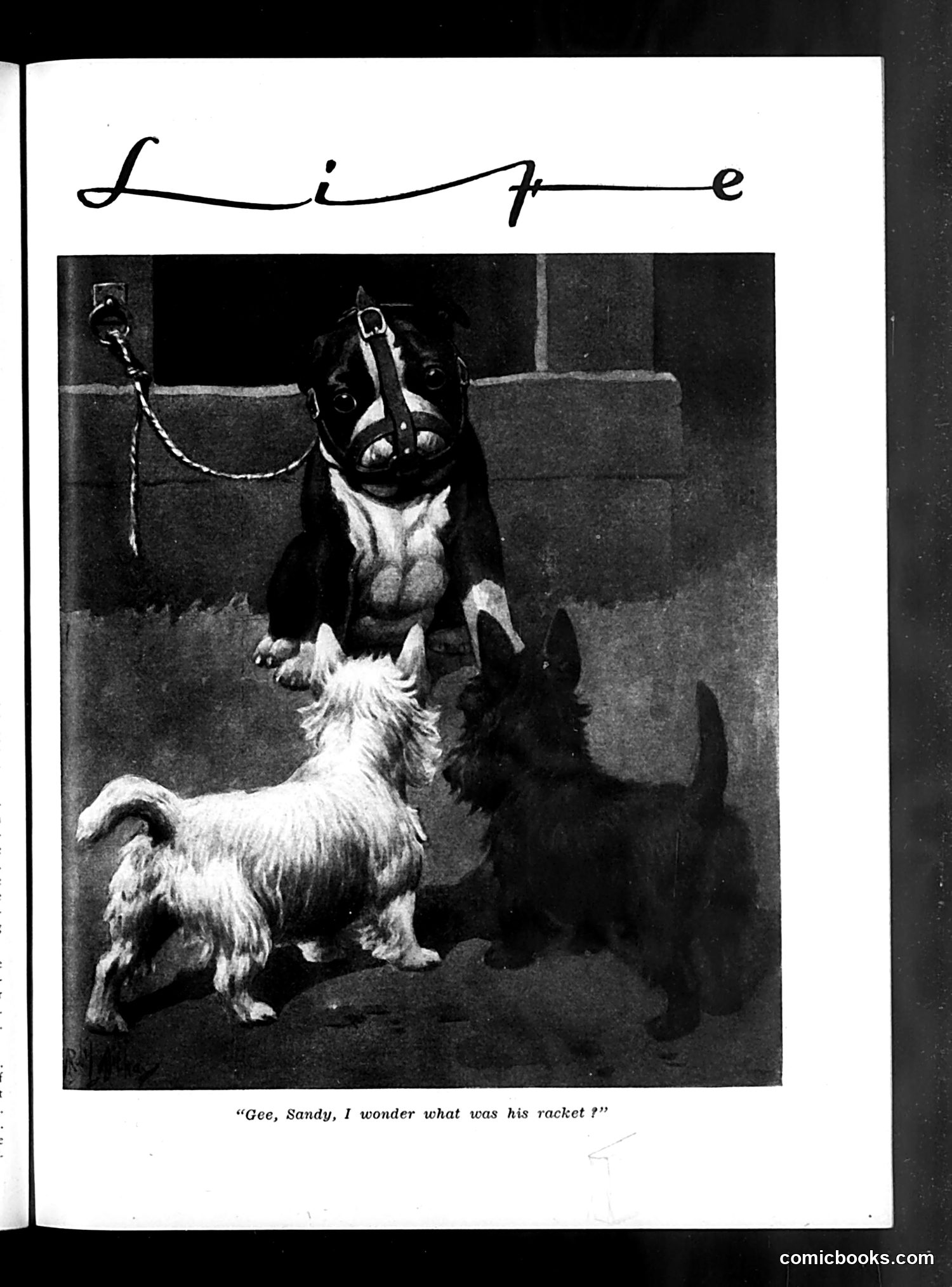
# Analysis This page from *Life* magazine shows a humorous domestic scene rather than political satire. The image depicts two small dogs—one white and fluffy, one black—interacting with a larger dog wearing a muzzle and collar with a rope leash, positioned against a brick wall. The caption reads: "Gee, Sandy, I wonder what was his racket?" The joke relies on anthropomorphizing the dogs as characters gossiping about a third dog. The muzzled dog's restraint and equipment suggest it has been troublesome or dangerous, prompting the smaller dogs' speculation about its criminal or problematic "racket" (slang for illicit activity or scheme). This is gentle humor playing on the dogs' assumed conversational judgment of their peer.
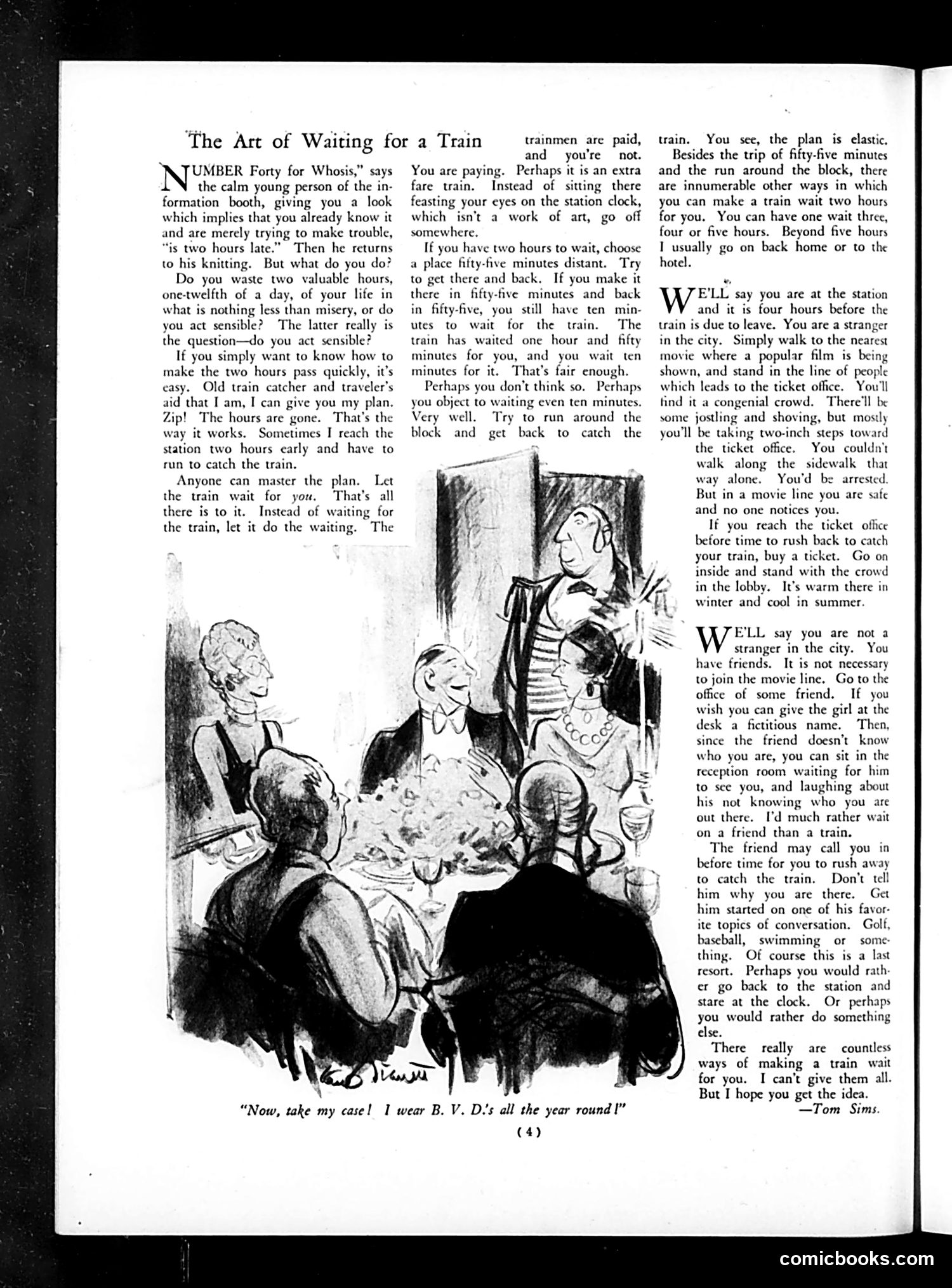
# Analysis: "The Art of Waiting for a Train" This is a humorous advice article by Tom Simi about how to pass time while waiting for trains—a common experience for early 20th-century travelers. The accompanying illustration shows people dining and socializing at what appears to be a station restaurant or hotel. The satire is gentle: the article mocks the tedium of train delays by offering increasingly absurd suggestions (walk around the block, go to a movie, visit friends with a fake name). The joke is that waiting for trains was genuinely annoying and time-consuming in this era, so the author provides increasingly elaborate ways to avoid actually sitting at the station. The cartoon caption about wearing "B.V.D.'s all year round" is an advertisement reference to the underwear brand, a typical Life magazine style of mixing content with product placement.
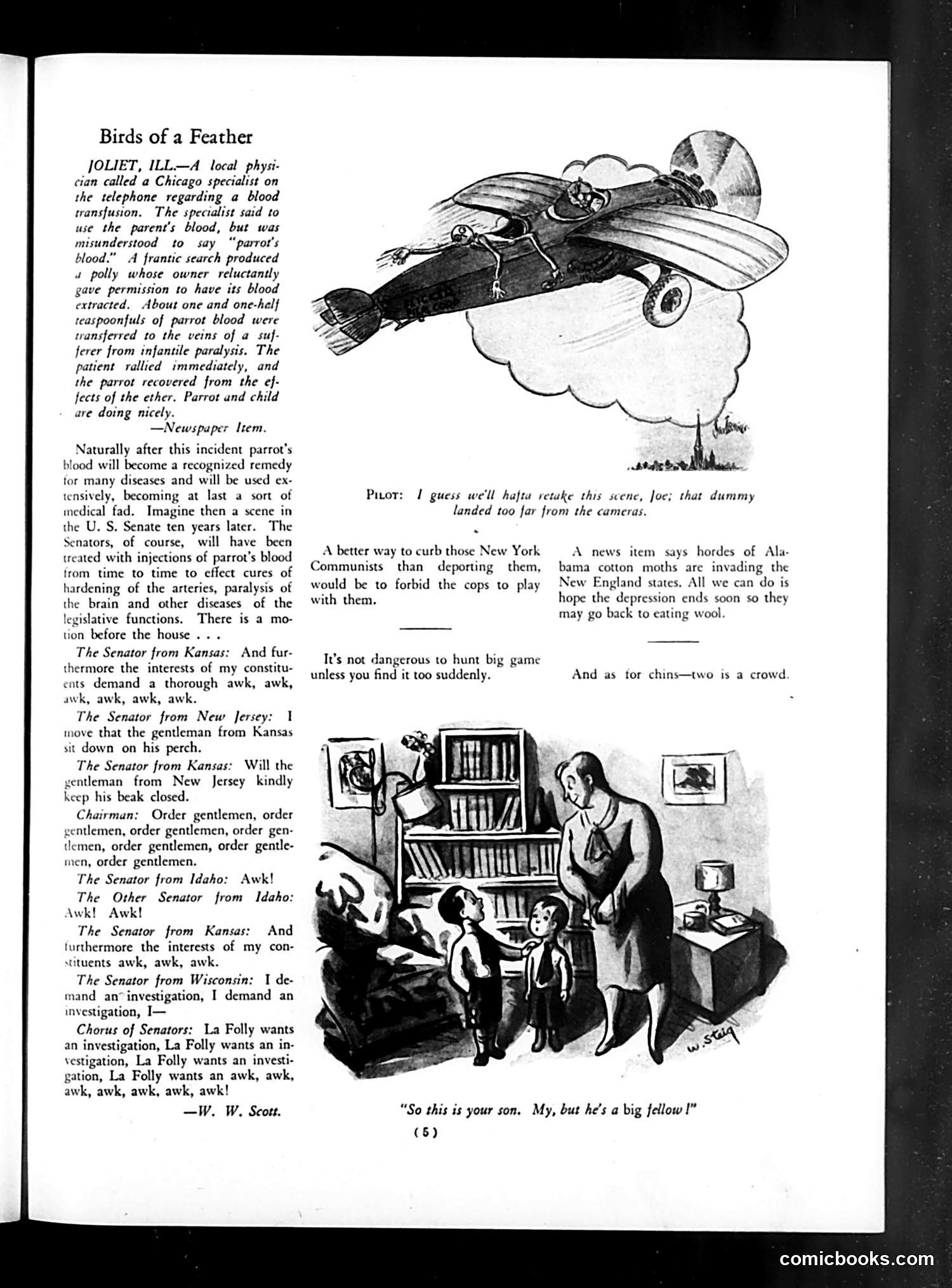
# Analysis of "Birds of a Feather" Page This page contains two distinct satirical pieces: **Upper section:** A humorous anecdote about a Chicago physician who mistakenly used parrot blood for a human infant's transfusion, successfully curing infantile paralysis. The satire mocks both medical incompetence and bureaucratic response—the piece predicts U.S. Senators will eventually receive parrot-blood treatments for various ailments, followed by absurdist dialogue where senators repeatedly demand "investigations" and "awks." **Lower cartoon:** Shows a mother introducing her large son to visitors at a bookshelf, saying "So this is your son. My, but he's a big fellow!" The joke's point remains unclear from context alone, but likely comments on child development, parenting, or social awkwardness of the era. Both pieces use exaggeration and wordplay typical of Life magazine's satirical style targeting medical and political institutions.
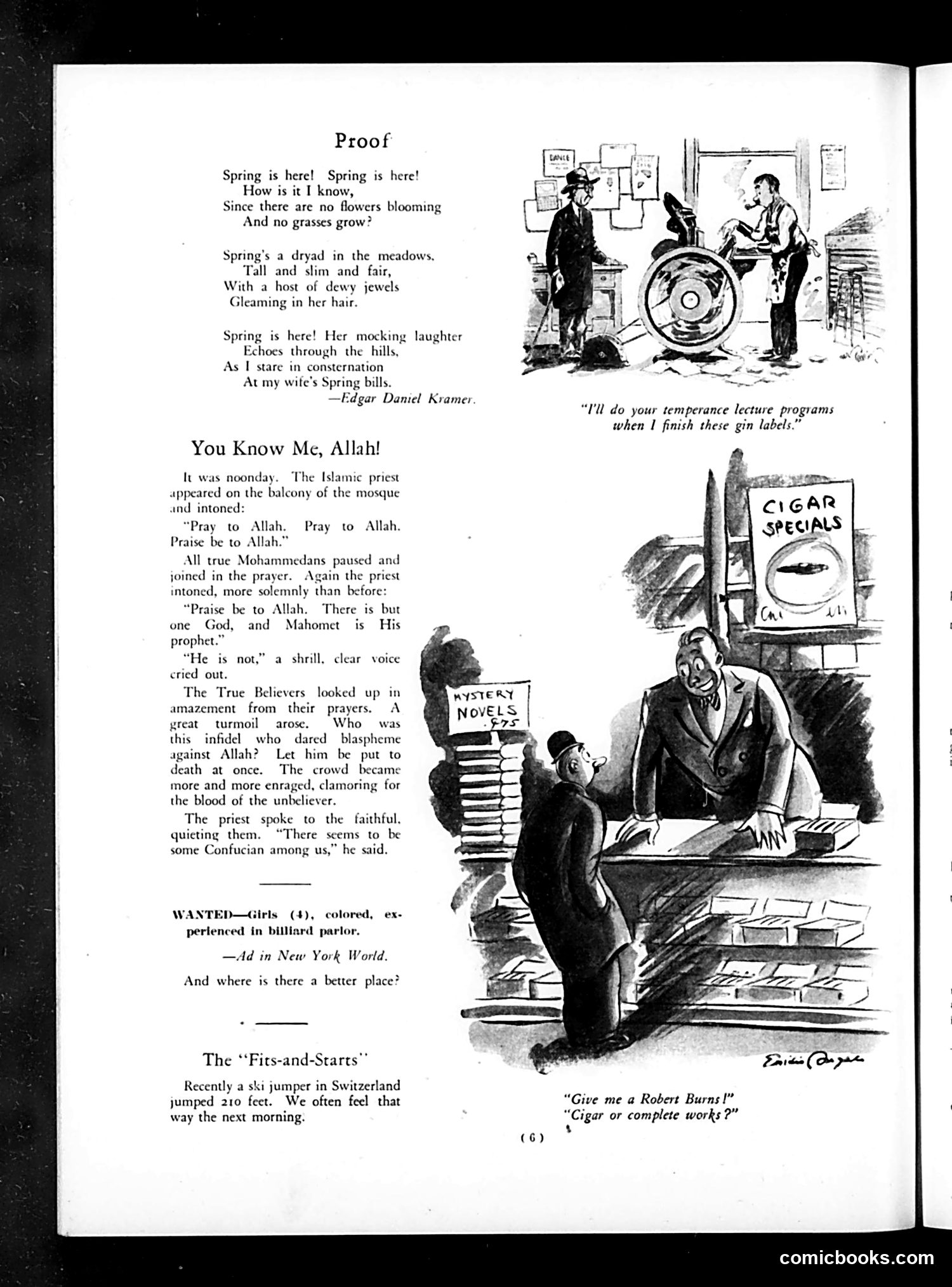
# Analysis of Life Magazine Page This page contains three distinct pieces of humor: 1. **"Proof" poem** (top left): A spring-themed poem by Edgar Daniel Kramers, accompanied by a cartoon showing a man lecturing about temperance while labeling gin bottles—satirizing hypocrisy of those preaching morality while engaged in illicit alcohol production (likely referencing Prohibition-era bootlegging). 2. **"You Know Me, Allah!"** (center-left): A story mocking religious intolerance, depicting a Muslim prayer call interrupted by someone shouting blasphemy, leading to mob violence. The priest's closing line suggests finding "some Confucian among us," satirizing prejudice and religious extremism. 3. **Two cartoons** (right): One depicts a man requesting "a Robert Burns" cigar while surrounded by mystery novels and cigar advertisements—likely wordplay on the Scottish poet Burns. The bottom cartoon shows similar commercial/literary confusion. The page satirizes hypocrisy, religious intolerance, and commercial absurdity typical of 1920s American life.
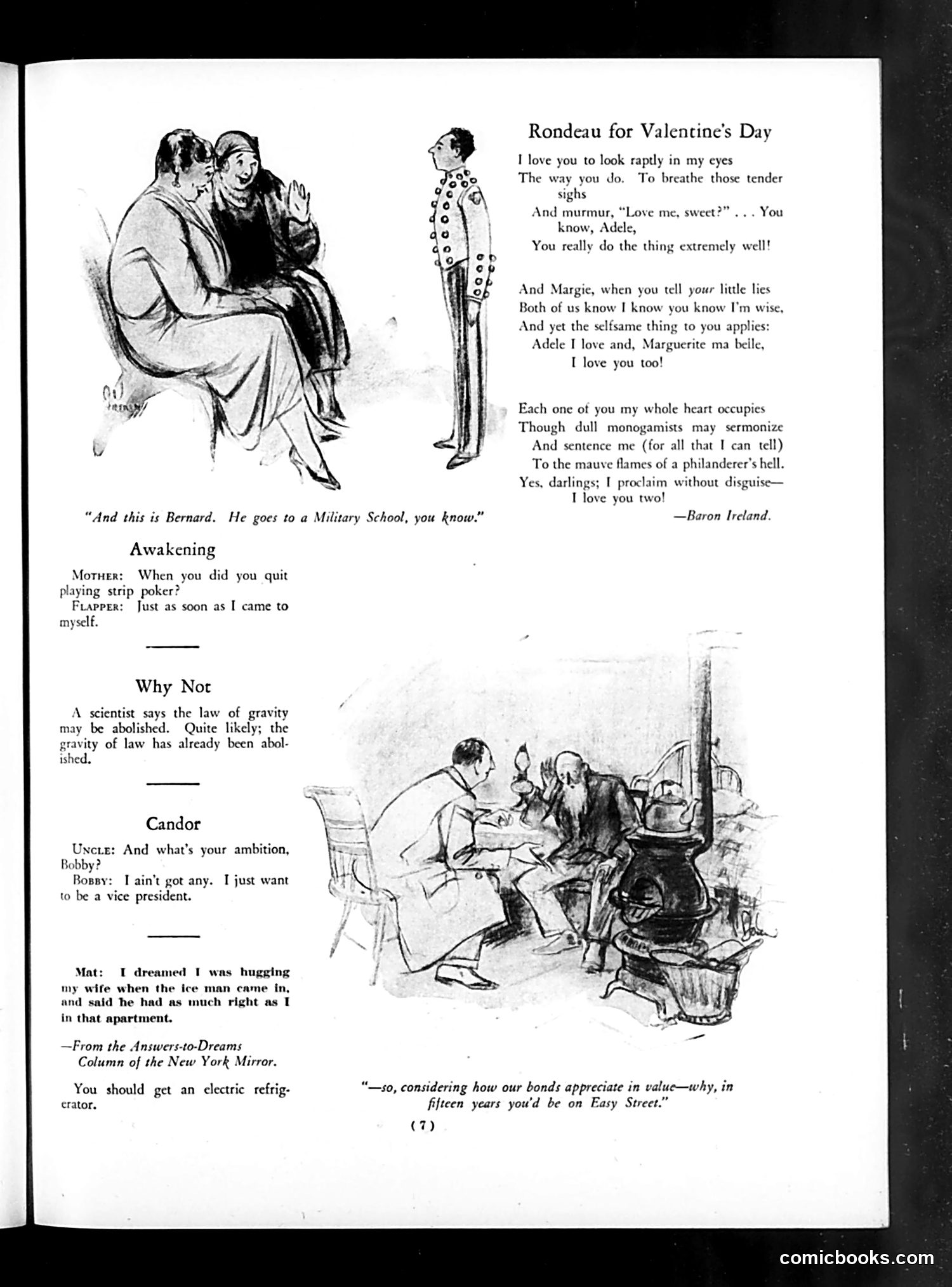
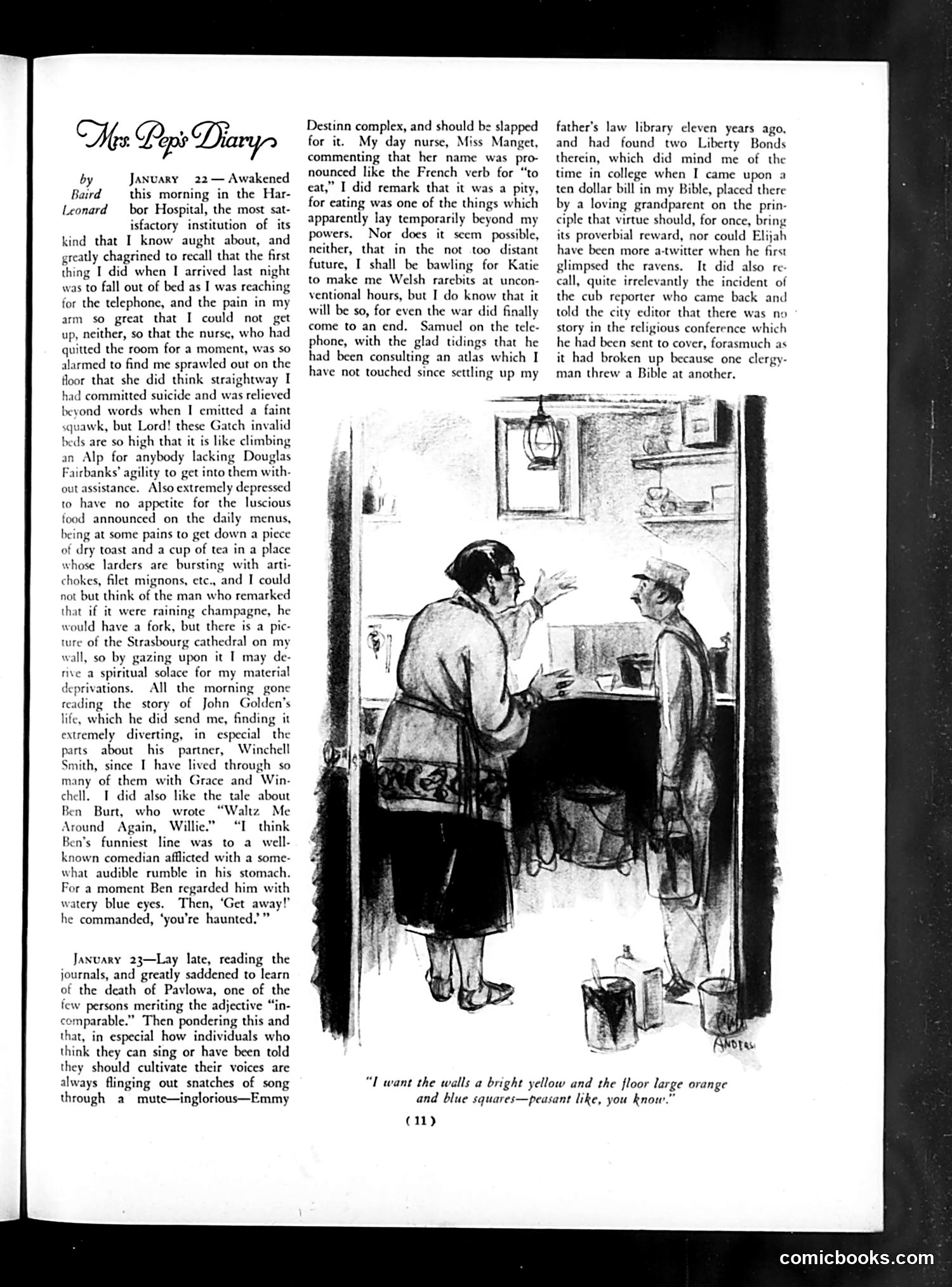
# Analysis of Life Magazine Page This page contains several short satirical pieces and illustrations typical of early 20th-century *Life* magazine humor. **"Rondeau for Valentine's Day"** by Baron Ireland is a poem addressing multiple romantic partners (Adele, Margie/Marguerite), celebrating polyamorous love while mocking monogamous "sermons." **"Awakening"** jokes about a man quitting poker—a common vice. **"Why Not"** sarcastically suggests gravity itself might be abolished. **"Candor"** features an uncle-nephew exchange where the nephew's ambition is merely becoming "vice president." **The bottom illustration** shows what appears to be a landlord or creditor discussing unpaid bonds with tenants, with a caption about appreciating property values over fifteen years. These pieces mock romantic excess, gambling, scientific pretension, ambition, and financial obligations—typical *Life* magazine social satire.
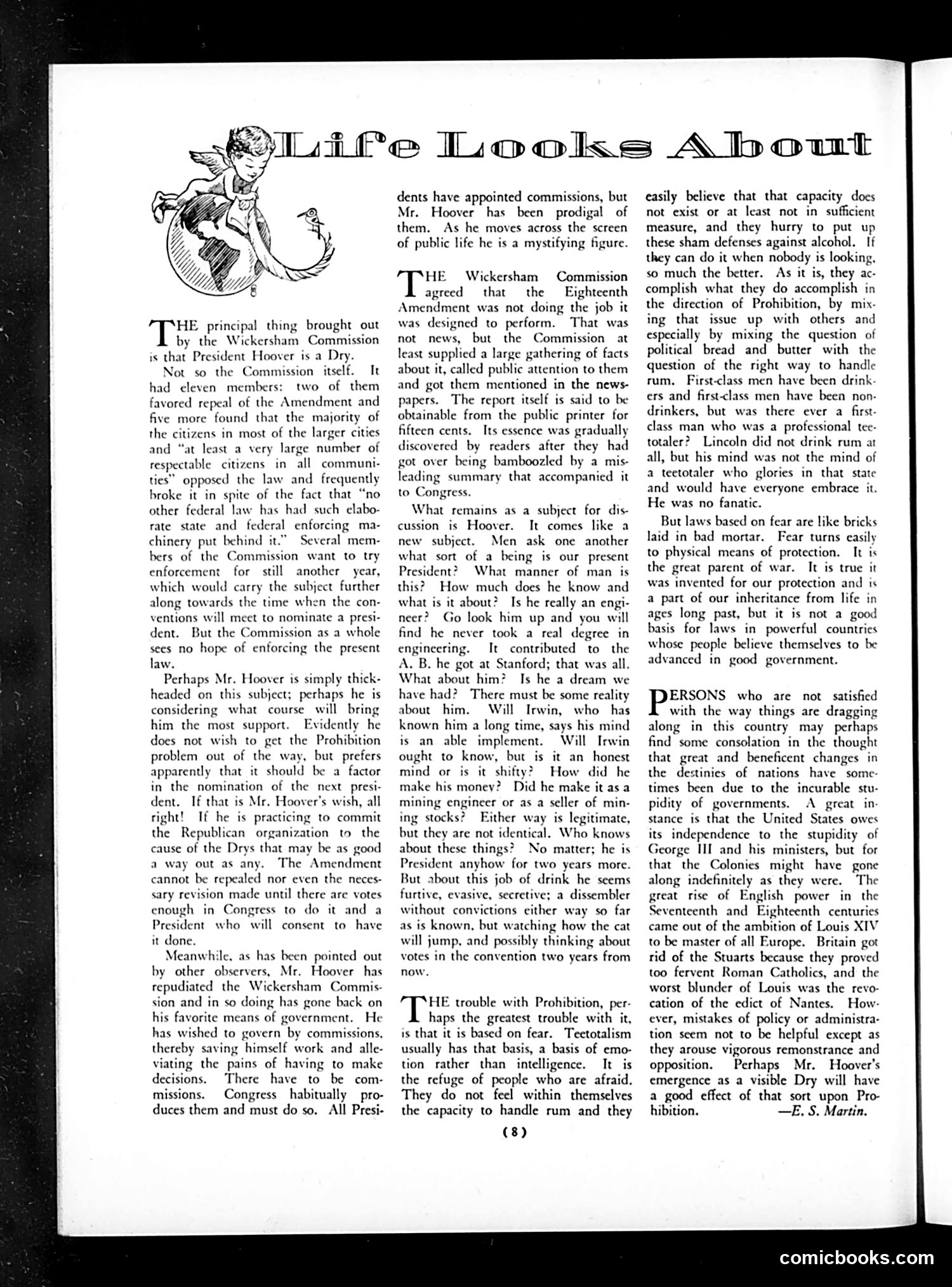
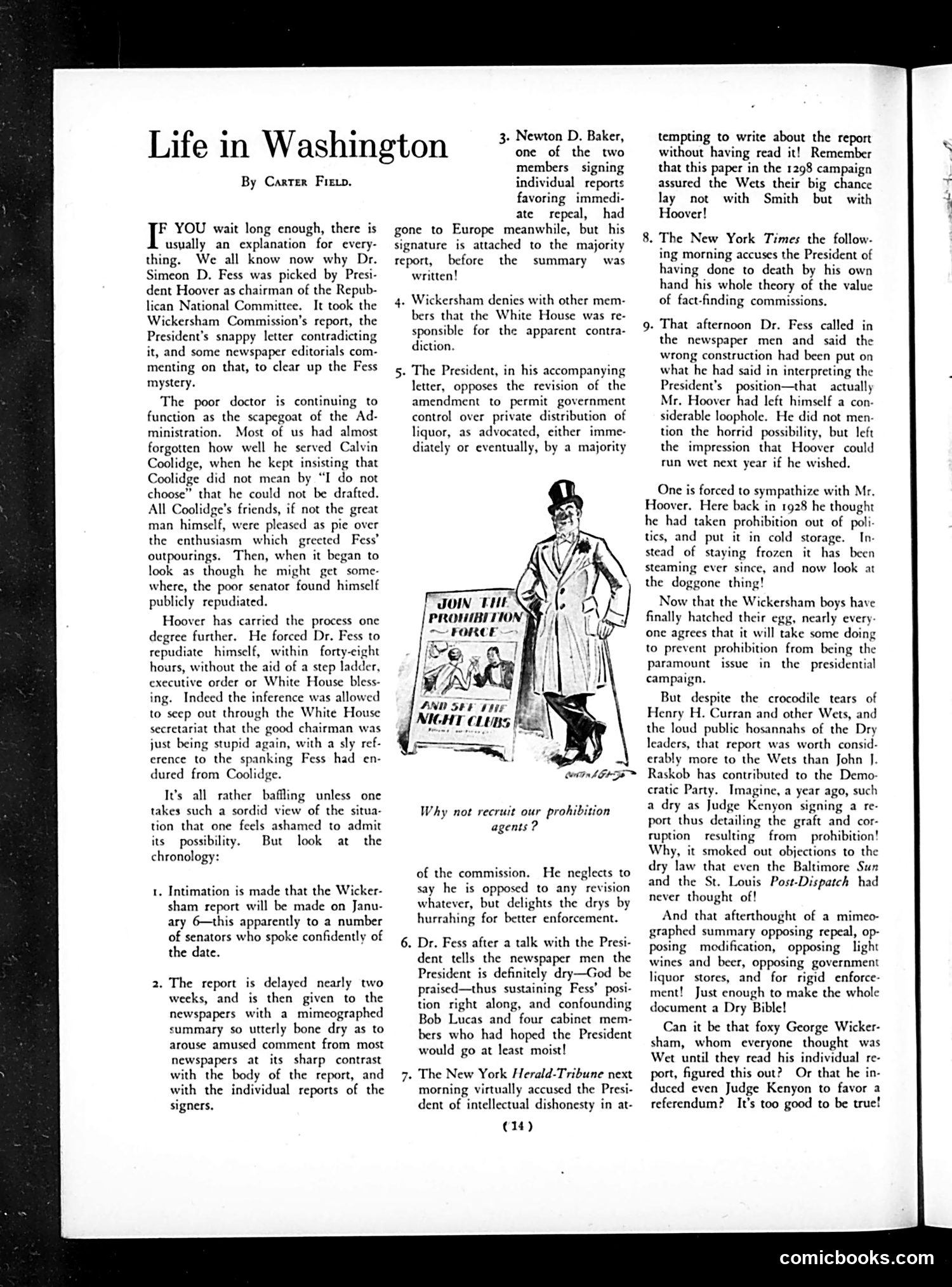
# Analysis of "Life Looks About" This page is an editorial essay critiquing President Hoover's approach to governance, particularly regarding Prohibition enforcement. The illustration shows a cherub-like figure examining something with a magnifying glass—likely representing scrutiny of political matters. The text argues that Hoover relies excessively on commissions rather than direct action, using the Wickersham Commission (which investigated Prohibition) as an example. The author criticizes this as evasive leadership, claiming commissions allow presidents to avoid accountability while appearing to address problems. The essay also discusses Hoover's background as an engineer and questions whether his qualifications suit the presidency. It ultimately suggests Hoover's cautious, commission-based approach reflects fear-based governance rather than confident leadership—a subtle critique of his administrative style during the early Depression era.
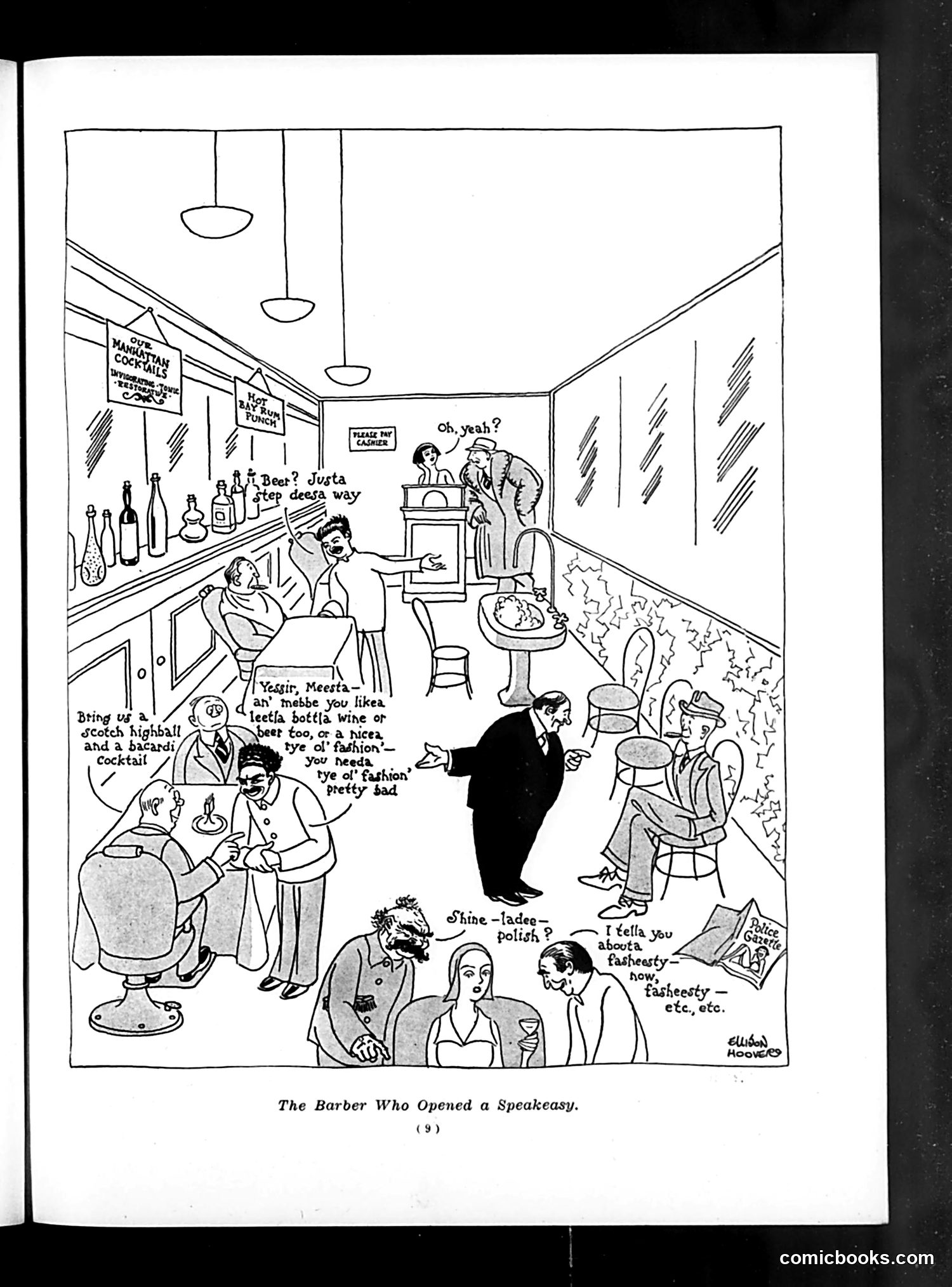
# "The Barber Who Opened a Speakeasy" This cartoon satirizes Prohibition-era speakeasies—illegal bars operating during the 1920s alcohol ban. The title suggests a barber has disguised his establishment as a front for serving drinks. The scene depicts a crowded, lively illegal bar with patrons enjoying cocktails and beer. Dialogue bubbles reference typical speakeasy offerings: "Scotch highball," "beer," and fashion advice alongside drinks—suggesting the establishments' role as social gathering spots beyond mere drinking. The man in the center (fully blackened in figure) appears to be the proprietor or a server. The casual mingling and visible alcohol bottles on shelves mock both the public's disregard for Prohibition laws and authorities' difficulty enforcing them. The cartoon satirizes how ordinary businesses circumvented Prohibition through creative disguises and community complicity.
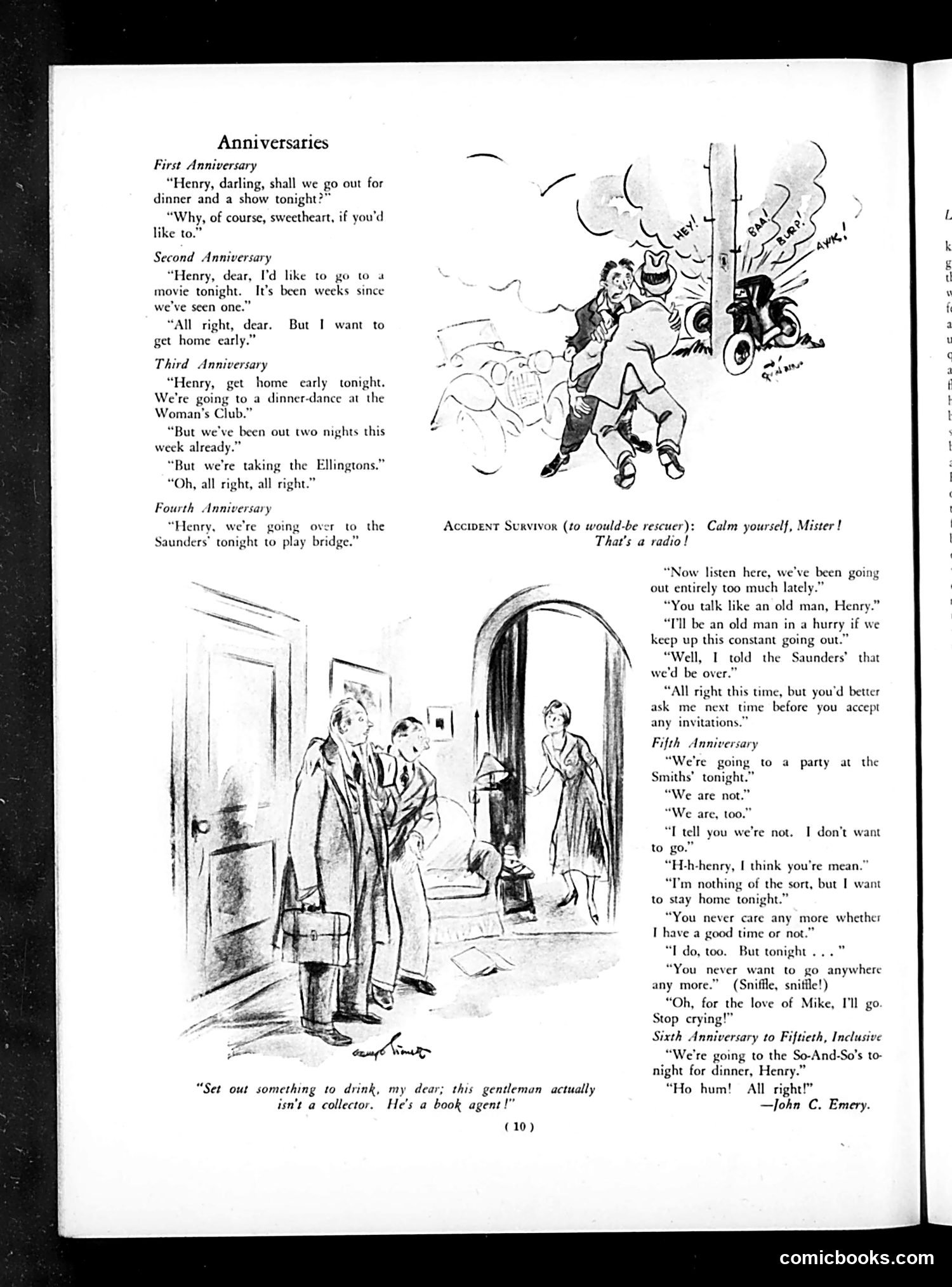
# "Anniversaries" - Life Magazine Satire This page satirizes the deteriorating domestic life of a married couple named Henry and his wife over six anniversaries. Each entry shows the couple's plans becoming increasingly modest and strained: - **First through Fourth**: Dinners, movies, and social outings gradually replace each other - **Fifth Anniversary**: Open conflict—the wife refuses to attend a party, accusing Henry of not caring about her happiness - **Sixth Anniversary**: A humorous resolution at a restaurant ("So-And-So's") The accompanying illustrations depict domestic scenes of marital tension and disconnect. The satire targets the gradual erosion of romance and effort in marriage, suggesting that couples become complacent and argumentative over time. The humor lies in the universal relatability of this decline—a commentary on how initial excitement gives way to routine obligation and resentment.