A complete issue · 36 pages · 1931
Life — February 6, 1931
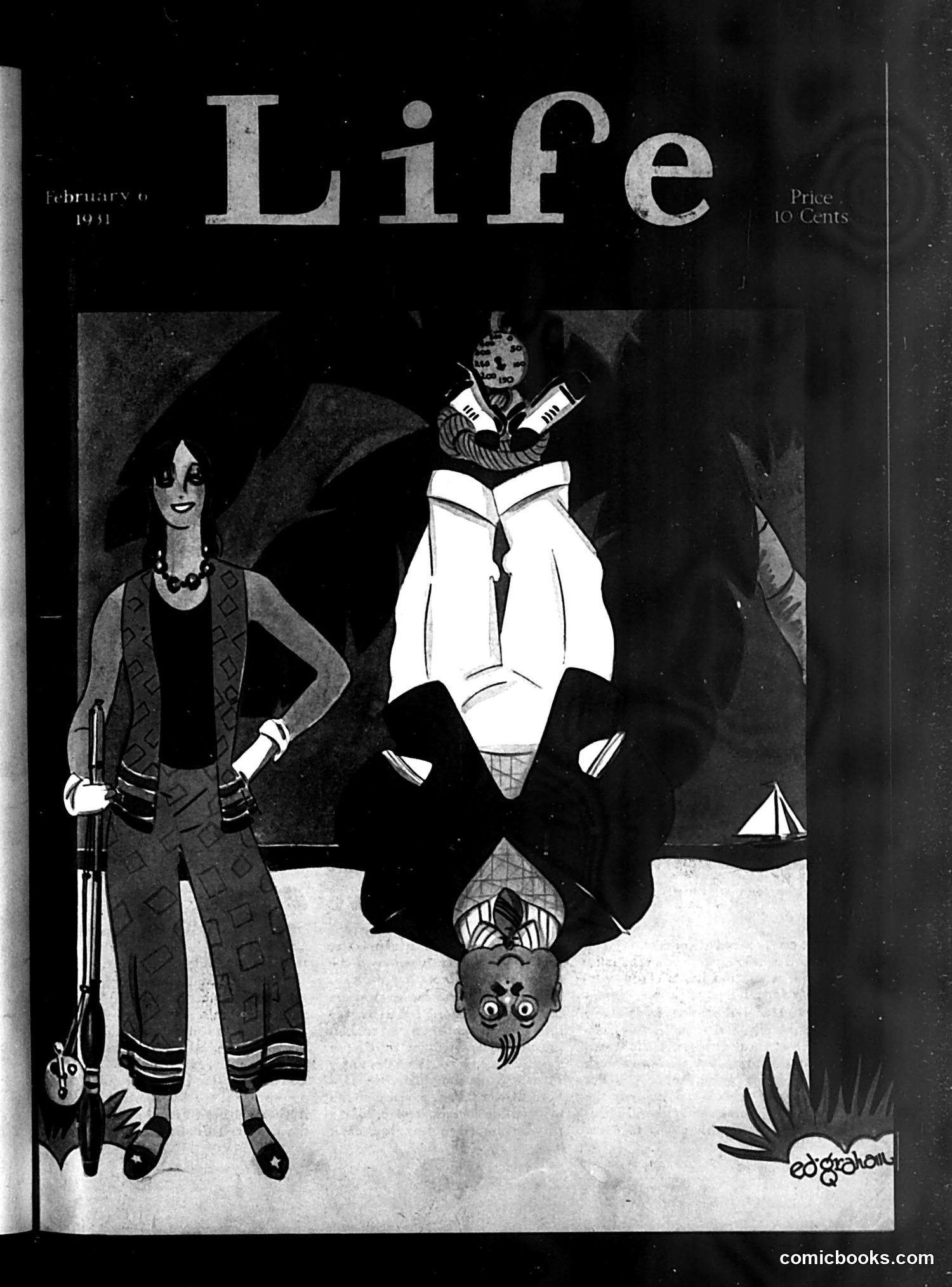
This is the cover of Life magazine from February 6, 1911, priced at 10 cents. The illustration depicts two figures in an Art Deco style: a woman on the left wearing exotic clothing with a headpiece and holding what appears to be a rifle, and an upside-down figure in the center wearing white bloomers or knickers with a large bow, holding books labeled "art" and "life." The satire likely comments on contemporary debates about women's roles—possibly mocking either the "New Woman" movement (women seeking education and independence) or fashionable exotic trends. The upside-down posture and exaggerated presentation suggest ridiculing modern women's fashion or social pretensions. Without additional context from the magazine's contents, the specific target remains unclear, though it reflects early 20th-century attitudes toward changing gender norms.
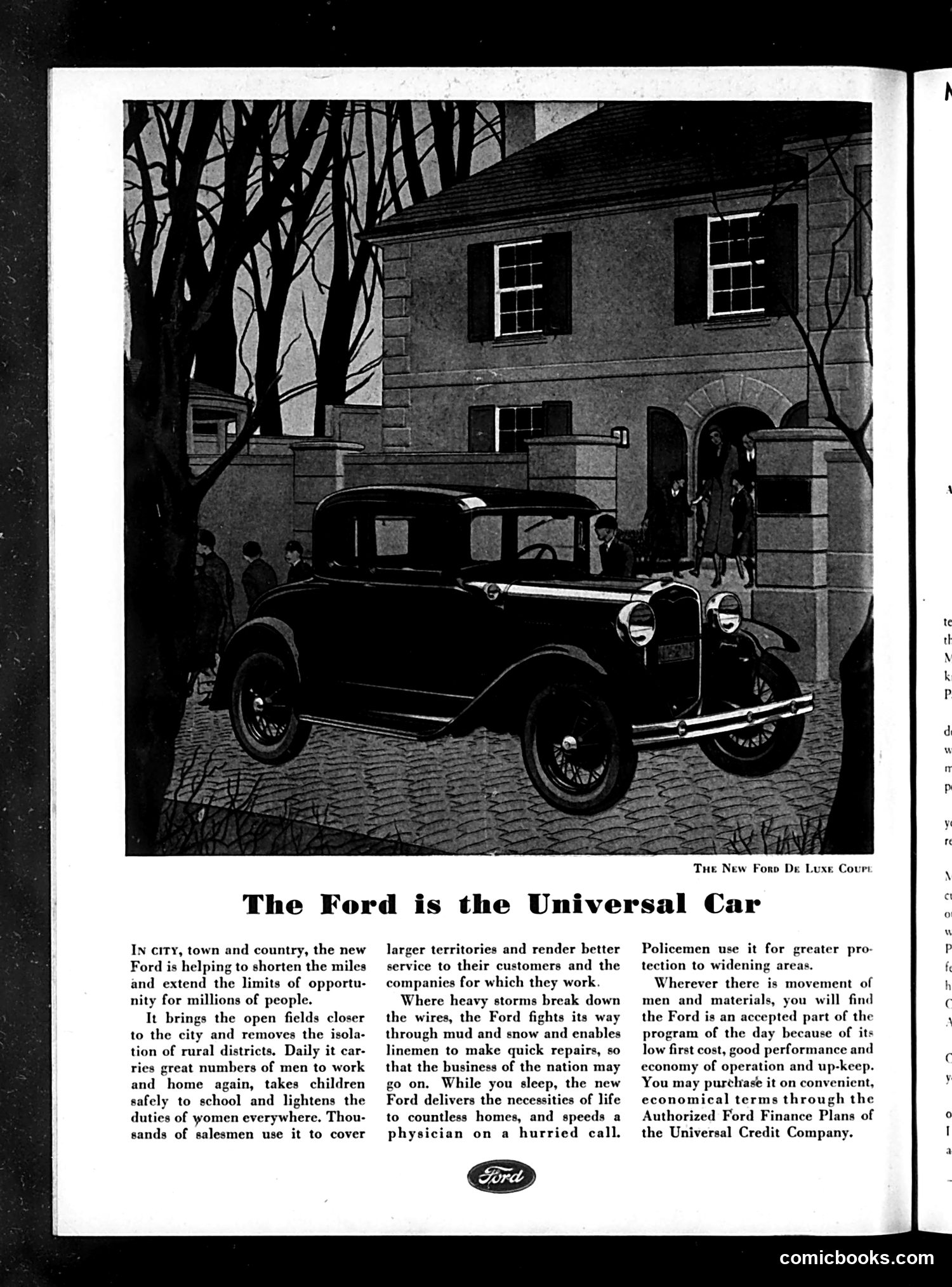
# Analysis This is a **Ford automobile advertisement**, not a political cartoon. The page features a photograph of a Ford De Luxe Coupe parked in front of a brick building, accompanied by promotional text. The ad's messaging emphasizes Ford's role as "the Universal Car" — claiming it serves all social classes and professions across rural and urban America. The text highlights practical benefits: extending business opportunities, enabling doctors to make house calls, helping policemen patrol wider areas, and providing affordable transportation through the Universal Credit Company financing plan. The accompanying image of well-dressed people near the vehicle suggests aspirational middle-class status. This reflects 1920s-era marketing positioning the automobile as essential to modern American life and social mobility, rather than a luxury item.
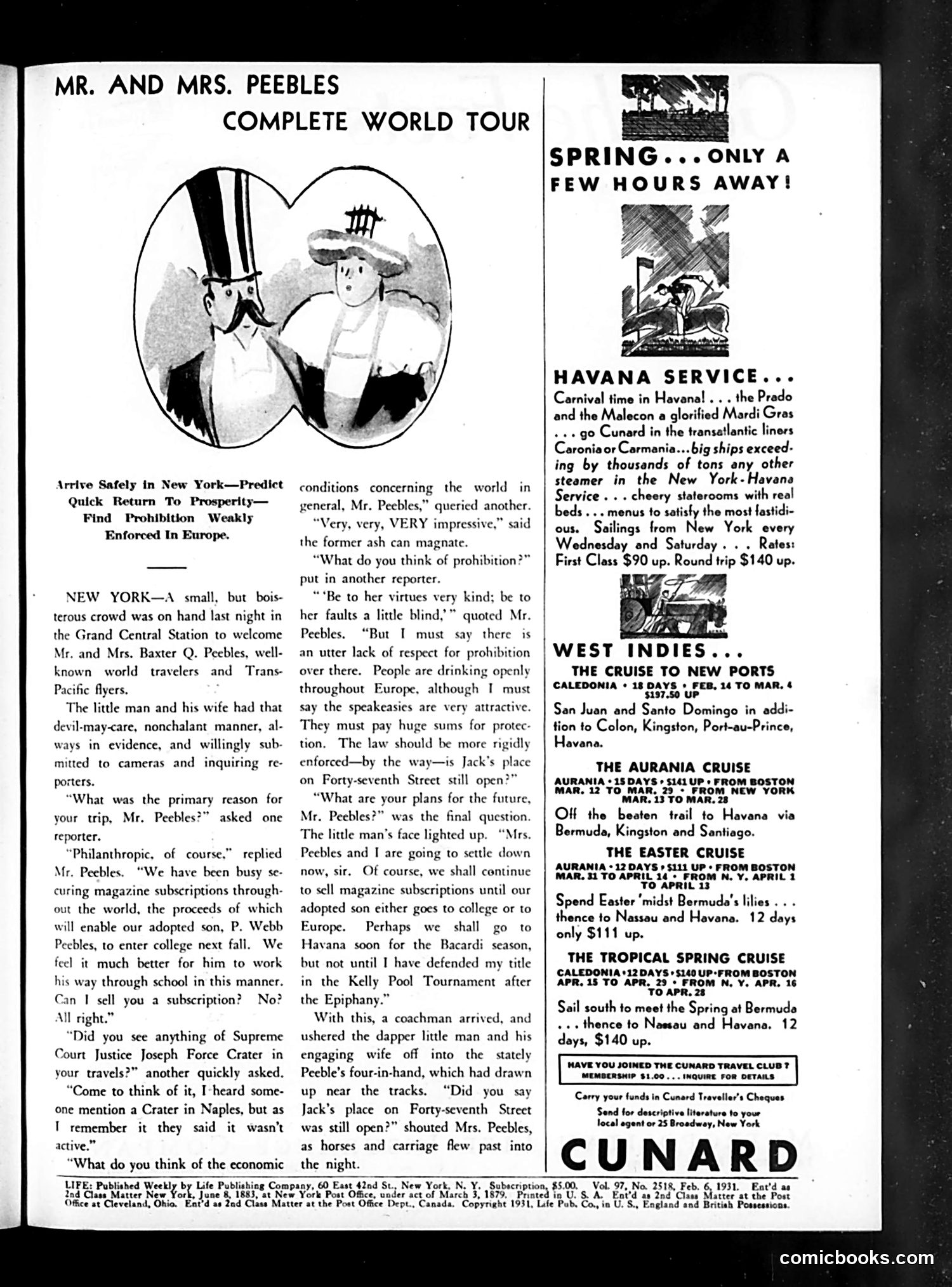
# Analysis This page is primarily **advertising for Cunard cruise lines**, not political satire. The main cartoon depicts Mr. and Mrs. Baxter Q. Peebles, fictional wealthy world travelers, returning to New York. The accompanying article humorously describes their globe-trotting lifestyle and their plans to settle down—though they'll continue traveling for magazine subscriptions and their adopted son's education. The satire gently mocks the pretensions of wealthy Americans who travel constantly and use their voyages to appear cultured and philanthropic. References to Prohibition-era drinking in Europe and competitive leisure activities (like the "Kelly Pool Tournament") reflect 1931 concerns about wealthy Americans' behavior abroad. The page primarily showcases Cunard's various cruise offerings: Caribbean routes, Easter cruises, and spring voyages to Bermuda and Havana.
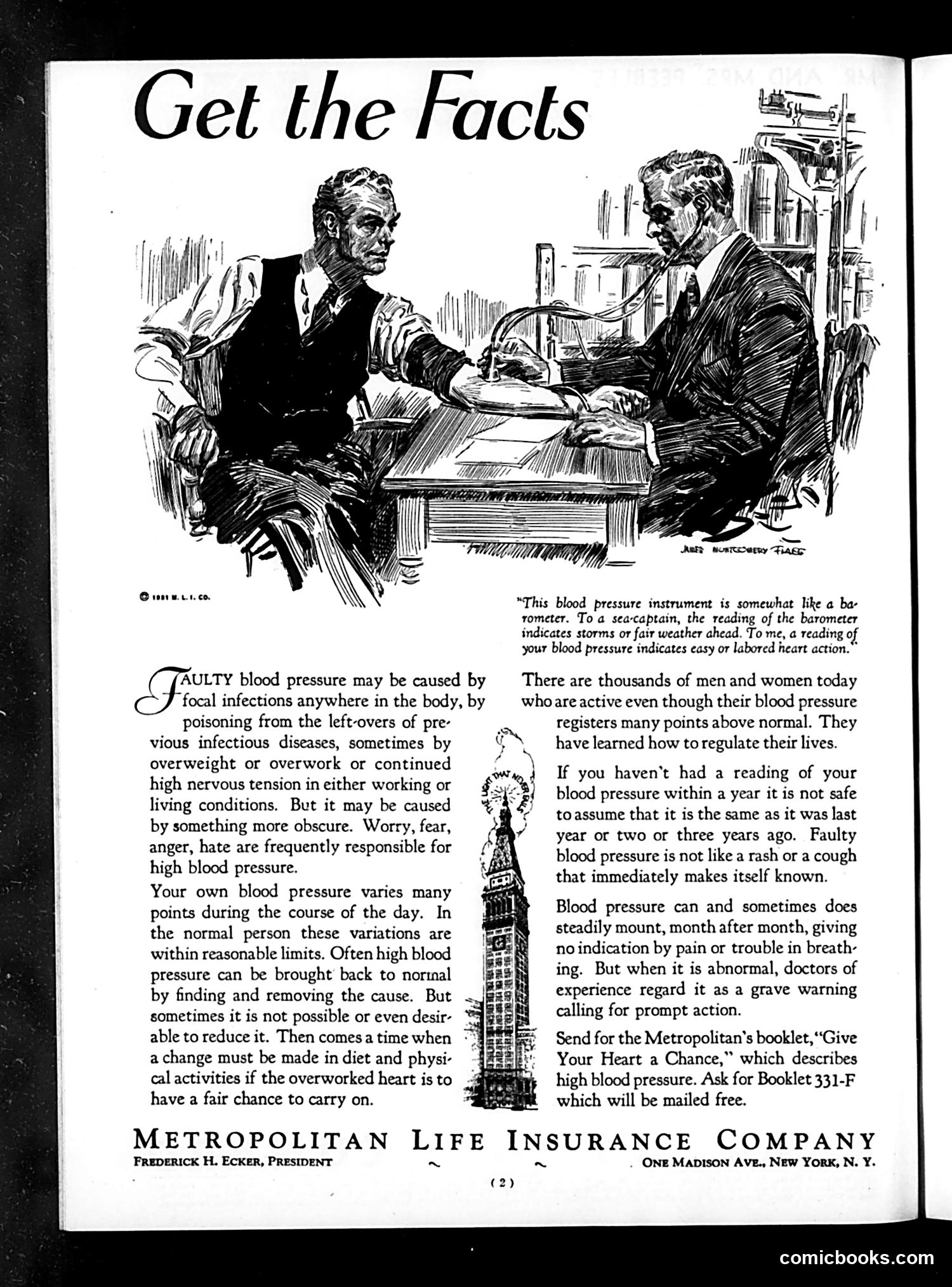
# "Get the Facts" - Metropolitan Life Insurance Advertisement This is a **health education advertisement**, not political satire. The illustration shows two men in business attire discussing blood pressure measurement—one appearing to explain the instrument to the other, likely a doctor and patient. The text warns readers about faulty blood pressure caused by infections, overweight, overwork, stress, and emotional states (worry, fear, anger, hate). It emphasizes that blood pressure fluctuates normally but can dangerously accumulate over time without obvious symptoms, requiring regular medical monitoring. The advertisement promotes Metropolitan Life Insurance's free booklet "Give Your Heart a Chance" (Booklet 331-F) as health education, positioning insurance companies as public health advocates—a common early 20th-century corporate strategy linking life insurance to preventive medicine awareness.
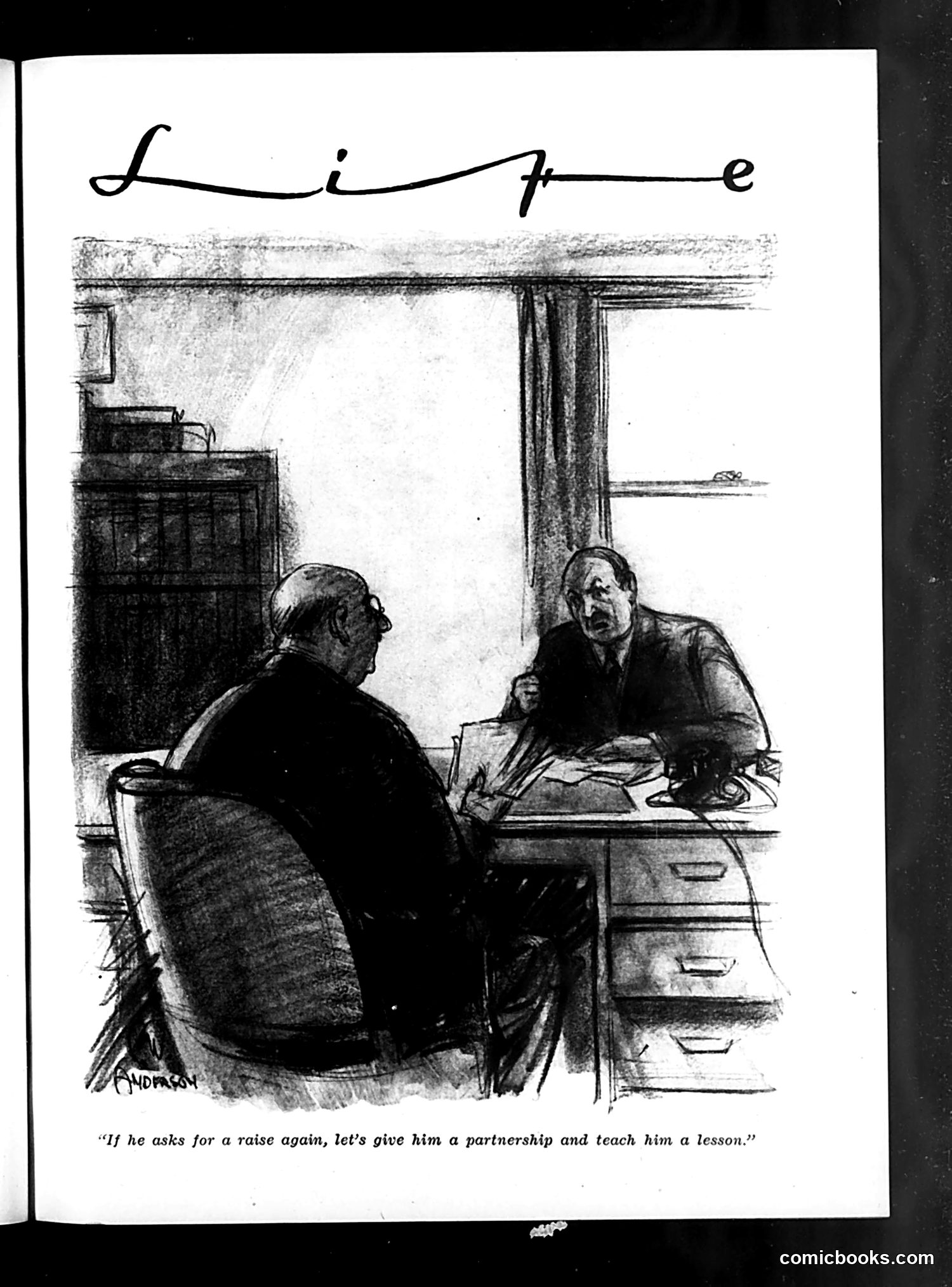
# Cartoon Analysis This cartoon depicts a workplace conversation between two men at a desk, with the caption: "If he asks for a raise again, let's give him a partnership and teach him a lesson." The satire targets management's cynical approach to employee demands. Rather than granting a straightforward salary increase, the bosses propose offering a "partnership"—which sounds generous but is actually a trap. By making the employee a partner, they shift him from salary to profit-sharing, likely reducing his guaranteed income while increasing his responsibility and risk. The phrase "teach him a lesson" makes the punitive intent explicit. The cartoon critiques how employers manipulate language and false promotions to avoid legitimate wage increases, using the appearance of advancement to actually disadvantage workers.
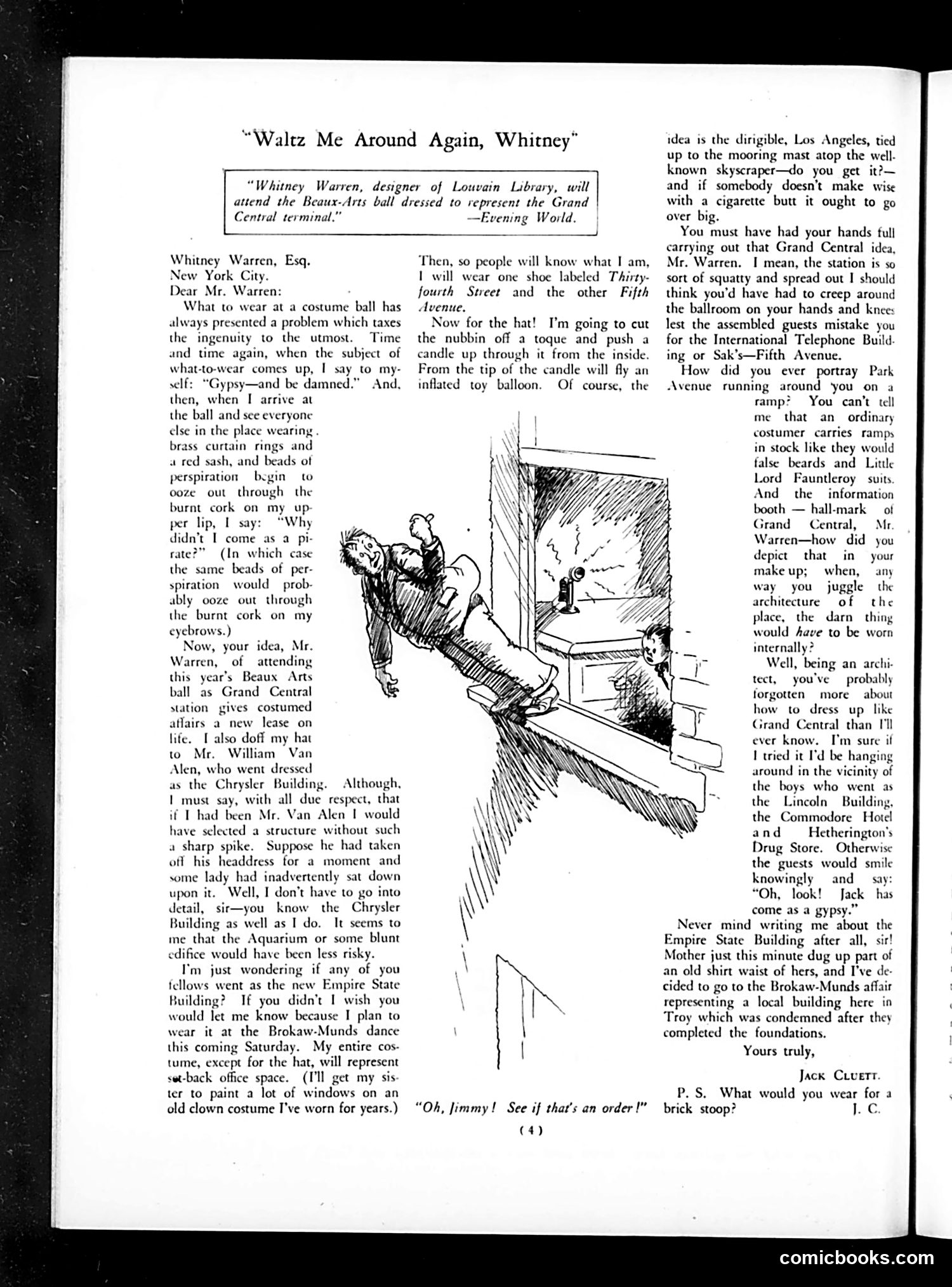
# Analysis of "Waltz Me Around Again, Whitney" This page features a letter from Jack Cluett to Whitney Warren, an architect, about costume ideas for the Beaux Arts Ball at Grand Central Terminal. The accompanying illustration shows a figure in an exaggerated costume tumbling or falling through a window or architectural opening. The satire mocks Warren's proposal to create an elaborate Grand Central-themed costume. Cluett humorously critiques the impracticality—suggesting the costume would be so architecturally complex that guests would mistake Warren for a gypsy, and noting that wearing the building itself would be physically impossible and absurd. The title references a popular song, adding comedic irony. The joke targets pretentious architectural ambition and the difficulty of translating grand designs into wearable reality.
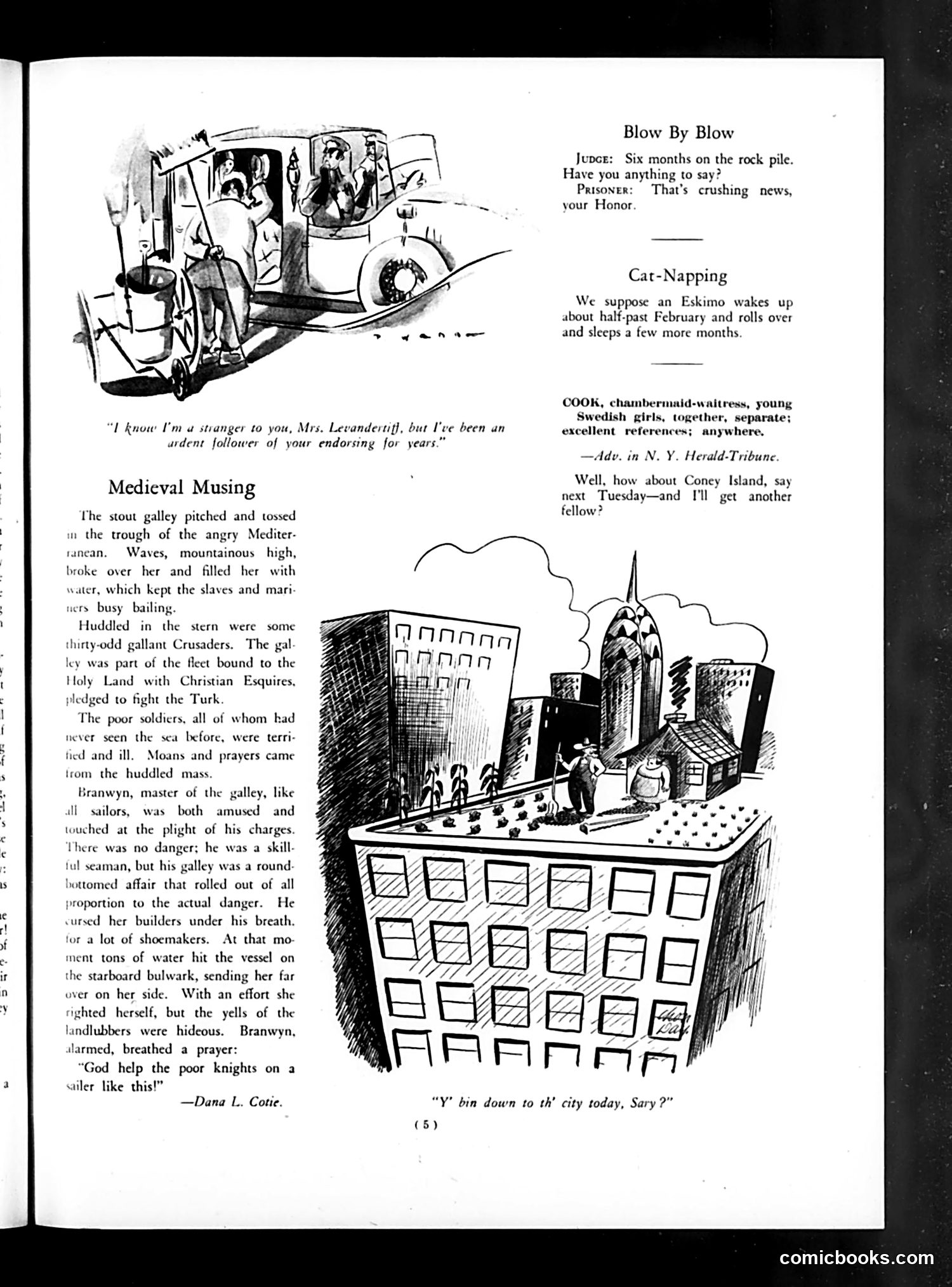
# Analysis of Life Magazine Page This page contains several distinct satirical pieces: **"Blow By Blow"** shows a judge sentencing a prisoner to six months on a rock pile—a hard labor punishment. The prisoner's quip about "crushing news" is a pun on the literal rock-crushing work. **"Car-Napping"** jokes that an Eskimo might sleep through winter and wake in February to find their car stolen—playing on the stereotype of extreme Arctic hibernation. **"Medieval Musing"** is a longer narrative poem by Dana L. Cotie about Crusaders on a galley ship during a storm. It depicts religious soldiers terrified during rough seas, with their captain Branwyn cursing under his breath while praying. The cartoons use wordplay and exaggeration typical of early 20th-century American humor magazines to satirize justice systems, regional stereotypes, and historical irony.
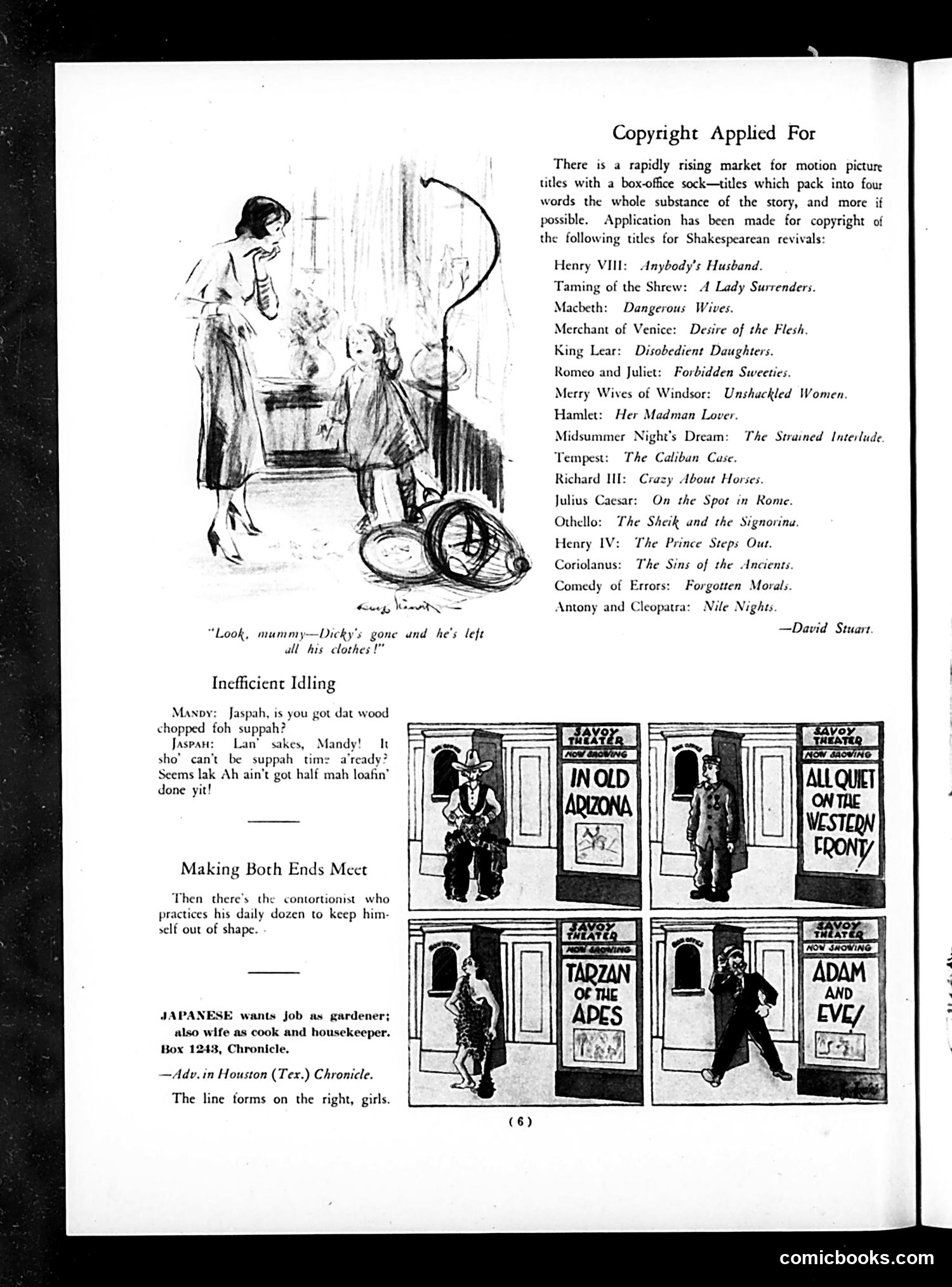
# Page Analysis This page contains three distinct sections: **Top**: A sketch titled "Copyright Applied For" listing Shakespeare play adaptations for motion pictures—showing how classical works were being rapidly adapted for film with sensational titles ("Forbidden Sweetness" for Romeo and Juliet, "Unhackled Women" for Merry Wives of Windsor, etc.). The accompanying cartoon depicts a mother and child viewing discarded clothes, captioned "Look, mummy—Dicky's gone and he's left all his clothes!" **Middle**: Brief humor pieces including "Inefficient Idling" (dialogue about chopped wood) and "Making Both Ends Meet" (about daily exercise routines). **Bottom**: A comic strip sequence showing figures posing before movie posters for films like "In Old Arizona," "Tarzan of the Apes," and "Adam and Eve"—satirizing early silent film titles and theatrical promotion. The overall theme critiques Hollywood's commercialization of entertainment through sensationalized adaptations and marketing.
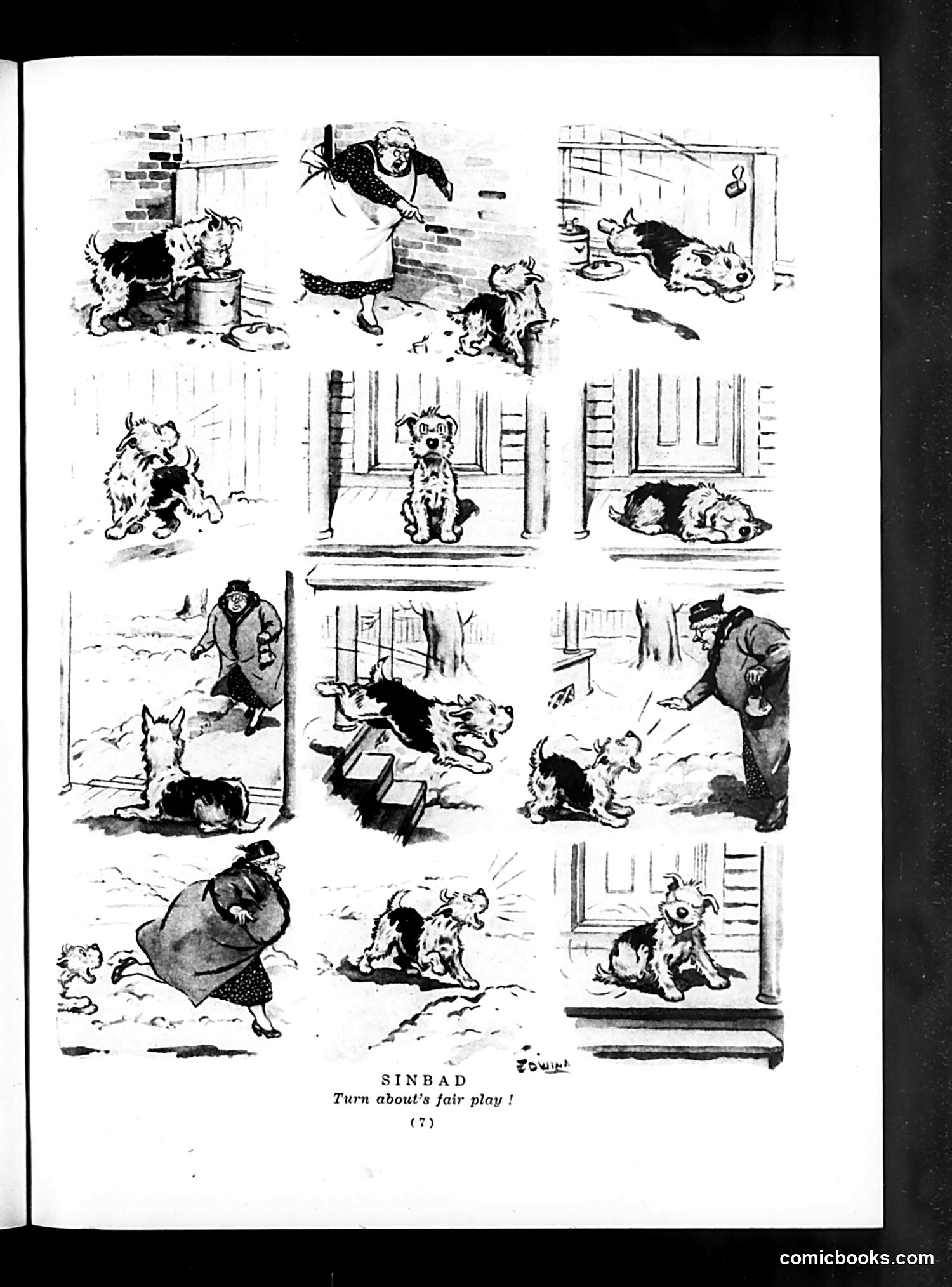
# Sinbad Comic Strip Analysis This is a multi-panel comic strip titled "Sinbad" with the caption "Turn about's fair play!" The strip depicts a series of comedic interactions between what appears to be Sinbad (a character recognizable from adventure tales) and various dogs in domestic settings. The humor relies on role reversals: dogs chase Sinbad through streets, into homes, and around people in positions of authority (likely police or officials). The "turn about's fair play" caption suggests the joke is that Sinbad—typically a figure of adventure and authority in his own stories—is now being pursued and harassed, much as he might pursue others. The strip appears to be early 20th-century satirical comedy using slapstick and visual gags rather than political commentary.
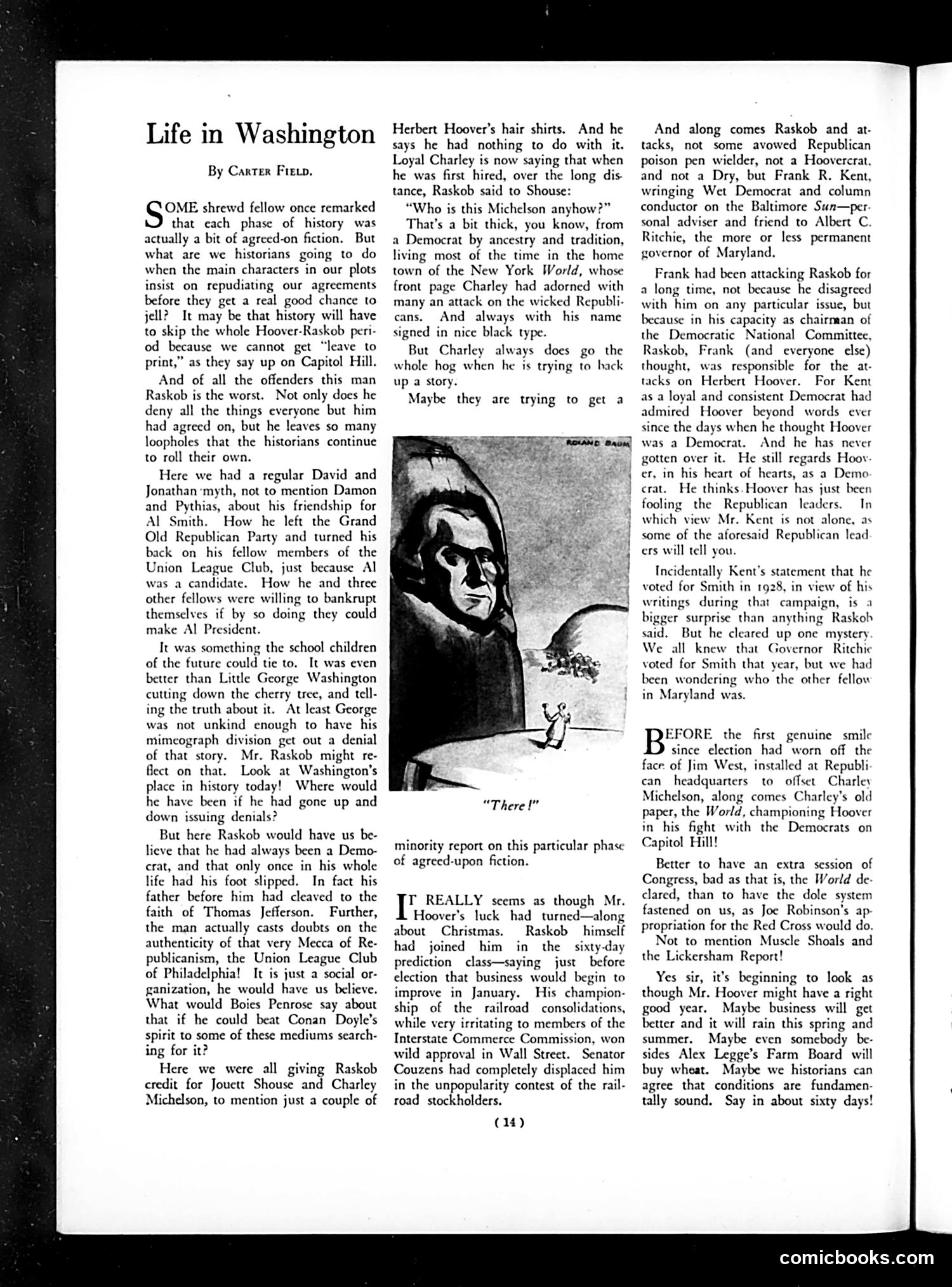
# Analysis of "Life Looks About" Page This is a political commentary page discussing government relief efforts, likely from the Great Depression era. The cherub illustration at top left is decorative. The text references **William Neverdo's proposal for a Cromwell** (apparently a revolutionary governmental restructuring), which the author finds surprisingly radical coming from a conservative. The piece discusses tension between the **President and Senate** over relief funding and appropriations. Key figures mentioned include **Frank Vanderlip** (discussing banking failures and economic depression causes) and **E. S. Martin** (the apparent author). The satire critiques governmental inefficiency, the discrepancy between executive and legislative branches on relief spending, and debates over whether capitalism itself requires reform. The overall tone suggests frustration with bureaucratic gridlock during economic crisis.
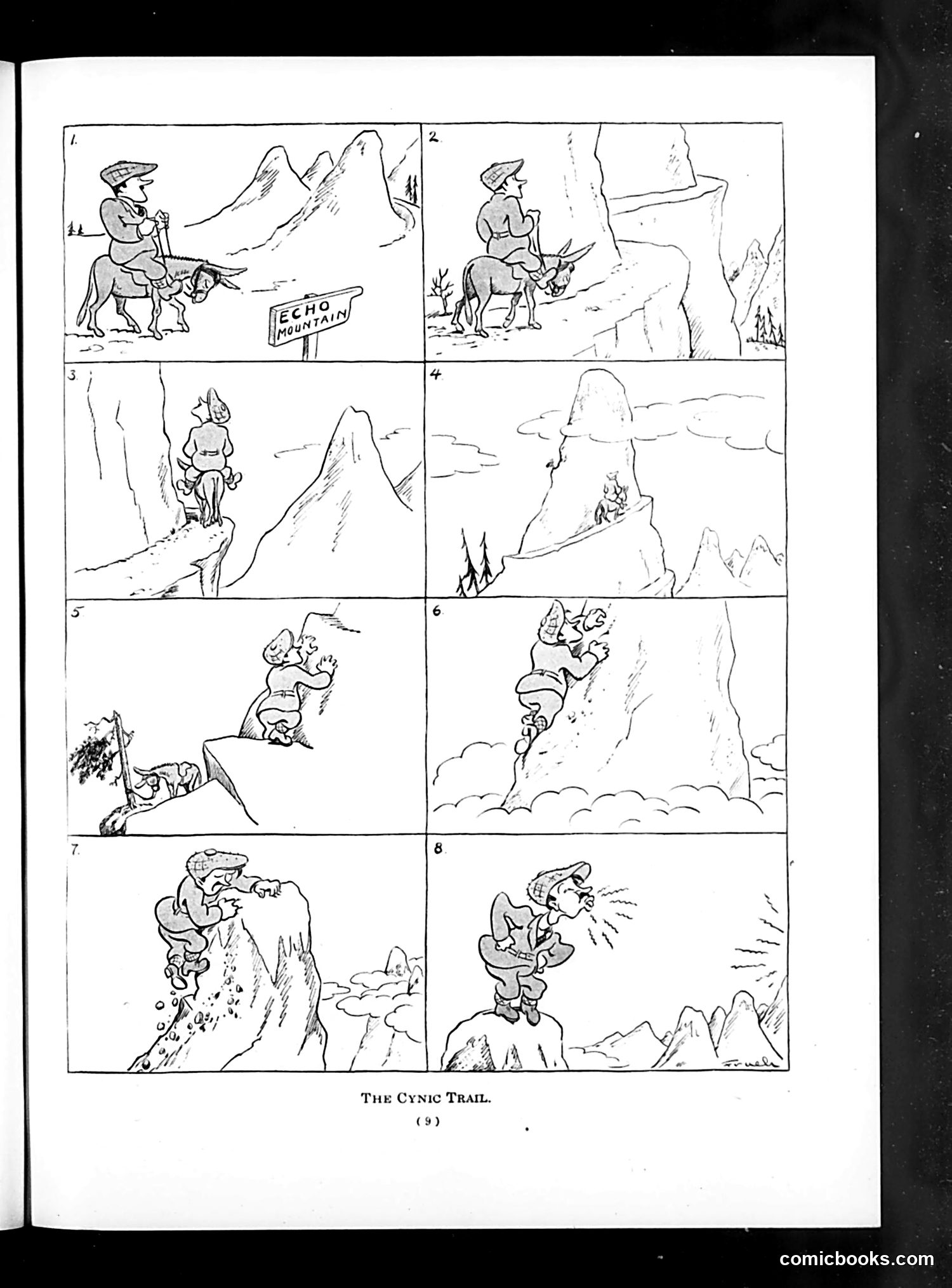
# The Cynic's Trail This eight-panel comic strip appears to satirize mountain tourism and the experience of hiking. A figure on horseback/donkey encounters "Echo Mountain" (panel 1-2), then climbs increasingly steep terrain through panels 3-4. By panels 5-6, the character struggles dramatically on near-vertical rock faces. Panels 7-8 show the exhausted climber at the summit, apparently disappointed or underwhelmed by the destination. The satire likely targets the contrast between romantic expectations of mountain adventure versus the grueling, unglamorous reality—a common theme in Life magazine's humor. The title "Cynic's Trail" reinforces this deflation of idealism. The progression from eager start to bedraggled finish critiques both tourism marketing and human folly in pursuing difficult goals for minimal reward.
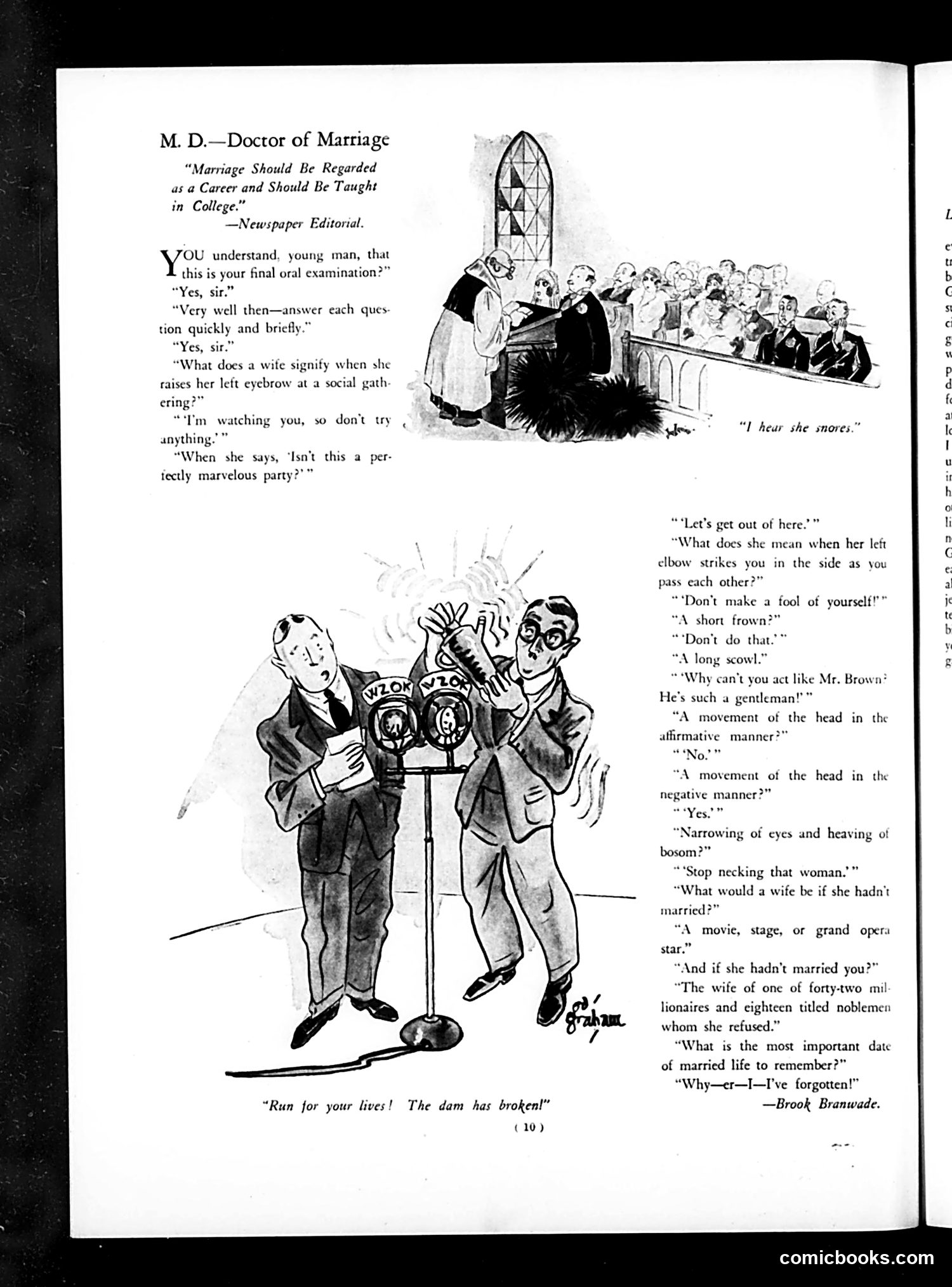
# "M.D.—Doctor of Marriage" This satirical piece mocks the idea (from a newspaper editorial) that marriage should be taught in college. The top cartoon shows an oral examination on marriage conducted like an academic degree. The bottom cartoon depicts two men at what appears to be a microphone or examination apparatus, labeled "Run for your lives! The dam has broken!"—suggesting marital knowledge is overwhelming or dangerous. The accompanying dialogue humorously presents absurd "exam questions" about wife behavior: eyebrow raises, left elbows striking, social gatherings, and comparisons to movie stars. The satire critiques both the notion that marriage can be systematized into an academic subject and contemporary gender roles and marital expectations. The piece suggests marriage is fundamentally chaotic and unpredictable, not teachable.