A complete issue · 36 pages · 1931
Life — January 30, 1931
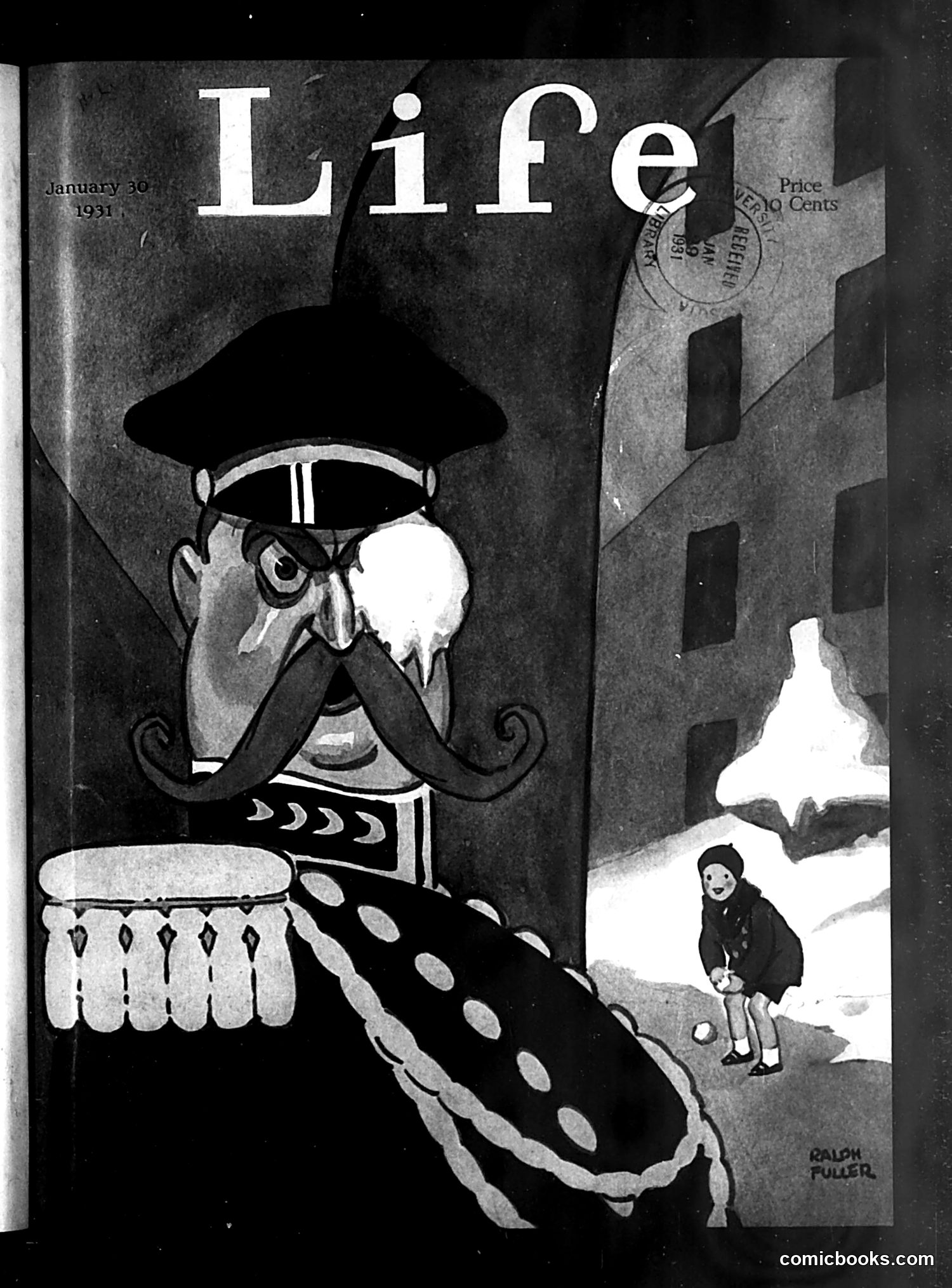
# Life Magazine Cover Analysis (January 30, 1931) This cover depicts a menacing military or political figure with an exaggerated villainous appearance—distinctive mustache, monocle, military uniform with ornate decorations, and a threatening pose. A small child huddles outside in the snow, appearing frightened or desperate. The satirical image appears to comment on **authoritarian threat and its impact on civilians**, likely referencing European fascism or militarism emerging in the early 1930s. The contrast between the grotesquely caricatured authority figure and the vulnerable child emphasizes the human cost of aggressive regimes. The artist's signature reads "Ralph Fuller." Without additional context from the magazine's contents, the specific political target remains unclear, though the date (1931) and aesthetic suggest commentary on rising fascism.
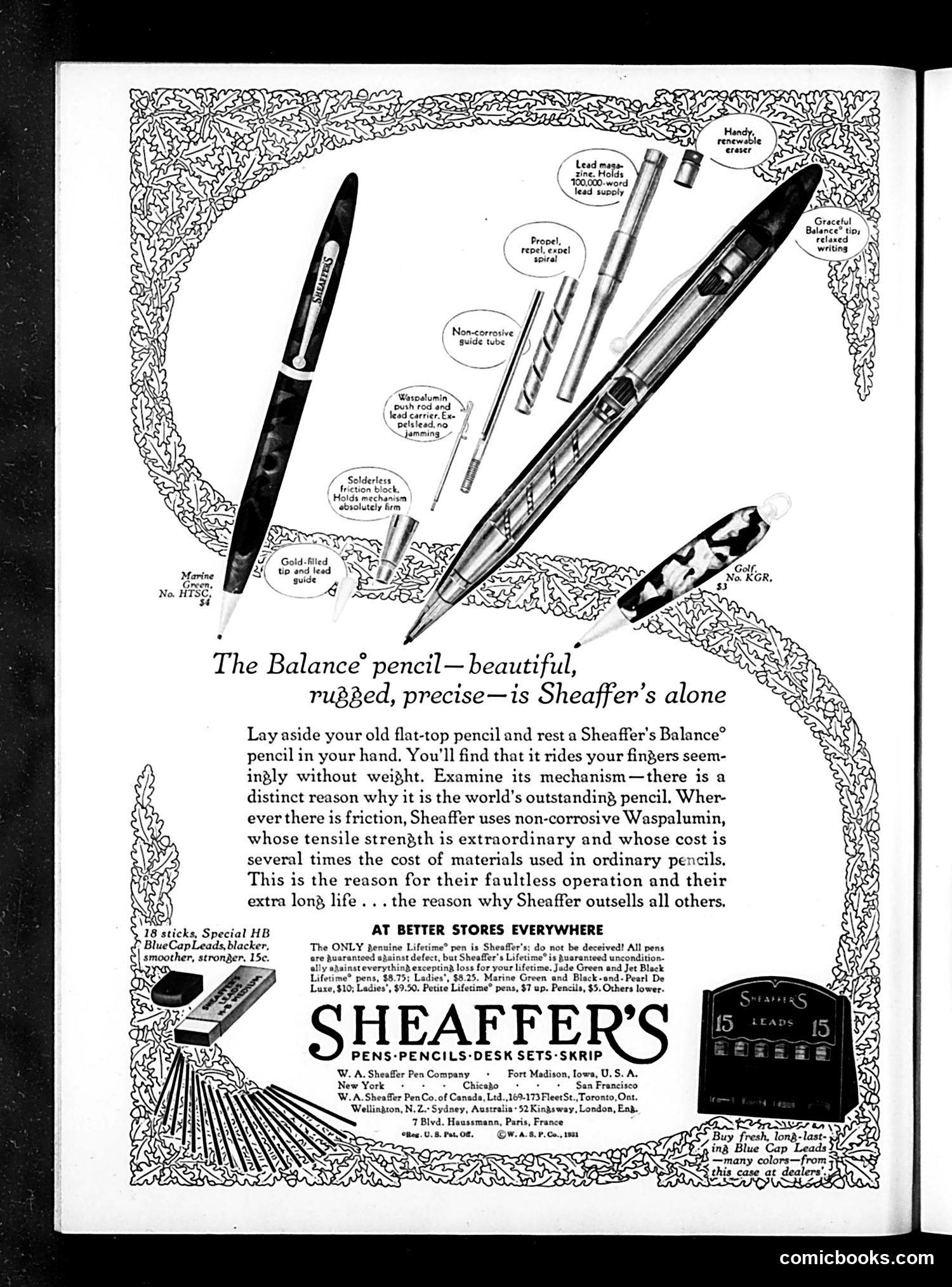
# Analysis This is **not a political cartoon or satirical content**—it's a full-page advertisement for Sheaffer's Balance pencils, a premium writing instrument brand. The page displays various pencil designs with technical annotations highlighting features like "Handy, retractable eraser," "Lead-proof zinc holds 16,000 words," and "Non-corrosive guide tube." The ad copy emphasizes the pencil's superior construction using "Waspalumim" (an exotic material) and claims it "outsells all others." The decorative border and vintage typography are typical of early-to-mid 20th century advertising aesthetics. There is no satire or political commentary here—this is straightforward product marketing aimed at consumers through Life magazine's readership.
# "Poetical Pete" Cartoon Analysis This single-panel cartoon depicts a disheveled character labeled "Poetical Pete" sitting in a dejected pose. The accompanying verse reads: "It's funny how successful folks, / Although they're far from plant, / Are never stubborn or stiff-necked; / They're simply self-reliant." The satire appears to mock successful people's claims of self-reliance while Pete—presumably a struggling or failed individual—embodies the opposite: stubborn, stiff-necked, and unsuccessful. The humor lies in the ironic contrast: the verse suggests successful people achieve their status through flexibility and self-reliance, implying that Pete's failure stems from his rigidity and inability to adapt. This likely critiques either blind ambition or the rationalization by the wealthy about their own success.
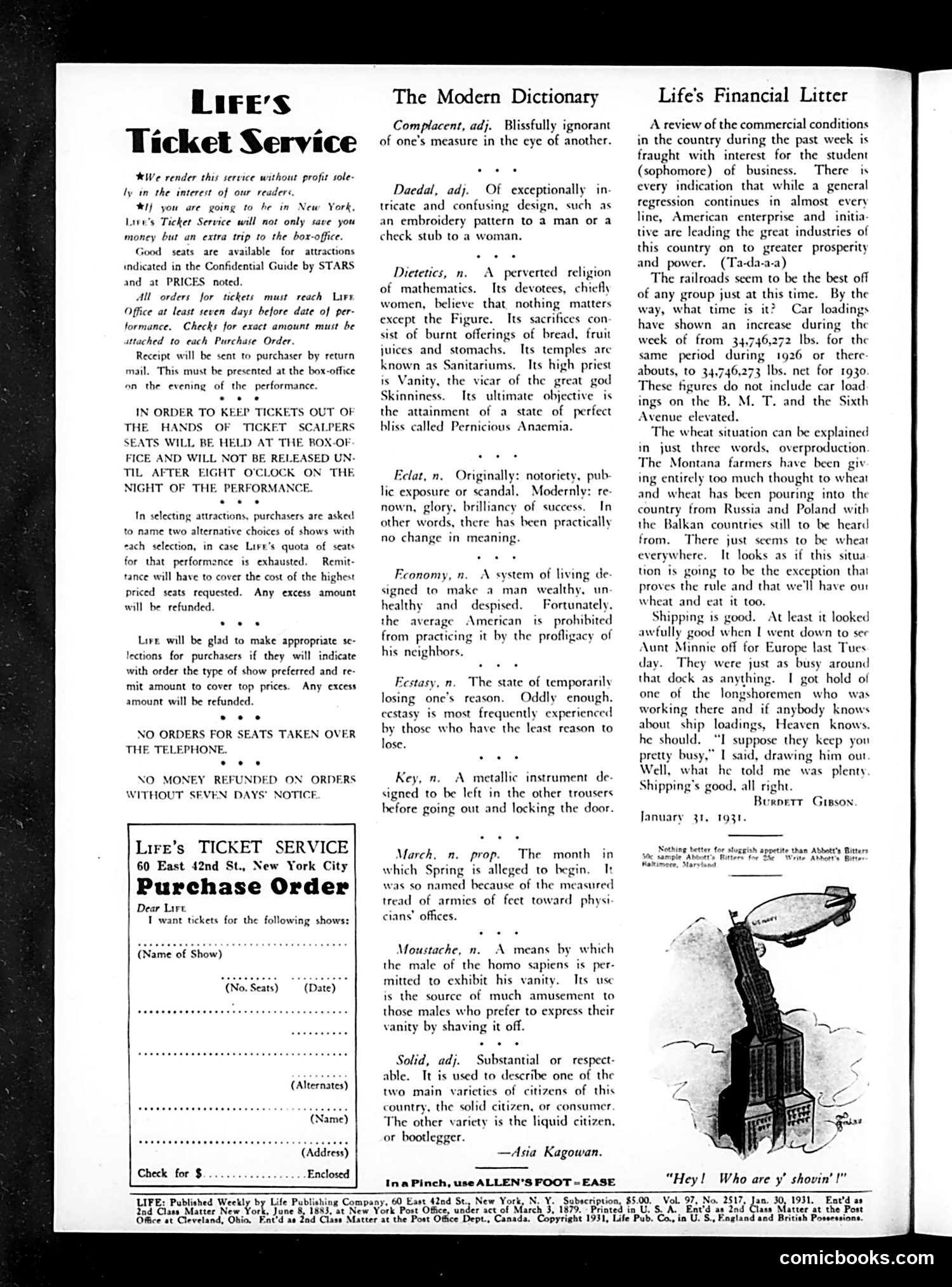
# Analysis of Life Magazine Page This page is primarily **administrative and advertising content**, not political satire. It contains: 1. **Life's Ticket Service** — a booking service advertisement for theater tickets in New York City, with order forms and terms. 2. **"The Modern Dictionary"** — humorous definitions of words like "Complacent," "Daedal," "Dietetics," and "Economy." These are gentle satire mocking contemporary social pretensions and behaviors (prohibition, wheat shortages, American materialism). 3. **"Life's Financial Litter"** — commentary on business conditions, railroads, and the wheat situation, likely referencing agricultural problems of the early 1930s. 4. **One cartoon** (bottom right): Shows a figure on a tall structure saying "Hey! Who are y' showin' it?" — the subject and satire target are unclear from the image alone. The page reflects *Life* magazine's mix of theater promotion, social commentary, and light humor typical of the era.
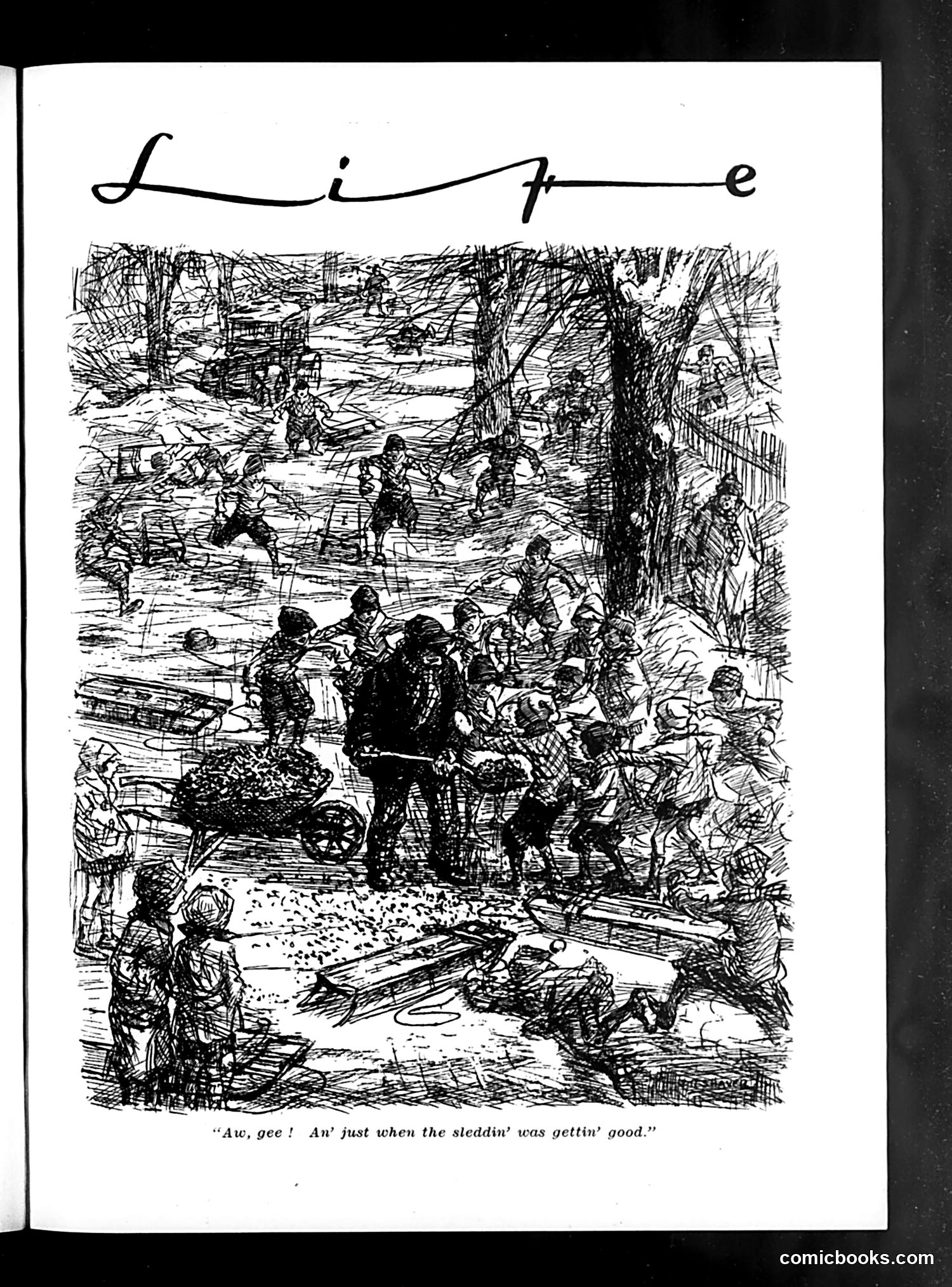
# "Life" Cartoon Analysis This is a winter scene depicting children sledding. The caption reads: "Aw, gee! An' just when the sleddin' was gettin' good." The humor appears to be situational rather than political—it shows a moment of disruption during childhood play. A central adult figure (possibly a parent or authority figure) has interrupted the children's sledding activity, seemingly at the moment when conditions were becoming ideal for the sport. The sketch style is characteristic of early 20th-century American humor magazines. The joke relies on the universal experience of having fun interrupted by adult intervention—a relatable domestic scene rather than political satire. The children's disappointed reaction emphasizes the comedic timing of the interruption.
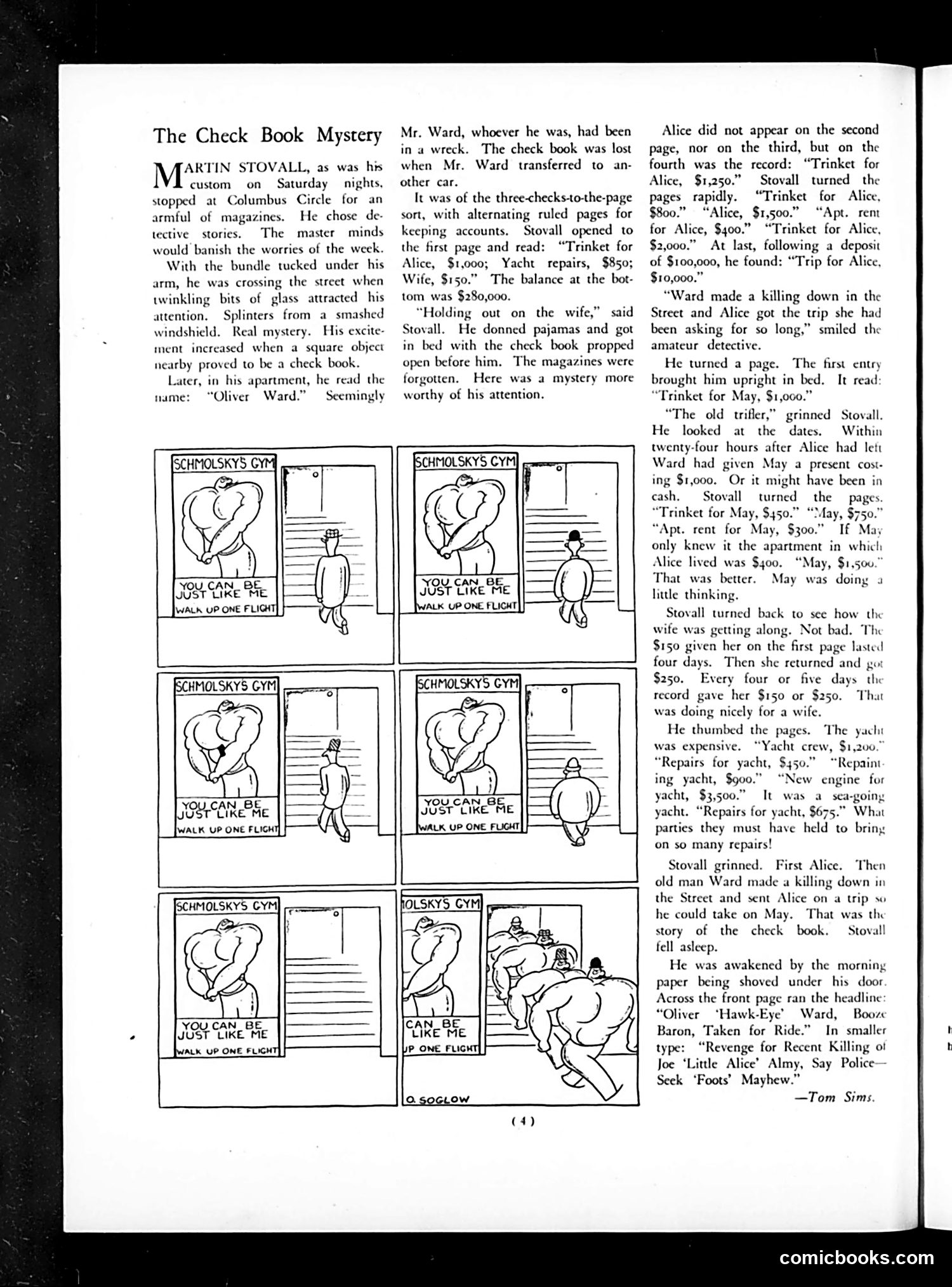
# "The Check Book Mystery" by Tom Sims This is a humorous short story with accompanying comic strip illustrations. The narrative follows Martin Stovall, a detective, investigating a missing check book belonging to a man named Mr. Ward. The mystery centers on mysterious check entries: "Trinket for Alice" appears repeatedly with varying amounts ($1,000, $250, $1,500, etc.), suggesting Ward is maintaining a mistress or secret relationship. The comic strip shows a man at Schmolsky's Gym being told he can exercise "just like" someone else by "walking up one flight"—a joke about taking stairs instead of using the gym. The final panel reveals multiple people engaged in this activity, suggesting the gym's inadequate or humorous setup. The story's punchline involves discovering Alice's true identity and the reason for Ward's expenses.
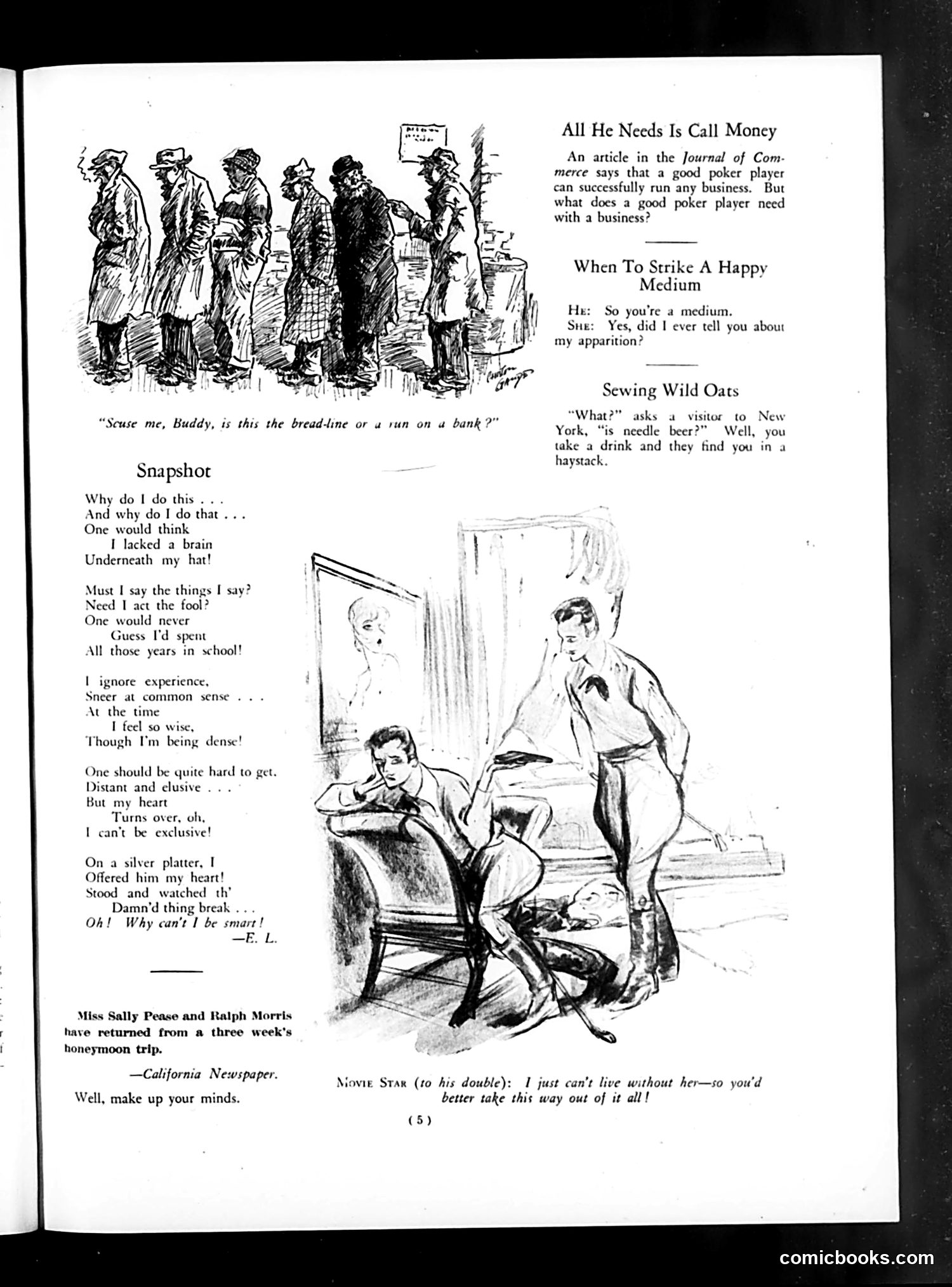
# Analysis of Life Magazine Page This page contains several humorous pieces targeting early 20th-century social behaviors: **"Snapshot" poem** satirizes pretentious intellectuals who affect wisdom despite lacking genuine knowledge or experience—someone who "lacked a brain" but maintains an air of exclusivity and superiority. **"All He Needs Is Call Money"** jokes that poker skills supposedly transfer to business, questioning whether gambling ability translates to legitimate commerce. **"When To Strike A Happy Medium"** and **"Sewing Wild Oats"** are brief quips about courting and youthful indiscretion. **The illustration** depicts a movie star telling a man he "can't live without her," sarcastically suggesting he should end the relationship to avoid melodrama—poking fun at dramatic romantic entanglements and Hollywood excess. The cartoons collectively mock pretension, gambling culture, and romantic theatricality.
# "Life Looks About" - Commentary Page Analysis This is an editorial/opinion page from *Life* magazine featuring social and political commentary rather than a cartoon. The illustration shows a cherub or cupid figure, traditionally associated with the magazine's masthead. The text discusses several contemporary issues: Pope Leo XIII's encyclical on marriage and divorce, concerns about the U.S. House of Representatives' effectiveness compared to the Senate, Paul Warburg's views on financial recovery and unemployment relief, and the Red Cross's charitable work. The pieces critique institutional structures—suggesting the House needs reform, questioning whether relief agencies properly address poverty and hunger, and debating the Pope's authority on moral versus economic matters. The tone is satirical, questioning whether existing institutions adequately serve public welfare during what appears to be a period of economic difficulty.
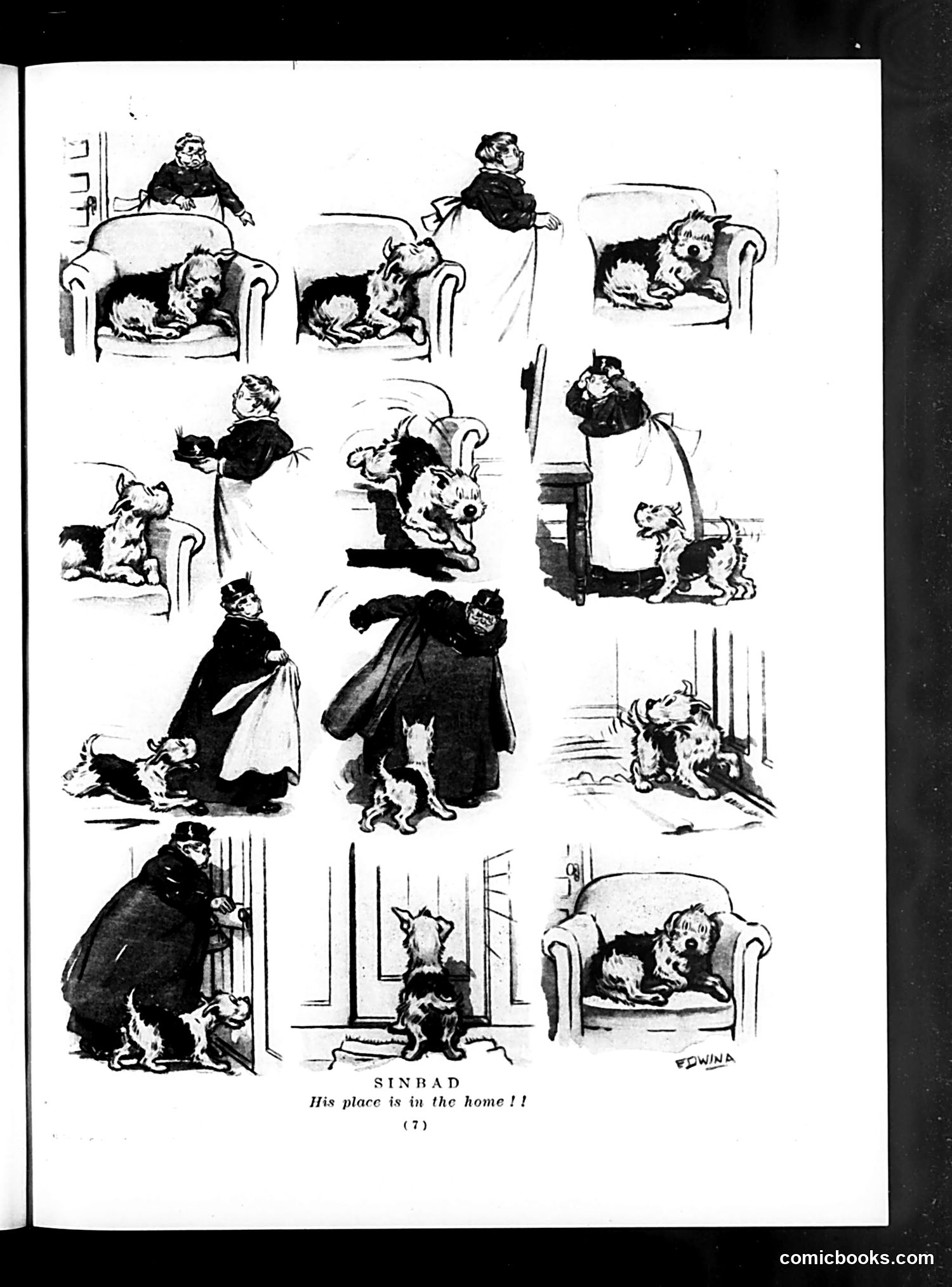
# "Sinbad: His Place Is in the Home!!" This is a comic strip sequence showing a small, scruffy dog named Sinbad in various domestic situations with Victorian-era people. The satire appears to target the popular Sinbad tales—exotic adventure stories—by comically subverting them: rather than the legendary Sinbad undertaking grand voyages, this dog's "place" is firmly indoors with his human family. The humor works through contrast: each panel shows Sinbad integrated into ordinary home life—on furniture, with people indoors, being groomed or petted—emphasizing domesticity over adventure. The caption's emphatic double exclamation suggests ironic commentary, possibly mocking either overly-domesticated pets or societal expectations about "proper places" for creatures (or people). The strip appears to be a gentle, whimsical satire rather than overtly political.
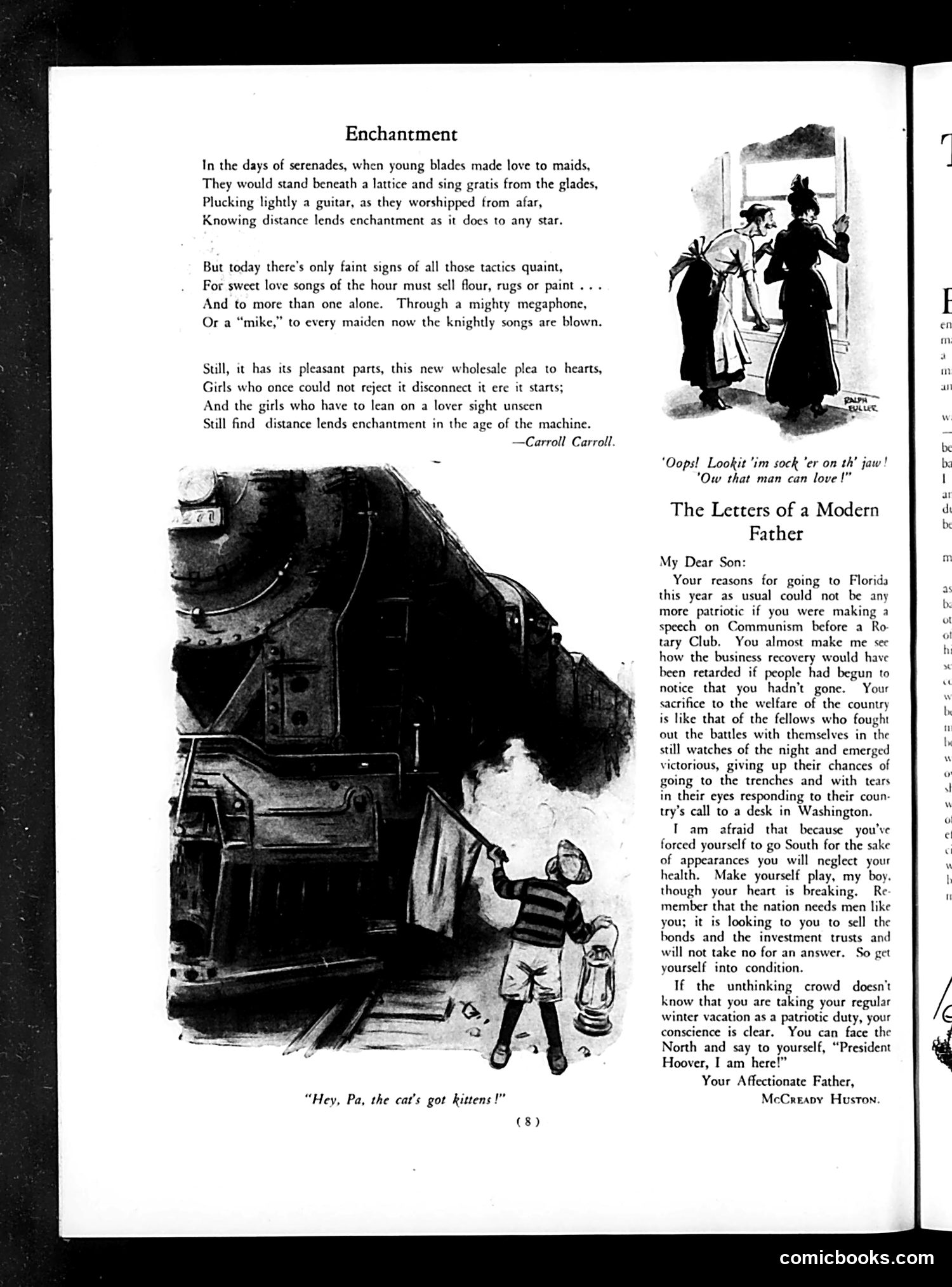
# Analysis of Life Magazine Page This page contains two distinct pieces: **"Enchantment" (poem):** Carroll Carroll contrasts romantic serenades of earlier eras with modern commercialization—love songs now "sell flour, rugs or paint" via megaphones and radio ("mikes"). Yet he notes young couples still find romance through distance and technology. **"The Letters of a Modern Father":** McCready Huston writes to his son about going to Florida, criticizing him for prioritizing a vacation over patriotic duty during what appears to be an economic crisis (likely the Depression era). The father pressures his son to stay North, work, and help the nation recover, suggesting that taking leisure time is unpatriotic. **The illustrations** show a steam engine and children, and a couple at a window—visual reinforcements of the era's tension between old and new, duty and pleasure.
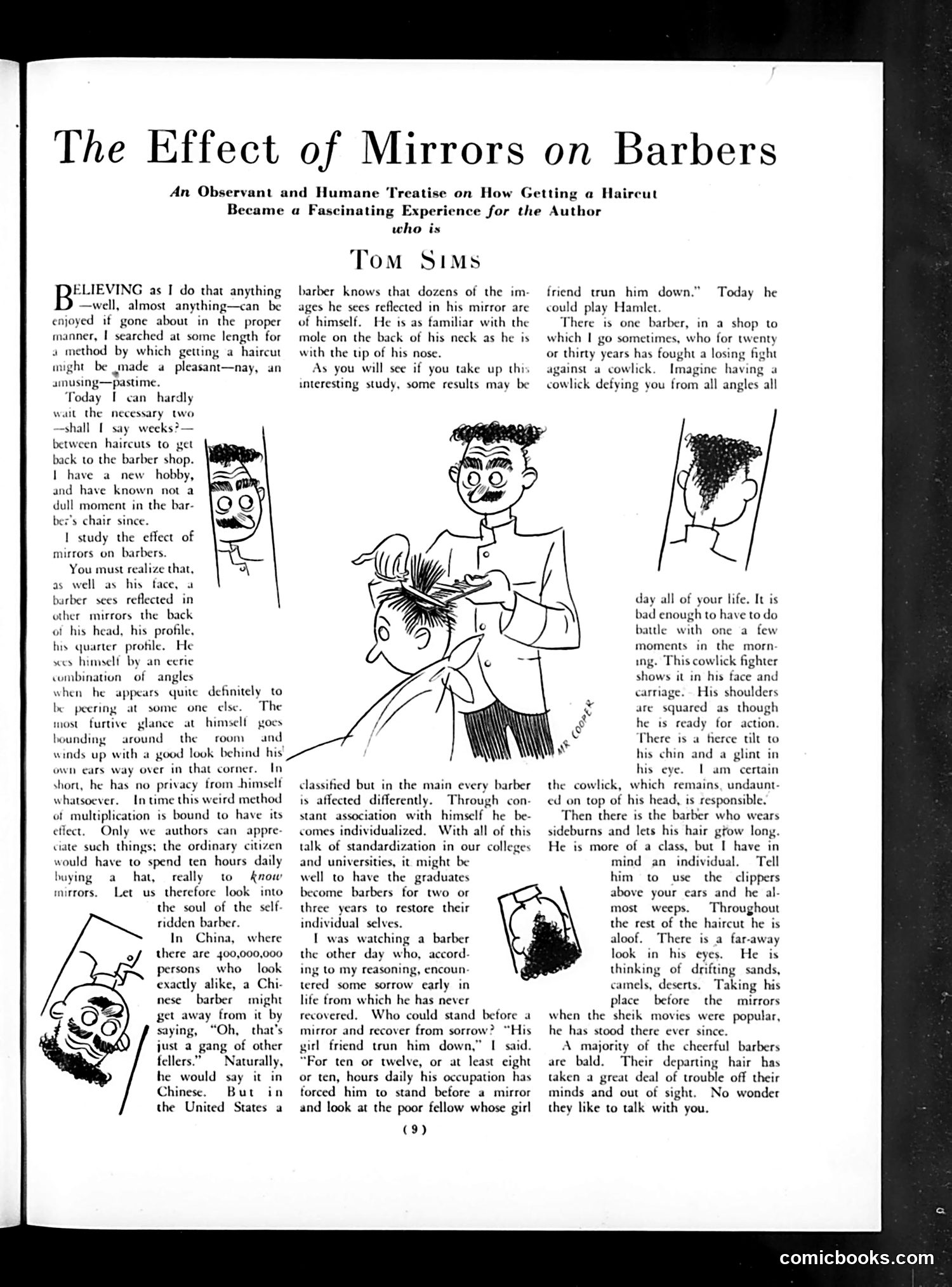
# "The Effect of Mirrors on Barbers" by Tom Sims This humorous essay uses barber shops as a vehicle for social satire. Sims observes that barbers constantly see themselves reflected in mirrors—their own faces and profiles from multiple angles—which he suggests creates psychological effects. The accompanying cartoons illustrate barbers encountering their own reflections from different perspectives. The piece satirizes self-absorption and vanity while also commenting on the barber's profession itself. Sims mentions that barbers often appear melancholy or troubled, attributing this partly to their constant mirror exposure and partly to occupational hazards—hearing customers' sorrows daily without relief. The essay uses humorous exaggeration to explore how professional circumstances shape personality and demeanor.
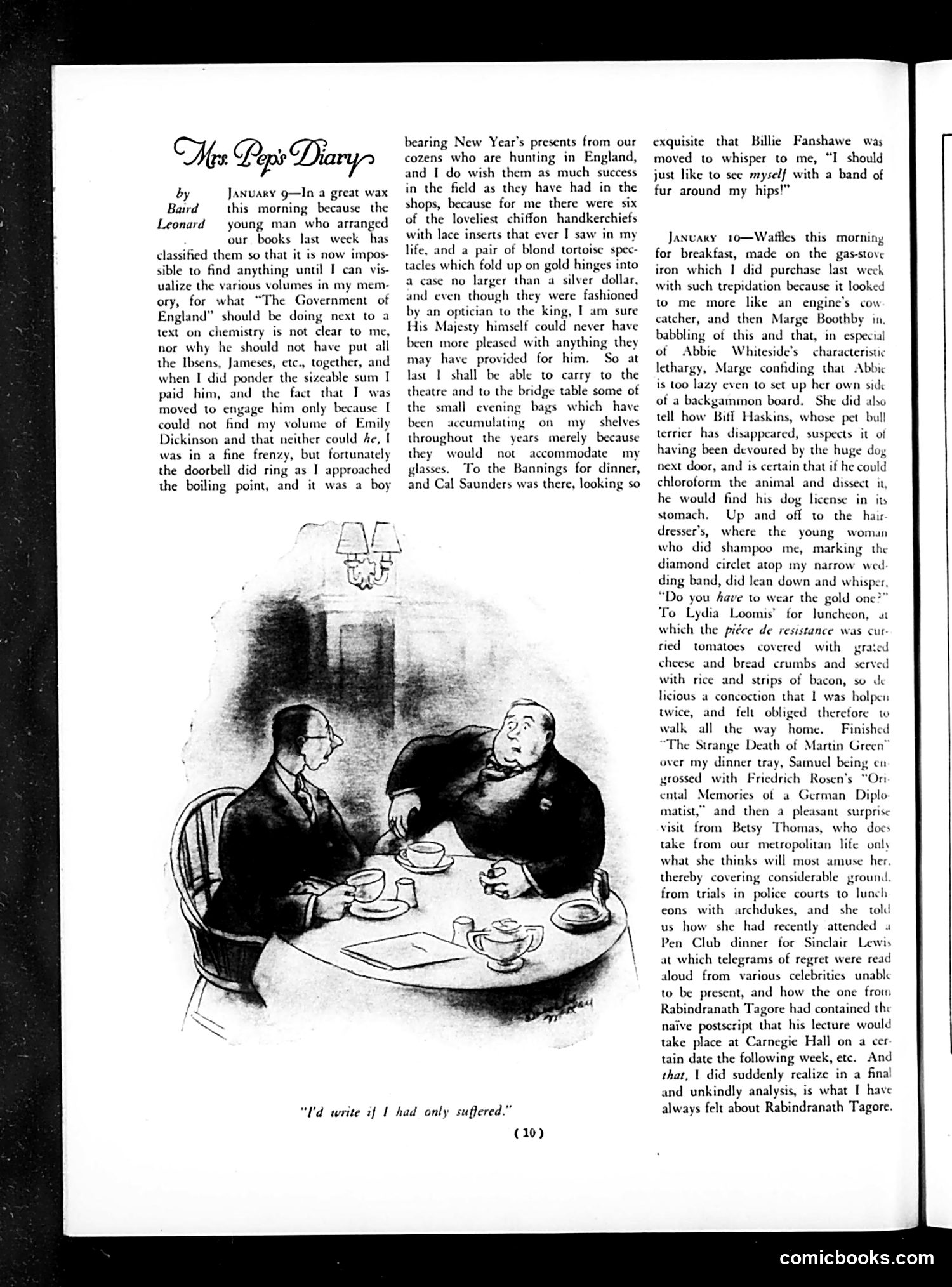
# Analysis of "Mrs. Pep's Diary" Page This is a humorous diary entry by Baird Leonard describing social activities from early January. The accompanying illustration shows two men at tea—one thin and bespectacled, the other rotund—engaged in conversation, with the caption "I'd write if I had only suffered." The cartoon satirizes literary pretension: the portly figure appears to be complaining that he lacks sufficient personal hardship to write about, implying that suffering and drama are prerequisites for becoming a published author. This mocks both self-important amateur writers and the Romantic literary tradition celebrating adversity. The diary itself is light social satire, chronicling Pep's activities—shopping, dinner parties, and encounters with friends—depicting upper-middle-class leisure life, with gentle mockery of social affectation and gossip.