A complete issue · 36 pages · 1931
Life — January 16, 1931
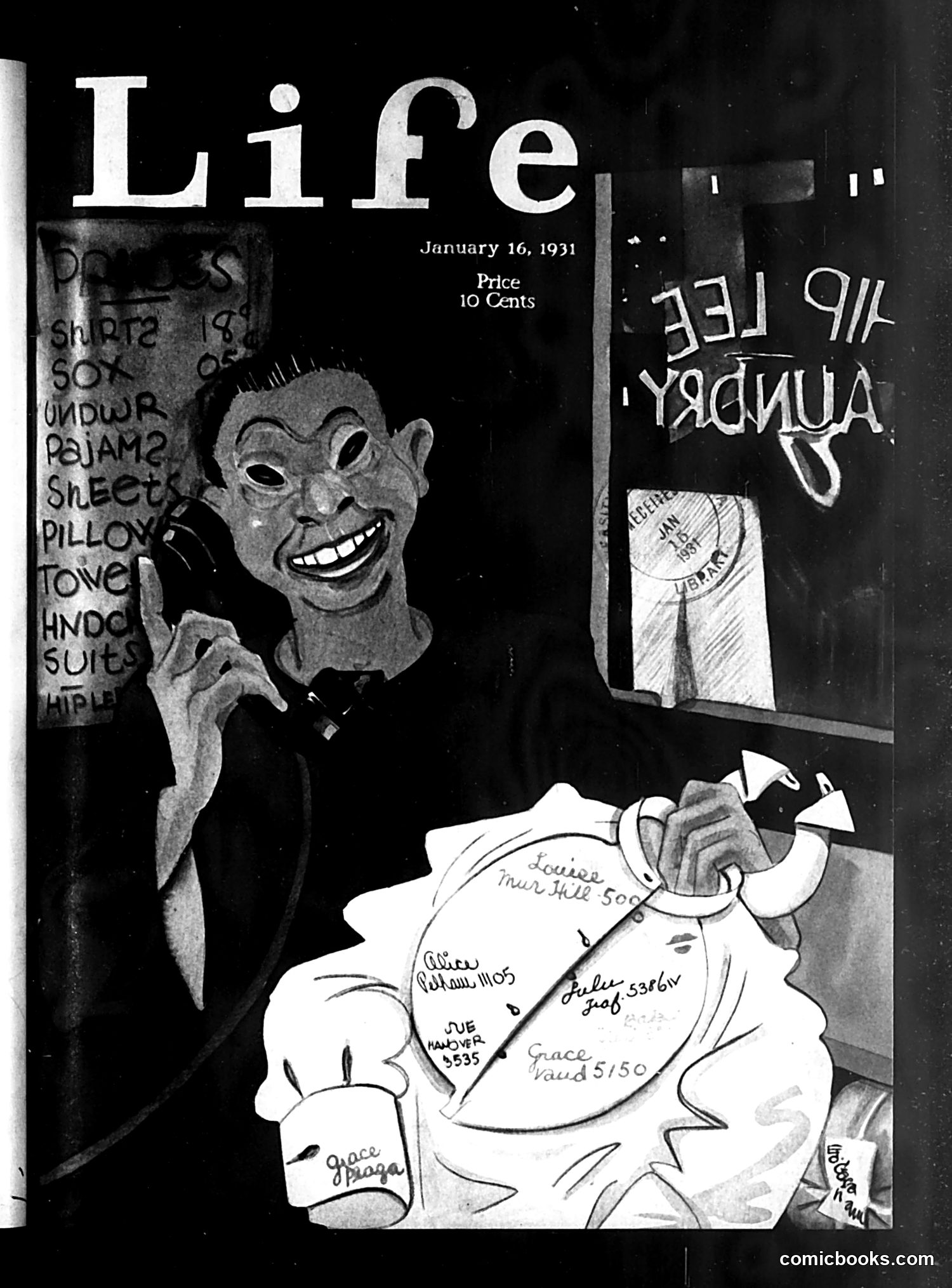
# Life Magazine Cover Analysis — January 16, 1931 This cover satirizes the economic hardship of the Great Depression through a grotesque caricature of a cheerful figure holding a telephone, surrounded by handwritten labels on clothing items listing prices and names (some illegible, but appearing to reference various garments and household goods). The grotesque, grinning face with exaggerated features suggests manic cheerfulness despite dire circumstances—a commentary on forced optimism during financial collapse. The labeled items with prices suggest either a pawn shop inventory, secondhand sales, or personal belongings being sold for survival. The juxtaposition of the figure's artificial smile with the economic desperation implied by the pricing labels creates bitter satire about maintaining composure while facing financial ruin during the Depression era.
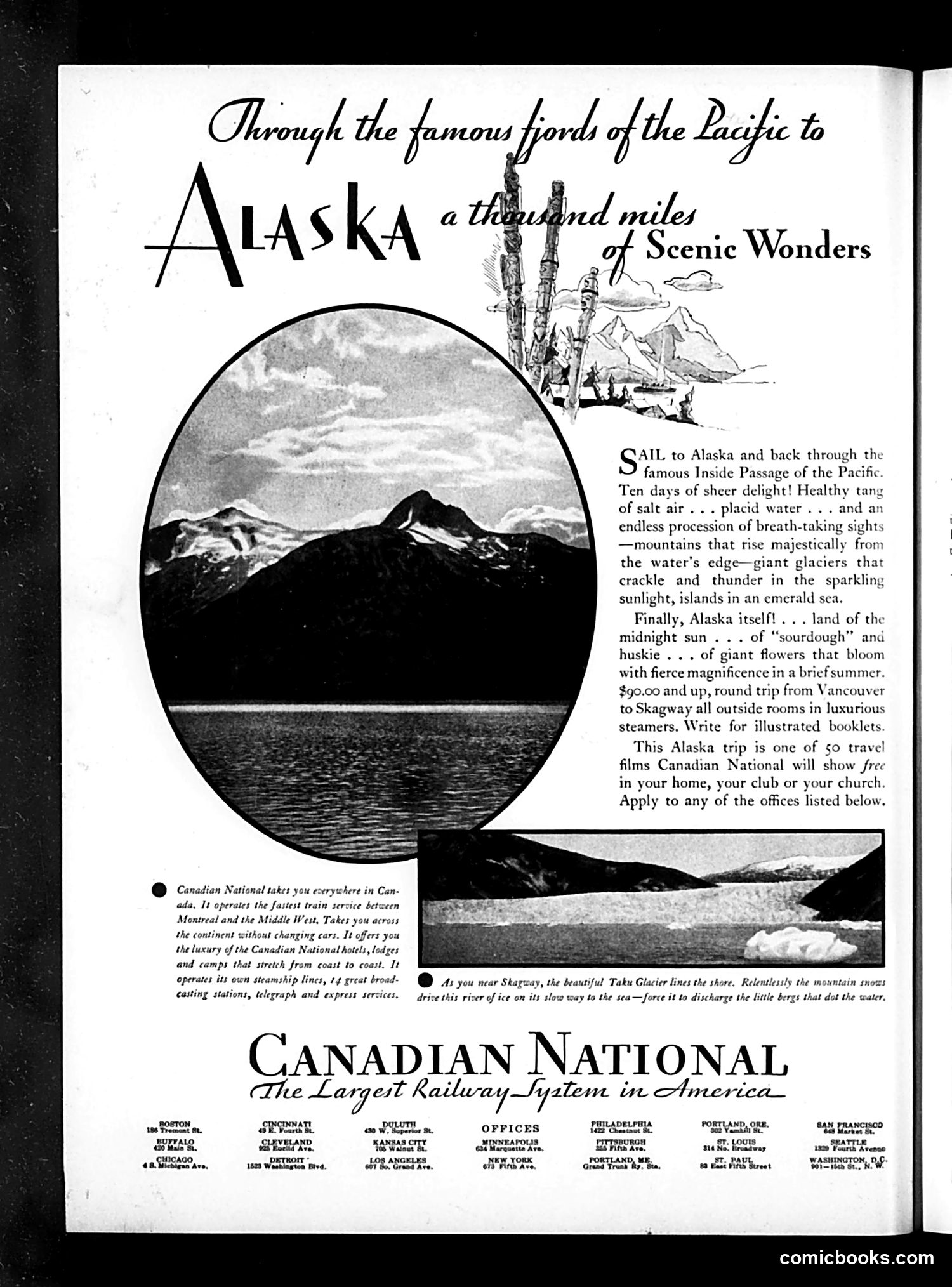
This is a **travel advertisement**, not a political cartoon. Canadian National Railways promotes Alaska tourism through the "Inside Passage of the Pacific," emphasizing scenic attractions: mountains, glaciers, islands, and the midnight sun. The ad targets affluent travelers with a $90 round-trip offer from Vancouver to Skagway aboard "luxurious steamers." It notes Canadian National operates "the fairest train service" in Canada and offers travel films free to homes, clubs, and churches. The page features a large circular photograph of snow-capped mountains reflected in water, plus a smaller rectangular image of Taku Glacier. The design employs dramatic landscape imagery typical of 1920s-30s travel marketing to appeal to leisure travelers seeking natural wonders and adventure.
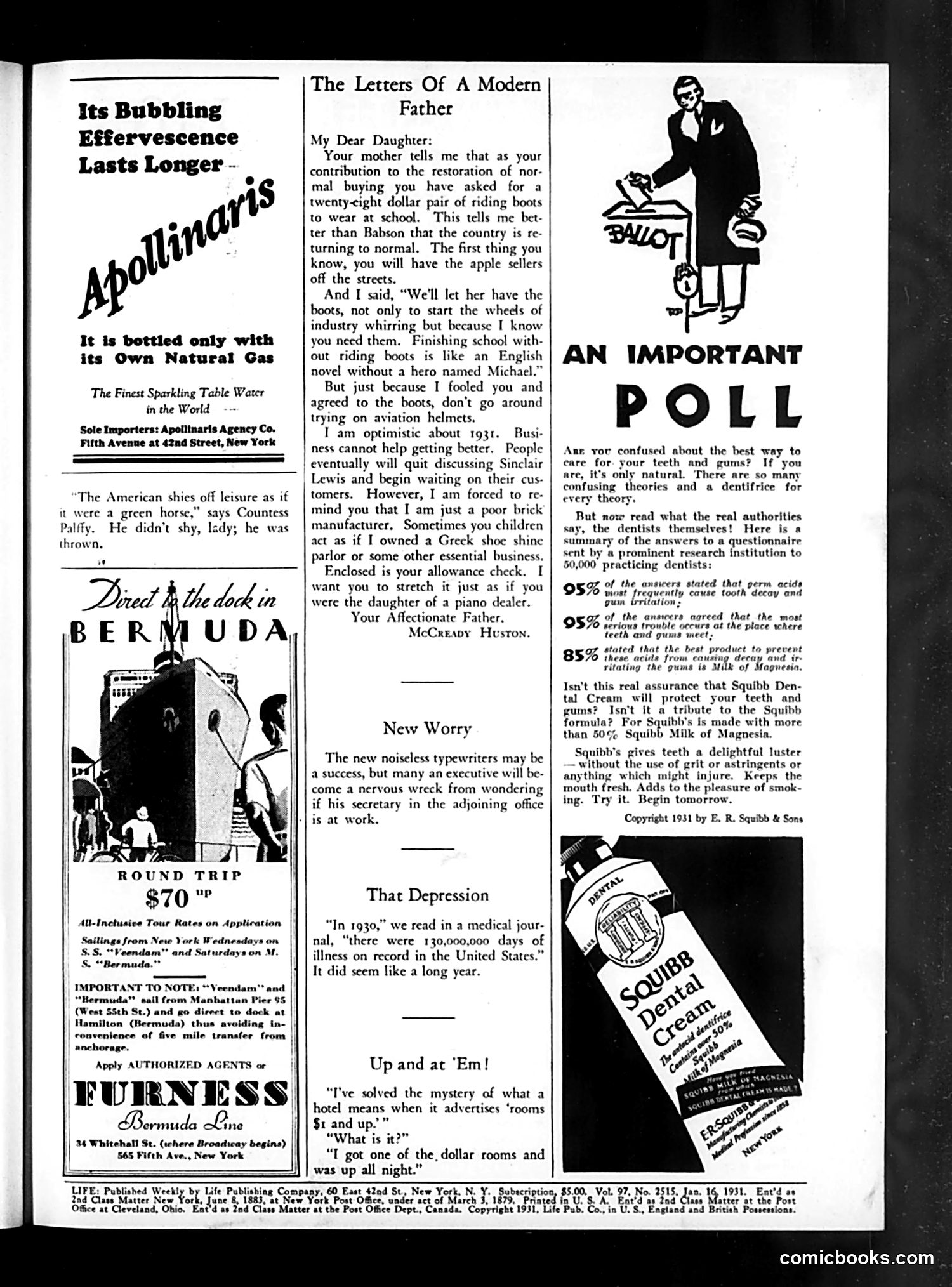
# Analysis of Life Magazine Page (January 16, 1931) This page contains mostly **advertisements and advice columns** rather than political cartoons. The main content is "The Letters of a Modern Father," where a father responds to his daughter's request for expensive riding boots ($28) during economic hardship. He permits them reluctantly, reasoning that consumer spending helps industry recover—a notable perspective given this is **January 1931, early in the Great Depression**. The "Important Poll" discusses tooth decay prevention based on dentist surveys—a straightforward health advertisement. Other ads promote Apollinaris sparkling water, Bermuda travel, and Squibb Dental Cream. The page reflects **1931 consumer culture and emerging health-consciousness**, with little satirical commentary visible. The father's economic rationalization is the closest to social commentary on Depression-era spending habits.
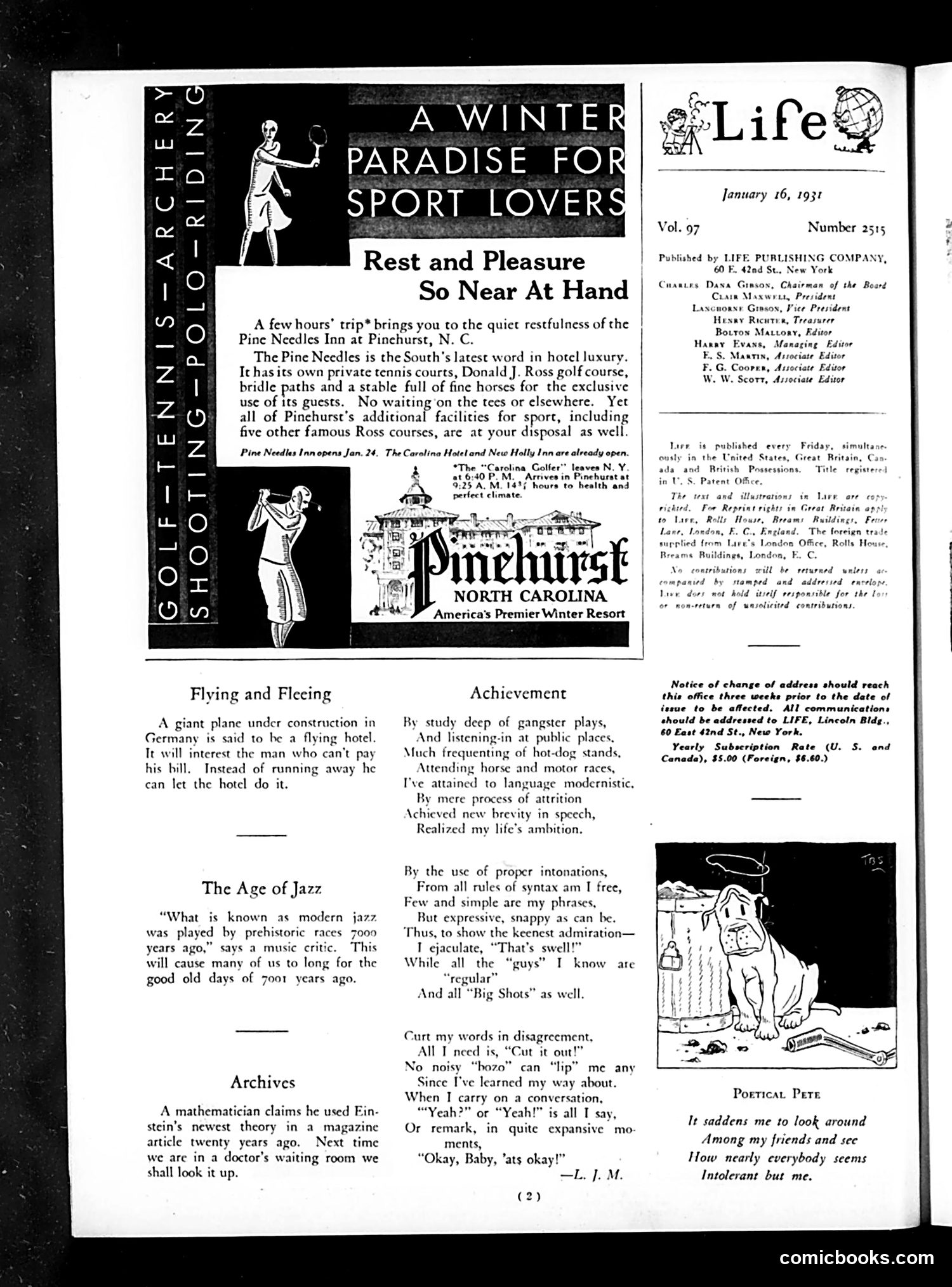
# Analysis of Life Magazine Page (January 16, 1931) This page is primarily a **title/contents page and advertisement layout** rather than political satire. The dominant feature is a large advertisement for **Pinehurst, North Carolina**, marketed as "America's Premier Winter Resort" offering golf, tennis, and horseback riding. The small cartoon labeled **"Poetical Pete"** (bottom right) shows a disheveled man and appears to be gentle humor about social awkwardness—the caption expresses feeling like an outsider among friends. This is personal rather than political satire. Other content includes brief humorous pieces ("The Age of Jazz," "Archives," "Achievement") offering mild social commentary typical of 1931 Life magazine's lightweight style—nothing indicating serious political satire on this particular page.
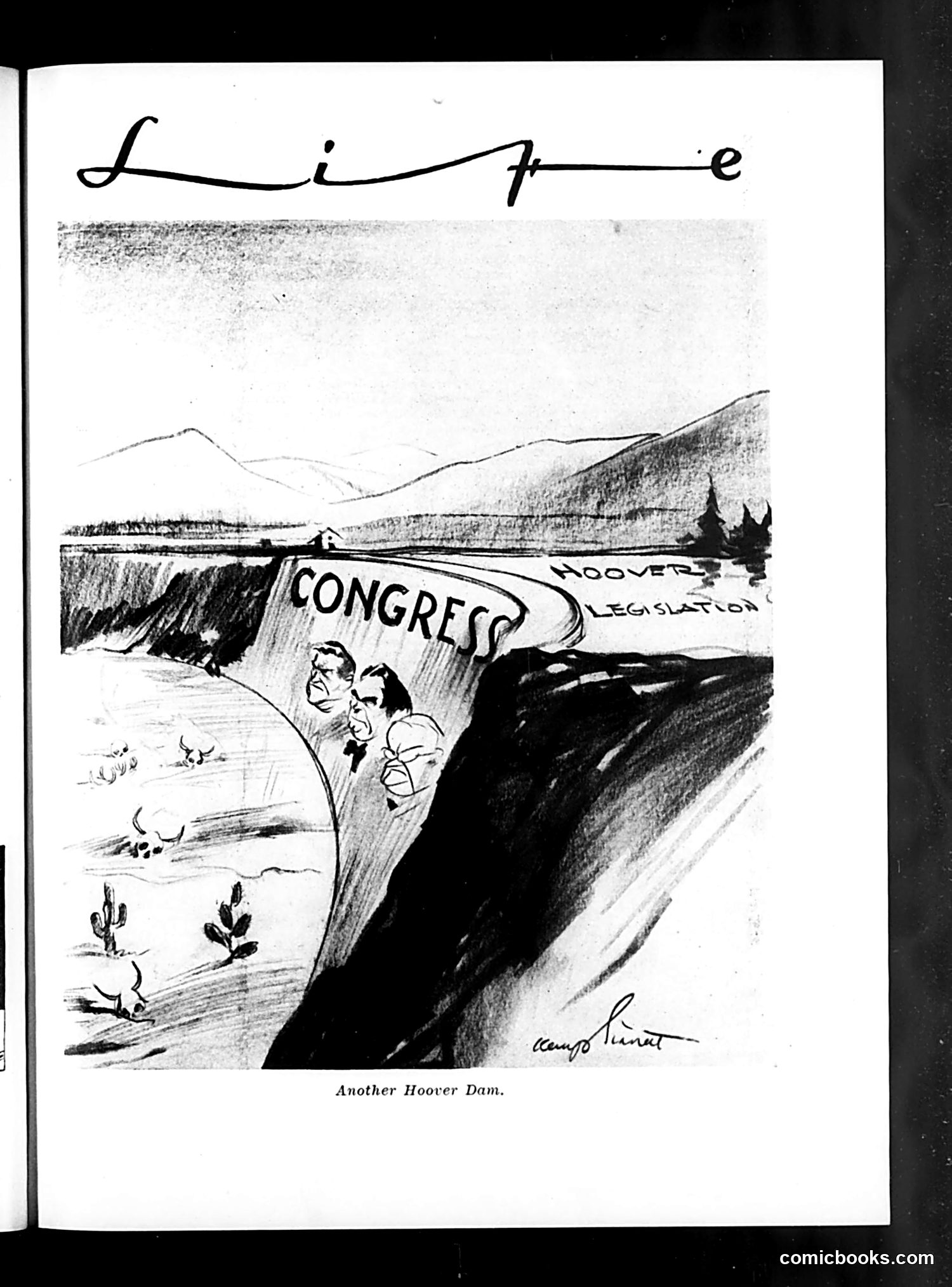
# "Another Hoover Dam" - Political Cartoon Analysis This cartoon satirizes Congress's reluctance to fund infrastructure projects during the Hoover administration (1929-1933). Two Congressional figures huddle beneath a banner labeled "CONGRESS" while standing on the edge of a massive dam, with "HOOVER LEGISLATION" visible on the landscape beyond. The satire suggests Congress is timidly hesitant or resistant to President Herbert Hoover's legislative proposals—specifically major public works like dam construction. The figures appear anxious or uncertain, implying Congress lacks courage or commitment to support such ambitious government projects. The title "Another Hoover Dam" sarcastically comments on Congress's apparent inability or unwillingness to authorize additional major construction initiatives, despite the precedent of Hoover Dam's success.
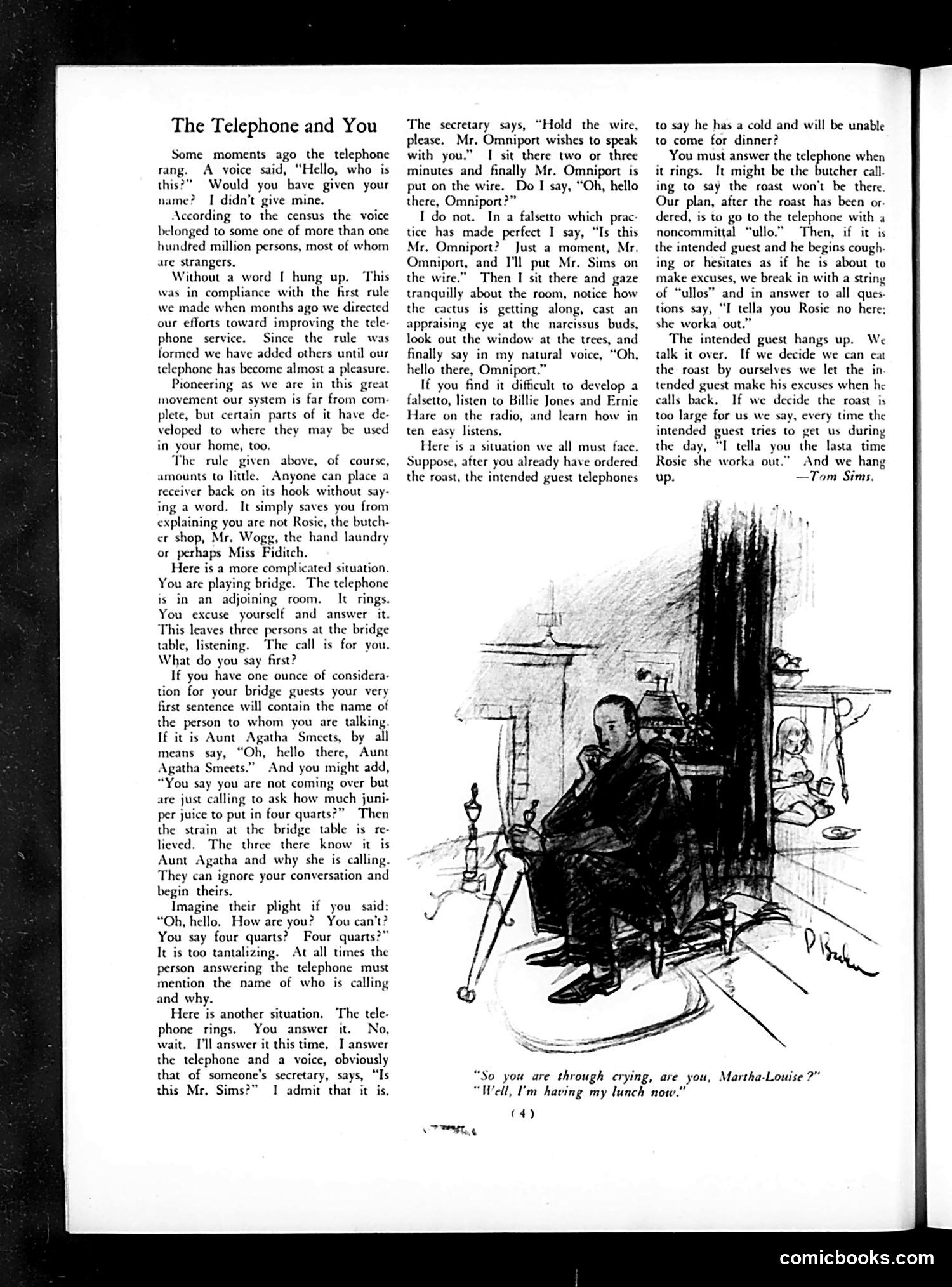
# "The Telephone and You" - Life Magazine This satirical article offers etiquette advice for telephone users, a then-novel technology. The accompanying cartoon illustrates the awkwardness of telephone interruptions during social gatherings. The piece humorously catalogs common telephone scenarios—mistaken identity calls, interrupting bridge games, dealing with secretaries—and the social confusion they create. Key advice: always identify yourself and why you're calling; don't leave guests hanging; acknowledge the caller's name and purpose. The cartoon shows a man at lunch, seemingly caught mid-conversation on the telephone while sitting alone, capturing the absurdity of being interrupted during meals. The caption joke—"So you are through crying, are you, Martha-Louise?" / "Well, I'm having my lunch now"—illustrates the social disruption and awkward exchanges telephones introduce into everyday life. This reflects early-20th-century anxieties about intrusive technology and changing social norms.
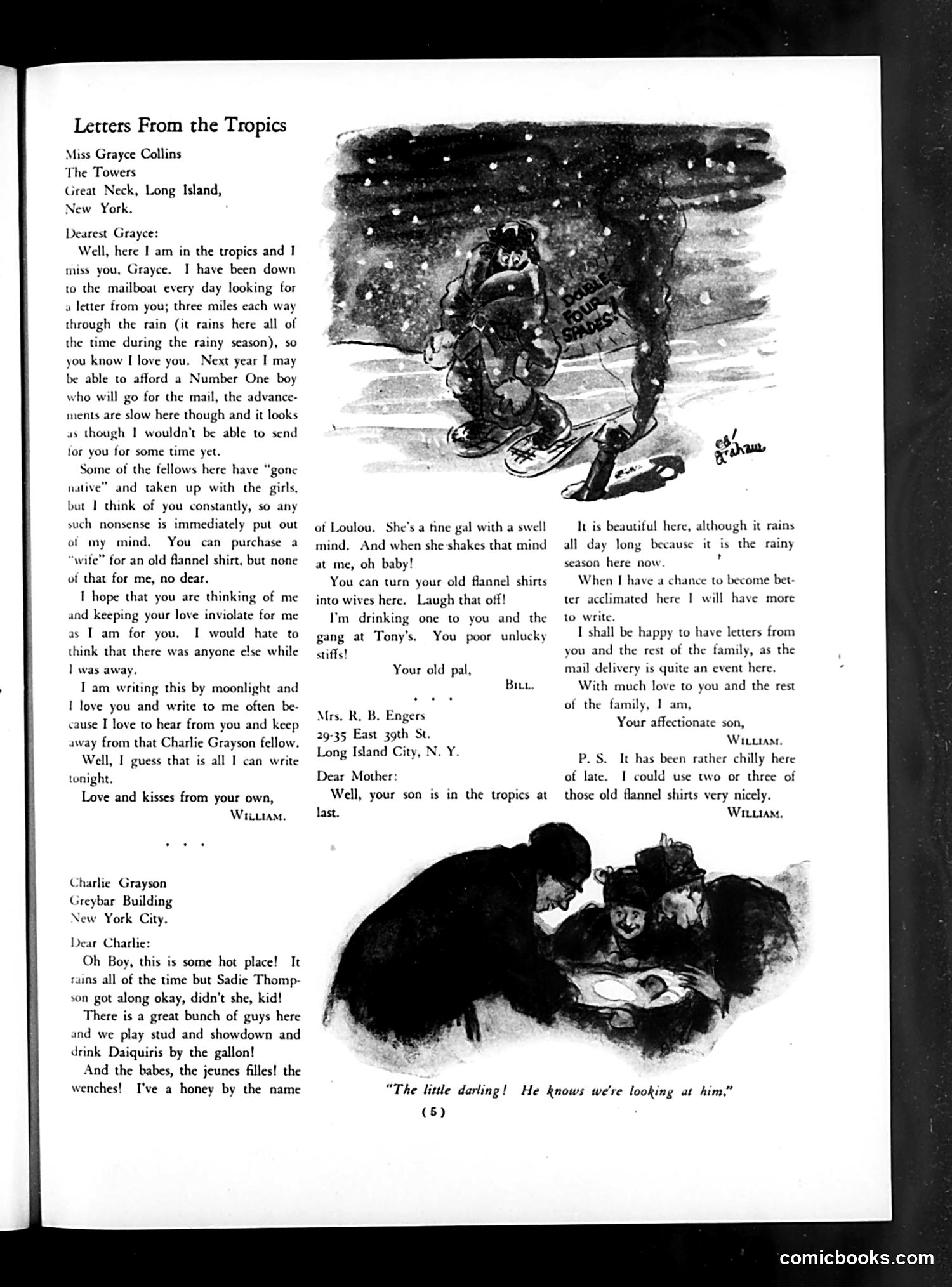
# Analysis of "Letters From the Tropics" Page This page features personal correspondence rather than political cartoons. Three letters describe life in tropical locations, illustrated with two sketches. The letters are from William (in the tropics), Bill (at Toni's), and Charlie Grayson (in New York City). They humorously describe tropical hardships—constant rain, isolation, and romantic longing—contrasted with homesickness and casual complaints about weather and social life. The two illustrations show: (1) people sheltering under what appears to be a tree during heavy rain, and (2) a domestic scene with adults and a child, captioned "The little darling! He knows we're looking at him." This is light satirical humor about expatriate life and family correspondence, typical of Life magazine's early 20th-century humor. No specific political references are evident.
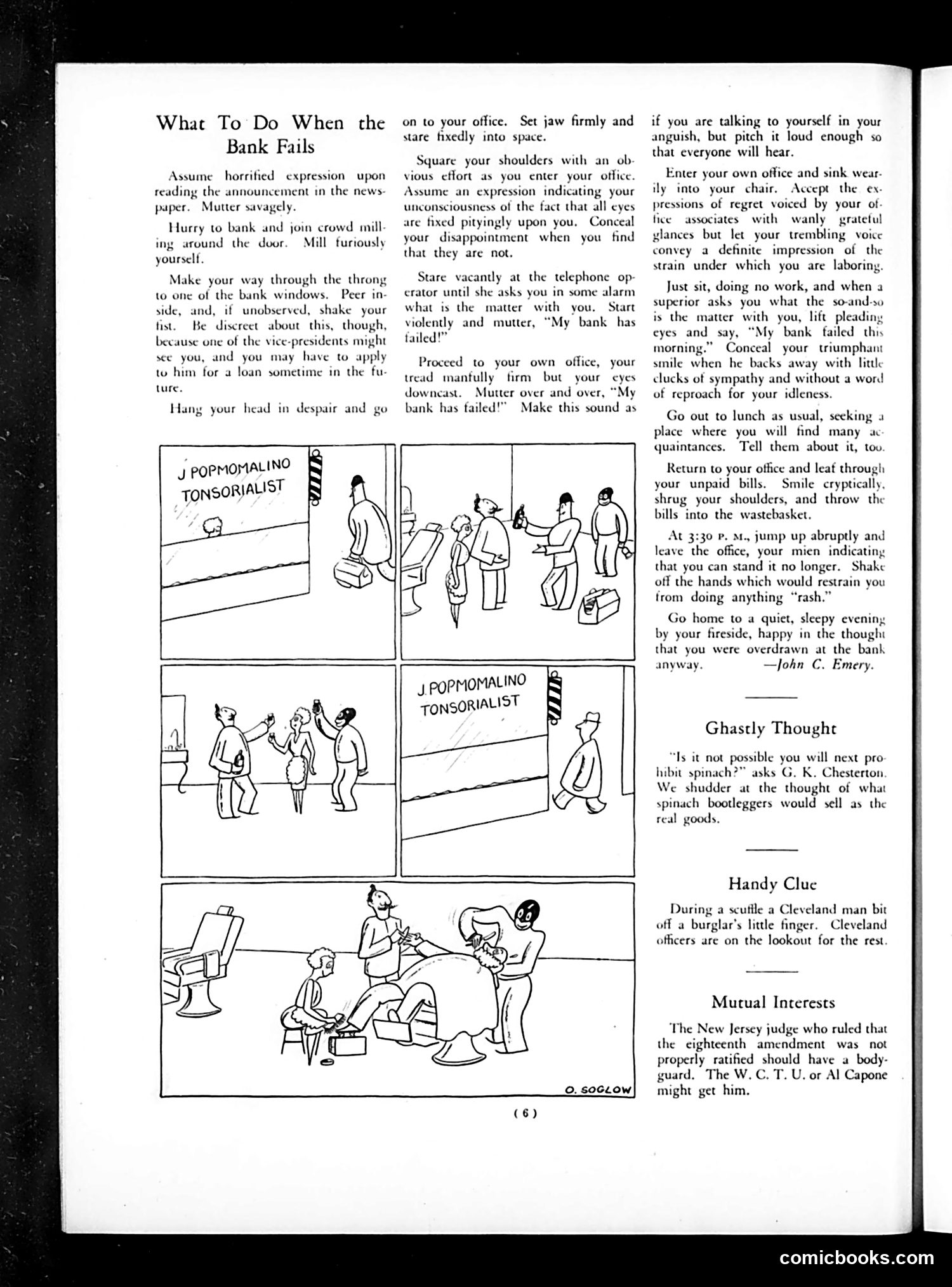
# Analysis of "What To Do When the Bank Fails" This satirical article by John C. Emery humorously advises readers on maintaining composure during a bank failure—a serious concern during the Great Depression era. The accompanying comic strip (artist signed "O. Soglow") depicts office workers discovering their bank has collapsed, showing them crowding outside the "J. Popmomalino Tonsorialist" (likely a barber shop serving as a front). The satire mocks both the panic that bank failures inspired and suggests the absurdity of pretending normalcy in crisis. The advice to sit calmly, stare into space, and go home "happy in the thought that you were overdrawn" darkly jokes about financial ruin. The brief accompanying items ("Ghastly Thought," "Handy Clue," "Mutual Interests") continue the cynical, comedic tone typical of Life magazine's social commentary.
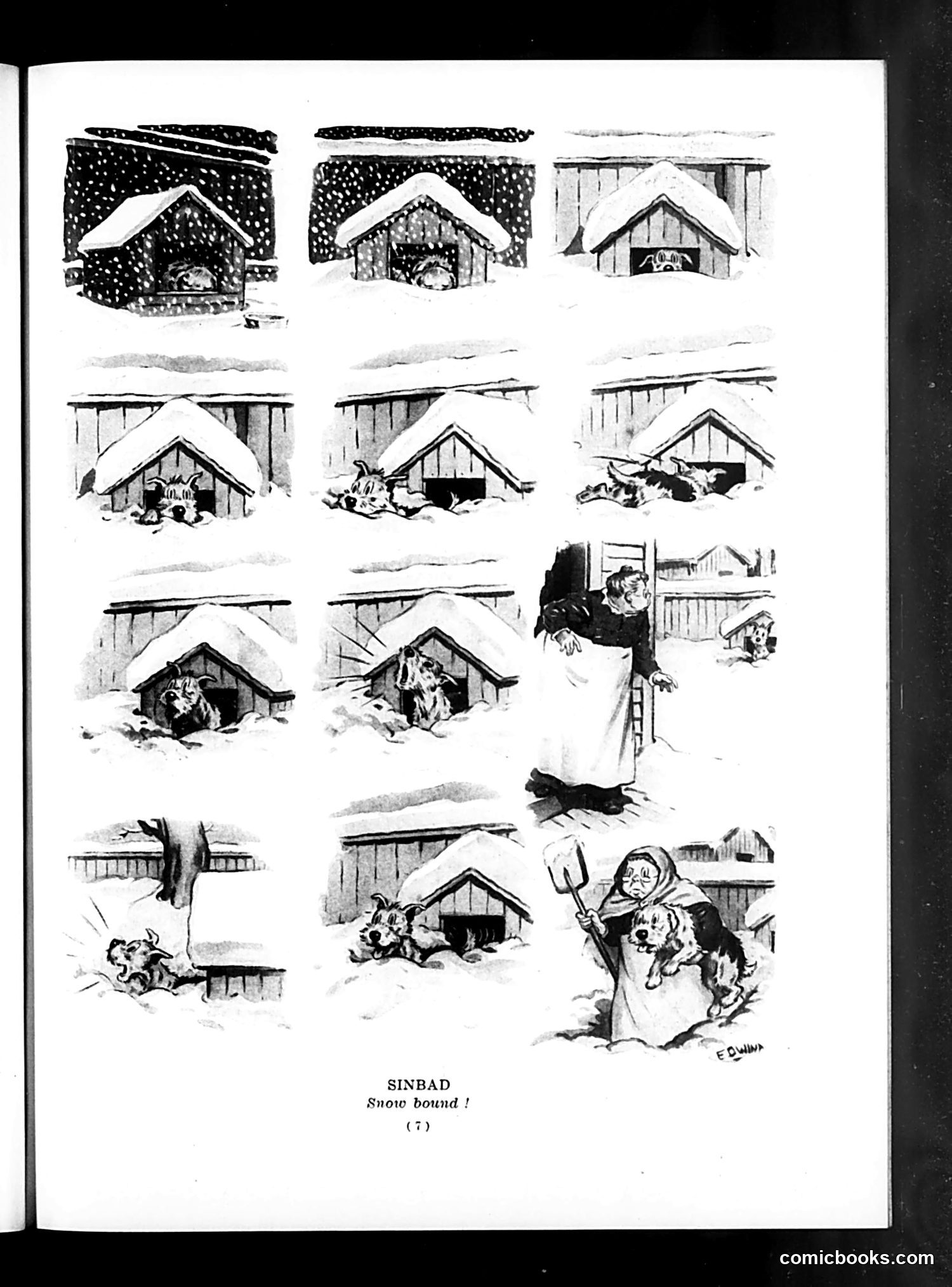
# "Sinbad—Snow Bound!" Comic Strip Analysis This appears to be a sequential comic strip featuring a character named Sinbad dealing with snowfall. The strip shows a narrative progression through multiple panels (arranged in a 3x4 grid plus additional panels) depicting what seems to be: - A figure (Sinbad) in progressively snowy conditions around doghouses - Dogs appearing in various panels, some being shoveled or dug out - A woman in winter clothing (appears to be helping or reacting to the snow) - Increasing chaos and comedy as snow accumulates The humor derives from slapstick winter situations—dogs and humans struggling with snow, buried structures, and comedic mishaps typical of early-20th-century Life magazine's humorous content. The title "Snow bound!" indicates the central joke: characters trapped or immobilized by winter weather conditions.
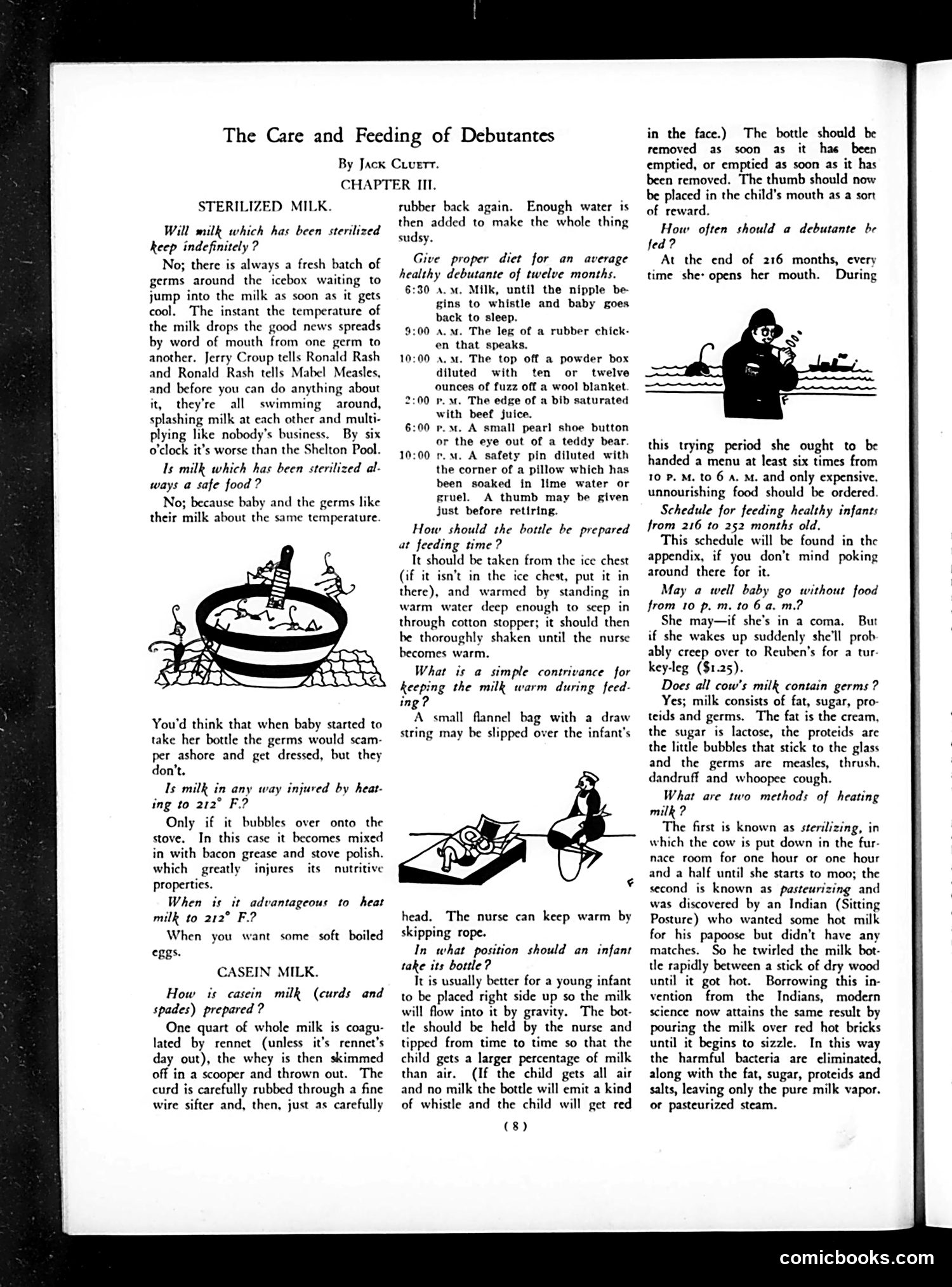
# Analysis This is an instructional article titled "The Care and Feeding of Debutantes" by Jack Cunliffe, presented as satirical advice. The page discusses practical childcare topics—sterilized milk preparation, feeding schedules, casein milk processing—but frames them humorously as if managing a debutante (a young woman of marriageable age from an upper-class family) were equivalent to infant care. The accompanying illustrations show babies in various domestic situations. The satire appears to mock both the dependency and helplessness attributed to debutantes in society while also gently ribbing actual infant care practices. By treating sophisticated young women as infants requiring elaborate feeding protocols and constant attention, the piece satirizes both debutante culture and perhaps overly-complicated childcare advice of the era.
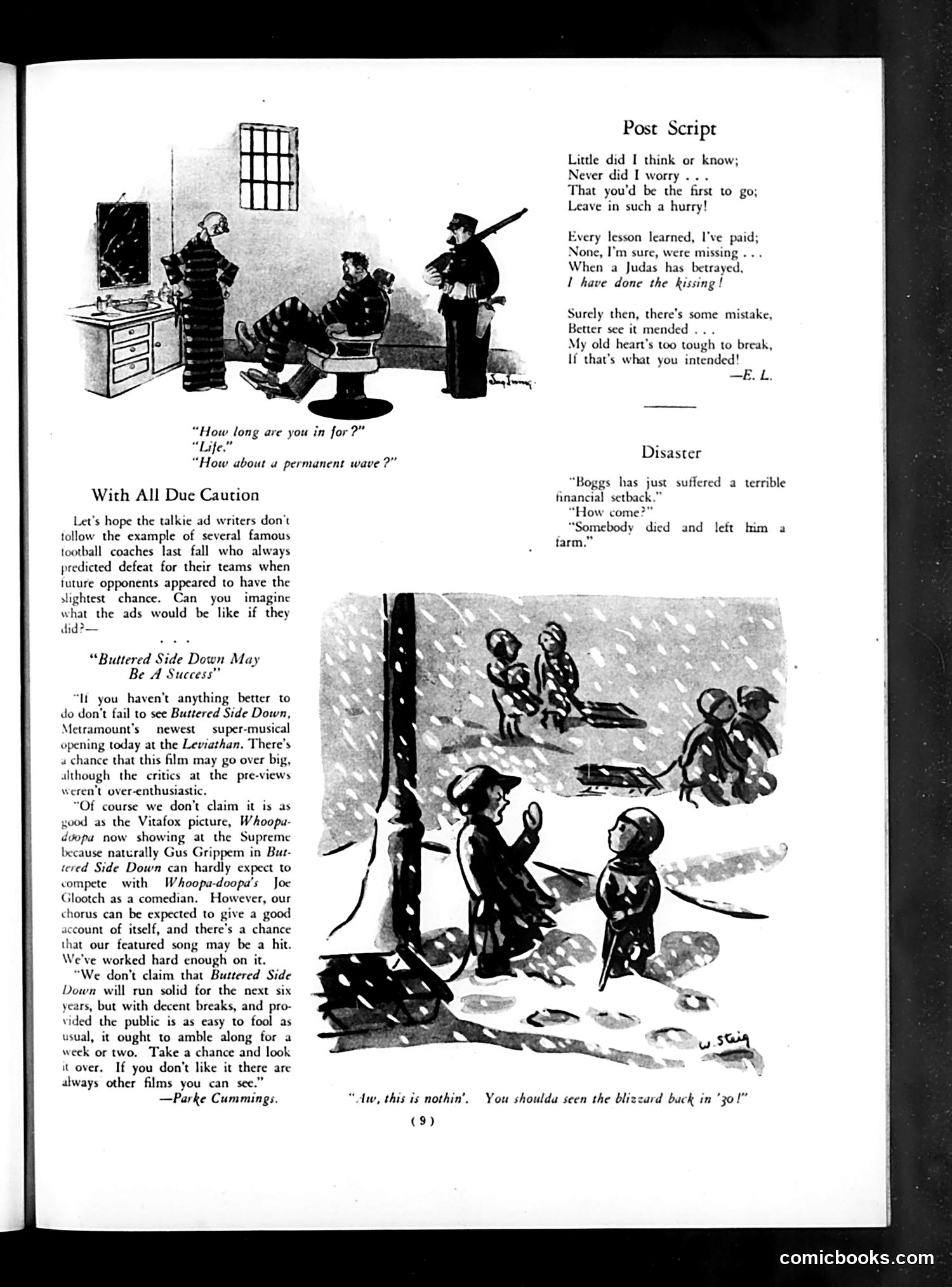
# Analysis of Life Magazine Page This page contains three distinct pieces: **"Post Script"** (top right): A poem about betrayal and heartbreak, seemingly responding to a romantic transgression ("When a Judas has betrayed, / I have done the kissing!"). **"With All Due Caution"** (left column): A satirical article mocking sports writers and advertisers who make overconfident predictions. It warns against ads claiming certain success, using football coaches as an example of famous failed predictors. **"Disaster"** (center): A brief joke where someone lost a farm due to financial setback, followed by an illustration of children playing in snow, with one saying "Aw, this is nothin'. You shoulda seen the blizzard back in '30!" The snow scene appears designed to humorously contrast children's resilience with adult financial catastrophe—a likely Depression-era commentary on hardship.
# "Life Looks About" - Page Analysis This page contains three separate articles critiquing social reform movements. The illustration shows a cherub-like figure (labeled "Mr. Coolidge on Wheat") examining a wheat stalk—satirizing President Coolidge's wheat policies. The articles discuss: 1. **Mr. Coolidge's wheat policies** - The author criticizes Coolidge's inconsistent stance on agricultural tariffs, suggesting his administration's wheat-boosting policies lacked credibility. 2. **Utopian communities** - Mocking experiments like New Harmony (Robert Owen's failed 1826 settlement) and Russian communalism as naive attempts to reorganize society. 3. **The Salvation Army** - Questioning whether the organization should receive public relief funds, highlighting disputes over how charitable money should be distributed. The overall tone suggests skepticism toward both government and idealistic reform efforts.