A complete issue · 36 pages · 1931
Life — January 9, 1931
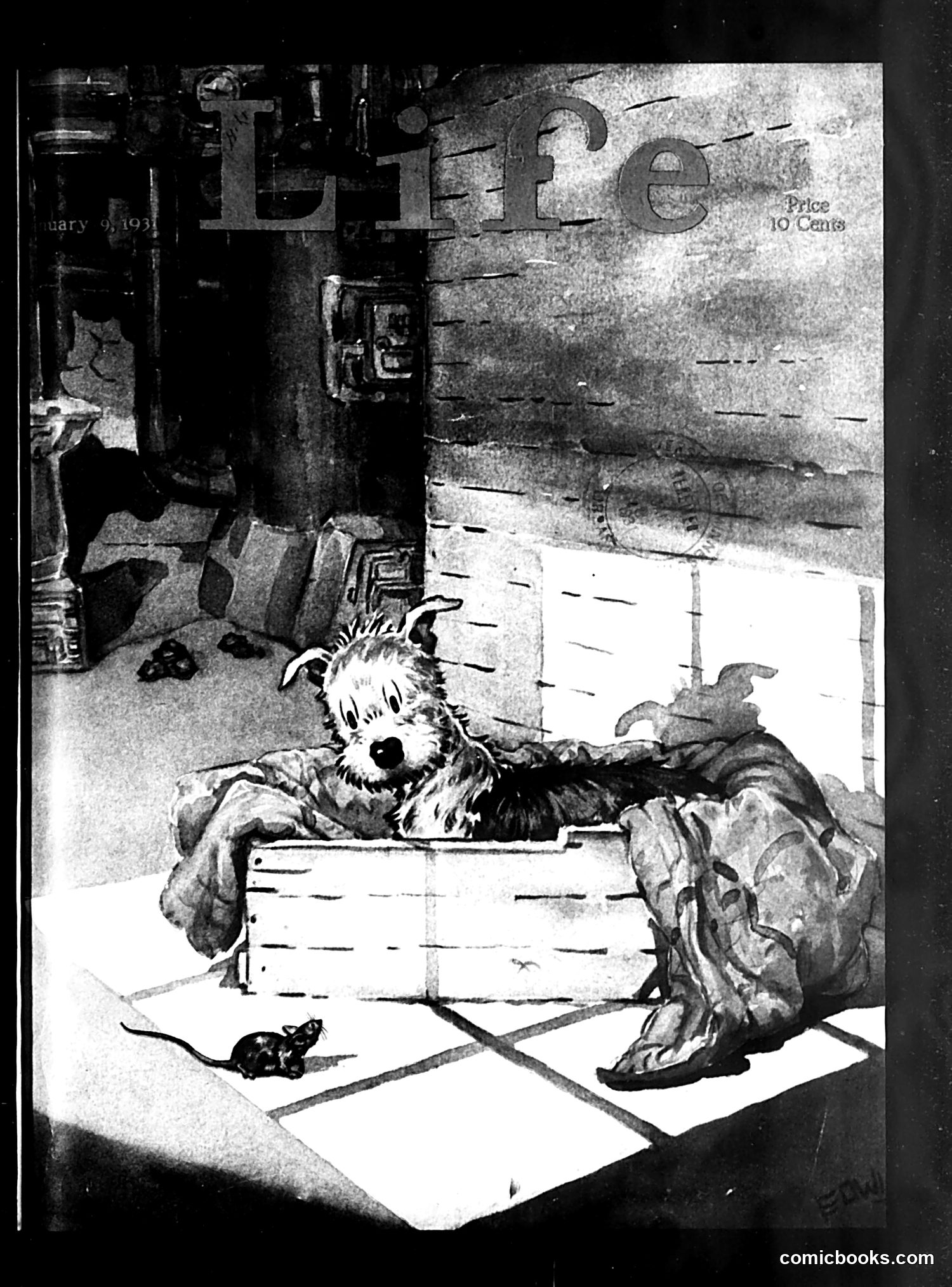
# Life Magazine Cover Analysis This is the cover of *Life* magazine from January 9, 1931 (price 10 cents). The illustration shows a scruffy terrier dog sitting in a wooden crate or box, with a small mouse nearby on the floor. The dog appears alert and somewhat disheveled. The cartoon likely plays on the common phrase about dogs chasing mice—a classic predator-prey relationship used metaphorically in satire. Without additional context from the magazine's contents, the specific political or social reference remains unclear. It could comment on economic conditions (the Depression era), business rivalries, or general human foibles using the dog-and-mouse dynamic as visual metaphor. The humorous tone suggests social satire typical of *Life's* editorial approach.
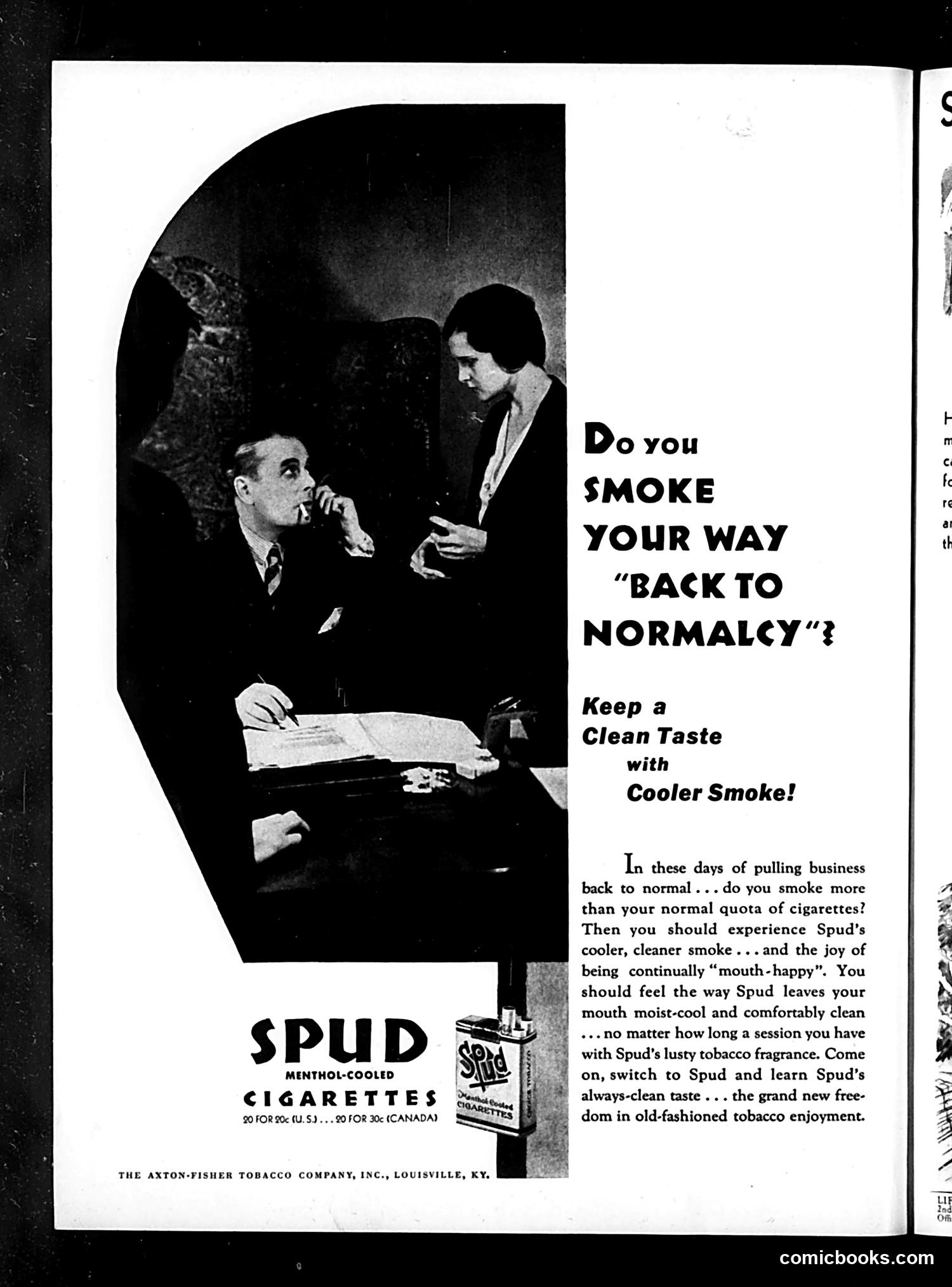
This is a cigarette advertisement for Spud menthol cigarettes, not satire. The image shows two businessmen in an office setting—one seated at a desk smoking, the other standing nearby. The ad's headline asks "Do you SMOKE YOUR WAY 'BACK TO NORMALCY'?" The phrase "back to normalcy" was Warren G. Harding's 1920 campaign slogan, suggesting this ad dates to that era. The advertisement markets Spud's menthol-cooled cigarettes as a solution for heavy smokers experiencing fatigue from excessive smoking during the return to normal business activity after World War I. The pitch emphasizes that menthol provides a "clean taste" and "moist-cool" sensation, allowing continued heavy smoking without throat irritation.
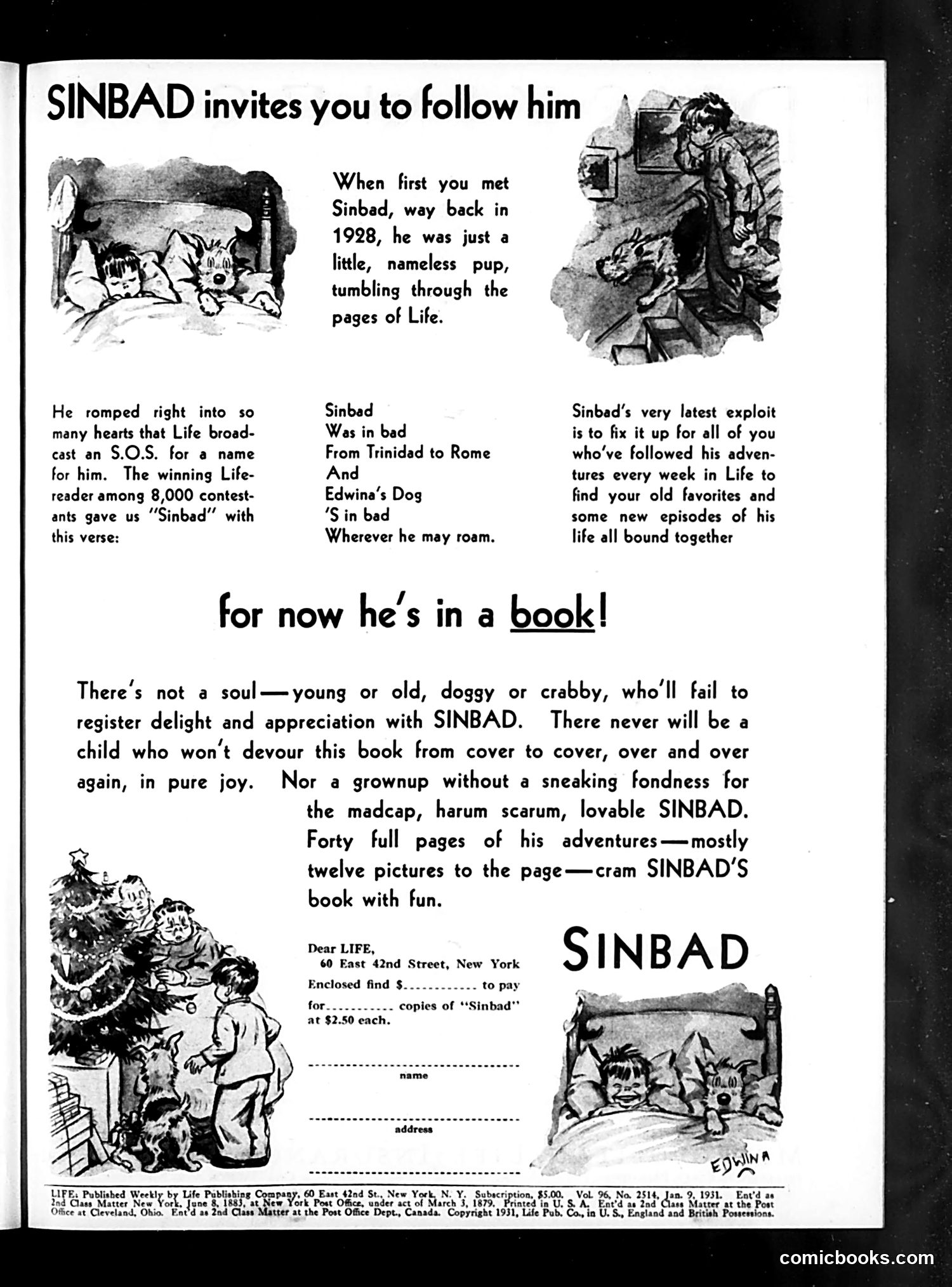
# Advertisement for Sinbad Book (Life Magazine, 1931) This is a **book advertisement**, not political satire. It promotes a 40-page children's book about "Sinbad," a fictional character who debuted in Life magazine in 1928 as an unnamed puppy character. The ad traces Sinbad's journey from obscurity to popularity—he "romped right into so many hearts" that Life readers voted him a name through an S.O.S. contest. The character apparently had adventures spanning locations like Trinidad and Rome, becoming beloved enough to warrant a published collection. The advertisement uses humorous language ("madcap, harum scarum, lovable SINBAD") and promises "forty full pages of his adventures—mostly twelve pictures to the page." Books cost $2.50 each, ordered through Life's New York office. This reflects 1930s marketing: leveraging a magazine's popular recurring character into commercial merchandise.
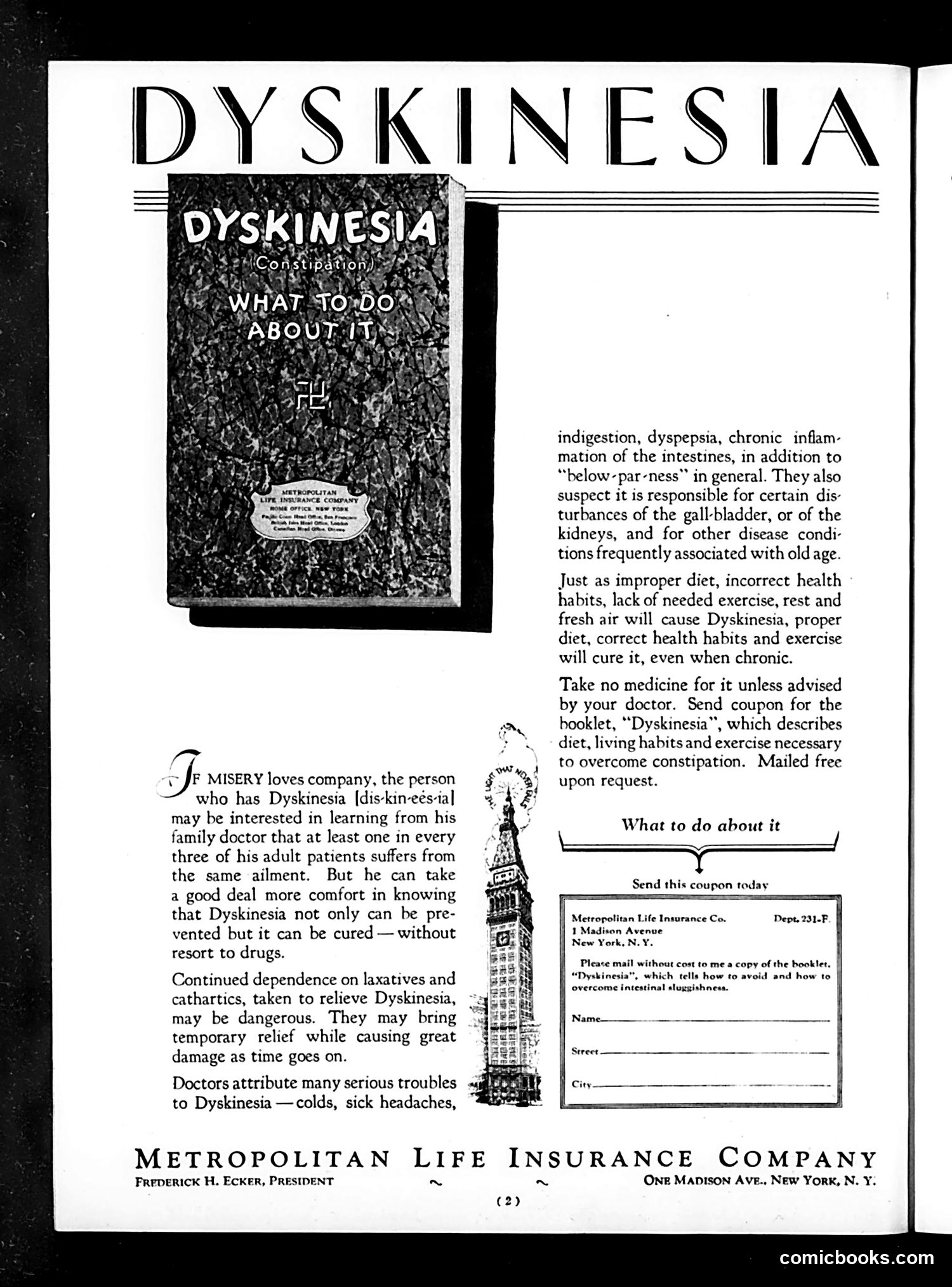
# Analysis This page is primarily **advertising**, not satire or editorial content. It's a Metropolitan Life Insurance Company advertisement promoting a free booklet about "Dyskinesia" (constipation). The ad uses a common early 20th-century marketing strategy: presenting a medical condition as widespread ("at least one in every three adult patients suffers"), then positioning the company's free literature as a solution. The copy emphasizes that dyskinesia can be cured through diet, exercise, and healthy habits—without drugs—though readers should consult their doctor. The decorative elements (clock tower illustration, vintage typeface) are period advertising design. There's no political satire here; this reflects the era's tendency for insurance companies to distribute health guidance as a marketing tool to build consumer trust and goodwill.
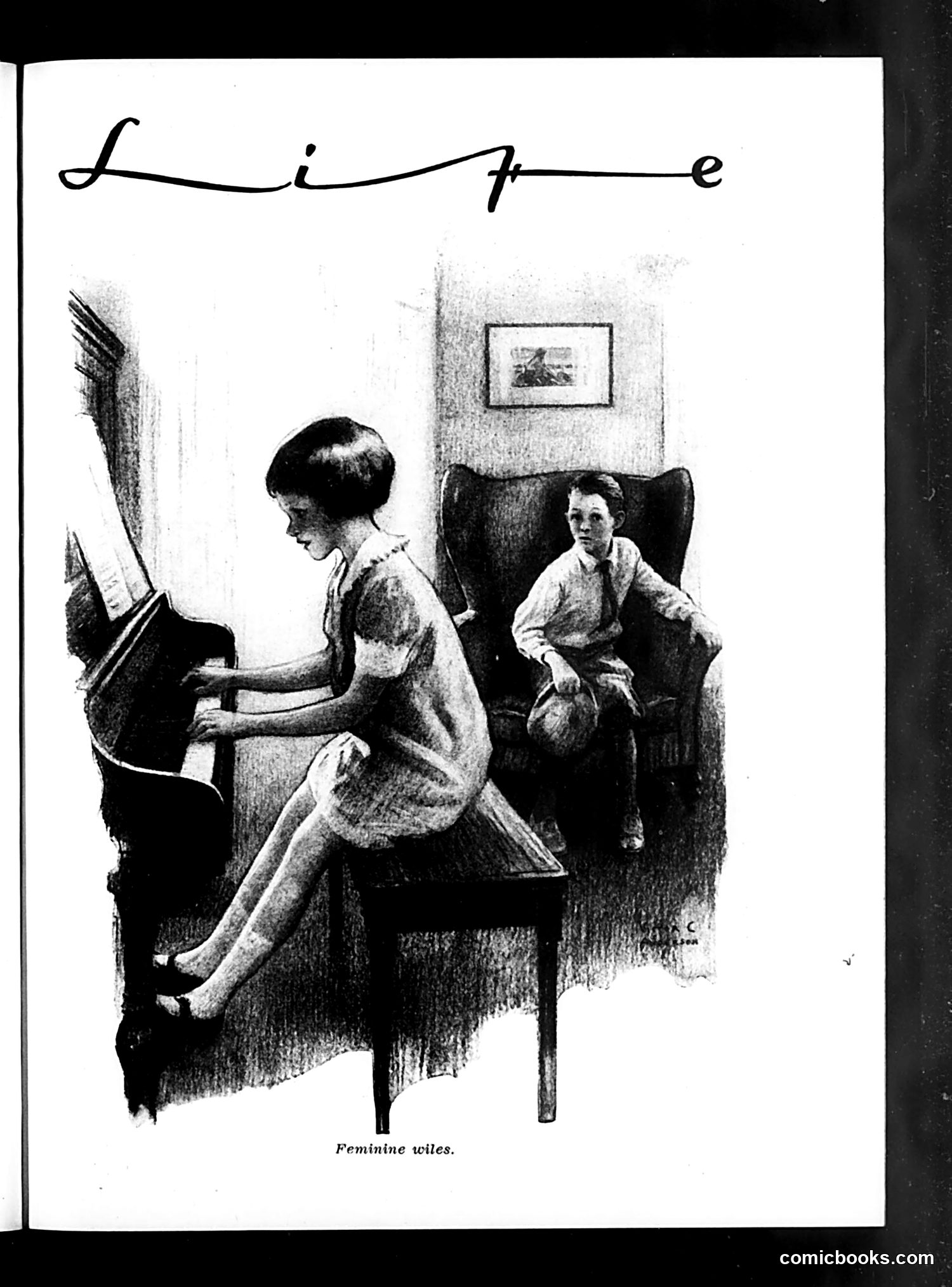
# "Feminine Wiles" - Life Magazine Cartoon This cartoon satirizes women's manipulation tactics in domestic life. The illustration shows a woman at a piano while a man sits in an armchair, watching her with apparent skepticism or wariness. The caption "Feminine wiles" suggests the woman is deliberately using charm or performance (playing music) to influence or manipulate the man's behavior or decisions. The satire targets early 20th-century gender dynamics—the assumption that women employed calculated charm or emotional appeals rather than direct communication to get their way. It mocks both female "manipulation" and male susceptibility to it, reflecting period anxieties about women's growing social influence and autonomy during this era.
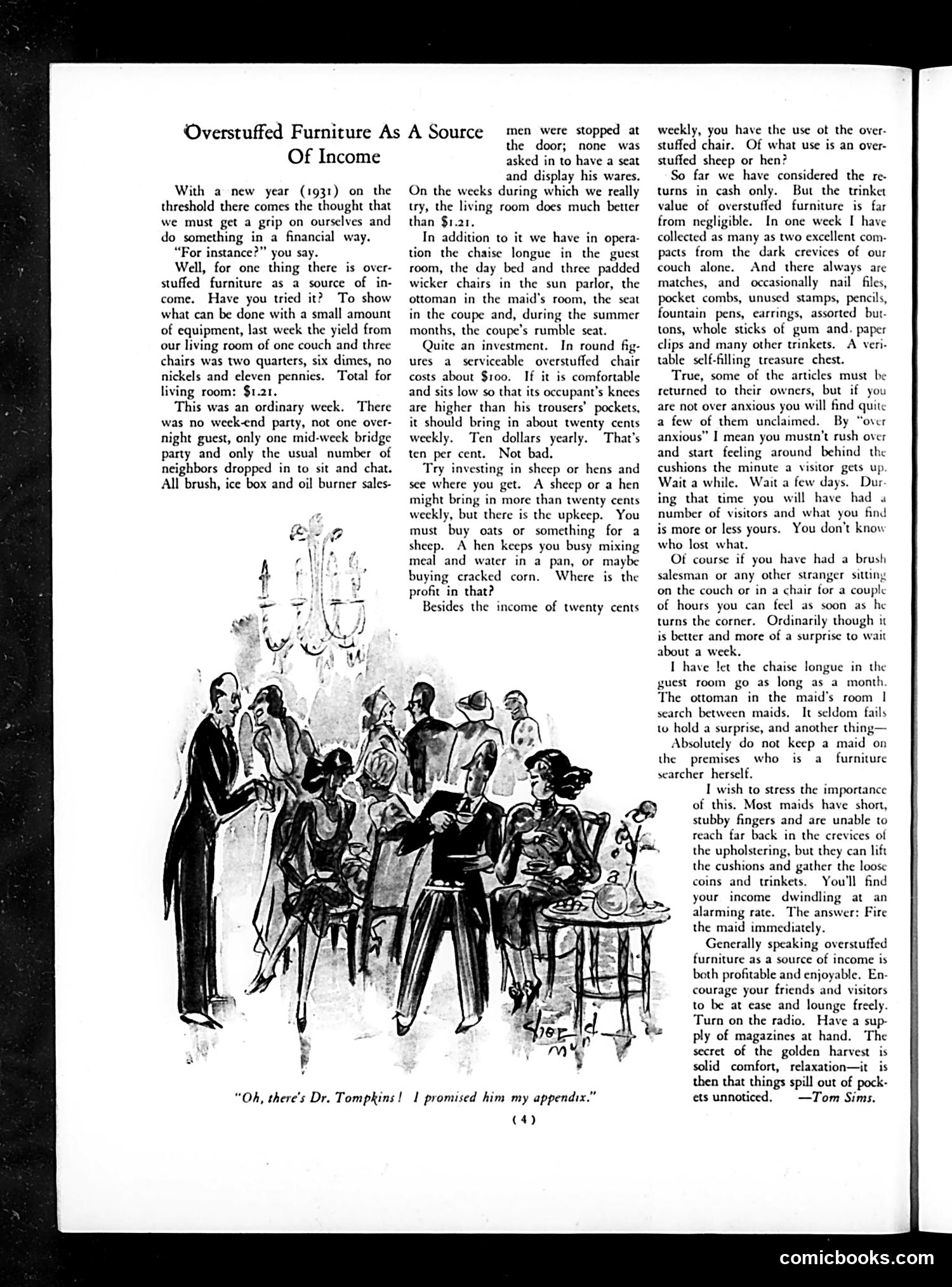
# "Overstuffed Furniture As A Source Of Income" This 1931 satirical article advises Depression-era readers on monetizing household furniture by renting it out. The accompanying cartoon depicts a crowded parlor scene where numerous guests lounge on overstuffed chairs and sofas—the humor lies in the absurd density of people packed into one room. The article's tongue-in-cheek "advice" suggests charging visitors small fees to sit on furniture, use the ottoman, or leave items in coat pockets. It playfully warns that maids with "short, stubby fingers" might steal loose coins hidden in upholstery, and recommends firing them immediately if valuables go missing. The satire targets the financial desperation of ordinary Americans during the Great Depression, mocking improbable schemes to generate income from ordinary household items.
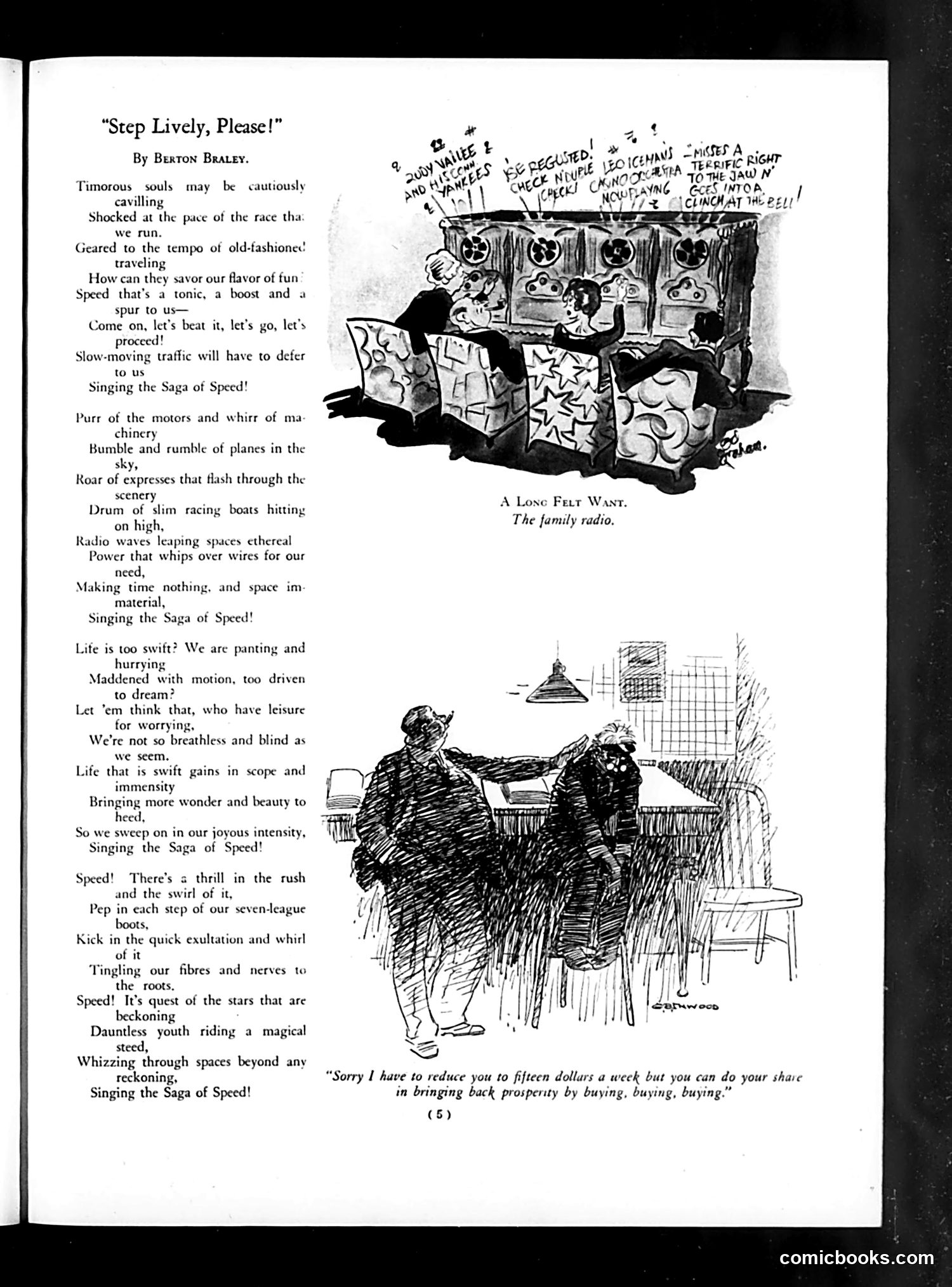
# Analysis of "Step Lively, Please!" by Bekton Bealey This page satirizes modern society's obsession with speed and constant motion. The poem "Singing the Saga of Speed" mocks contemporary culture's worship of velocity—from fast cars and planes to radio waves—suggesting people are overstimulated and losing leisure. The top illustration shows a chaotic "family radio," depicting how technology overwhelms domestic life with noise and stimulation. The lower cartoon illustrates the economic consequence: a husband apologizes to his wife for reducing her allowance, but suggests she compensate by increased consumption ("buying, buying, buying"). This satirizes how 1920s consumer culture pressured people to constantly purchase goods to stimulate the economy, even while wages stagnated—a prescient critique of consumer capitalism's contradictions.
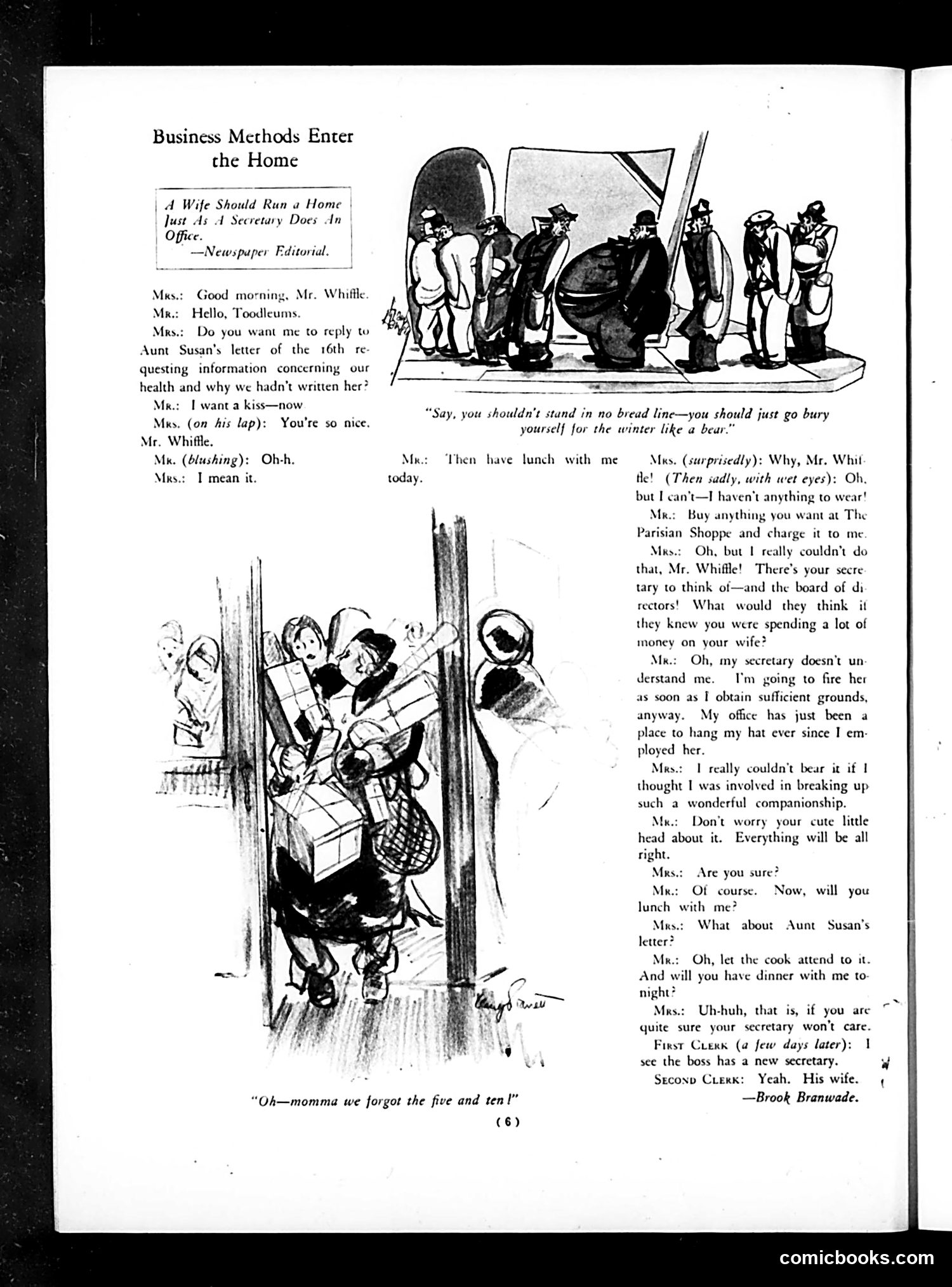
# "Business Methods Enter the Home" This satirical sketch mocks the intrusion of corporate management practices into domestic life. Mr. Whittle, a businessman, treats his wife like an office secretary—demanding she handle correspondence, requesting kisses "on schedule," and planning to fire her for spending too much money, just as he would terminate an employee. The comedy derives from applying harsh business terminology and efficiency standards to marriage. Mrs. Whittle's distress at being treated as disposable staff, and her husband's casual threat to replace her, satirizes how turn-of-the-century corporate culture prioritized profit and cost-cutting above human relationships. The accompanying cartoon depicts workers struggling with packages, captioned "Oh—momma we forgot the fire and ten!"—suggesting domestic chaos when business logic displaces traditional household management.
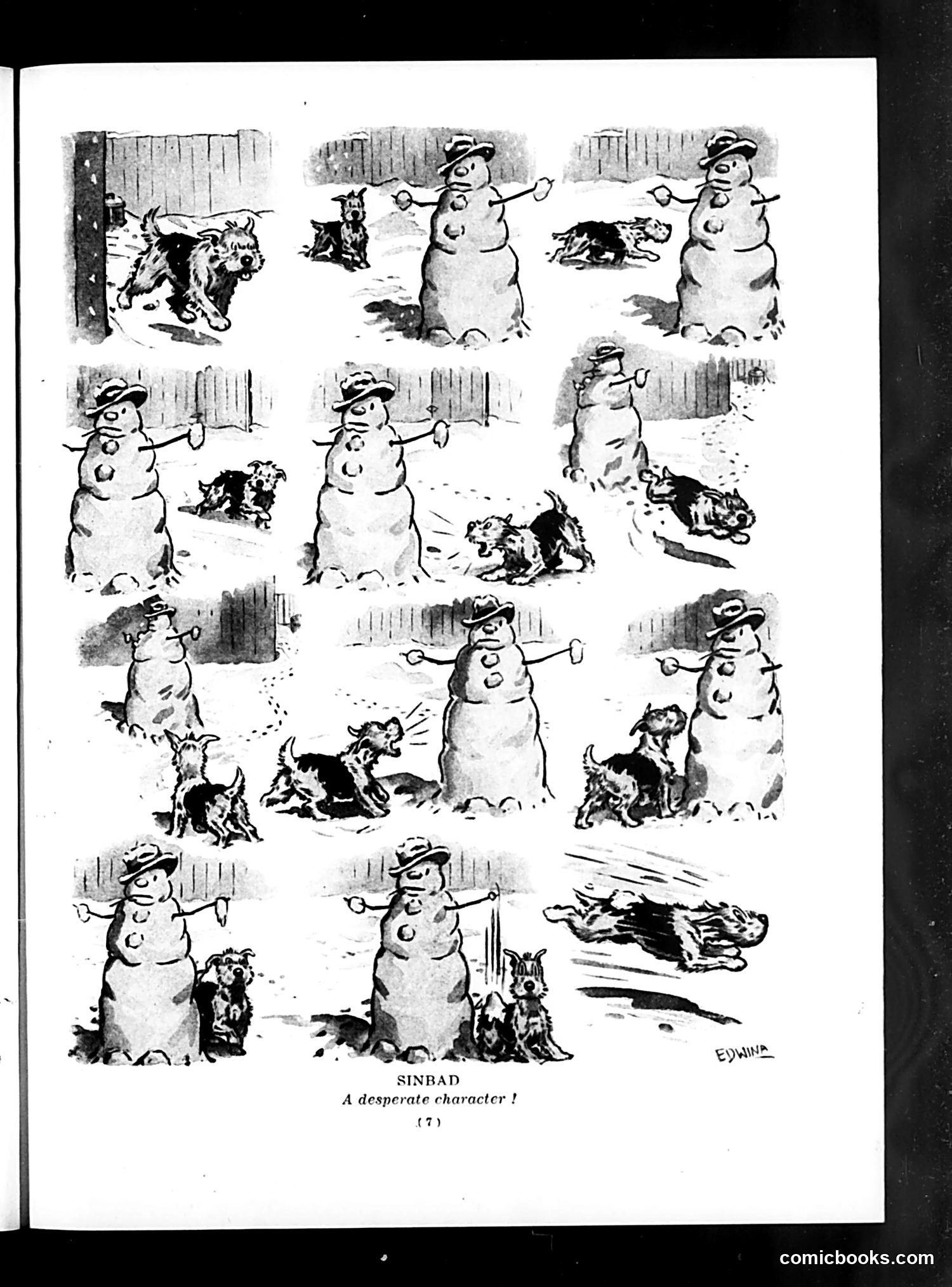
# "Sinbad: A Desperate Character!" This is a comic strip sequence by artist Edwina showing a snowman being repeatedly harassed by small dogs. In each panel, the snowman attempts to shoo away or defend himself against the persistent canines while maintaining his winter attire (hat and stick arms). The dogs continually attack or circle around him despite his gestures of protest. The humor appears to derive from the snowman's futile attempts to maintain dignity and control of his own space against determined animal aggression. The title "A desperate character" suggests the snowman's growing exasperation. This is likely satirizing human frustration with pest animals or persistent nuisances—a relatable domestic scenario played out through anthropomorphized winter scenery.
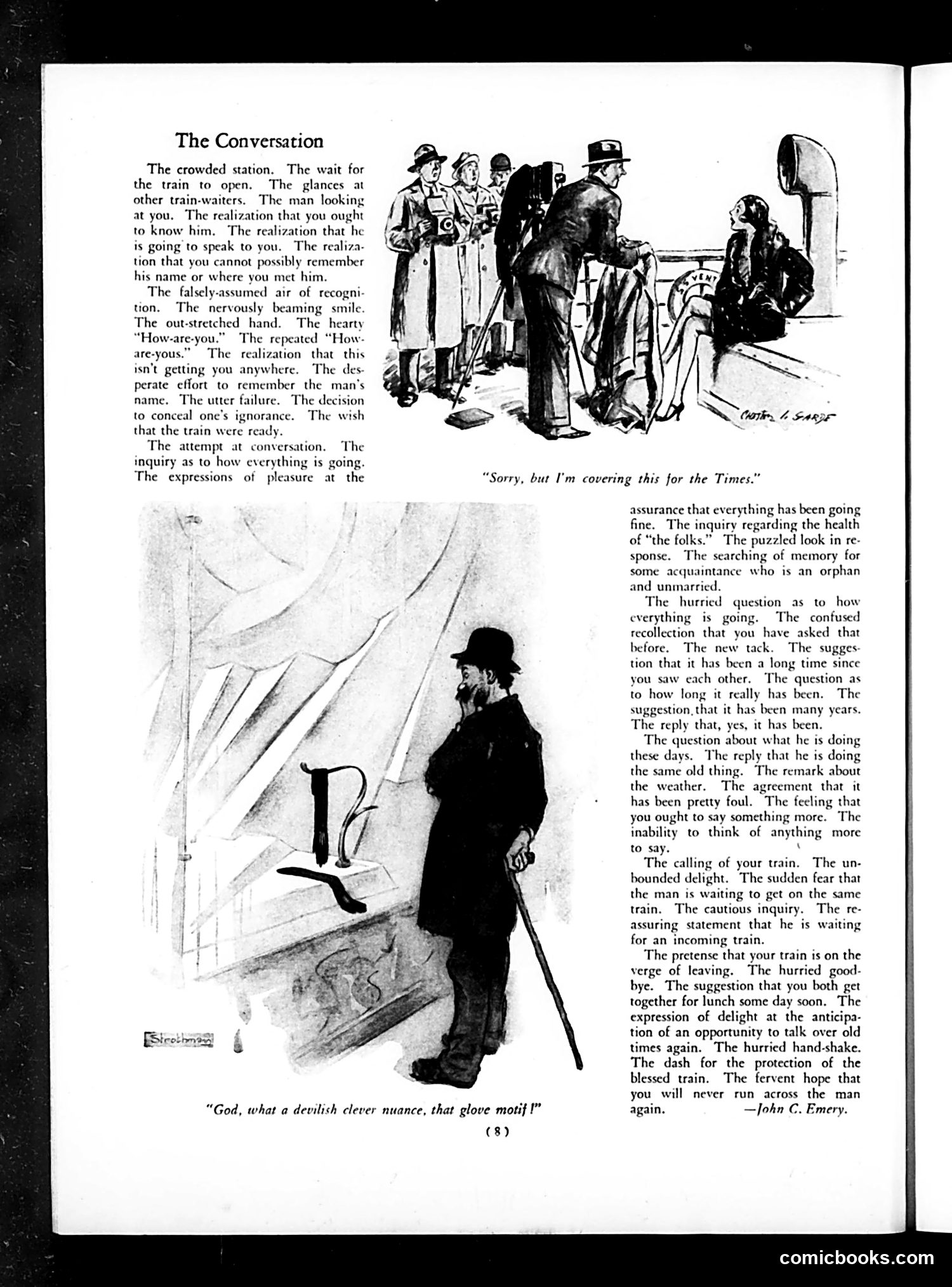
# "The Conversation" - Life Magazine This page illustrates awkward social encounters at a train station. The top cartoon shows a group of travelers attempting conversation with someone they vaguely recognize—capturing the anxiety of forced social interaction with half-remembered acquaintances. The text humorously catalogs the discomfort: false recognition, nervous smiling, desperate pleasantries about weather, and mutual relief when the train arrives. The lower illustration depicts a solitary elderly man with a cane, captioned with a quote about "devilish clever nuance" and a glove. The full narrative (right column) suggests this represents the bittersweet goodbye between reunited acquaintances—the pretense, the hurried farewell, and the slim hope of never meeting again. This is gentle satire on social awkwardness and the performative nature of casual human interaction.
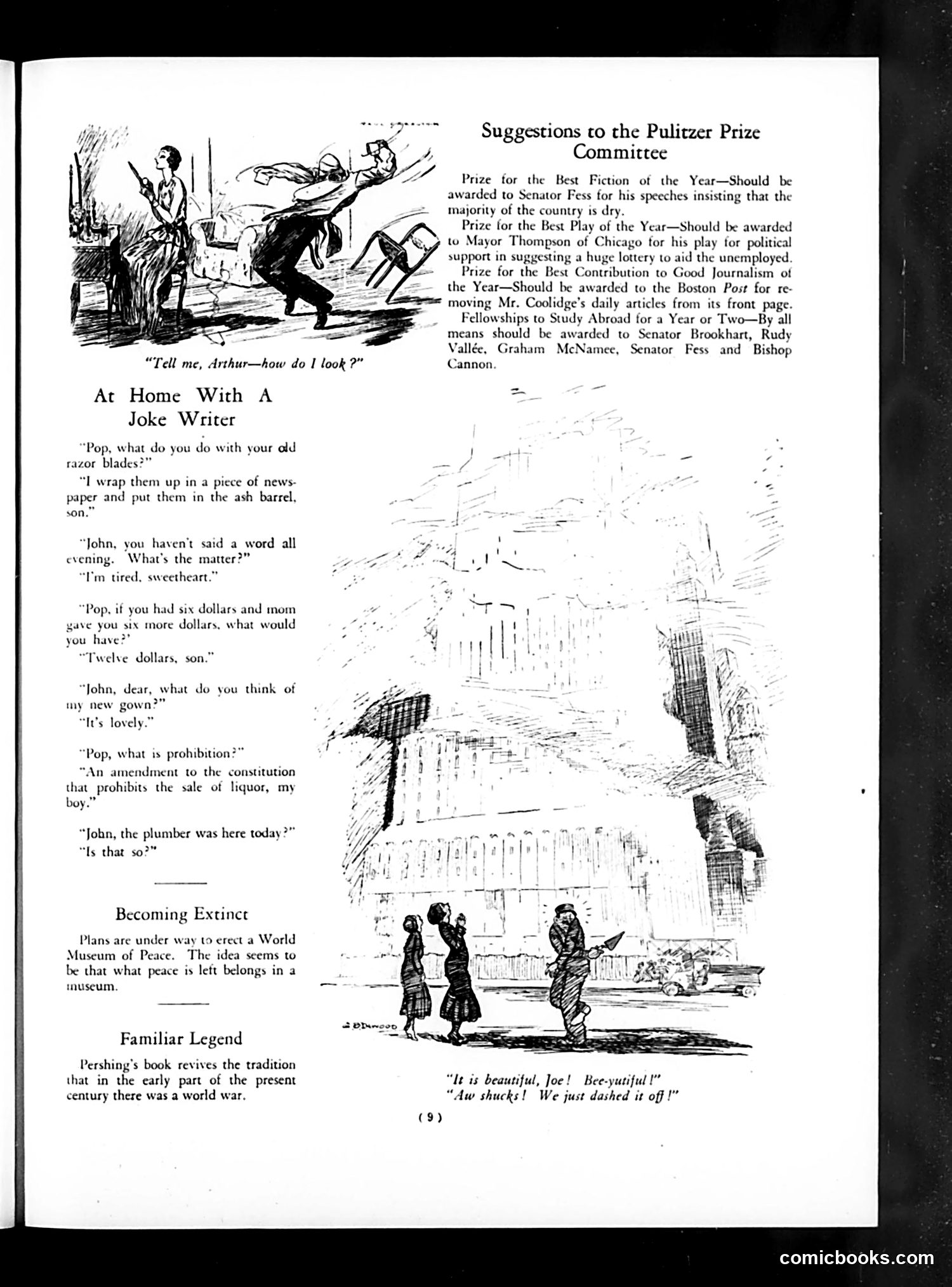
# Analysis of Life Magazine Page This page contains three separate short humor pieces and illustrations, not political cartoons. **"At Home With A Joke Writer"** is a domestic comedy sketch showing a father and son exchanging quips about everyday topics—razor blades, prohibition (the constitutional ban on alcohol sales), and a plumber's visit. The humor relies on the son's deadpan replies and the father's attempts at witty banter. **"Becoming Extinct"** briefly notes plans for a World Museum of Peace, sarcastically observing that peace belongs in a museum because it's nearly extinct. **"Familiar Legend"** mentions Pershing's book reviving the tradition that in the early 20th century there was a world war—likely referencing WWI and General John Pershing's memoirs. The illustrations are generic domestic scenes without specific caricatures or political figures.
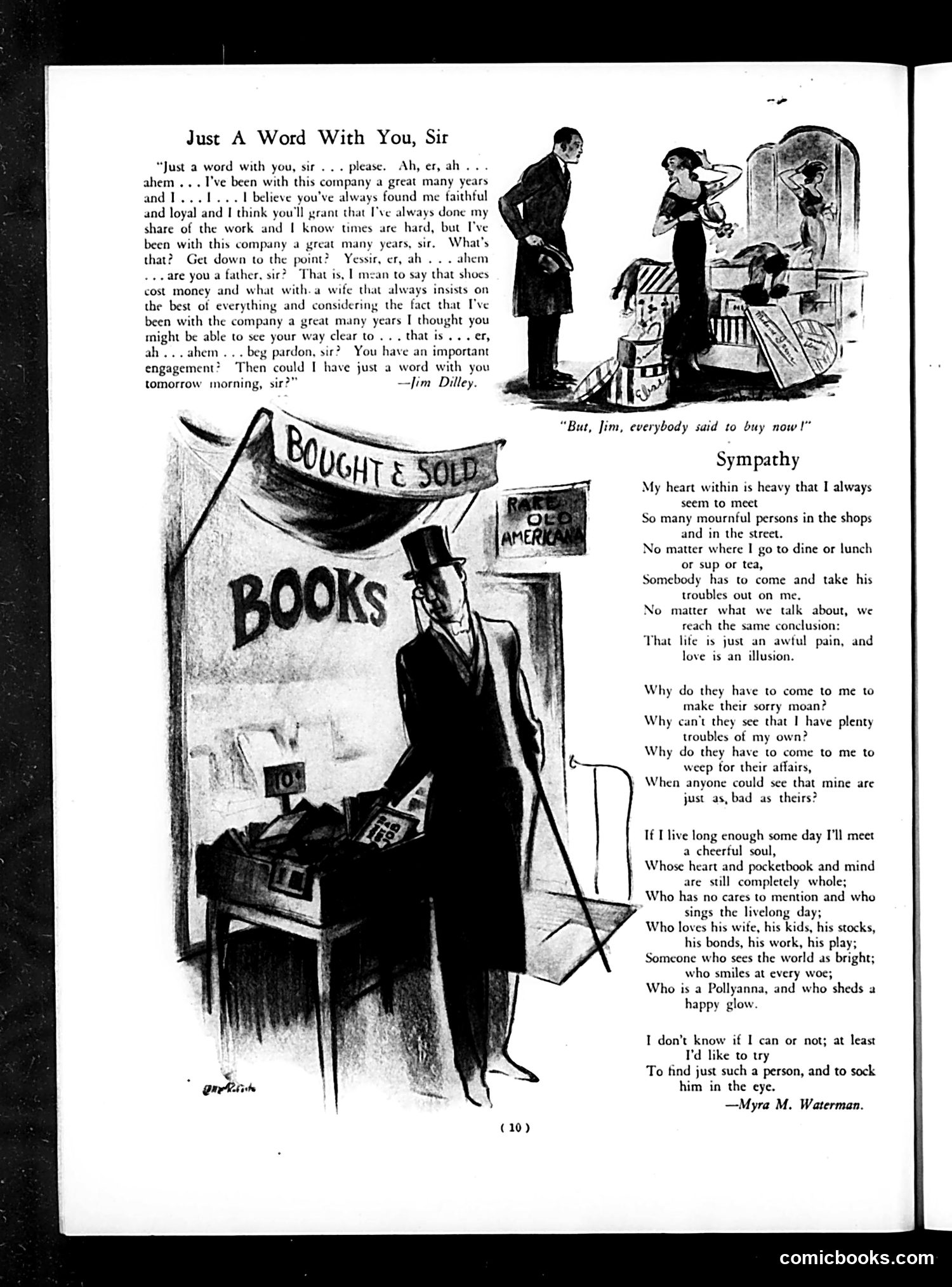
# Analysis **"Just A Word With You, Sir"** (top cartoon): A man asks his employer for a private conversation. He mentions being a long-time, faithful employee but now faces financial hardship—he has a father needing shoes and a wife demanding the best of everything. He's asking for a raise or loan. The boss dismisses him with "But, Jim, everybody said to buy now!"—satirizing how wealthy employers deflect workers' genuine hardship by repeating popular economic catchphrases about consumer spending, rather than addressing wage stagnation. **"Bought & Sold" (left cartoon): A businessman stands amid books labeled "Old America," suggesting he's literally buying and selling the nation's values and heritage, depicted as commodities. This critiques wealthy industrialists' perceived corruption of American ideals through monopolistic practices. **"Sympathy" (poem, right)**: Complements the cartoons, expressing exhaustion with hearing others' troubles while having one's own burdens.