A complete issue · 37 pages · 1930
Life — December 26, 1930
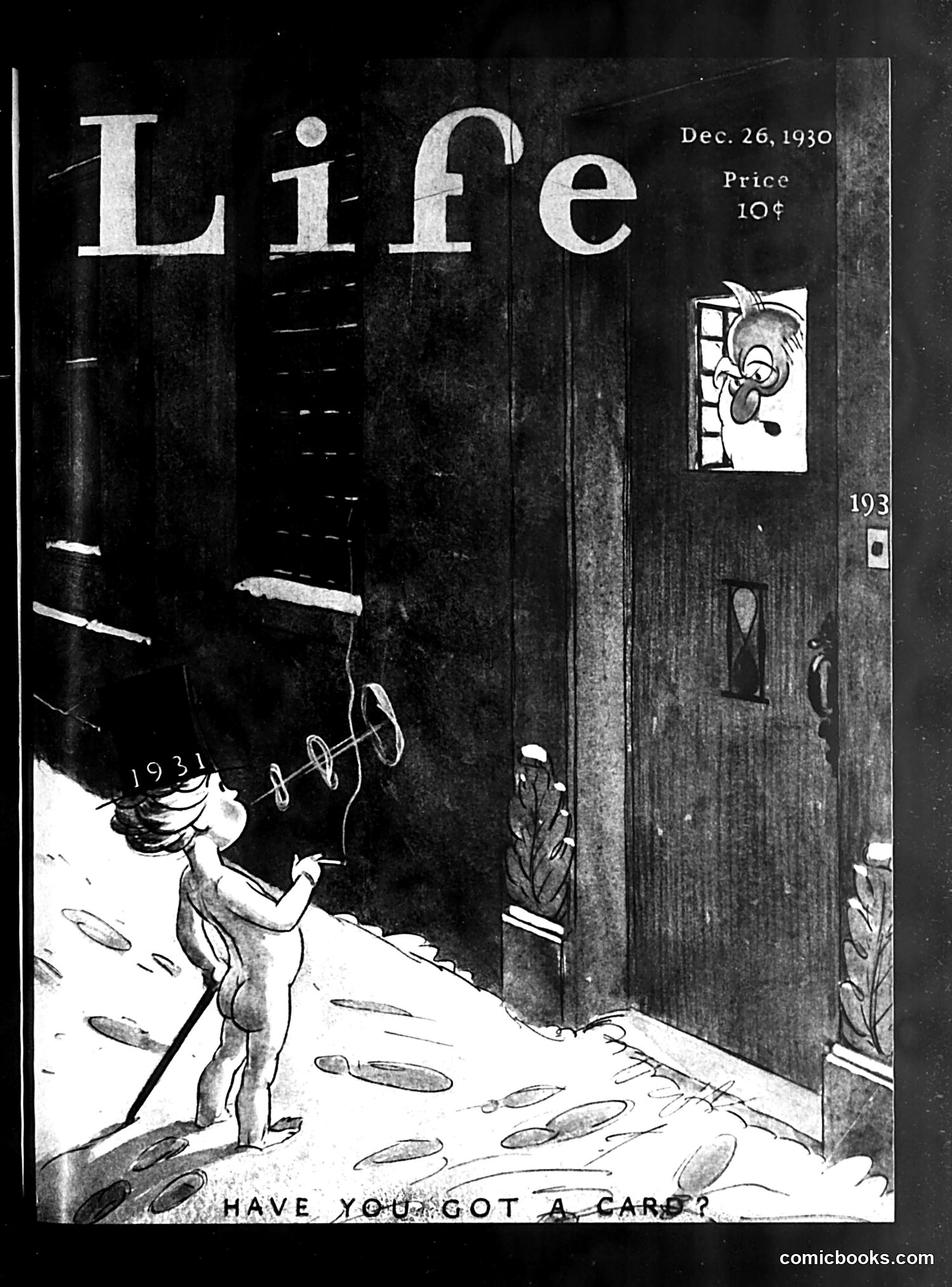
# Life Magazine, December 26, 1930 This is a cover illustration featuring a cartoon character (appears to be a stylized human figure) standing in snow, holding a ski pole or similar winter equipment, with footprints visible in the snow behind them. The character has an exaggerated, cartoonish appearance typical of 1930s illustration style. The caption reads "HAVE YOU GOT A CAR?" — referencing automobile ownership during the Great Depression era. The joke likely satirizes the disconnect between winter leisure activities (skiing, winter sports) and economic reality; the figure appears to be trudging through snow on foot, prompting the sarcastic question about car ownership. This reflects Depression-era humor about widespread poverty and the contrast between wealthy leisure pursuits and common people's struggles.
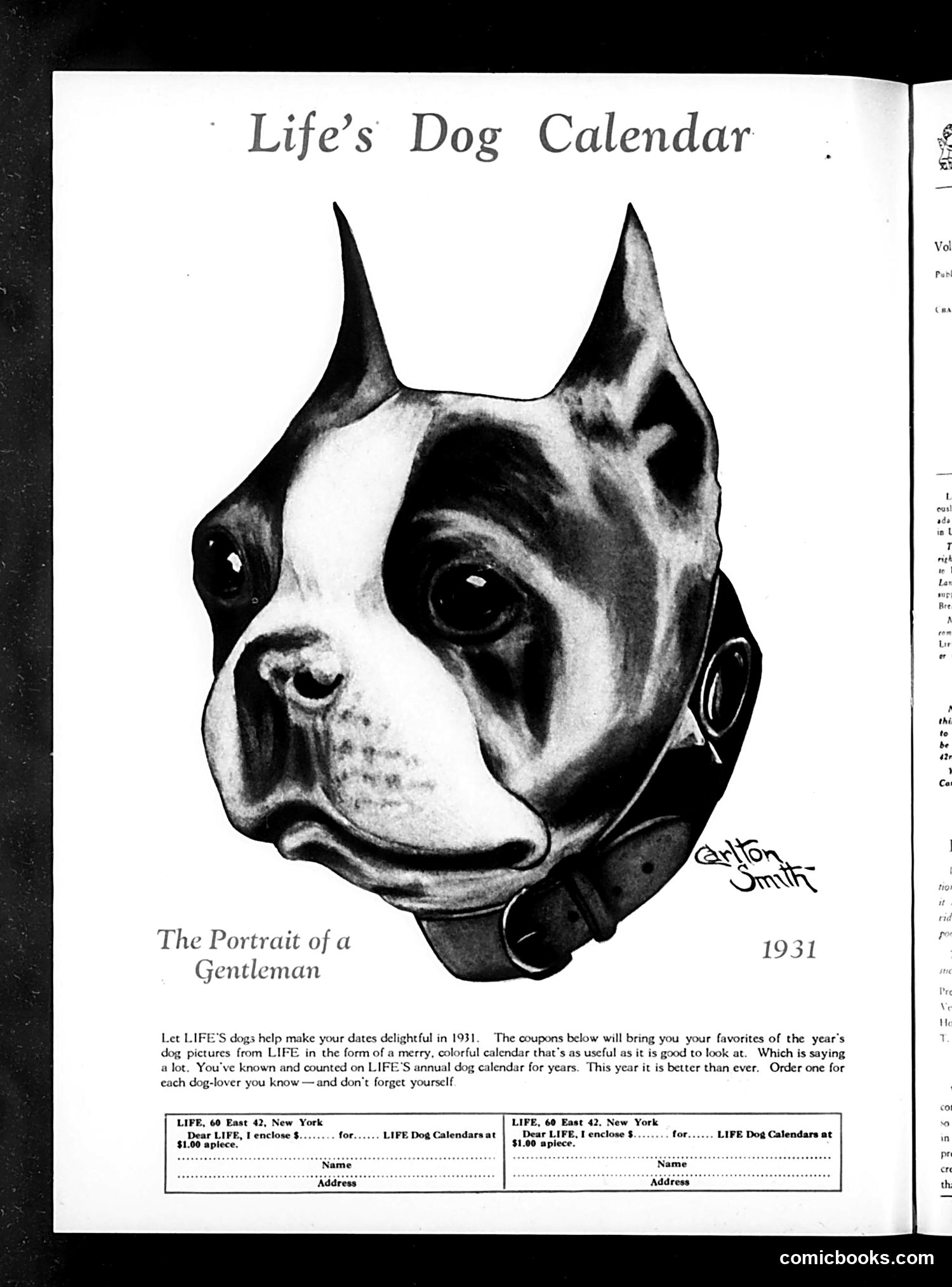
# Life's Dog Calendar (1931) This page is primarily an **advertisement for a calendar product**, not a political cartoon. The 1931 "Life's Dog Calendar" features a detailed portrait of a Boston Terrier or similar breed, titled "The Portrait of a Gentleman." The illustration is signed by Carlton Smith. The "joke" is gentle wordplay: the dog is presented as a refined "gentleman," appealing to pet owners' affection for their animals. The ad copy promises that LIFE magazine's dog pictures will "help make your dates delightful" and offers readers an opportunity to order calendars. This reflects 1931 consumer culture—using cute animal imagery to promote products—rather than containing political satire. It's essentially a mail-order advertisement disguised as editorial content.
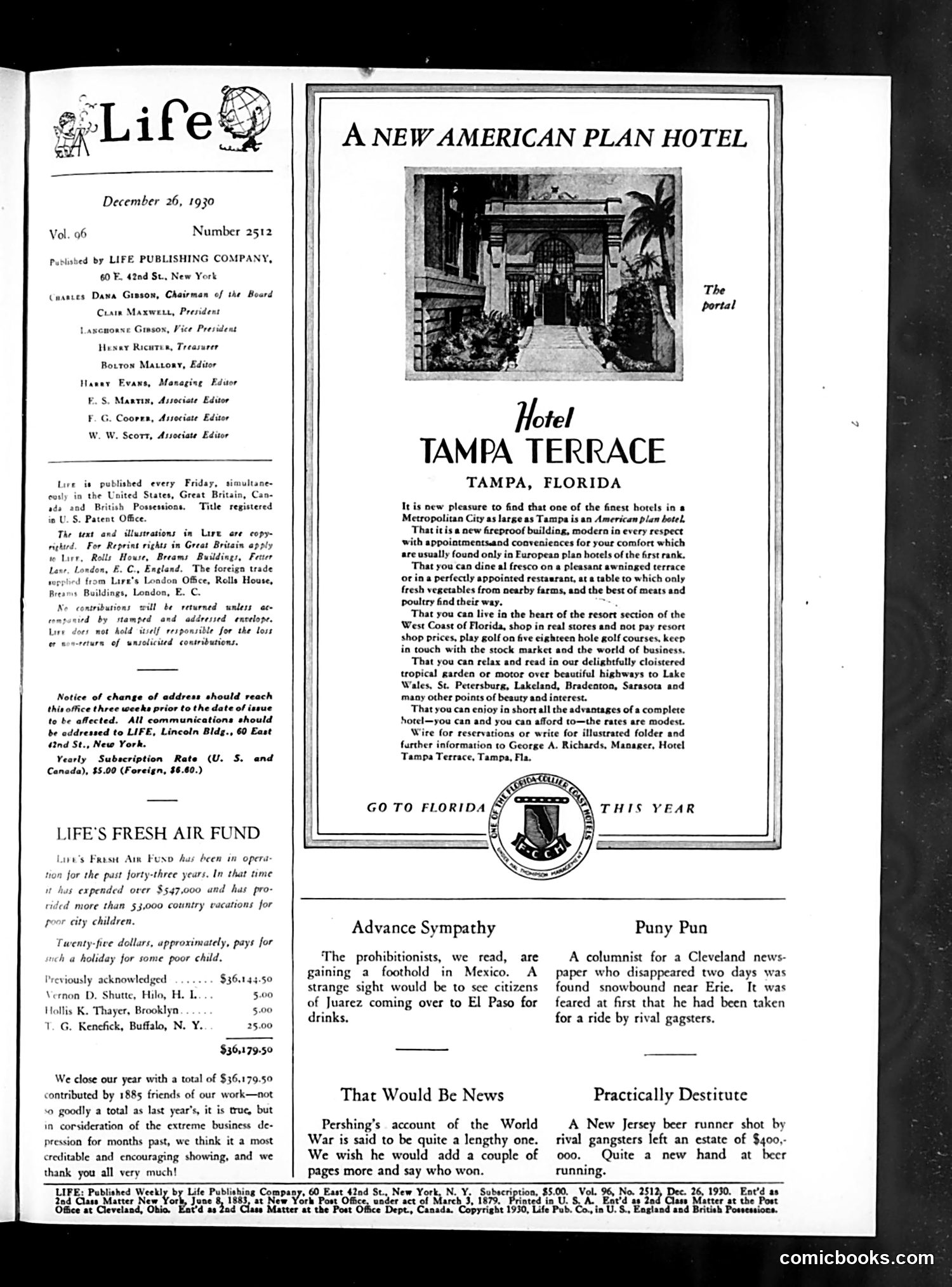
# Page Content Analysis This page is primarily **advertising and editorial content**, not political satire. The main feature is a full-page advertisement for the Hotel Tampa Terrace in Tampa, Florida—promoting its European-style amenities, dining, and leisure activities as an upscale destination. Below the ad are four brief humor items: 1. **"Advance Sympathy"** jokes about prohibitionists gaining a foothold in Mexico and citizens crossing into El Paso for drinks—referencing Prohibition's unpopularity. 2. **"Puny Pun"** and **"That Would Be News"** are light wordplay items. 3. **"Practically Destitute"** describes a beer runner shot by rival gangsters. The page reflects 1930 concerns: Prohibition's enforcement, gangster violence, and the tourism industry promoting Florida as a vacation destination.
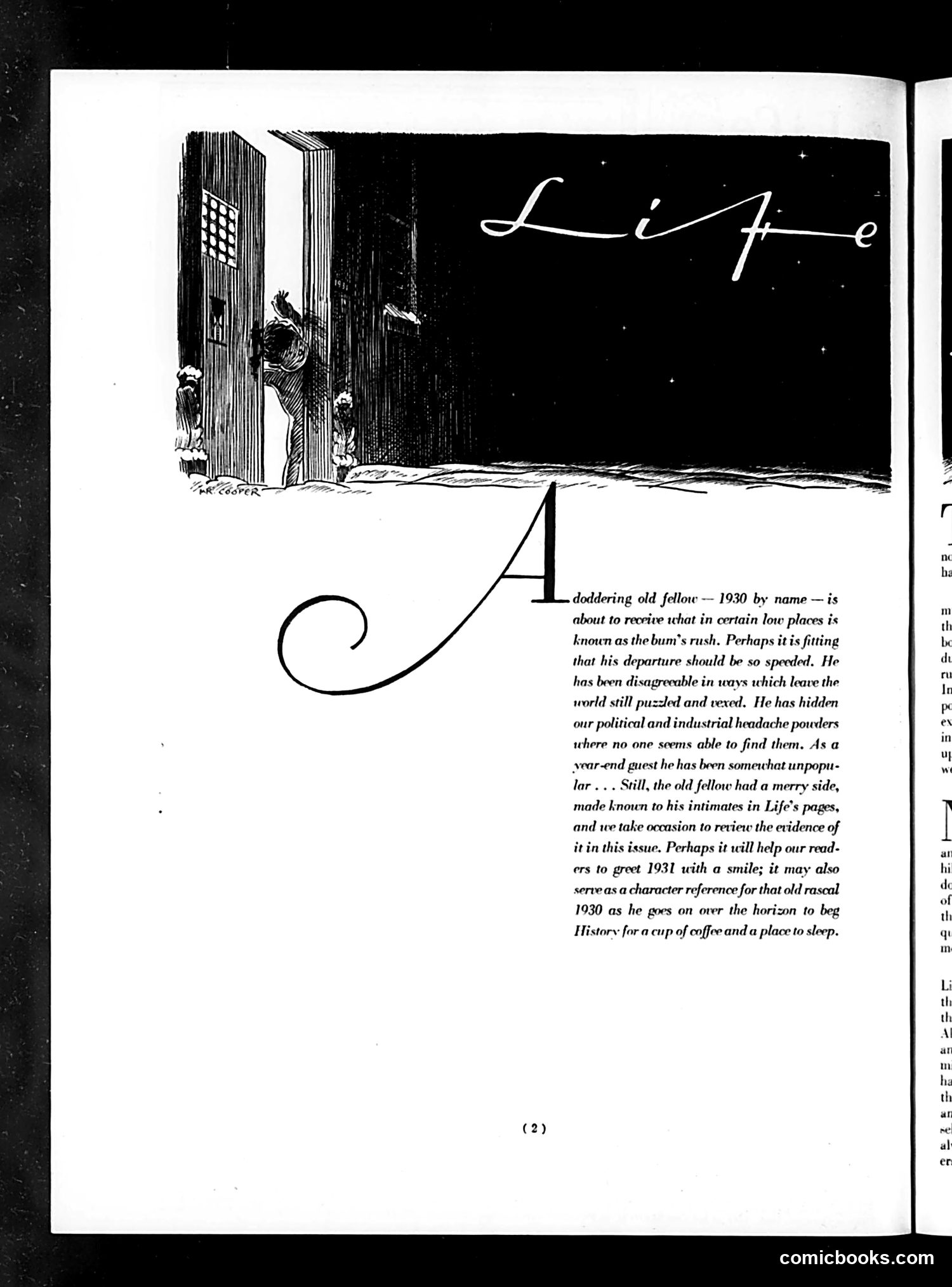
# Analysis This page is a **title page or introductory section** for *Life* magazine, featuring an illustration and accompanying essay about a recurring character. The sketch shows figures at a doorway, with the word "Life" in elegant script above. The text discusses "a doddering old fellow — 1930 by name" who is departing, presumably as the year 1930 ends and 1931 begins. The passage uses personification, treating the year itself as a character with personality traits—"disagreeable," having "hidden our political and industrial headache powders," yet possessing "a merry side." This is **New Year's satirical commentary**: the magazine bids farewell to 1930 (marked by economic hardship following the 1929 crash) with wry humor, while greeting 1931 with cautious hope. The "old fellow" is literally the year being personified, a common editorial device in period magazines.
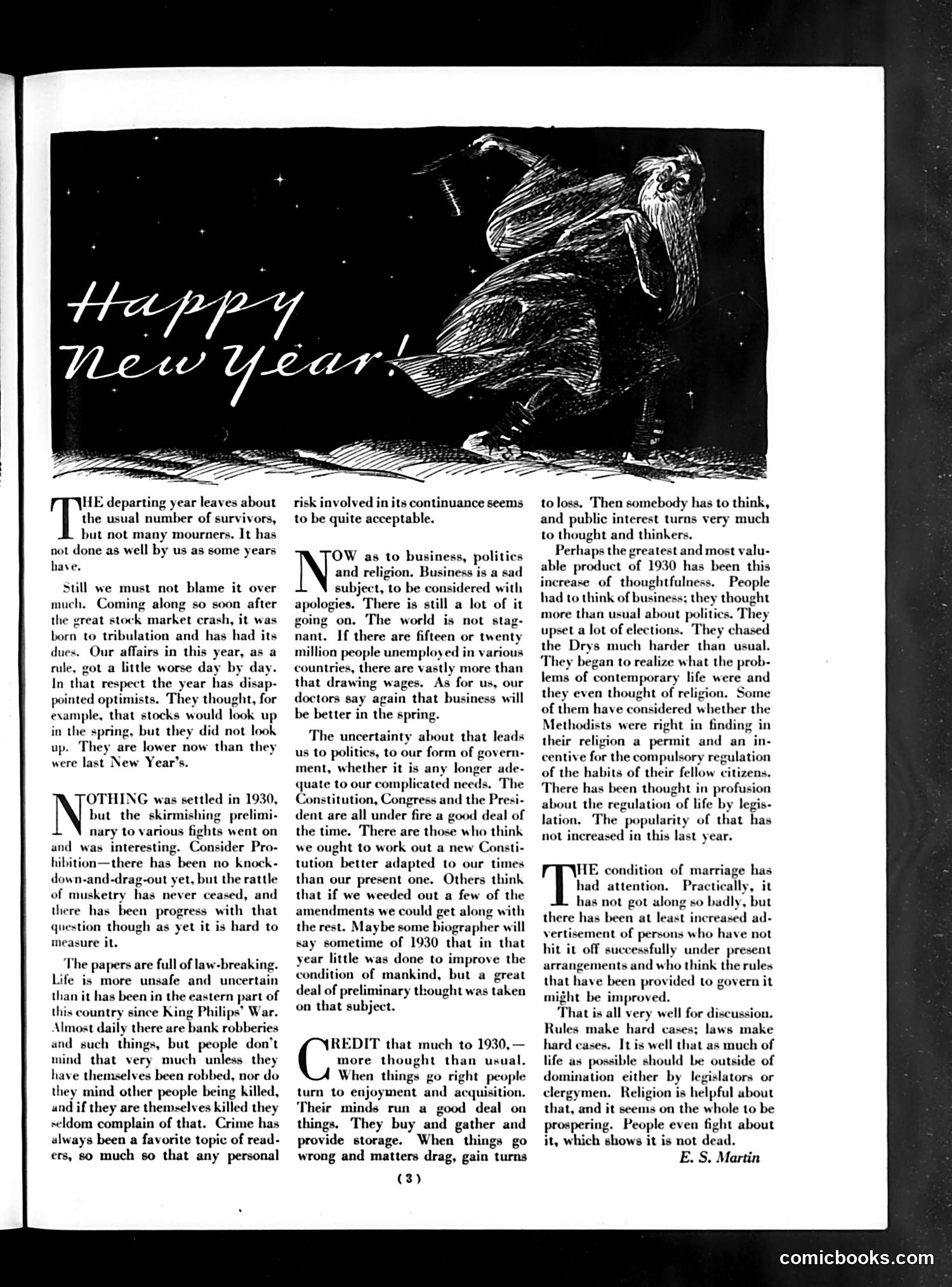
# Life Magazine Page Analysis This is an editorial essay titled "Happy New Year!" by E.S. Martin, illustrated with a woodcut of what appears to be a rat or similar creature looking upward against a starry night sky. The piece is a **reflective New Year's commentary on 1930**, discussing the year's disappointments—the stock market crash, unemployment, and general uncertainty—while acknowledging that life has always contained hardship and danger. Martin argues that rather than blame 1930 entirely, society should recognize ongoing problems in business, politics, and religion that demand thought and reform. The essay encourages readers not to despair but to engage in serious consideration of contemporary issues, suggesting that difficulty can spark useful public discourse about governance, marriage law, and social regulation.
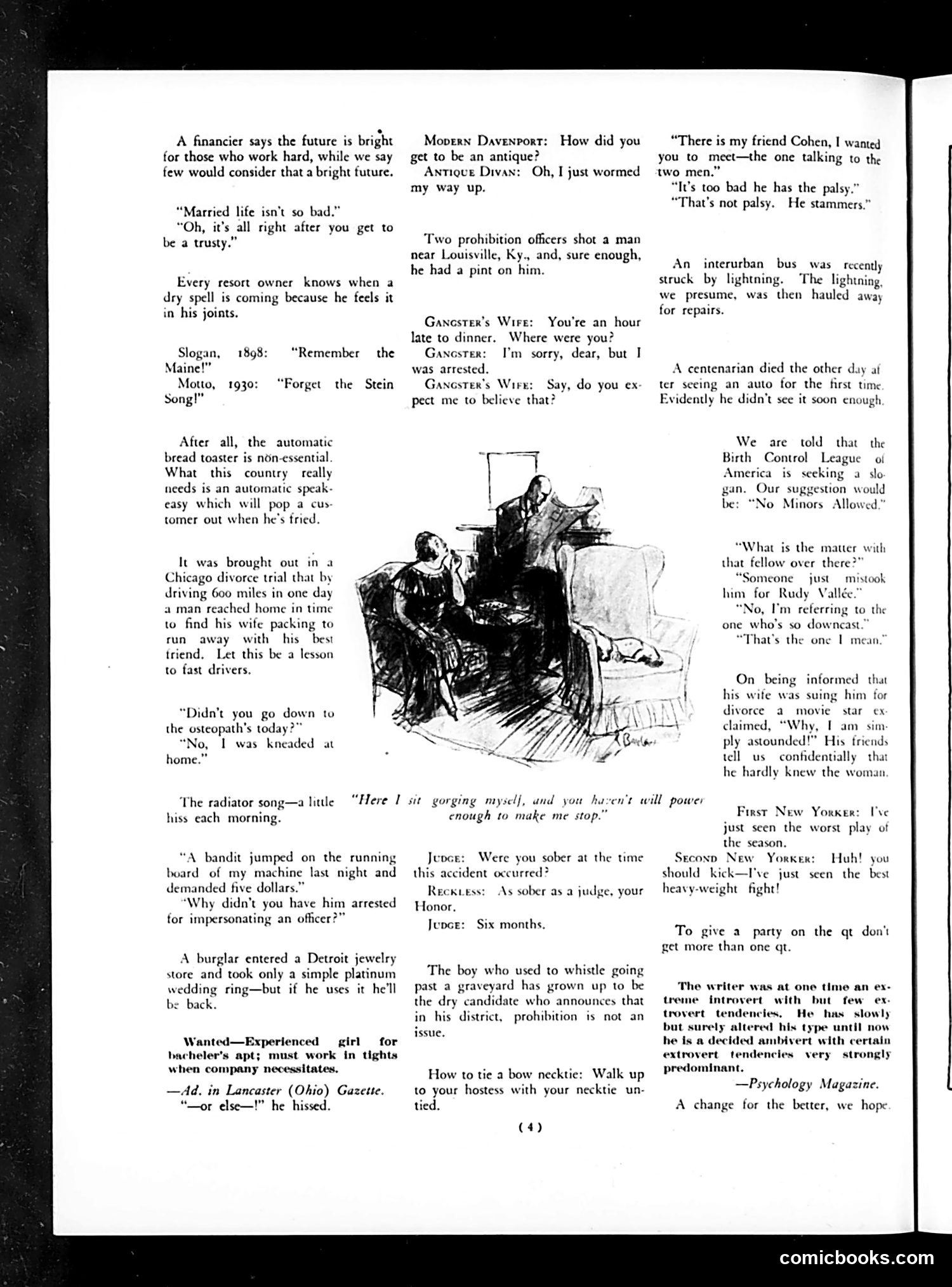
# Analysis of Life Magazine Page This page contains humorous anecdotes and a single illustration rather than political cartoons. The central sketch shows two figures in what appears to be a domestic dispute or serious conversation, captioned: "Here I sit gorging myself, and you haven't will power enough to make me stop." The surrounding text consists of brief satirical jokes targeting 1920s American life, including references to Prohibition (officers shooting a man with a hidden pint), divorce proceedings, and social manners. One item mocks the Birth Control League's proposed slogan "No Minors Allowed." The humor relies on period-specific concerns: Prohibition enforcement, automobile accidents, and changing social attitudes toward marriage and divorce. The overall tone is light satirical commentary on contemporary American society and customs, typical of Life's editorial approach during this era.
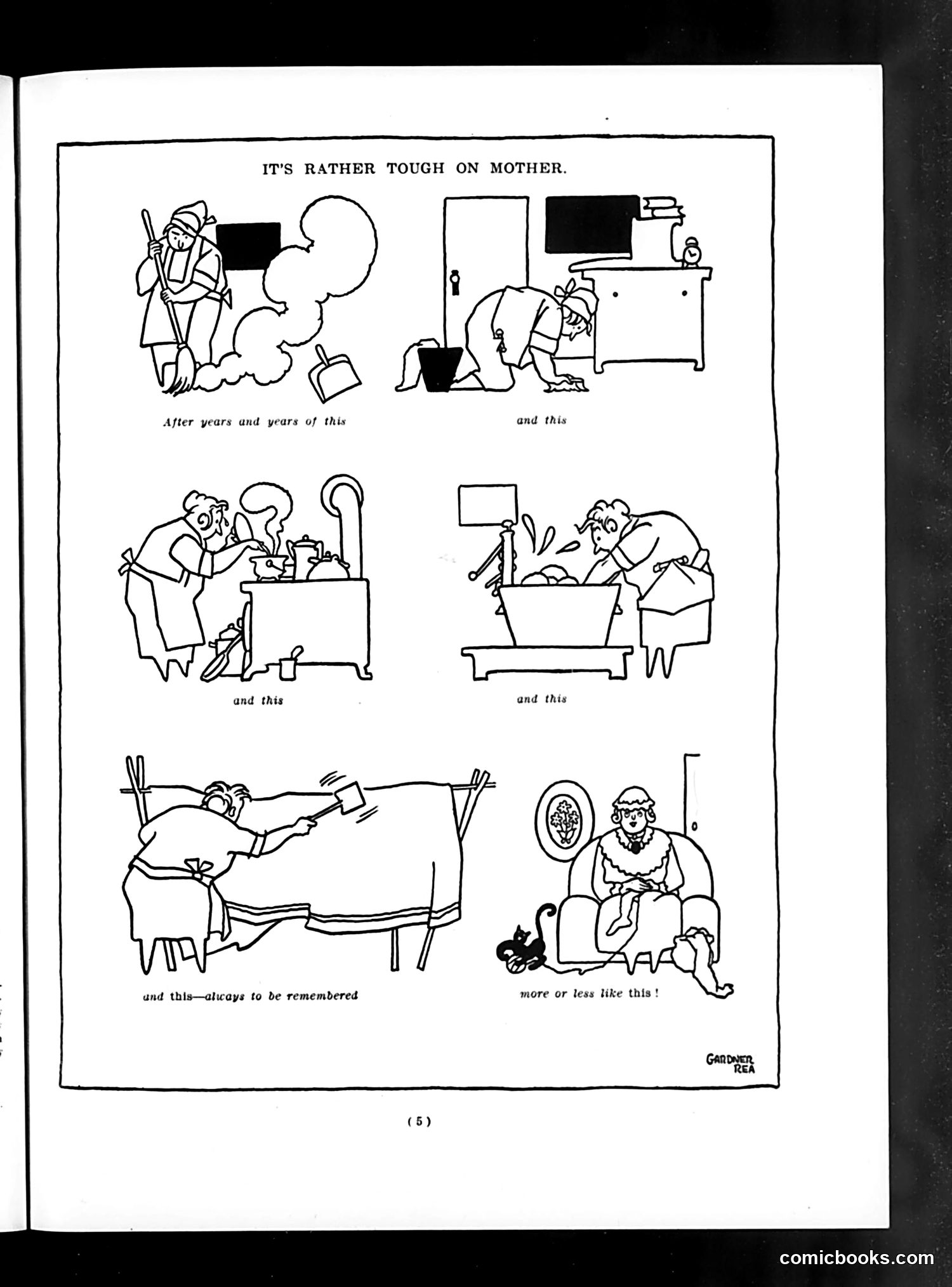
# "It's Rather Tough on Mother" - Analysis This satirical comic by Gardner Rea depicts the life progression of motherhood, contrasting youthful labor with aging domesticity. **The sequence shows:** - Top panels: A young mother managing military/wartime duties alongside household work - Middle panels: Cooking and bathing children - Bottom left: Exhausted laundry work ("always to be remembered") - Bottom right: An elderly woman sitting alone, worn out **The satire's point:** Despite decades of relentless domestic labor—child-rearing, cooking, cleaning, laundry—mothers end up in diminished circumstances, seemingly forgotten or marginalized. The title's understated tone ("rather tough") ironically underscores the serious toll motherhood takes. The contrast between young vigor and elderly exhaustion critiques how society undervalues maternal labor and fails to provide dignity or security in old age.
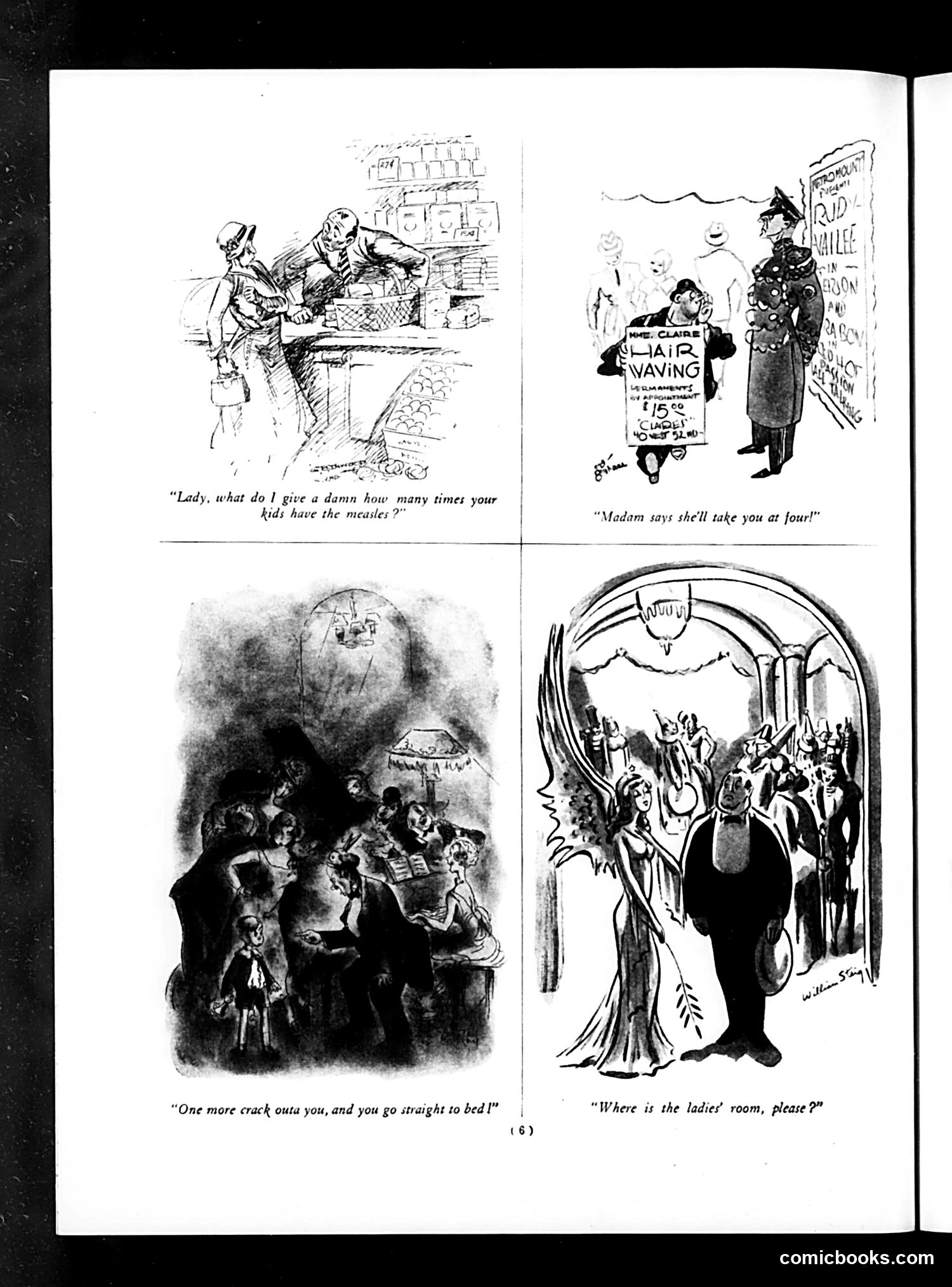
# Analysis of Life Magazine Page This page contains four unrelated comic vignettes satirizing everyday life: 1. **Top left**: A doctor asks a woman how frequently her children have measles—implying she's had them multiple times, a common childhood disease in this era. 2. **Top right**: A hair-waving salon scene where a uniformed officer (appears to be a doorman or security guard) is told a client will be ready "at four"—satirizing the lengthy time required for salon services. 3. **Bottom left**: Parents threaten a misbehaving child with bedtime as punishment for "one more crack"—typical domestic discipline humor. 4. **Bottom right**: Someone asks directions to "the ladies' room" in what appears to be a church or formal venue—a social etiquette joke. These are gentle domestic humor comics typical of Life magazine's satirical approach to middle-class American life and social conventions.
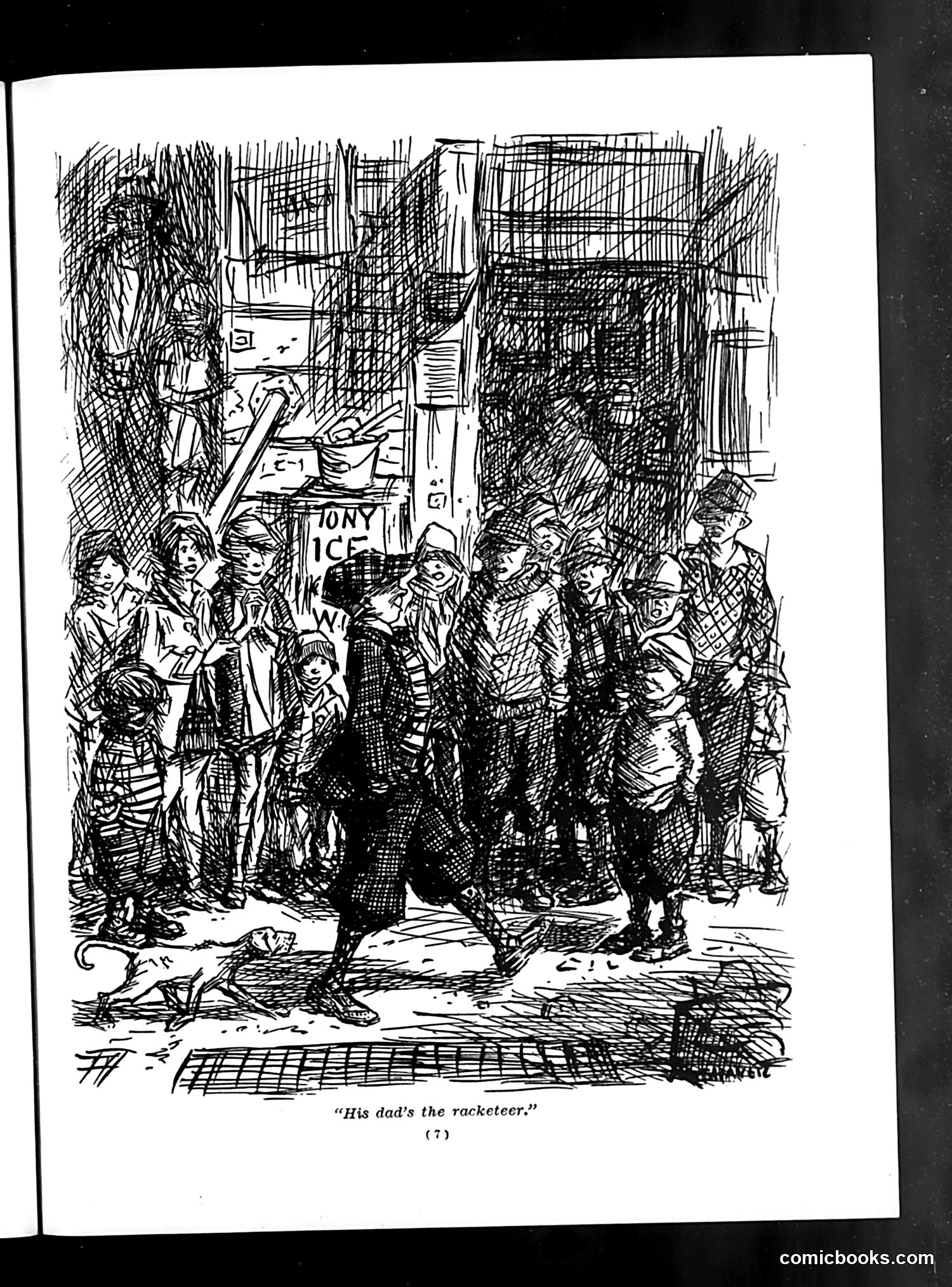
# "His dad's the racketeer." This cartoon depicts a street scene with a crowd of children and adults gathered around what appears to be a Tony's Ice stand. The caption quotes one child identifying another's father as "the racketeer." The satire targets organized crime and racketeering during Prohibition era America. The joke operates on multiple levels: it shows how pervasive organized crime had become in urban neighborhoods that even children casually reference it, and it suggests that a racketeer could afford to set up a visible business (an ice stand) without legal consequence. The cartoon implies the normalization of criminal enterprise in everyday city life—that racketeering had become so commonplace, children discussed it openly as a matter-of-fact neighborhood fact.
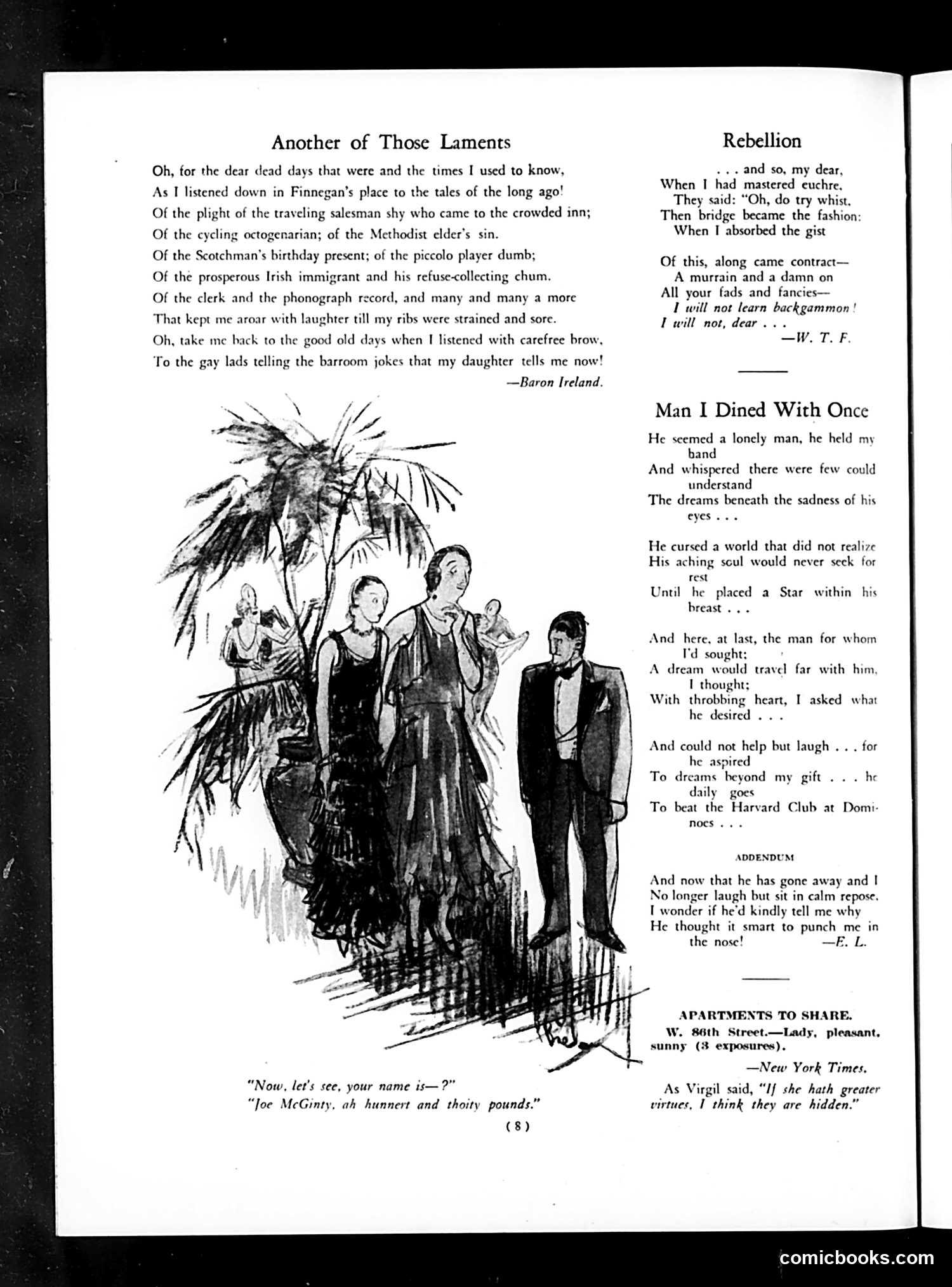
# Analysis of This Life Magazine Page This page contains three literary pieces rather than political cartoons. The main illustration depicts a social scene with well-dressed figures and a woman in an elaborate feathered hat, accompanying the poem "Man I Dined With Once." The poems express nostalgia and social commentary typical of early 20th-century Life magazine's satirical style. "Another of Those Laments" by Baron Ireland mocks various social types (Methodist elders, traveling salesmen, Irish immigrants, cyclists) and laments lost "good old days." "Rebellion" by W.T.F. appears to critique conformity. The final section advertises apartments to share, quoting Virgil. The overall tone reflects upper-class urban American society's self-aware humor about modern life, pretension, and social change—characteristic of Life's satirical approach during this era.
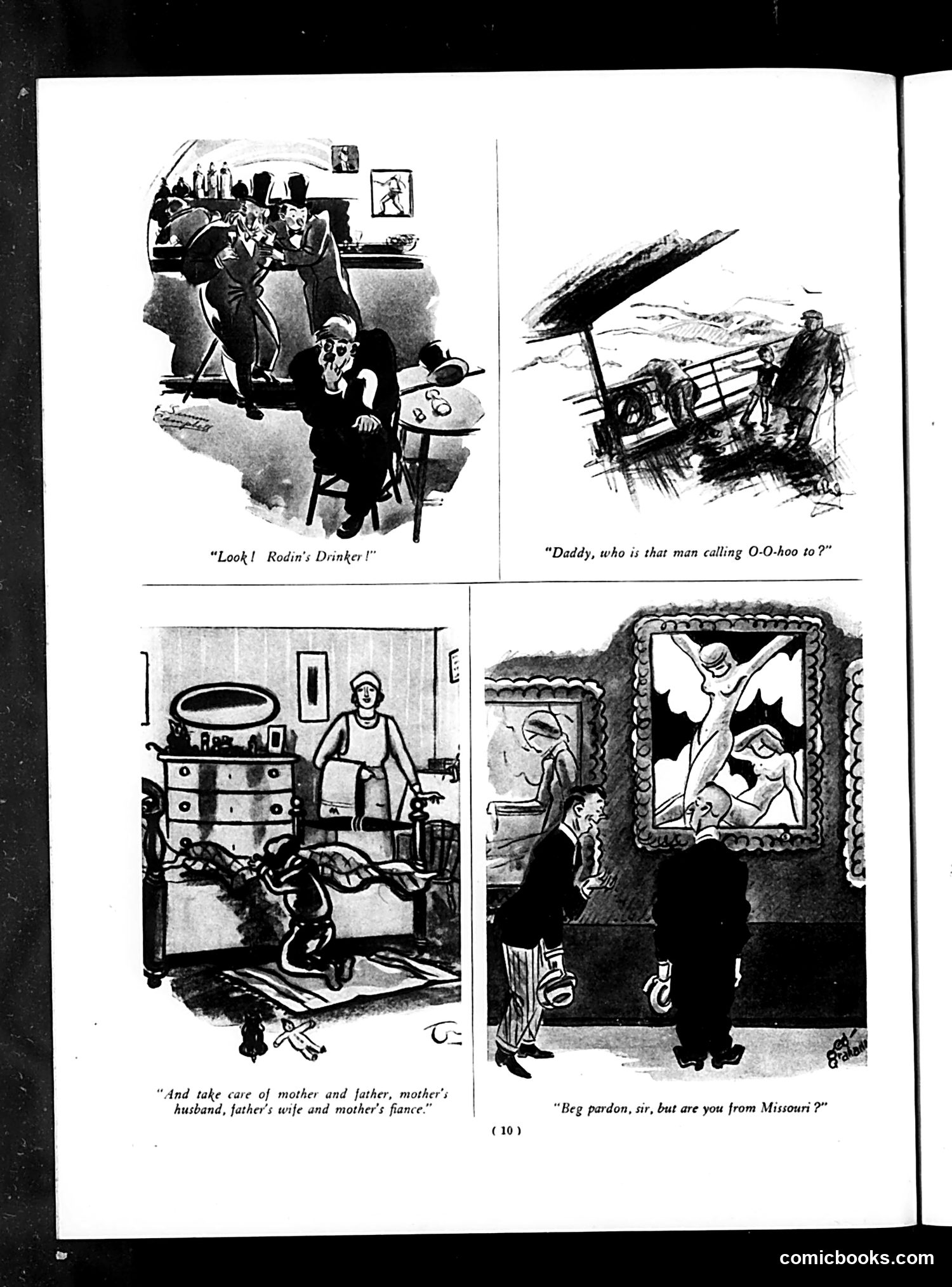
# Analysis of This Life Magazine Page This page contains four satirical cartoons from Life magazine's humor section, each depicting domestic or social scenarios: 1. **"Look! Rodin's Drinker!"** - Mocks pretentious art appreciation by comparing a drunk man's posture to Rodin's famous sculpture. 2. **"Daddy, who is that man calling O-O-hoo to?"** - Likely satirizes early radio or telephone communication, with a child misunderstanding technical jargon as personal address. 3. **"And take care of mother and lather..."** - Shows a child's mishearing of a parent's instructions, creating comedic confusion. 4. **"Beg pardon, sir, but are you from Missouri?"** - References the phrase "Show-Me State," implying skepticism or gullibility stereotypically associated with Missouri residents. These represent typical early 20th-century American humor: wordplay, domestic misunderstandings, and gentle mockery of regional stereotypes.