A complete issue · 37 pages · 1930
Life — December 19, 1930
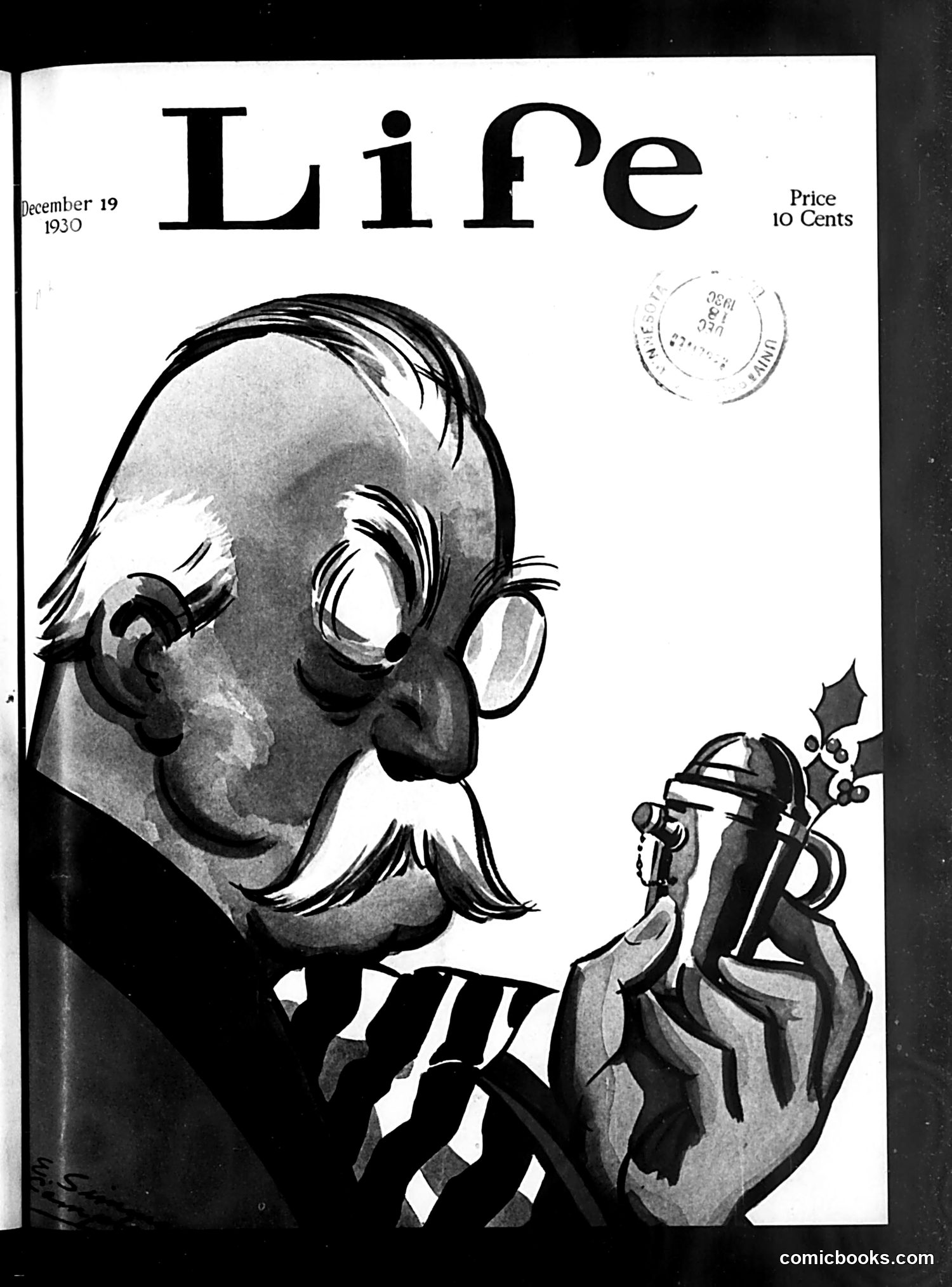
# Life Magazine Cover Analysis - December 19, 1930 This is the cover of *Life* magazine from December 1930, during the Great Depression. The central caricature depicts an elderly man with exaggerated features—large nose, prominent ears, and white beard—holding what appears to be a small figure or toy dressed as Santa Claus with holly decoration. The satirical point seems to target wealthy or powerful figures during economic hardship, suggesting they're treating Christmas charity or seasonal generosity as a mere plaything or token gesture rather than substantive aid. The grotesque exaggeration of the elderly man's face was typical of *Life*'s satirical cartooning style. Without additional text or clear labeling, the specific individual being caricatured remains unclear, though the commentary on economic disparity during Depression-era Christmas is evident.
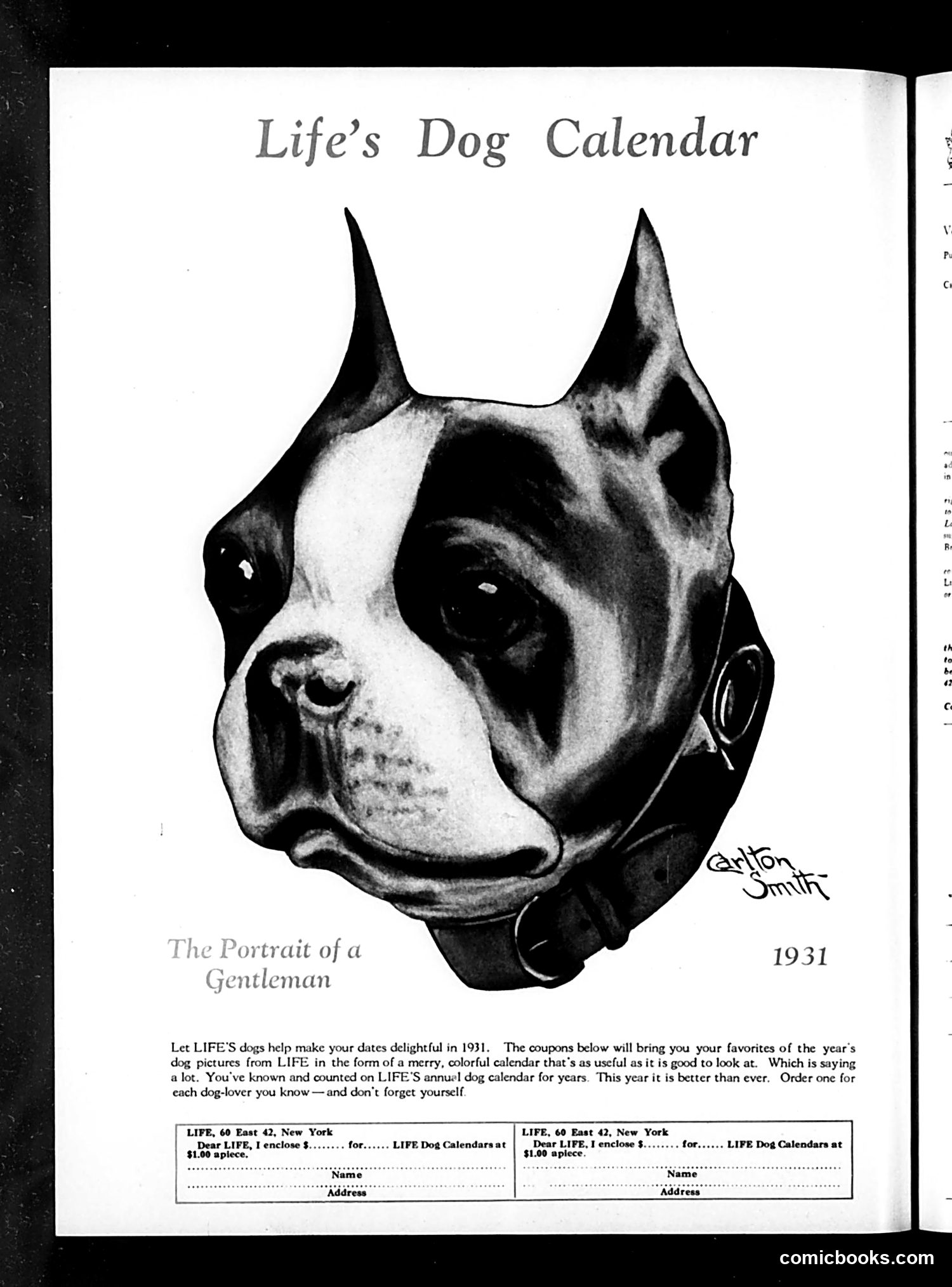
# Life's Dog Calendar (1931) This is primarily an **advertisement page**, not political satire. It promotes LIFE magazine's 1931 dog calendar featuring portrait illustrations. The central image shows a **Boston Terrier** (or similar breed) titled "The Portrait of a Gentleman"—a humorous anthropomorphization common in 1930s advertising. The dog wears a collar and is rendered in dignified portrait style, the joke being that it's presented with human social pretension. The page advertises that readers can order calendars featuring "your favorites of the year's dog pictures from LIFE." The calendars cost $1.95 each and could be sent to friends. Two order coupons appear at bottom. The "gentleman" reference plays on the dog's formal presentation, making it an appealing novelty gift item for 1931 readers who enjoyed anthropomorphized animal humor.
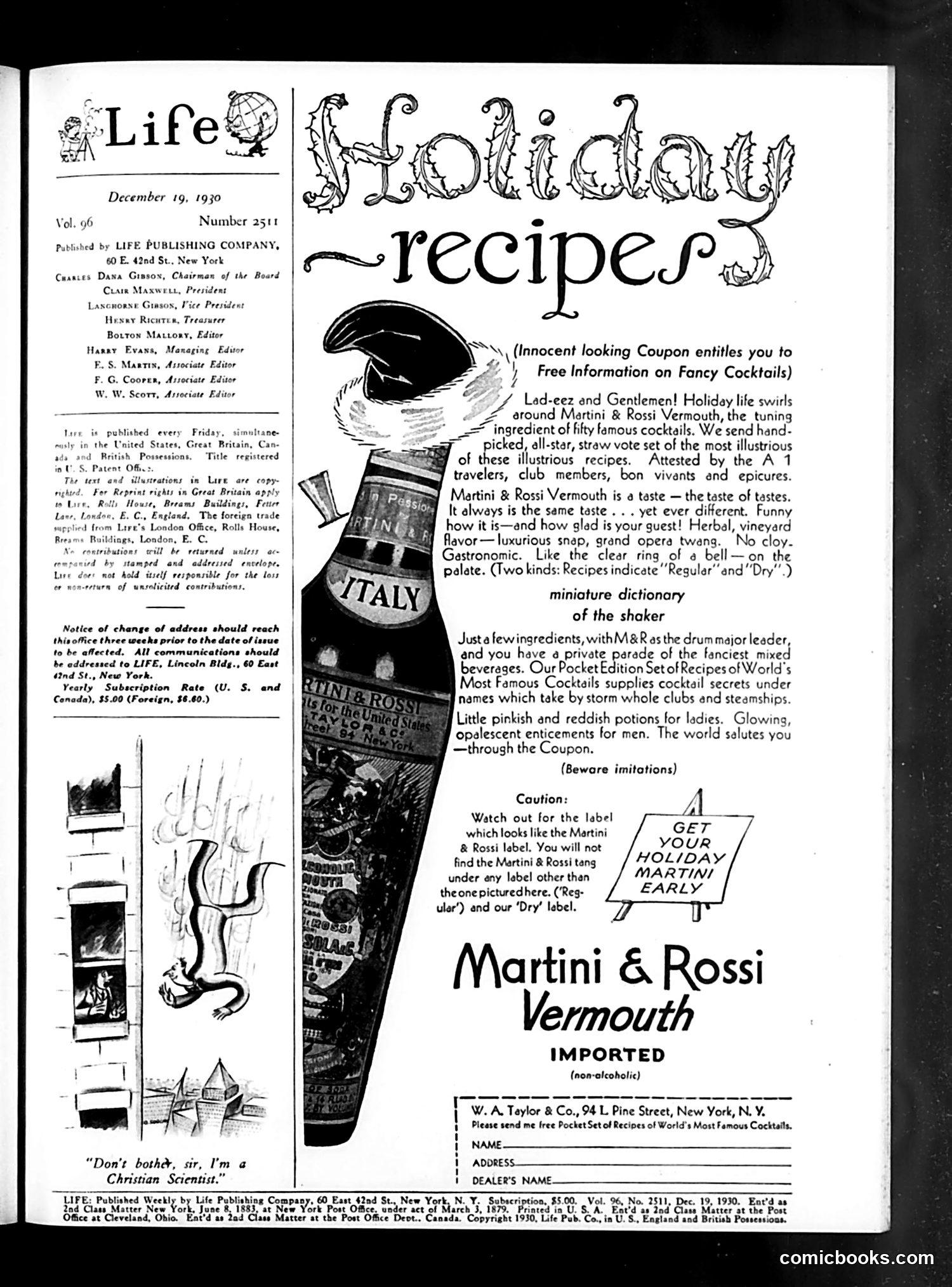
# Analysis This page is primarily a **full-page advertisement for Martini & Rossi Vermouth**, not satirical content. The decorative header reads "Holiday Recipes" and promotes a coupon offering free cocktail recipe information. The only cartoon element is a small illustration at bottom left showing a figure saying "Don't bother, sir, I'm a Christian Scientist"—a brief religious humor joke playing on Christian Science's known rejection of medical treatment, here applied humorously to someone avoiding a social situation. The advertisement itself uses ornate Art Deco lettering and imagery of a vermouth bottle to market imported Italian vermouth as a sophisticated cocktail ingredient, emphasizing its use in famous drinks and appealing to "club members" and "bon vivants." The caveat "(non-alcoholic)" appears to be either satirical or reflects labeling requirements of the era.
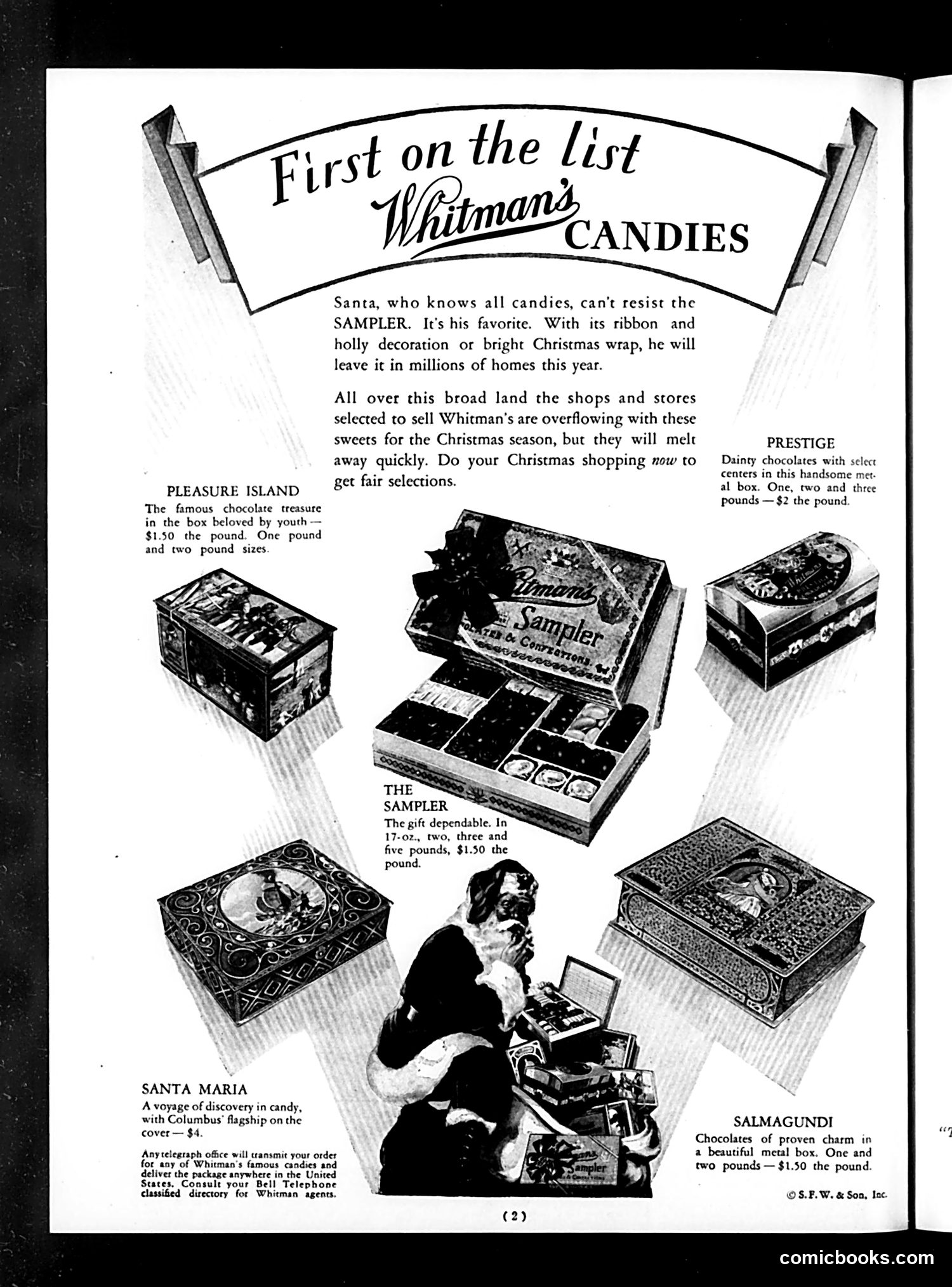
# Analysis This is **not a political cartoon or satire page**, but rather a **vintage advertisement for Whitman's Candies**, circa early-to-mid 20th century. The page promotes various Whitman's chocolate assortments as Christmas gifts, with product photos and descriptions. Featured items include: - **Pleasure Island** ($1.50/pound) - **The Sampler** (the advertised favorite, $1.50/pound) - **Prestige** (select chocolates, $2/pound) - **Santa Maria** ($4) - **Salmagundi** ($1.50/pound for one or two pounds) The central image shows Santa Claus examining candy boxes, reinforcing the Christmas gift-giving theme. The tagline "First on the list" emphasizes Whitman's as a preferred holiday present. The advertisement urges early shopping: "Do your Christmas shopping *now* to get fair selections," suggesting seasonal supply constraints.
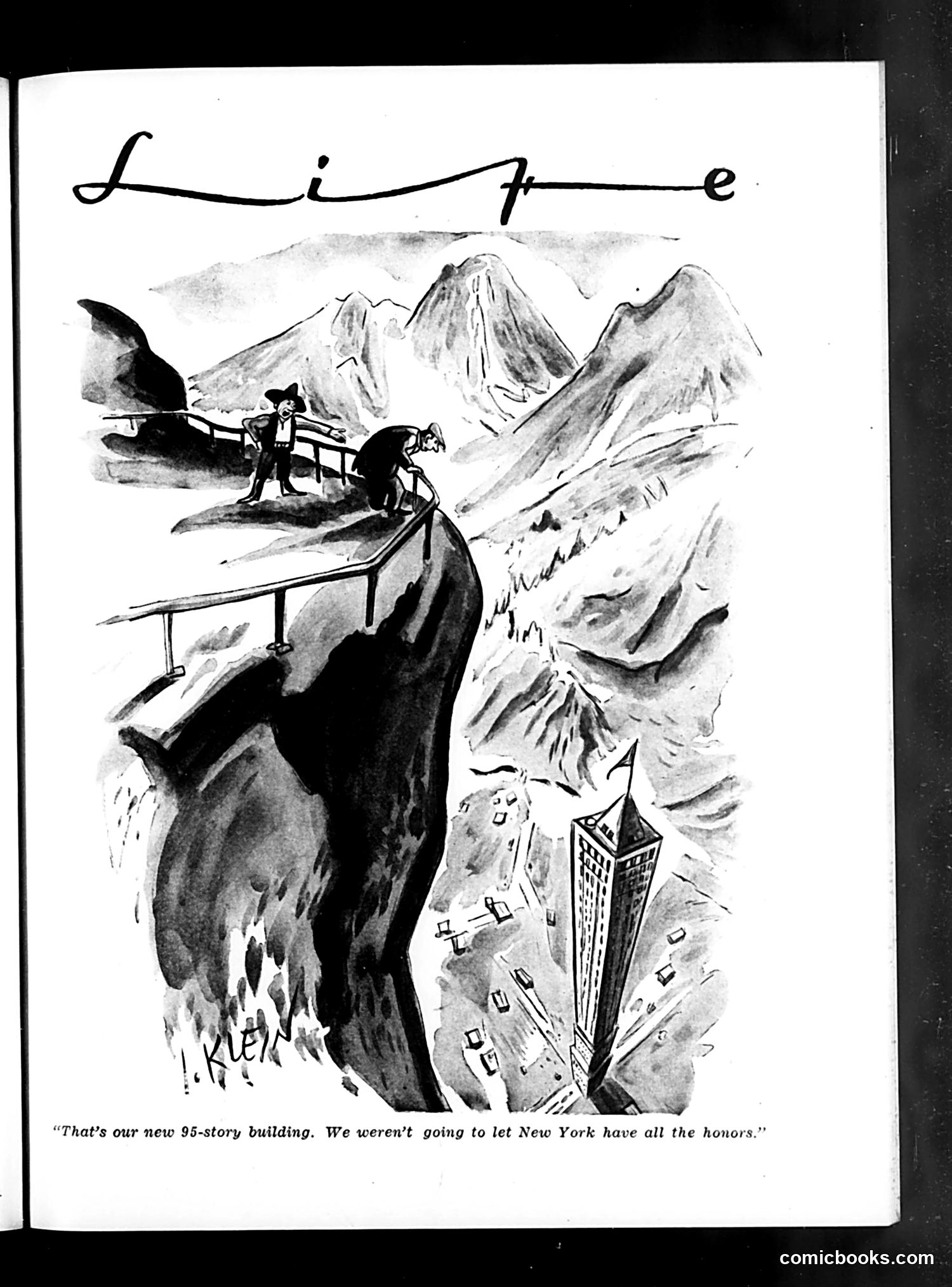
# Analysis This is a satirical cartoon titled "Life" depicting a competition between American cities over skyscraper construction. Two figures stand atop a massive cliff or mountain peak, pointing to a tall building below in a valley, with mountains in the background. The caption reads: "That's our new 95-story building. We weren't going to let New York have all the honors." The satire mocks the early 20th-century rivalry between American cities—particularly New York and Chicago—to build the tallest skyscrapers as symbols of civic pride and economic dominance. The exaggerated perspective (the building appearing tiny despite being 95 stories) humorously suggests the absurdity of this competitive "arms race" for height, poking fun at municipal vanity and one-upmanship during the era of rapid skyscraper construction.
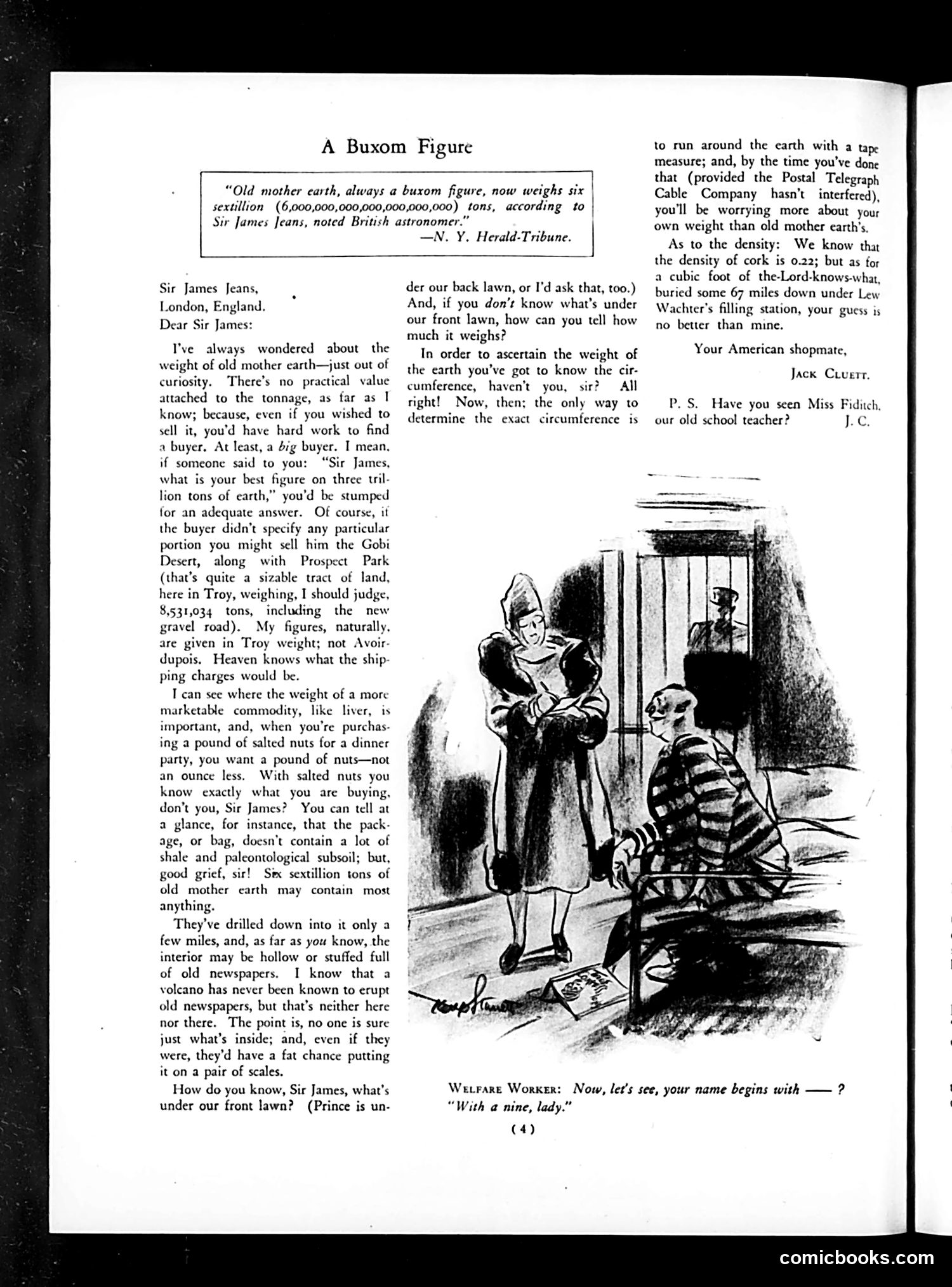
# "A Buxom Figure" This page presents a humorous letter to the editor about Earth's weight. Sir James Jeans, a British astronomer, apparently stated that Earth weighs six sextillion tons. The letter writer (Jack Cluett) humorously questions how anyone could know this without measuring Earth's circumference—suggesting the absurdity of such precise cosmic calculations. The accompanying cartoon depicts a welfare worker asking a woman's name, which begins with "W," in a scene outside a tenement. The humor appears to rely on wordplay or a visual pun about the woman's appearance or circumstances, though the specific reference is unclear to modern readers without additional context about contemporary welfare stereotypes or naming conventions.
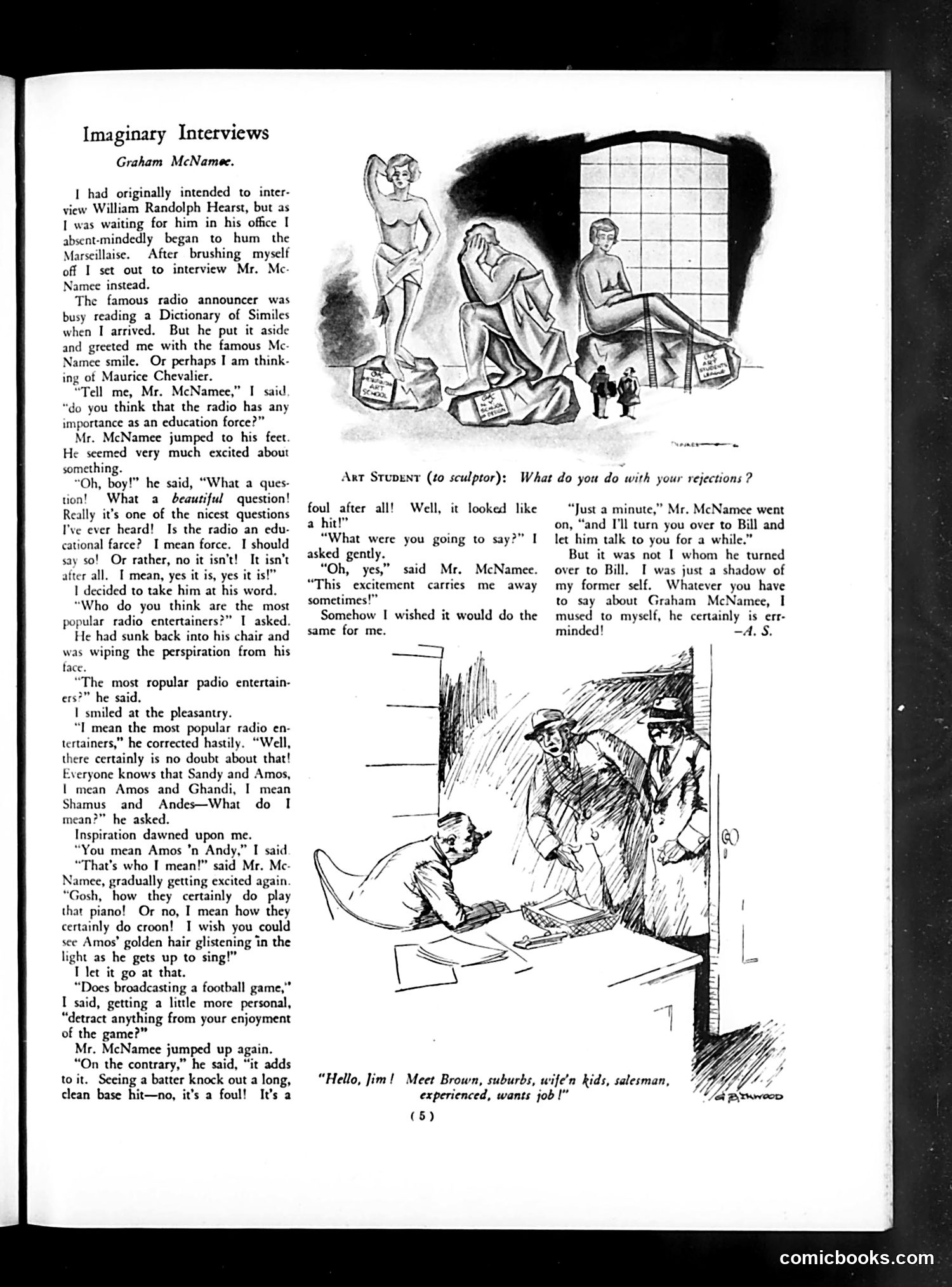
# "Imaginary Interviews: Graham McNamee" This page features a satirical interview with **Graham McNamee**, a famous 1920s-30s radio announcer known for his enthusiastic delivery and dramatic broadcasting style. The satire mocks McNamee's tendency toward excessive excitement and flowery language. The interviewer catches him reading a "Dictionary of Similes" and asks whether radio serves as an educational force. McNamee responds enthusiastically that it does—citing popular radio entertainers like "Amos 'n' Andy" and praising their talent. The cartoons illustrate the absurdity: one shows "Art Student" sculptures receiving rejections, another depicts McNamee's florid language about baseball games as foolishly overblown ("clean base hit—no, it's a foul!"). The humor targets McNamee's reputation for turning mundane events into grandiose spectacle through overwrought broadcasting.
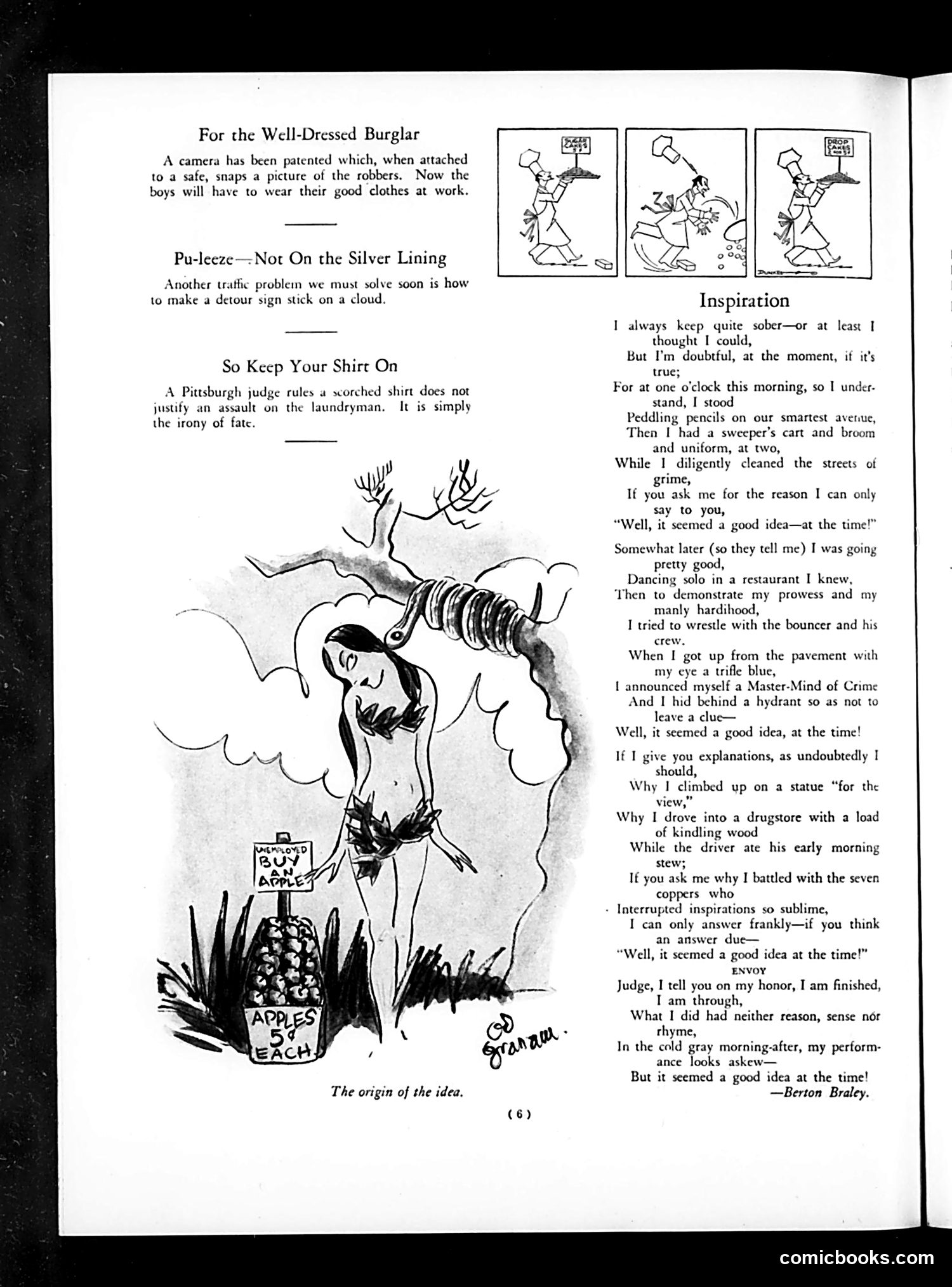
# Analysis of Life Magazine Page This page contains three humor pieces. "For the Well-Dressed Burglar" jokes about a newly patented camera attached to safes that photographs robbers—so criminals must now dress formally for their "work." "Pu-leeze—Not On the Silver Lining" references an unsolved traffic problem about detour signs. The main cartoon, titled "The origin of the idea," illustrates "So Keep Your Shirt On." It shows Lady Liberty (identifiable by her torch) looking disheveled, with the caption referencing a Pittsburgh judge's ruling that a scorched shirt doesn't justify assaulting a laundry worker. The cartoon satirizes the absurdity of this legal decision by depicting Lady Liberty herself—symbol of justice—in this ridiculous situation, highlighting the irony of the ruling.
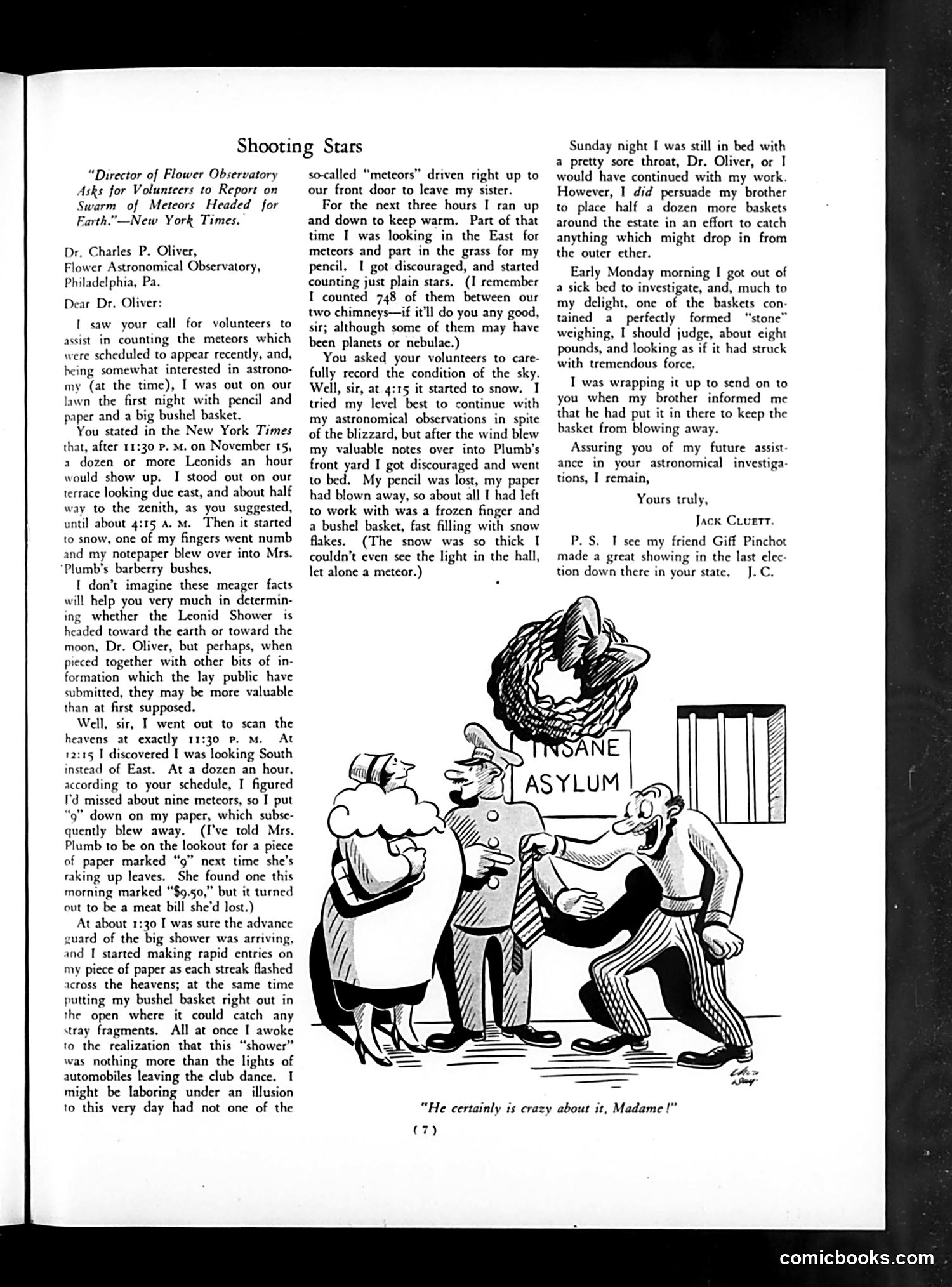
# Analysis of "Shooting Stars" Page This page contains a letter from Jack Cluett to Dr. Charles P. Oliver at the Flower Astronomical Observatory in Philadelphia, describing Cluett's attempt to observe and count meteors during a November meteor shower. The letter humorously recounts his failed efforts—freezing conditions, lost notes, snow obscuring views, and mistaking automobile headlights leaving a club for meteors. The accompanying cartoon depicts a man in an "Insane Asylum" speaking to a woman, with the caption "He certainly is crazy about it, Madame!" The joke suggests that observing meteors so intensely could drive one to madness—satirizing the obsessive dedication amateur astronomers bring to their hobby.
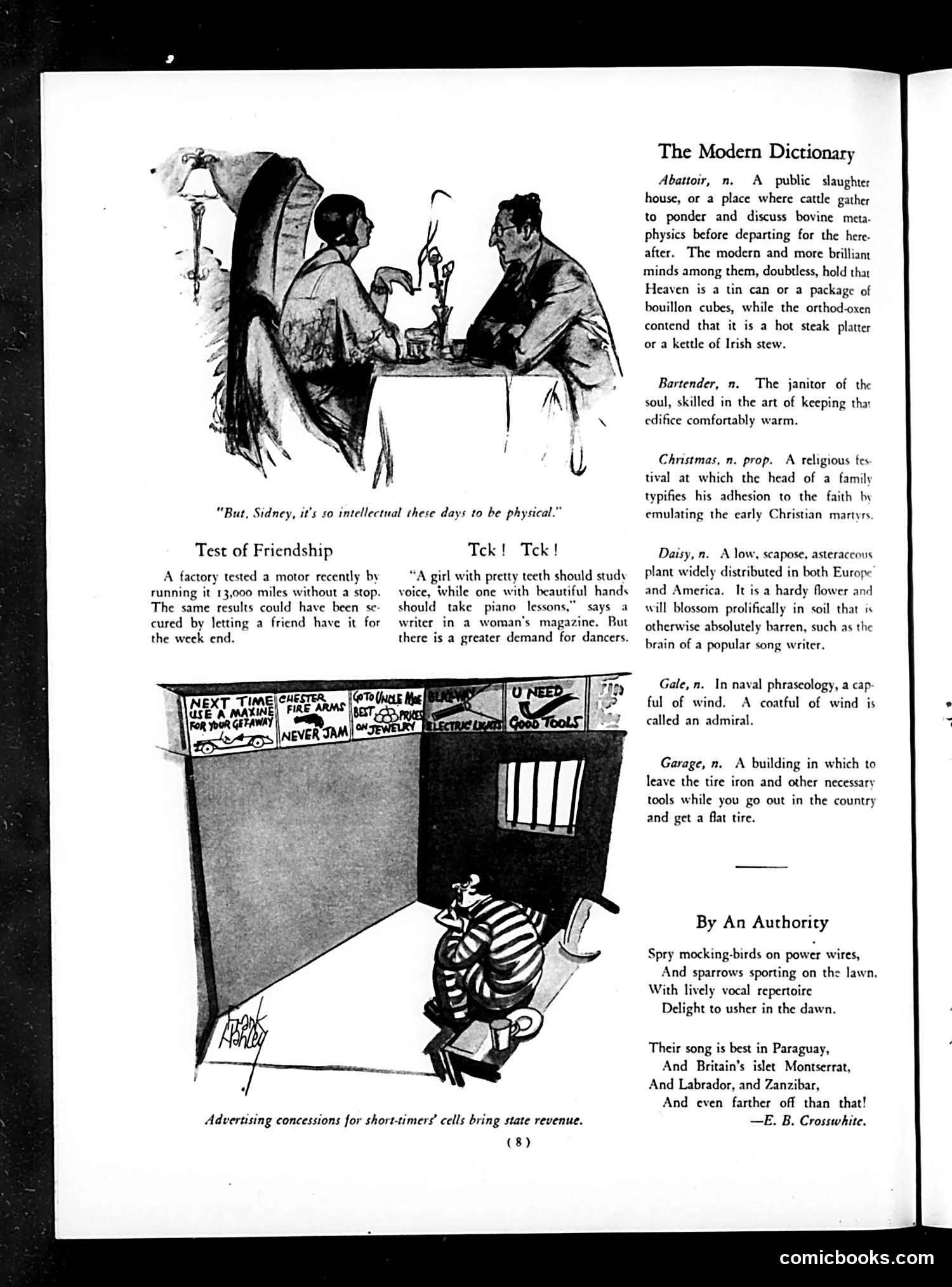
# Analysis This page from *Life* magazine contains satirical dictionary definitions and two cartoons. **"The Modern Dictionary"** section mocks contemporary concepts with humorous faux-definitions—an *Abattoir* is where intellectuals discuss bovine "meta-physics," and a *Garage* is where you leave tools while getting a flat tire. The upper cartoon shows two figures at a table with the caption "But, Sidney, it's so intellectual these days to be physical"—likely satirizing the era's tension between intellectual pretension and physical reality. The lower cartoon depicts a skeleton in a jail cell surrounded by signs advertising various products and services. Its caption states "Advertising concessions for short-timers' cells bring state revenue"—a dark satire on commercialization and prisoner exploitation, suggesting even condemned inmates face relentless advertising and commodification.
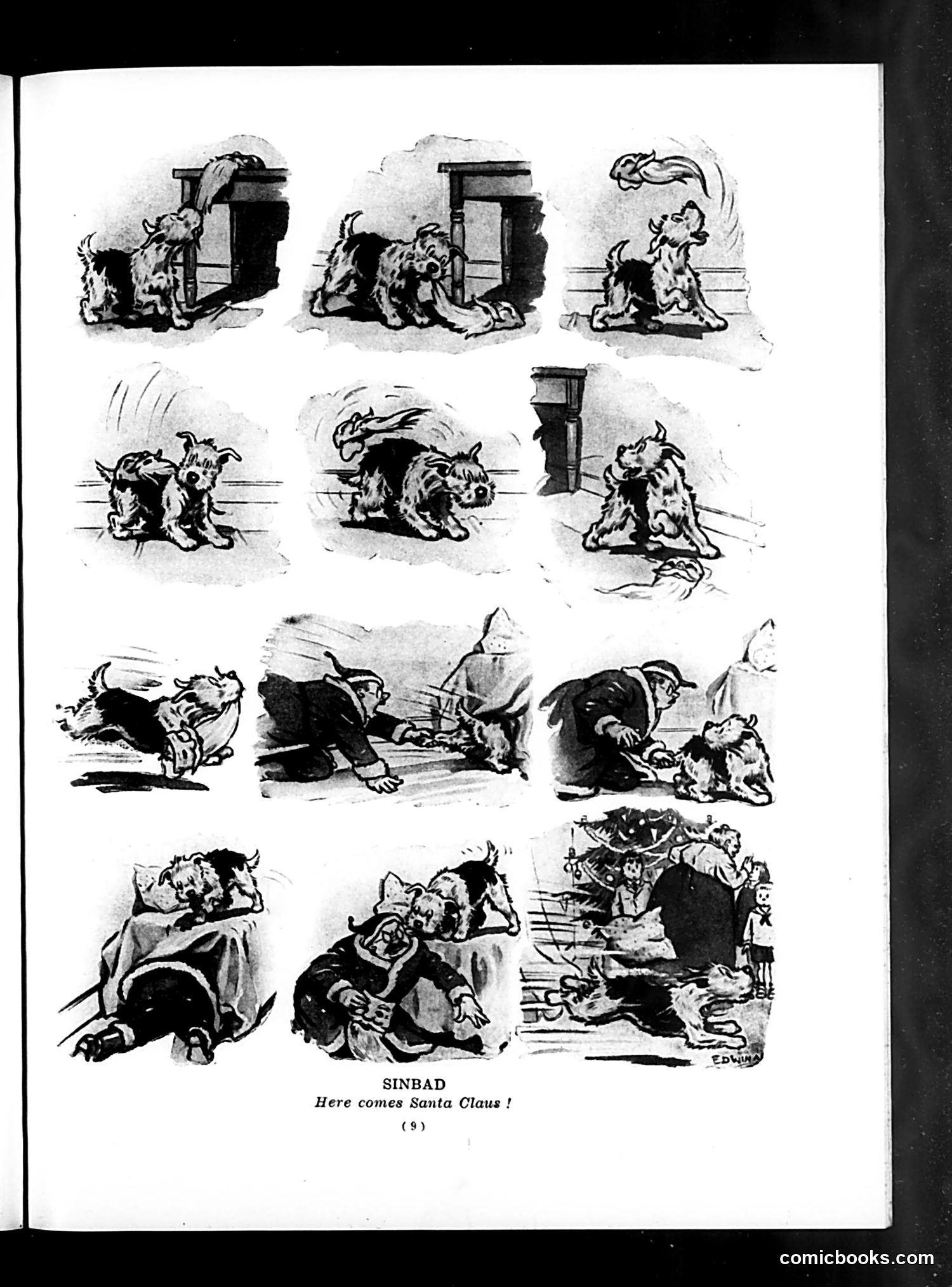
# Explanation for Modern Readers This page from *Life* magazine presents a comic strip titled "Sinbad: Here comes Santa Claus!" The strip appears to be a humorous adventure sequence rather than traditional political satire. The narrative shows what appears to be Sinbad (a fictional sailor character) encountering various mishaps and confrontations, culminating in scenes involving Santa Claus. The comic uses exaggerated, cartoonish illustrations typical of early-to-mid 20th century humor comics. The joke seems to play on the incongruity of Santa Claus appearing in a rough adventure story, creating comedic situations. Without additional context about the specific *Life* issue, the exact satirical target remains unclear, though it may be commenting on holiday commercialism or the mixing of disparate entertainment genres.
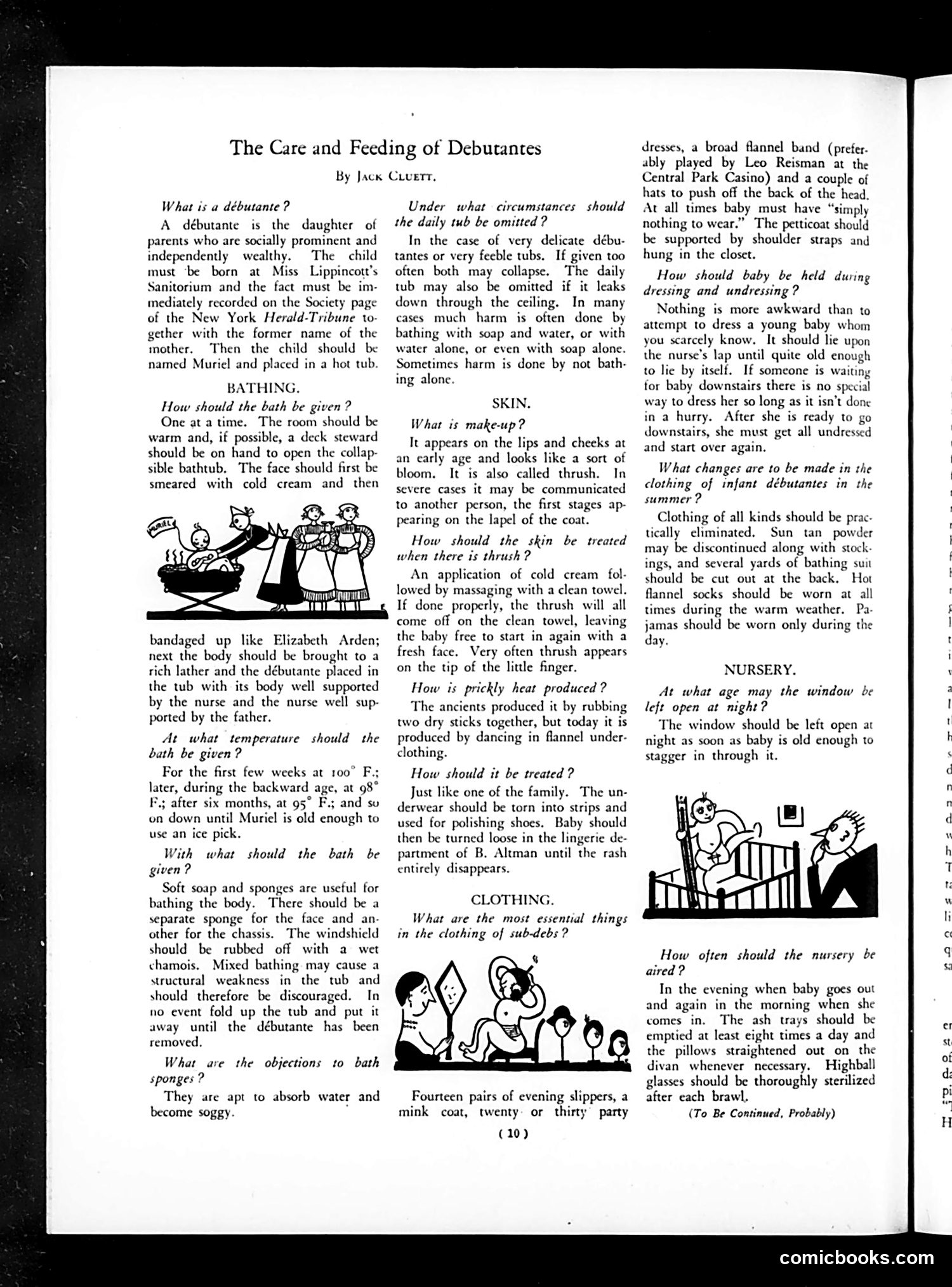
# Analysis This is a **practical advice article**, not satire. Titled "The Care and Feeding of Debutantes" by Jack Cluett, it's a straightforward instructional piece about raising wealthy young women from prominent families (the article mentions *Miss Lippincott's Sanatorium* and the *New York Herald-Tribune*). The accompanying cartoons are **humorous illustrations** rather than political commentary—they depict mundane scenes of infant care (bathing, dressing) and nursery life. The humor derives from treating debutante upbringing as an elaborate, somewhat ridiculous process worthy of detailed guidance. The article itself addresses practical concerns: bathing temperatures, clothing, thrush treatment, and nursery ventilation—reflecting early 20th-century childcare preoccupations among the wealthy. There's gentle social satire in codifying upper-class child-rearing as complex procedure, but it's not directed at a specific political figure or event.