A complete issue · 36 pages · 1930
Life — December 12, 1930
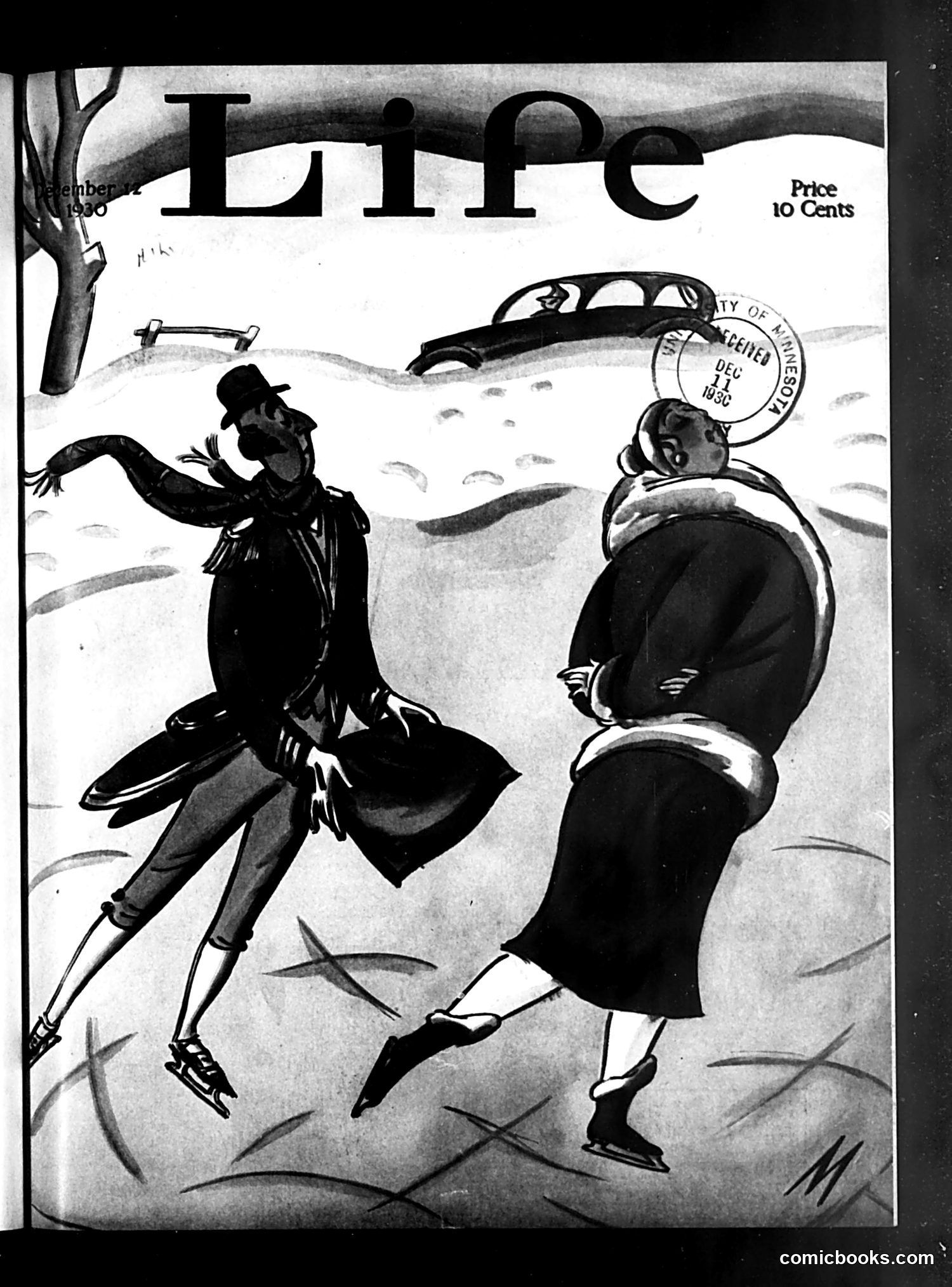
# Life Magazine Cover Analysis (December 1930) This cover depicts two figures ice skating in a snowy landscape with a car visible in the background. The illustration appears to be a winter leisure scene, likely satirizing contemporary social activities or fashion. The artistic style is characteristic of 1930s Life magazine covers—using bold silhouettes and exaggerated poses for comedic effect. The skating figures' dramatic body language and clothing suggest the cover may be commenting on winter sports trends or social behavior among the leisure class during the Depression era. Without visible text identifying the specific figures or satirical point, the exact political or social reference remains unclear. The "10 Cents" price indicates this is from the magazine's early period when it was primarily a humor and satire publication before transitioning to photojournalism.
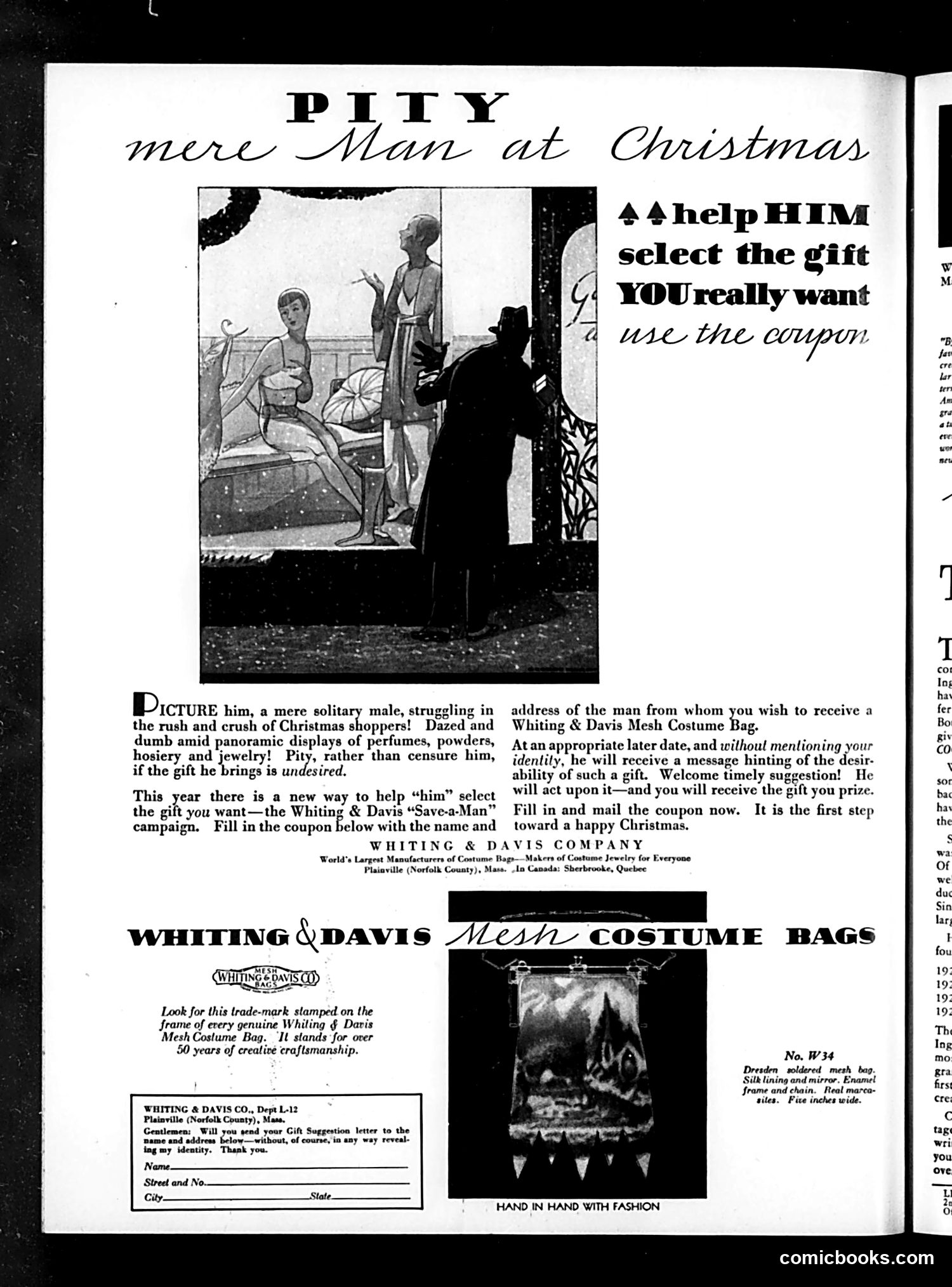
# Analysis This page is primarily **advertising**, not satire or political commentary. It promotes Whiting & Davis mesh costume bags for Christmas gift-giving. The ad's central image shows a man viewing a store window display—a visual metaphor for the advertising campaign itself. The accompanying text addresses gift-givers struggling with what to buy for men during the Christmas shopping rush, describing the male recipient as "a mere solitary male, struggling in the rush and crush of Christmas shoppers." The "Save-a-Man" campaign uses this sympathetic framing to market mesh costume bags as the solution. A coupon system allows gift-givers to send an anonymous suggestion to the recipient, who then redeems it for the advertised product. The actual merchandise shown is a Dresden-soldered mesh bag with silk lining—a luxury accessory marketed as practical holiday gift-giving.
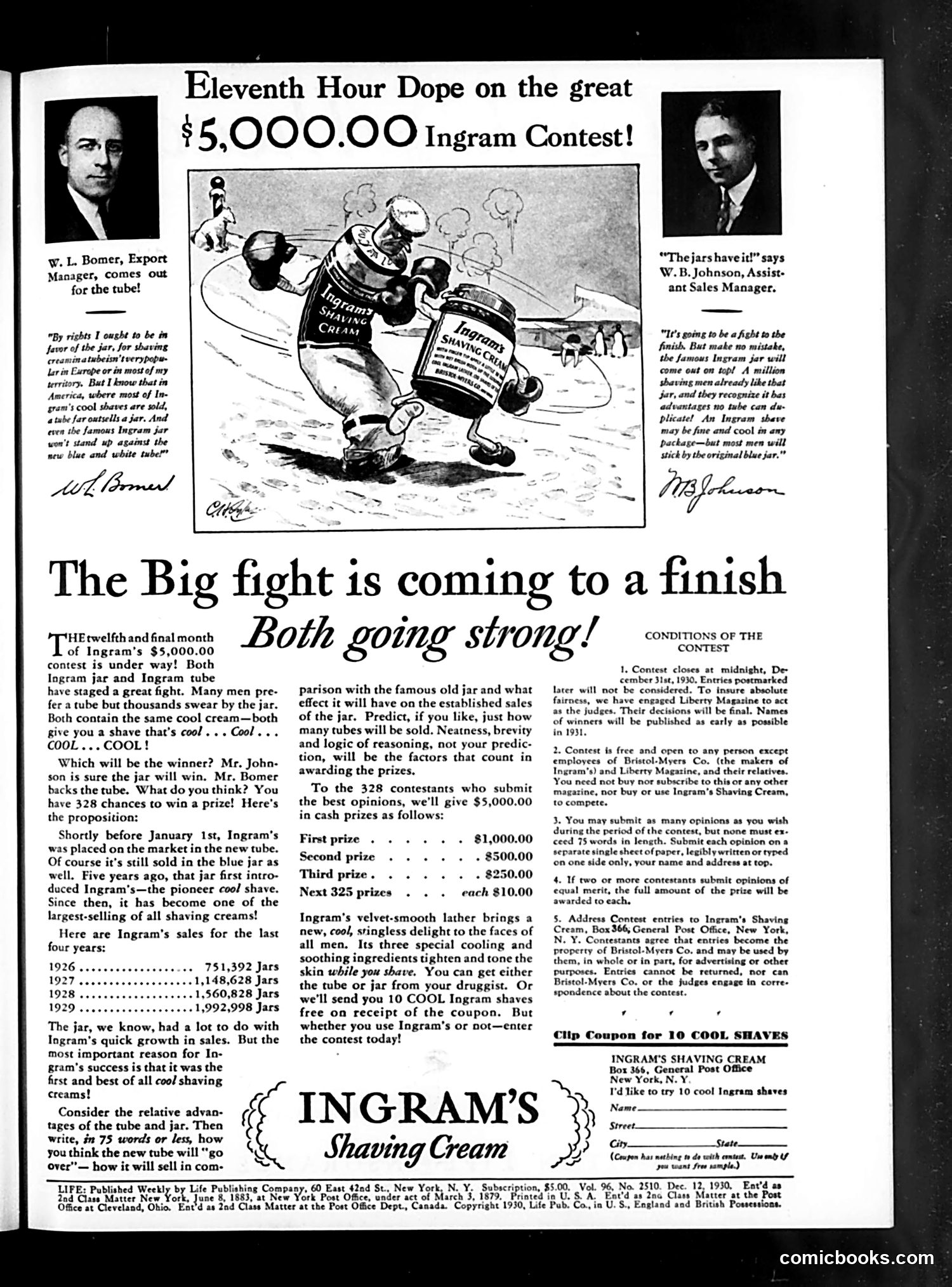
# Advertisement, Not Political Satire This is primarily a **product advertisement** for Ingram's Shaving Cream, disguised as editorial content. The central cartoon depicts anthropomorphized shaving product containers (an Ingram jar and tube) engaged in a boxing match, with the headline "The Big fight is coming to a finish / Both going strong!" The two men pictured (W.L. Bomer, Export Manager, and W.B. Johnson, Assistant Sales Manager) provide testimonials about the product's superiority. The "contest" references a real $5,000 prize competition inviting consumers to submit essays about Ingram's versus competing shaving creams. This represents early 20th-century **advertising-as-entertainment**: using humor and competitive framing to promote consumer products. Modern readers might find the explicit product placement and the blurred line between advertisement and editorial content notable.
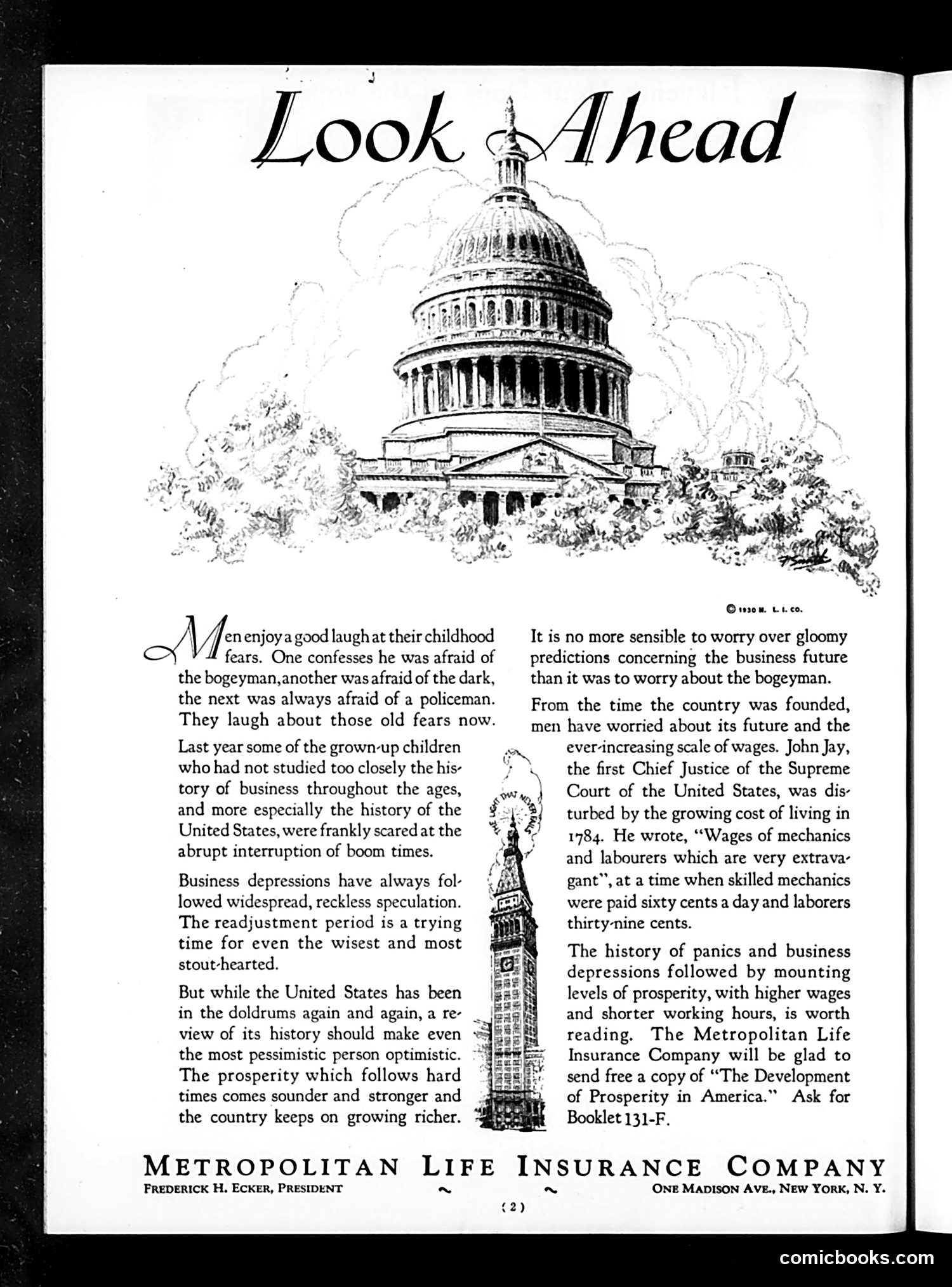
This is primarily a **Metropolitan Life Insurance Company advertisement**, not political satire. The "Look Ahead" headline frames a reassuring message about American economic resilience during uncertain times. The text argues that despite recurring business depressions throughout U.S. history—including the present "doldrums"—the country has consistently recovered with increased prosperity. It references John Jay (first Chief Justice) worrying about wage increases in 1784, positioning modern economic anxieties as historically normal. The visual imagery (Capitol dome, clock tower) emphasizes American institutional stability and progress. The ad essentially tells readers: don't panic about current economic troubles; American history shows recovery is inevitable. This suggests the piece dates from a period of economic concern, likely the 1920s-30s.
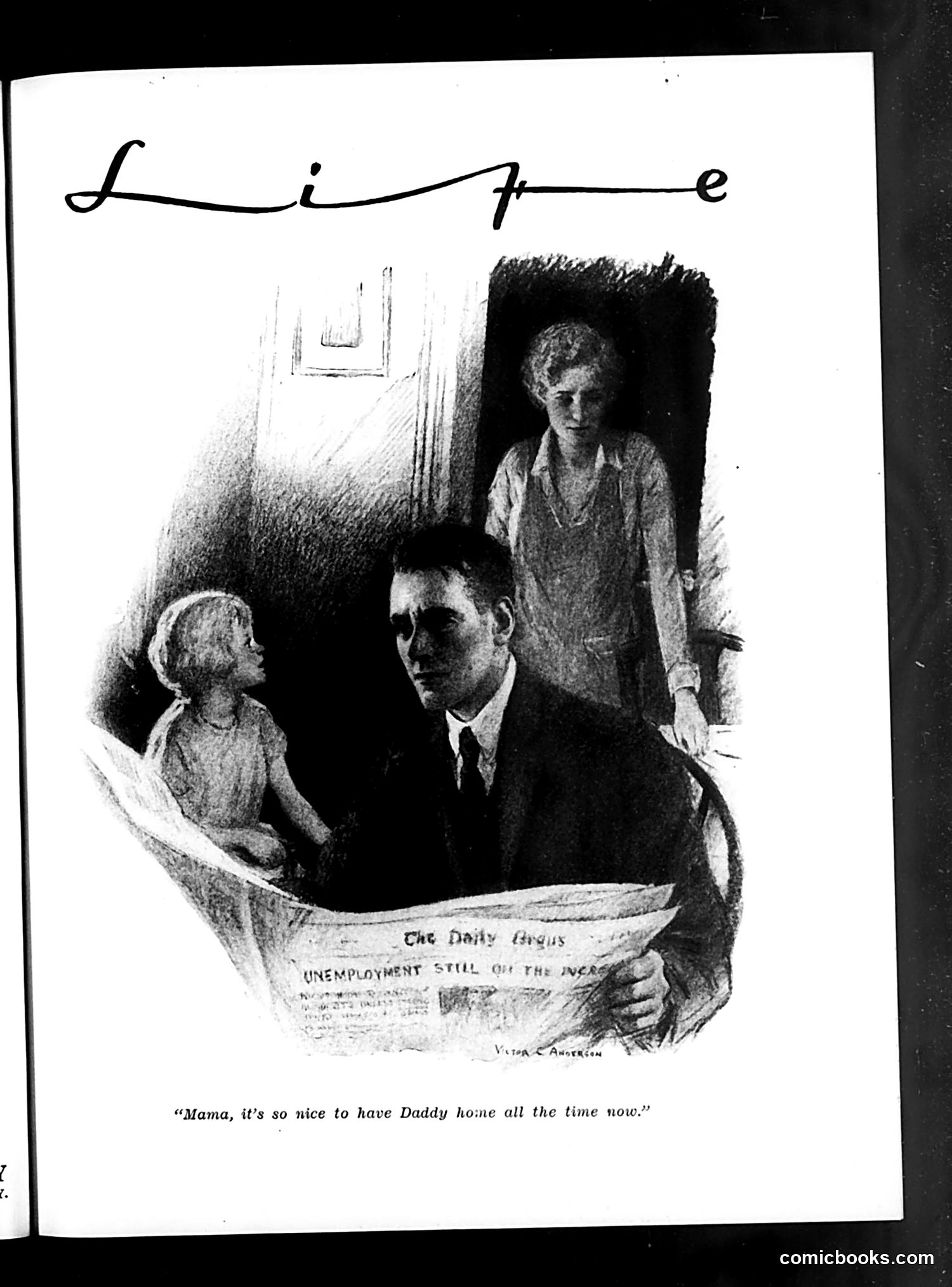
# "Life" Magazine Cartoon Analysis This cartoon satirizes unemployment during an economic downturn (likely the 1920s recession). The drawing, signed by Vida C. Anderson, depicts a man reading "The Daily News" with a headline about "Unemployment Still On The Increase." A woman and child observe him at home. The caption—"Mama, it's so nice to have Daddy home all the time now"—uses ironic humor. The child's innocent comment masks the grim reality: the father is unemployed and stuck at home, not enjoying leisure but facing financial hardship. The satire highlights how economic crisis disrupts family life, with joblessness presented through a child's perspective that unknowingly underscores parental anxiety.
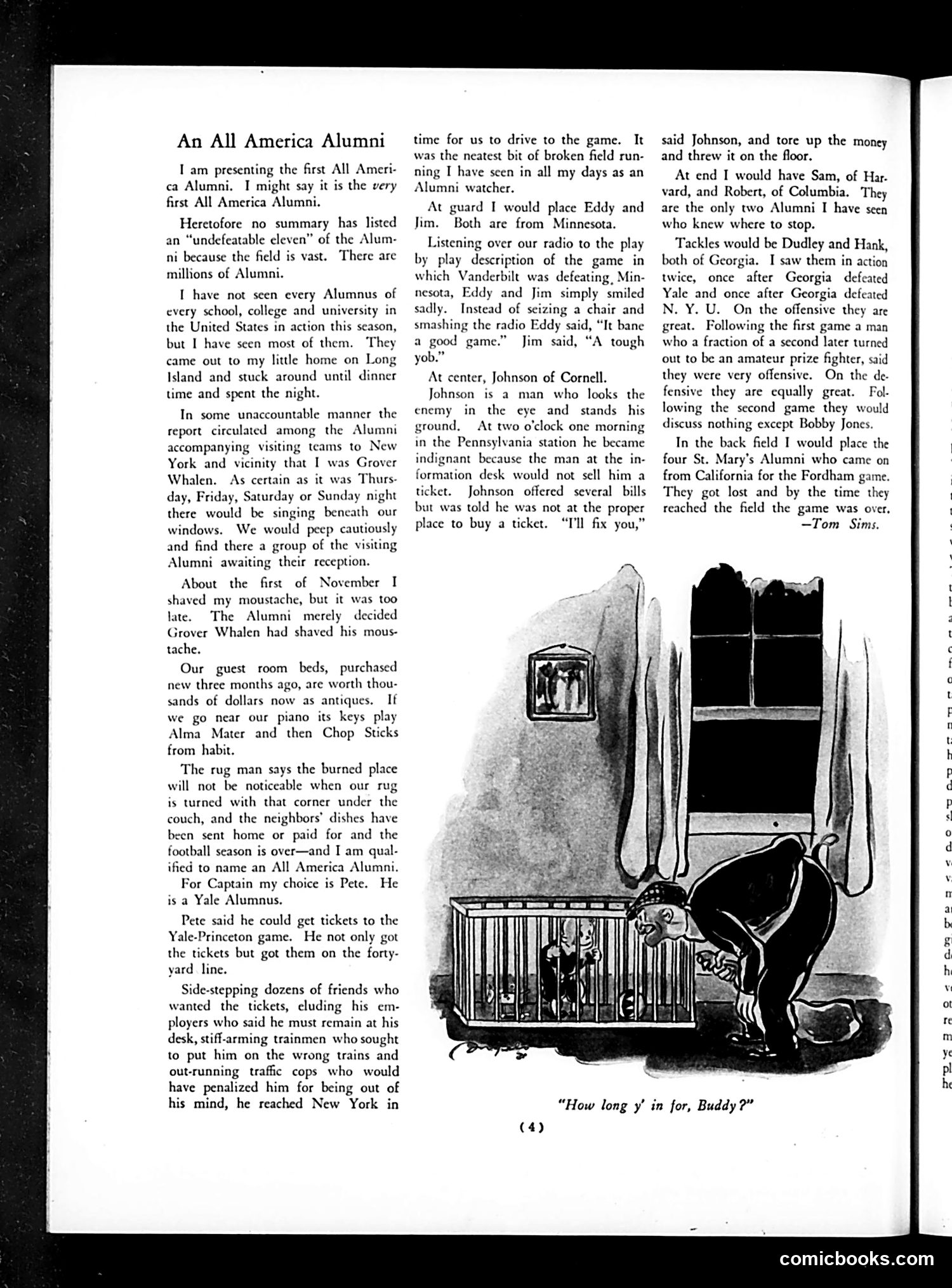
# Explanation for Modern Readers This page from *Life* magazine contains an article titled "An All America Alumni" discussing college football and alumni culture. The accompanying cartoon illustrates a humorous scene with the caption "How long y'in for, Buddy?" The image depicts a man peering into what appears to be a jail or prison cell containing several figures. The joke relies on the contrast between the expectation of visiting collegiate alumni and finding incarcerated individuals instead—likely a satirical commentary on the rowdy, lawless behavior associated with college football fans and alumni gatherings during this era. The article itself humorously recounts the author's experiences hosting visiting alumni, including anecdotes about ticket-scalping, train logistics, and game-day mishaps, suggesting alumni culture was chaotic and occasionally criminal in nature.
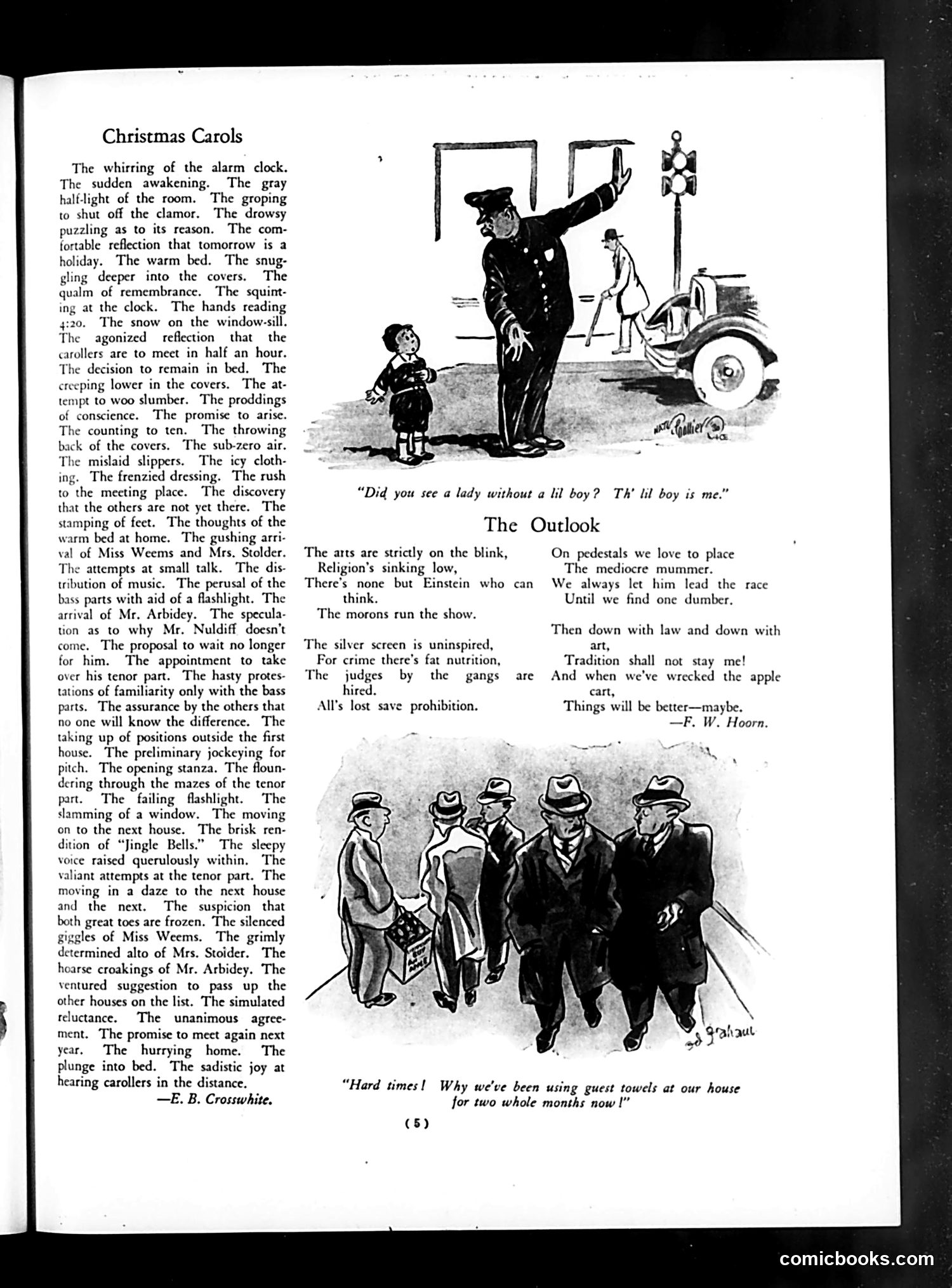
# Analysis This page contains two separate satirical pieces from *Life* magazine: **"Christmas Carols"** (left) by E.B. Crosswhite is a humorous poem cataloging the mundane realities of Christmas—alarm clocks, cold mornings, family obligations—contrasting with idealized sentimentality. It's gentle domestic satire about the gap between Christmas fantasy and everyday experience. **"The Outlook"** (right) is a poem mocking intellectuals and prohibition-era hypocrisy. References to "Einstein," "morons," "silver screen," and judges "hired by gangs" suggest criticism of 1920s cultural pretension and the enforcement failures of Prohibition. The accompanying cartoon shows men in hats discussing hard times and guest towels—likely satirizing economic hardship and class anxieties of the period. Both pieces use humor to deflate contemporary American optimism and expose social contradictions.
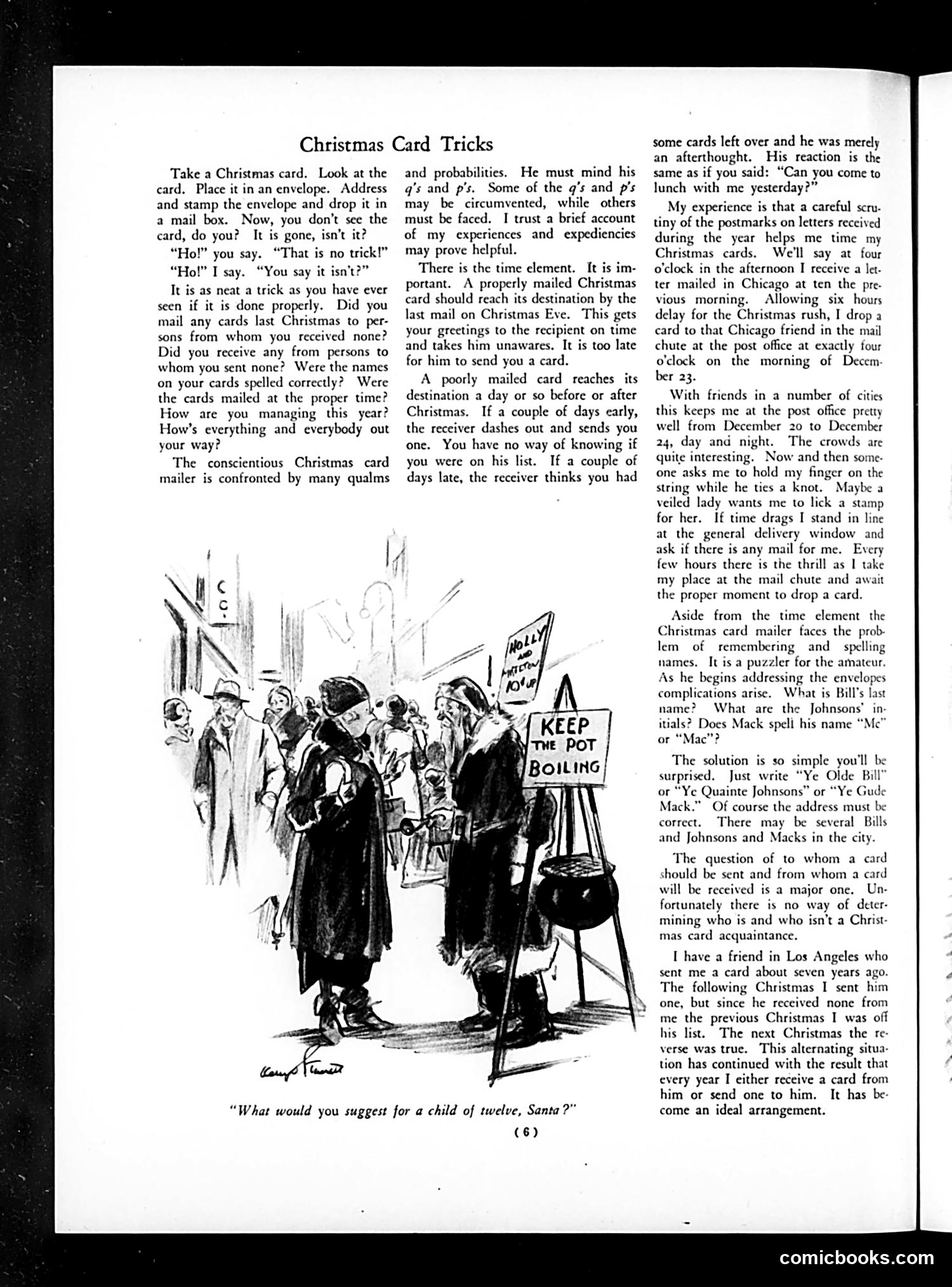
# Christmas Card Tricks This page explains the practical challenges of mailing Christmas cards properly and on time. The main cartoon depicts a crowded post office during the holiday rush, with someone asking Santa "What would you suggest for a child of twelve, Santa?"—likely poking fun at the chaos and impossibility of getting mail delivered reliably during Christmas. The article discusses timing issues: cards must be mailed early enough to arrive by Christmas Eve, but senders often forget or miscalculate. It humorously addresses addressing problems—misspelled names, unclear handwriting—that cause delivery delays. The piece also describes the author's experience managing Christmas mail logistics from multiple cities, illustrating how unpredictable the holiday postal system was, even with careful planning.
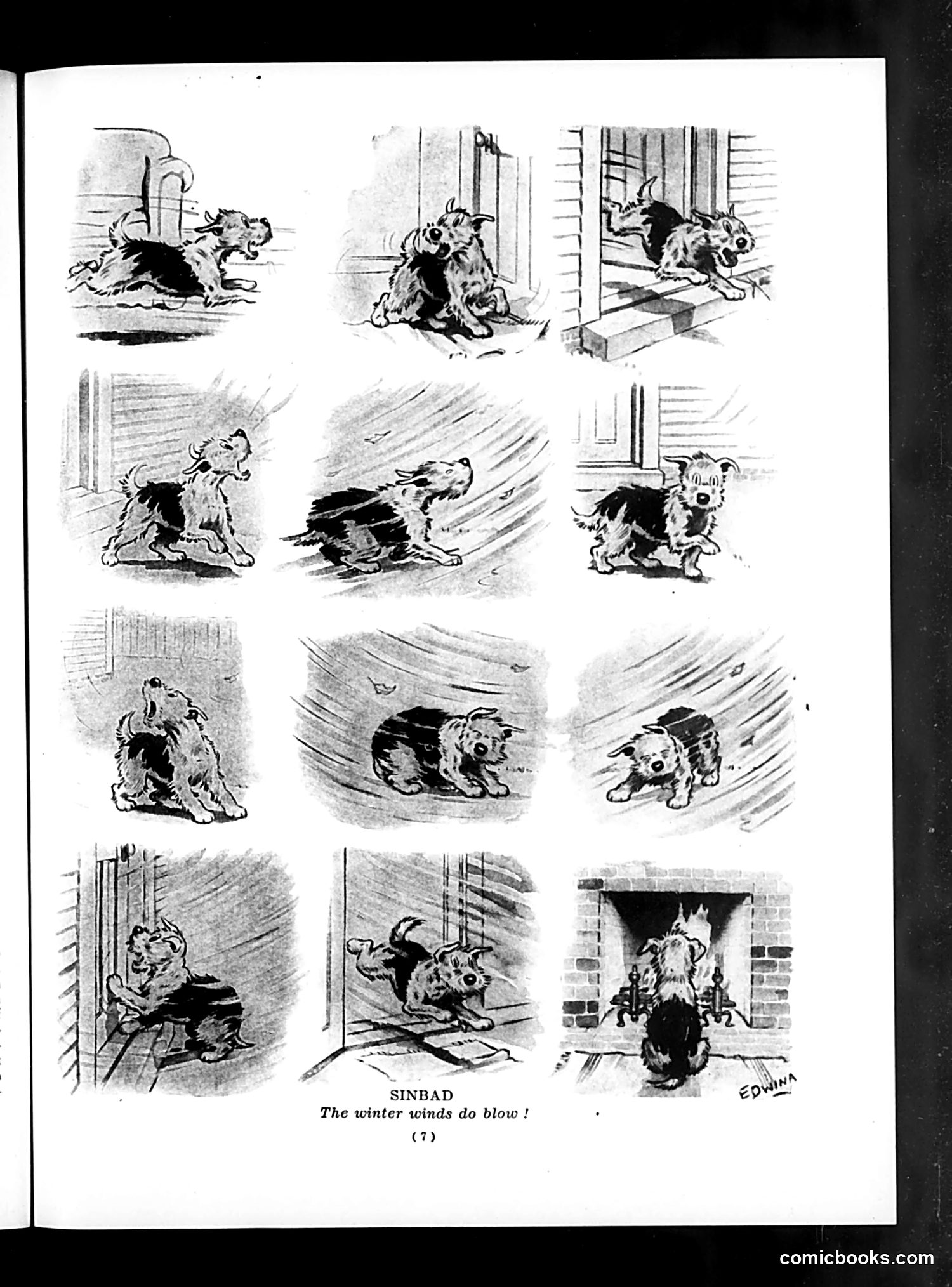
# Analysis This is a humorous comic strip titled "SINBAD: The winter winds do blow!" depicting a dog (apparently named Sinbad) being buffeted by harsh winter weather. The twelve-panel sequence shows the dog's misadventures as strong winds push him around outdoors and indoors—blown against walls, doors, and structures; tumbled across floors; and generally tossed about helplessly by gusts. The humor relies on physical comedy: the dog's struggles against an invisible but powerful force. The title's reference to the nursery rhyme "The North Wind Doth Blow" suggests this is a lighthearted commentary on winter's inconveniences. The cartoonist's signature appears to read "EDWINA." The satire is gentle—poking fun at how winter weather disrupts daily life, using a dog as the sympathetic victim of nature's seasonal harshness.
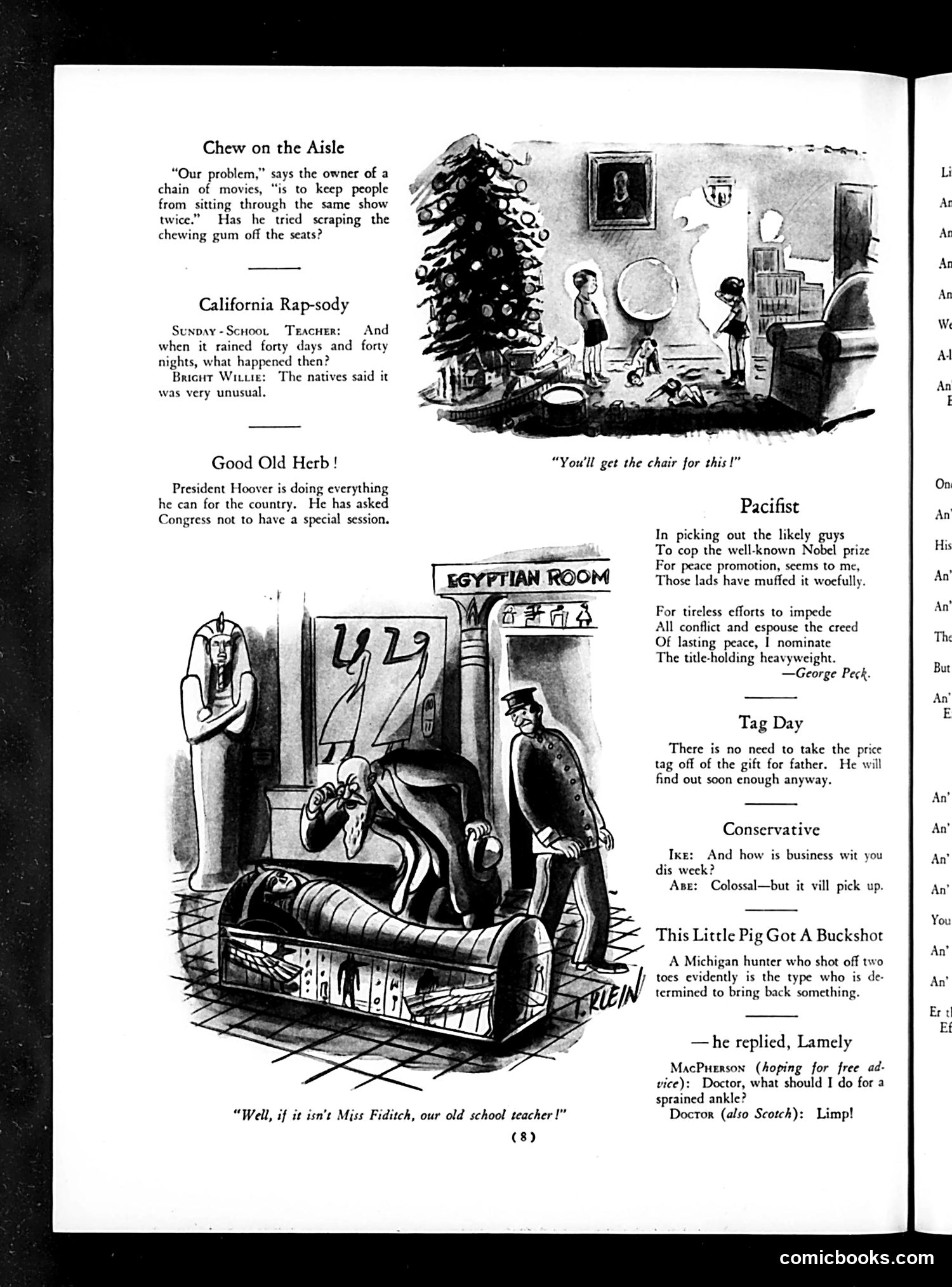
# Analysis of Life Magazine Page This page contains several short humor pieces and cartoons from what appears to be the 1920s-1930s era. The main cartoon shows an "Egyptian Room" museum exhibit where a mummy has come to life—a common trope in period horror entertainment. A guard discovers the animated mummy, creating comedic horror. Other brief satirical pieces include: - "Chew on the Aisle": A joke about movie theater gum-scraping problems - "California Rap-sody": A humorous exchange about unusual rainfall - "Good Old Herb": A quip about President Hoover's efforts to avoid a special Congressional session - "Pacifist": A poem by George Peck suggesting Nobel Prize nomination for peace advocacy - Various other short jokes on contemporary topics The humor relies on wordplay, puns, and observations about American life and current events of the period.
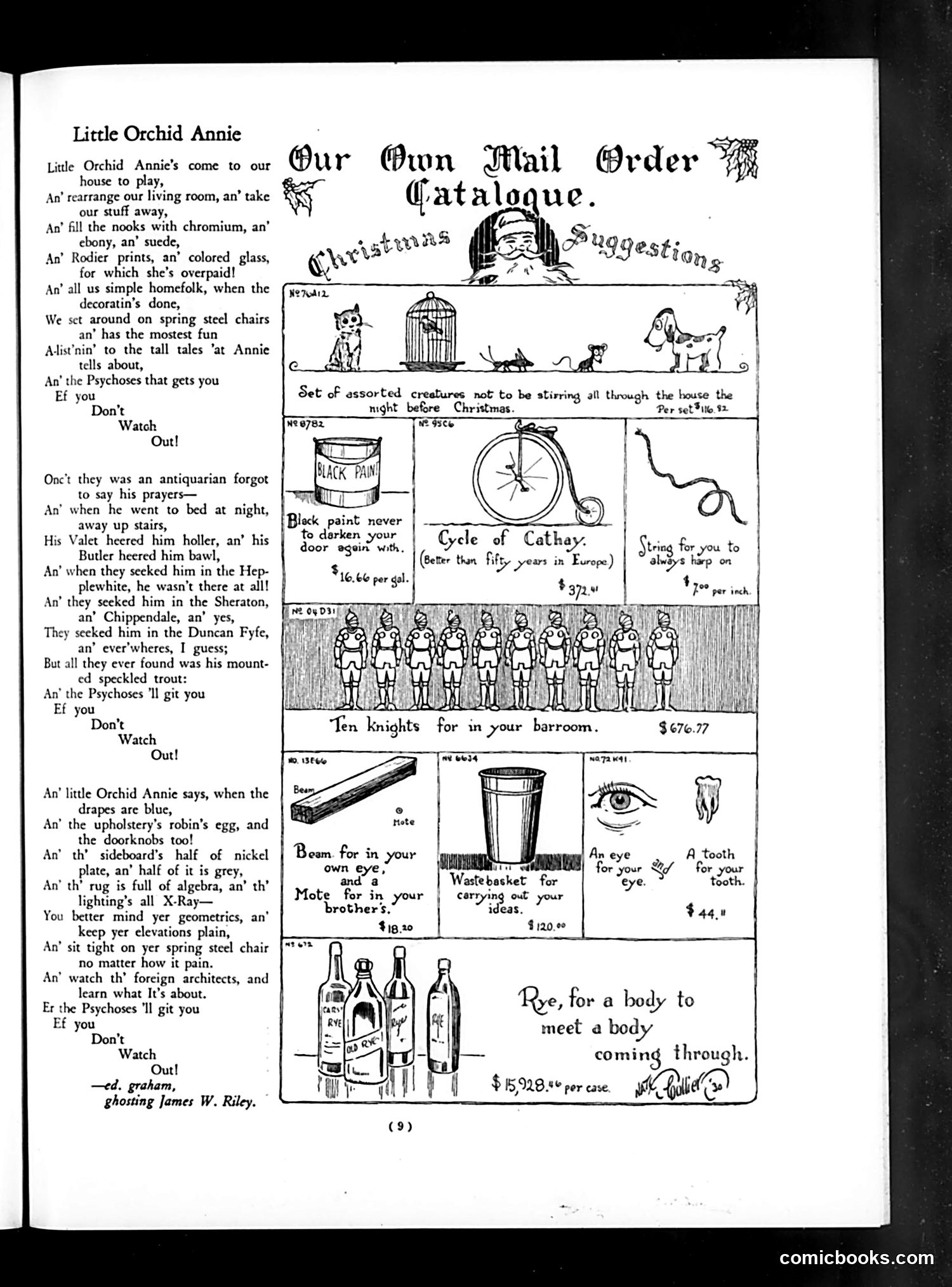
# Page Analysis: "Our Own Mail Order Catalogue" This is primarily a **humorous mail-order catalog parody** rather than political commentary. The left column contains a whimsical poem called "Little Orchid Annie" (credited to ed. graham, ghosting james W. Riley) about a character who rearranges living spaces and collects odd items. The right side presents fake "Christmas Suggestions" — absurdist gift items with satirical descriptions: black paint to "darken your door," a bicycle "better than fifty years in Europe," toy knights for a barroom, and surreal objects like a beam "for in your own eye" and a tooth "for your tooth." The bottom advertises rye whiskey with the phrase "for a body to meet a body coming through" — likely a literary reference. This is **satirical advertising humor** mocking consumer culture and mail-order catalogs, not addressing specific political figures or events.
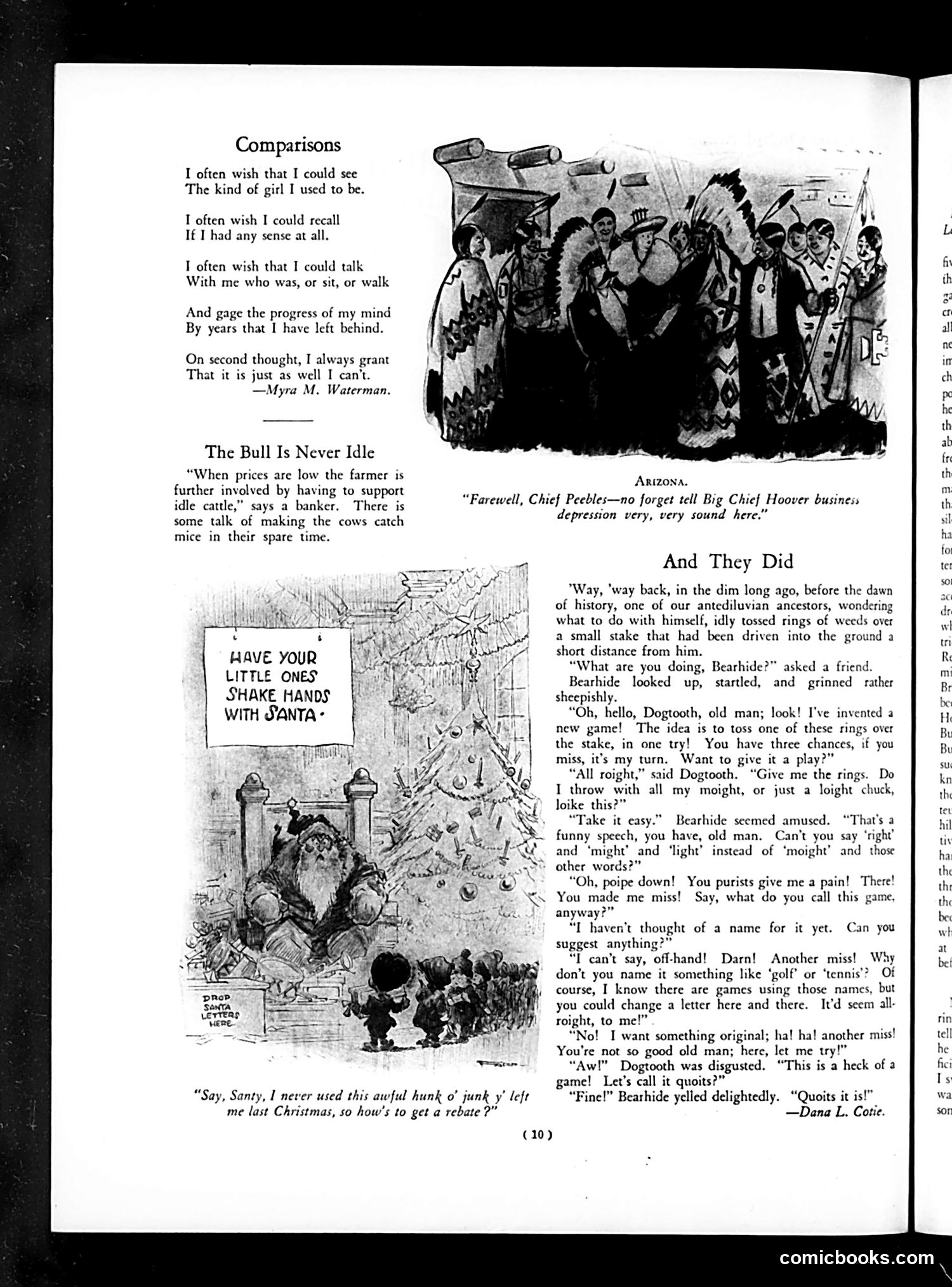
# Analysis of Life Magazine Page This page contains two distinct elements: **"The Bull Is Never Idle"** is a banker's quip about farm economics during hard times—suggesting idle farmers should keep cattle busy catching mice to justify feeding them. It's satirizing the disconnect between bankers' logic and agricultural reality. **"And They Did"** is a short story about two historical figures—Bearihide and Dogtooth (likely Native American archetypes)—inventing a ring-toss game. The dialogue humorously depicts their trial-and-error process and friendly competition, with Bearihide eventually naming it "Quoits." The political cartoons show Santa Claus with a sign about Jamba (unclear reference) and a Depression-era scene. The magazine's tone suggests early-to-mid 20th century American satire blending economic commentary with lighthearted fiction.