A complete issue · 36 pages · 1930
Life — November 21, 1930
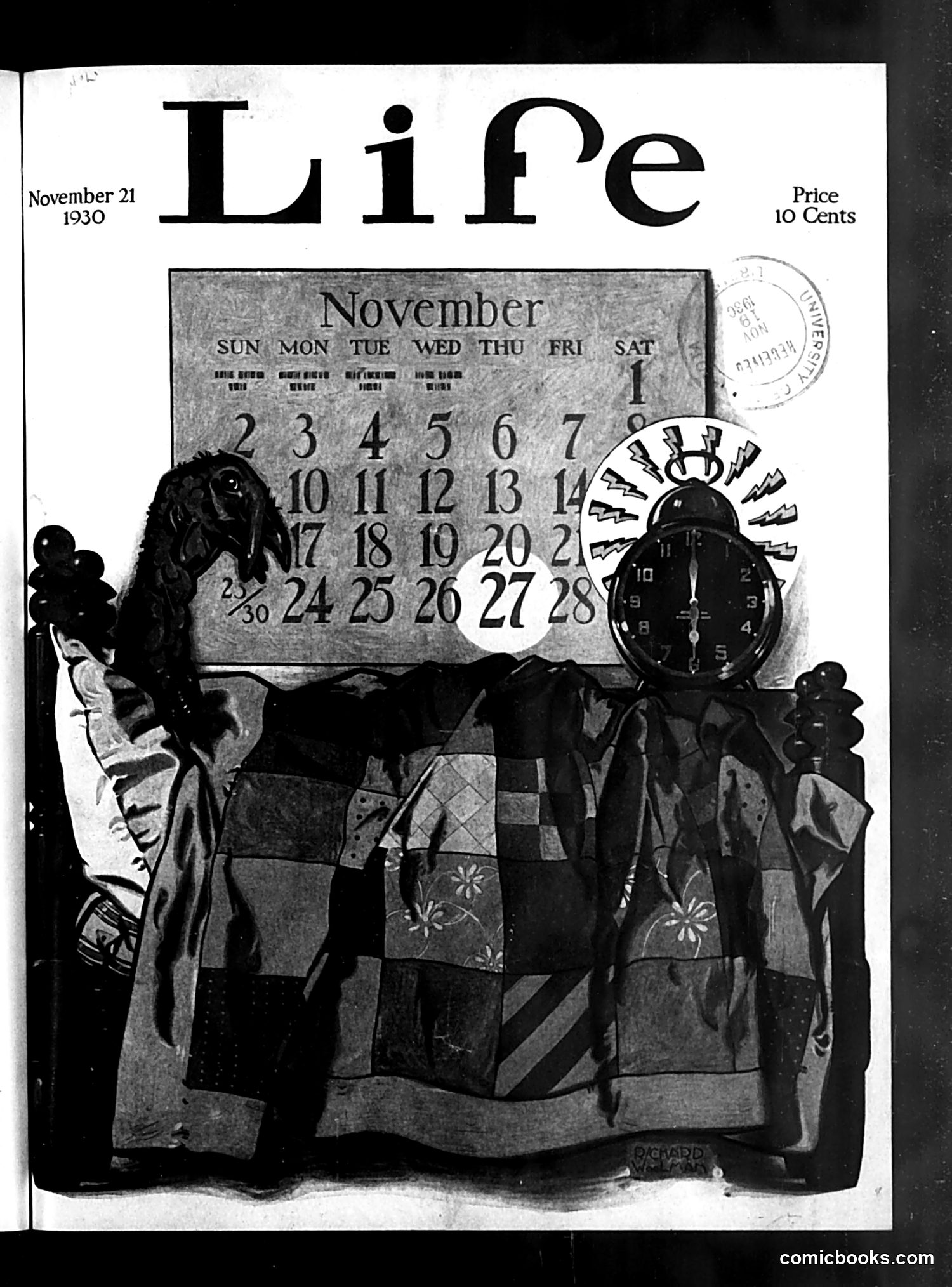
# Life Magazine Cover - November 21, 1930 This is a Life magazine cover featuring a November calendar and clock as the central design. A dog (appears to be a spaniel or similar breed) lies across a patchwork quilt or blanket, positioned lazily beneath the calendar and alarm clock imagery. The satire likely plays on the contrast between the dog's relaxed, indifferent posture and the passage of time marked by the calendar and clock—suggesting themes about procrastination, idleness, or the irrelevance of time's passage to those unburdened by human obligations. The humor appears gentle and domestic rather than overtly political. The composition uses the dog as a humorous commentary on how differently animals (or perhaps humans during leisure) relate to scheduling and punctuality.
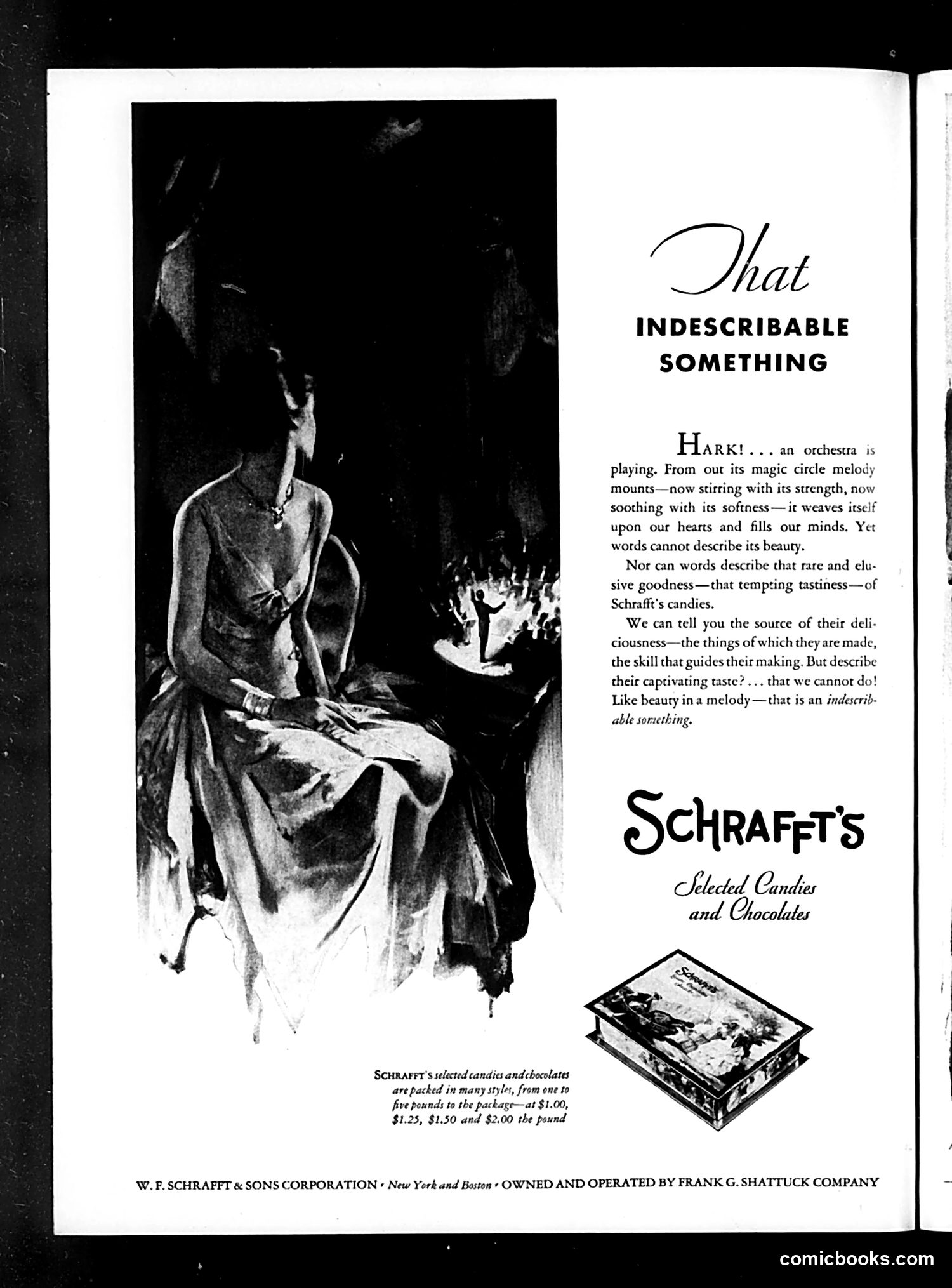
# Analysis This is **not a political cartoon or satirical content**—it's a full-page advertisement for Schrafft's candies and chocolates. The image shows an artistic illustration of a woman in classical or theatrical dress, gazing contemplatively at a box of Schrafft's chocolates, which glows with romantic lighting. The advertisement uses poetic language comparing the "indescribable something" of orchestral music to the ineffable quality of Schrafft's candies—arguing that like beauty in melody, their "captivating taste" cannot be fully described in words. This is typical early-to-mid 20th century luxury brand advertising, using aspirational imagery and romantic sentiment to market premium chocolates. The Schrafft's company operated candy shops in New York and Boston.
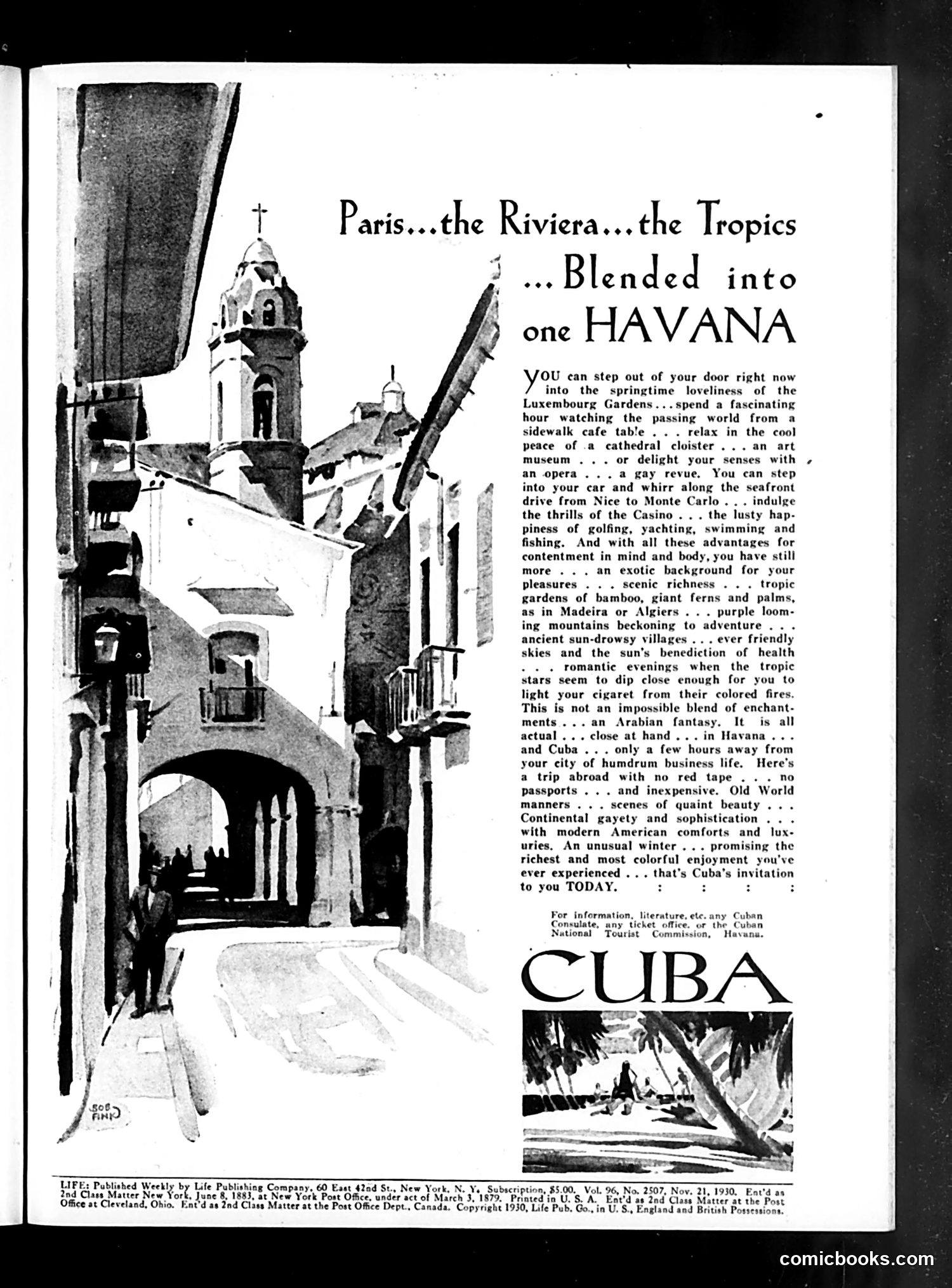
# Analysis This is a travel advertisement for Cuba, not a political cartoon. It promotes Cuba as a tourist destination by blending European sophistication with tropical exoticism. The left image shows a narrow Havana street with colonial architecture—a church tower and old buildings—evoking European charm. The text promises visitors can experience "Paris...the Riviera...the Tropics" combined in one location. The advertisement emphasizes Cuba's attractions: gardens, casinos, fishing, beaches, and "Old World manners" alongside "modern American comforts." It explicitly markets Cuba as accessible ("only a few hours away") and affordable for American tourists seeking exotic vacation without extensive travel. Published in 1930, this reflects pre-revolution Cuba's positioning as an American leisure destination. The ad targets wealthy American readers with disposable income for international travel.
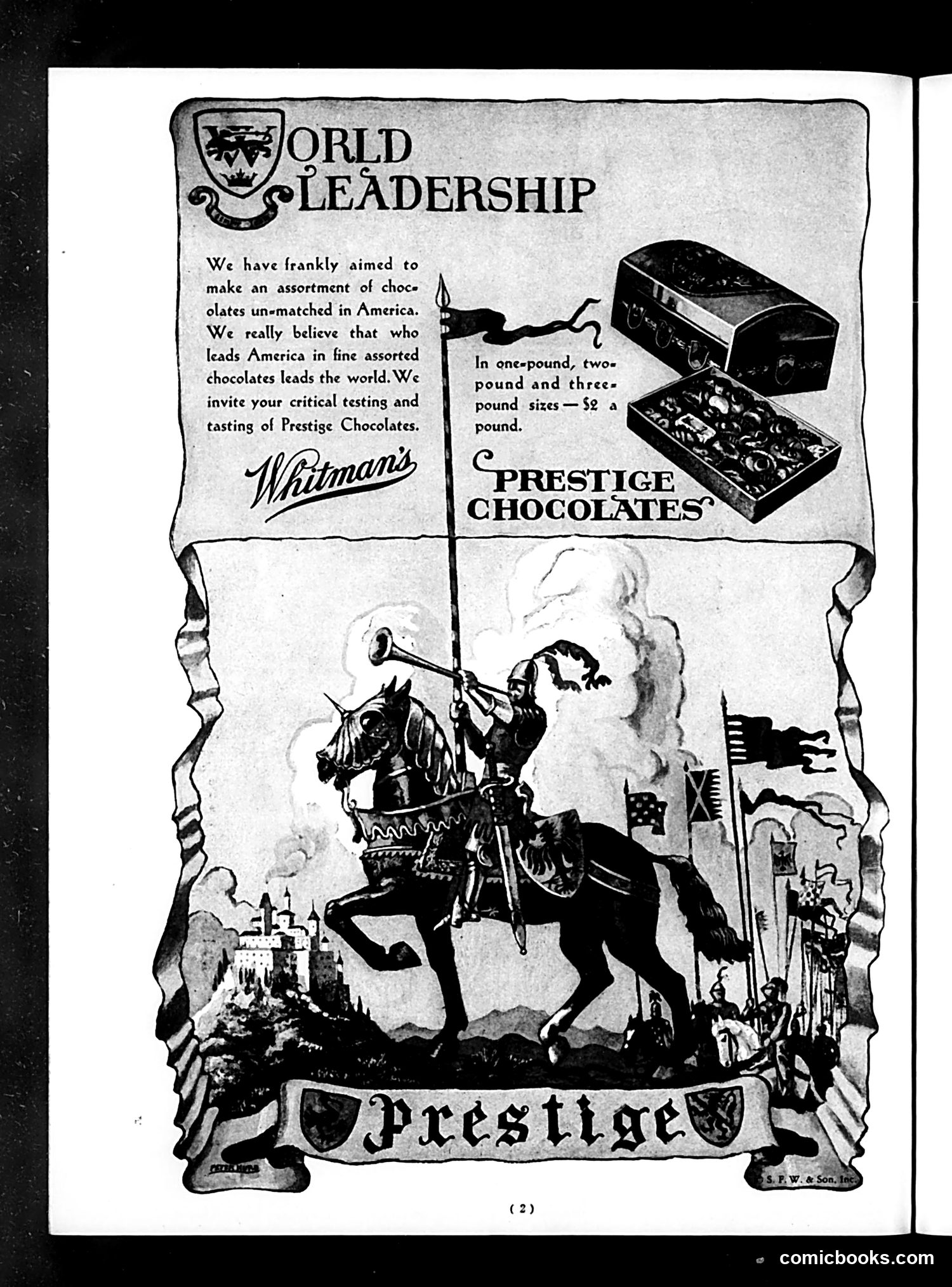
# Analysis This is a **Whitman's Prestige Chocolates advertisement**, not political satire. The page uses the heading "World Leadership" to market American chocolates by claiming superior quality. The upper text asserts that Whitman's chocolates are "unmatched in America" and that "who leads America in fine assorted chocolates leads the world." The lower half features a **medieval knight on horseback** in heraldic style—a visual metaphor for conquest and dominance. This imagery reinforces the advertising claim: just as knights once conquered territories, American chocolate brands now lead global markets. The knight imagery and "Prestige" branding create an aspirational, luxurious tone. Pricing ($2 per pound for various sizes) targets affluent consumers. This reflects early 20th-century American commercial confidence and the marketing strategy of equating consumer products with national superiority.
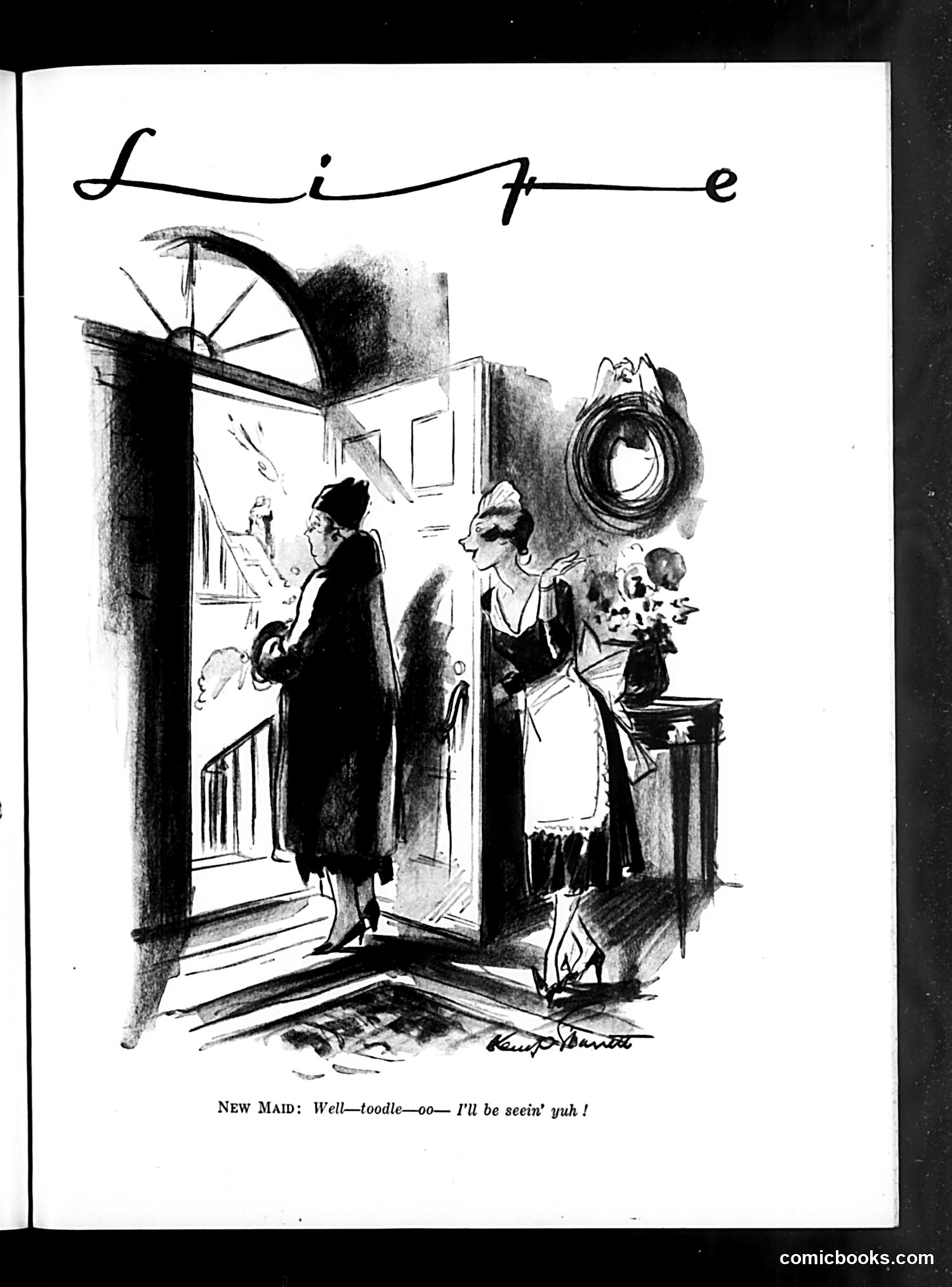
# Analysis This is a single-panel cartoon titled "Life" depicting a domestic scene. A woman (labeled "NEW MAID") stands at an open doorway greeting a visitor, saying "Well—toodle-oo—I'll be seein' yuh!" The humor appears to satirize the informal, casual speech and manners of working-class domestic servants, particularly new household help. The exaggerated dialect ("toodle-oo," "seein' yuh") mocks lower-class vernacular of the era. The cartoon suggests social anxieties about servants lacking proper decorum or respect for formal household boundaries—the new maid is treating her employer's home too casually, speaking in slang rather than properly deferential language expected of domestic workers in that period. The satire targets class distinctions and servant etiquette standards of early-to-mid 20th century American households.
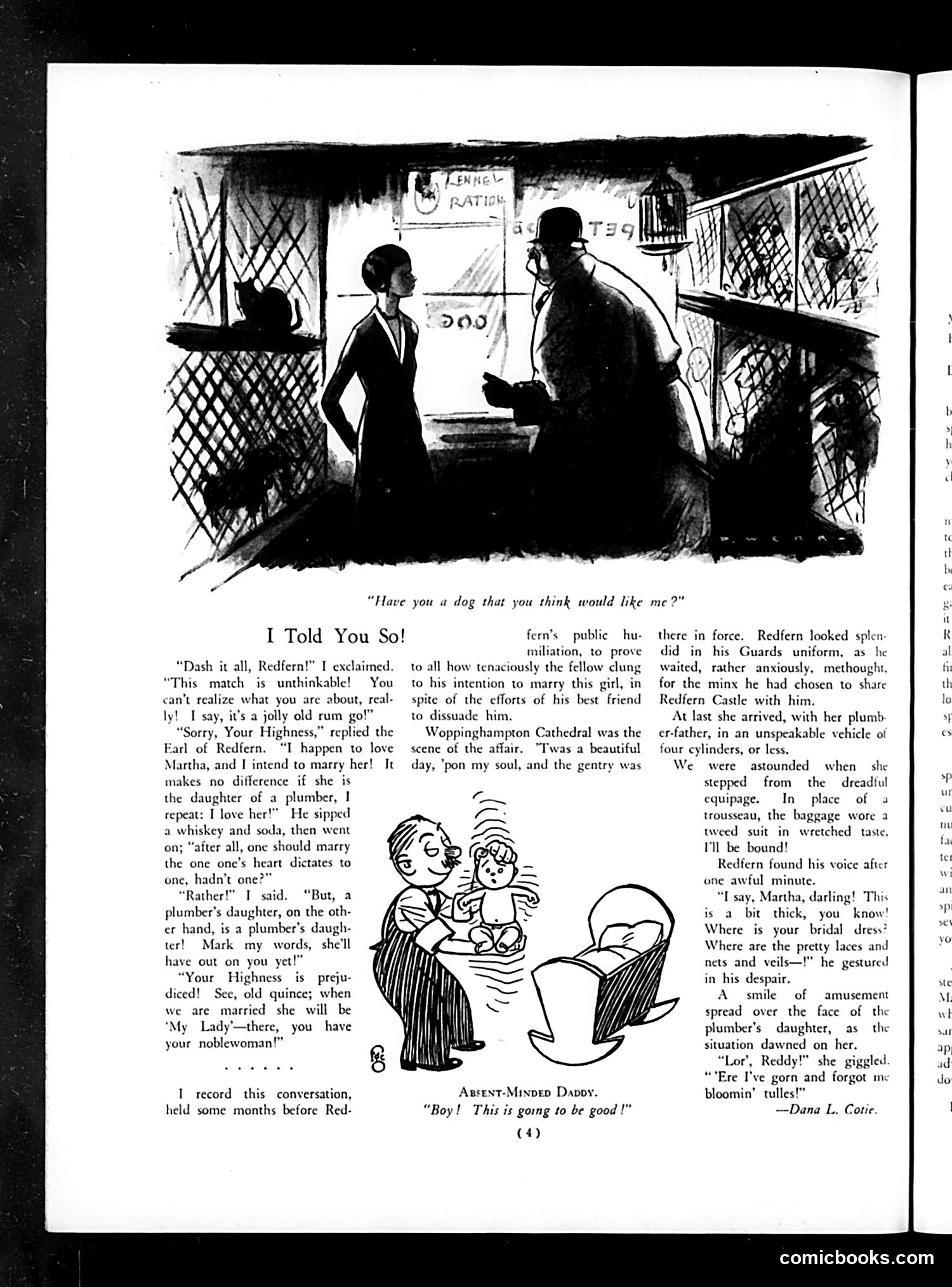
# Analysis This is a humorous story titled "I Told You So!" illustrated with a sketch-cartoon at the top and a small comic illustration mid-page. The main cartoon depicts a social scene at what appears to be a pet shop, with the caption "Have you a dog that you think would like me?" The accompanying story concerns a romantic conflict: an Earl opposes his friend Redfern's intention to marry Martha, a plumber's daughter, on class grounds. The Earl argues the match is unsuitable; Redfern defends marrying for love regardless of social station. The humor derives from the class-consciousness of the period—the scandal of an aristocrat's friend marrying "beneath" him. The small cartoon labeled "Absent-Minded Daddy" shows a father comically mishandling babies, providing light comedic relief alongside the main narrative's satire of rigid social hierarchies and marriage expectations among the British upper classes.
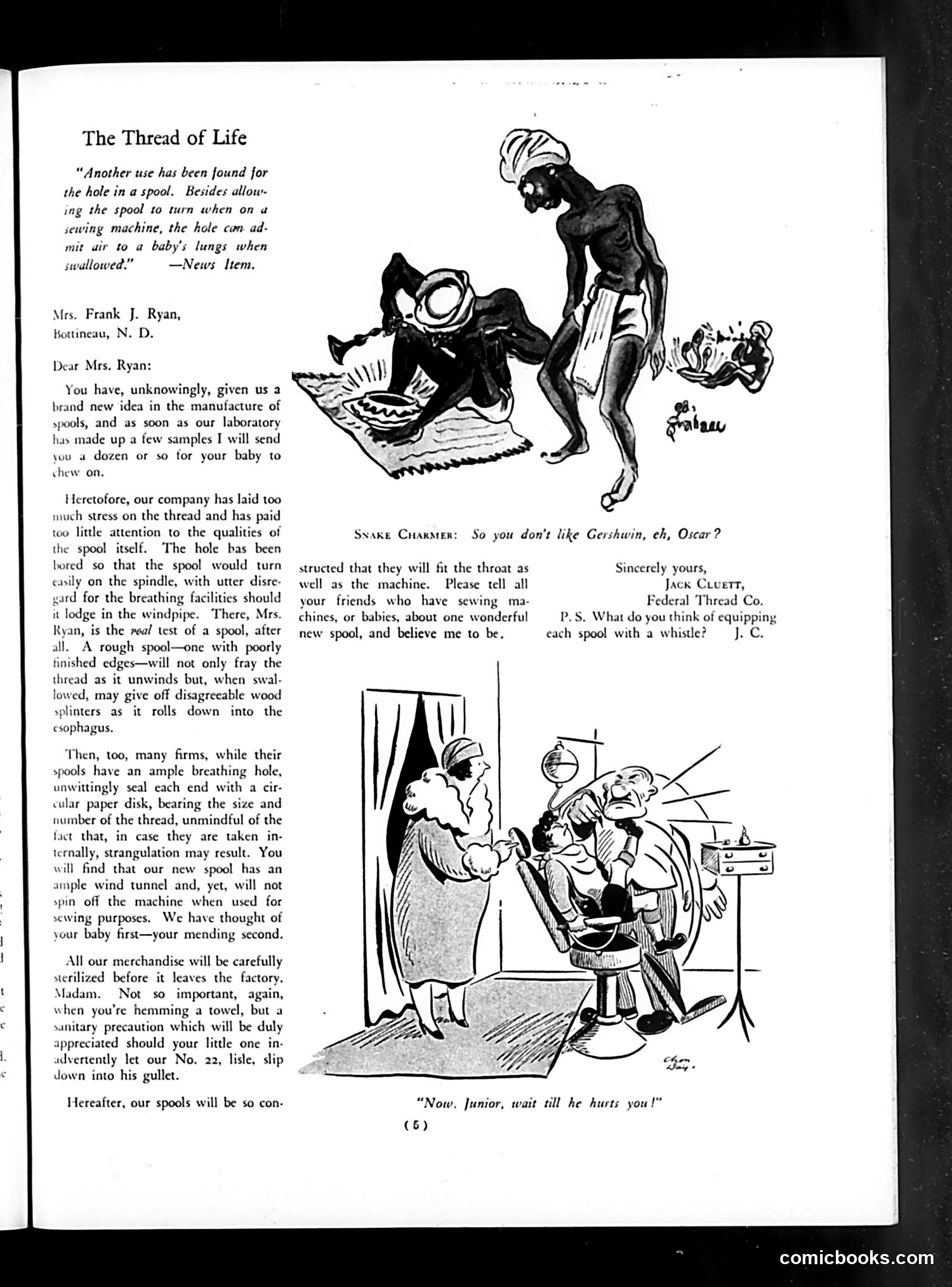
# "The Thread of Life" - Life Magazine Satire This page satirizes manufacturing defects in sewing-machine spools. The letter from Jack Culbert of Federal Thread Co. addresses a news item about holes discovered in spools that allow air into babies' lungs when swallowed. The top cartoon shows a figure (labeled "Snake Charmer") playing music to charm thread from a spool—a visual pun on the manufacturing problem. The bottom cartoon depicts a mother discovering her baby has swallowed thread, with the caption "Now, Junior, wait till he hurts you!" The humor is darkly ironic: the mother's threat of punishment to the child is absurd given the actual danger posed by the defective product itself. The satire critiques manufacturers' negligence regarding product safety standards in baby items.
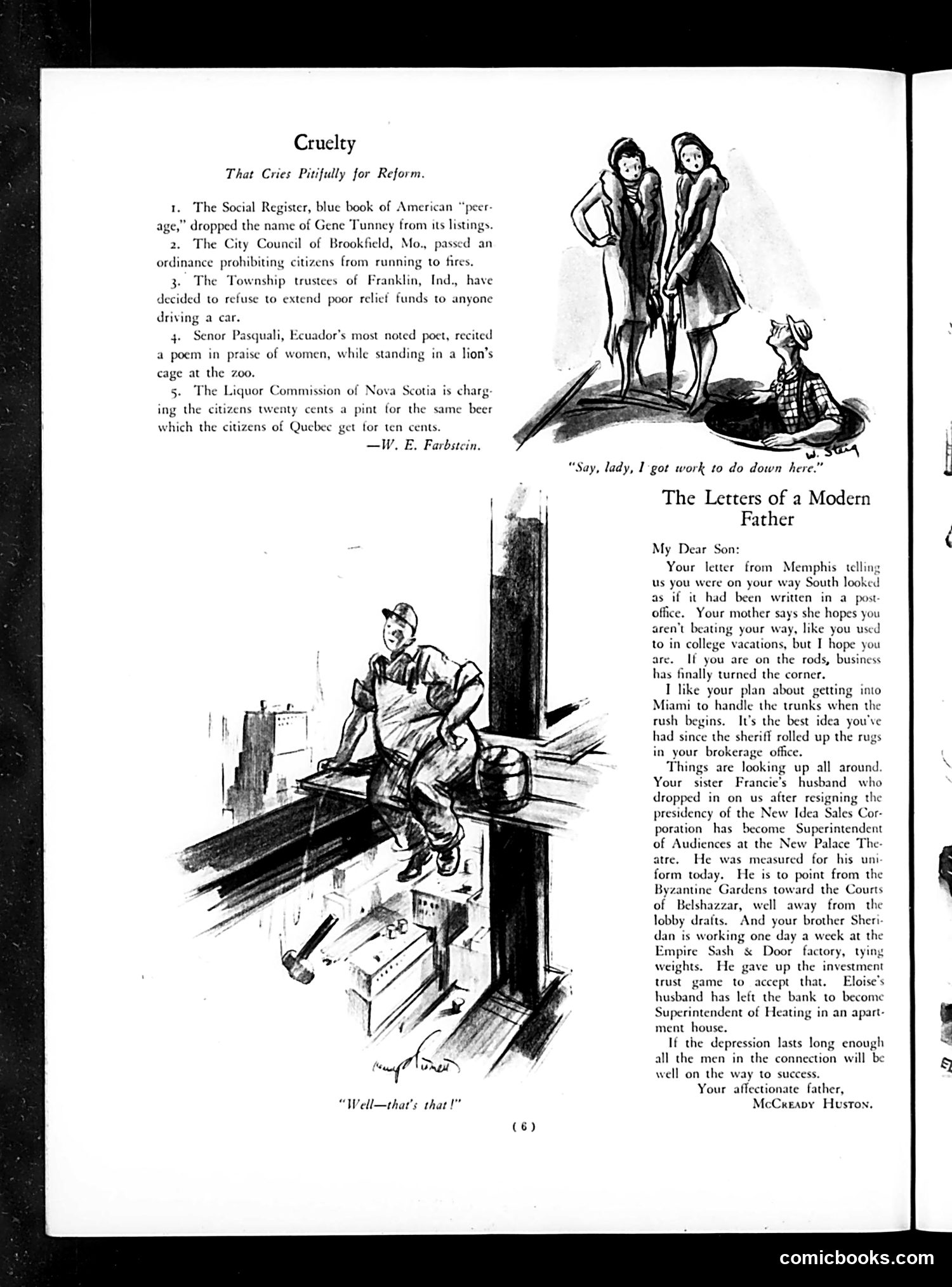
# Analysis of Life Magazine Page This page contains two satirical pieces: **"Cruelty: That Cries Pitifully for Reform"** lists five absurd or petty local regulations by W.E. Farbstein—including banning citizens from running to fires and denying poor relief to car owners—mocking overly restrictive government policies. **"The Letters of a Modern Father"** is a humorous letter from McCready Huston to his son, describing how family members are adapting during what appears to be the Great Depression. References include job transitions, relatives taking factory work, and the father's hopeful tone that "if the depression lasts long enough all the men in the connection will be well on the way to success." The accompanying illustrations show a working man and a child, reinforcing themes of economic hardship and labor. The satire targets both bureaucratic absurdity and the era's economic struggles.
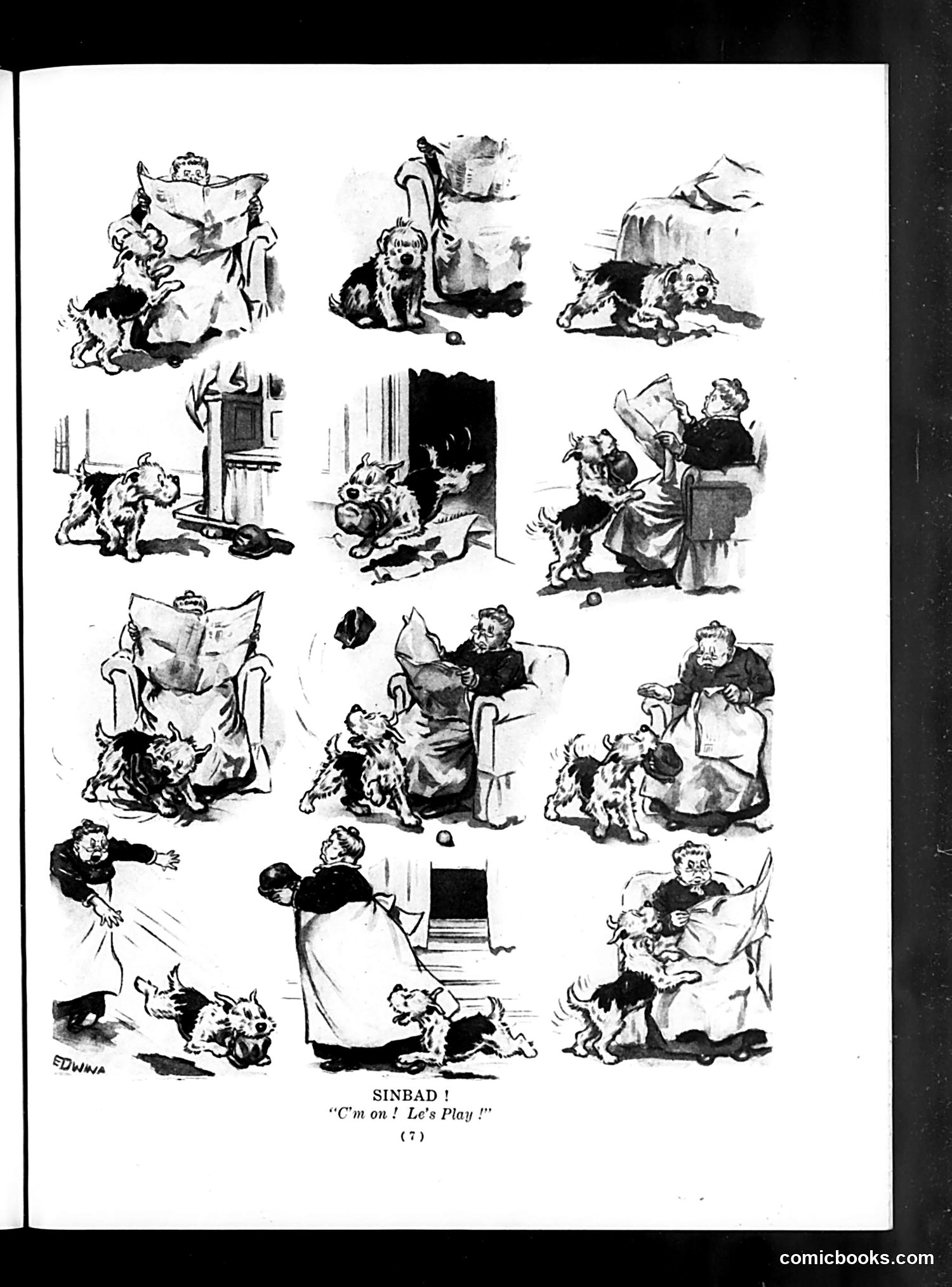
# Analysis of "Sinbad! 'C'm on! Le's Play!'" This is a series of comic vignettes by artist Edwina (signed lower left) depicting a small dog persistently pestering various people—adults reading newspapers, sitting in chairs, lying in bed, working—trying to engage them in play. The humor derives from the dog's relentless, energetic attempts to initiate games while the humans are absorbed in their own activities or rest. The repeated scenarios satirize the common domestic conflict between a pet's desire for attention and companionship versus humans' desire for peace and solitude. The title references Sinbad the Sailor, suggesting the dog's adventures are as dramatic as mythological tales. The satire gently mocks both dog owners' neglect of their pets and dogs' single-minded persistence—a relatable household dynamic for Life magazine's early 20th-century audience.
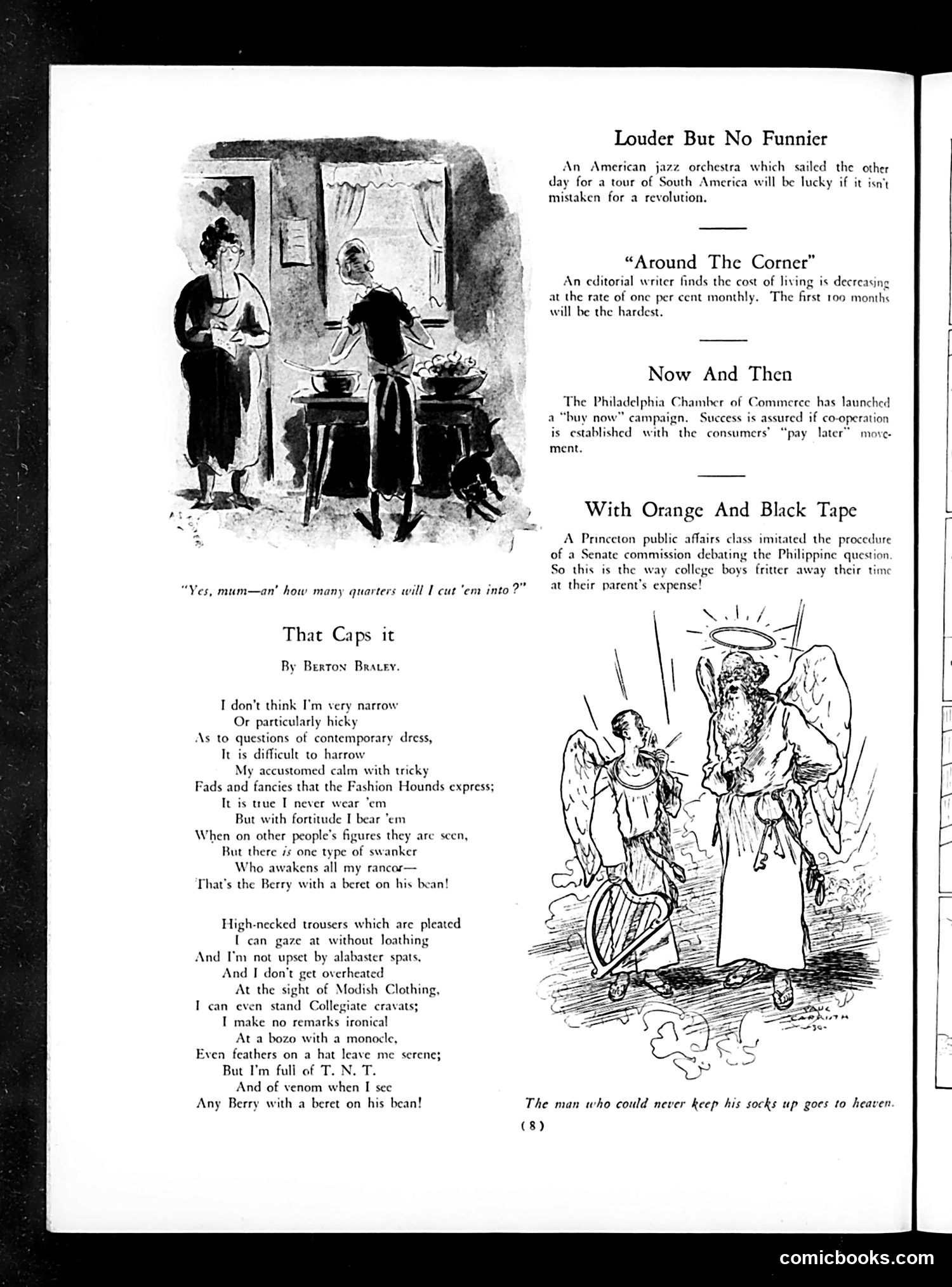
# Explanation for Modern Readers This page contains three separate satirical pieces from *Life* magazine: 1. **"That Caps It"** (poem by Berton Braley): A humorous complaint about contemporary fashion trends. The speaker claims indifference to most modern dress fads but draws the line at "a Berry with a beret on his bean"—apparently referring to men wearing berets, which the poet finds ridiculous and full of pretension. 2. **"With Orange and Black Tape"**: Mocks Princeton students imitating Senate procedures to debate the Philippine question, wasting their parents' money on frivolous activities. 3. **"Louder But No Funnier"**, **"Around the Corner"**, and **"Now and Then"**: Brief satirical notes on a jazz orchestra tour, cost-of-living increases, and a Philadelphia Chamber of Commerce campaign. The overall tone is gently mocking of contemporary trends and institutional behaviors.
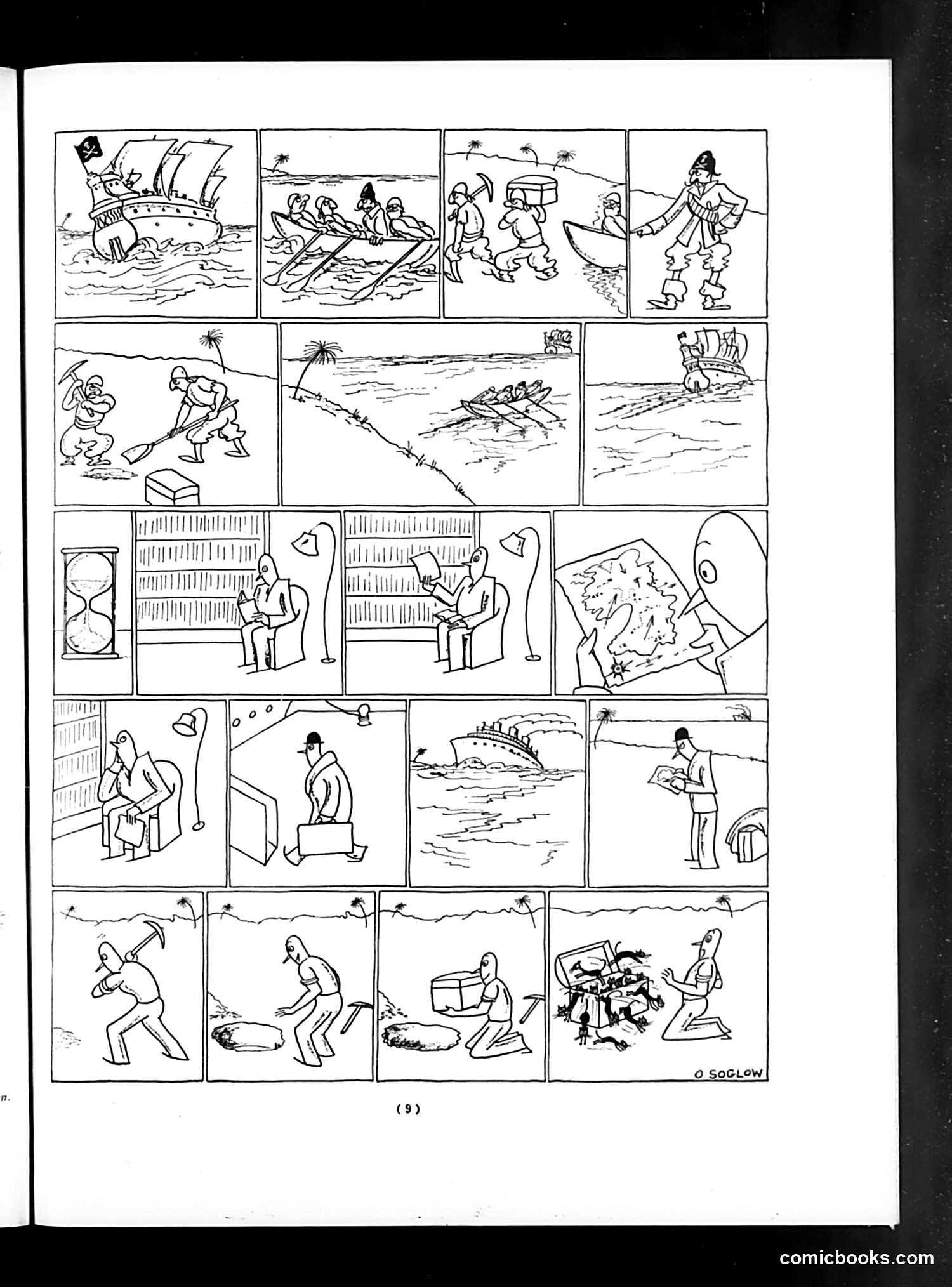
# Explanation for Modern Readers This is a satirical comic strip by O. Soglow depicting a shipwreck and survival scenario. The narrative follows castaways from a sinking vessel (top panels) who reach an island. The satire appears to mock civilization's trappings: the survivors initially maintain formal behaviors (hourglass, structured schedules, sitting in chairs). However, as the strip progresses (bottom panels), they gradually abandon these conventions, eventually cooking and celebrating around a fire like "primitive" people. The joke critiques how thin the veneer of civilization is—suggesting that when stripped of society's structures, people revert to basic, primal behavior. It's social commentary on the artificiality of modern etiquette and the supposedly natural human state beneath cultural refinement. The comic is signed by O. Soglow and numbered (9), indicating it's part of a larger publication.
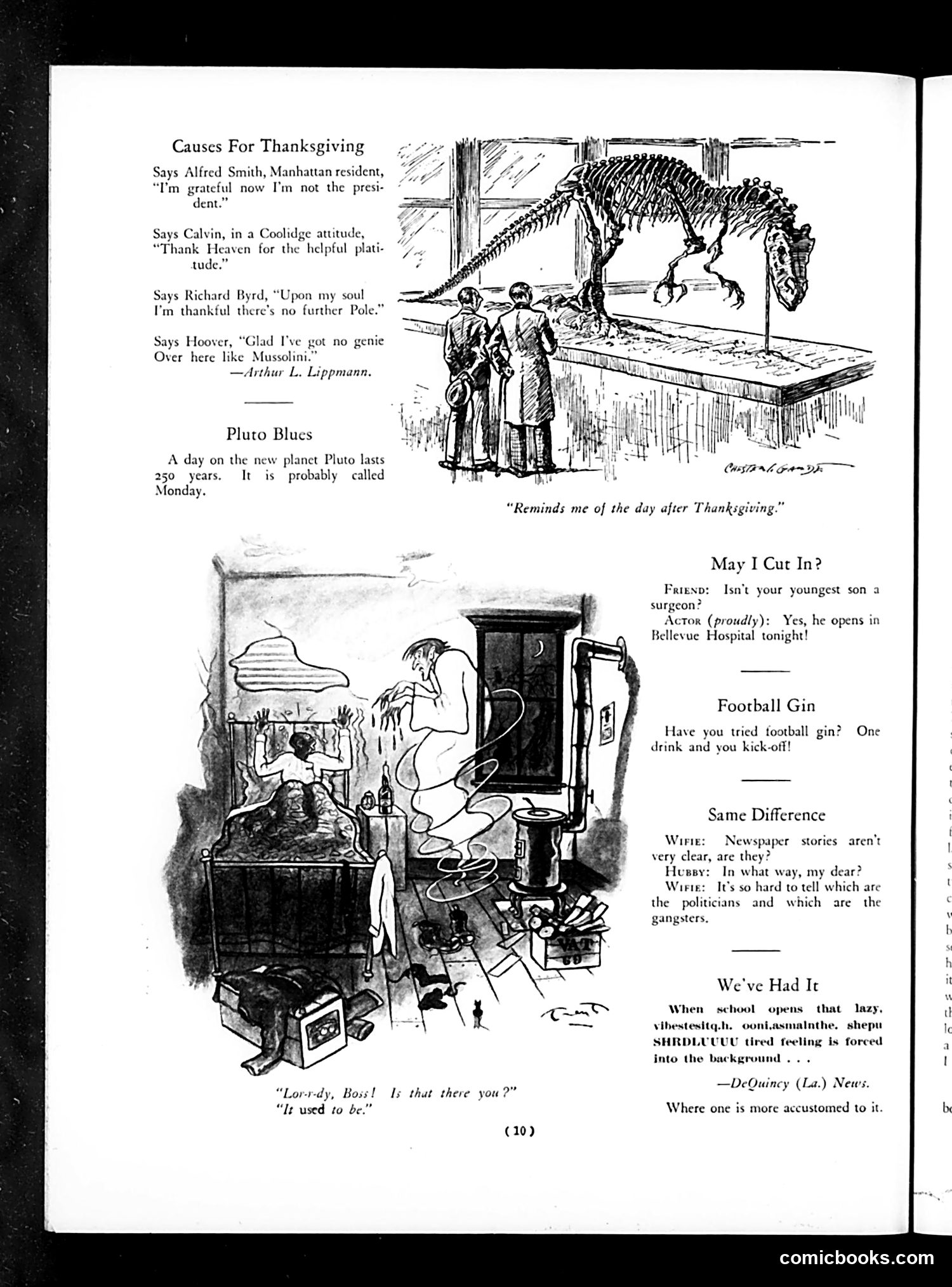
# Analysis of Life Magazine Page **"Causes for Thanksgiving"** presents humorous quotes from public figures expressing gratitude—Alfred Smith (Manhattan resident relieved not to be president), Calvin Coolidge (thanking heaven for helpful platitudes), Richard Byrd (grateful there's no further Pole to explore), and Hoover (glad he has no genie). **"Pluto Blues"** is a brief sci-fi joke about the newly-discovered planet Pluto, suggesting its long day-length would be called "Monday." **The main cartoon** depicts Santa Claus visiting a modern apartment, with the caption "Lord-dy, Boss! Is that there you?" and "It used to be"—satirizing how cramped urban living has replaced traditional homes. The remaining brief items mock contemporary social topics: hospital openings, prohibition-era gin drinking, newspaper clarity, and school reopenings.