A complete issue · 36 pages · 1930
Life — November 7, 1930
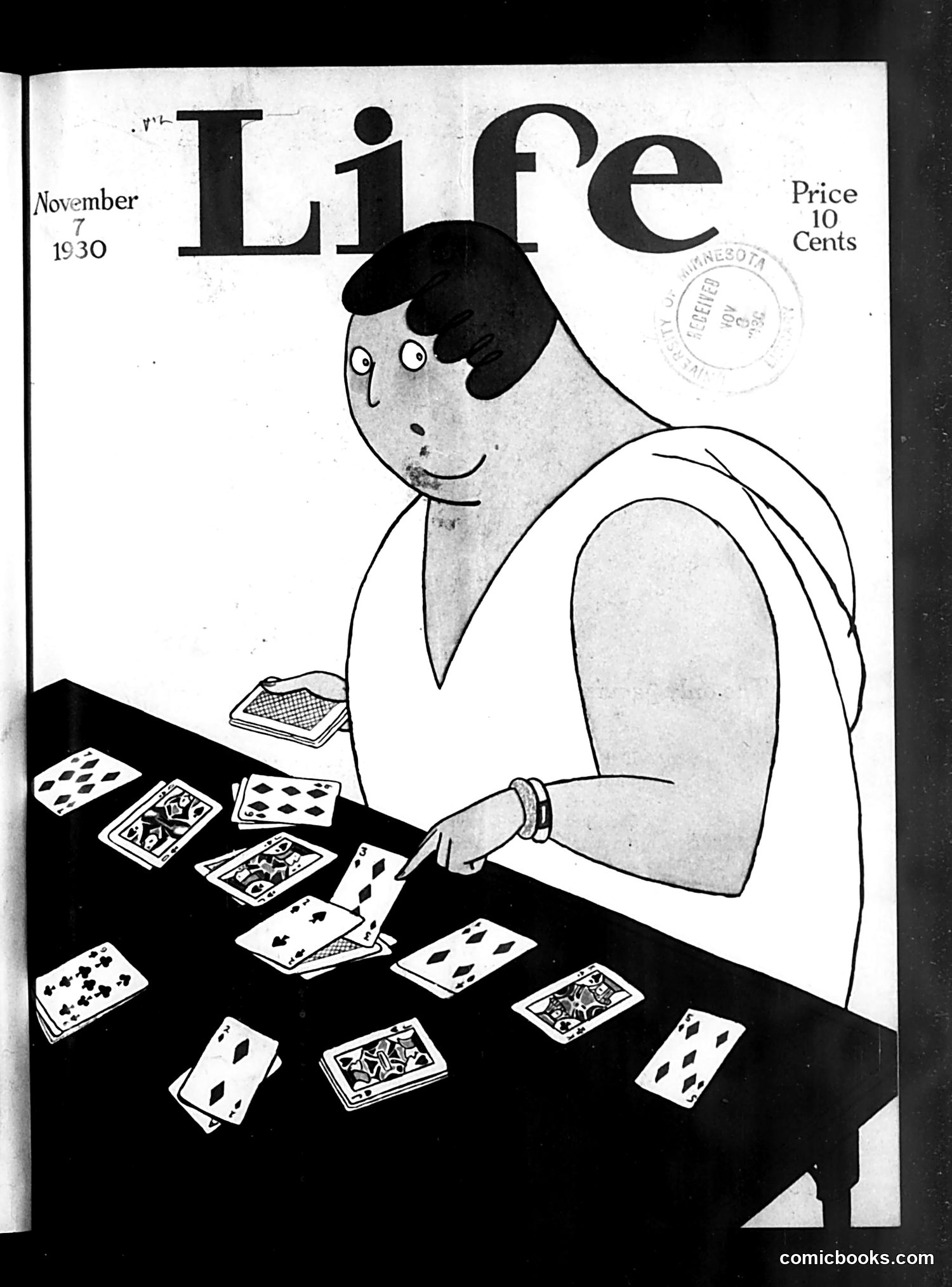
# Life Magazine Cover, November 7, 1930 This cover depicts a generic figure engaged in card games or fortune-telling, surrounded by playing cards spread across a table. The character has an uncertain, somewhat anxious expression while holding cards and appears to be either playing or divining. Given the 1930 date—the year after the stock market crash—this likely satirizes gambling and financial speculation. The card-playing imagery probably references the reckless betting and speculation that preceded the 1929 market collapse. The figure's worried expression suggests commentary on Americans' continued risky financial behavior or obsession with games of chance during the Great Depression's early months. The satire warns against gambling mentality in uncertain economic times, a timely social critique for Depression-era readers.
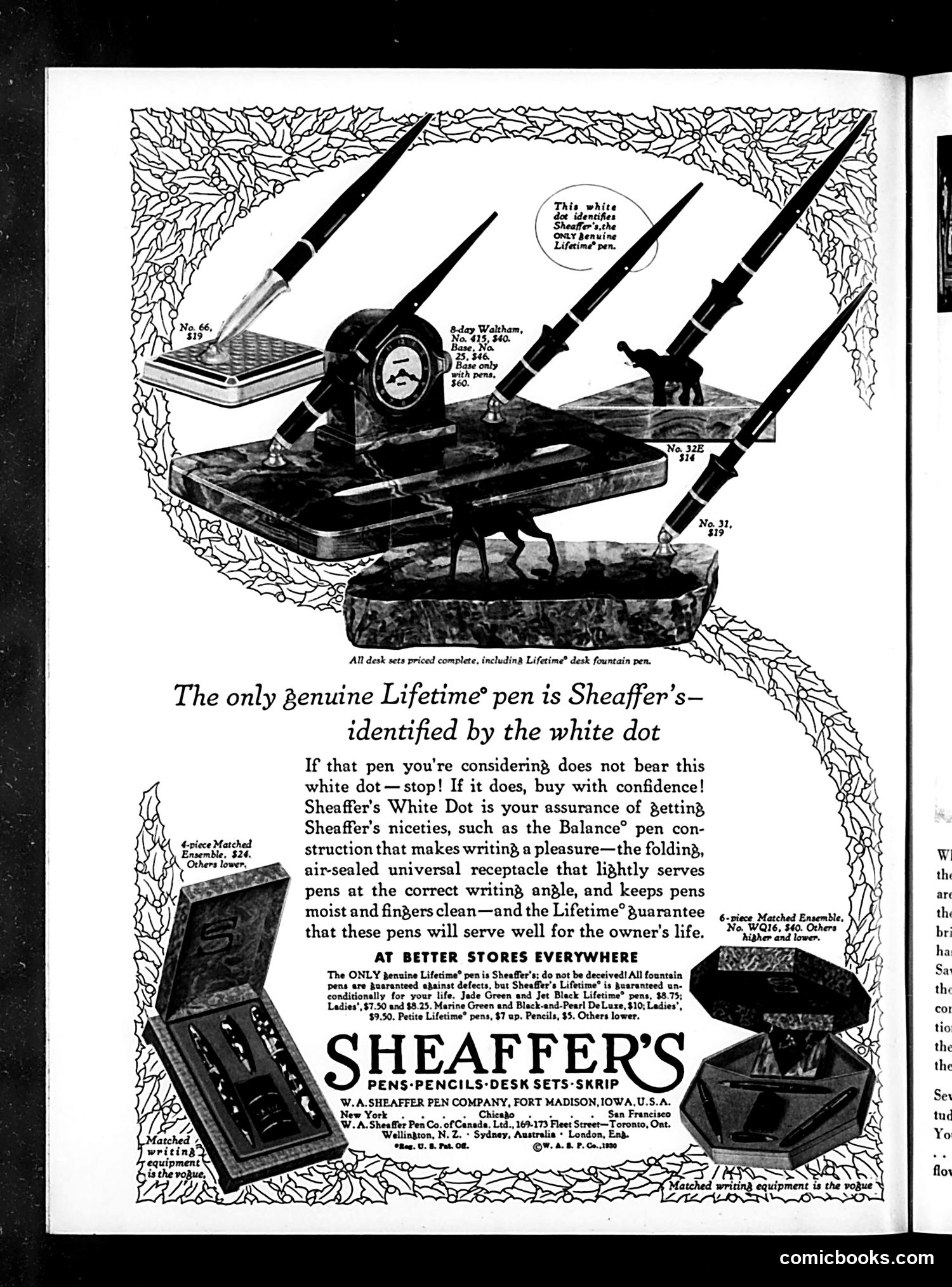
# This is a Sheaffer's Pen Advertisement This is not a political cartoon or satire—it's a full-page advertisement for Sheaffer's fountain pens and writing sets from the W.A. Sheaffer Pen Company of Fort Madison, Iowa. The page uses visual humor typical of 1920s-30s advertising: elaborate mechanical drawings of different pen models arranged in an ornate frame with decorative borders. The central message emphasizes that genuine Sheaffer pens are identified by a "white dot" mark, distinguishing them from counterfeits. The ad highlights features like the "Lifetime" guarantee, the pen's construction for comfort, and matched desk sets. Text urges consumers to verify authenticity before purchasing. This appears in Life magazine, which accepted substantial advertising revenue alongside its satirical editorial content.
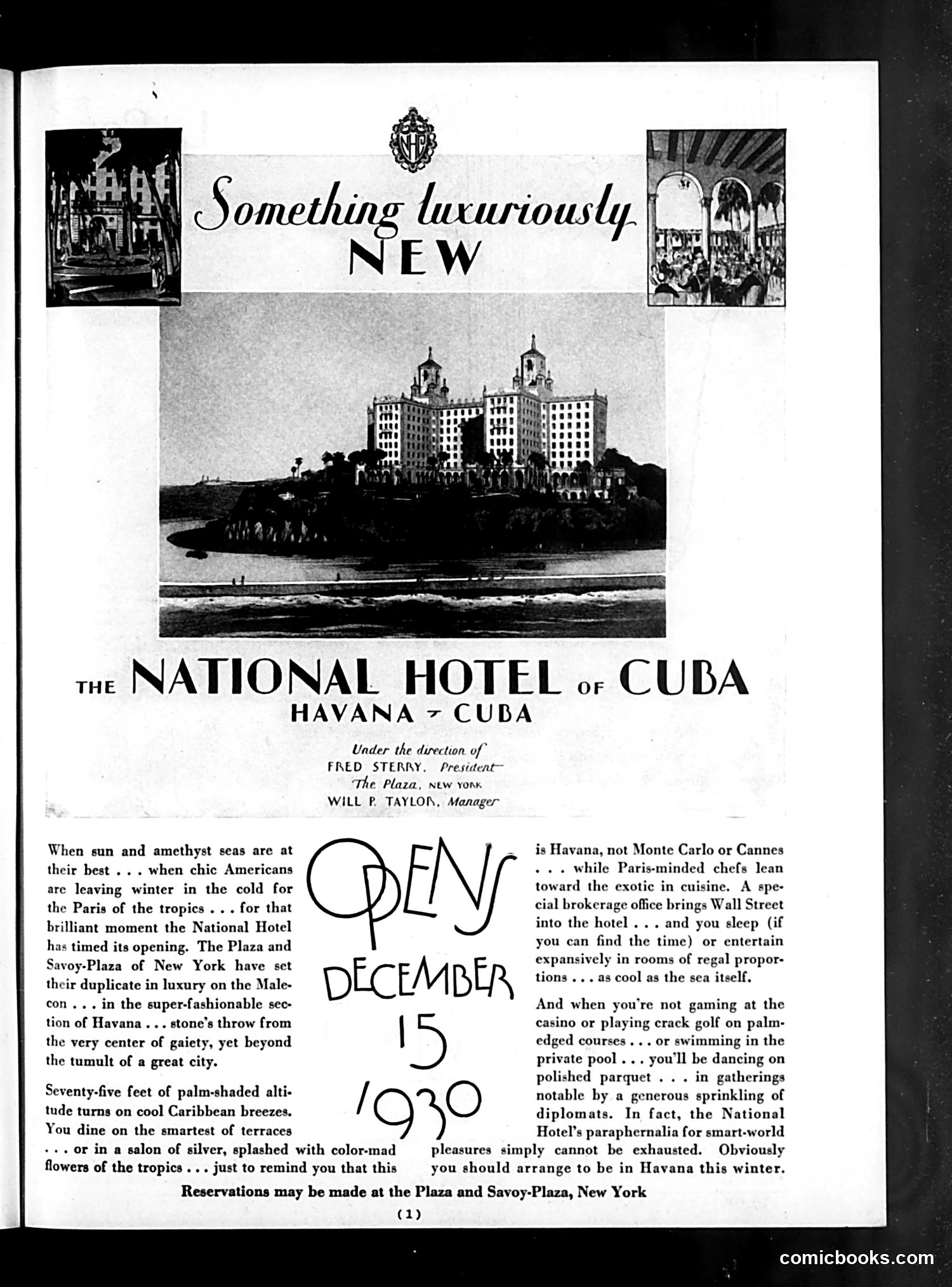
# Analysis This is **primarily an advertisement**, not a political cartoon. It announces the opening of the National Hotel of Cuba in Havana on December 15, 1930, under Fred Sterny's direction and management by Will P. Taylor. The two small decorative images (left and right) appear to be architectural or scenic details of the hotel and its surroundings, not satirical caricatures. The ad targets wealthy Americans, positioning Havana as a luxurious alternative to European winter destinations (Monte Carlo, Cannes, Paris). It emphasizes amenities: Caribbean elegance, gaming, golf, swimming, and dining—appealing to "chic Americans" seeking tropical luxury. The page is essentially a travel/hospitality advertisement for the leisure class, not satire or political commentary. The "opening December 15, 1930" date places this during the Great Depression, marking Cuba as a destination for the still-affluent.
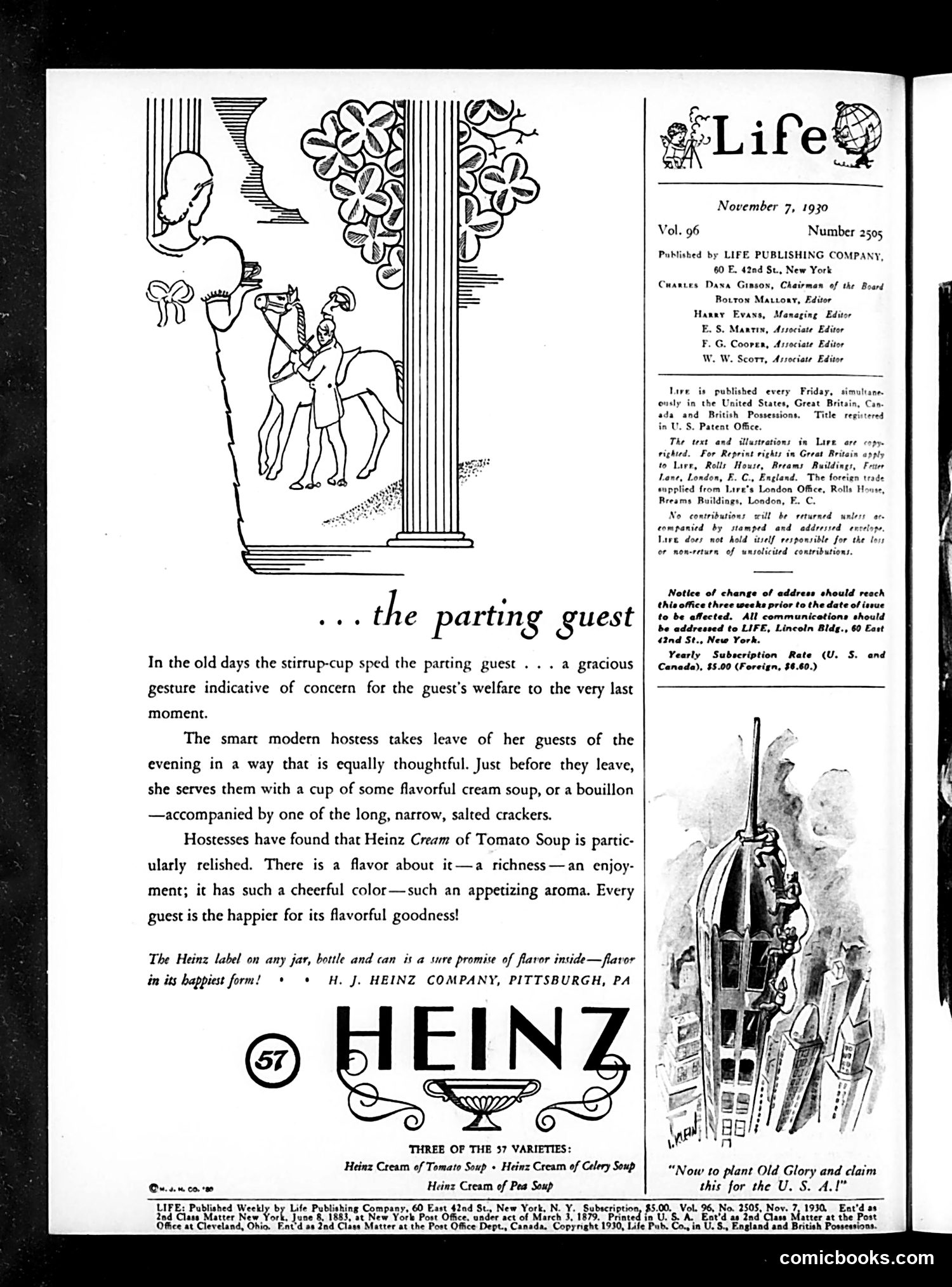
# Analysis This page is primarily an **advertisement for Heinz soup**, not political satire. The main illustration depicts a historical scene labeled "the parting guest" — referencing an old custom where hosts gave departing guests a stirrup-cup (a farewell drink) to show concern for their welfare. The ad's text draws a parallel: just as old hosts were thoughtful, modern hostesses should serve Heinz Cream of Tomato Soup before guests leave. The soup is presented as equally thoughtful and refined. The right-side illustration appears to show early American colonial or frontier figures, possibly referencing historical precedent for the custom. This is **advertising content using historical nostalgia** to market soup as a mark of good hospitality—not political commentary.
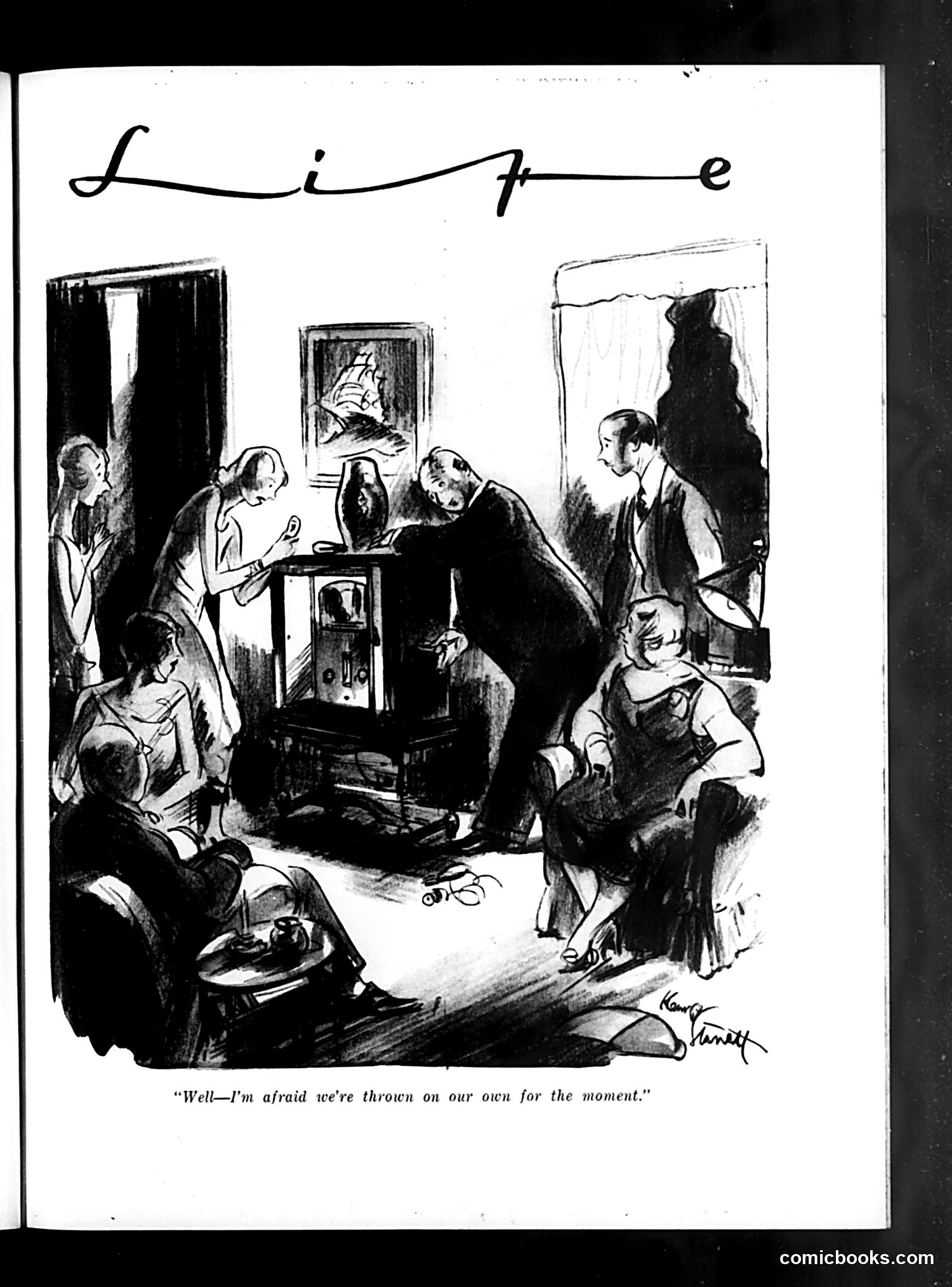
# Analysis of "Life" Cartoon This cartoon depicts a family gathered around an early radio set—the central focal point of the composition. The caption reads: "Well—I'm afraid we're thrown on our own for the moment." The satire comments on how radio was beginning to dominate American domestic life. Before this technology, families entertained themselves through conversation, games, or reading. The joke suggests that when the radio malfunctions or is unavailable, the family is suddenly left without entertainment and must rely on their own resources—an uncomfortable prospect, implying they've become dependent on this new medium for leisure. This reflects early-20th-century anxieties about technology's impact on family interaction and self-reliance.
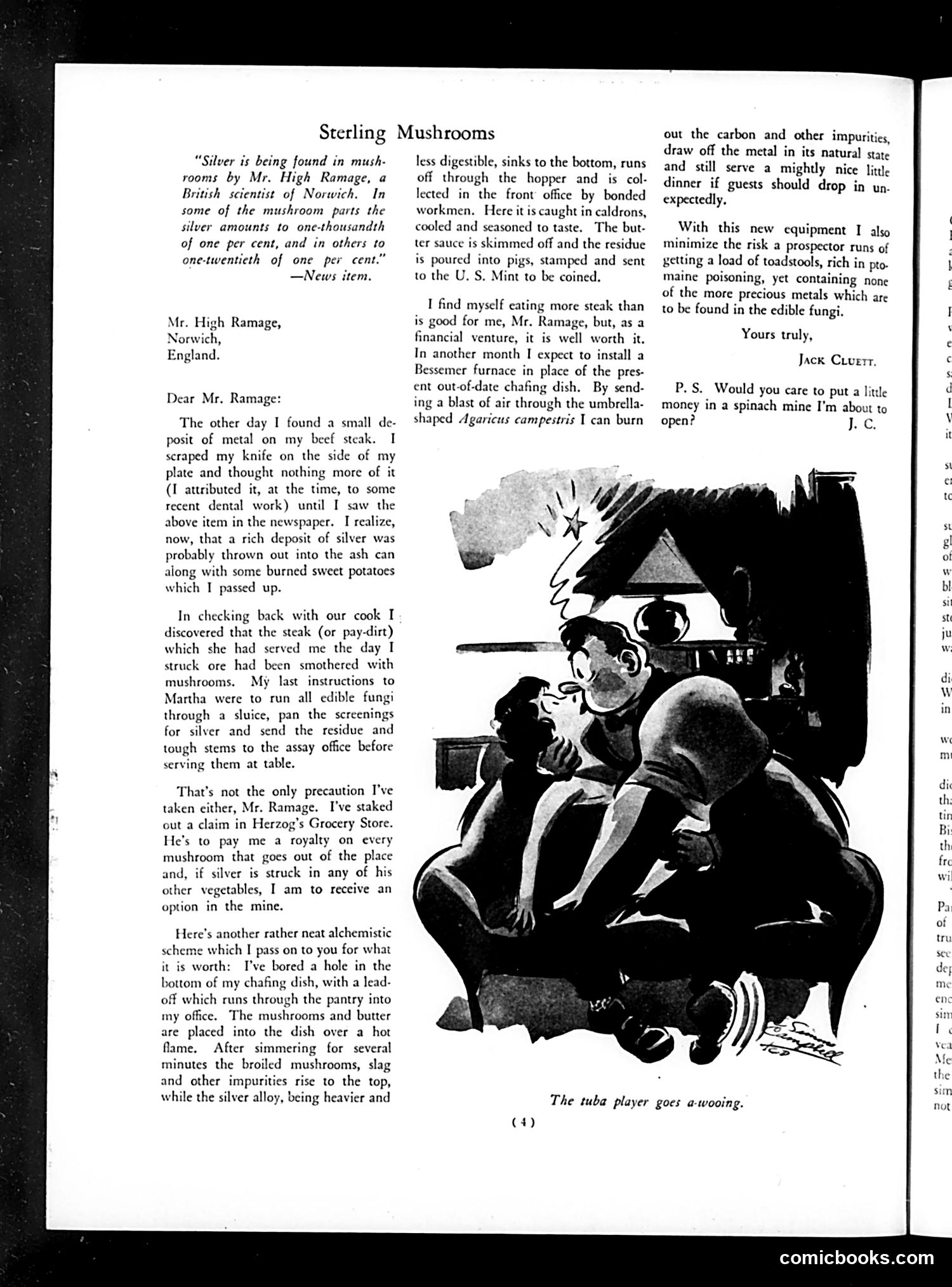
# Sterling Mushrooms - Satirical Cartoon Analysis This page features a humorous letter about finding silver in mushrooms, accompanied by a cartoon titled "The tuba player goes a-wooing." The cartoon depicts a rotund man playing a large tuba while courting a woman, who appears somewhat alarmed or unimpressed by his musical performance. The humor lies in the physical comedy—the tuba's size dwarfs the musician, and the exaggerated body language suggests the absurdity of serenading someone with such an unwieldy instrument. The letter above satirizes schemes to extract precious metals from common foods. Jack Cluett humorously describes processing mushrooms to collect silver residue, treating the notion seriously while clearly meant as satire of get-rich-quick schemes and dubious "alchemy." Both elements mock impractical ideas popular during this era.
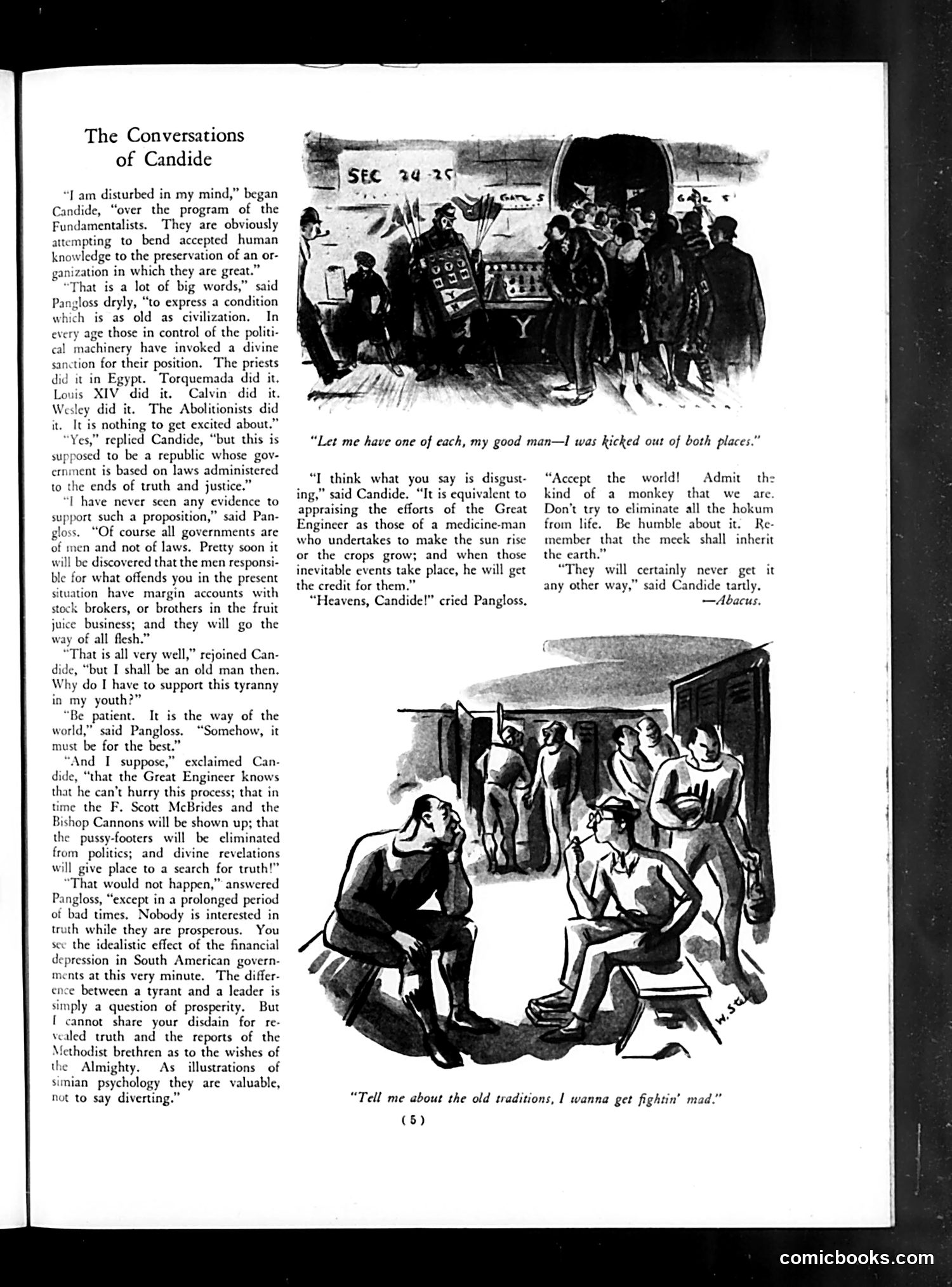
# Analysis of "The Conversations of Candide" This page adapts Voltaire's *Candide*, using the philosophical novella's satirical framework to critique early 20th-century American optimism about progress and social reform. **The satire:** Candide and Pangloss debate whether governments actually serve justice or merely invoke it rhetorically. Pangloss defends the "Great Engineer" (likely representing industrial/technological progress), arguing inevitable events will eventually justify themselves. Candide counters that the meek won't inherit the earth through patience alone. **The point:** The illustrations show ordinary people in working-class settings, contrasting with grand philosophical talk. The satire suggests American elites use grandiose rhetoric about progress and inevitable improvement to pacify workers and the poor—a critique of complacency masquerading as optimism during an era of labor unrest and inequality.
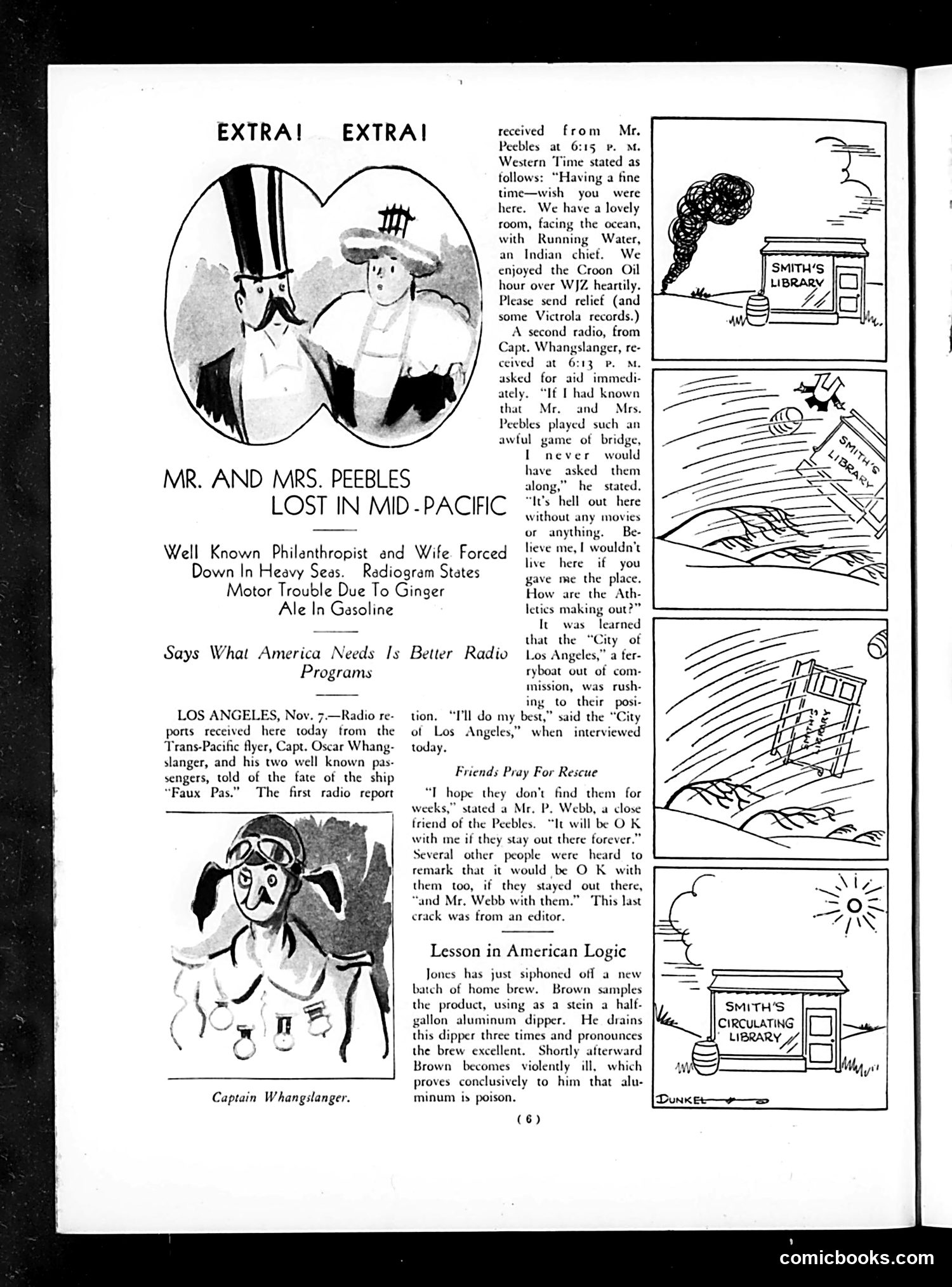
# Analysis This page reports on Mr. and Mrs. Peebles, a well-known philanthropist couple lost at sea aboard the trans-Pacific liner "City of Los Angeles." The headline notes motor trouble attributed to ginger ale in the gasoline—a satirical jab at Prohibition-era fuel adulteration. The cartoon's humor operates on multiple levels: Captain Whanglanger (the ship's captain, caricatured) receives radio pleas for help and complaints about entertainment (bridge games, lack of movies). The satire mocks both the stranded wealthy travelers' complaints and Depression-era concerns about frivolous leisure. The right-side comics strip about Smith's Circulating Library and a comic sequence showing Smith's library being abandoned in the ocean extends the joke: even in disaster, Americans worry about accessing entertainment and consumer goods. The underlying message critiques American materialism and entertainment dependency.
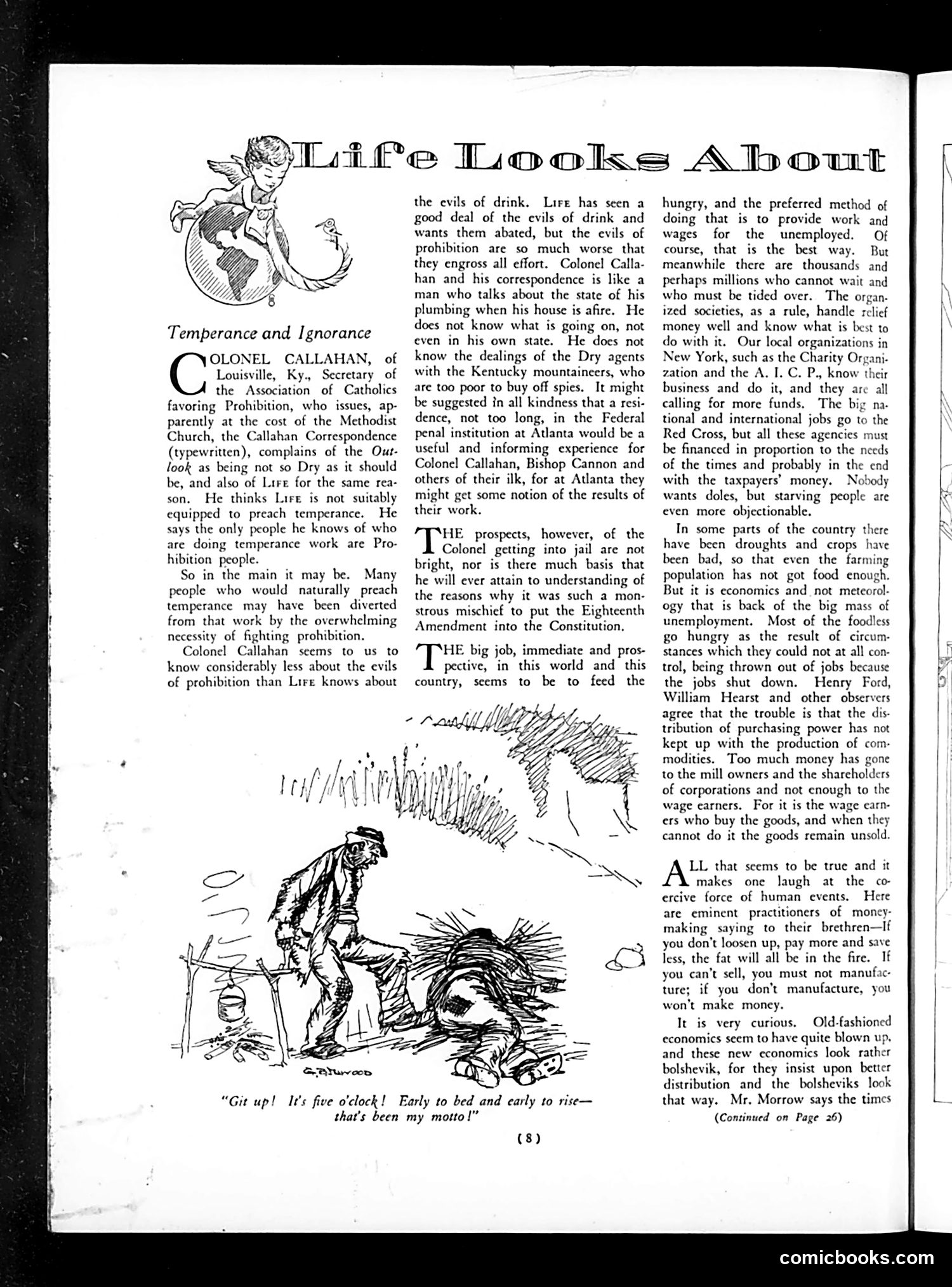
# Analysis of "Life Looks About: Temperance and Ignorance" This page critiques Prohibition's failures. Colonel Callahan, a Catholic leader favoring Prohibition, complains that Life magazine inadequately addresses temperance issues. The author responds that Life knows Prohibition advocates better than the policy's actual effects. The cartoon illustrates the disconnect between Prohibition's promises and reality. The ragged, impoverished man represents those harmed by economic consequences of the alcohol ban—job losses, unemployment, and poverty. The caption's ironic motto ("Early to bed and early to rise") mocks Prohibition moralists who blamed poverty on moral failings rather than economics. The article argues Prohibition failed because it didn't address underlying economic distribution problems. Wealthy industrialists hoarded purchasing power while workers couldn't afford goods, causing economic collapse—a critique predating the Great Depression.
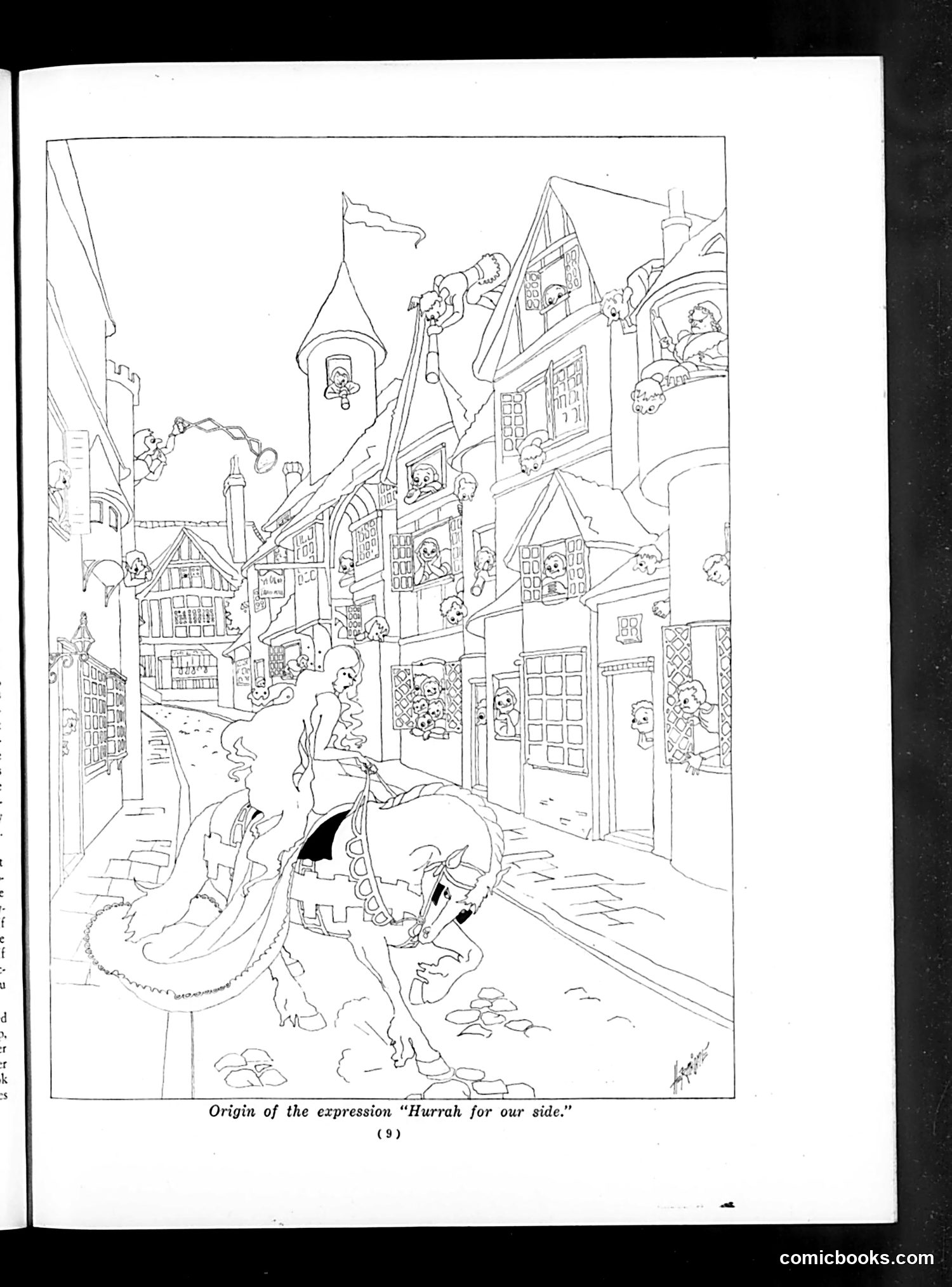
# "Origin of the expression 'Hurrah for our side'" This satirical cartoon depicts a medieval or fantasy town scene where a dragon appears to be attacking or terrorizing the inhabitants. Citizens are shown fleeing, watching from windows, and reacting from various vantage points throughout the fortified buildings. The caption explains the "origin" of the phrase "Hurrah for our side" — suggesting the expression emerged from situations where people cheer for their own group regardless of objective circumstances. The cartoon satirizes blind partisan loyalty: townspeople are apparently cheering their "side" (their town/faction) despite facing a clear, immediate threat (the dragon). The joke critiques how people support their group reflexively, without rational evaluation of actual dangers or merits. It's commentary on tribalism and mindless allegiance to one's in-group.
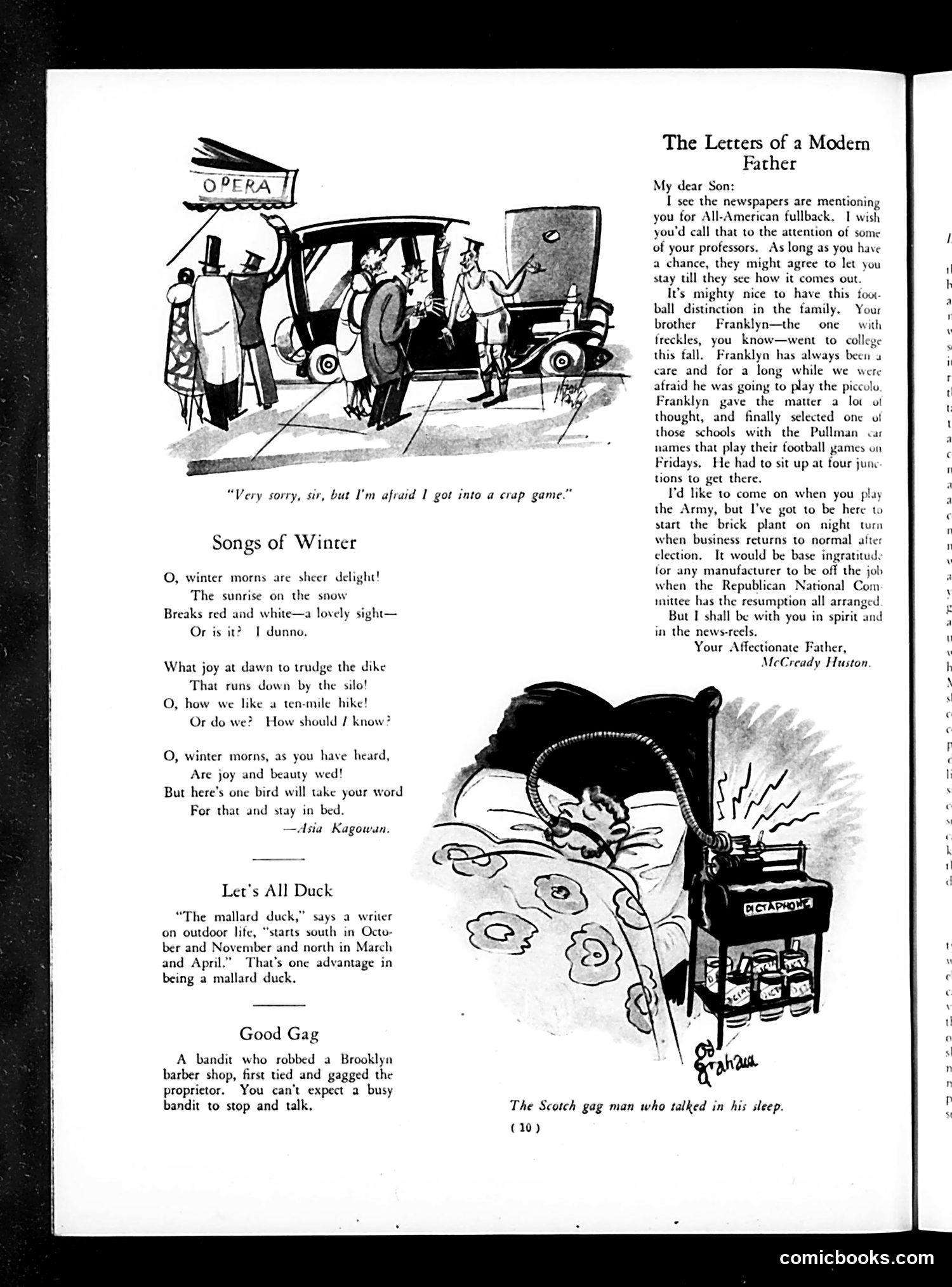
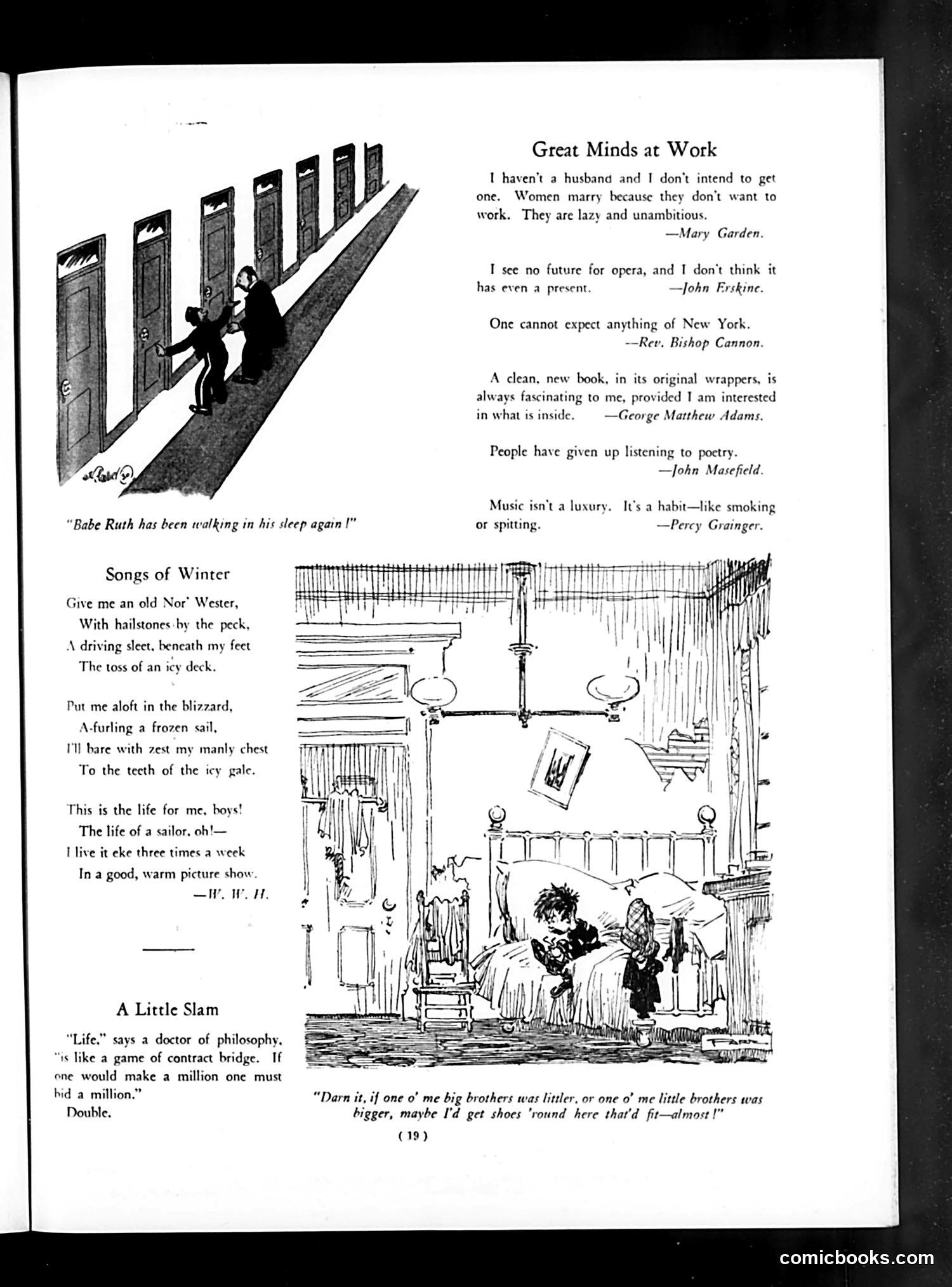
# Analysis This page contains three distinct pieces rather than integrated cartoons: **Top cartoon:** Shows people outside an opera house with the caption "Very sorry, sir, but I'm afraid I got into a crap game." The joke satirizes urban leisure—someone has been distracted by gambling instead of attending the cultural event, suggesting the allure of illegal betting over respectable entertainment. **"Songs of Winter"** and **"Let's All Duck"**: These are humorous verse and prose pieces about winter activities and duck hunting, not political content. **Bottom cartoon:** Depicts "The Scotch gag man who talked in his sleep," illustrating a joke about someone inadvertently revealing secrets while sleeping—a common vaudeville/comedy trope of the era. The Scottish stereotype and the octopus imagery remain unclear without additional context. The page is primarily entertainment-focused satire rather than political commentary.