A complete issue · 36 pages · 1930
Life — October 24, 1930
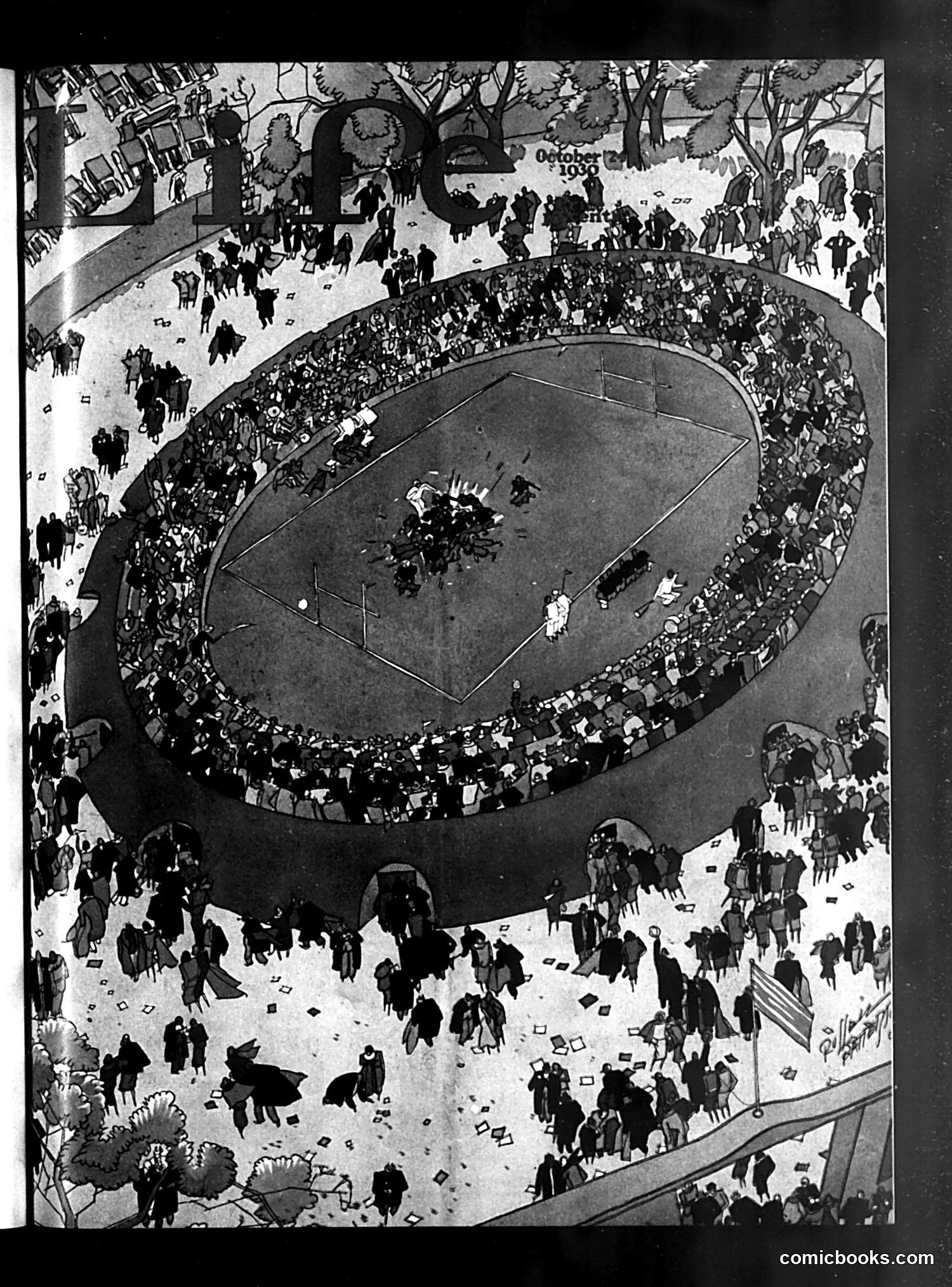
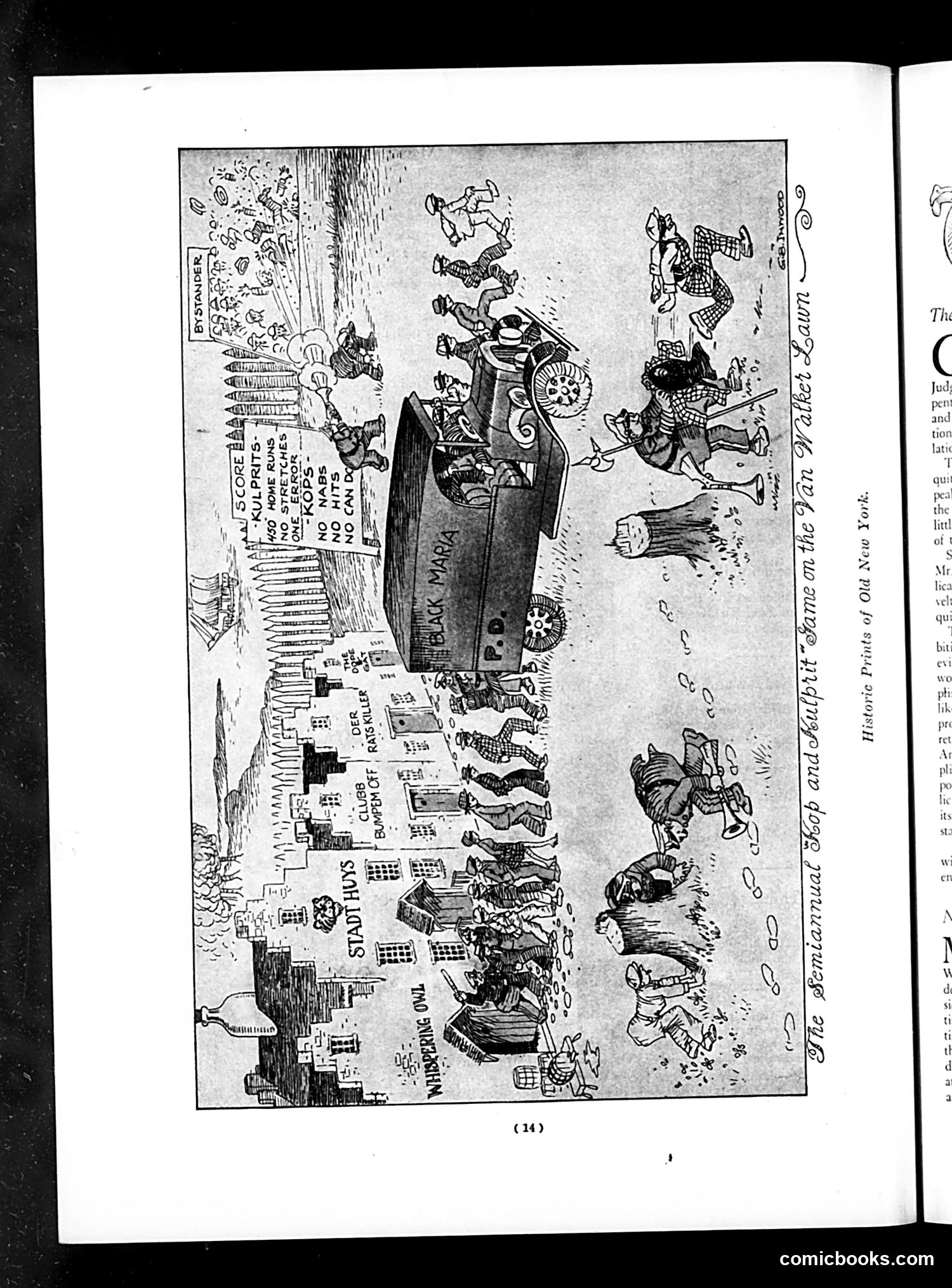
# Analysis This is an aerial view of a baseball stadium dated October 1935, showing a packed crowd surrounding the diamond during what appears to be a World Series game. The illustration is a bird's-eye perspective drawing showing thousands of spectators filling the stands and surrounding grounds. The satirical point appears to be commentary on American enthusiasm for baseball during the Great Depression era. Despite economic hardship, masses of people gathered for this sporting event, suggesting baseball's role as a major public distraction and entertainment outlet. The dense crowd emphasizes both the sport's popularity and perhaps implicitly critiques American priorities during a time of economic hardship. The specific date (October 1935) likely marks a significant World Series game drawing exceptional attendance.
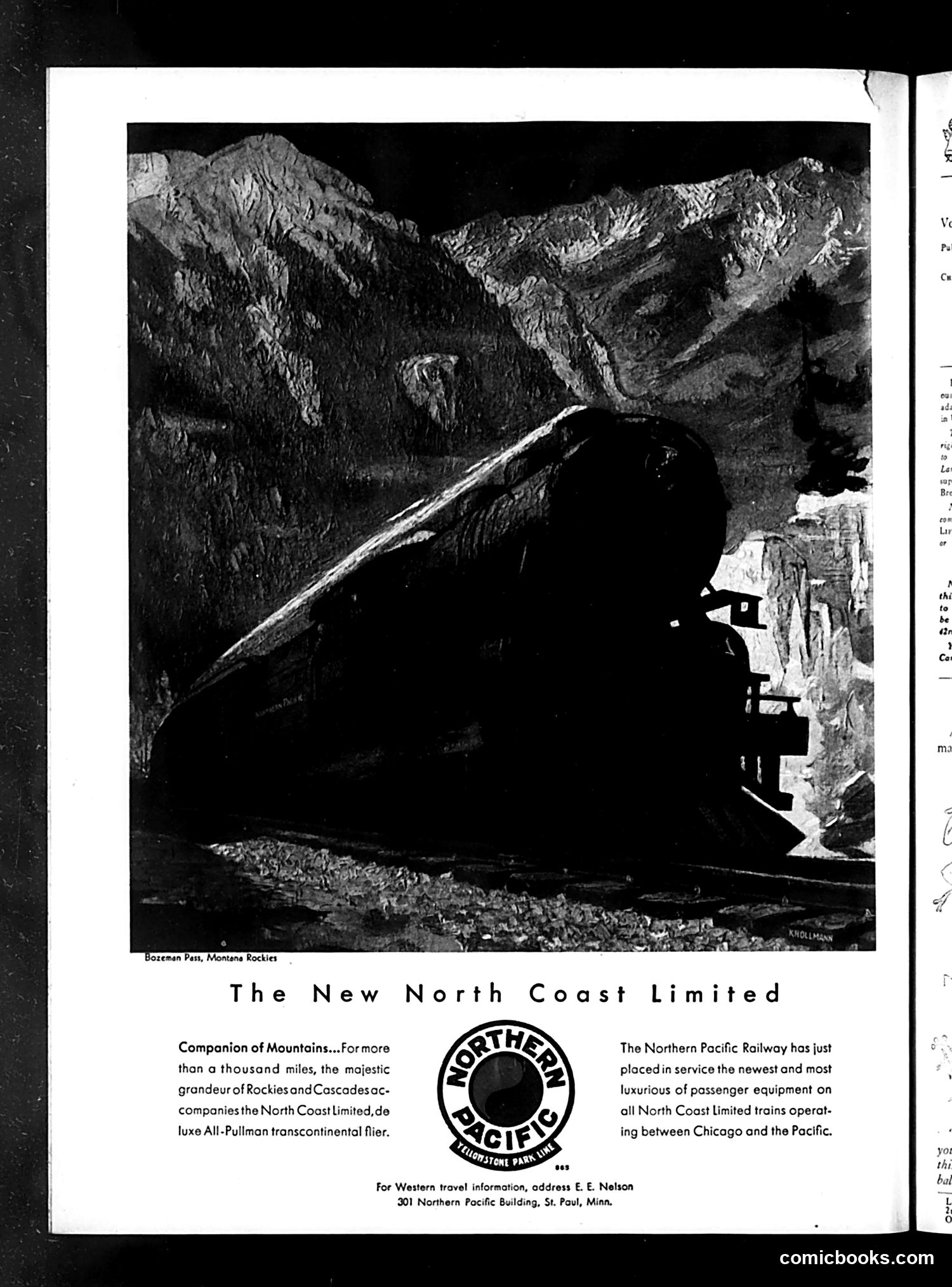
# Analysis This is **not a political cartoon or satirical content**—it's a **railroad advertisement**. The page promotes the Northern Pacific Railway's "New North Coast Limited" passenger train service. The dramatic black-and-white photograph shows Bozeman Pass in the Montana Rockies, emphasizing scenic mountain travel between Chicago and the Pacific coast. The ad highlights the railway's new luxury all-Pullman equipment and positions train travel as a leisurely way to experience American wilderness. The Northern Pacific Railway logo and contact information for travel bookings appear below. This represents early-20th-century travel marketing that sold transportation by emphasizing romantic landscape experience—a common advertising strategy before air travel became dominant.
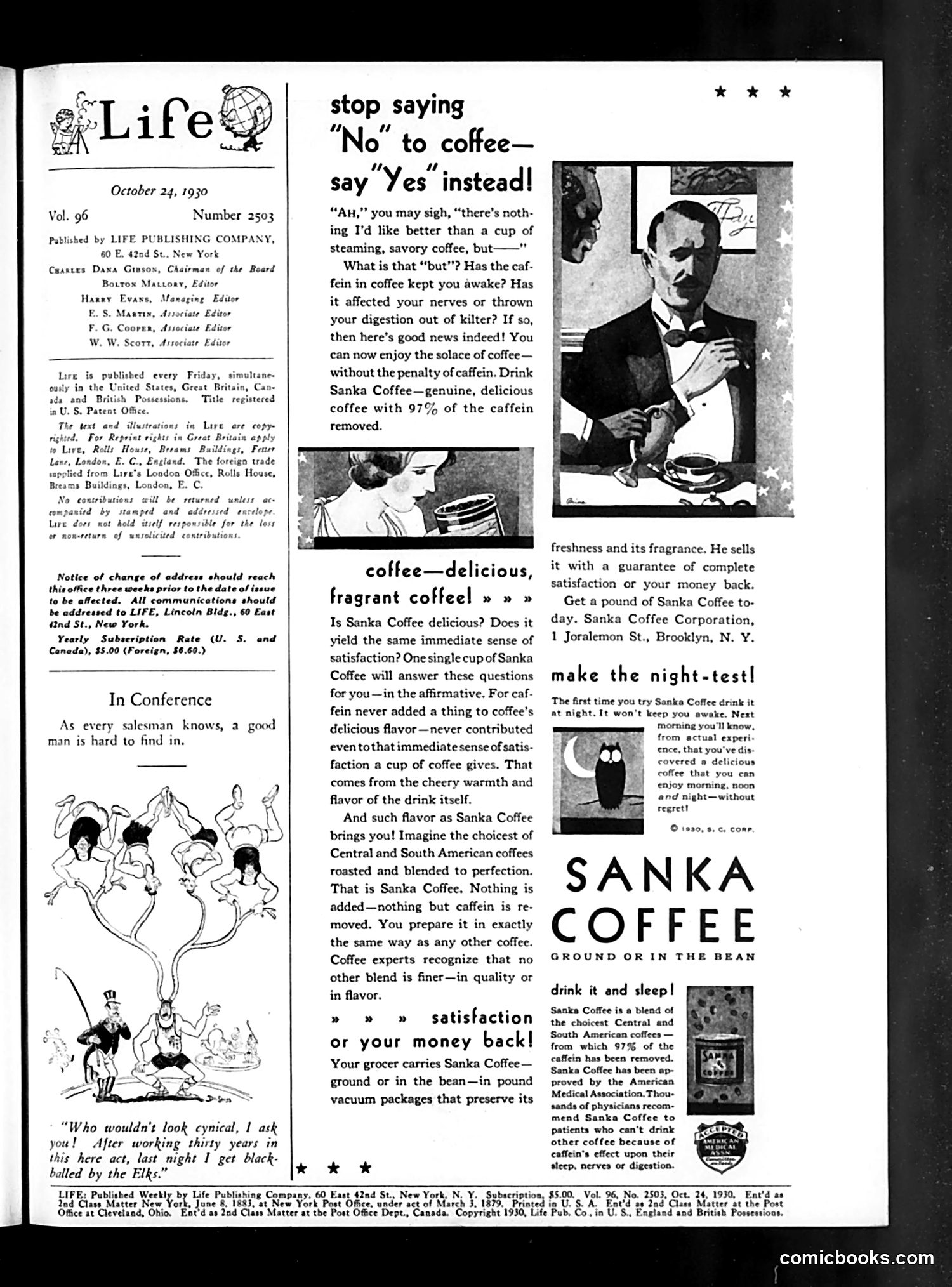
# Content Analysis This page is primarily a **Sanka Coffee advertisement**, not political satire. The main content promotes decaffeinated coffee as a solution for people bothered by caffeine's effects on sleep and digestion. The cartoon on the left titled "In Conference" shows figures gathered around what appears to be a large coffee pot or vessel—likely representing consumers or businesspeople discussing coffee. The illustration style is whimsical rather than satirical. The advertisement's tagline "drink it and sleep!" addresses a genuine consumer concern from the era: caffeine's reputation for causing sleeplessness. By marketing caffeine-removed coffee, Sanka positions itself as solving this problem while preserving coffee's flavor and ritual. The page reflects 1930s consumer culture and early health-consciousness advertising, not political commentary.
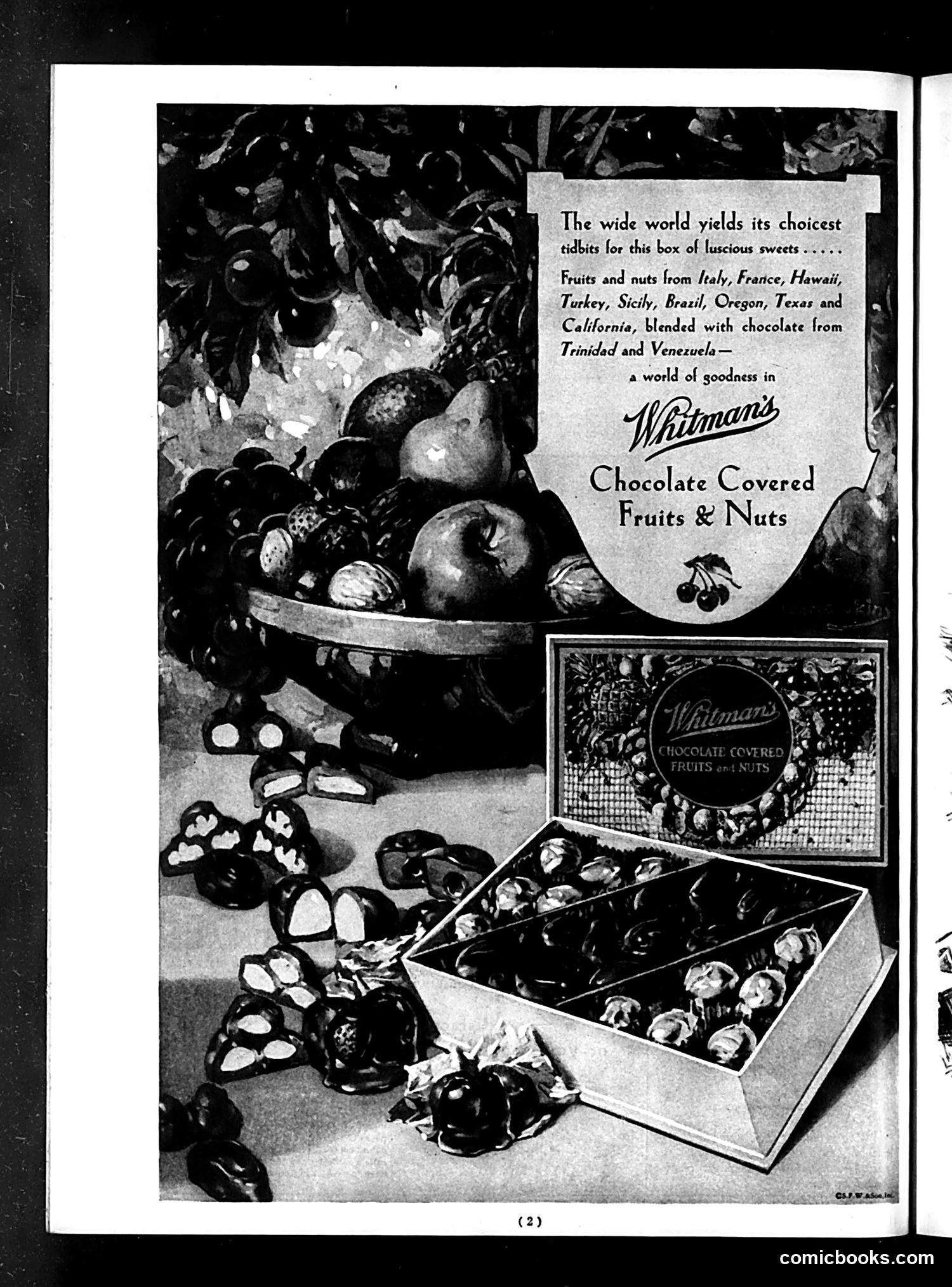
This is a **product advertisement**, not political satire or a cartoon. It promotes Whitman's Chocolate Covered Fruits & Nuts, emphasizing the global sourcing of ingredients: fruits and nuts from Italy, France, Hawaii, Turkey, Sicily, Oregon, Texas, and California, combined with chocolate from Trinidad and Venezuela. The advertisement uses an aesthetic common to early 20th-century luxury marketing—an overflowing cornucopia and elegant product packaging shown alongside individual candies. The tagline "a world of goodness in Whitman's" plays on the exotic, international ingredients as a selling point for affluent consumers. There is no political commentary or satire present. This is straightforward commercial advertising highlighting premium ingredients and global trade as markers of quality and desirability.
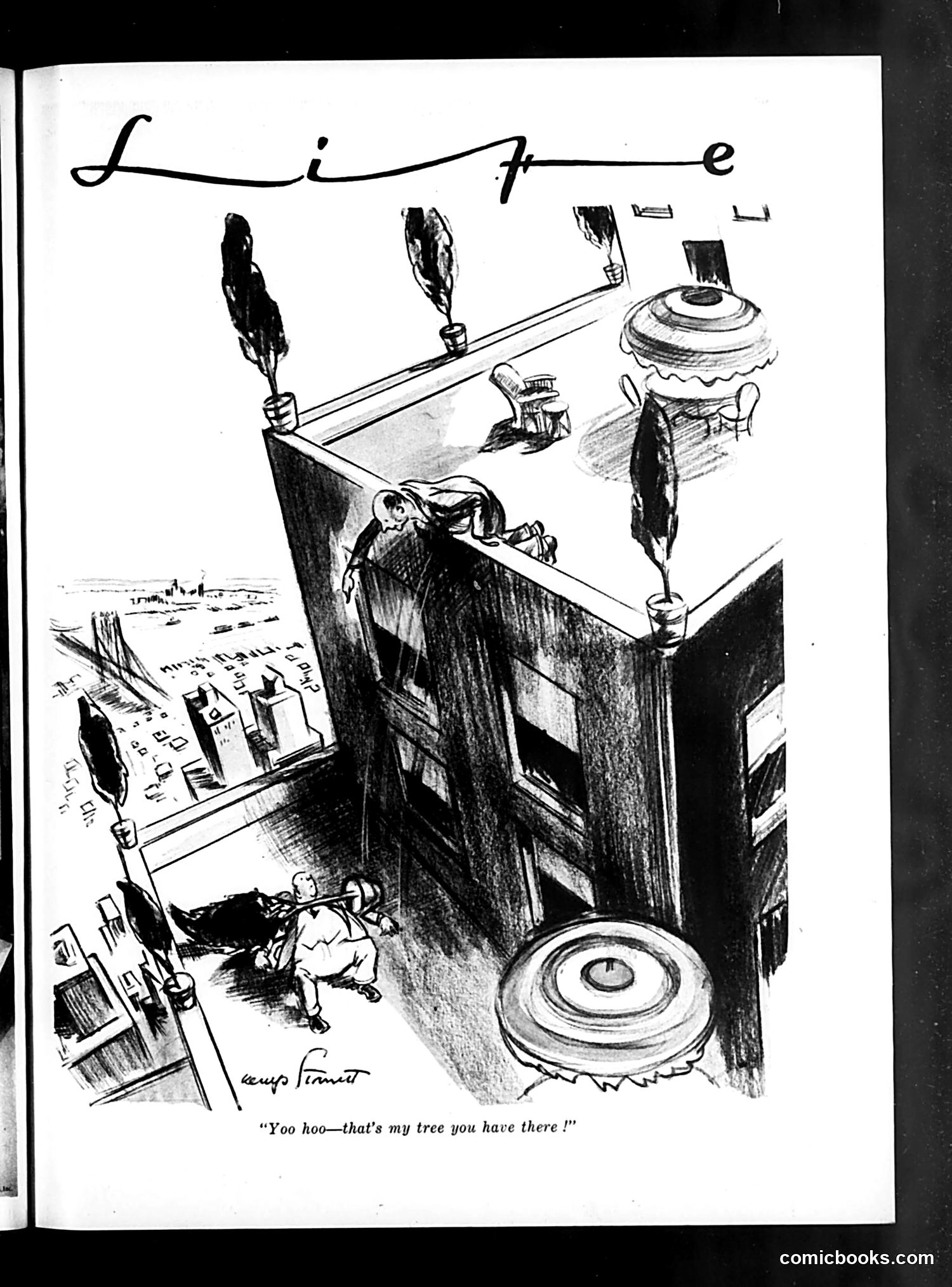
# Analysis of "Life" Magazine Cartoon This cartoon depicts a domestic dispute over a Christmas tree. A woman leans out of a building window confronting a man below, exclaiming "Yoo hoo—that's my tree you have there!" The humor stems from a mistaken identity or ownership confusion about a Christmas tree. Below, figures appear to be moving or transporting the tree, seemingly unaware they've taken someone else's property. The man being addressed appears caught in the act. The cartoon satirizes the chaos of holiday shopping and decorating—a relatable middle-class concern about mix-ups during the busy Christmas season. The artist (appears to be signed, though unclear) captures the comedic awkwardness of neighbors or strangers accidentally claiming each other's holiday purchases, a timeless source of seasonal domestic humor.
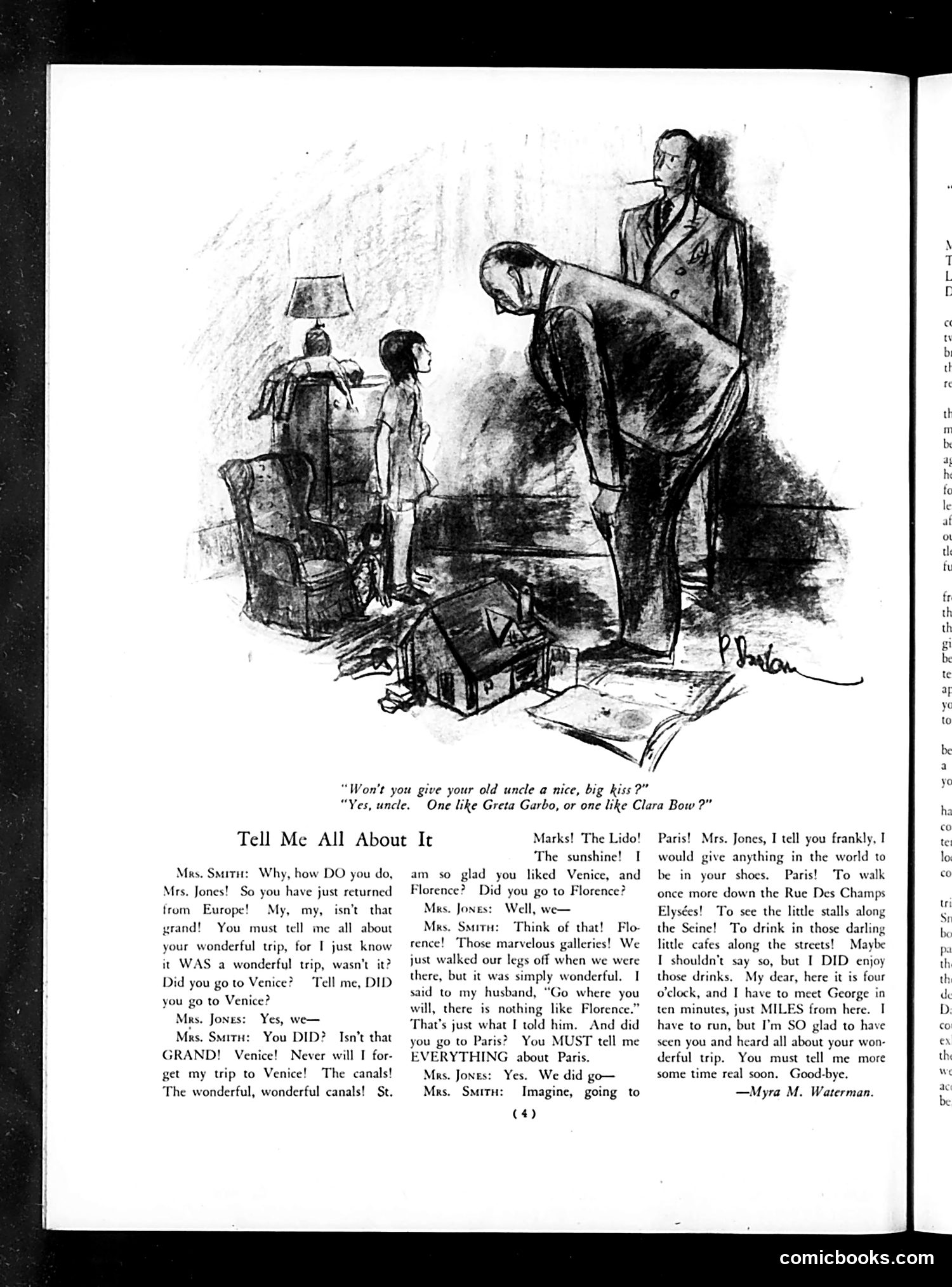
# "Tell Me All About It" This is a domestic humor piece about travel bragging. Mrs. Jones has returned from a European trip and Mrs. Smith eagerly demands details about Venice, Florence, and Paris. The cartoon shows Mrs. Jones (standing, gesturing expansively) recounting her travels while Mrs. Smith sits listening intently. The satire targets the social convention of post-vacation boasting—Mrs. Smith's breathless insistence that Mrs. Jones describe "EVERYTHING about Paris" and her complaints about being left out ("Never will I forgive you!"). The humor lies in the relatable dynamic of friends who feel obligated to listen to exhaustive travel stories, with the punchline being Mrs. Jones's promise to share "more some time real soon."
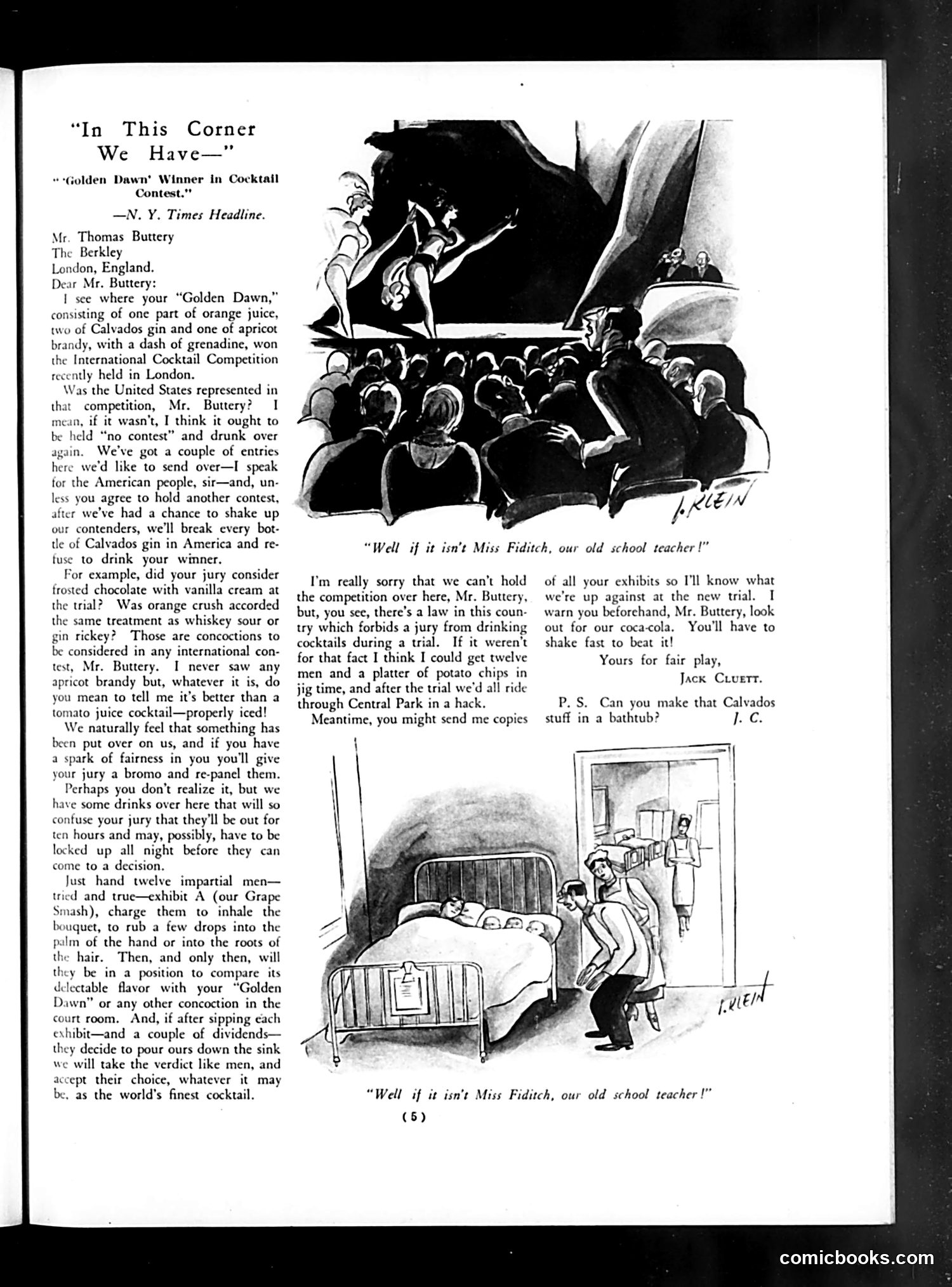
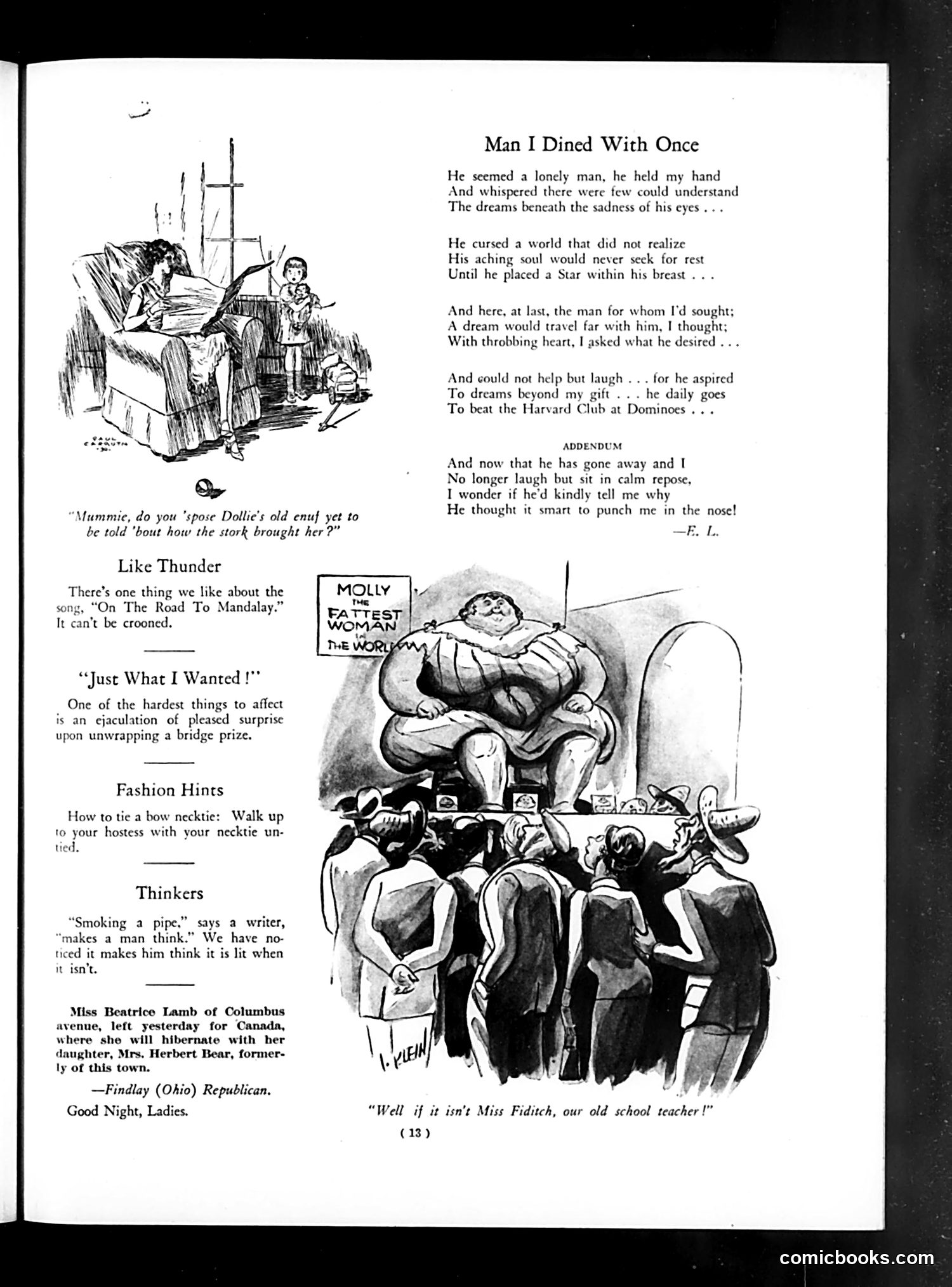
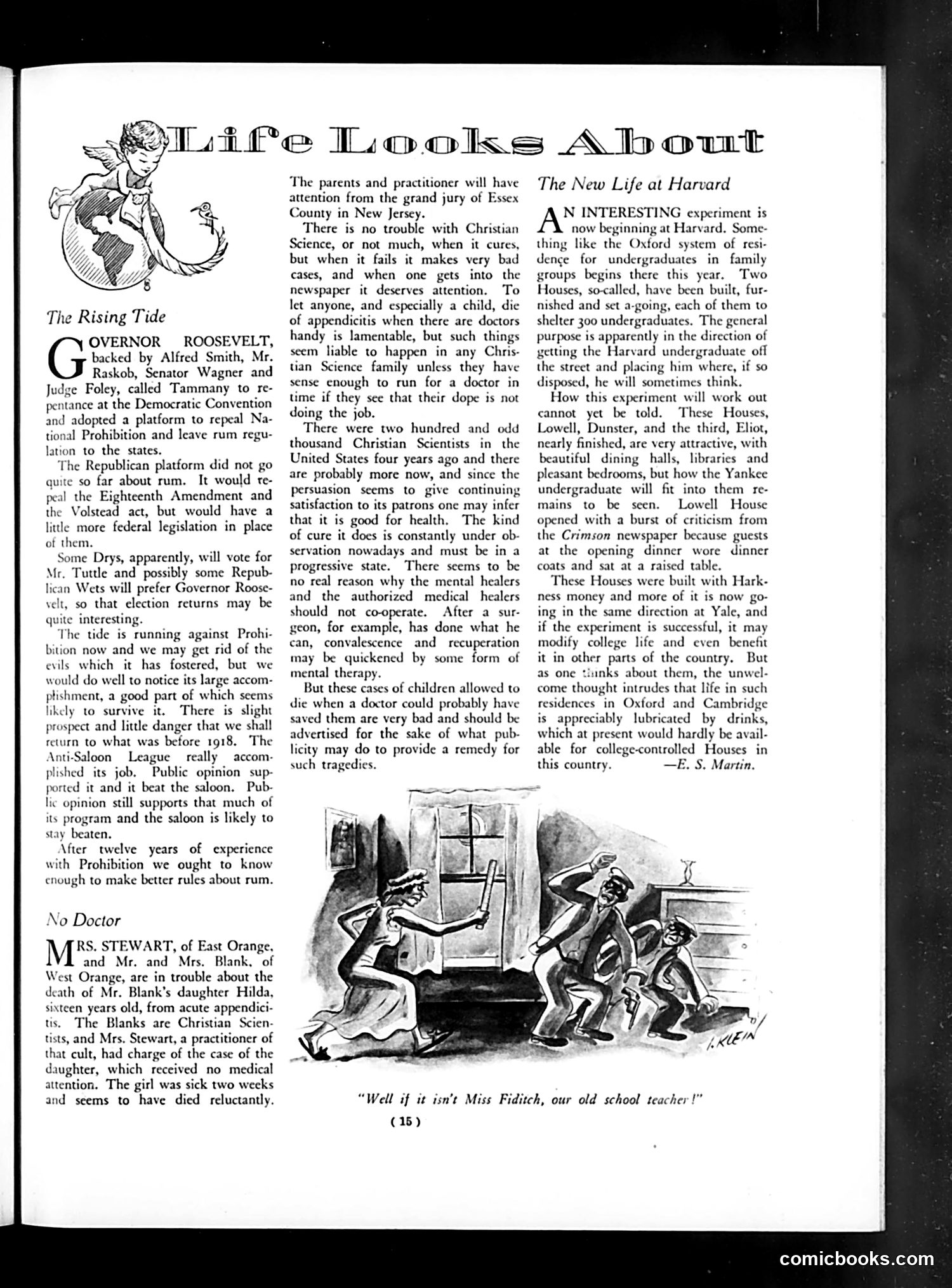
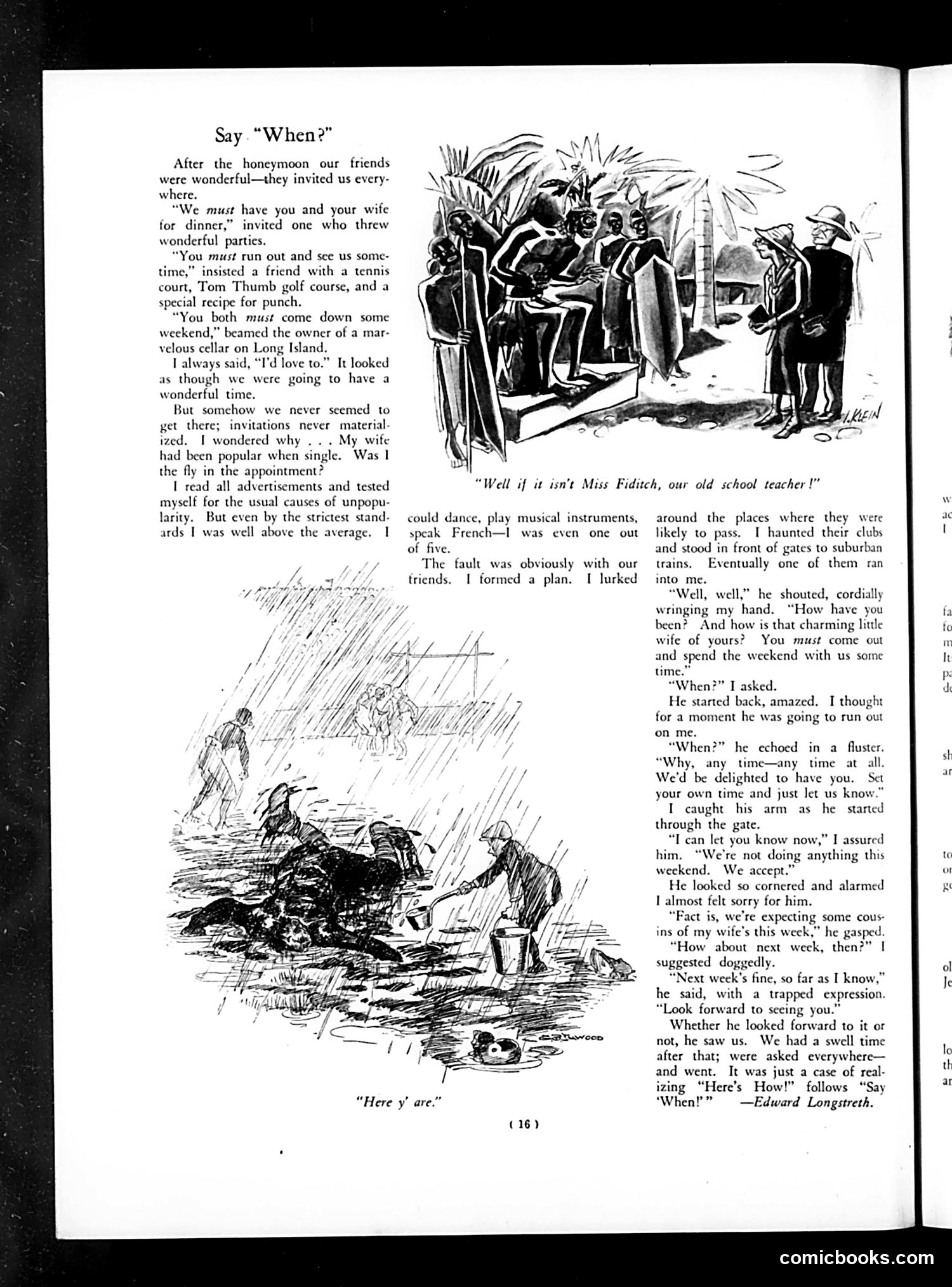
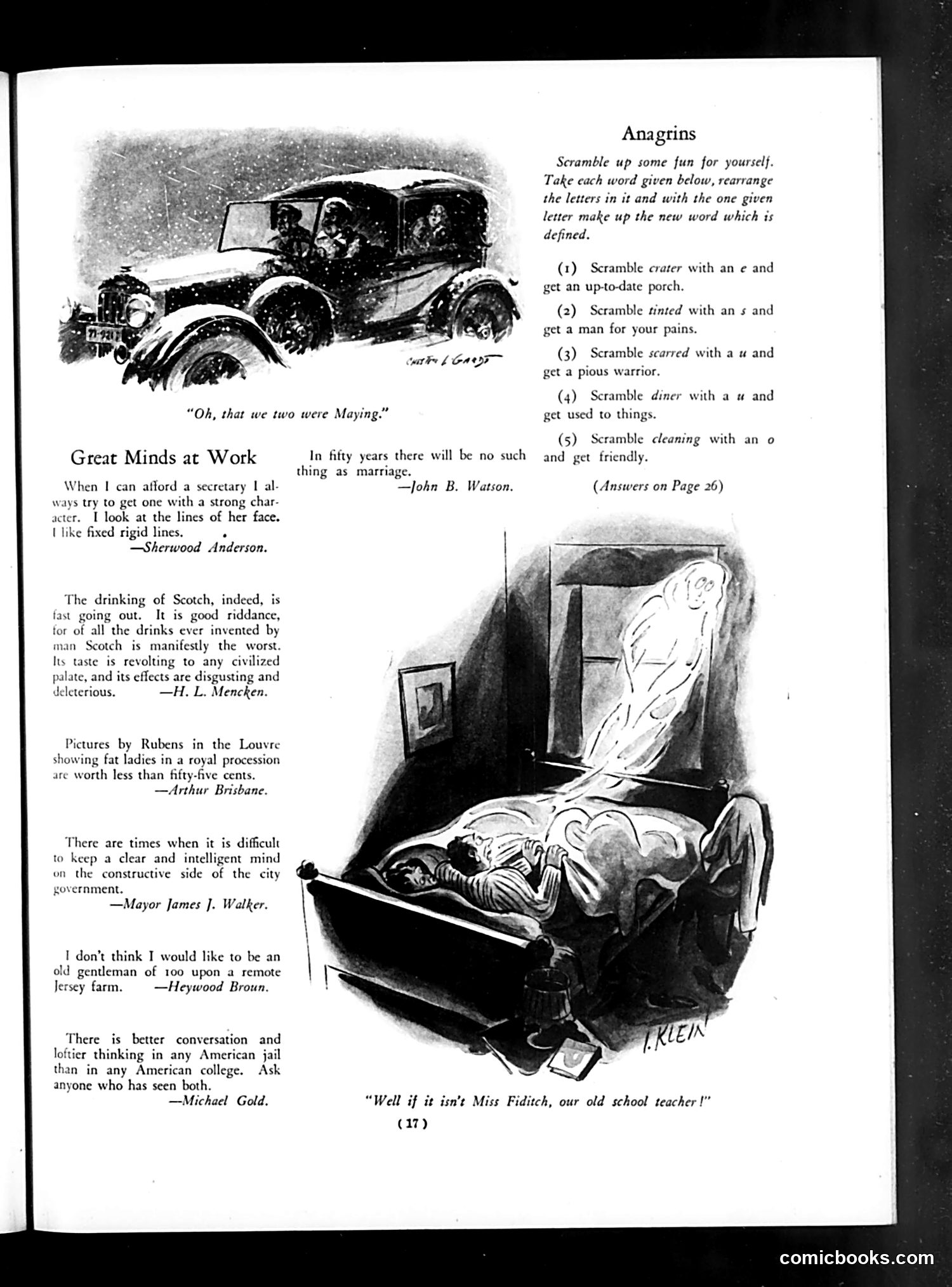
# Analysis This page contains a letter to the editor about a cocktail competition and two cartoon illustrations with the same caption: "Well if it isn't Miss Fiditch, our old school teacher!" **The cartoons' joke:** The humor appears to center on an unexpected, somewhat awkward reunion with a former teacher in an inappropriate setting—the top cartoon shows her on what appears to be a theatrical stage, the bottom in what seems to be a bedroom. The caption's surprise ("Well if it isn't...") suggests the teacher has appeared in a place the cartoonist's audience would find comic or unseemly for a schoolteacher, implying she's changed circumstance or reputation since teaching. The accompanying letter discusses a "Golden Dawn" cocktail that won a London competition and proposes holding a similar contest in America, with humorous suggestions about jury procedures.
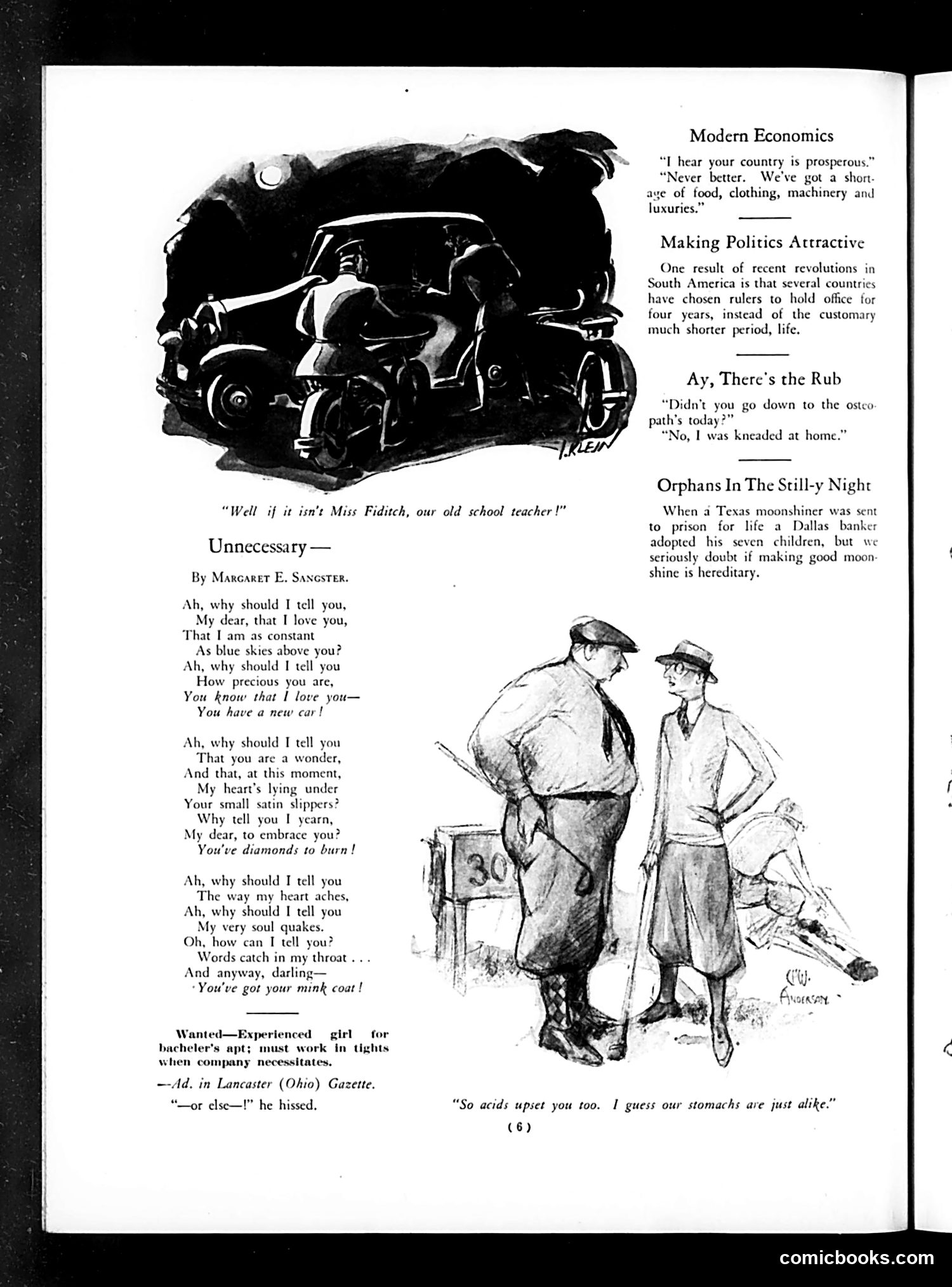
# Page Analysis: Life Magazine Satire This page contains three separate humorous pieces: 1. **"Unnecessary"** — A poem by Margaret E. Sangster mocking overly sentimental romantic declarations, using ironic repetition to suggest that expressing love constantly becomes tedious rather than touching. 2. **"Modern Economics"** — A brief joke about economic scarcity, suggesting prosperous nations still lack basic goods (food, clothing, machinery, luxuries). 3. **"Orphans In The Still-y Night"** — An illustrated joke about a Texas moonshiner sent to prison who adopted seven children. The cartoon shows two men with a barrel; the caption suggests their "stomachs are just alike," implying the children were adopted primarily to help consume illegal whiskey rather than from genuine charitable motives. The humor targets both Prohibition-era bootlegging and questionable parenting.
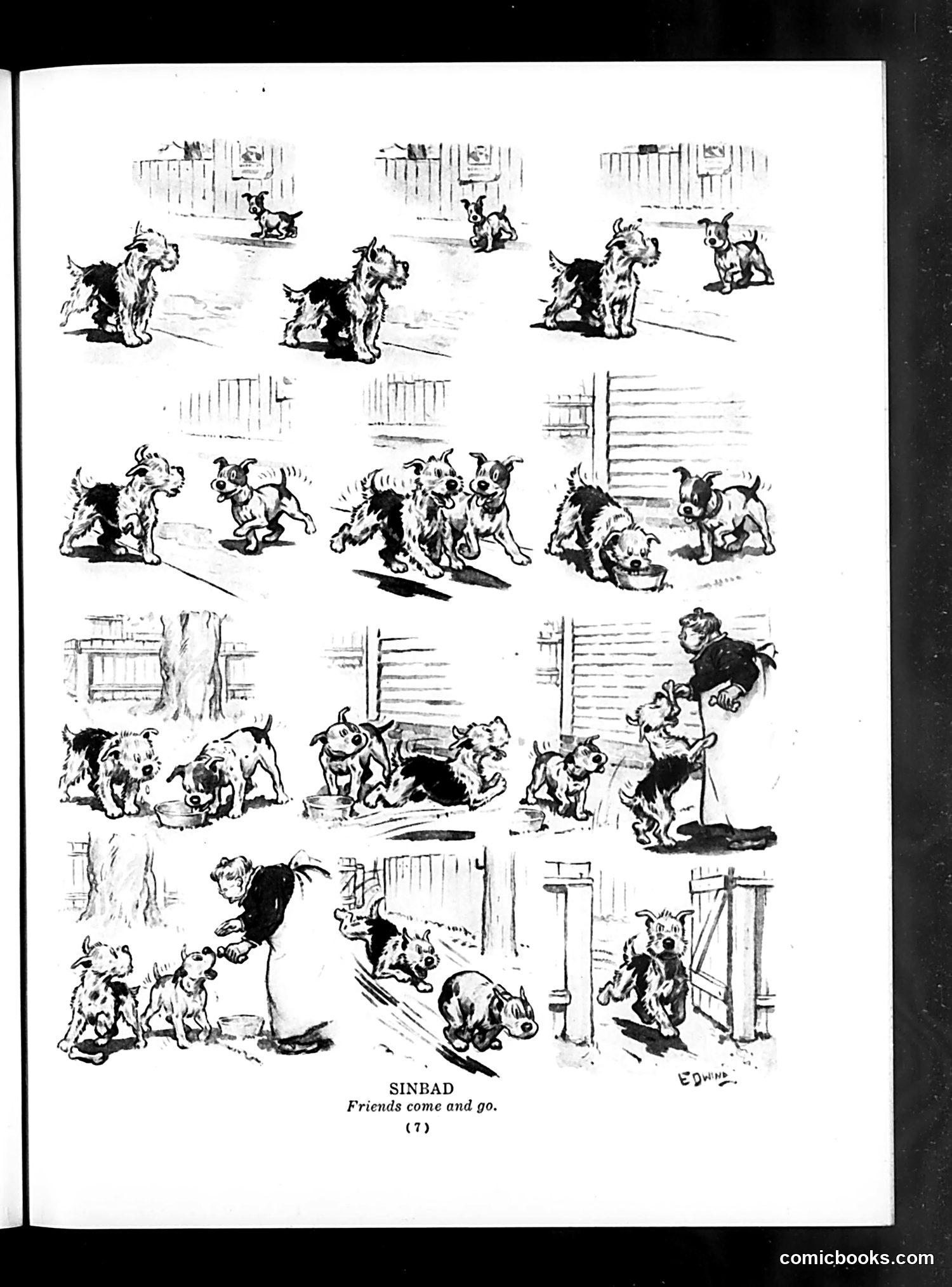
# Sinbad: Friends Come and Go This is a comic strip titled "Sinbad" subtitled "Friends come and go," credited to what appears to be "E. Dirks" or similar (signature partially visible). The strip depicts a dog character (Sinbad) in various scenes with other dogs and people. The narrative appears to show Sinbad's changing relationships and social situations - dogs arriving and departing, interactions around food bowls, play and fighting, and what looks like someone taking away or removing dogs. The joke plays on the phrase "friends come and go" - literally showing multiple dogs appearing and disappearing from Sinbad's life throughout the scenes. It's gentle humor about the transient nature of animal friendships and the domestic chaos of having multiple dogs around.
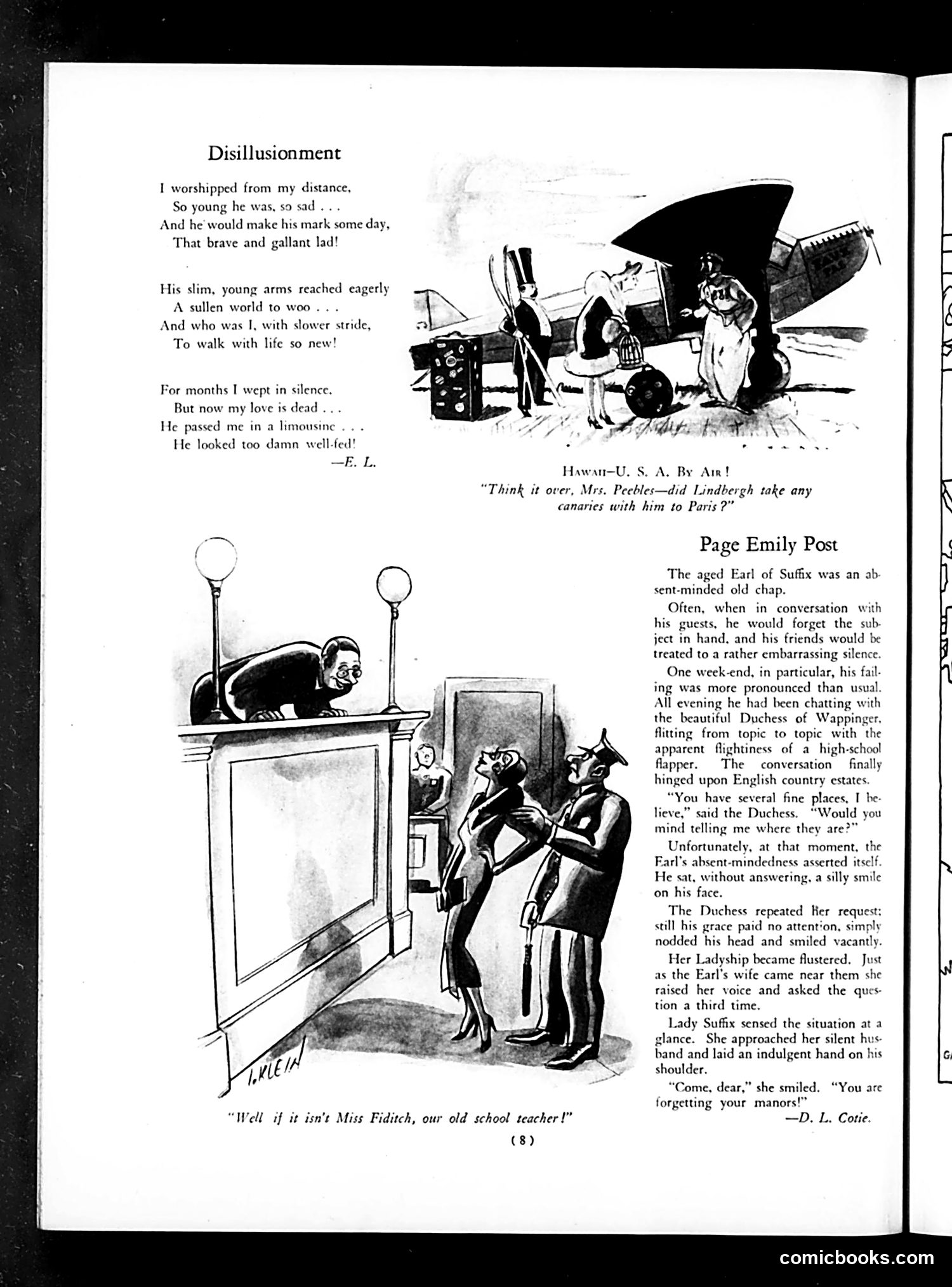
# Page Analysis: Life Magazine This page contains two distinct pieces: 1. **"Disillusionment" (poem by E.L.)**: A sentimental poem about a young man the narrator admired from afar, who promised greatness but ultimately disappointed—"He looked too damn well fed!" 2. **"Page Emily Post" (by D.L. Cotte)**: A humorous social commentary featuring the Earl of Suffix, an absent-minded aristocrat. The cartoon illustrates a scene where the Earl fails to answer the Duchess of Wappinger's repeated questions about his English estates. His wife, Lady Suffix, must intervene, reminding him he's "forgetting your manors"—a pun on "manners." The satire mocks absent-minded upper-class pretension and social etiquette through wordplay about forgetting both proper behavior and actual property ownership.
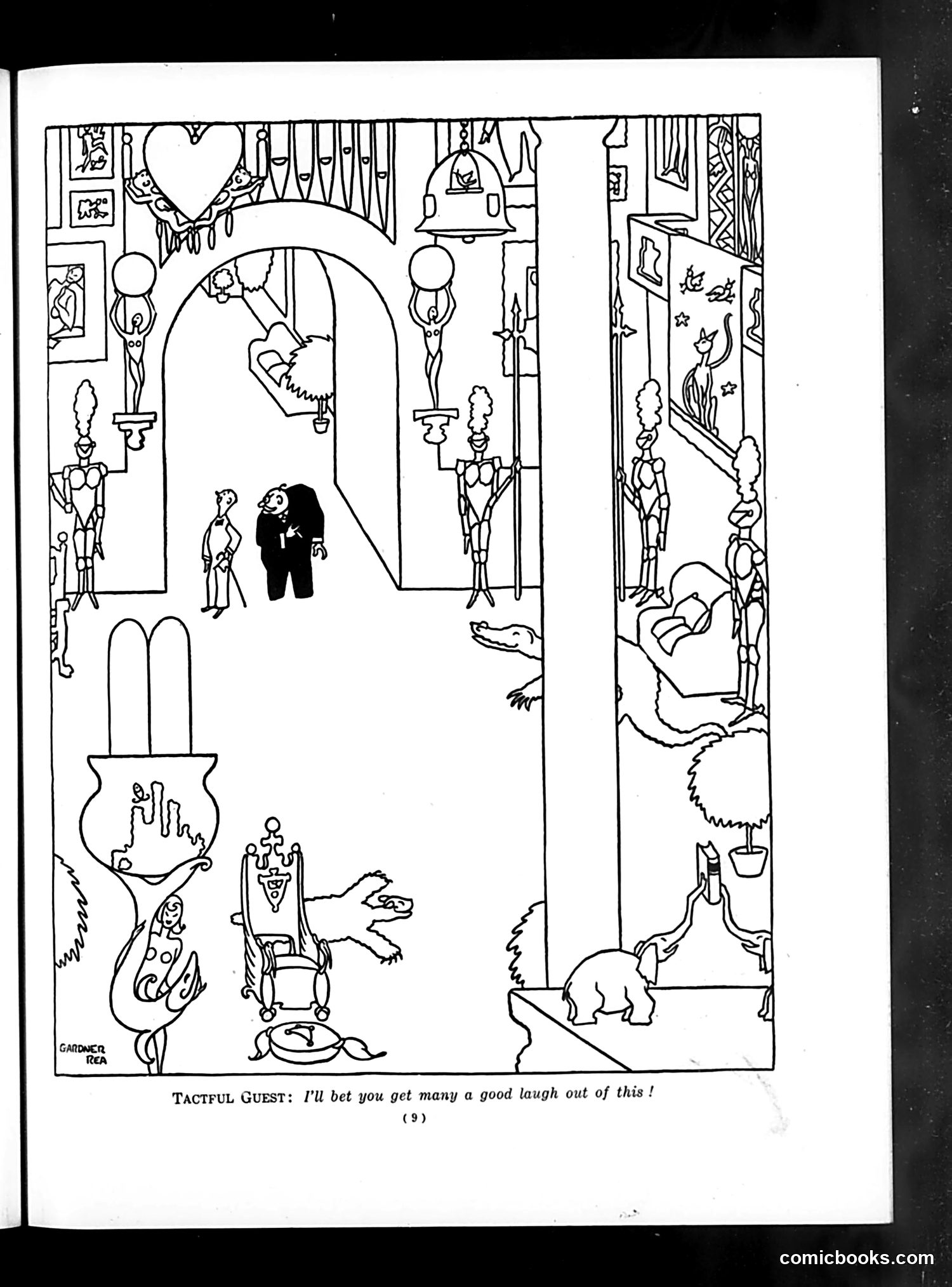
# Analysis This is a single cartoon by Gardner Rea titled "Tactful Guest," with the caption: "I'll bet you get many a good laugh out of this!" The cartoon depicts a surreal, elaborate interior space filled with decorative statuary, potted plants, and ornamental objects. Two human figures (appearing to be a couple) stand in the center, while various grotesque or fantastical creatures—including what appear to be dinosaurs or prehistoric beasts—inhabit the same ornate room alongside them. The humor appears to derive from the absurdity of treating these monstrous creatures as ordinary household companions or decorative elements, much as one would accept unusual art or pets. The "tactful guest" presumably makes a polite comment about this bizarre collection, finding humor in the surreal juxtaposition of refined interior decoration with prehistoric or monstrous inhabitants.
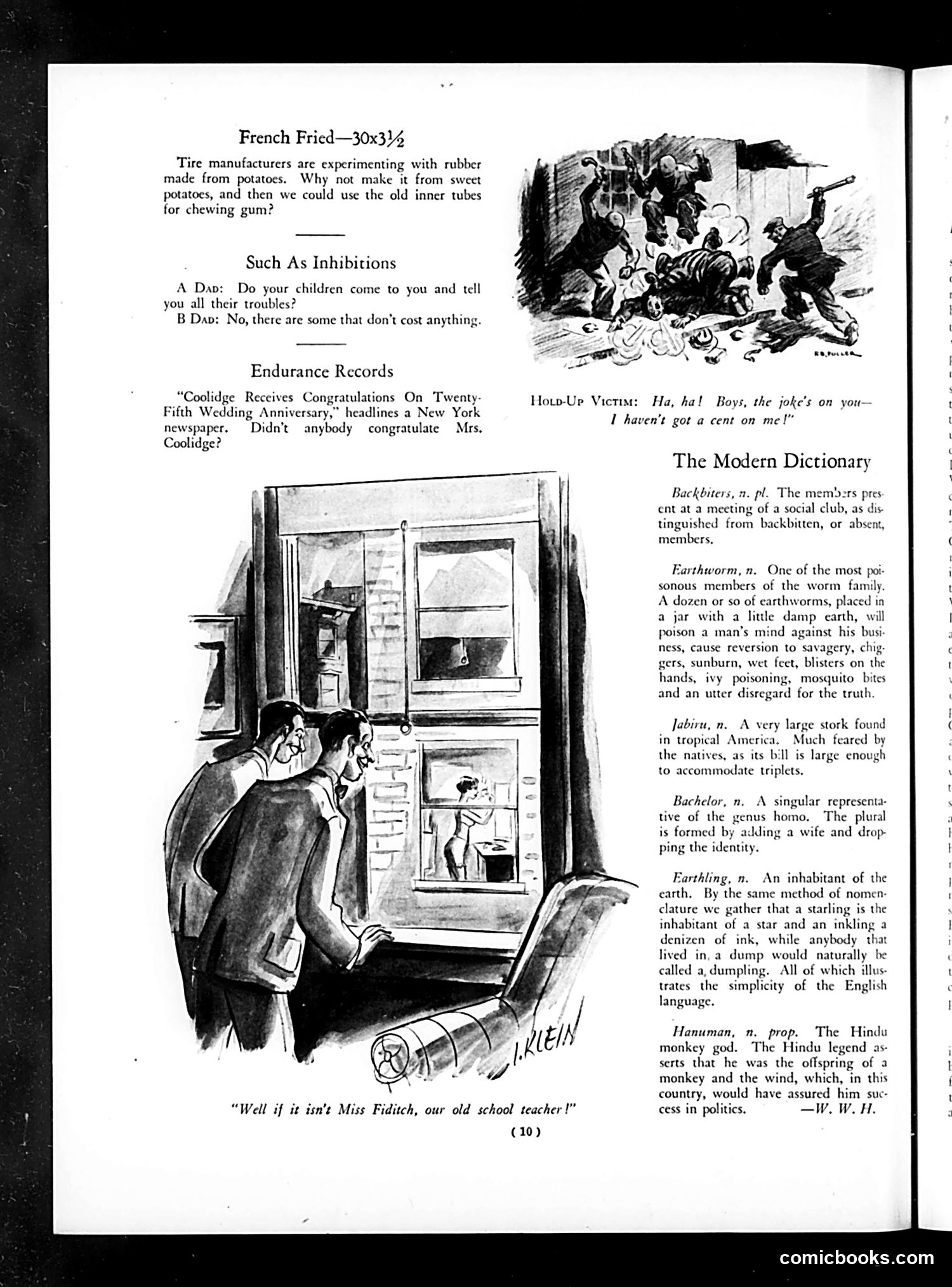
# Analysis of Life Magazine Page This page contains several brief humorous items rather than a sustained political cartoon: 1. **"French Fried"** is a pun suggesting tire manufacturers use sweet potatoes instead of rubber, with the absurdist joke that old inner tubes could become chewing gum. 2. **"Such As Inhibitions"** presents a quick joke about parenting—one father claims his children confess their troubles; another claims his don't cost anything (implying they cause no problems). 3. **"Endurance Records"** mocks a newspaper headline about a 25th wedding anniversary that failed to congratulate the wife, suggesting indifference to marital achievement. 4. The main cartoon shows two men viewing a shop window displaying Miss Fiddich, "our old school teacher," suggesting she's become a mannequin or display figure—a gentle jab at aging or obsolescence.