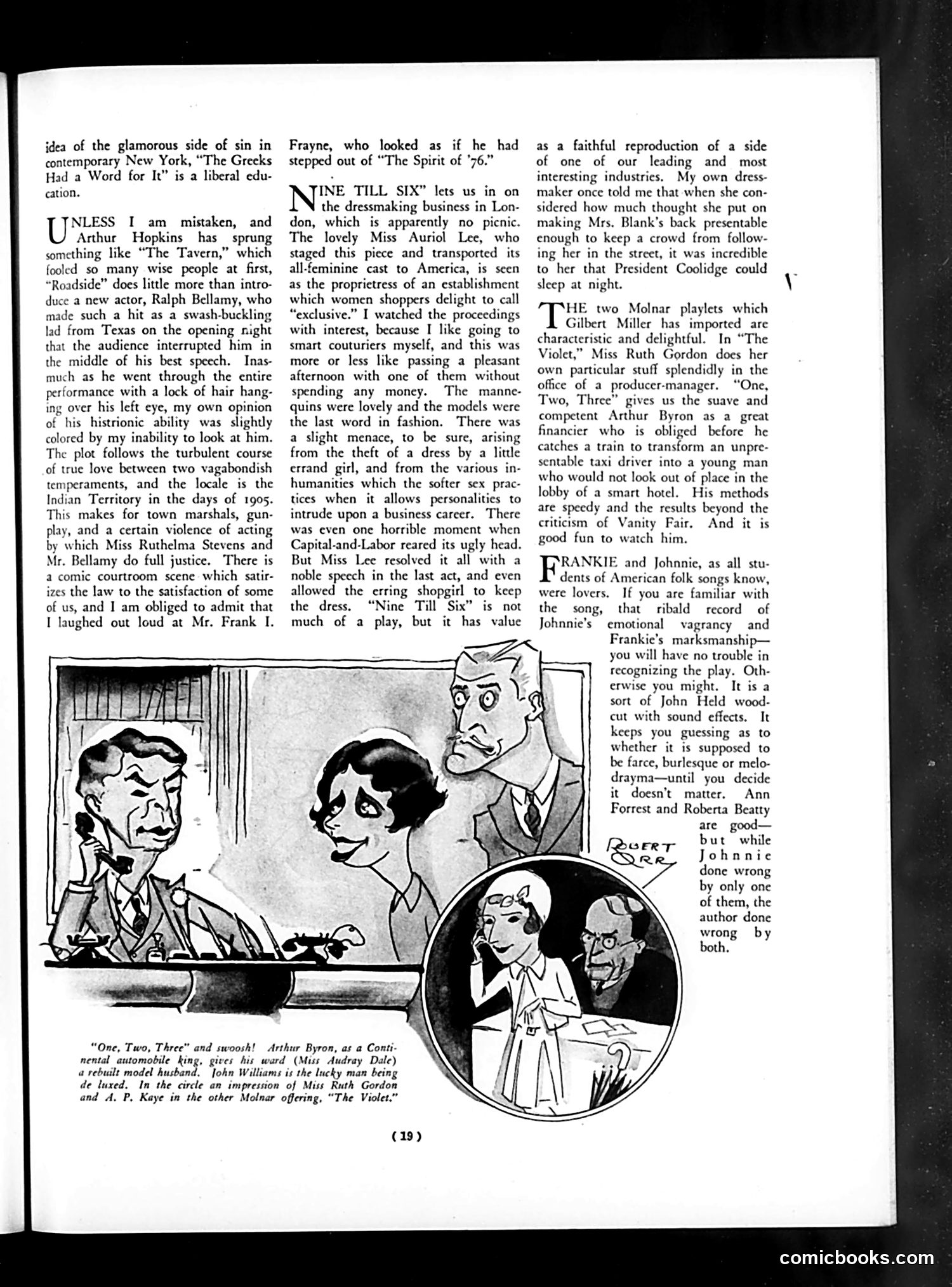
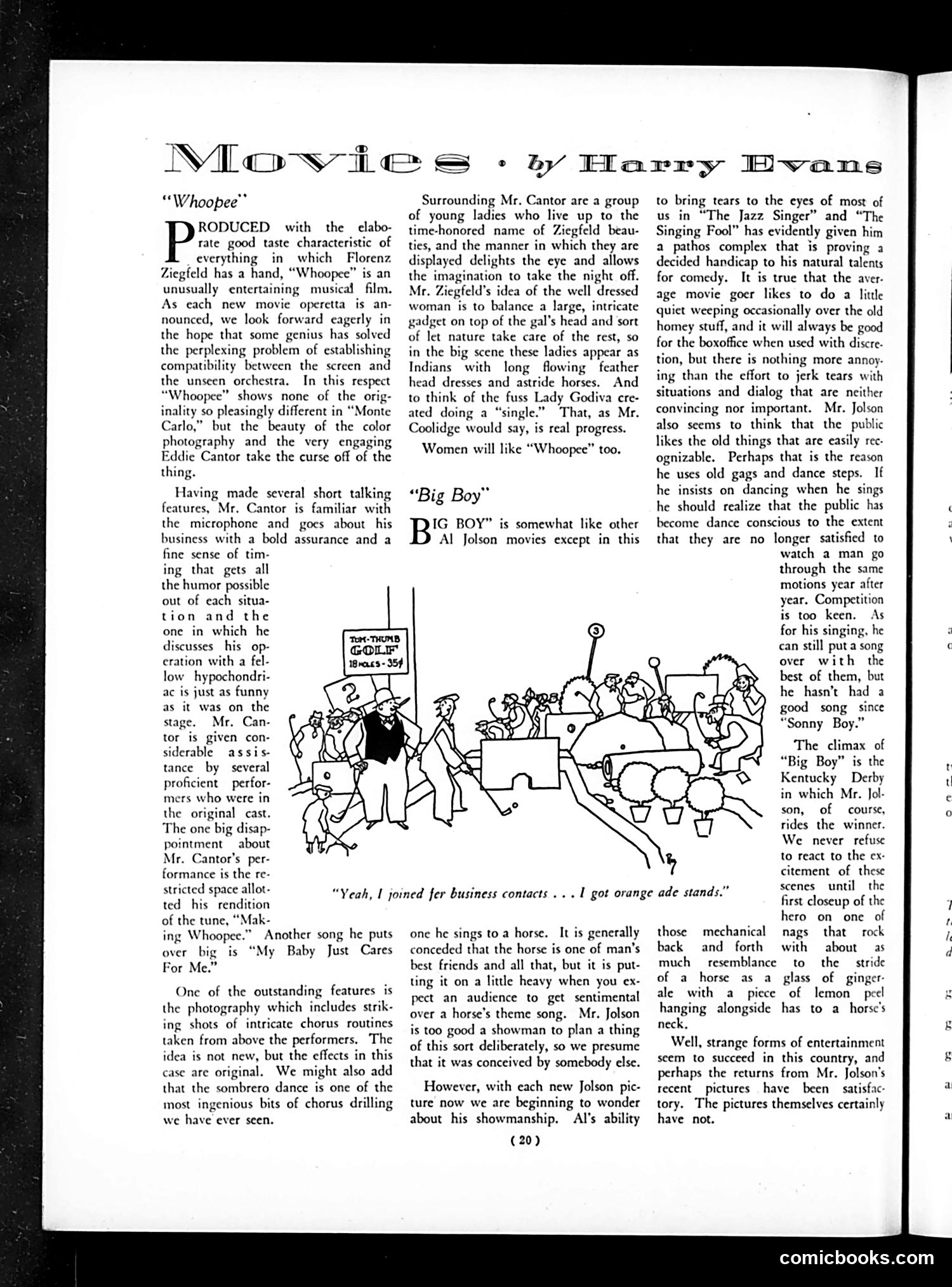
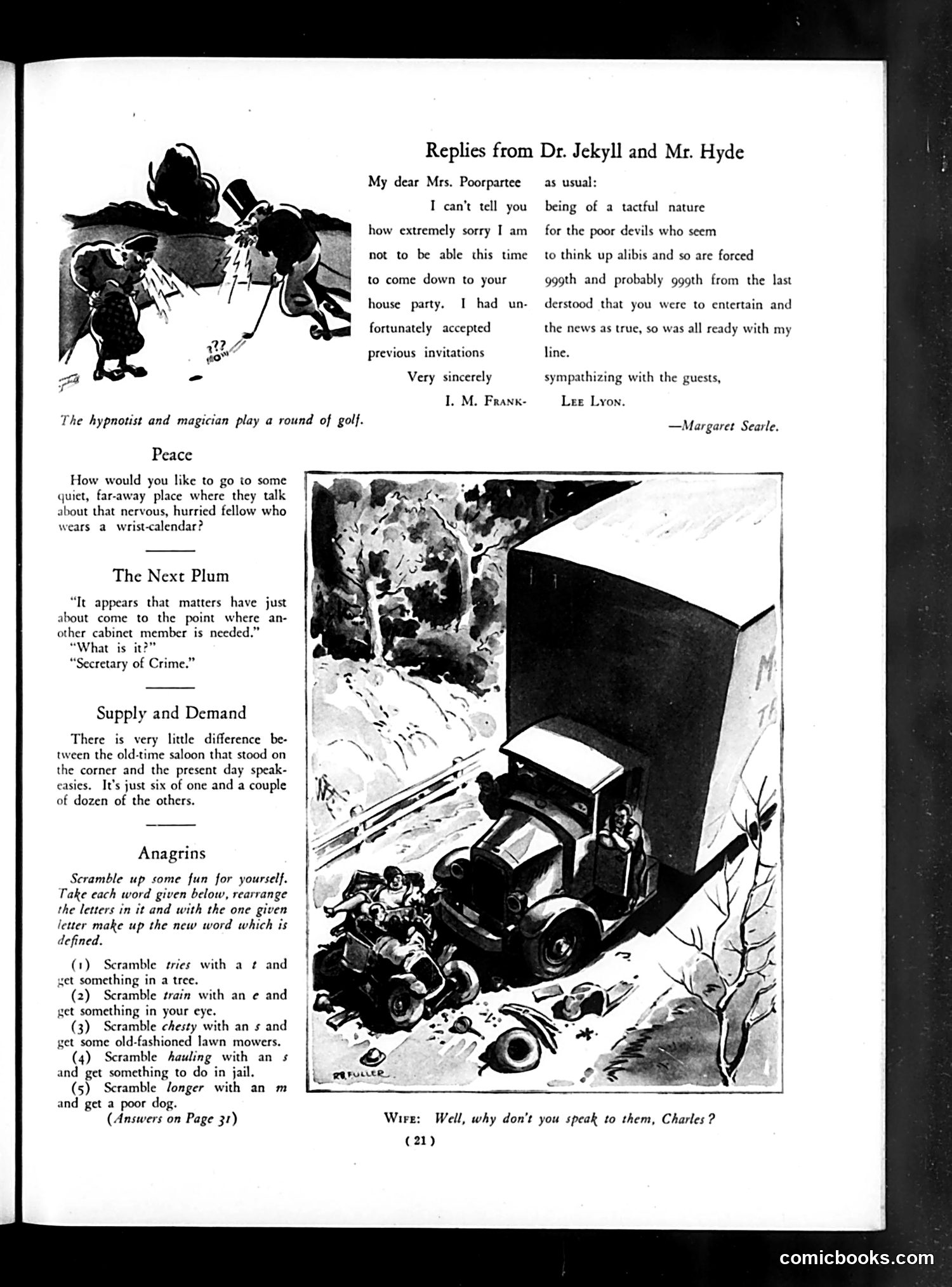
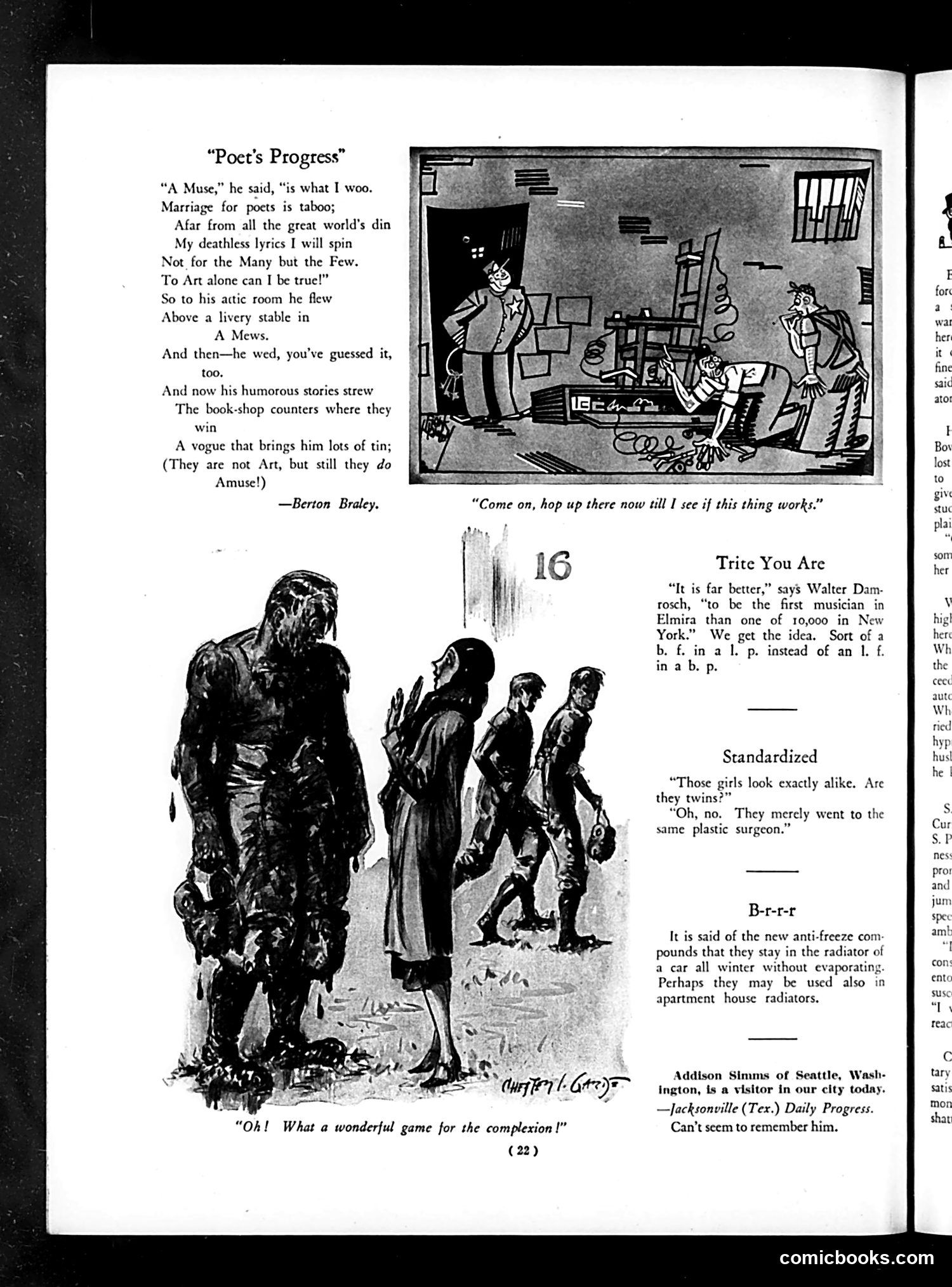
A complete issue · 36 pages · 1930
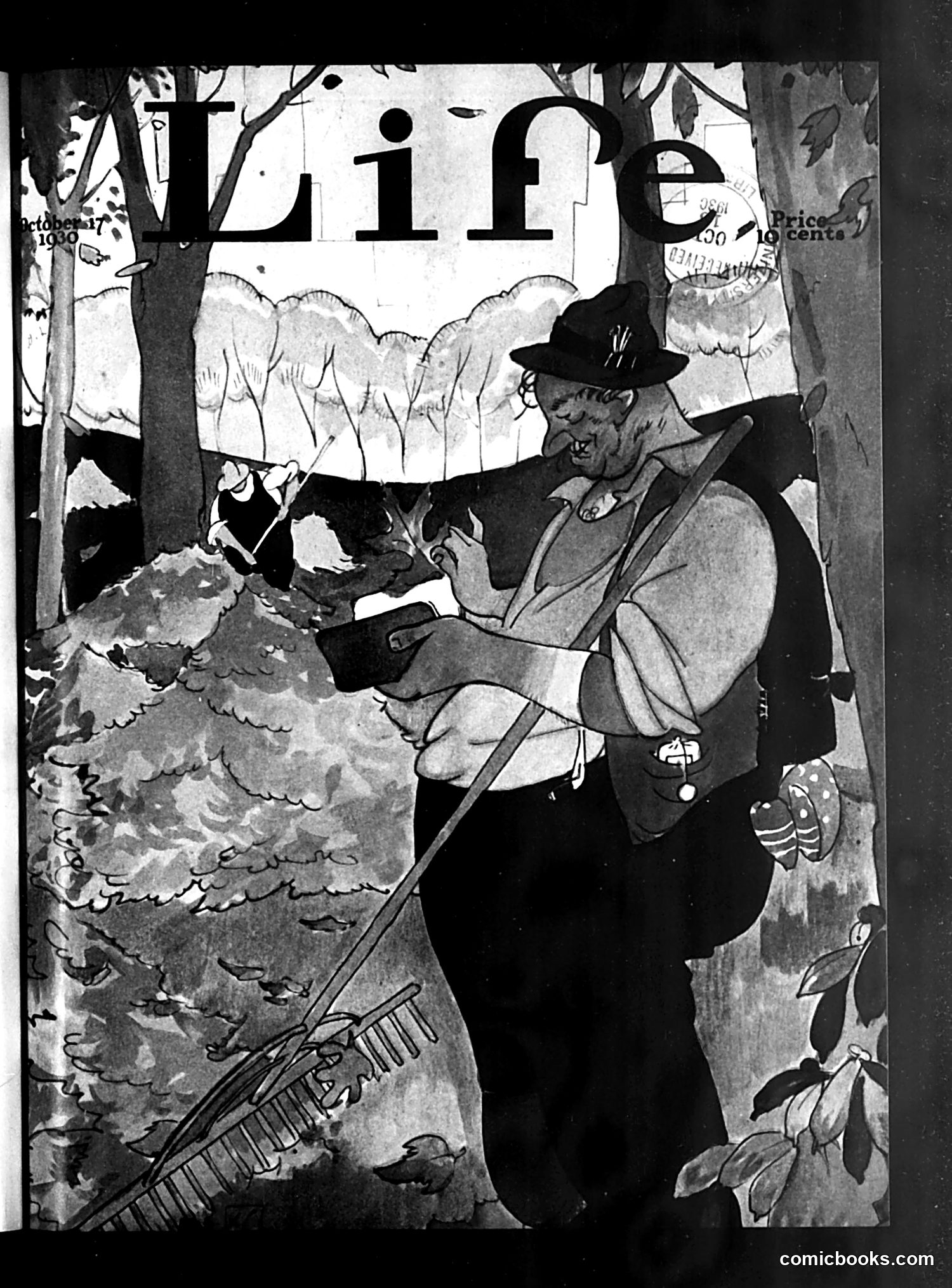
Life — October 17, 1930
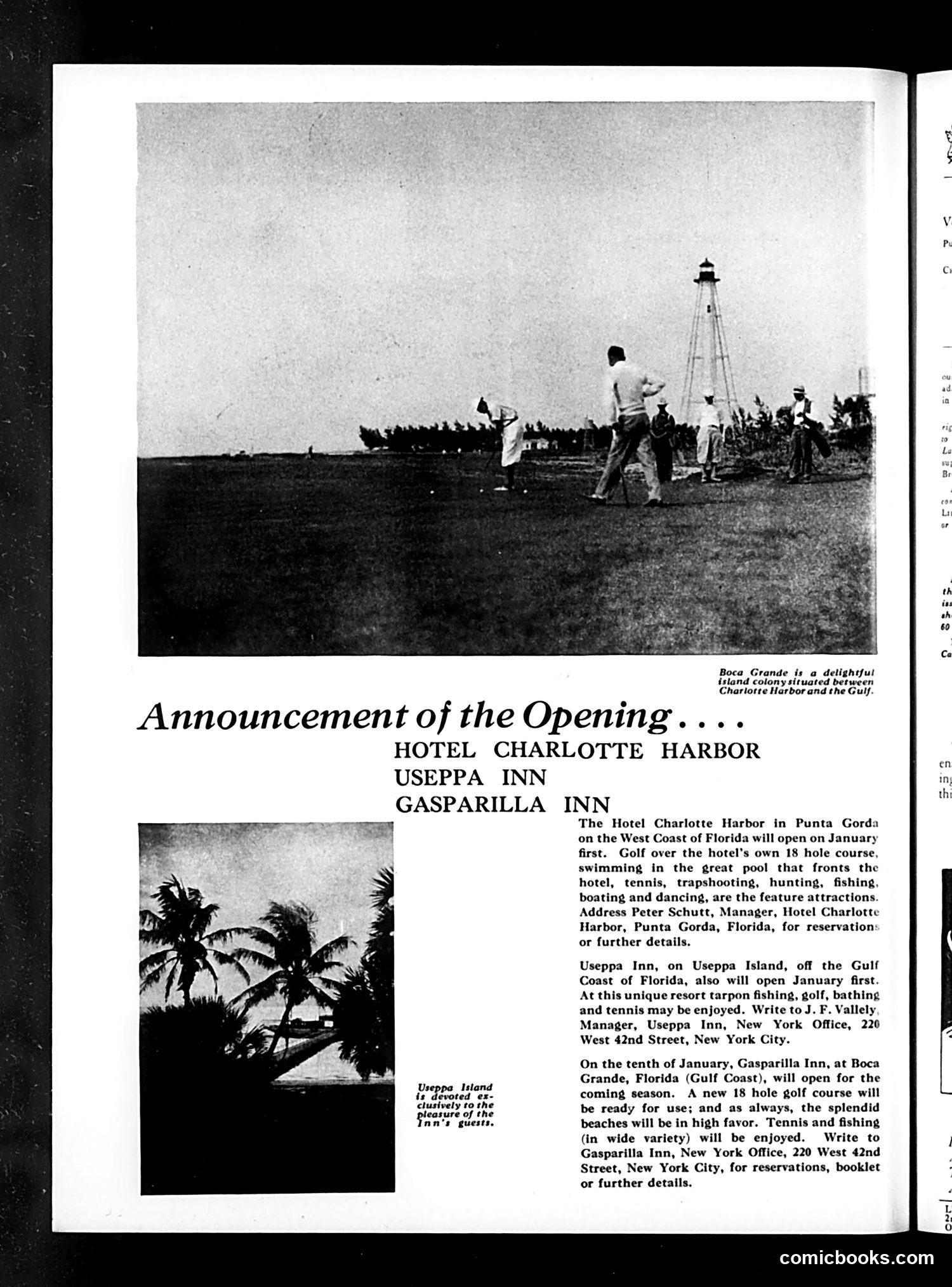
# Analysis This page is primarily **advertising**, not political satire or editorial content. It announces the opening of three Florida resort hotels/inns scheduled to open in January: 1. **Hotel Charlotte Harbor** in Punta Gorda 2. **Useppa Inn** on Useppa Island (Gulf Coast) 3. **Gasparilla Inn** in Boca Grande Each resort promotes leisure amenities: golf courses, swimming, tennis, fishing, hunting, and boating. The top photograph shows what appears to be an early aviation or sporting event in a Florida landscape. The lower image depicts palm trees on Useppa Island. This reflects the 1920s Florida real-estate and tourism boom, when wealthy Americans invested heavily in developing coastal Florida as a winter destination. The advertisements target affluent readers seeking upscale vacation experiences.
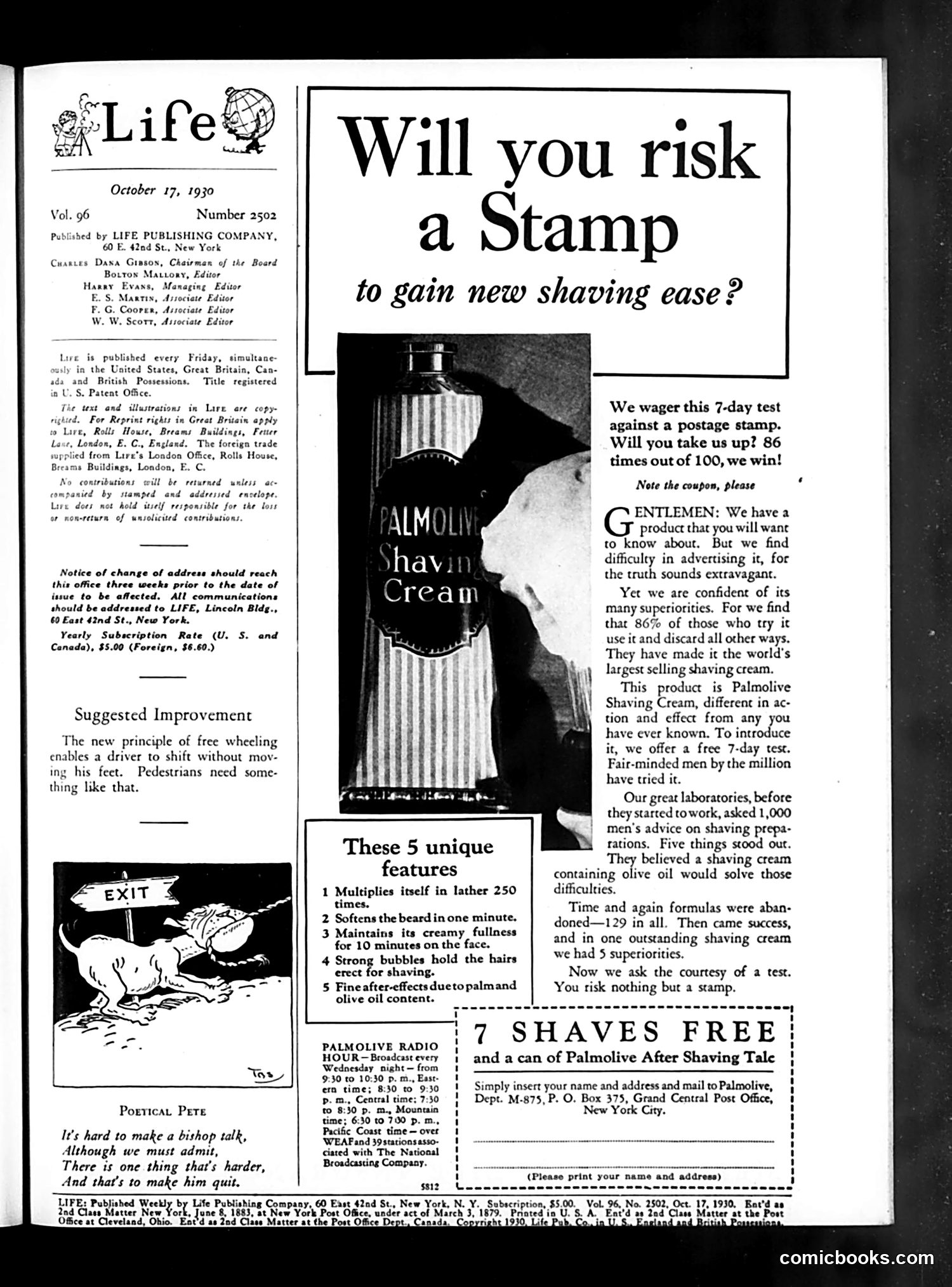
# Analysis of Life Magazine Page, October 17, 1939 This page is primarily **advertising content** for Palmolive Shaving Cream, not satirical material. The main feature is a large product advertisement offering "7 shaves free" as a promotional giveaway. The only cartoon element is **"Poetical Pete"** (lower left)—a small, unrelated joke about bishops that has no political significance. It reads: "It's hard to make a bishop talk, / Although we must admit, / There is one thing that's harder, / And that's to make him quit." The page also includes a brief section titled "Suggested Improvement" about free-wheeling automobiles, but this is minor editorial content, not satire. The issue date (October 1939) places this during WWII's early stages, though nothing on this specific page reflects contemporary events.
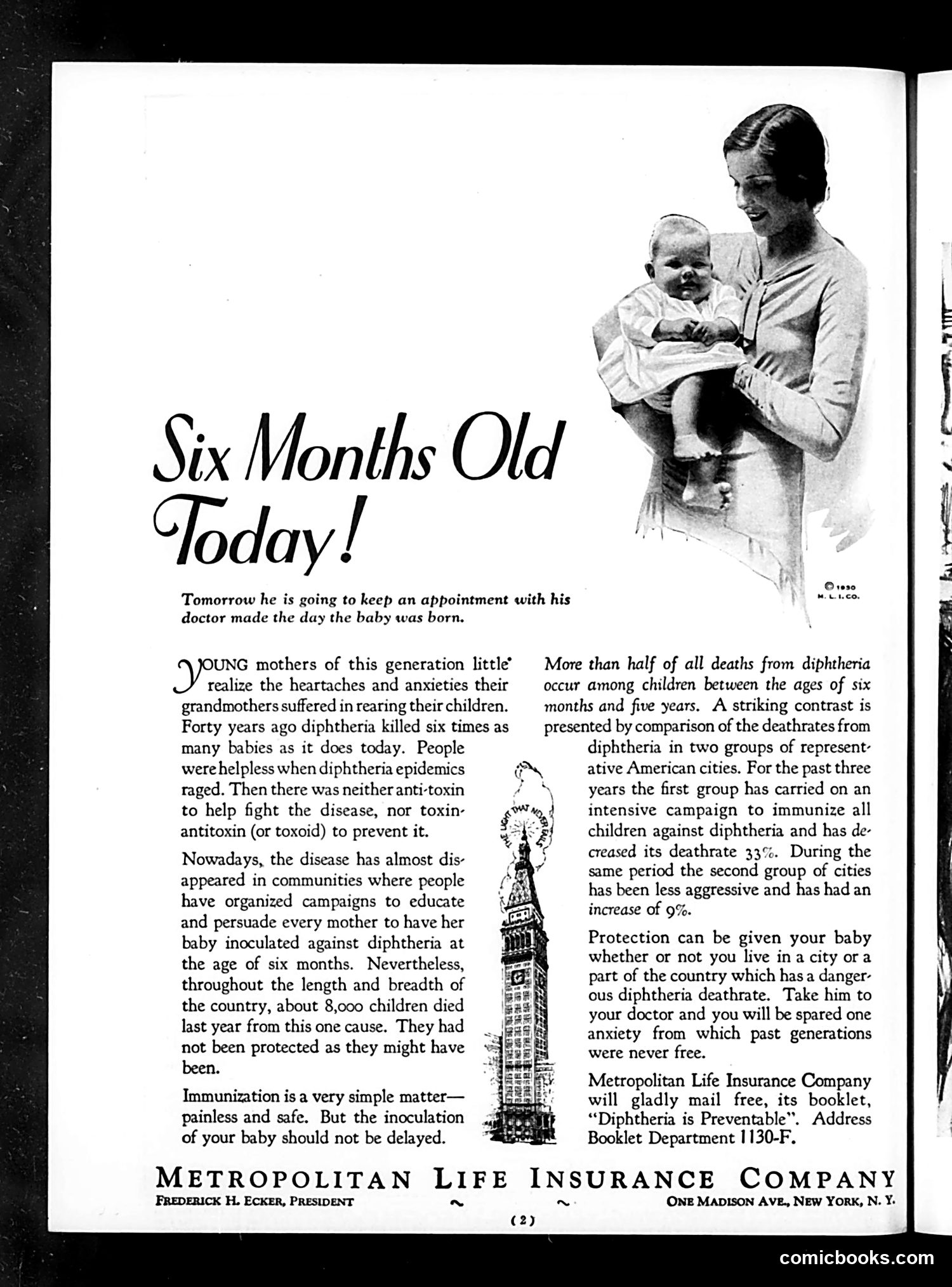
# Analysis This is a **public health advertisement**, not satire or political cartoon. Metropolitan Life Insurance Company is promoting diphtheria immunization for infants. The image shows a mother holding a six-month-old baby. The text emphasizes that diphtheria was historically a major child killer—"forty years ago" it killed six times as many babies as it does currently. The advertisement credits organized public health campaigns with this success, noting that cities conducting aggressive immunization programs reduced diphtheria deaths by 13.5%, while less active cities saw only a 9% decrease. The ad urges mothers to take their babies to doctors for immunization at six months, framing it as a simple, safe procedure. It's essentially corporate-sponsored public health messaging encouraging vaccination—a striking contrast to modern vaccine hesitancy debates.
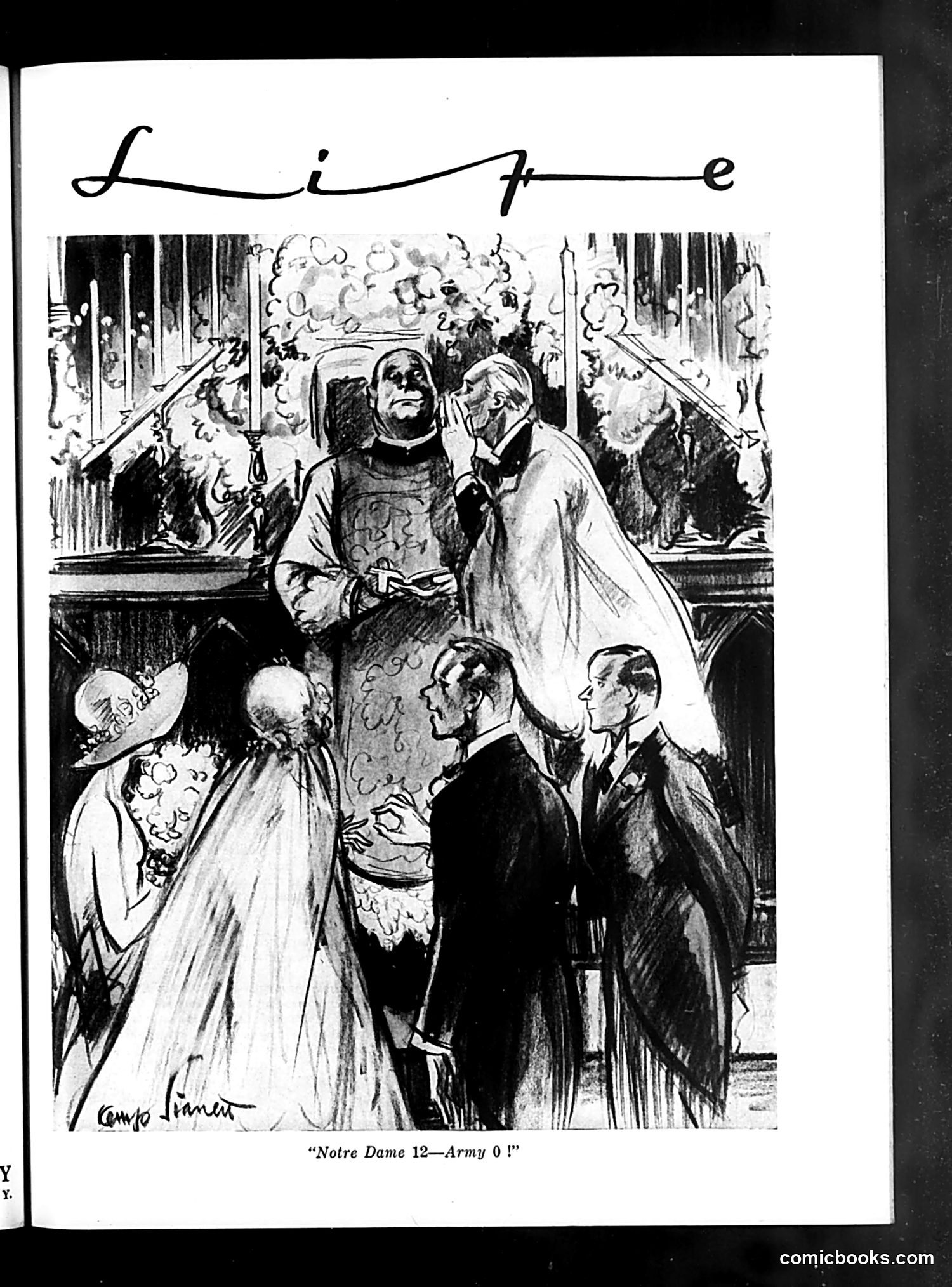
# "Notre Dame 12—Army 0 1" This is a satirical cartoon about a college football game between Notre Dame and the Army. The caption score indicates Notre Dame defeated Army 12-0. The cartoon depicts what appears to be a religious or formal ceremony, with a figure in religious vestments (likely a priest or bishop) at the center, surrounded by well-dressed spectators and attendants. The artist seems to be satirizing the intensity and almost religious fervor surrounding college football, particularly this specific rivalry game. By framing the football victory as a quasi-religious spectacle complete with ceremonial figures and reverent crowds, the cartoonist mocks how Americans—and perhaps Catholics specifically, given Notre Dame's Catholic heritage—treated college football with quasi-spiritual devotion. The joke critiques the excessive cultural importance placed on athletics.
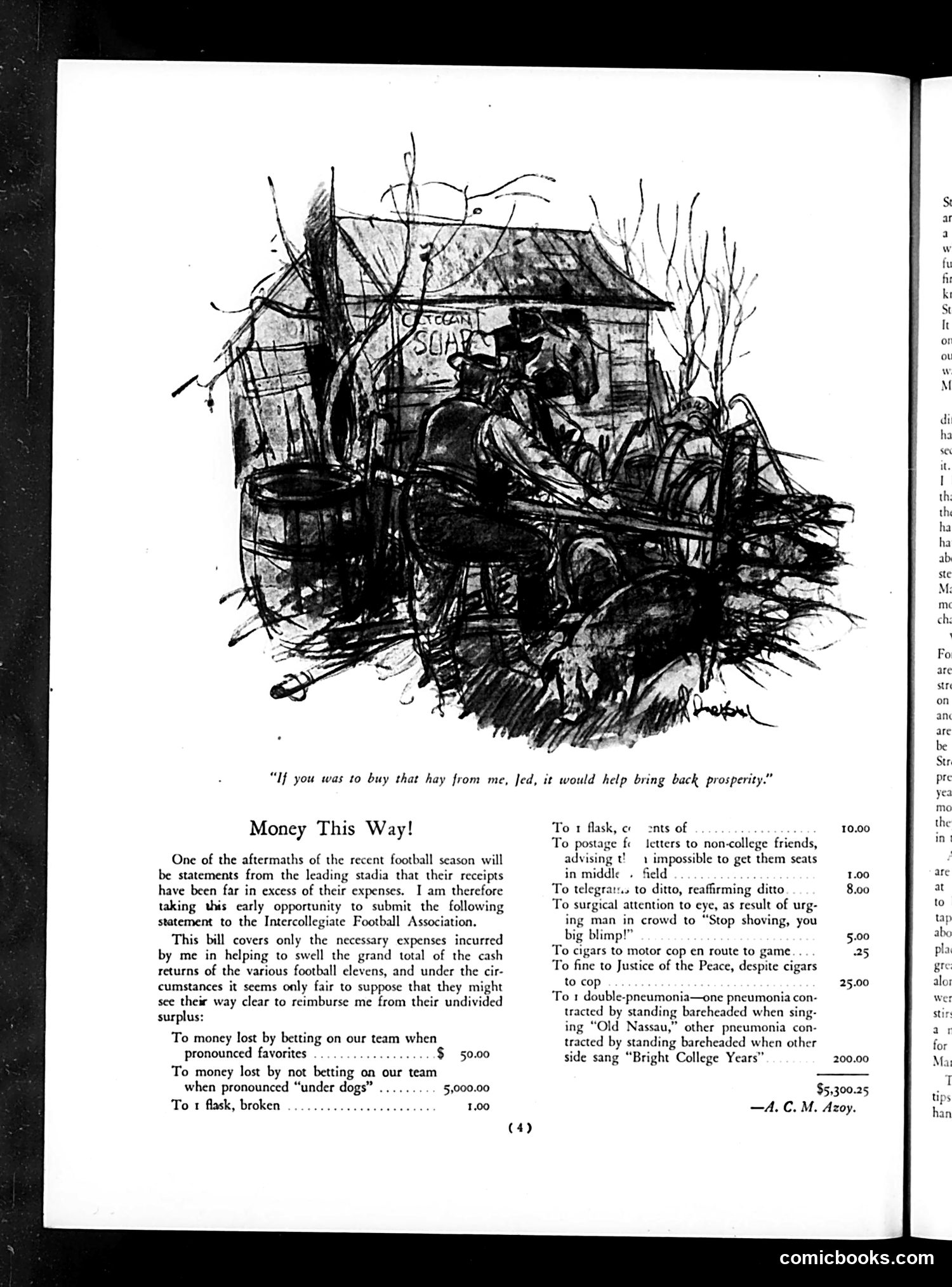
# Analysis The cartoon depicts a beggar or street vendor hawking goods outside what appears to be a small shop or stall marked "SOAP." The accompanying article, "Money This Way!", satirizes university football stadiums seeking financial reimbursement from the Intercollegiate Football Association after the recent season. The cartoon illustrates the satire's central point: just as the beggar must hustle goods to survive, struggling stadiums are forced into undignified financial appeals. The list itemizes absurd "expenses" stadiums claim to justify reimbursement—from money lost through betting to double-pneumonia contracted by singers performing at games—mocking the transparently inflated justifications universities provide. The satire suggests universities are desperate and willing to claim any expense, no matter how ridiculous or tenuous, to recover losses from their football operations.
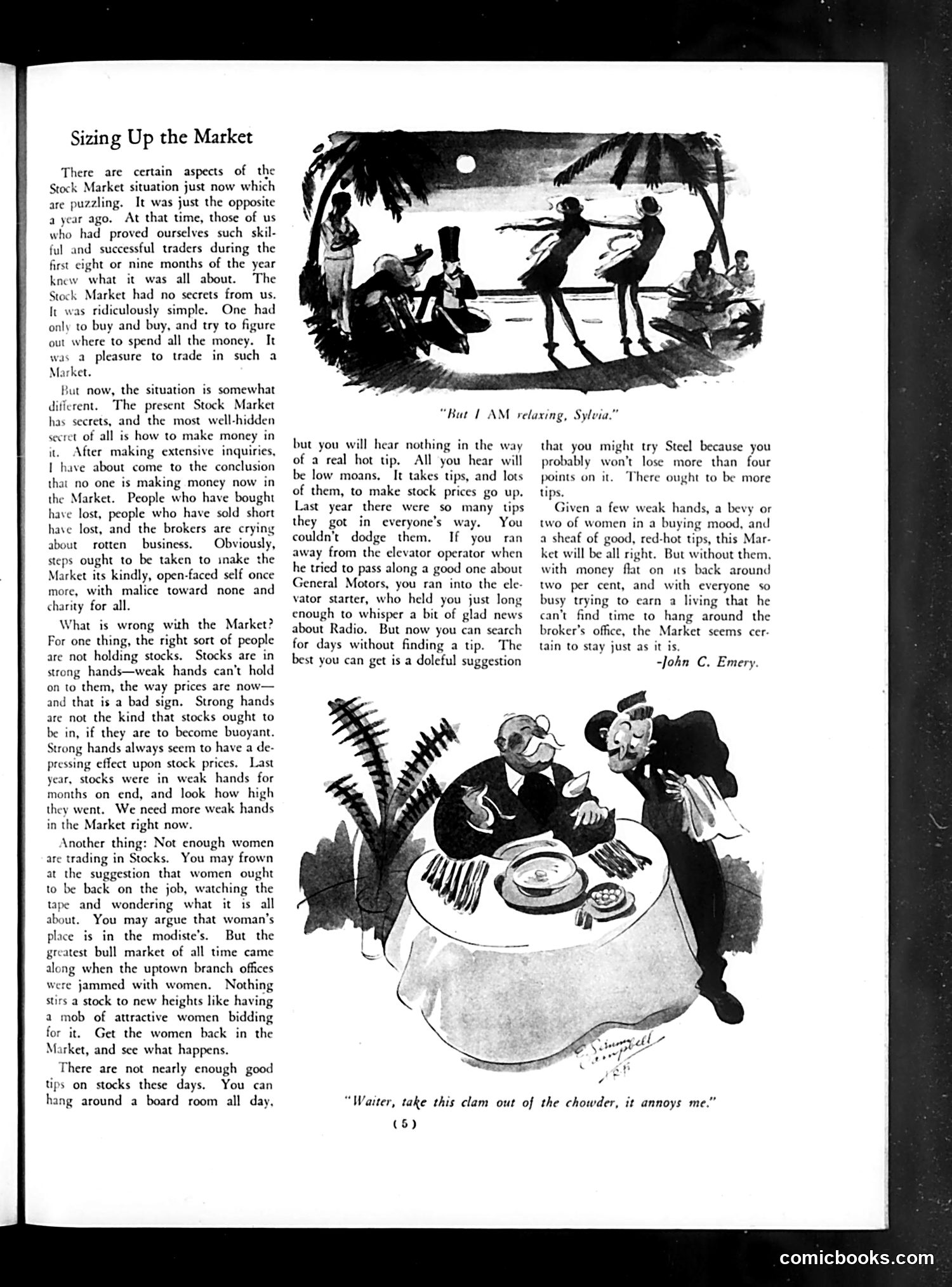
# Analysis of "Sizing Up the Market" This page critiques 1920s stock market culture. The article argues the market lacks "secrets" and has become accessible to average people—which the author presents as problematic. He complains about excessive "tips" circulating everywhere and notes that weak financial hands are now dominant, which he views as unhealthy for prices. Most notably, the author argues **women shouldn't be trading stocks**. He claims women's participation represents a "bull market" peak and suggests removing them would improve conditions. This reflects period sexism—viewing female investors as frivolous speculators rather than serious participants. The lower cartoon mocks pretentious dining, with a waiter's deadpan complaint about clamshells—satirizing upper-class affectation, likely among the same nouveau-riche stock speculators discussed above.
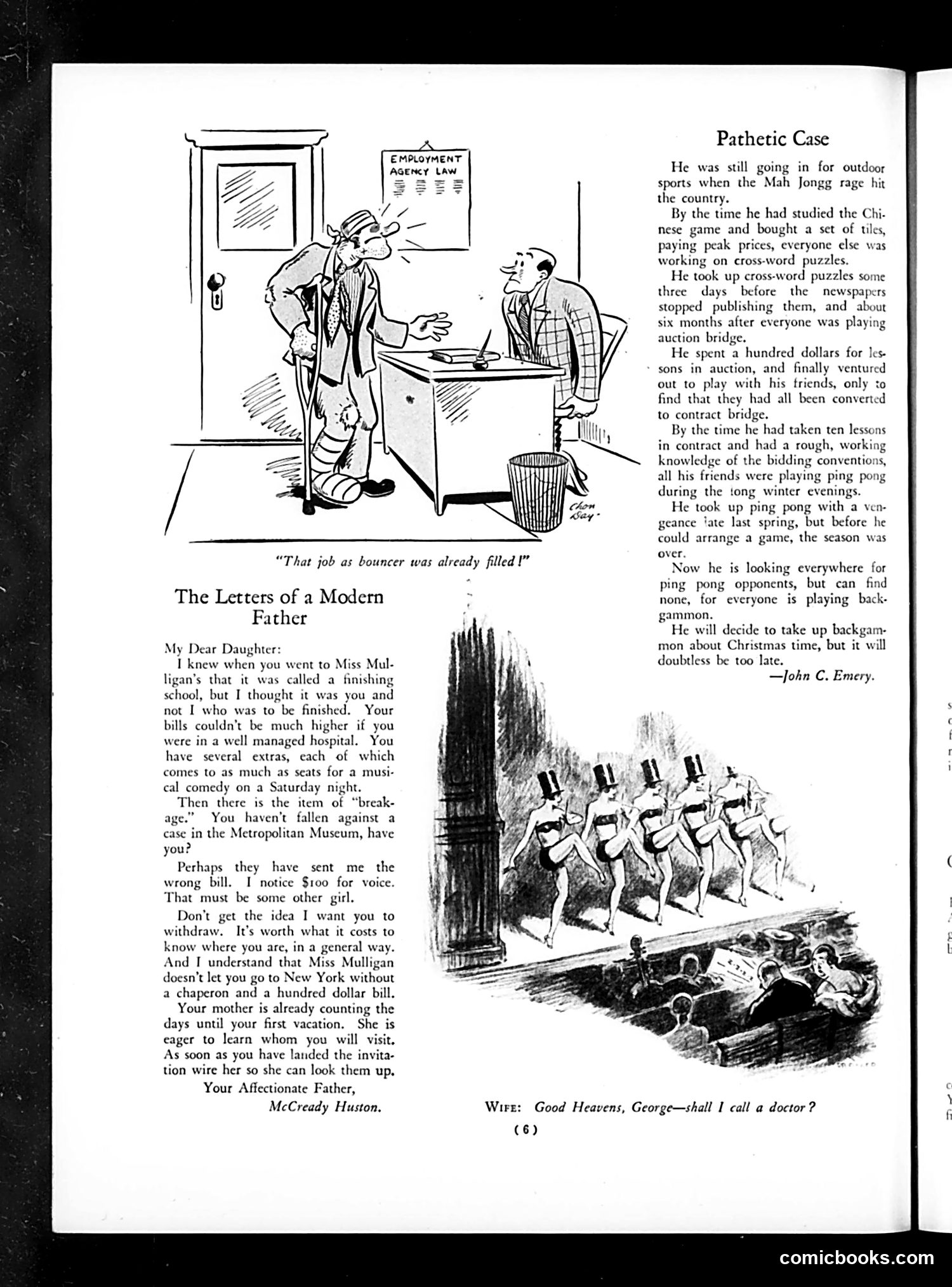
# Page Analysis: Life Magazine This page contains two distinct pieces of humor: **"That job as bouncer was already filled!"** (top cartoon): An employment agency worker turns away a desperate job-seeker, suggesting the labor market was tight during this period (likely 1920s-30s). **"The Letters of a Modern Father"** (main text): A father writes to his daughter at finishing school, complaining about unexpected bills—tuition, museum damage claims, a $500 voice lesson bill, and a Metropolitan Museum "breakage" charge. The humor satirizes the expensive costs of educating wealthy daughters and the frivolous expenses (musical comedy tickets, etc.) that accumulate. The right-side story "Pathetic Case" mocks fickle leisure trends among the wealthy, following fads like mahjong and contract bridge before abandoning them. The overall theme: satirizing upper-class spending habits and the financial burdens of maintaining social status.
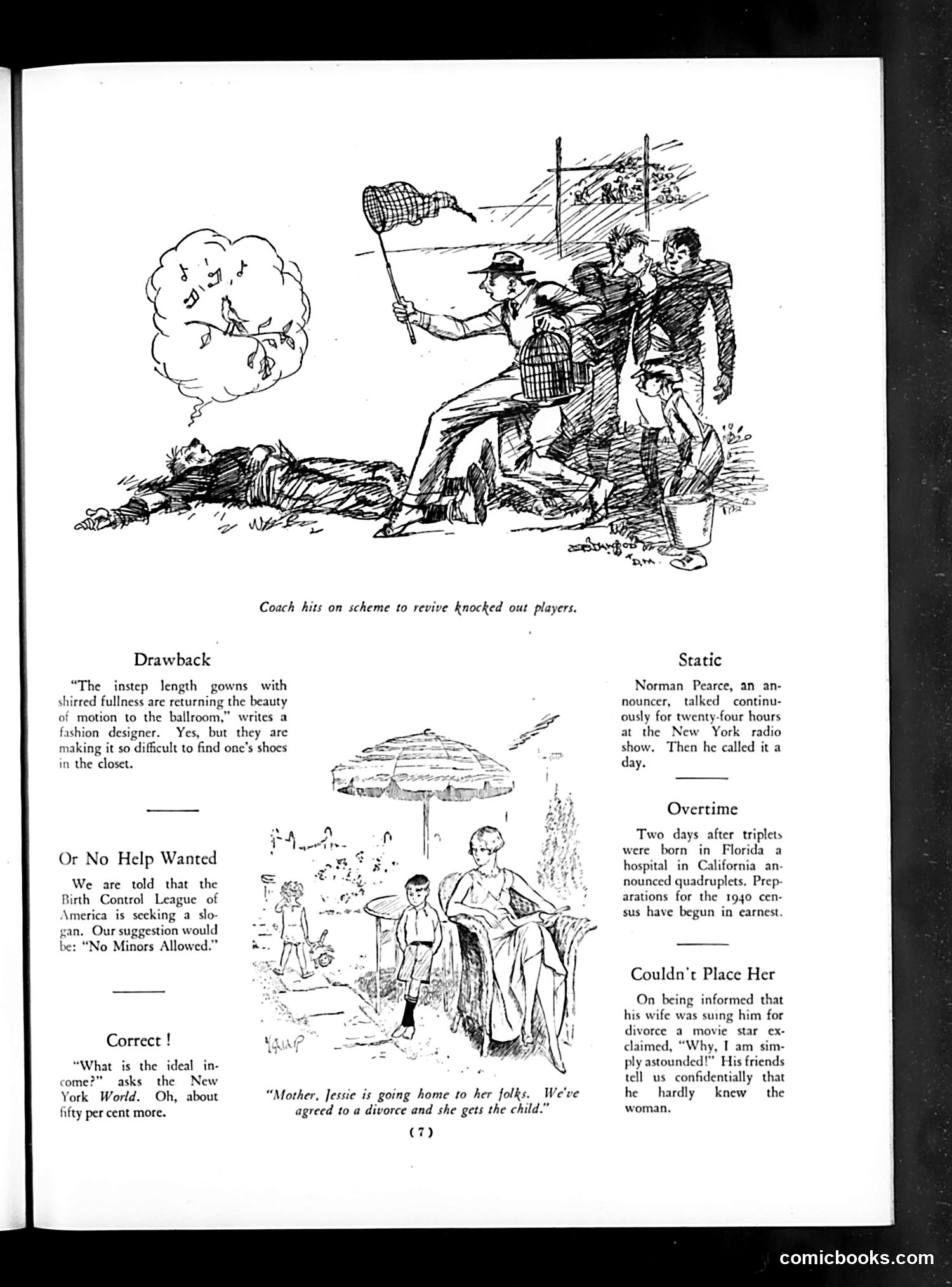
# Analysis of Life Magazine Page The top cartoon satirizes a sports coach devising a scheme to revive knocked-out players—likely mocking overly elaborate or dubious athletic training methods of the era. Below are four brief humor items: **"Drawback"** mocks fashion designers praising long skirts' "beauty of motion" while acknowledging women can't easily find shoes to match them—a commentary on impractical fashion. **"Or No Help Wanted"** jokes about the Birth Control League's suggested slogan "No Minors Allowed"—wordplay on controlling reproduction versus excluding young people. **"Correct!"** presents a New York *World* question about ideal income, with the humorous answer being "fifty percent more." **"Static"** and other items are brief anecdotes about radio personalities and miscellaneous domestic situations. The page reflects 1930s-era social satire on fashion, politics, and daily life.
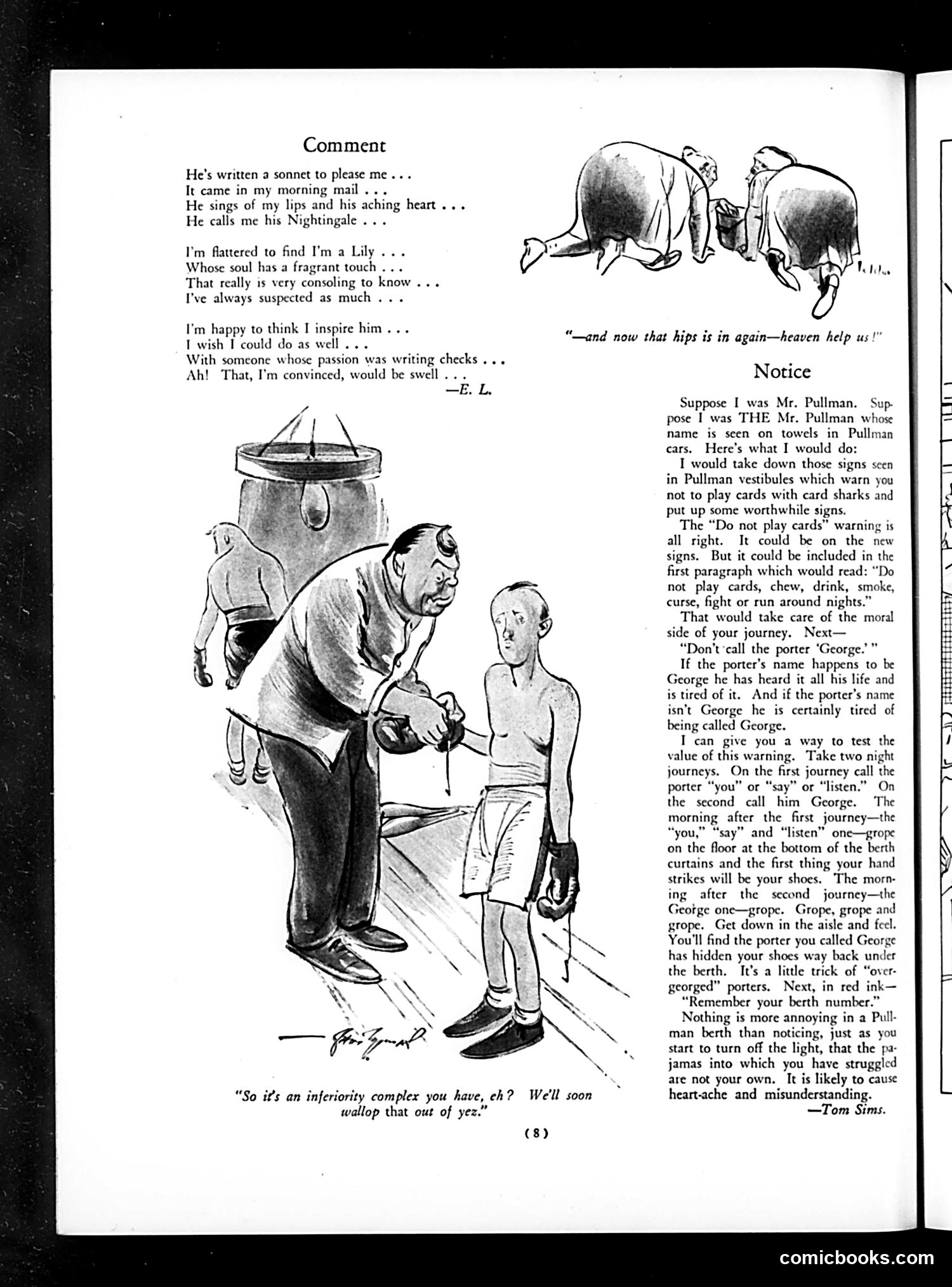
# Analysis This page contains satirical commentary about train travel, specifically Pullman sleeping cars. The cartoon depicts a conductor confronting a passenger about an "inferiority complex," suggesting the passenger is uncomfortable with accommodations. The "Notice" section offers tongue-in-cheek advice for Pullman car passengers, mocking common annoyances of rail travel: porters' names (particularly "George," apparently a generic term), card-playing warnings, and the frustration of finding hidden luggage under berths. The satire targets both passenger complaints and railroad company pretensions. The "Comment" poem above reflects on romantic correspondence, seemingly unrelated to the main content. The overall humor derives from exposing the gap between the luxury Pullman cars promised and the cramped, annoying reality passengers experienced—poking fun at both travelers' expectations and the railroad industry's marketing.
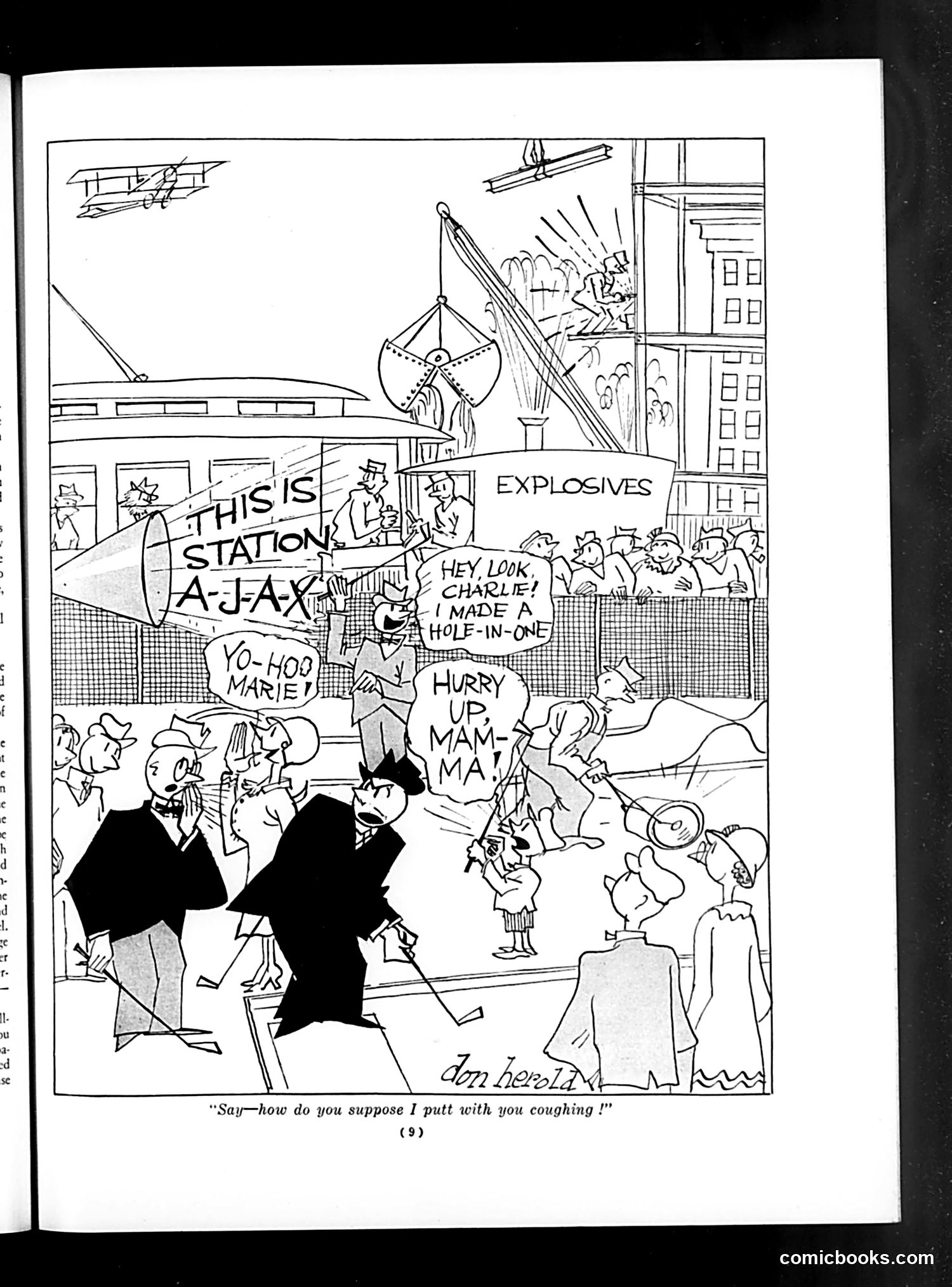
# Cartoon Analysis This cartoon depicts the dedication of "Station A-JAX," an aircraft presumably designed for bombing ("Explosives" is marked on its fuselage). The scene shows what appears to be a public ceremony with dignitaries and crowds. The humor centers on a man in the foreground (drawn in solid black, suggesting prominence) who is coughing. Onlookers react with phrases like "Hey look, Charlie! Made a hole-in-one!" and "Hurry up, Mam-ma!" — treating his cough as if it caused the visible destruction in the background. The caption reads: "Say—how do you suppose I put with you coughing!" This satirizes military aviation, suggesting that a simple cough from an important person at a dedication ceremony caused more damage than the expensive new aircraft was meant to inflict. It's social/political satire mocking either the aircraft's ineffectiveness or the absurdity of military procurement.
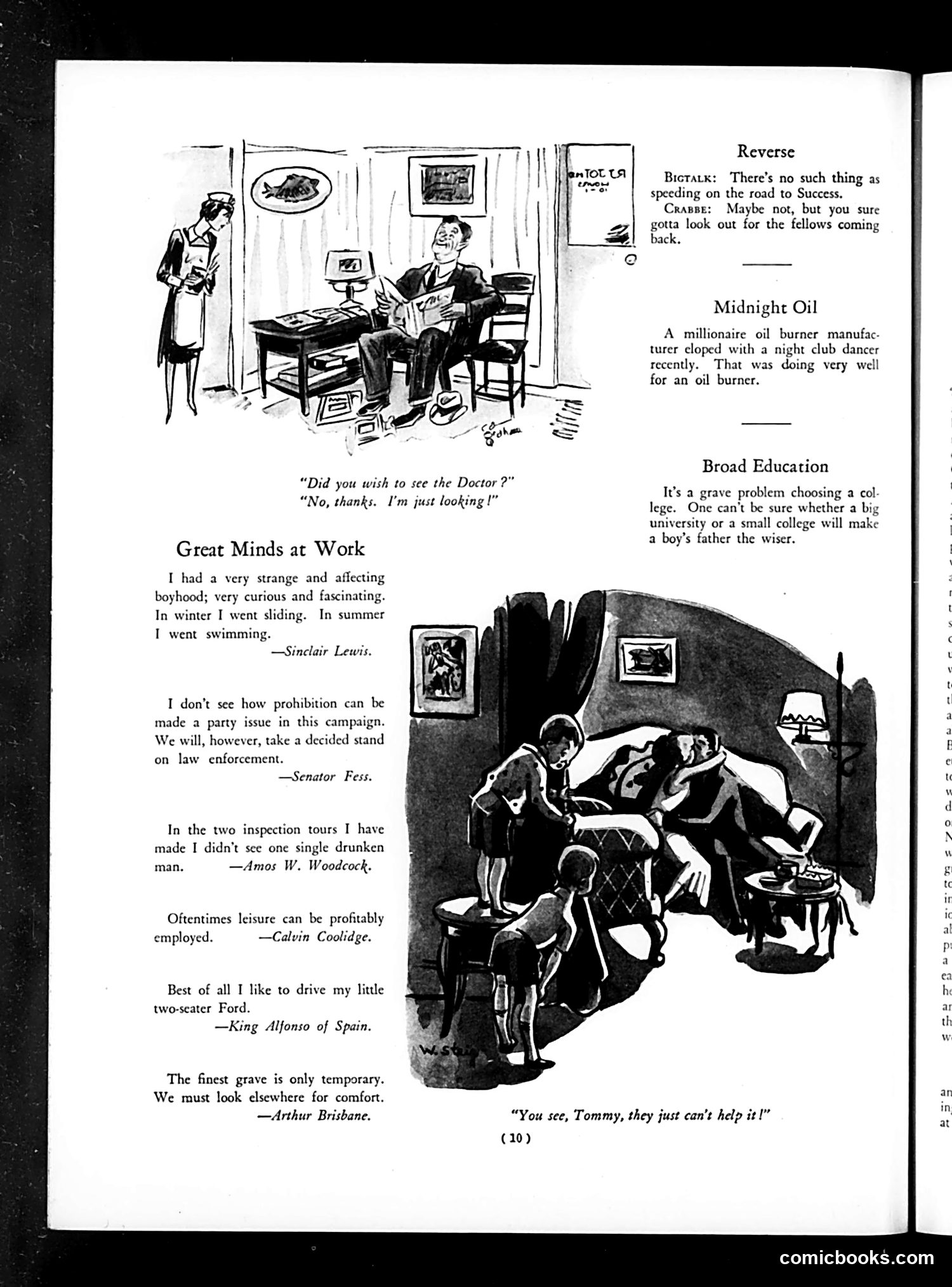
# Analysis of Life Magazine Page This page contains several satirical short quotes and two cartoons mocking American social issues. **Top cartoon**: A woman asks a man at his desk "Did you wish to see the Doctor?" He replies "No, thank. I'm just looking!" — satirizing people who avoid medical care or procrastinate about health issues. **Bottom cartoon**: Titled "You see, Tommy, they just can't help it!" — depicts adults lounging and drinking in a living room while a child watches. This appears to satirize parental hypocrisy regarding alcohol during Prohibition: adults ignore or flout alcohol laws while lecturing children about behavior. The accompanying quotes from politicians and celebrities debate Prohibition's effectiveness. The overall page mocks the era's contradictions between law, enforcement, and actual behavior — a central theme in 1920s American satire.