A complete issue · 36 pages · 1930
Life — October 10, 1930
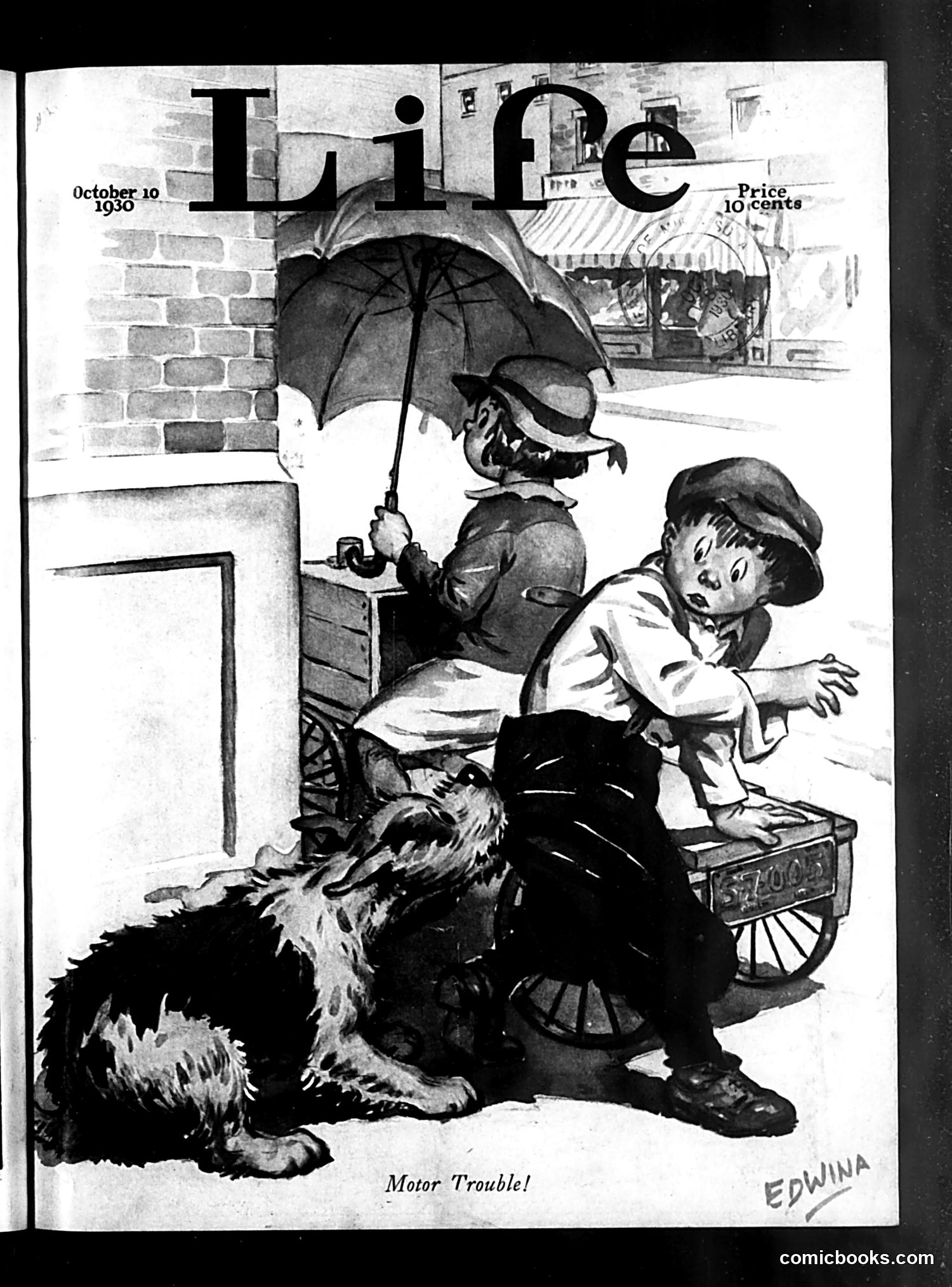
# "Motor Trouble!" - Life Magazine, October 10, 1930 This cartoon satirizes early automobile culture and urban street life. Two men in hats share an umbrella during rain while standing with a small, scruffy dog next to what appears to be a delivery cart or early motorized vehicle (marked "$700"). The title "Motor Trouble!" suggests the joke concerns automotive problems or complications of motor transportation becoming common in urban settings. The wet conditions, the humble appearance of the figures, and their apparent inconvenience suggest satire about the gap between automobile ownership promises and the messy reality of early 1930s street life—just months before the Great Depression deepened. The cartoonist (signed "EDWINA") appears to be mocking the complications and indignities of modern motorized transport rather than celebrating it.
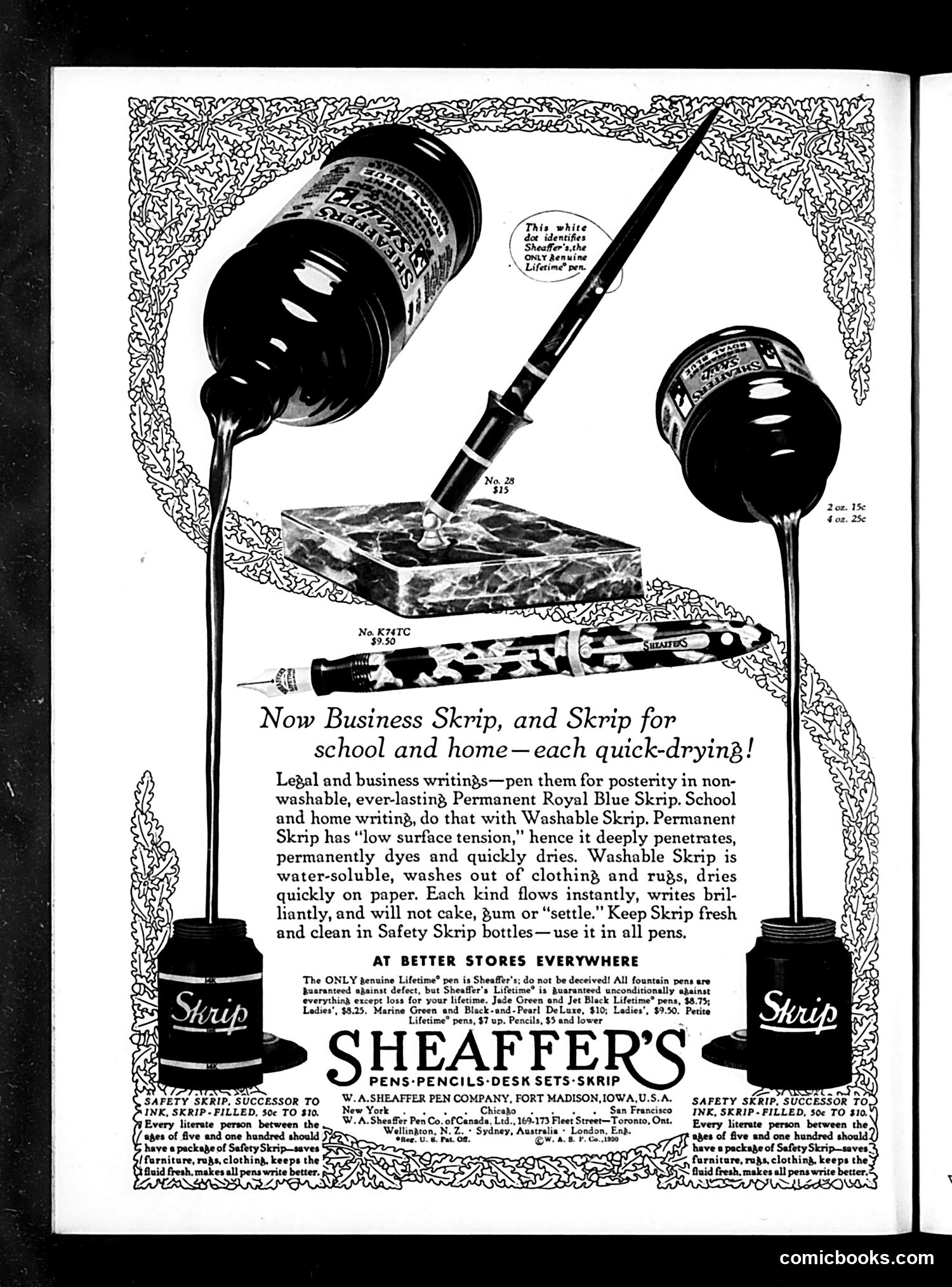
# Analysis This is **a vintage advertisement, not a political cartoon or satire**. It promotes Sheaffer's "Safety Scrip" — a pen product line marketed for business, school, and home use. The ad emphasizes the ink's quick-drying properties and washability, showing bottles of ink being applied to paper and a paintbrush. The ornate border and formal layout are typical of 1920s-30s advertising design. The text highlights that Washable Scrip is "water-soluble" and "washes out of clothing and rugs," suggesting this was a practical selling point for families concerned about permanent ink stains. The pricing (2oz. 15¢, 4oz. 25¢) and distribution ("at better stores everywhere") were standard advertisement elements of the era. There is no political or social satire present—this is straightforward product marketing.
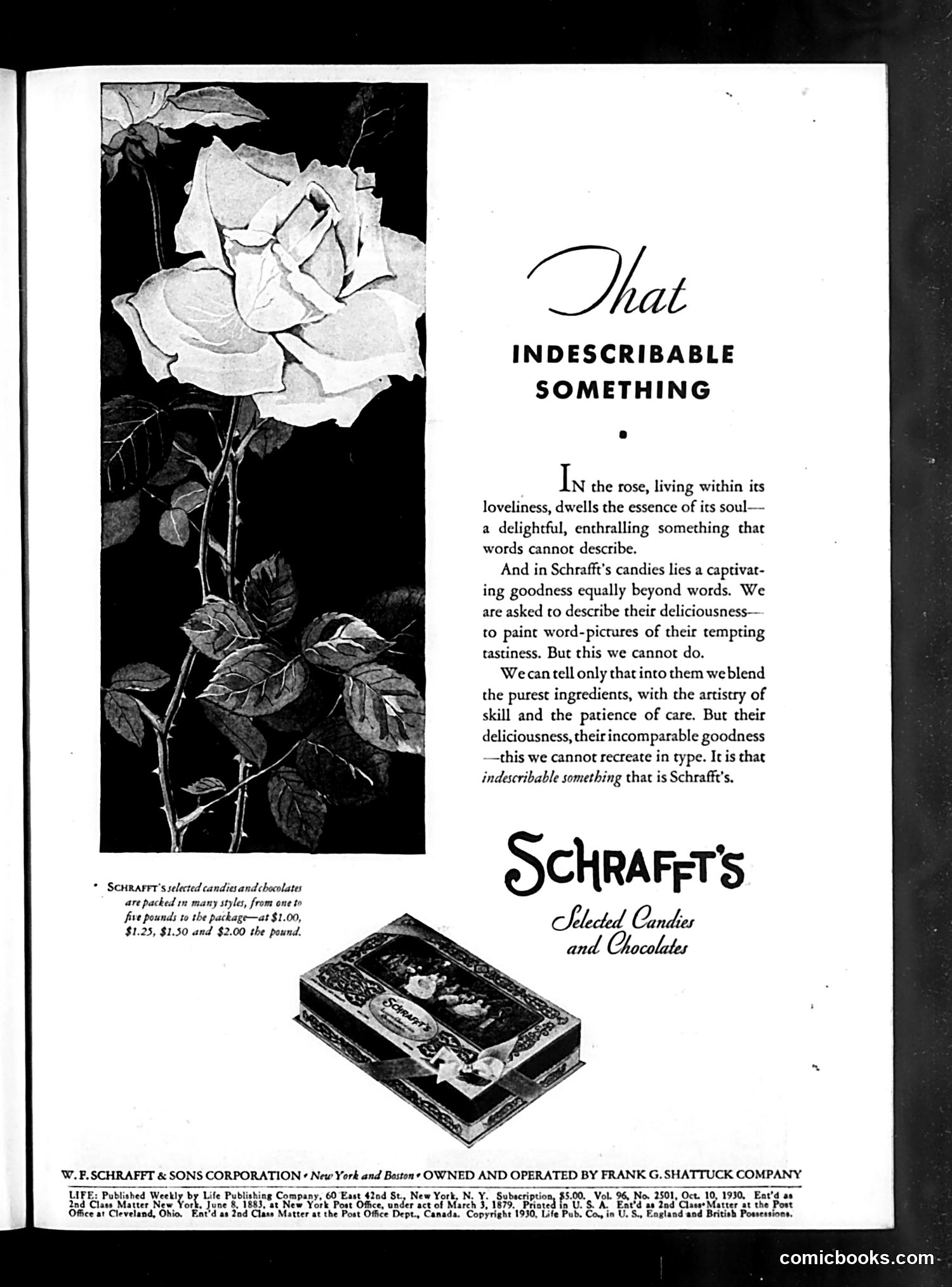
This page is primarily an **advertisement for Schrafft's candies and chocolates**, not political satire or a cartoon. The ad uses poetic language to market the product's appeal, comparing the "indescribable something" found in a rose to the indefinable quality of Schrafft's confections. The accompanying image shows a detailed botanical illustration of a rose against a dark background, meant to evoke luxury and beauty. The copy emphasizes that while Schrafft's ingredients and craftsmanship are evident, their ultimate deliciousness cannot be adequately described in words—only experienced. Pricing information ($1.00-$2.00 per pound) is provided at bottom. This is a straightforward luxury goods advertisement from Life magazine's advertising section, not commentary or satire.
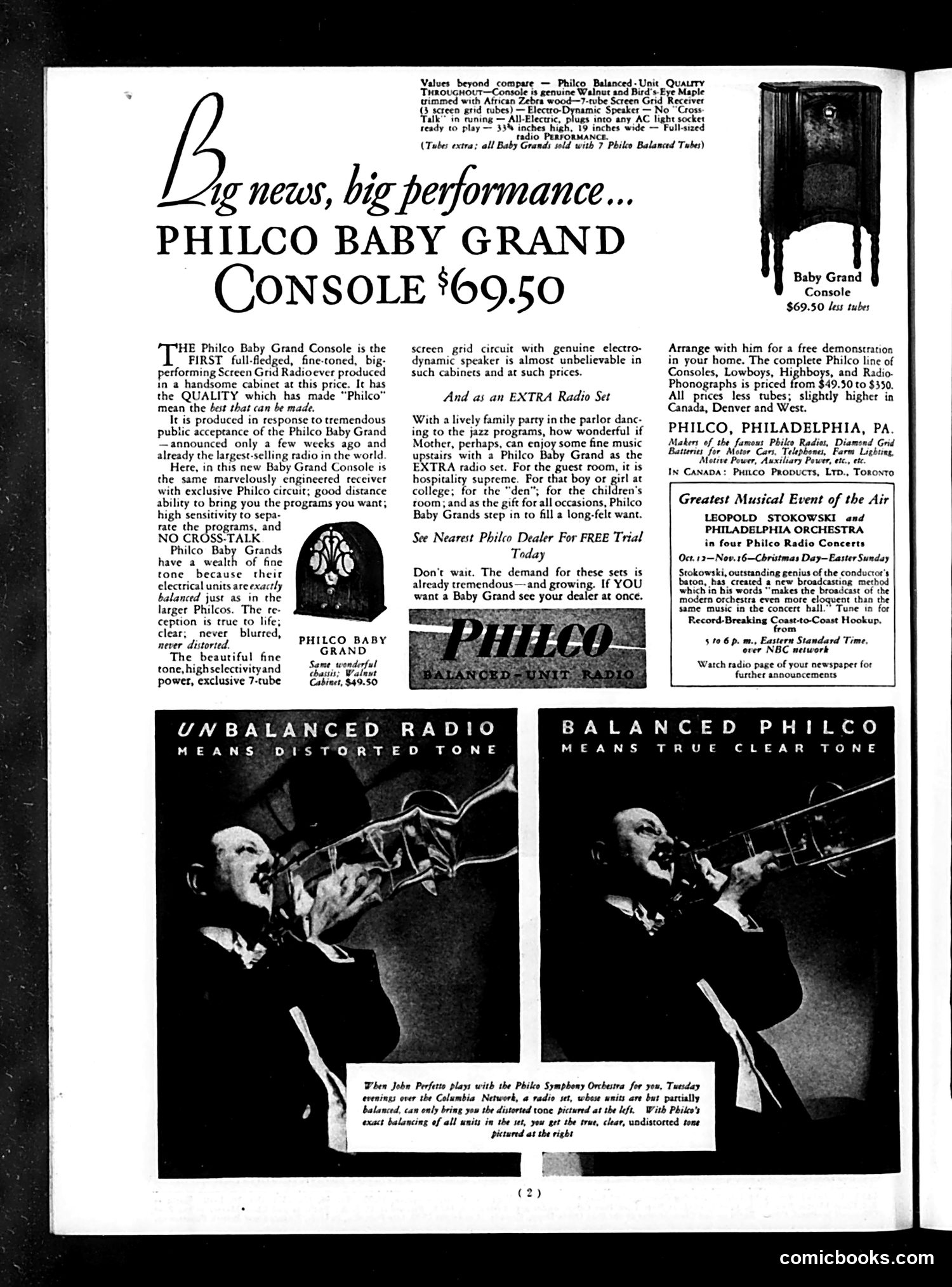
This page is primarily **advertising**, not satire or political content. It promotes the Philco Baby Grand Console radio ($69.50), emphasizing its superior sound quality and "balanced" audio reception compared to competitors. The lower portion includes a comparative demonstration: two photographs of a trumpet player labeled "Unbalanced Radio" (distorted tone) versus "Balanced Philco" (clear tone). This visual comparison illustrates the product's technical superiority. The advertisement features Leopold Stokowski and the Philadelphia Orchestra endorsement, leveraging classical music credibility to market the radio. There is no political cartoon or satire present. This is a straightforward consumer advertisement from what appears to be the 1920s-1930s, when radios were luxury goods and major household purchases.
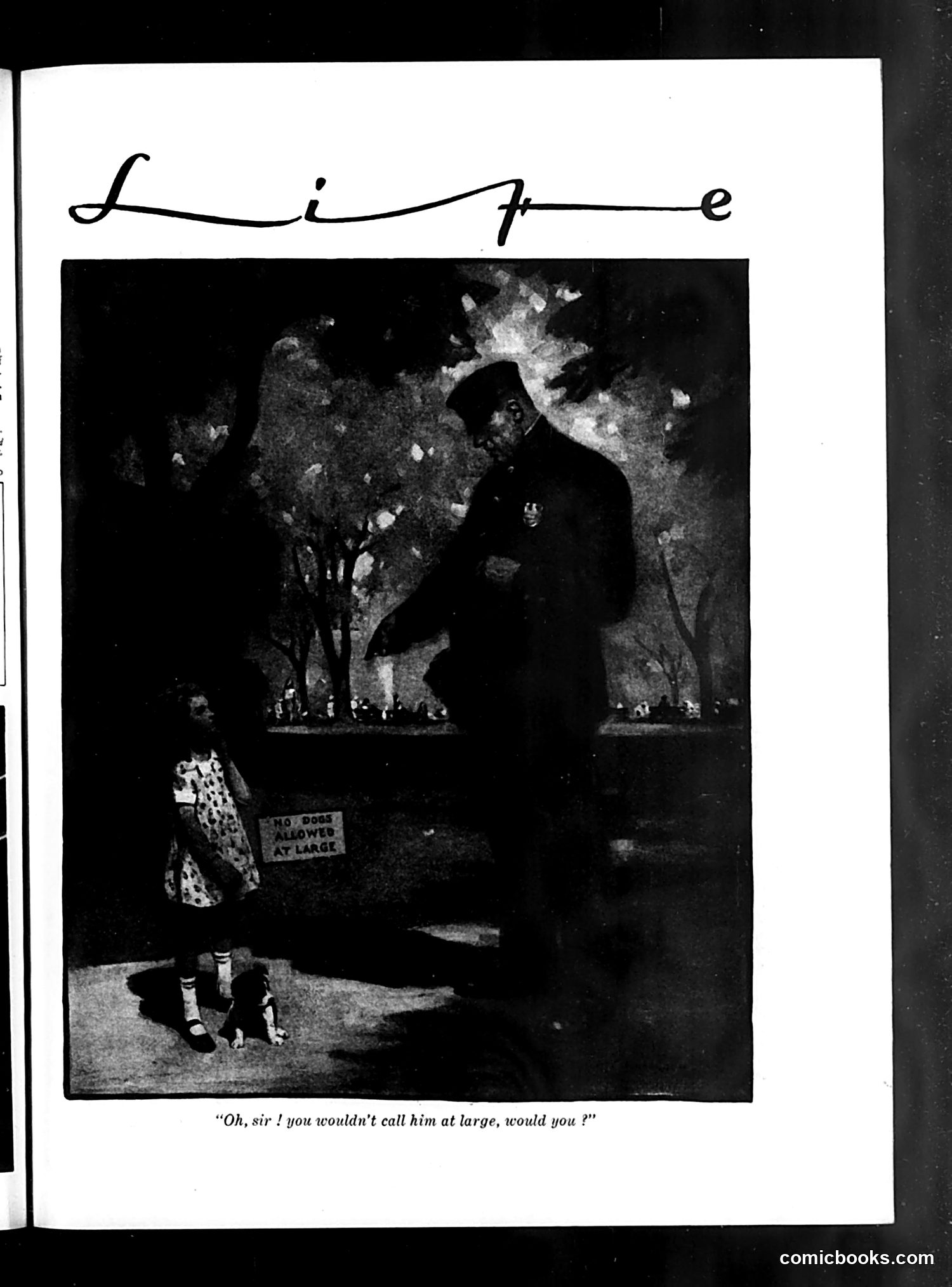
# Analysis This appears to be a satirical illustration from *Life* magazine titled "Life" at the top. The black-and-white image shows a scene with a child in patterned clothing on the left, an adult figure in dark formal wear in the center, and what appears to be stage scenery or backdrop with illuminated elements in the background. The caption reads: "Oh, sir! you wouldn't call him at large, would you?" The visible text fragment "NO BOSS ALLOWED AT LARGE" on signage suggests this is satirizing workplace or social rules. The joke appears to concern someone's size or status being incompatible with restrictions—the caption implies the speaker is requesting that a "boss" figure not be called upon or summoned directly. Without additional context about the specific date or referenced events, the exact political/social target remains unclear, though it appears to mock authority figures or workplace hierarchies.
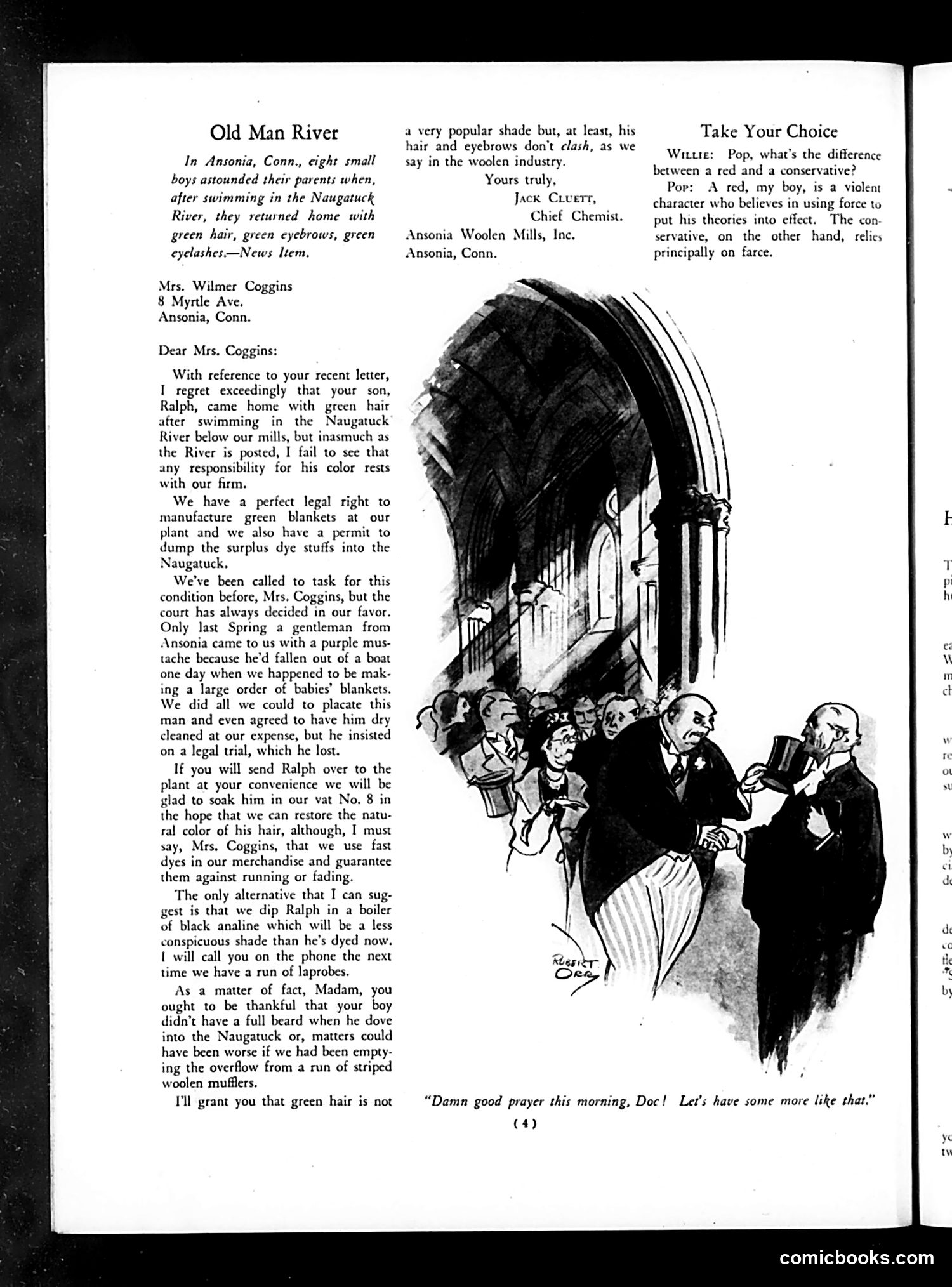
# Analysis of This Life Magazine Page This page contains a letter from Jack Cluett, Chief Chemist at Ansonia Woolen Mills, responding to Mrs. Wilmer Coggins's complaint that her son Ralph returned home from swimming in the Naugatuck River with green hair and eyebrows. Cluett defends the mill, citing their legal right to manufacture green blankets and dump surplus dyes into the river. He offers solutions: soaking Ralph in their dye vat or dipping him in black analine dye. The tone is darkly humorous, treating the pollution as inevitable while mocking industrial disregard for environmental damage. The cartoon below depicts a clergyman offering prayer, apparently satirizing inadequate responses to industrial pollution—prayer being presented as society's only recourse against corporate negligence.
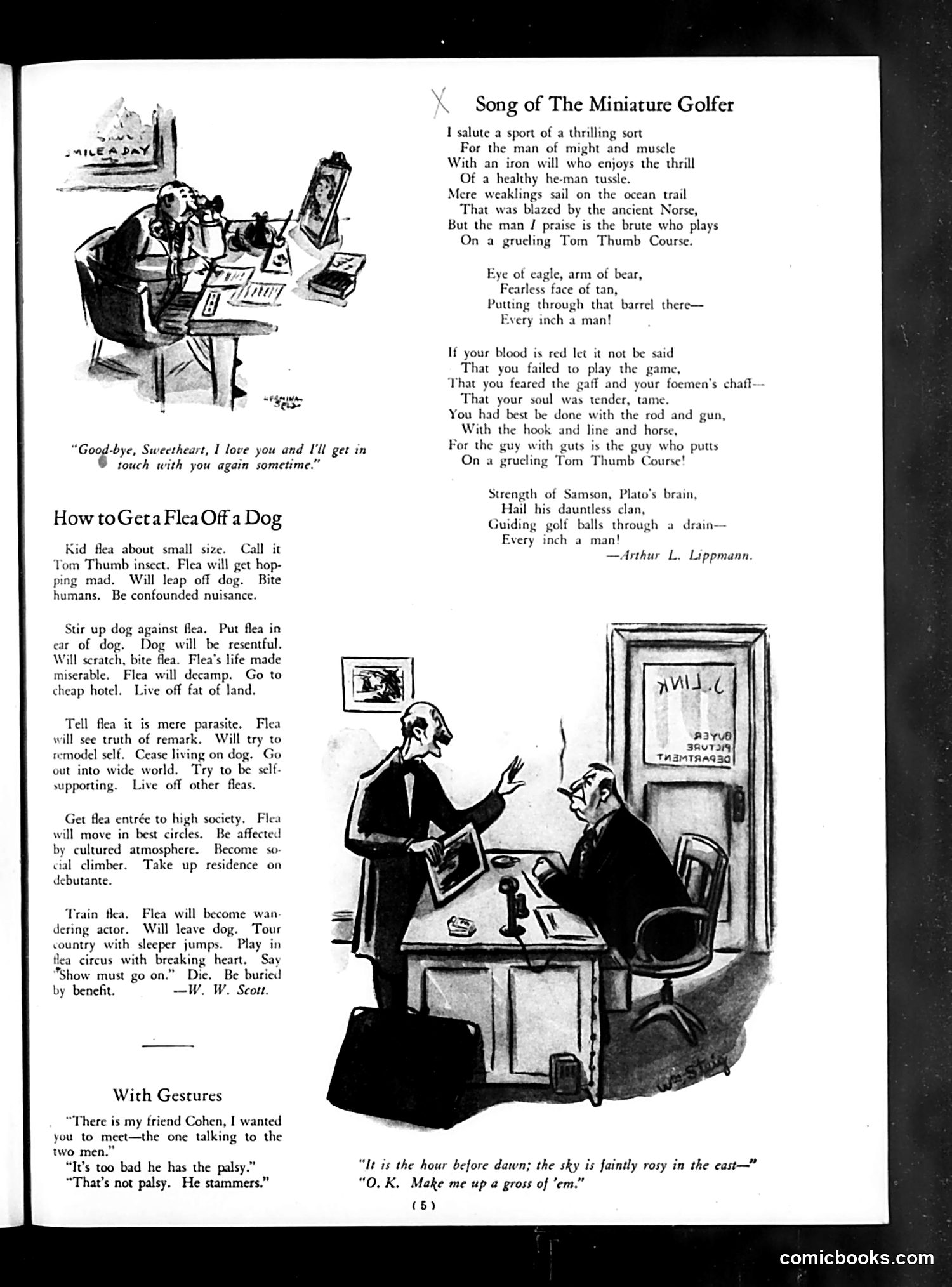
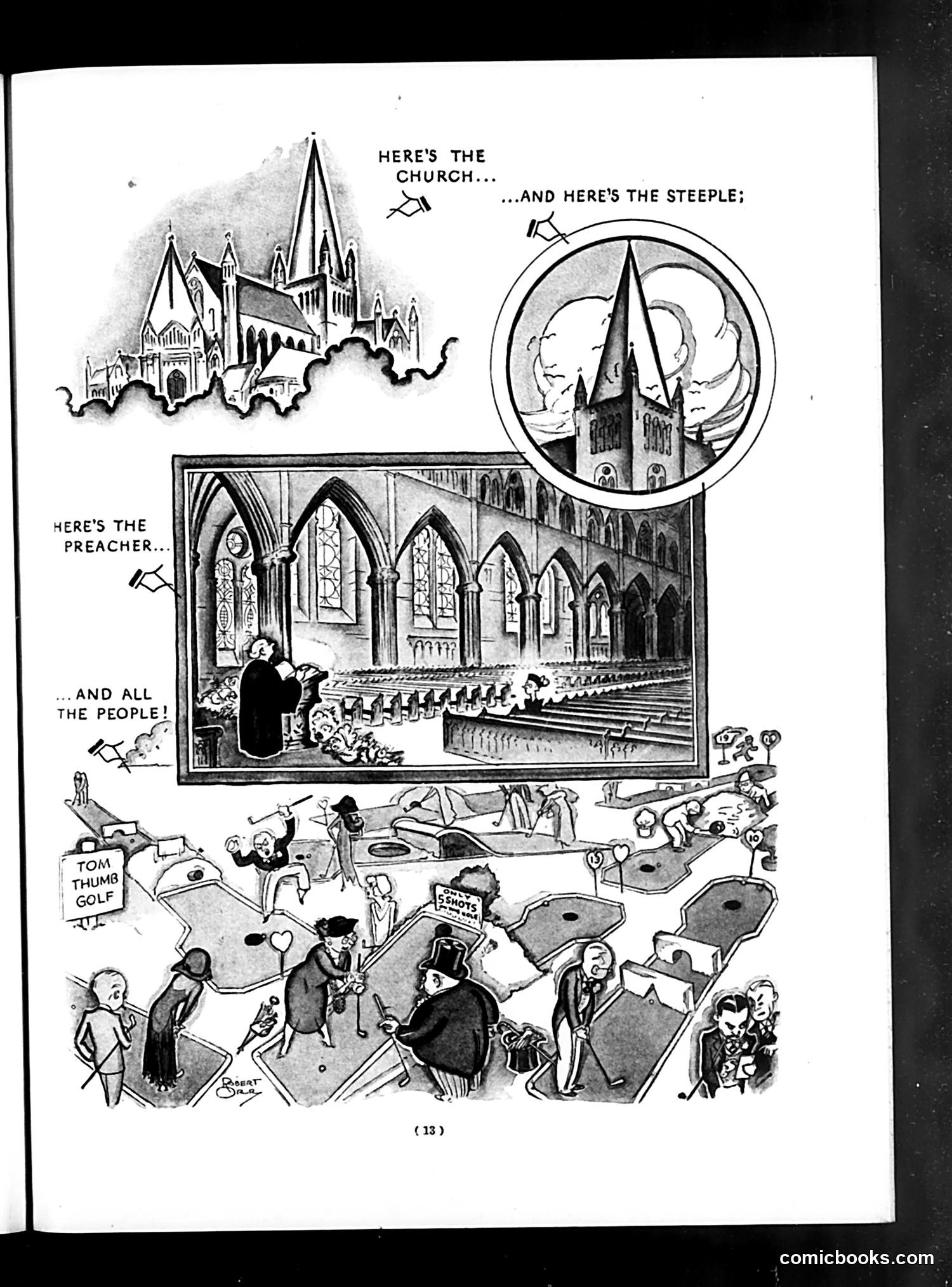
# Analysis This page contains three distinct pieces of humor: 1. **"Song of The Miniature Golfer"** (top right): A humorous poem by Arthur L. Lappmann celebrating miniature golf as a sport for "the man of might and muscle." The satirical tone suggests miniature golf was a trendy leisure activity, and the poem mock-heroically compares it to ancient Norse adventures. 2. **"How to Get a Flea Off a Dog"** (left): A comedic piece attributed to W.W. Scott offering absurdist advice—calling the flea "Tom Thumb," stirring the dog, sending the flea to high society. The humor lies in treating flea removal as an elaborate social endeavor. 3. **"With Gestures"** and cartoon (bottom): A brief dialogue joke about someone's stammer being mistaken for palsy (paralysis), with accompanying illustration of two men in an office setting. The page represents typical early-20th-century satirical magazine humor mixing wordplay, visual gags, and social observation.
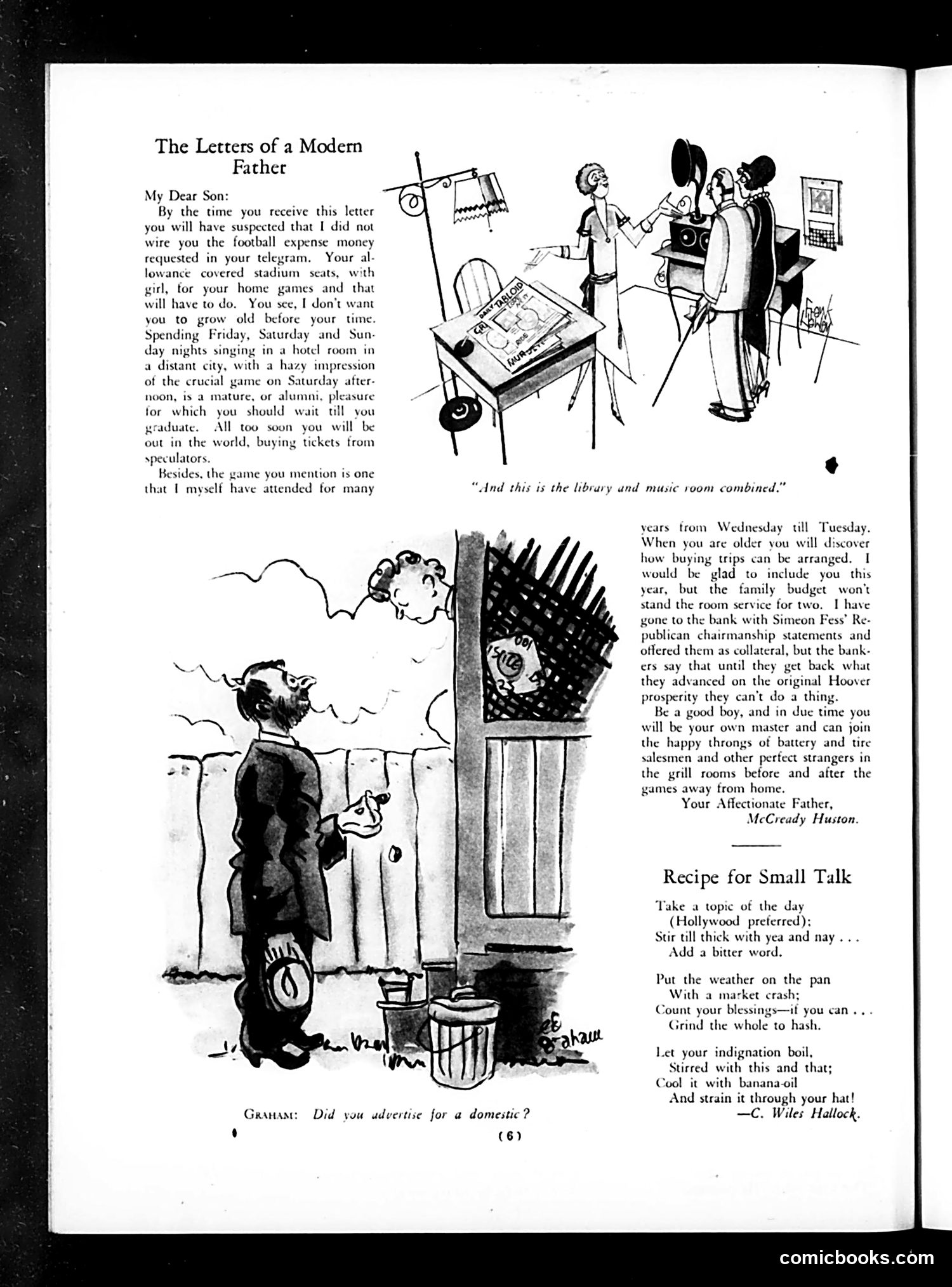
# "The Letters of a Modern Father" - Satire on 1920s Youth Culture This page satirizes a father's disappointed letter to his son about wasted money on entertainment and sports. The top illustration shows a modern recreation room combining library and music space—representing the commercialized leisure activities the father criticizes. The lower cartoon depicts a young man at a window advertising for a domestic servant, captioned "Did you advertise for a domestic?" This jokes that the son is so financially irresponsible he needs household help to manage his affairs. The signature "McCready Huston" identifies the author. The piece mocks both the younger generation's spending habits on movies, football tickets, and hotel trips, and their inability to manage finances—a common theme in 1920s American satire about changing youth culture.
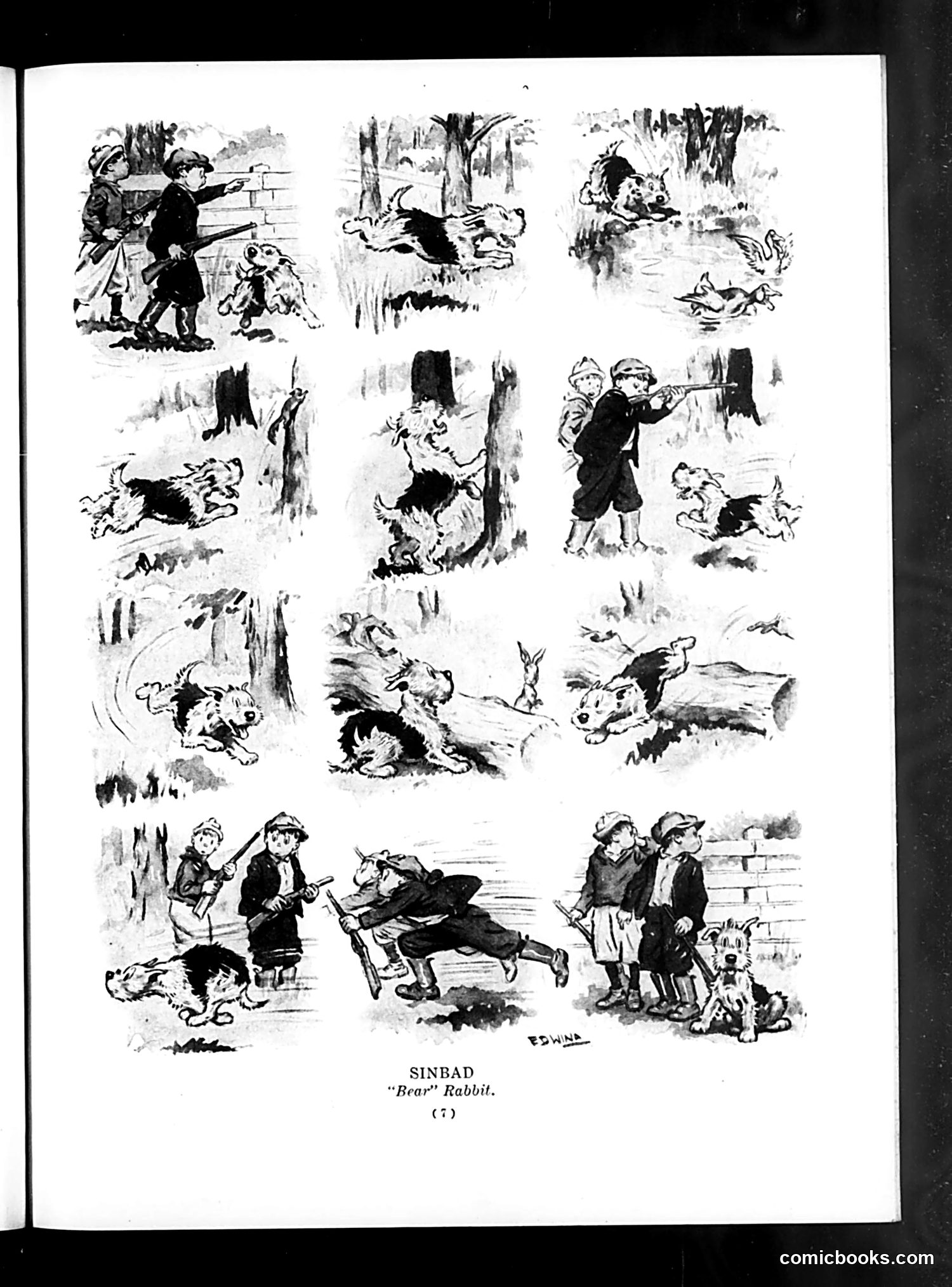
# SINBAD "Bear" Rabbit This page presents a series of comic vignettes titled "SINBAD 'Bear' Rabbit," depicting anthropomorphic rabbits and children in various outdoor hunting and adventure scenarios. The cartoons appear to be satirizing exaggerated tall tales—likely referencing the legendary Sinbad character known for fantastical stories. The repeated motif of rabbits and small game suggests mockery of hunters' boastful exaggerations about their exploits. Each panel shows increasingly absurd or comedic situations: children hunting, animals in unlikely predicaments, and chaotic scenes. The "Bear Rabbit" title hints at an ironic juxtaposition—suggesting a rabbit portrayed with exaggerated, bear-like qualities or adventures. The style and subject matter reflect early 20th-century American humor targeting hunters' folklore and rural storytelling traditions.
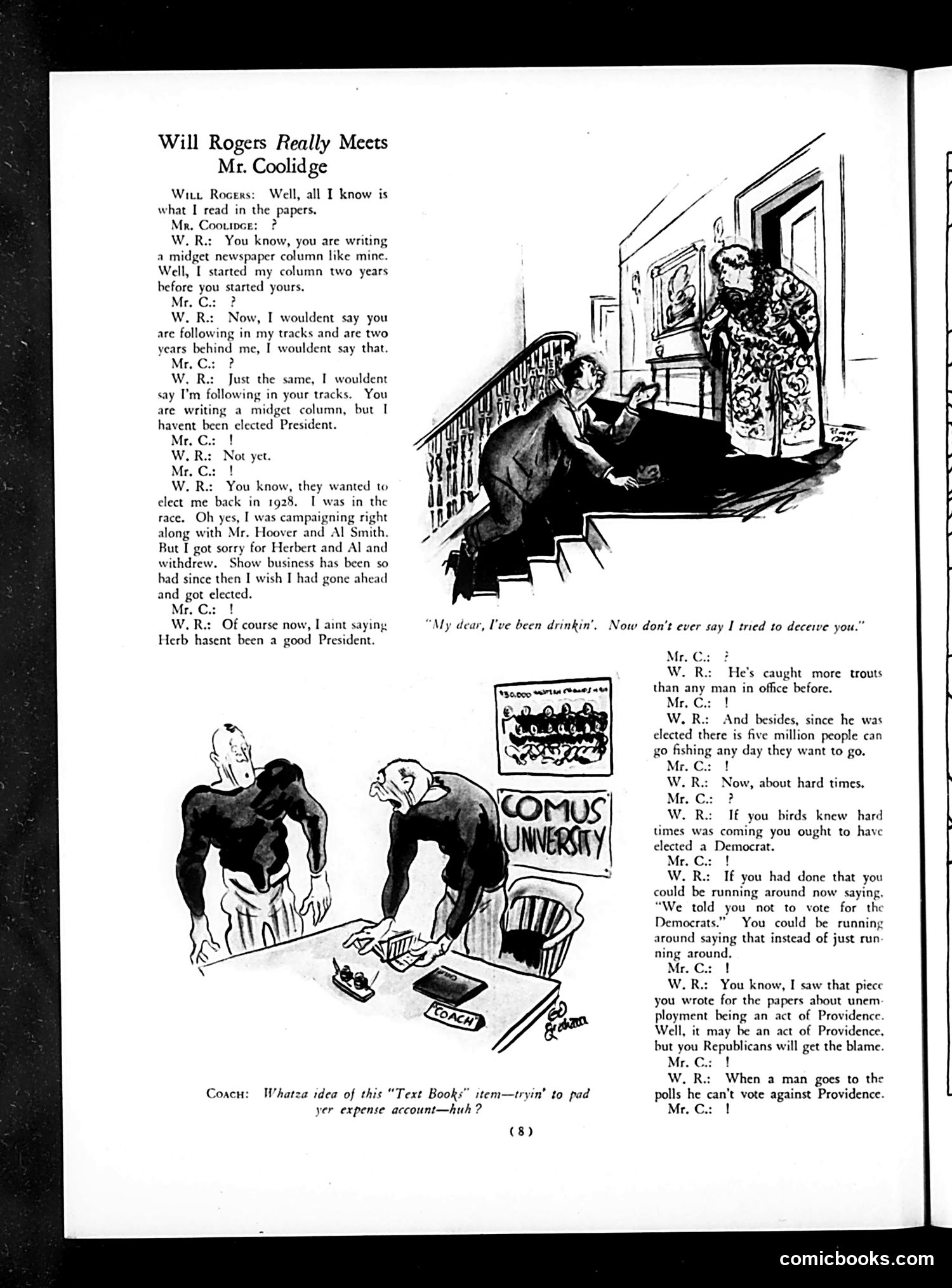
# Analysis of "Will Rogers Really Meets Mr. Coolidge" This is a satirical dialogue between humorist Will Rogers and President Calvin Coolidge (referenced as "Mr. C."). Rogers claims to write a newspaper column similar to Coolidge's work, implying the President is merely a "midget" columnist. The conversation references the 1928 election, when Coolidge withdrew from the race. Rogers jabs that Coolidge's absence hurt "show business" (the economy), while defending Herbert Hoover's presidency against blame for hard times. The bottom cartoon depicts two figures (appearing to represent political coaches or handlers) examining expense accounts at "Comus University," satirizing wasteful spending or educational corruption. The satire targets both Coolidge's perceived mediocrity and the economic troubles following his presidency.
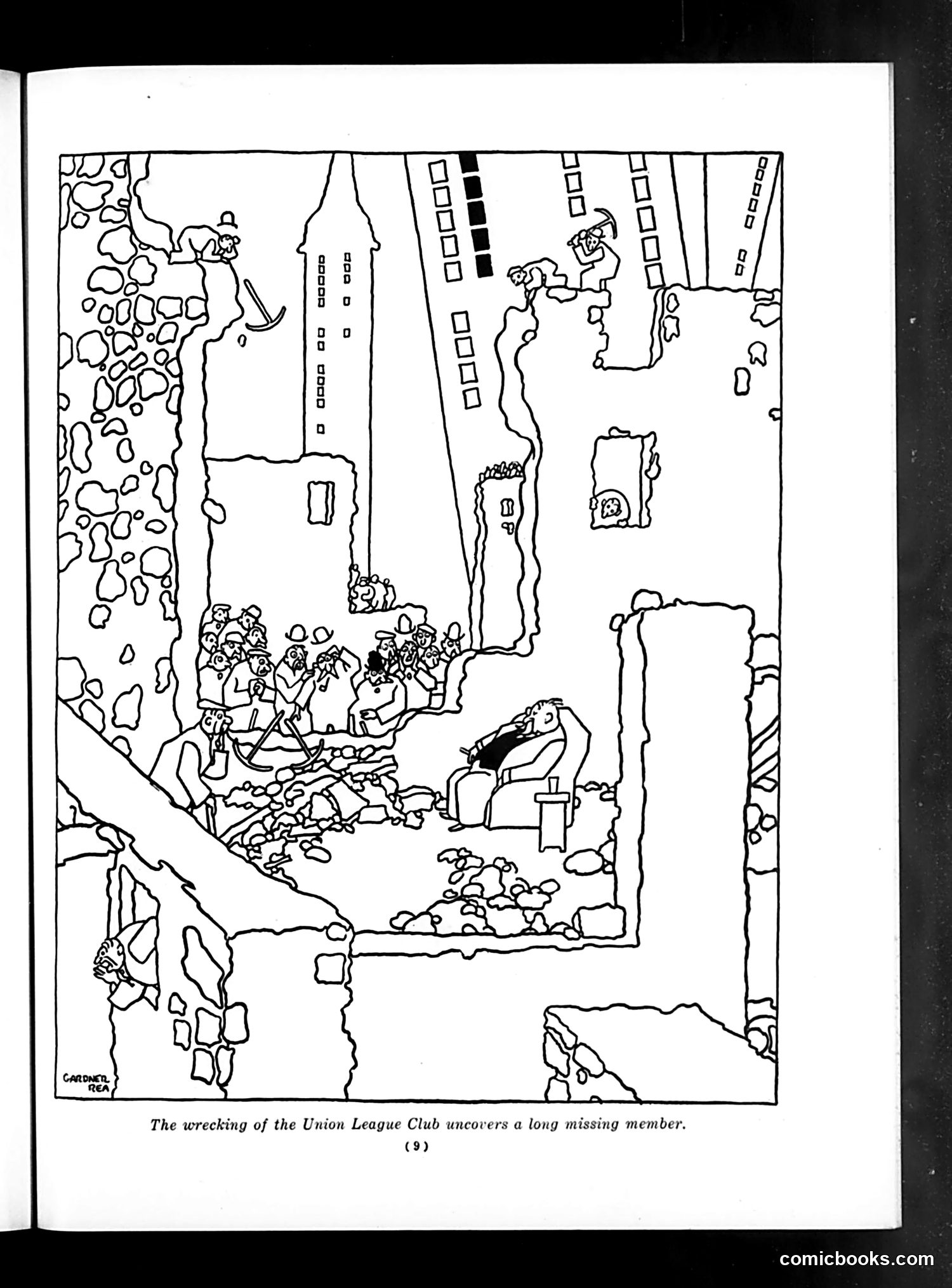
# Political Cartoon Analysis This single-panel cartoon depicts the excavation or "wrecking" of a building, with the caption: "The wrecking of the Union League Club uncovers a long missing member." The joke appears to be about the Union League Club, a real civic organization, being demolished. The satire suggests that during the building's destruction, workers have discovered a member who had been missing or absent from the club for so long he was essentially "lost." The cartoonist (signed "Cesare") is making a humorous social commentary—likely poking fun at either the club's membership, the member's disappearance, or both. Without additional historical context, the specific individual referenced remains unclear, though the joke relies on readers' familiarity with the Union League Club and its members at the time of publication.
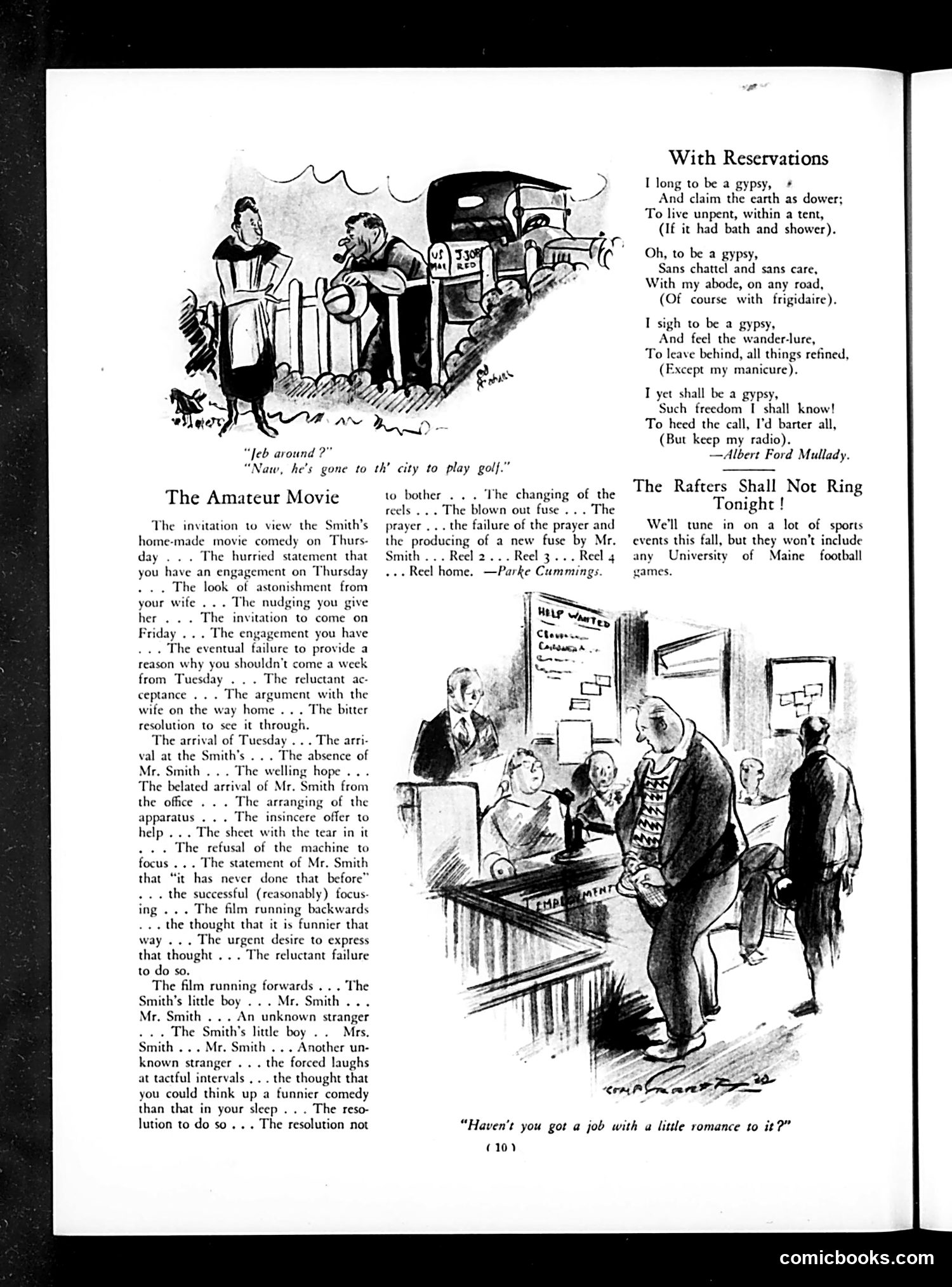
# Analysis of Life Magazine Page This page contains two satirical pieces: **"The Amateur Movie"** (left) mocks the complications of making a home movie, listing absurd obstacles: the wife's astonishment, the nudging she gives, engagement failures, reluctant acceptance, and the machine's refusal to focus. The humor targets the frustrations of 1920s-30s home cinema equipment—unreliable, temperamental technology that promised easy family entertainment but delivered headaches. **"The Rafters Shall Not Ring Tonight"** (right cartoon) shows a job-placement office where an interviewer asks a woman, "Haven't you got a job with a little romance to it?" The satire critiques workplace segregation and limited opportunities for women—suggesting employers offered boring jobs to female applicants while implying romance (marriage) was their actual expected "career." Both pieces reflect period anxieties about technology and gender roles.