A complete issue · 36 pages · 1930
Life — October 3, 1930
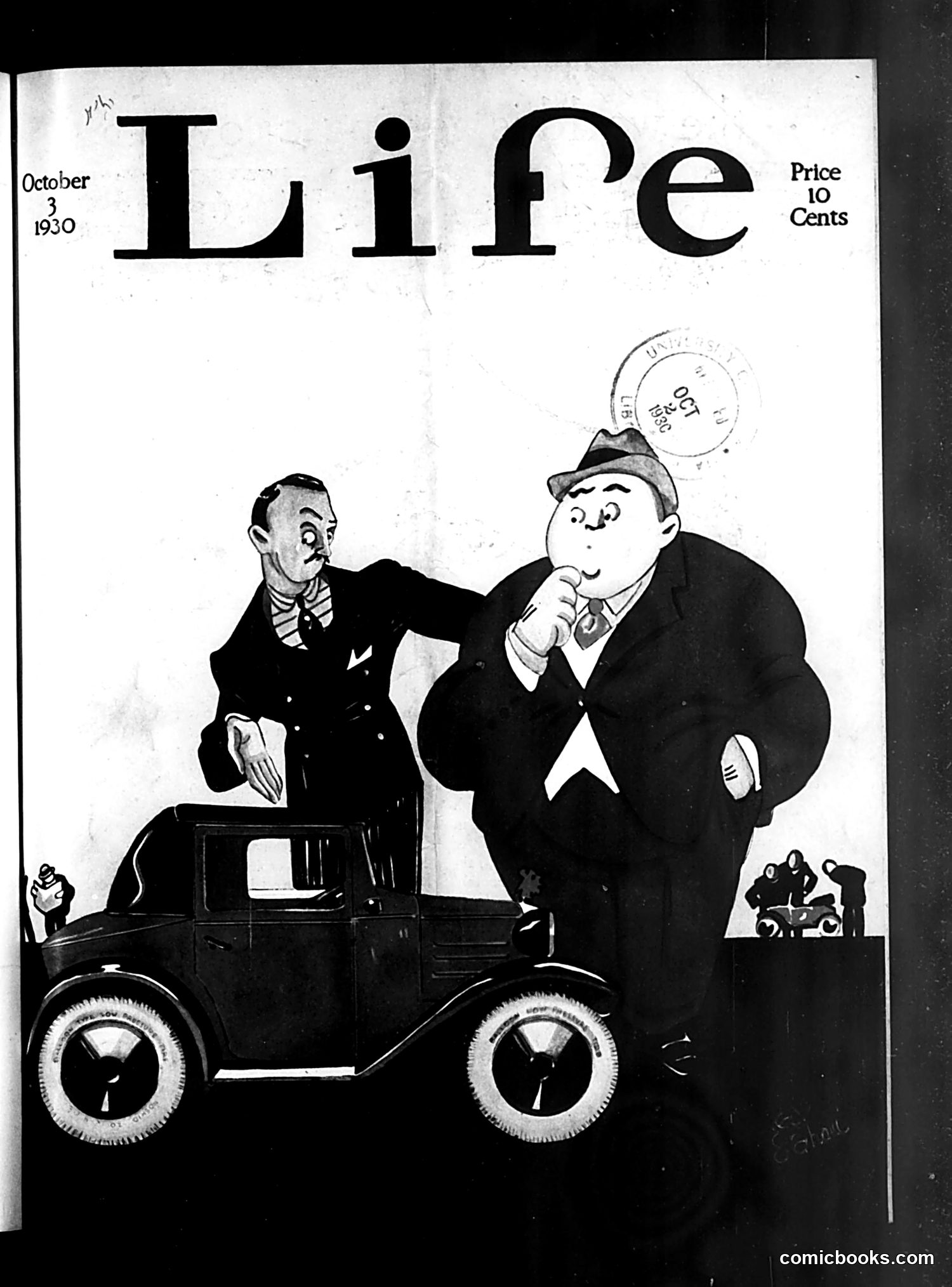
# Analysis of Life Magazine Cover, October 3, 1930 This cover depicts two men with a small automobile. The figure on the right—a portly man in a fedora and suit—appears to be examining or consulting about the vehicle, while a thinner, more anxious-looking man stands beside him. The cartoon likely satirizes early automobile commerce or sales, possibly referencing used car dealers or automotive transactions during the Great Depression era (1930). The exaggerated facial expressions suggest deception or dubious dealing. The smaller figure's worried expression contrasts with the confident posture of the heavyset man, implying a power imbalance in their transaction. Without additional text visible, the specific political or social target remains unclear, though the timing suggests commentary on Depression-era commercial practices or consumer vulnerability.
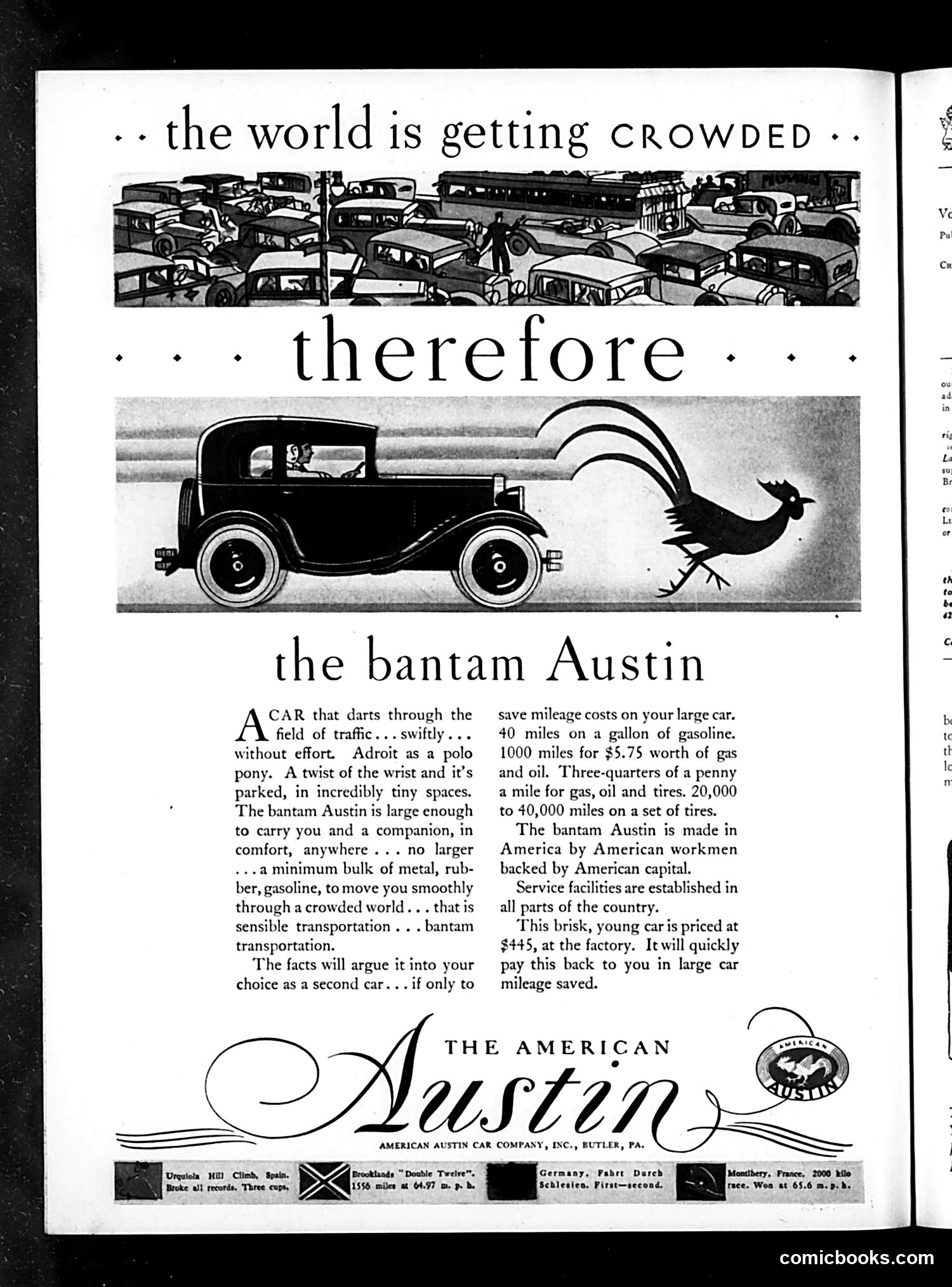
# Analysis This is an advertisement for the American Austin Car, not a political cartoon. The ad uses social satire to sell a compact automobile. **The Visual Argument:** The top illustration shows congested traffic—many vehicles crammed together—establishing the problem: "the world is getting crowded." Below, a bantam Austin car is depicted with a rooster, implying agility and quick movement through chaos. **The Pitch:** The ad argues that a small, affordable car ($445) is "sensible transportation" for a crowded world. It emphasizes practicality: 40 miles per gallon, minimal maintenance costs, and maneuverability in tight spaces. The rooster symbolizes nimbleness—the car "darts through the field of traffic...swiftly...without effort." This reflects 1920s-30s automobile marketing responding to urban congestion by promoting economy and efficiency as virtues.
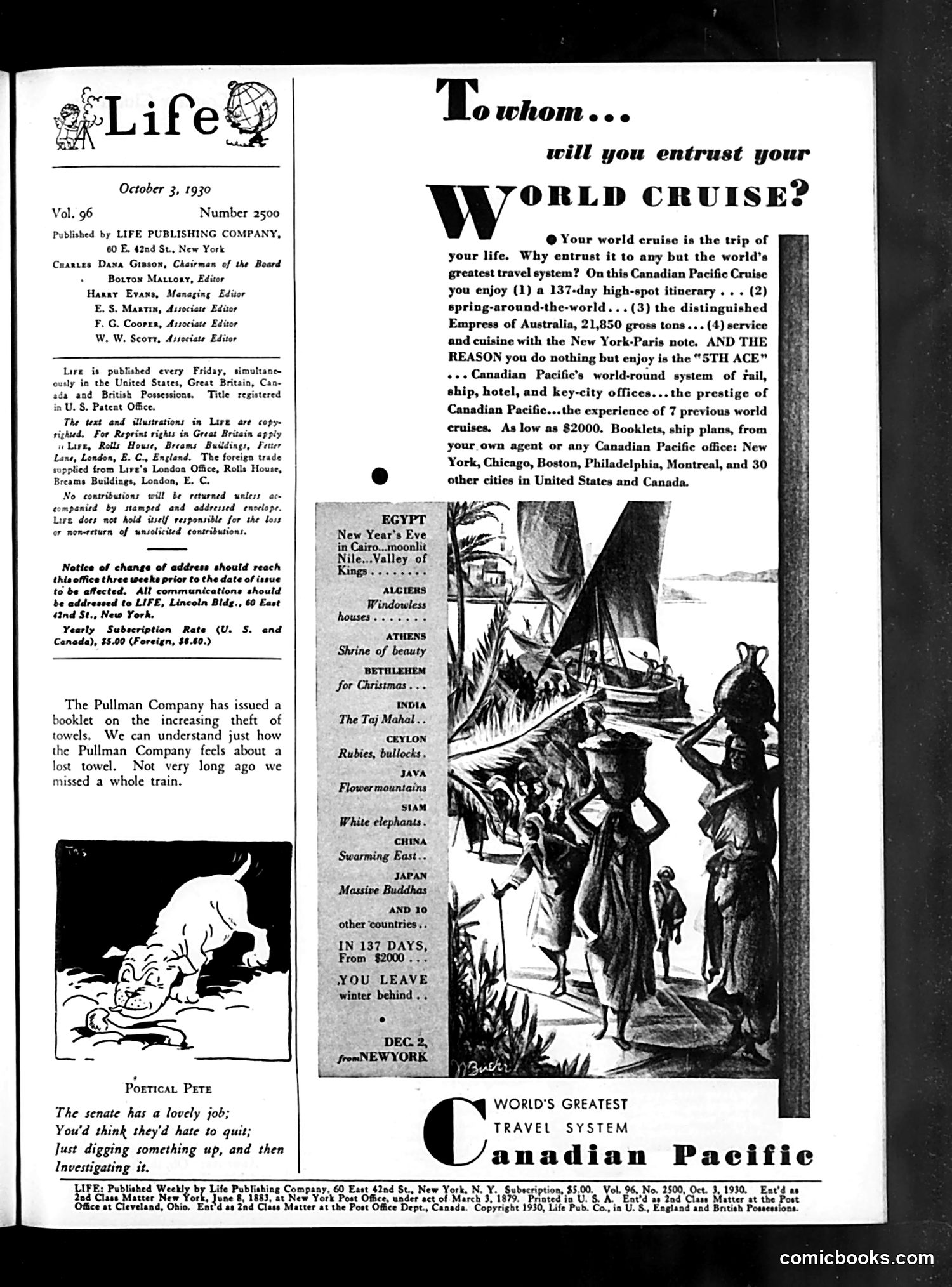
# Analysis of Life Magazine Page, October 3, 1930 This page contains a satirical cartoon titled "Political Pete" and a full-page advertisement for Canadian Pacific's world cruise service. The cartoon depicts a figure (Pete) bent over, digging into ground labeled "investigating it." The accompanying verse mocks the Senate, suggesting senators have "a lovely job" but waste effort "digging something up, and then investigating it"—satire on Congressional investigations that appear performative or futile. The advertisement showcases exotic cruise destinations (Egypt, India, Japan, etc.), employing Orientalist imagery of turbaned figures and camels to market luxury travel. It promises escape from winter for $2,000, positioning world travel as an elite leisure activity during the Depression era. Together, the page contrasts political theatricality with escapist consumerism—two hallmarks of early 1930s American culture.
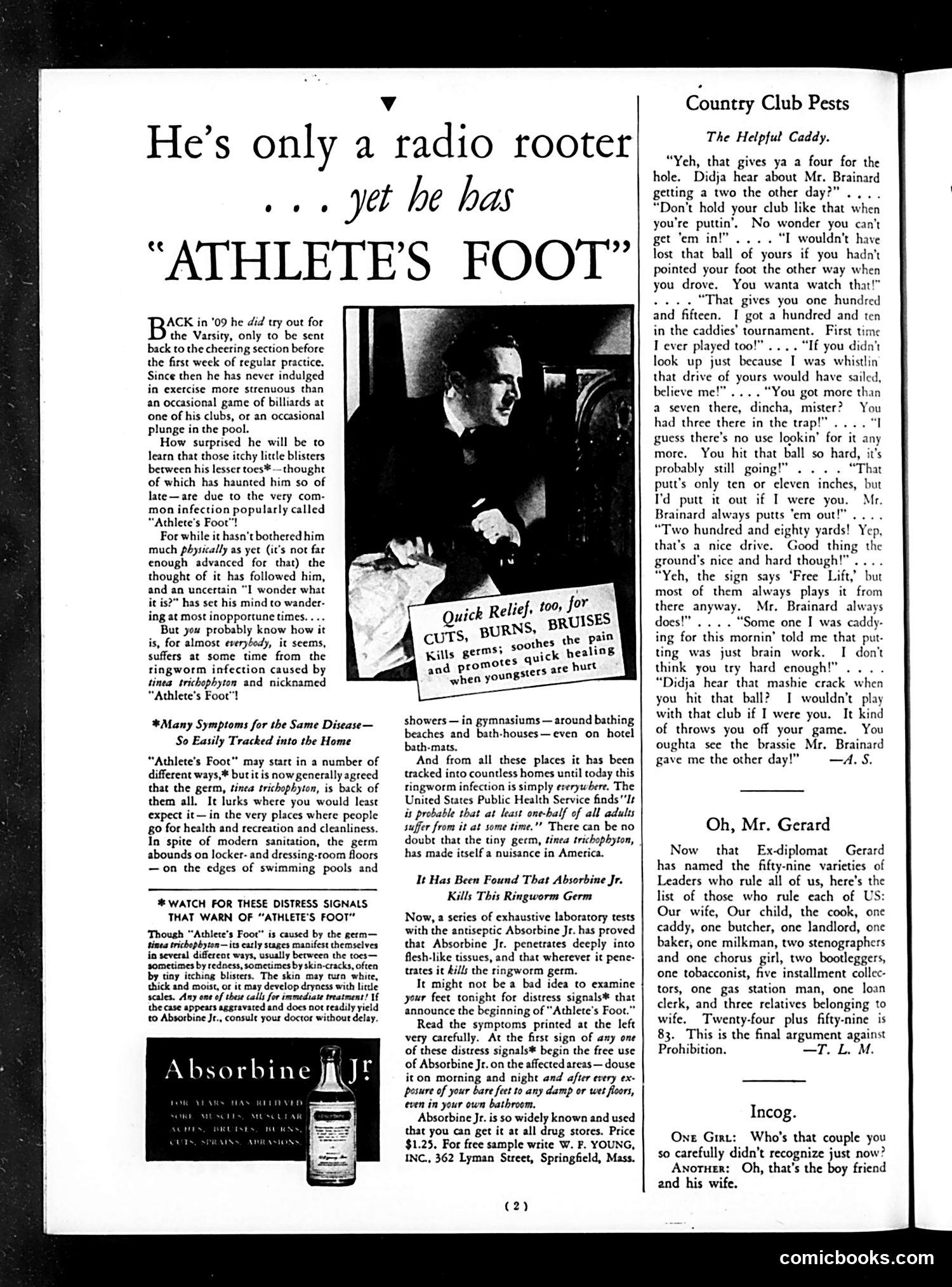
# Page Analysis This page contains a **medical advertisement disguised as editorial content** for Absorbine Jr., a liniment product. The main visual shows a man applying the product to his foot. The headline jokes that someone is "only a radio rooter" (a sports fan who listens on radio rather than attending games) yet has contracted "Athlete's Foot"—a fungal infection. The satire plays on the irony: despite avoiding physical exertion at the ballpark, he still suffers the condition. The text explains that athlete's foot (caused by *tinea trichophyton* fungus) spreads in communal spaces like swimming pools and locker rooms. The ad claims Absorbine Jr. kills the ringworm germ and promotes healing. The right column contains brief comedic "Country Club Pests" anecdotes mocking pretentious golfers' boasting about their scores. This is primarily **advertising masquerading as humor and health journalism**.
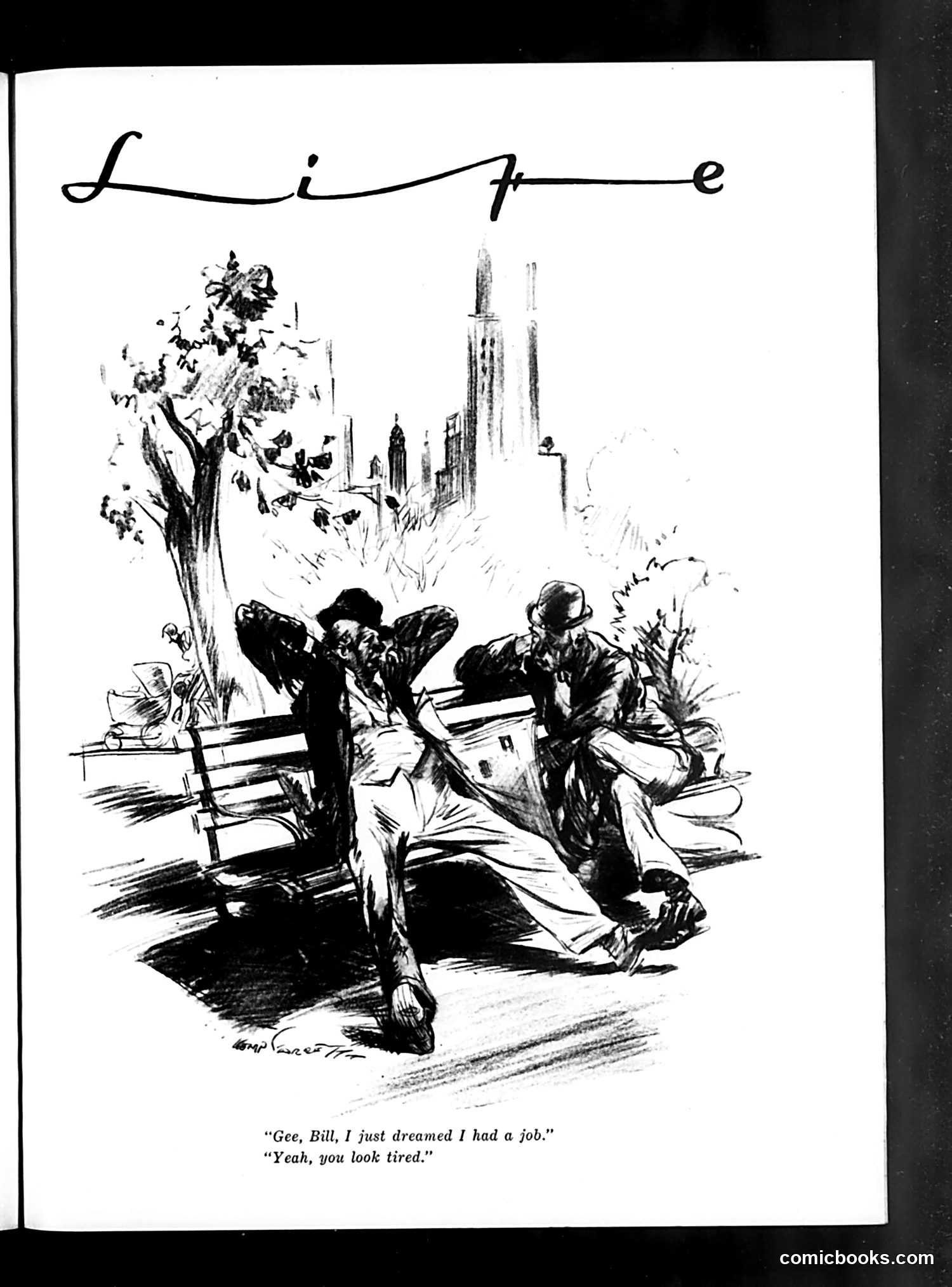
# Analysis of "Life" Magazine Cartoon This is a single-panel cartoon showing two men on a park bench with a city skyline in the background. One man appears exhausted or sleeping, while the other sits beside him. The joke hinges on the caption: "Gee, Bill, I just dreamed I had a job." / "Yeah, you look tired." **Context:** This is Depression-era satire, likely from the 1930s. The humor satirizes unemployment and economic hardship—the joke is that merely *dreaming* about having a job is so exhausting that the man looks as worn out as if he'd actually worked. The punchline darkly suggests that joblessness has become so normalized that employment itself now seems like an unattainable fantasy. The tired appearance reflects both the psychological toll of prolonged unemployment and the physical deprivation accompanying it.
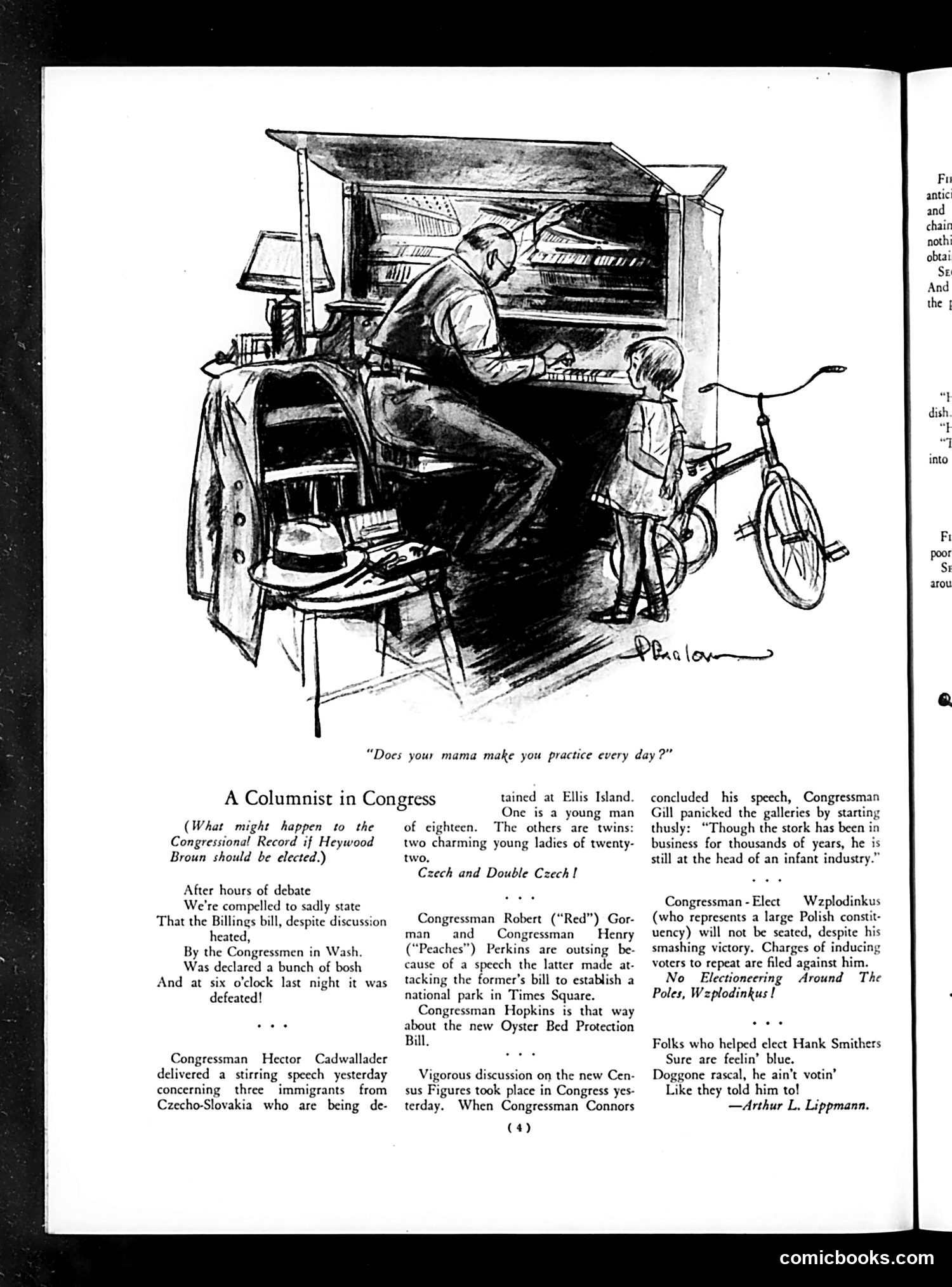
# A Columnist in Congress The cartoon depicts a man at a piano inside a car, with a child standing outside holding a bicycle. The caption reads: "Does your mama make you practice every day?" The satire targets **Congressman Hector Cadwallader**, who delivered a speech about three Czech-Slovak immigrants. The article notes his "stirring speech" concerned immigrants being debated in Congress, specifically regarding a "Billings bill" that was defeated at six o'clock that night. The joke appears to be that Cadwallader's grand congressional speech—compared to practicing piano—was ultimately futile and pointless, since the bill he advocated for failed anyway. The cartoon mocks the disconnect between politicians' rhetorical efforts and actual legislative outcomes.
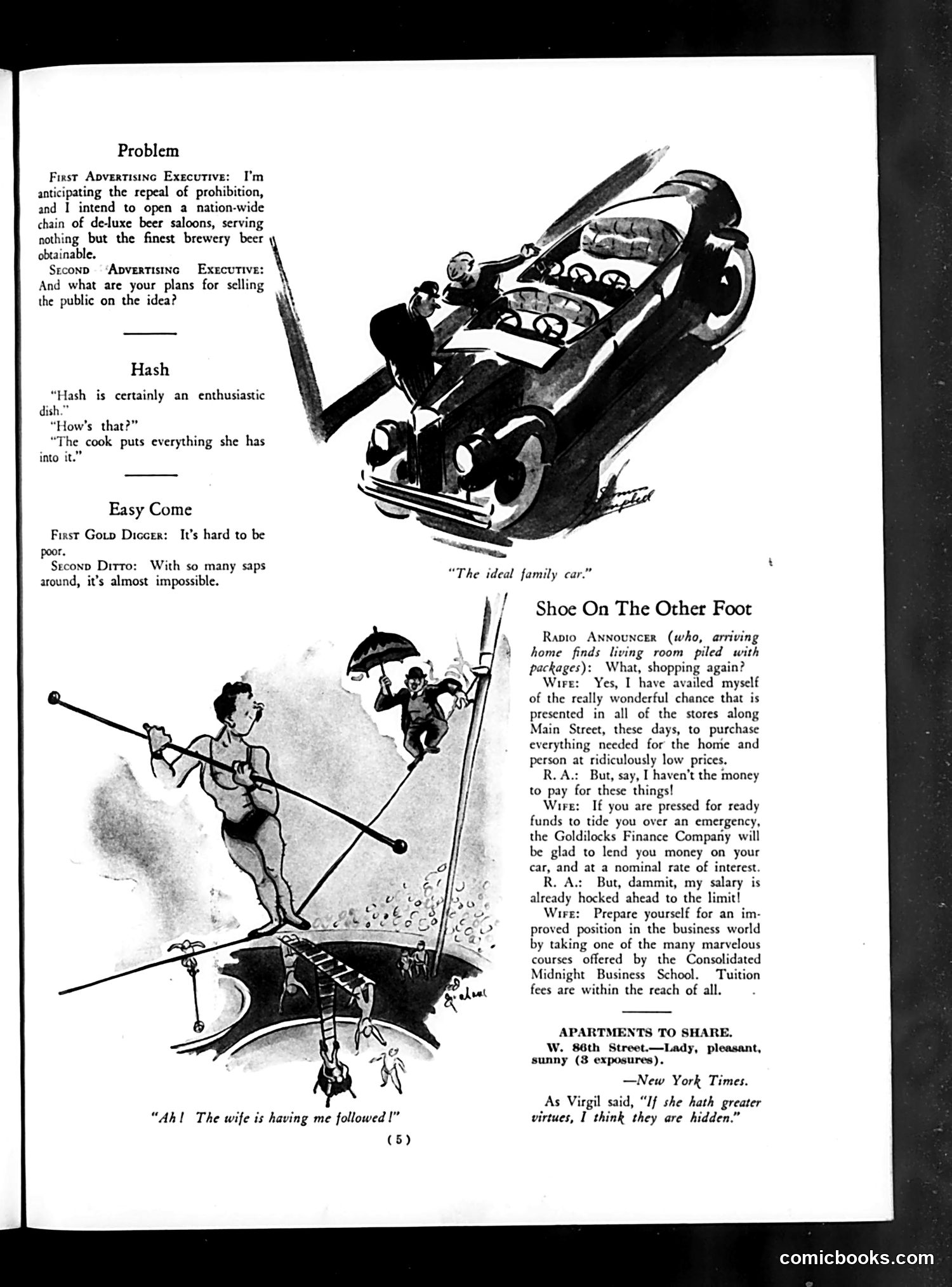
# Analysis of Life Magazine Page This page contains three separate humor pieces satirizing 1920s-30s American life: **"Problem"**: Two advertising executives discuss selling beer saloons after Prohibition's repeal—mocking the business opportunism expected when alcohol became legal again. **"Hash"**: A brief joke about an "enthusiastic dish" where a cook puts everything into hash, playing on the word's double meaning. **"Easy Come, Easy Go"**: A wealthy gold digger and ditty discuss poverty, suggesting financial instability among the rich. **"Shoe On The Other Foot"**: The main satirical piece shows a radio announcer and his wife discussing his salary anxiety and her shopping habits during economic uncertainty. The cartoon below depicts a man skiing while his wife follows—captioned "Ah! The wife is having me followed!"—mocking domestic surveillance and marital tension. The humor reflects Depression-era anxieties about money, employment, and marriage.
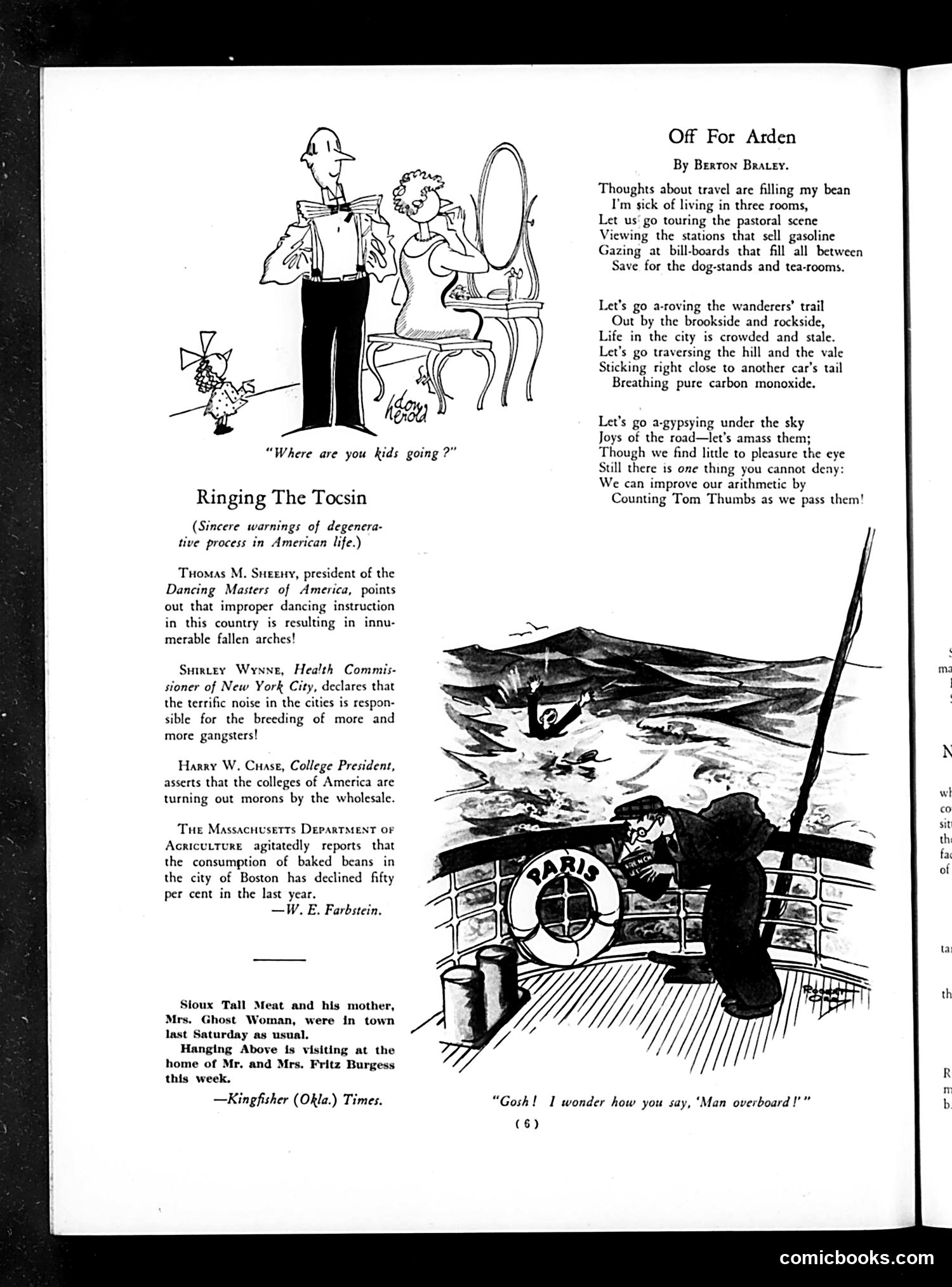
# Analysis of Life Magazine Page This page contains two distinct satirical pieces: **"Off For Arden"** (top right) by Berton Braley is a poem mocking modern tourism—visitors traveling to see mundane urban sights (gas stations, billboards, dog stands) rather than natural beauty. It satirizes how city tourism has become artificial and polluted ("pure carbon monoxide"). **"Ringing The Tocsin"** (left) collects warnings from various authorities about American social decline: improper dancing causing fallen arches, city noise breeding gangsters, and colleges turning out "morons." These appear to be contemporary alarmist claims the magazine is mocking. **The lower cartoon** shows a ship captain saying "Man overboard!" with the caption "Gosh! I wonder how you say, 'Man overboard!'" It likely jokes about language barriers or international maritime confusion, though context is unclear without knowing the publication date.
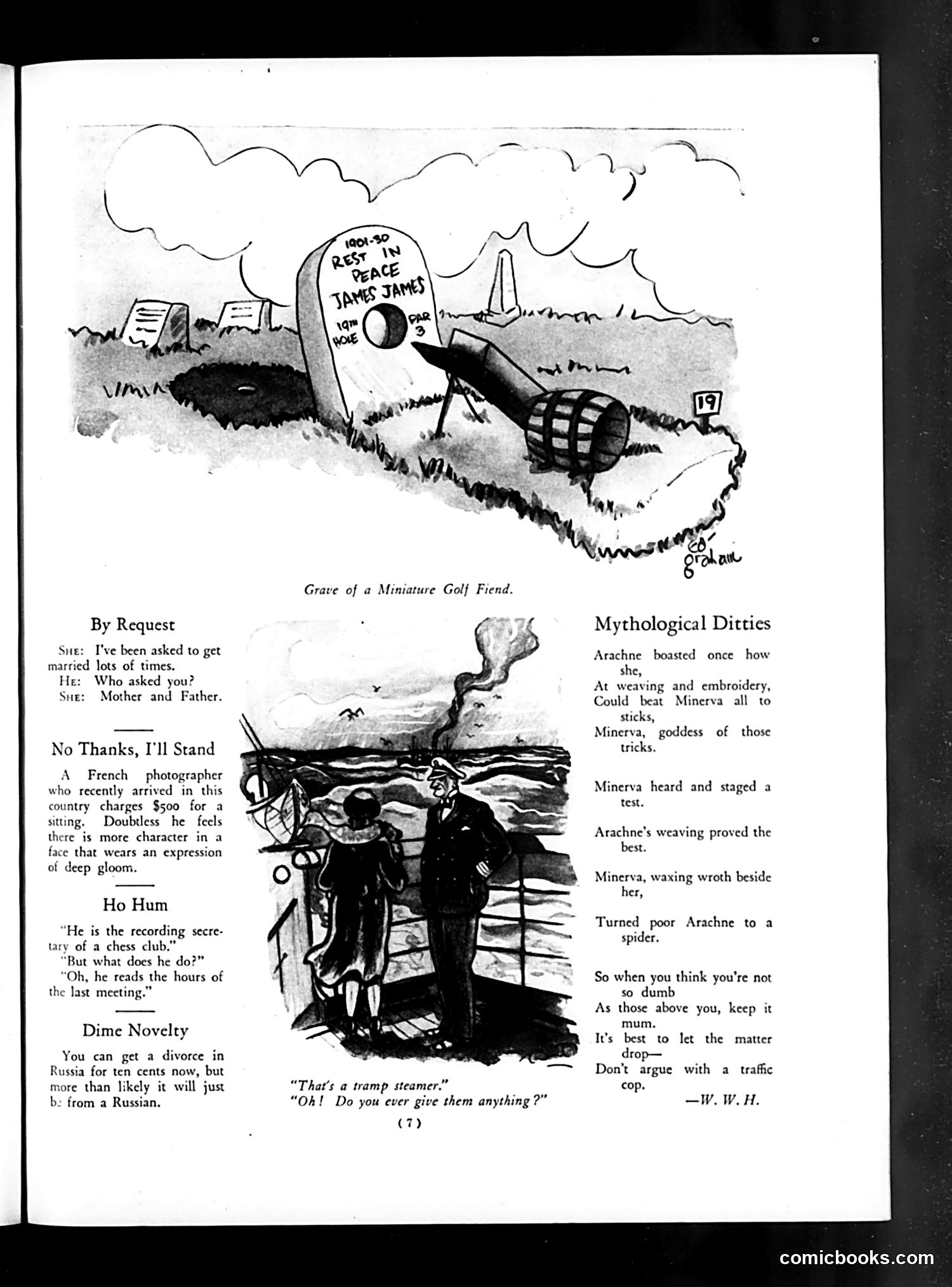
# Page Analysis This page from *Life* magazine contains several short humor pieces and cartoons: **"Grave of a Miniature Golf Fiend"** shows a tombstone for "James James" among miniature golf obstacles, satirizing the obsessive popularity of miniature golf—a fad of the era. **"By Request"** and **"No Thanks, I'll Stand"** are brief comic dialogues about marriage proposals and professional photography rates, poking fun at social conventions. **"Ho Hum"** jokes about a chess club secretary's dull job. **"Dime Novelty"** comments on cheap Russian divorces. **"Mythological Ditties"** retells the Arachne myth in verse, satirizing hubris. The central cartoon depicts what appears to be vagrants or poor people near a tramp steamer, with dialogue about receiving charity. The humor targets class disparities and Depression-era poverty through dark satire.
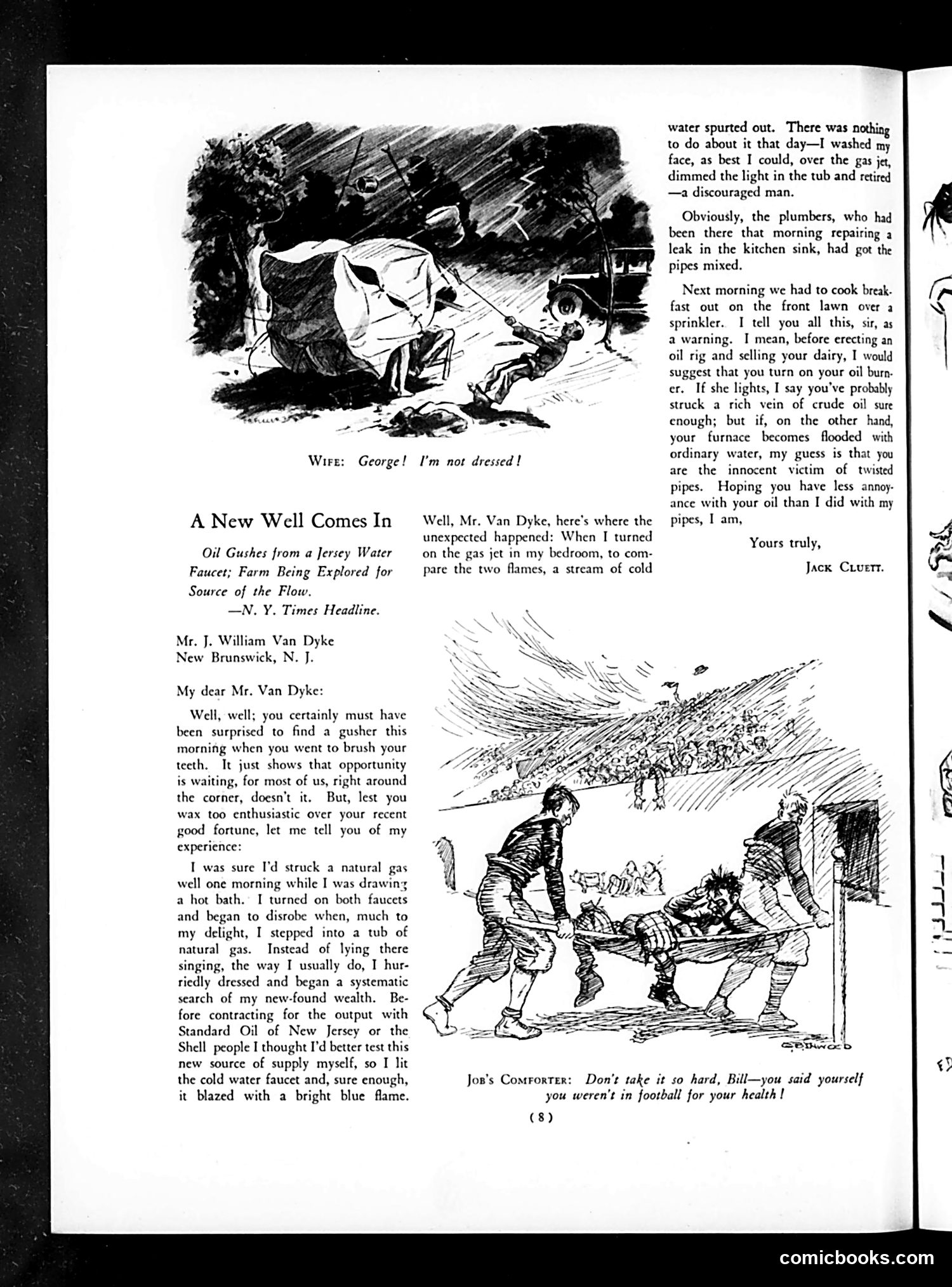
# "A New Well Comes In" - Oil Boom Satire This page satirizes the oil boom phenomenon in 1920s New Jersey. The main letter, signed by "Jack Cluett," humorously warns Mr. Van Dyke about unexpected oil discoveries disrupting domestic life. The top illustration shows a wife ("George! I'm not dressed!") caught off-guard by an oil gusher erupting indoors—likely from plumbing mishaps when workers mixed pipes during repairs. The lower cartoon depicts men playing football near an oil derrick, with the caption mocking one player's excuse: "Don't take it so hard, Bill—you said yourself you weren't in football for your health!" The satire targets the chaotic, intrusive nature of sudden oil wealth—how industrial development disrupts ordinary life and domesticity without warning.
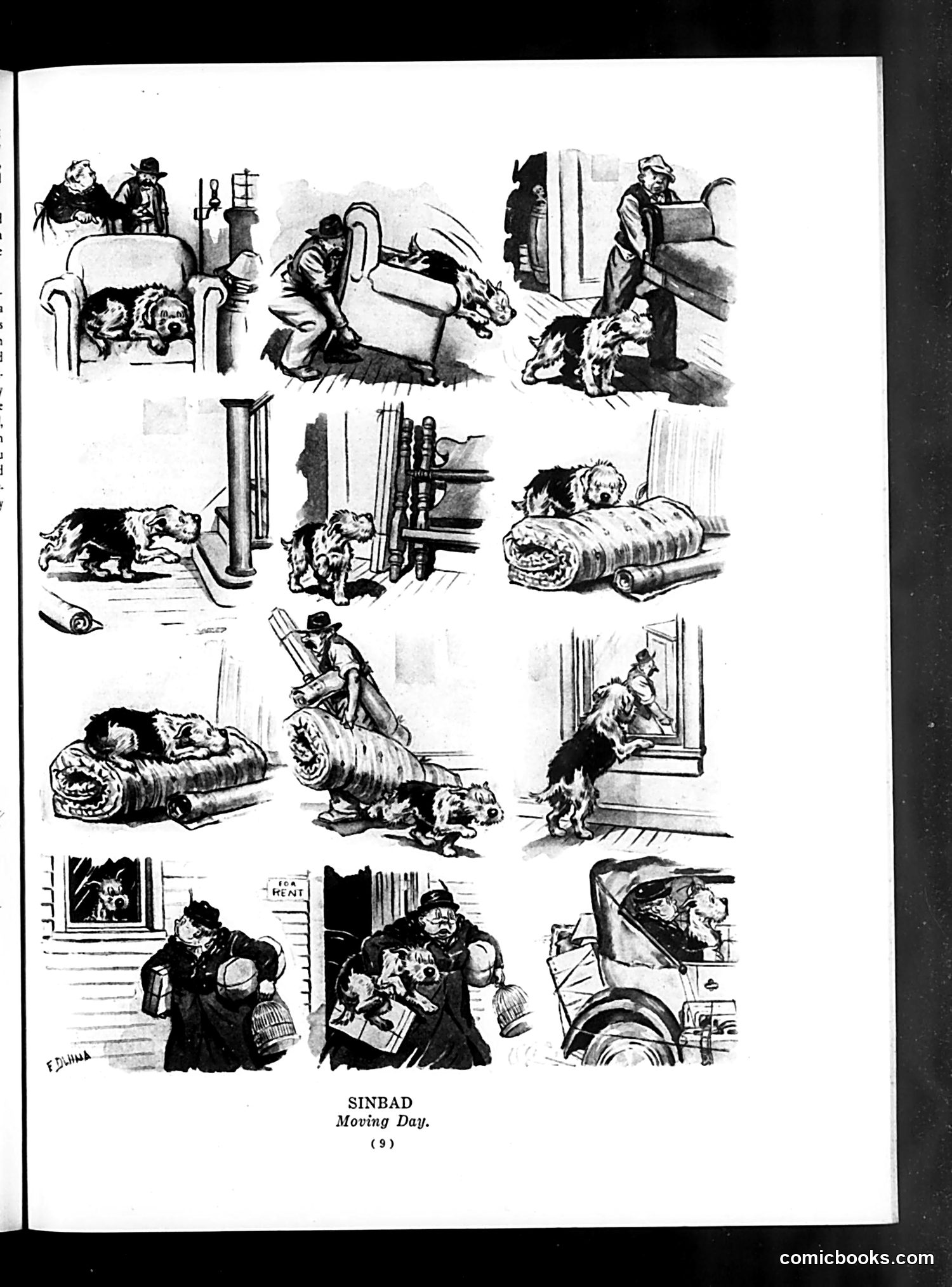
# SINBAD Moving Day This is a humorous pictorial sequence titled "SINBAD Moving Day" showing a dog (Sinbad) being moved to a new residence. The twelve panels depict the chaos and mishaps of relocation through the dog's perspective and involvement. The joke satirizes the universal frustration of moving day—the animal encounters furniture, boxes, rolled carpets, and other moving equipment in various comedic situations. The panels show Sinbad interacting with household items, getting in the way, hiding, and creating disorder typical of pet behavior during relocations. This appears to be a lighthearted comic strip using a named character (the dog Sinbad) to humorously document the pandemonium that accompanies household moves, a relatable experience for the magazine's readers.
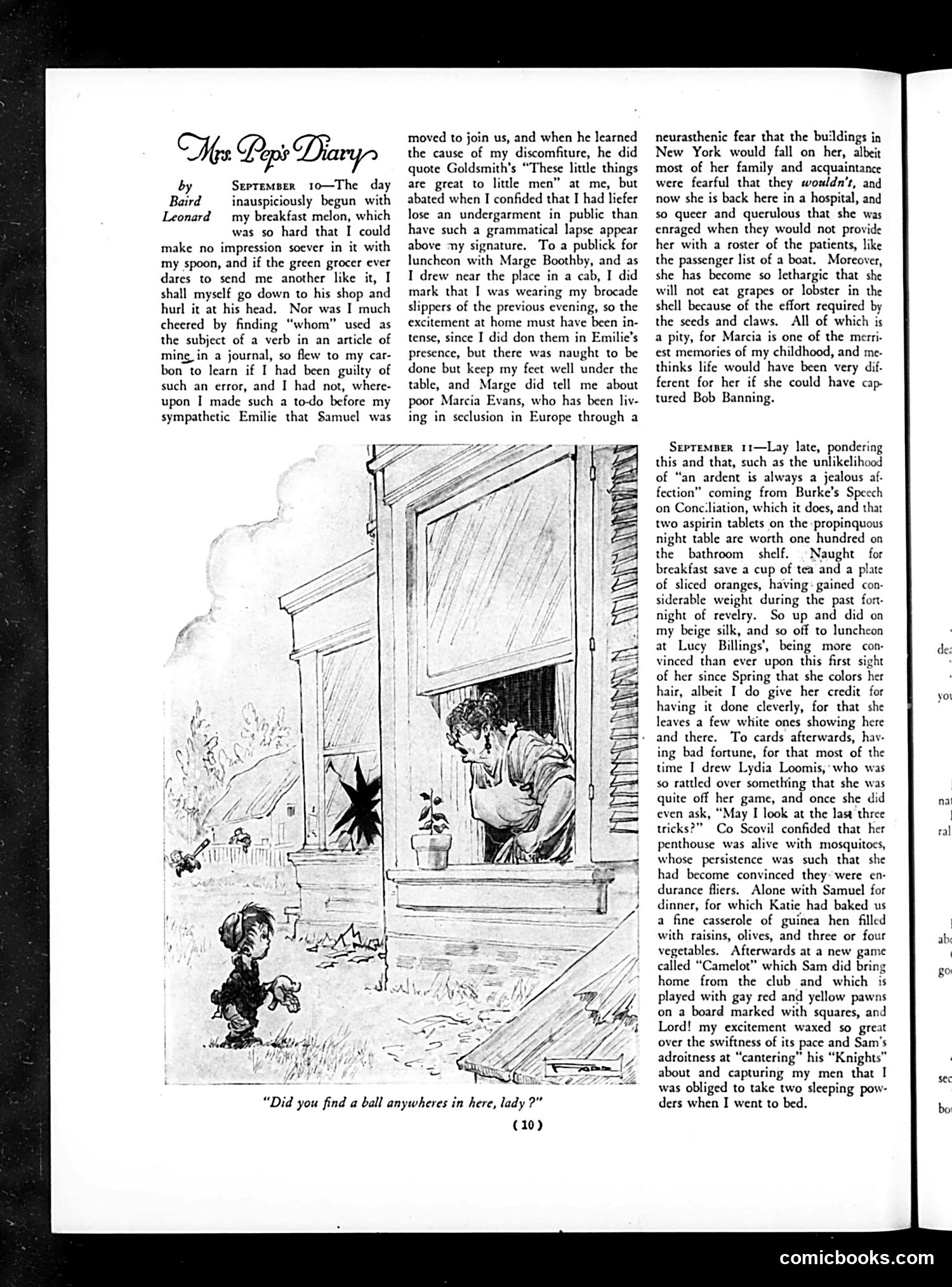
# "Mrs. Pep's Diary" - Page Analysis This page is from a serialized diary column titled "Mrs. Pep's Diary" by Baird Leonard, dated September 10-11. The text describes mundane domestic frustrations: a failed molten breakfast, laundry mishaps, and social embarrassments at lunch. The accompanying illustration shows a woman at a window confronting what appears to be a child or small figure outside, with the caption: "Did you find a ball anywheres in here, lady?" The satire targets the frustrations of middle-class domestic life—burnt food, household help problems, and social anxieties about appearance and propriety. The humor derives from relatable everyday indignities rather than political commentary. This appears to be lifestyle/humor content aimed at contemporary homemakers navigating domestic management and social expectations.