A complete issue · 36 pages · 1930
Life — September 26, 1930
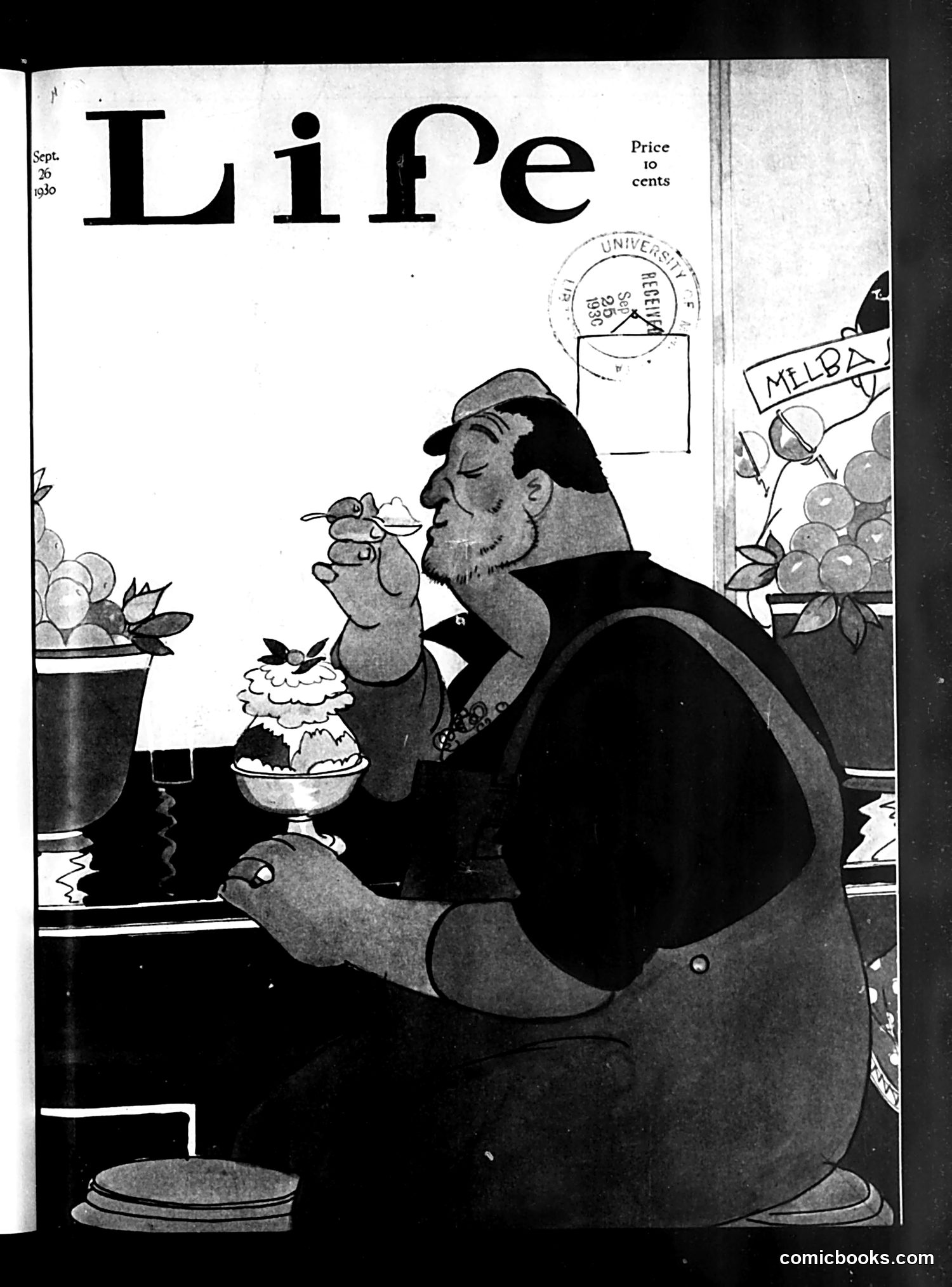
# Life Magazine Cover Analysis This is a **Life magazine cover from September 20, 1930** (price 20 cents). The illustration shows a corpulent man in a dark suit seated at a table, eating what appears to be a fancy dessert. He's surrounded by potted plants and fruit displays, suggesting an affluent domestic setting with a "Melba" brand visible on the right. The satire likely comments on **wealth and excess during the Great Depression era**—the man's obvious prosperity and indulgent consumption would have contrasted sharply with widespread economic hardship of 1930. The specific figure's identity is unclear from the image alone, but the cartoon mocks conspicuous consumption and the disconnect between the wealthy elite and struggling Americans.
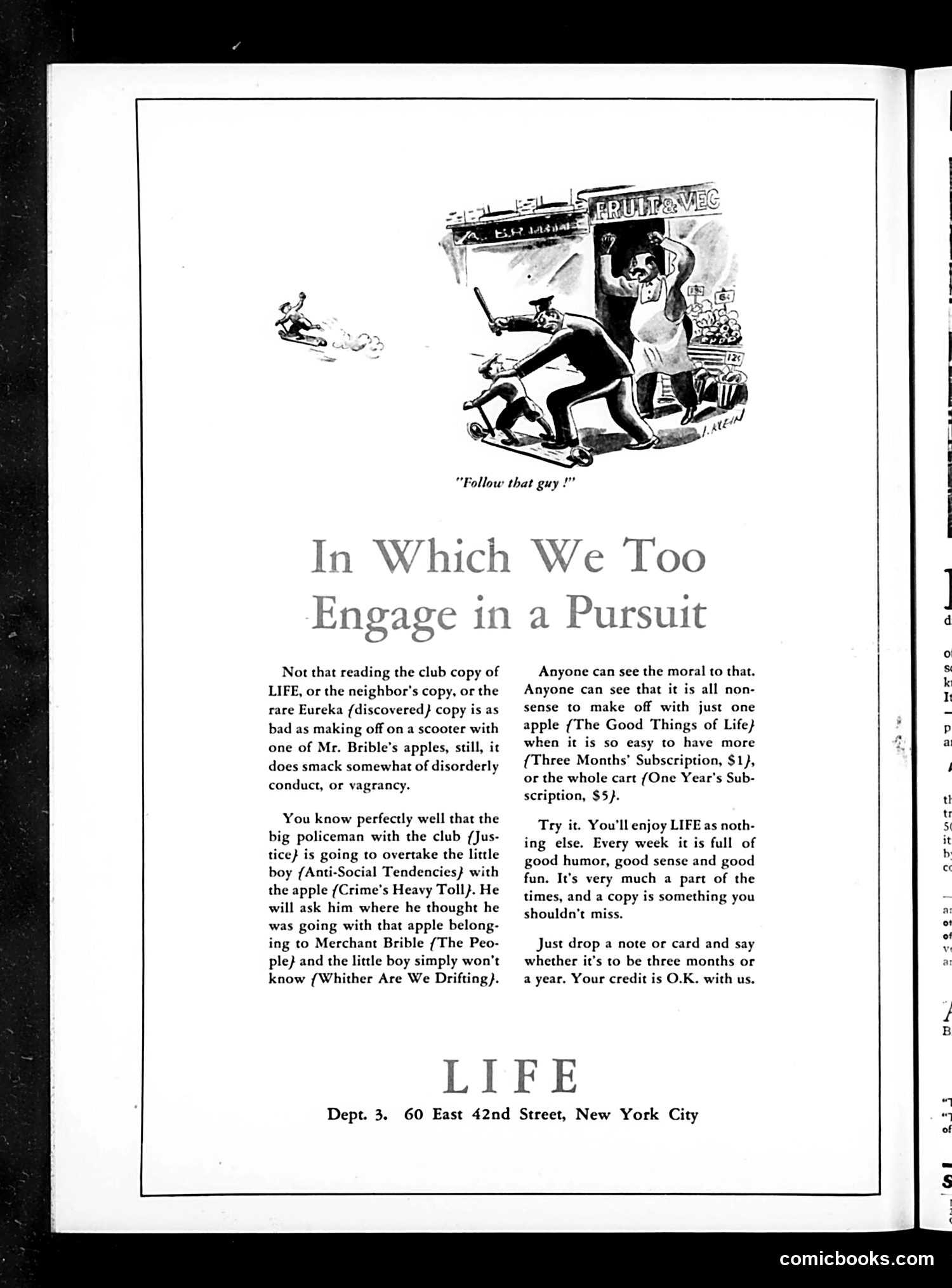
# Analysis This is a LIFE magazine advertisement promoting subscriptions. The cartoon depicts a policeman chasing a small boy who has stolen an apple—a reference to the nursery rhyme/fairy tale "The Merchant's Apple" or similar children's stories about petty theft. The ad's humor plays on the absurdity of overreaction: the massive authority figure pursues the child over something trivial. The text's moral lesson—that unauthorized borrowing of magazines (even "rare" copies) is similarly petty misconduct—uses this exaggerated pursuit as an analogy. The subscription pitch promises humor, good sense, and cultural value, arguing LIFE magazine is worth purchasing legitimately rather than borrowing. The appeal to readers' sense of propriety and morality is characteristic of mid-20th-century advertising rhetoric.
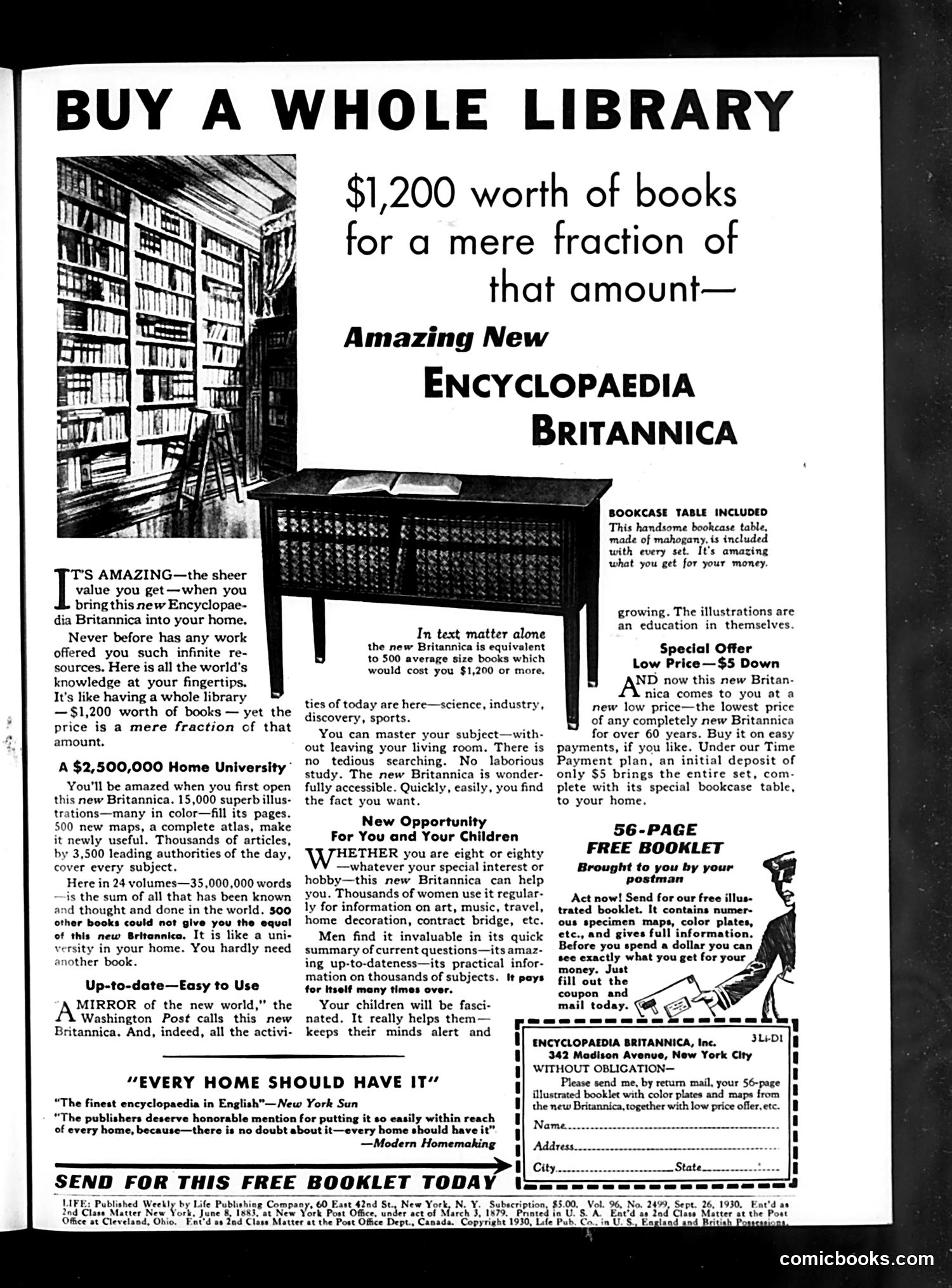
# Analysis This is primarily a **vintage advertisement**, not satirical content. It promotes the "Amazing New Encyclopaedia Britannica" to American households, circa 1920s-1930s based on styling. The ad uses several persuasive appeals: - **Value proposition**: $1,200 worth of books for a fraction of that price - **Status messaging**: Calls it "A $2,500,000 Home University," implying cultural sophistication - **Practical benefit**: 15,000 illustrations across 35,000,000 words covering science, industry, discovery, sports - **Accessibility**: Emphasizes ease of use ("no laborious study") and payment plans The included bookcase table underscores aspirational home furnishing. The accompanying illustration of a well-stocked library shelf appeals to desires for knowledge and respectability. This reflects early 20th-century marketing targeting middle-class families seeking affordable self-education and social advancement through owning comprehensive reference materials.
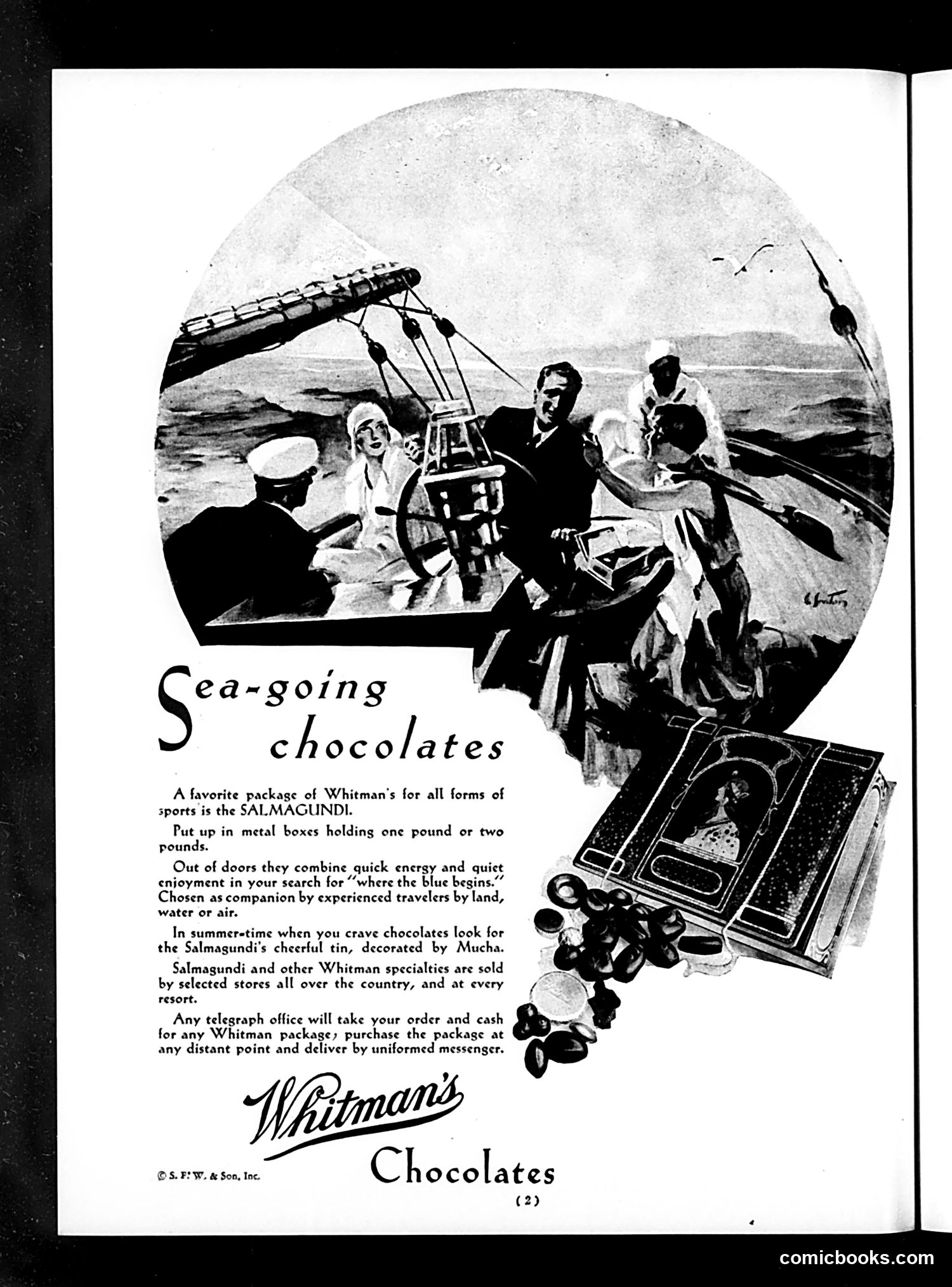
# Analysis This is a **Whitman's Chocolates advertisement**, not political satire. The page depicts a leisure scene set on a boat, showing well-dressed passengers enjoying maritime recreation. The ad promotes "Salmagundi" chocolates—a Whitman's specialty—as ideal companions for seaside activities and travel. The advertisement emphasizes convenience and accessibility: chocolates arrive in metal boxes (1-2 pounds), available at telegraph offices nationwide for mail order delivery. The copy suggests these are luxury goods for "experienced travelers by land, water or air." The illustration's nautical theme and fashionable figures reflect early 20th-century aspirational marketing—associating the product with leisure, sophistication, and adventure. This is commercial advertising rather than editorial content or political commentary.
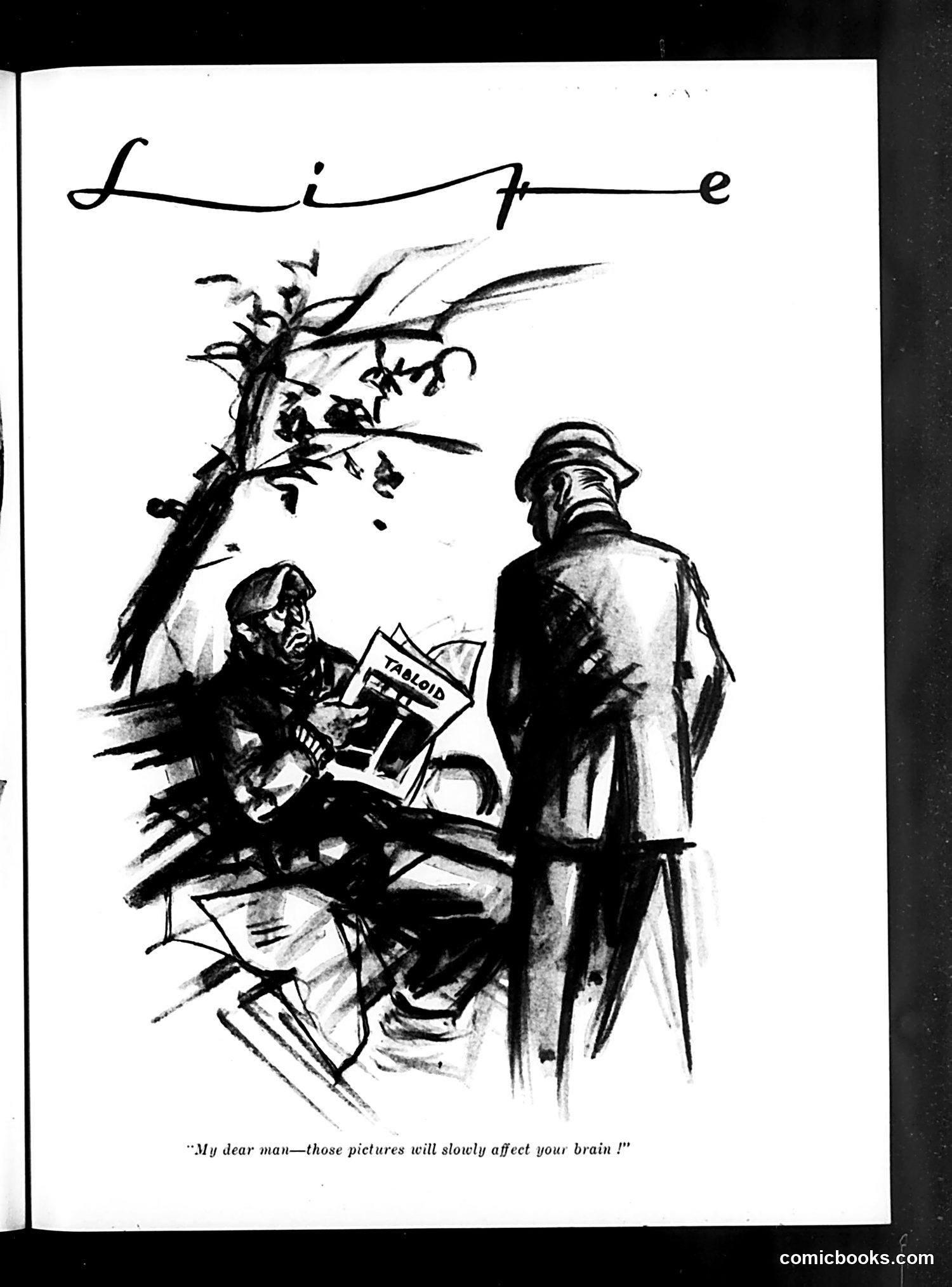
# Analysis This cartoon shows two figures beneath a bare, gnarled tree. One sits reading a publication labeled "Tabloid," while the other stands observing. The caption reads: "My dear man—those pictures will slowly affect your brain!" The satire targets the **tabloid press** and its sensationalist visual content. The standing figure warns that consuming tabloid pictures—known for lurid, shocking imagery—causes intellectual deterioration. The bare tree symbolizes the barren mental state resulting from such consumption. This reflects early 20th-century concern about mass-market tabloid journalism's social impact, particularly its reliance on photographs and graphic content to drive sales. The cartoon positions tabloid readers as intellectually compromised, a common satirical theme in *Life* magazine's critiques of popular culture and mass media.
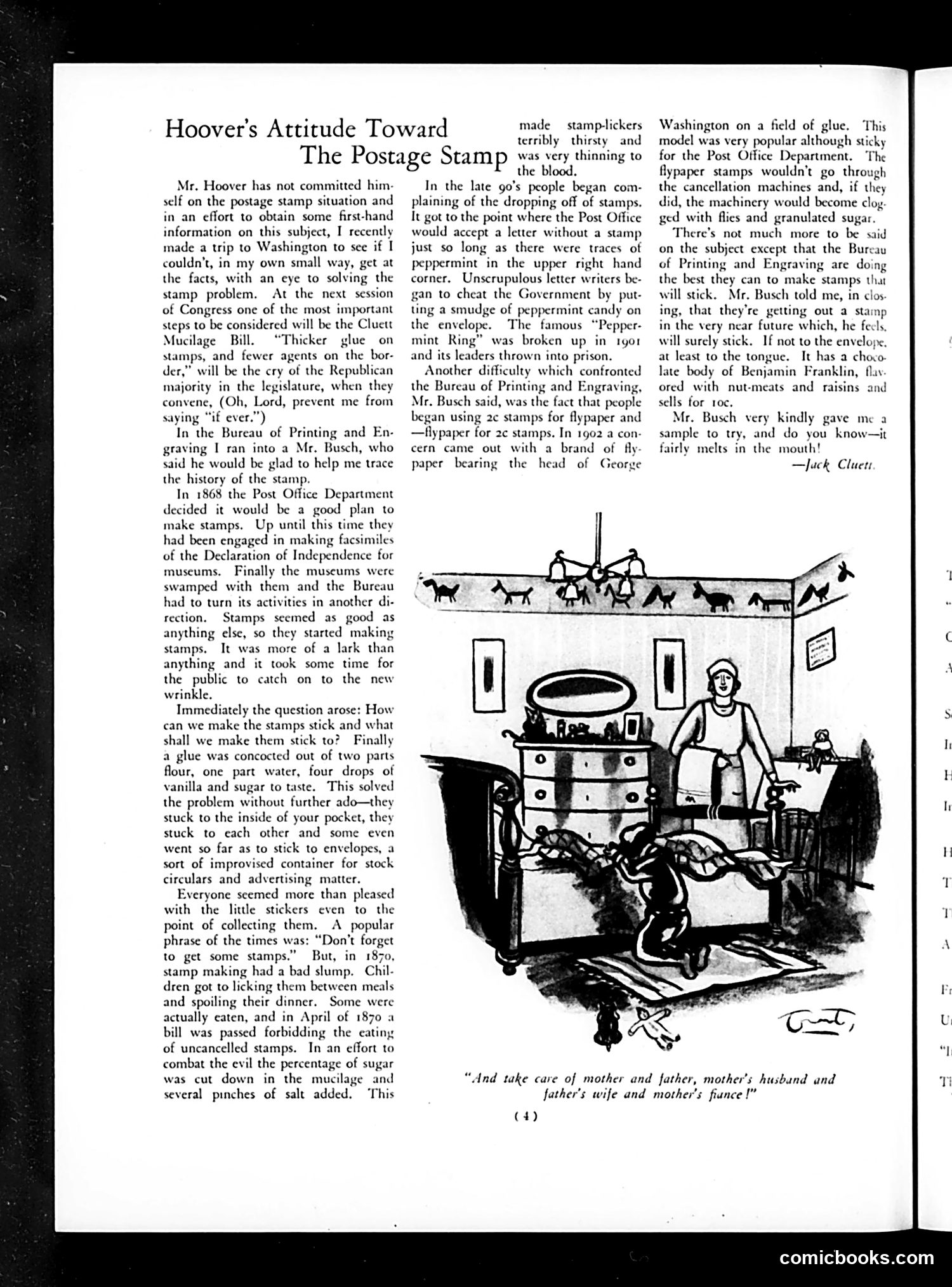
# Analysis of "Hoover's Attitude Toward The Postage Stamp" This is a humorous article about postage stamp production history, not political satire. The text discusses how the Post Office Department began manufacturing stamps in 1868, and details the technical challenges of making them stick—including a failed "Pepper Mint" glue formula that led to someone being imprisoned, and issues with flypaper stamps in 1902. The accompanying cartoon illustrates the practical problem: a woman at what appears to be a stamp-manufacturing machine, with the caption warning to "take care of mother and father, mother's husband and father's wife and mother's fiancé!" The joke references children getting stamps stuck to their mouths while licking them, creating domestic chaos. This reflects genuine 1910s concerns about stamp hygiene and adhesive safety.
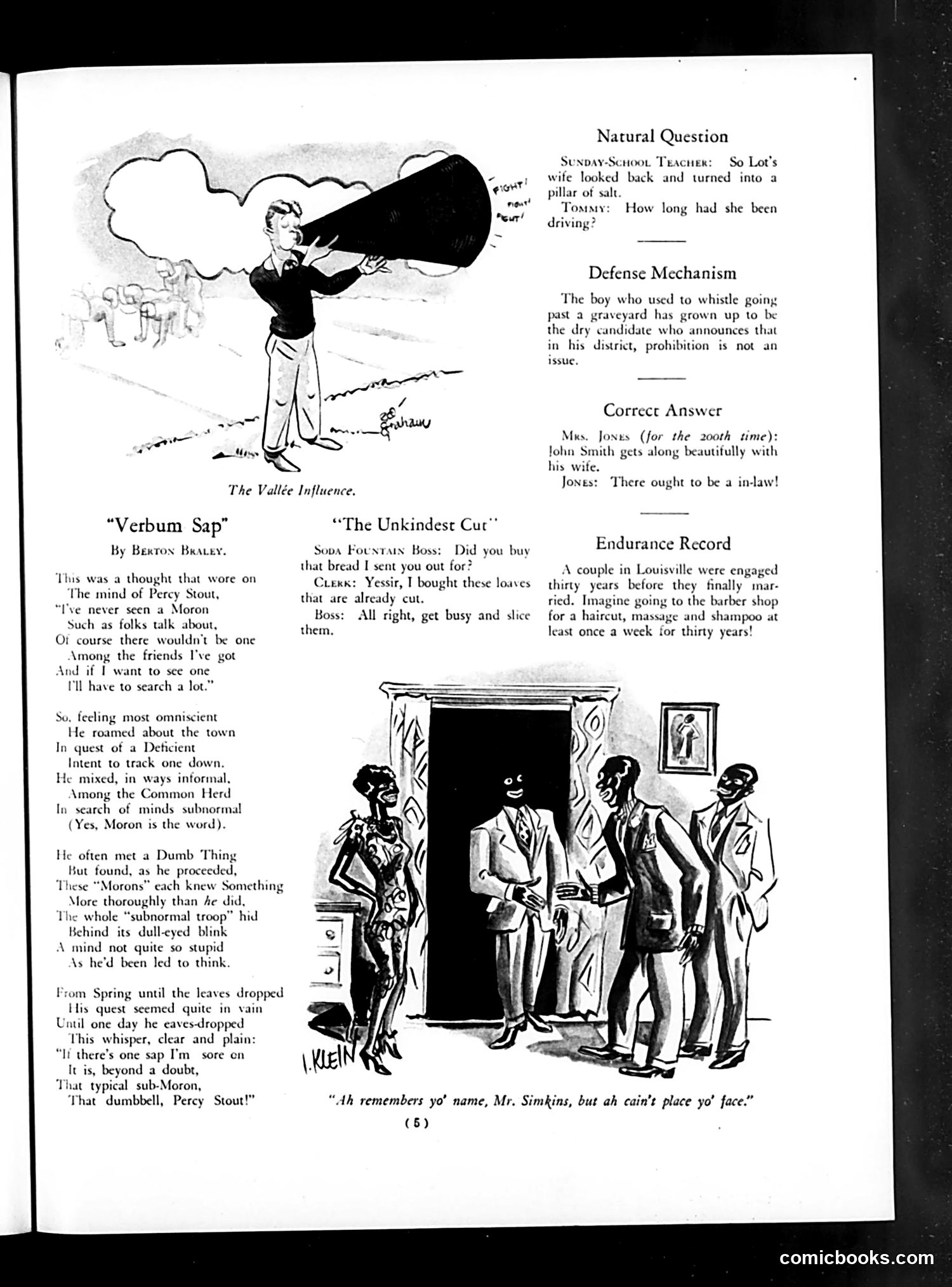
# Page 65 Analysis: Life Magazine Humor Section This page contains three separate humor pieces: **"The Vallée Influence"** (top cartoon): A man with an enormous megaphone addresses an audience. The joke references Rudy Vallée, a famous 1920s crooner known for singing through a megaphone. The satire suggests his vocal style's absurdly outsized amplification. **"Verbum Sap"** (left column): A humorous poem by Berton Braley about Percy Stout seeking a Moron—suggesting people who believe common gossip are intellectually deficient. It's genteel satire on small-town rumor-mongering. **Bottom cartoon**: Three men encounter a woman at a doorway. The caption "Ah remember yo' name, Mr. Simkins, but ah cain't place yo' face" appears to mock Southern social pretense or memory lapses. These represent typical *Life* magazine humor: light satire on popular culture, small-town life, and social conventions.
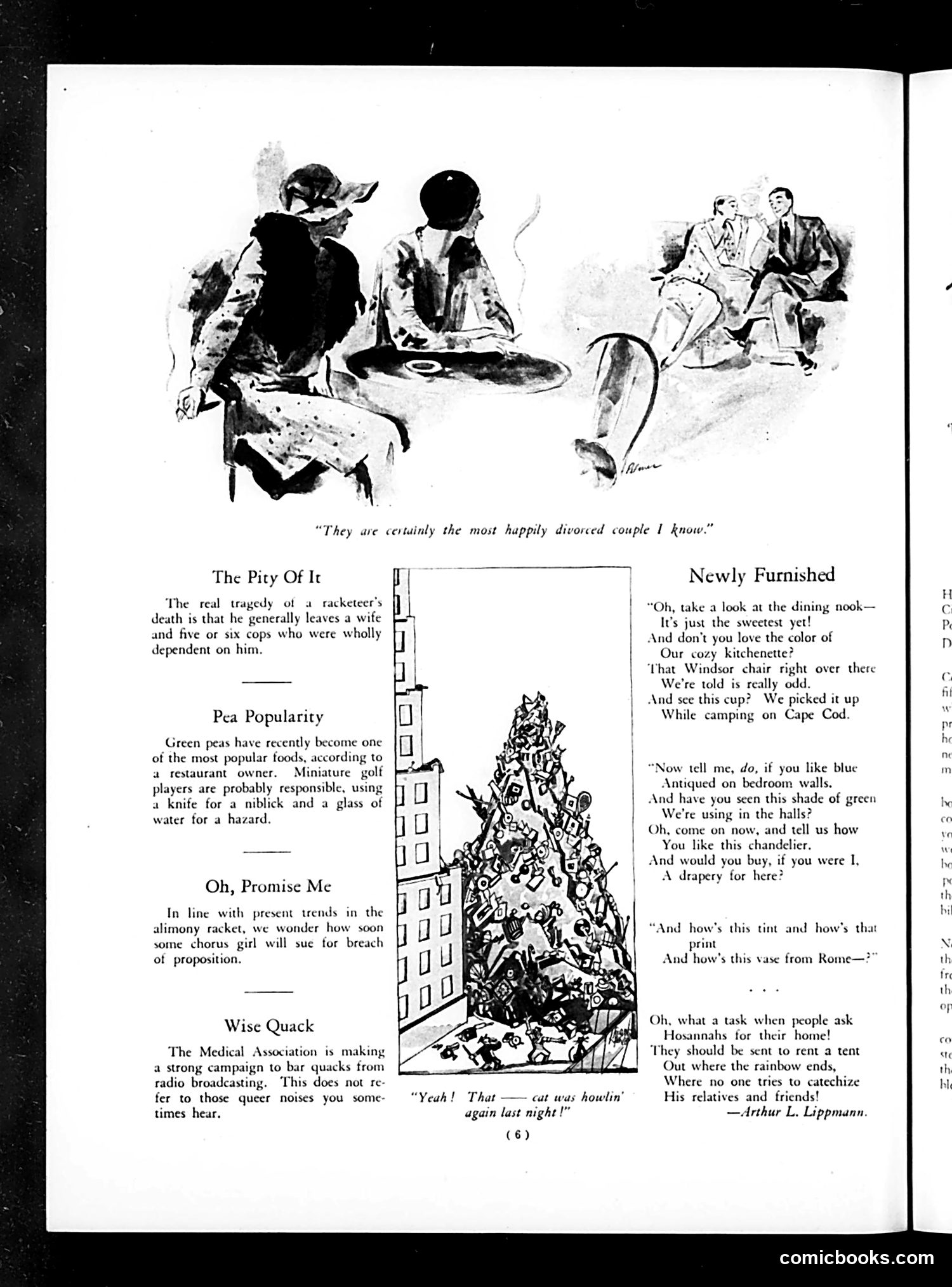
# Page 6 of Life Magazine - Analysis This page contains several short humorous pieces and a cartoon, typical of Life's satirical format: **Top cartoon**: Shows a divorced couple socializing pleasantly, captioned "They are certainly the most happily divorced couple I know"—satirizing the contradiction between divorce (suggesting unhappiness) and their apparent contentment. **Left column pieces** ("The Pity of It," "Pea Popularity," "Oh, Promise Me," "Wise Quack") are brief social commentary: mocking racketeers' impact on dependents, noting peas' trendy restaurant popularity, commenting on marriage proposals, and criticizing medical quacks on radio. **Right section**: "Newly Furnished" humorously depicts a couple obsessing over home décor details while living in an overcrowded, chaotic apartment building—satirizing newlyweds' misplaced priorities regarding trendy furnishings over actual space and comfort.
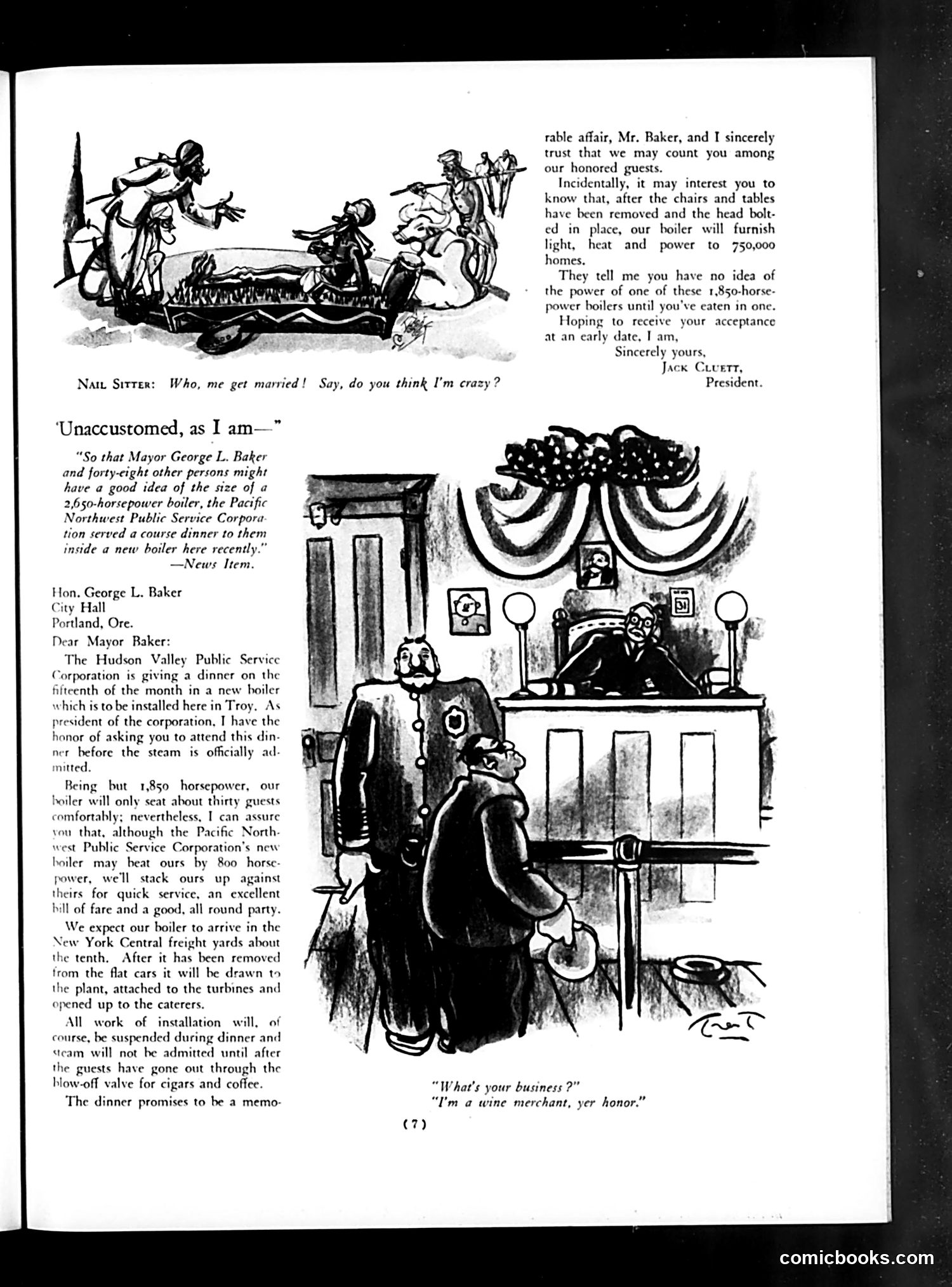
# Explanation for Modern Readers This page satirizes a 1920s-era corporate publicity stunt. Mayor George L. Baker of Portland, Oregon received an invitation to a dinner celebrating installation of a massive 1,850-horsepower boiler by the Pacific Northwest Public Service Corporation in Troy. The top cartoon mocks the absurdity: a man asks "Who, me get married! Say, do you think I'm crazy?" — equating marriage to accepting this dinner invitation. The implication is that attending such a corporate event is an equally binding, ridiculous commitment. The bottom cartoon shows a society dinner where a guest claims to be "a wine merchant, yet honor" — likely satirizing pretentious business figures attending corporate celebrations disguised as prestigious social events. The satire targets corporate self-promotion dressed up as civic honor and entertainment.
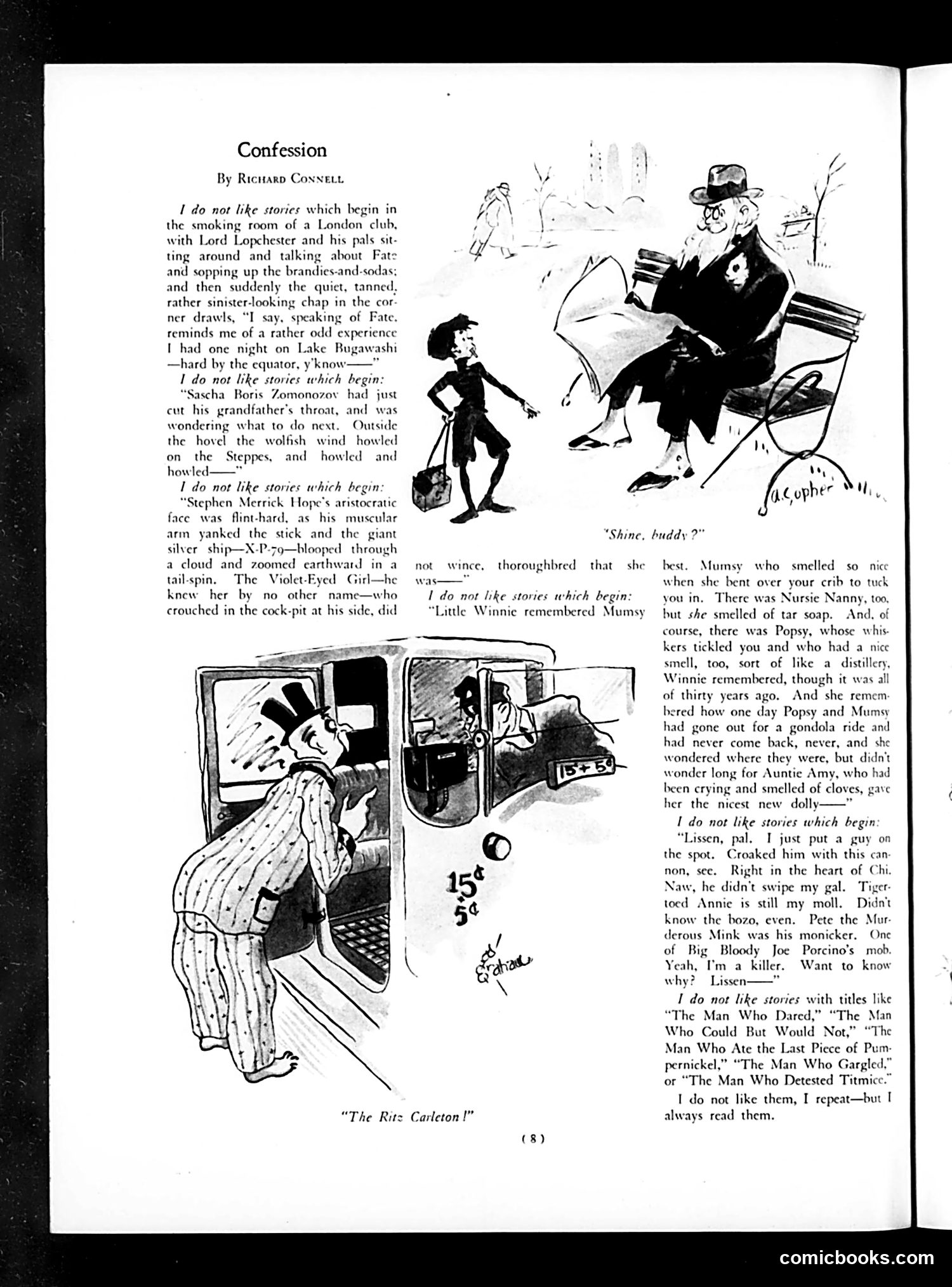
# "Confession" by Richard Connell This satirical essay mocks predictable literary story openings. Connell catalogs clichéd opening lines he dislikes—tales beginning in London clubs with aristocrats, stories about Sascha Boris Zomonozov, and adventure narratives like "The Man Who Dared." The two cartoons illustrate his complaints: "Shine, buddy?" shows an exaggerated street character, while "The Ritz Carleton!" depicts a disheveled passenger in a taxi (marked 15¢), likely mocking low-brow or melodramatic story premises. The piece's ironic refrain—"I do not like stories which begin..."—emphasizes how Connell dislikes these tropes *yet always reads them anyway*, capturing the paradox of popular fiction's appeal despite (or because of) its predictability. The humor targets both hackneyed writing and readers' guilty consumption of it.
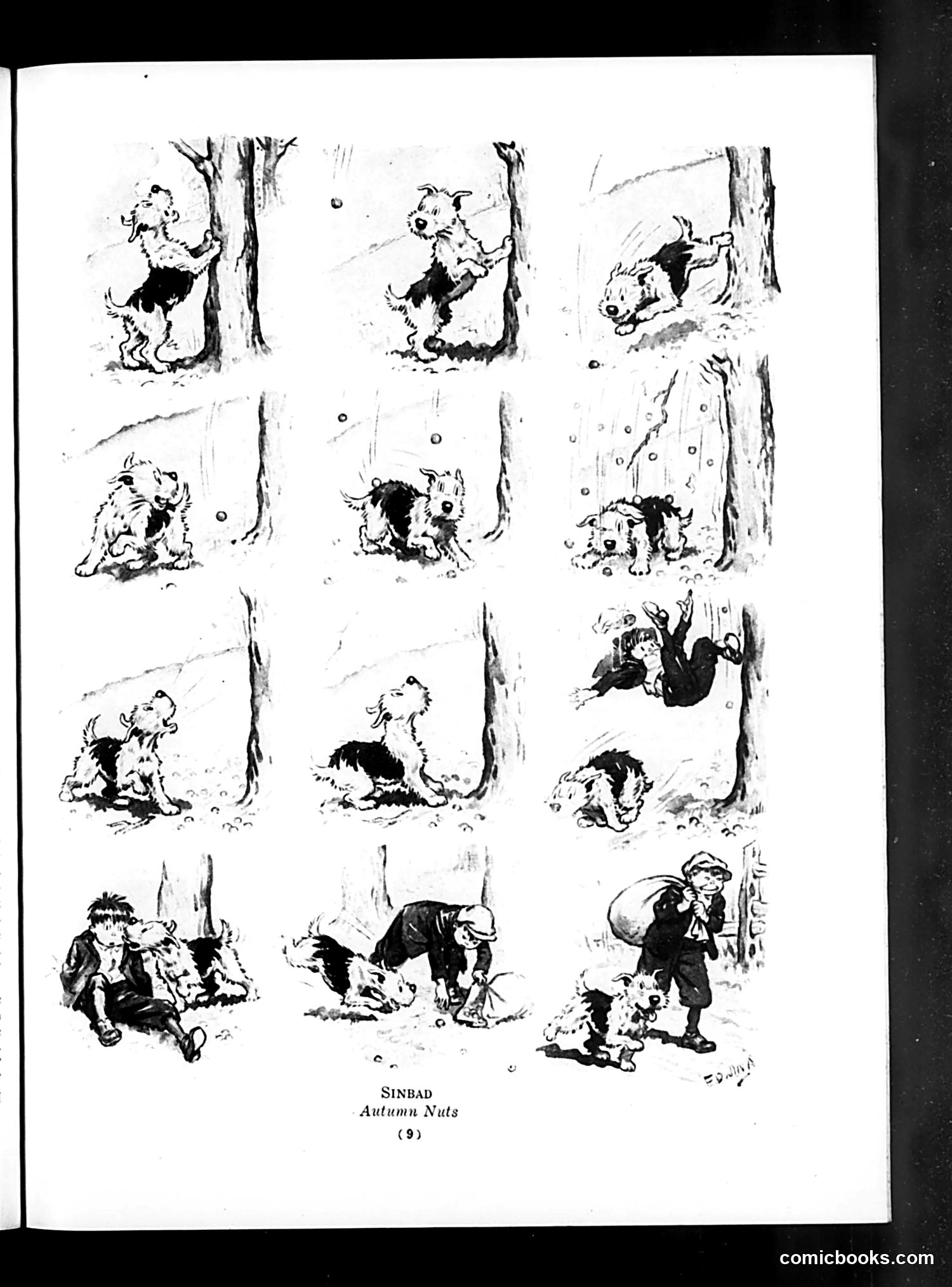
# "Sinbad: Autumn Nuts" This is a comic strip featuring Sinbad the Sailor and various animal characters (primarily dogs and what appear to be other creatures) engaged in slapstick adventures around trees. The sequential panels show physical comedy—animals climbing trees, falling, chasing acorns, and interacting with human characters in autumn settings. The humor is visual and physical rather than political or satirical. The title "Autumn Nuts" suggests the plot involves gathering nuts or the animals acting "nutty" (foolish) during fall. This appears to be lighthearted entertainment comics rather than political satire—typical fare for *Life* magazine's humorous content section, using exaggerated character animation and chase sequences common to early 20th-century comic strips.
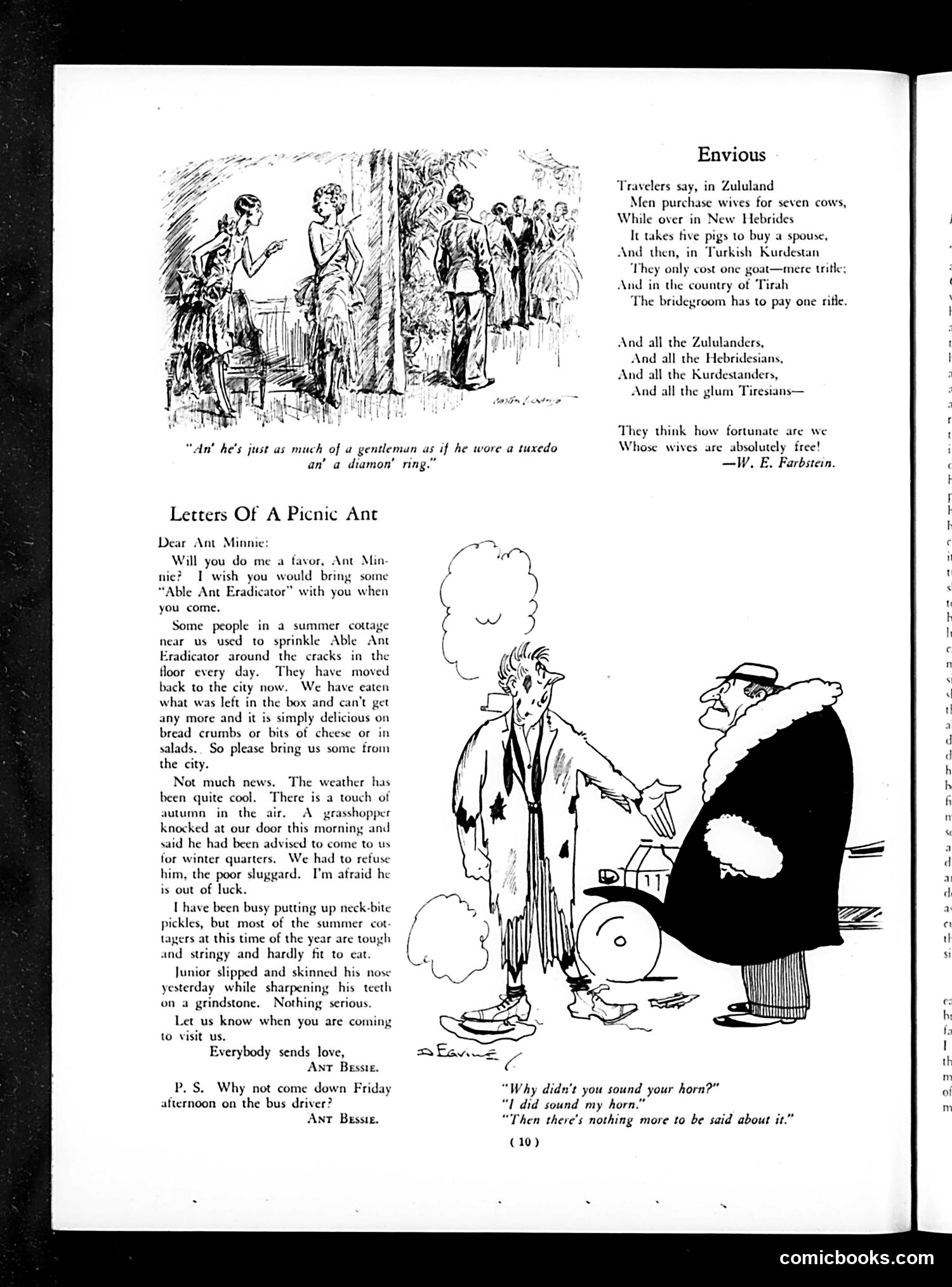
# Analysis This page contains two distinct pieces: **"Envious" (top right):** A poem by W.E. Forstein satirizing marriage customs in various non-Western cultures—Zululand, the Hebrideads, Turkish Kurdistan, and Tirah. The joke compares the economic "cost" of acquiring wives (seven cows, five pigs, one rifle) across these societies, then mocks Western readers for considering themselves fortunate that wives are "absolutely free"—implying wives are actually a financial burden or emotional liability through other means. **"Letters of a Picnic Ant" (lower left):** A humorous column from "Ant Bessie" requesting ant poison for a summer cottage, complaining about summer boarders being unpleasant, and describing mundane domestic incidents (a grasshopper visitor, a grandson's nosebleed). The accompanying cartoon shows two ants discussing a lost horn. The satire gently mocks suburban summer life and domestic triviality through the ant perspective.