A complete issue · 36 pages · 1930
Life — September 19, 1930
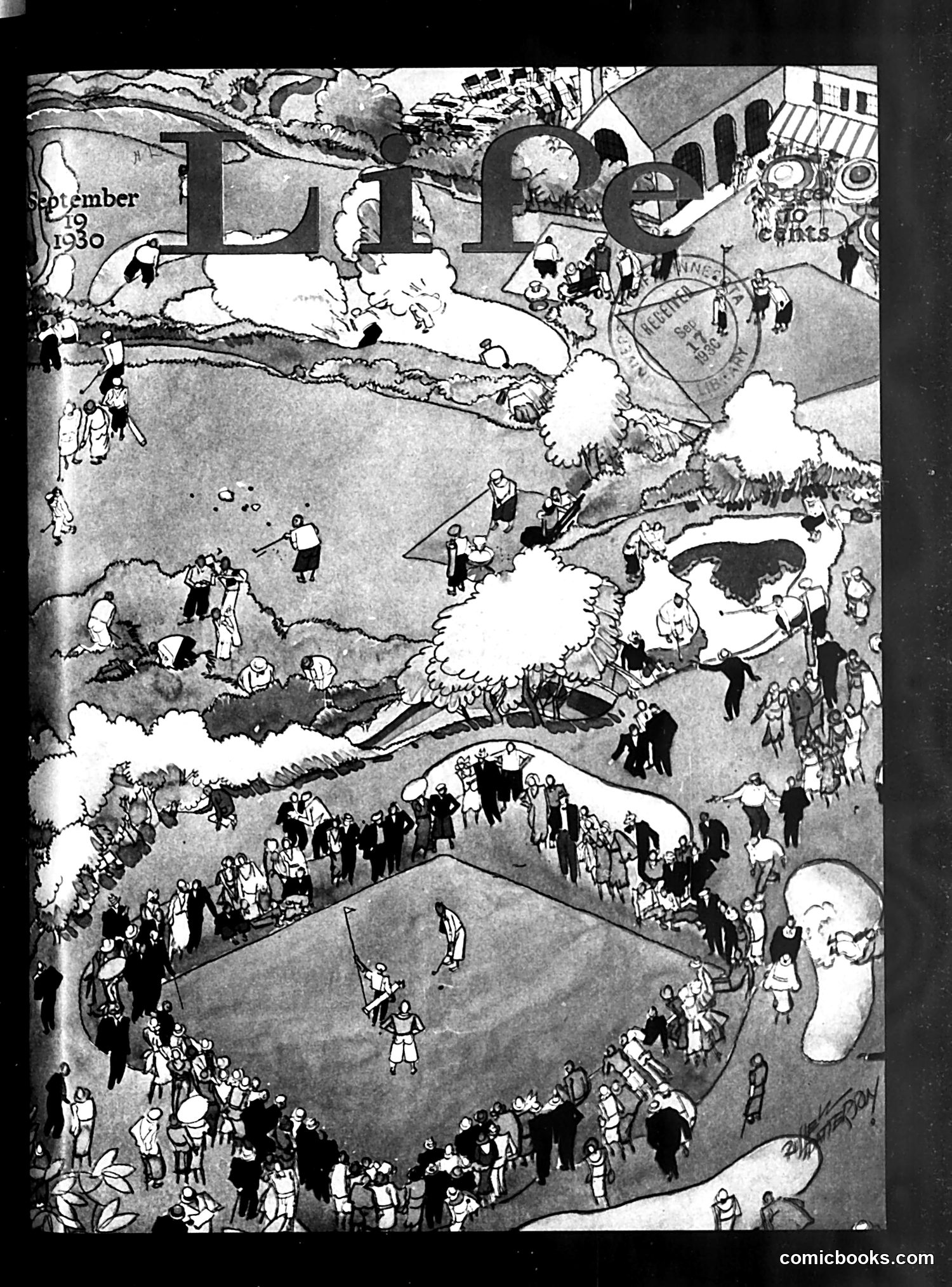
# Life Magazine, September 1930 - Aerial View Illustration This appears to be a cover or full-page illustration from Life magazine's September 1930 issue, depicting an aerial view of a landscape populated with numerous small figures engaged in various activities—picnicking, playing sports, socializing, and recreating. The illustration uses the large "LIFE" text as design element integrated into the scene. The style is characteristic of 1930s satirical illustration, presenting everyday American leisure and social activity in bird's-eye perspective. Without additional visible text or captions on this page, the specific satirical point or social commentary remains unclear from the image alone. The illustration appears celebratory of American recreational culture during the early Depression era, though the intended critique or humor—if any—is not definitively apparent from what's visible here.
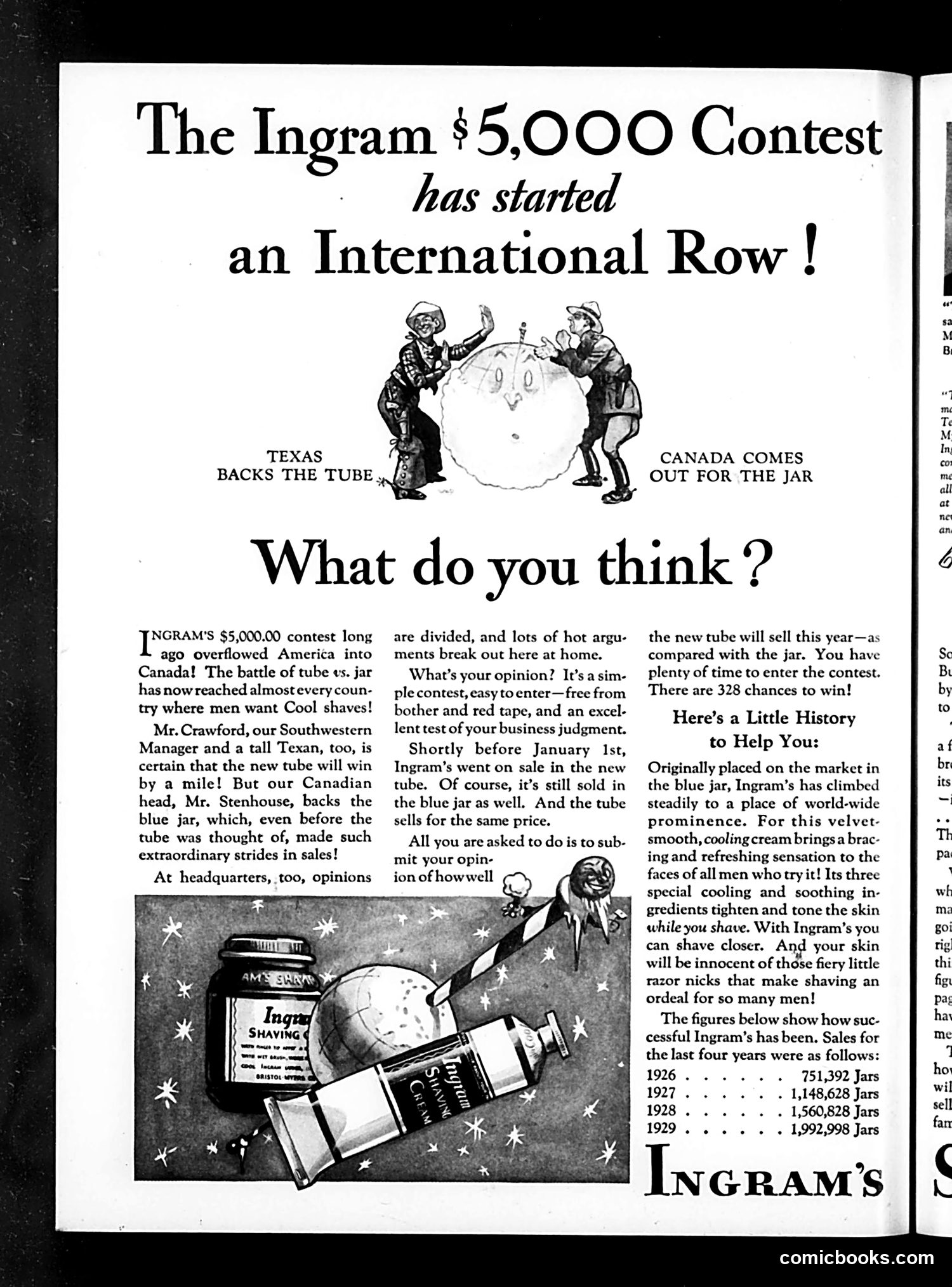
# Analysis This is an **advertisement for Ingram's shaving cream**, disguised as a mock editorial contest. The page presents a playful "international dispute" between Texas and Canada over whether Ingram's new tube or the traditional jar will outsell better. The cartoon depicts two caricatured figures (representing each region) arguing over a large globe, framing a commercial competition as humorous national rivalry. The advertisement's strategy uses nationalist humor and friendly competition to engage readers. The text emphasizes Ingram's product history and sales figures (1926-1929), establishing brand credibility. "Here's a Little History to Help You" section promotes shaving cream benefits—smoothness, skin care, avoiding razor burn—positioning the product as a consumer choice based on practical advantages rather than mere tradition. This blends satire with commerce, typical of Life magazine's advertising approach in this era.
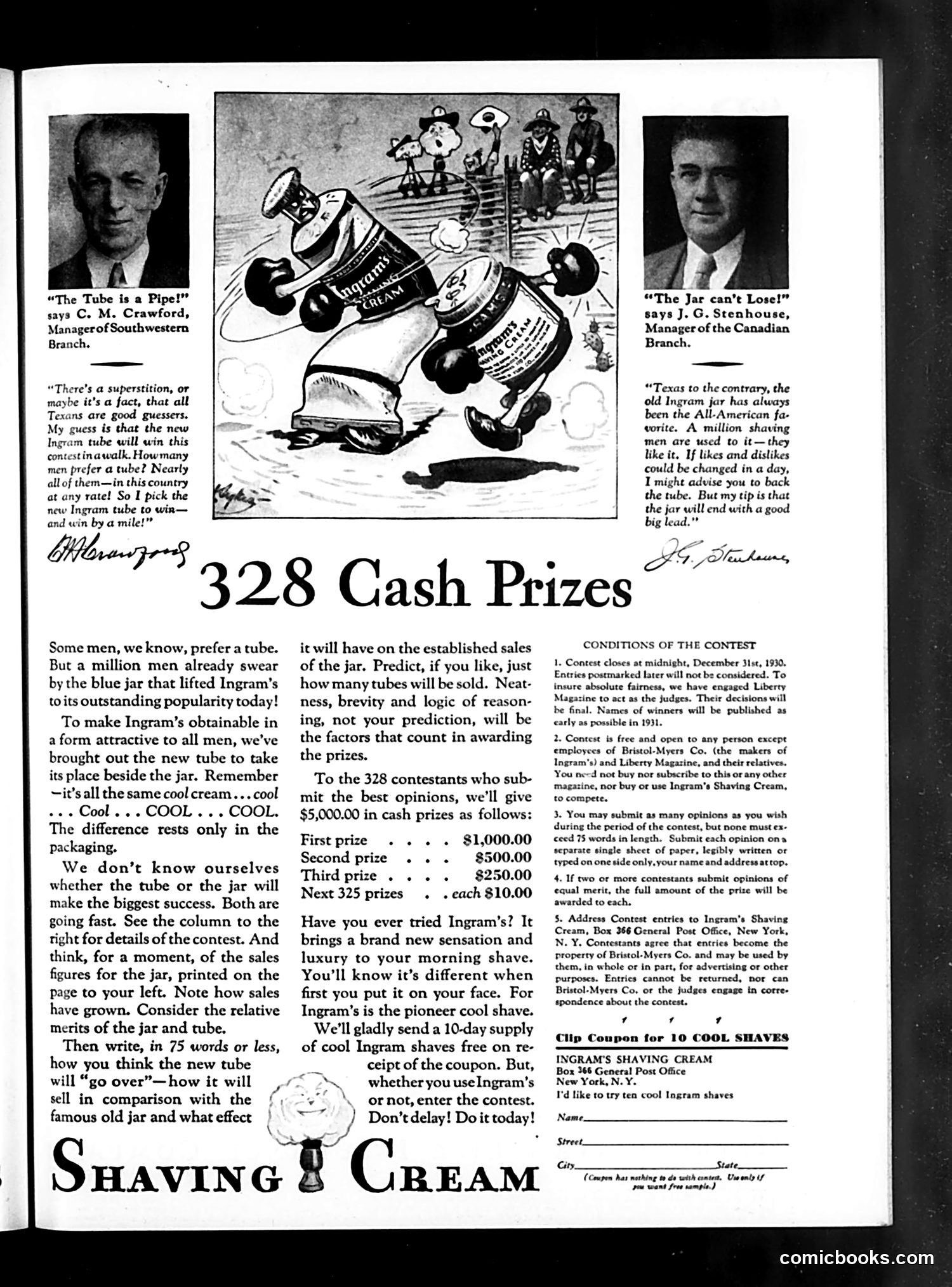
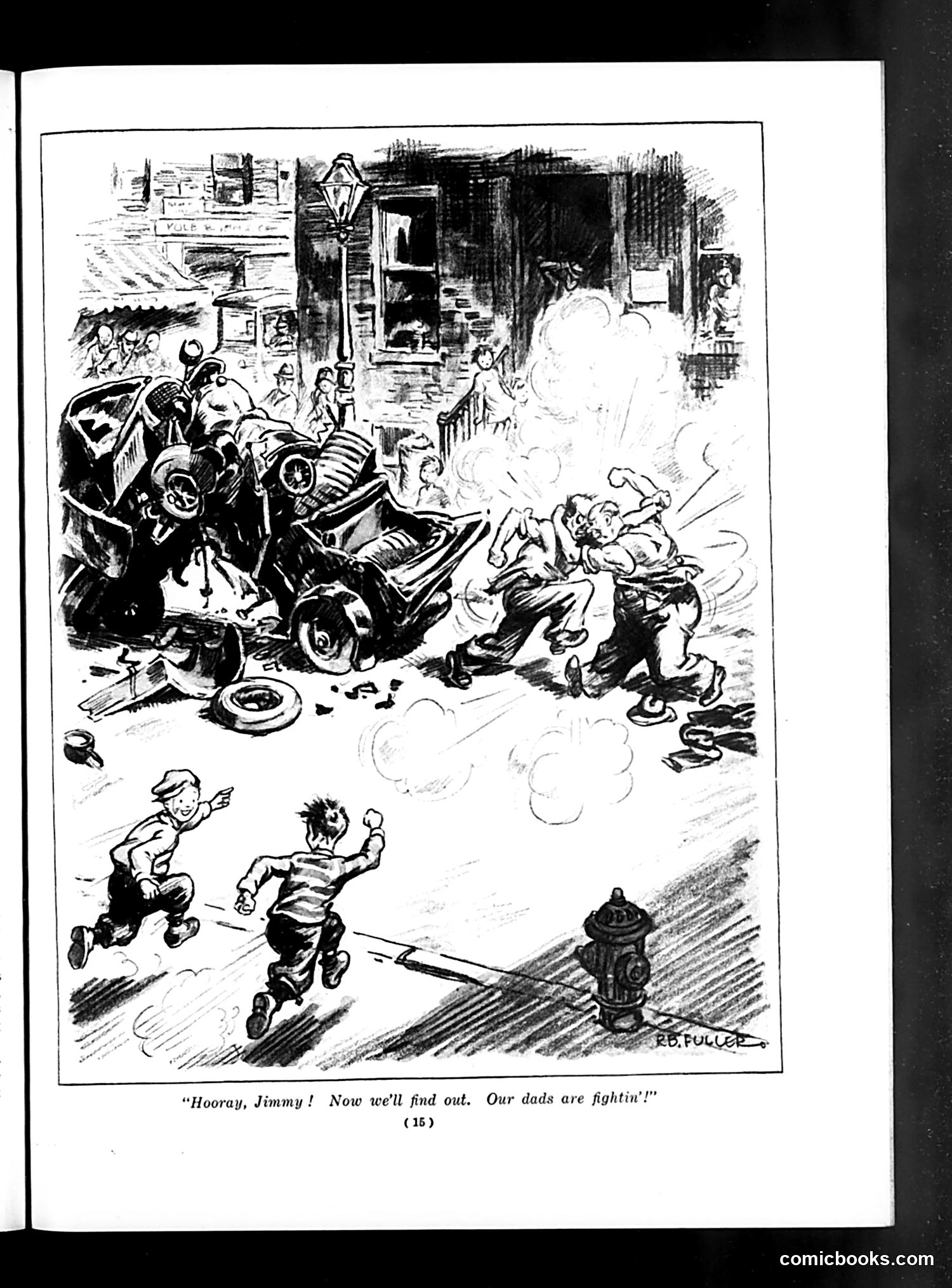
# Analysis This is primarily a **commercial advertisement** for Ingram's Shaving Cream, not political satire. The central cartoon depicts a comical collision between a tube of Ingram's shaving cream and a traditional jar of the product, illustrated as vehicles crashing on a road with spectators watching. The advertisement promotes a product competition: Ingram's new **tube packaging versus their established jar format**. Two company managers (C.M. Crawford and J.G. Stenhouse) debate the merits—Crawford champions the convenient new tube, while Stenhouse defends the classic jar's reliability. The humor derives from treating packaging formats as rival competitors. The contest awards $5,000 in prizes for readers' predictions about which packaging will prove more successful. This reflects early 20th-century consumer marketing strategies emphasizing product innovation.
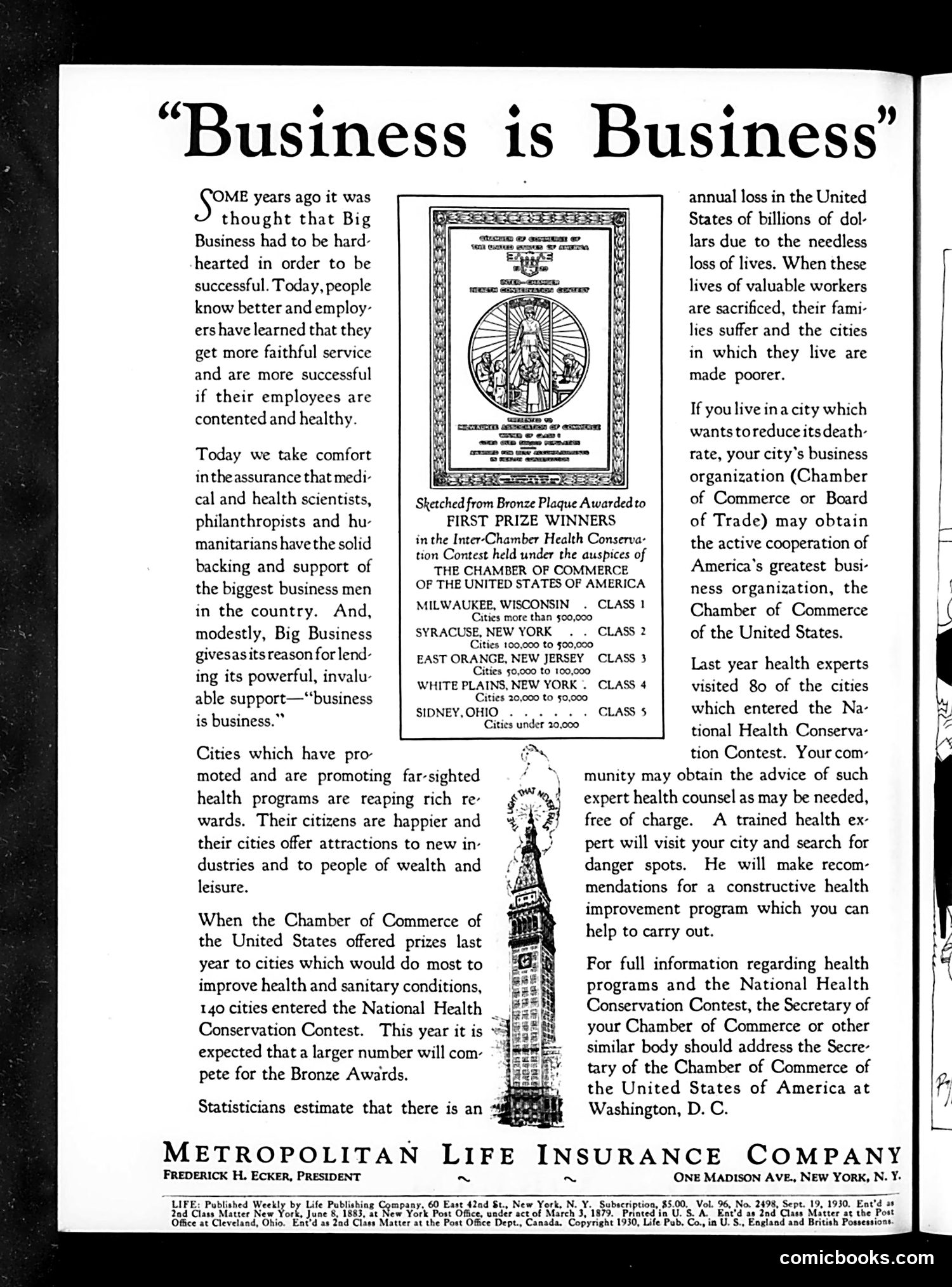
# Analysis This is primarily a **corporate advertisement** for Metropolitan Life Insurance Company, not satire or political commentary. The piece promotes "Business is Business"—the idea that healthy, content employees benefit companies and cities economically. The **central image** shows a decorative bronze plaque awarded to cities winning the Chamber of Commerce's National Health Conservation Contest, recognizing municipal health improvements. The **argument**: Cities promoting health programs attract industries and wealthy residents, creating prosperity. The text cites 140 cities entering this contest, with health experts visiting winners to recommend improvements. The **appeal to business**: Worker health reduces death rates and lost productivity—framed as enlightened self-interest rather than humanitarian concern. Metropolitan Life positions itself as supporting this vision, while advertising its role in promoting public health initiatives. This reflects **1930s business philosophy** emphasizing corporate social responsibility as good capitalism.
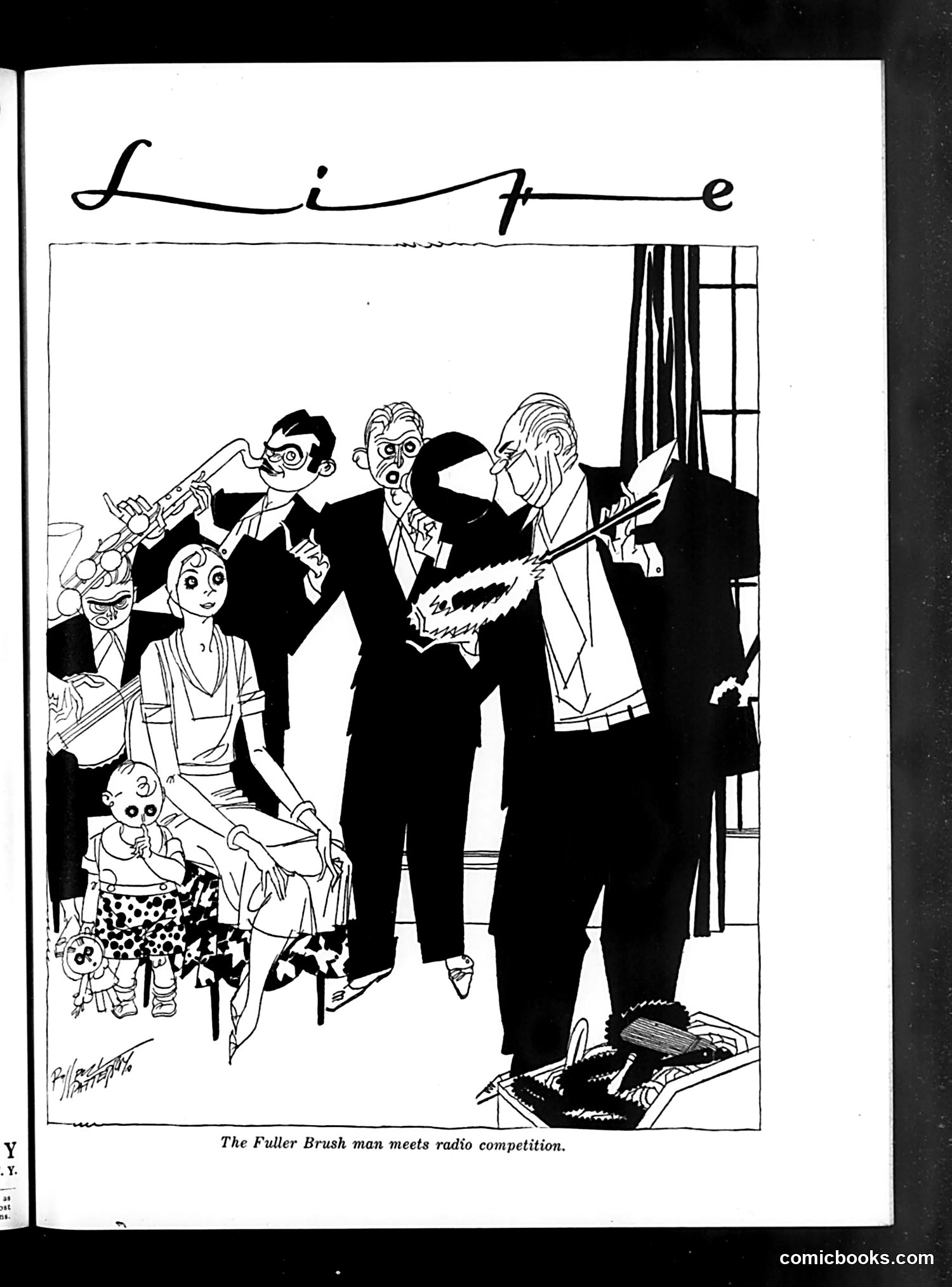
# "The Fuller Brush Man Meets Radio Competition" This cartoon satirizes the collision between old and new sales methods in early 20th-century America. The "Fuller Brush man" (left, with traditional product case) represents door-to-door selling—the dominant retail method of the era. He encounters radio advertising (the figures on the right, likely representing radio personalities or sponsors), which was emerging as a revolutionary new marketing medium. The joke targets how radio threatened established sales practices. The crowded, chaotic scene suggests radio's disruptive power and popularity. The exaggerated facial expressions convey the Fuller Brush salesman's shock at this competitor he couldn't have anticipated. The cartoon mocks how quickly consumer culture was shifting from personal, in-person commerce to mass-media advertising.
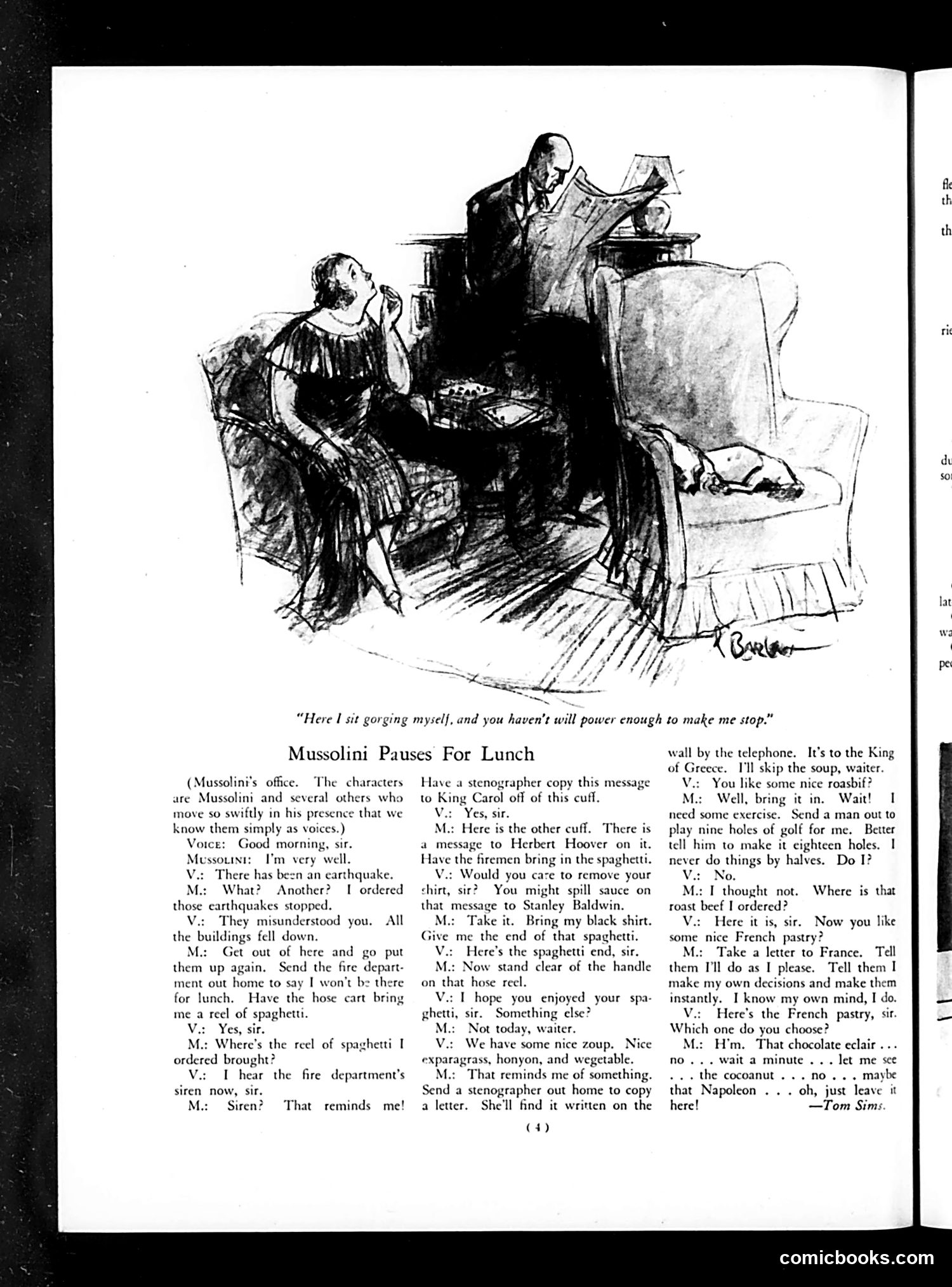
# "Mussolini Pauses For Lunch" This satirical sketch depicts **Benito Mussolini** in his office, attended by a voice (likely a secretary or aide) who interrupts his lunch with increasingly absurd demands and messages—including requests about spaghetti, earthquakes, the fire department, and communications with foreign leaders like Herbert Hoover and Stanley Baldwin. The satire mocks Mussolini's self-important, chaotic leadership style and the constant interruptions of petty bureaucratic matters. The title itself is ironic: even during lunch, he cannot escape administrative minutiae. The cartoon suggests that despite his grandiose posturing as Italy's supreme leader, Mussolini is comically overwhelmed by routine office business—a humorous deflation of his authoritarian pretensions. The attribution to "Tom Sims" appears at the bottom.
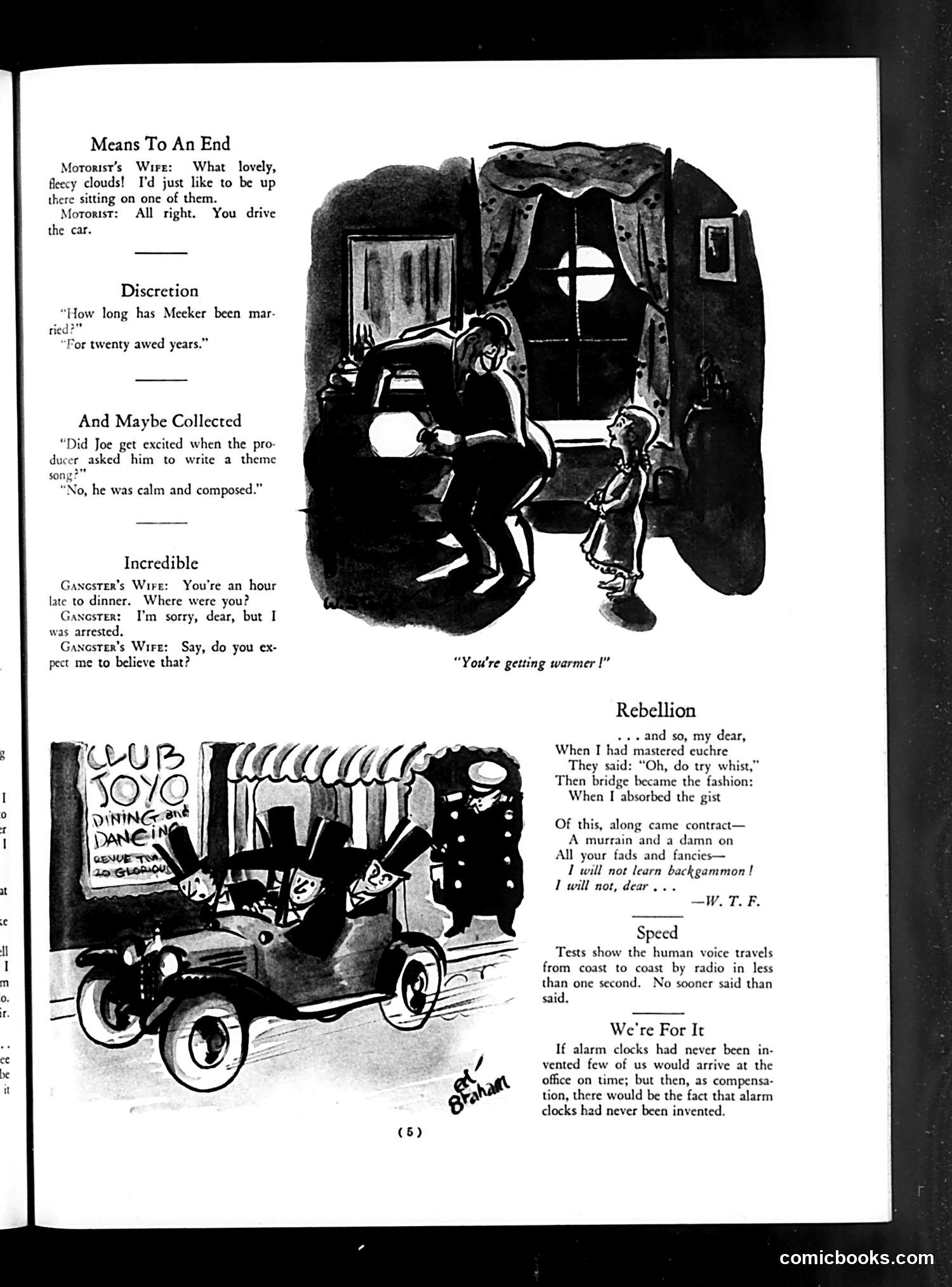
# Analysis of Page 56 from Life Magazine This page contains several short humorous pieces and cartoons typical of Life's satirical format: **"Means To An End"** and **"Discretion"** are brief jokes about marital dynamics and discretion in relationships. **"And Maybe Collected"** jokes about a composer's calm demeanor when asked to write a theme song. **"Incredible"** presents a gangster making excuses to his wife about being arrested for being late to dinner. The illustrated cartoons show domestic and social scenes. One depicts a couple in what appears to be a car or confined space with the caption "You're getting warmer!" The lower cartoon shows a car outside a nightclub ("Club Yoyo") labeled "Dining and Dancing," satirizing 1920s-era nightlife venues. The **"Rebellion"** poem and short pieces like **"Speed"** and **"We're For It"** offer satirical commentary on modern social trends and technology of the era.
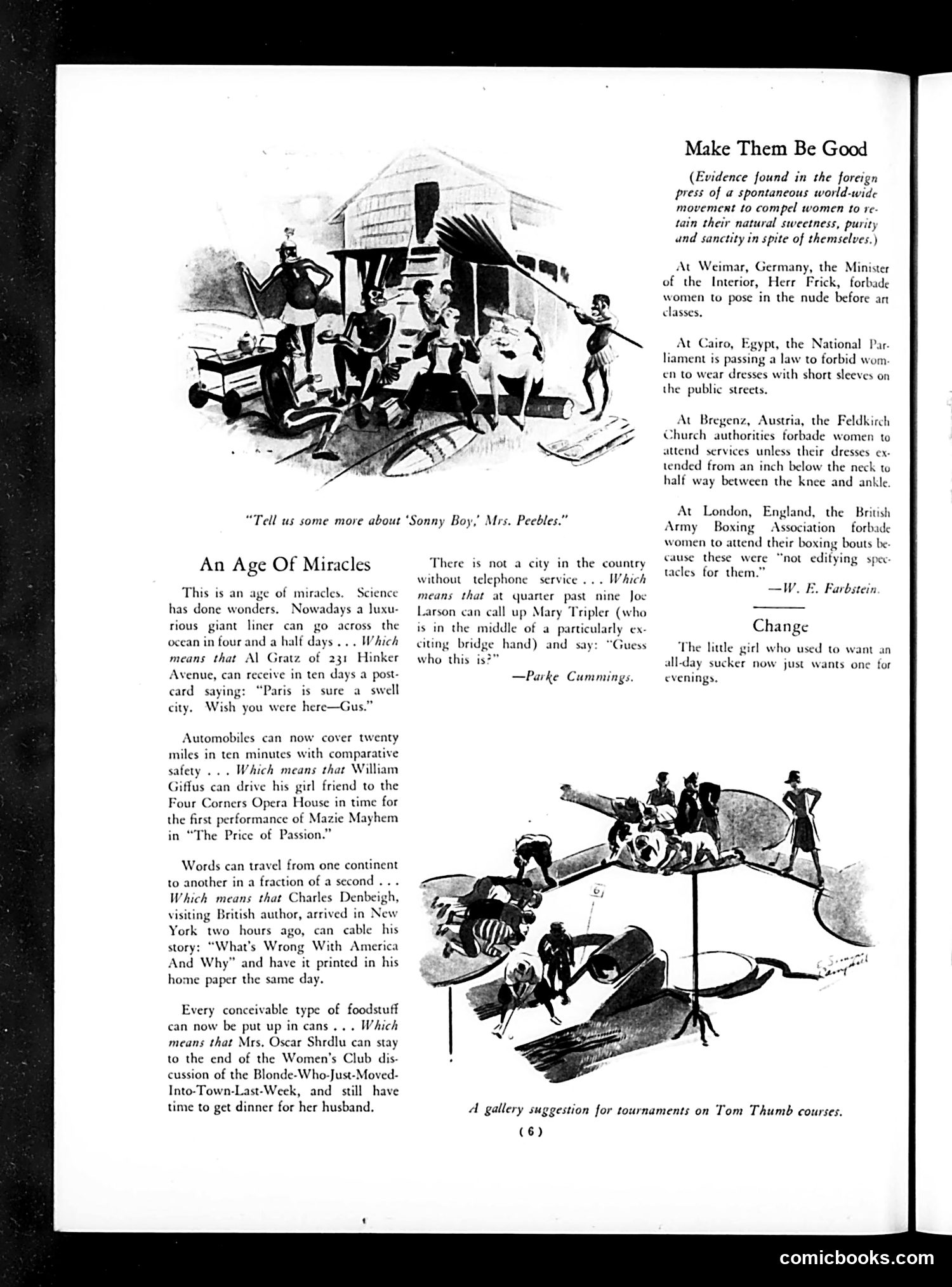
# Satire of Modern Technology's Social Impact This page satirizes how rapid technological advancement is disrupting traditional social norms and enabling questionable modern behaviors. The top section "An Age of Miracles" catalogs recent innovations—transcontinental automobiles, international telegraph service, canned food—that allow unprecedented freedom and mobility. The satirical point: these conveniences enable people (particularly women and men) to behave in ways previously impossible or socially forbidden. The right column "Make Them Be Good" documents international efforts to legally restrict women's dress and public conduct, suggesting authorities recognize modern freedoms are undermining traditional moral standards. The bottom cartoon appears to mock newfound leisure activities enabled by technology, possibly suggesting Tom Thumb Circus-style entertainments represent frivolous modern pastimes. The overall satire: technology creates freedom, but society responds by attempting to legislate morality.
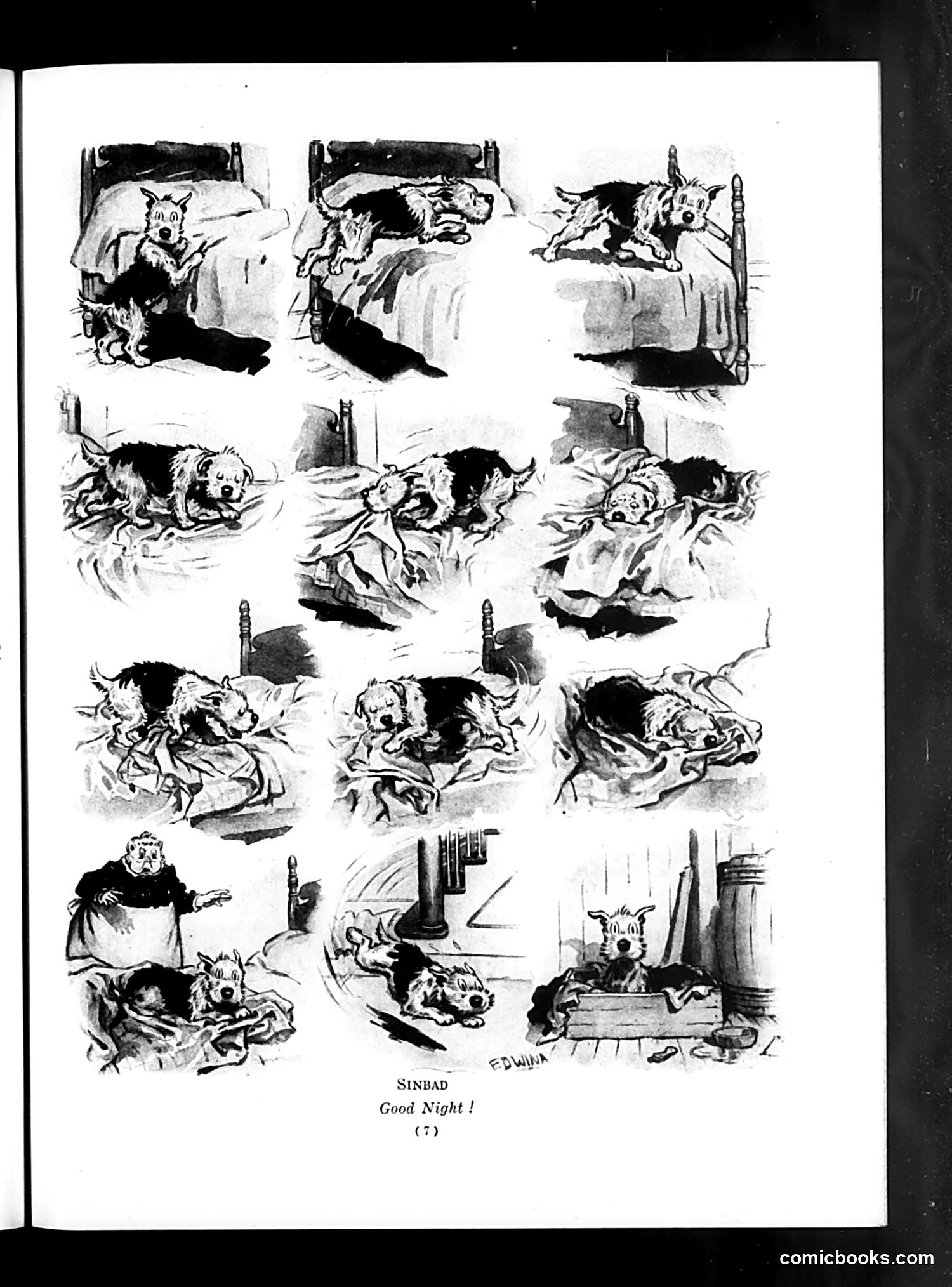
# Analysis of "Sinbad: Good Night!" This appears to be a humorous illustrated sequence from Life magazine showing bedtime scenes with dogs. The title "Sinbad" and "Good Night!" suggests these are sequential comic panels depicting a character (likely named Sinbad) and various dogs in sleeping positions and nighttime scenarios. The drawings show dogs in beds, on floors, and in various states of rest and restlessness—stretching, tangled in blankets, and moving about. The sketch style is loose and expressive, emphasizing comedic movement and posture. Without clearer historical context or text identifying specific political figures or events, this appears to be straightforward humorous domestic animal comedy rather than political satire—typical of Life magazine's lighter entertainment content from this era.
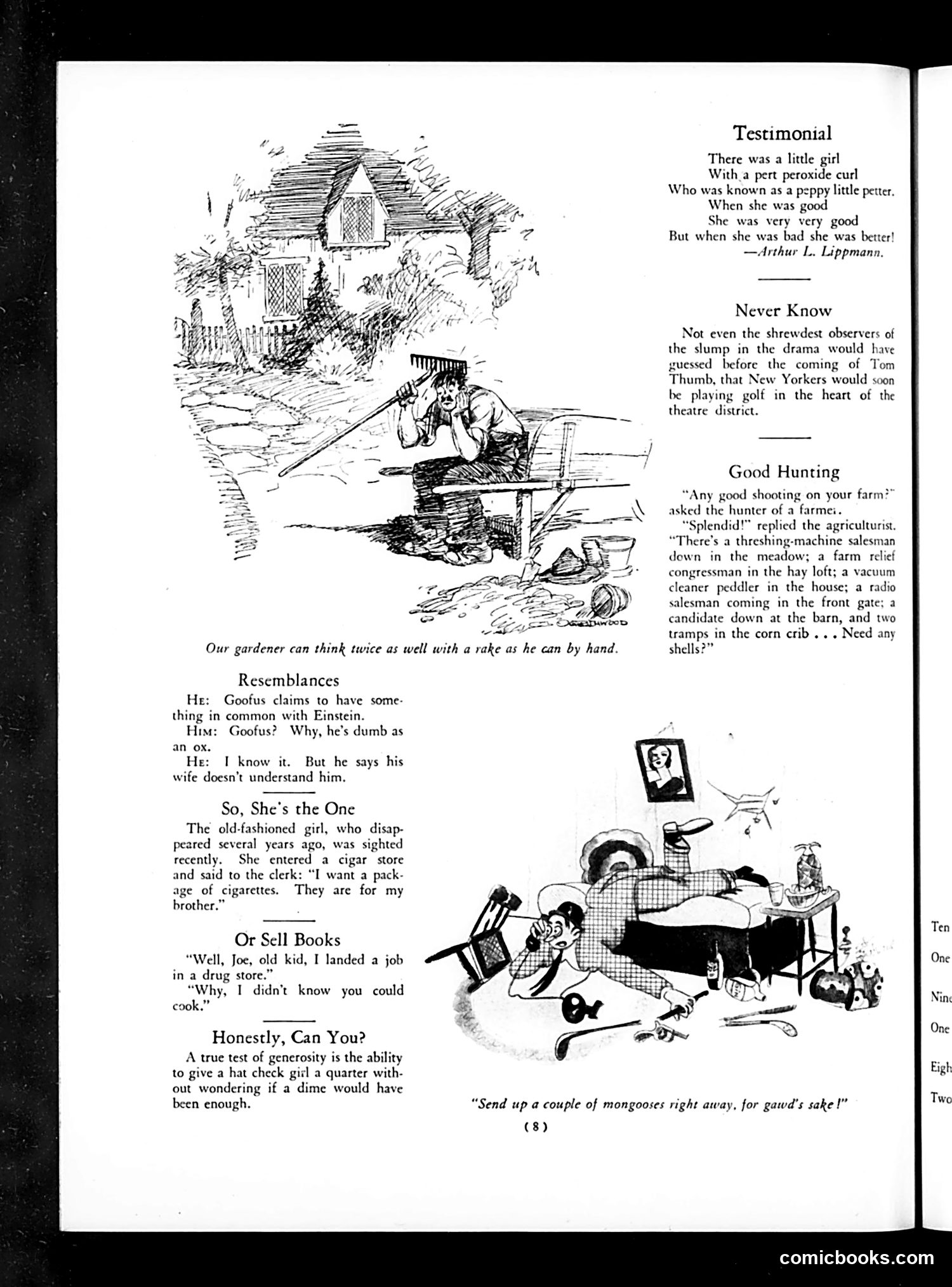
# Analysis of Life Magazine Page This page contains several short humorous pieces and illustrations typical of early 20th-century satirical magazines. The main cartoon depicts a man in bed surrounded by domestic chaos and clutter, with the caption "Send up a couple of mongooses right away, for gaud's sake!" The joke satirizes urban apartment living—suggesting mongooses (known for hunting rodents) are needed to control the mess and vermin in a cramped living space. The smaller text pieces ("Never Know," "Good Hunting," "Resemblances," "Or Sell Books," "Honestly, Can You?") are brief anecdotal jokes about contemporary life—sales pitches, intellectual pretensions, and social observations. The top illustration shows a gardener with a rake, accompanying text about rural labor efficiency. Overall, the page mixes urban and rural comedy reflecting 1910s-1920s American life.
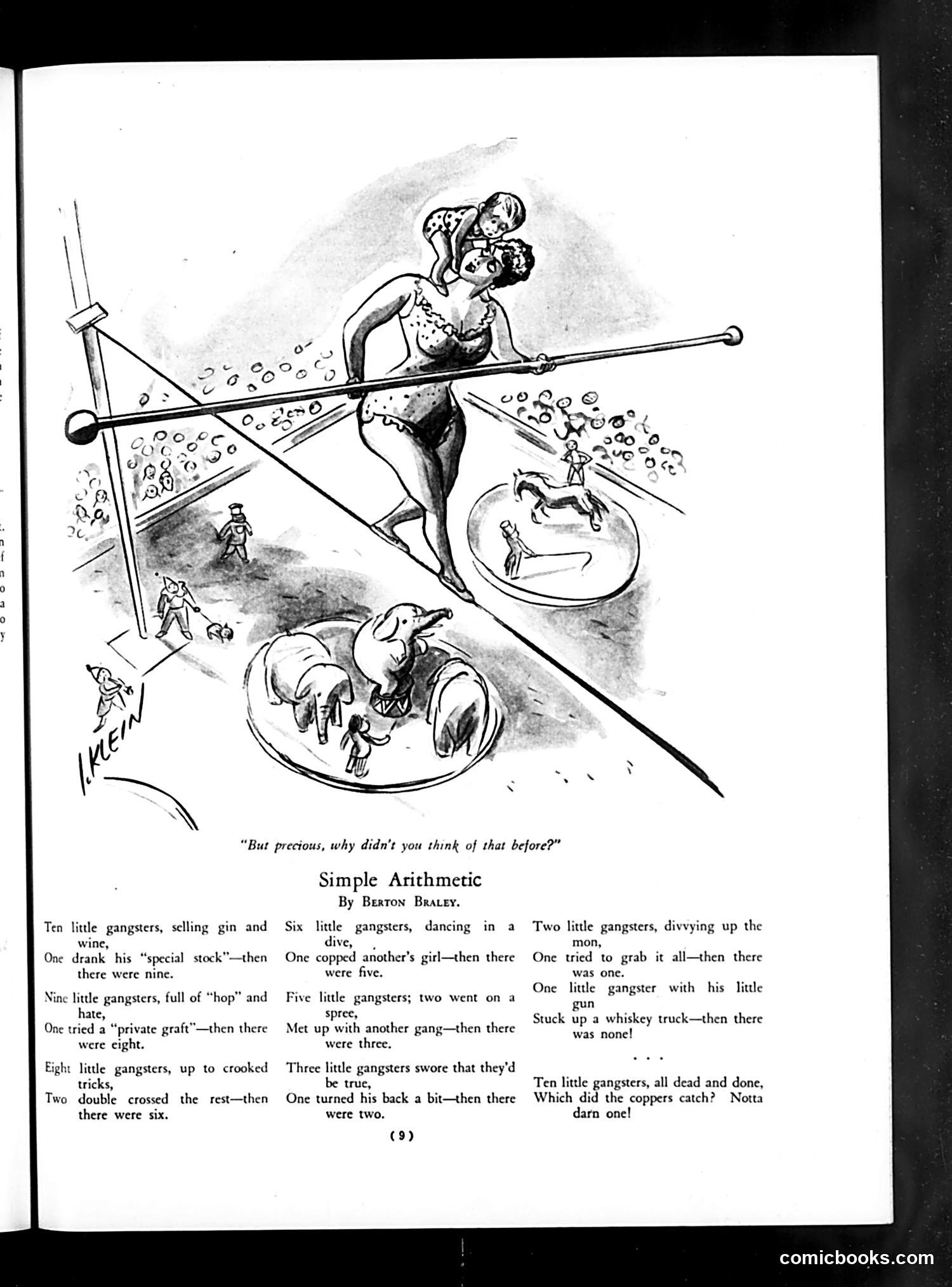
# "Simple Arithmetic" by Berton Brealey This satirical poem uses dark humor to comment on urban gang violence and prohibition-era crime. The illustration depicts a scantily-clad woman juggling gangsters as circus performers, with police activity below—visualizing the chaotic criminal underworld. The poem traces "ten little gangsters" through a series of violent episodes: fights over women, gang rivalries, arrests, betrayals, and murders. Each stanza subtracts gangsters through increasingly brutal means (shootouts, truck violence, police action) until none remain. The final punchline—"Which did the coppers catch? Nota darn one!"—satirizes law enforcement's inability to control organized crime during Prohibition. The title "Simple Arithmetic" is ironic: the math of gangster life simply means death, with no accountability for those running the criminal operations.
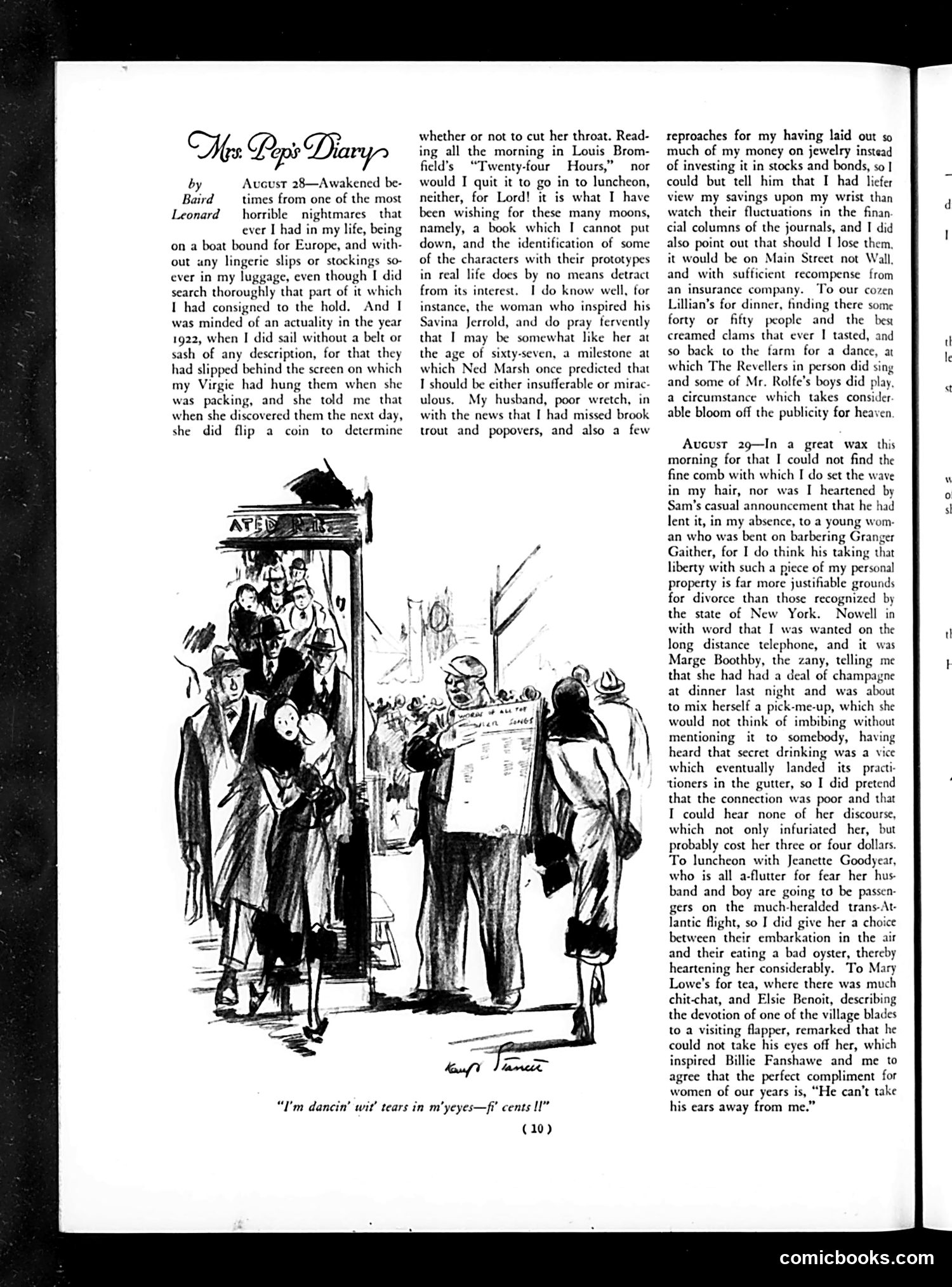
# "Mrs. Pope's Diary" Commentary This is a humorous diary entry by "Baird Leonard" satirizing the social anxieties and complaints of a wealthy woman. The cartoon illustrates a street scene where the diarist encounters various acquaintances. The satire targets upper-class concerns: the diarist frets over jewelry investments versus stocks, worries about servants' behavior, complains about borrowed combs and champagne-fueled dinner guests, and obsesses over a young barber named Granger. She discusses transatlantic travel plans and social gatherings at fashionable tea rooms. The humor lies in the trivial nature of her grievances presented as major life events—a characteristic satirical approach Life magazine used to mock the preoccupations of the leisure class during this era. The cartoon's caption ("I'm dancin' wit' tears in m'eyes—fi' cents!!") suggests commentary on class contrast or entertainment venues.