A complete issue · 36 pages · 1930
Life — July 25, 1930
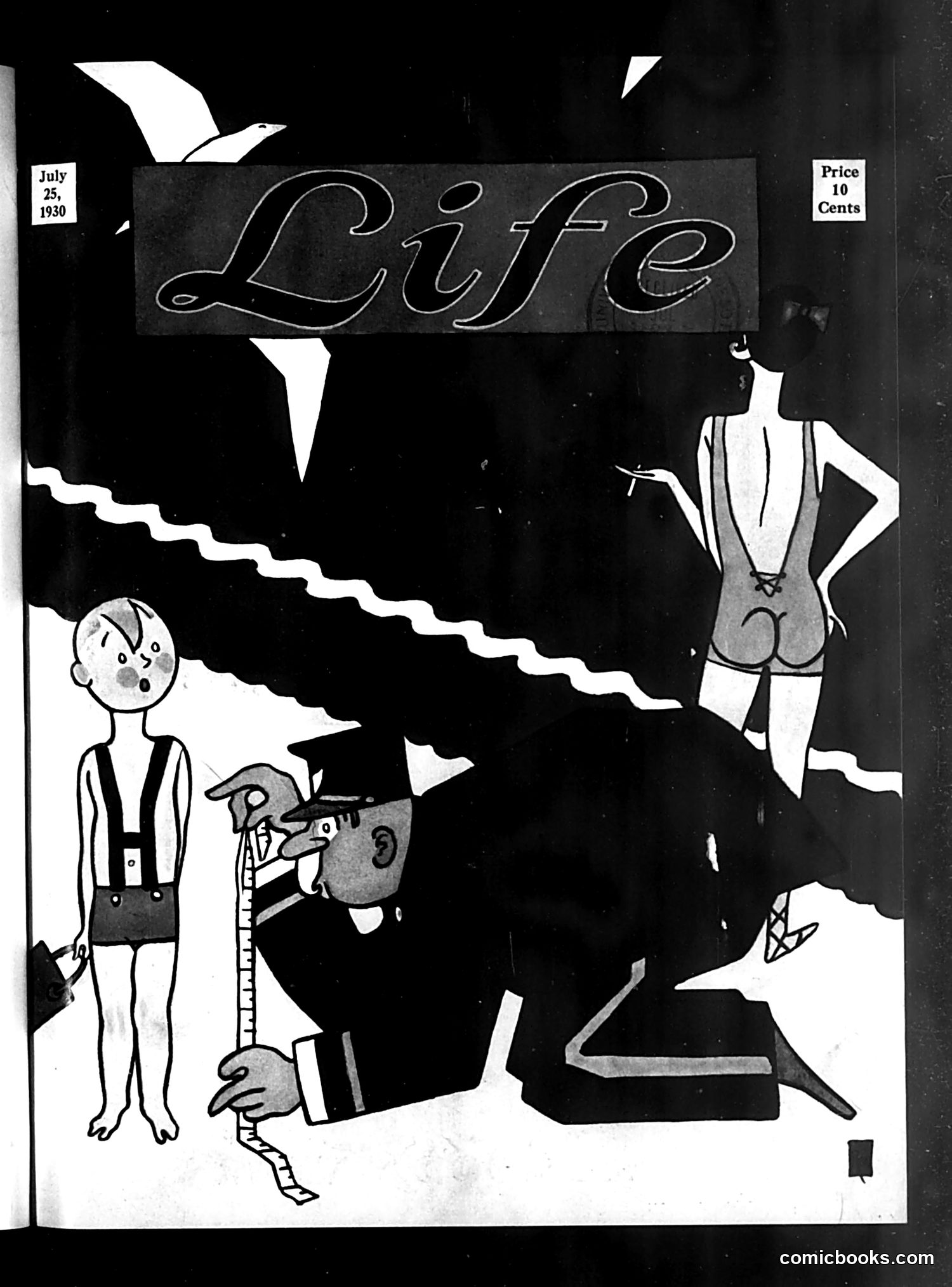
# Life Magazine Cover Analysis - July 23, 1930 This cover depicts a theatrical or film production scene. A director (center, wearing a cap and holding a megaphone) measures a young male actor against a measuring scale, while a scantily-clad female performer poses to the right. A young boy on the left appears shocked or distressed. The satire likely critiques **Hollywood's objectification of performers**, particularly the physical measurement and evaluation of actors—especially women—for casting purposes. The boy's shocked expression suggests moral concern about the entertainment industry's standards and practices. The 1930 date places this during early sound film era, when Hollywood was consolidating its studio system and developing notorious casting couch culture. The cartoon mocks the dehumanizing nature of show business talent evaluation.
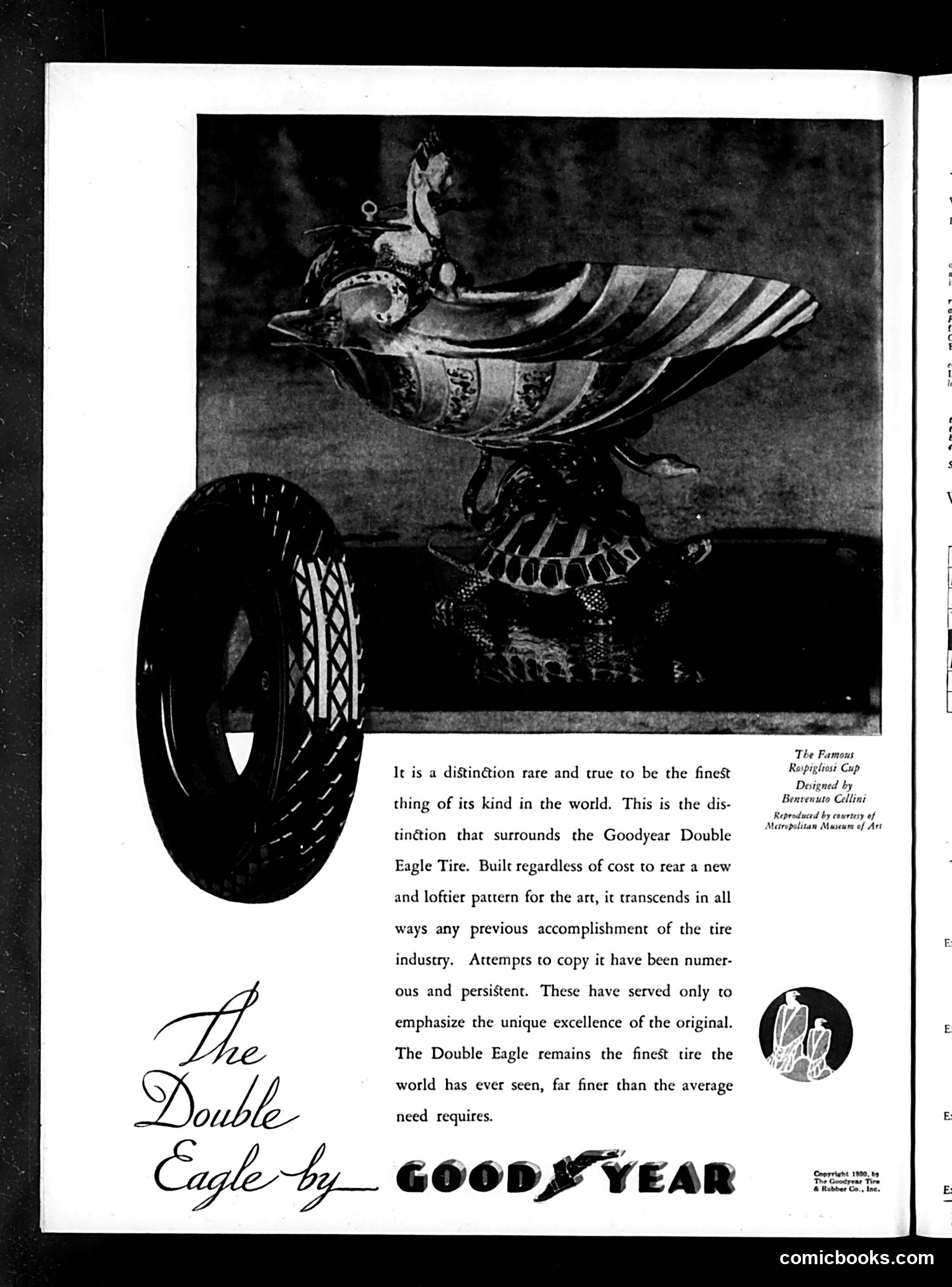
# Analysis This is primarily a **Goodyear advertisement**, not satirical content. The page promotes the "Double Eagle" tire as "the finest thing of its kind in the world." The top image shows an ornate decorative vessel (appears to be a Renaissance-era art object, possibly from a museum collection, given the credit to "Metropolitan Museum of Art"). This luxurious artifact serves as a visual metaphor—the ad argues that the Double Eagle tire represents comparable excellence and craftsmanship in its category. The tire image on the left demonstrates the product's distinctive tread pattern. The text emphasizes the tire's superiority and notes that competitors have attempted to copy it, only reinforcing the original's unique quality. This is straightforward product marketing using an appeal to quality and prestige rather than satire.
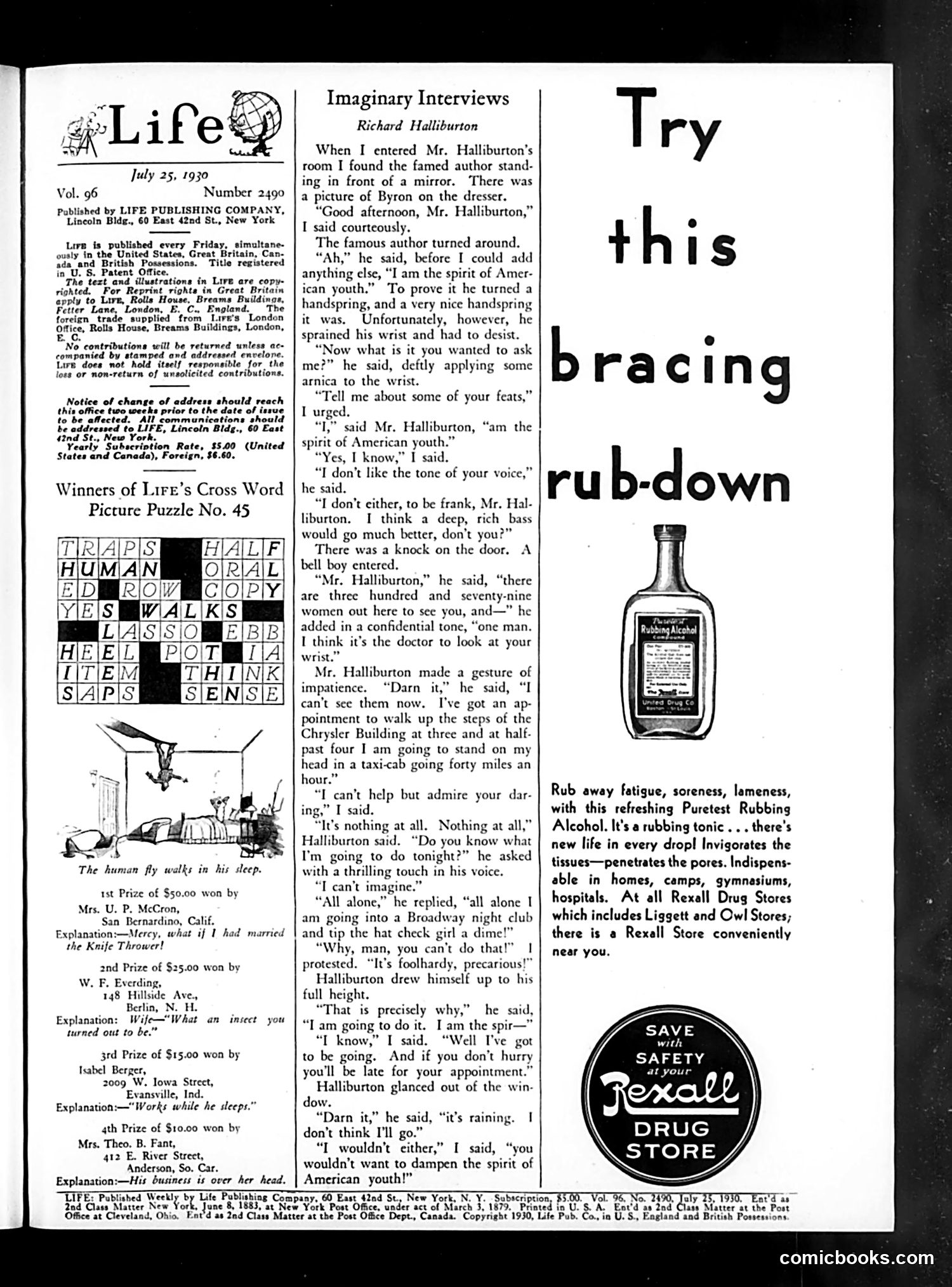
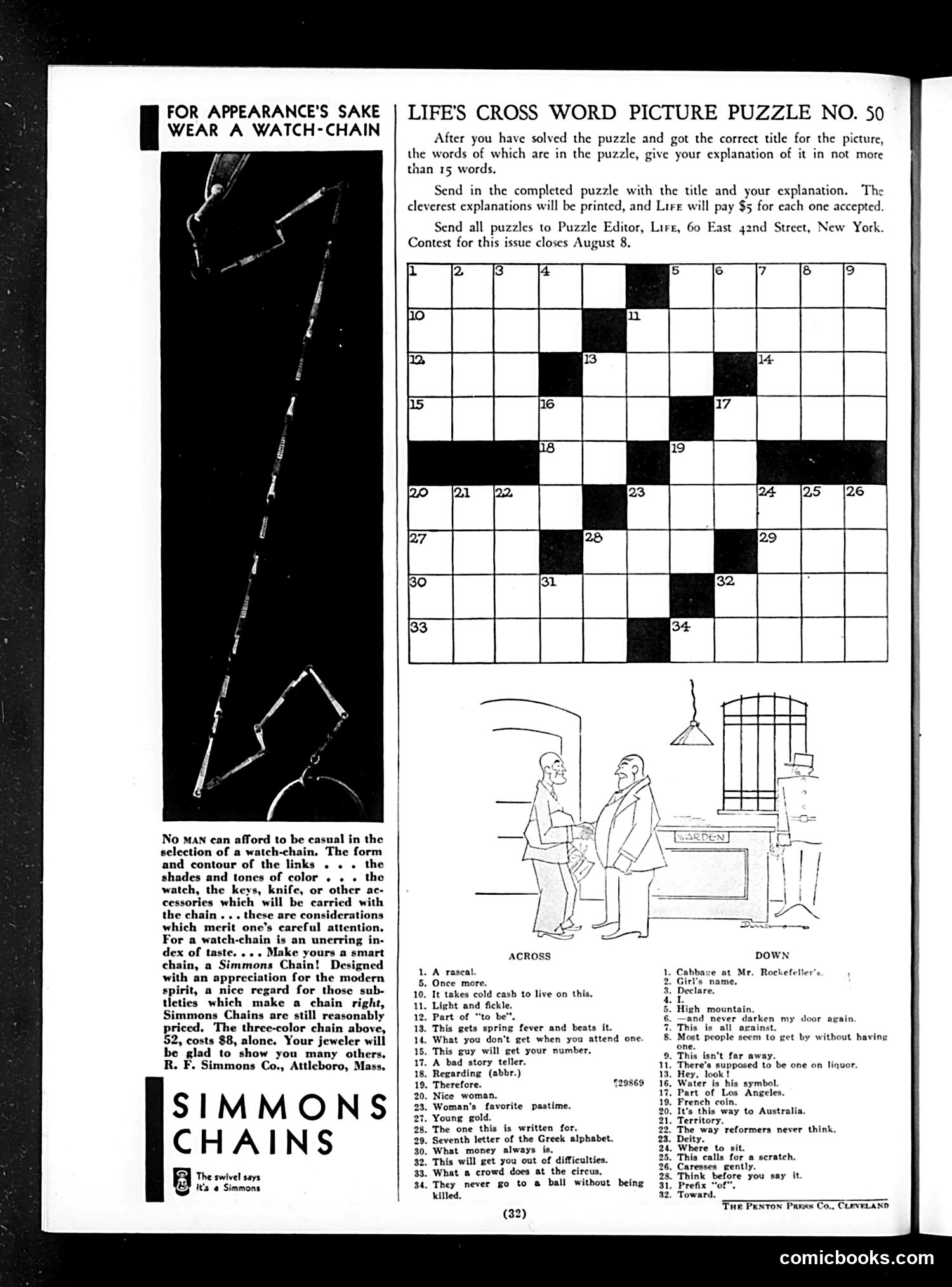
# Page Content Analysis This page is primarily **advertising and puzzle content**, not political satire. The main elements are: 1. **"Imaginary Interviews: Richard Halliburton"** - A humorous fictional dialogue where the interviewer visits author Halliburton, who claims to be "the spirit of American youth." The joke involves Halliburton injuring himself while posing dramatically, then rushing off to a Broadway nightclub appointment, contradicting his grandiose self-description. 2. **Crossword puzzle and picture puzzle** with reader prize winners listed. 3. **Rexall Drug Store advertisement** for "Purest Rubbing Alcohol" as a medicinal rub. The satire here targets **Halliburton's pretentious public persona** rather than politics—mocking his self-aggrandizing claims of youthful adventurousness while depicting him as vain and self-centered.
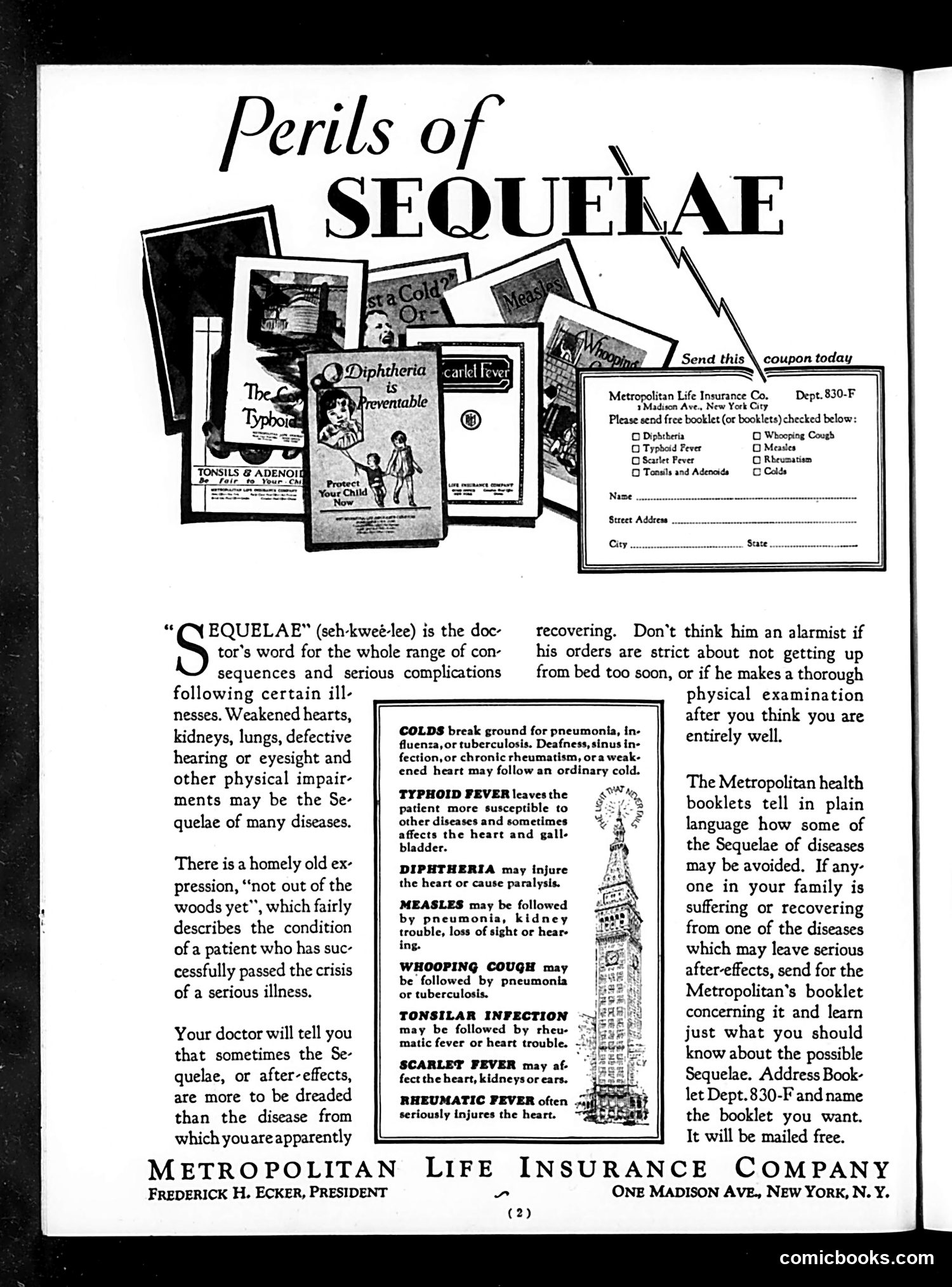
# Analysis: "Perils of Sequelae" This page is primarily **advertising disguised as educational content** from Metropolitan Life Insurance Company. The term "Sequelae" (medical complications following illness) frames the pitch. The visual collage shows vintage public health posters warning about diseases like diphtheria, typhoid fever, and measles—conditions common in the early 20th century that could cause lasting damage or death. The satirical angle is subtle: Metropolitan Life presents itself as a health educator while selling insurance against these "perils." The message to readers is: serious illnesses can have devastating aftereffects; therefore, you need life insurance protection. The coupon invites readers to request free health booklets on various diseases—a marketing tactic disguising commercial intent as public service. This represents an era when insurance companies positioned themselves as legitimate health authorities.
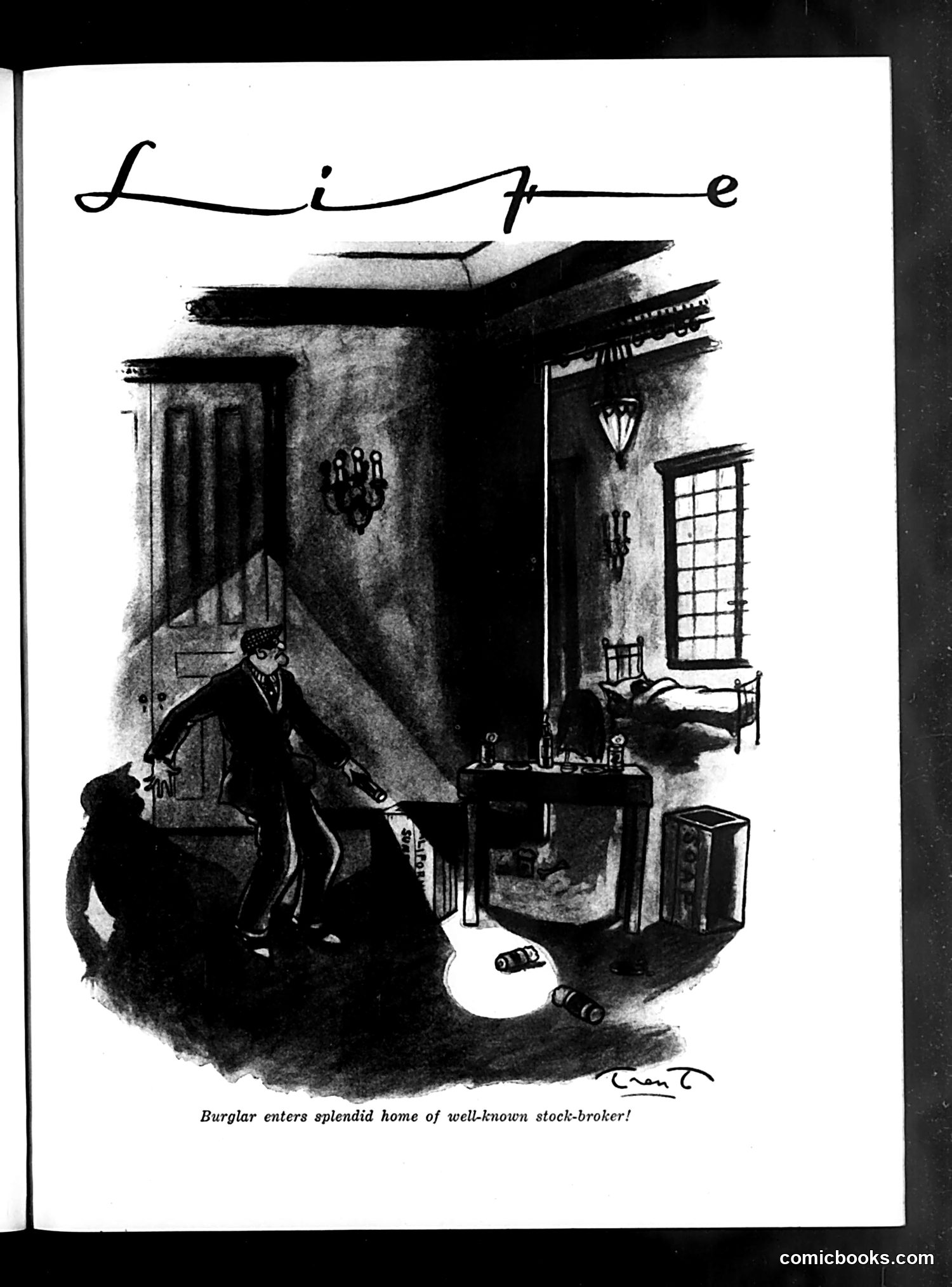
# Explanation for Modern Readers This cartoon satirizes wealthy stock brokers during what appears to be the early 20th century. The caption reads: "Burglar enters splendid home of well-known stock-broker!" The joke targets the contradiction between a stock broker's apparent prosperity and the moral implications of their profession. The artist suggests that stock brokers—who manipulate markets and fleece investors—are themselves criminals, making them hypocritical targets for actual burglary. The "splendid home" represents ill-gotten wealth. This reflects widespread public distrust of financial markets and Wall Street profiteering during an era of economic inequality and financial scandals. The satire implies stock brokers deserve robbery because their own practices are essentially criminal, just "legal." The cartoon mocks both their wealth and their lack of moral standing to complain about theft.
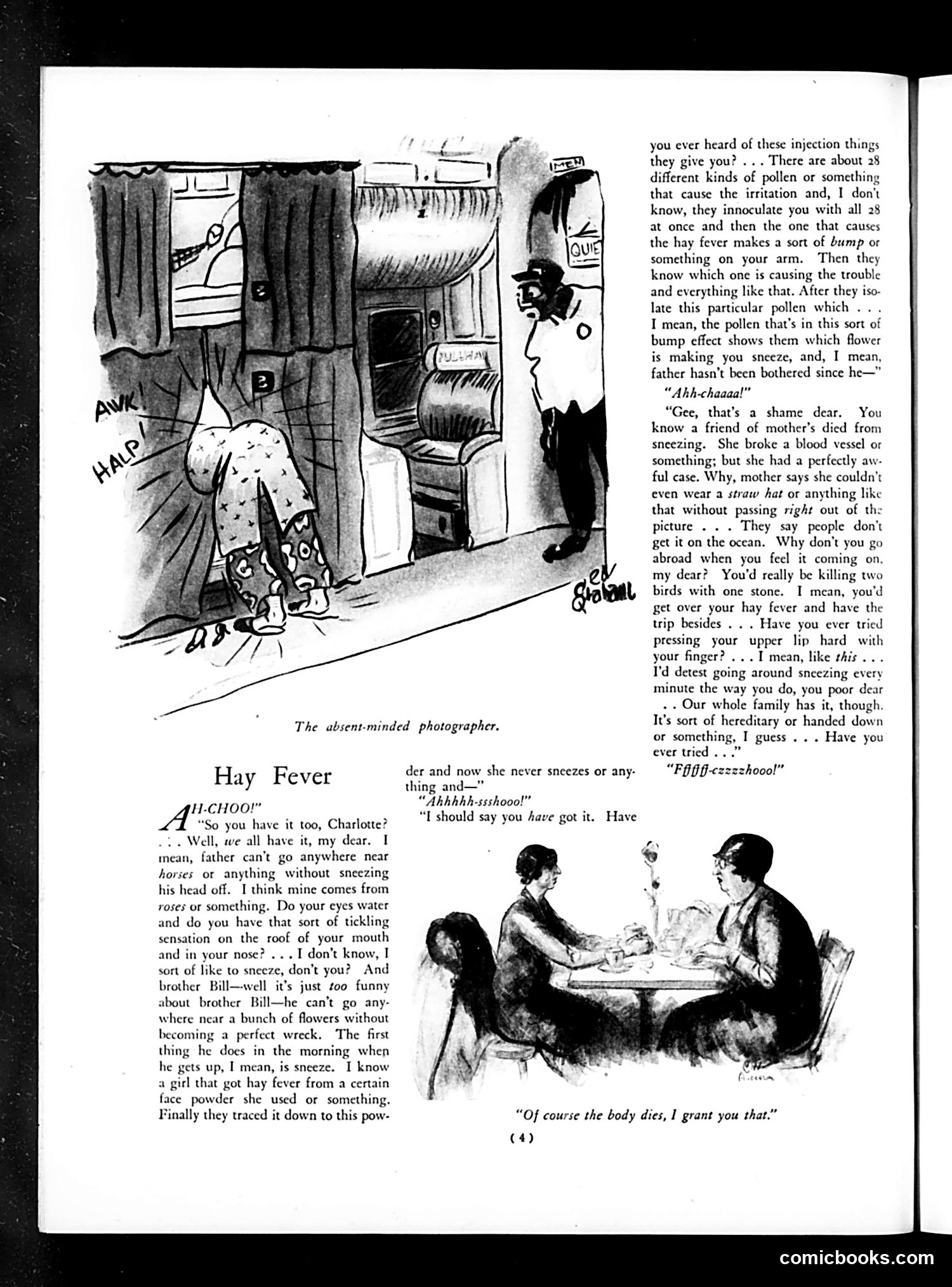
# Hay Fever This page presents a humorous piece about hay fever, a seasonal allergy condition. The cartoon at top shows "The absent-minded photographer" — a man so absorbed in his work that he's oblivious to his surroundings, illustrated through visual comedy. The main text is a conversational monologue where one character describes hay fever symptoms to another named Charlotte, discussing sneezing fits, watery eyes, and discomfort. The speaker mentions relatives suffering similarly, including a friend's mother whose condition was so severe she couldn't leave home. The illustration below shows people dining together, with the caption "Of course the body dies, I grant you that." The piece satirizes how hay fever sufferers discuss their ailment in tedious, self-pitying detail—a relatable social observation about complaint-culture that remains timeless.
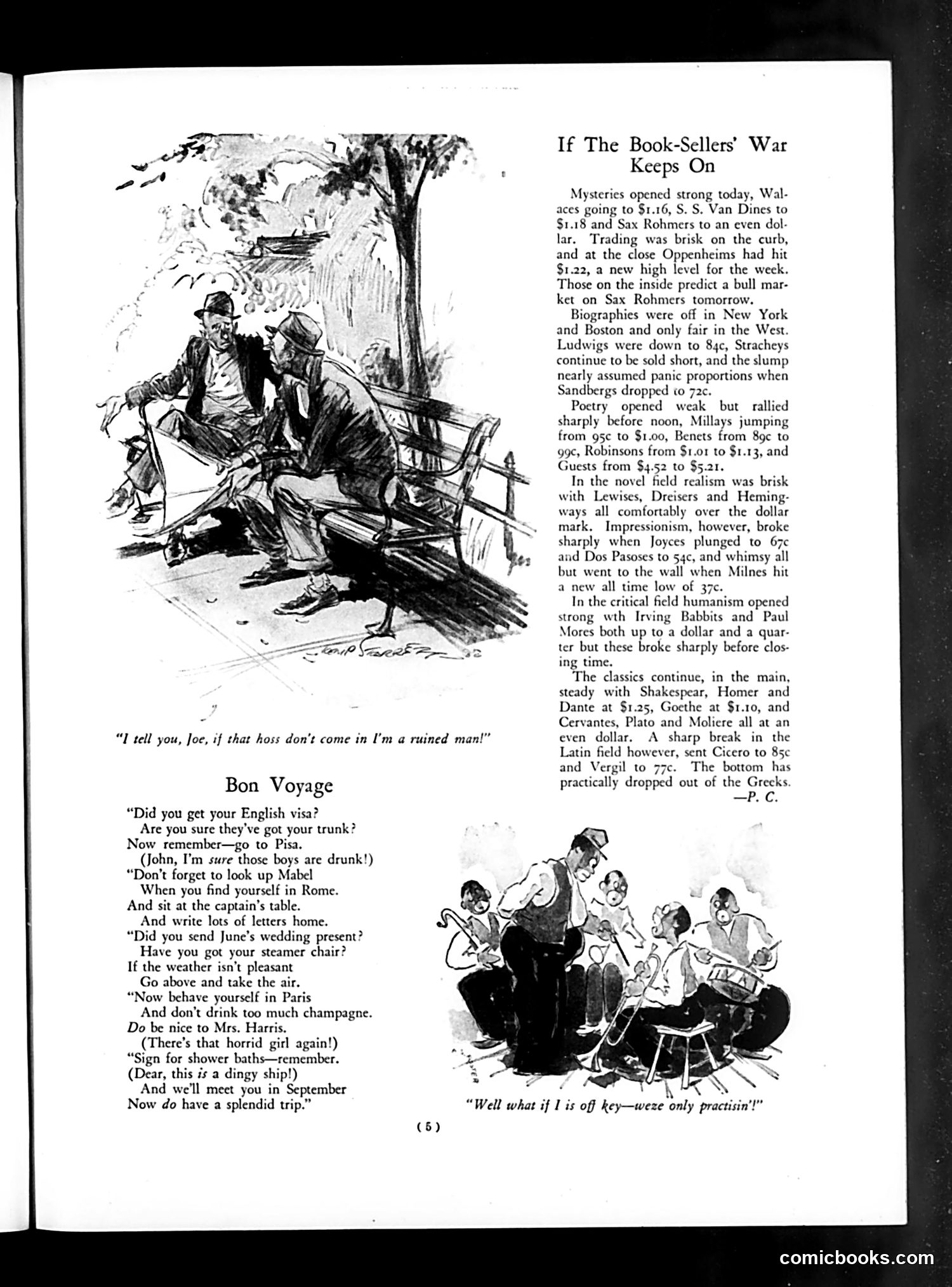
# Analysis of Life Magazine Page This page satirizes the **"Book-Sellers' War"**—a price war among publishers and booksellers during what appears to be the 1920s. The article reports on competing discounts on popular titles (mysteries, biographies, poetry, novels, and classics), with prices fluctuating dramatically as retailers undercut each other. The top illustration depicts two figures in financial distress—likely representing booksellers or publishers—struggling amid economic turmoil, captioned "I tell you, Joe, if that boss don't come in I'm a ruined man!" Below, the "Bon Voyage" poem humorously advises a traveler on European etiquette and behavior, with the illustration showing passengers aboard a ship, captioned "Well what if I is off key—weze only practisin'!" The satire mocks both the chaotic publishing industry price competition and travel pretensions.
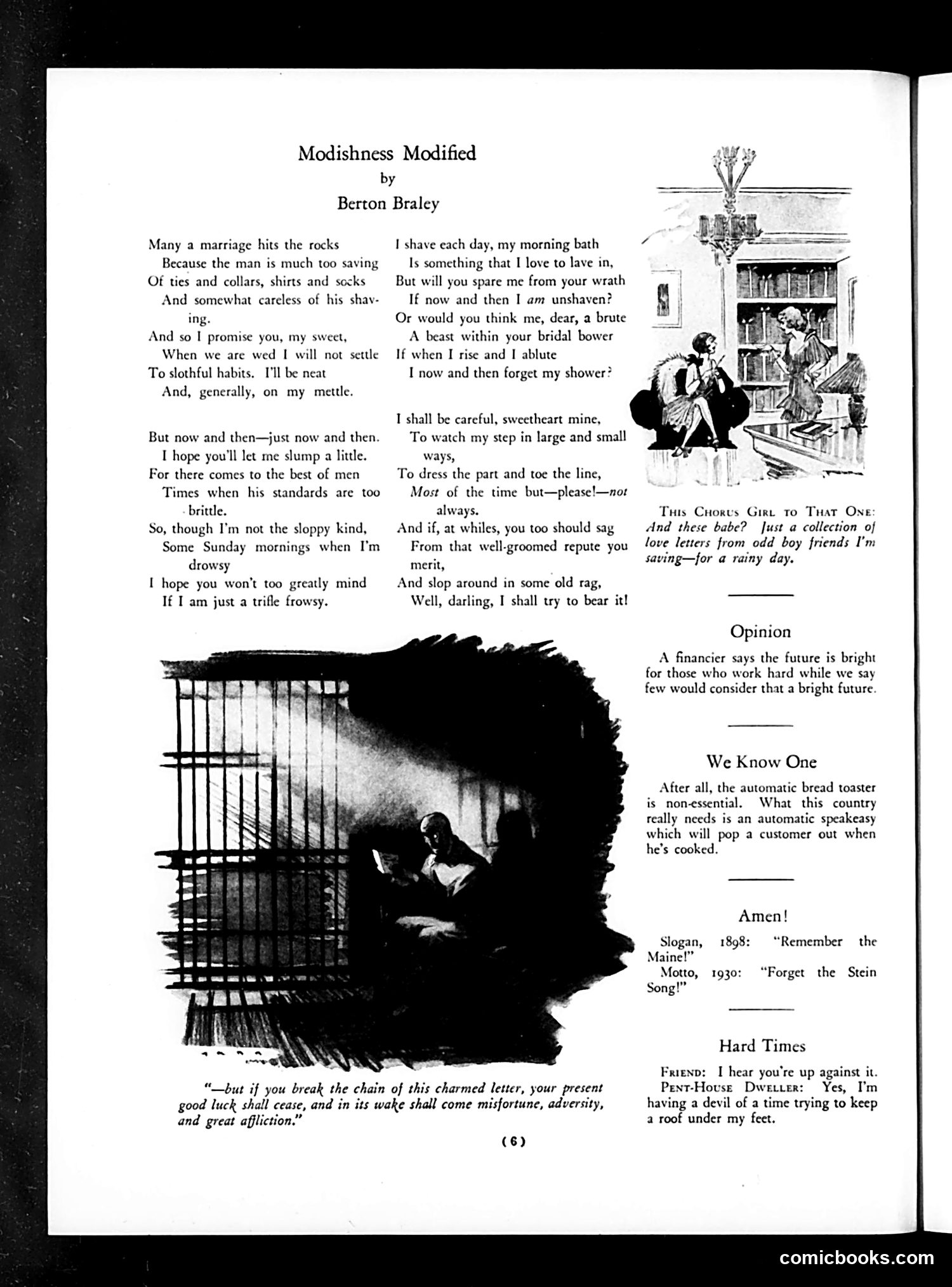
# "Modishness Modified" by Berton Braley This poem satirizes modern marriage by contrasting a husband's desire for a neat, orderly wife with his own slovenly habits. The speaker promises his bride he won't settle into "slothful habits" and will remain "neat" and "generally, on my mettle"—but then immediately undercuts this with admissions that he slumps around, forgets his shower, and dresses carelessly. The accompanying illustration shows a man lounging in a chair while a woman arranges books, suggesting the gendered hypocrisy: he demands modishness (fashionable tidiness) from her while exempting himself from the same standard. The satire targets the double standards husbands impose on wives regarding domestic appearance and behavior.
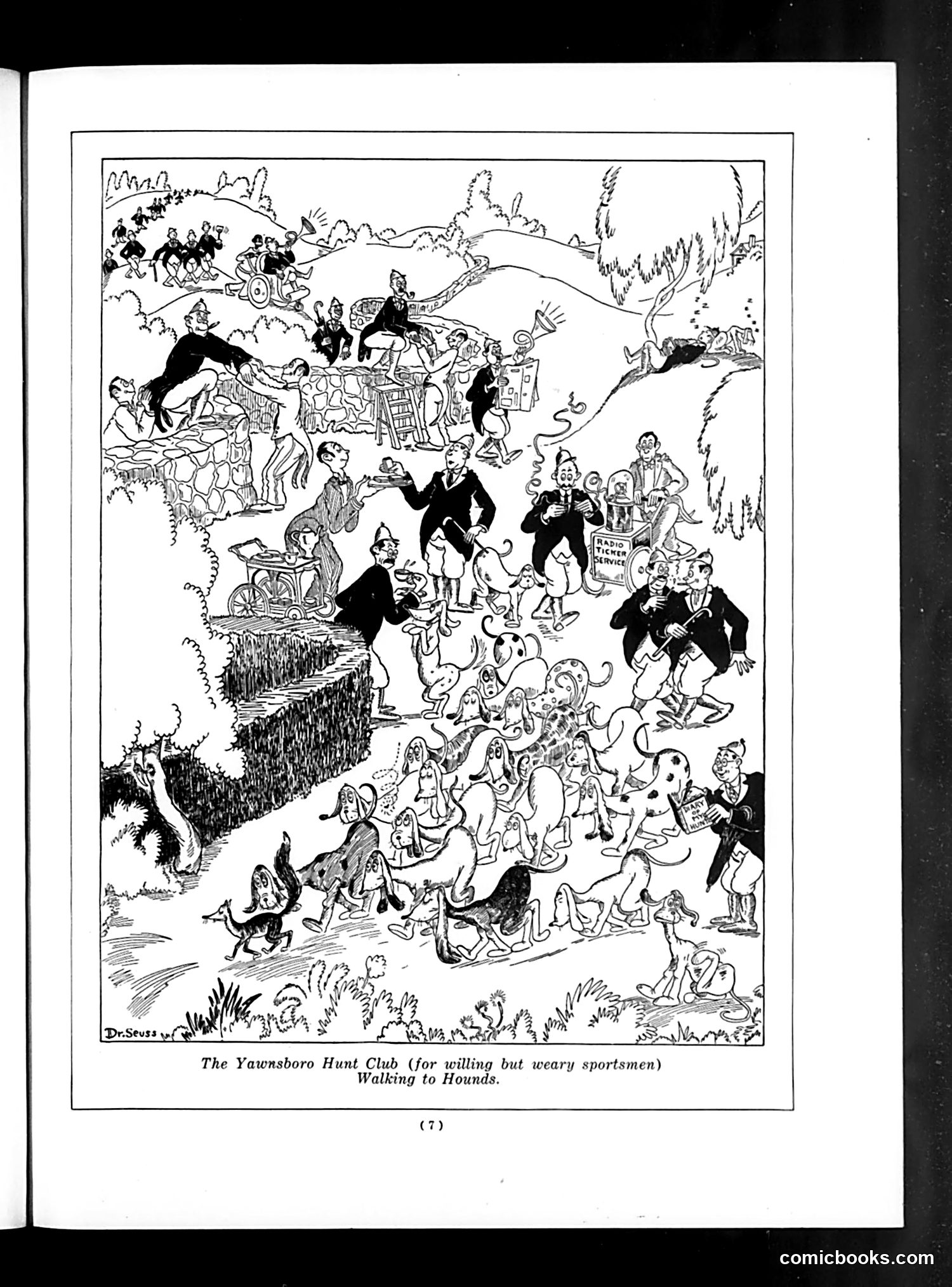
# Analysis This is a satirical cartoon titled "The Yawnsboro Hunt Club (for willing but weary sportsmen) Walking to Hounds." The image depicts a hunting club outing where the participants appear exhausted and unenthusiastic. Well-dressed gentlemen in formal hunting attire are shown yawning widely, slouching, and looking generally depleted rather than vigorous. Dogs and horses are present, but the human participants display little energy or enthusiasm for the sport. The satire targets wealthy sportsmen who participate in traditional hunting activities more out of social obligation than genuine interest or fitness. The caption's parenthetical note—"for willing but weary sportsmen"—underscores the joke: these are men who show up to maintain their club membership and social standing, but lack the actual stamina or passion for hunting. The exaggerated yawning emphasizes their boredom and exhaustion despite being supposedly engaged in leisurely recreation.
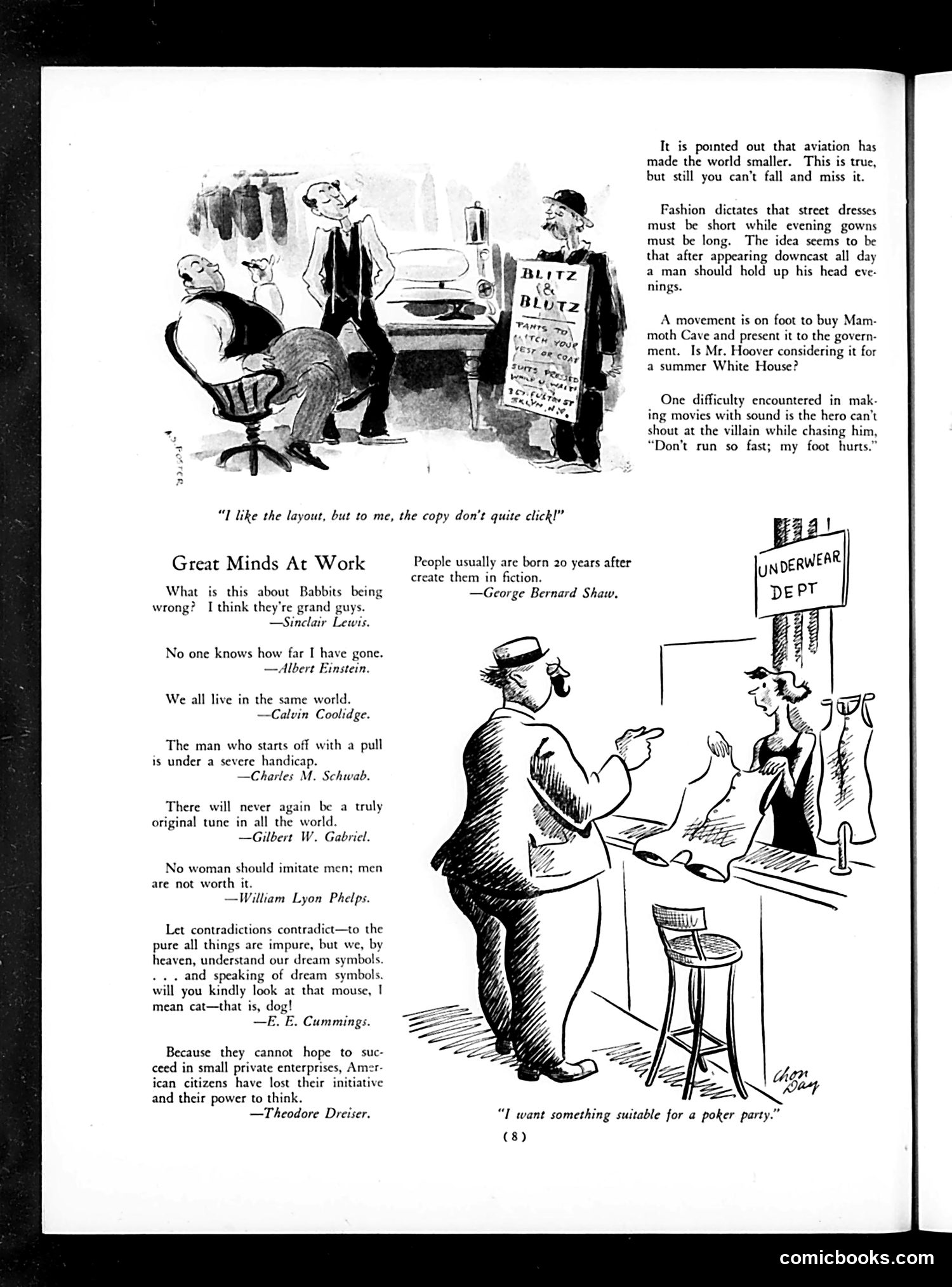
# Analysis of Life Magazine Page This page contains two distinct elements: **Top cartoon:** A film industry scene satirizing movie production. A director critiques a layout, saying "I like the layout, but to me, the copy don't quite click!" The cartoon mocks how movies prioritize visual spectacle over coherent storytelling. **"Great Minds At Work" section:** A collection of famous quotes (Shaw, Einstein, Coolidge, Schwab, etc.) paired with a single-panel cartoon below. The cartoon shows a man at an underwear department counter telling a saleswoman, "I want something suitable for a poker party." This is a mild double-entendre joke playing on the idea of "underwear" having a secondary meaning in dated slang for confidence or preparedness. The page blends satire of entertainment industry pretension with light humor about consumer shopping.
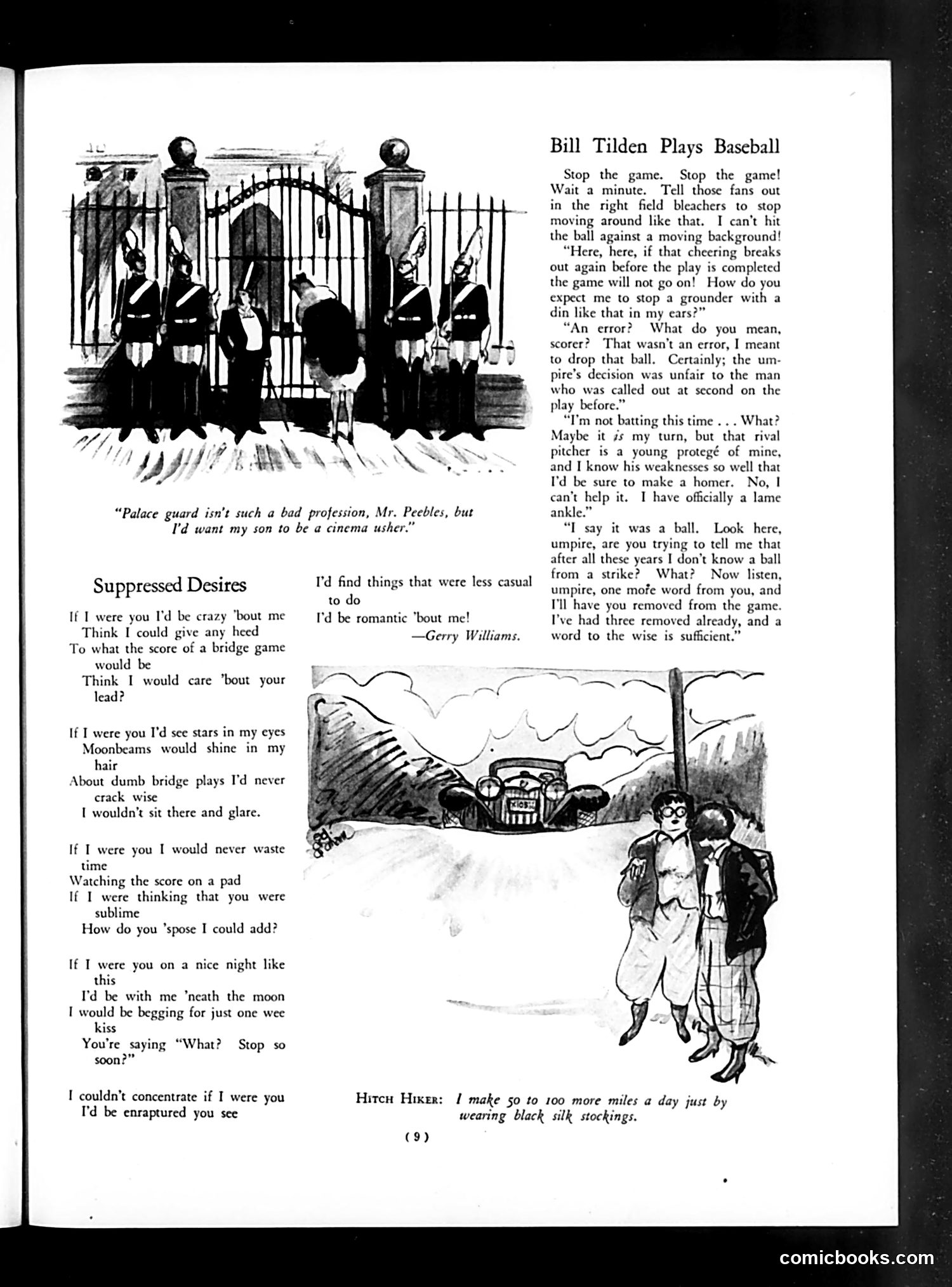
# Analysis of "Bill Tilden Plays Baseball" This page satirizes **Bill Tilden**, the famous 1920s tennis champion, imagining him attempting baseball instead of his sport. The cartoon depicts him complaining to an umpire about the difficulty of hitting a moving ball and makes absurd excuses (claiming a young pitcher is "his protégé" he doesn't want to embarrass). The humor derives from Tilden's celebrity status being applied to an entirely different sport where he'd be incompetent. The "Palace Guard" illustration above shows uniformed officials, likely referencing Tilden's high-society world. "Suppressed Desires" is an unrelated poem about romantic longing, and "Hitch Hikers" is a separate joke about black silk stockings making walking faster. The satire mocks celebrity overconfidence crossing into unfamiliar domains.
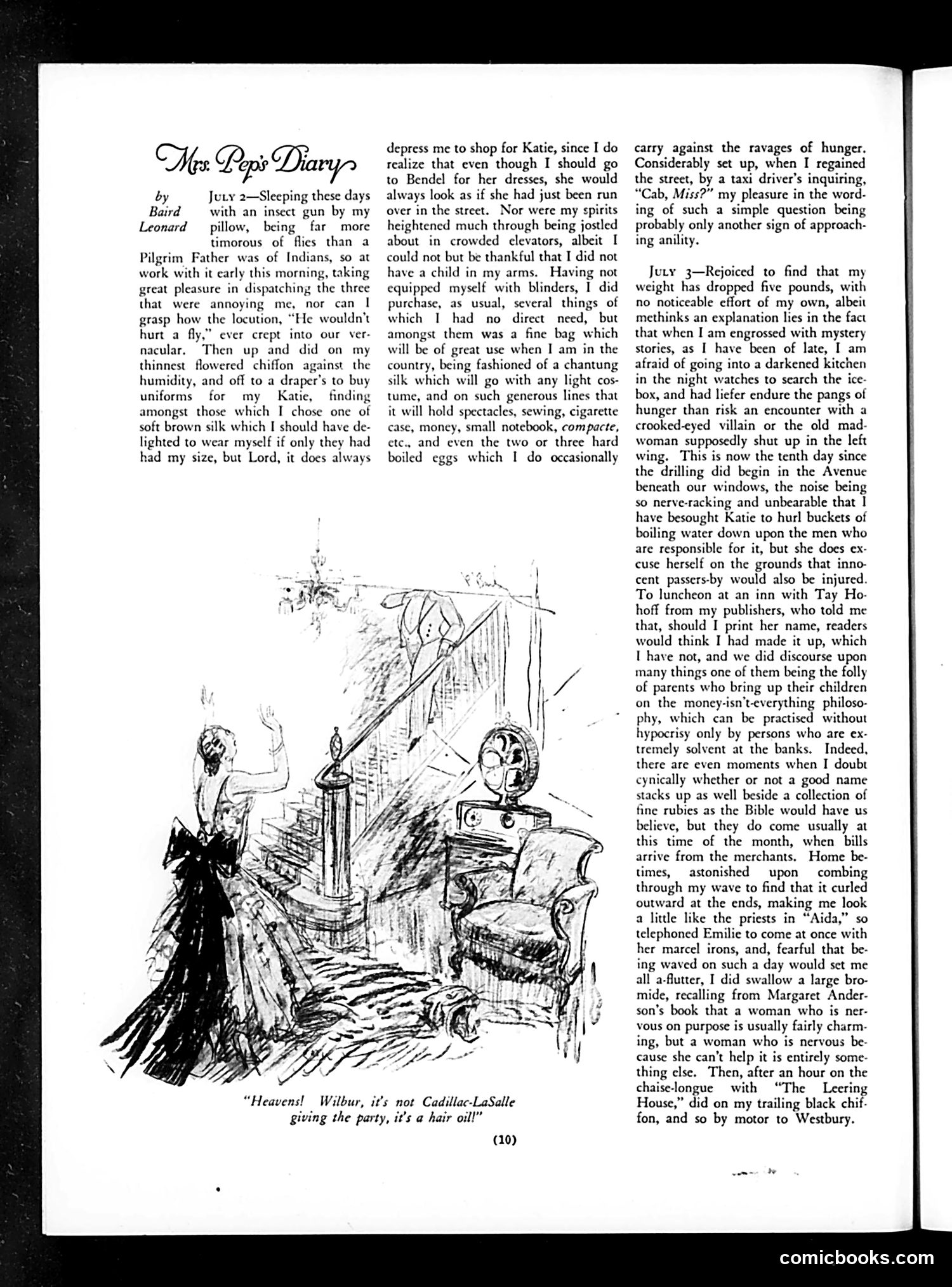
# "Mrs. Pep's Diary" - Page Analysis This page presents "Mrs. Pep's Diary" by Baird Leonard, a humorous domestic narrative featuring diary entries from July 2-31. The accompanying illustration shows a woman in a chair reacting with exasperation to a man, with the caption: "Heaven! Wilbur, it's not Cadillac-LaSalle giving the party, it's a hair oil!" The joke satirizes 1920s consumer culture and social pretension. The woman's shock stems from discovering that a prestigious party's sponsor is a hair oil company rather than the luxury car brand Cadillac-LaSalle—revealing her embarrassment at the social status mismatch. This mocks contemporary anxieties about brand prestige and keeping up appearances among middle-class Americans navigating newly commercialized social hierarchies.