A complete issue · 36 pages · 1930
Life — July 11, 1930
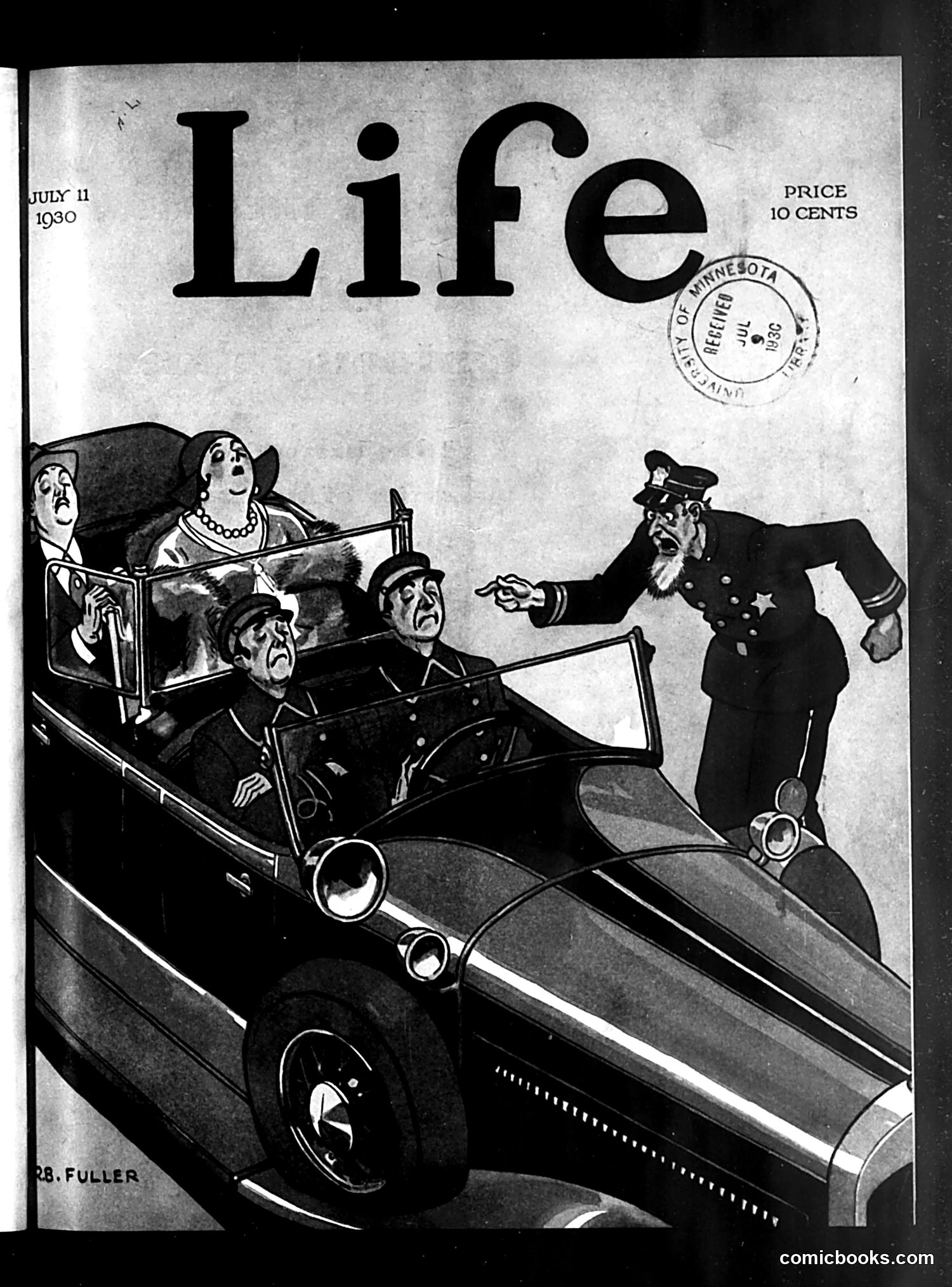
# Political Cartoon Analysis: Life Magazine, July 11, 1930 This cover cartoon by B. Fuller depicts a traffic-control scenario with satirical intent. A uniformed police officer or traffic controller directs an automobile containing four passengers—appearing to include well-dressed civilians and officials—as if managing vehicle flow. The satire likely comments on government authority, regulation, or control during the early Depression era. The exaggerated expressions suggest the passengers' anxiety about being "directed" or controlled by authority figures. The specific identities of the passengers remain unclear from the image alone, though their formal dress suggests they represent institutional or political figures subject to oversight or management. The cartoon's point appears to critique governmental direction of commerce or society during this economically turbulent period.

This is an advertisement for "Life's Cartoon Talkies"—a series of musical animated short films coming to theaters. The image shows a vertical stack of cartoon animals (appearing to be cats or similar creatures) performing acrobatic stunts, illustrating the "merriment" promised by these films. The ad announces three upcoming titles: "Peaceful City," "Local Talent," and "Red Hot Rails." These appear to be comedic animated shorts typical of early sound-era cinema, when novelty "talkie" cartoons were popular theatrical attractions. The stacked characters suggest physical comedy and slapstick humor—standard fare for cartoons of this era. The advertisement is essentially promoting Life magazine's foray into producing entertainment content for cinema audiences, blending their satirical sensibility with popular animated entertainment.
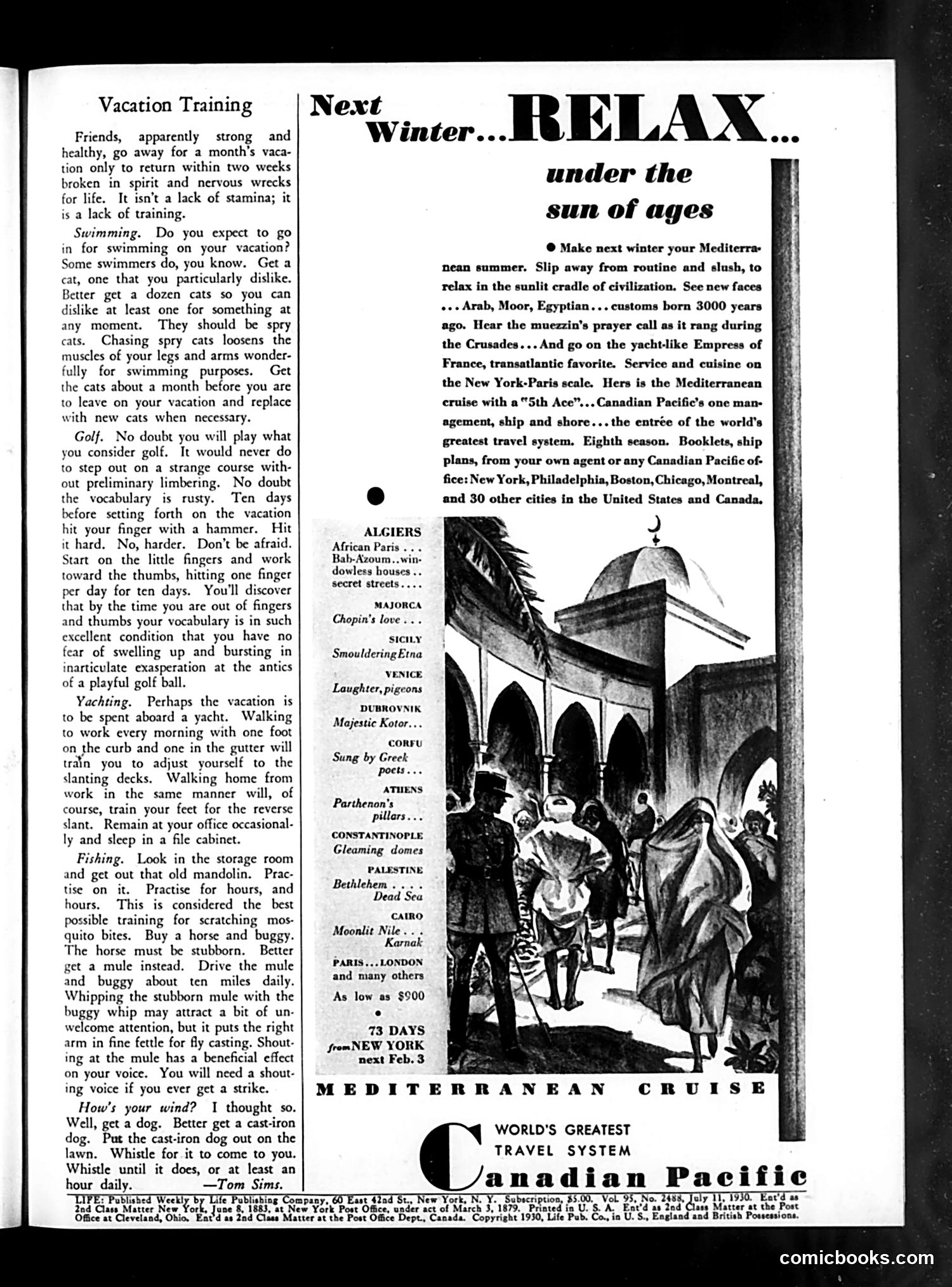
# Analysis This page contains an article titled "Vacation Training" (left column) offering humorous advice on preparing for vacation through activities like swimming, golf, yachting, and fishing. The practical joke is that readers should practice these leisure skills beforehand to avoid returning from vacation "broken in spirit and nervous wreck[s]." The right side is a full-page advertisement for Canadian Pacific's Mediterranean cruise, promoting a 73-day voyage from New York departing February 3rd. It lists exotic destinations (Algeria, Sicily, Venice, Athens, Cairo, Palestine) and emphasizes luxury—"the world's greatest travel system." The accompanying illustration shows passengers in Mediterranean settings with local architecture and figures. The ad targets wealthy Americans seeking winter escape and cultural tourism, reflecting 1930s leisure travel advertising conventions.
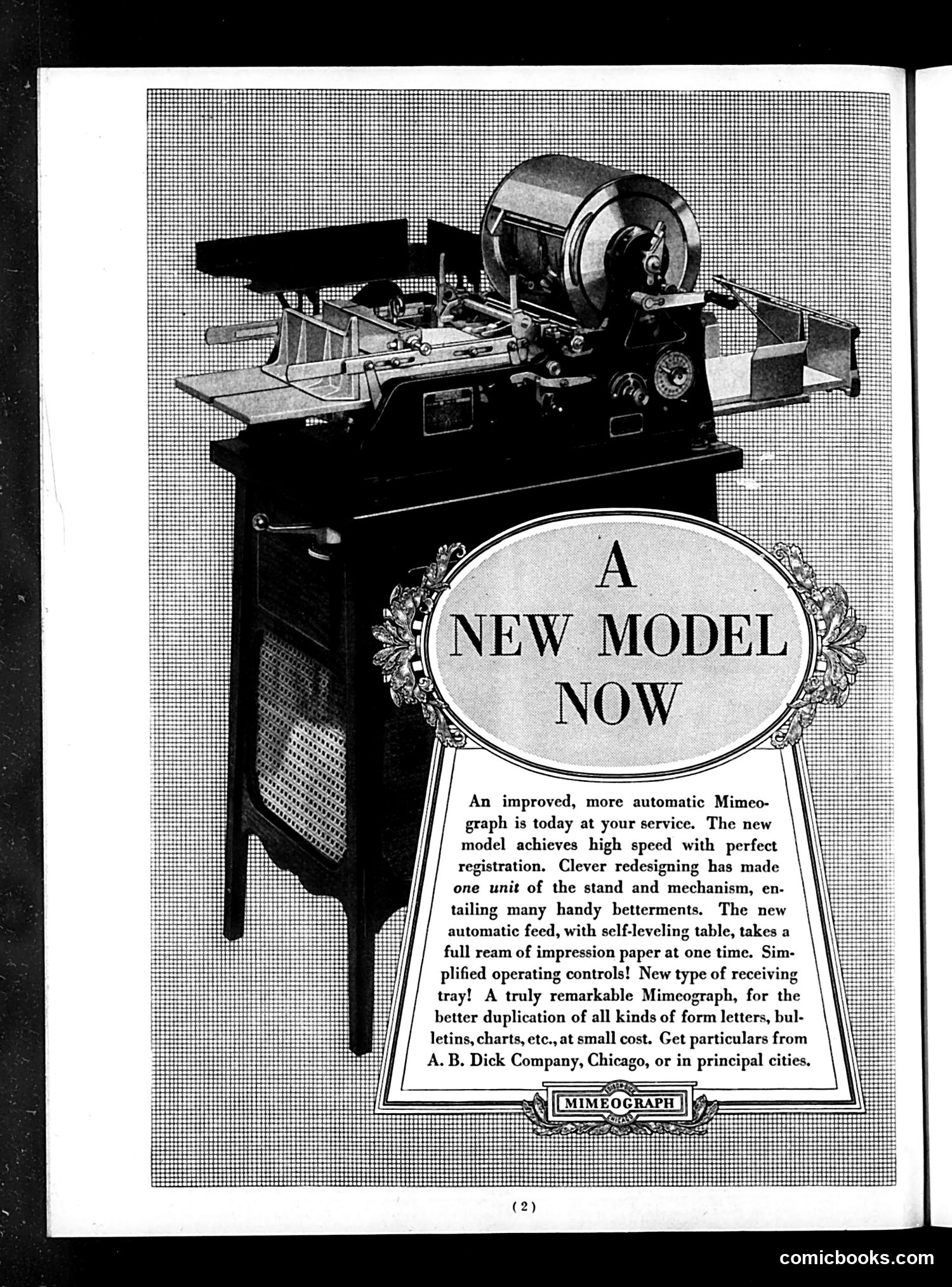
# Analysis This is **not a cartoon or satirical content**, but rather a **product advertisement** for the Mimeograph machine, placed in Life magazine. The page promotes "A New Model Now" from the A.B. Dick Company of Chicago. The ad highlights improvements to this duplicating technology: higher speed, better registration, automatic feed with self-leveling table, simplified controls, and a new receiving tray. It emphasizes the machine's utility for duplicating "form letters, bulletins, charts, etc., at small cost." This represents early 20th-century office equipment marketing—the mimeograph was essential pre-digital technology for businesses needing to reproduce documents quickly and affordably. The ornate decorative border and prominent placement suggest this was a significant advertising purchase reflecting the machine's commercial importance.
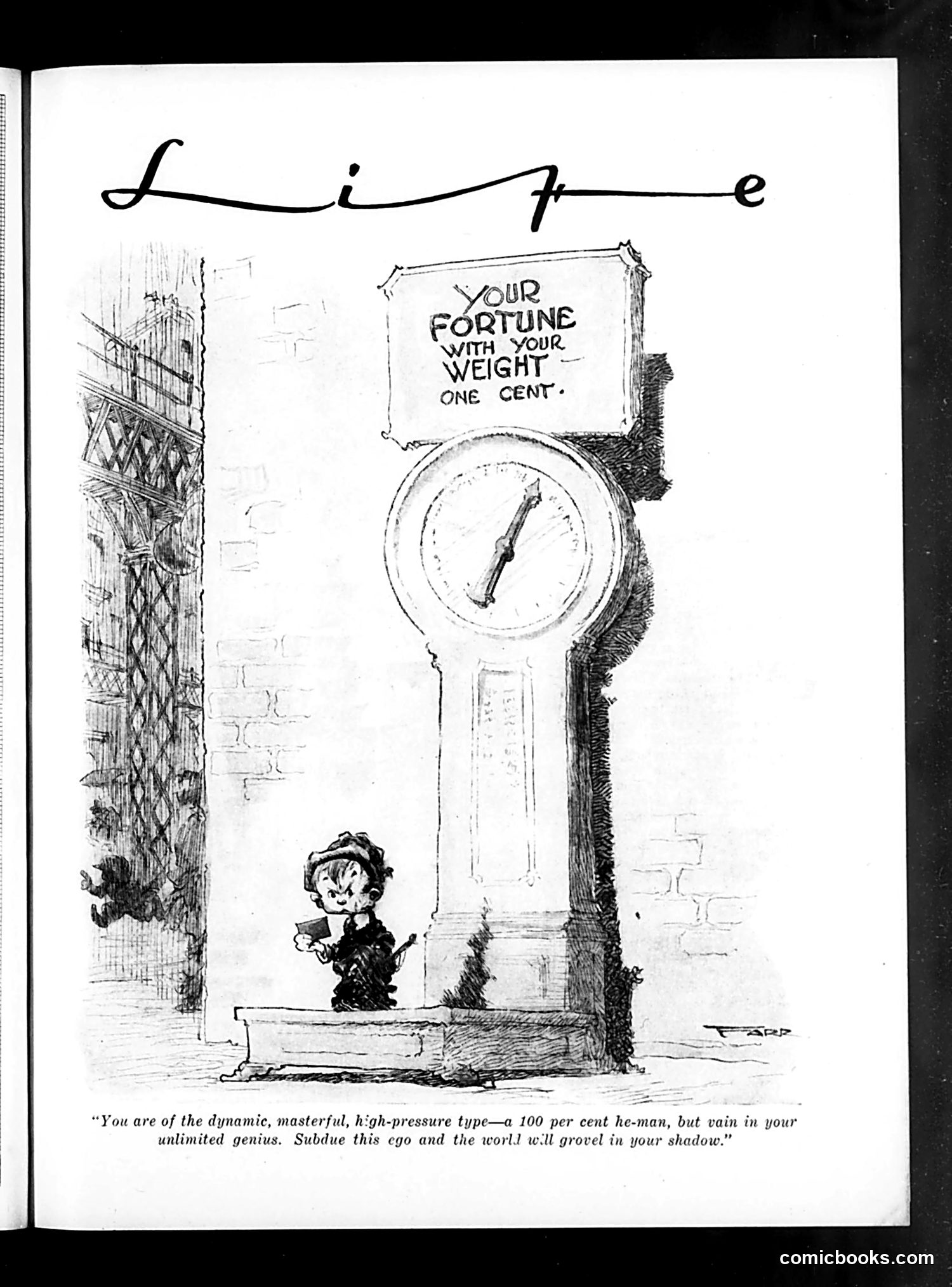
# Analysis of "Life" Magazine Cartoon This cartoon satirizes fortune-telling machines—penny-operated devices common in early 20th-century America. A small figure (appears to be a child or diminutive person) stands before a scale that dispenses fortunes for one cent, with a sign reading "YOUR FORTUNE WITH YOUR WEIGHT ONE CENT." The caption mocks grandiose self-help rhetoric of the era, praising the person as "dynamic, masterful, high-pressure type—a 100 per cent he-man" while simultaneously advising them to "subdue this ego and the world will grovel in your shadow." The satire targets both the absurdity of automated fortune-telling and the contradictory pop-psychology messages promoted to American consumers—flattering their ego while demanding ego-suppression. The humor lies in the clash between inflated praise and practical advice.
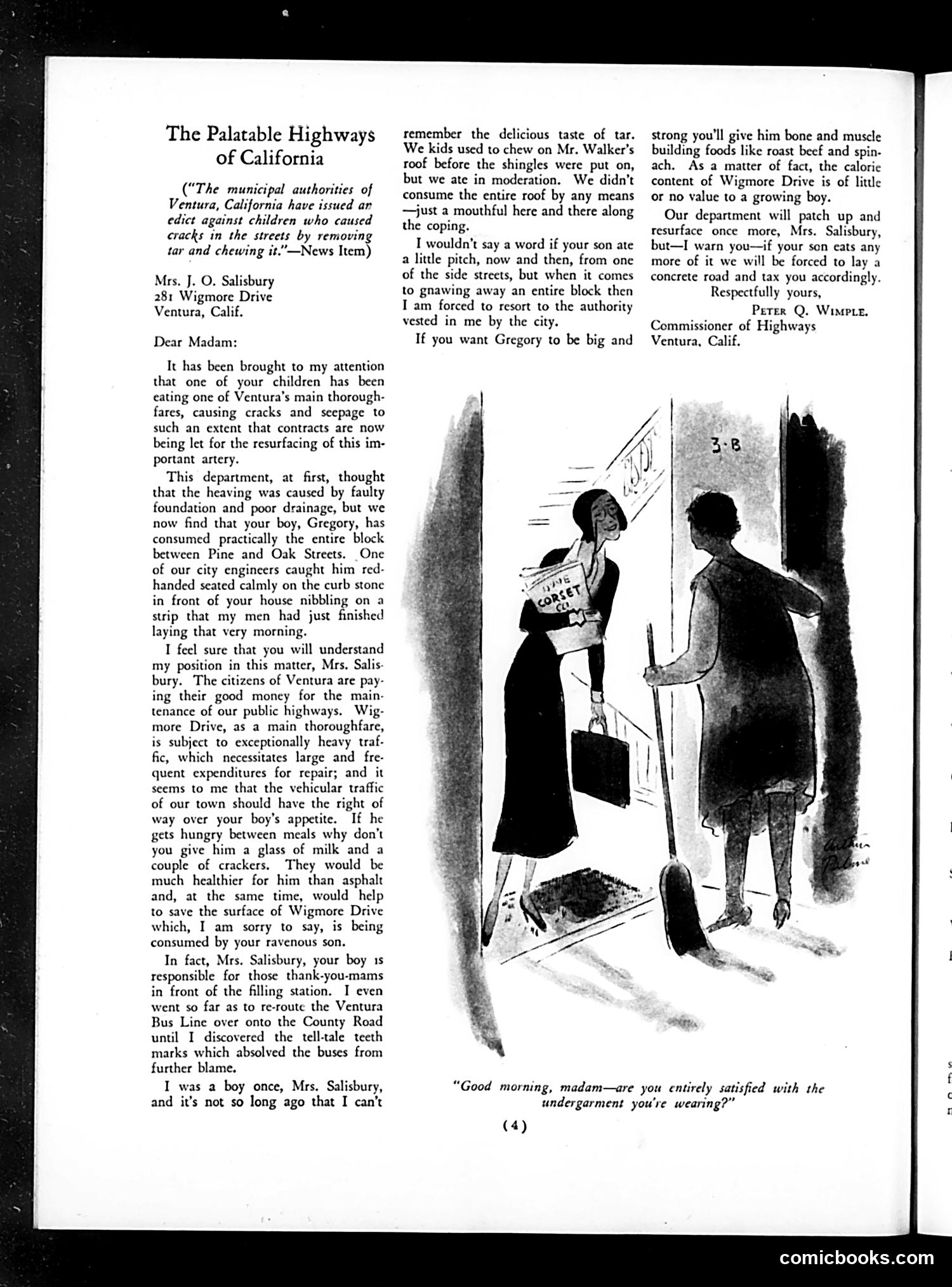
# Analysis of "The Palatable Highways of California" This page contains a satirical letter from Peter Q. Wimple, Commissioner of Highways in Ventura, California, responding to a complaint from Mrs. J.O. Salisbury about her son Gregory eating tar from street repairs. The satire mocks bureaucratic absurdity: Wimple solemnly argues that the boy's consumption of road tar is actually *beneficial*—providing "bone and muscle building foods like roast beef and spinach"—and suggests the real problem is insufficient milk and crackers in the child's diet. The accompanying illustration shows a woman presenting a boy with visible tar stains to a puzzled man, likely a doctor. The joke exposes how officials deflect legitimate public complaints through absurd logic rather than addressing actual infrastructure problems affecting residents.
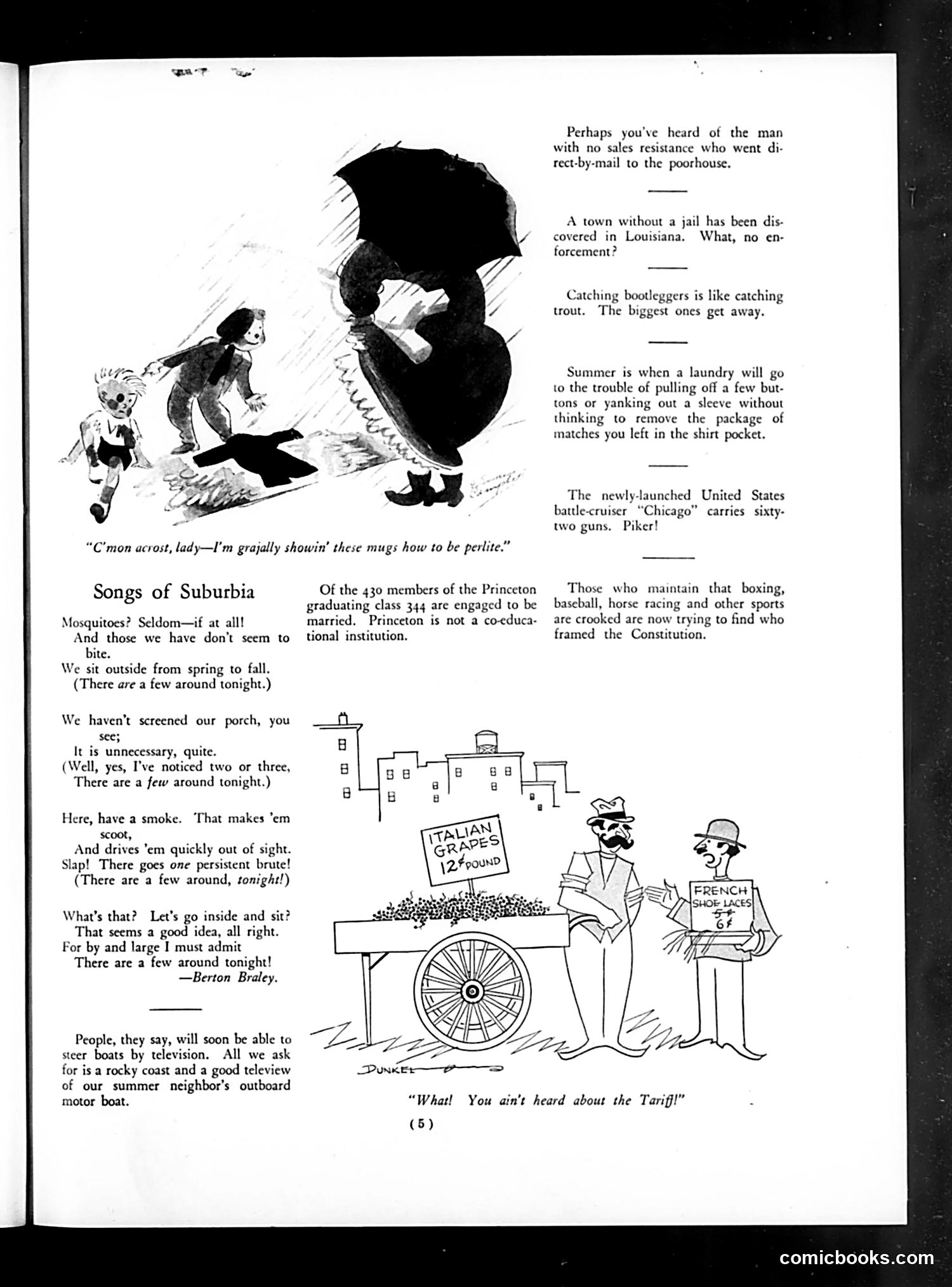
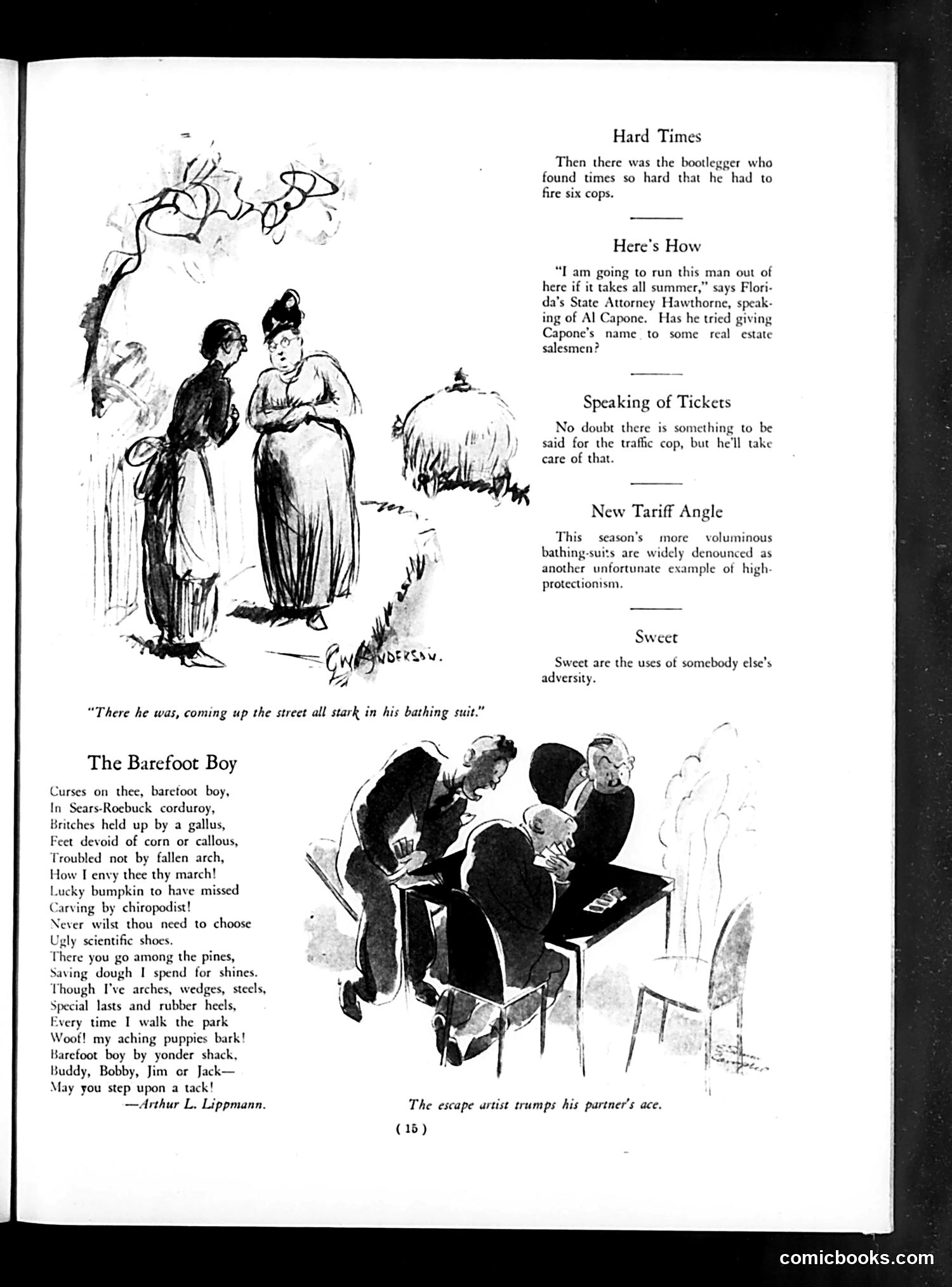
# Page Analysis This page from *Life* magazine contains humorous observations and two cartoons satirizing American suburban and commercial life. The top cartoon depicts a woman showing a child how to behave properly toward "mugs" (street hoodlums), suggesting suburban anxieties about urban crime and rough characters. The "Songs of Suburbia" section offers satirical verse about suburban mosquitoes, unscreened porches, and summer entertaining—poking fun at the discomforts and social pretenses of suburban living. The bottom cartoon, captioned "What! You ain't heard about the Tariff!", shows street vendors (Italian grapes and French shoe laces) reacting to tariff policies. This references trade tariffs—likely 1920s-era protectionist debates—that would affect import prices and availability of foreign goods in American markets. Both cartoons reflect early-20th-century American preoccupations with suburban life, immigration, and economic policy.
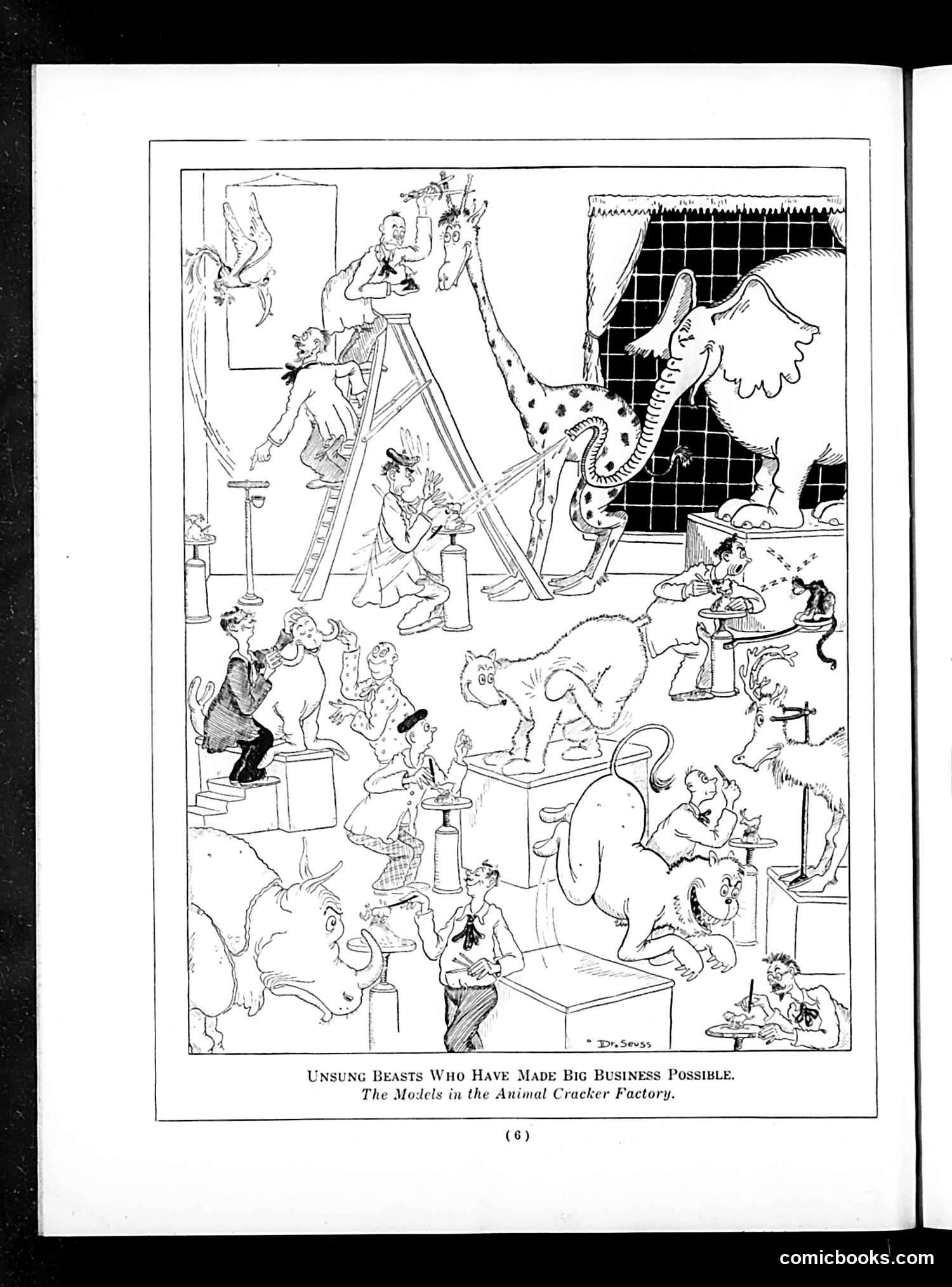
# "Unsung Beasts Who Have Made Big Business Possible: The Models in the Animal Cracker Factory" This Dr. Seuss cartoon satirizes the animal cracker industry by personifying the actual animals used as models for cracker designs. The illustration shows a chaotic factory scene where various exotic animals—an elephant, giraffe, rhinoceros, hippo, and others—pose while human workers sketch, measure, and study them. The joke is a clever inversion: instead of celebrating the human designers and businessmen, the caption credits the "unsung beasts" whose likenesses make the product profitable. It's gentle satire on how commercial success often depends on natural resources or subjects that receive no recognition—here, the animals themselves literally modeling for profit while remaining anonymous contributors to the industry.
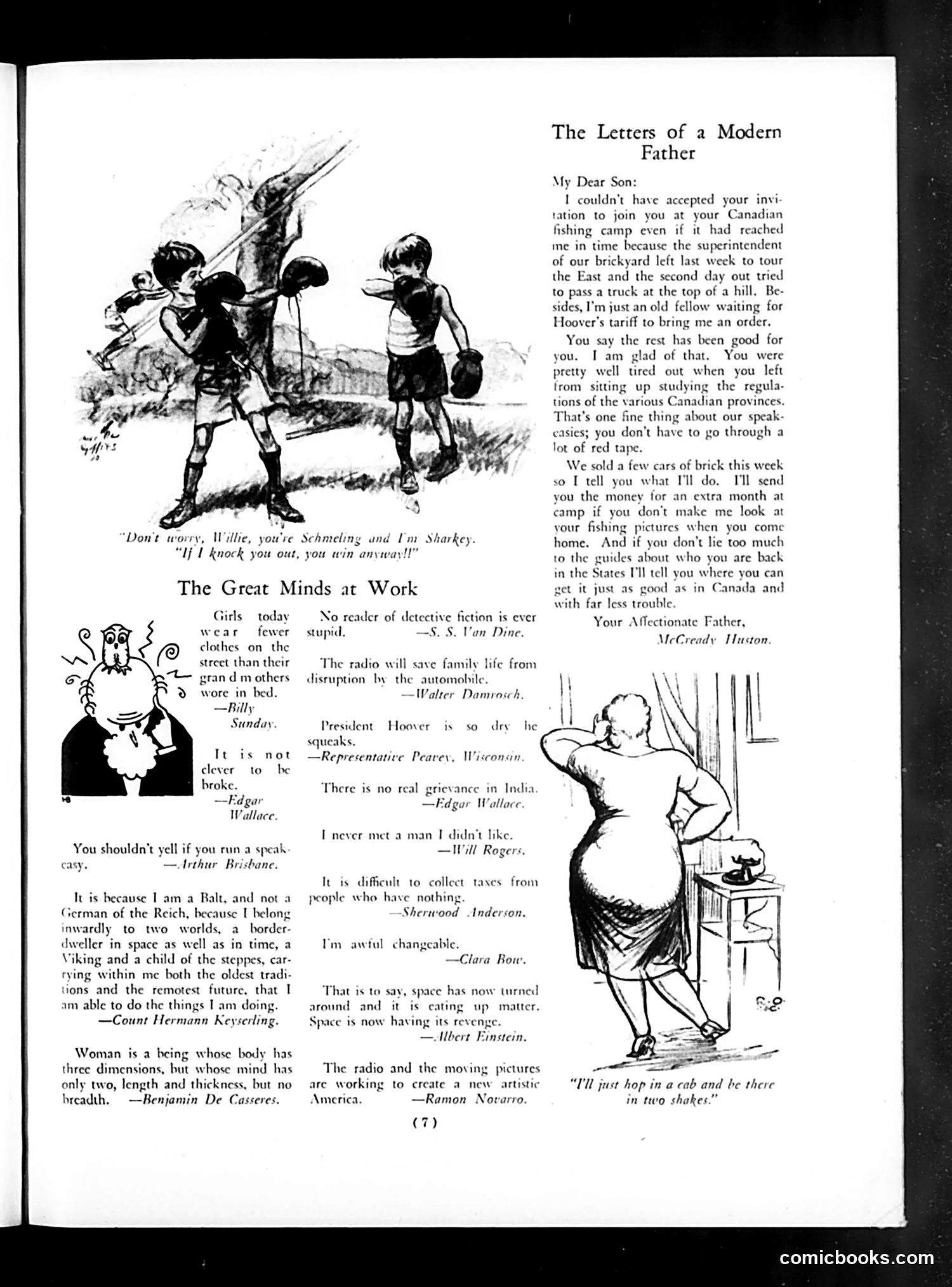
# Page Analysis: Life Magazine This page contains two sections: **"The Letters of a Modern Father"** — A humorous letter from father "McCroody Huston" to his son, declining a Canadian fishing camp invitation. The humor lies in the father's mundane domestic troubles (touring the brickyard, waiting for Hoover's tariff order, selling brick cars) contrasted with his son's exciting vacation plans. It's satirizing how ordinary adult life is compared to youthful adventure. **"The Great Minds at Work"** — A collection of brief, witty quotes attributed to famous figures (Will Rogers, Benjamin Franklin, Einstein, etc.) offering sardonic observations on contemporary life: girls wearing fewer clothes, radio's impact, taxes, and space exploration. The cartoons accompanying these quotes provide visual gags supporting each quip, typical of Life's satirical approach to celebrity and modern society.
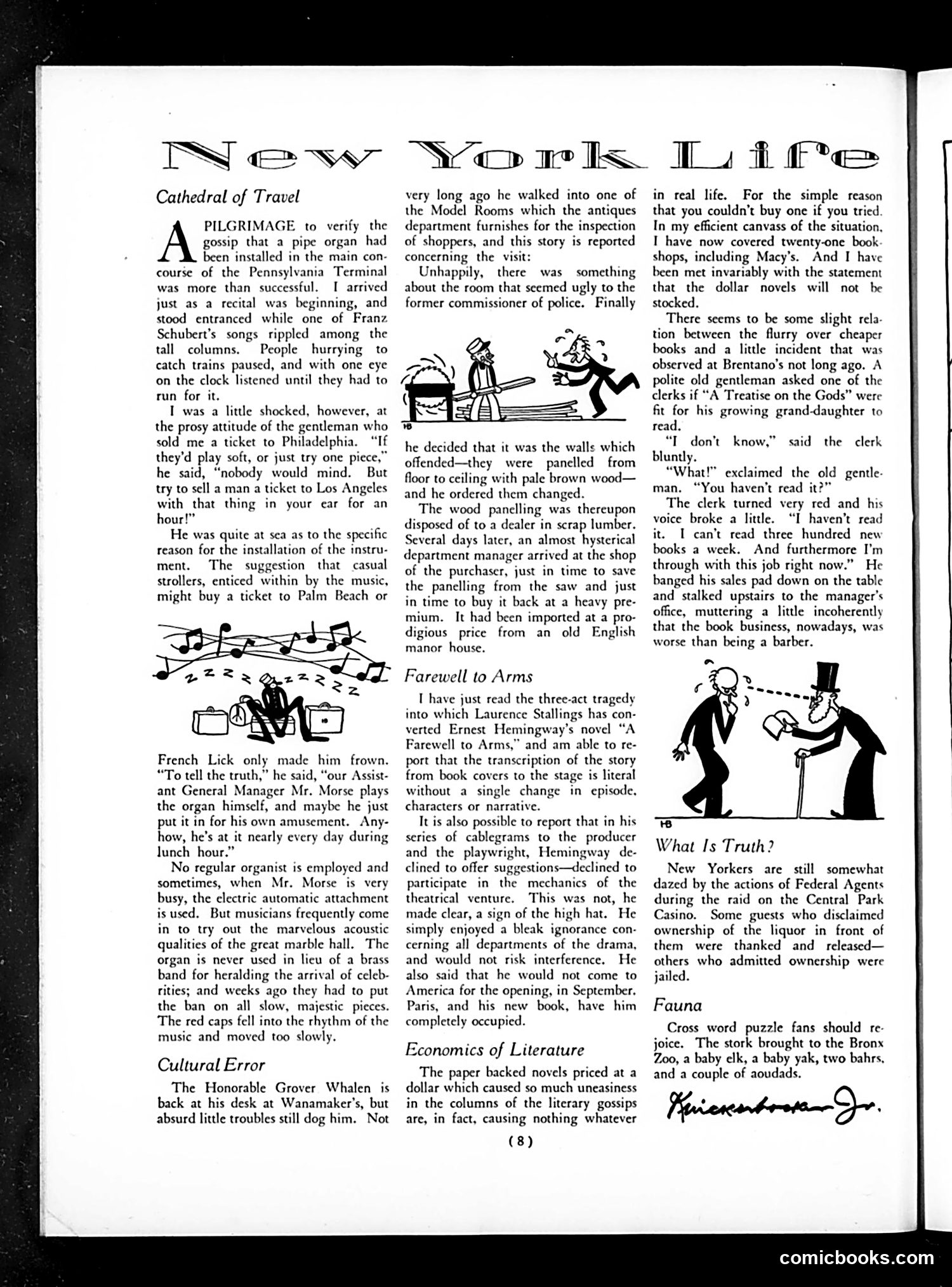
# Analysis of Life Magazine Page This page contains literary commentary rather than political cartoons. The main sections discuss: **"Cathedral of Travel"** - A humorous anecdote about a man's experience at Pennsylvania Terminal, where he encounters a ticket agent dismissive of classical music and modest travel plans. **"Cultural Error"** - A brief note about an unnamed "Honorable Grocer" experiencing minor social embarrassments at Wanamaker's department store. **"Farewell to Arms"** - Commentary praising Laurence Stallings' theatrical adaptation of Hemingway's novel for its faithful transcription. The small cartoons show figures in formal dress conducting what appears to be business or social transactions, illustrating the mundane urban situations described in the text. The overall tone is satirical commentary on American consumer culture and manners, rather than political satire.
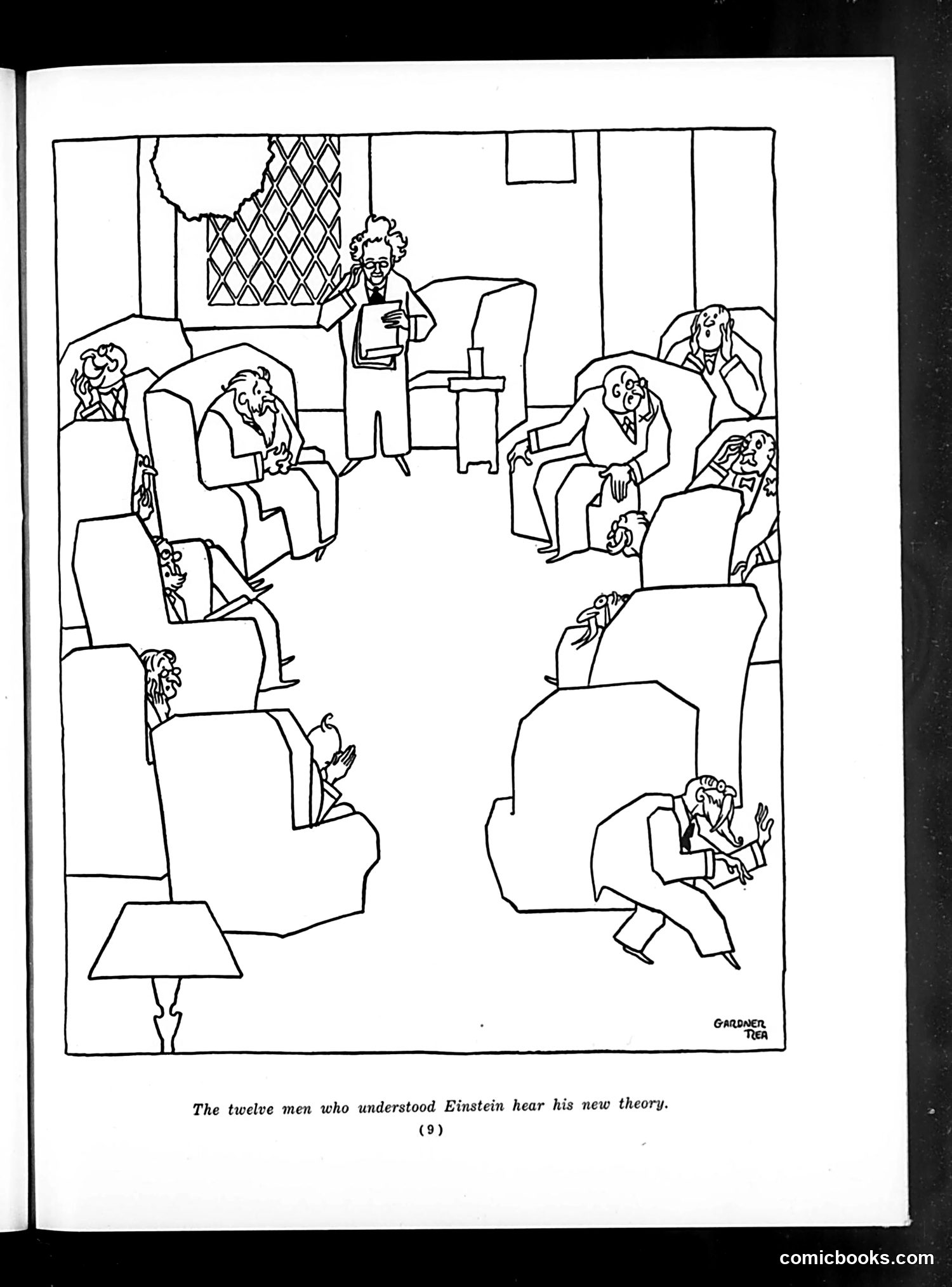
# "The Twelve Men Who Understood Einstein" This cartoon satirizes Einstein's theory of relativity as incomprehensibly complex. The caption claims only twelve people worldwide could understand his new theory—a famous contemporary quip about the theory's difficulty. The drawing shows a lecture room with an audience seated in armchairs, appearing puzzled and disengaged while one figure (presumably Einstein, center) presents. The cartoon mocks both the theory's opacity and the pretentiousness surrounding it. The humor lies in the contrast between Einstein's apparent confidence and his audience's obvious confusion and lack of comprehension. This reflects 1920s popular skepticism about relativity—a genuinely difficult concept that fascinated yet baffled the public and even many scientists. The joke plays on widespread anxiety about whether anyone truly grasped what Einstein had actually proposed.
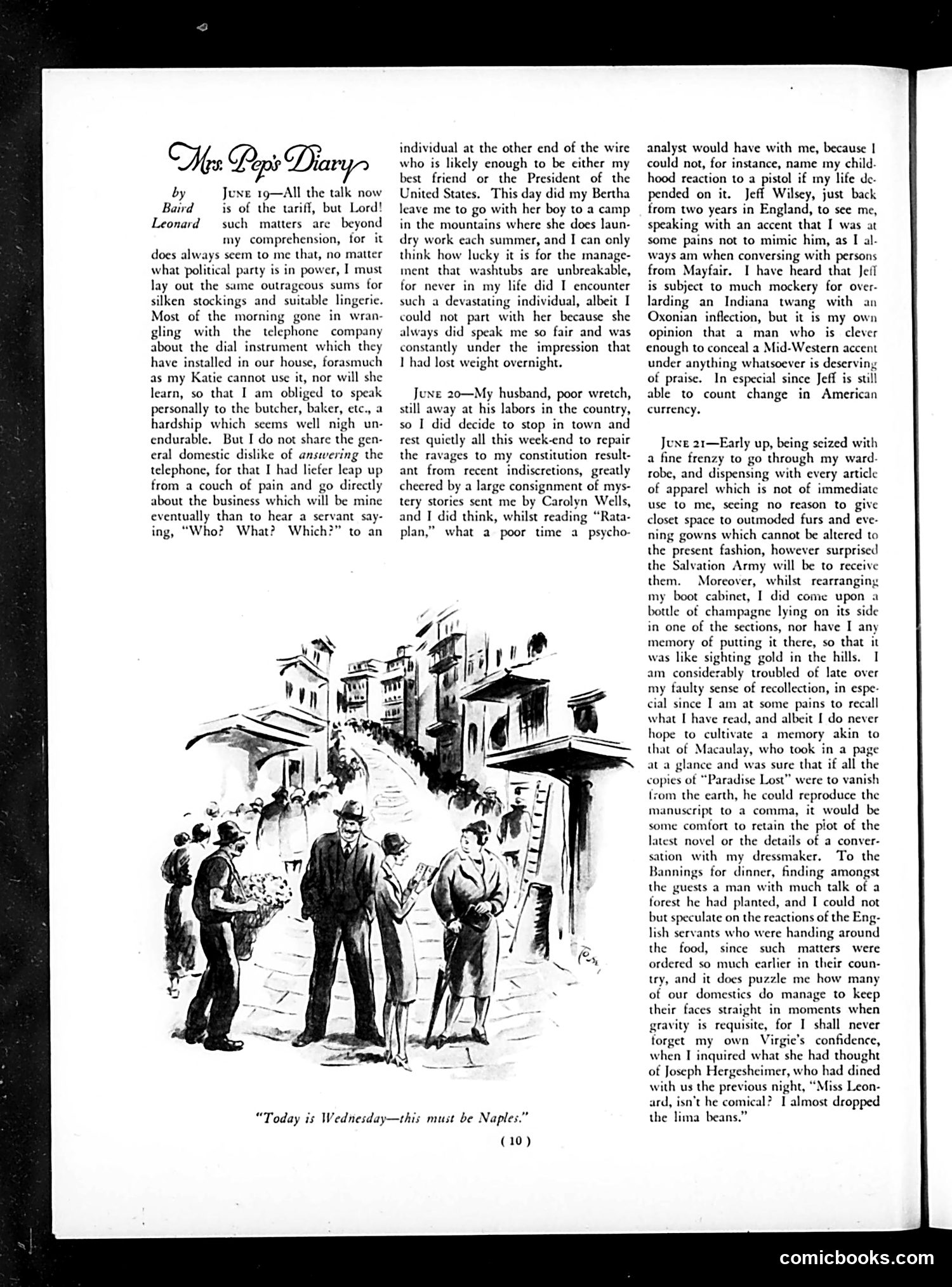
# "Mrs. Pope's Diary" - Analysis This page shows a serialized diary column by Baird Leonard titled "Mrs. Pope's Diary." The illustration depicts a street scene (captioned "Today is Wednesday—this must be Naples") with figures in period dress. The diary entries from June 19-21 discuss mundane domestic matters: telephone company complaints, a husband away on country business, wardrobe reorganization, and social observations. The humor derives from satirizing upper-class women's preoccupations—servants, fashion, gossip, and minor domestic crises—presented as momentous personal concerns. The Naples reference suggests travel narratives. The satire mocks both the self-importance of wealthy women's concerns and the breathless tone typical of society diary columns popular in early 20th-century magazines like Life.