A complete issue · 36 pages · 1930
Life — July 4, 1930
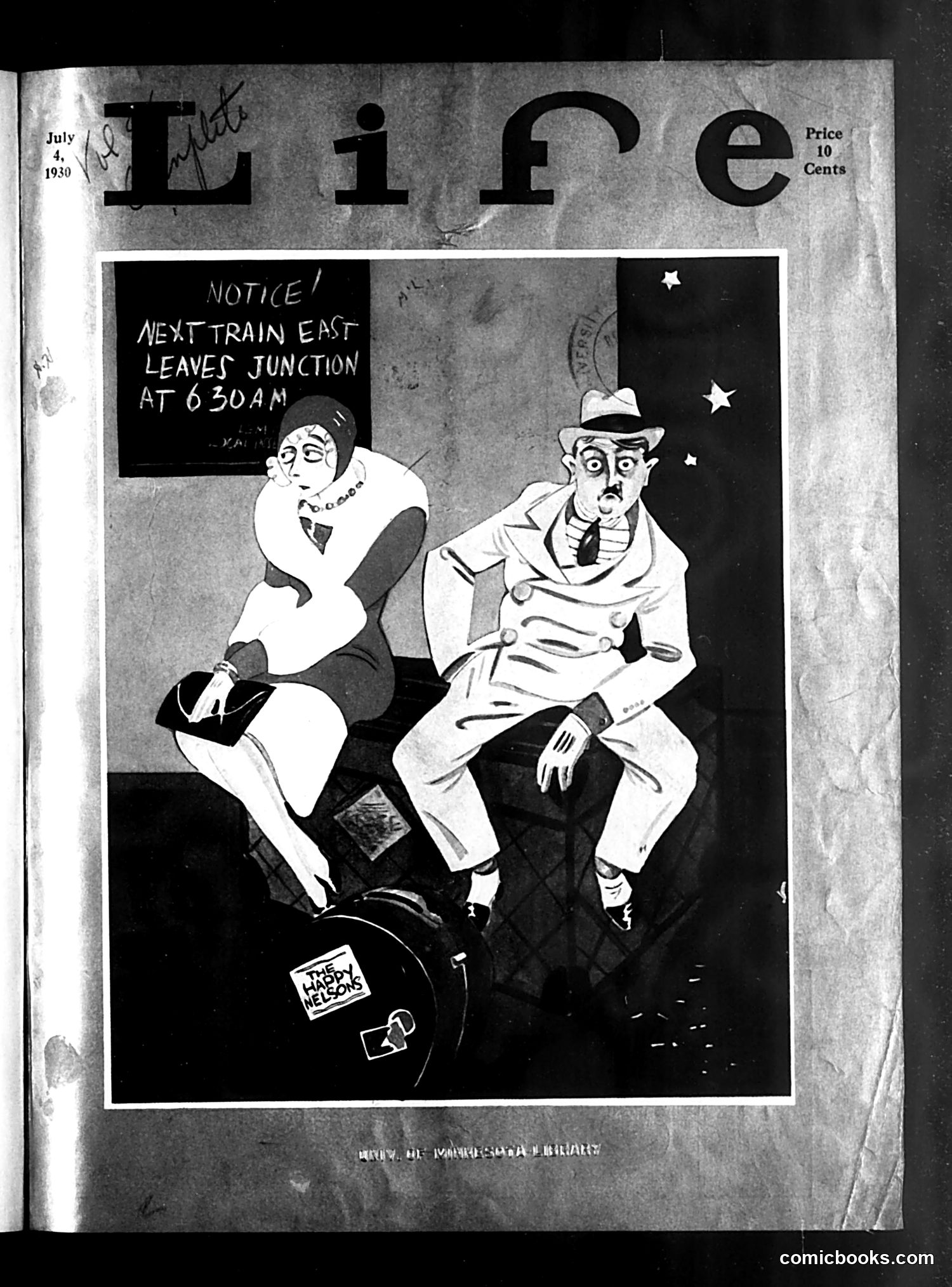
# Life Magazine Cover, July 4, 1930 This cover depicts two well-dressed travelers in distress at a train station, having just missed their departure. A notice reads "NEXT TRAIN EAST LEAVES JUNCTION AT 6:30AM," and their luggage bears a label "THE HARDY HELIONS." The satire appears to target wealthy leisure travelers inconvenienced by early train schedules. The couple's exaggerated expressions of dismay and their fashionable attire suggest they represent a privileged class unaccustomed to minor hardships. "The Hardy Helions" label may be ironic commentary on their inability to handle discomfort despite their self-perceived toughness or adventurous pretensions. The overall joke mocks upper-class travelers' entitled expectations during the Great Depression era.
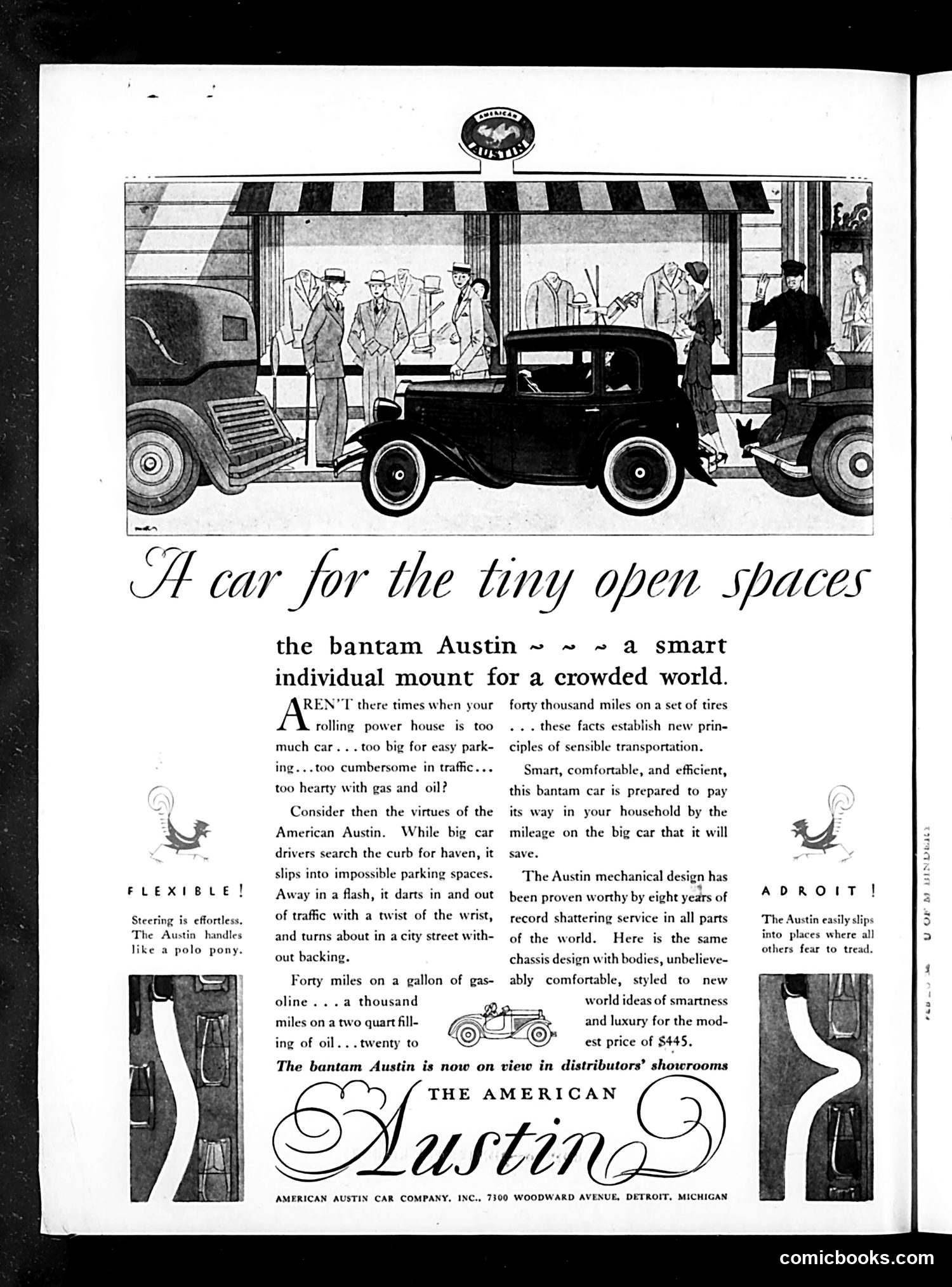
This is an advertisement for the American Austin automobile, not a political cartoon. The page features a stylized illustration of a small car parked on a city street surrounded by well-dressed pedestrians and shoppers. The ad's appeal targets urban dwellers facing parking and traffic congestion—a growing problem in crowded 1920s-30s cities. The "bantam Austin" is marketed as a solution: compact enough to fit "impossible parking spaces," yet mechanically sound and comfortable. The satirical angle is implicit: the ad acknowledges that modern city life has become overwhelming ("too big for easy parking," "too cumbersome in traffic"), and proposes a tiny, maneuverable car as the answer. It's gentle humor about urban overcrowding rather than sharp political satire.
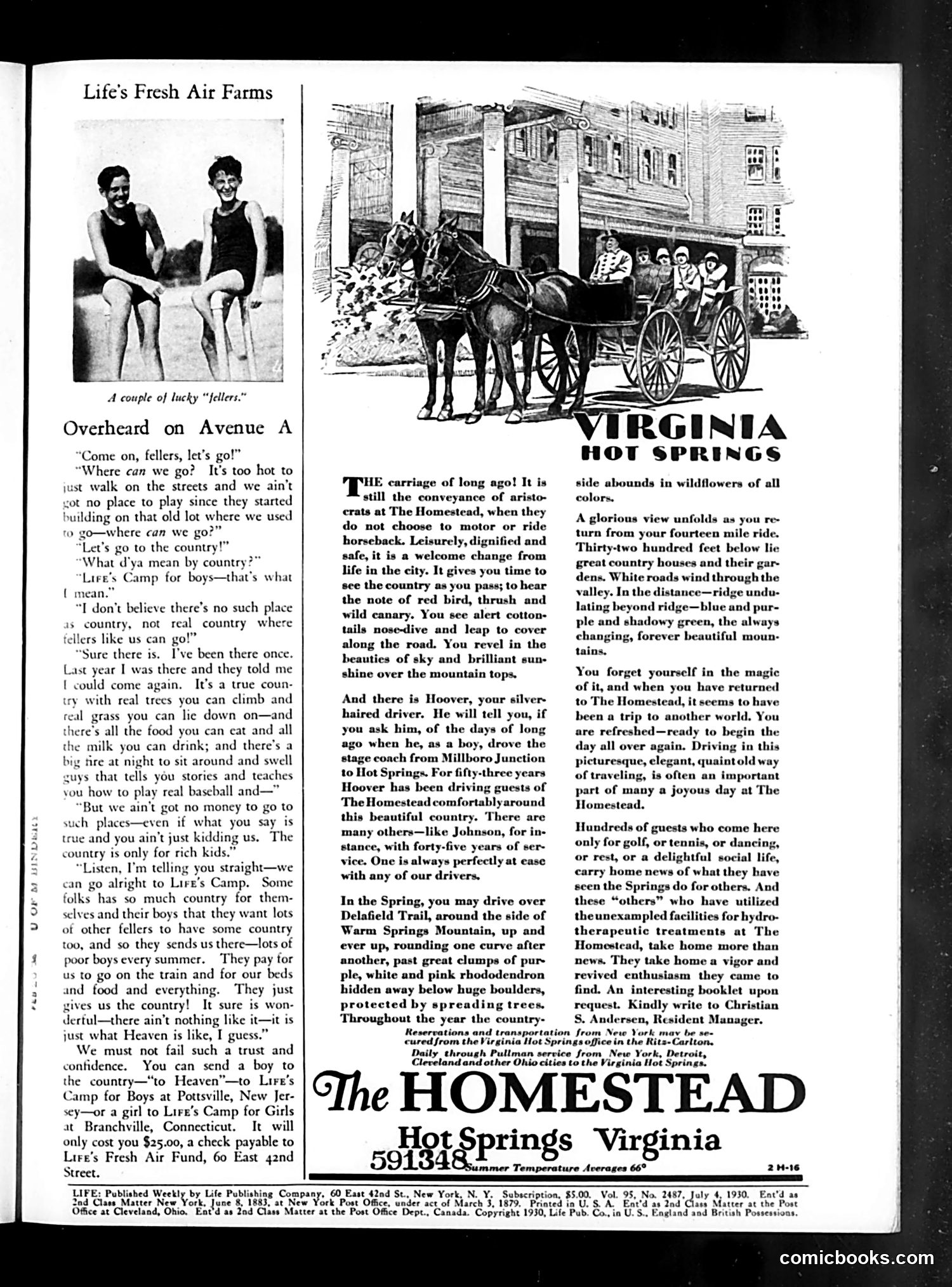
# Page Analysis This page is primarily **advertising content** rather than political satire. The left side shows "Life's Fresh Air Farms" — a humorous dialogue between two young people debating whether to visit the countryside versus staying in the city. The joke hinges on their desire for "country" experience: one argues for Life's Camp for Boys at Postsville, New Jersey. The right side advertises **The Homestead hotel** in Hot Springs, Virginia, featuring an illustration of a horse-drawn carriage. The ad emphasizes old-fashioned leisure travel — scenic drives, natural springs, and hospitality from long-time drivers like "Hoover." The satire is gentle: urban dwellers romanticize rural/country experiences, while the magazine promotes its own camp and advertises luxury resort vacations as solutions to this yearning. It's essentially marketing nostalgia and escape.
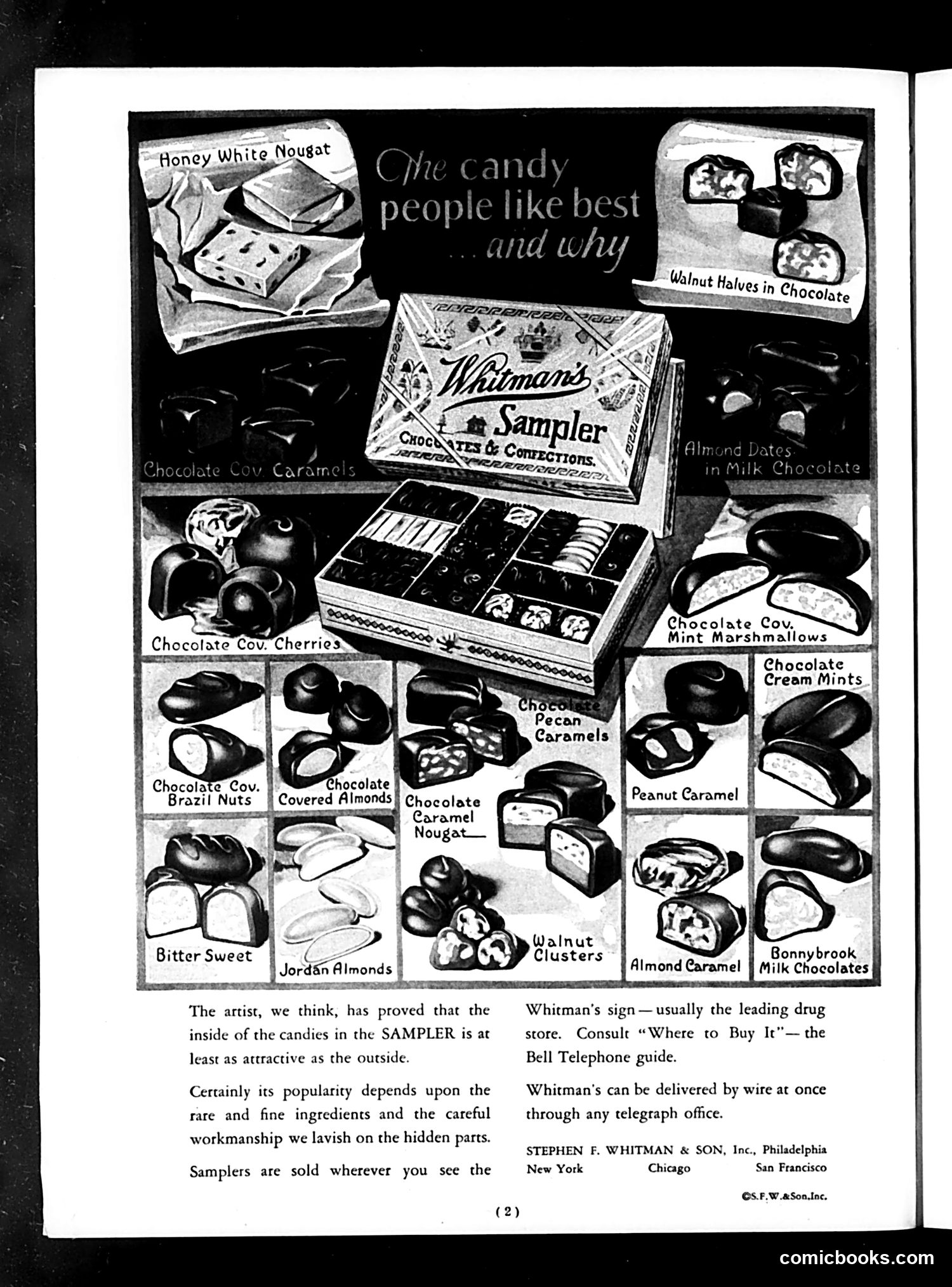
# Analysis This page is **primarily an advertisement**, not satire or political commentary. It promotes Whitman's Sampler chocolates through a visual catalog of candy varieties. The headline "The candy people like best...and why" frames the ad around consumer appeal. The central image shows an open Whitman's Sampler box displaying various chocolates: Brazil Nuts, Covered Almonds, Cherries, Pecans, Nougat, Caramels, Walnut Clusters, Mints, and others. The accompanying text emphasizes that Whitman's success depends on "rare and fine ingredients and careful workmanship on the hidden parts"—suggesting quality extends beyond appearance. The ad notes Whitman's sign is "usually the leading drug store" fixture and can be delivered via telegraph. This reflects early-20th-century marketing strategy: positioning luxury candies as gifts, emphasizing hidden craftsmanship, and leveraging convenient retail distribution.
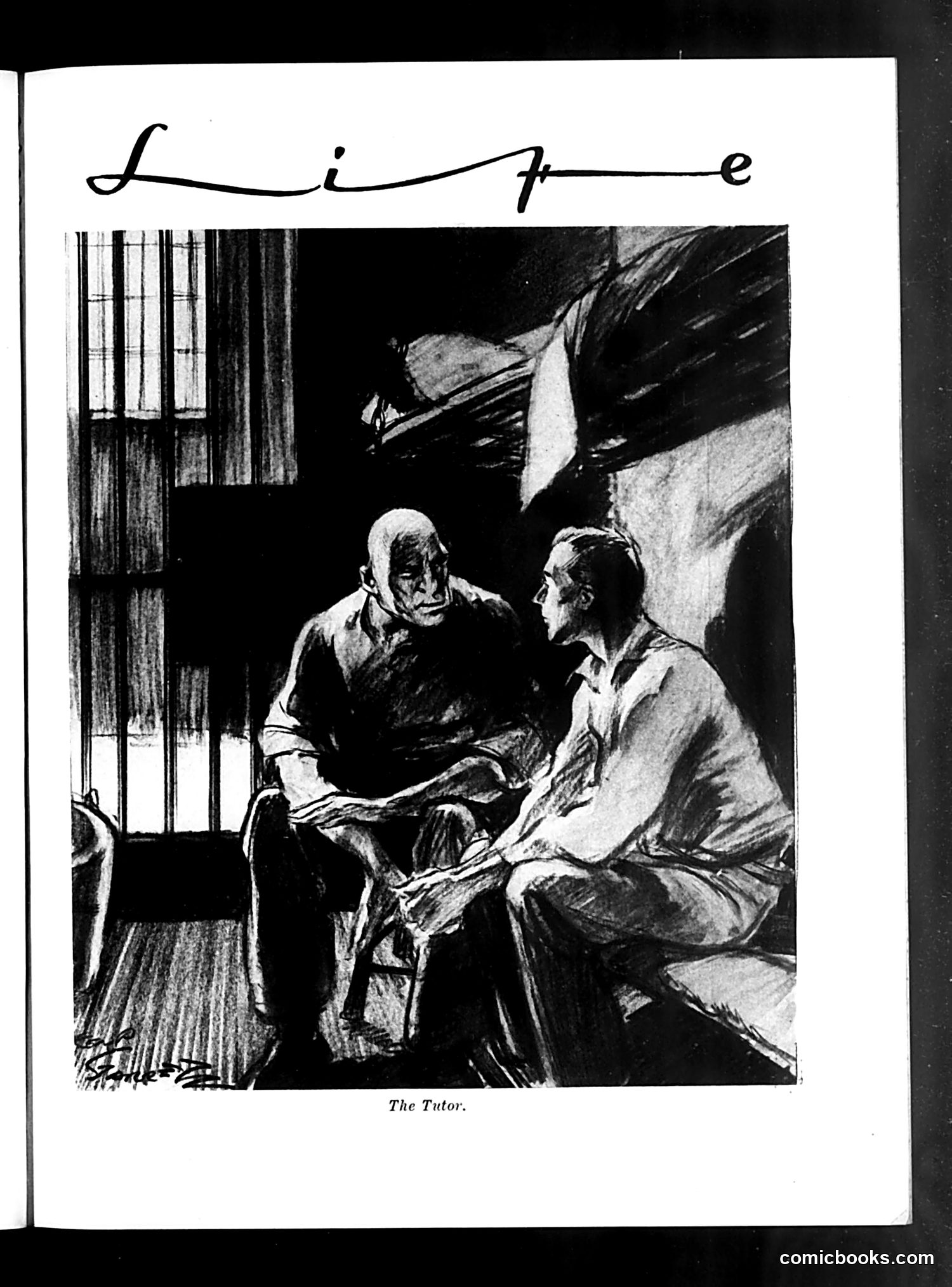
# "The Tutor" - Life Magazine Illustration This illustration depicts two men in what appears to be a prison cell (note the barred window on the left). The caption identifies the scene as "The Tutor." The image likely satirizes educational or instructional dynamics in an institutional setting, possibly critiquing prison education programs or the relationship between an authority figure and a subordinate. One figure appears older and is gesturing while speaking; the other listens attentively. Without additional context from the magazine issue, the specific political or social target remains unclear. The satirical intent likely relates to 19th or early 20th-century American social commentary, possibly mocking either prison reform efforts, the efficacy of education in such settings, or a particular public figure's role in institutional management. The style and subject suggest social criticism typical of Life magazine's satirical approach.
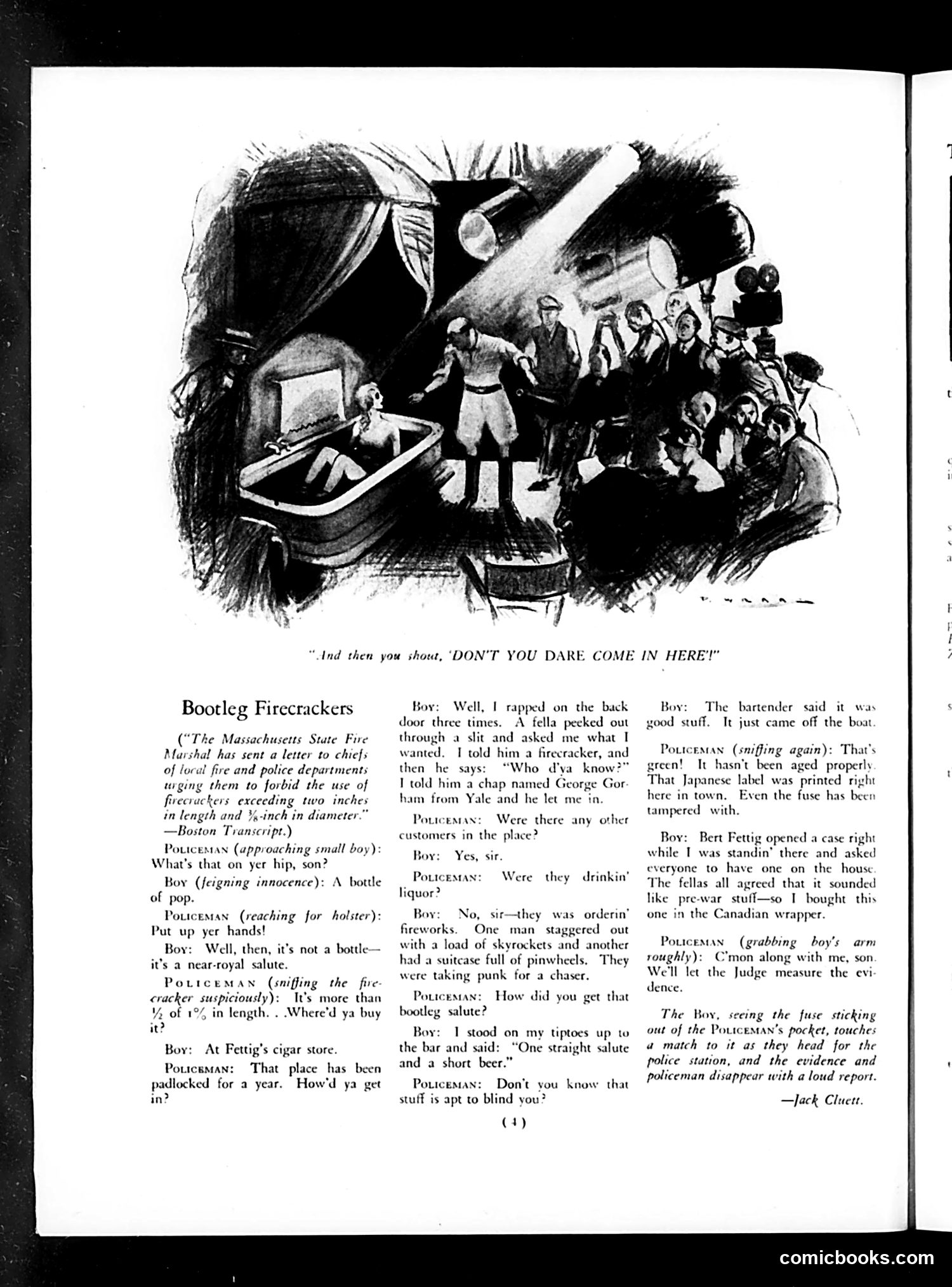
# "Bootleg Firecrackers" - Life Magazine Satire This is a humorous sketch by Jack Clinett depicting Prohibition-era lawbreaking. A policeman interrogates a boy caught with illegal firecrackers (and possibly bootleg liquor), framed as contraband similar to illegal alcohol. The joke plays on the absurdity of Prohibition enforcement: firecrackers are being treated with the same gravity as smuggled liquor. The boy's casual admissions—that he bought them at a cigar store (itself "padlocked for a year"), that a bartender sold them—mock how pervasive illegal goods were and how ineffective law enforcement had become. The cartoon satirizes both the ridiculousness of treating fireworks like contraband and the widespread defiance of Prohibition laws, where even children could easily obtain banned items through obvious front operations.
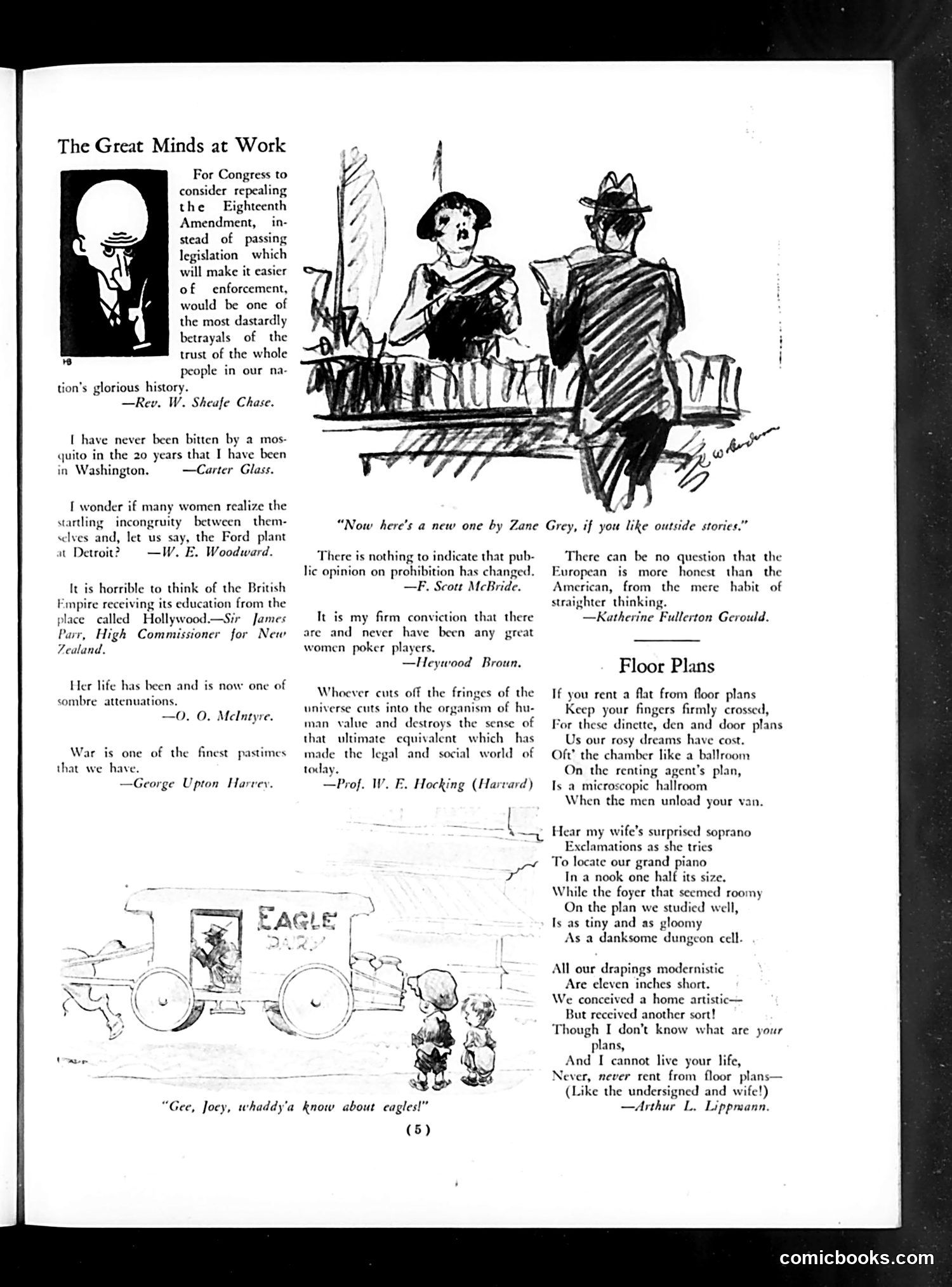
# Analysis of Life Magazine Page **Top Cartoon:** Depicts congressional figures debating prohibition repeal. The skeleton figure and armed congressmen represent the debate over repealing the 18th Amendment. The caption suggests disagreement about enforcement versus outright repeal—a major political conflict of the Prohibition era (likely 1920s-early 1930s). **Bottom Cartoon:** Shows children asking "Gee, Joey, whaddy'a know about eagles?" while observing a truck marked "EAGLE." This appears to be a simple children's humor piece playing on the double meaning of "eagle" (the bird vs. commercial branding). The page also contains various quoted opinions on contemporary social issues, including criticism of British imperial education and debates about women's roles—typical satirical commentary for Life magazine's intellectual readership.
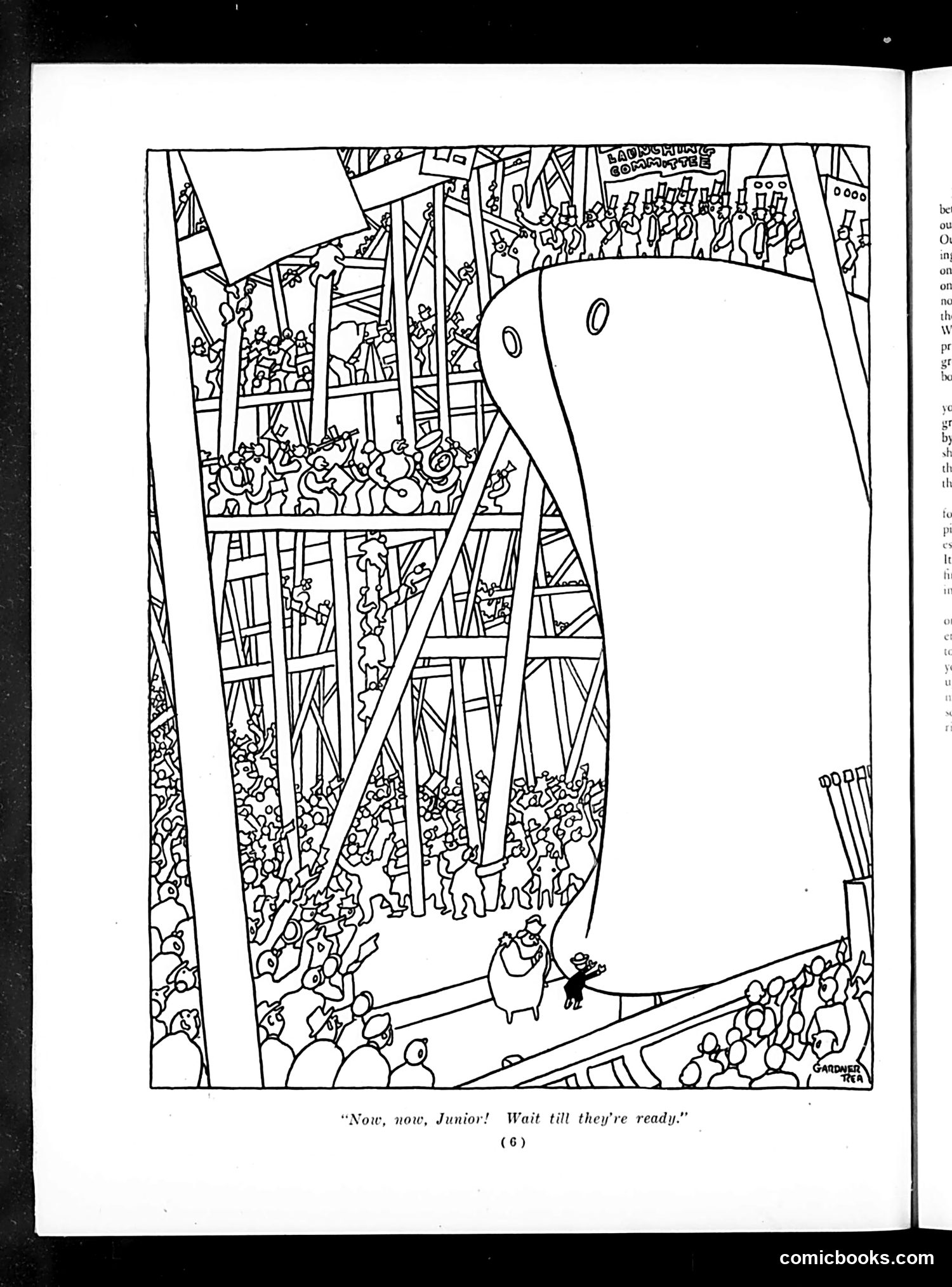
# Analysis of Life Magazine Cartoon This cartoon depicts a circus or large public spectacle with massive crowds packed into a multi-tiered venue. Two figures stand in the arena floor—one appears to be an adult (possibly a ringmaster or performer) and a smaller figure labeled "Junior." The caption reads: "Now, now, Junior! Wait till they're ready." This satirizes the anticipation and control of mass audiences at public events. The joke suggests that even children are subject to crowd management and must wait for official cues before reacting or participating, reflecting on American spectacle culture and the manufactured nature of public enthusiasm. The densely-packed crowds emphasize how audiences have become standardized, managed components of entertainment rather than spontaneous participants. The cartoonist is Gardner (visible signature).
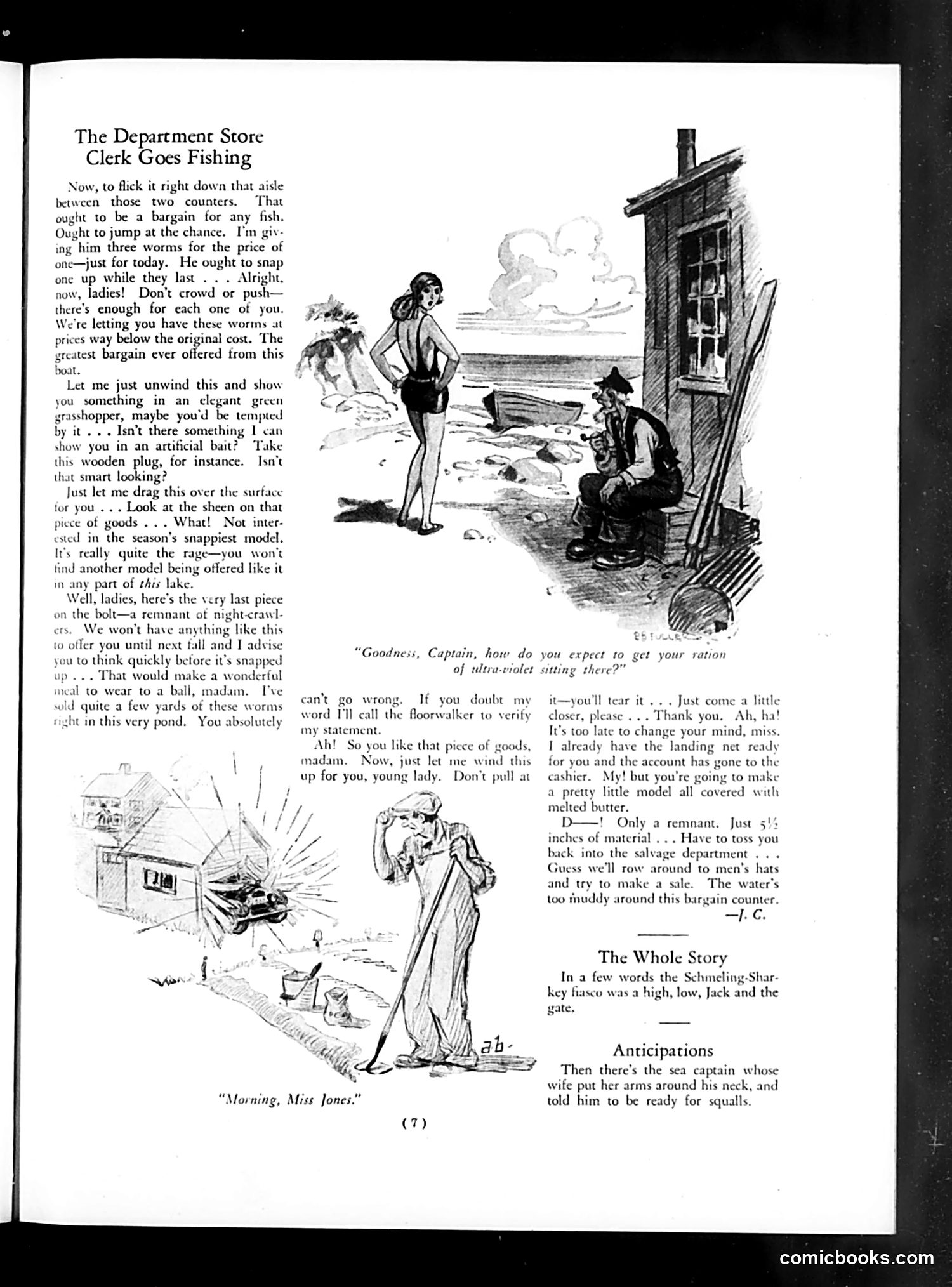
# "The Department Store Clerk Goes Fishing" This satirical piece mocks a department store clerk attempting to sell fishing equipment. The humor turns on the clerk's desperation and transparently false sales pitches—describing worms as "bargains," praising cheap goods with flowery language ("elegant green grasshopper"), and using high-pressure tactics ("Don't crowd or push"). The accompanying illustration shows the clerk awkwardly approaching a seasoned fisherman and woman by the water, clearly out of his element. The joke critiques both aggressive retail sales methods and the clerk's absurd attempt to convince experienced anglers to buy inferior department store fishing gear instead of using actual bait and equipment. The satire reflects early 20th-century frustrations with commercialism and pushy salesmanship.
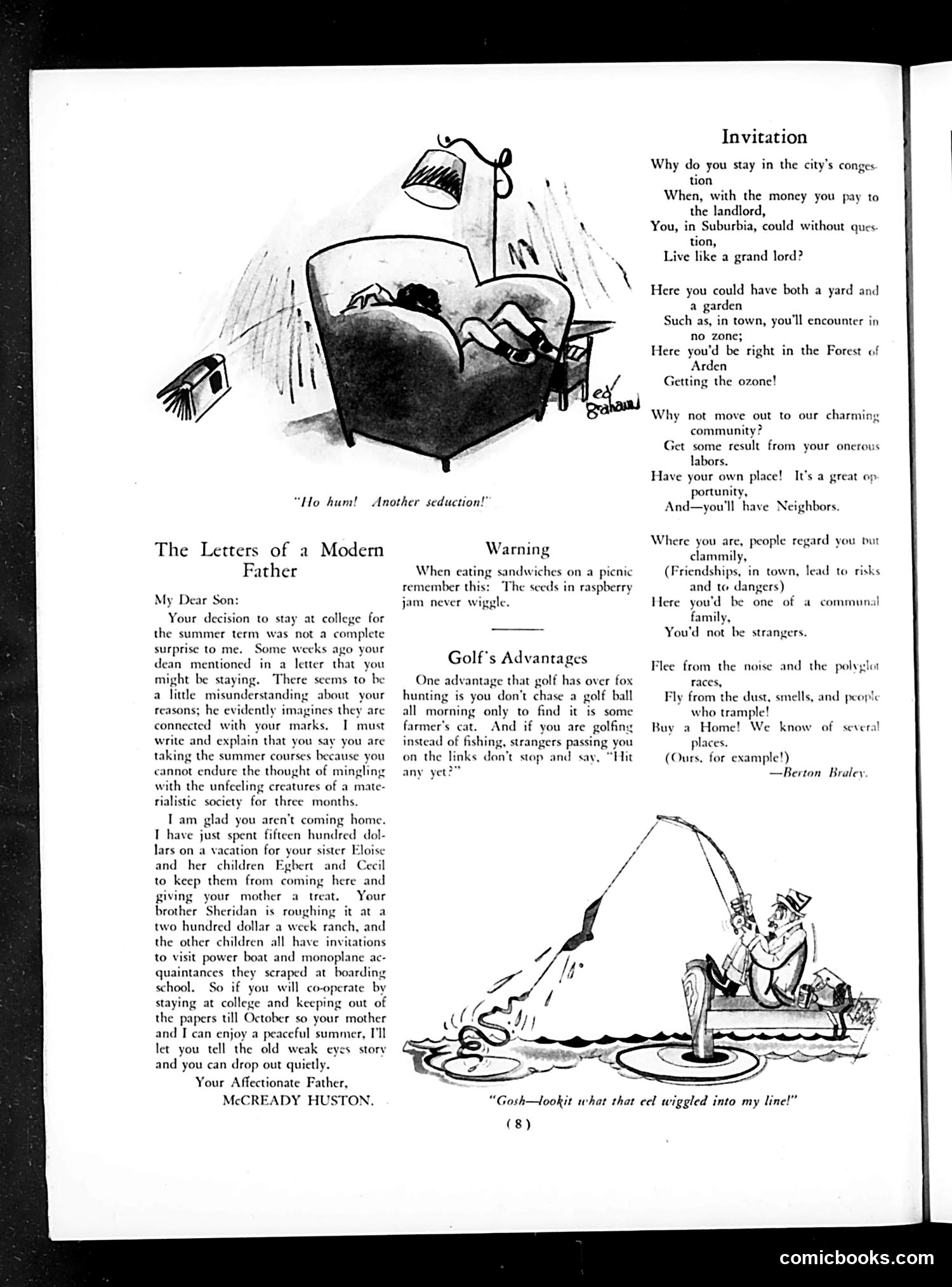
# Page Analysis: Life Magazine, Page 8 This page contains satirical pieces about early 20th-century suburban life and leisure. **"The Letters of a Modern Father"** is a humorous letter from McCready Huston to his son, advising him to stay at college rather than come home for summer. The father humorously lists family obligations—visiting relatives' ranches and power boats—making staying away seem preferable to family obligations. **"Invitation"** sarcastically encourages moving to the suburbs, offering space and gardens while poking fun at suburban life's claims of superiority over city living. **"Golf's Advantages"** jokes that golf's main benefit is losing balls on the links early, avoiding further play—a humorous jab at the sport's frustrations. The cartoons illustrate these satirical pieces with sketches of domestic comfort and leisure activities, typical of Life's social commentary on American middle-class life.
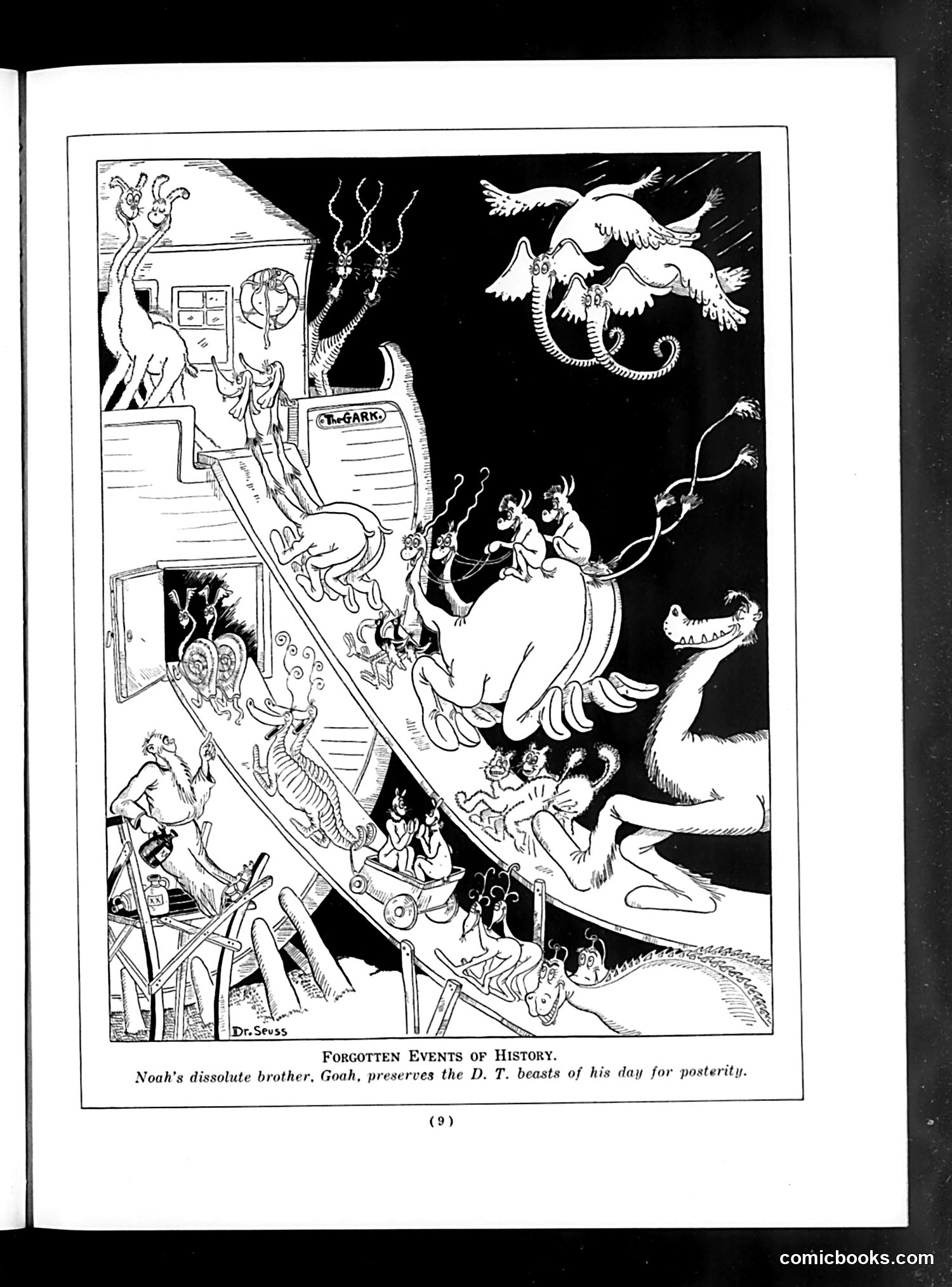
# "Forgotten Events of History" This is a Dr. Seuss cartoon satirizing Noah's Ark through an absurdist lens. The caption reads: "Noah's dissolute brother, Goah, preserves the D.T. beasts of his day for posterity." The joke plays on "D.T.s" (delirium tremens)—hallucinations caused by alcohol withdrawal. Rather than Noah preserving real animals, his fictional dissolute brother Goah is preserving fantastical, impossible creatures that exist only in an alcoholic's delirious imagination: winged animals with multiple heads, strange hybrid beasts, and other surreal forms. The cartoon mocks both excessive drinking and the biblical Noah's Ark story through whimsical exaggeration. It's typical of Seuss's early satirical work in *Life* magazine, combining social commentary about alcoholism with imaginative visual chaos.
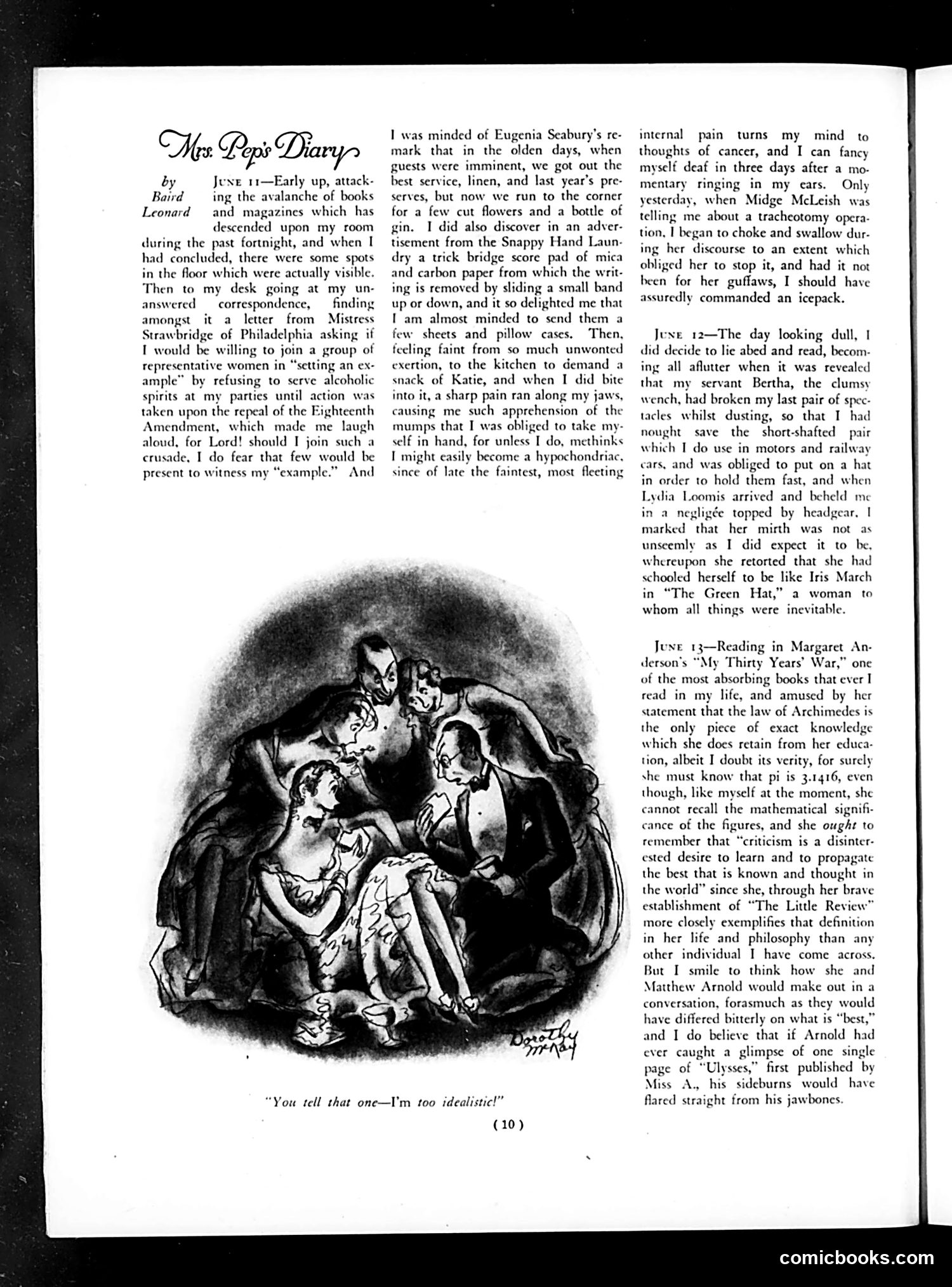
# Mrs. Pep's Diary Analysis This page presents a personal diary entry by "Baird Leonard" dated June 11-13, discussing domestic life, household management, and intellectual pursuits. The accompanying illustration shows a woman surrounded by children in what appears to be a domestic scene. The caption beneath the sketch reads: "You tell that one—I'm too idealistic!" This appears to be gentle social satire about women's roles and intellectual aspirations. The diary discusses the author's efforts to maintain household standards while pursuing intellectual engagement (reading Margaret Anderson's literary criticism). The final caption suggests tension between idealistic principles and practical domestic realities—the woman feels too principled to tell a particular anecdote, likely something crude or cynical. The humor derives from the gap between intellectual aspirations and domestic constraints typical of upper-middle-class women's lives in this era.