A complete issue · 36 pages · 1930
Life — June 13, 1930
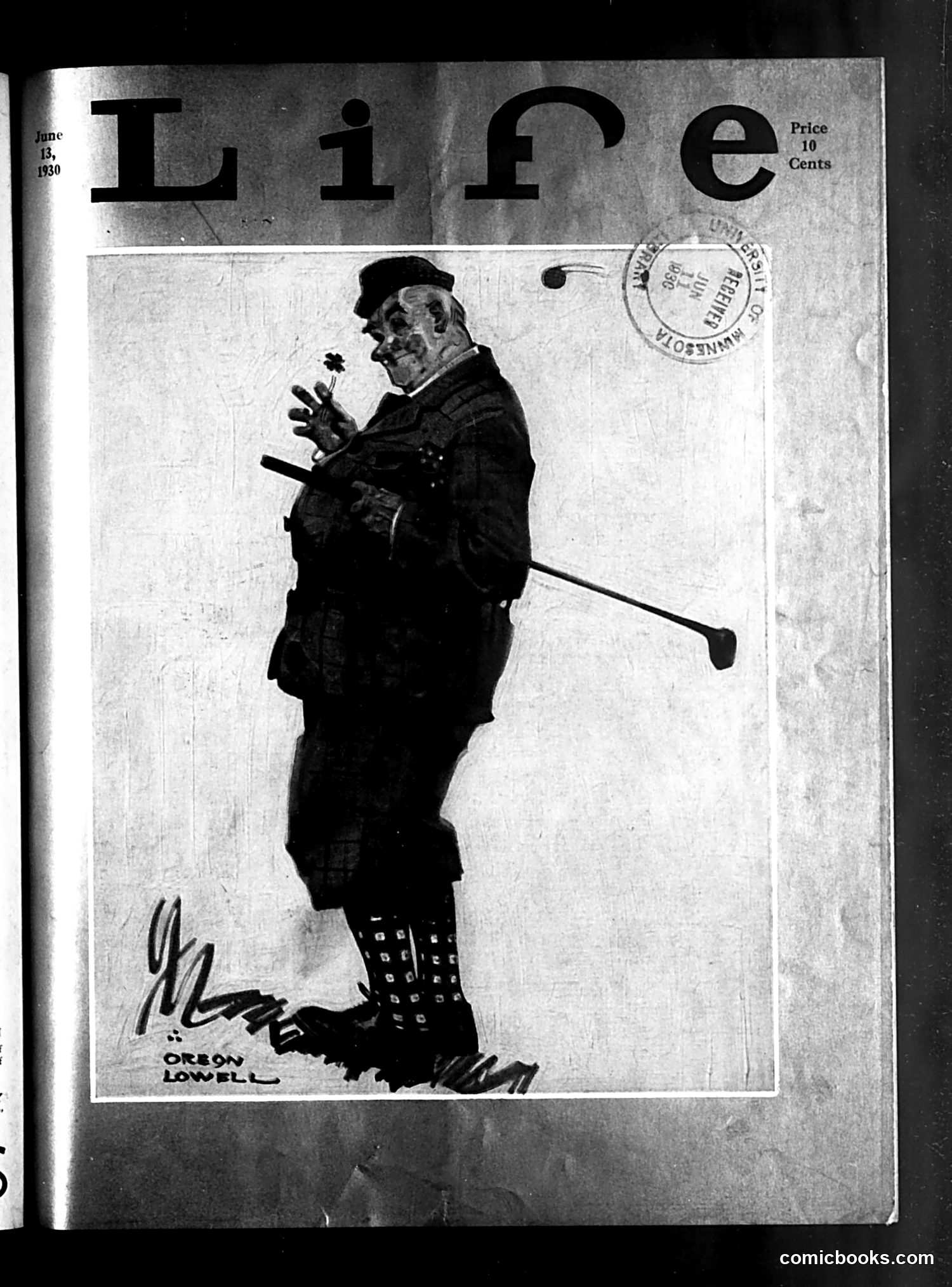
# Life Magazine Cover Analysis, June 13, 1930 This is a cover illustration by Cesare Lowell depicting an elderly golfer in formal attire (jacket, knickers, checkered socks) mid-swing with a golf club. He appears distressed or startled, with flowers or some object in his other hand. Without additional context from the magazine's interior, the specific identity of this figure remains unclear. However, the cartoon likely satirizes a prominent public figure of 1930—possibly a politician or wealthy businessman—through the juxtaposition of formal dignity with an undignified moment or circumstance on the golf course. Golf was commonly used in satire to represent leisure, wealth, and upper-class pursuits during this era, making it an ideal vehicle for social or political commentary.
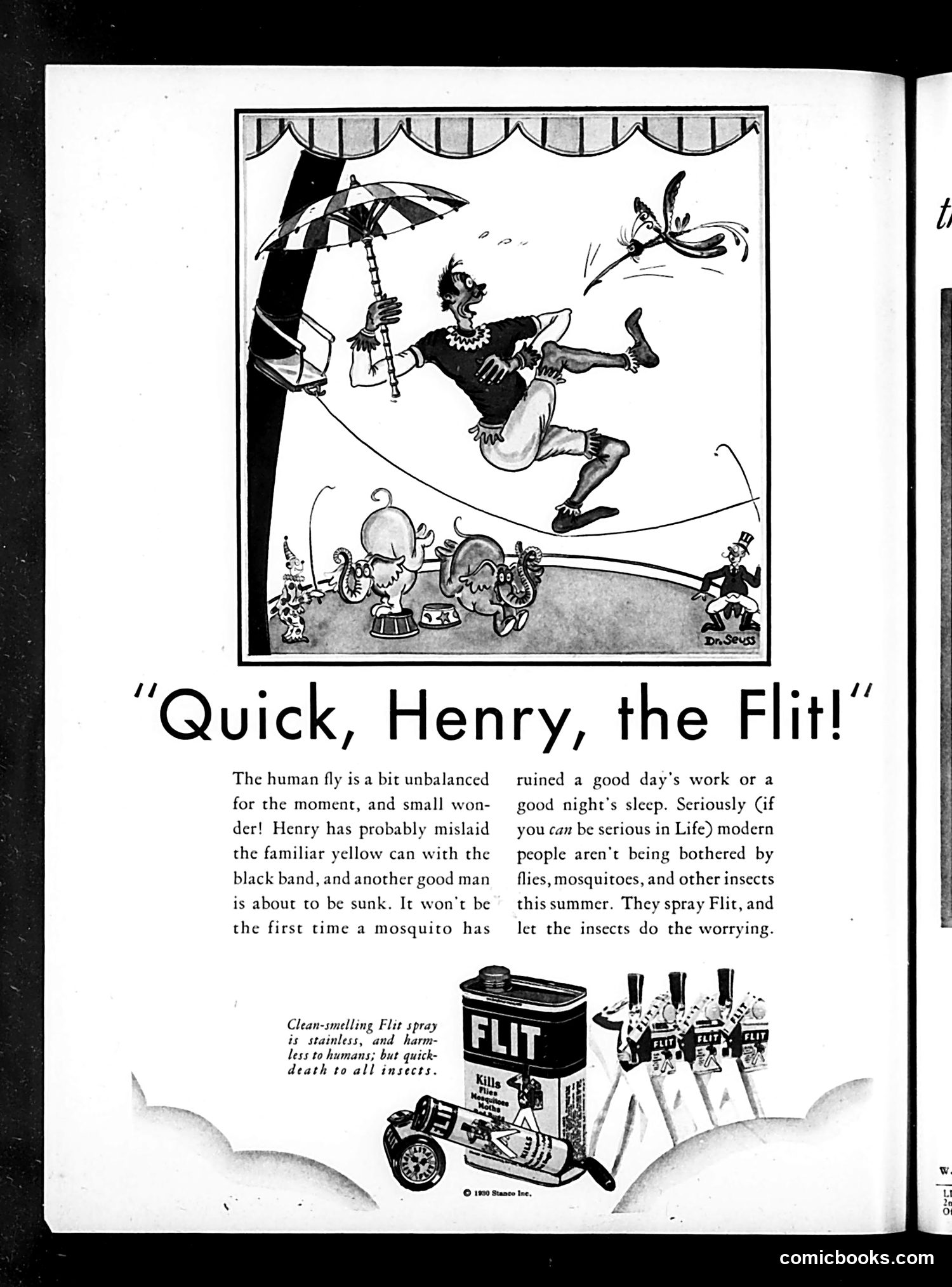
# Analysis This is a **Flit insecticide advertisement** disguised as satirical humor, not political commentary. The cartoon depicts a circus performer ("Henry") doing an acrobatic act while holding a striped umbrella, losing control as insects swarm below. The joke is visual slapstick: Henry has confused a yellow can with a black-banded one—presumably mixing up Flit spray with something else, causing chaos. The advertisement's message is straightforward: Flit spray solves a genuine summer problem. Rather than endure mosquitoes and flies ruining activities (work, sleep, outdoor events), consumers should use Flit, which is described as "clean-smelling" and "harmless to humans" while being lethal to insects. This reflects 1930s-era advertising that used humor and cartoon entertainment to promote consumer products in magazines.
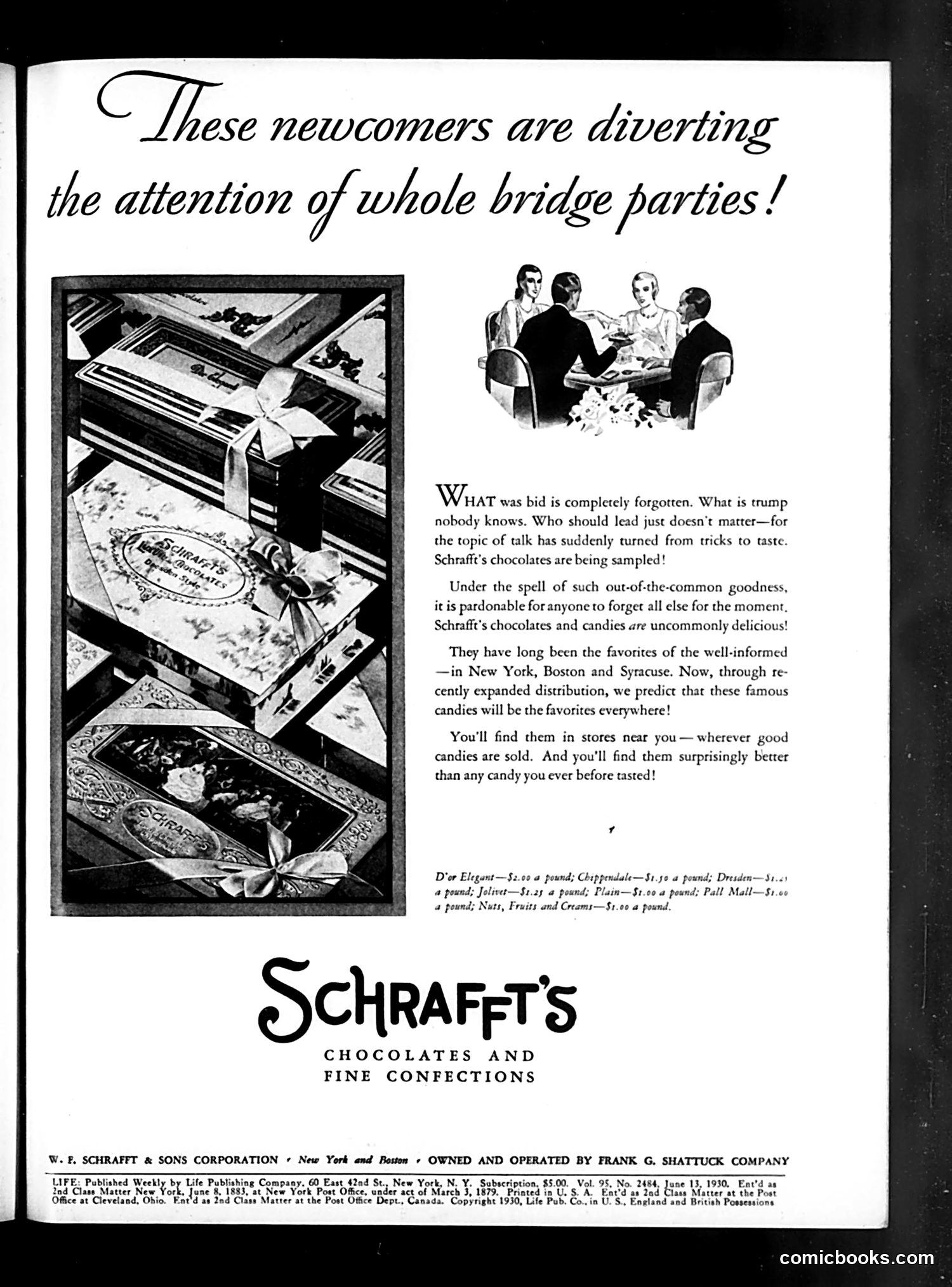
# Analysis This is primarily a **Schrafft's chocolate advertisement**, not political satire. The page shows luxury candy boxes and depicts a bridge party (a popular card game social gathering) being disrupted by the introduction of Schrafft's chocolates. The humor is gentle and commercial: the ad claims these "newcomers" are so delicious they completely distract bridge players from their game—"What was bid is completely forgotten." The joke is that Schrafft's candies are irresistibly good, causing social disruption at genteel gatherings. The ad emphasizes that Schrafft's were previously available only in New York, Boston, and Syracuse, but expanded distribution now makes them available nationwide. This reflects early-to-mid 20th-century consumer culture, targeting affluent audiences who played bridge and could afford premium chocolates.
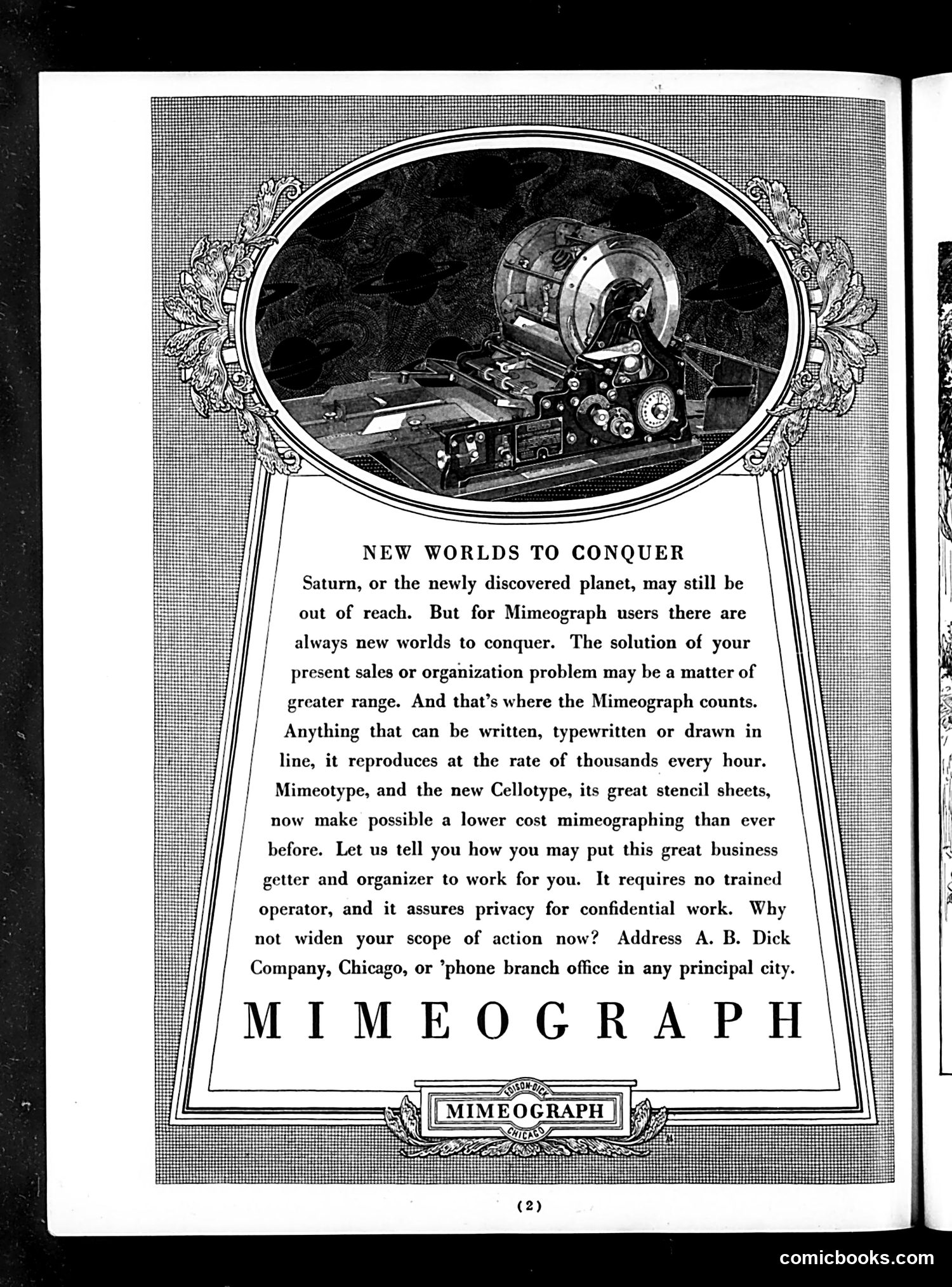
# Analysis This is an advertisement for the Mimeograph, a duplicating machine. The ad uses satirical language to sell the device to businesses. The heading "NEW WORLDS TO CONQUER" references astronomical discovery (mentioning Saturn), creating a metaphor: just as explorers seek new planets, businesses should "conquer" new organizational challenges using the Mimeograph. The image shows the machine itself—an early 20th-century copying device capable of reproducing written, typewritten, or drawn documents at high speed ("thousands every hour"). The satire is gentle: the ad suggests the Mimeograph solves business problems as dramatically as discovering new worlds. It emphasizes practical benefits—no trained operators needed, confidentiality, lower costs—while maintaining grandiose language about "widening your scope of action." This is straightforward product advertising using hyperbolic rhetoric common to the era.
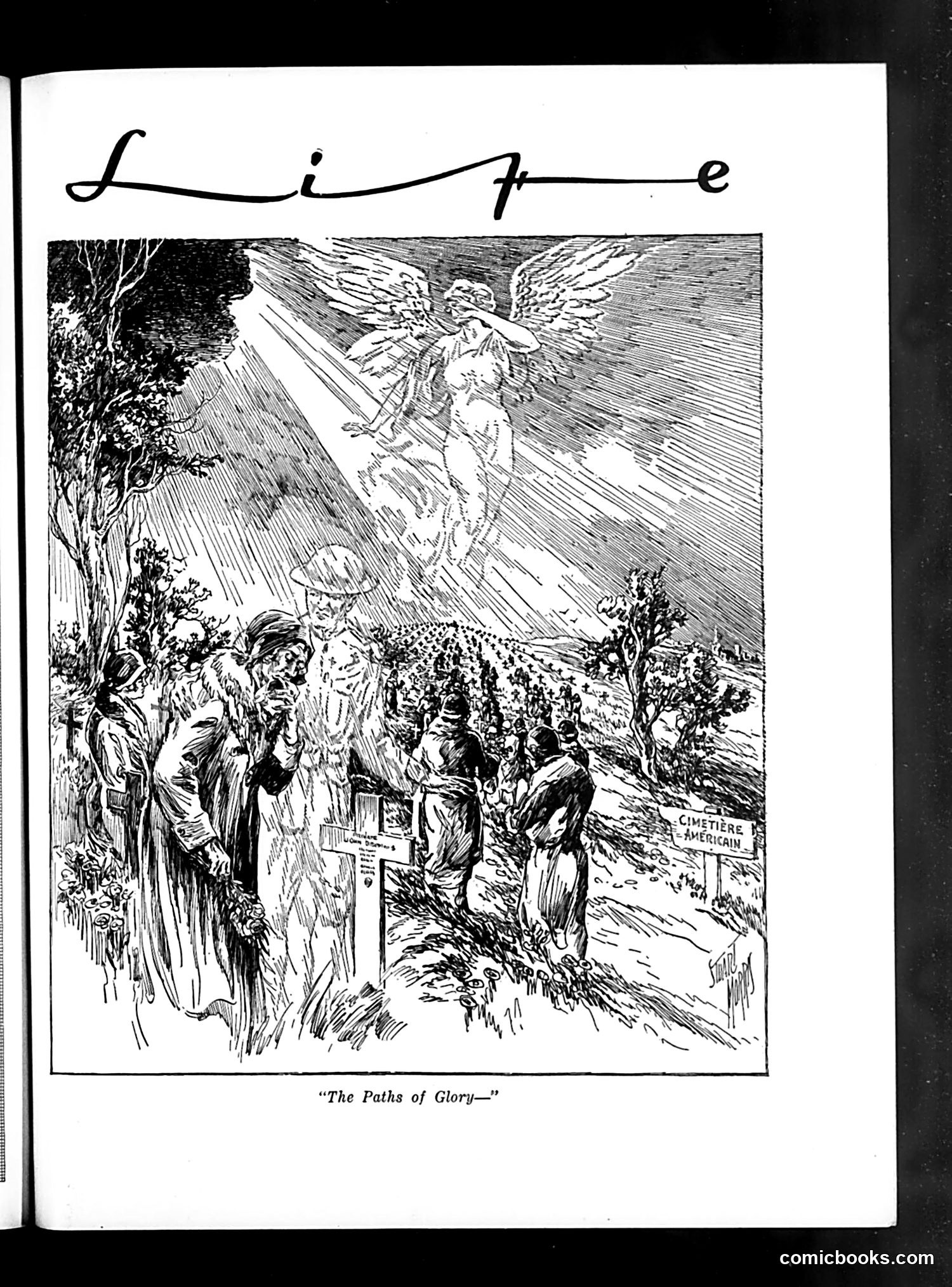
# "The Paths of Glory" This illustration depicts a cemetery scene labeled "Cimetière Américain" (American Cemetery), showing mourners visiting graves. An angel hovers above, radiating divine light downward. The title "The Paths of Glory" appears to reference the famous line from Thomas Gray's poem about how "the paths of glory lead but to the grave." The satire likely comments on American casualties during World War I, contrasting the grandiose rhetoric of military glory with the sobering reality of death and mourning in a foreign cemetery. The celestial imagery suggests attempted spiritual consolation for the fallen, while the earthly scene emphasizes loss. This reflects anti-war sentiment or critique of war's human cost prevalent in American publications during the WWI era.
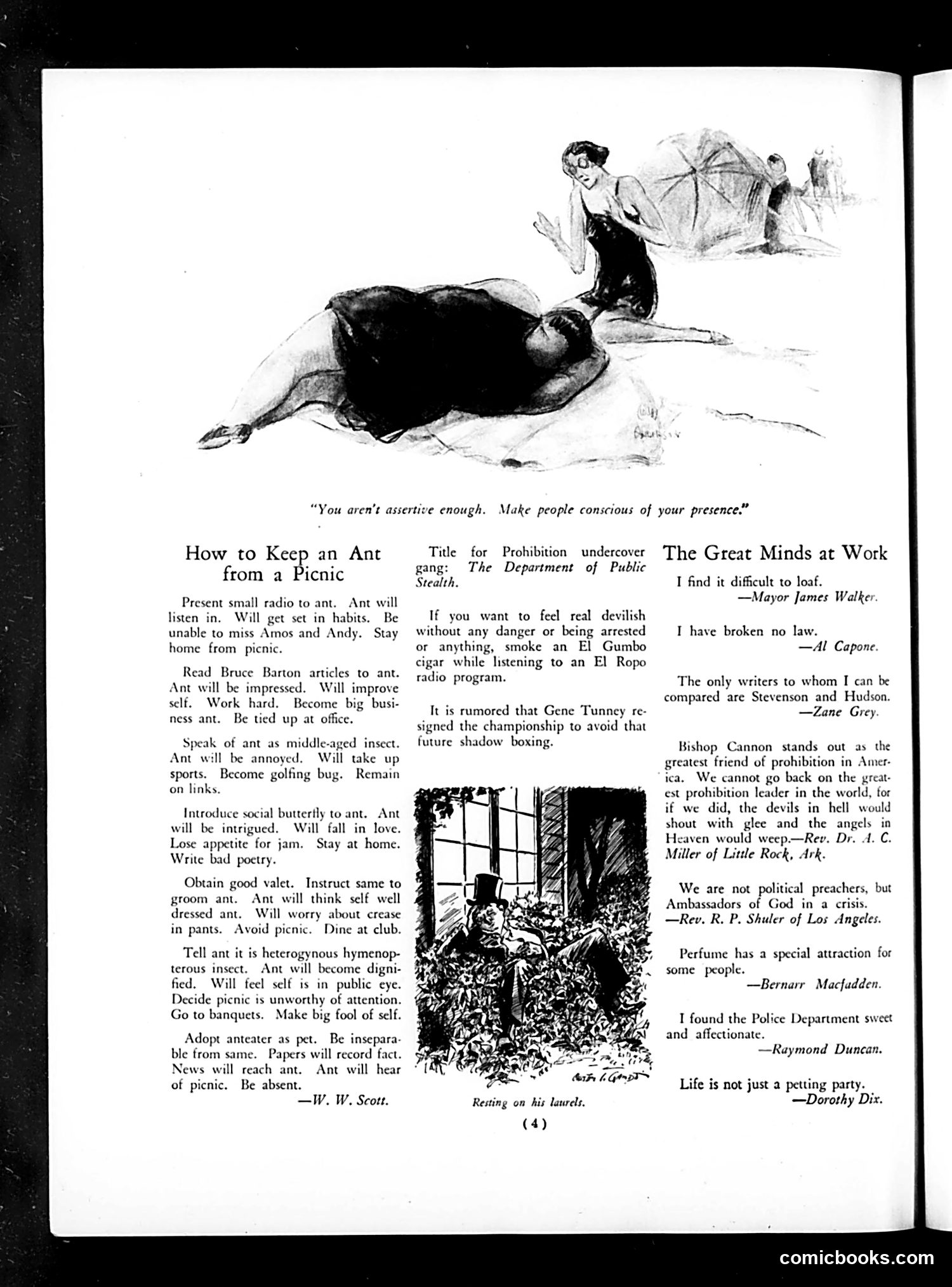
# Prohibition-Era Satire This page mocks Prohibition (the ban on alcohol, 1920-1933) through absurdist humor. The top cartoon shows a woman using an umbrella while a man lies sprawled on the beach—illustrating the satirical advice column "How to Keep an Ant from a Picnic," which uses ant metaphors as thinly veiled references to Prohibition enforcement. The column jokingly suggests ways to annoy an ant (i.e., a Prohibition agent/cop), implying readers should make law enforcement's job difficult. It's dark satire: adopt an anteater as a pet, tell the ant it's "heterogenous," stay away from picnics entirely. The right side features quotes from famous figures praising Prohibition, likely presented ironically to contrast with the page's mocking tone. The overall message: Prohibition is absurd and worth circumventing.
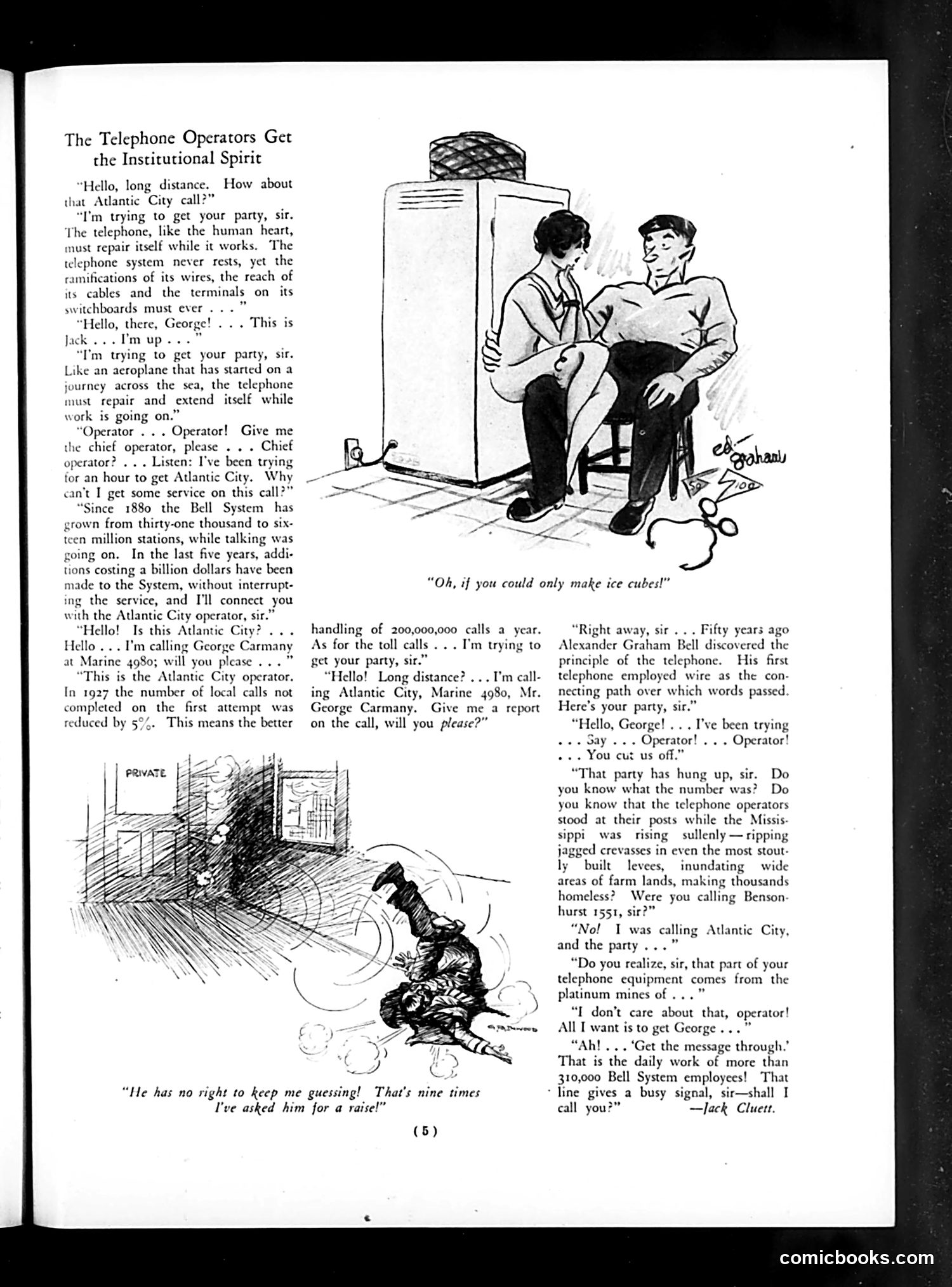
# "The Telephone Operators Get the Instructional Spirit" This satirical piece critiques the Bell System's customer service training and operational demands around 1925. The text presents fictional conversations between increasingly frustrated callers and operators, highlighting the gap between corporate ideals and reality. The top cartoon shows a couple relaxing while an operator works, captioned "Oh, if you could only make ice cubes!" — mocking how operators were expected to perform miracles beyond their actual capabilities. The bottom cartoon depicts an operator drowning in paperwork and chaos, captioned "He has no right to keep me guessing! That's nine times I've asked him for a raise!" — sardonically illustrating operator frustrations with wages and working conditions despite corporate demands for ever-better service and call handling efficiency.
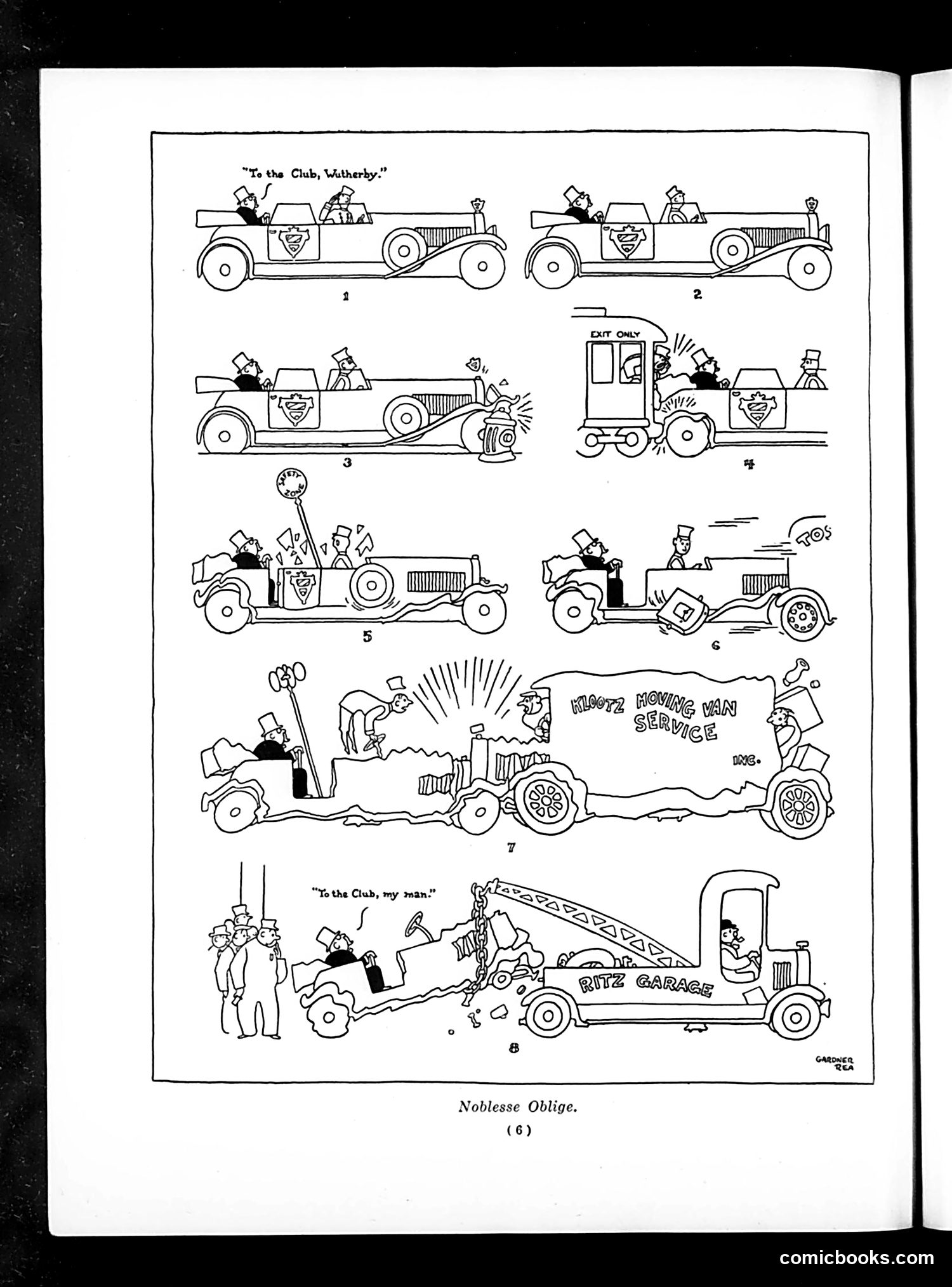
# "Noblesse Oblige" This is a humorous eight-panel comic strip about wealthy club members ("To the Club, Wetherby") getting a car to the garage. The sequence shows increasingly chaotic mishaps: the vehicle breaks down, catches fire, crashes into a "Ritz Morning Van Service" truck, and finally ends up being towed to "Ritz Garage" in pieces. The title "Noblesse Oblige" (the obligation of the privileged to act honorably) satirizes upper-class incompetence and entitlement. The wealthy passengers remain oblivious and composed throughout disasters, while service workers must manage the mess. The joke mocks how the privileged assume others will clean up their problems—a social commentary on class disparity and the servants' burden.
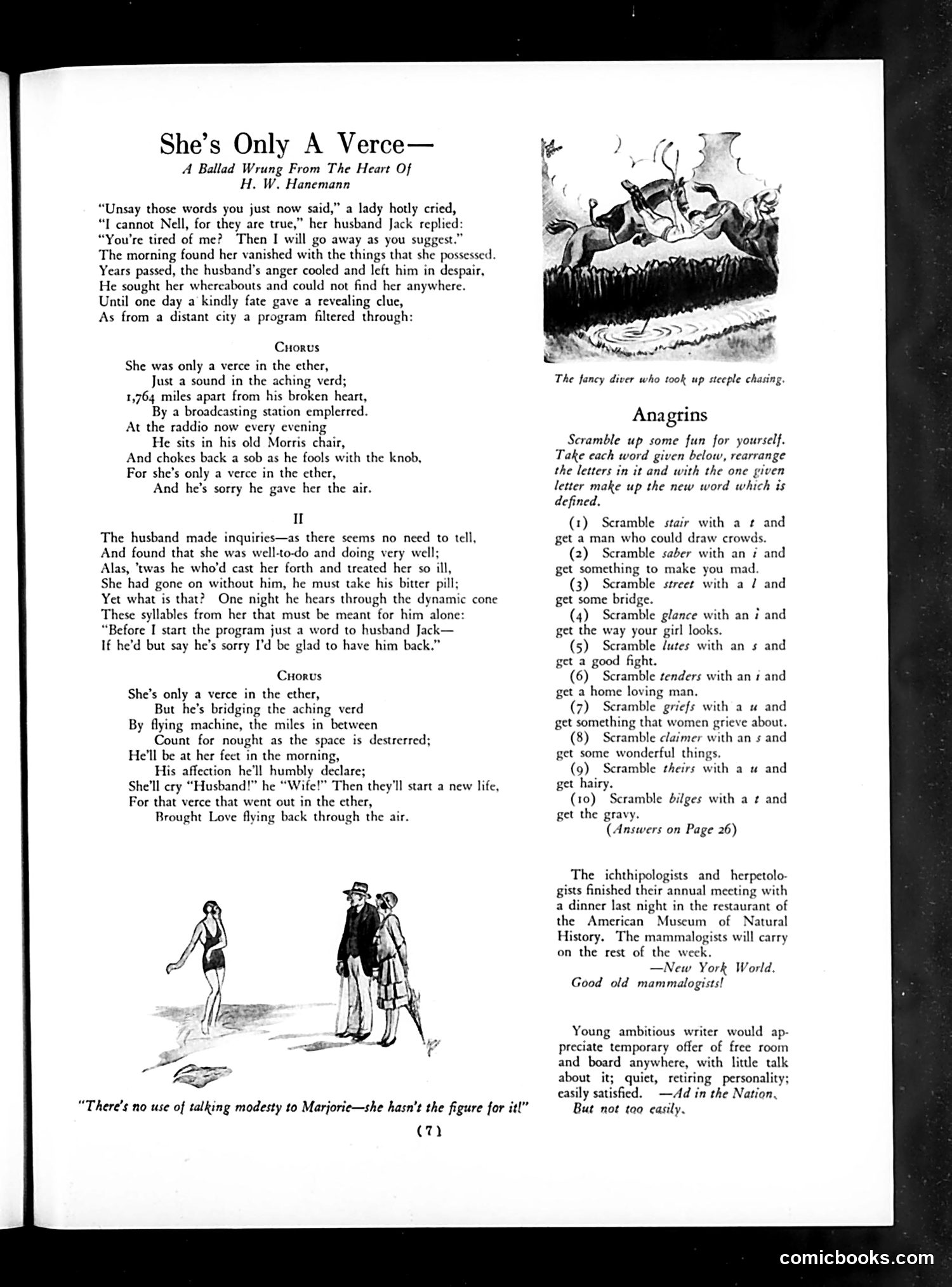
This page features "She's Only A Verse," a ballad by H.W. Hanemann about a husband and wife separated by distance. The story is told through verse and chorus: a wife leaves her husband; years pass as he grows bitter; he hears her voice on the radio as a singing performer 1,764 miles away. The chorus emphasizes their separation through broadcasting technology. The narrative resolves with hope for reconciliation. The cartoon at bottom shows a couple on a beach with the caption "There's no use of talking modesty to Marjorie—she hasn't the figure for it!" This is straightforward social satire mocking female body-shaming and appearance standards of the era. The page also contains word puzzles and brief news items typical of Life magazine's satirical miscellany.
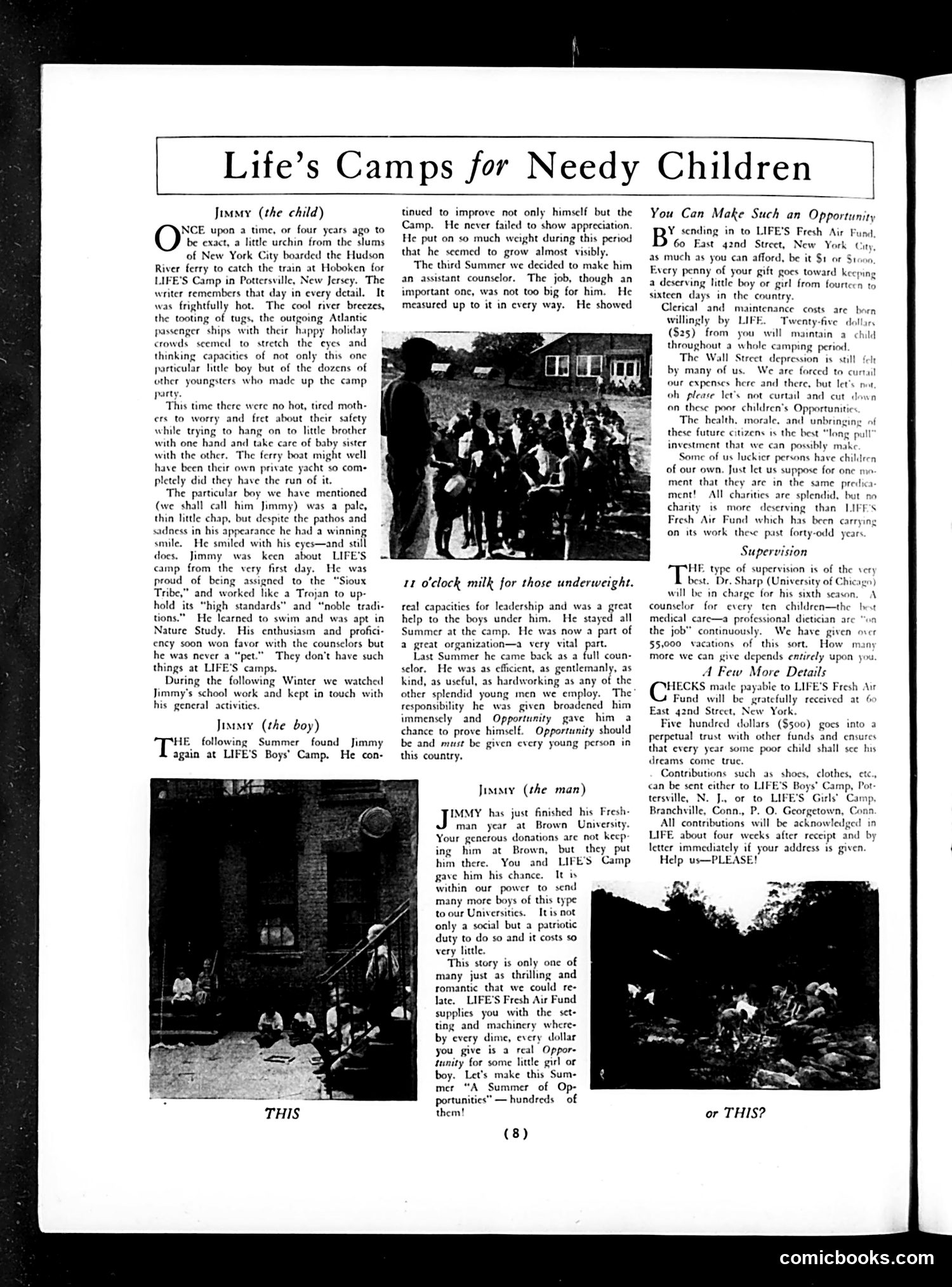
# Life's Camps for Needy Children This is **not a cartoon or satire**, but rather a earnest charitable appeal published in *Life* magazine. The page describes "Jimmy" through three life stages—as a malnourished child, teenager, and young man—to illustrate how LIFE's Fresh Air Fund camp program transforms underprivileged children. The three photographs show actual camp activities and beneficiaries. The narrative argues that donating to the fund is both a "social" and "patriotic duty," emphasizing that these camps provide supervision, medical care, and opportunity for poor urban children from New York City. This represents early-20th-century Progressive Era charitable messaging, presenting institutional aid to poor children as a moral obligation.
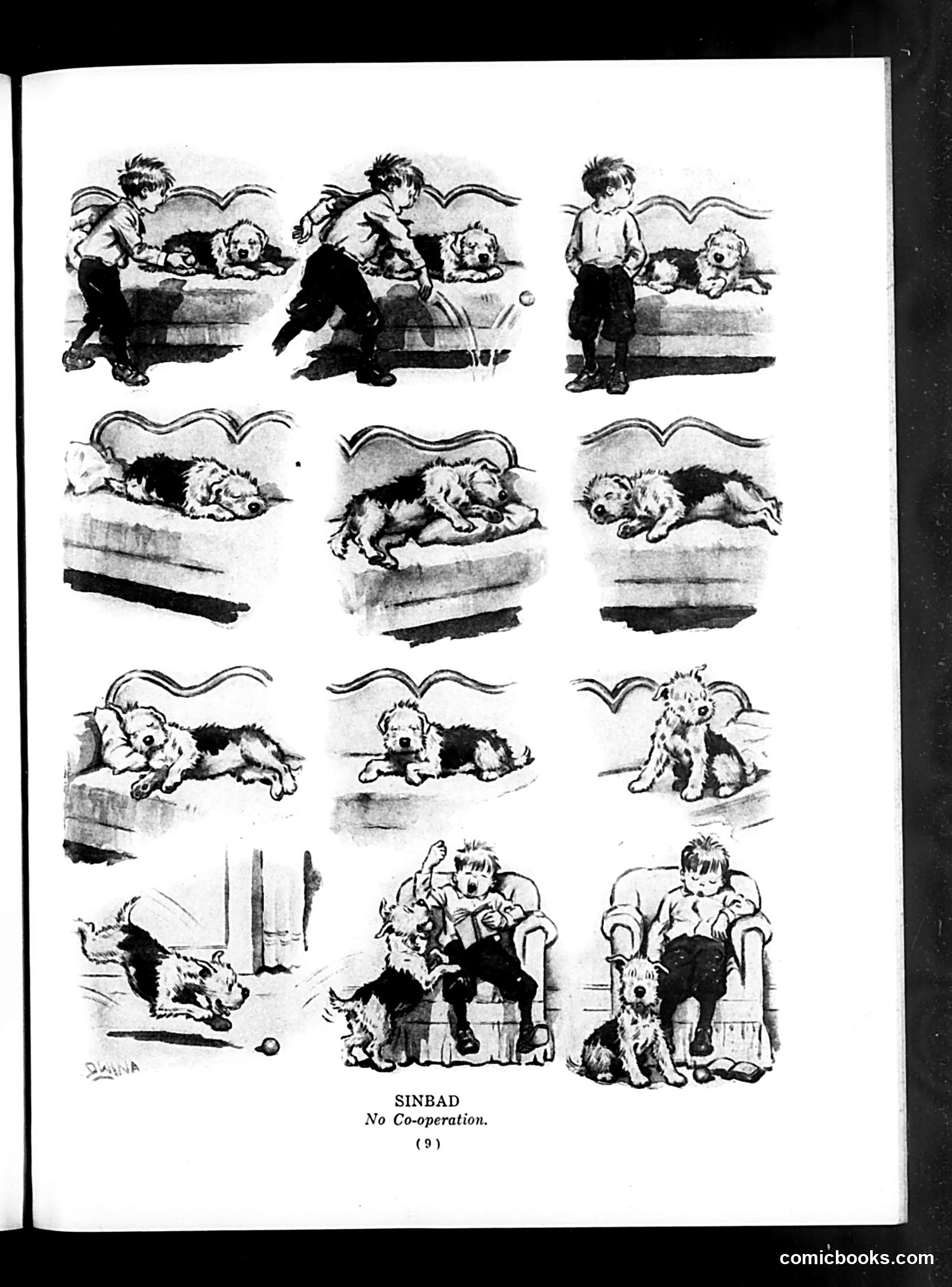
# "Sinbad: No Co-operation" This is a humorous illustrated sequence showing a boy named Sinbad attempting various activities with puppies, who refuse to cooperate. The strip progresses through nine panels depicting: - The boy trying to get puppies to sit in a basin - Attempting to make them play or perform tricks - The dogs lying down, playing, or running away instead - Finally, the boy sitting defeated with uncooperative puppies The title "No Co-operation" is the joke: the puppies consistently ignore the boy's attempts to direct their behavior. The satire likely comments on the futility of trying to control or train unruly animals—or possibly serves as a children's humor piece about the frustrations of pet ownership. The signature appears to read "Sanna."
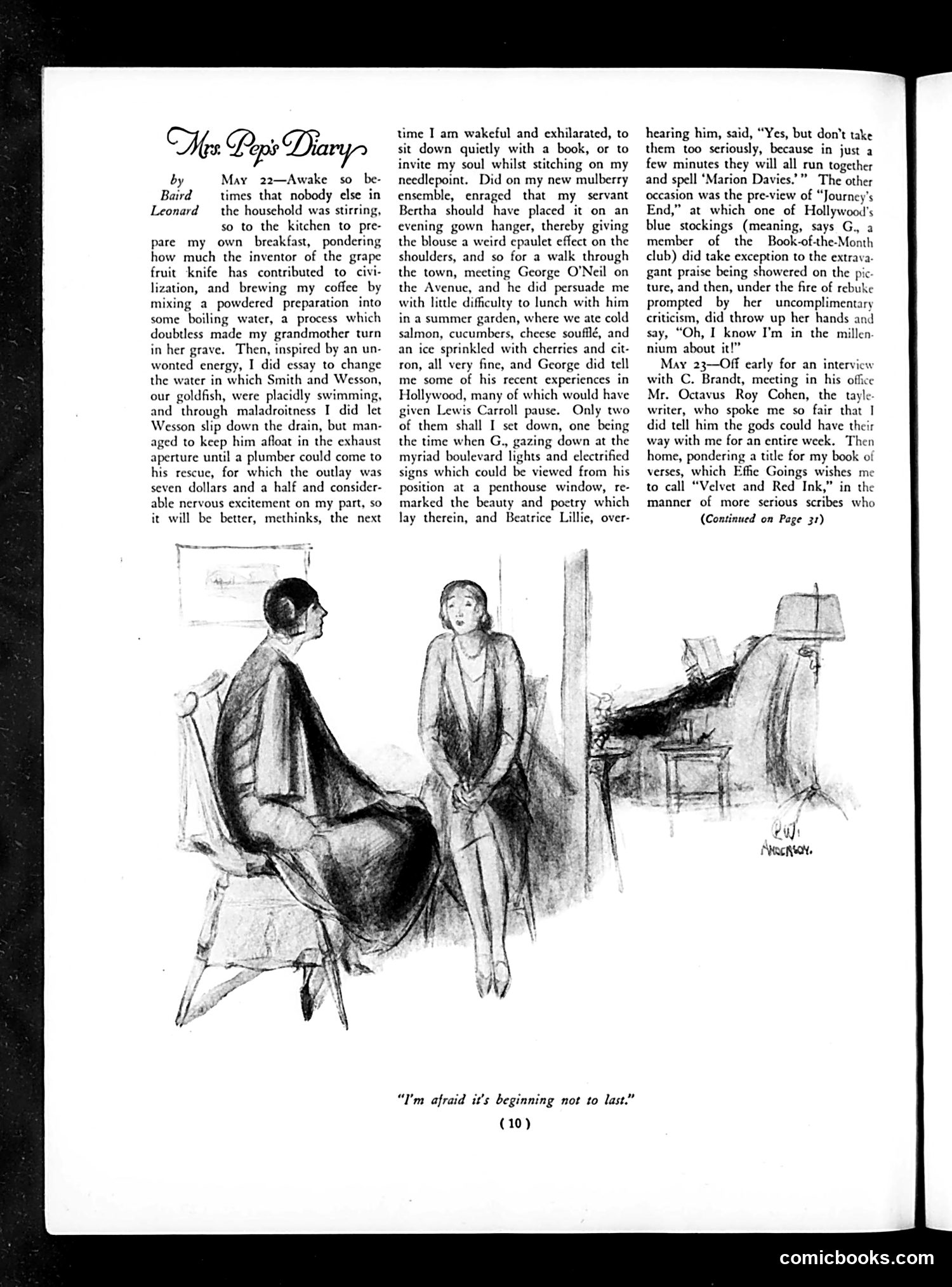
# Mrs. Pep's Diary This page presents a serialized humor column by Baird Leonard titled "Mrs. Pep's Diary," dated May 22-23. The narrative describes mundane domestic activities—entertaining guests, visiting a summer garden with George O'Neil, and preparing for interviews with a writer named Mr. Octavus Roy Cohen. The accompanying illustration depicts a woman standing before a seated man, with the caption "I'm afraid it's beginning not to last." The cartoon likely satirizes marital discord or relationship troubles, suggesting the woman is expressing concern about the durability of their relationship. The piece appears to be light domestic satire typical of early-to-mid 20th century *Life* magazine humor, targeting middle-class social conventions and relationship anxieties. The specific references to "Hollywood" and entertainment figures suggest contemporary celebrity gossip is woven throughout.