A complete issue · 40 pages · 1930
Life — June 6, 1930
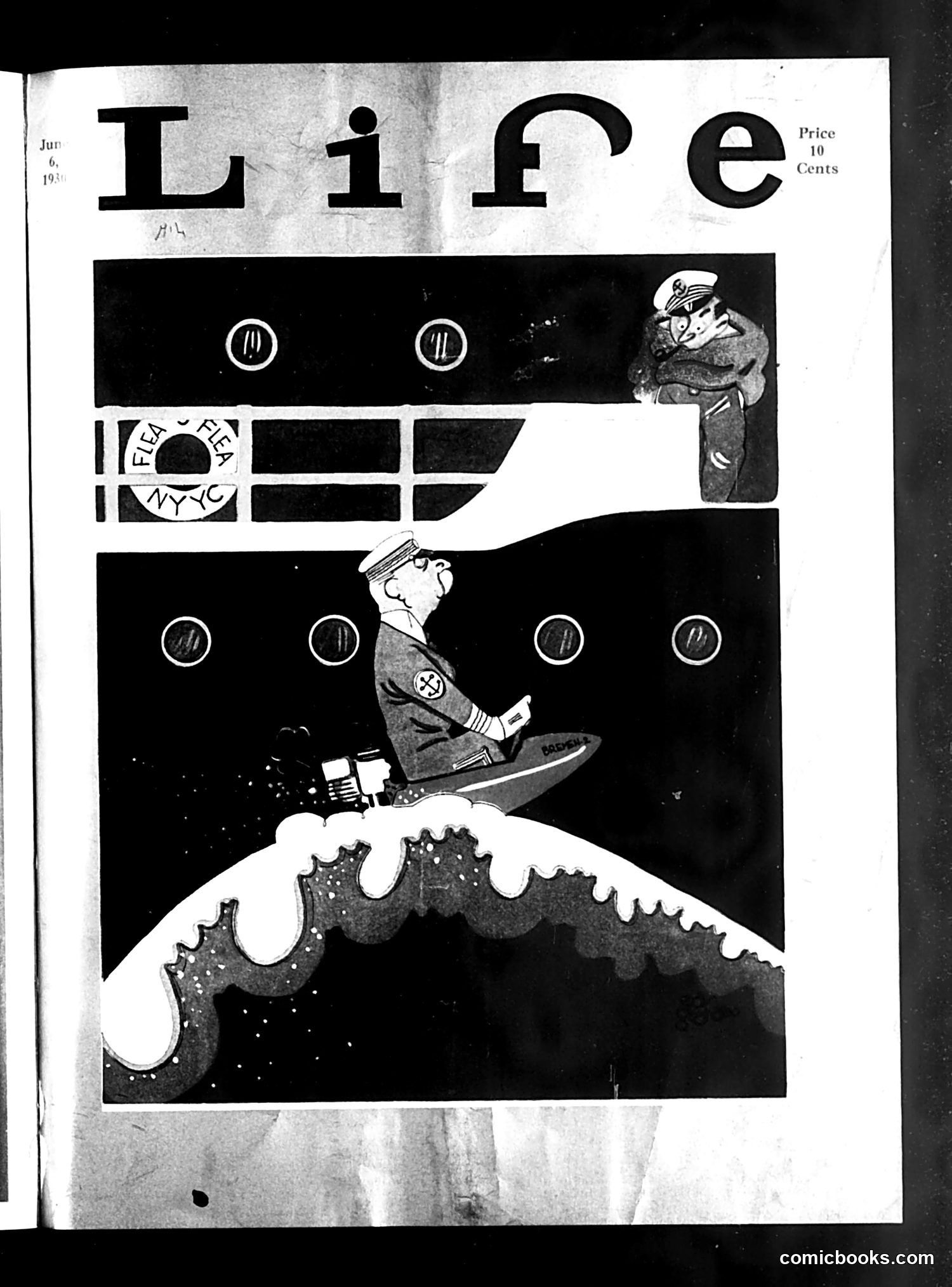
# Analysis of Life Magazine Cover This is a Life magazine cover (priced at 10 cents, dating it to the early 20th century) featuring a political cartoon. The illustration shows a figure in military uniform surfing or riding atop a large wave. The figure wears what appears to be a naval or military cap and uniform with insignia. The cartoon likely satirizes military adventure, imperial expansion, or reckless political leadership navigating turbulent international waters—a common theme in early 20th-century American satire. The wave imagery suggests dangerous or unstable circumstances. However, without visible text identifying specific individuals or events, the precise historical reference remains unclear. The style and subject matter suggest commentary on contemporary military or diplomatic affairs of that era.
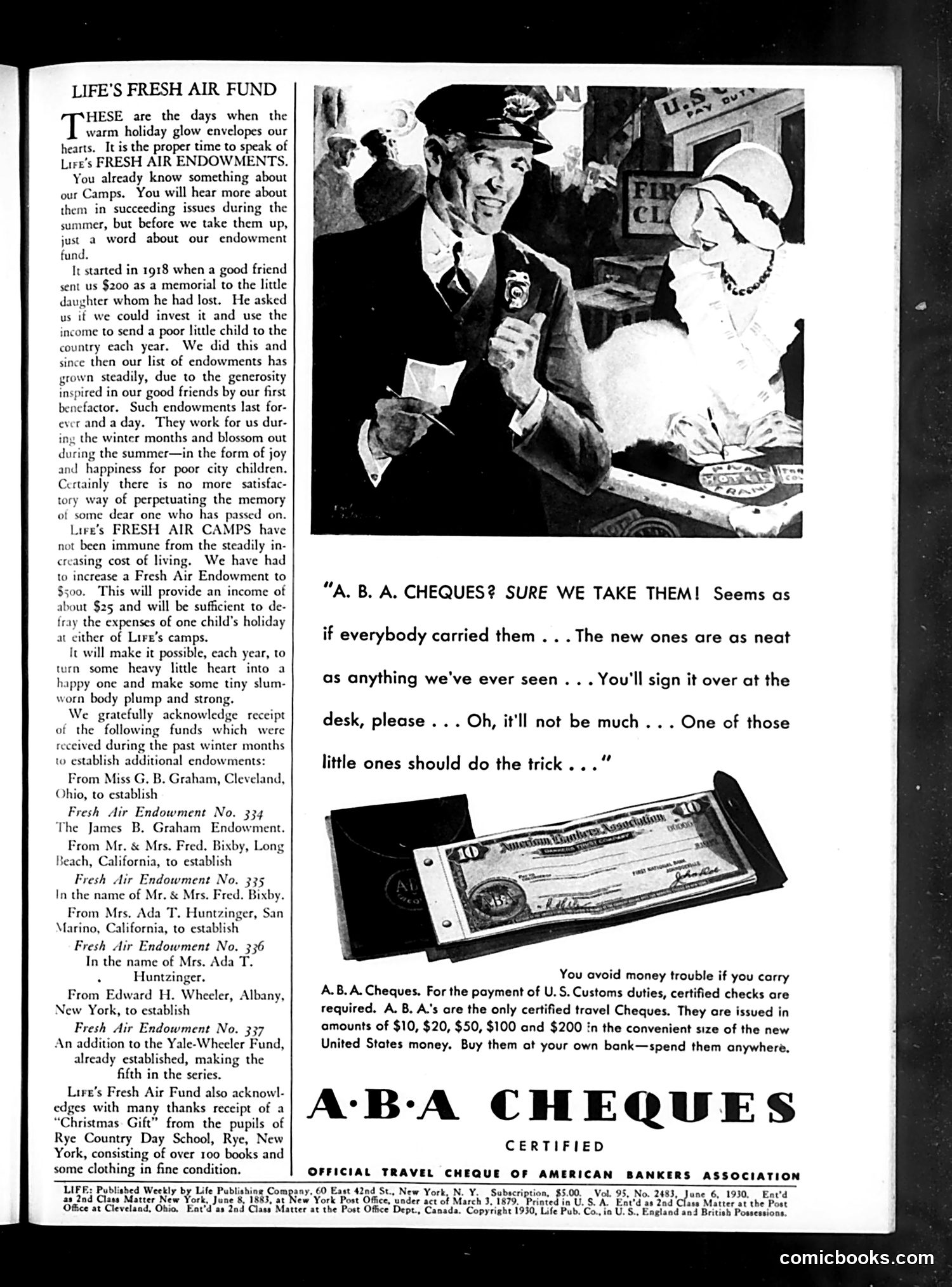
# Life Magazine Page Analysis This page combines charitable fundraising with advertising. The left column describes "Life's Fresh Air Fund," established in 1918 to send poor city children to summer camps—a genuine philanthropic initiative. The text acknowledges recent endowment increases and lists new donors. The right side advertises **A.B.A. Cheques**, traveler's checks issued by the American Bankers Association. The cartoon-style photograph shows what appears to be a street vendor or worker being offered an A.B.A. check, with copy suggesting their widespread acceptance and convenience for international travel and customs payments. The juxtaposition is not satirical but rather *contextual*: both represent American institutions serving different economic classes during the 1930s era.
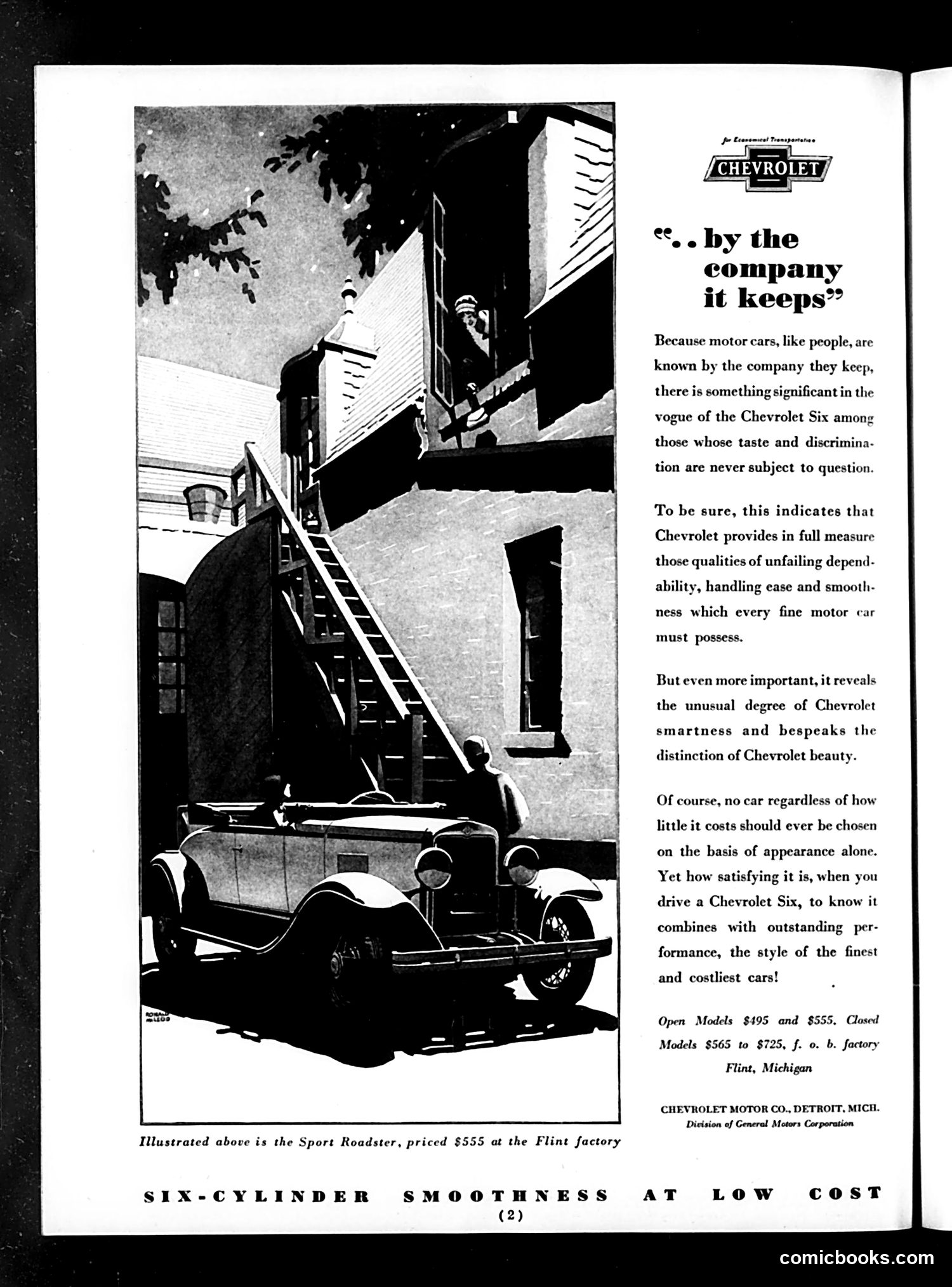
# Advertisement Analysis This is a **Chevrolet automobile advertisement**, not political satire or a cartoon. The page features a photograph of a 1920s Chevrolet Sport Roadster positioned beneath an elegant modernist building with stairs and architectural details. The ad's messaging emphasizes that "motor cars, like people, are known by the company they keep." It argues that the Chevrolet Six's presence among luxury vehicles demonstrates both quality engineering and aesthetic distinction—combining "outstanding performance" with "the style of the finest and costliest cars." The juxtaposition of the car with sophisticated architecture is meant to elevate Chevrolet's status, suggesting it belongs in refined company despite its relatively affordable pricing ($195–$725). This targets middle-class aspirations for both economy and elegance.
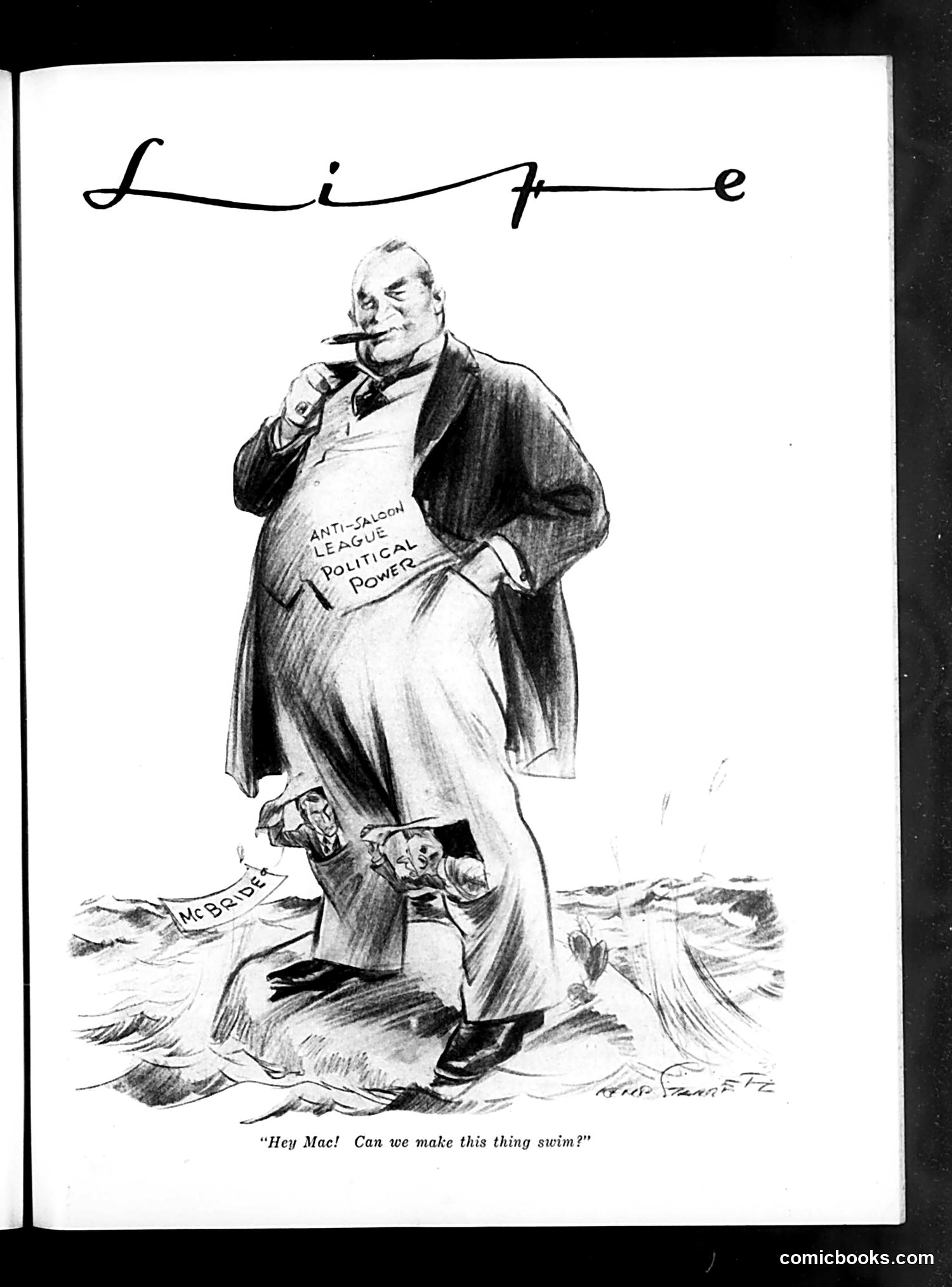
# Political Cartoon Analysis This Life magazine cartoon satirizes an older politician wearing an apron labeled "Anti-Saloon League Political Power." He holds a cigar and stands in turbulent waters marked "McBride," appearing to struggle with the situation. The caption reads: "Hey Mac! Can we make this thing swim?" The cartoon mocks the Anti-Saloon League's political influence during Prohibition era. The figure appears to represent a political leader being overwhelmed by or questioning the viability of the League's agenda. The drowning metaphor suggests the League's power is unsustainable or failing. The reference to "McBride" (likely a contemporary political figure) and the sinking situation implies criticism of those backing Prohibition-era policies. The satire targets the tension between political promises and practical failure in enforcing alcohol prohibition.
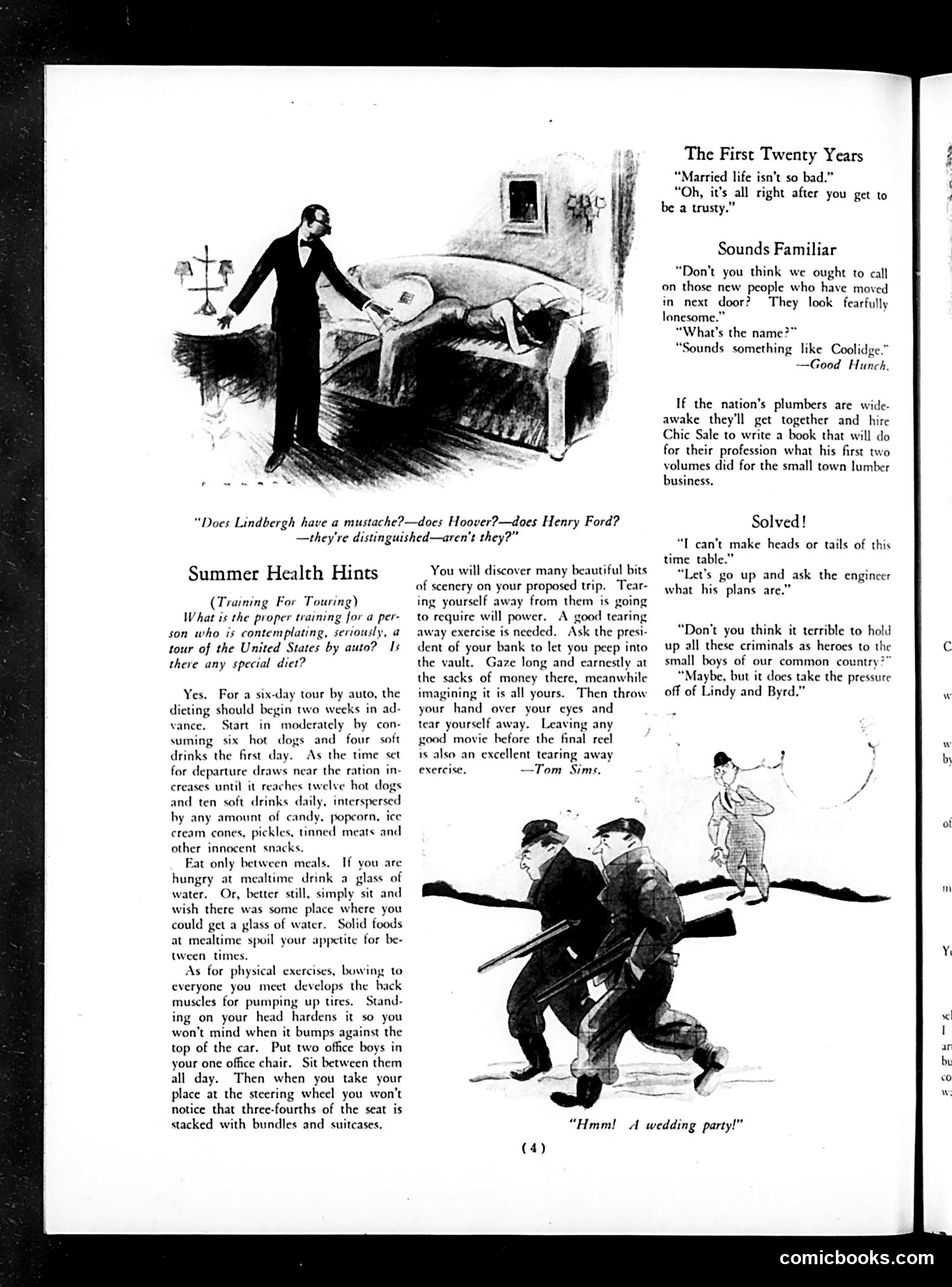
# Page Analysis This page from *Life* magazine contains three distinct satirical pieces: 1. **"Does Lindbergh have a mustache?"** — A cartoon mocking famous men's distinguishing features, likely Charles Lindbergh, Herbert Hoover, and Henry Ford. The joke plays on whether these celebrities are recognizable by their facial hair. 2. **"Summer Health Hints"** — Tongue-in-cheek advice for automobile touring, satirizing the then-novel practice of cross-country road trips. It humorously suggests absurd "training" methods and warns against excessive eating, treating auto travel as a serious athletic undertaking. 3. **"Hmm! A wedding party!"** — A cartoon showing what appears to be criminals or rough characters, making a joke about a wedding or group gathering. The page reflects 1920s-30s American culture, celebrity obsession, and the novelty of automobile tourism.
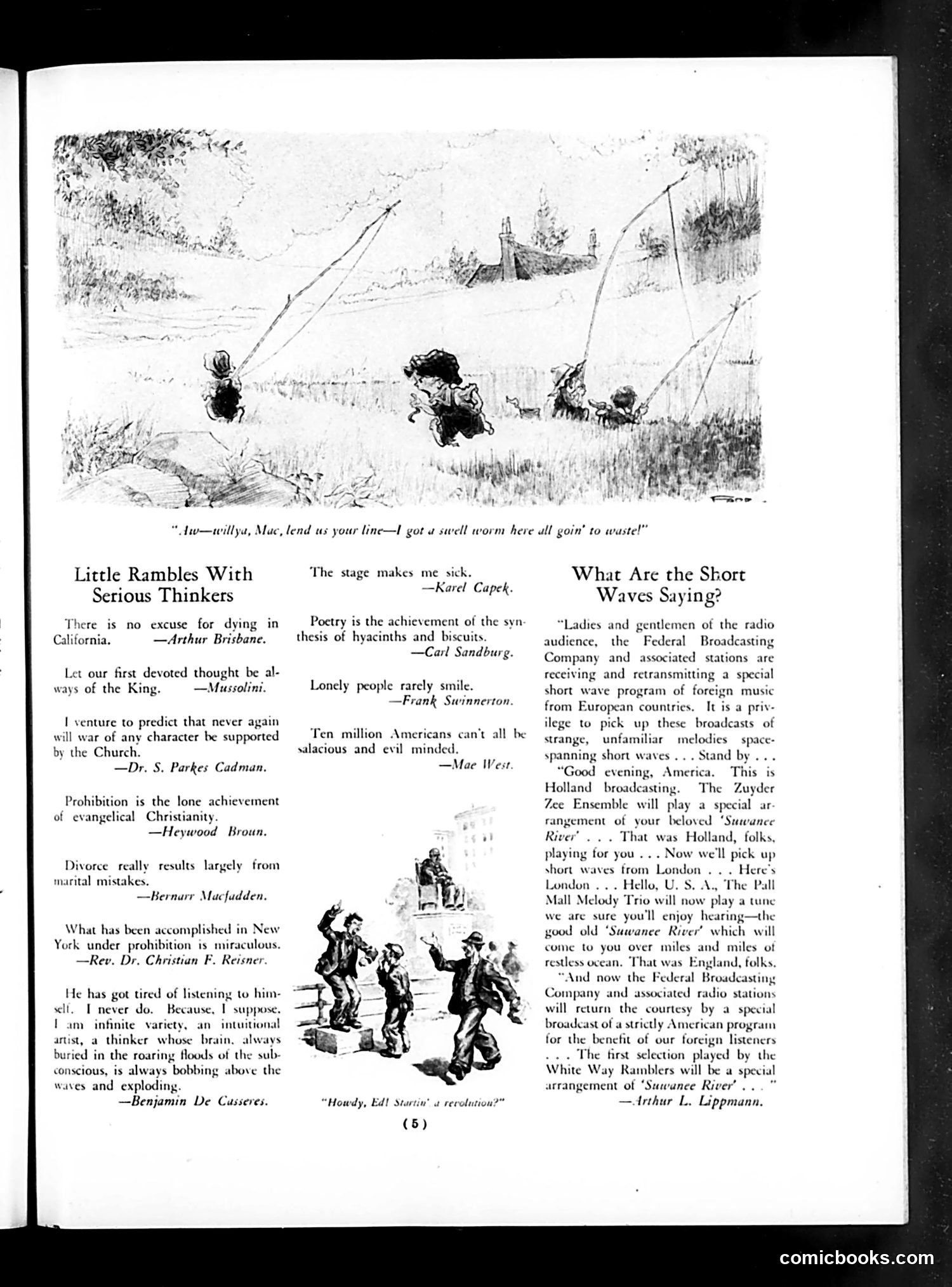
# Explanation for Modern Readers This page contains two unrelated sections: satirical quotes and radio programming commentary. **"Little Rambles With Serious Thinkers"** presents brief, often contradictory quotes attributed to public figures (Arthur Brisbane, Karel Čapek, etc.), mocking earnest social commentary. The joke is the absurdist juxtaposition—mixing serious claims about religion, divorce, and morality with deliberately vapid observations. **"What Are the Short Waves Saying?"** describes international radio broadcasts, particularly European stations broadcasting to American audiences via shortwave radio. This celebrates radio's then-novel technology for international cultural exchange. The text humorously imagines foreign broadcasters offering "Suwanee River" and other American songs to audiences across the Atlantic. The cartoons above illustrate children fishing and people dancing—lighthearted vignettes unrelated to the text below.
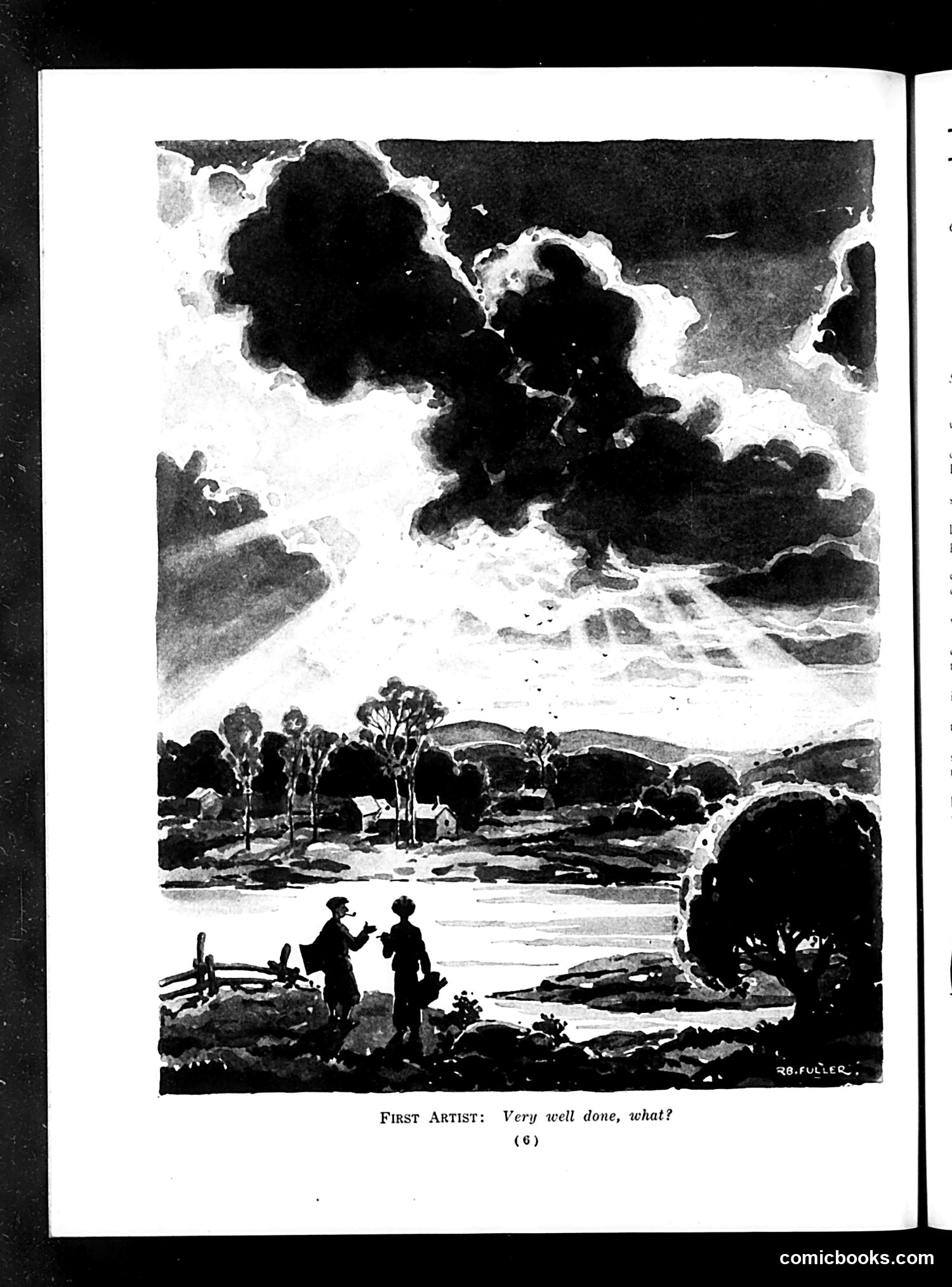
# Cartoon Analysis This is a single-panel cartoon by R.B. Fuller showing two figures standing by a riverbank, observing a landscape with trees, hills, and dramatic storm clouds. The caption reads: "First Artist: Very well done, what" (with "(6)" indicating this is part of a numbered series). The joke appears to be a play on artistic appreciation or critique. One figure (the "First Artist") is complimenting another's work—likely commenting on the natural landscape or sky as if it were a painting. The incomplete caption "Very well done, what" suggests ironic or sarcastic praise, possibly mocking pretentious art criticism or the tendency to comment on nature as though it were a created artwork. The dramatic clouds dominate the composition, making them the likely subject of the critique.
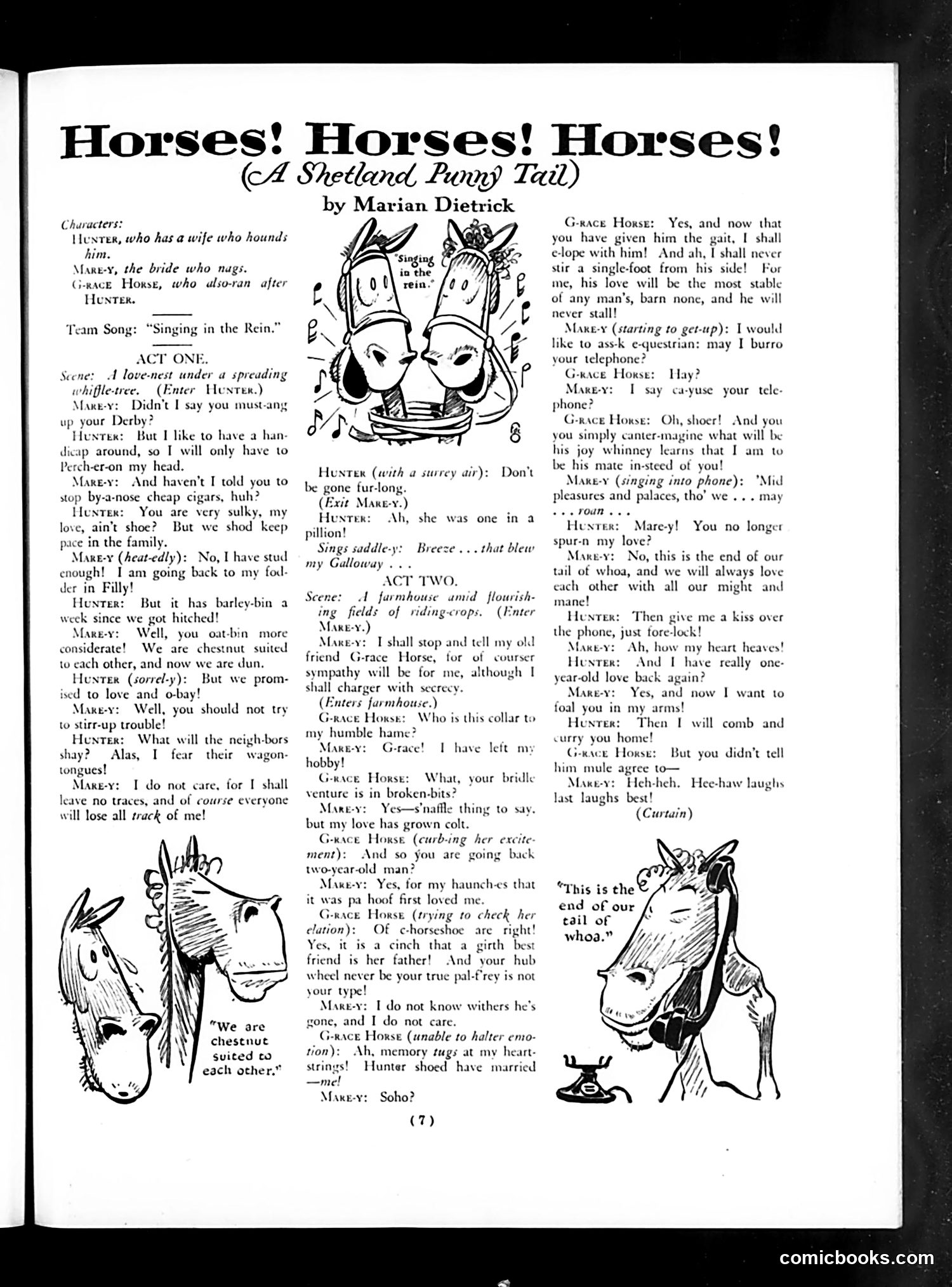
# "Horses! Horses! Horses!" - A Shetland Pony Tale This is a humorous one-act play by Marian Dietrick featuring anthropomorphic horses as characters. The plot concerns Hunter (who has a wife who hounds him) and Marey (the bride who nags). The narrative centers on their marital disputes and romantic reconciliation, with dialogue full of puns and wordplay typical of early 20th-century vaudeville humor. The satirical point appears to be gentle domestic comedy—poking fun at married couples' bickering and the clichéd "nagging wife" stereotype common in period entertainment. The Shetland pony setting provides whimsical cover for what is essentially a conventional marriage-and-reconciliation narrative. The team song "Singing in the Rein" reinforces the equine pun-heavy approach throughout.
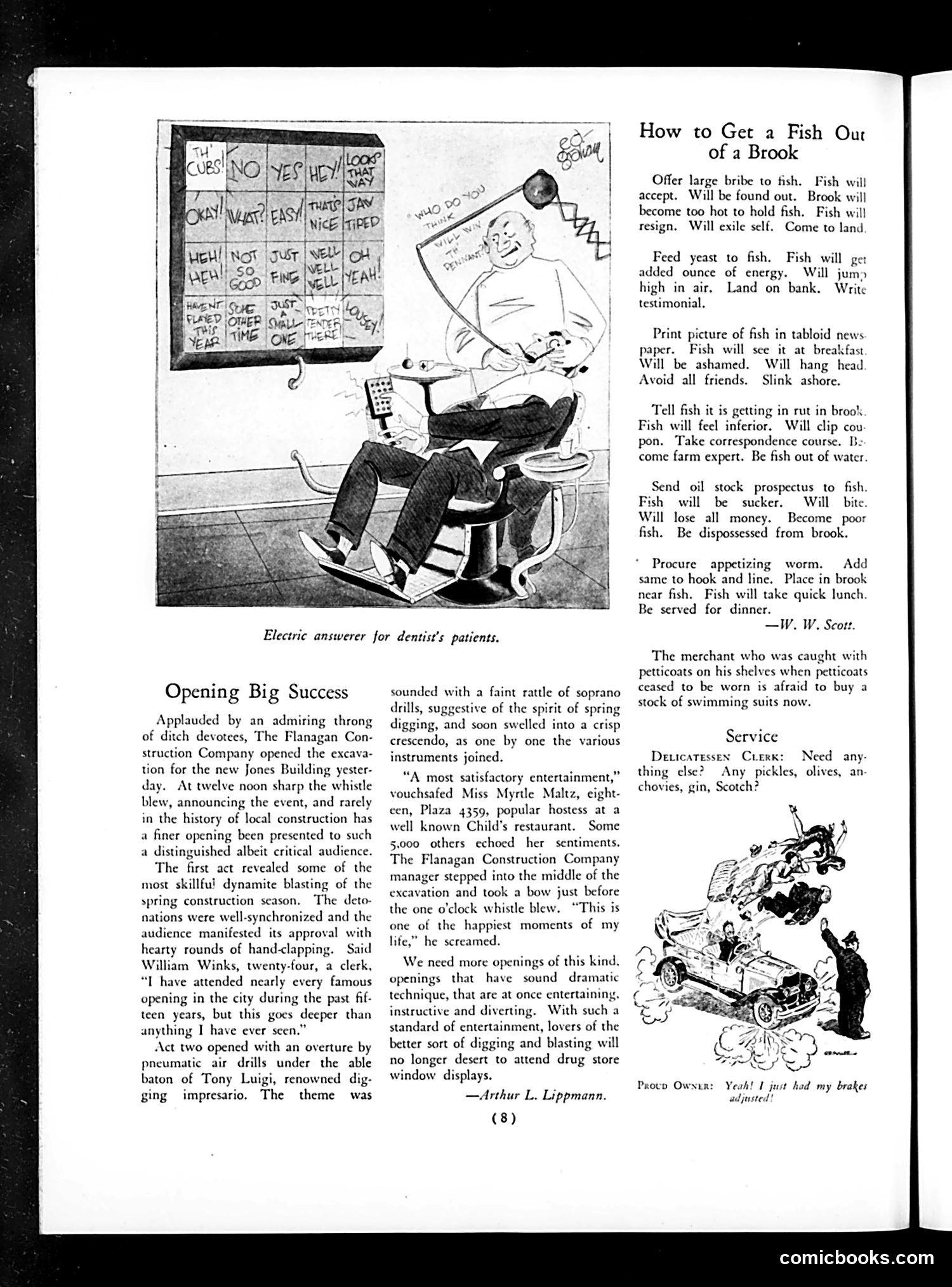
# Analysis **Top Cartoon: "Electric answerer for dentist's patients"** This is a visual gag showing a patient in a dentist's chair unable to speak normally due to dental work. The cartoon depicts an "electric answerer"—essentially an early automated response device—displaying pre-written answers to common questions (YES, NO, WAIT, THAT'S EASY, NOT GOOD, JUST SWELL, etc.). The joke satirizes both the helplessness of dental patients unable to communicate and pokes fun at emerging electrical/mechanical automation technology of the era. It's absurdist humor about trying to maintain conversation during dental procedures. **Right Column: "How to Get a Fish Out of a Brook"** A humorous mock-instructional piece offering increasingly ridiculous and counterproductive methods to catch fish—offering bribes, yeast, embarrassment tactics, and business propositions. It's satire of self-help journalism and absurd advice columns popular in magazines of this period.
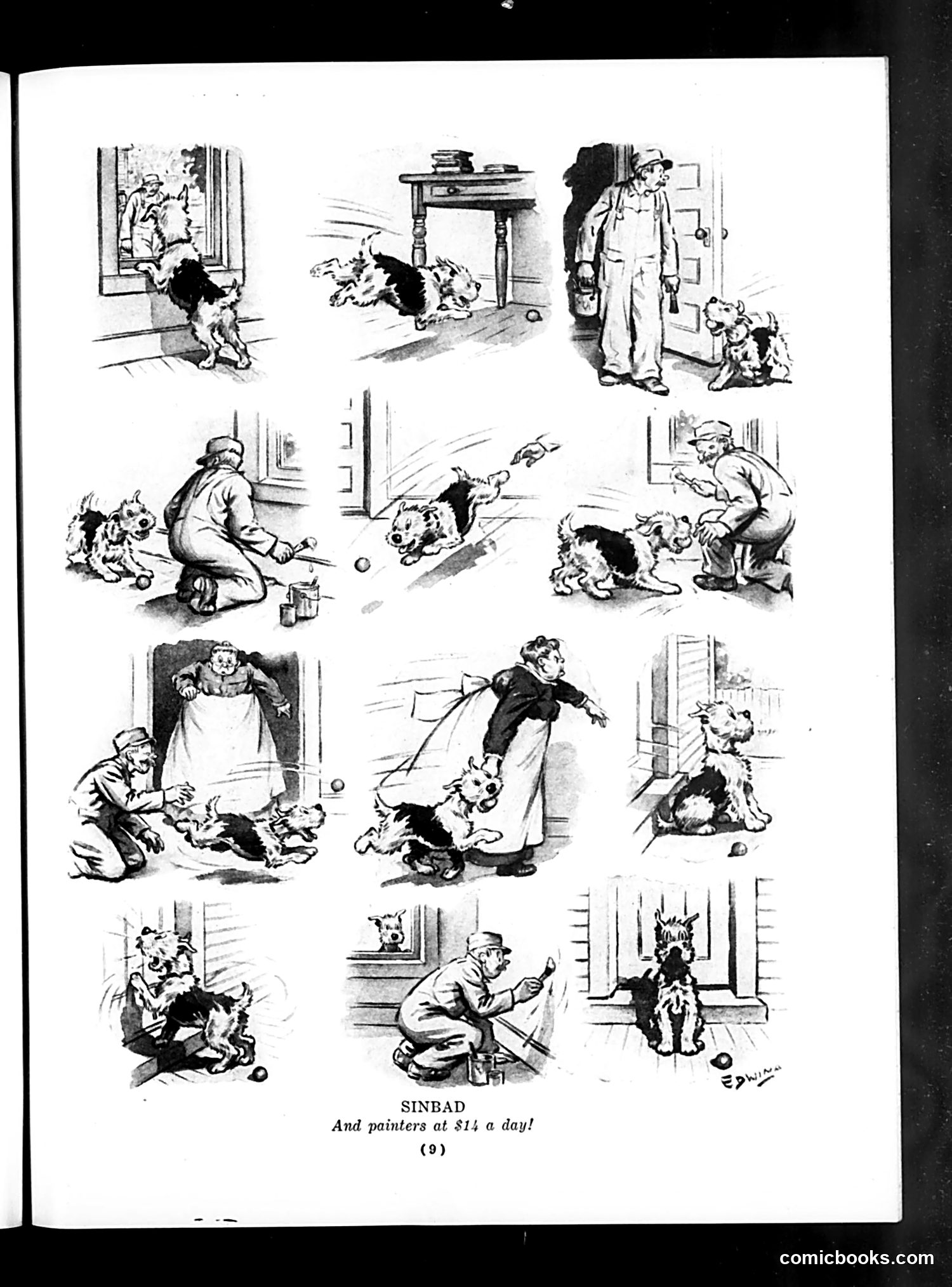
# Satire Explanation: "Sinbad and painters at $14 a day!" This is a comic strip-style sequence showing a man (appearing to be a laborer or tradesman named Sinbad) interacting with dogs in various domestic settings. The subtitle's joke plays on wage complaints: it sarcastically suggests that painters earning $14 per day—likely a substantial or controversial wage during the period this was published—are living like the legendary adventurer Sinbad with his fantastic wealth and magical encounters. The humor satirizes labor disputes and wage debates by exaggerating the comparative luxury of workers' earnings. Each panel depicts mundane domestic scenarios with dogs, contrasting sharply with the Sinbad reference, which evokes exotic adventure and riches. The satire targets either workers demanding higher wages or employers defending high wage payments as excessive.
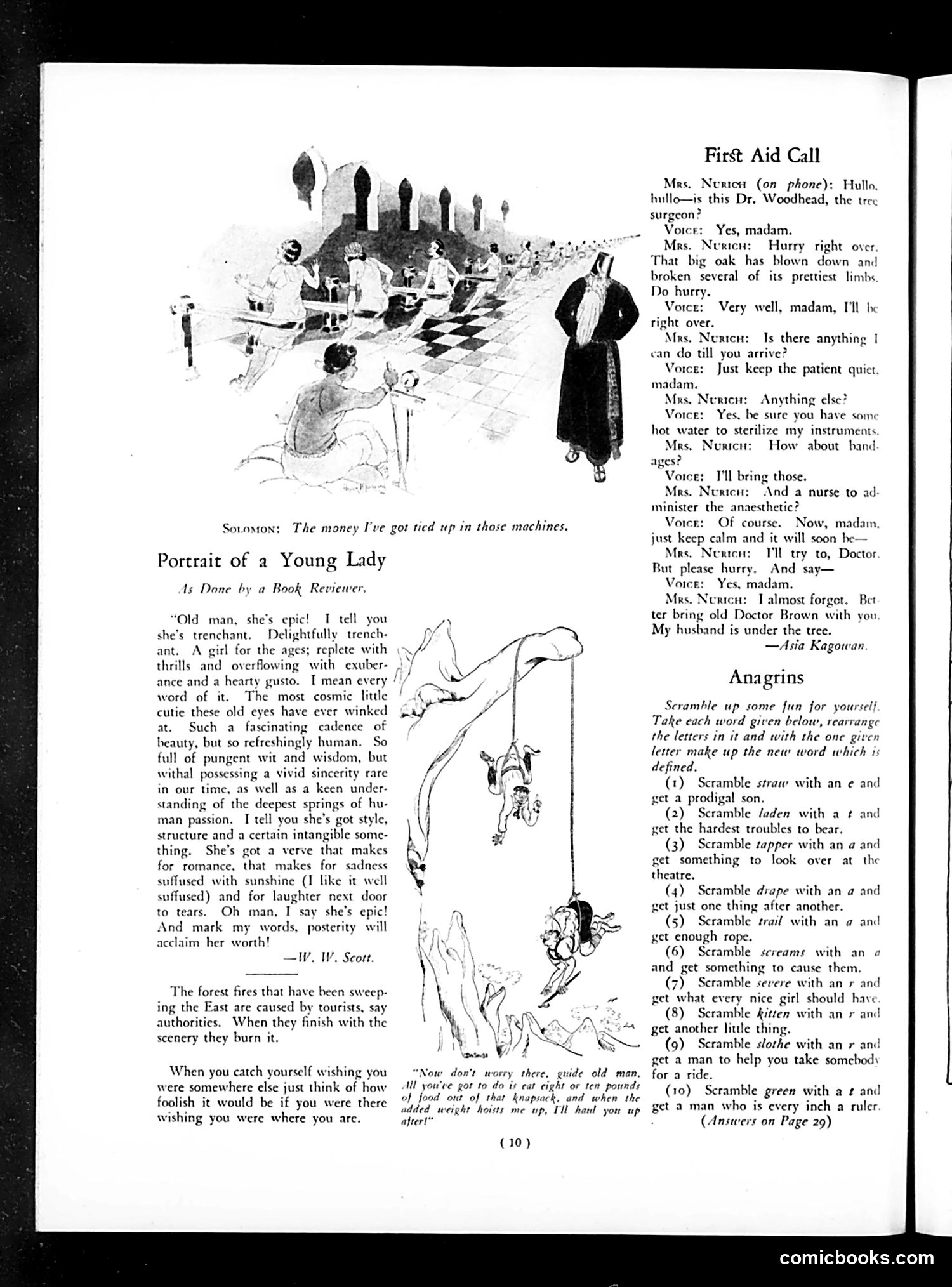
# Page Analysis This page contains three separate pieces: 1. **"First Aid Call"** (top right): A humorous dialogue between Mrs. Nureich (calling by phone) and Dr. Woodhead about a fallen oak tree. The joke depicts a wealthy woman treating tree damage as a medical emergency requiring the doctor's immediate attention—satirizing upper-class over-dramatization of minor property problems. 2. **"Portrait of a Young Lady"** (left): A literary review praising an unnamed young woman for possessing wit, charm, and romantic appeal. It's genuine flattery rather than satire. 3. **"Anagrins"** (right): A word-puzzle game asking readers to rearrange scrambled letters to form new words—a recreational feature rather than satirical content. The page primarily showcases Life's mixed editorial approach: humor targeting affluent readers' pretensions alongside literary appreciation and reader entertainment.