A complete issue · 36 pages · 1930
Life — May 30, 1930
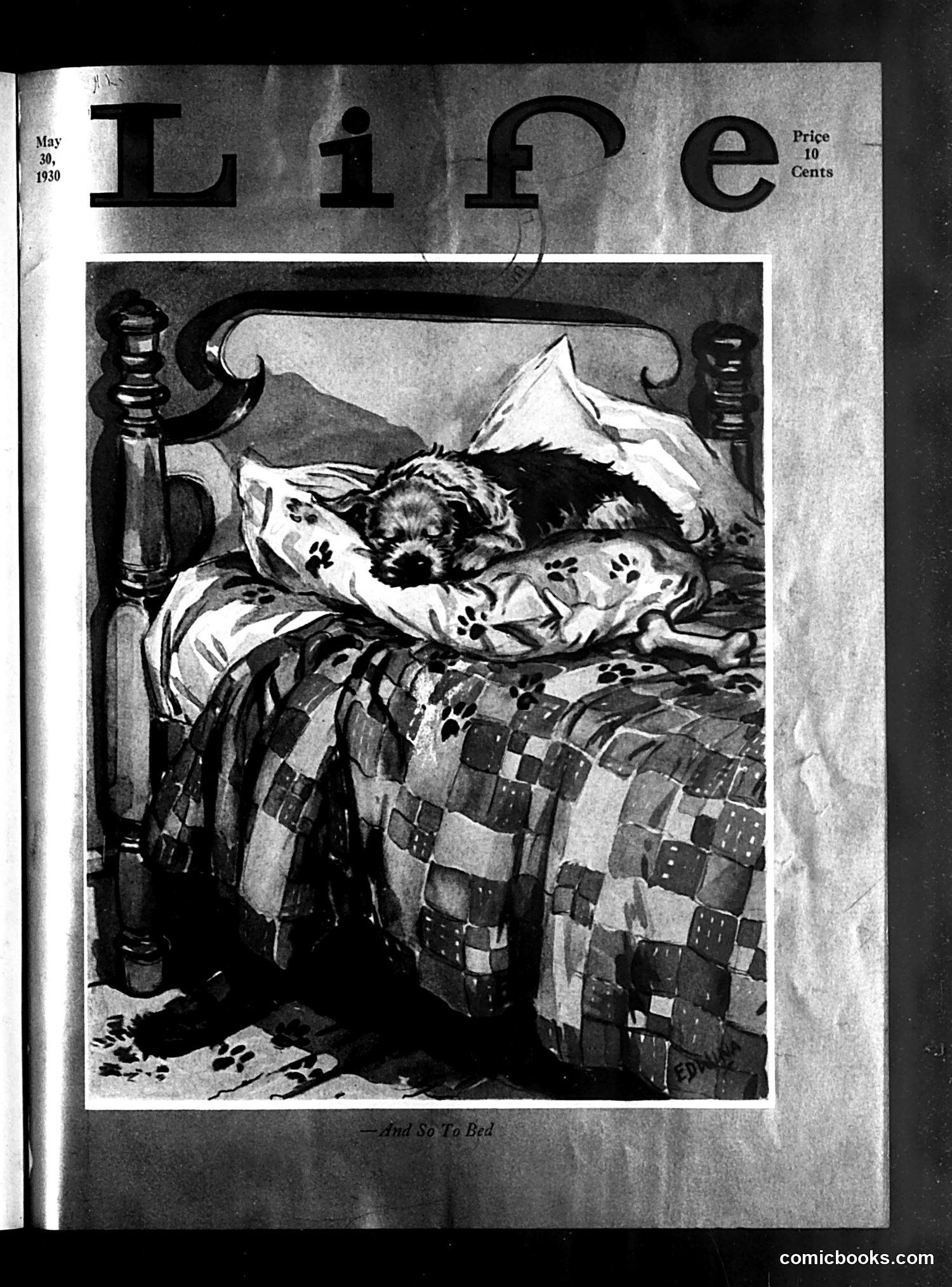
# Life Magazine Cover Analysis (May 30, 1930) This is a cover illustration titled "And So To Bed," featuring a small dog settling into an ornate bed with patterned blankets and pillows. The image appears to be a humorous domestic scene with no obvious political satire. The illustration likely reflects 1930s attitudes toward pets—specifically the trend of owners indulging their dogs with human comforts. The elaborate bedding and decorative pillows suggest affluence and sentimentality toward animals, which may have been a subtle target of gentle satire about American consumerism during the Great Depression era. Without additional text visible on this page, the specific satirical intent remains unclear, though the whimsical tone suggests commentary on pet ownership practices.
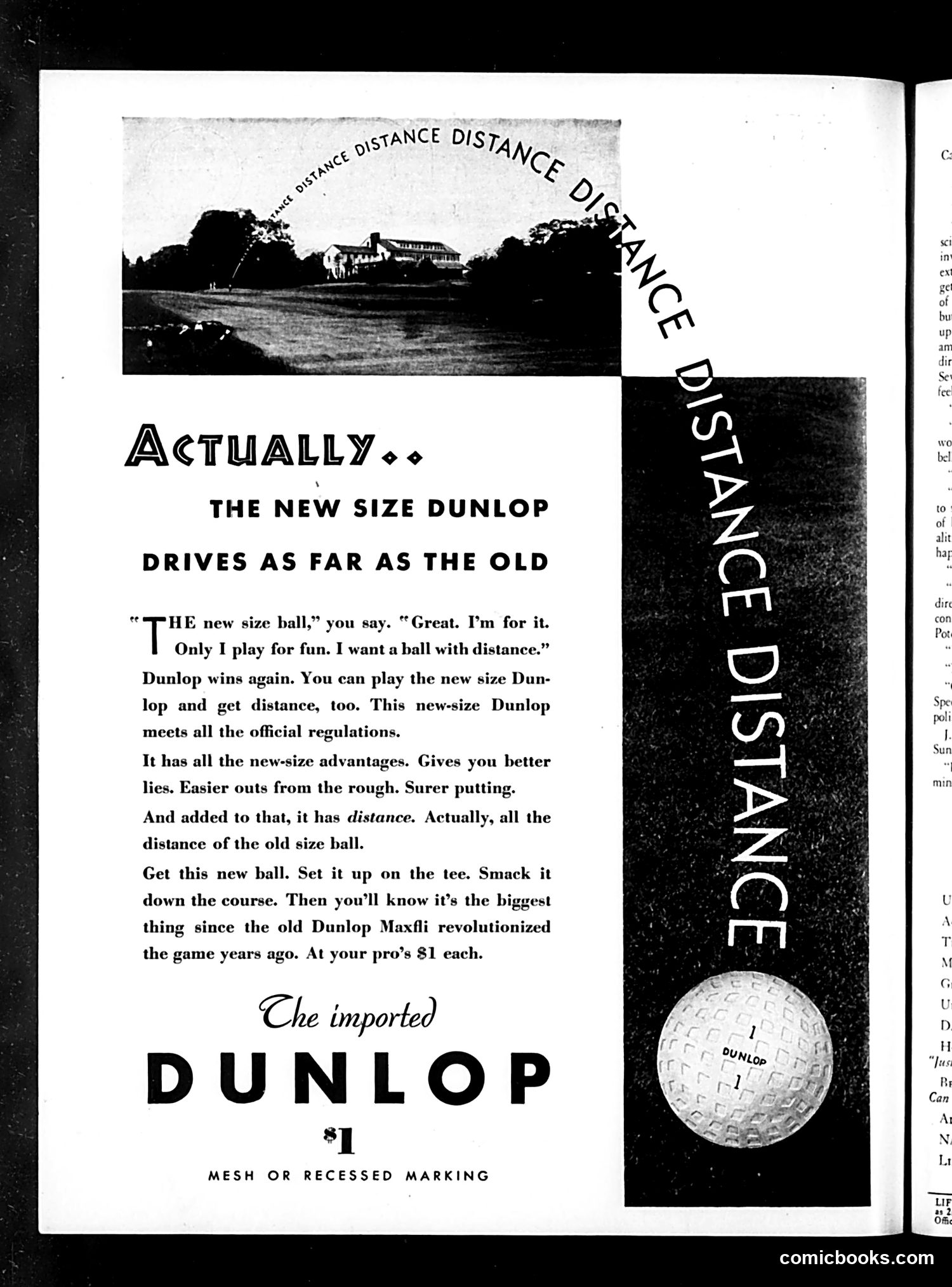
# Analysis This is a **Dunlop golf ball advertisement**, not political satire. The page promotes Dunlop's new-size golf ball, claiming it meets official regulations while delivering the distance of the older, larger ball. The "joke" (for the advertiser) is the apparent contradiction: golfers wanted distance, and the new smaller ball supposedly provides it. The ad emphasizes this paradox through the repeated phrase "DISTANCE DISTANCE DISTANCE" and the playful "Actually..." heading. The scenic photograph at top shows a golf course landscape, reinforcing the leisure/sport context. The ball image at bottom-right displays the product. This reflects 1920s-30s golf culture and equipment standardization debates—not a political commentary.
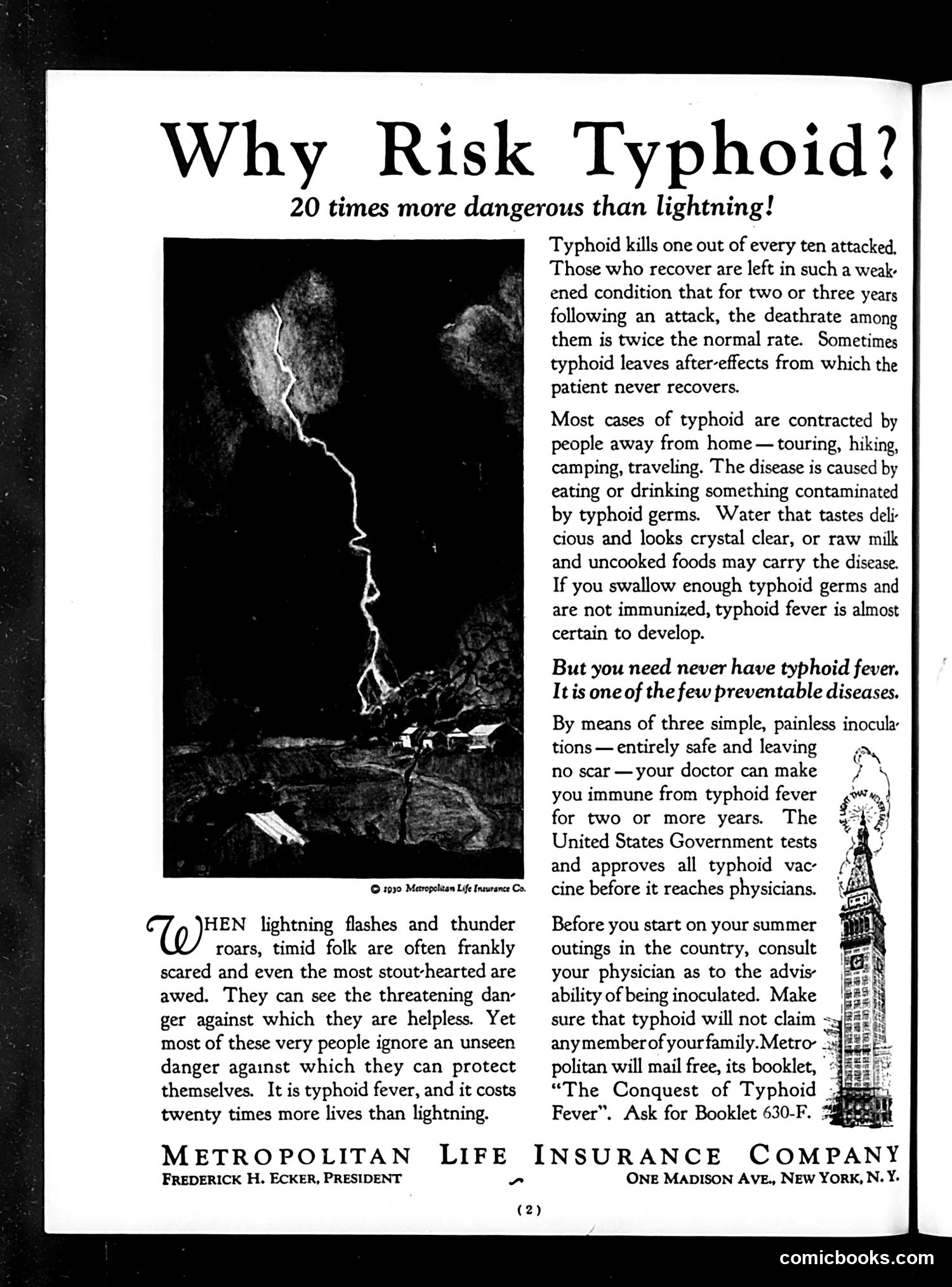
# Analysis This is a **public health advertisement**, not satire or political commentary. Metropolitan Life Insurance Company uses fear-based marketing to promote typhoid vaccination. The image shows a lightning bolt striking a rural house—a visual metaphor comparing typhoid's danger to lightning. The text claims typhoid is "20 times more dangerous than lightning," claiming it kills 1 in 10 and leaves survivors weakened for years. The ad targets travelers ("touring, hiking, camping") who might contract typhoid through contaminated food or water. The solution: three painless vaccinations from your doctor, approved by the U.S. Government. The rhetoric reflects early-20th-century public health messaging that relied on dramatic comparisons and government endorsement to encourage medical intervention—then a relatively new concept for preventive medicine.
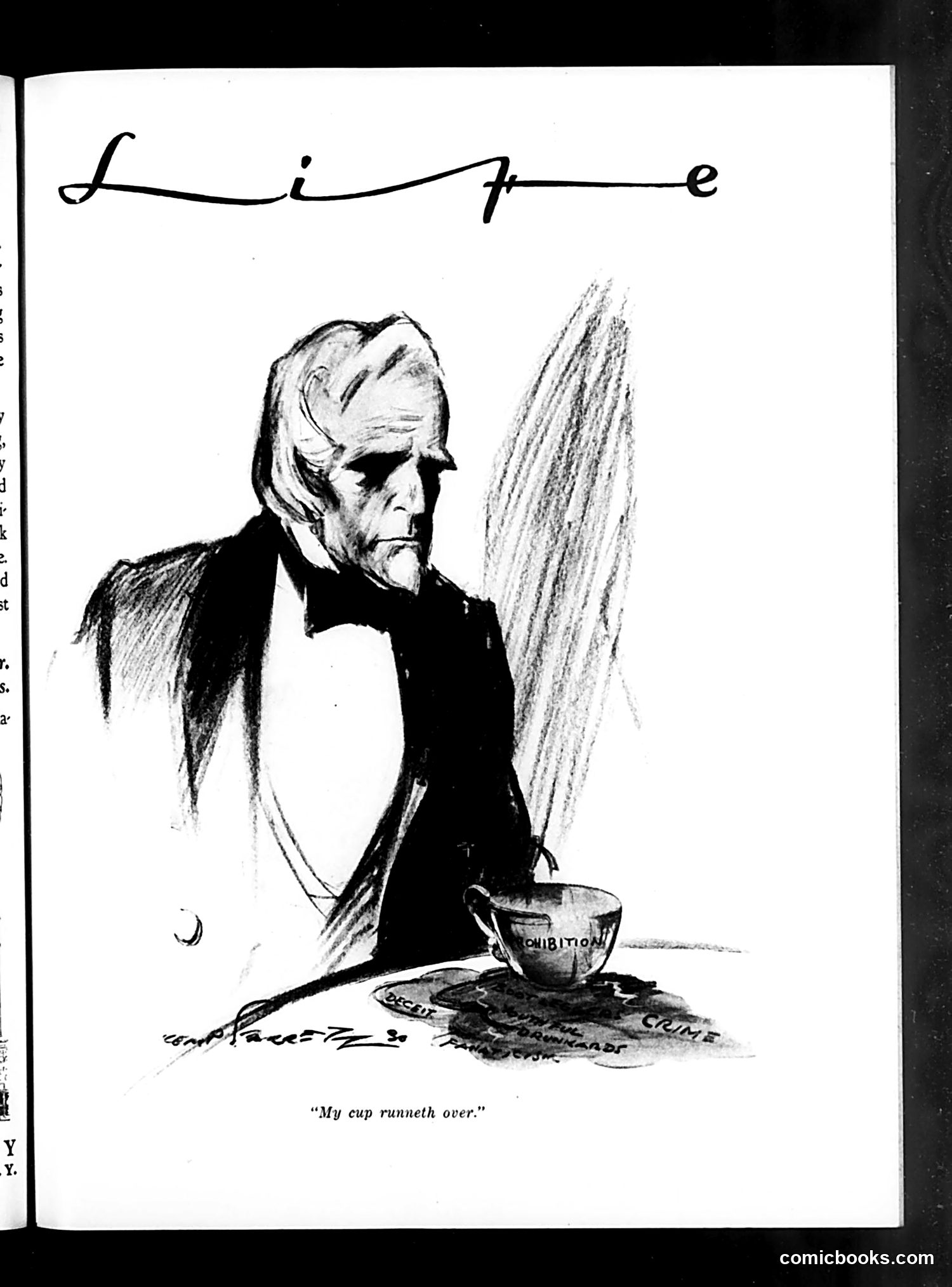
# Analysis of "Life" Magazine Cartoon This political cartoon depicts an elderly man in formal attire (bow tie and jacket) looking distressed at a spilled cup. The title "My cup runneth over" is a biblical reference to Psalm 23, typically expressing gratitude and abundance. The satire inverts this meaning: the spilled cup suggests the figure's fortunes have reversed—his "cup" of prosperity or good fortune has literally overflowed and been lost. The figure's aged appearance and refined dress suggest he represents a wealthy or prominent person whose circumstances have deteriorated. Without additional context about *Life* magazine's publication date, the specific historical figure being caricatured remains unclear, though the artwork style suggests early-to-mid twentieth century. The cartoon likely comments on financial loss or failed ambitions of a public figure.
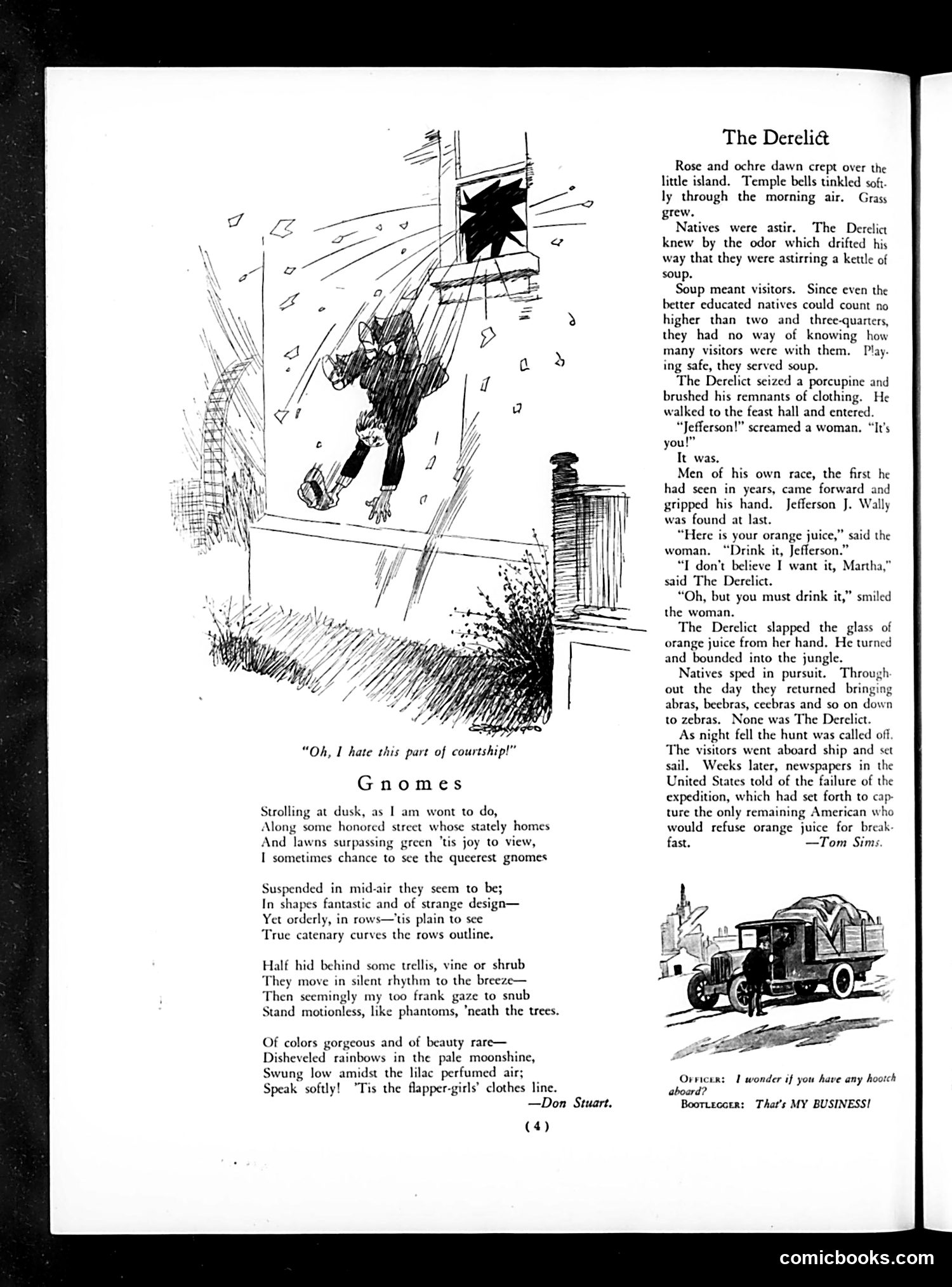
# Analysis of Page 4 This page contains two distinct pieces: **"The Derelict"** (top right): A prose story about an American expedition member ("The Derelict") who abandons his group on an island, drinks orange juice offered by a local woman, and flees into the jungle. When the group fails to return, newspapers report he's the only surviving American who "would refuse orange juice for breakfast"—satirizing American stubbornness and pickiness. **"Gnomes"** (bottom left): A poem by Don Stuart celebrating garden gnomes as whimsical decorative figures visible in suburban yards at dusk, described with fantastical imagery. **The cartoon** (bottom right) shows an officer and bootlegger with a truck, likely referencing Prohibition-era smuggling, with the bootlegger claiming the contraband is his "business." The page primarily showcases literary humor and poetry rather than political satire.
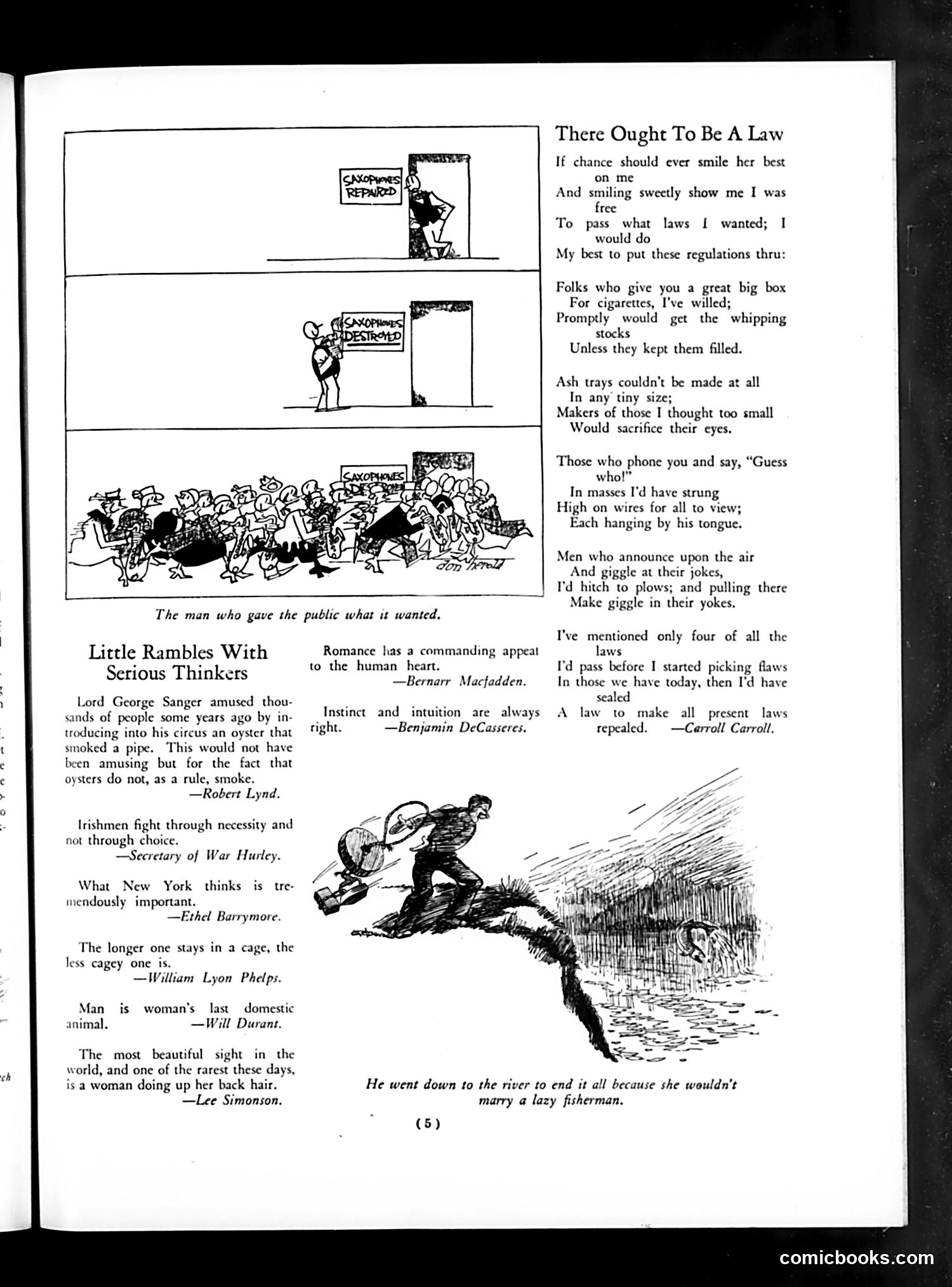
# Analysis: "There Ought To Be A Law" This satirical poem proposes absurd punishments for modern annoyances. The three cartoon panels illustrate escalating consequences: 1. **Panel 1**: A sign reads "SAXOPHONES REPAIRED" — mocking the popularity of saxophones, likely a 1920s jazz-age reference. 2. **Panel 2**: The sign is destroyed, humorously suggesting violent enforcement of regulations. 3. **Panel 3**: A massive crowd hangs from wires by their tongues — the poet's proposed punishment for people who make prank phone calls ("Guess who!"). The poem satirizes social frustrations of the era: cigarette box gifting, tiny ashtrays, and telephone pranks. The humor relies on grotesque, disproportionate punishments for trivial modern irritants—a common satirical technique mocking both the annoyances and society's tendency toward regulation.
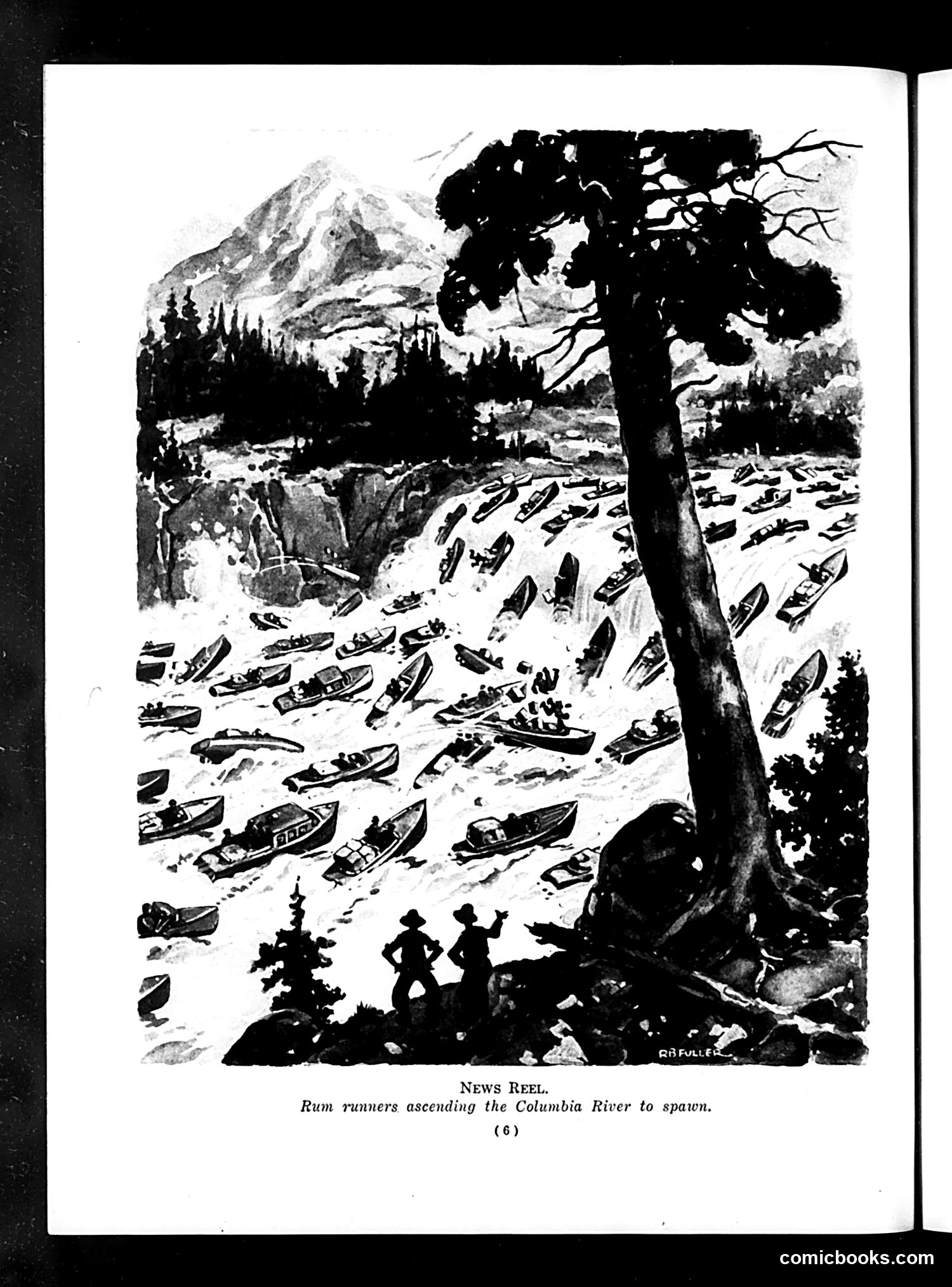
# Analysis This illustration, titled "News Reel: Rum runners ascending the Columbia River to spawn," is a satirical commentary on Prohibition-era smuggling. The cartoon depicts numerous boats densely packed on a riverbed, anthropomorphized as if they were salmon spawning upstream—a natural migration pattern. Two figures in the foreground observe this scene. The "rum runners" are illegal alcohol smugglers, and the joke compares their annual upstream journey to the Columbia River to salmon returning to spawn. The satire mocks both the proliferation of bootlegging operations during Prohibition and the futility of enforcement efforts. By presenting smugglers as mindlessly instinctive creatures, the cartoonist suggests the inevitability and prevalence of illegal alcohol trafficking, despite government prohibition laws. The artist signature appears to be "B.F. Huller" or similar.
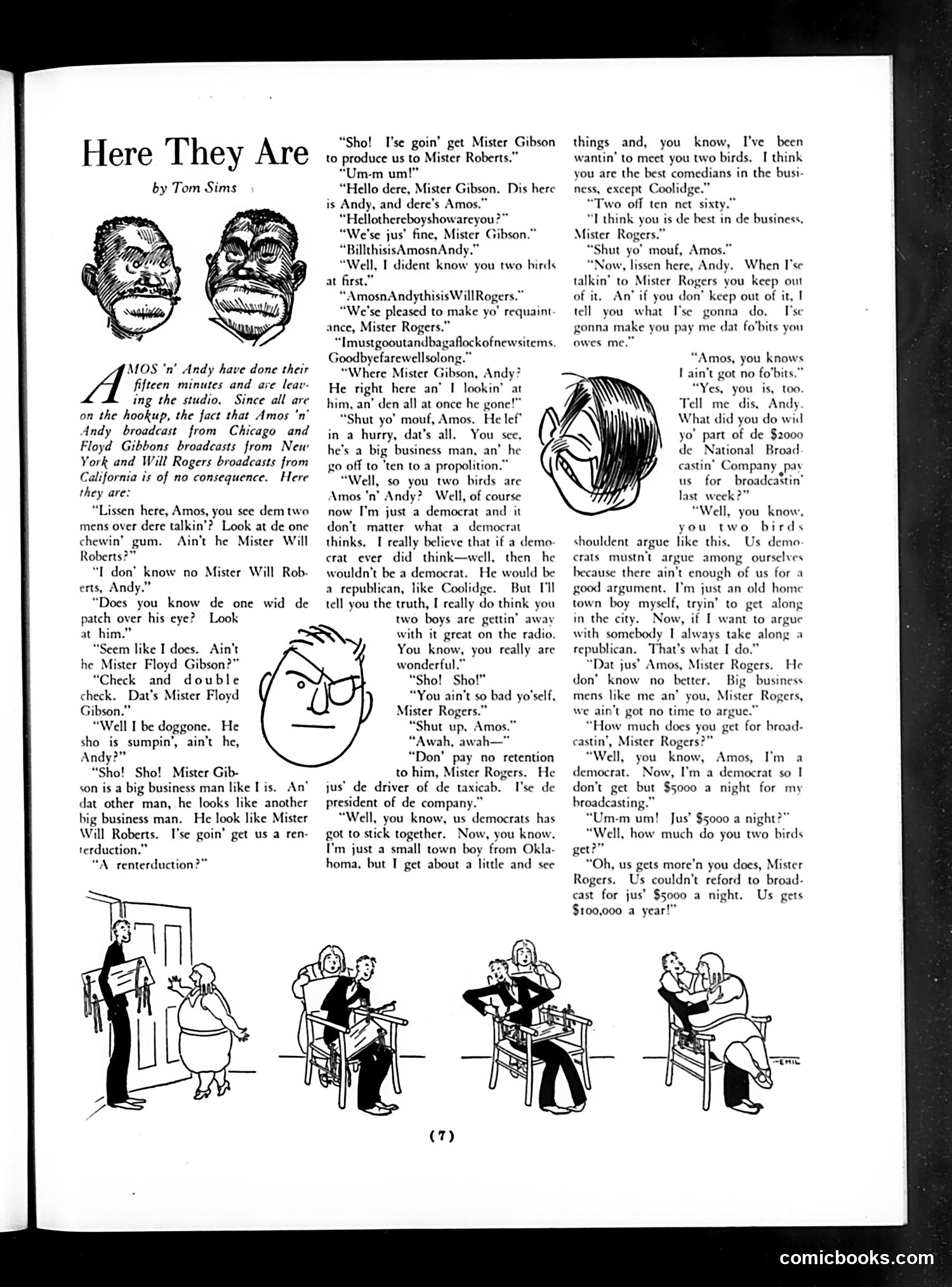
# "Here They Are" by Tom Sims This satirical piece features two radio broadcasters, Amos and Andy, discussing business and politics. The dialogue contrasts their personas: Andy represents old-fashioned rural simplicity (from Oklahoma), while Mister Rogers embodies big-city sophistication and wealth. The satire targets democratic politics and radio broadcasting economics. Rogers boasts of earning $5,000 nightly ($100,000 annually) for broadcasting, while Andy struggles with modest income. The joke critiques the vast wealth disparity in entertainment and the absurdity of democratic ideals when economic inequality is so pronounced. The caricatured faces at top and sequential cartoon panels below illustrate the comedic dialogue. The piece satirizes how radio personalities could become extraordinarily wealthy while ordinary citizens remained poor—a pointed commentary on 1920s-30s American capitalism disguised as entertainment humor.
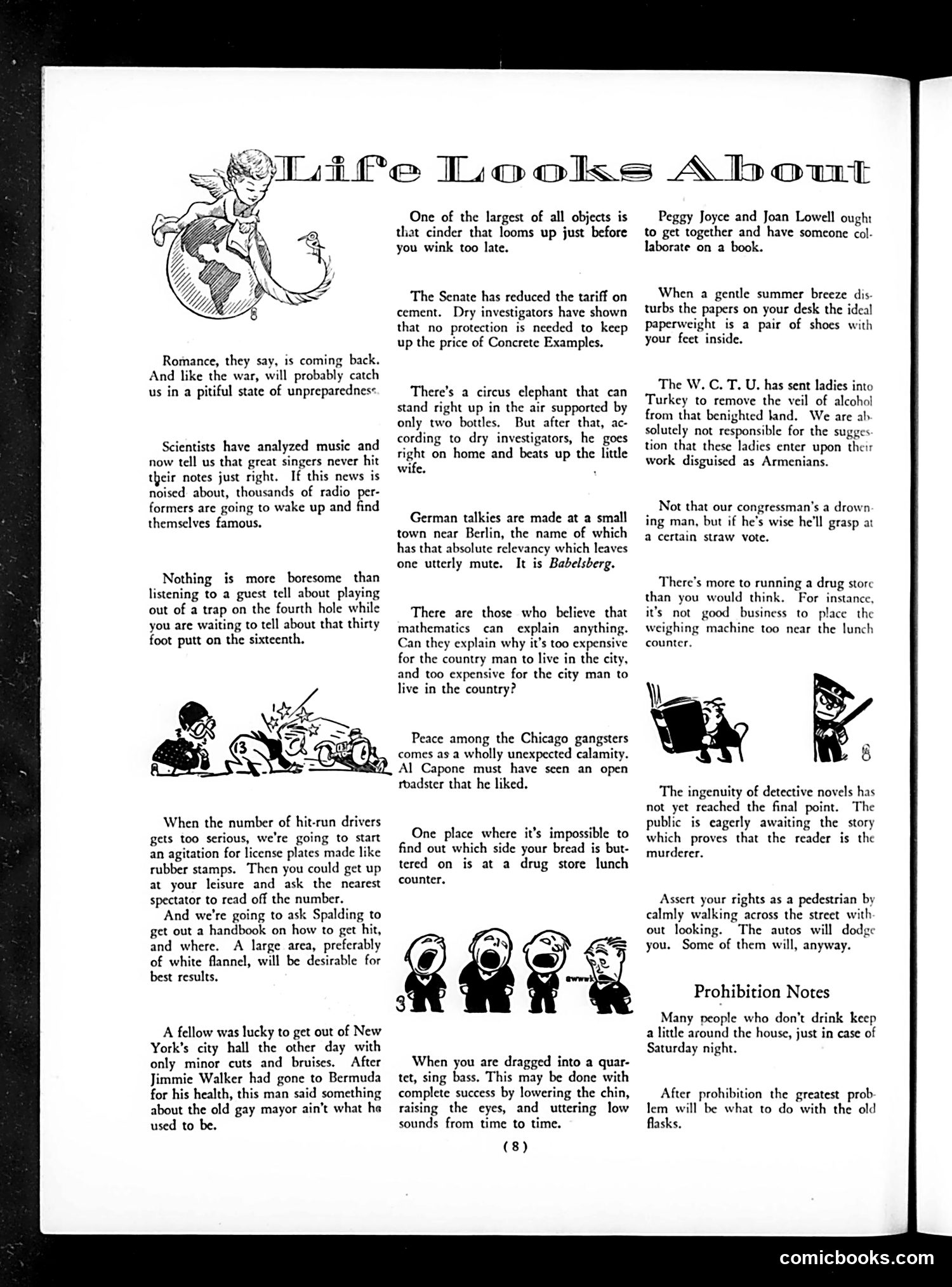
# "Life Looks About" - Political Satire Column This is a humor column mixing social commentary with light satire. Key references include: - **Senate tariff reduction on cement**: Contemporary political debate about trade policy and pricing - **W.C.T.U. in Turkey**: The Women's Christian Temperance Union, a real prohibition advocacy group, apparently sending women to combat alcohol - **Chicago gangsters**: References the prohibition-era organized crime problem - **Drug store lunch counters**: Commentary on where illicit alcohol was actually sold during Prohibition - **Hit-run drivers / license plates**: Satirizing the growing automobile safety problem - **Pedestrian safety**: Mocking dangerous street-crossing in modern cities The cartoons feature simple character drawings illustrating these everyday absurdities. The overall tone mocks contemporary American social problems—organized crime, traffic dangers, and prohibition enforcement failures—through brief, sardonic observations.
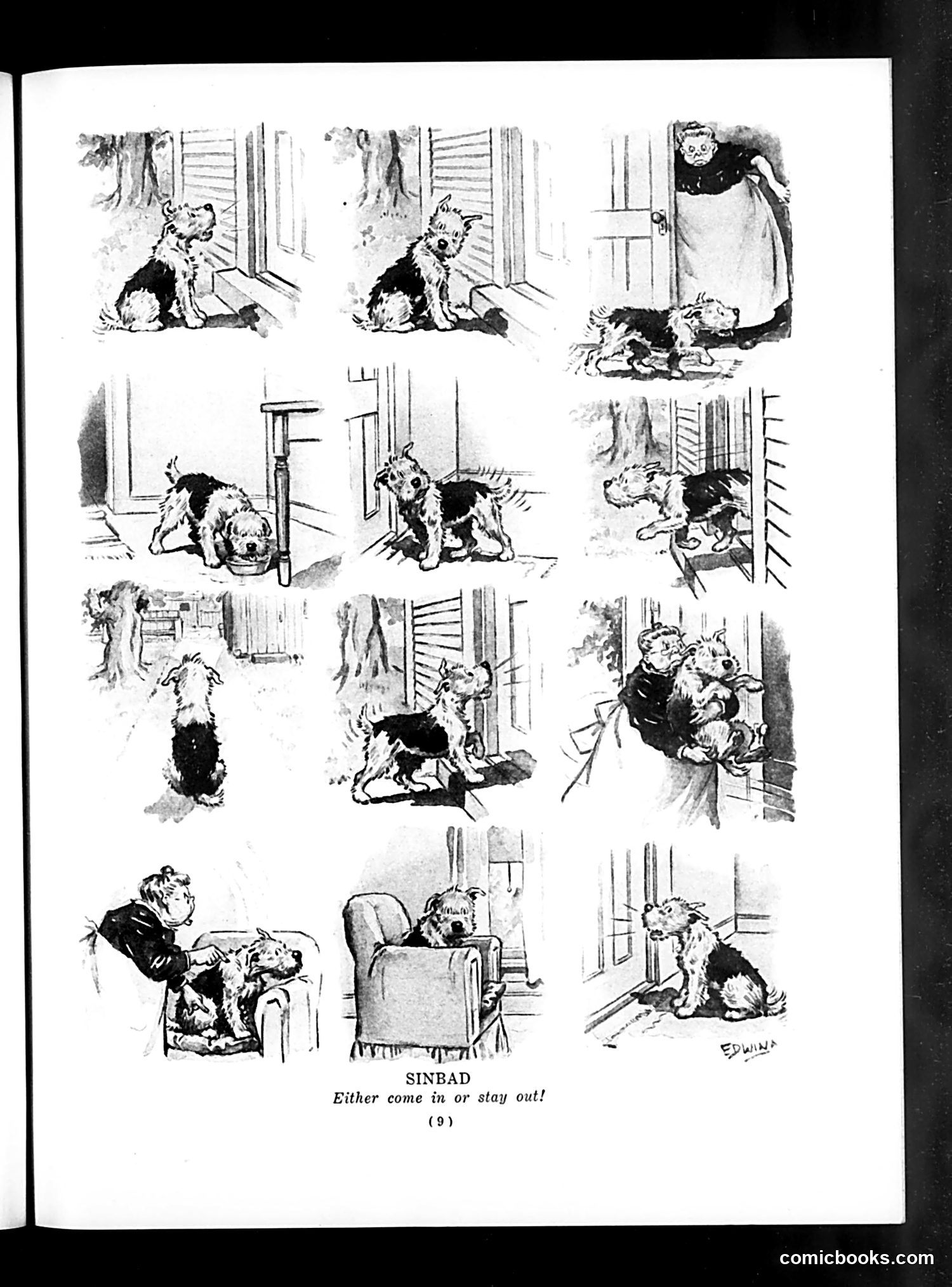
# Analysis: "Sinbad - Either come in or stay out!" This is a comic strip about a dog named Sinbad that satirizes indecisive behavior. The sequential panels show Sinbad repeatedly hesitating at a doorway or window, unable to commit to entering or staying outside. A woman (likely the homeowner) becomes increasingly exasperated, finally expressing frustration with his inability to make up his mind. The humor targets a relatable human trait—indecision and procrastination—by attributing it to a pet. The title's imperative command reflects the woman's mounting irritation at Sinbad's vacillating behavior. This appears to be a humorous domestic vignette rather than political satire, typical of Life magazine's comedic content featuring animals that anthropomorphically mirror human flaws.
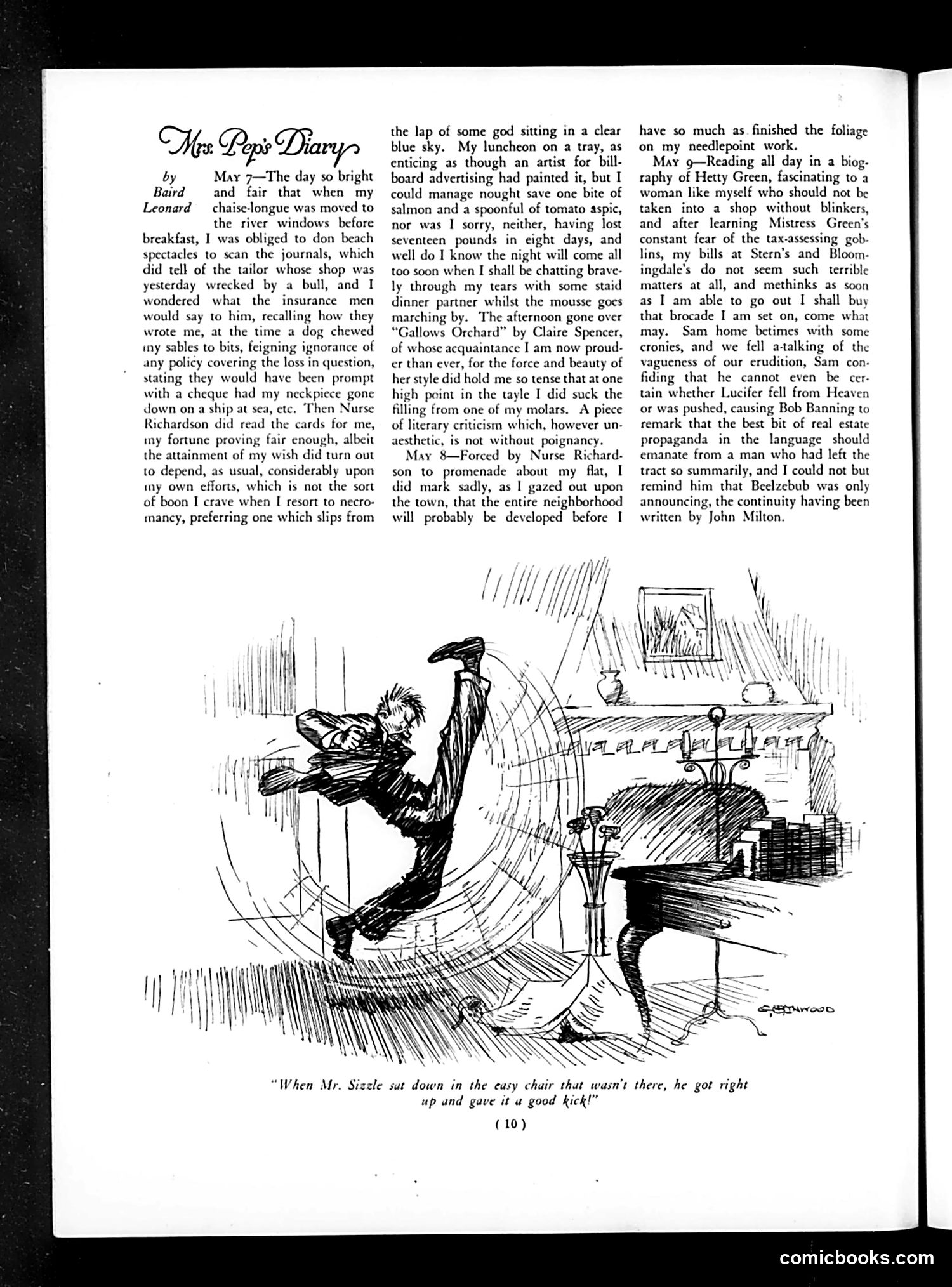
# Analysis of "Mrs. Pepys' Diary" Page This is a humorous diary column written by Heywood Broun, presenting fictional entries from May 7-8. The illustrated cartoon shows a slapstick scene: a man has kicked over an easy chair (which wasn't there), sending himself flying backward with comic exaggeration. The caption reads: "When Mr. Sissle sat down in the easy chair that wasn't there, he got right up and gave it a good kick!" The joke is a simple physical comedy setup—the man doesn't realize the chair is missing, sits in empty air, and reacts with an angry kick at the nonexistent furniture. It's typical early 20th-century magazine humor: absurdist slapstick designed to amuse readers with visual wit and wordplay about everyday domestic mishaps.