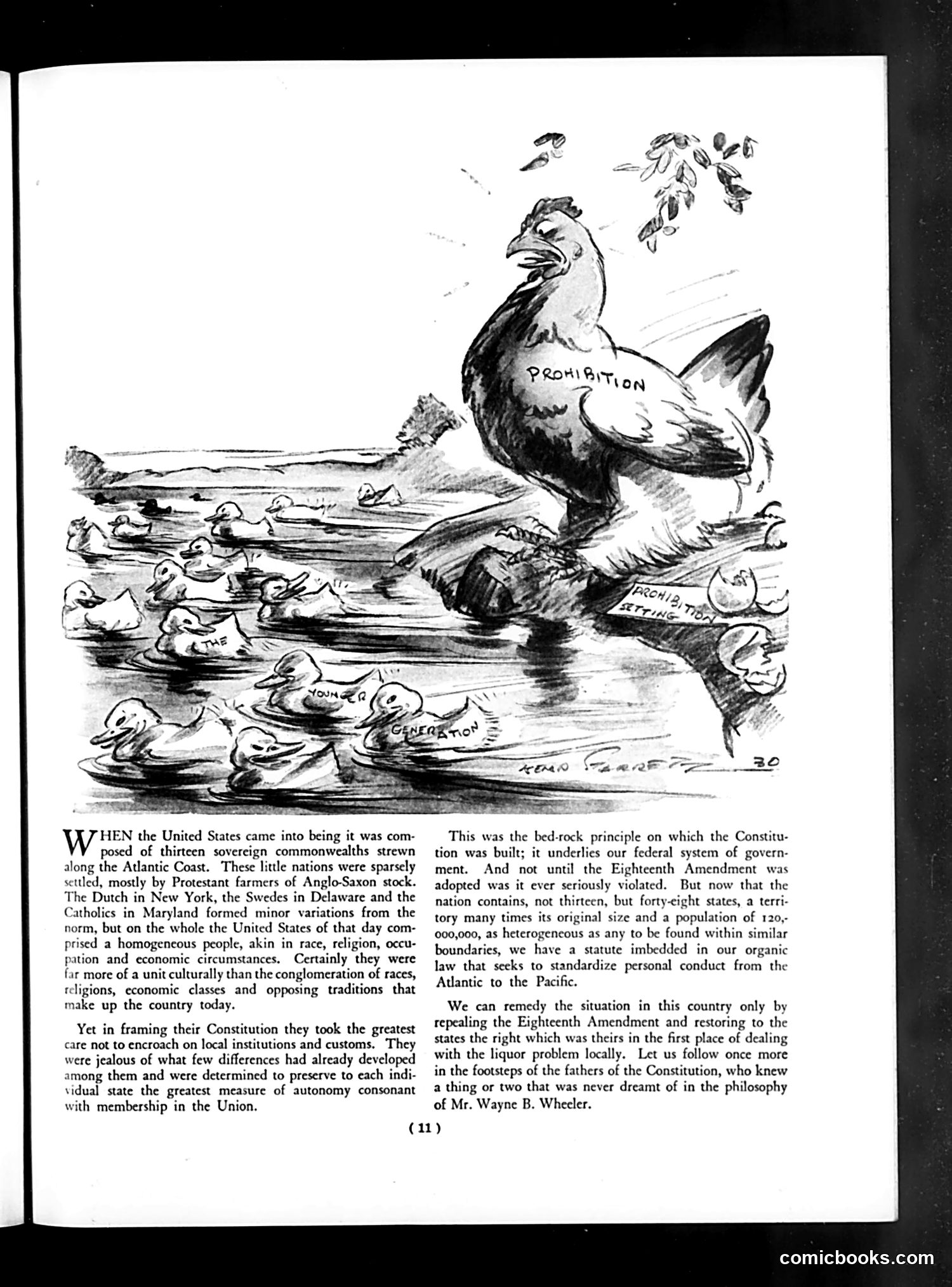
A complete issue · 36 pages · 1930
Life — May 16, 1930
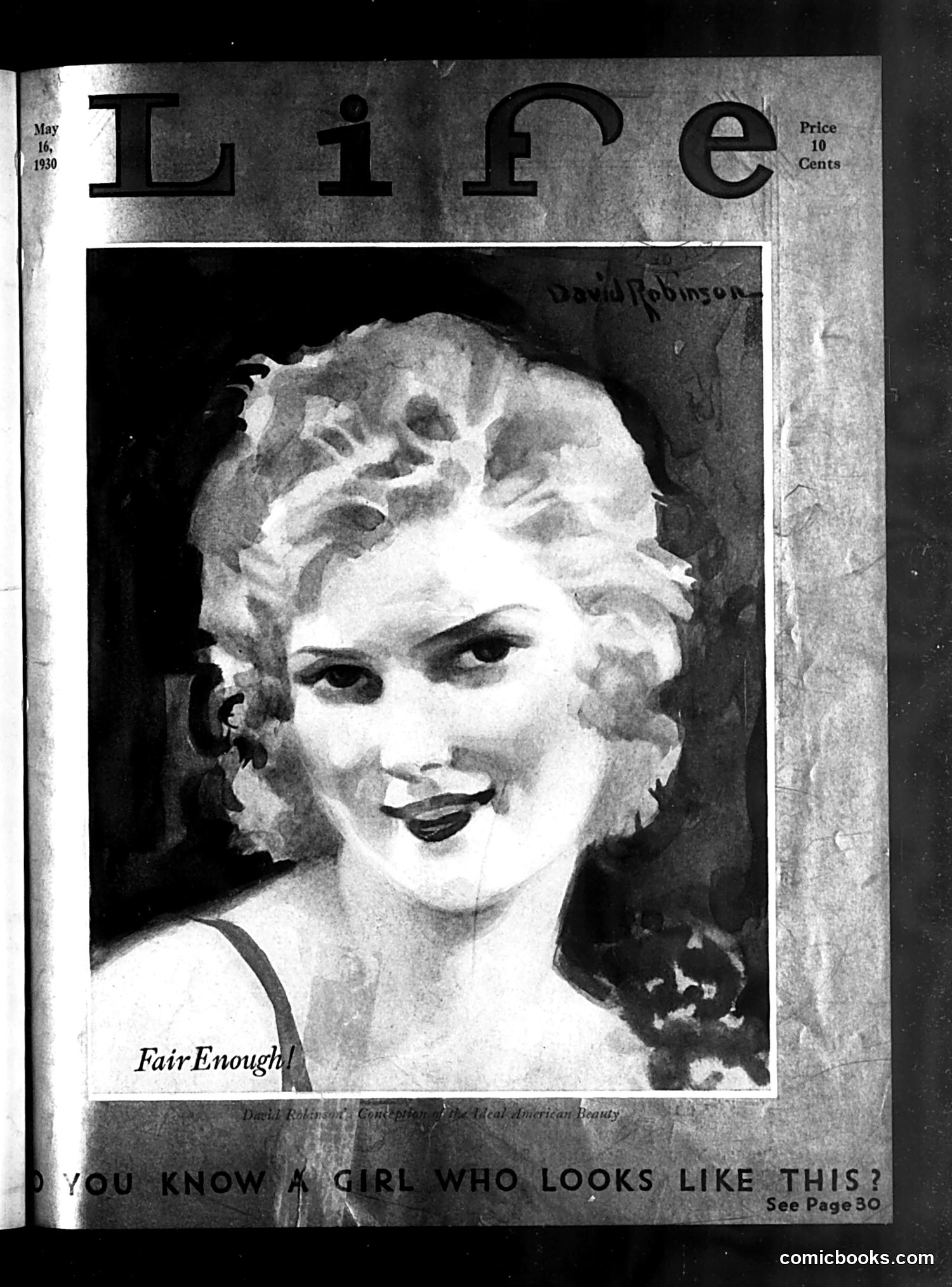
# Analysis This is a **Life magazine cover from May 16, 1939** (price 10 cents). The page features a glamorous portrait photograph credited to David Robinson, labeled "Fair Enough." The main content is a **celebrity photograph** rather than a cartoon. The caption "YOU KNOW A GIRL WHO LOOKS LIKE THIS?" with a reference to "See Page 30" suggests this is part of a reader-participation feature—likely asking if readers recognize or know someone resembling the pictured woman. The photograph shows a woman with 1930s-style blonde wavy hair and makeup, presented as representing "The Ideal American Beauty" according to visible text. This appears to be primarily a **photographic cover story or advertisement** rather than political satire, typical of Life's celebrity and lifestyle content during this era.
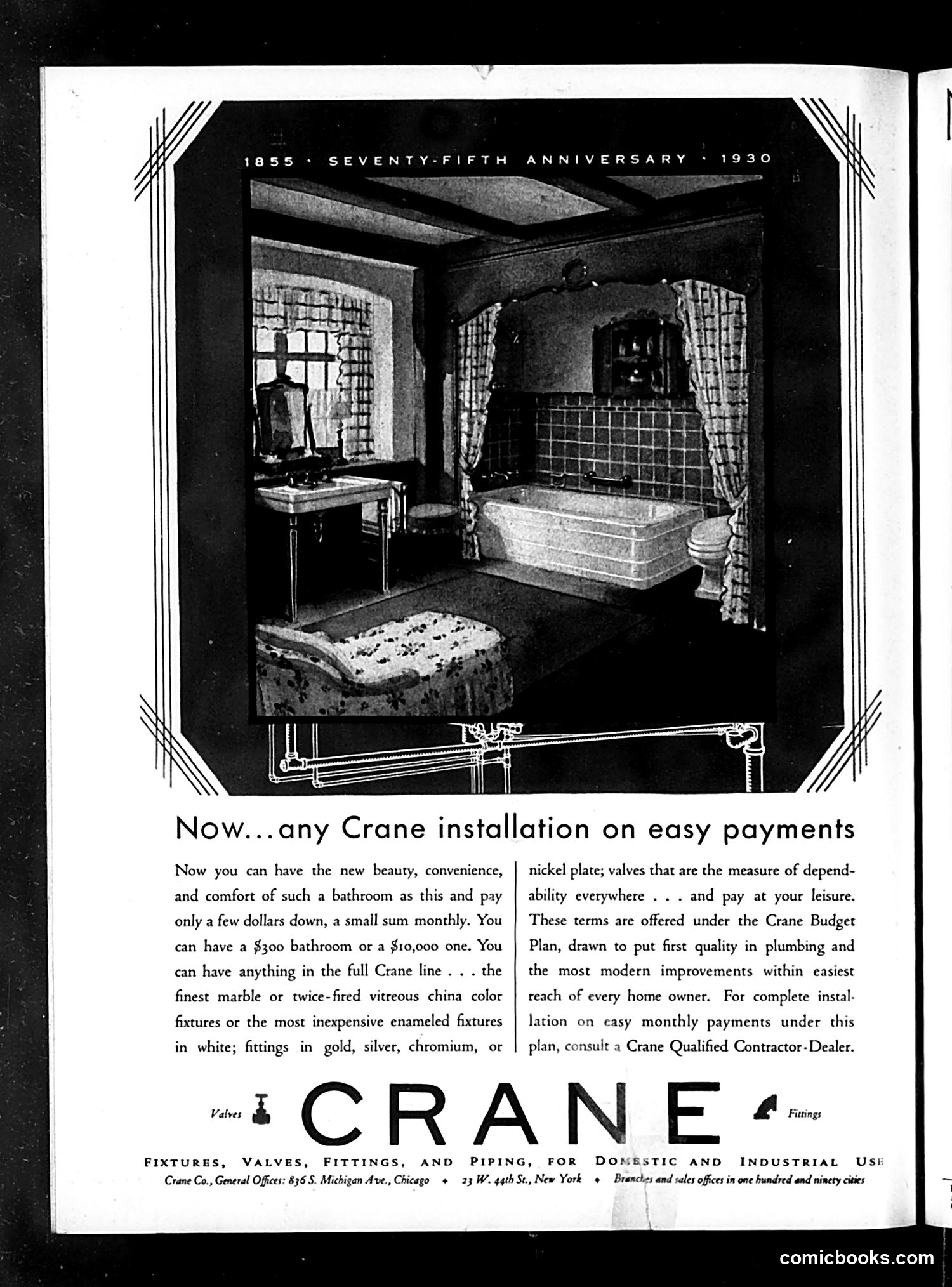
# Analysis This is a **Crane Company advertisement**, not a satirical cartoon or political content. The page celebrates Crane's 75th anniversary (1855-1930) and promotes bathroom fixtures and plumbing installations. The ad showcases a luxurious bathroom interior with a sink, bathtub, and toilet, emphasizing modern conveniences. The key marketing message is the "Crane Budget Plan"—allowing customers to purchase high-end plumbing fixtures through easy monthly payments rather than lump-sum purchase. For modern readers: This reflects Depression-era consumer financing innovation, making luxury home improvements accessible to middle-class homeowners through installment plans. The elegant bathroom setting suggests that indoor plumbing and modern fixtures were still relatively aspirational purchases in 1930.
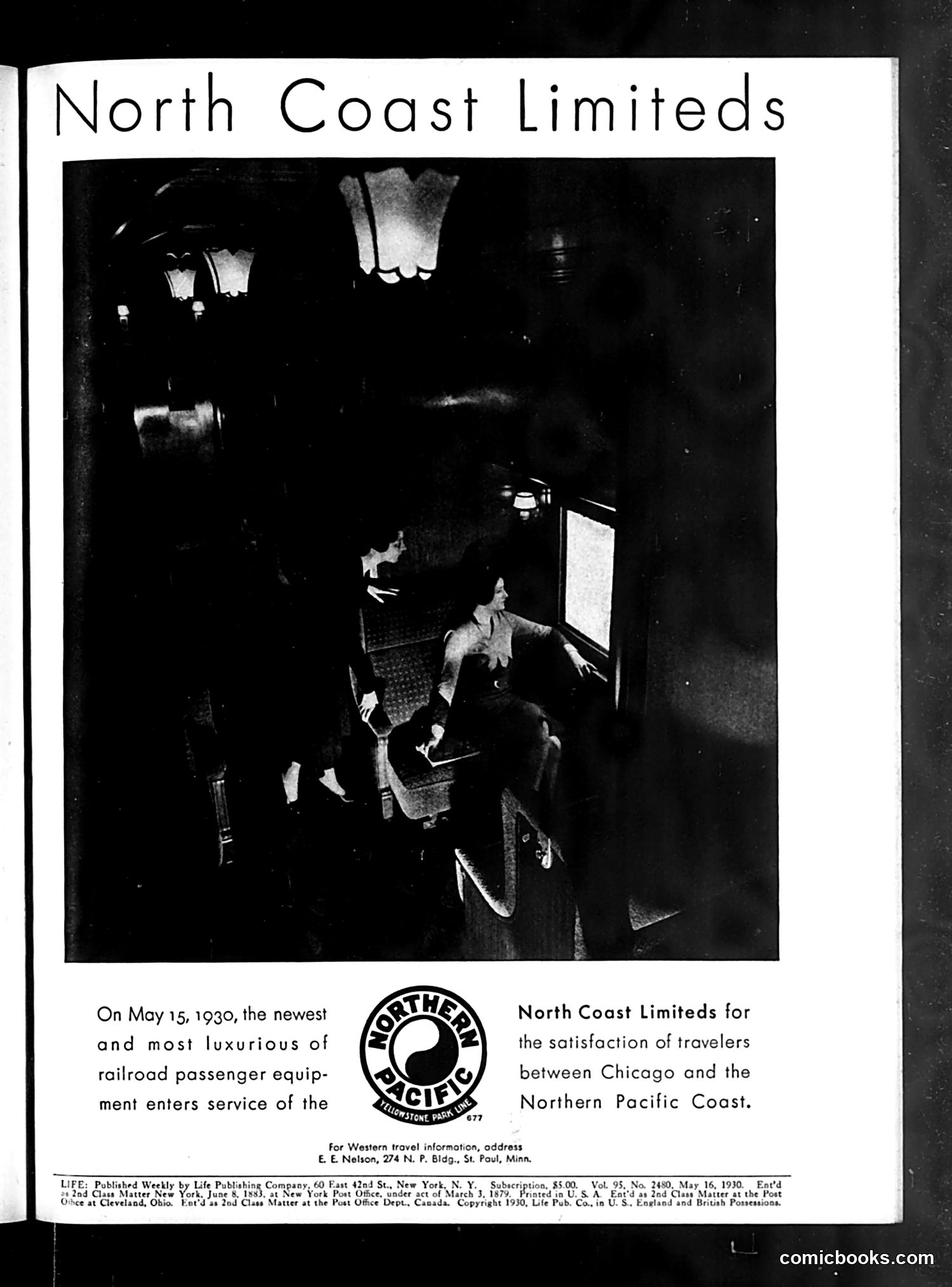
This page is primarily an advertisement for the Northern Pacific Railway's new luxury passenger train, the North Coast Limited, which entered service on May 15, 1930. The photograph shows the interior of the train at night, depicting well-dressed passengers in what appears to be an observation or lounge car, with elegant lighting fixtures overhead. The image emphasizes the train's luxurious amenities designed to appeal to affluent travelers. The ad highlights the train's route between Chicago and the Northern Pacific Coast, positioning it as "the newest and most luxurious of railroad passenger equipment." This is a straightforward commercial advertisement rather than satirical content, typical of Life magazine's paid advertising sections during the Depression era.
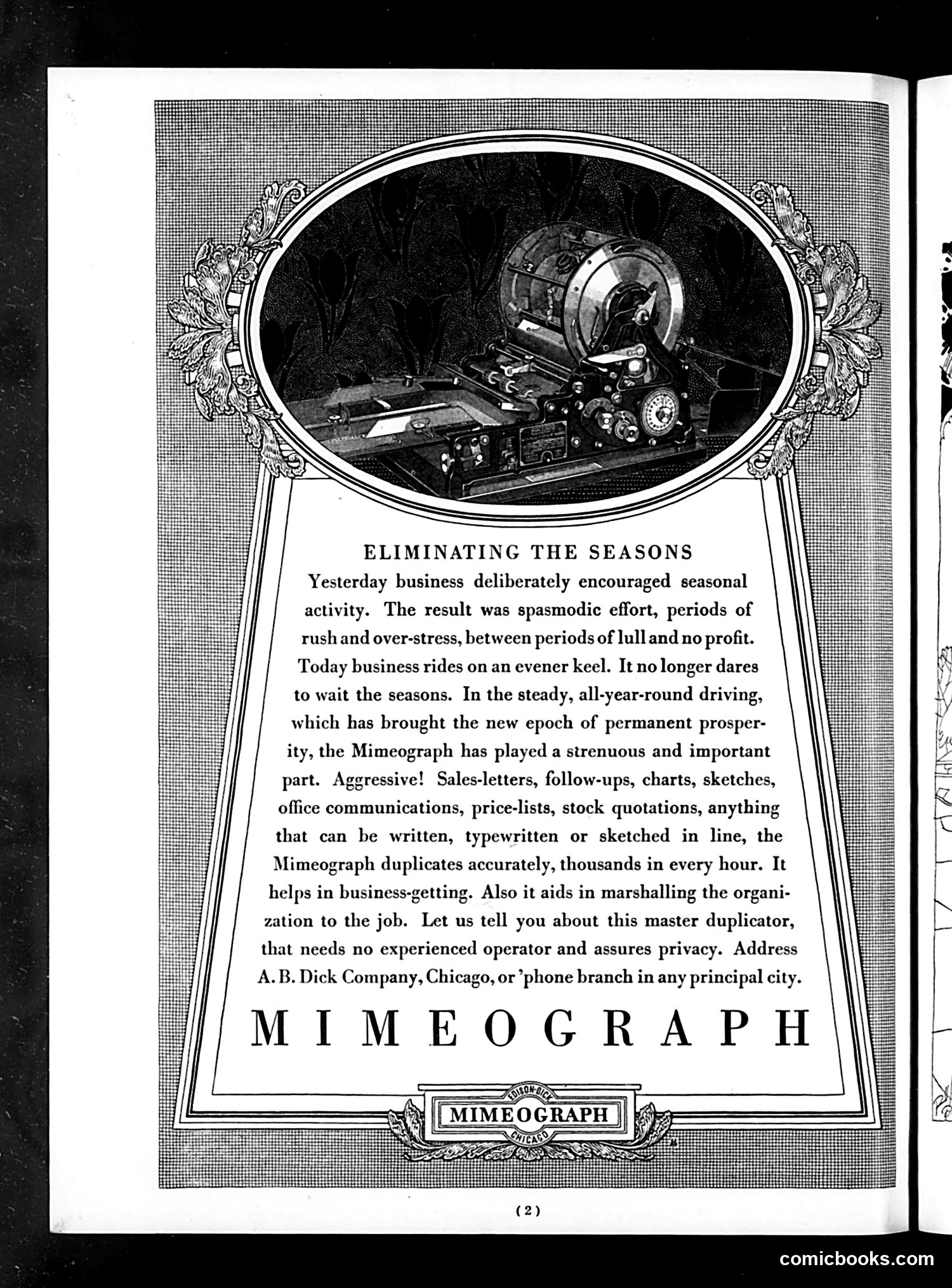
# Analysis This is a **Mimeograph machine advertisement**, not a political cartoon. The page promotes the Mimeograph as a business duplicator manufactured by A.B. Dick Company of Chicago. The ad's rhetorical argument frames the machine as solving modern business efficiency problems. It claims that traditional seasonal business patterns—with their "spasmodic effort" and feast-or-famine cycles—are obsolete. The Mimeograph enables "steady, all-year-round" operations by quickly duplicating sales letters, charts, price lists, and communications "thousands in every hour." The decorative image shows the machine itself. The ad emphasizes the device requires no experienced operator and "assures privacy," marketing it as both practical and democratizing for business correspondence. This reflects early-20th-century enthusiasm for mechanical efficiency and office modernization.
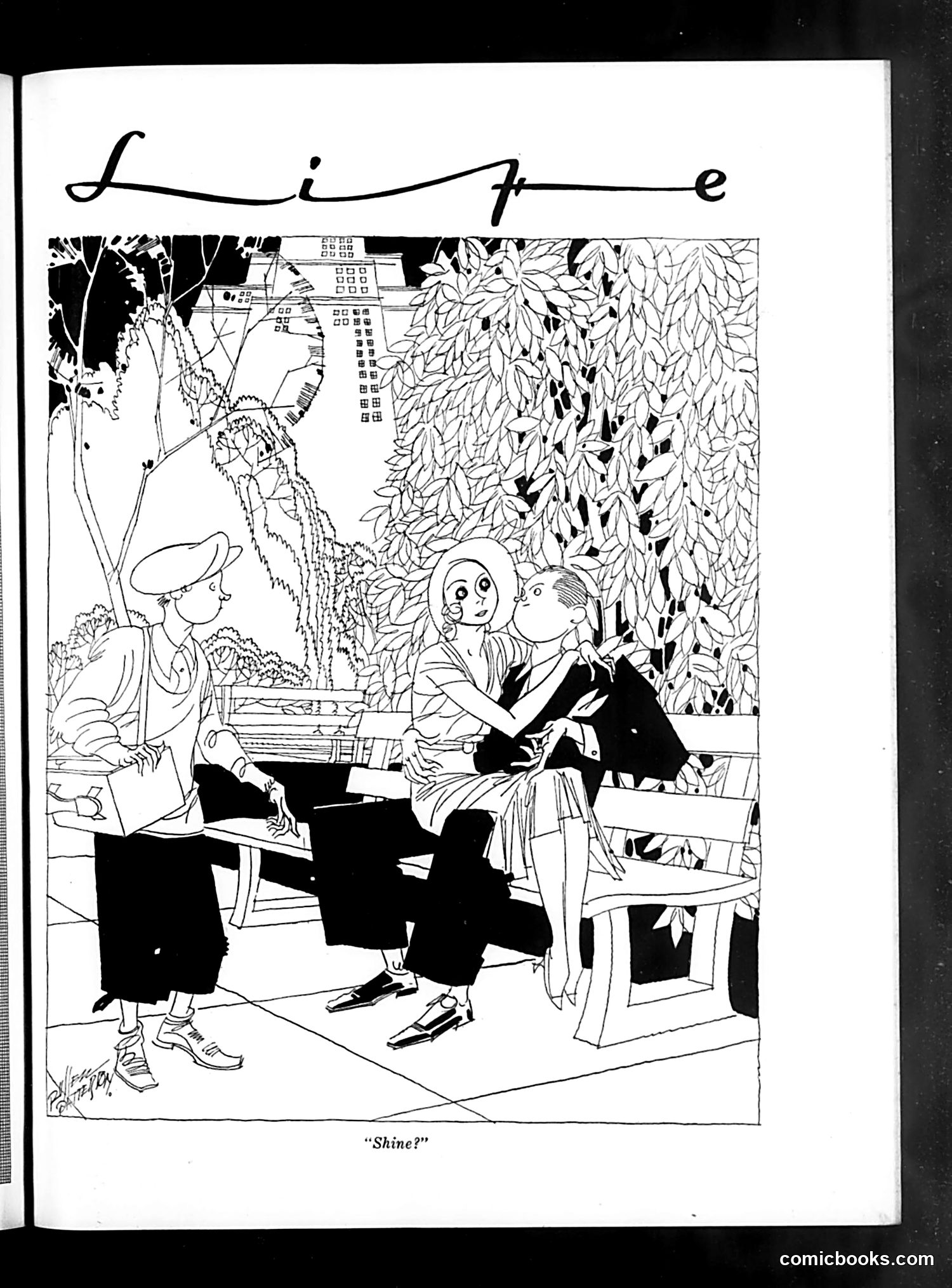
# Analysis This page from *Life* magazine features a single-panel cartoon titled "Shine?" showing three figures in a garden setting. Two women sit on a bench while a third figure (appearing to be a shoe-shine worker, suggested by the "Shine?" caption) approaches them. The satire likely plays on social class dynamics and etiquette of the era. The caption's question mark suggests irony about an unexpected or inappropriate offer—perhaps commenting on how economic desperation or social circumstances create awkward encounters, or how traditionally informal service workers might appear in genteel settings. The lush garden background and the women's fashionable clothing emphasize the incongruity. Without additional context about the publication date or broader social issues of that specific moment, the precise satirical target remains unclear, though it appears to critique class interactions or social pretension.
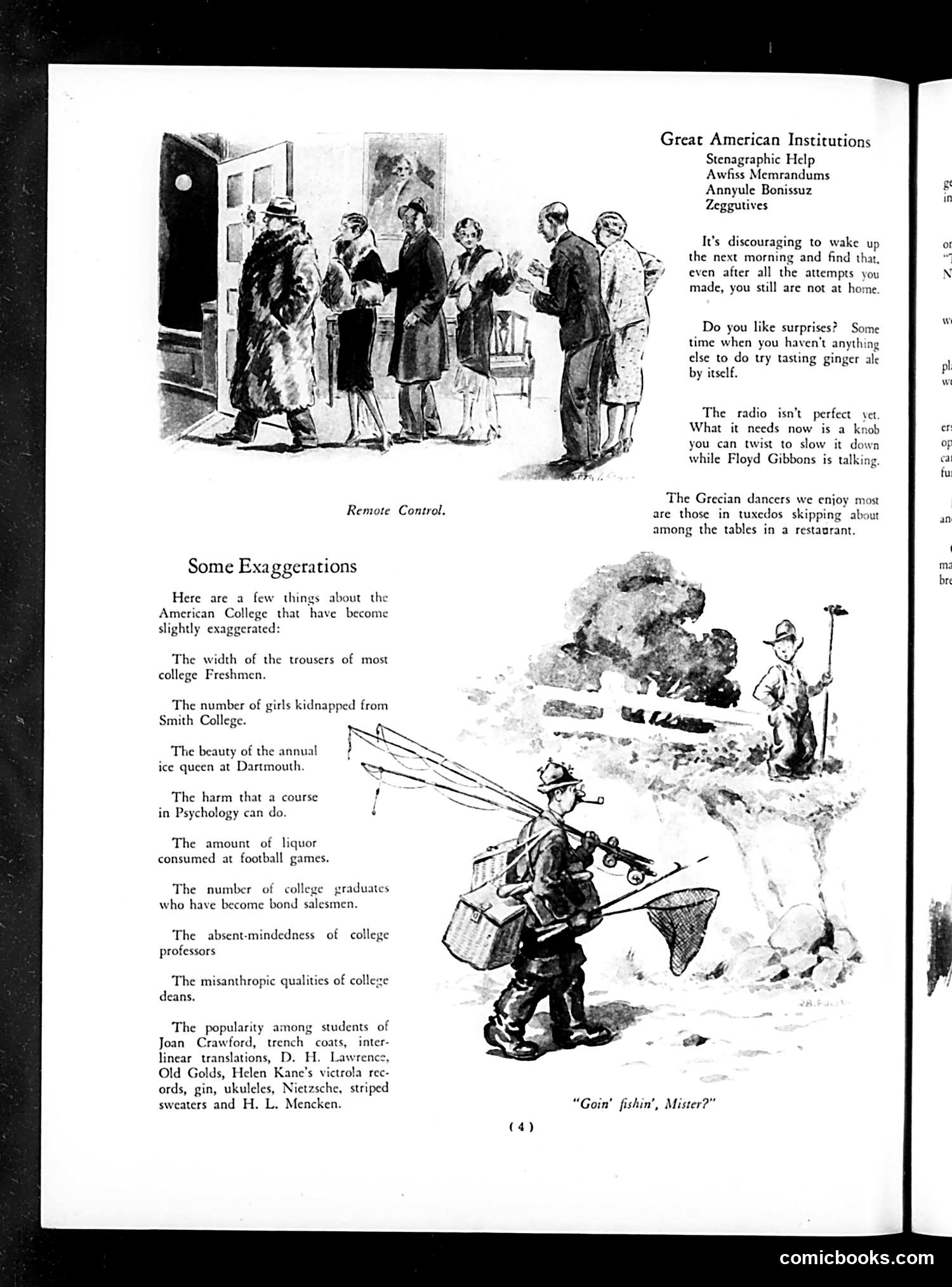
# Analysis of Page 4, Life Magazine This page contains two satirical sections about American college life. **"Remote Control"** (top cartoon) depicts people clustered at a doorway, humorously suggesting college students' difficulty leaving home despite their age and independence. **"Some Exaggerations"** (below) lists wildly inflated stereotypes about American college culture—absurdly wide freshman trousers, kidnapped Smith College girls, beauty pageants, and excessive drinking. The accompanying illustration labeled **"Goin' fishin', Mister?"** shows a fisherman laden with seemingly every popular cultural item mentioned: Joan Crawford photos, trench coats, H.L. Mencken, and other contemporary references. The satire mocks how college folklore exaggerates student behavior and consumer trends into mythic proportions. The page ridicules both actual college excess and the gossipy mythology surrounding campus life.
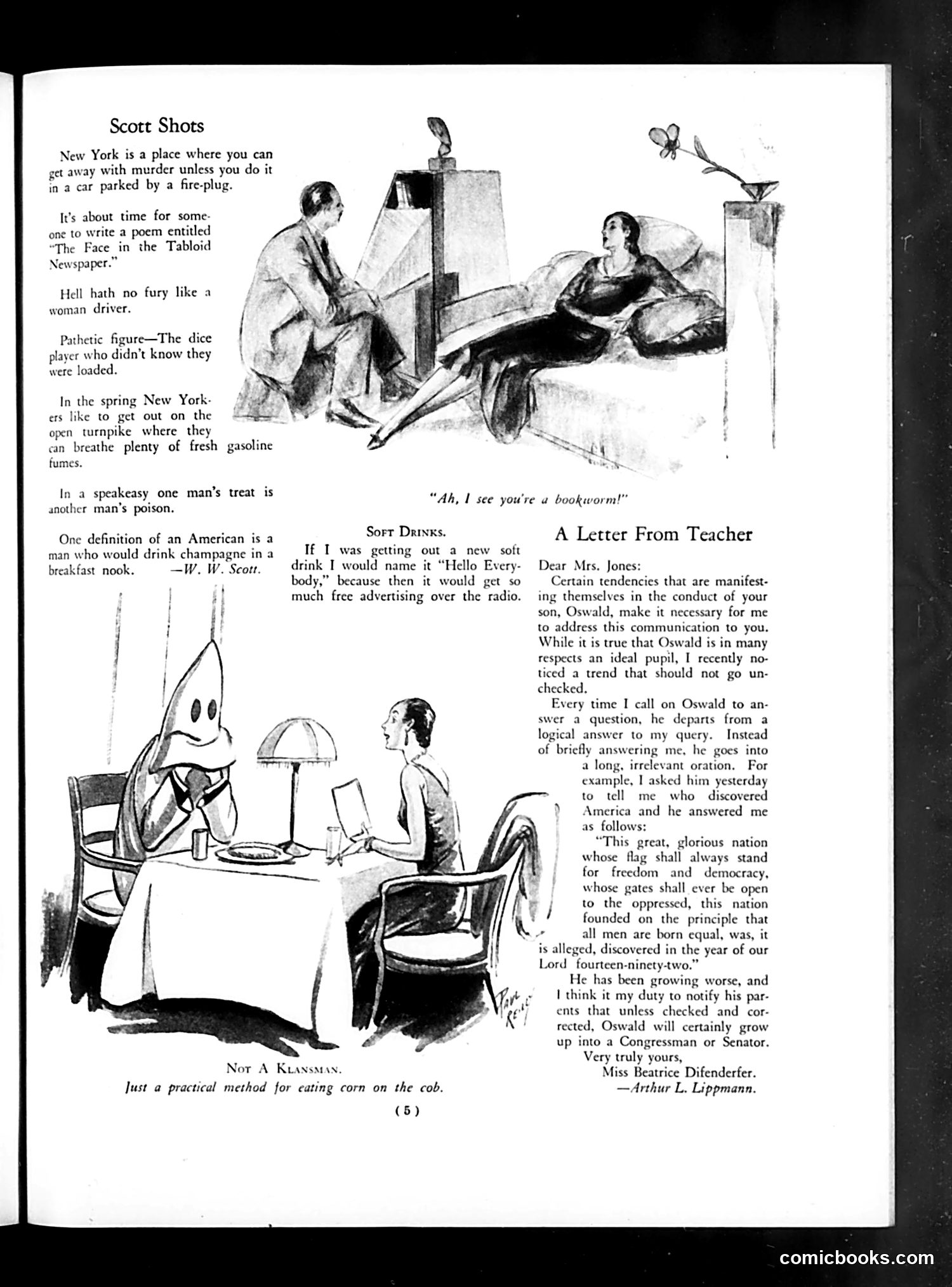
# Analysis of This Life Magazine Page This page contains three satirical pieces from Life magazine: **"Scott Shots"** (top left): Brief humorous observations about New York life and American behavior—jokes about murder, women drivers, gambling, and drinking champagne at breakfast. **"Soft Drinks"** (center): A quip about naming a new soft drink "Hello Everybody" for radio advertising value. **"Not a Klansman"** (bottom cartoon): Shows a ghost-like figure at a dinner table. The caption suggests this is a satirical visual joke, though the exact reference is unclear without additional context—possibly commenting on white supremacist imagery or a contemporary political figure. **"A Letter From Teacher"** (right): A concerned teacher writes to parents about a student named Oswald, warning he's developing troubling tendencies and may become a politician. This is social satire about arrogant, verbose students. The page reflects 1920s-30s American satirical humor and social commentary.
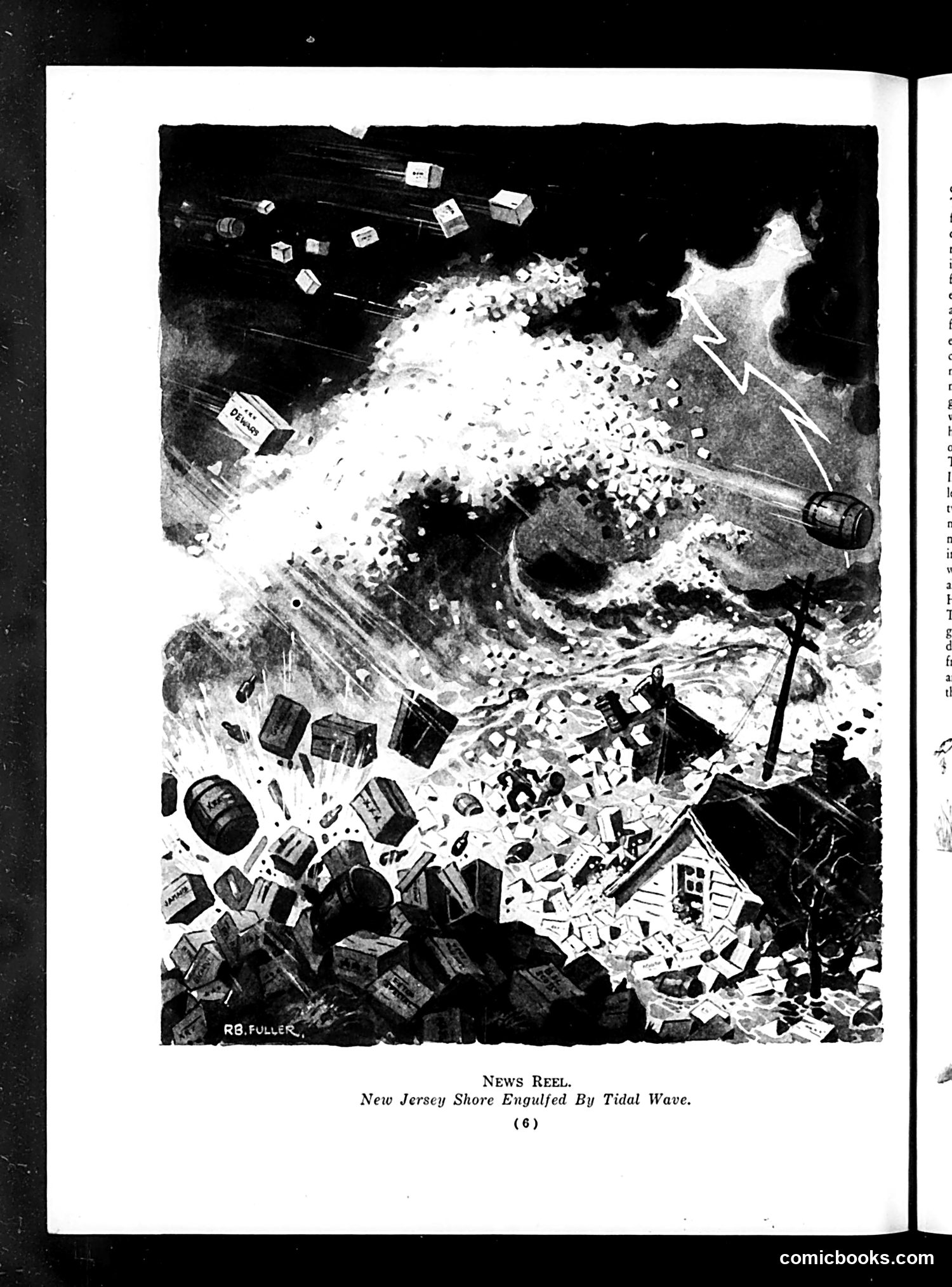
# Analysis This is a **news reel photograph** (not a political cartoon) labeled "New Jersey Shore Engulfed By Tidal Wave." The image shows aerial destruction of a coastal area—scattered buildings, debris fields, and what appears to be a large wave or storm surge impact. The photograph documents a natural disaster rather than satirizing it. The scattered boxes and structures visible suggest residential or commercial buildings destroyed by the tidal event. The credit reads "R.B. FULLER." Without a specific date on this page, the exact historical event cannot be identified with certainty, though tidal waves and storm surge events affecting New Jersey shores have occurred multiple times. This appears to be straightforward news documentation of disaster impact, not editorial commentary or satire.
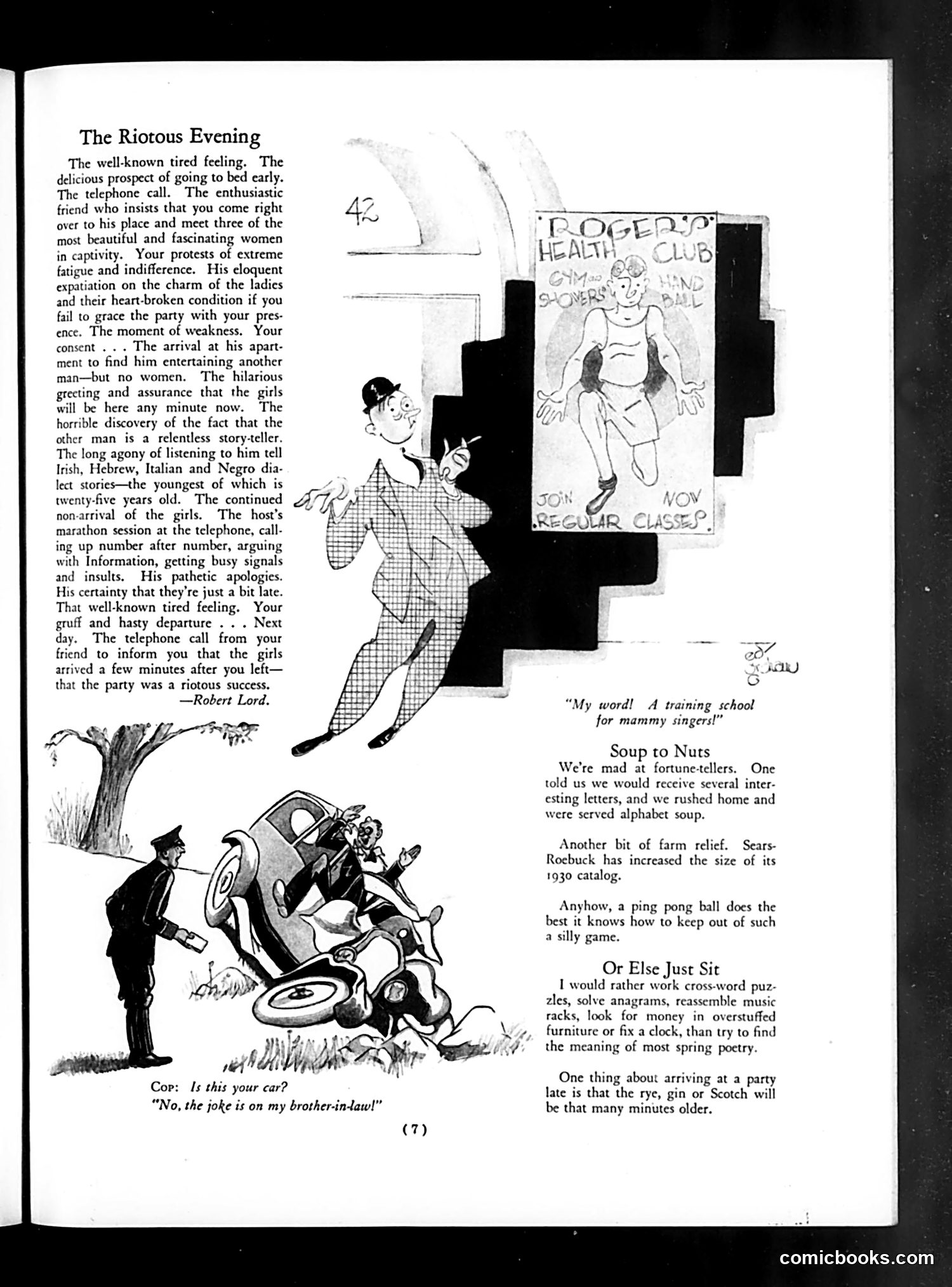
# Analysis of This Life Magazine Page This page contains humorous short essays and cartoons about social situations circa the 1930s-40s. **"The Riotous Evening"** by Robert Lord satirizes the anxiety of social obligation—a man reluctantly attends a party where he's bored by his host's endless storytelling in various dialects, then feels guilty leaving early, only to learn the party succeeded after his departure. **The cop cartoon** shows a traffic stop where the officer asks "Is this your car?" and the driver replies "No, the joke is on my brother-in-law!"—humor derived from the common practice of blaming a relative for a vehicle's problems. The remaining sections ("Soup to Nuts," "Or Else Just Sit") are brief, unrelated humorous observations about fortune-tellers, farm catalogs, and arriving late to parties—typical filler content for the magazine's satirical format.
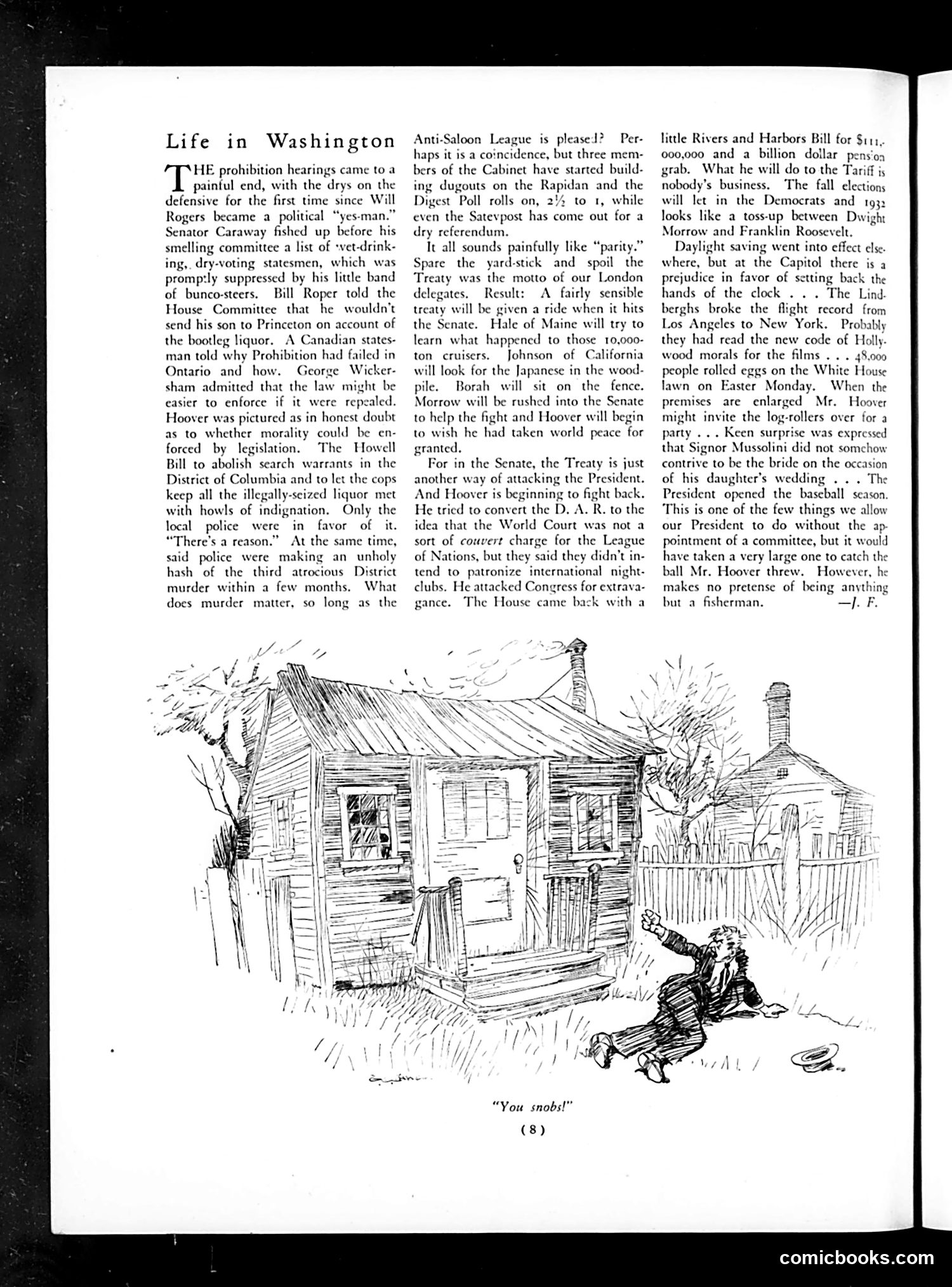
# "Life" Magazine Political Cartoon Analysis This page from *Life* magazine contains a satirical column titled "Life in Washington" discussing Prohibition-era politics. The accompanying cartoon depicts a man being ejected from a small wooden house, with the caption "You snob!" The cartoon likely satirizes tensions over Prohibition enforcement and class distinctions. The text references debates over alcohol legislation, mentioning Senator Caraway's involvement in prohibition hearings and criticizing various political figures' inconsistency on the issue. The "snob" caption suggests the cartoon mocks either elitist attitudes toward Prohibition enforcement or hypocrisy among politicians who opposed it while claiming moral superiority. The overall piece critiques Washington politicians' stance on alcohol regulation during the Prohibition era, a major political battleground of the 1920s-early 1930s.
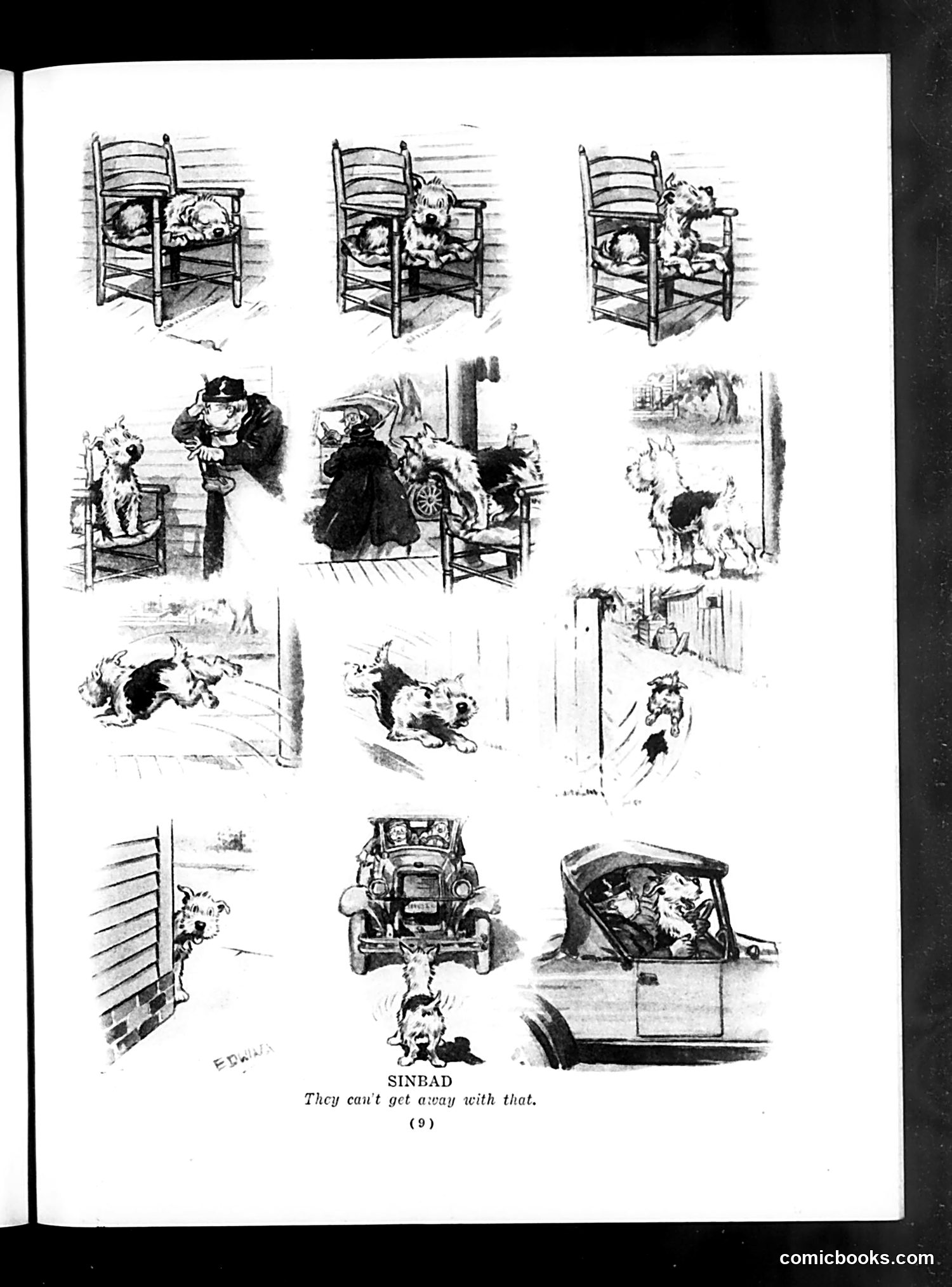
# "They Can't Get Away with That" - A Sinbad Comic Strip This is a humorous comic strip titled "Sinbad" showing a small, scrappy dog repeatedly outsmarting or escaping from various situations and people attempting to capture or control him. The sequence depicts: - A dog in chairs with people trying to contain it - The dog evading capture attempts by people and vehicles - A car chase finale where the dog still manages to elude the pursuer The caption "They can't get away with that" appears ironic—the dog clearly *does* get away with mischief repeatedly. The humor derives from the dog's persistent resourcefulness and the frustrated attempts by larger, more powerful figures (humans, vehicles) to contain this small but determined animal. It's a slapstick comedy about underdog persistence and cleverness.
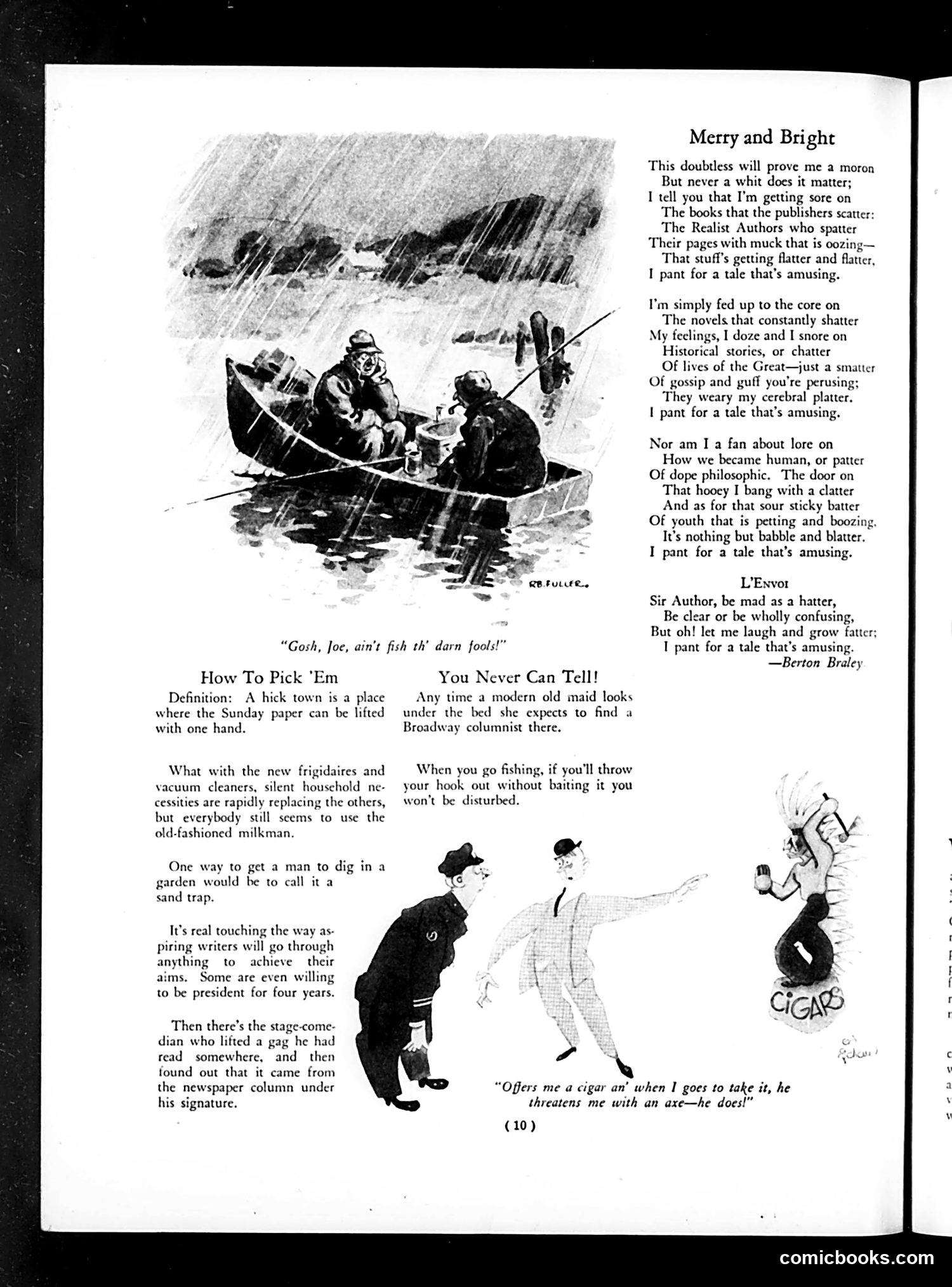
# Analysis of "Merry and Bright" Page This page features literary and social satire typical of Life magazine's humor. The main poem "Merry and Bright" by Berton Braley criticizes contemporary publishing trends—specifically "Realist Authors" whose books contain excessive profanity and graphic content. The author complains these works are emotionally exhausting rather than entertaining, and he longs for amusing tales instead. The three cartoons below mock various social absurdities: how to identify a "hick town," modern fishing etiquette, and what appears to be commentary on writers' desperation for success (the columnist gag). The final cartoon about cigars suggests social anxiety around gift-giving or masculine etiquette. Overall, the page critiques both modern literature's pretentiousness and everyday social conventions of the era.