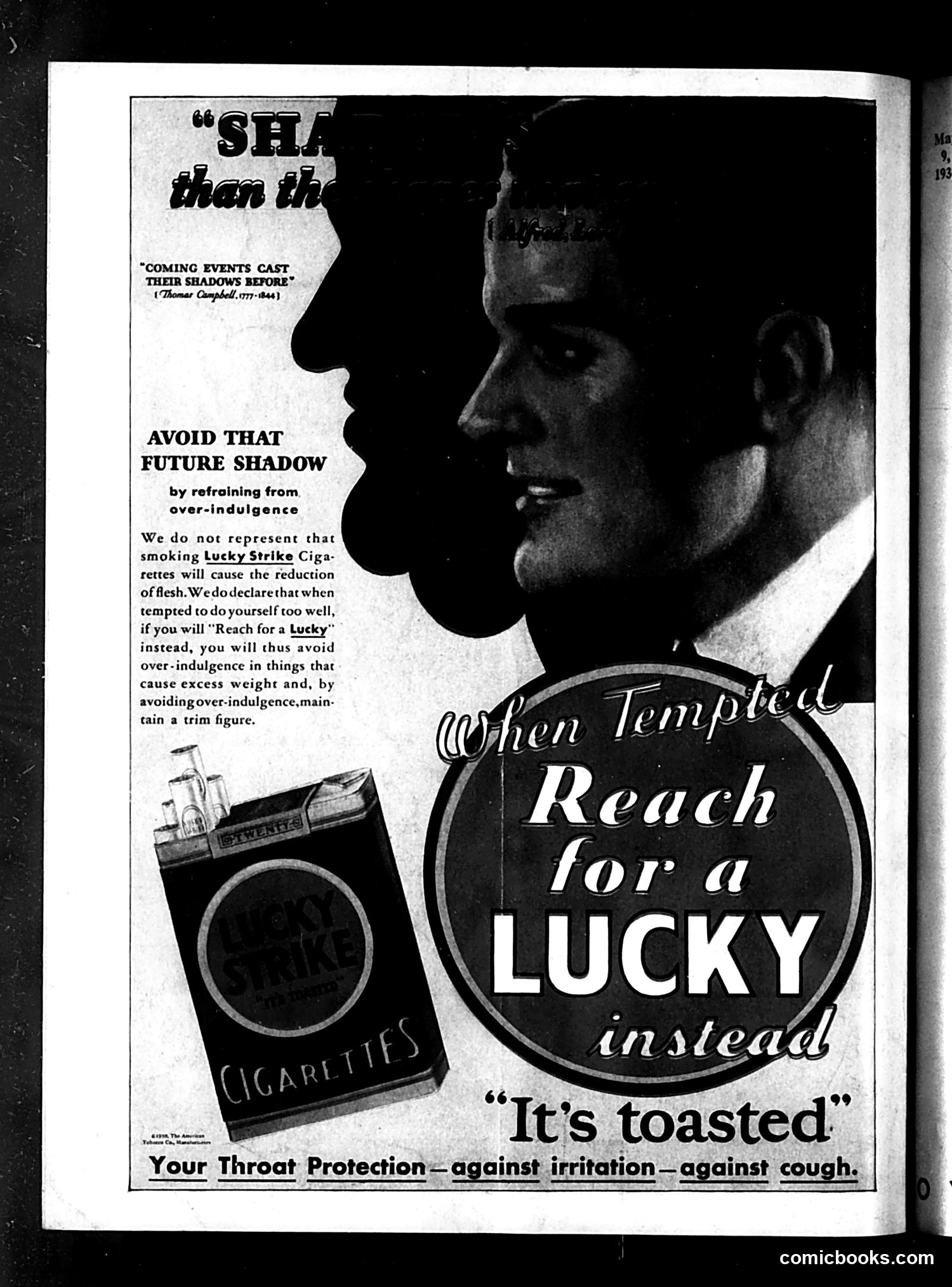
A complete issue · 40 pages · 1930
Life — May 2, 1930
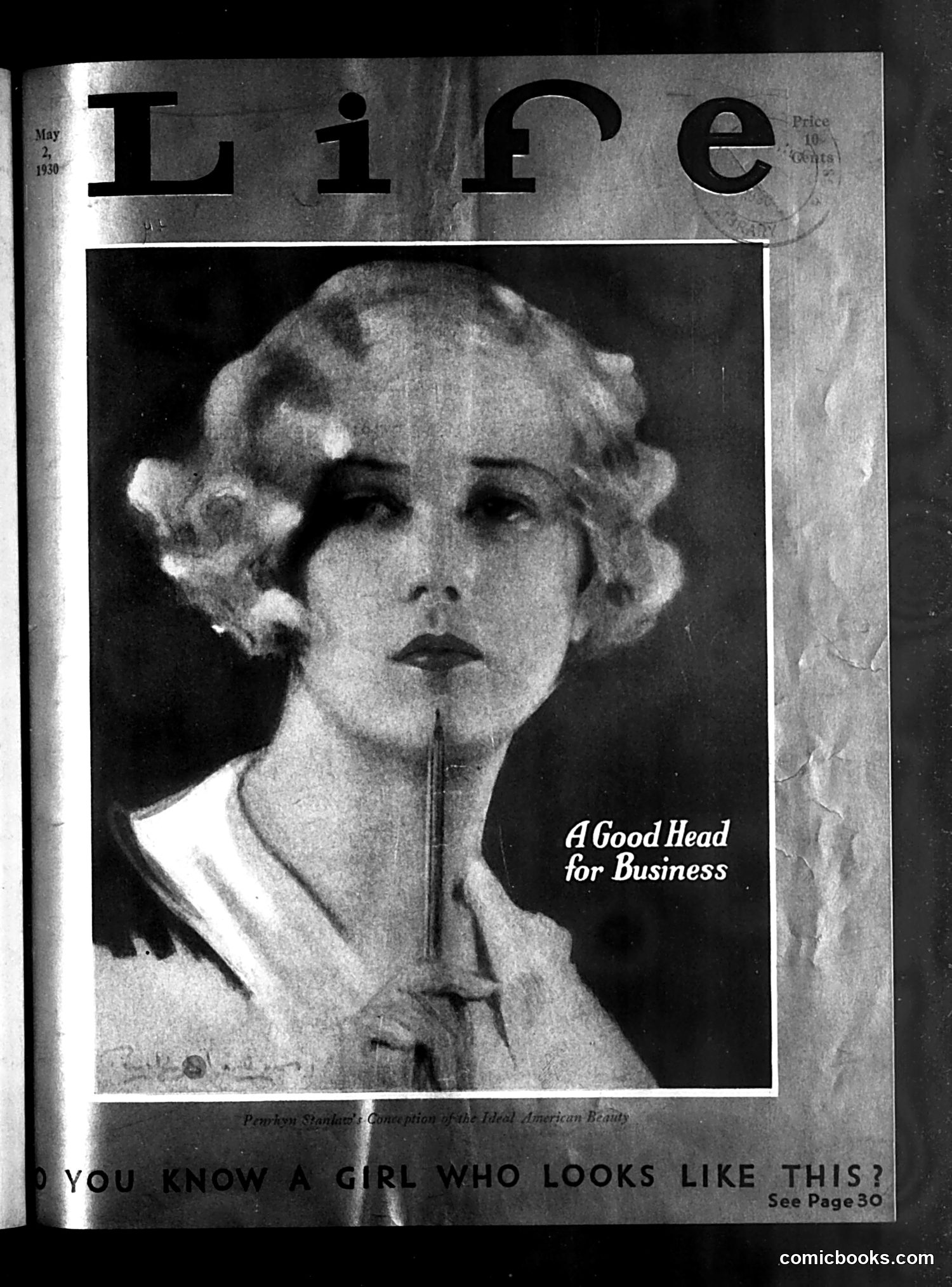
# Life Magazine, May 2, 1930: "A Good Head for Business" This page features a portrait photograph with the caption "A Good Head for Business" and a subtitle attributing it to "Penrhyn Staniaws's Conception of the Ideal American Beauty." The satirical point appears to be commentary on 1930s beauty standards and their relationship to women in business. The phrase "A Good Head for Business" is a double entendre—literally about business acumen, but paired with the portrait, it suggests ironic commentary on whether women were valued for their minds or appearance in professional contexts. The closing question "Do You Know a Girl Who Looks Like This? See Page 30" indicates this was part of a larger feature in the magazine, likely continuing the satirical examination of idealized femininity and female participation in the business world during the early Depression era.
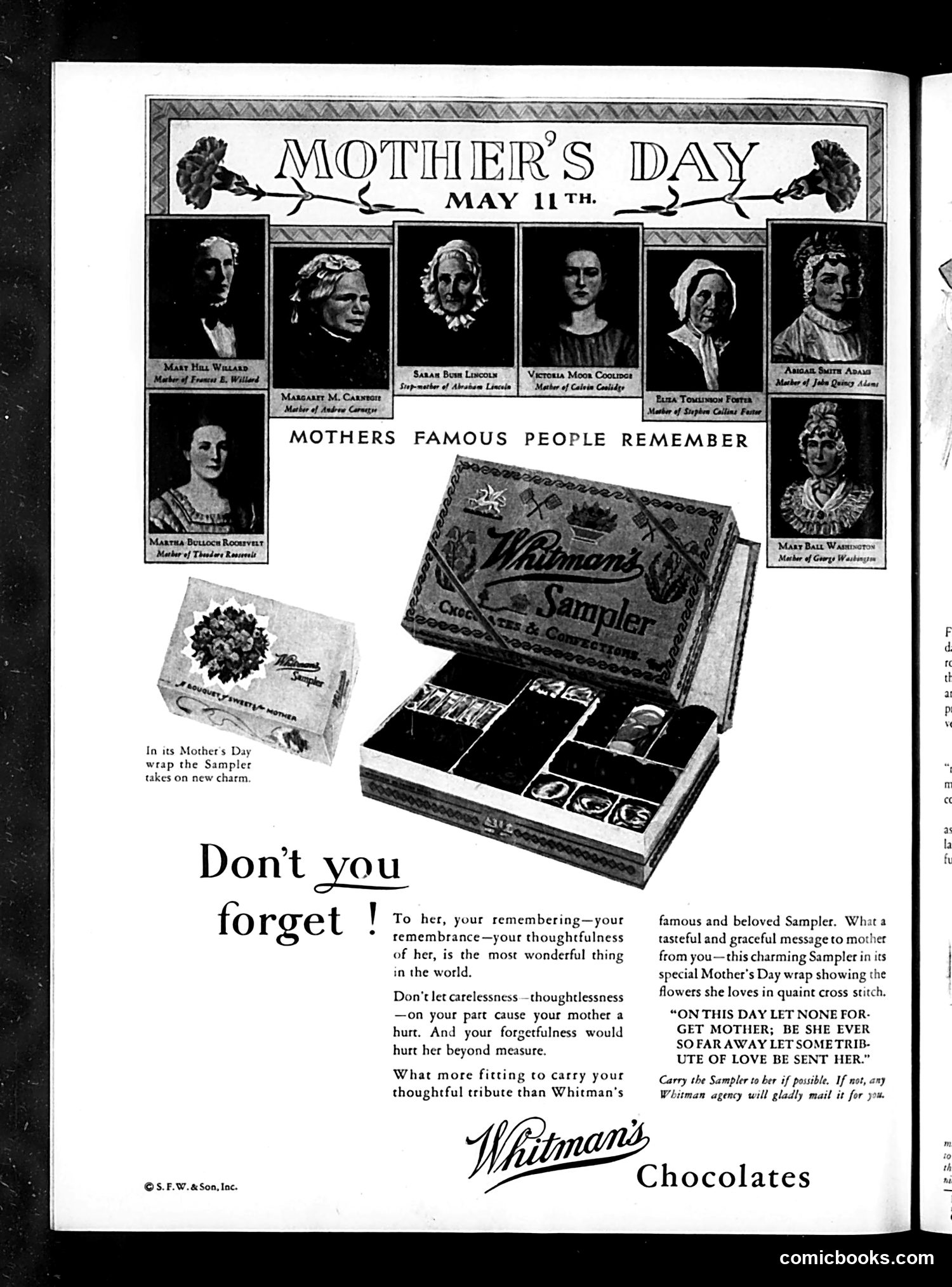
# Mother's Day Advertisement Analysis This is a **Whitman's Chocolates advertisement**, not a political cartoon. The page celebrates Mother's Day (May 11th) by featuring portraits of famous historical mothers, including: - Mary Hale Willard (mother of Francis E. Willard) - Margaret M. Carmody (mother of Sidney Carmody) - Sarah Bush Lincoln (Abraham Lincoln's stepmother) - Victoria Moor Coolidge (mother of Calvin Coolidge) - Edna Todhunter Foster (mother of Stephen Collins Foster) - Abigail Smith Adams (mother of John Quincy Adams) - Martha Bulloch Roosevelt (mother of Theodore Roosevelt) - Mary Ball Washington (mother of George Washington) The ad uses these prominent historical figures to elevate chocolate-giving as an appropriate Mother's Day tribute, suggesting that remembering mothers through Whitman's Sampler chocolates demonstrates thoughtfulness and love.
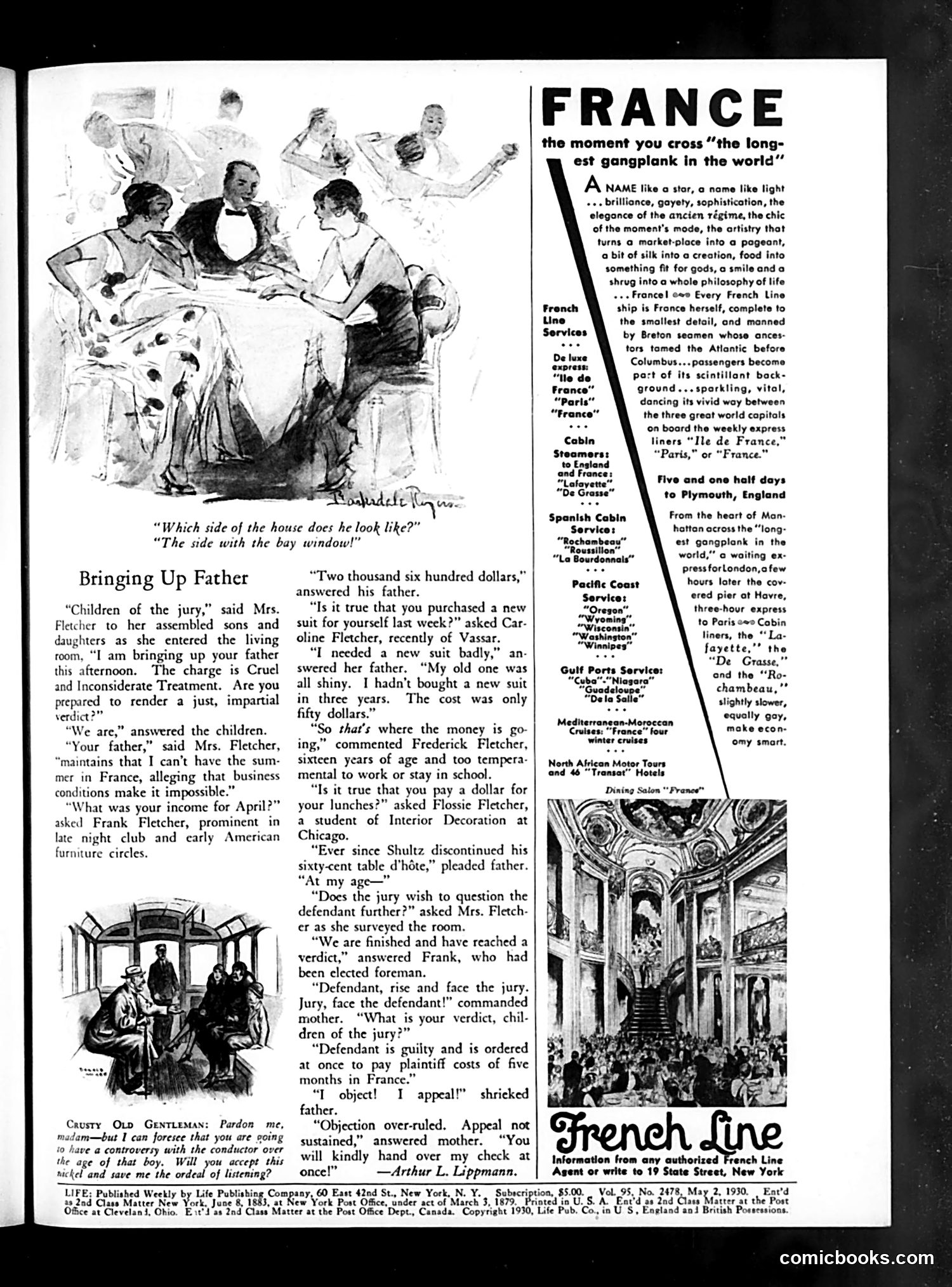
# "Bringing Up Father" - Life Magazine Cartoon This page features a **comic strip satirizing wealth and class pretension**. The scenario depicts a jury trial where Mr. Fletcher, a wealthy man, is being prosecuted for cruelty and "Inconstiderate Treatment" toward his father. The satire targets **nouveau riche hypocrisy**: Fletcher's children accuse him of denying their father adequate summer housing in France despite spending $2,600 on a new suit for himself. His defense—that he only pays one dollar for his father's lunches—exposes the absurdity of his misplaced priorities. The verdict declares Fletcher guilty, forcing him to pay plaintiff costs. His wife's final plea to "hand over my check at once!" suggests **marital financial control**, adding another layer of domestic comedy to the critique of selfish wealth management.
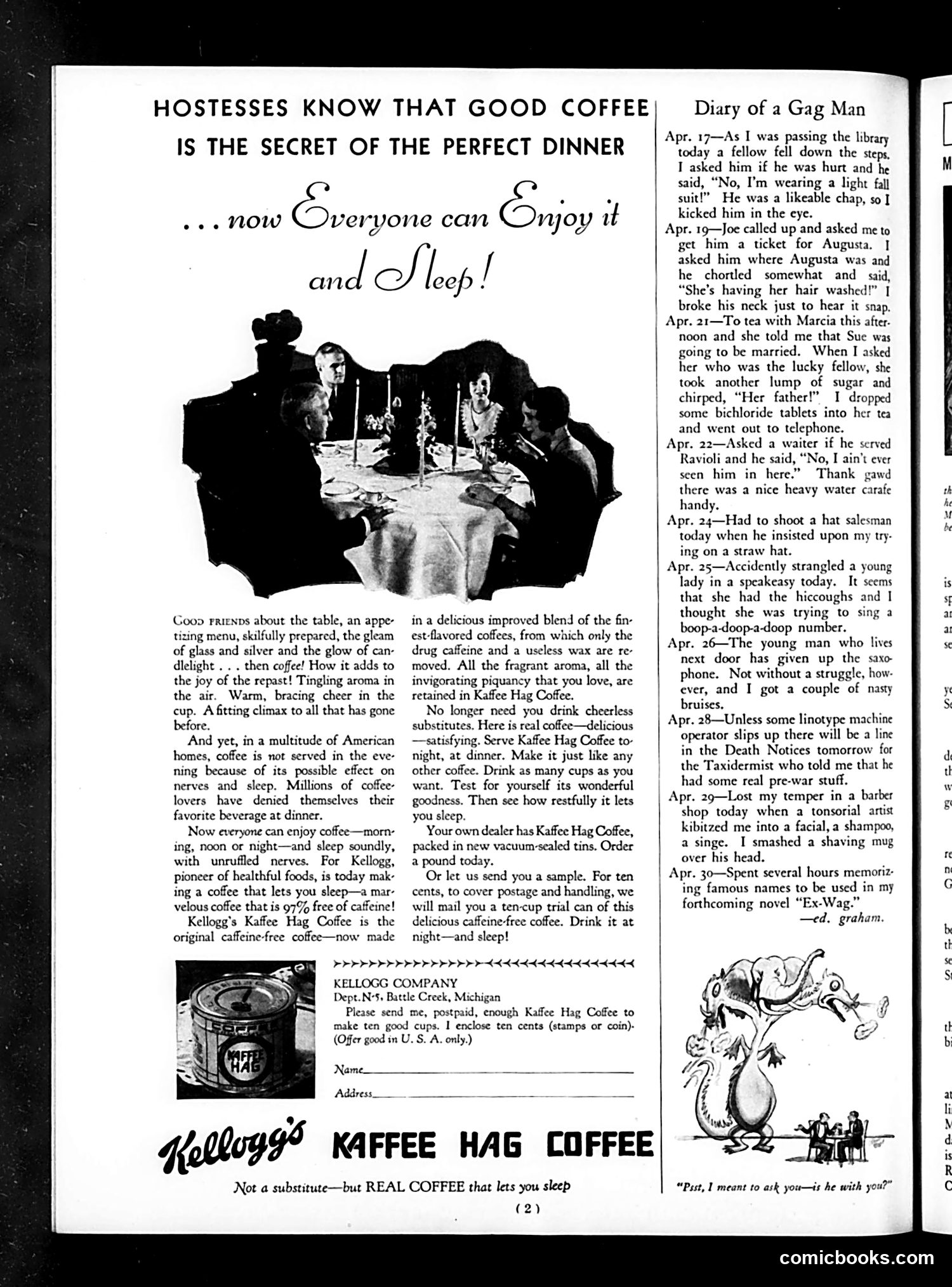
# Analysis This page is primarily a **caffeine-free coffee advertisement** for Kellogg's Kaffee Hag Coffee, occupying the left two-thirds. The ad emphasizes that the product allows people to "enjoy" coffee at dinner and still "sleep" afterward—addressing a real concern of the era about coffee's stimulant effects keeping people awake. The right column contains "Diary of a Gag Man," a humor column with unrelated anecdotes (failed library visits, marriage announcements, hat salesmen, barber mishaps). The small cartoon at bottom right depicts a cherub-like figure, accompanying a caption about missing someone. The page reflects **early 20th-century advertising** targeting anxious consumers: the ad's core pitch—real coffee taste without caffeine's drawbacks—would have resonated with health-conscious dinner hosts wanting social sophistication without sleep disruption.
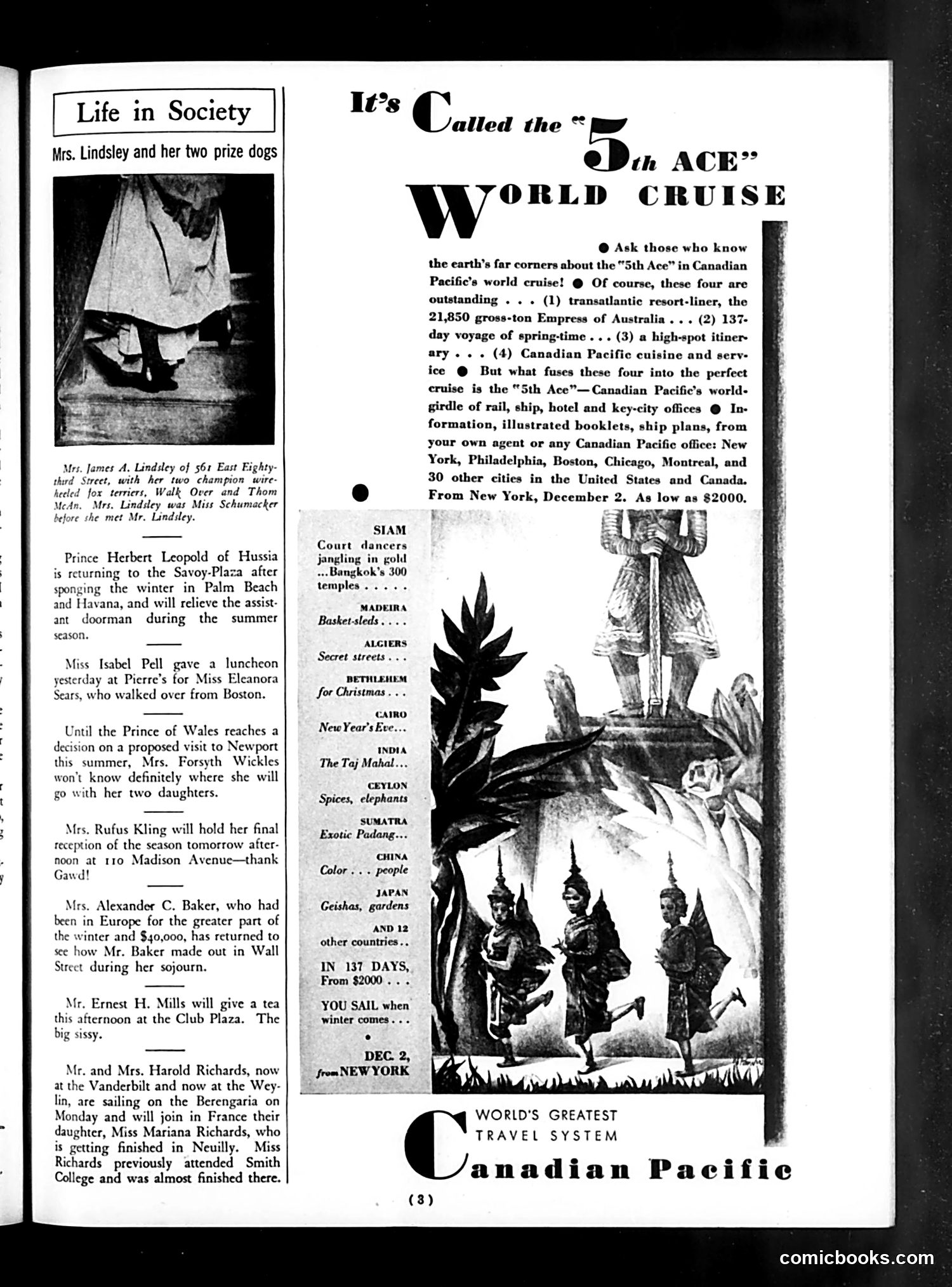
# Life Magazine Page Analysis This page is primarily **advertising and society gossip** rather than satirical content. The left column ("Life in Society") reports on wealthy New York socialites: Mrs. Lindsley's prize dogs, Prince Herbert Leopold's winter plans, and various society events. These brief items document the leisure activities of the upper class. The right side is a **travel advertisement** for Canadian Pacific's "5th Ace" world cruise, promoting an around-the-world voyage departing December 2 from New York. The exotic imagery—temples, palm trees, dancers—appeals to affluent readers seeking luxury travel experiences. This layout reflects *Life* magazine's dual purpose: documenting high-society activities while advertising luxury goods and services to its wealthy readership. There is no political satire visible on this page.
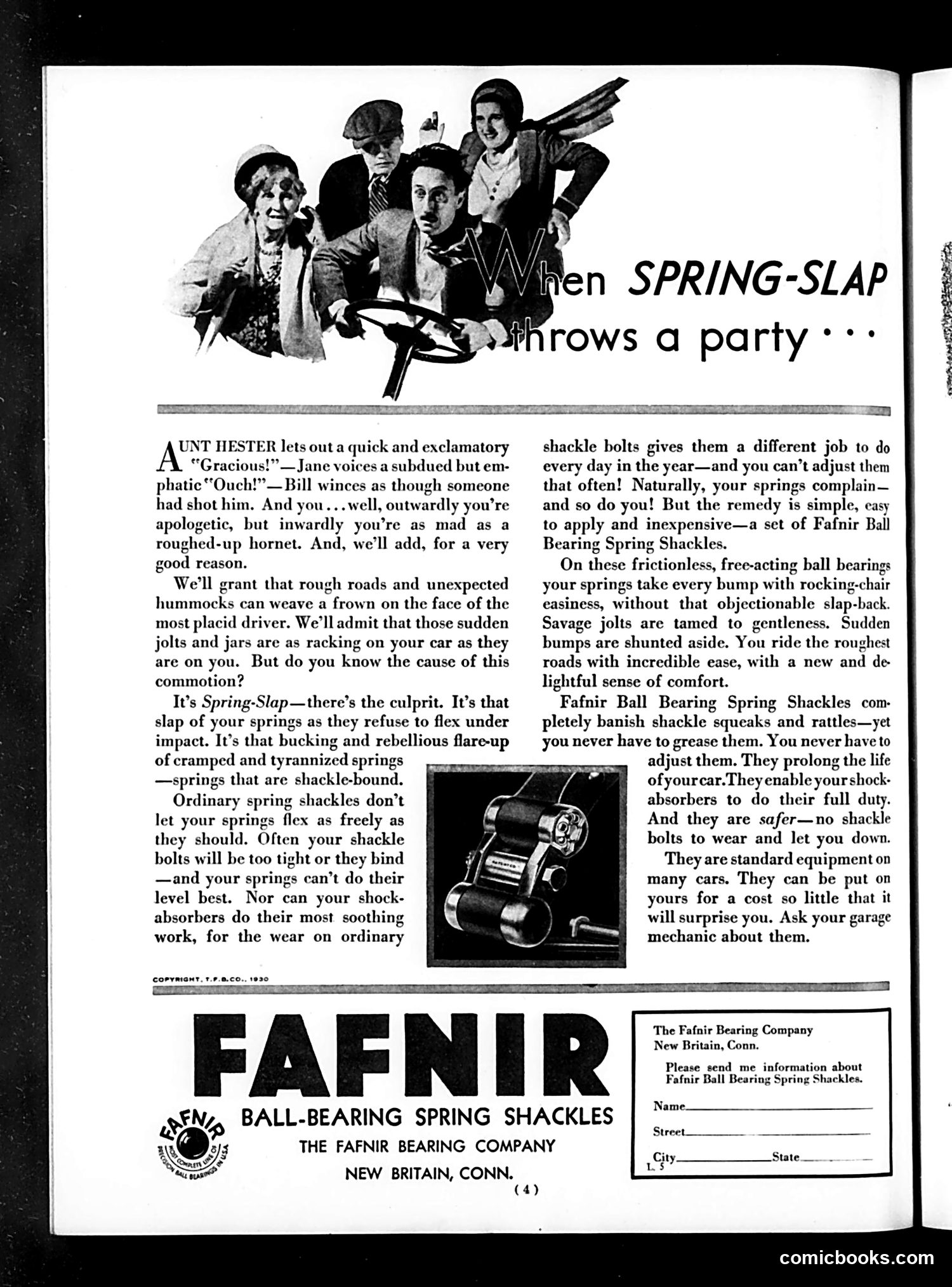
# Analysis This page is primarily **a comic advertisement** for Fafnir Ball Bearing Spring Shackles, an automobile suspension component. The comic strip at top depicts four people (appearing to be from a slapstick film) experiencing violent jolting in a car, with text introducing "Spring-Slap" as the problem. The advertisement uses humor to explain a practical automotive issue: poorly designed springs cause uncomfortable, dangerous bumping and jarring on rough roads. The product solution—ball-bearing spring shackles—is presented as eliminating this problem through smoother suspension. The ad emphasizes benefits: no greasing needed, longer car life, and improved comfort. The comedic setup is straightforward product-focused advertising typical of 1920s-30s magazines, using exaggerated physical comedy to make a mechanical concept relatable to everyday car owners.
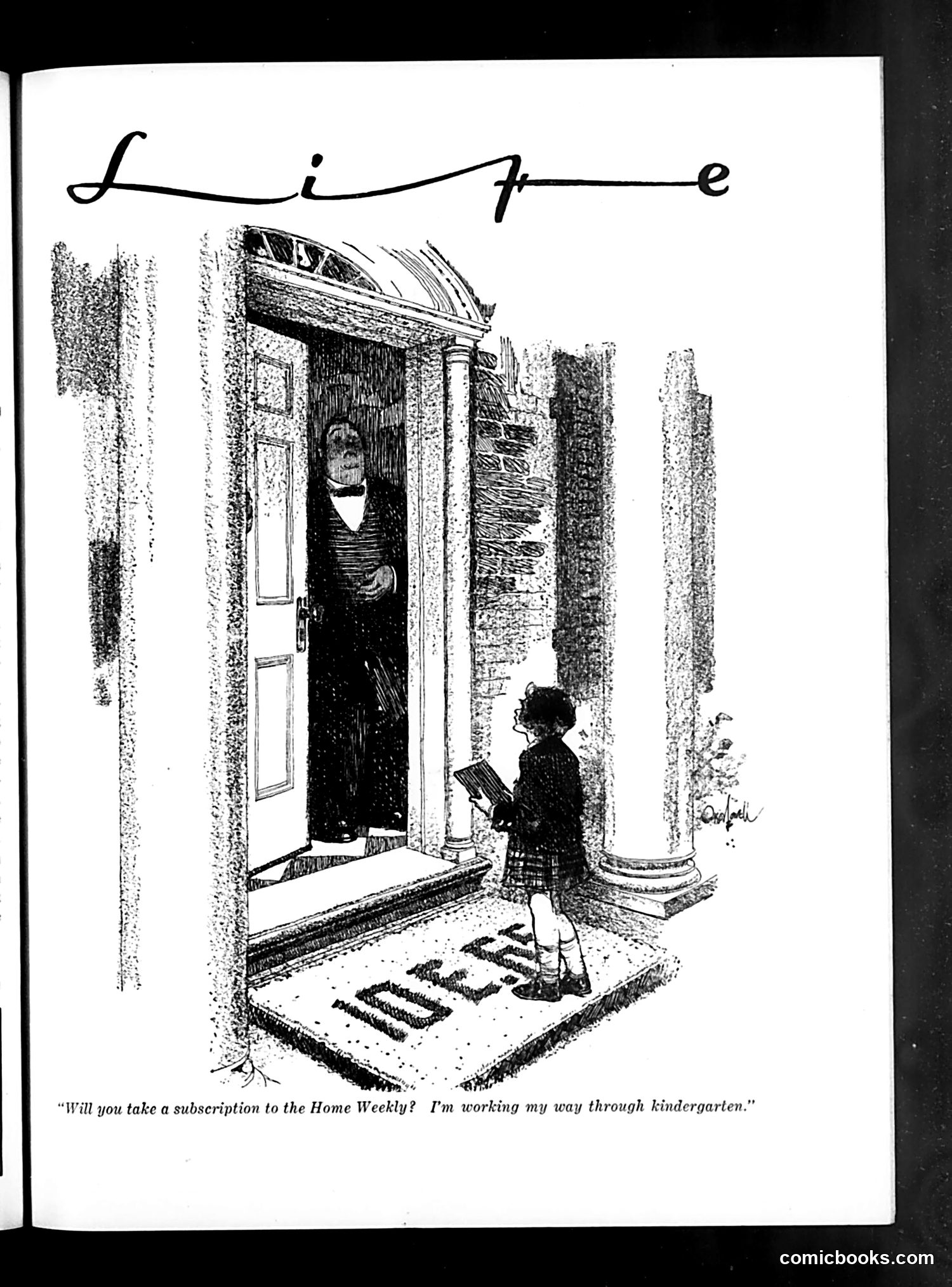
# Analysis This cartoon shows a young girl selling magazine subscriptions door-to-door, stating she's "working my way through kindergarten." The humor targets two social phenomena: 1. **Child labor/economic hardship**: The absurdity of a kindergarten-age child needing to work for education expenses satirizes economic inequality and families' financial struggles. 2. **Magazine subscription sales culture**: Door-to-door subscription selling was common in this era, often conducted by students or children to fund schooling. The joke suggests this system has become so extreme that even pre-school children now participate. The title "Life" appears at top. The cartoon critiques both economic conditions forcing child participation in commerce and the aggressive subscription-sales culture of the period, presenting this dystopian scenario as satirical commentary on American capitalism and education funding.
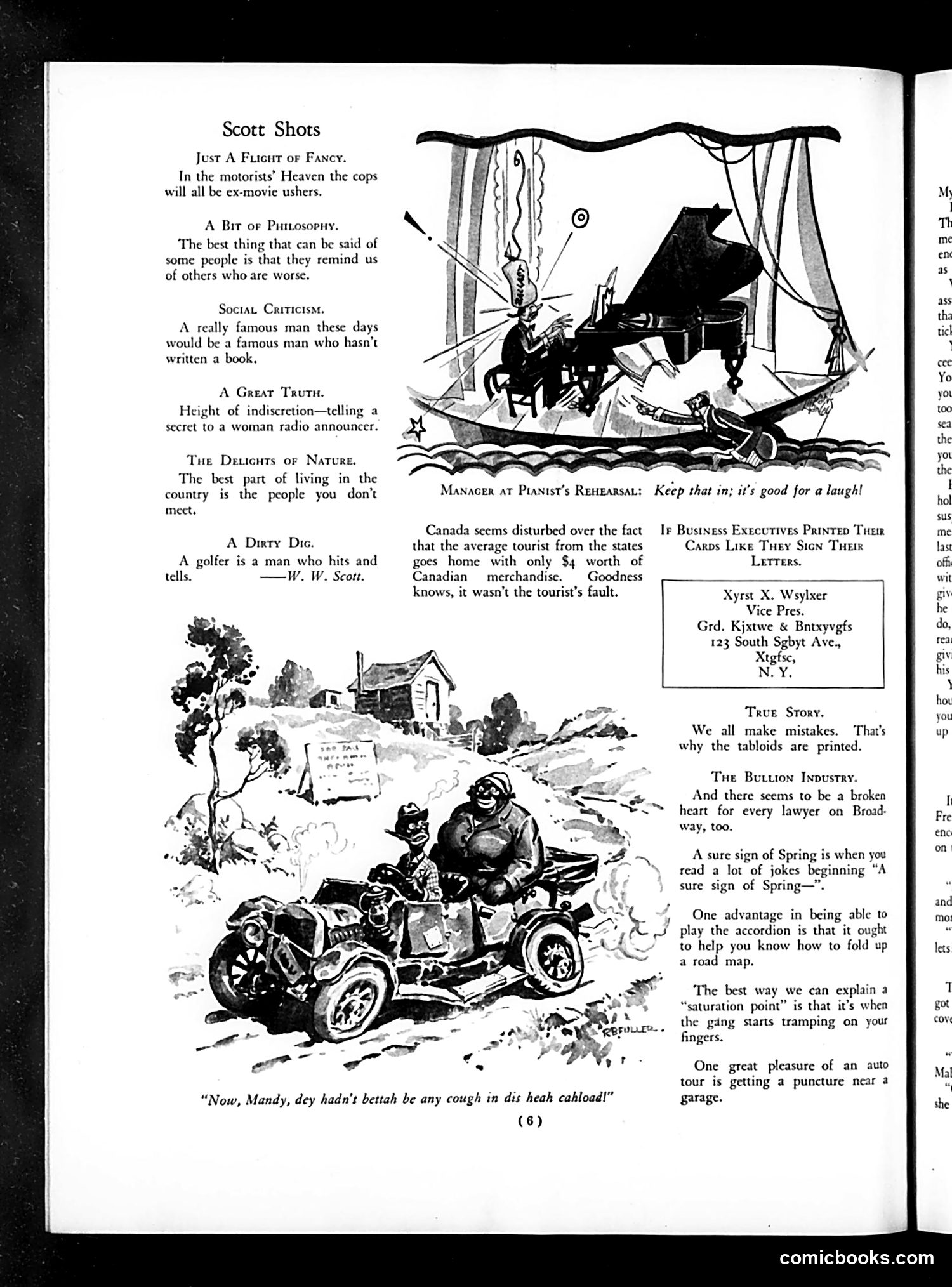
# "Scott Shots" - Life Magazine Humor Page This is a humor column featuring short satirical observations and two cartoon illustrations. The top cartoon shows a pianist at rehearsal with the caption "Keep that in; it's good for a laugh!" — suggesting accidental musical errors can be entertainingly preserved. The lower cartoon depicts a family in an old car on a rural road, captioned "Now, Mandy, dey hadn't bettah be any cough in dis heah cahload!" The exaggerated dialect and cramped vehicle suggest early automobile tourism, poking fun at families crowded into unreliable cars for country outings — a common recreational activity of the era. The surrounding "Scott Shots" are brief witticisms on topics like philosophy, radio announcers, and spring season jokes — typical of this magazine's light satirical commentary on contemporary American life.
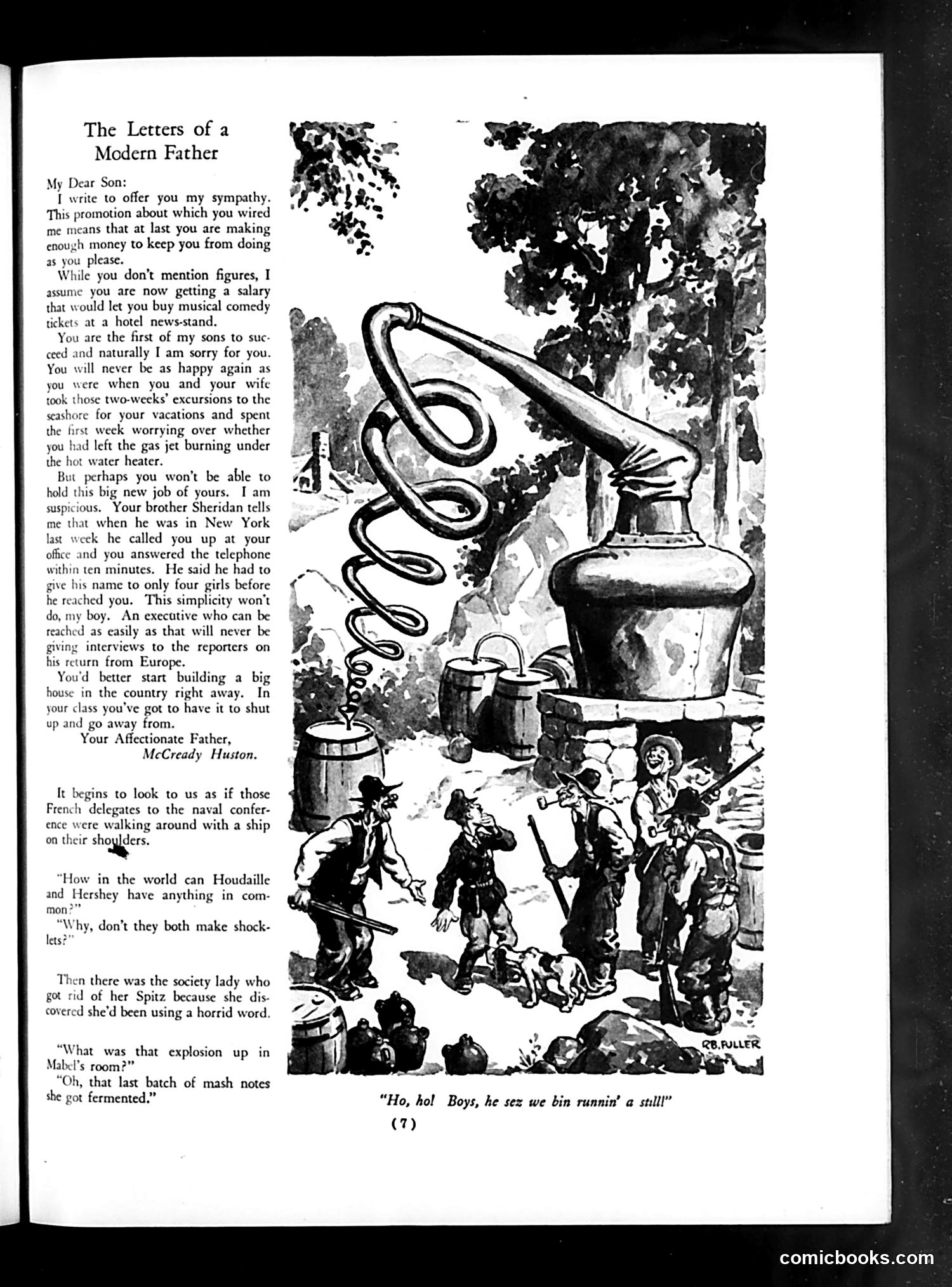
# Explanation for Modern Readers This page contains "The Letters of a Modern Father," a satirical column by McCready Huston. The father writes to congratulate his son on a promotion, then sarcastically undermines the achievement by noting the son will never be happy again and referencing his brother Sheridan's similar experience in New York. The accompanying cartoon illustrates unrelated comedic anecdotes: French naval delegates at a conference, a confusion about Houdini and Hershey (likely magician vs. chocolate maker), a society lady using an inappropriate word about Spitz dogs, and a joke about fermented mash notes exploding in someone's room. The humor relies on wordplay, puns about brand names, and genteel social embarrassment typical of early 20th-century satirical magazines.
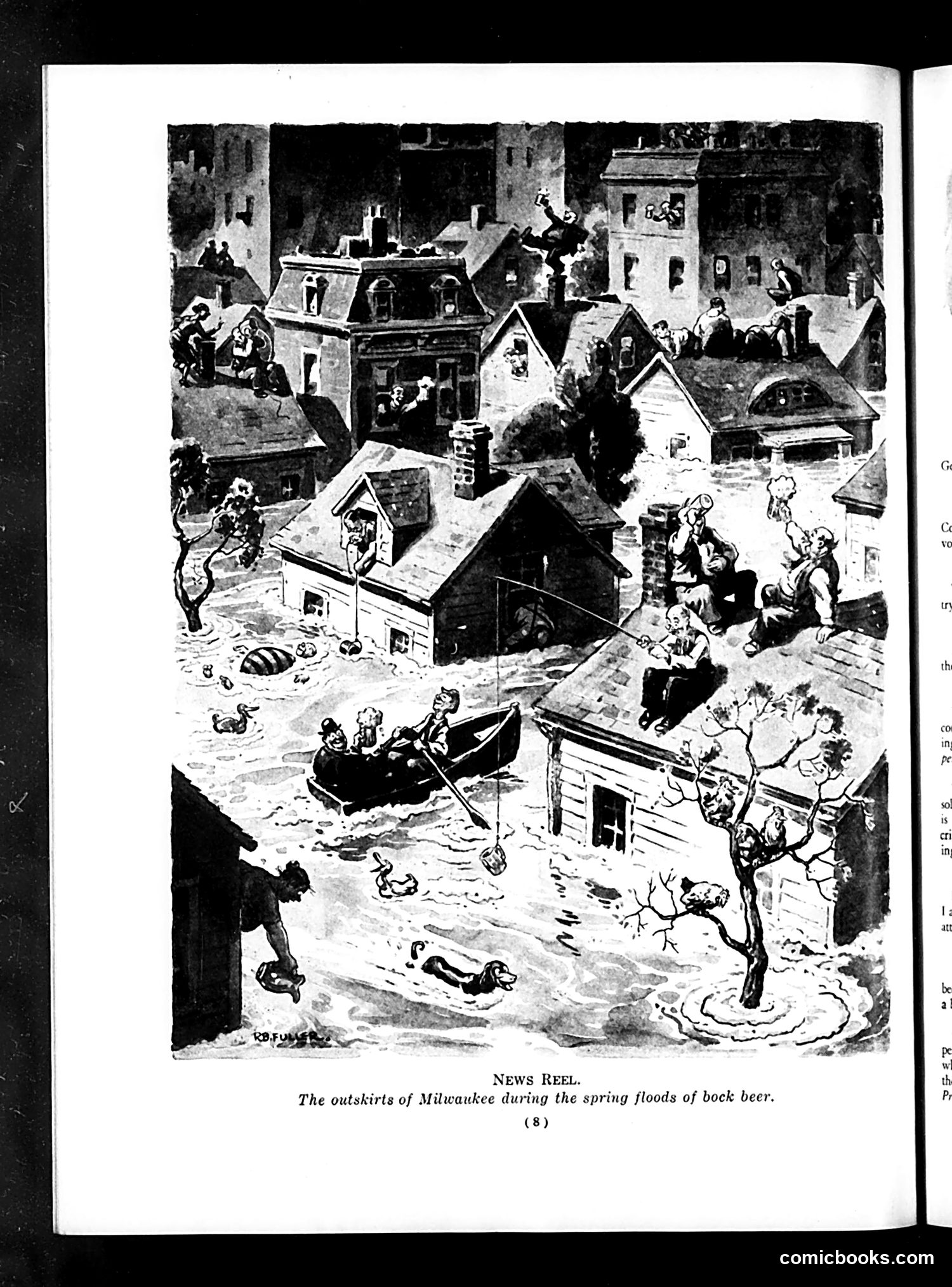
# Analysis This is a satirical illustration titled "News Reel: The outskirts of Milwaukee during the spring floods of bock beer." The cartoon uses a flooded landscape as metaphor for beer abundance. "Bock beer" is a strong German lager traditionally consumed in spring. The scene depicts Milwaukee's outskirts during what appears to be actual flooding, but the caption reframes it as excessive beer consumption rather than water overflow. The illustration shows people in various states of distress or intoxication amid buildings and flooded terrain—some in boats, others scattered about. The satire targets Milwaukee's reputation as a beer-producing city (heavily German-immigrant population) and suggests spring bock beer season creates such widespread drunkenness it's like a natural disaster flooding the area.
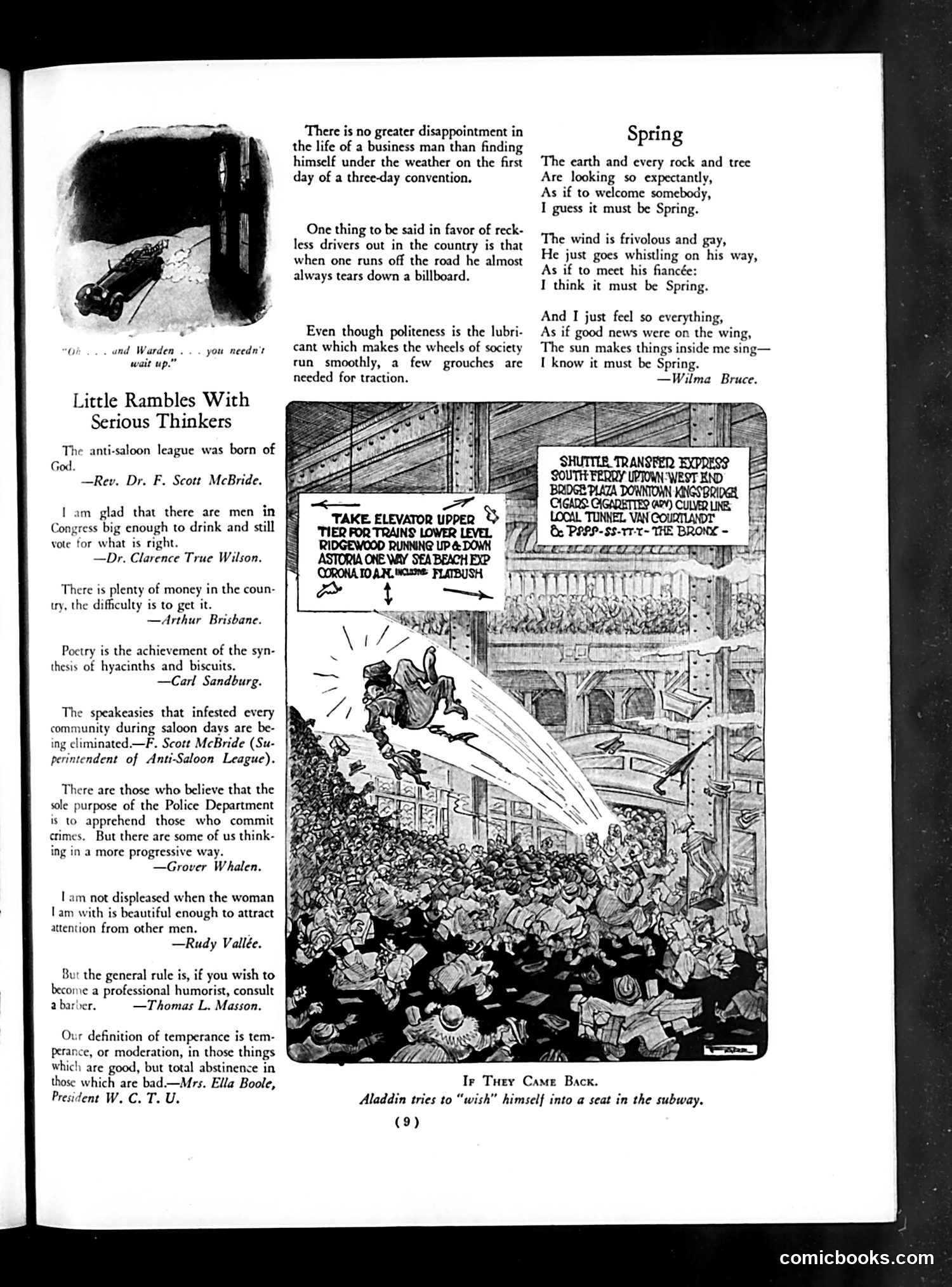
# Explanation for Modern Readers This page contains a poem titled "Spring" by Wilma Bruce and a satirical cartoon titled "If They Came Back," showing Aladdin attempting to "wish" himself into a subway seat. The cartoon mocks the chaos of crowded urban public transportation—specifically the New York City subway system (referenced in the signage). The joke is that even a magical figure like Aladdin, with his wish-granting lamp, cannot secure a seat in the impossibly packed subway. It's social satire about the indignity and impossibility of rush-hour commuting in a major city. The page also includes "Little Rambles with Serious Thinkers"—humorous quotes attributed to various public figures (Rev. Dr. F. Scott McBride, etc.) offering tongue-in-cheek observations about society, politics, and human nature, typical of Life magazine's satirical format.