A complete issue · 36 pages · 1930
Life — April 25, 1930
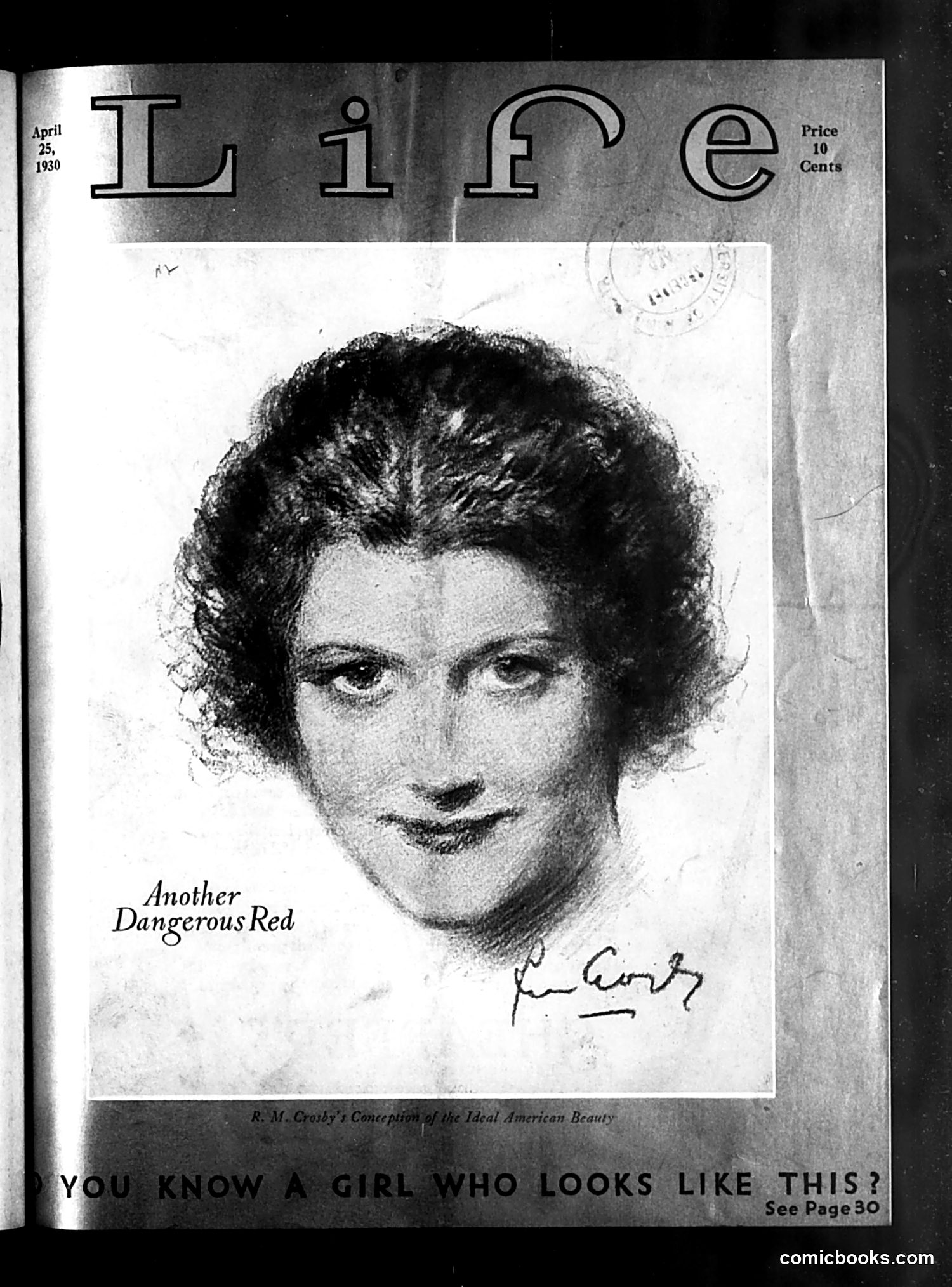
# Analysis This is a **Life magazine cover from April 25, 1930** (price 10 cents). It features a portrait of a woman with 1920s-style hair and makeup, labeled "Another Dangerous Red." The text at bottom reads: "YOU KNOW A GIRL WHO LOOKS LIKE THIS? See Page 90" **What this means:** This appears to be a satirical piece playing on the "Red Scare" — the 1920s-1930s American panic about communists and radicals. The phrase "Dangerous Red" likely mocks this hysteria by sarcastically suggesting that women with fashionable, stylish appearances (specifically the bobbed hair and makeup of the flapper era) might be secret communists. The interactive element ("You know a girl who looks like this?") invites readers to participate in the joke, suggesting the absurdity of judging ideology by appearance. This satirizes both anti-communist paranoia and 1920s beauty standards simultaneously.
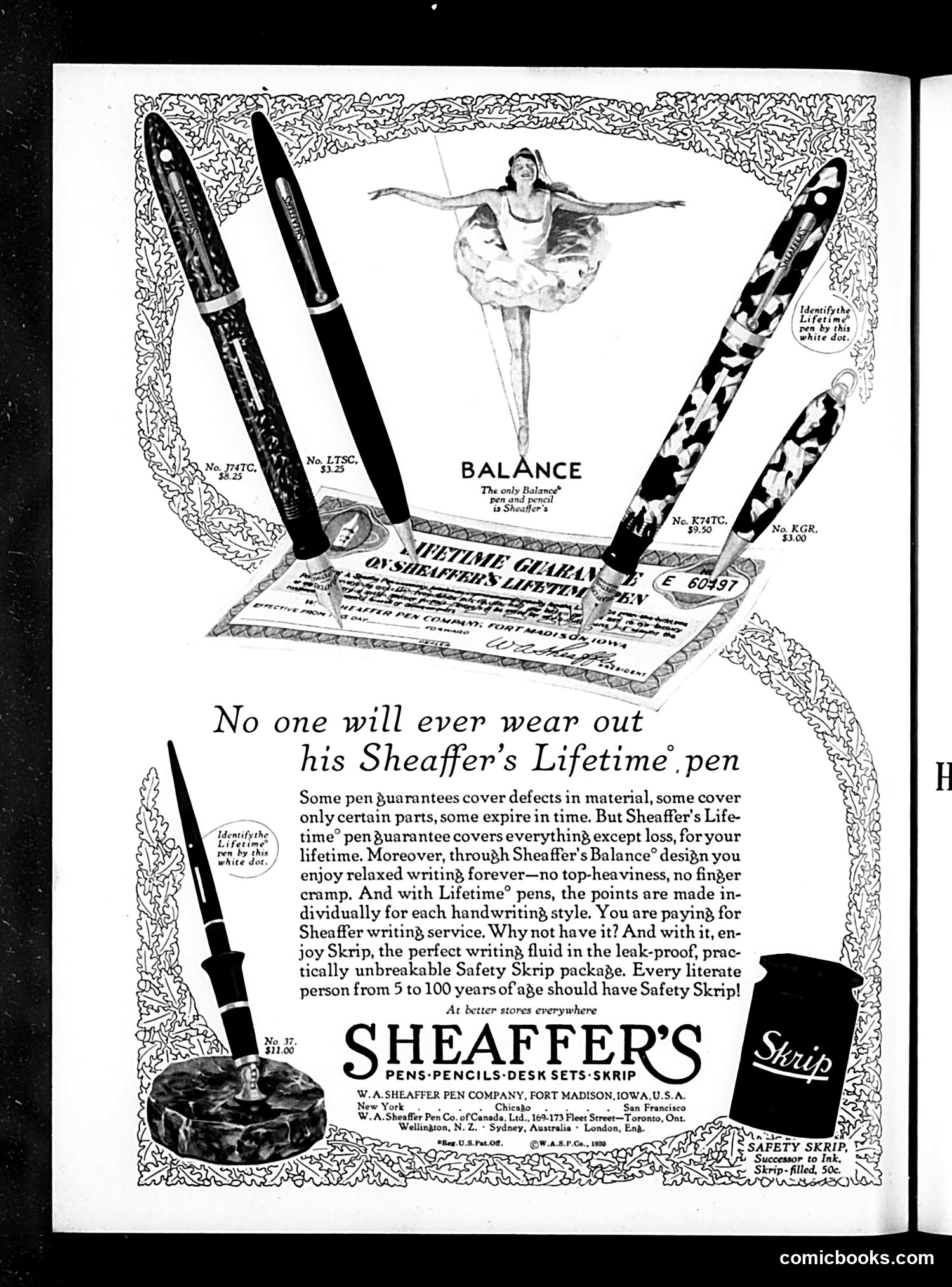
# Analysis This is a **Sheaffer pen advertisement**, not political satire. The page features a stylized illustration of a ballerina in an elegant pose, surrounded by ornate decorative borders. Four different Sheaffer pen models are displayed around her, each labeled with model numbers and prices (ranging from approximately $3.00 to $5.00). The ad's core message appears in the headline: "No one will ever wear out his Sheaffer's Lifetime pen." The text emphasizes the pen's lifetime guarantee—covering everything except loss—and promotes its comfortable design and balanced construction. The ballerina image symbolizes grace, refinement, and sophisticated writing. This is straightforward consumer advertising for fountain pens, targeting educated, affluent buyers who valued durability and elegant design.
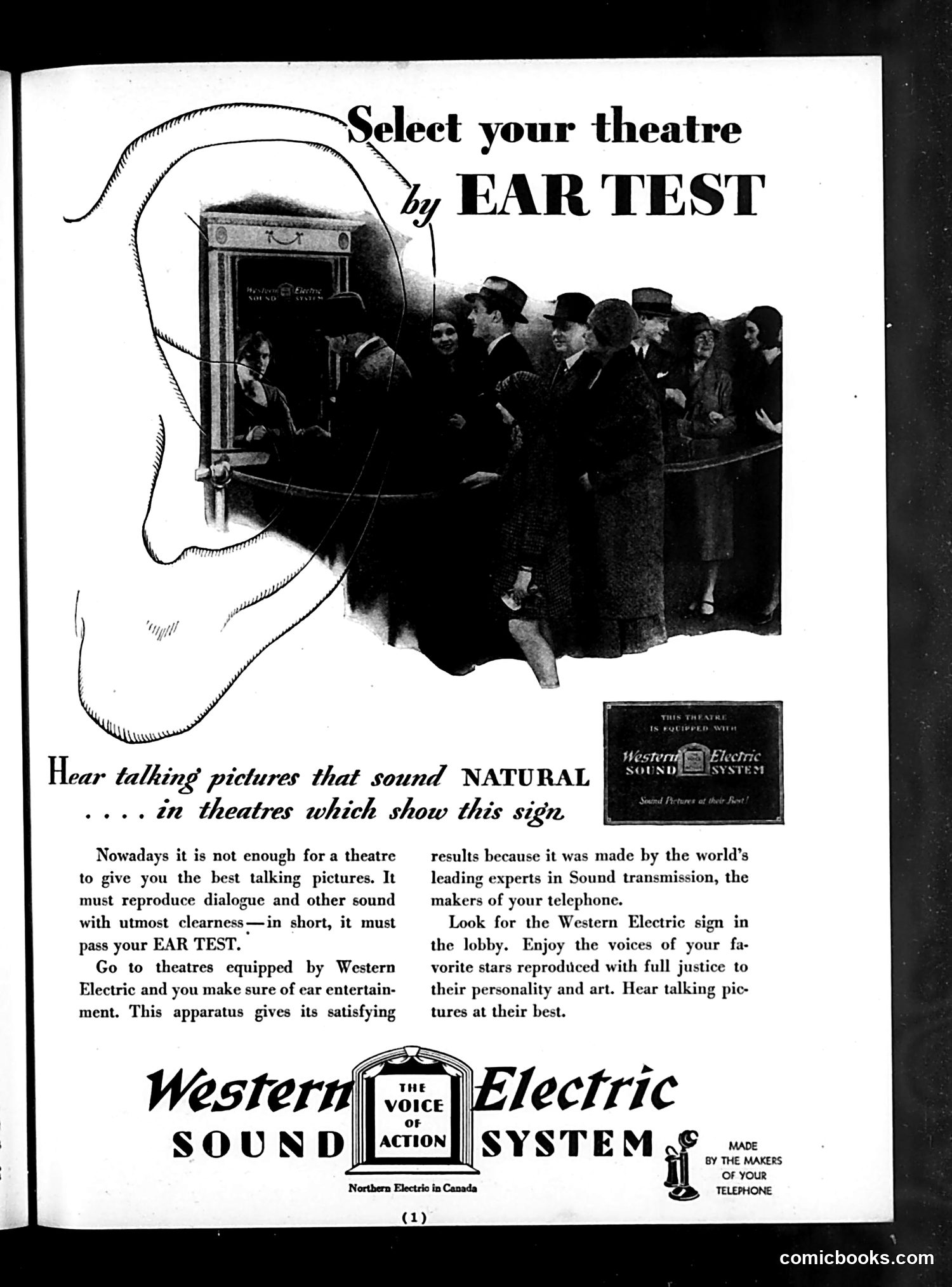
# Western Electric Sound System Advertisement This is a **advertisement, not satire or political commentary**. It promotes Western Electric's sound reproduction technology for movie theatres during the early "talking pictures" era. The image shows a large ear illustration with people lined up at a theatre entrance, suggesting audiences should test sound quality before choosing where to see films. The ad emphasizes that merely showing talking pictures isn't enough—theatres must reproduce dialogue with "utmost clearness" to pass the "ear test." The advertisement references the competitive race among theatres to install quality sound systems as cinema transitioned from silent to synchronized sound films. Western Electric, made by telephone manufacturers, positioned their "Voice of Action" system as the superior choice for reproducing actors' voices naturally.
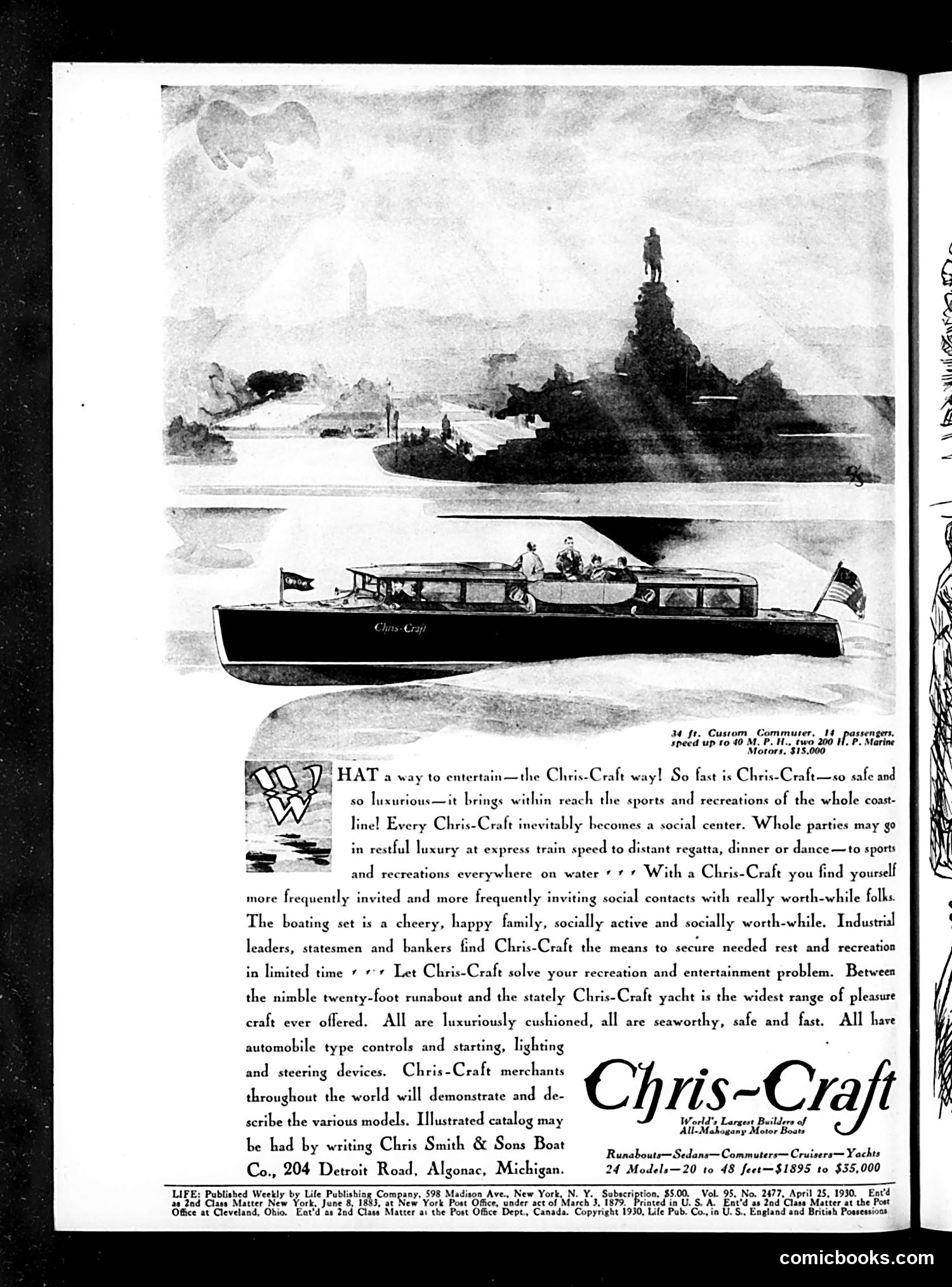
# Chris-Craft Advertisement Analysis This page is primarily a **commercial advertisement** for Chris-Craft motorboats, not a political cartoon. The ad uses aspirational lifestyle messaging typical of 1920s-30s marketing. The top illustration shows a scenic waterfront with a monument and elegant boat, while the central image depicts the "34 ft. Custom Commuter" vessel. The accompanying text promotes Chris-Craft boats as status symbols for the wealthy—vehicles for "social contacts with really worth-while folks" and "express train speed" entertainment access. The satire, if present, is subtle: the ad's breathless language about how boat ownership creates social prestige and frequent invitations gently mocks the leisure class's aspirations during what appears to be the interwar period. However, this is primarily **straightforward advertising** rather than satirical commentary.
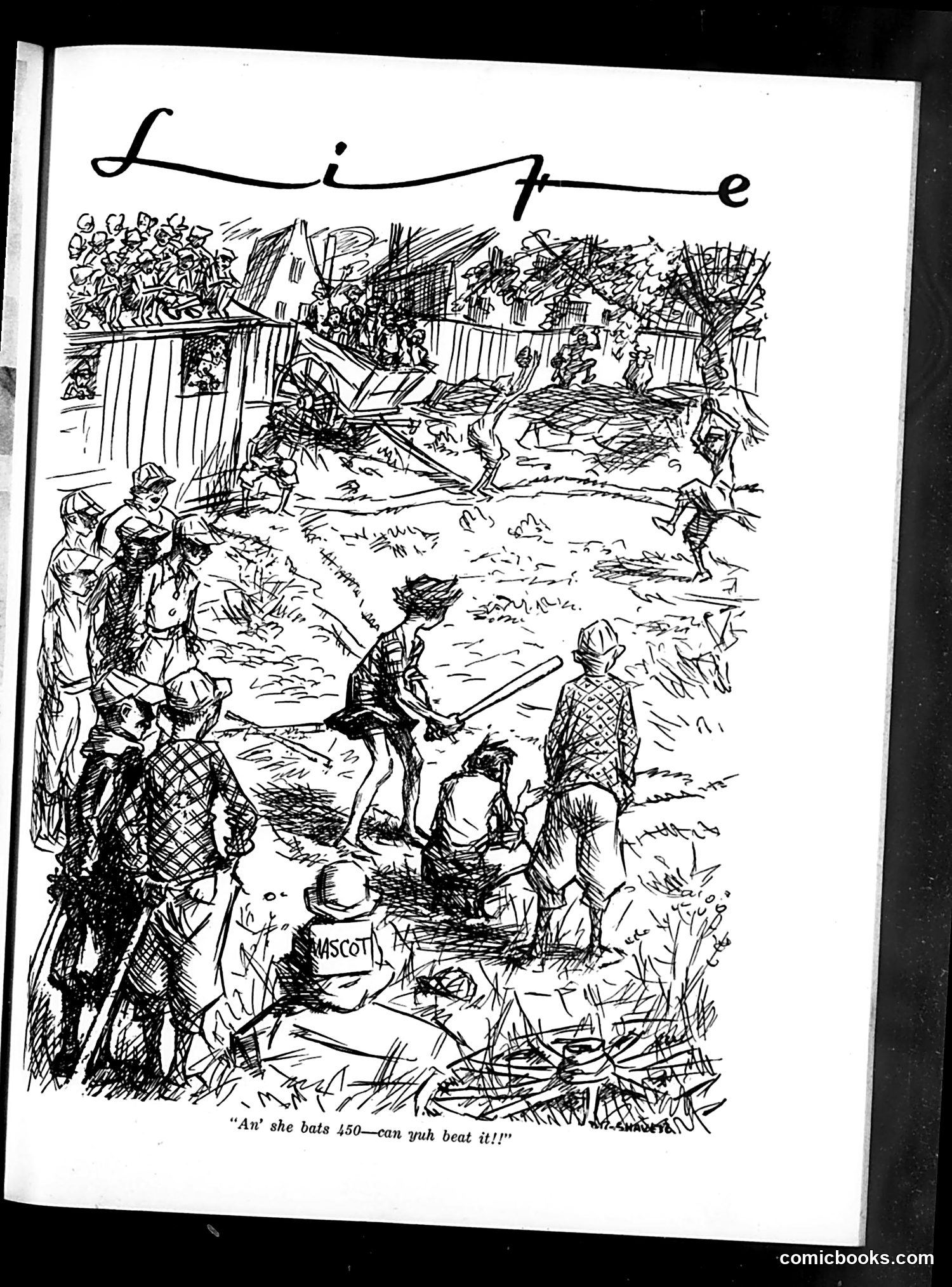
# "Life" Baseball Cartoon Analysis This is a sketch depicting a baseball game, likely from the early 20th century based on the art style. The caption reads: "An' she bats 150—can yuh beat it!!" The joke appears to be satirizing either: 1. A woman playing baseball competitively (unusual for the era), or 2. A female spectator's surprising athletic knowledge or boldness in claiming someone bats .150 (a poor batting average) The crowded stadium scene with onlookers suggests public surprise or scandal at a woman's involvement in baseball—whether as player or vocal fan. The exclamatory tone indicates this was meant as humorous commentary on gender roles, presenting women's participation in or expertise about baseball as comedically shocking to contemporary readers.
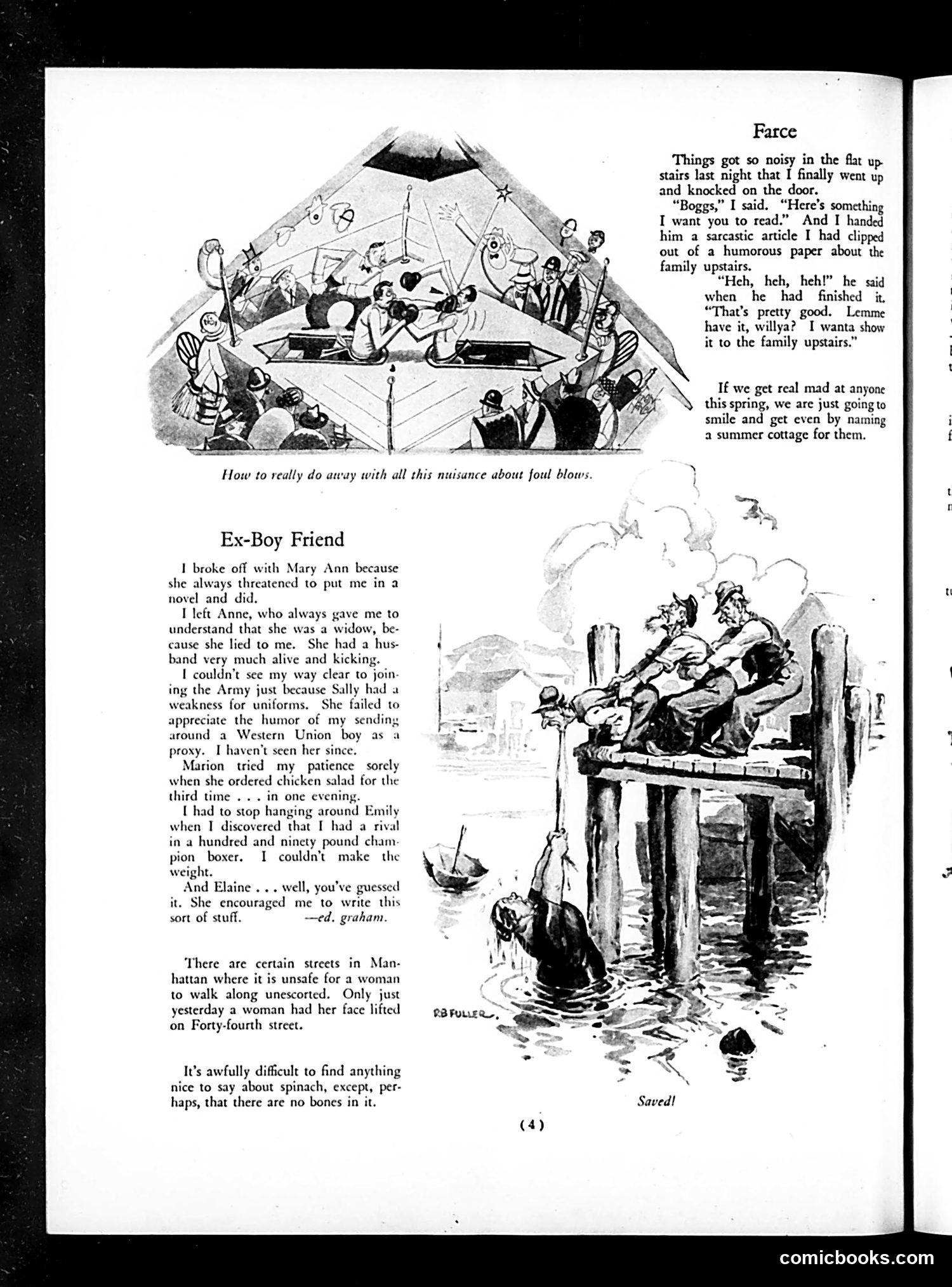
# Analysis of Life Magazine Page This page contains two humorous pieces: **"Farce"** (top): A satirical illustration showing a crowded, chaotic interior scene labeled "How to really do away with all this nuisance about foul blows." The cartoon appears to mock domestic discord or family quarreling—the narrator describes noise upstairs and delivers a sarcastic newspaper article about family disputes to resolve conflict through humor rather than confrontation. **"Ex-Boy Friend"** (bottom): A comedic column about romantic entanglements, describing the narrator's breakup with Mary Ann and subsequent romantic complications involving multiple women. The accompanying illustration shows people in a rowboat, captioned "Saved!" The humor derives from the narrator's complicated relationship history and the implication of being rescued from romantic chaos. Both pieces use light satire to mock common social situations of the era.
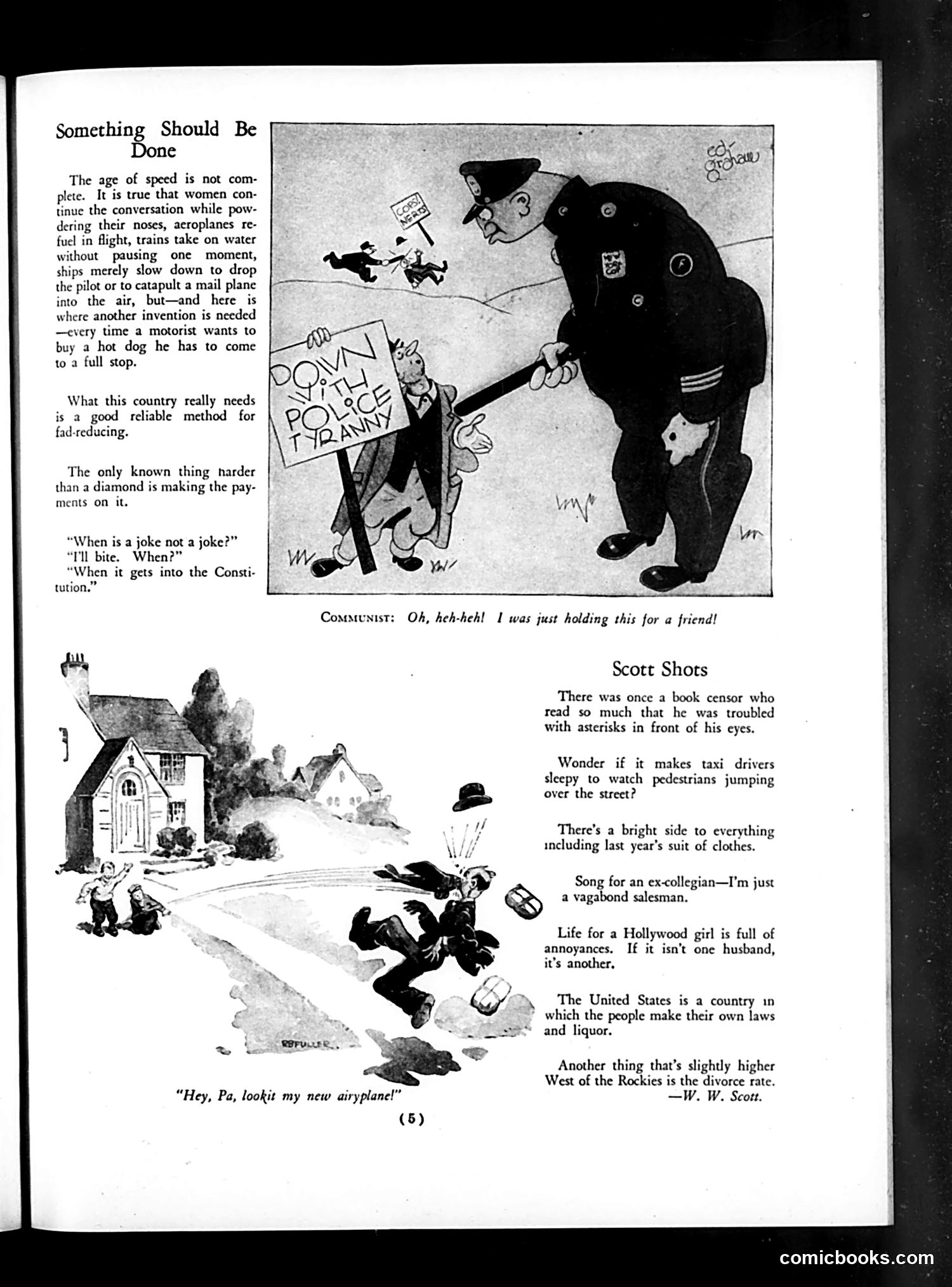
# Political Cartoon Analysis **Top Cartoon ("Something Should Be Done"):** This cartoon satirizes Communist agitation during the era of Red Scare anxieties. A large police officer confronts a man holding a sign reading "DOWN WITH THE POLICE AND ARMY"—the policeman's caption claims he was "just holding this for a friend." The satire mocks how Communist sympathizers or agitators would deny their political activities or claim innocent involvement. The accompanying text uses humor to critique both rapid modernization and the difficulty of regulating dangerous ideologies, comparing the challenge to stopping a motorist wanting a hot dog. **Bottom Section ("Scott Shorts"):** This is a collection of brief humorous observations and social commentary, including jabs at censorship, Hollywood scandals, and divorce rates in the American West.
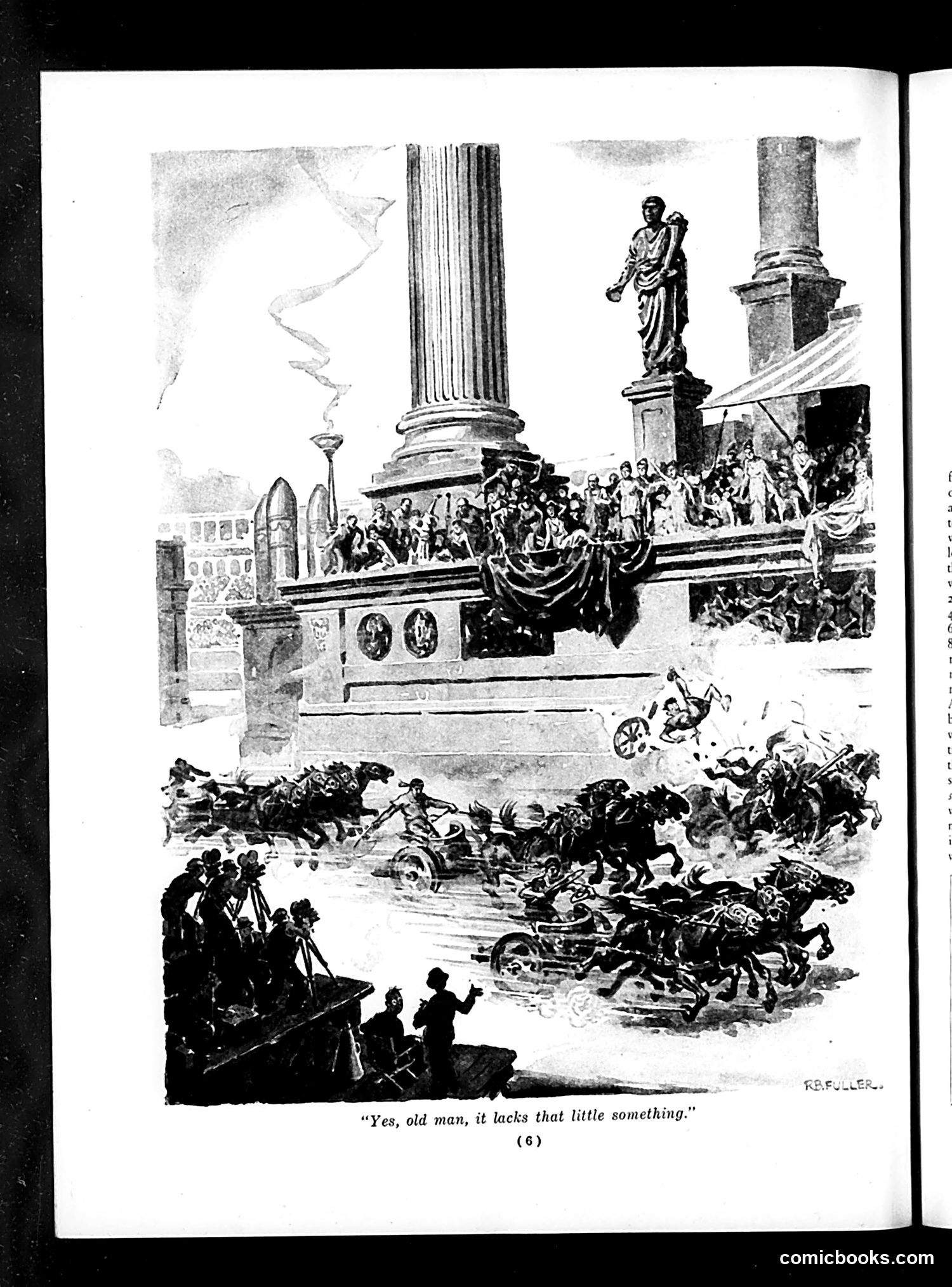
# Analysis This is a satirical cartoon depicting a chaotic scene at what appears to be a public monument or gathering place. The image shows classical architecture with columns and a statue, overlooking tumultuous activity below—multiple horse-drawn carriages and figures in apparent disorder or conflict. The caption reads: "Yes, old man, it lacks that little something." The cartoon appears to be social or political satire, likely commenting on public disorder, mismanagement, or a failed event. The contrast between the dignified classical setting above and the chaos below suggests irony about governmental or institutional competence. Without additional context about Life magazine's publication date, the specific event being referenced remains unclear, though the overall message seems critical of poor organization or leadership.
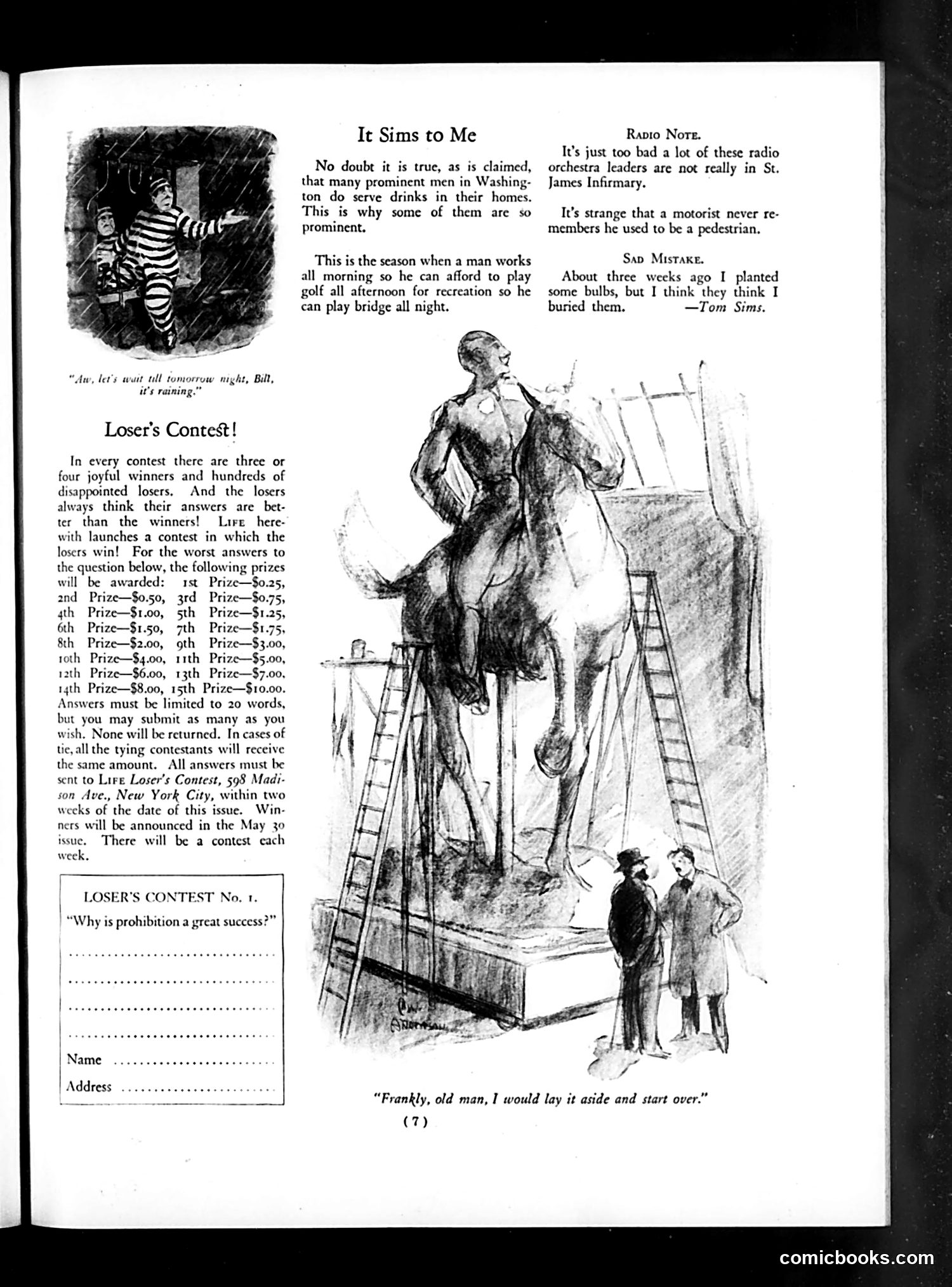
# Analysis of Life Magazine Page This page contains satirical commentary and a contest feature rather than political cartoons. **"It Sims to Me"** features brief social observations—including jabs at Washington politicians who "serve drinks in their homes" (likely referencing Prohibition era hypocrisy), radio orchestra leaders, and motorists. The tone is light mockery of contemporary urban society. **"Loser's Contest"** is a humor competition where readers submit answers to "Why is prohibition a great success?"—the joke being that Prohibition was widely considered a *failure*, so the worst answers win prizes. This satirizes Prohibition's unpopularity while mocking those defending it. The illustration shows a man on a tall structure contemplating suicide with onlookers below—likely commenting on economic despair, though the specific context is unclear without the caption's full context.
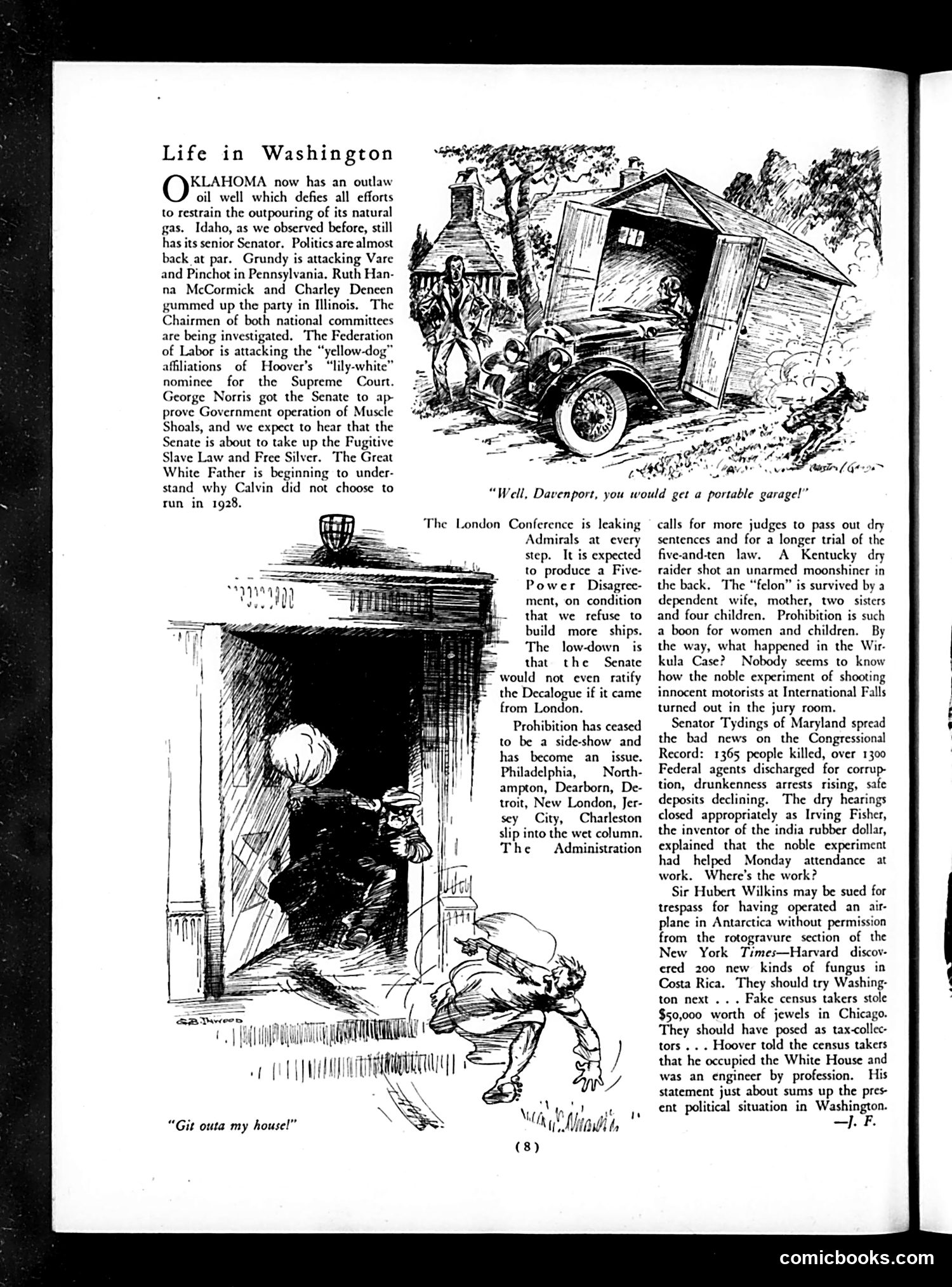
# "Life in Washington" - Political Satire, circa 1928 This page contains two editorial cartoons mocking Washington politics and Prohibition enforcement. The top cartoon shows someone arriving at a house with a motorcycle, captioned "Well, Davenport, you'd get a portable garage!" — likely satirizing ineffective Prohibition enforcement or political hypocrisy. The bottom cartoon, "Git outa my house!" depicts someone being forcibly removed, possibly commenting on political upheaval or Congressional conflicts. The accompanying text discusses real 1928 events: oil scandals (Oklahoma), Senate politics, the London Naval Conference, Prohibition's failures (Philadelphia and other cities mentioned), Congressional corruption charges, and census-taking controversies. The final paragraph attributes commentary to "J.F." and notes Hoover's claim to have been an engineer—suggesting the author views the current political situation as absurd or incompetent.
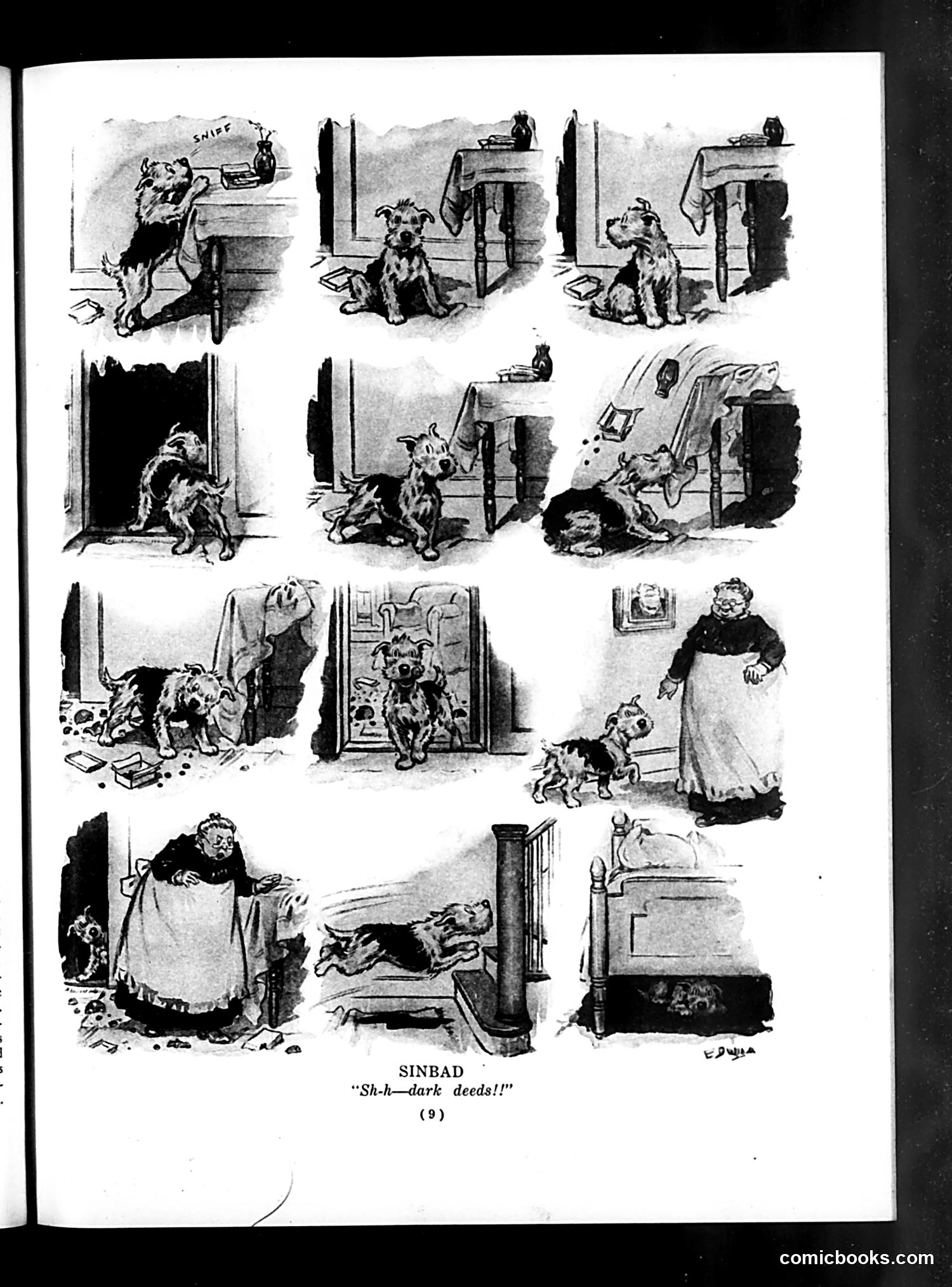
# Analysis of "Sinbad" Comic Strip This appears to be a sequential comic strip titled "Sinbad" with the caption "Sh-h—dark deeds!!" The strip uses a dog character (appearing to be a terrier or similar breed) as the protagonist engaged in various mischievous activities throughout a household. The humor derives from slapstick domestic chaos: the dog steals from a kitchen counter, breaks dishes, creates mayhem with household items, and generally causes destruction while evading or interacting with human inhabitants (depicted as a chef and domestic workers). The satire likely comments on the uncontrollable nature of pets or servants in domestic spaces—typical themes in early 20th-century humor. The wordplay on "Sinbad" (the legendary sailor known for adventures) ironically applies to a dog's "dark deeds" within a confined household, creating comedic contrast between grand adventure and petty household mischief.
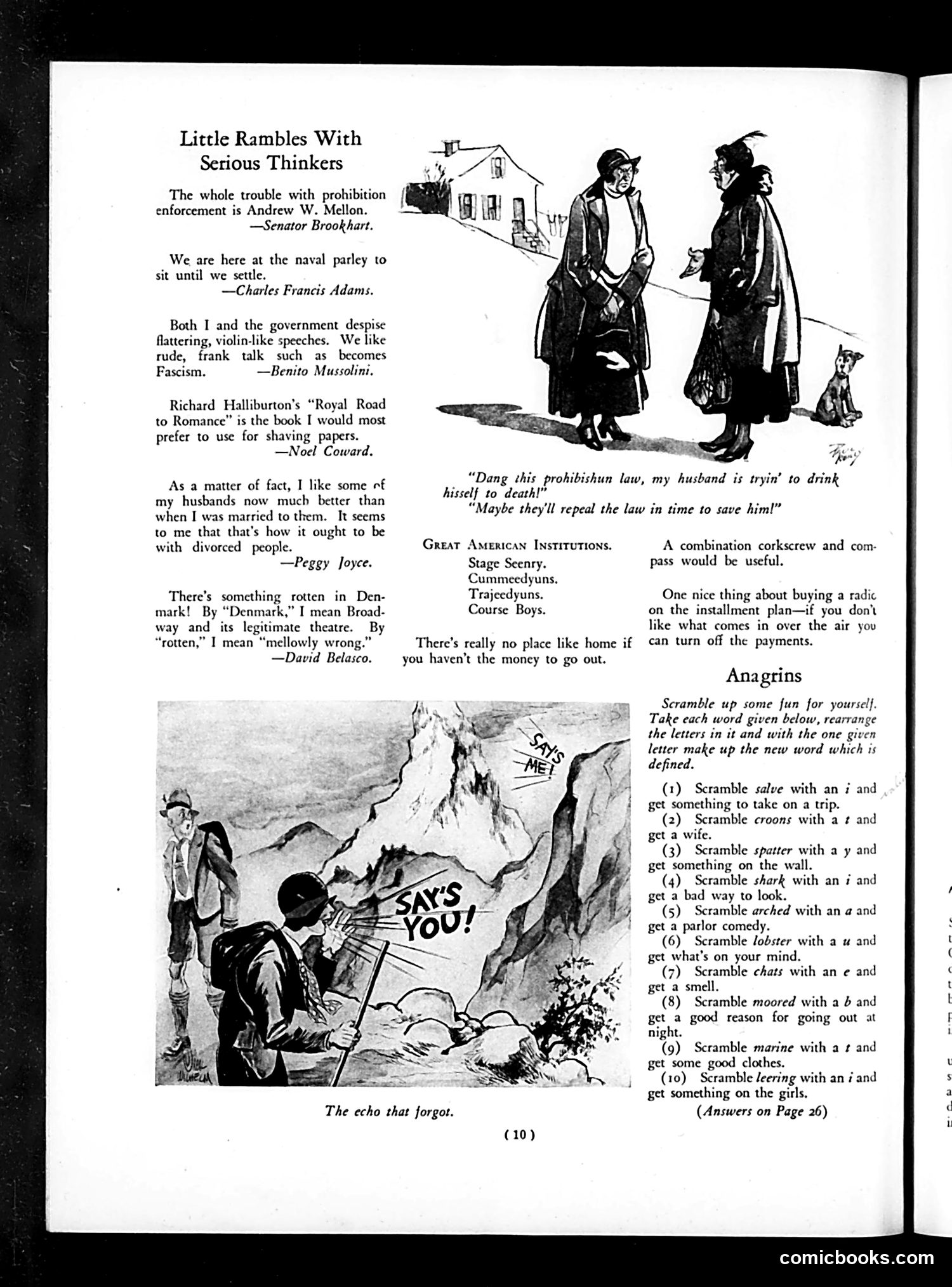
# "Little Rambles With Serious Thinkers" - Prohibition Era Satire This page satirizes **Prohibition enforcement** through quotes from prominent figures (Senator Brookhart, Charles Francis Adams, Benito Mussolini, Noel Coward, Peggy Joyce, David Belasco) expressing frustration with the policy. The main cartoon shows two women discussing a man "tryin' to drink himself to death" due to prohibition laws, with one hoping repeal will save him. This illustrates the **human cost of alcohol bans**—driving people to dangerous drinking. The second cartoon, "The echo that forgot," depicts a man in mountains hearing "Says you!" echoed back, likely satirizing how prohibition rhetoric bounces back unanswered or ignored. Together, the page mocks prohibition as unenforceable and damaging, reflecting 1920s-30s anti-prohibition sentiment before the policy's repeal in 1933.