A complete issue · 40 pages · 1930
Life — April 18, 1930
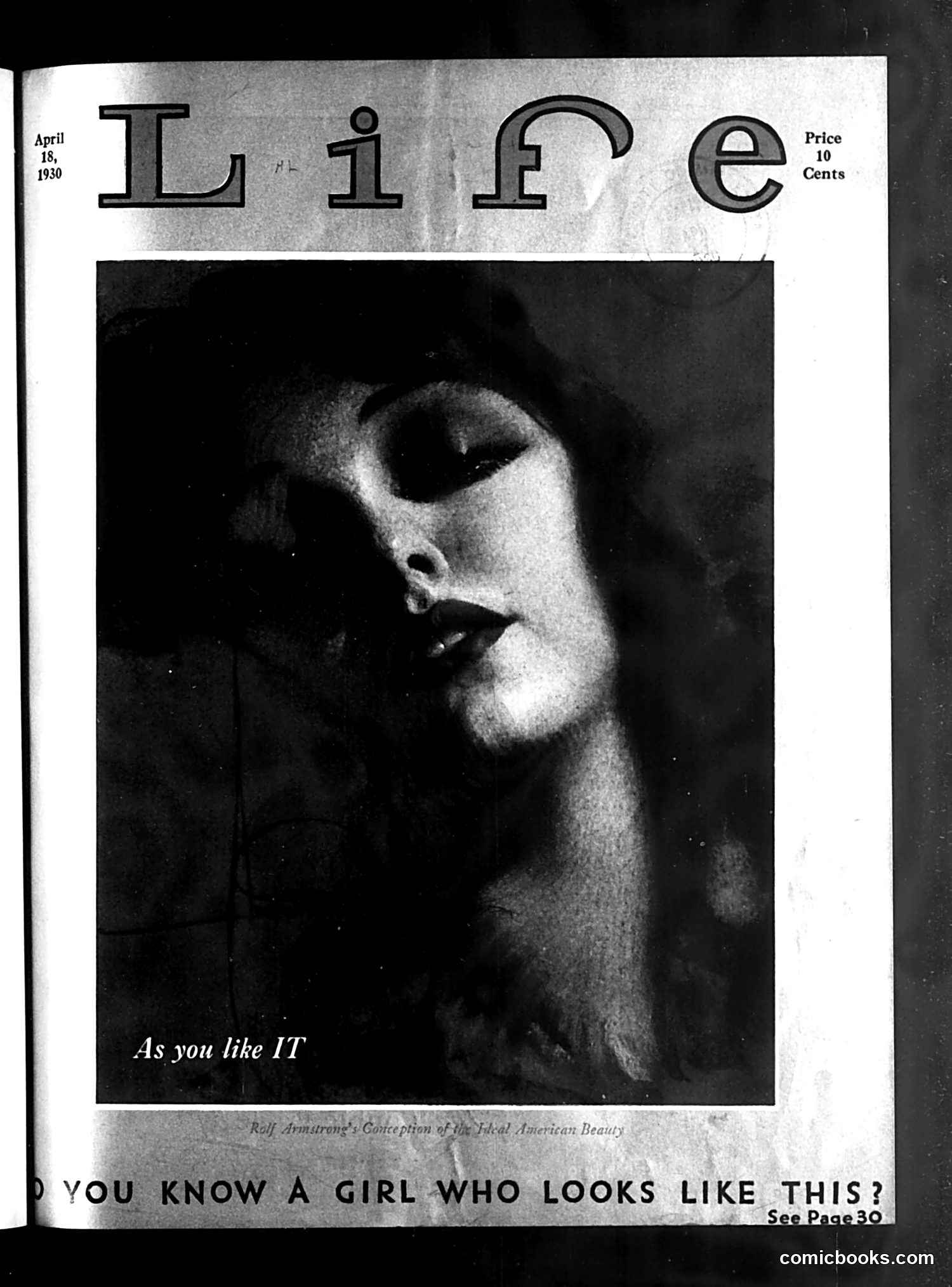
# Life Magazine Cover Analysis (April 18, 1930) This is a Life magazine cover featuring a stylized portrait photograph in profile, credited to "Rolf Armstrong's Conception of the Ideal American Beauty." The cover uses the tagline "As you like IT" and asks readers "DO YOU KNOW A GIRL WHO LOOKS LIKE THIS?" The image appears to be promotional rather than satirical—it's showcasing an idealized feminine beauty standard of 1930, likely either advertising a product or promoting a specific actress or model. The dramatic lighting and artistic presentation were typical of Armstrong's commercial illustration work during this era. The "See Page 30" reference suggests accompanying content inside the magazine. This represents how Life used celebrity imagery and beauty standards as cover features during the early Depression period.
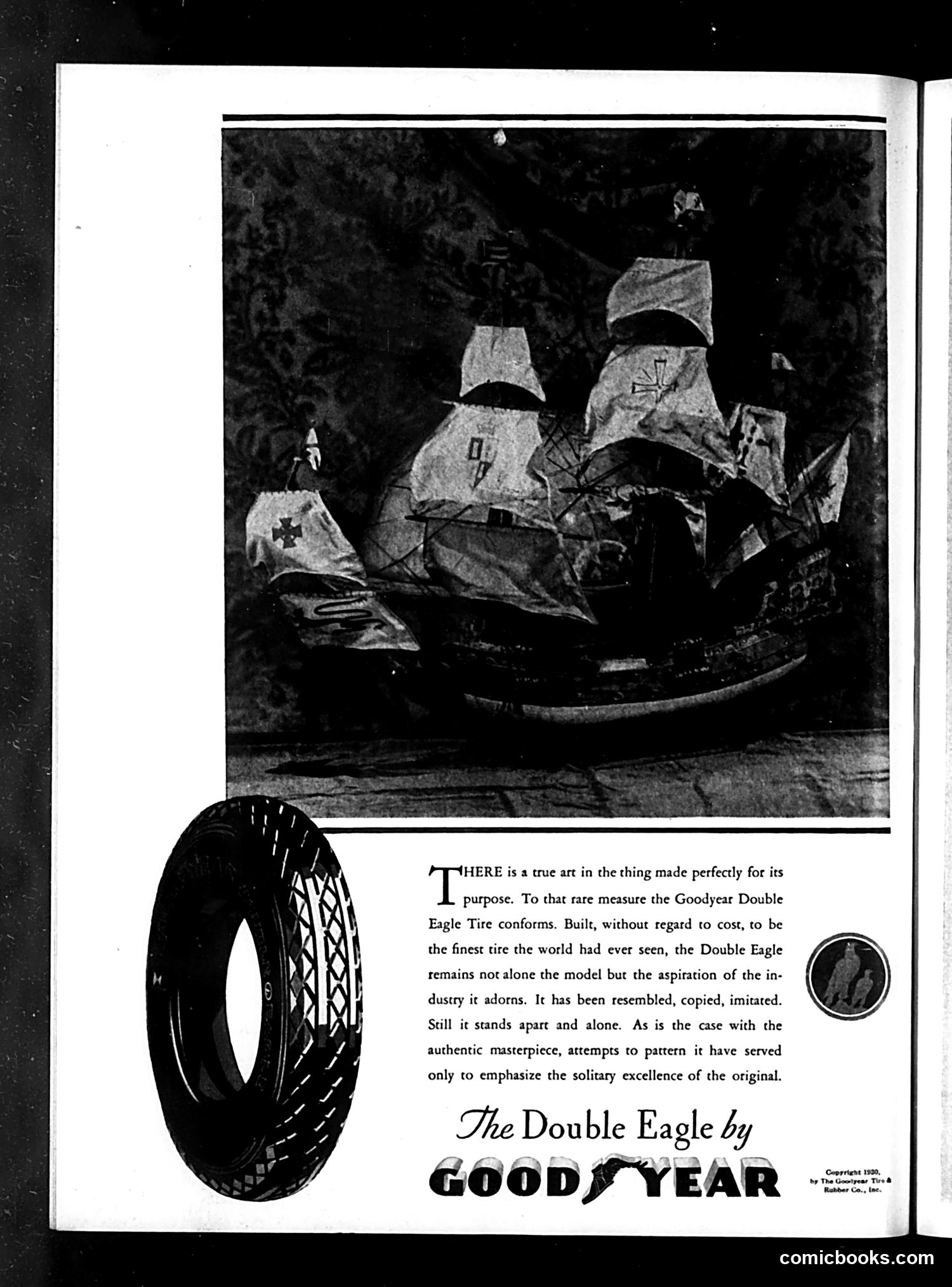
# Analysis This page is primarily a **Goodyear tire advertisement**, not satirical content. The image shows a model ship with three sails bearing what appear to be crosses or religious symbols, photographed against a dark background. The ad's text claims the Goodyear Double Eagle Tire represents "true art" and "authentic masterpiece" quality—language suggesting superiority to competitors' imitations. The ship imagery may allude to maritime heritage or exploration, lending prestige to the product. The small tire photograph on the left displays the product's tread pattern. This is commercial advertising rather than political satire, typical of Life magazine's revenue model during this era (copyright 1930).
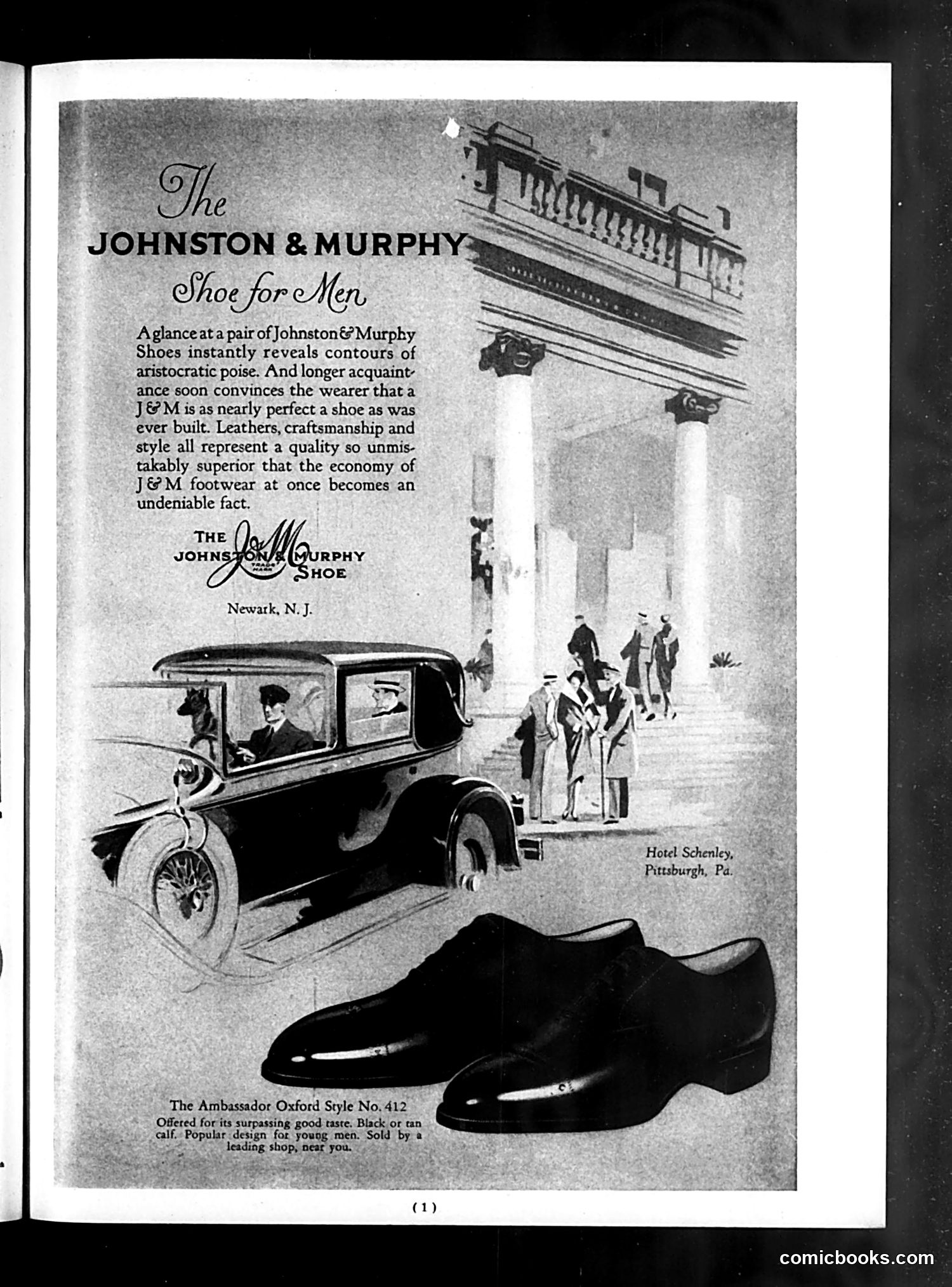
This is an advertisement for Johnston & Murphy shoes, not political satire or a cartoon. The page promotes their "Ambassador Oxford Style No. 412" for men, emphasizing superior craftsmanship and materials as justification for the product's cost. The advertisement includes an illustration of the Hotel Schenley in Pittsburgh, Pennsylvania, with well-dressed men and a period automobile, establishing an aspirational, sophisticated context for the shoe. The shoes themselves are pictured at the bottom. The ad's messaging reflects early-20th-century advertising strategy: associating the product with aristocratic elegance, quality materials, and professional success to appeal to middle and upper-class male consumers who valued respectability and status through proper attire.
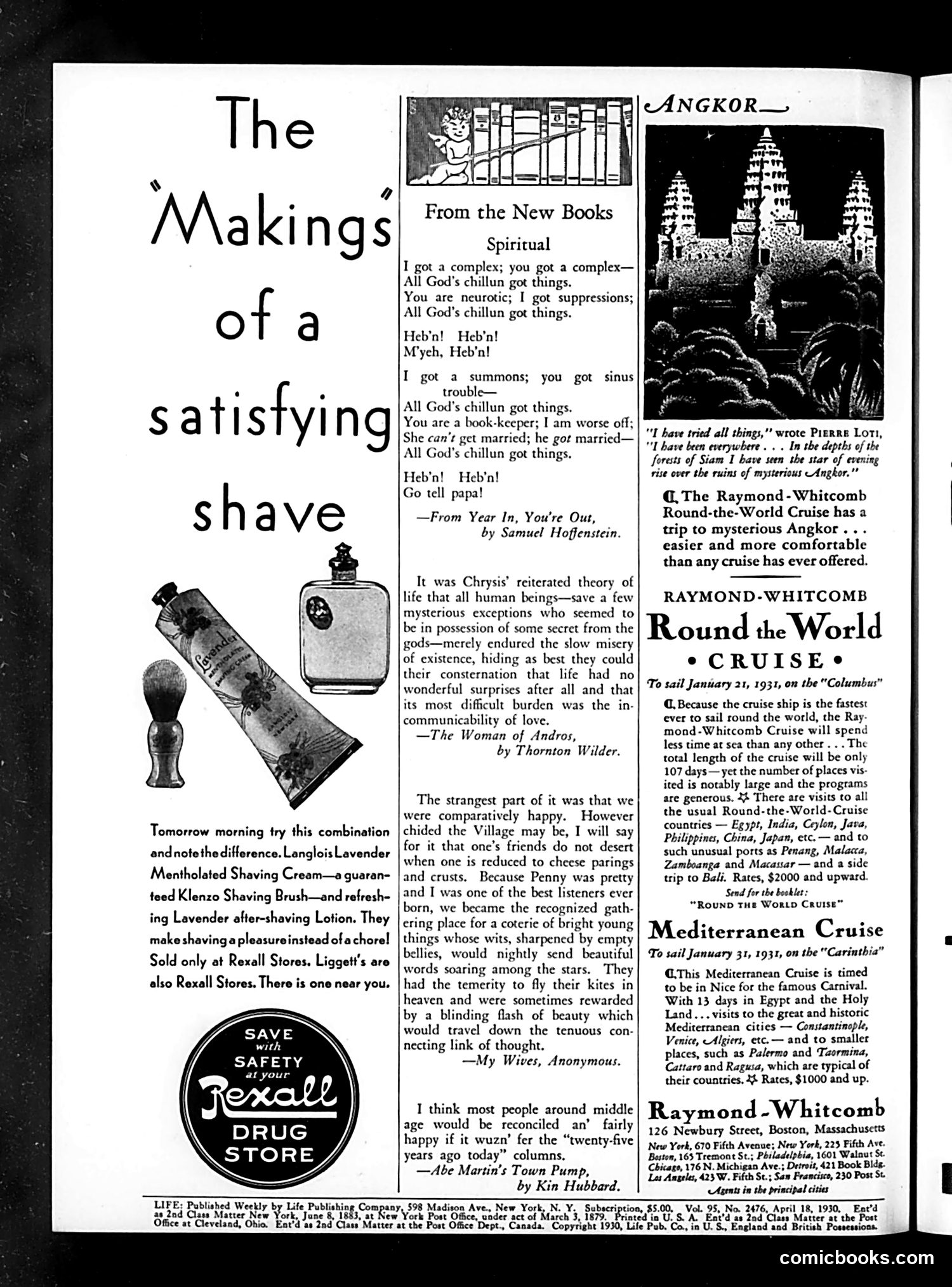
# Page Analysis This page is primarily **advertising and literary excerpts**, not political satire. The left side advertises Rexall shaving products—a Langois Lavender menthol shaving cream, Klenzo brush, and aftershave lotion. The ad promises a "pleasurable" shave and directs readers to Rexall drugstores. The center features literary excerpts from contemporary books, including spiritual poetry and passages from novels by Samuel Hoffenstein, Thornton Wilder, and others—typical of Life magazine's cultural content in the 1930s. The right side advertises Raymond-Whitcomb cruise vacations to Angkor, the Mediterranean, and around the world—luxury travel offerings for affluent readers. No political cartoons or caricatures appear on this page. It represents Life's mixed format of advertising and cultural content from April 1930.
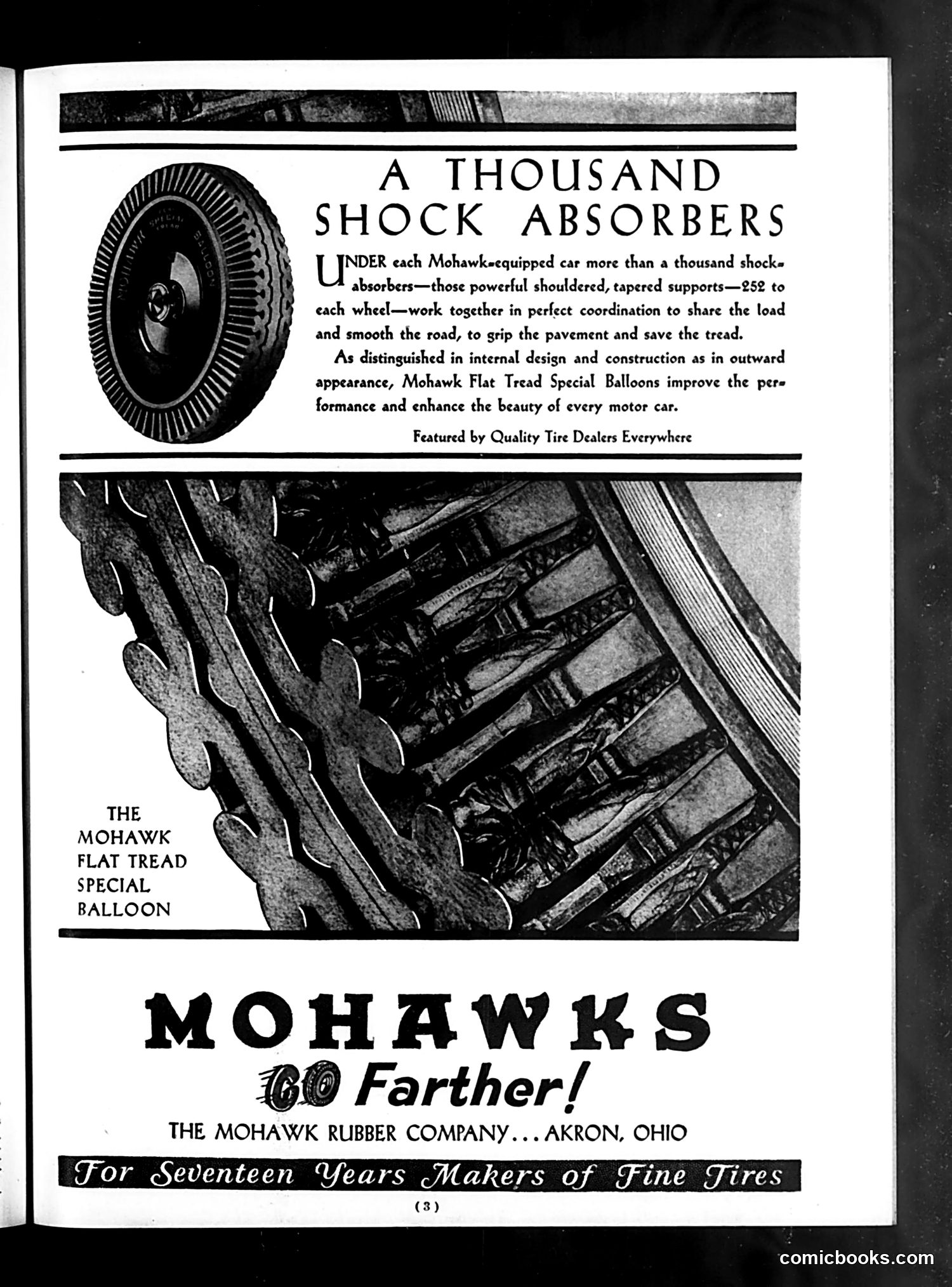
# Analysis This page is primarily **advertising, not satire or political commentary**. It's a Mohawk Rubber Company advertisement for their "Flat Tread Special Balloon" tires. The ad emphasizes technical features: shock absorbers (described as "a thousand" per car), load-sharing suspension components (252 per wheel), and improved road grip. The upper section shows a tire cross-section; the lower section displays the tire's tread pattern. The phrase "Go Farther!" appears to be the company's slogan. The tagline notes Mohawk has been "Makers of Fine Tires" for seventeen years. The company was based in Akron, Ohio, a major tire manufacturing hub. This is straightforward product advertising with no discernible political or social satire.
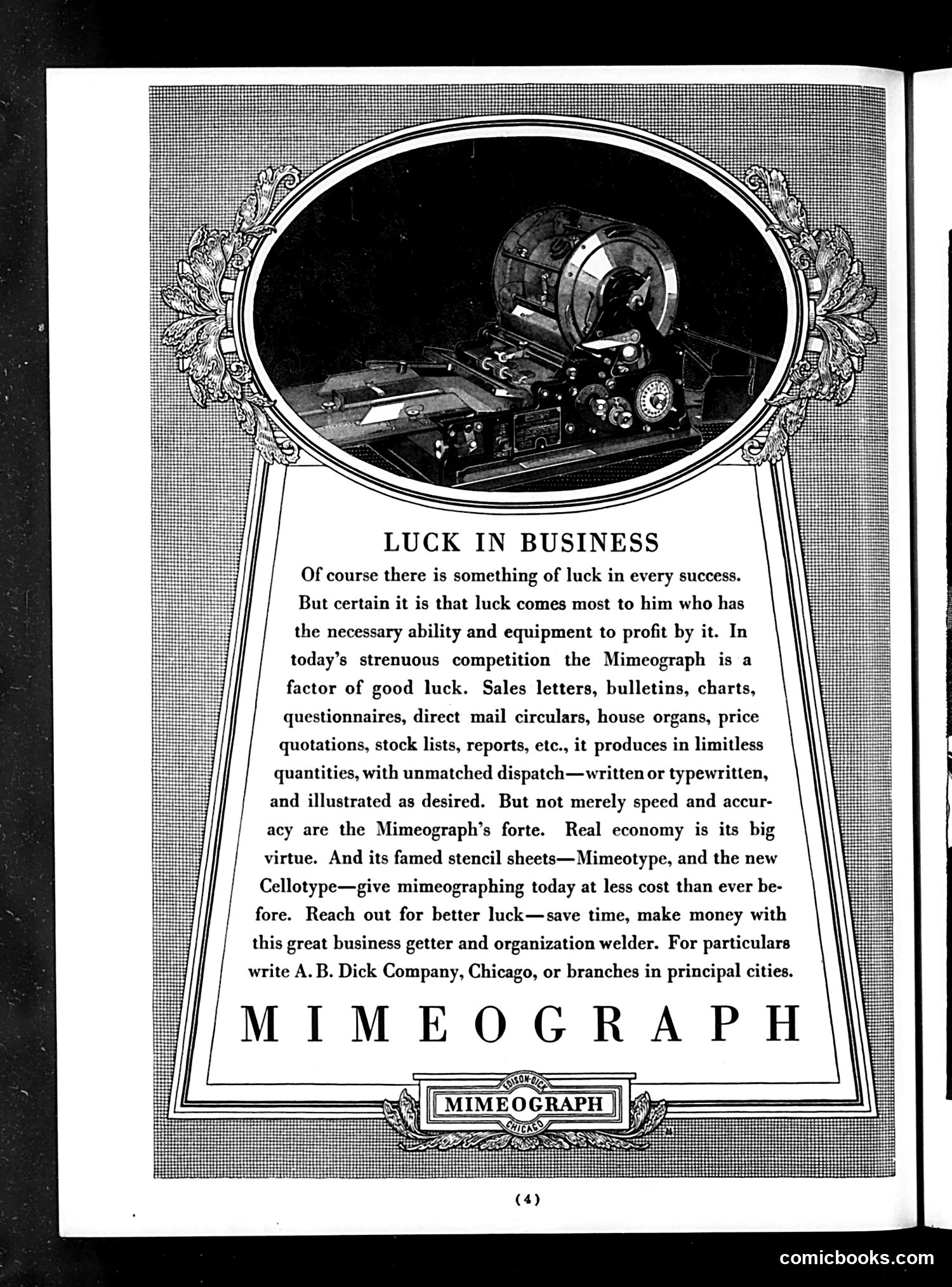
# Analysis This is a **full-page advertisement**, not satirical content. It promotes the Mimeograph machine, manufactured by the A.B. Dick Company of Chicago. The ad's headline "LUCK IN BUSINESS" frames the mimeograph as a competitive advantage. The text argues that while success requires luck, having the right equipment—specifically mimeographing technology—gives businesses an edge in "strenuous competition." The machine pictured appears to be a mimeograph apparatus. The ad emphasizes the device's speed, accuracy, and economy, highlighting its ability to mass-produce sales letters, bulletins, charts, and other business documents "with unmatched dispatch." It mentions newer stencil technologies (Mimeotype and Cellotype) as cost-saving innovations. For a modern reader: this represents early 20th-century office automation marketing—positioning a copying/printing machine as essential business equipment.
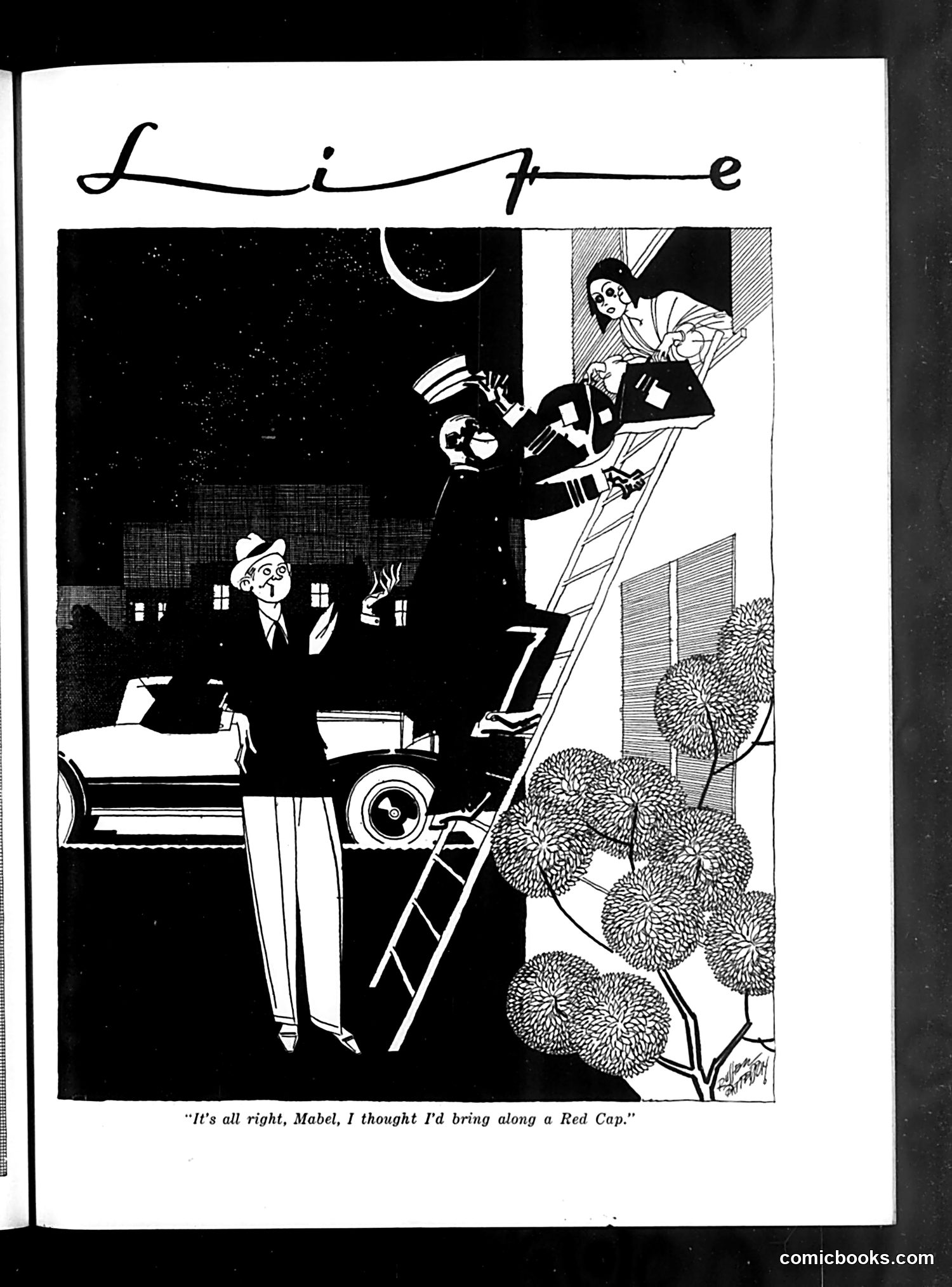
# Explanation for Modern Readers This cartoon titled "Life" depicts a nighttime burglary scene. A man in formal attire (bottom left) stands outside a house while his accomplice climbs a ladder toward an open window where a woman appears. The caption reads: "It's all right, Mabel, I thought I'd bring along a Red Cap." The humor relies on a double meaning: "Red Cap" likely refers to a porter or bellhop (identifiable by their distinctive red uniform cap), but the phrase suggests the man is reassuring his wife about bringing an unexpected companion on what appears to be a romantic or illicit nighttime visit. The joke plays on the absurdity of casually introducing a third party in an intimate situation. The cartoon satirizes social awkwardness and marital dynamics through this scenario.
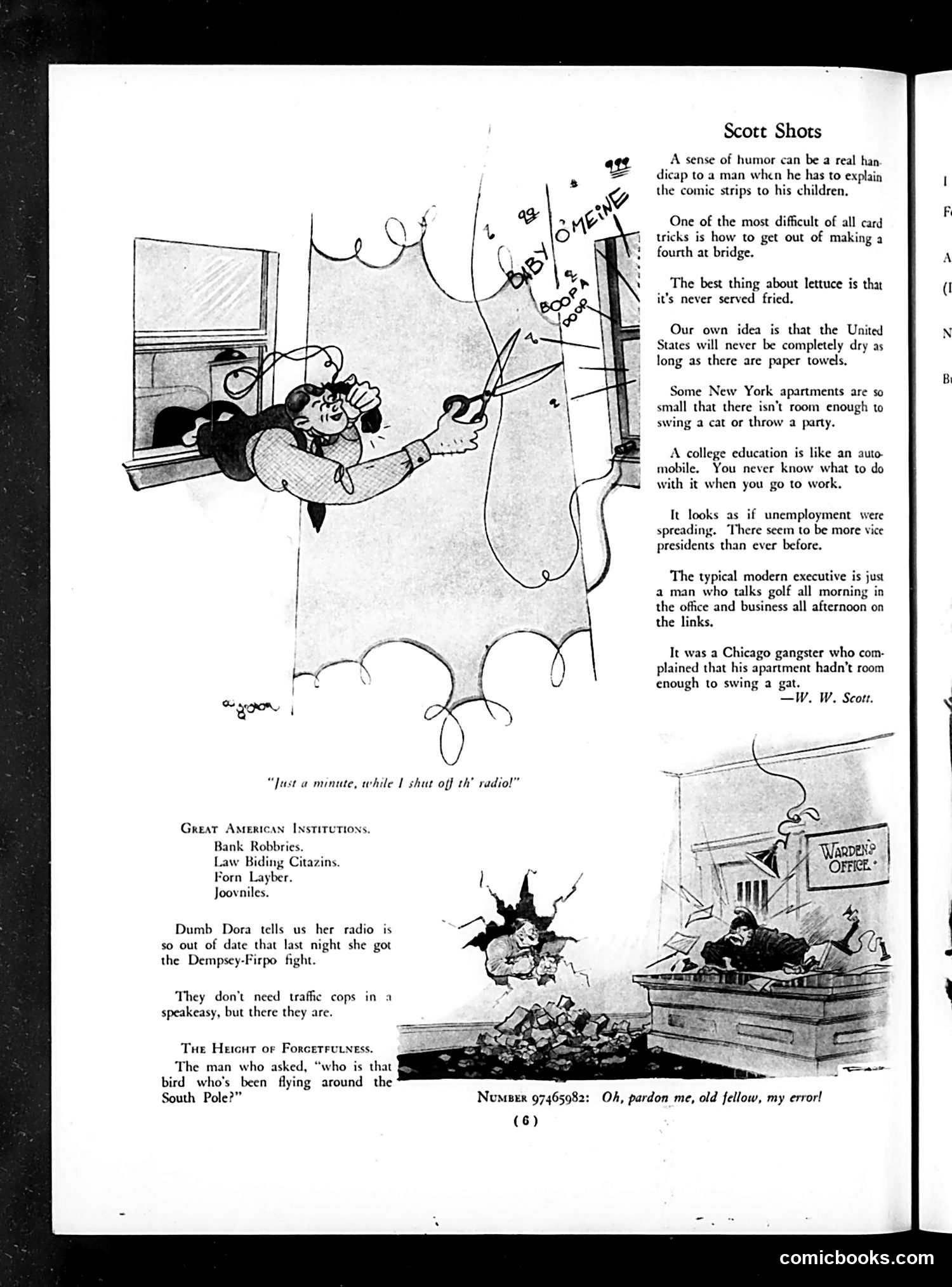
# Scott Shorts Page Analysis This page contains humorous one-liners and cartoons by W.W. Scott. The top cartoon shows someone fishing from a window, with the caption "Just a minute, while I shut off th' radio!" — likely satirizing how intrusive radio broadcasts had become in American homes by this era. The second cartoon depicts someone being ejected from a "Wooden's Office" through a window — appearing to reference a coach or authority figure, though the specific identity is unclear from the image alone. The page's text includes satirical observations about American life: cramped NYC apartments, unemployment, golf-obsessed executives, and small apartment living. A final quip references a "Chicago gangster" complaining his apartment lacks room to swing a cat — all gentle social commentary typical of Life magazine's satirical style during the early-to-mid 20th century.
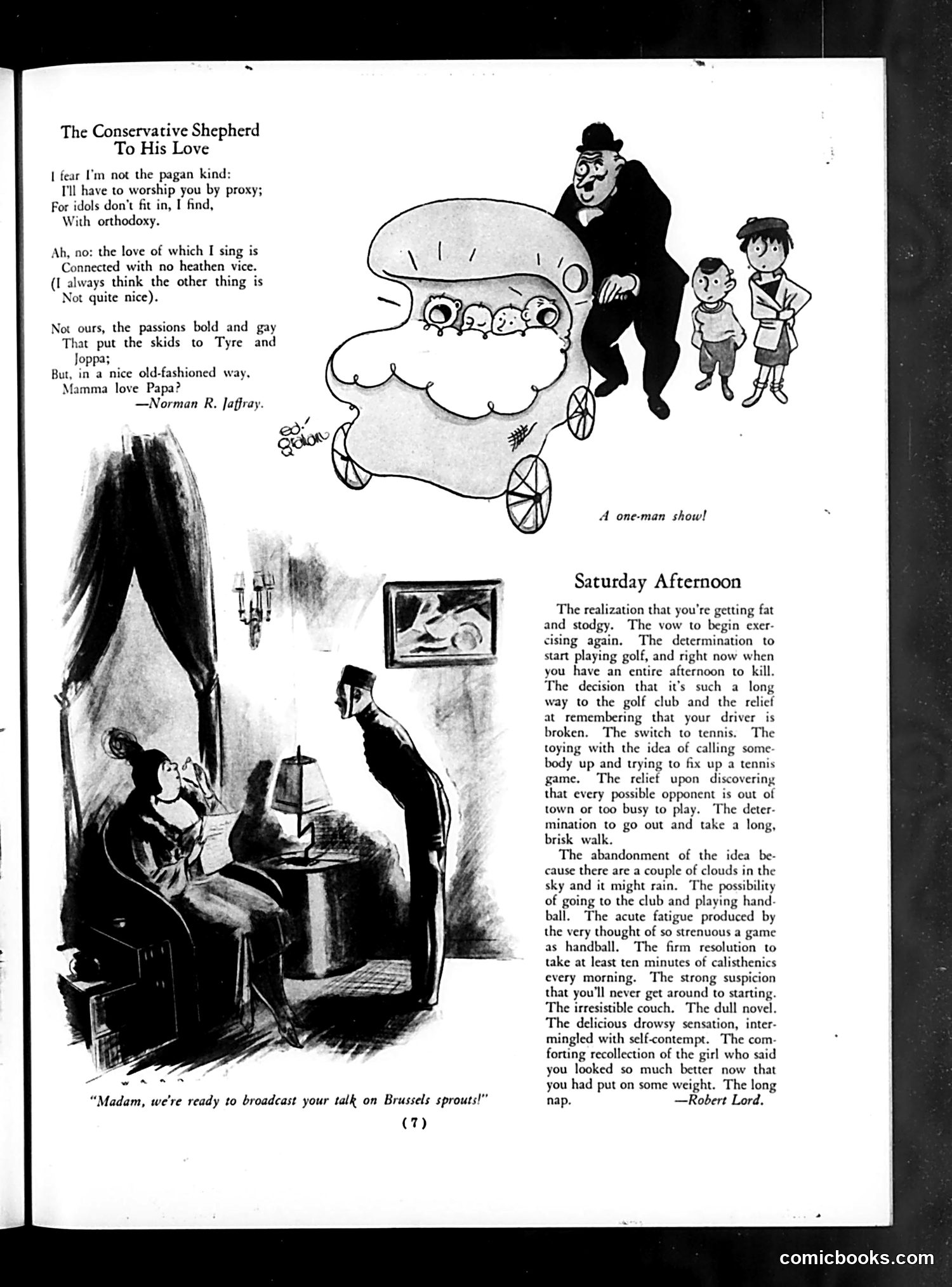
# Analysis of Life Magazine Page **"The Conservative Shepherd to His Love"** (top): A satirical poem by Norman R. Jaffray mocking conservative religious hypocrisy. The verse critiques those who claim traditional morality while avoiding genuine spiritual commitment—worshipping "by proxy" and finding idols acceptable despite "orthodoxy." The accompanying illustration shows a man herding children in a cloud-like carriage, suggesting conservative leadership of the masses. **"Saturday Afternoon"** (bottom right): Robert Lord's humorous essay cataloging the mental resistance to afternoon leisure activities—the internal negotiations about golf, tennis, walking, or rest. It captures a specific modern anxiety: even free time becomes exhausting indecision. The lower illustration depicts a domestic scene, possibly related to the essay's theme of reluctant recreation.
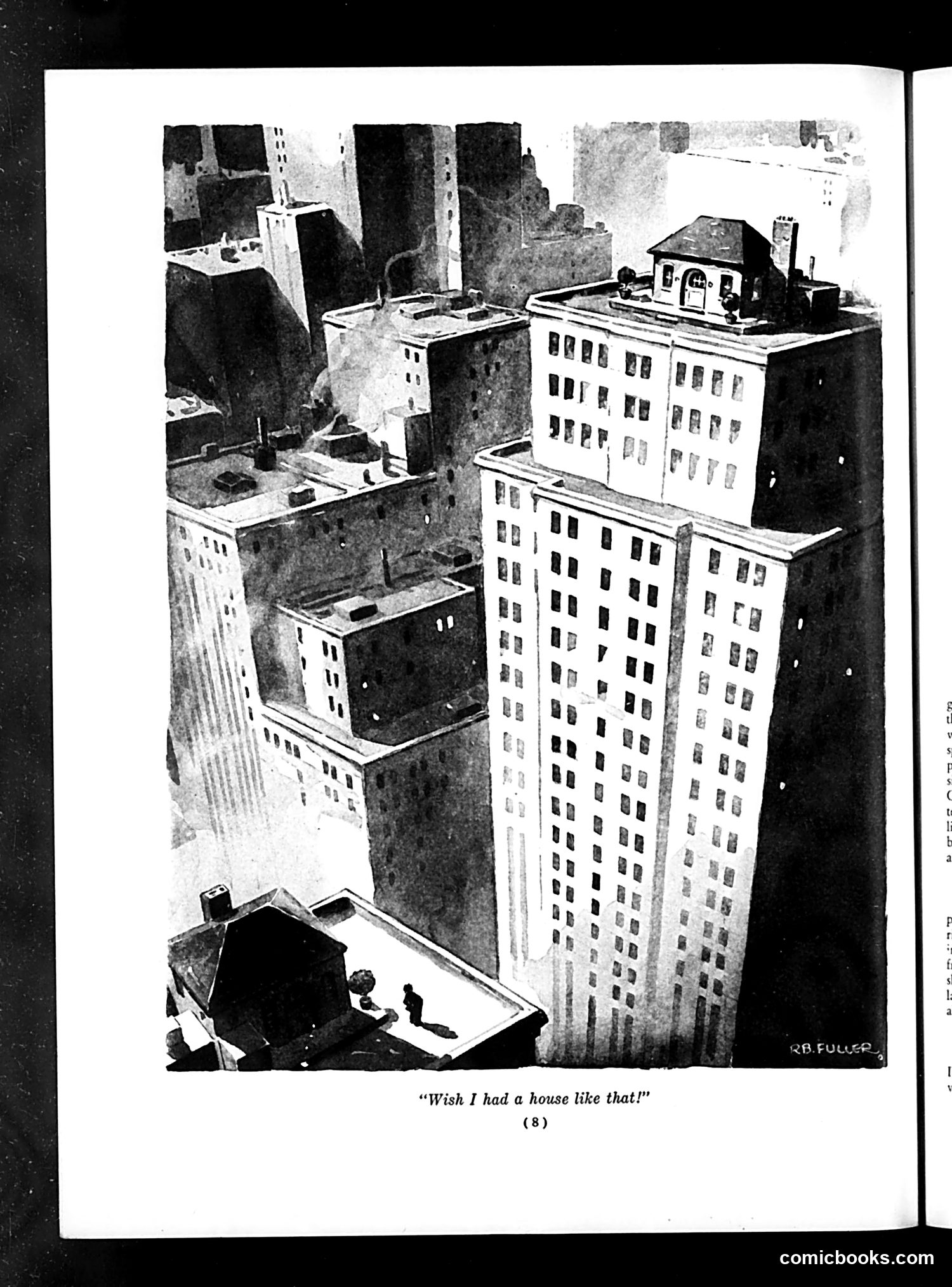
# Analysis This is a cartoon by R.B. Fuller titled "Wish I had a house like that!" (numbered 8). The image shows a bird's-eye view of crowded urban tenement buildings from what appears to be a rooftop perspective. In the foreground, two small figures (likely a couple or family) look down at a model or dollhouse—a tiny, pristine residential structure—sitting on a rooftop among the massive apartment buildings surrounding them. The satire critiques urban housing inequality and overcrowding. The joke is bitter: ordinary people, trapped in cramped tenement housing, can only dream of owning a proper house. The contrast between the miniature model house (representing their aspiration) and the looming, densely-packed tenements (their reality) underscores early 20th-century frustrations with inadequate urban housing and class disparities.
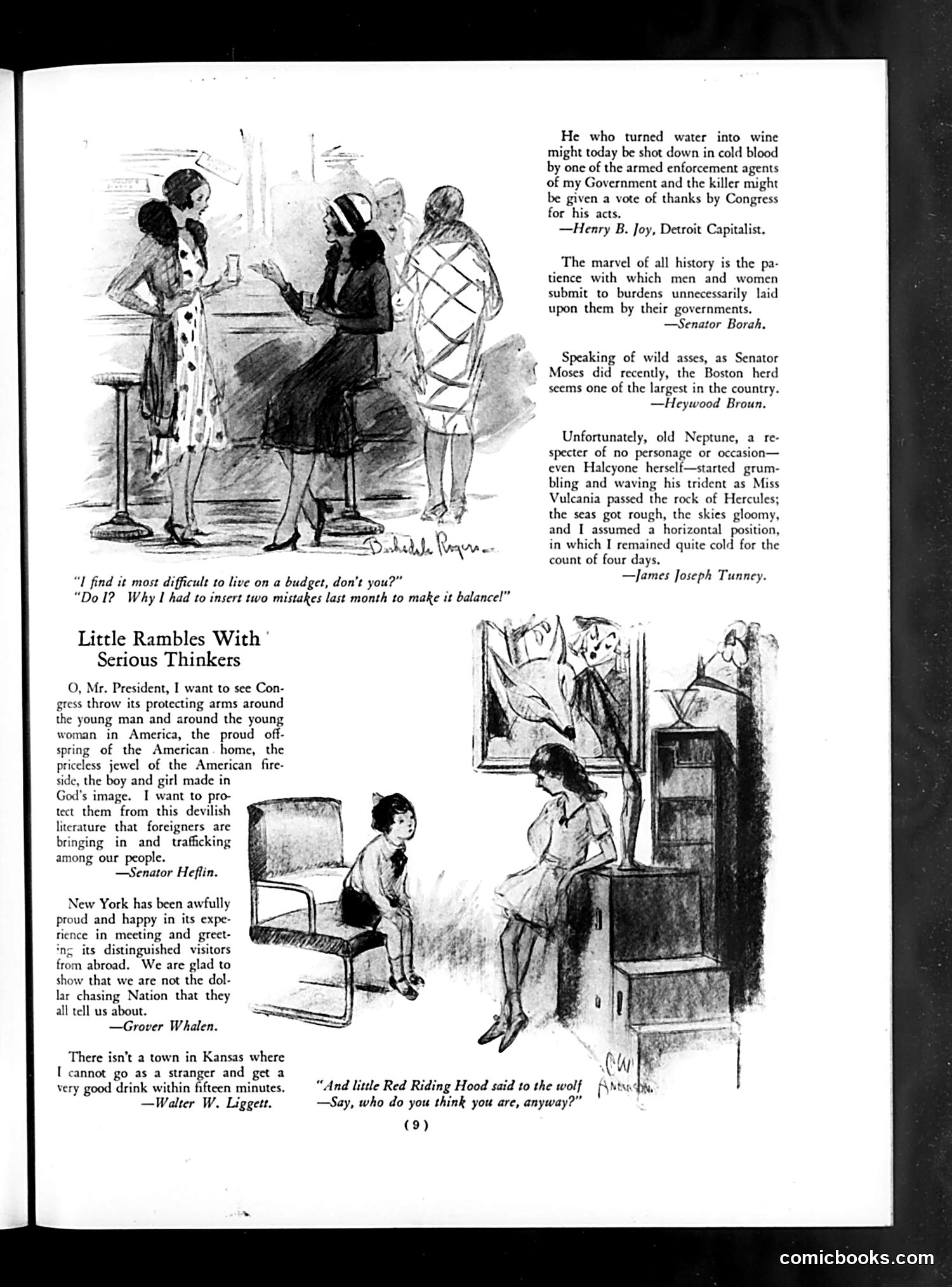
# Analysis of Life Magazine Page This page contains two political cartoons and several quoted satirical comments addressing Prohibition-era issues (circa 1920s-early 1930s). **Top cartoon**: Shows three women discussing household budgeting difficulties, with one stating she had to "insert two mistakes last month to make it balance"—satirizing the economic strain on American families during this period. **Bottom cartoon**: References "Little Red Riding Hood," showing a woman at a doorway confronting someone, with the caption playing on the fairy tale while appearing to mock moral guardianship or naive trust. The surrounding quotes from politicians and commentators (Henry B. Joy, Senator Borah, etc.) critique government overreach, Prohibition enforcement, and social control. The satire targets the gap between government restrictions and public reality, suggesting such laws created hardship and hypocrisy rather than moral improvement.
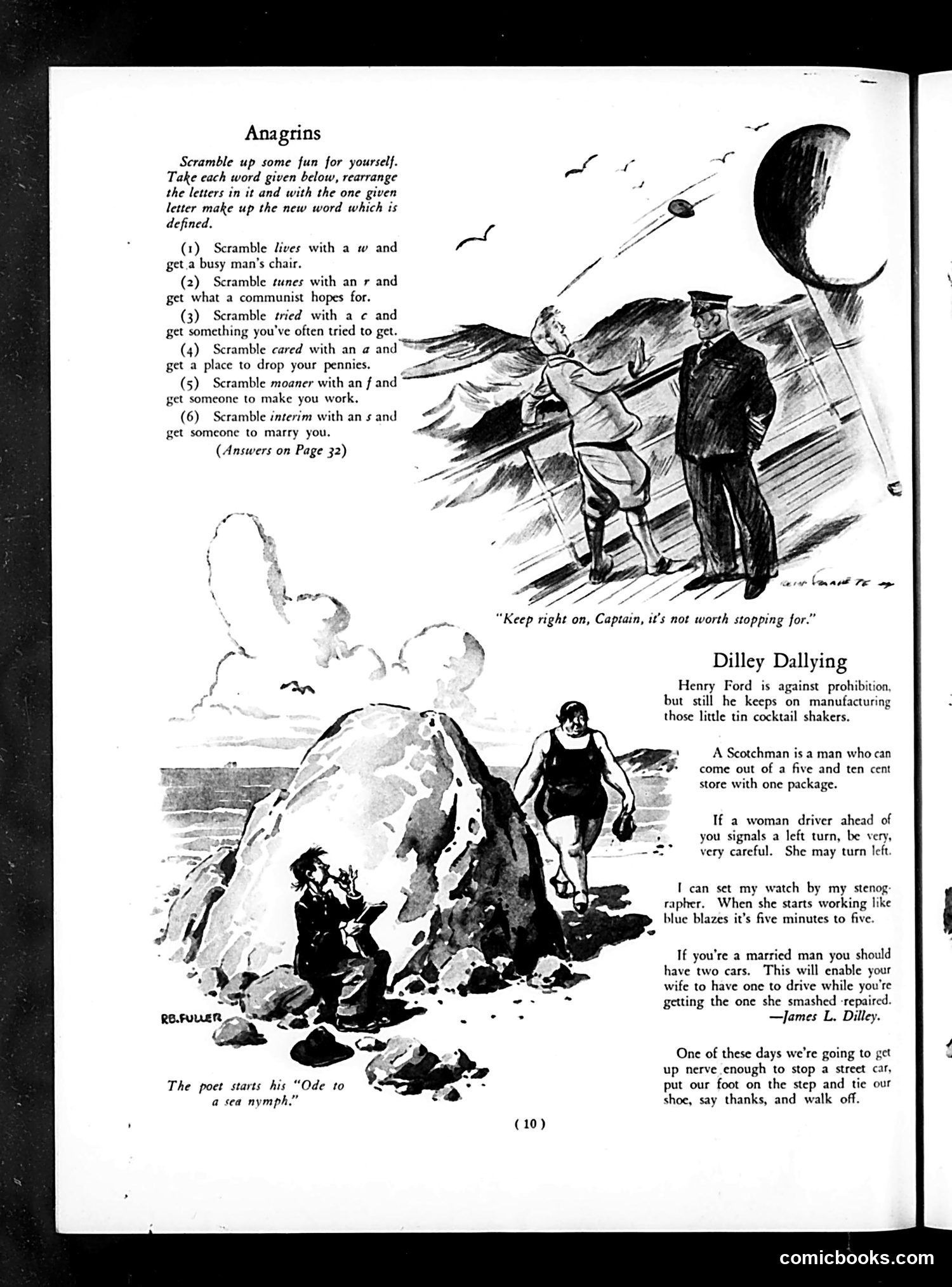
# "Dilley Dallying" - Life Magazine Page This page contains a word-puzzle game ("Anagrins") and humorous observations attributed to James L. Dilley. The main cartoon depicts a poet sitting among rocks by the sea, captioned "The poet starts his 'Ode to a sea nymph.'" The joke appears to be visual irony—the romantic literary subject contrasts with the unglamorous, uncomfortable seaside setting. The "Dilley Dallying" section offers satirical observations about contemporary life: Henry Ford's continued manufacture of cocktail shakers despite Prohibition; Scottish frugality; women drivers; stenographers; and married couples needing two cars. These are lighthearted social commentary on 1920s American culture and consumer behavior, without targeting specific political figures. The humor relies on recognizable stereotypes and everyday frustrations of the era.