A complete issue · 52 pages · 1930
Life — April 11, 1930
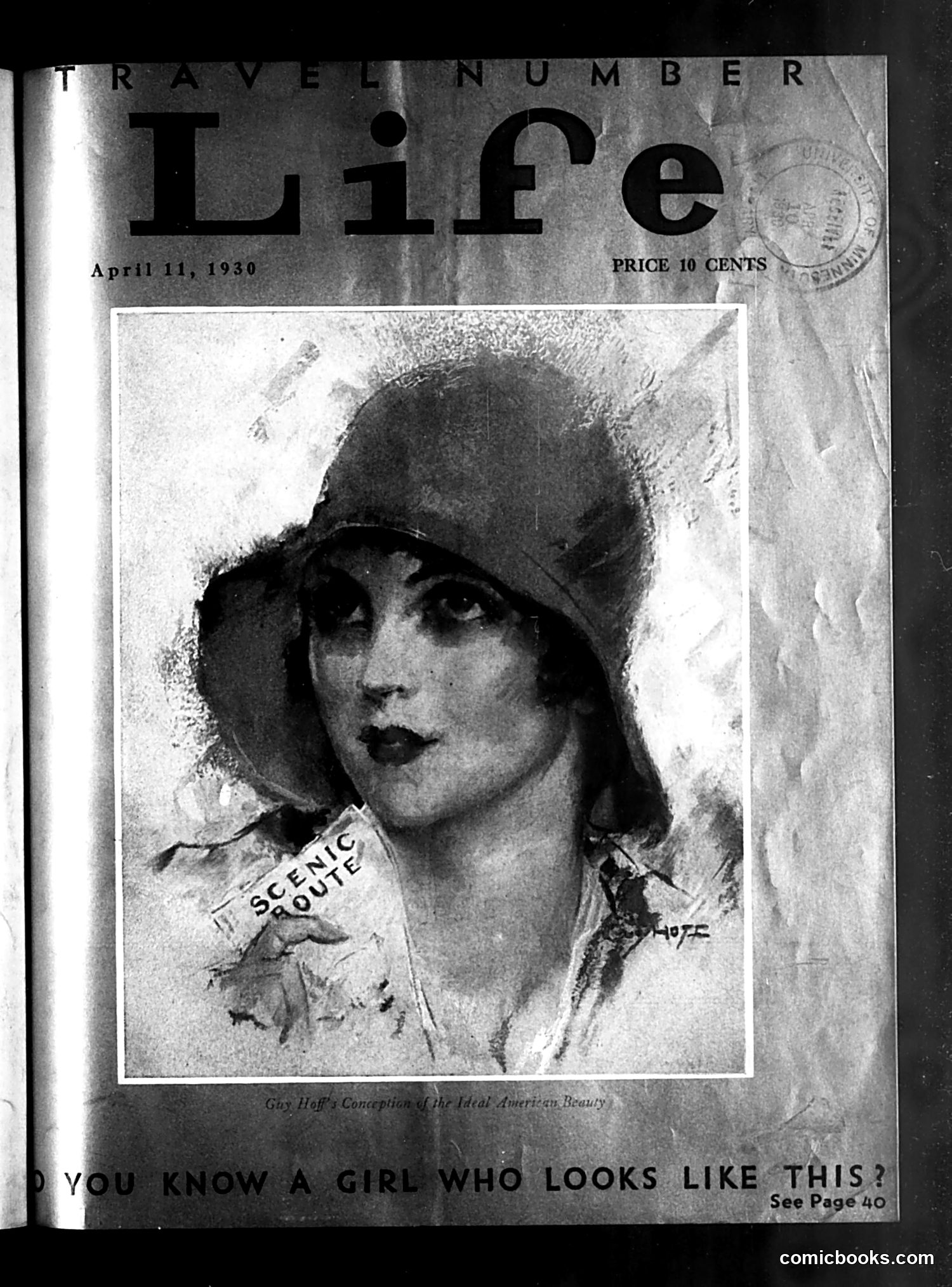
# Analysis This is the cover of *Life* magazine from April 11, 1930. The main image shows a woman wearing a cloche hat and styled in the fashionable 1920s-30s "modern woman" aesthetic, labeled "Guy Huff's Conception of the Ideal American Beauty." The cover's interactive hook—"YOU KNOW A GIRL WHO LOOKS LIKE THIS? See Page 40"—suggests this was a participatory feature inviting readers to identify women matching this beauty ideal. The label "IT SCENIC ROUTE" on the image is unclear in meaning. The overall content reflects the era's fascination with defining and celebrating contemporary feminine beauty standards during the Jazz Age, when the "flapper" aesthetic represented modernity and social change.
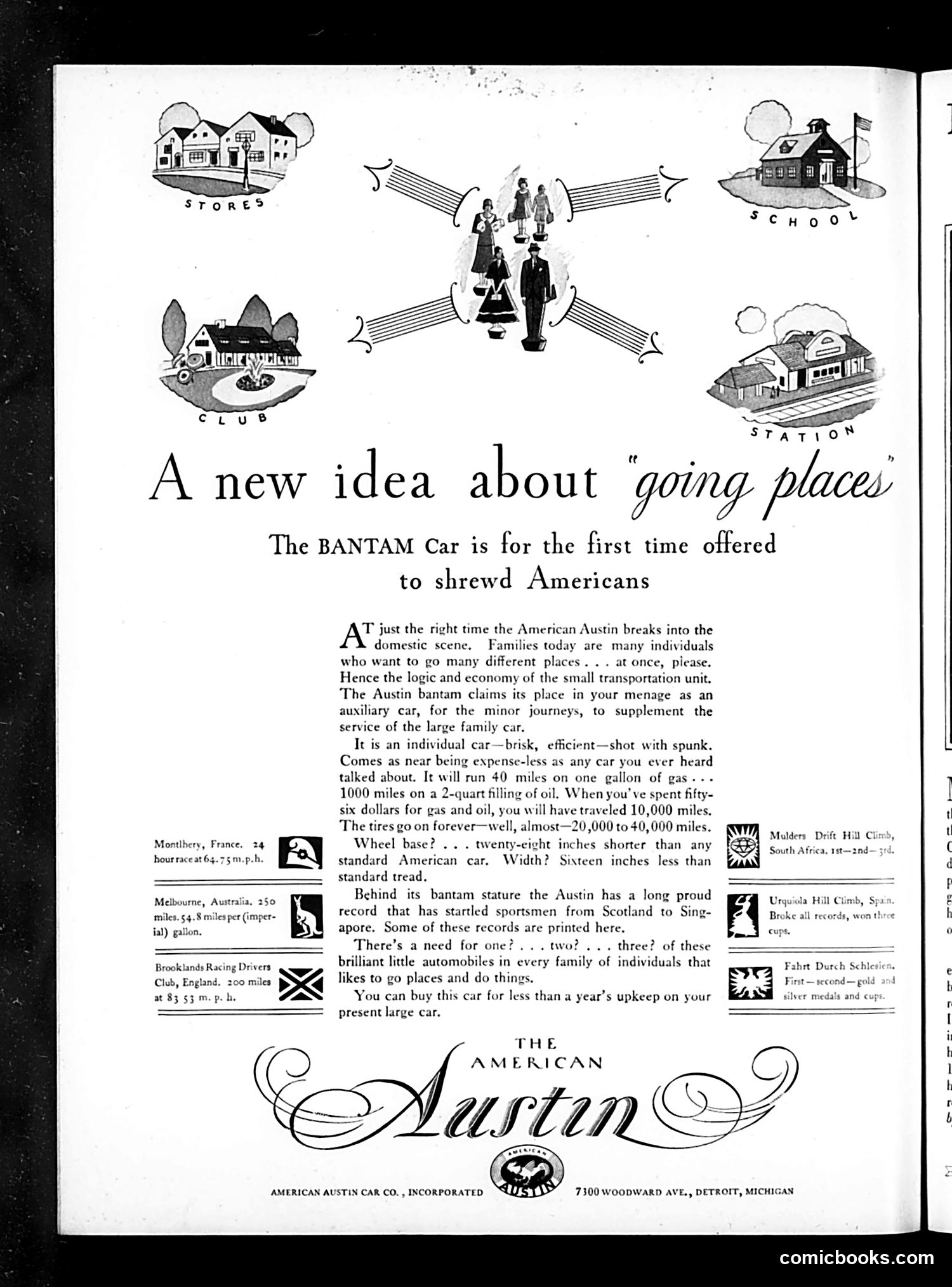
This is an advertisement for the American Austin Car's "bantam" model, not a political cartoon. The page promotes a new small car concept aimed at American families who need multiple vehicles for different destinations. The central illustration shows a family radiating outward to different locations (stores, school, club, station) via lines of connection, visually representing the car's utility for various errands. The advertisement emphasizes economy—40 miles per gallon, 1,000 miles on two quarts of oil—positioning the bantam as an affordable auxiliary vehicle cheaper than a year's upkeep on a larger car. Side notes reference racing records from Brooklands (England), Montlhéry (France), and Melbourne (Australia), establishing the vehicle's engineering credibility. This is purely commercial marketing, not satire.
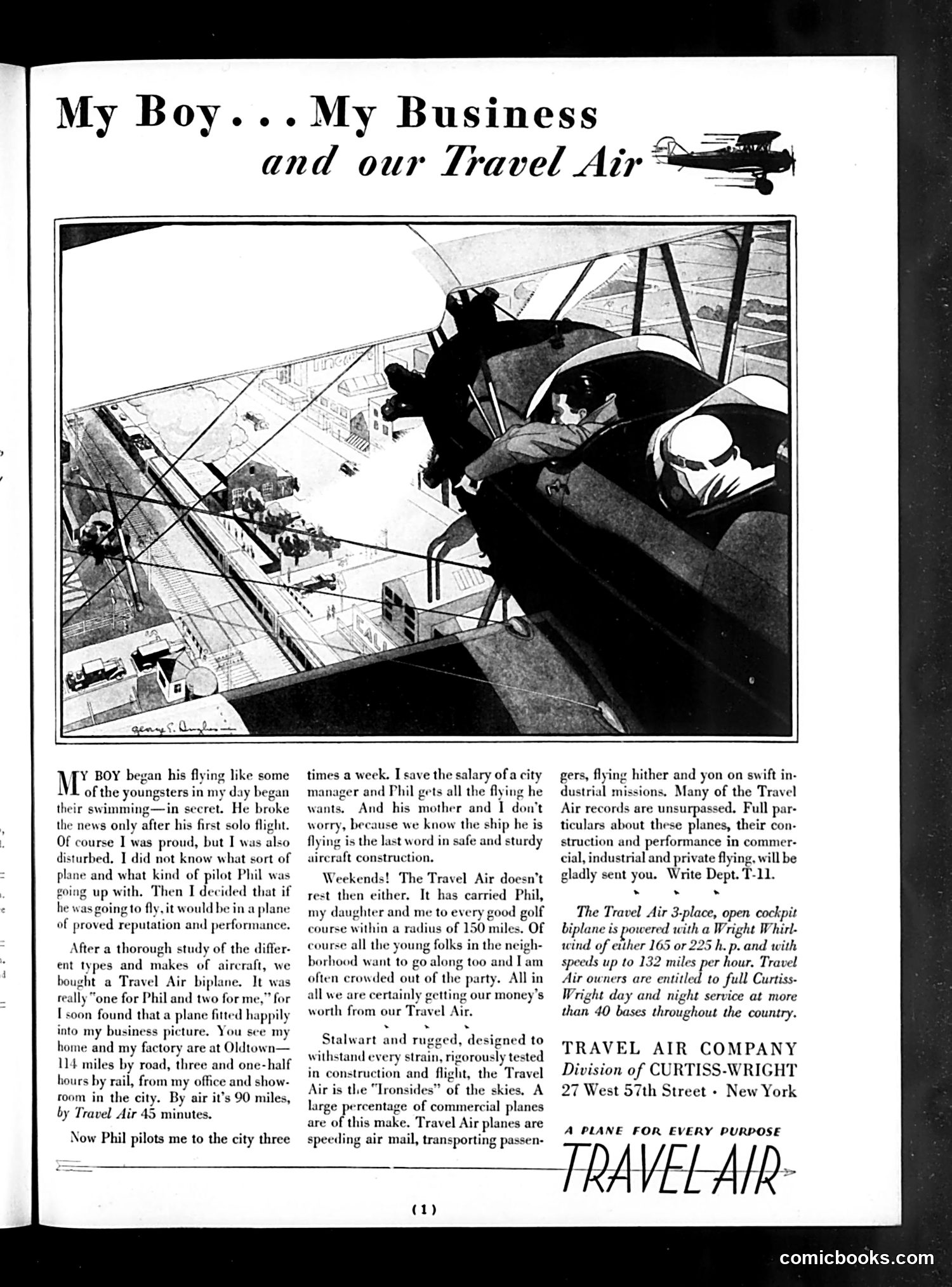
# Analysis This page is primarily **advertising content** for Travel Air Company, a Division of Curtiss-Wright, promoting their 3-place aircraft. The image shows what appears to be a businessman and passengers in an open-cockpit biplane flying over an industrial landscape. The accompanying text presents a personal narrative from a father describing how his son took up flying, eventually becoming a Travel Air pilot. The father expresses initial concern but pride in his son's aviation career. The narrative emphasizes Travel Air's reliability and performance ("Stalwart and rugged...the 'Ironsides' of the skies"), positioning the aircraft as suitable for commercial, business, and private missions. This represents **1920s-30s aviation promotion**, when commercial flying was novel and manufacturers used testimonial-style marketing to establish credibility and normalize air travel for potential business customers.
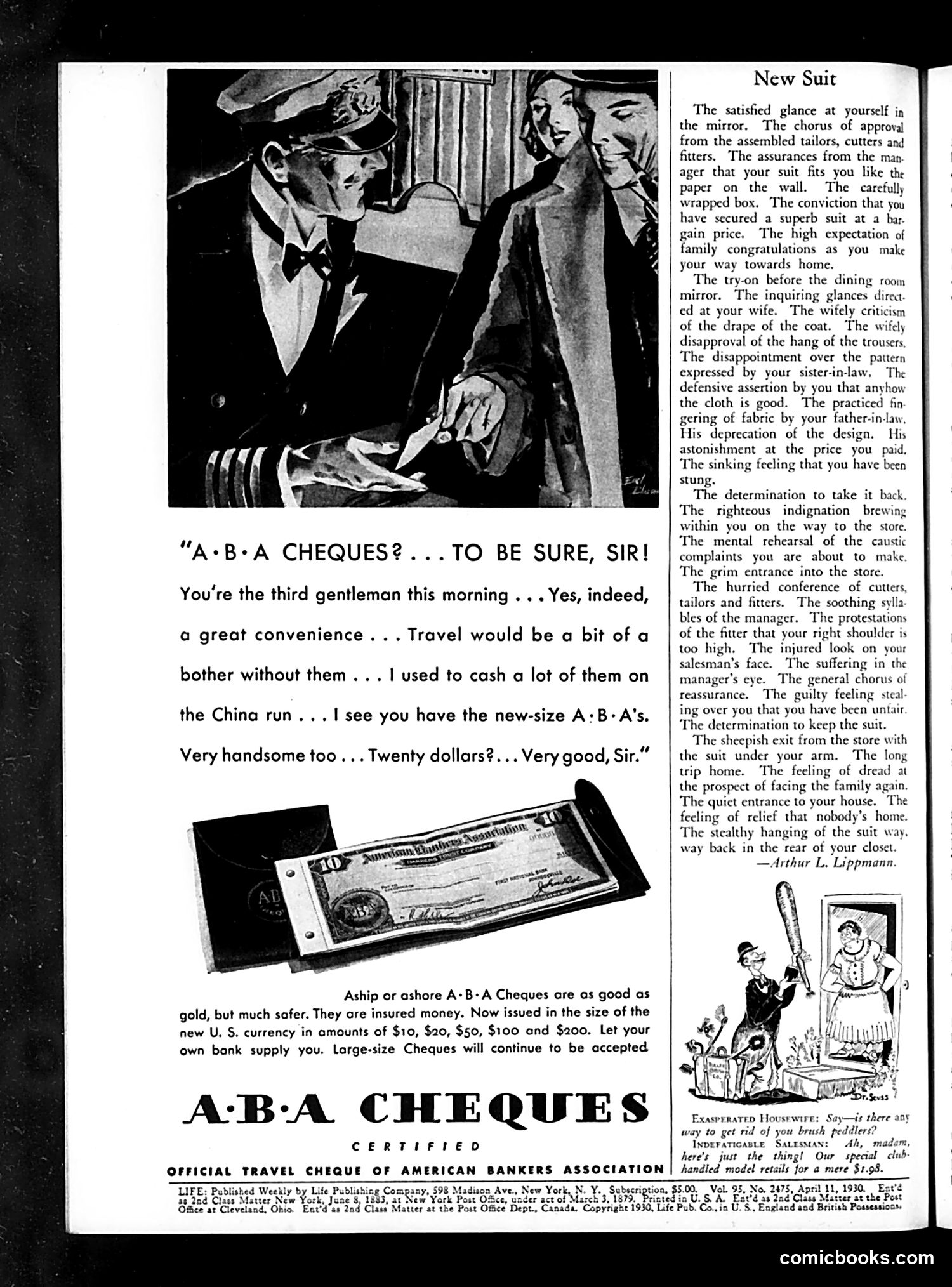
# A.B.A Cheques Advertisement This is primarily a **travel cheque advertisement** rather than political satire. The page features: **Main Image (top):** A traveler at what appears to be a bank or exchange counter, presenting A.B.A cheques to a clerk while other gentlemen wait. The dialogue humorously depicts the cheques' convenience—the clerk notes this is his third customer that morning and recalls cashing many during "the China run," confirming A.B.A's global acceptance. **The Product:** A.B.A (American Bankers Association) Certified Cheques—insured traveler's checks issued in denominations matching U.S. currency ($10, $20, $50, $100, $500). **The Appeal:** The advertisement emphasizes safety and convenience for international travel, positioning A.B.A cheques as "as good as gold, but much safer" for the business traveler. The right-side essay "New Suit" by Arthur L. Lippmann provides humorous social commentary on anxieties surrounding a new suit purchase—entirely separate from the advertisement.
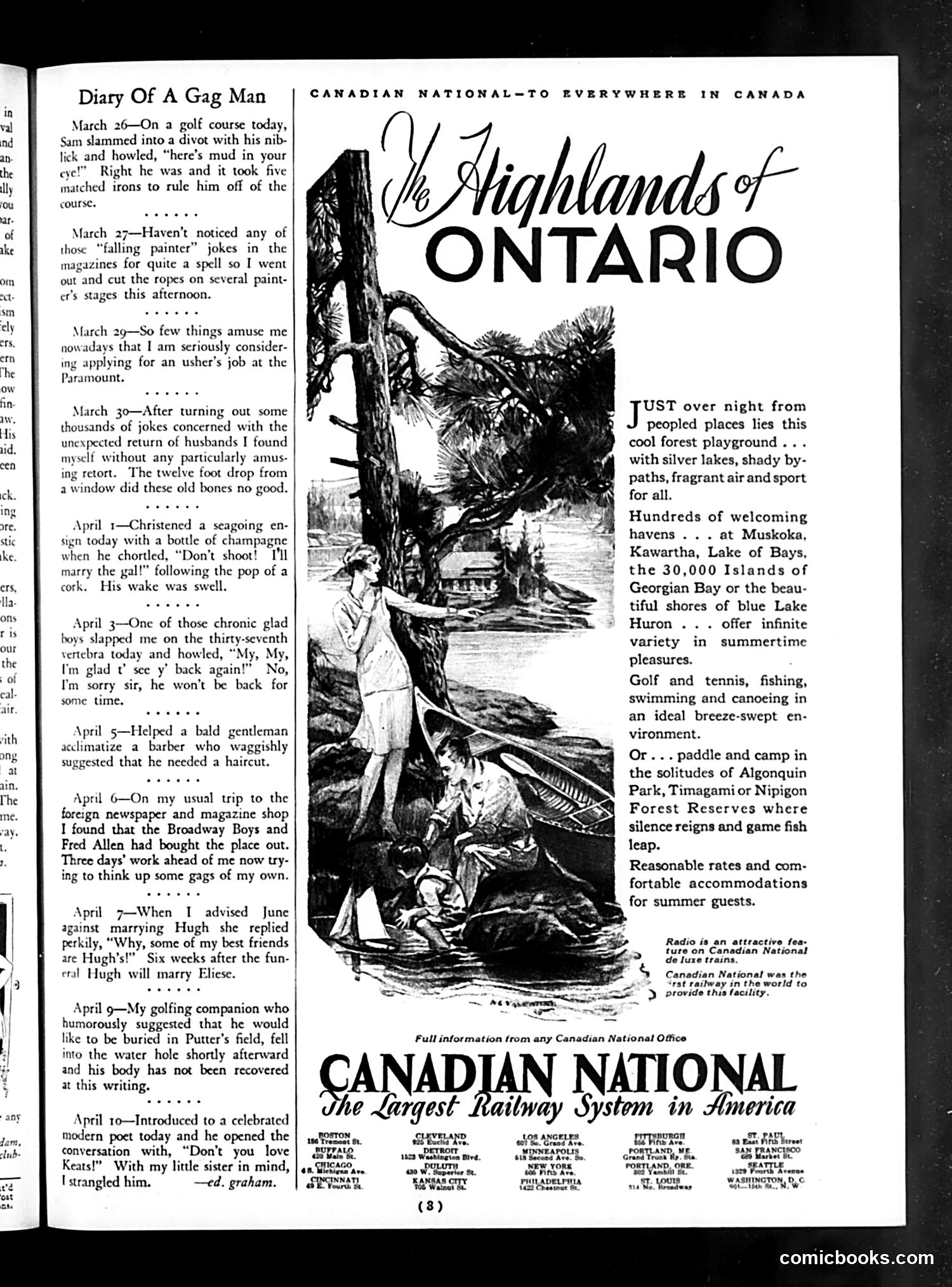
# "Diary of a Gag Man" & Canadian National Advertisement This page contains two distinct elements: **Left side**: A humor column titled "Diary of a Gag Man" featuring brief comedic anecdotes from late March through mid-April. The entries describe mundane situations (golf mishaps, rope-cutting accidents, joke-writing, marriage proposals, barber visits) presented as humorous observations. The humor appears to rely on understated, deadpan delivery rather than elaborate setups—typical of 1920s magazine comedy where everyday absurdities were treated as entertainment. **Right side**: A full-page advertisement for the Canadian National Railway system, featuring an illustrated scene of recreational activities (camping, canoeing) in Ontario's highlands. The ad promotes leisure travel and the railway's service as "The Largest Railway System in America." The juxtaposition suggests how Life magazine balanced satirical content with commercial advertising.
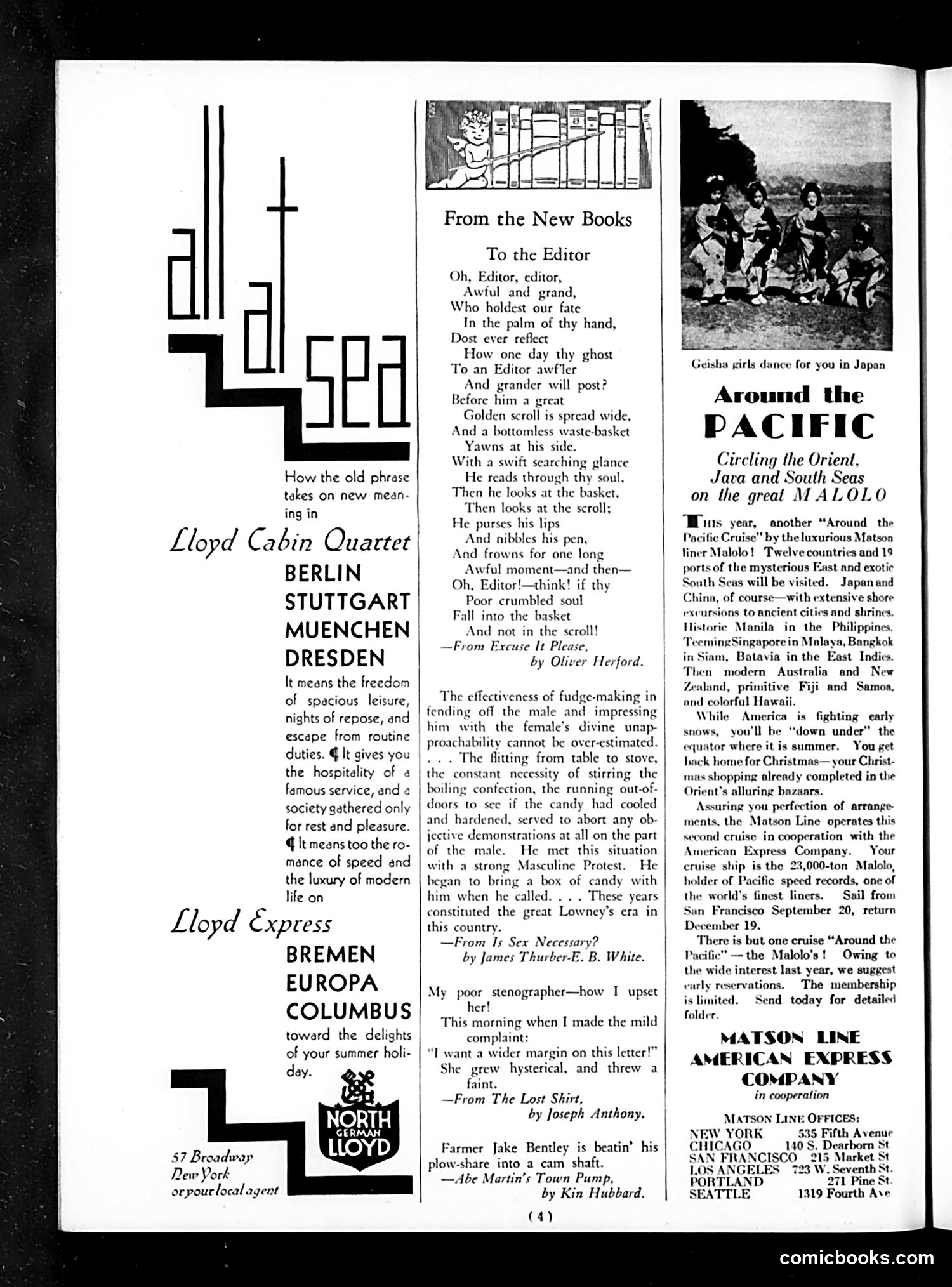
# Page Analysis This page is primarily **advertising and editorial content** rather than political satire. The left side features ads for **Lloyd shipping lines** (German ocean liners: Cabin Quartet, Express) and **North German Lloyd** travel services, marketing European luxury cruises from New York. The right side advertises the **Matson Line's "Around the Pacific" cruise**, with an image of Geisha girls dancing in Japan. The cruise promises visits to Japan, China, Manila, Singapore, and other exotic Orient destinations, plus Australia, Fiji, and Hawaii. A central poem "To the Editor" and short humor pieces about stenographers and farmers fill the middle—typical period magazine content. The overall tone reflects 1920s-era commercialism promoting international leisure travel to distant, "exotic" locations for affluent American audiences.
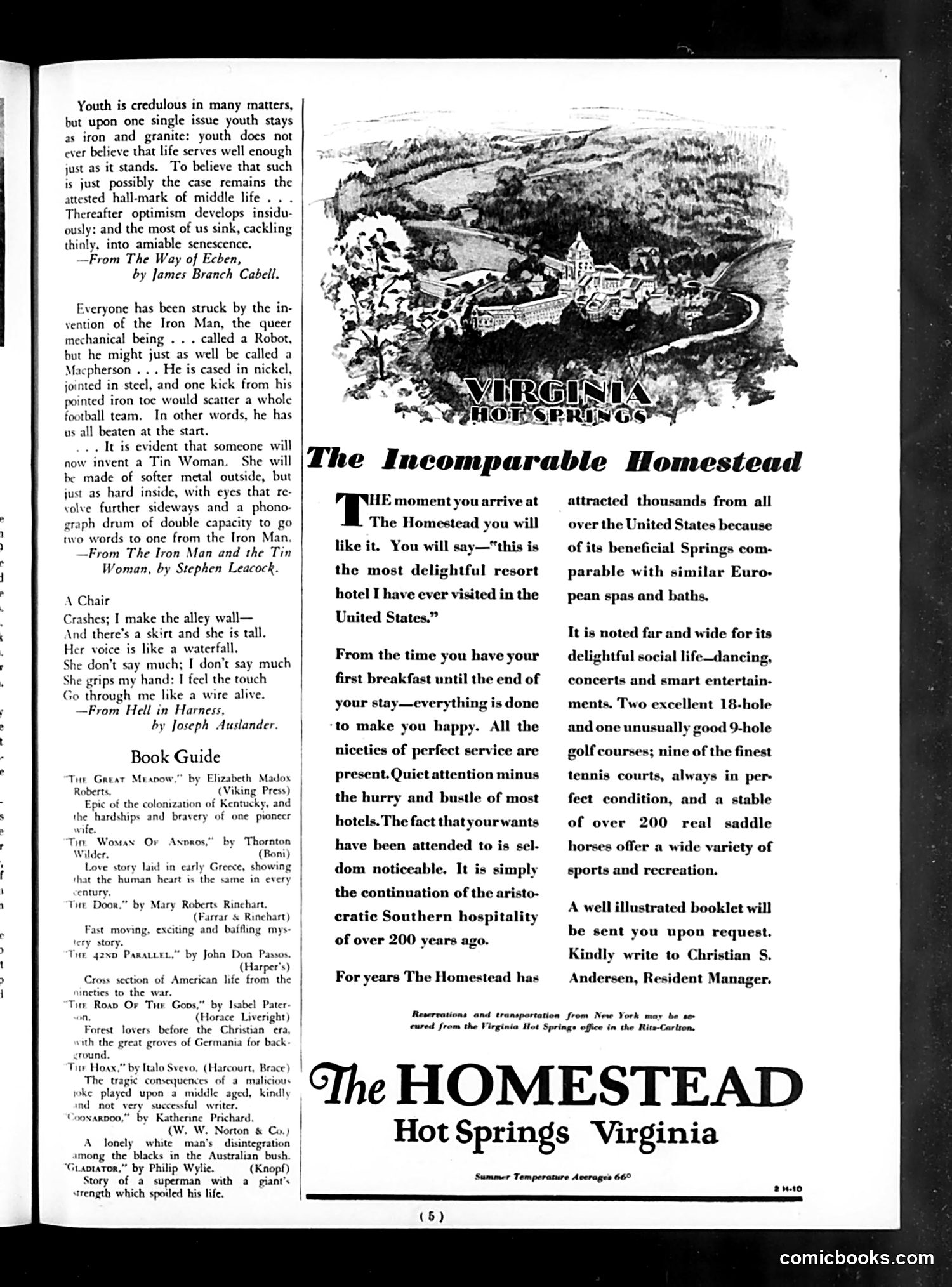
# Content Analysis This page is primarily **advertising for The Homestead resort in Hot Springs, Virginia**, not political satire or editorial cartooning. The left column contains literary quotations and a book guide—these are standard magazine filler content from the era, not satirical commentary. The quotations discuss themes like youth, ambition, and mechanical invention (referencing "The Iron Man" and "The Tin Woman"), but serve as decorative text rather than social critique. The right side features a detailed resort advertisement with an illustrated landscape showing the hotel grounds and facilities. The copy emphasizes luxury amenities: golf courses, tennis courts, horseback riding, entertainment, and the therapeutic benefits of the mineral springs. This is a **straightforward commercial page**, not satirical content requiring historical context to decode.
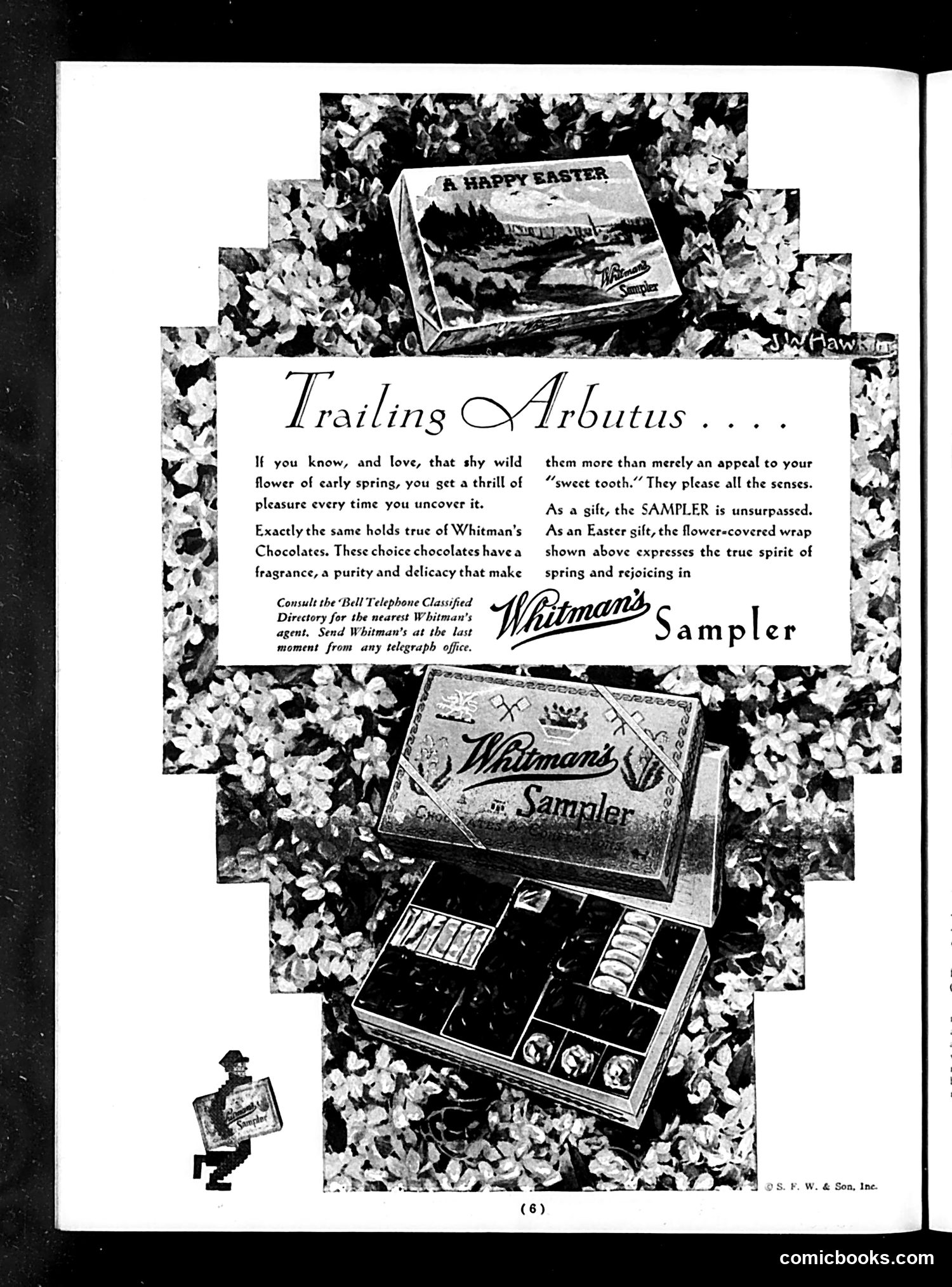
# Analysis This is a **Whitman's Chocolates advertisement**, not political satire. The page promotes their "Sampler" box as an Easter gift, using the spring flower motif of trailing arbutus (a delicate woodland flower) as its central theme. The ad emphasizes that Whitman's chocolates appeal to refined tastes—described as having "fragrance, a purity and delicacy." The sampler box is presented as ideal for Easter gift-giving, combining the flower-covered packaging with the chocolates inside. The only potentially humorous element is the phrase about the flowers being "more than merely an appeal to your 'sweet tooth'"—a mild pun playing on both literal sweetness and the gift's elegance. This is straightforward vintage advertising without political commentary or satire.
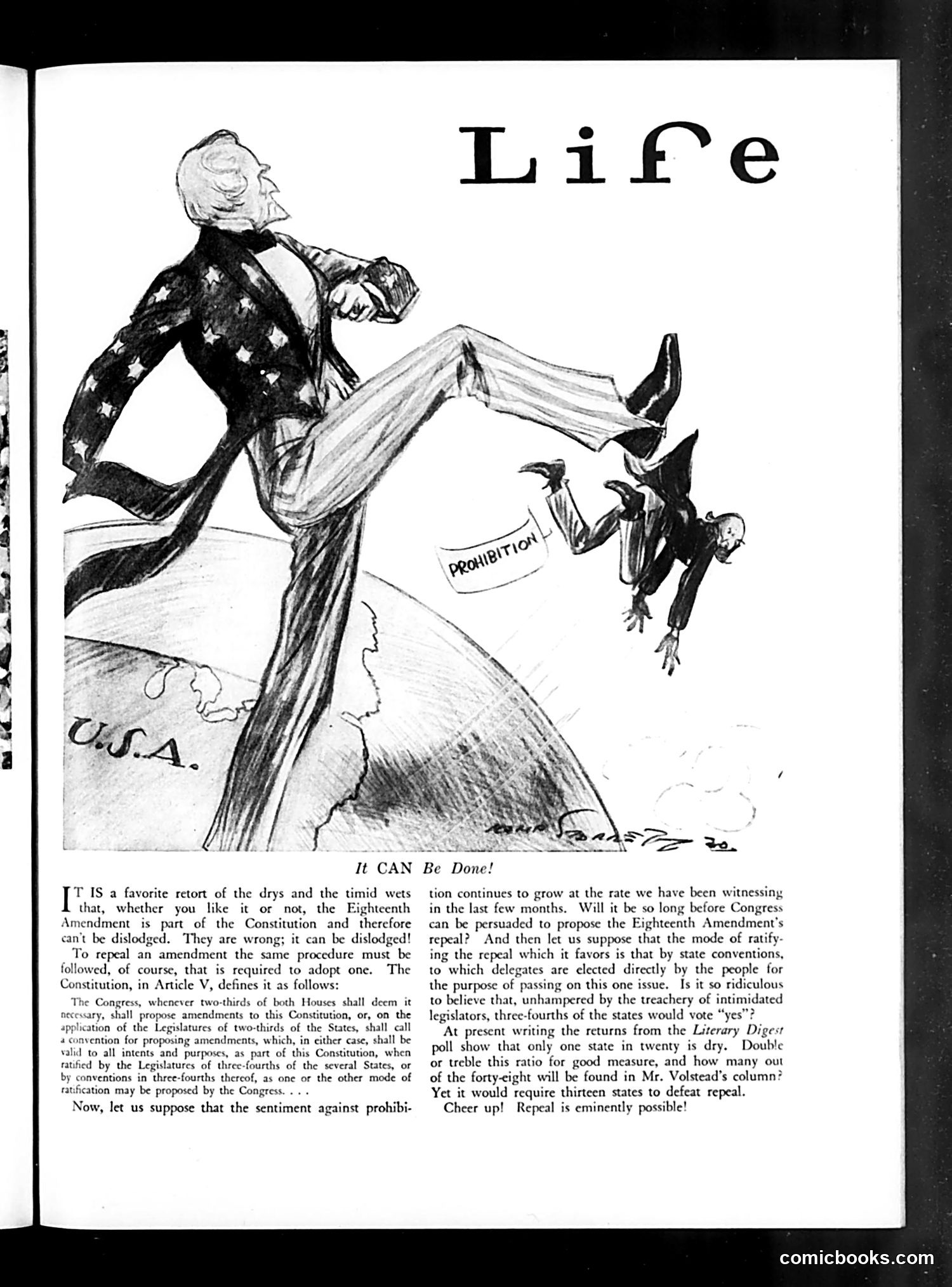
# Political Cartoon Analysis: "It CAN Be Done!" This cartoon addresses the **repeal of Prohibition**, the constitutional ban on alcohol (18th Amendment). The figure kicking up his heels represents an optimistic American celebrating potential repeal as "imminent." The smaller figures being kicked appear to represent **opponents of repeal** — likely prohibition supporters or enforcers. The label "PROHIBITION" on the kicking figure's leg emphasizes the subject. The accompanying text argues repeal is procedurally possible through constitutional amendment (Article V), citing statistics suggesting majority state support. The author disputes claims that repealing Prohibition is impossible, countering that only 13 states would need to vote "yes" — a realistic target given contemporary sentiment. This reflects the **wet vs. dry debate** of the early 1930s, culminating in Prohibition's actual repeal in 1933.
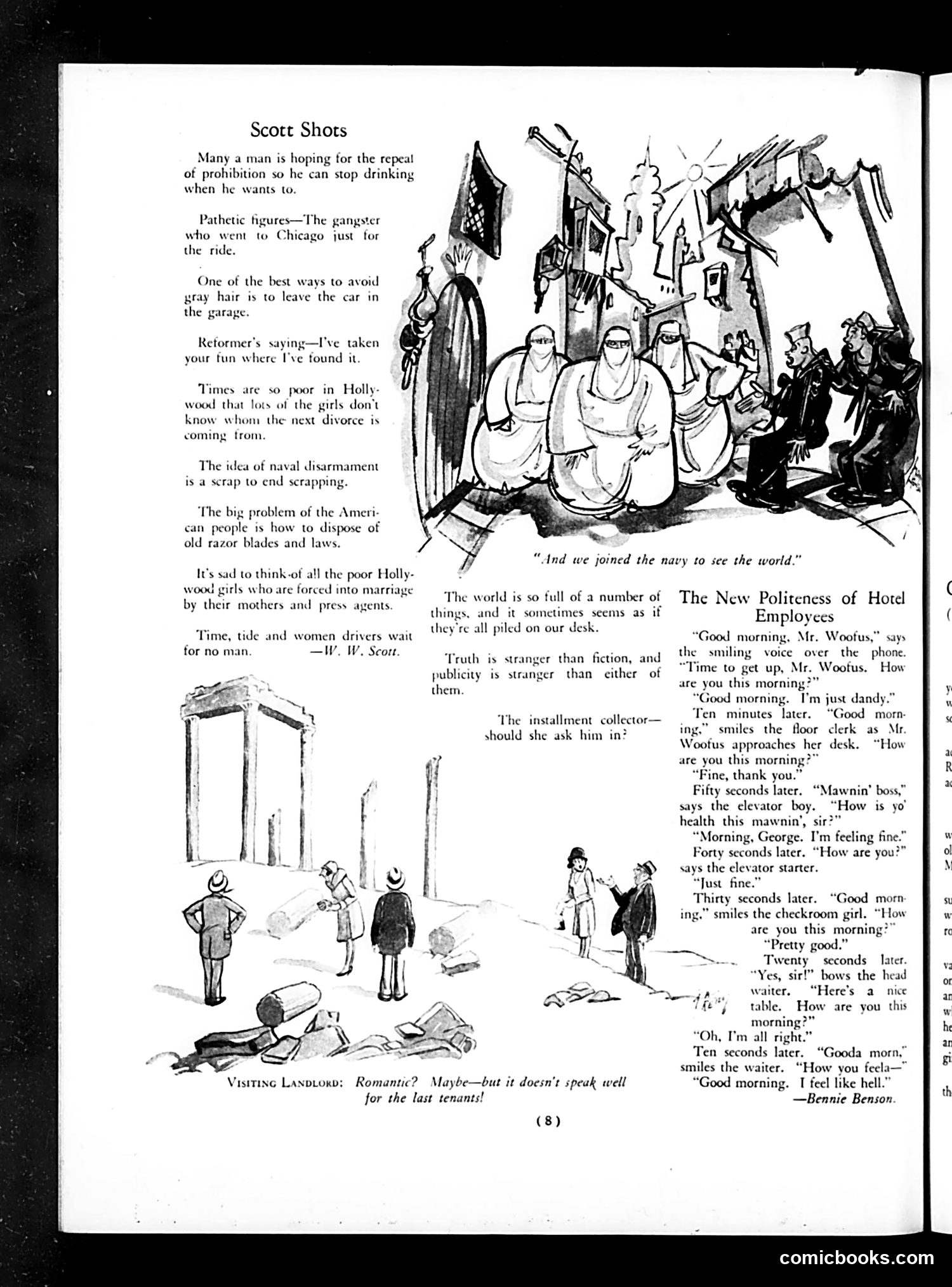
# Scott Shots and Hotel Politeness This page contains several short satirical pieces by W.W. Scott. The top section mocks Prohibition-era behavior and social problems—including gangsters, divorce, and naval policy—through brief, pithy observations. The lower cartoon depicts a landlord showing a rundown property to prospective tenants, with the caption suggesting the building's poor condition makes it unsuitable even for evicting the last tenant. This satirizes predatory landlord practices common in that era. "The New Politeness of Hotel Employees" humorously catalogs how different hotel staff mechanically greet guests with identical "How are you this morning?" inquiries in rapid succession, mocking the performative nature of service-industry courtesy and the lack of genuine human connection in commercial interactions.
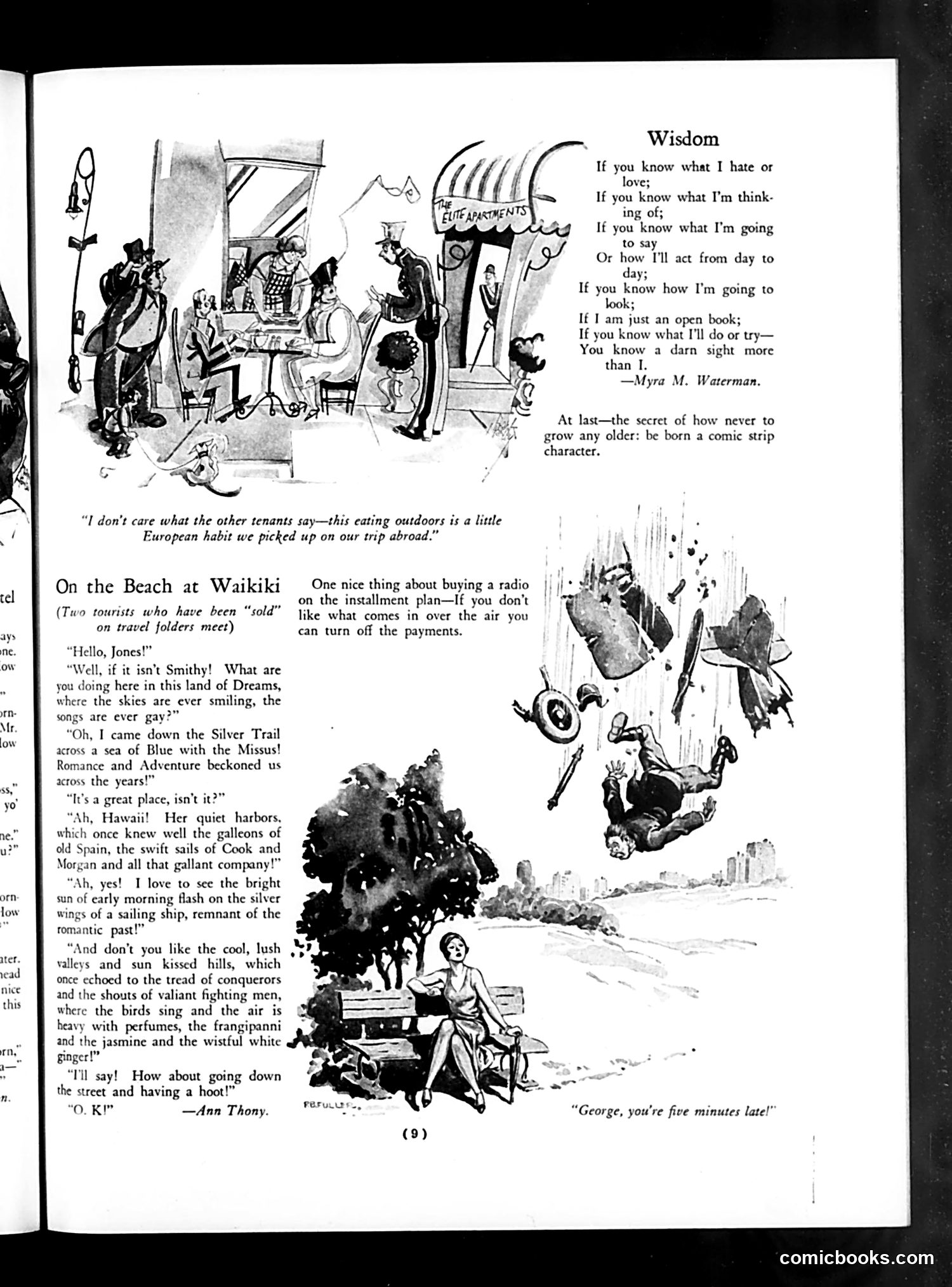
# Page 9: "On the Beach at Waikiki" This page contains a humorous dialogue between two travelers meeting at Waikiki Beach (Hawaii). One character, Jones, encounters Smythy and they reminisce about romantic travel experiences—referencing Cook's voyages, gallant conquistadors, and exotic locales with "jasmine and wistful white ginger." The joke satirizes tourists who romanticize travel while ignoring mundane reality. Smythy suggests they go "down the street and having a hoot" (get drunk), deflating the grand romantic pretensions just expressed. The cartoon at top depicts apartment dwellers eating outdoors, with a caption about adopting "European habits" from abroad—gently mocking how travelers adopt foreign affectations. The illustration shows a woman at Waikiki with the caption "George, you're five minutes late!"—suggesting vacation romance is as ordinary and domestic as everyday life.
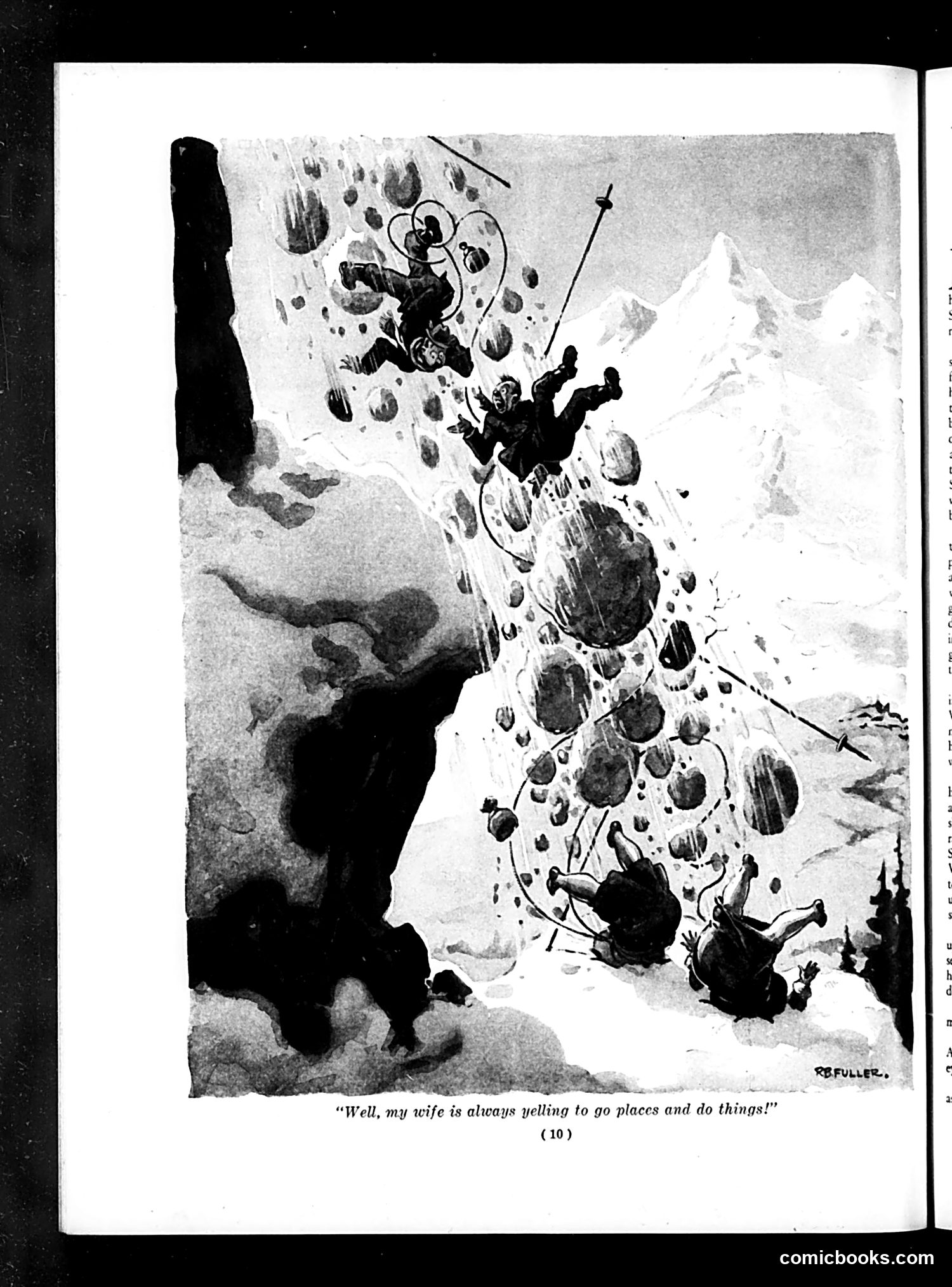
# Commentary on This Cartoon This is a humorous domestic scene depicting a husband complaining about his wife's adventurous spirit. The cartoon shows multiple figures falling or tumbling down a snowy mountainside amid rocks and boulders, suggesting chaotic action and danger. The joke plays on traditional gender roles: the husband grumbles that his wife constantly wants to "go places and do things"—apparently including extreme mountain activities—rather than staying home. The visual chaos of people falling illustrates the (literal and figurative) consequences of her restless ambition. The satire mocks both the wife's desire for independence and adventure, and implicitly the husband's passive complaint rather than active participation. It reflects early 20th-century anxieties about changing women's roles and expectations regarding domesticity.