A complete issue · 36 pages · 1930
Life — April 4, 1930
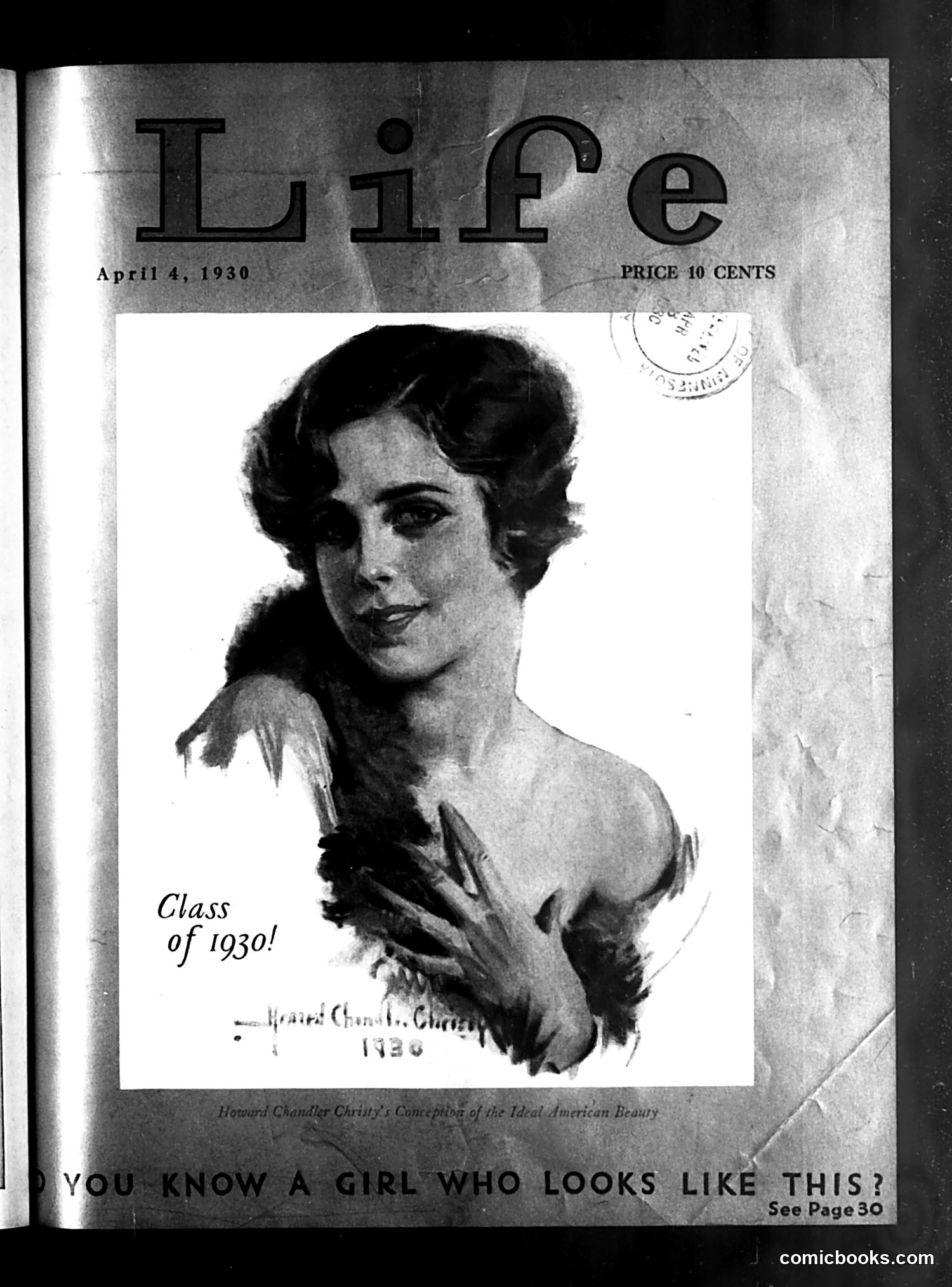
# Life Magazine Cover Analysis, April 4, 1930 This is a **title page/cover** rather than a cartoon. It features a portrait sketch labeled "Class of 1930!" with a caption crediting "Howard Chandler Christy's Conception of the Ideal American Beauty." The interactive element—"YOU KNOW A GIRL WHO LOOKS LIKE THIS? See Page 30"—appears to be a reader-engagement gimmick typical of 1930s magazines. It likely connects to content inside about identifying or celebrating contemporary "ideal beauty" standards. The price (10 cents) and date confirm this as a genuine 1930 issue. Rather than satirical commentary, this represents Life magazine's function as a lifestyle publication promoting beauty standards and ideal femininity to its Depression-era readership.
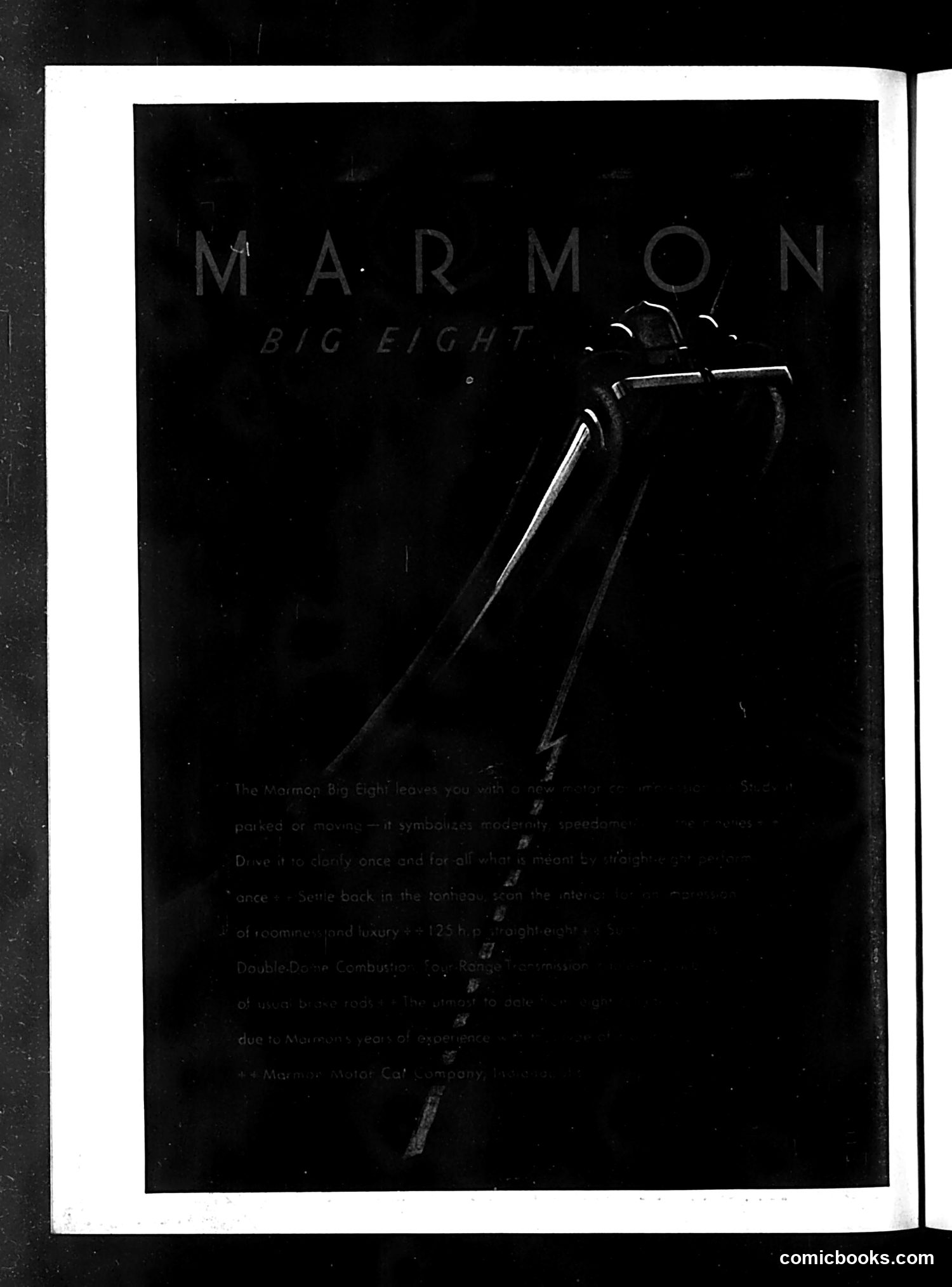
# Marmon Big Eight Advertisement This is a vintage automobile advertisement for the Marmon Big Eight, a luxury car. The page features dramatic styling typical of early 20th-century advertising—a sleek, minimalist black background with the car's distinctive handlebar-style steering mechanism prominently displayed. The text (largely illegible in this reproduction) appears to emphasize the car's modern engineering, smooth operation, and luxury features. References to "DoubleDrive Combustion" and performance specifications suggest marketing appeals to affluent buyers interested in cutting-edge automotive technology. This is not political satire but rather a straightforward commercial advertisement aimed at wealthy consumers—part of Life magazine's revenue model. The sophisticated, understated design reflects the prestige positioning of Marmon automobiles in the competitive luxury market of the era.
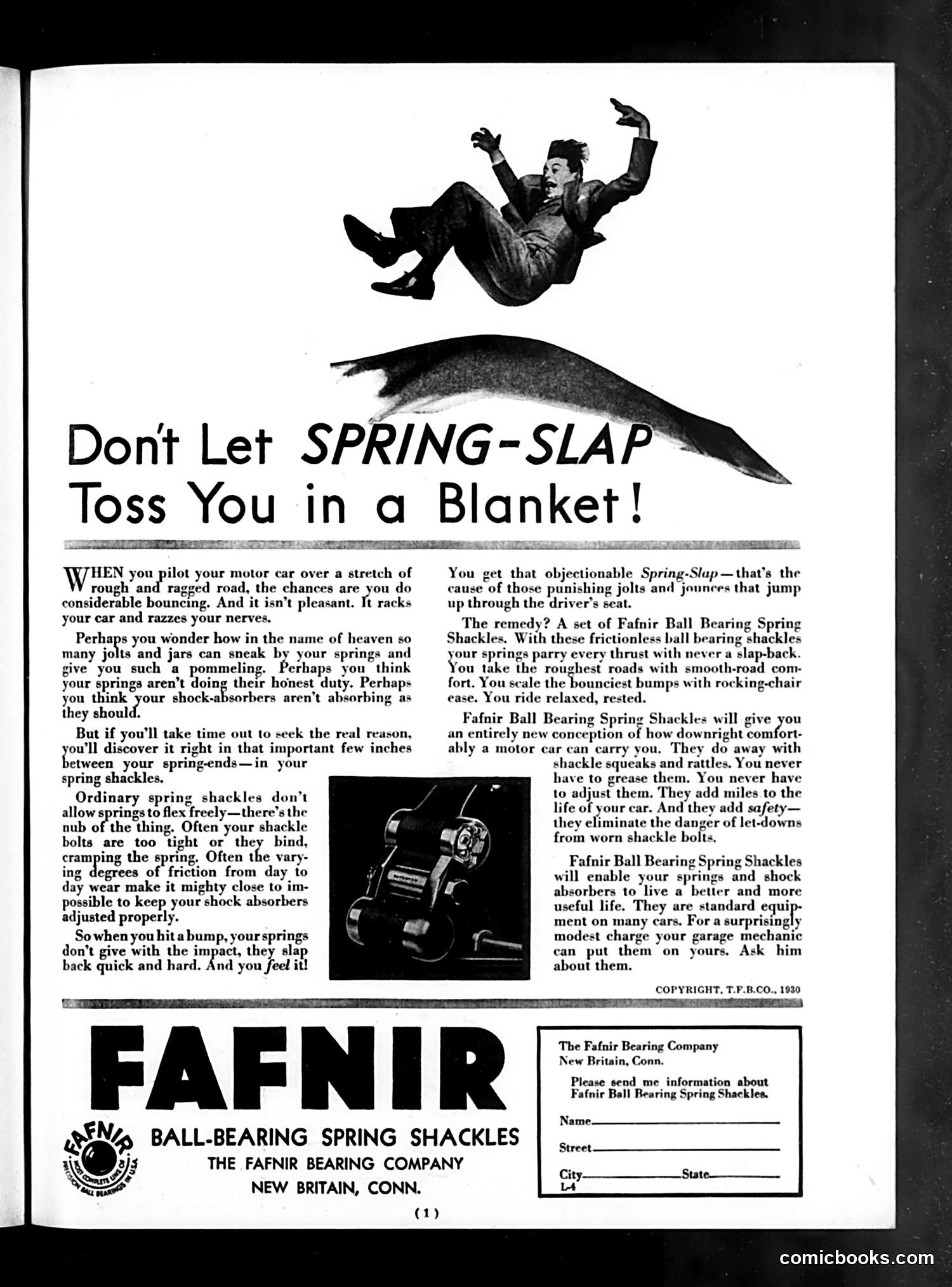
This is primarily a **1930 advertisement**, not satire or political commentary. The page advertises Fafnir Ball Bearing Spring Shackles for automobiles. The cartoon illustrates the problem being solved: a man is comically thrown upward from his car seat, depicting the jarring "spring-slap" effect that occurred when driving over rough roads in early automobiles. The ad explains that ordinary spring shackles were too rigid, causing violent bouncing. Fafnir's ball-bearing design allows springs to flex freely, eliminating the punishing jolts. The humor is purely **functional and domestic**—showing the physical discomfort of early motoring rather than making social or political points. The exaggerated illustration of the airborne driver is meant to resonate with readers who experienced this common automotive annoyance.
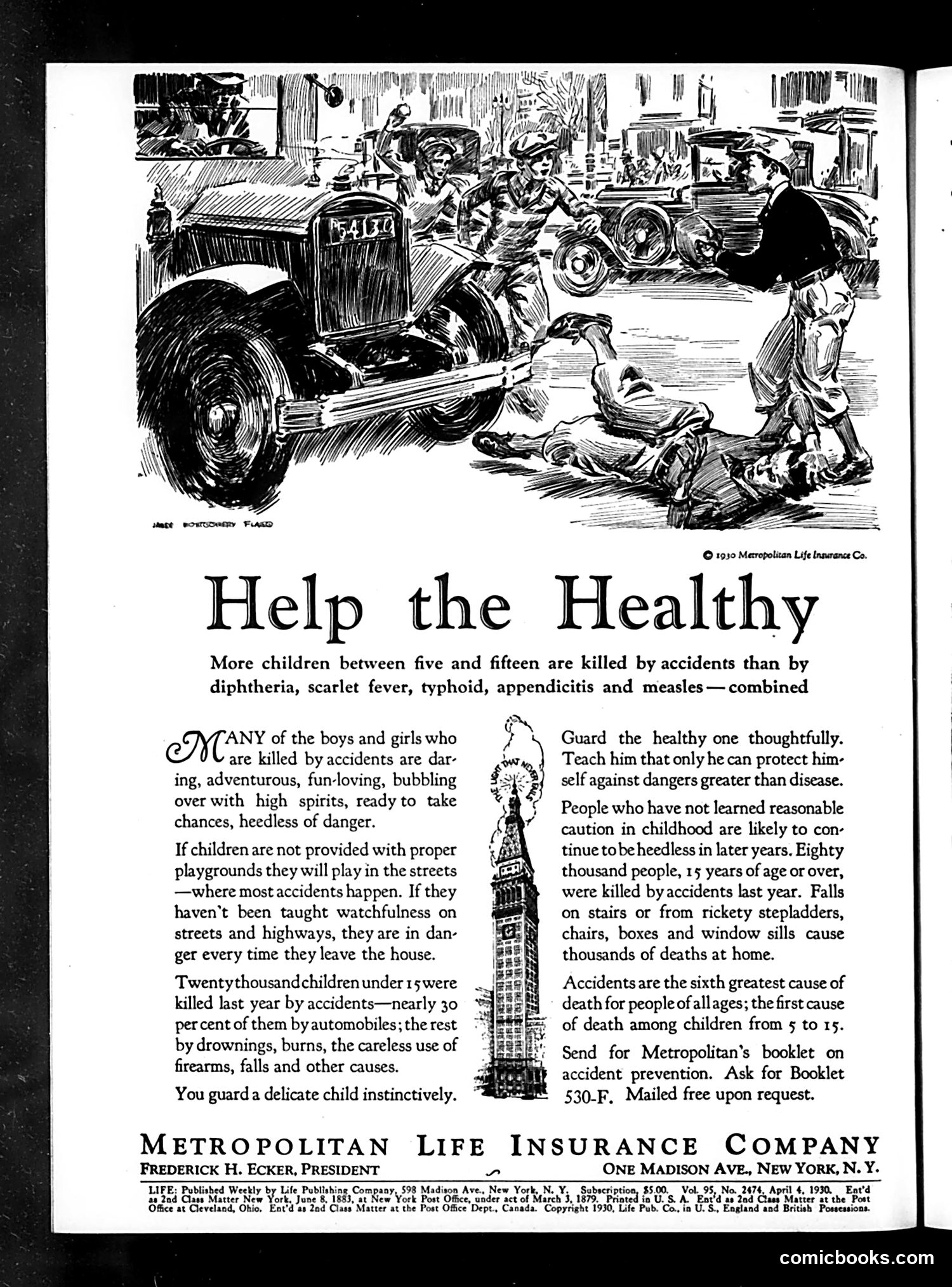
# Analysis This is a **public health advertisement** from Metropolitan Life Insurance Company (1930), not satire or political commentary. The illustration depicts a **street accident involving an automobile and children**, with multiple vehicles and pedestrians in an urban setting. The accompanying text argues that accidental deaths—not diseases like diphtheria or scarlet fever—are the leading cause of death for children aged 5-15. The ad's message is straightforward: parents must teach children safety and provide proper playgrounds to prevent street accidents. It cites statistics (20,000 children under 15 killed annually) and warns that unattended children playing in streets face constant danger. This reflects early 20th-century concerns about automobile safety and urban hazards, positioning accident prevention as a serious public health priority worthy of insurance company advocacy.
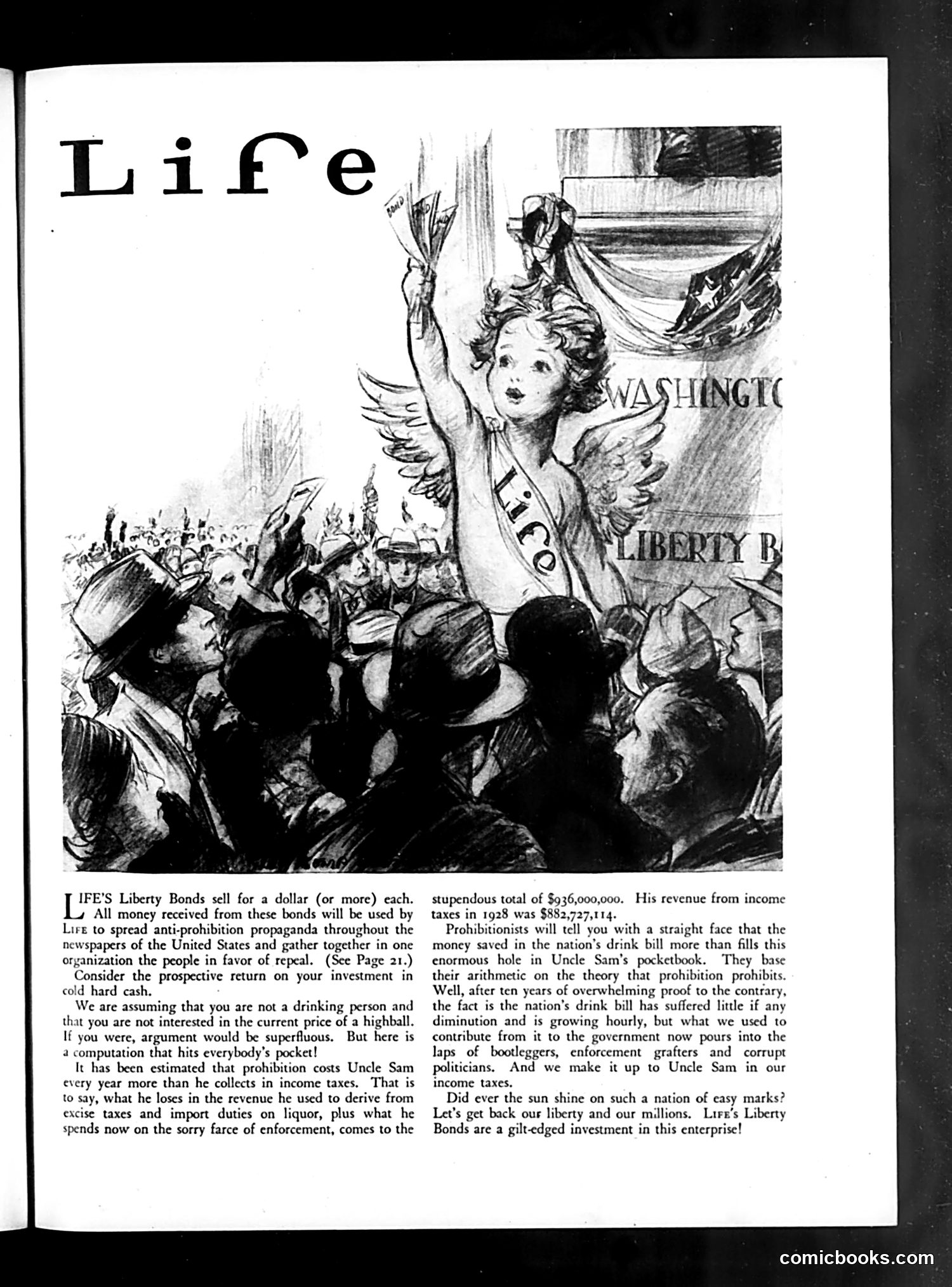
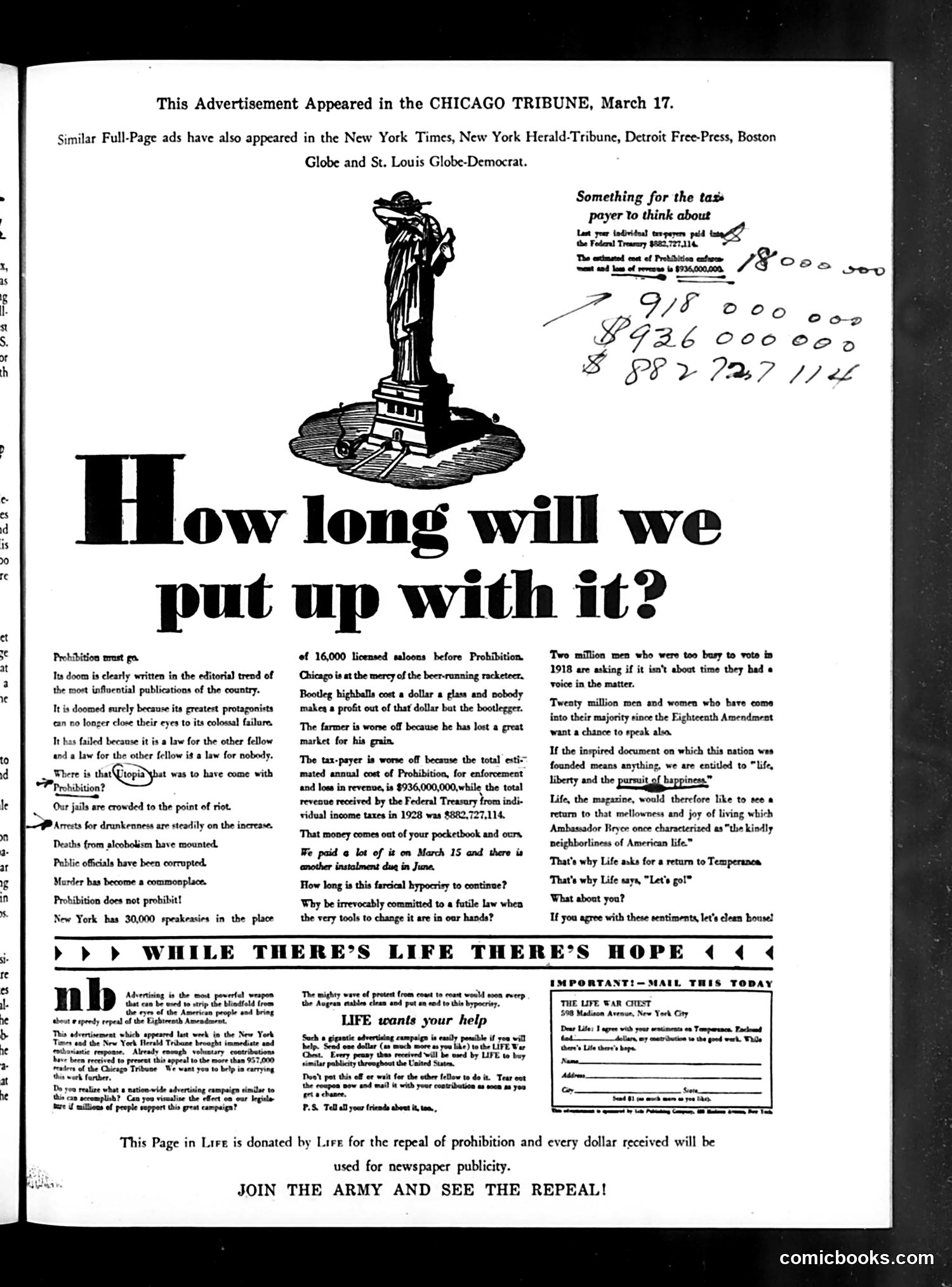
# Explanation for Modern Readers This 1928 *Life* magazine page satirizes Prohibition and Liberty Bonds. The central illustration depicts an allegorical female figure (Liberty) elevated above a crowd, promoting Liberty Bonds as investments. The accompanying text argues that Prohibition costs the government enormous revenue—estimated at $316 million annually—through lost liquor taxes and enforcement expenses. The satire suggests that wealthy citizens should buy Liberty Bonds to compensate Uncle Sam for prohibition-related economic losses. The article sarcastically implies that Prohibition primarily benefits bootleggers and corrupt politicians rather than public welfare. The cartoon equates Bond investment with regaining national prosperity while acknowledging Prohibition's widespread failure to reduce drinking and its financial drain on government coffers.
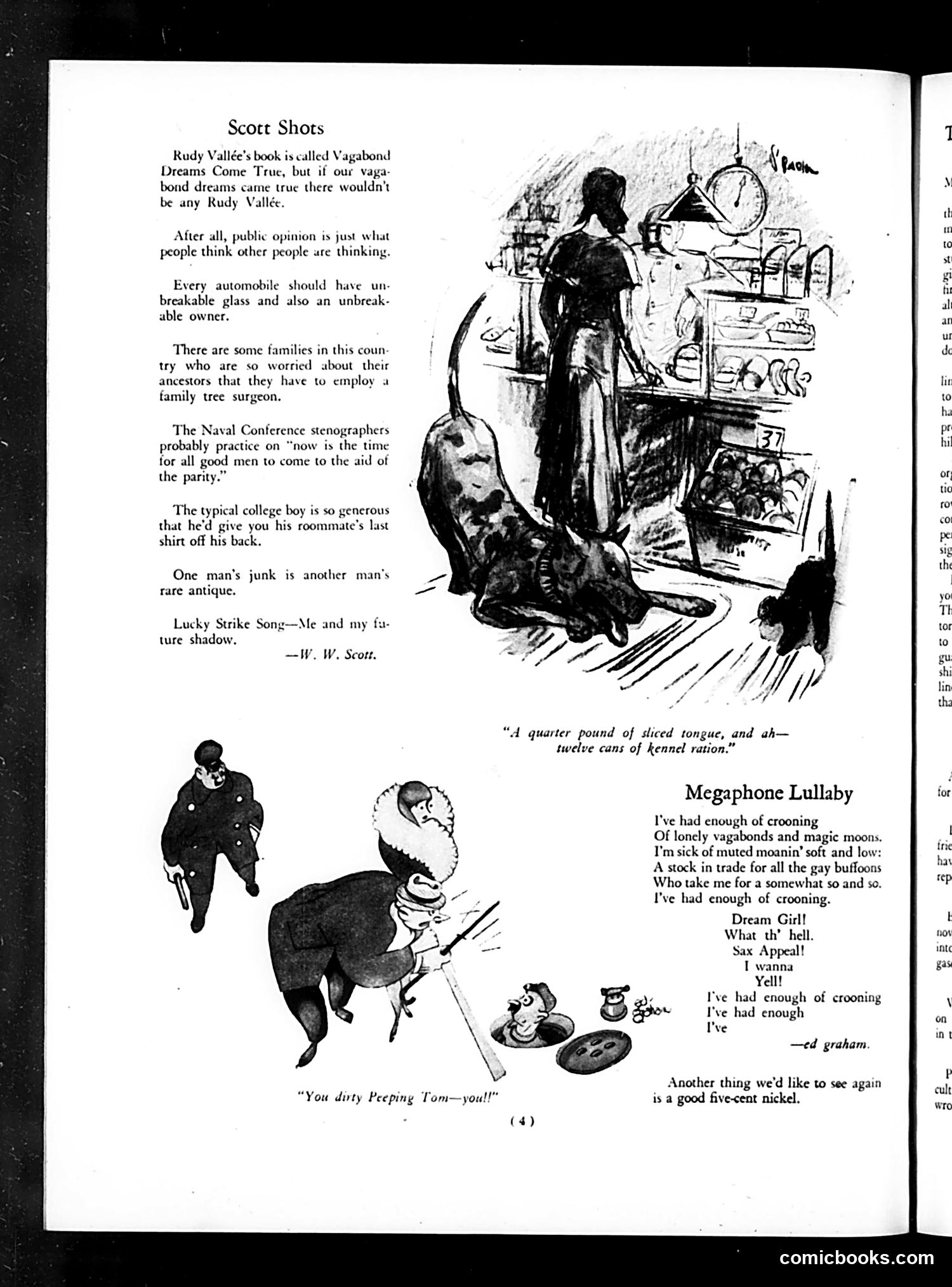
# Scott Shots: Early 20th Century Humor Page This is a satirical humor page from *Life* magazine featuring several short jokes and two cartoon illustrations. The top cartoon shows a woman at what appears to be a junk shop or pawnbroker, with the caption "A quarter pound of sliced tongue, and ah—twelve cans of kennel ration"—a joke about dog food being sold alongside human food, likely commenting on the poor quality or indistinguishability of cheap provisions. The lower cartoon, captioned "You dirty Peeping Tom—you!", depicts a man, woman, and what appears to be a cat or small animal—likely a visual pun or domestic mishap joke. The "Megaphone Lullaby" section parodies popular crooning songs of the era, satirizing contemporary musical tastes and sentimental ballad culture. The jokes throughout mock modern life, automobiles, family pretensions, and social conventions typical of 1920s satire.
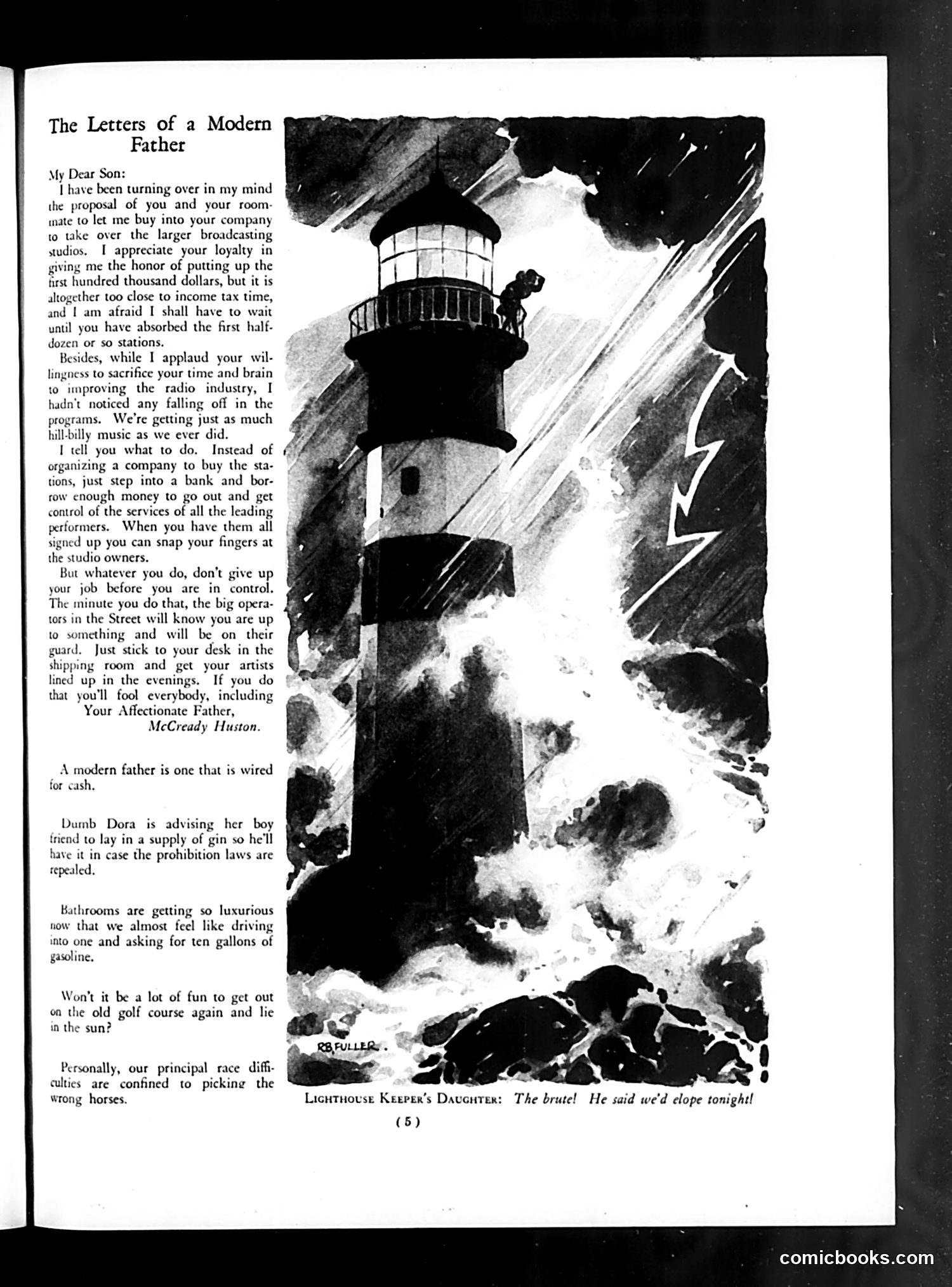
# "The Letters of a Modern Father" - Life Magazine Page This page contains a satirical letter from "McCready Huston" to his son about the broadcasting industry. The father advises his son to borrow money and gain control of radio stations rather than starting from the bottom—a joke about 1920s American capitalism and the rush to control new media technology. Below are several one-liners mocking contemporary social trends: modern fathers valuing money, prohibition-era gin stockpiling, luxurious bathrooms, and golf. The illustration depicts a lighthouse keeper's daughter eloping—a melodramatic scenario captioned "The brute! He said we'd elope tonight!" This appears to be a separate satirical illustration lampooning sentimental romance narratives popular in the era. The satire targets materialism, Prohibition evasion, and the get-rich-quick mentality of the Jazz Age.
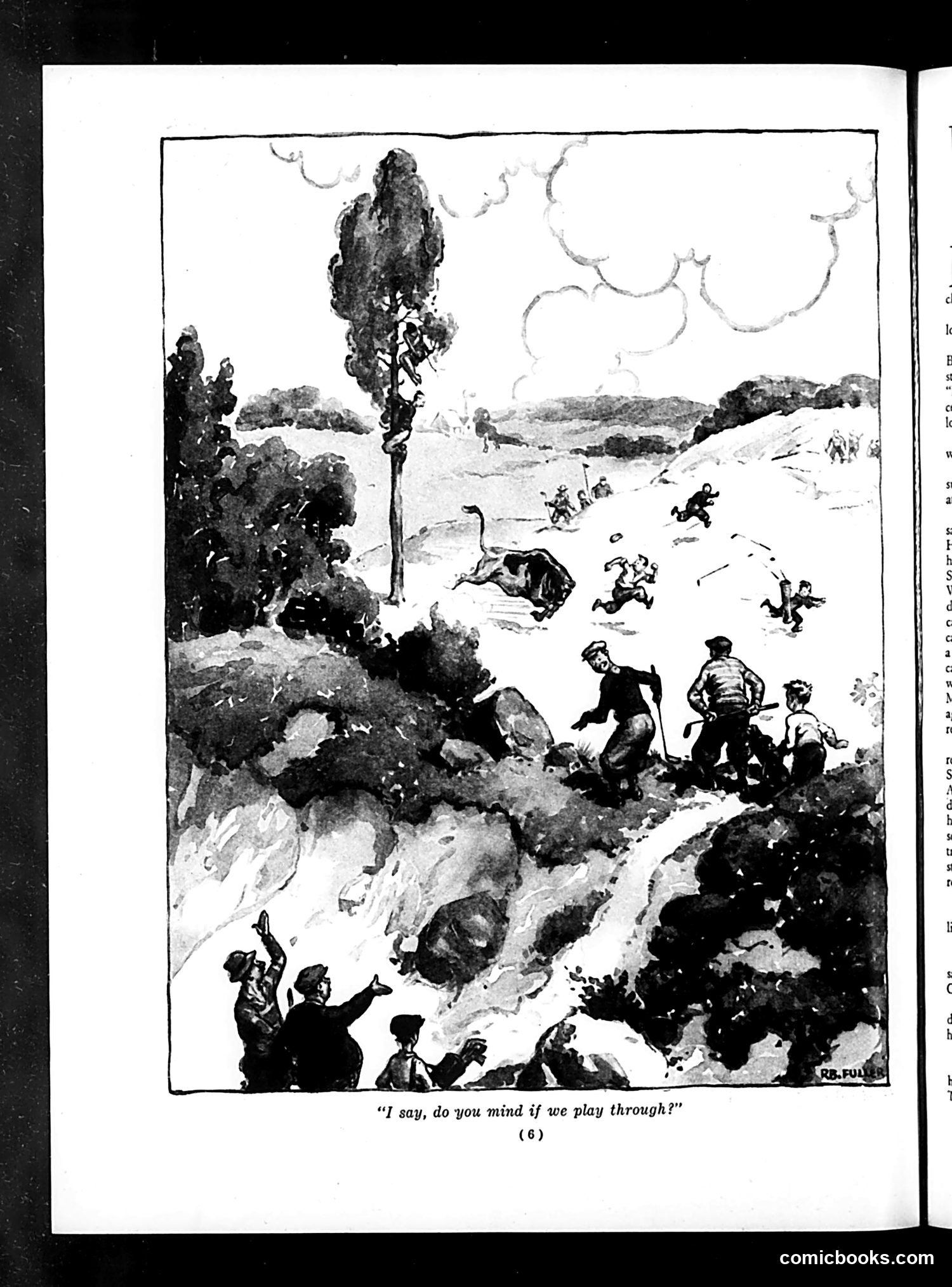
# Analysis of Cartoon Page This illustration depicts a sandy landscape with numerous figures engaged in recreational activity—appearing to be children and adults playing on a beach or sandy area. The central figures in the foreground are asking "I say, do you mind if we play through?" a phrase commonly used in golf when one group requests to pass slower players ahead. The satire appears to be about **crowded public recreational spaces**, suggesting that even on what should be a leisurely beach or sandy area, there are so many people that one group must formally request permission to proceed past others. The joke satirizes **overcrowding in public spaces** and the loss of privacy or freedom in popular leisure destinations—a social commentary on congested modern recreation areas where even simple activities require negotiating around crowds.
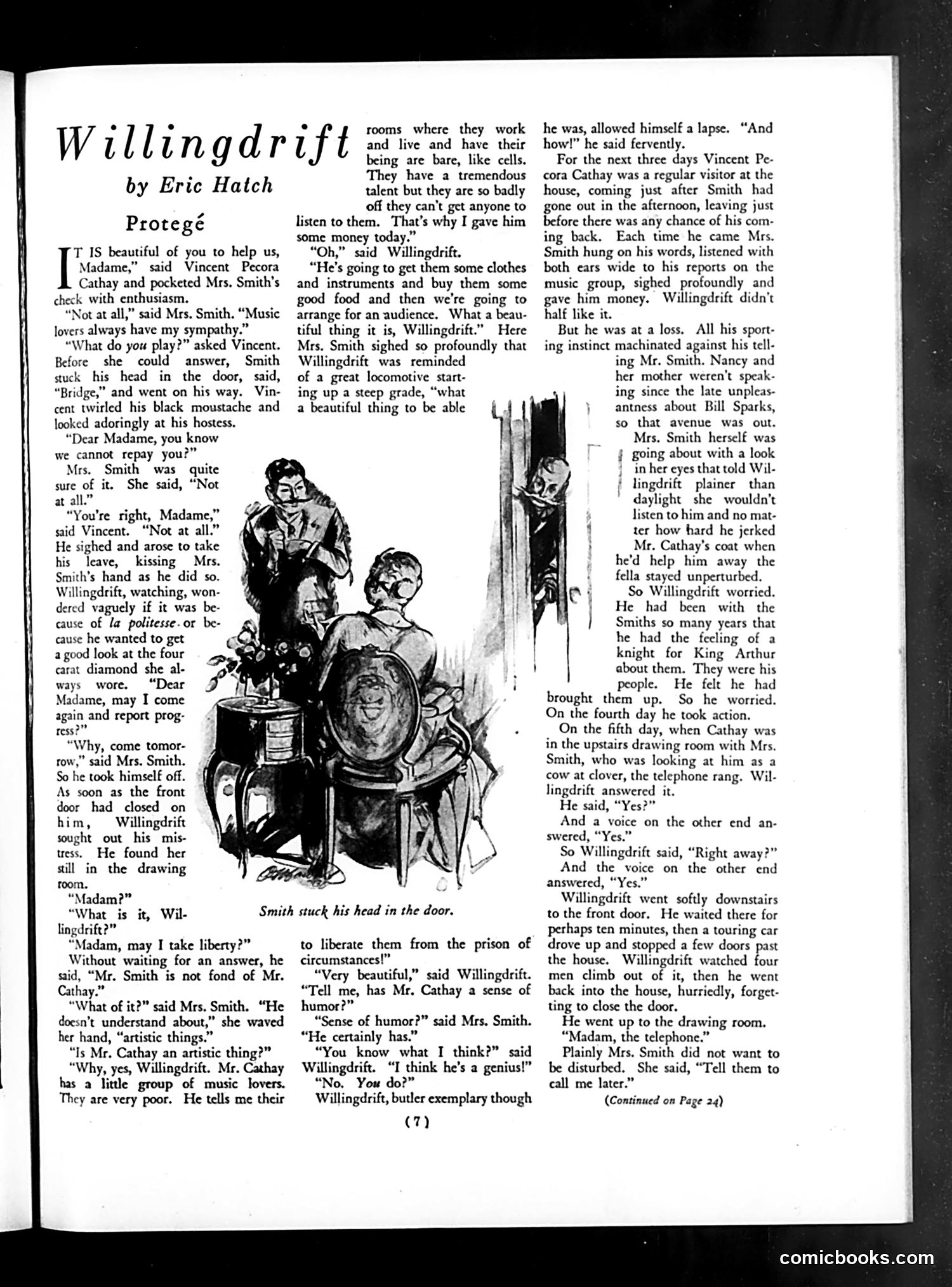
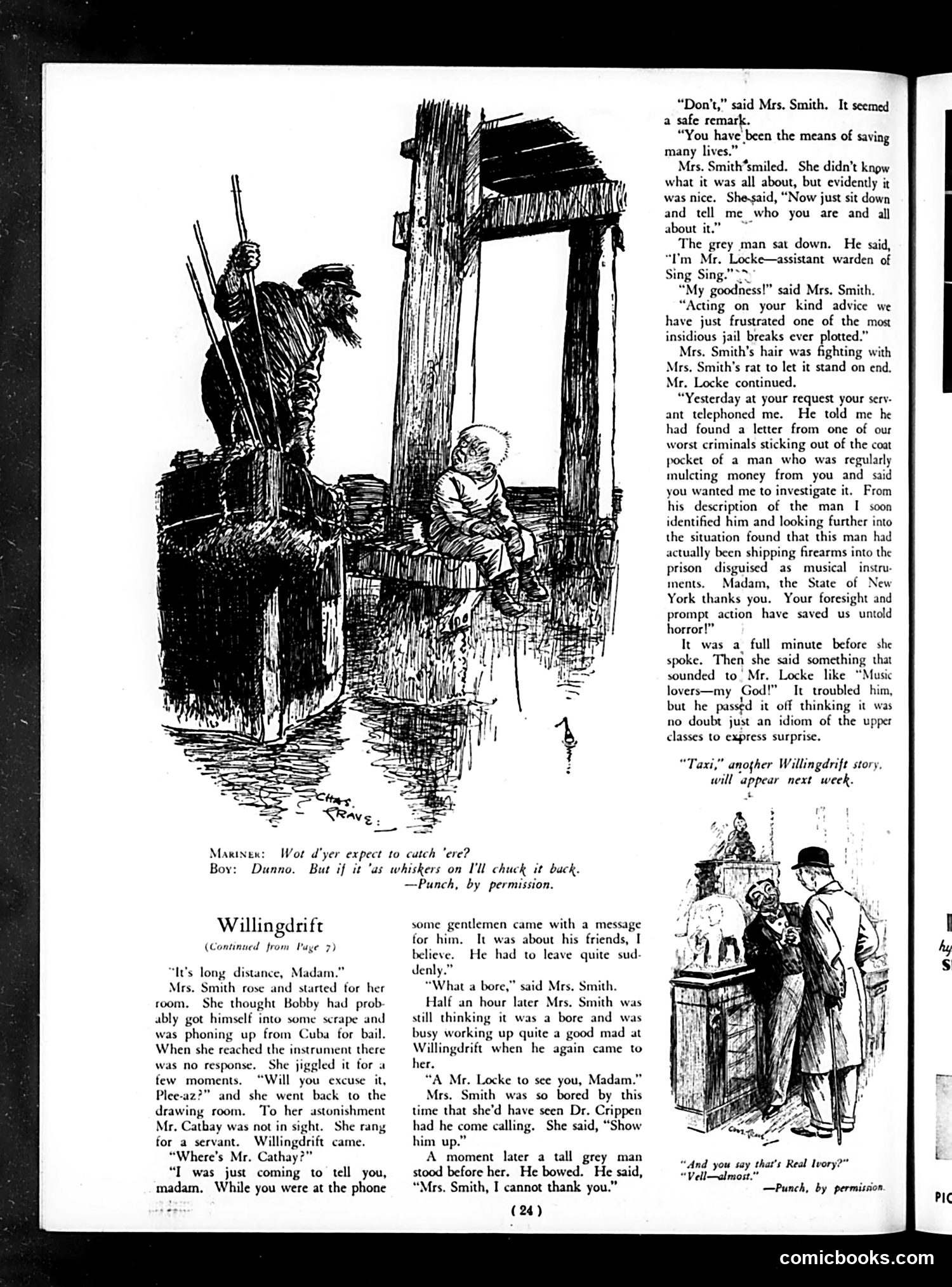
# "Willingdrift" by Eric Hatch — Page Analysis This is a short story (not a political cartoon), appearing to be a humorous fiction piece about a character named Willingdrift. The illustration shows Smith "stuck his head in the door," depicting a domestic scene with multiple figures in what appears to be an interior setting. The narrative concerns Mrs. Smith's enthusiasm for helping "Madame" and Vincent Percora Cathay by providing music lessons and instruments to his struggling group. The story explores themes of artistic patronage and social obligation. Willingdrift, apparently the household's character of interest, serves as the vehicle for examining 1920s-era attitudes toward bohemian artists and domestic service. Without additional context about the original publication date or Cathay's identity, the specific satirical targets remain unclear.
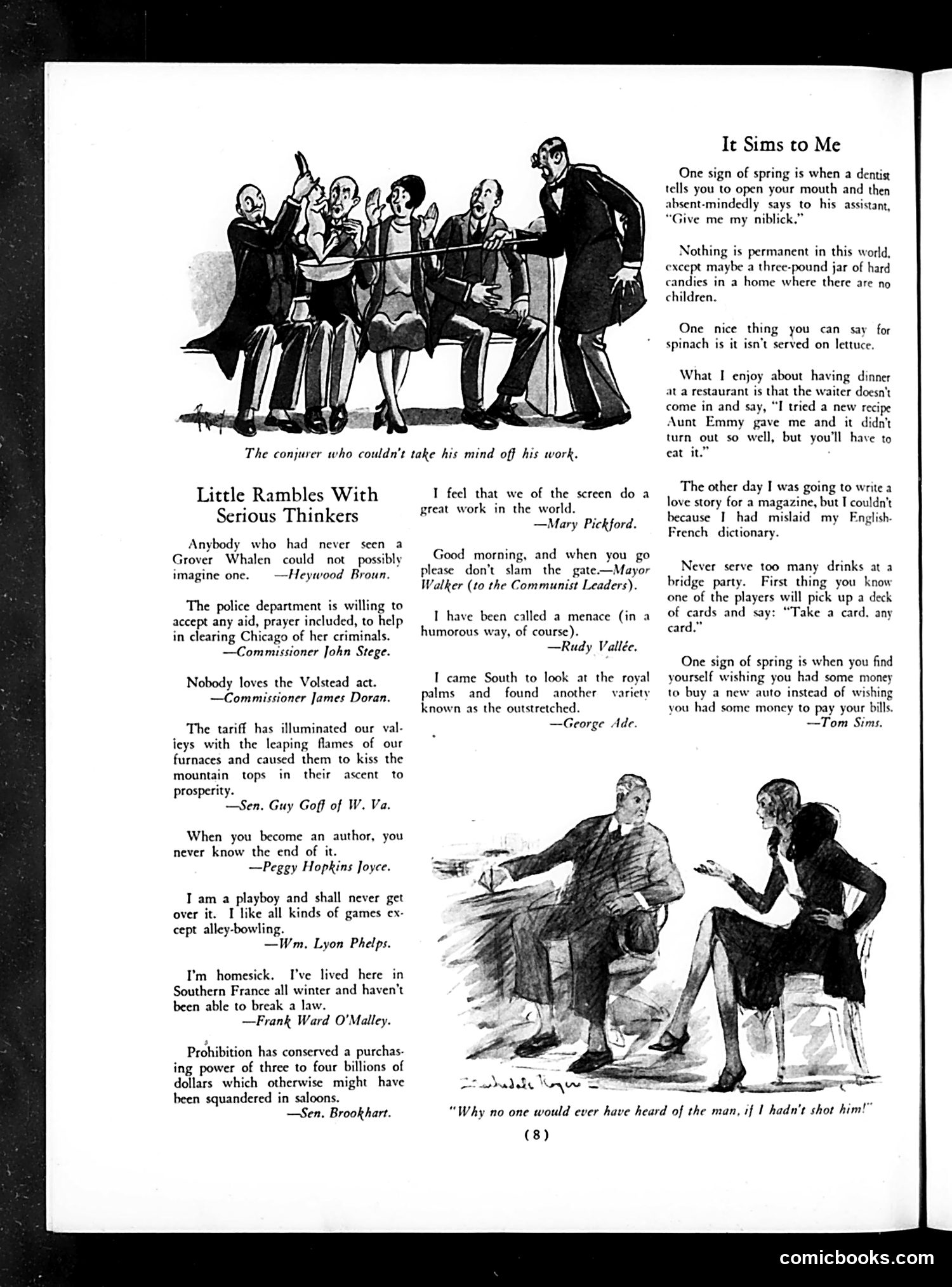
# Analysis of Life Magazine Page **Top Cartoon:** Shows five men in formal dress gathered around a conjurer performing magic, with the caption "The conjurer who couldn't take his mind off his work." This appears to be satirizing absent-minded professionals—likely a magician or performer so obsessed with his craft that he remains mentally engaged with work even in social settings. **"It Sims to Me" Column:** A humorous essay offering observations on everyday life, including commentary on dentists, spinach preparation, restaurant service, and prohibition-era observations. The writing style is light satire on modern domestic customs. **Bottom Cartoon:** Shows a man and woman in conversation with dialogue: "Why no one would ever have heard of the man, if I hadn't shot him!" This appears to satirize how notoriety or fame sometimes derives from violence or scandal rather than merit.
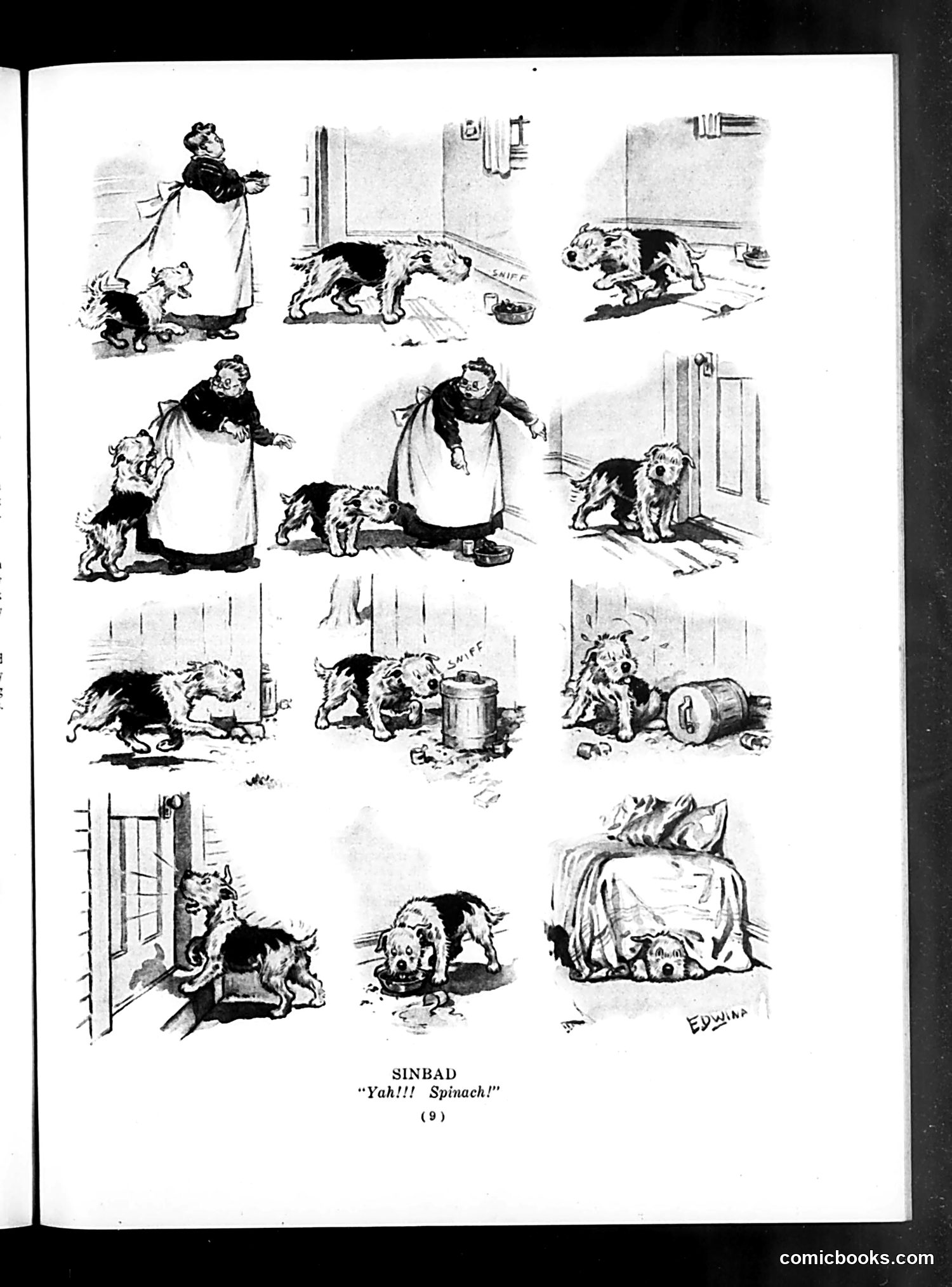
# Sinbad "Yah!!! Spinach!" This is a humorous comic strip sequence titled "Sinbad" that appears to parody the famous sailor character. The strip shows a domestic scene with what looks like an elderly woman (possibly a caretaker or landlady) and a dog repeatedly interacting around food and household items. The joke plays on the exclamation "Yah!!! Spinach!" — likely referencing Popeye the Sailor Man, the cartoon character famous for gaining superhuman strength from eating spinach. Here, the satire seems to mock both the Sinbad legend and contemporary comic strip tropes by showing mundane, comedic interactions rather than adventurous heroics. The numbered page "(9)" suggests this is part of a larger serialized work in *Life* magazine's satirical humor section.
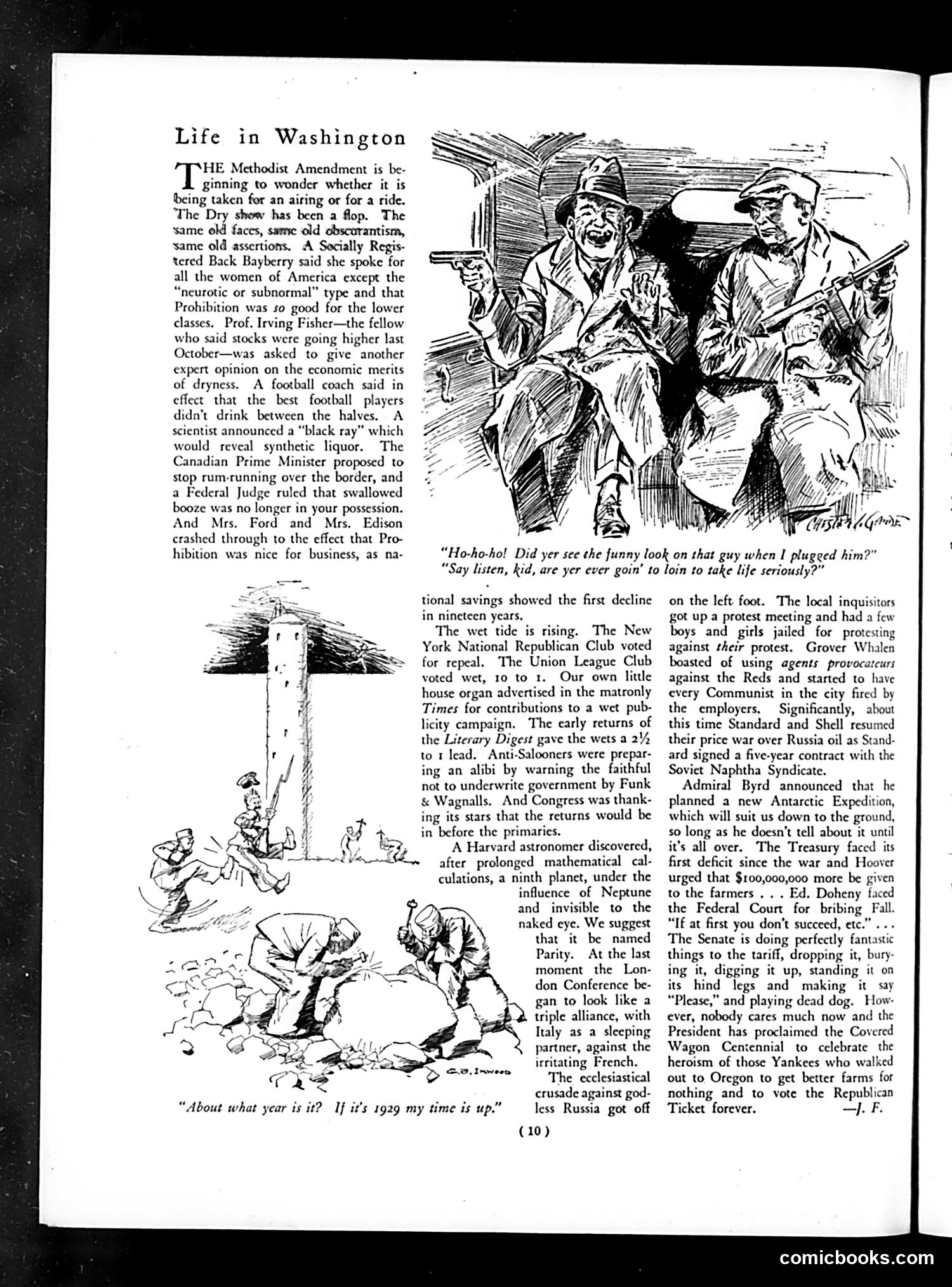
# Political Satire: "Life in Washington" (Page 10) This page satirizes Prohibition-era Washington politics through two cartoons and accompanying commentary. **Top cartoon**: Two men in hats discuss another man's appearance after apparently being struck. The caption jokes about "the funny look" and taking life seriously—likely mocking political violence or heated disputes during Prohibition debates. **Bottom cartoon**: Figures appear to be digging or scavenging, with the caption "About what year is it? If it's 1929 my time is up"—referencing someone's prison sentence or legal sentence ending in 1929. The text discusses the Methodist Amendment, Prohibition's effects on the lower classes, and various political reactions including discussions of "wet" versus "dry" positions. References to Russian communism, Admiral Byrd's Antarctic expedition, and Senate debates situate this as early-1920s American political commentary on Prohibition's enforcement and social consequences.