A complete issue · 36 pages · 1930
Life — March 21, 1930
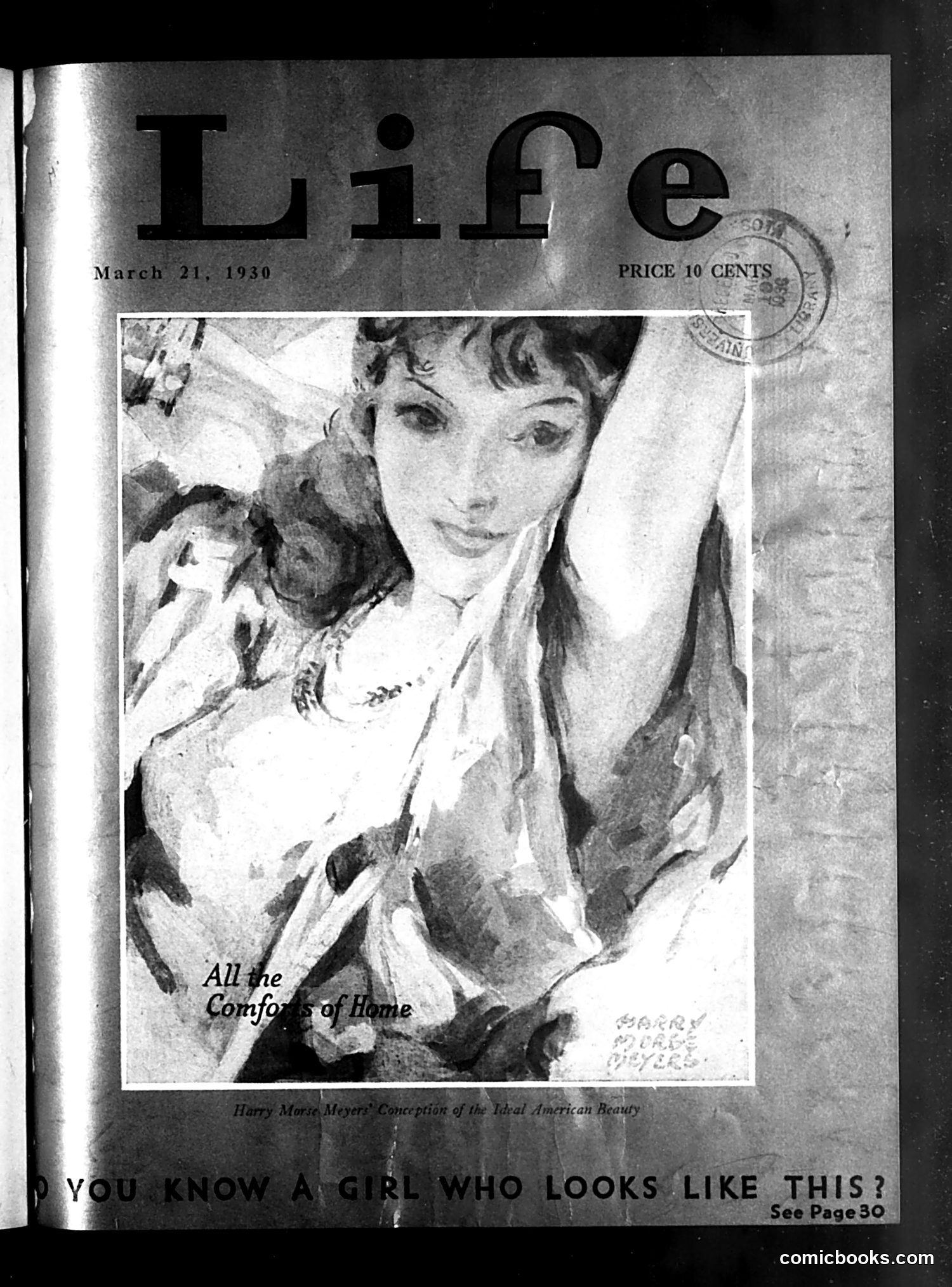
# Analysis of Life Magazine Cover, March 21, 1930 This is a **magazine cover**, not a political cartoon. The image shows a woman holding a small dog, with the headline "All the Comforts of Home" and credit to "Harry Meyers Myers' Conception of the Ideal American Beauty." The cover features a portrait photograph or illustration representing an idealized American woman of the era, styled with 1930s fashions and hair. The tagline "YOU KNOW A GIRL WHO LOOKS LIKE THIS?" at the bottom appears designed to engage readers through recognition or aspiration. This reflects **1930s popular culture's emphasis on beauty standards and domesticity**, with the dog symbolizing home and comfort. The ten-cent price indicates this was a mass-market publication aimed at general American audiences during the Great Depression era.
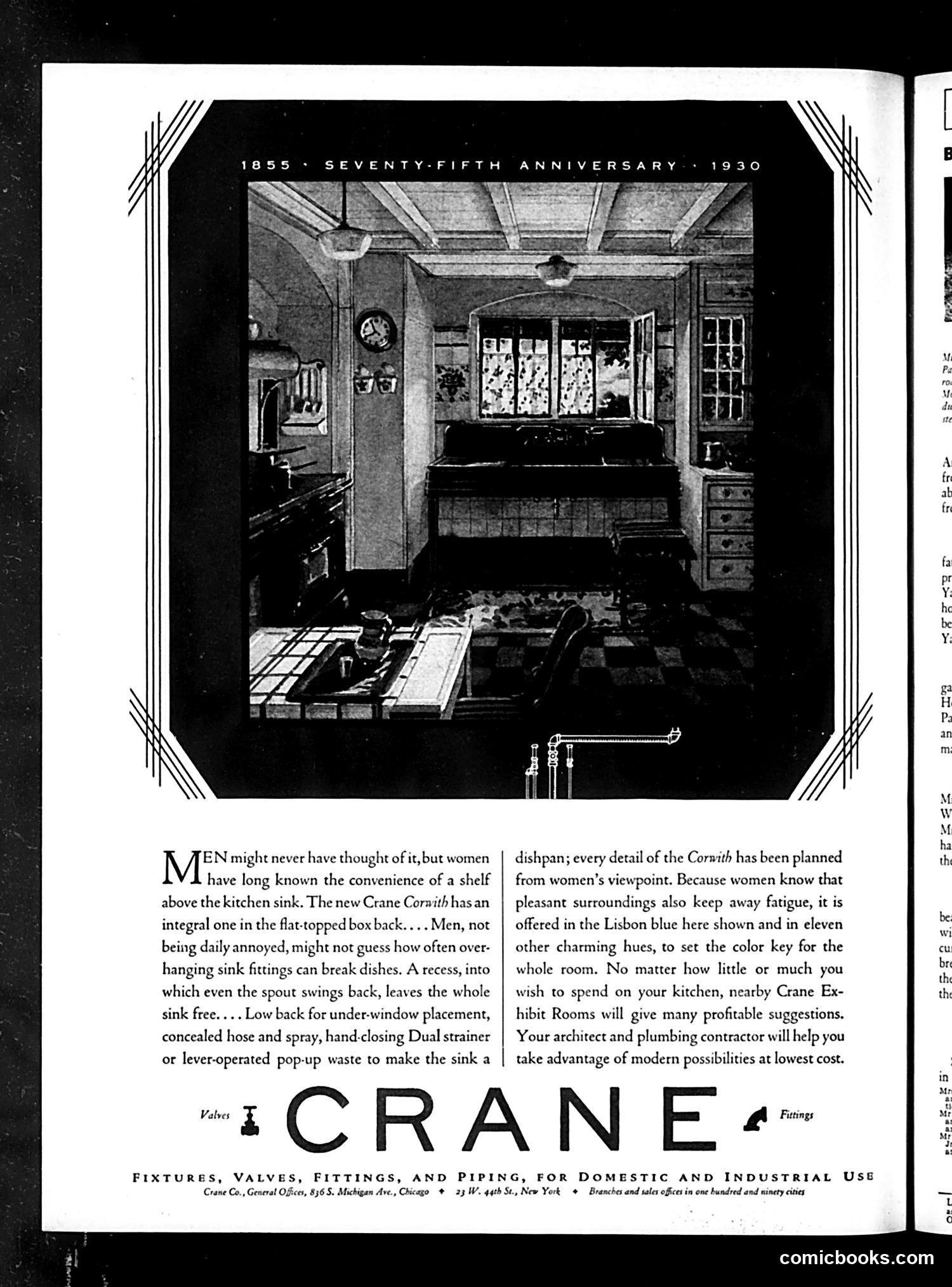
# Analysis This is **not a political cartoon or satirical content**. It's a full-page **advertisement for Crane plumbing fixtures**, celebrating their 75th anniversary (1855-1930). The image shows a modernized 1930s kitchen with a sink, and the ad copy emphasizes the "Cornith" sink model's convenience features—particularly a shelf above the sink, which the text claims women have long desired. The advertisement appeals to female homemakers by noting that pleasant kitchen surroundings reduce fatigue, and promises that architects and plumbers can help integrate modern fixtures affordably. The text is marketing copy, not satire. It reflects 1930s assumptions about women's domestic roles while promoting Crane's products and design consultation services.
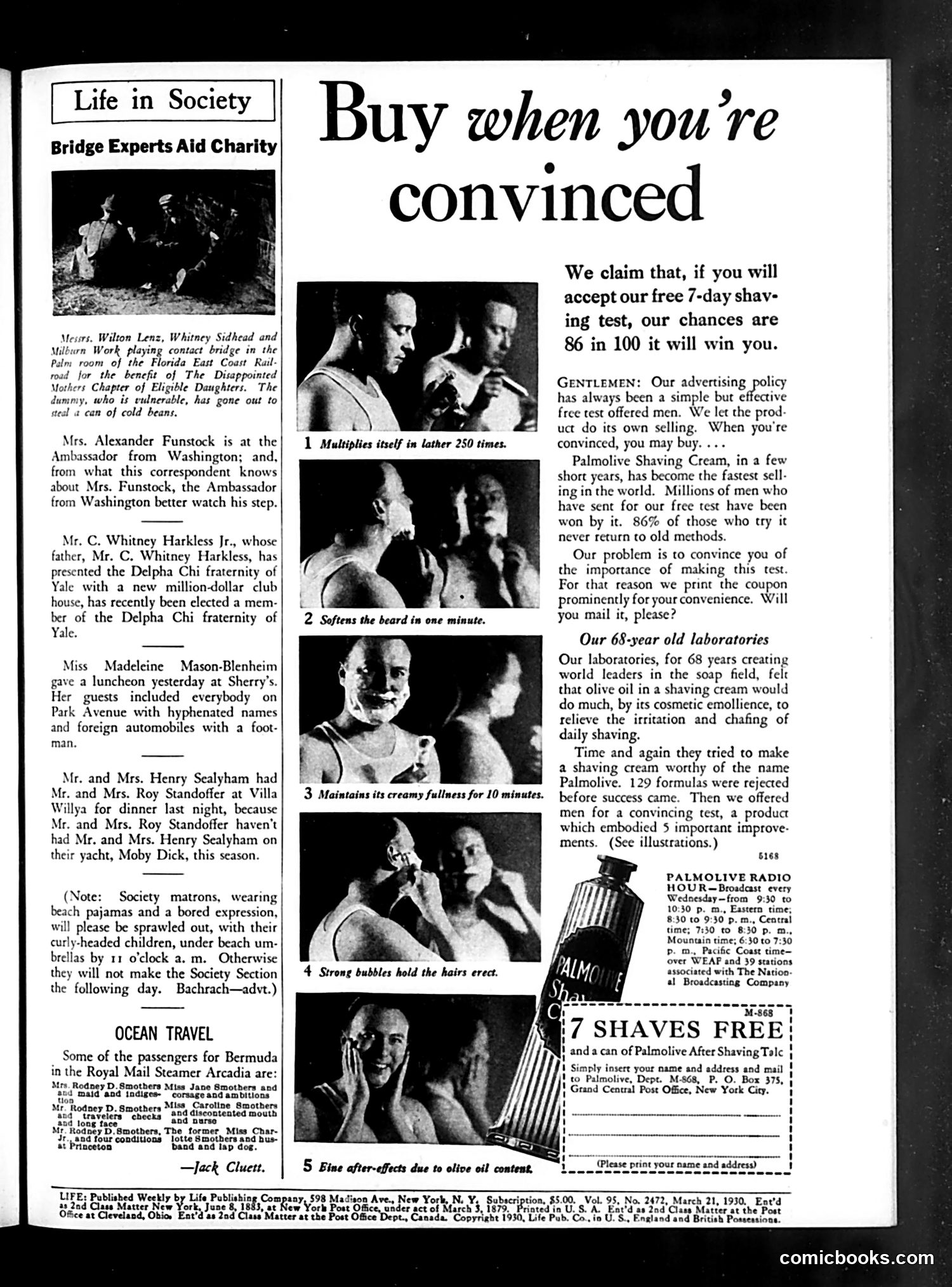
# Palmolive Shaving Cream Advertisement This is primarily a **commercial advertisement** for Palmolive Shaving Cream, not satire. The page uses a "before-and-after" format showing five numbered photographs of a man's shaving process: (1) lathering, (2) softening the beard, (3) maintaining creaminess, (4) producing bubbles, and (5) demonstrating the final results. The ad's headline "Buy when you're convinced" reflects **1930s advertising strategy**: offering a free 7-day shaving test to persuade skeptics. The accompanying text emphasizes the product's cosmetic superiority—olive oil prevents irritation—and claims 86% of test users became permanent customers. The "Life in Society" column on the left contains unrelated gossip about wealthy socialites and their activities, typical of Life magazine's satirical social commentary section.
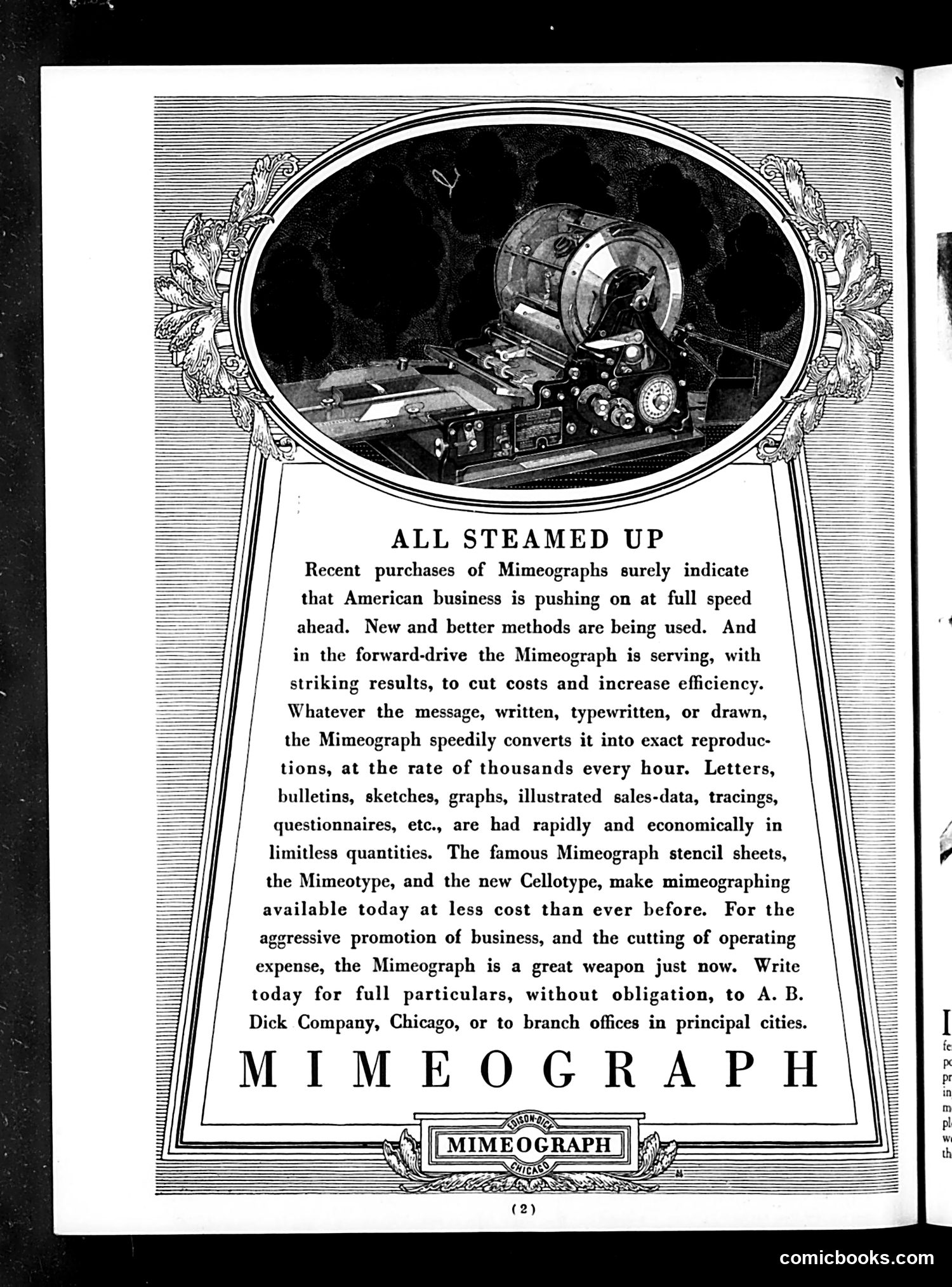
# Analysis This is a **full-page advertisement**, not political satire or a cartoon. It promotes the Mimeograph machine by the A.B. Dick Company of Chicago. The ad's title "ALL STEAMED UP" uses a metaphor about American business "pushing on at full speed ahead." The image shows the mechanical mimeograph device itself. The text emphasizes how mimeographs rapidly reproduce documents—letters, bulletins, sketches, graphs—at low cost and high volume, making them valuable for business efficiency and cost-cutting. The ad targets early 20th-century businesses seeking modernization. It mentions specific products: "Mimeograph stencil sheets," "Mimeotype," and a new "Cellotype" process, positioning mimeography as cutting-edge technology for progressive companies. This is commercial promotion, not editorial content.
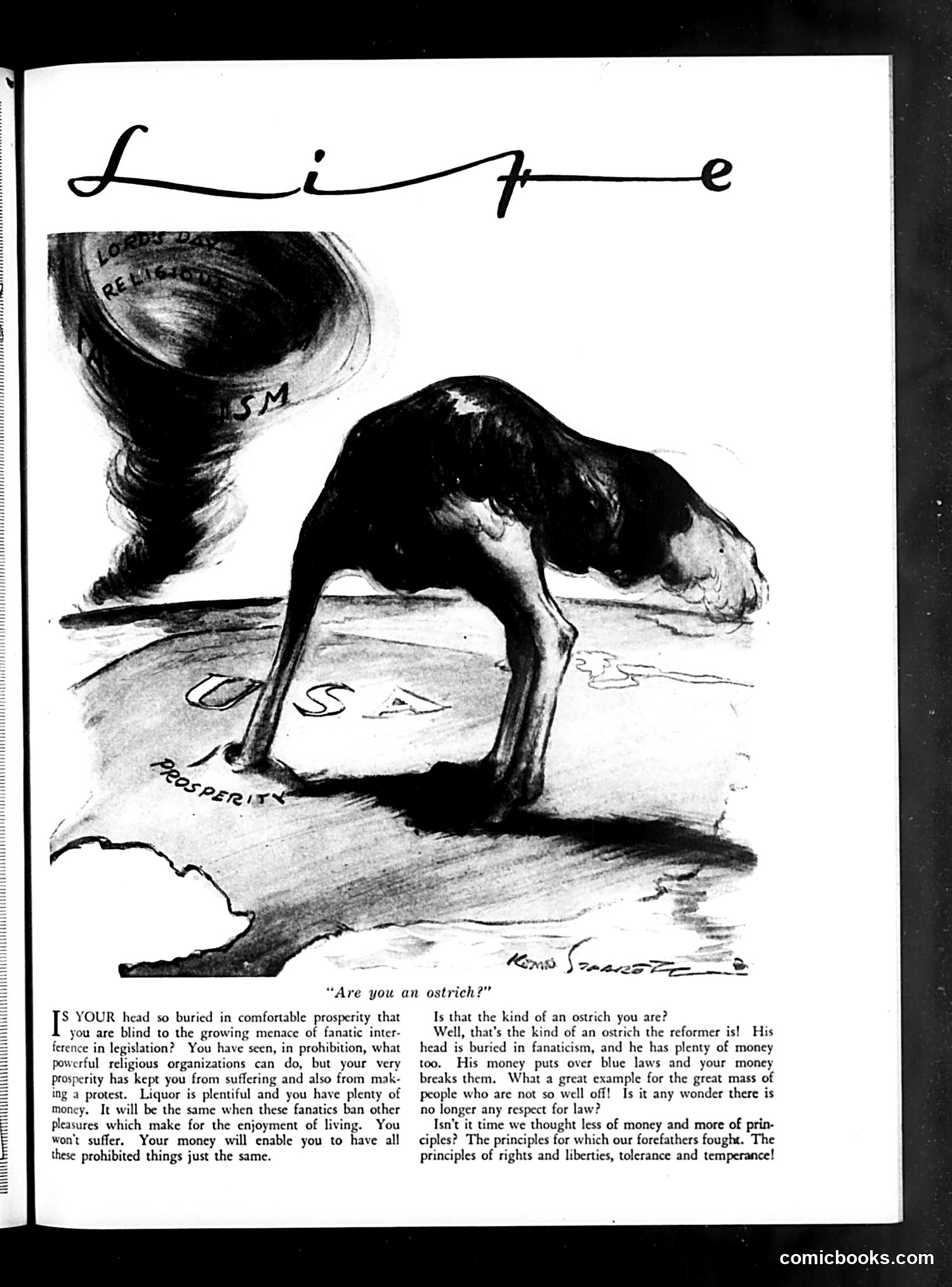
# "Are You an Ostrich?" Political Cartoon Analysis This satirical cartoon depicts an ostrich with its head buried in sand, labeled "USA" with "PROSPERITY" written nearby. The accompanying text compares American prosperity to an ostrich's defensive posture—suggesting that wealth and comfort have made citizens indifferent to growing threats (likely religious fanaticism or political extremism, based on references to "fanatic interests" and "prohibition"). The satire argues that Americans' financial security blinds them to dangers, much as an ostrich supposedly ignores threats by burying its head. The text questions whether material comfort justifies abandoning principles like tolerance and liberty that "our forefathers fought" for, implying that 1920s prosperity enables complacency toward authoritarian movements or restrictive laws (possibly Prohibition era regulations).
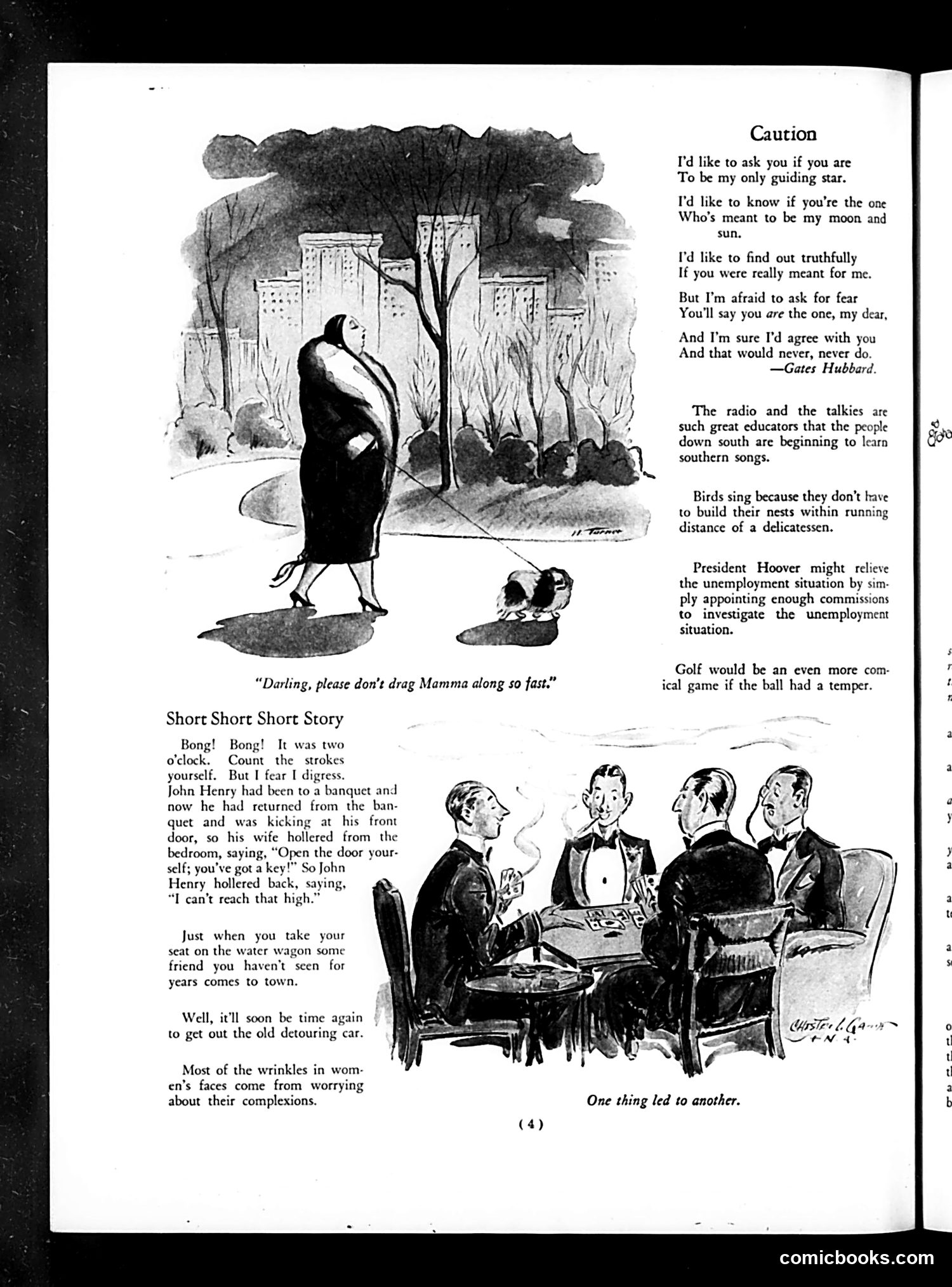
# Explanation of Page Content This page contains satirical commentary and cartoons from *Life* magazine's editorial section. **"Caution" poem** by Gater Hubbard: A romantic poem questioning whether someone is meant to be the speaker's "guiding star," moon, and sun—expressing romantic uncertainty. **The top cartoon** depicts a woman walking a small dog in an urban setting, captioned "Darling, please don't drag Mamma along so fast." The satire mocks how women were sometimes portrayed as burdensome or slow-moving companions. **"Short Short Short Story"** presents humorous domestic anecdotes: a husband locked out after a banquet, friends visiting unexpectedly after years, and observations about automobile travel and women's wrinkles from worry. **"One thing led to another"** shows well-dressed men at a card game, illustrating how social situations escalate unexpectedly—likely commentary on gambling or social consequences.
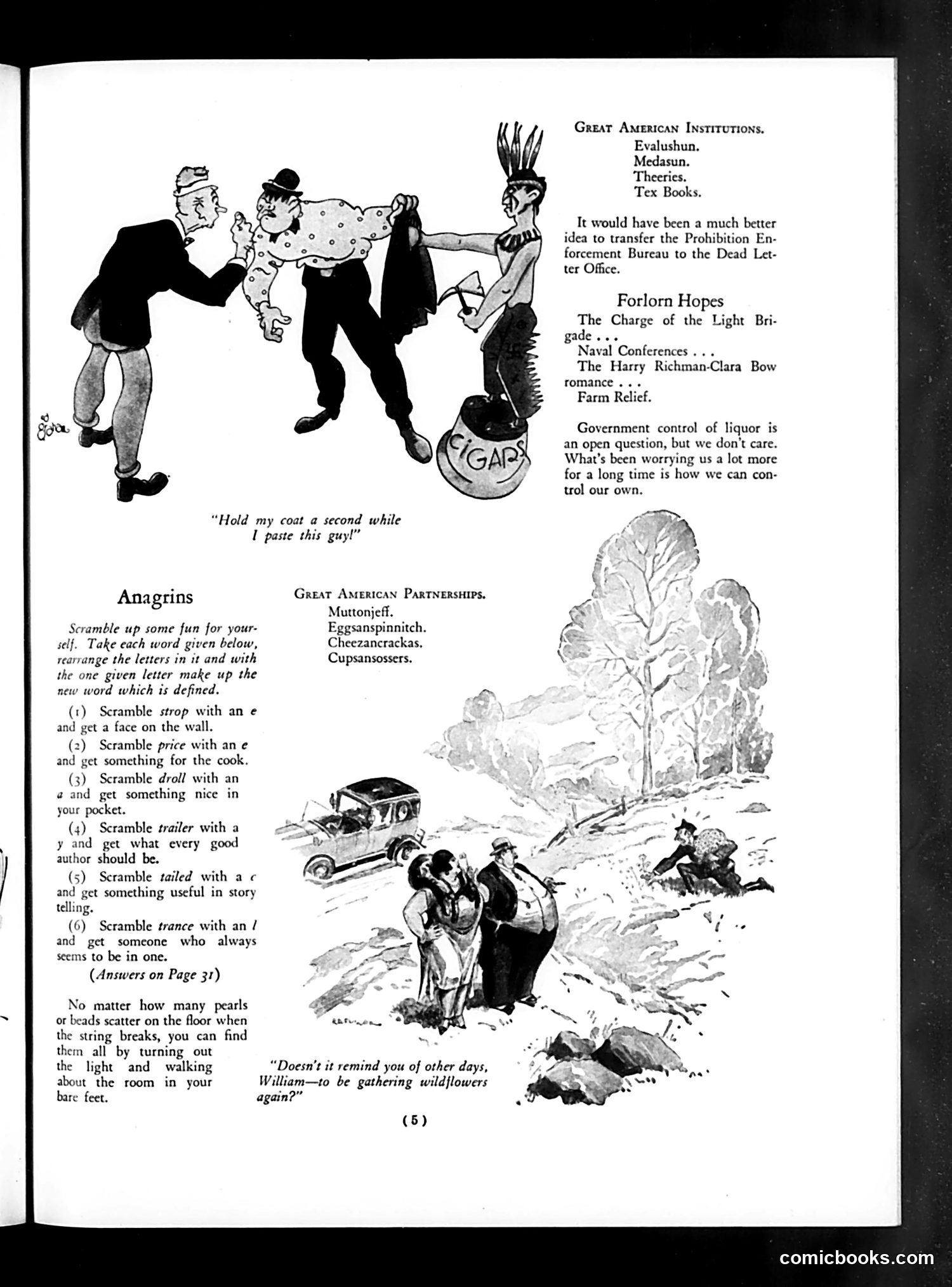
# Political Cartoon Analysis The top cartoon depicts two men struggling to restrain a figure labeled "GAP" (the "Great American Public"). The caption reads: "Hold my coat a second while I paste this guy!" This satirizes public frustration during Prohibition enforcement. The two men appear to represent government officials or law enforcement attempting to control an unruly citizenry opposed to alcohol prohibition. The cartoon suggests the American public was angry and difficult to govern on this issue. The page also lists "Great American Institutions" (Prohibition enforcement, theories, textbooks) and "Great American Partnerships" (Native American tribe names, likely satirizing broken treaties or poor government relations). The lower illustration shows people in a rural landscape, referencing nostalgia for simpler times—contrasting with the chaos of modern Prohibition-era governance.
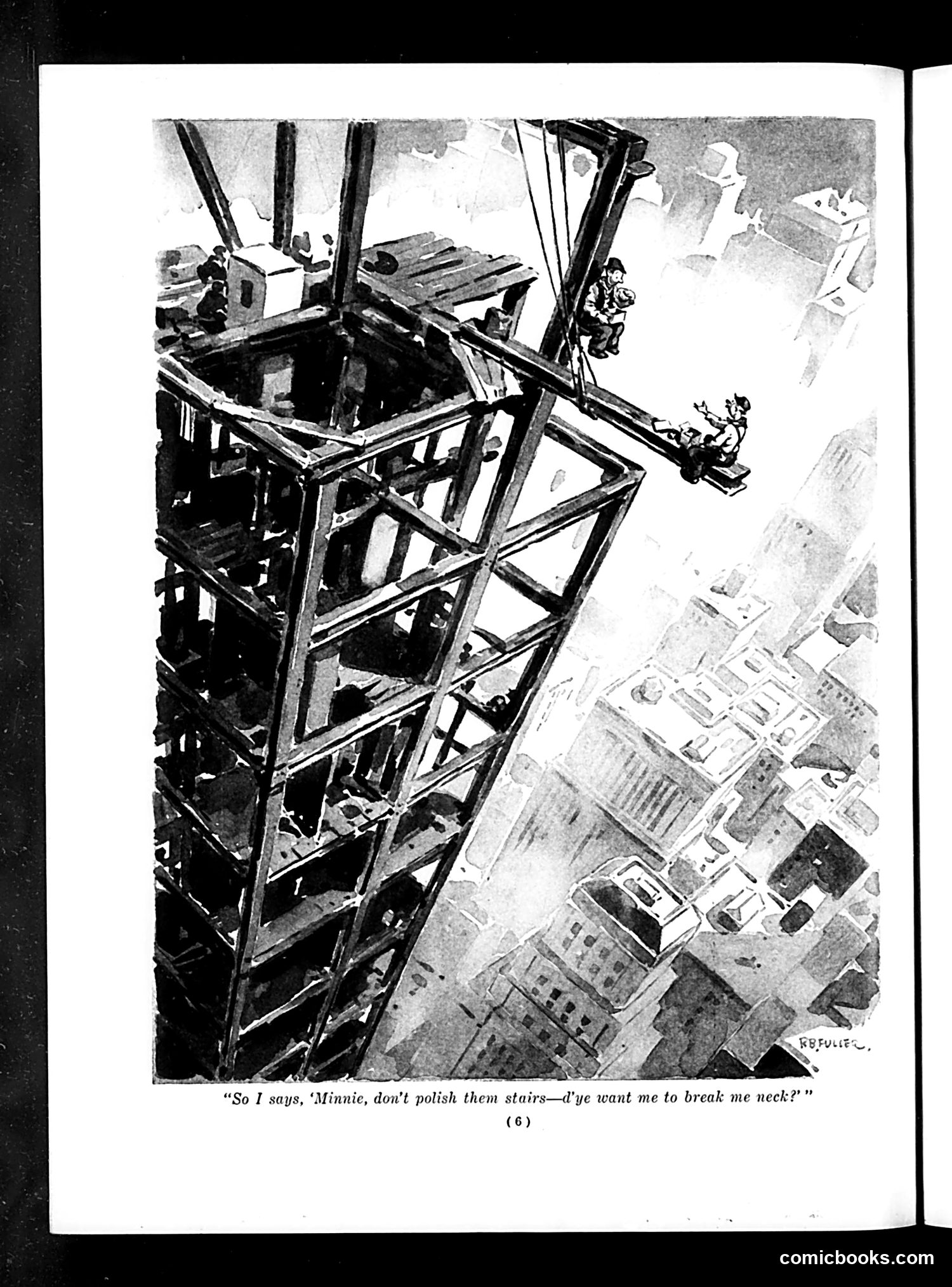
# Analysis This is a single illustrated cartoon showing two figures perched dangerously high on a steel-frame building under construction, looking down at the cityscape far below. The caption reads: "So I says, 'Minnie, don't polish them stairs—d'ye want me to break me neck?'" The humor is a working-class domestic joke about a wife (Minnie) polishing stairs, creating a slipping hazard. The cartoon plays on the irony that a construction worker—whose job involves genuine peril at great heights—expresses greater concern about the trivial domestic risk of slipping on polished stairs at home. It's satire of masculine bravado: he'll risk his life at work but worries about minor household hazards. The comic appears to be commentary on working-class attitudes and priorities.
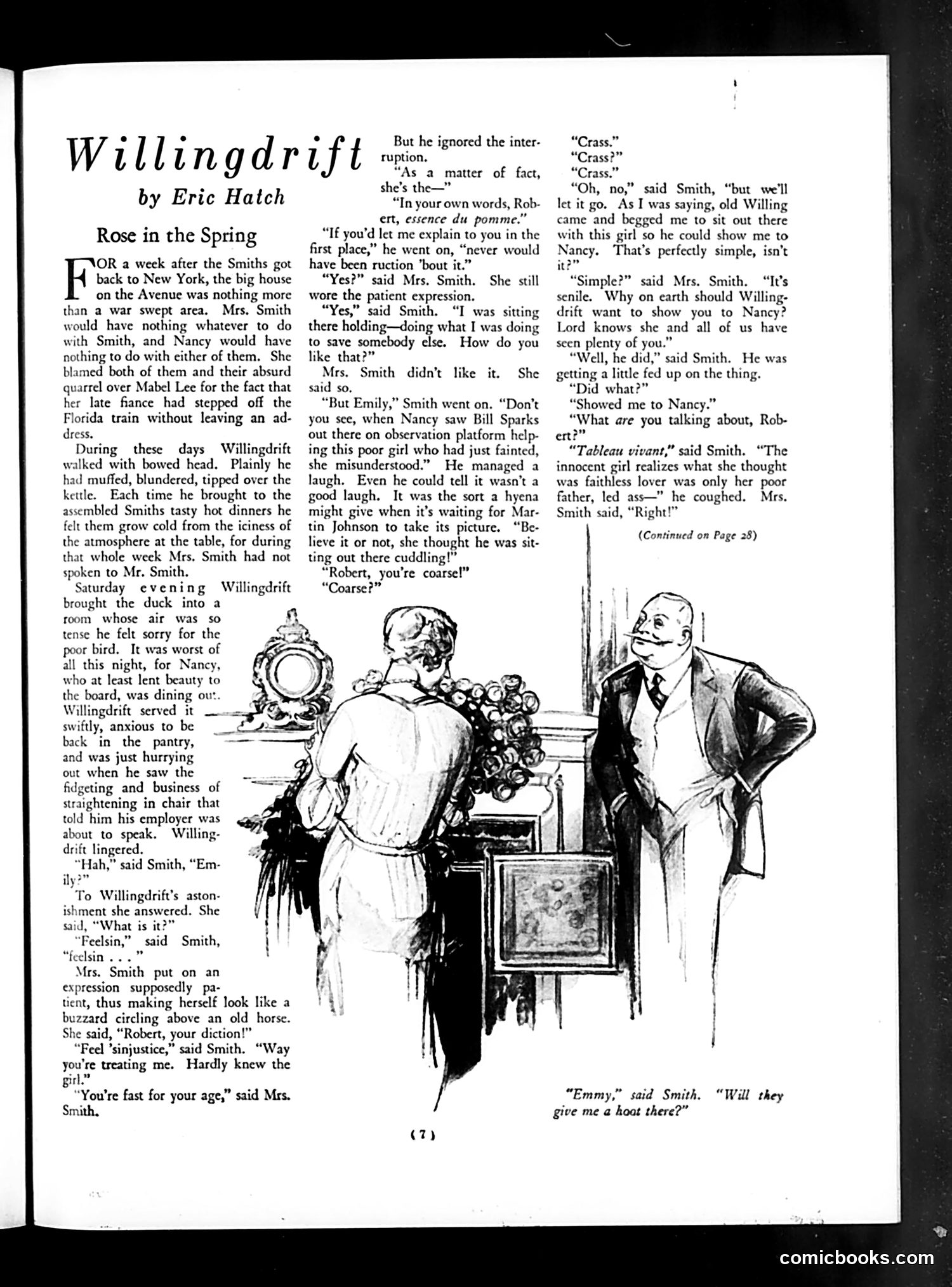
# "Willingdrift" by Eric Hatch - Page Analysis This is a narrative fiction piece, not a political cartoon. The page shows a domestic comedy scene illustrated with a sketch of a man and woman in what appears to be a dining room or parlor. The story concerns Mr. and Mrs. Smith's marital tension: Mrs. Smith is upset that Mr. Willingdrift (likely her husband using a pseudonym or alias) brought his girlfriend Nancy to dinner without warning. The conflict involves questions of fidelity and propriety in upper-class domestic life. The illustration captures the awkward moment, with the caption referencing a "hoot" — suggesting physical comedy or embarrassment. This is humorous fiction about social embarrassment and infidelity rather than political satire.
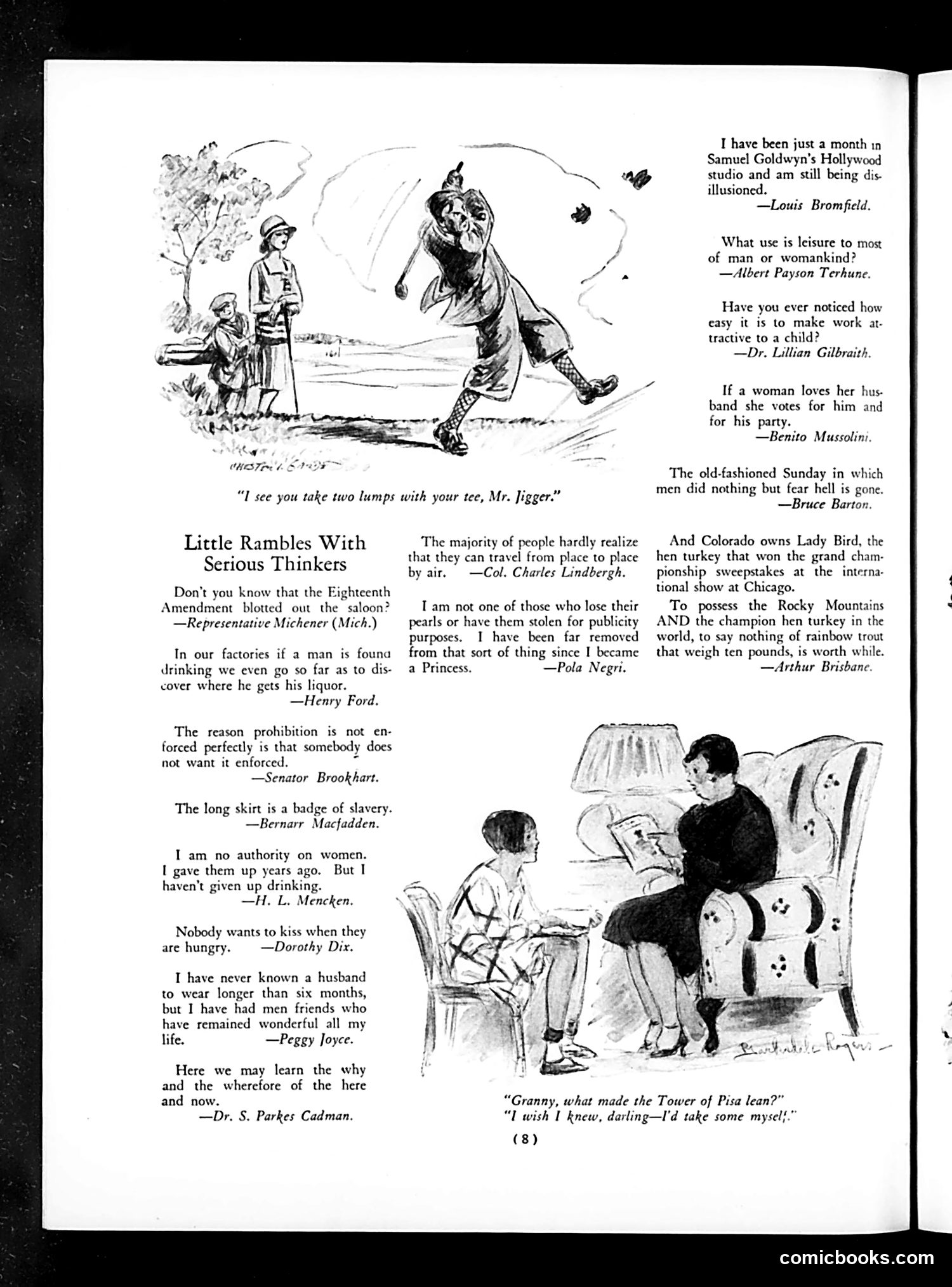
# Analysis of Life Magazine Page 8 This page contains "Little Rambles With Serious Thinkers," a satirical column of short quotes attributed to famous figures (Lindbergh, Ford, Mussolini, etc.), paired with witty, often contradictory observations about contemporary life. The two cartoons illustrate selected quotes: **Top cartoon**: A man playing golf while two children watch. The caption "I see you take two lumps with your tee, Mr. Jigger" jokes about adding sugar to tea during the golf game—a humorous non-sequitur. **Bottom cartoon**: A grandmother and child examining a newspaper, asking about the Tower of Pisa's origin. The grandmother quips she'd "take some myself"—implying she'd steal it, a joke about theft or acquisitiveness. The overall page mocks both famous personalities' pronouncements and everyday domestic absurdities through humor and gentle social criticism.
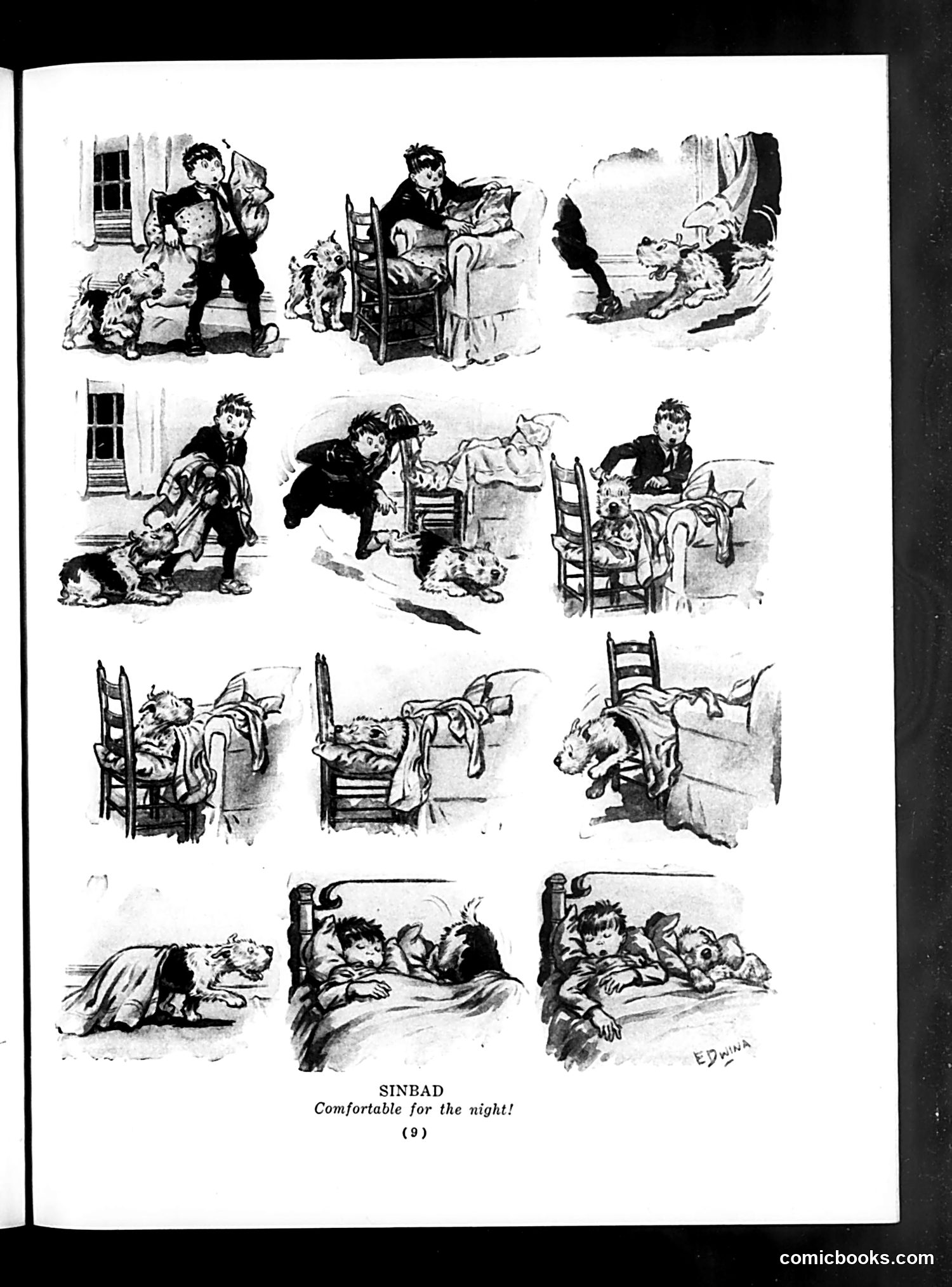
# Analysis of "Sinbad: Comfortable for the Night" This is a sequential comic strip illustrated by E. D. Wina, depicting scenes from the Arabian Nights tale of Sinbad the Sailor. The narrative follows Sinbad through various nighttime adventures—encountering characters in domestic and exotic settings, interacting with animals (notably a dog), and ultimately settling into bed. The title "Comfortable for the night!" appears ironic, as the sequential panels suggest Sinbad's night is filled with disruption and chaos rather than comfort. The strip uses visual humor through Sinbad's exaggerated reactions and the crowded, tumultuous scenes. This represents Life magazine's use of classic literature for humorous adaptation—a common satirical approach of the era, transforming familiar stories into comedic visual narratives for entertainment purposes.
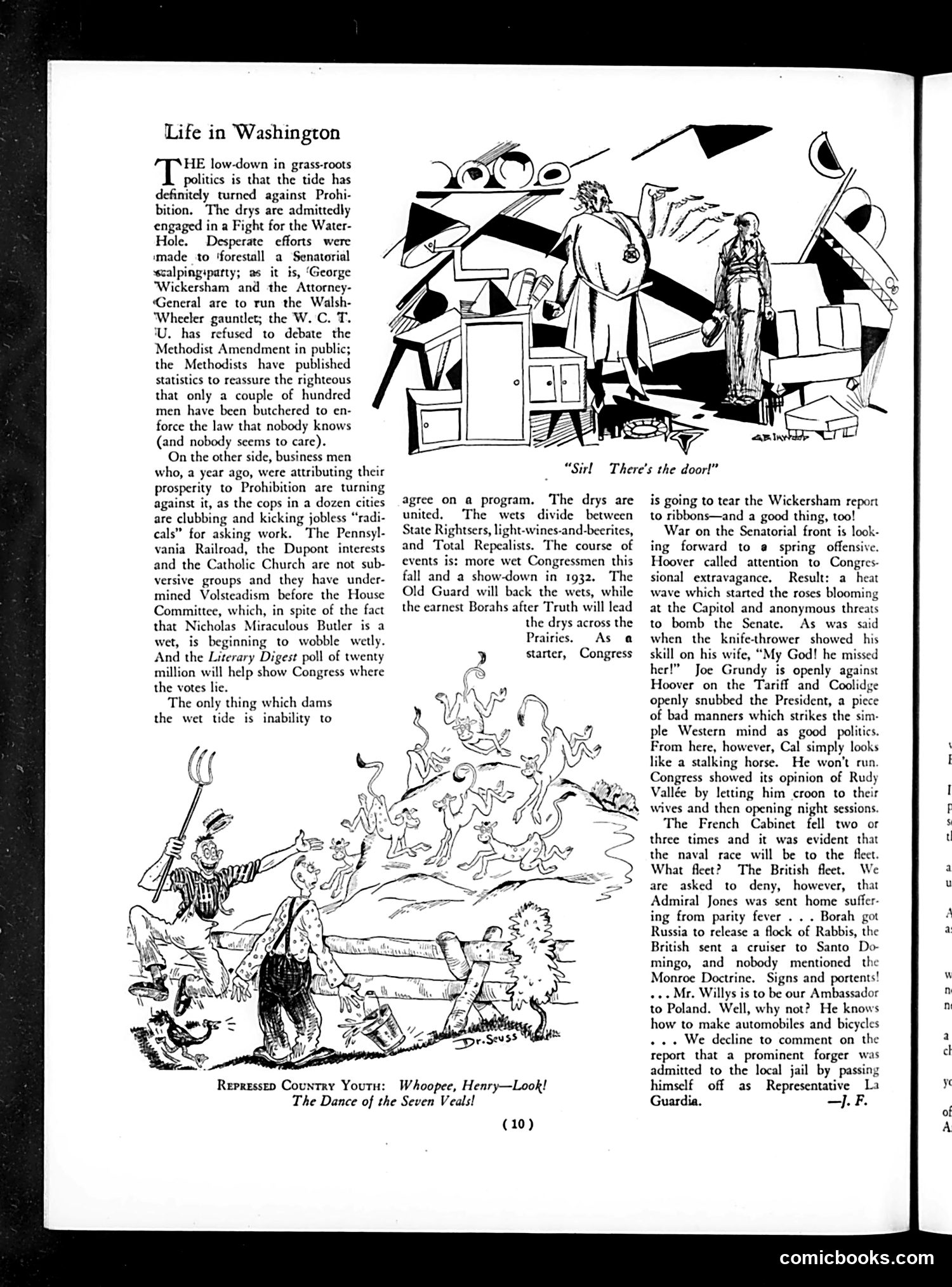
# "Life in Washington" - Political Satire, circa 1932 This page satirizes Prohibition-era Washington politics. The top cartoon shows chaotic debate over the "Water-Hole" amendment, with figures labeled as prominent senators (Wickersham, Walsh-Wheeler) arguing over whether to repeal Prohibition. The text mocks their conflicting positions: some are "wets" (repeal supporters), others "drys" (Prohibition supporters). The lower cartoon by Dr. Seuss depicts "Repressed Country Youth: Whoopee, Henry—Look! The Dance of the Seven Veals!" — satirizing rural Americans' pent-up frustrations under Prohibition's restrictions. The right column continues political commentary on Congressional debates, mentioning figures like Hoover and discussing naval matters and international relations, presenting these debates as absurd theater rather than serious governance.