A complete issue · 40 pages · 1930
Life — March 7, 1930
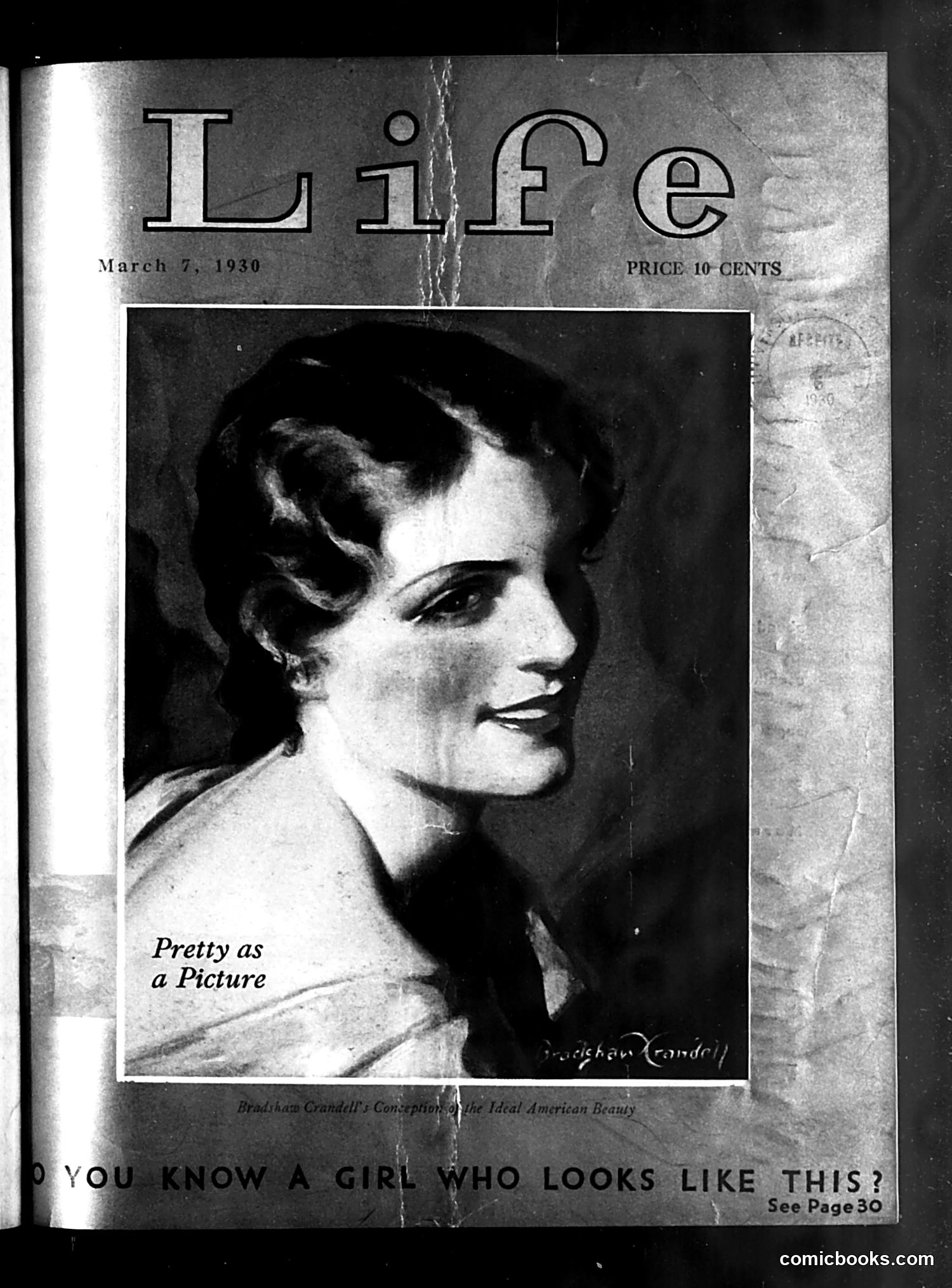
# Life Magazine, March 7, 1930 This cover features a portrait labeled "Pretty as a Picture" with the credit "Bradshaw Crandell's Conception of the Ideal American Beauty." Rather than satirizing a specific person or event, this appears to be a beauty standard feature typical of Life magazine's era. The accompanying question "DO YOU KNOW A GIRL WHO LOOKS LIKE THIS?" suggests an interactive reader engagement element, directing viewers to page 30. The image reflects 1930s aesthetic ideals—the woman's wavy hair, defined eyebrows, and profile pose exemplify popular beauty conventions of the Depression era. This was characteristic content for Life when it functioned partly as an illustrated lifestyle magazine alongside its famous satirical cartoons and commentary.
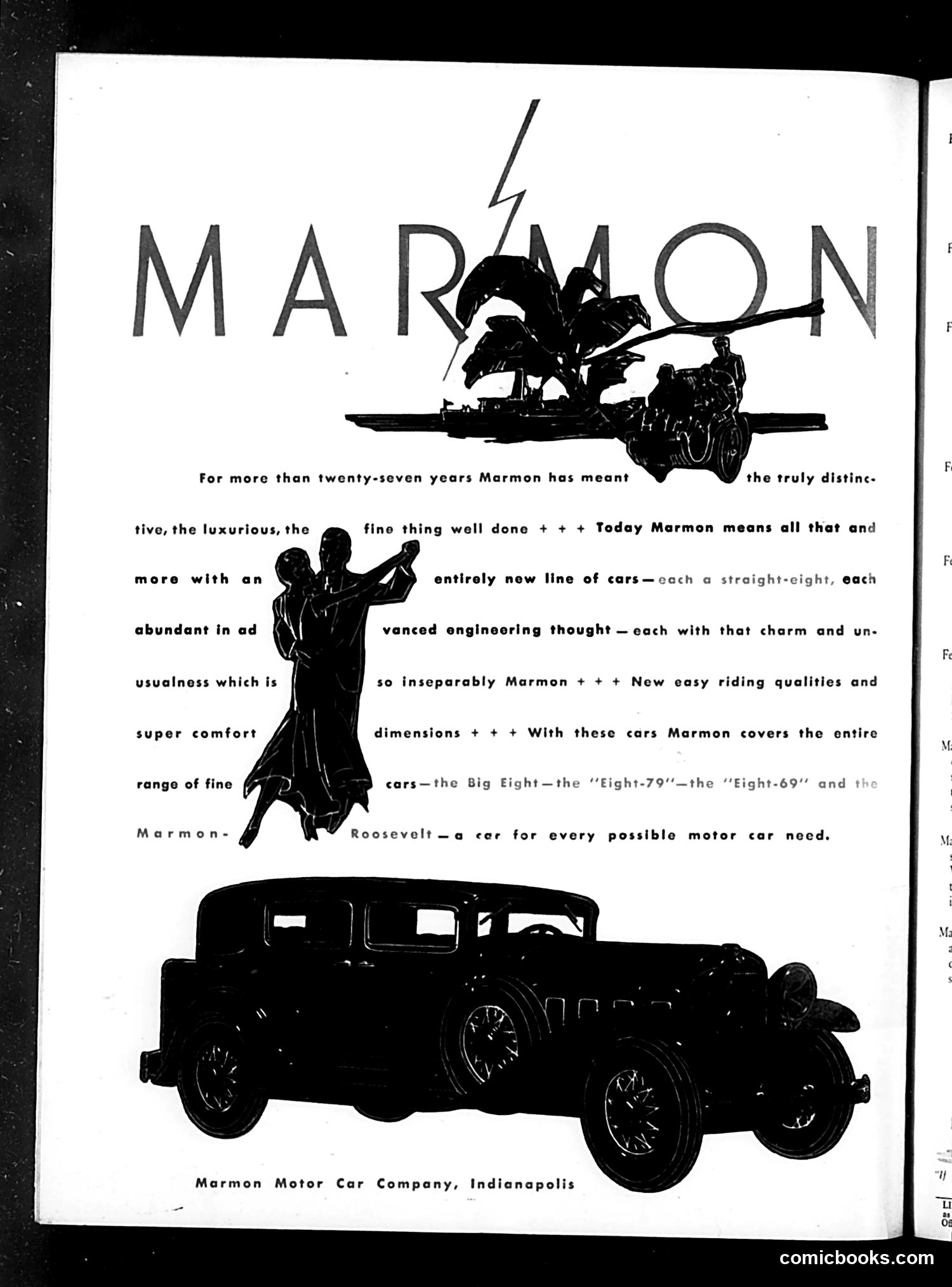
This is primarily a **Marmon Motor Car Company advertisement**, not political satire. The page promotes Marmon automobiles through aspirational imagery and copy rather than commentary or humor. The ad features an Art Deco-style illustration of an elegantly dressed couple in a dynamic pose, emphasizing luxury and sophistication. The text claims Marmon has maintained "distinctive" status for 27 years, now offering "an entirely new line of cars" with "advanced engineering" and "charm and unusualness." Models mentioned include the "Big Eight," "Eight-79," "Eight-69," and "Marmon-Roosevelt," described as covering "every possible motor car need." The bottom shows a photograph of an actual Marmon sedan. This represents typical 1920s-30s automobile marketing emphasizing elegance, engineering innovation, and social prestige rather than satire or political commentary.
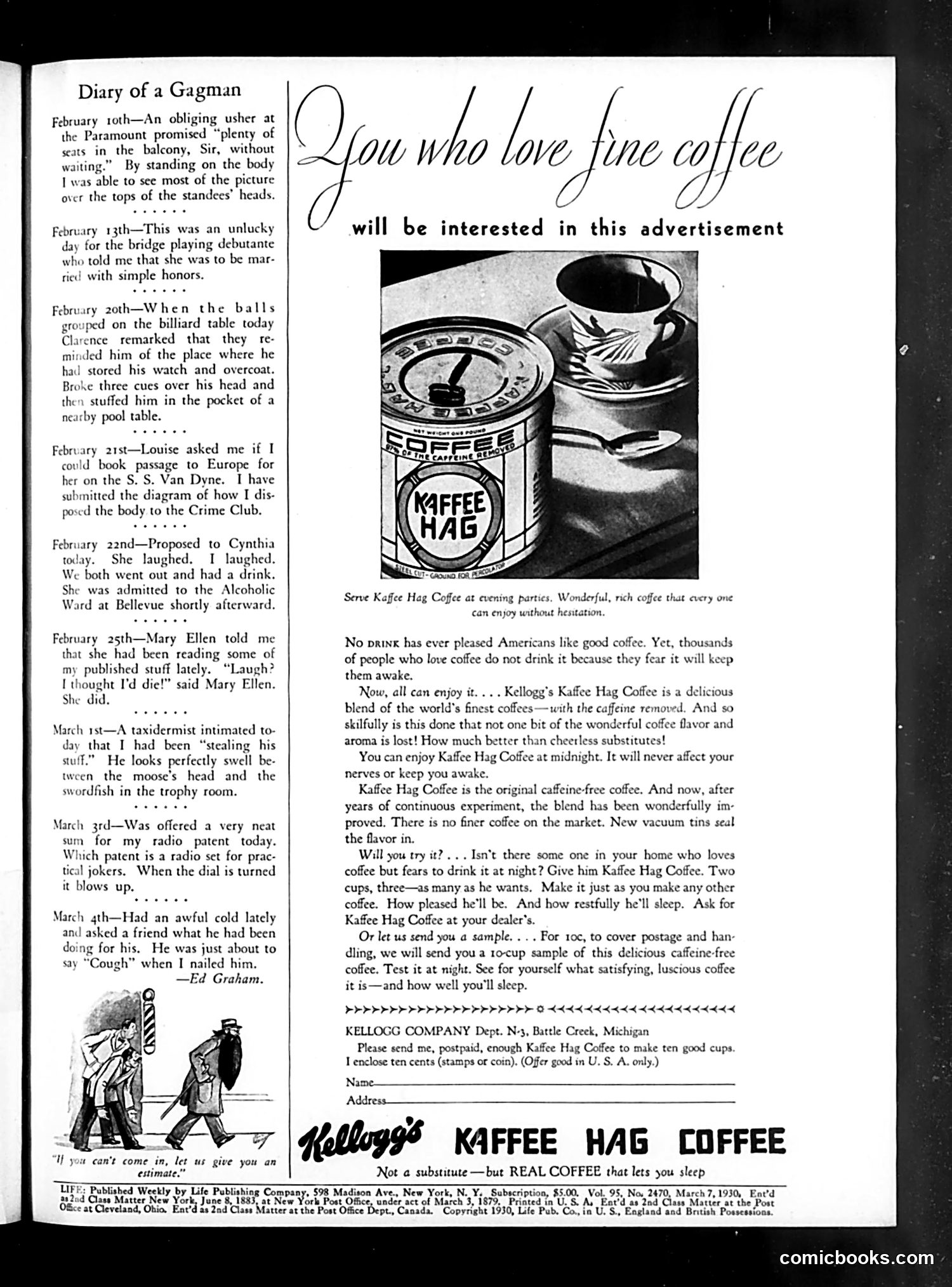
# Analysis: "Diary of a Gagman" Page This page combines a humorous diary column with a Kaffee Hag Coffee advertisement. The left side presents comedic anecdotes from February-March (year unclear from image), including stories about theater ushering, billiards mishaps, and romantic proposals—typical light humor for Life magazine's satirical "gagman" column. The small cartoon at bottom left shows two figures, one saying "If you can't come in, let us give you an estimate!"—appearing to joke about a barber or tradesman soliciting business. The right side is primarily a full advertisement for Kaffee Hag (caffeine-free coffee), featuring product images and marketing copy emphasizing that the coffee won't keep one awake. This reflects 1930s consumer advertising conventions targeting middle-class American readers concerned with sleep quality.
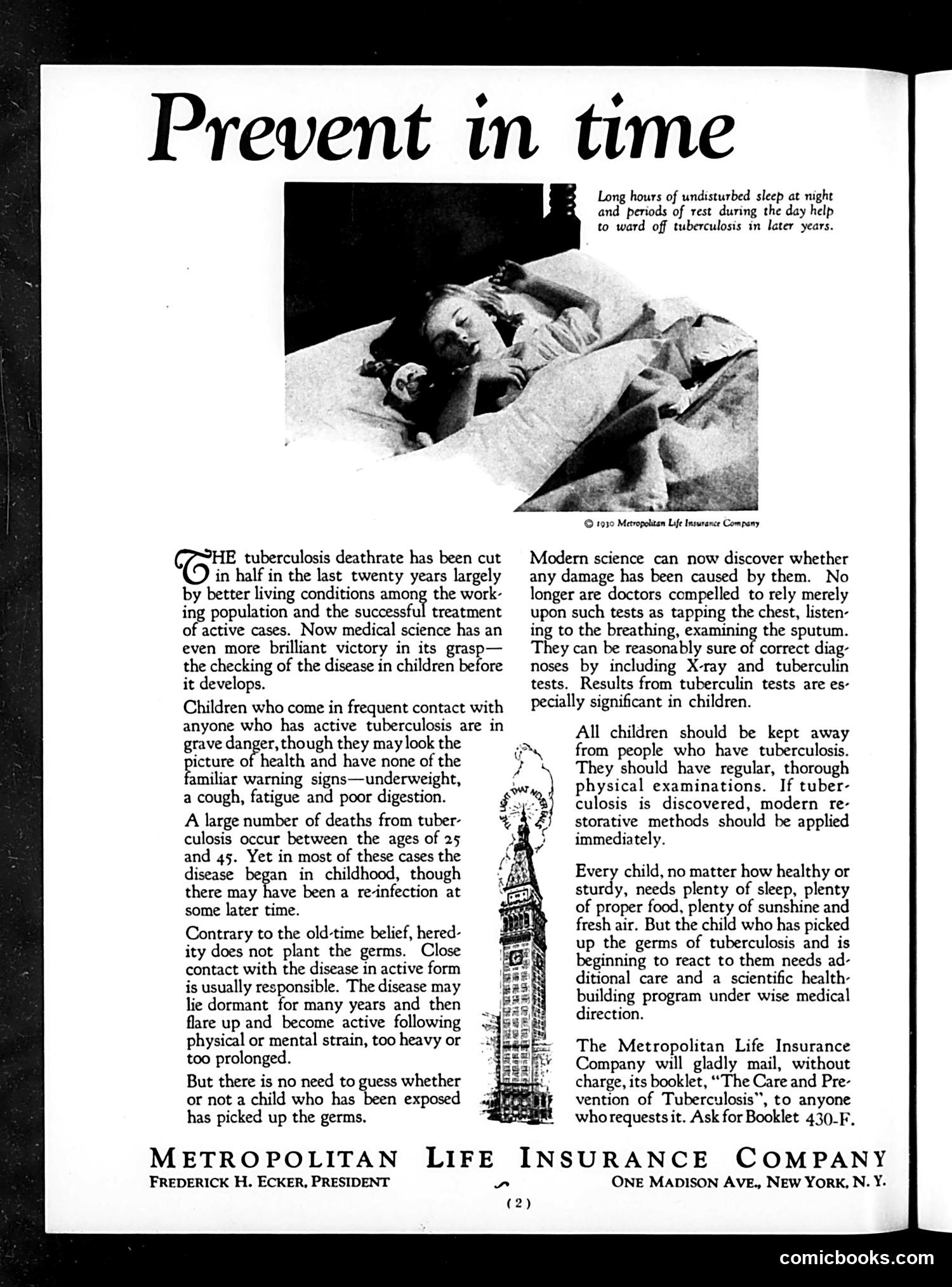
# Analysis This is **not a satirical cartoon page**, but rather a **public health advertisement** by the Metropolitan Life Insurance Company from approximately 1930 (copyright mark visible). The page promotes tuberculosis prevention through proper sleep, rest, and medical vigilance. The image shows a sleeping child—illustrating the text's emphasis that "long hours of undisturbed sleep at night and periods of rest during the day help to ward off tuberculosis in later years." The accompanying text explains that tuberculosis deaths have declined due to improved living conditions and medical advances. It urges parents to keep children away from infected individuals and ensure regular physical examinations. The decorative building illustration (likely Metropolitan Life's headquarters) reinforces the company's authority on health matters. This represents early 20th-century corporate health promotion through life insurance marketing.
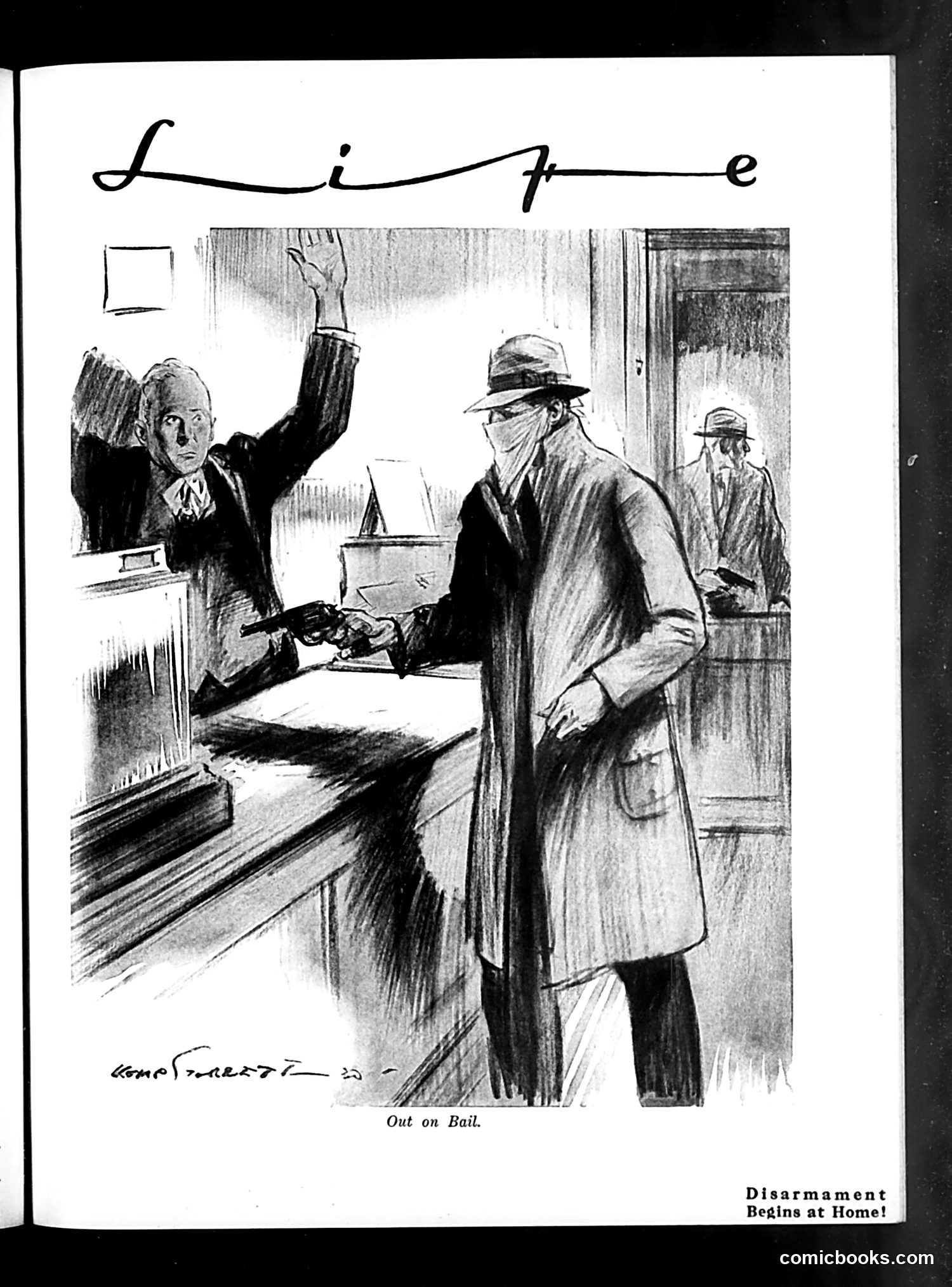
# Analysis of "Out on Bail" Cartoon This cartoon satirizes post-WWI disarmament efforts. The title "Disarmament Begins at Home!" indicates the satirical thrust. A bald man at a window or counter raises his fist triumphantly while handing over what appears to be weapons or ammunition to a man in a hat and coat. A third figure waits in the background. The satire suggests that while governments publicly championed disarmament treaties, citizens were privately profiting by selling weapons. The "disarmament begins at home" caption ironically undercuts the official message—implying that true disarmament requires personal sacrifice, yet ordinary people continue illicit arms dealing for profit. This reflects post-WWI skepticism about whether peace initiatives could succeed when financial incentives for weapons trafficking remained strong.
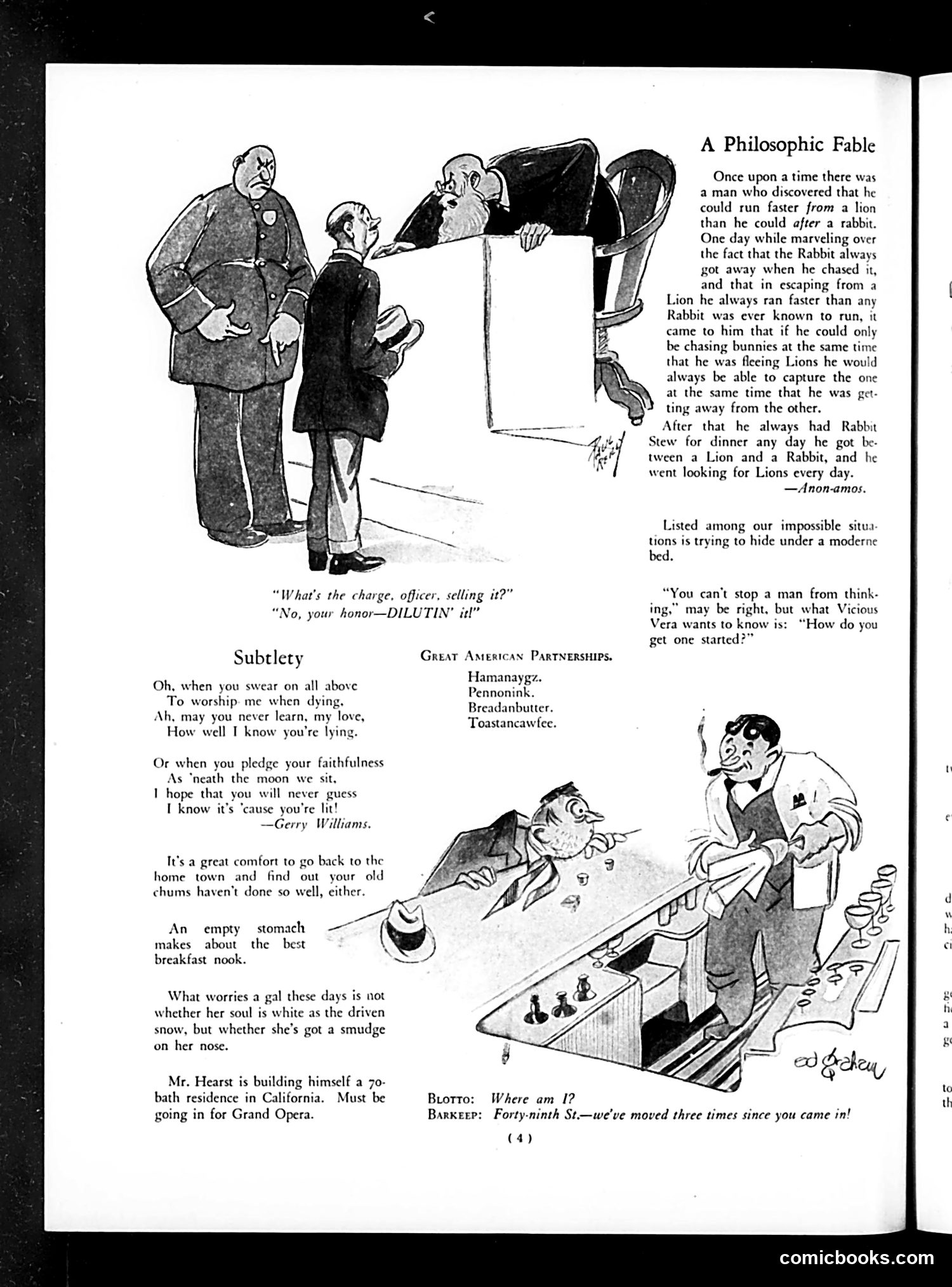
# Analysis of Life Magazine Page **Top Cartoon - "Subtlety":** A police officer charges a man with "diluting" something (likely alcohol during Prohibition). The humor rests on the officer's demand for honesty while the charge itself—"DILUTIN' it"—uses crude language that ironically undermines his authority. This satirizes Prohibition-era enforcement and the gap between official propriety and street-level corruption. **Middle Section - "Great American Partnerships":** Lists humorous paired names suggesting business partnerships, likely poking fun at contemporary business figures or practices. **Bottom Cartoon - "Blotto/Barkeep":** Shows two men at what appears to be a speakeasy or bar during Prohibition, with chess pieces visible. The joke involves relocating addresses frequently—a common experience for illegal establishments.
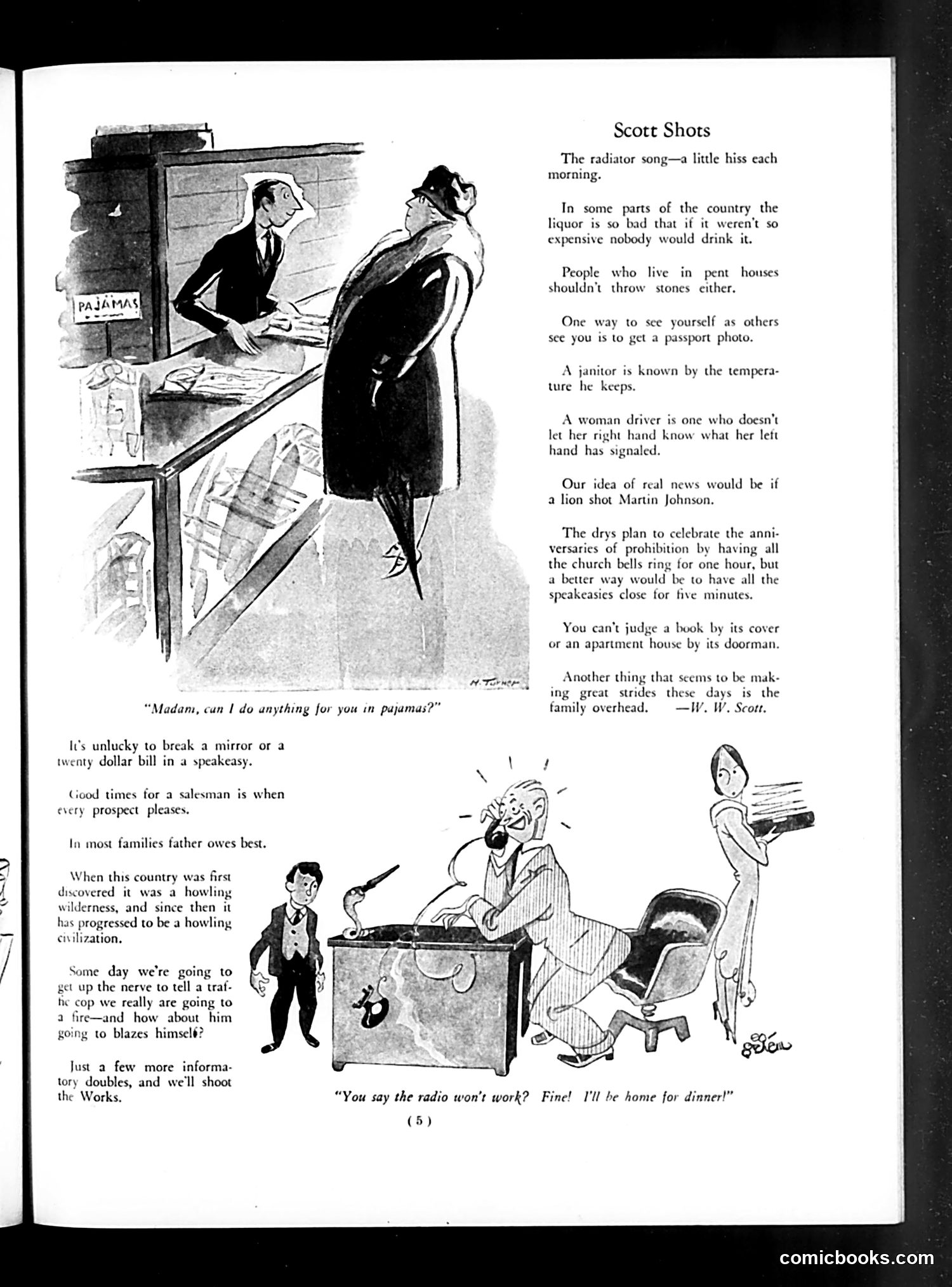
# Scott Shots - Life Magazine Satire Page This page contains humorous one-liners and cartoon vignettes by W.W. Scott satirizing American life, likely from the Prohibition era (references to "speakeasies" and "church bells ring" celebrating prohibition anniversaries). **Top cartoon**: A woman in pajamas approaches a hotel desk clerk, asking "Madam, can I do anything for you in pajamas?" — a joke playing on double meaning (the garment vs. the location). **Bottom cartoon**: A frustrated man with a broken radio tells his wife "You say the radio won't work? Fine! I'll be home for dinner!" — satirizing how radio was becoming a household fixture, with the husband using radio-listening as an excuse to avoid coming home. The scattered aphorisms mock social pretense, gender relations, and American manners of the period.
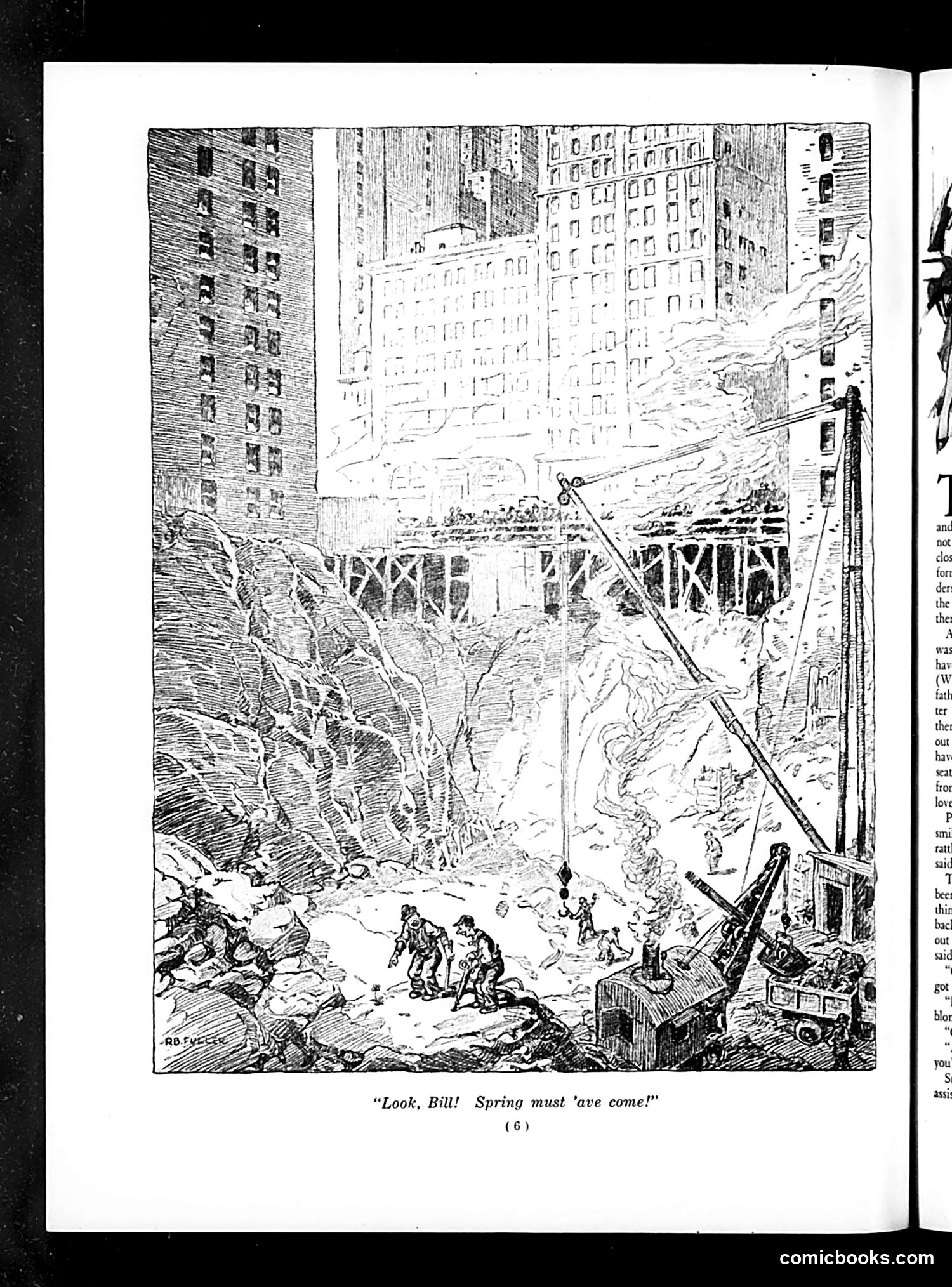
# Analysis of "Look, Bill! Spring must 'ave come!" This is a satirical illustration depicting an urban construction site in a city canyon formed by tall buildings. The cartoon shows workers and construction equipment in what appears to be an excavation or demolition pit, with wooden scaffolding and cranes visible above. The caption's working-class British dialect ("'ave" for "have") suggests commentary on urban development and labor. The "spring has come" reference appears ironic—rather than natural renewal, the image shows industrial disruption and construction chaos replacing nature. The crowded tenement buildings looming overhead emphasize the cramped urban environment where "spring" means construction season and disruption for working-class residents, not renewal or relief. The satire critiques industrial urban development's impact on city dwellers.
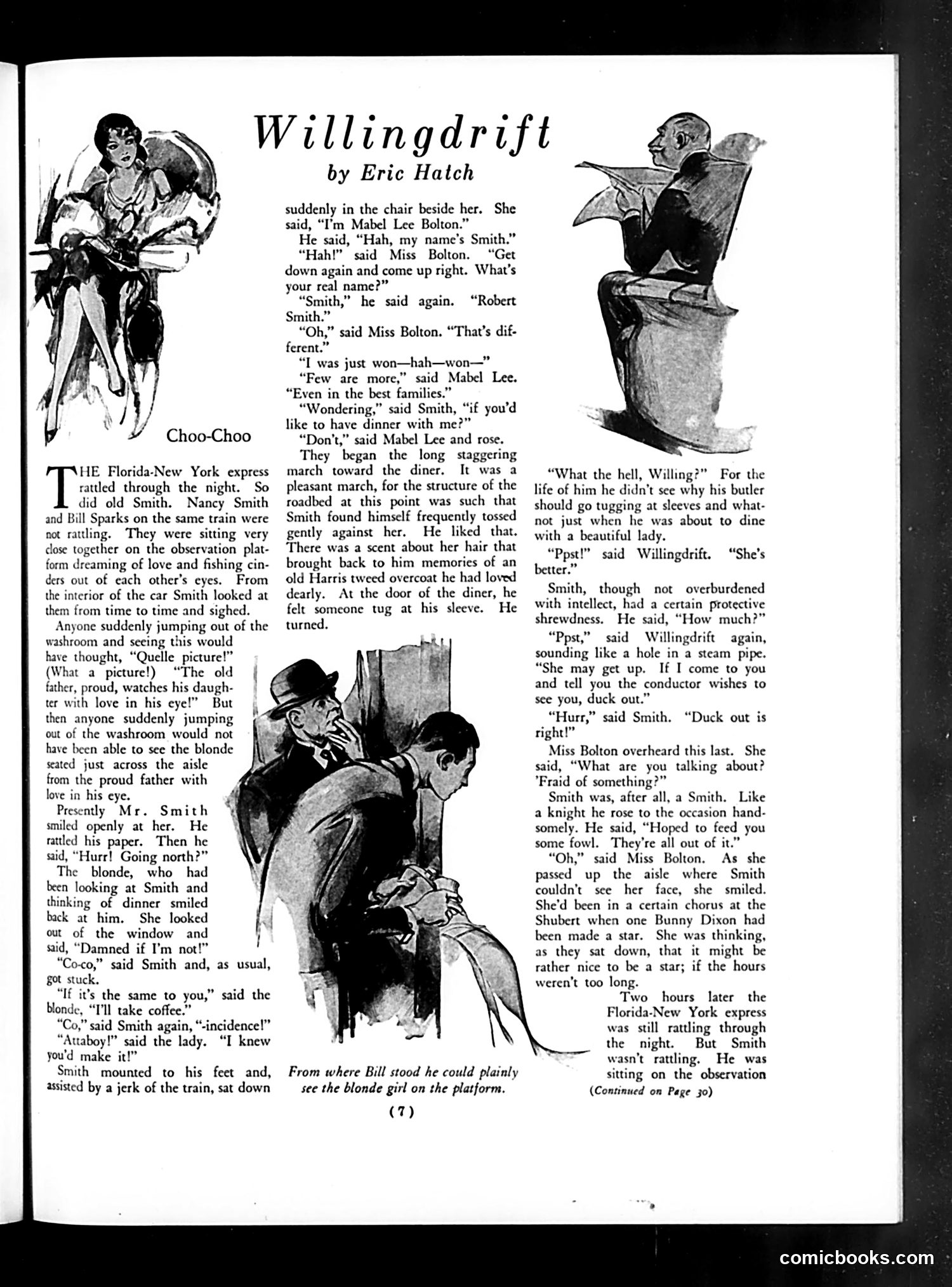
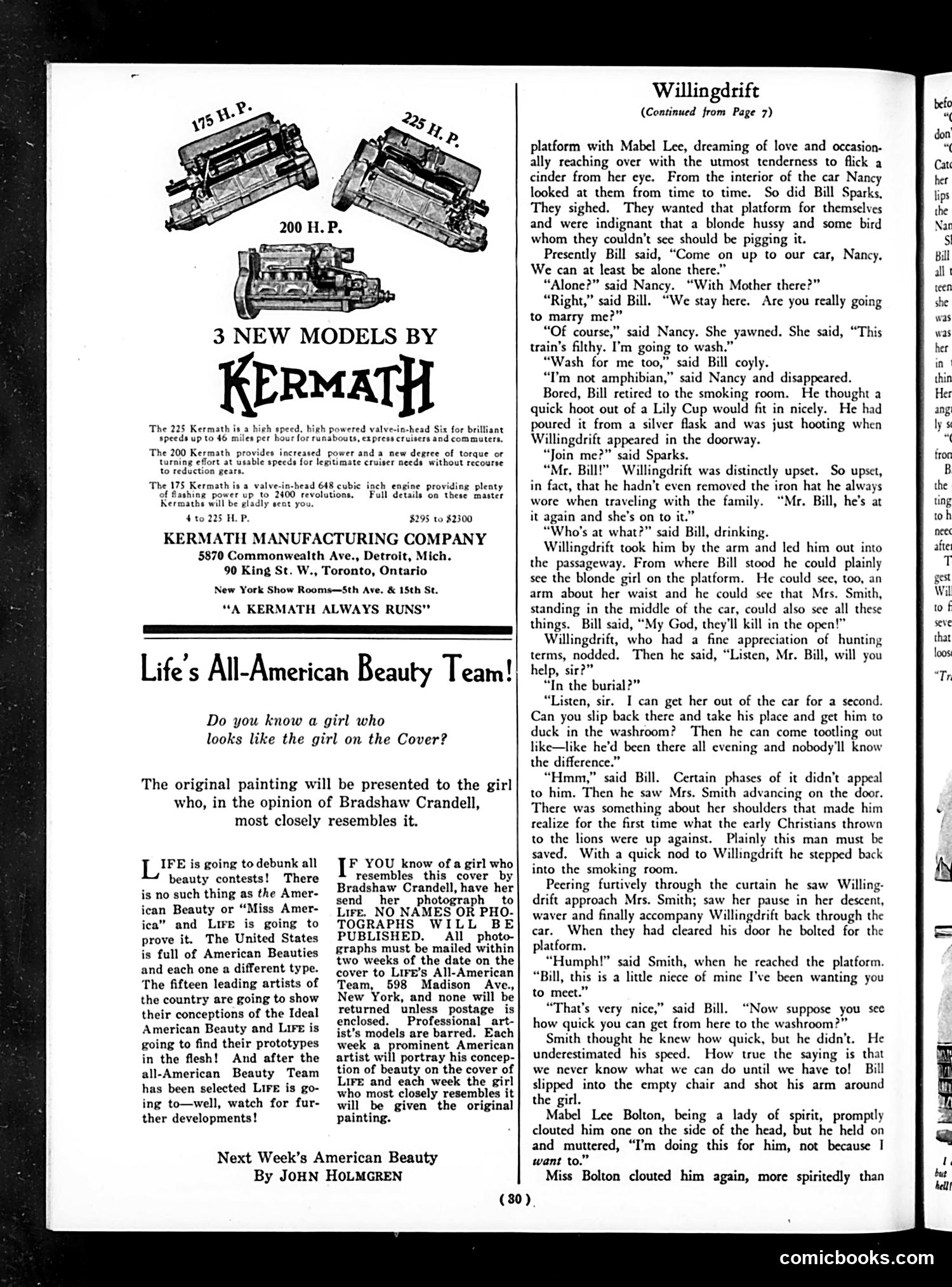
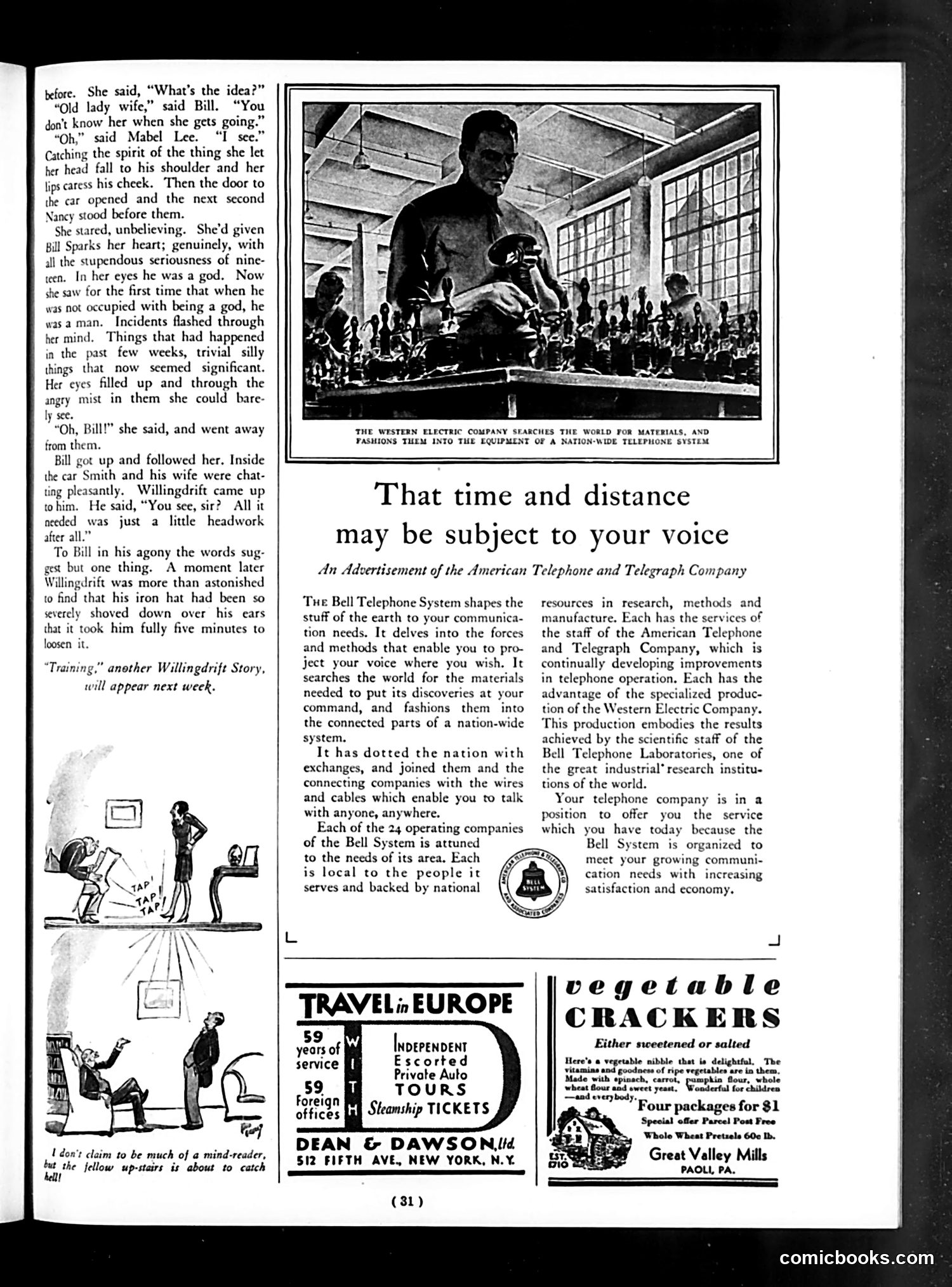
# "Willingdrift" by Eric Hatch This is a short story illustration, not political satire. The narrative follows Mr. Smith and his daughter Nancy traveling by train, where Smith encounters a blonde woman named Mabel Lee Bolton. The story depicts romantic confusion and social awkwardness: Smith pretends his name is simply "Smith" rather than "Robert Smith," while Miss Bolton playfully challenges his honesty about his identity. The accompanying illustrations show the train interior and characters interacting. The humor derives from romantic misunderstanding and class-conscious social performance typical of 1920s-30s American fiction—characters adopting false personas to impress potential romantic interests. This reflects period anxieties about authentic identity versus social pretense among the middle class.
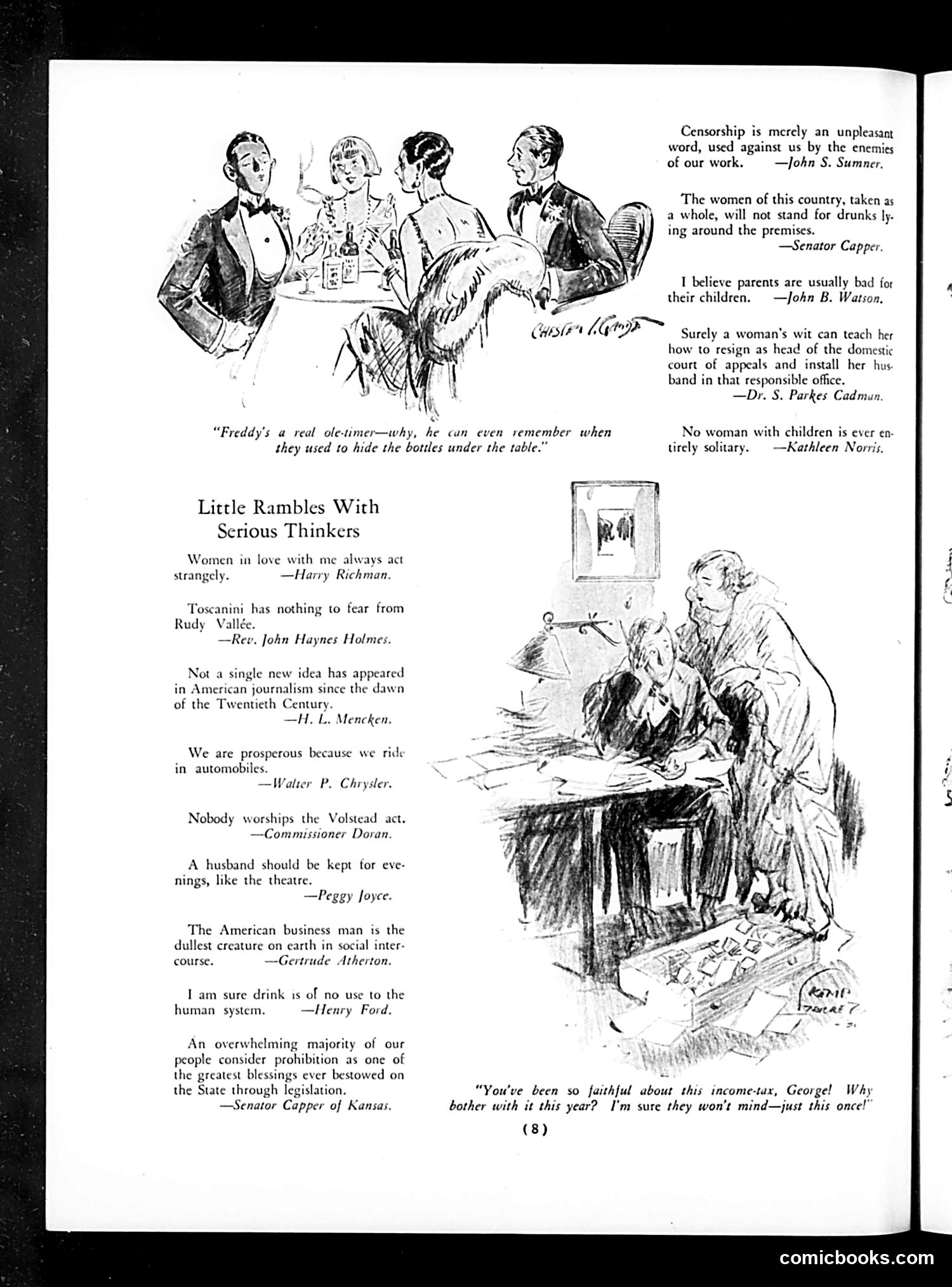
# Analysis of Life Magazine Page This page contains satirical quotes and two illustrations mocking early 20th-century social attitudes. **Top illustration**: Shows well-dressed men at dinner with bottles, accompanying a quote about hiding liquor bottles—likely referencing Prohibition-era drinking habits and hypocrisy. **Section title**: "Little Rambles With Serious Thinkers" introduces celebrity quotes presented ironically. **The quotes** mock various prominent figures' statements on topics like women, business, automobiles, and prohibition. They appear designed to expose contradictions or absurdity in these public figures' pronouncements. **Bottom illustration**: Depicts a man at a desk discussing "income tax" with a woman, suggesting anxiety about new federal income taxation (introduced in 1913). The page satirizes both celebrity pomposity and contemporary anxieties about social change, taxation, and women's roles in American society during this era.
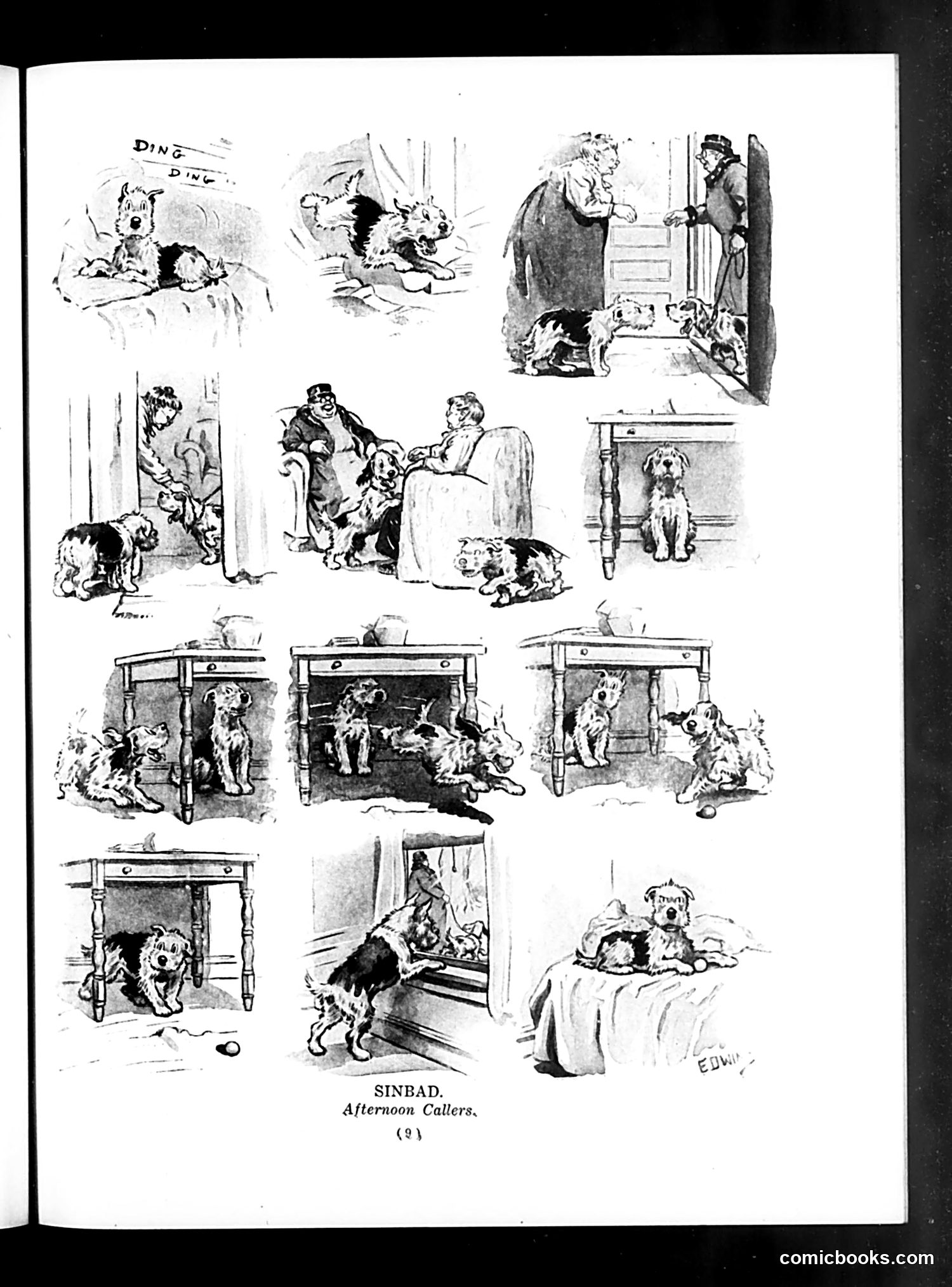
# "Sinbad: Afternoon Callers" This appears to be a comic strip or illustration series depicting a dog named Sinbad receiving various visitors throughout an afternoon. The sequential panels show different human callers arriving at what seems to be a home, with Sinbad the dog reacting to each visitor in different ways—sometimes excited, sometimes wary or mischievous. The humor appears to derive from the dog's varied responses to different types of callers: tradespeople, family members, and others making typical "afternoon calls" at a Victorian-era household. Each panel shows Sinbad's personality and behavior shifting based on who arrives. This is gentle domestic humor focused on the dog character's antics rather than political satire, typical of early 20th-century Life magazine's lighter content.
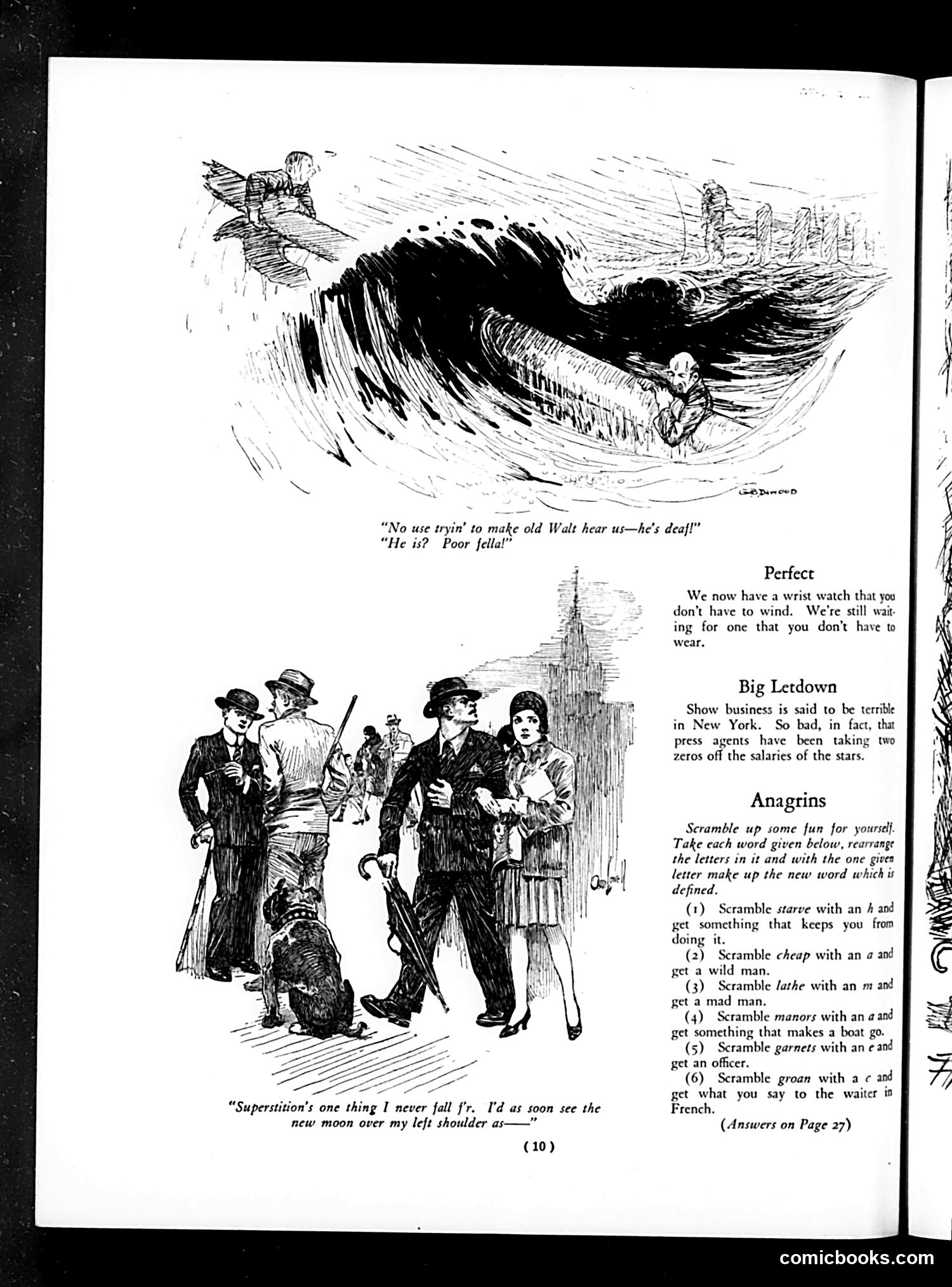
# Page Analysis This page contains two distinct elements: **Top cartoon:** A surreal illustration depicting a large wave or whirlwind with figures caught within it. The caption reads: "No use tryin' to make old Walt hear us—he's deaf!" / "He is? Poor fella!" This appears to reference someone named Walt (likely Walt Disney, given Life magazine's era) and satirizes either his deafness or his alleged inability/unwillingness to listen to complaints or suggestions. **Bottom section:** A street scene showing well-dressed men in top hats with a dog, captioned about superstition and the moon passing over one's left shoulder—a lighthearted joke about folk beliefs. The right column contains three brief humor items: "Perfect" (about a wristwatch), "Big Letdown" (mocking New York business conditions), and "Anagrins" (a word puzzle game for readers). This appears to be a typical humor/satirical page from Life magazine's golden age.