A complete issue · 36 pages · 1930
Life — February 28, 1930
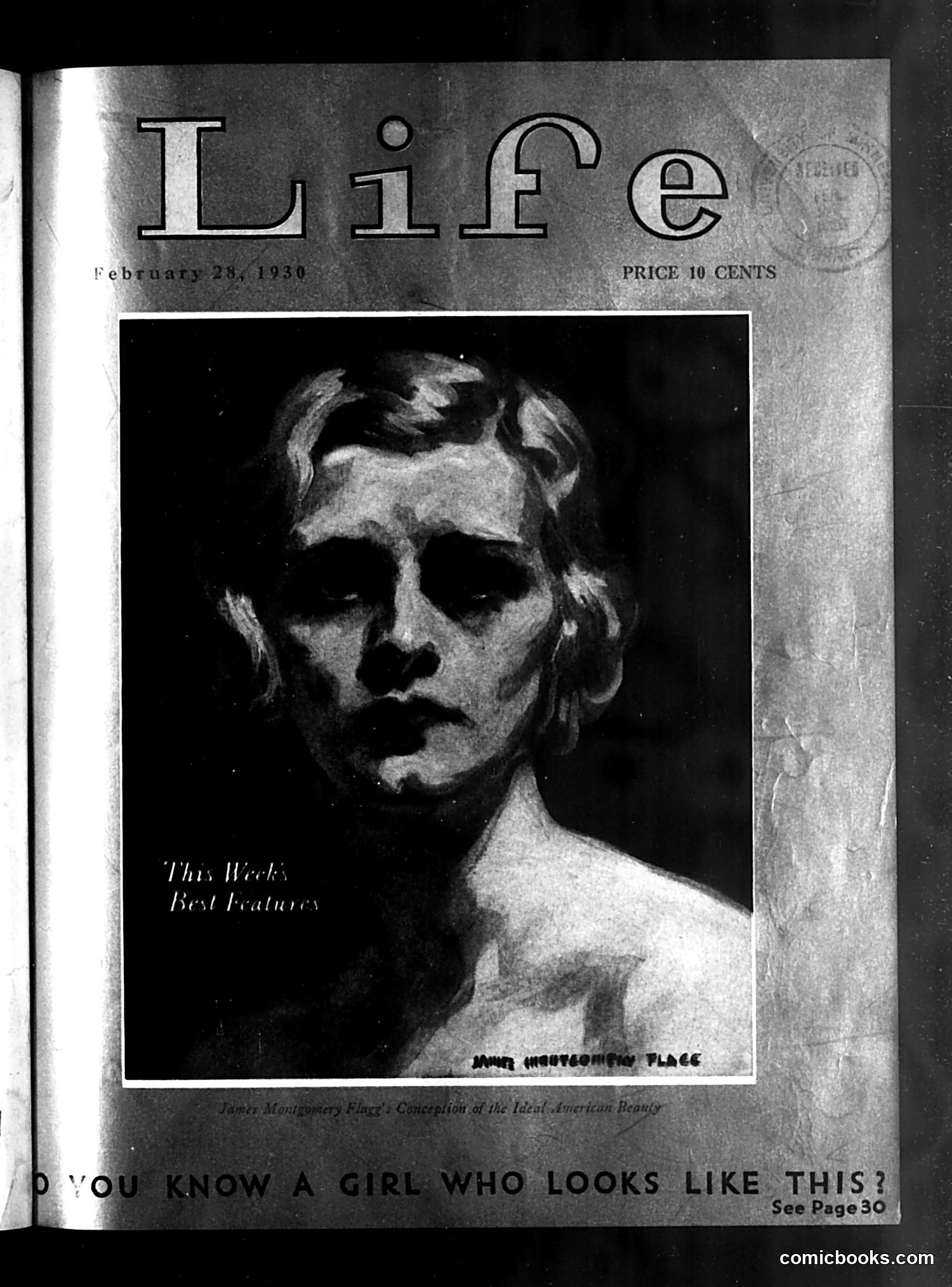
# Life Magazine, February 28, 1930 This is primarily a **magazine cover featuring a sculptural artwork**, not a political cartoon. The image shows a classical-style bust or sculpture titled "James Montgomery Flagg's Conception of the Ideal American Beauty," created by an artist credited as "Ann [Horton?] Place." The cover's tagline—"DO YOU KNOW A GIRL WHO LOOKS LIKE THIS?"—appears to be a lighthearted contest or reader-engagement prompt, encouraging viewers to identify women matching this idealized beauty standard. The "This Week's Best Features" notation suggests this artwork was featured content in the issue. This reflects 1930s popular culture's preoccupation with defining and celebrating standardized beauty ideals, presented here through classical artistic tradition.
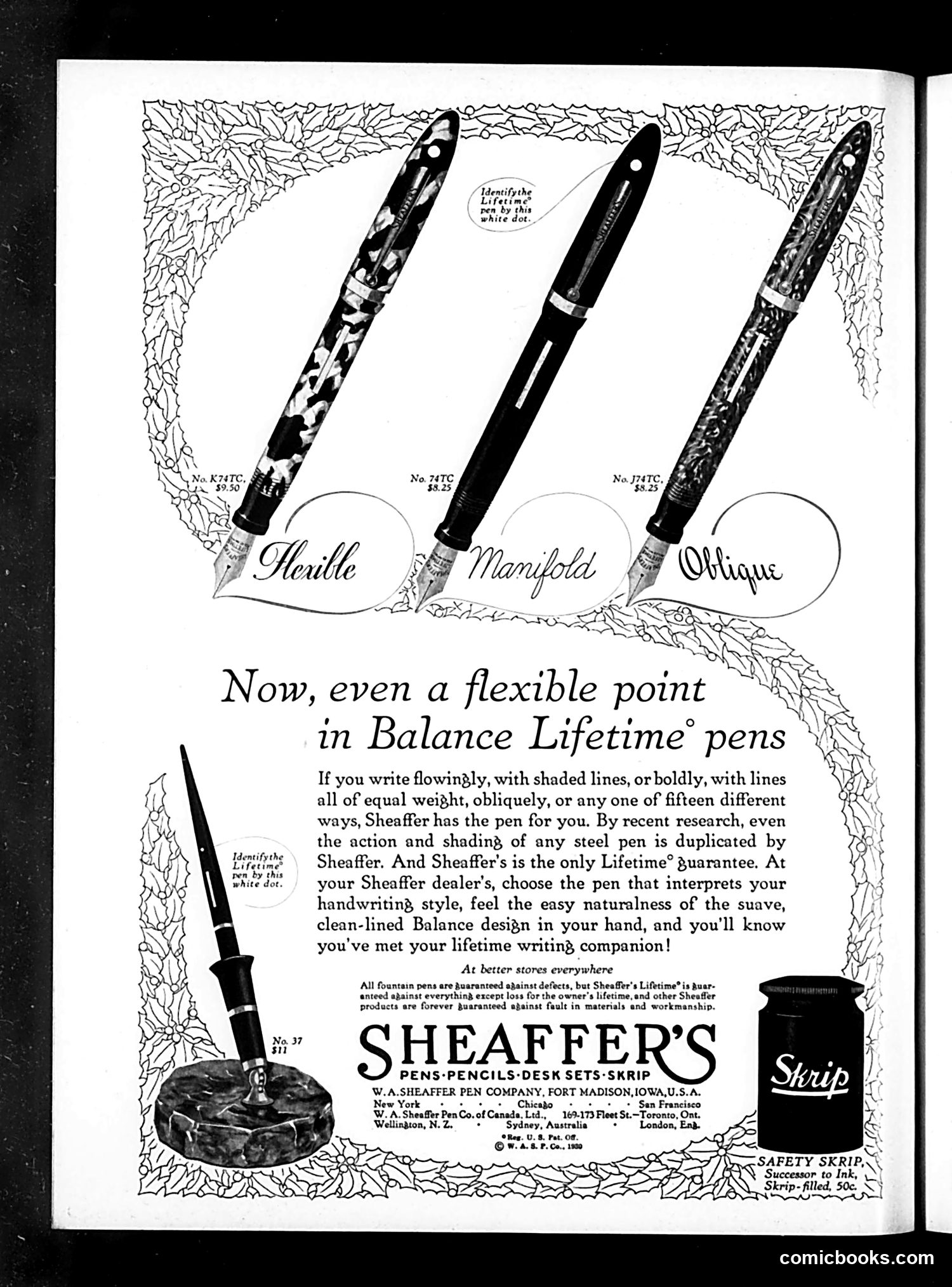
# Analysis This is not a political cartoon or satirical content—it's a **product advertisement for Sheaffer fountain pens**, specifically their "Balance Lifetime" line. The page displays three pen styles (Flexible, Manifold, and Oblique) with decorative leaf illustrations and an ornamental inkwell. The advertisement emphasizes that Sheaffer pens accommodate different writing styles—whether "flowingly, with shaded lines, or boldly, with lines all of equal weight." The text claims Sheaffer's steel pens duplicate the action of other brands and offers a lifetime guarantee. The ad encourages readers to visit dealers to find a pen matching their handwriting style. This represents typical early-to-mid 20th century *Life* magazine advertising content rather than editorial satire.
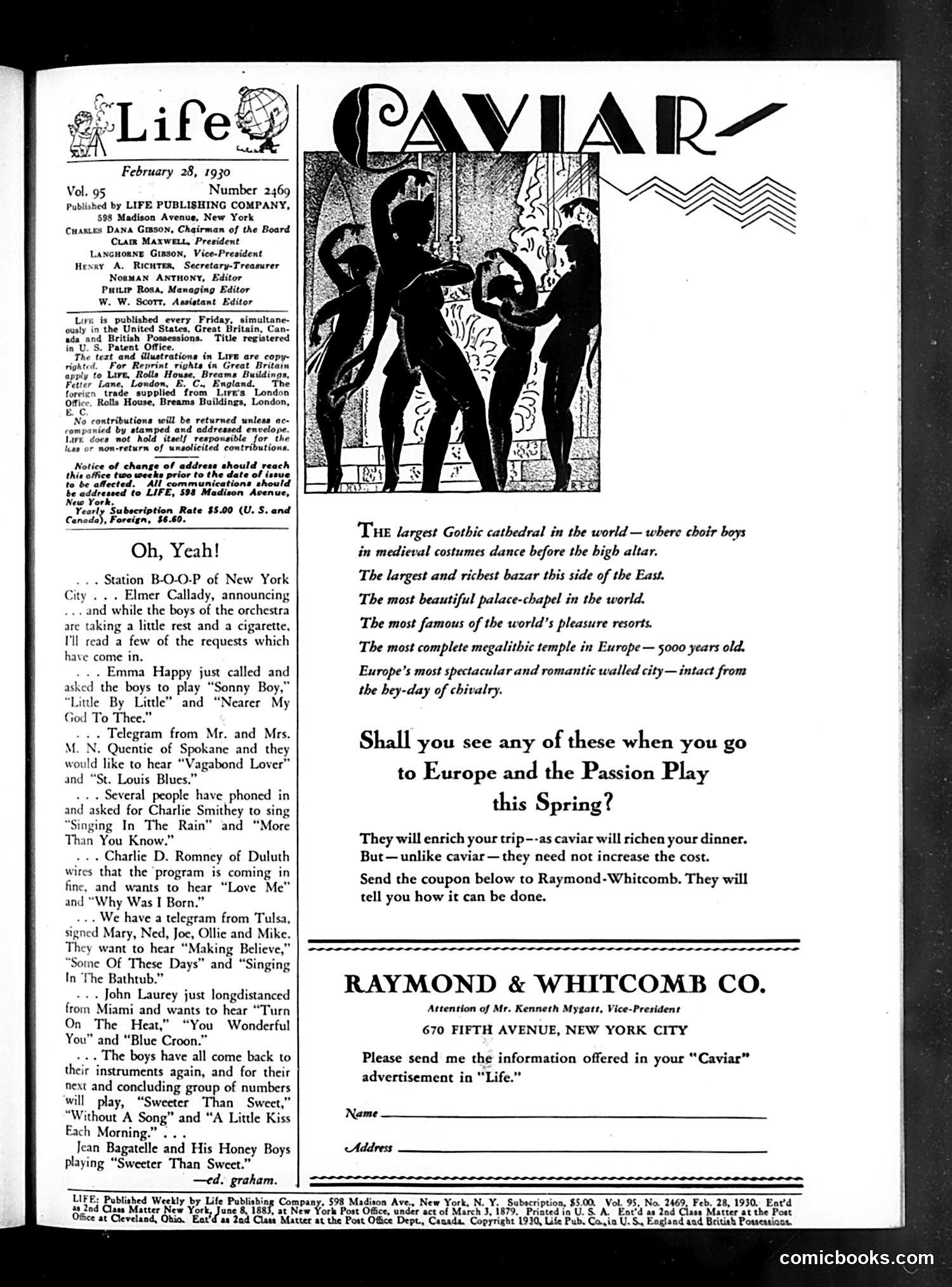
# "Caviar" Advertisement Page, Life Magazine, February 28, 1930 This page is primarily a **commercial advertisement** for Raymond & Whitcomb Co.'s European travel services, not political satire. The large illustration depicts **silhouetted figures in formal dress** viewing what appears to be a Gothic cathedral interior—likely representing tourists on a European tour. The ad uses luxury marketing language, promoting European attractions: cathedrals, bazaars, palaces, temples, and the "Passion Play." The caviar reference is metaphorical—suggesting these travel experiences are luxury enhancements to one's life, comparable to caviar enriching dinner. The left column contains unrelated **reader requests to station BOOP-P for musical performances**, showing typical magazine content of the era. This is essentially a full-page travel advertisement with accompanying program notes.
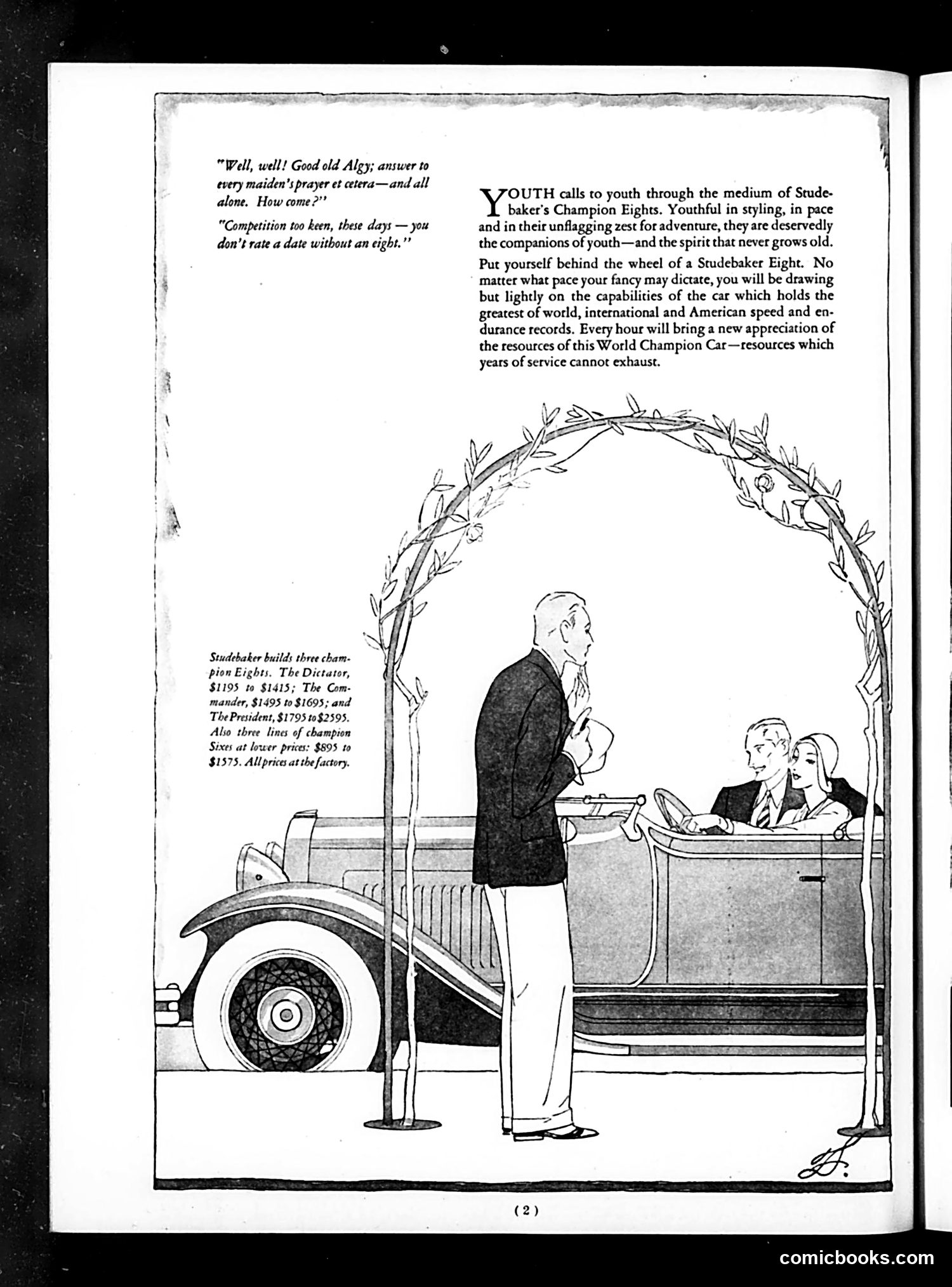
# Analysis of Life Magazine Page This page is primarily **advertising for Studebaker automobiles**, not political satire. The cartoon illustrates a young man presenting a Studebaker Eight automobile to what appears to be his parents or guardians. **The Social Context:** The ad targets youth, emphasizing that Studebaker cars embody youthful energy and adventure. The scene depicts a formal presentation—the young man appears proud, while the adults seem impressed or skeptical. **The Marketing Message:** The text appeals to young people's desire for independence and excitement, while reassuring parents about the car's reliability and durability. Three Champion Eight models are listed with prices ($1,195-$2,395), positioning them as accessible luxury vehicles. This represents 1920s-era advertising that blended automotive promotion with aspirational lifestyle messaging.
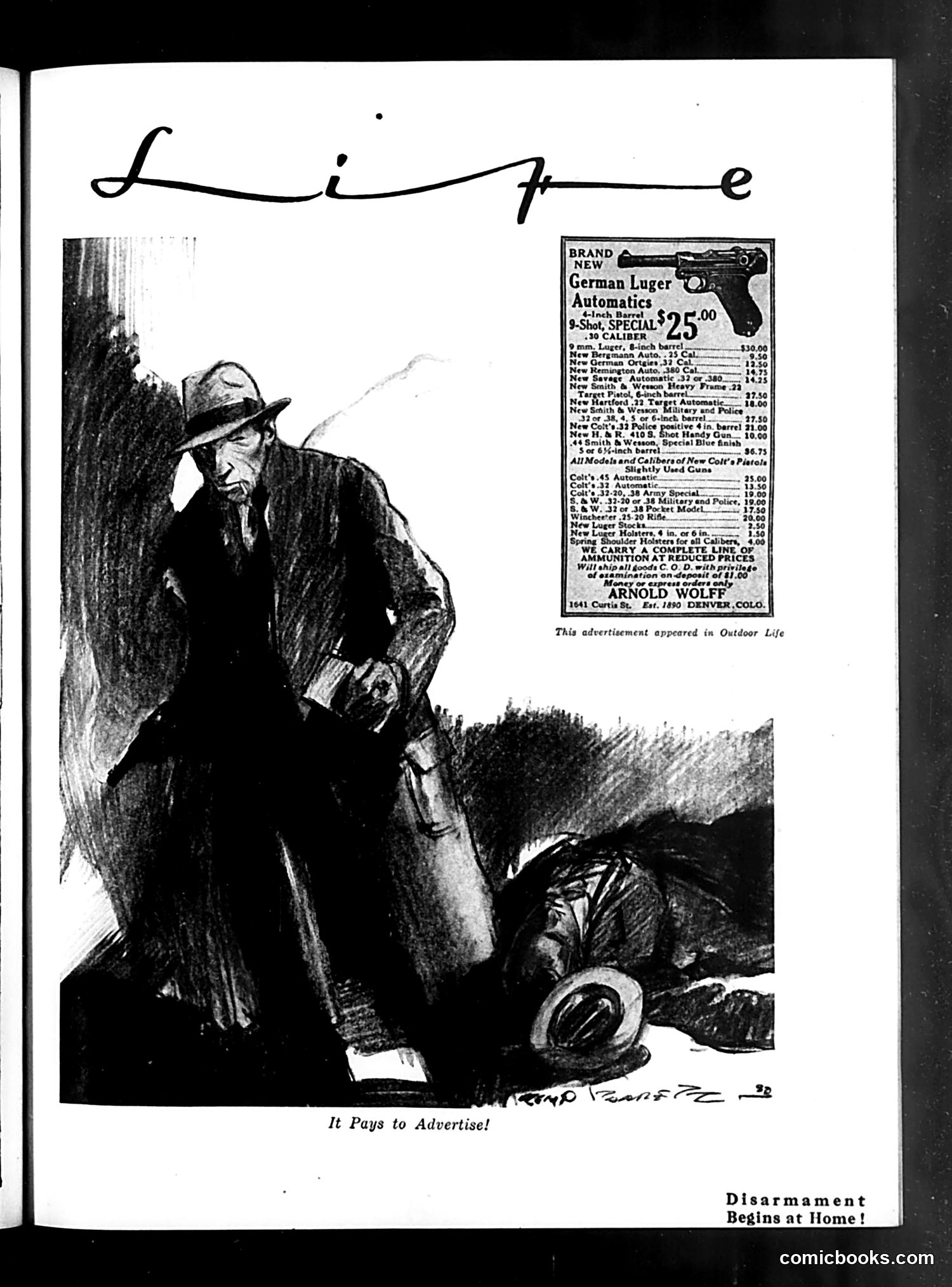
# Analysis This page is primarily an **advertisement for firearms**, not political satire. The illustration depicts a man in Western attire standing over a fallen figure, with the caption "It Pays to Advertise!" The ad, placed by Arnold Wolff of Denver, Colorado, promotes a German Luger automatic pistol priced at $25.00, along with listings for various other firearms and ammunition. The phrase "It Pays to Advertise!" is a cynical double meaning—it suggests that advertising the weapon effectively leads to sales, while the violent imagery implies it "pays" (succeeds) in actual use. The accompanying text "Disarmament Begins at Home!" appears ironic, suggesting personal weaponry while nominally addressing disarmament concerns of the post-WWI era. This reflects early 20th-century attitudes toward firearms marketing and regulation.
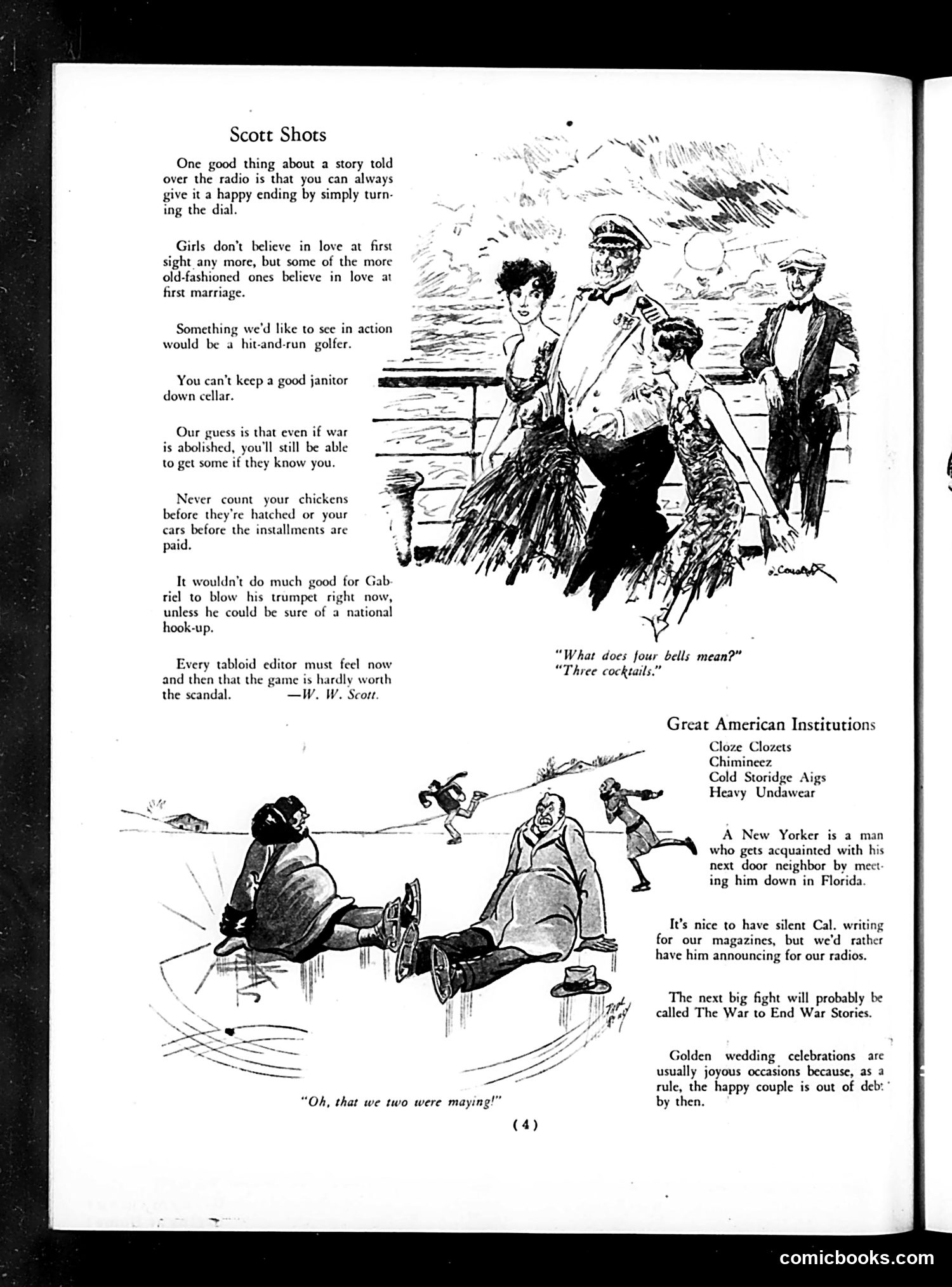
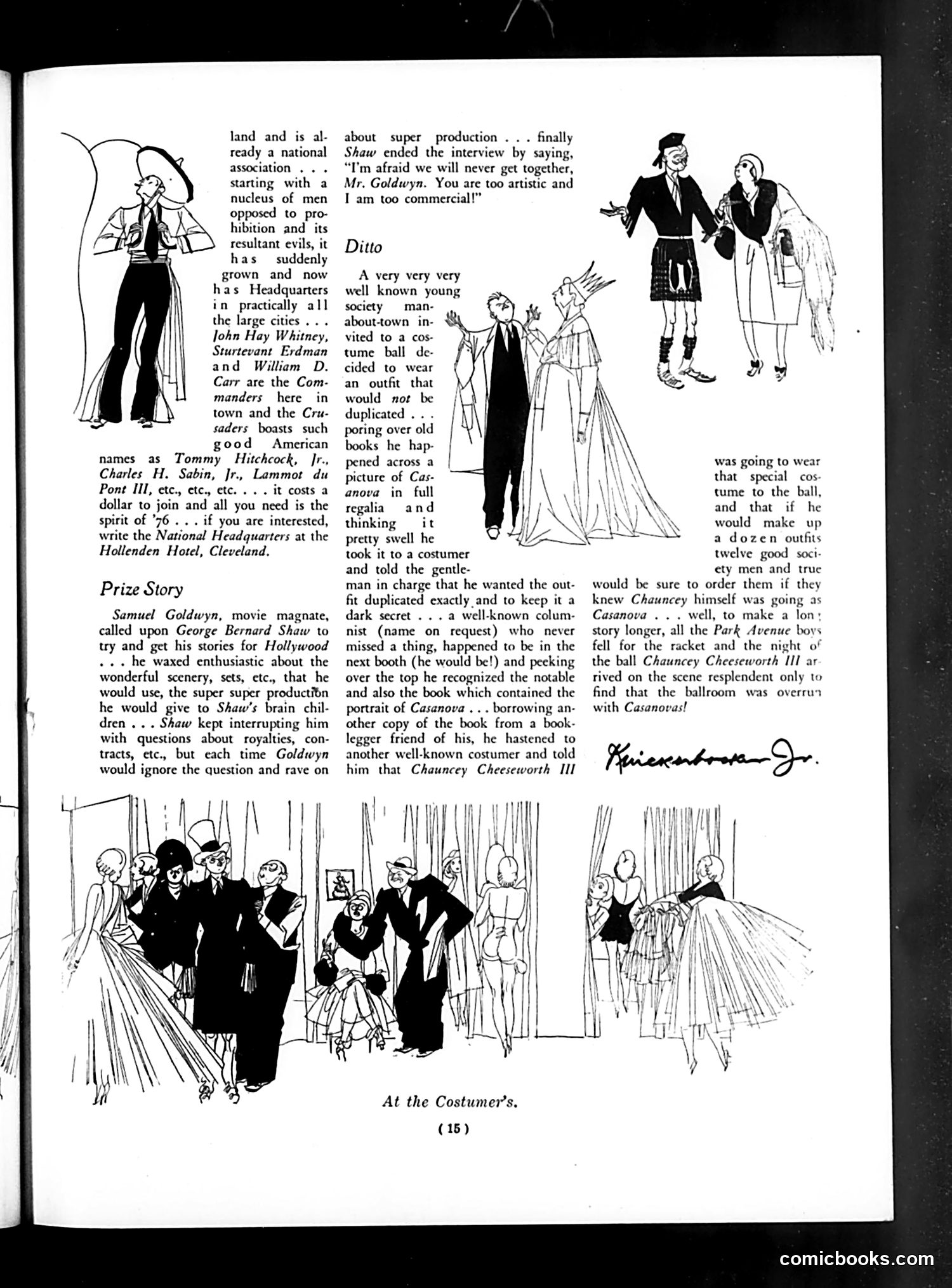
# Scott Shots - Life Magazine Satire Page This page contains brief humorous observations and two cartoon illustrations. **Top cartoon**: Shows people at what appears to be a social gathering or ship setting. The caption "What does four bells mean?" "Three cocktails" jokes about nautical signals being confused with drinking culture—likely reflecting 1920s-30s social attitudes toward alcohol. **Bottom cartoon**: Depicts two people sliding on ice with the caption "Oh, that we two were maying!" This appears to be romantic/nostalgic humor—"maying" (springtime courtship) contrasts absurdly with their winter activity, suggesting wistful thinking about romance during mundane moments. The "Scott Shots" section includes satirical one-liners about radio storytelling, janitors, war, chickens, and journalism—typical of Life magazine's gossipy, observational humor targeting contemporary American institutions and social pretensions.
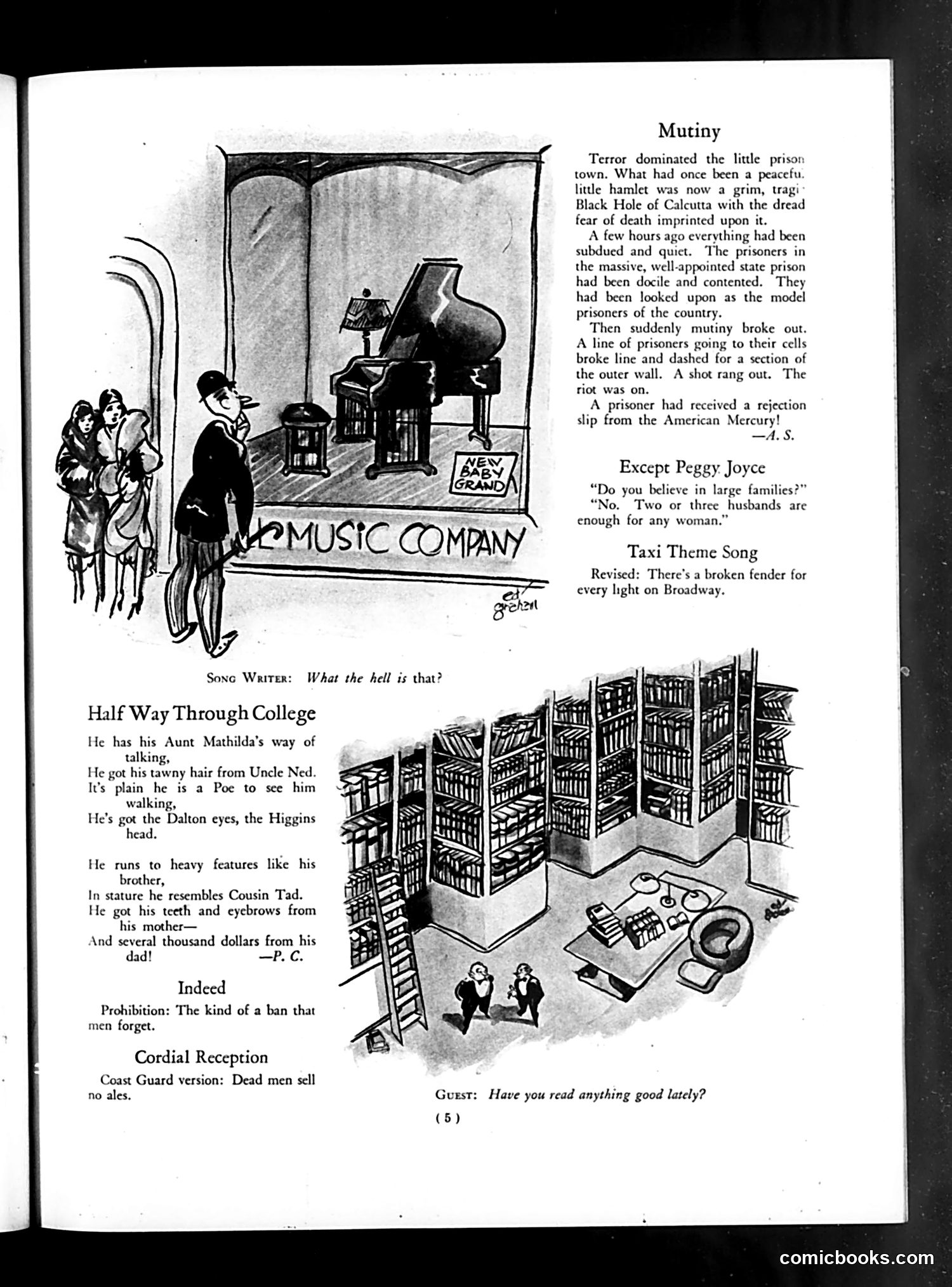
# Analysis of Life Magazine Page This page contains several short humor pieces and satirical cartoons typical of Life's format. The top cartoon shows people outside a music company storefront listening to a piano, with a songwriter asking "What the hell is that?" — mocking poor composition. The text pieces mock various subjects: a prison uprising ("Mutiny"), family size attitudes ("Excerpt Peggy Joyce"), Broadway conditions ("Taxi Theme Song"), and college inheritance ("Half Way Through College"). The large illustration depicts a library or archive scene, with a guest asking "Have you read anything good lately?" — apparently satirizing the overwhelming volume of available literature or the difficulty of finding quality reading material. These represent typical Life magazine humor: brief, punchy observations on contemporary culture, entertainment, and social customs aimed at educated urban readers.
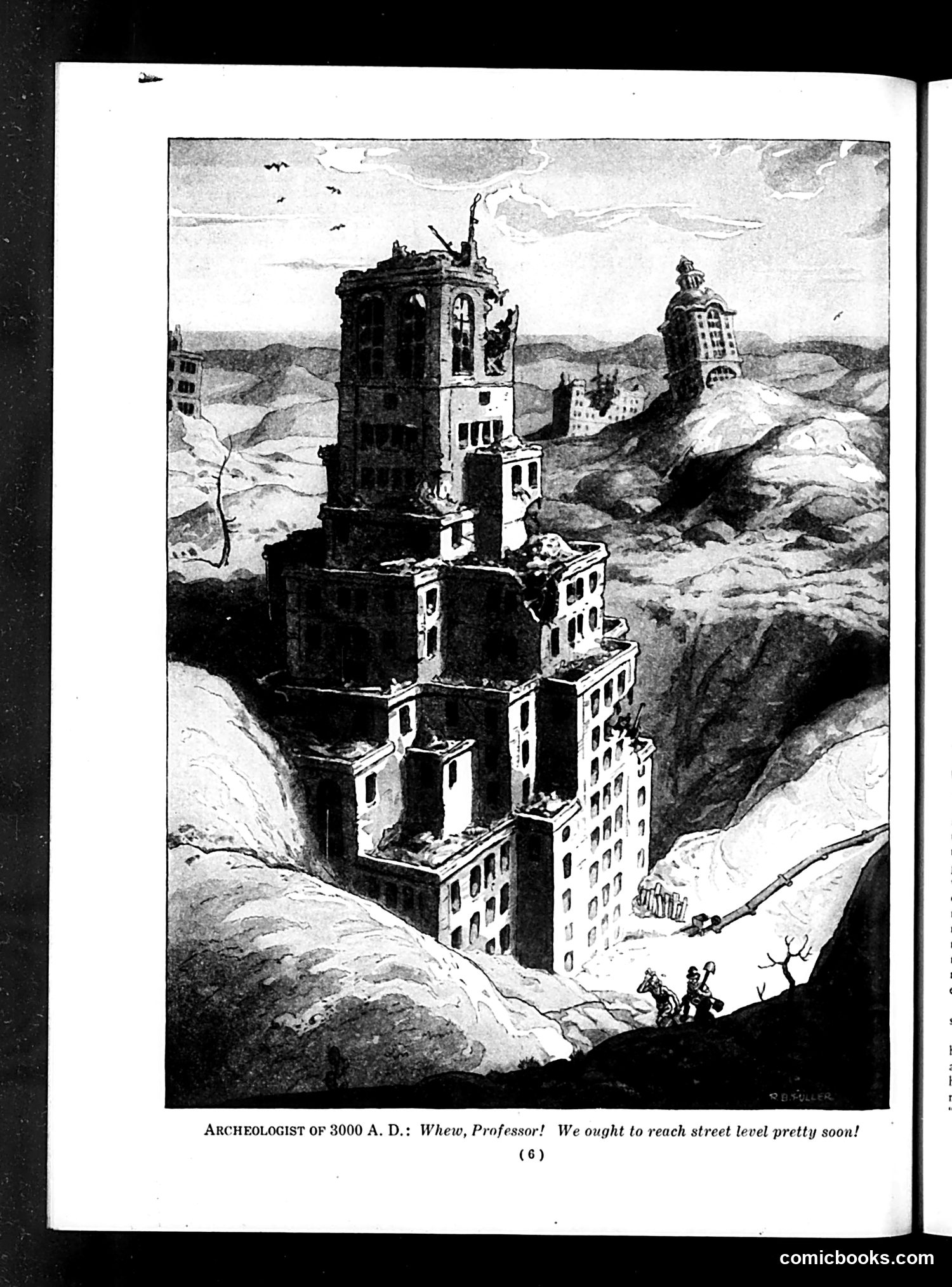
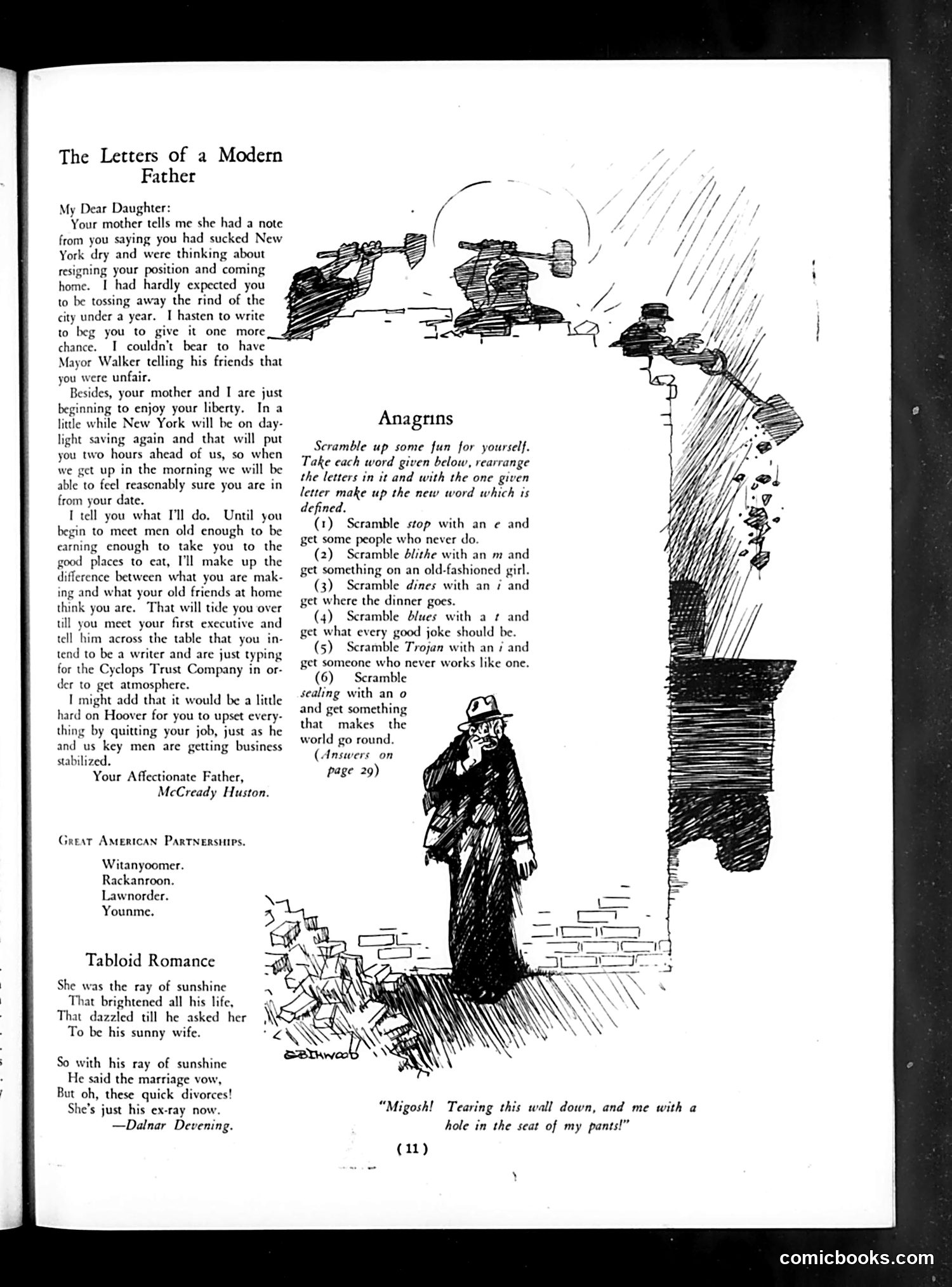
# Analysis of "Archeologist of 3000 A.D." This satirical cartoon depicts an imaginary future where an archaeologist from the year 3000 A.D. excavates what appears to be a modern skyscraper buried deep underground. The joke comments on **urban congestion and building density** in early 20th-century cities. The caption—"Where, Professor! We ought to reach street level pretty soon!"—suggests that by the year 3000, buildings will have sunk so far below ground due to continued construction and development that "street level" becomes archaeological. The satire mocks the contemporary trend of ever-taller buildings and densely-packed urban development, implying this construction boom would eventually bury cities beneath newer construction. It's commentary on unchecked urban growth and verticalization.
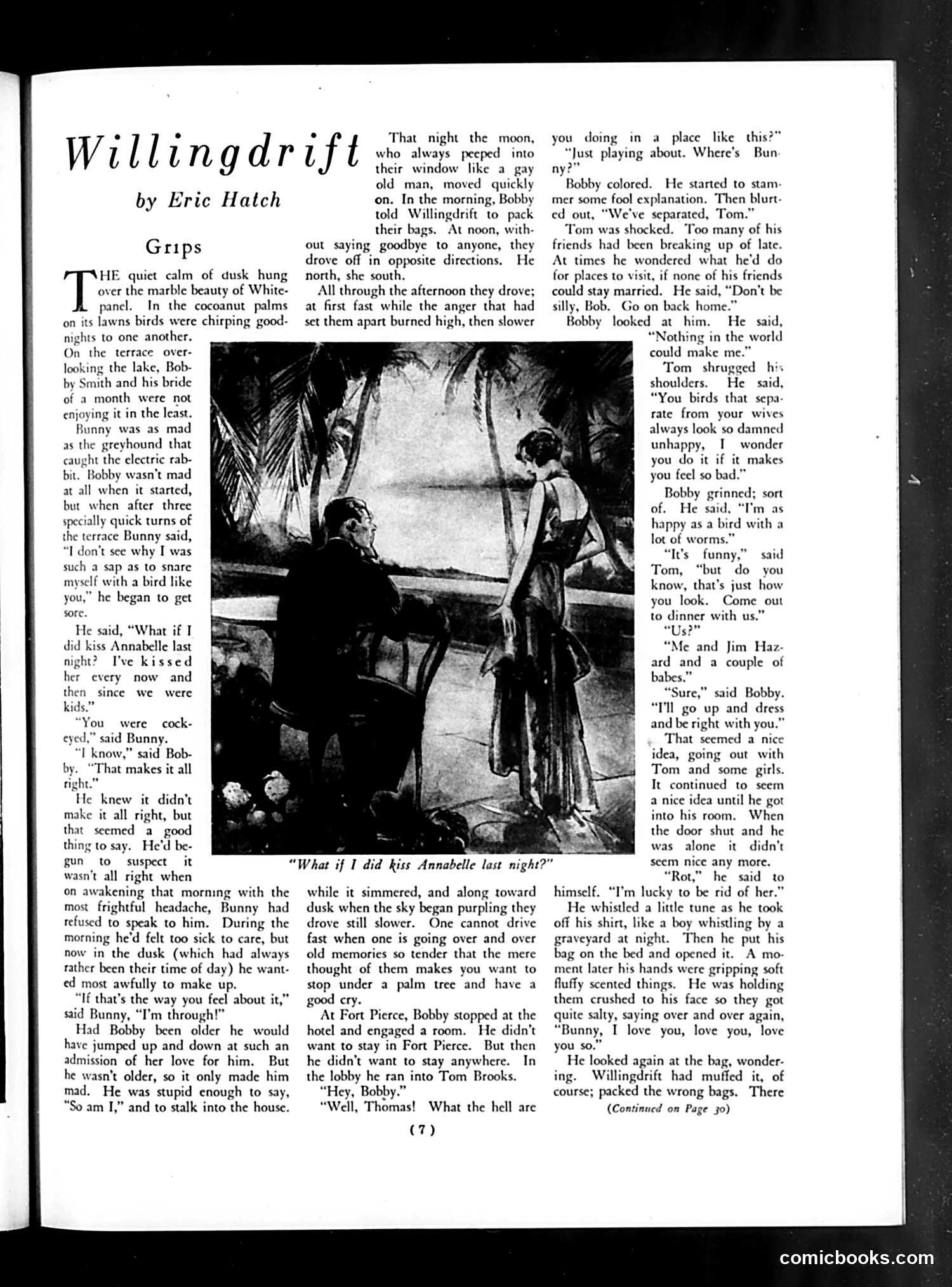
# "Willingdrift" by Eric Hatch This page contains the opening of a short story, not a political cartoon. The narrative follows Bobby Smith and his bride on their honeymoon at a tropical location (White-pansel, with coconut palms). The story's humor derives from marital discord: Bobby's friend Bunny teases him about kissing his wife, which irritates Bobby. Their argument escalates into a quarrel that causes them to separate and drive in opposite directions. The narrative explores the tension between newlywed romance and male friendship dynamics. The illustrated scene shows the couple in conversation near palm trees. The story appears to be a lighthearted domestic comedy exploring early marriage complications, rather than containing political or social satire. It continues on page 20.
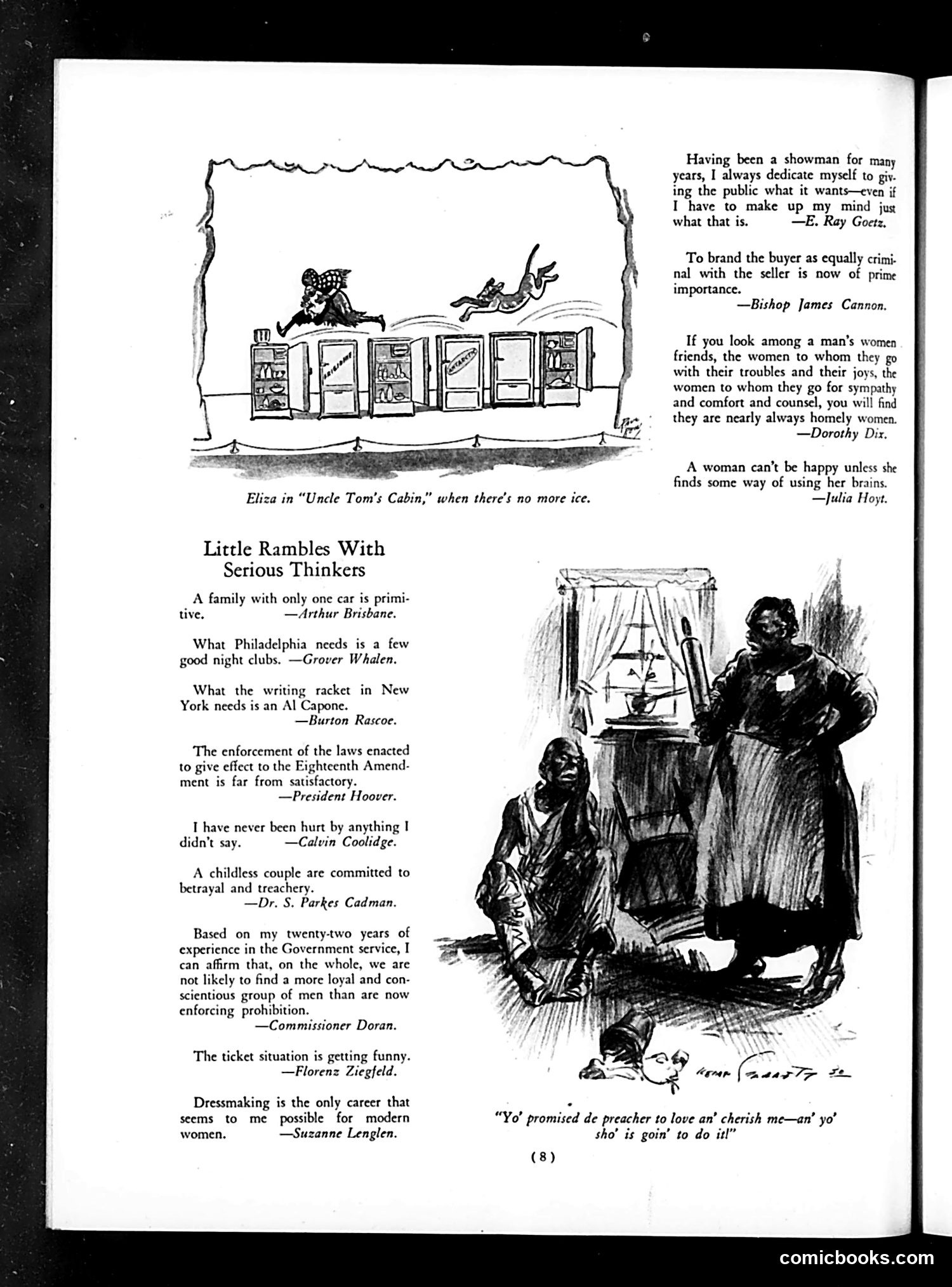
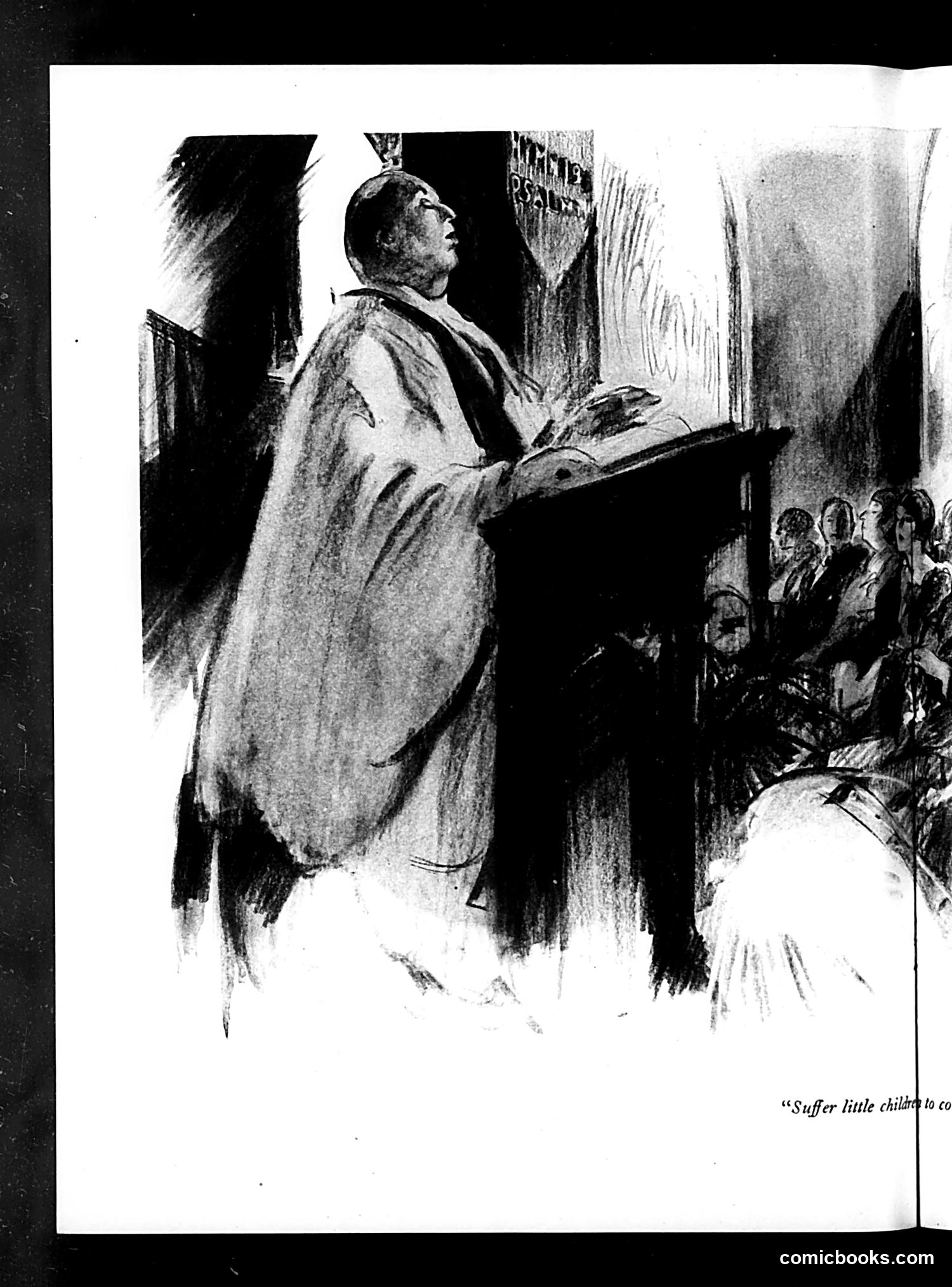
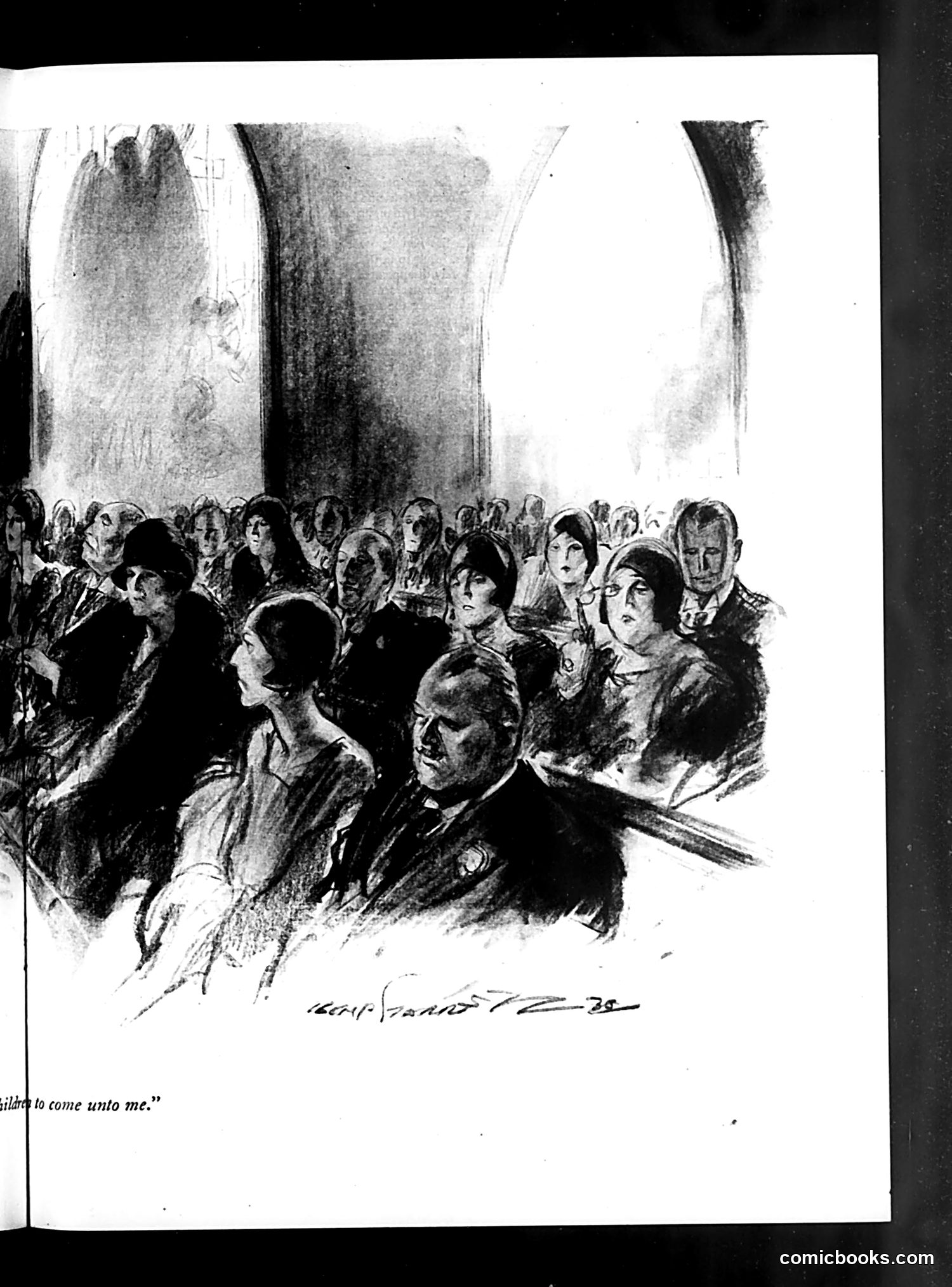
# Analysis of Life Magazine Page 8 This page contains two illustrations with social commentary. The top cartoon shows "Eliza in 'Uncle Tom's Cabin'" during a scene with no ice, referencing the famous literary work about slavery. Below is a section titled "Little Rambles With Serious Thinkers" featuring quotes from public figures on contemporary issues. These include commentary on Prohibition (Commissioner Doran defending enforcement), taxi regulation (Florenz Ziegfeld on "ticket situation"), women's careers (Suzanne Lenglen on dressmaking), and various social observations from figures like President Hoover and Calvin Coolidge. The bottom illustration depicts what appears to be a sermon scene, with text in dialect: "Yo' promised de preacher to love an' cherish me—an' yo' sho' is goin' to do it!" The satire mixes high literary references with period social issues and public figures' opinions.
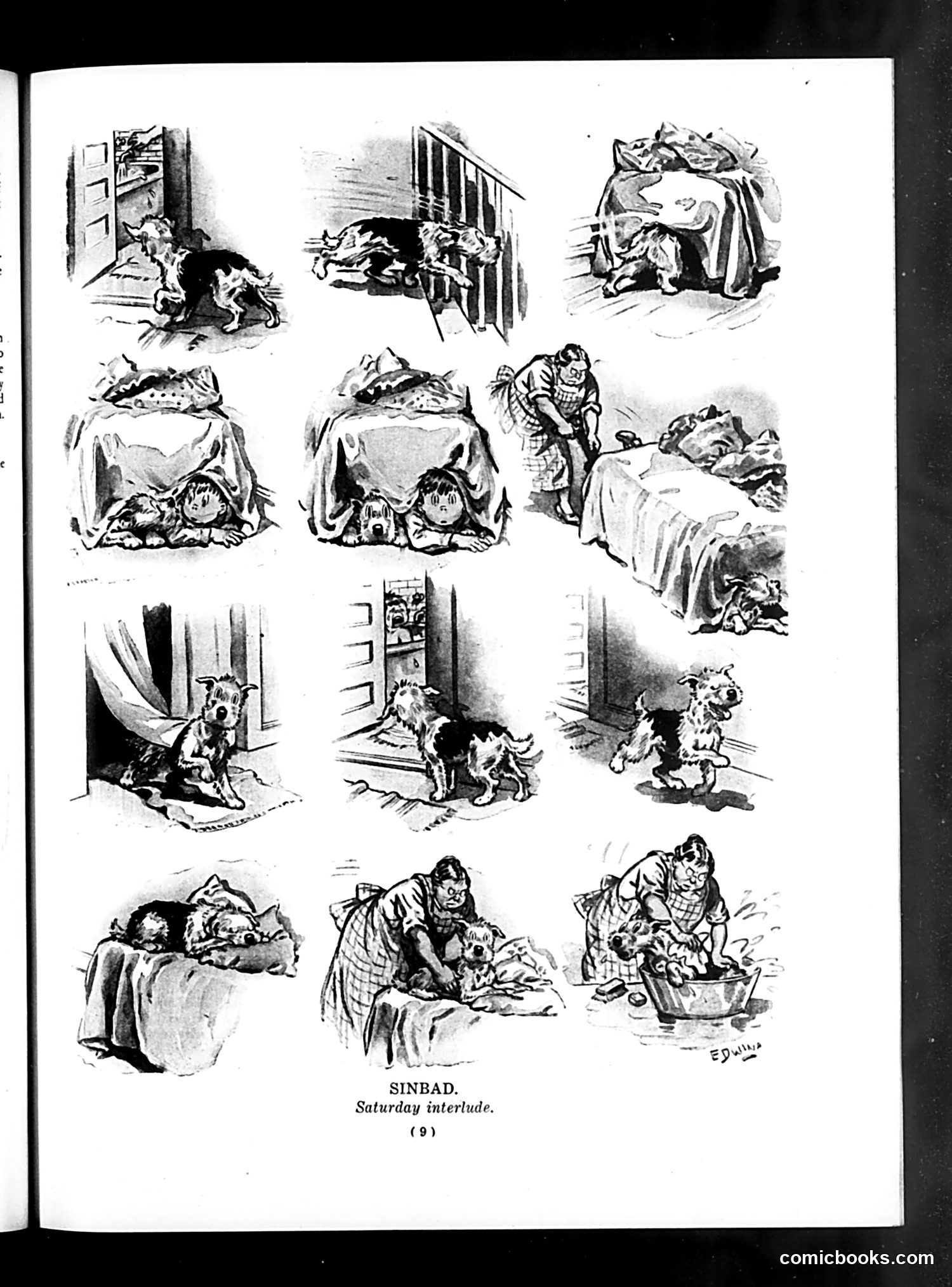
# Sinbad: Saturday Interlude This page presents a series of twelve comic vignettes depicting scenes from "Sinbad" — likely referring to the classic Arabian Nights character Sinbad the Sailor. The sketches illustrate various episodes of adventure and misadventure, featuring the protagonist interacting with different characters and situations. The scenes appear humorous rather than serious, showing Sinbad in domestic or comedic circumstances: hiding under blankets, interacting with other figures, bathing, and engaging in slapstick situations. The title "Saturday interlude" suggests this was a light, entertaining comic break from the magazine's usual satirical political content. The artist signature reads "EDMUND" (likely Edmund Duffy or similar). This represents Life magazine's occasional shift toward pure comedy and literary adaptation rather than political commentary.
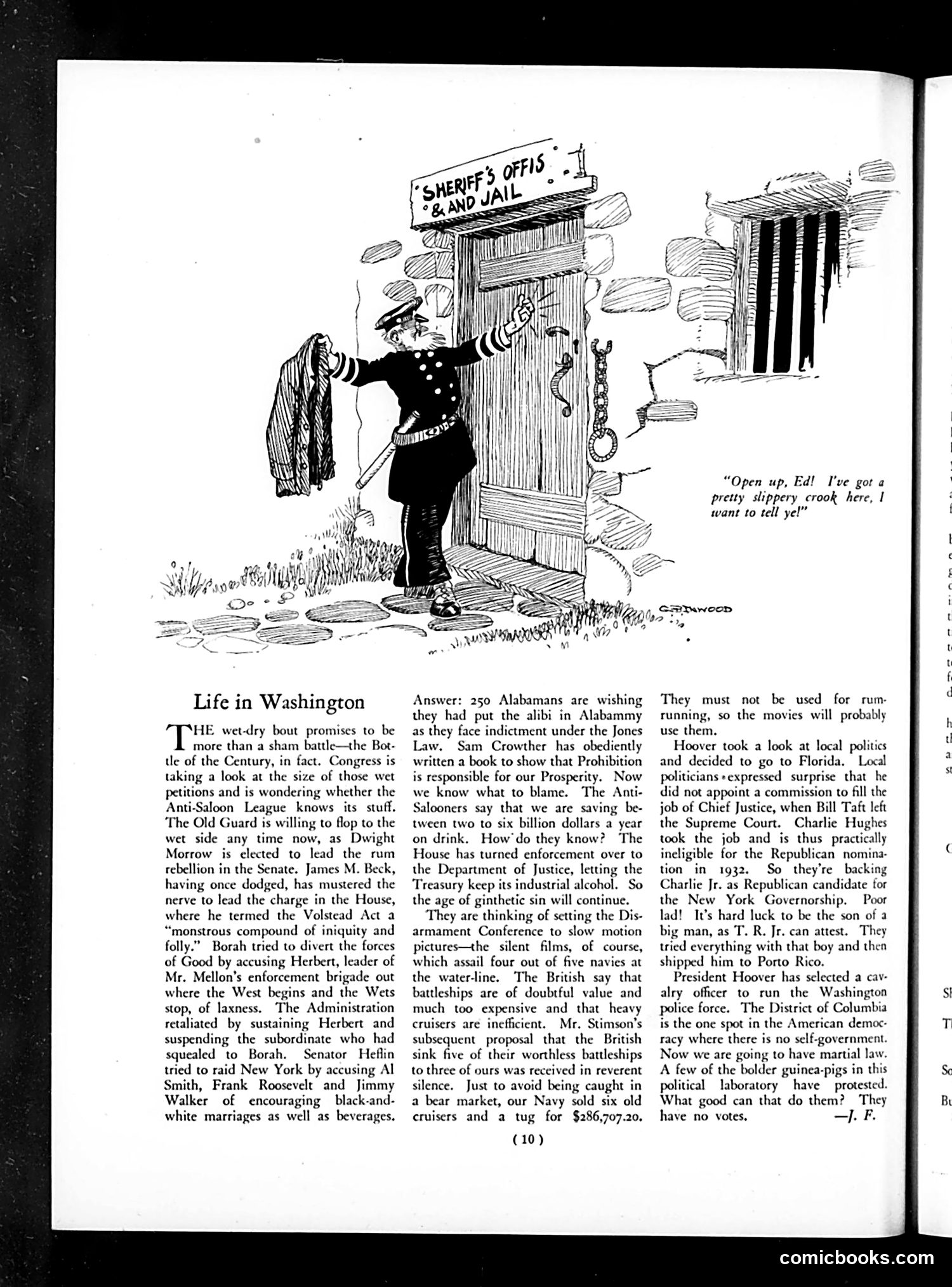
# Political Cartoon Analysis: "Life in Washington" The cartoon depicts a sheriff opening a jail cell door, telling a prisoner: "Open up, Ed! I've got a pretty slippery crook here, I want to tell ye!" This satirizes **Prohibition enforcement corruption**. The text discusses how the Anti-Saloon League and enforcement officials turned a blind eye to industrial alcohol theft and trafficking, essentially colluding with criminals. The "slippery crook" likely references a specific corrupt official or bootlegger who escaped justice through official negligence. The joke: law enforcement itself operates like a criminal enterprise—the sheriff casually warns imprisoned criminals about incoming corruption, suggesting jails house the petty violators while actual organized crime operates freely with official complicity. This reflects early 1920s Prohibition-era skepticism about government enforcement capabilities and widespread corruption.