A complete issue · 36 pages · 1930
Life — February 21, 1930

# Life Magazine Cover Analysis (February 21, 1930) This cover features a portrait labeled "Pretty Headwork" with attribution to "Haskell Coffin," a prominent illustrator of the era. The caption "YOU KNOW A GIRL WHO LOOKS LIKE THIS? See Page 30" is typical of Life's satirical format—inviting readers to identify someone matching the depicted type. The image appears to showcase an idealized "American Beauty" standard of the 1930s: defined features, carefully styled hair, and a contemplative expression. Rather than mocking a specific person, this likely satirizes the period's aesthetic ideals and beauty standards. The "pretty headwork" phrase suggests commentary on fashion, styling, or perhaps the superficiality of appearance-focused culture during the Depression era. Without seeing page 30, the specific joke remains unclear.
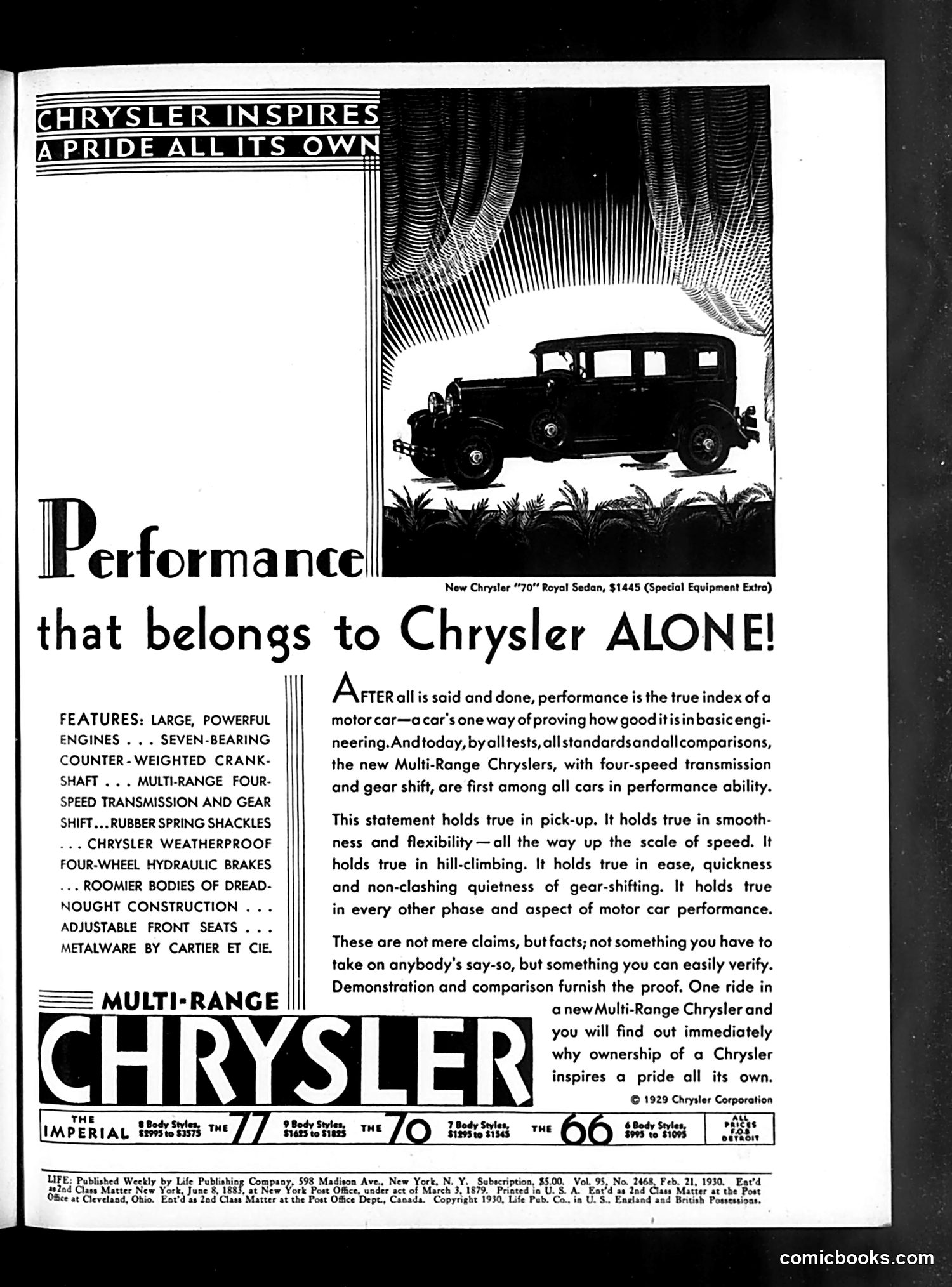
This is a **Chrysler automobile advertisement**, not a political cartoon or satire. It appeared in *Life* magazine (February 21, 1930, per the footer). The ad promotes Chrysler's "Multi-Range" vehicles, featuring the "70" Royal Sedan model ($1,445). The imagery—a silhouetted car against a dramatic radiating background—uses Art Deco styling typical of 1920s-30s advertising aesthetics. The text emphasizes Chrysler's engineering superiority, claiming their four-speed transmission and performance features are "first among all cars." This reflects genuine 1920s automotive competition, when transmission technology and engine power were major selling points. The ad's tone is characteristic of Depression-era marketing: asserting verifiable "facts" rather than mere claims, inviting consumer testing and comparison—suggesting manufacturers needed to build consumer confidence during economic uncertainty.
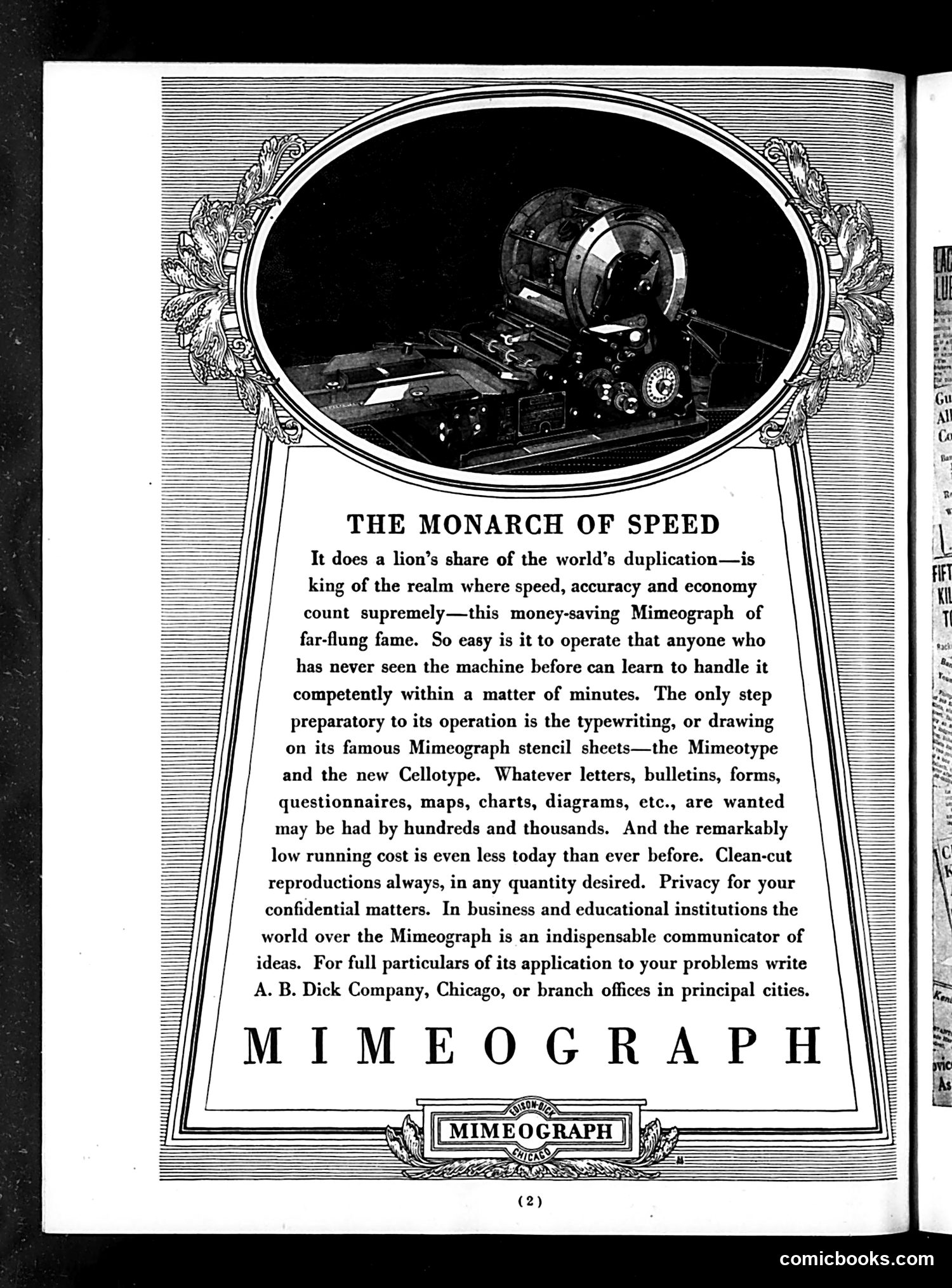
# Analysis This page is **primarily an advertisement**, not satirical content. It promotes the Mimeograph machine manufactured by A.B. Dick Company of Chicago. The ad uses the phrase "The Monarch of Speed" as a marketing slogan, emphasizing the machine's efficiency in duplicating documents. The text highlights practical benefits: ease of operation, low cost, and ability to produce "clean-cut reproductions" of letters, bulletins, forms, maps, and charts in large quantities. The decorative border and oval frame containing a photograph of the actual mimeograph machine are typical design elements of early 20th-century advertising. This represents straightforward business promotion rather than political satire or editorial commentary—demonstrating how Life magazine integrated advertising alongside editorial content.
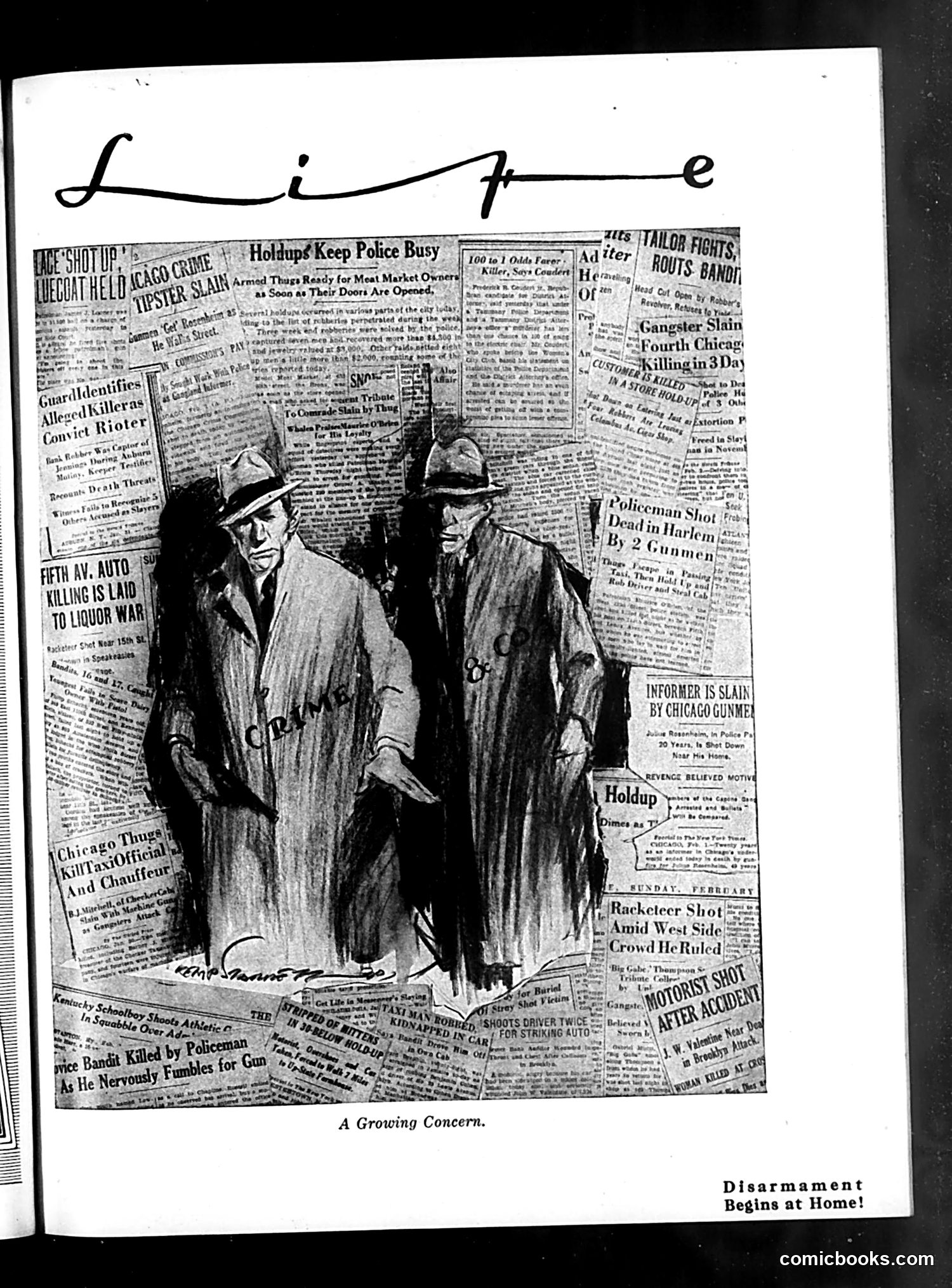
# "A Growing Concern" - Life Magazine Cartoon This satirical cartoon depicts two men in overcoats and fedoras standing against a backdrop of crime headlines. The illustration critiques what the caption frames as "A Growing Concern" — appearing to reference the escalating organized crime and gang violence during Prohibition era Chicago. The newspaper clippings behind them feature sensational headlines about murders, holdups, and police shootings ("Policeman Shot Dead in Harlem," "Gangster Slain," "Informer is Slain by Chicago Gunmen"). The two figures likely represent either gangsters or corrupt officials, positioned ominously against this violent backdrop. The overall message appears to satirize how organized crime had become endemic to American urban life, treated almost as a normalized "concern" rather than exceptional criminality. The bottom caption "Disarmament Begins at Home!" suggests ironic commentary on civic violence overshadowing international peace efforts.
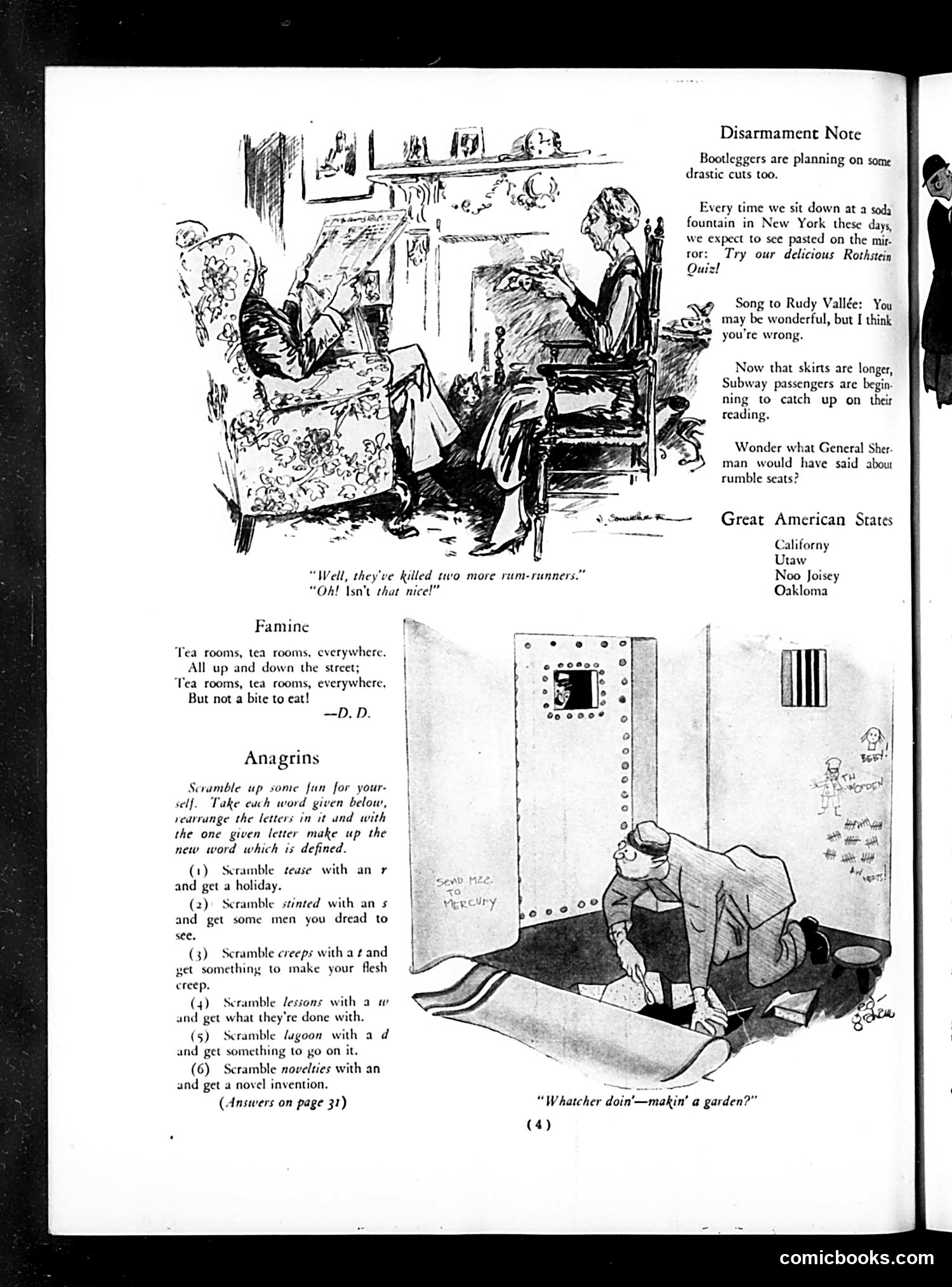
# Analysis of Life Magazine Page **Top Cartoon ("Well, they've killed two more rum-runners"):** This satirizes Prohibition-era enforcement. Two figures discuss bootleggers being killed, treating deaths casually ("Isn't that nice!"). The satire criticizes both the violence of alcohol prohibition and society's indifference to it. **"Disarmament Note" Section:** Mocks proposed military disarmament, suggesting bootleggers face "drastic cuts" too—equating criminal enforcement with military cutbacks. **"Famine" Poem:** Laments that tea rooms are everywhere but offer nothing to eat—likely commenting on trendy but insubstantial social establishments of the era. **"Anagrins" Word Game:** A puzzle feature unrelated to political satire. **Bottom Cartoon:** Shows someone in a prison cell ("makin' a garden")—unclear specific reference without more context.
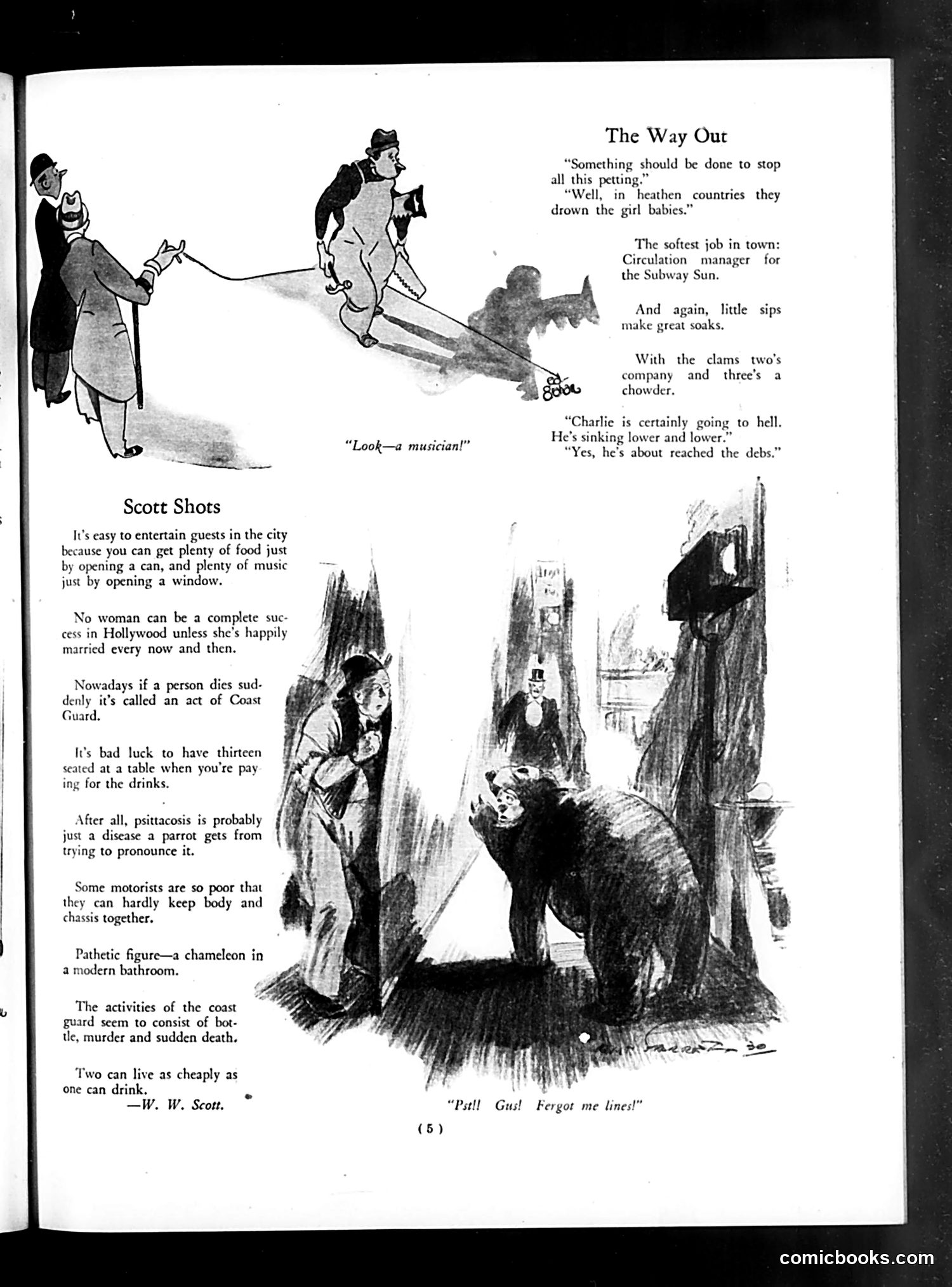
# Analysis of Life Magazine Page This page contains two distinct pieces of humor: **"The Way Out"** (top): A cartoon showing men with a dog and fishing rod, with commentary about dealing with unwanted children through drowning—a dark reference to infanticide practices in "heathen countries." The accompanying jokes mock various social problems: petty crime, subway management, debt, and romantic/marital dissolution. **"Scott Shots"** (bottom): A series of brief satirical observations by W.W. Scott mocking contemporary urban life—difficult entertainment, Hollywood success, sudden death terminology, expensive dining, disease pronunciation difficulties, motorists' poverty, bathroom design, and coast guard duties. The illustration depicts what appears to be a drowning victim or rescue scenario ("Pull! Gus! Forgot me line!"), darkly complementing the text's grim humor about mortality and social dysfunction.
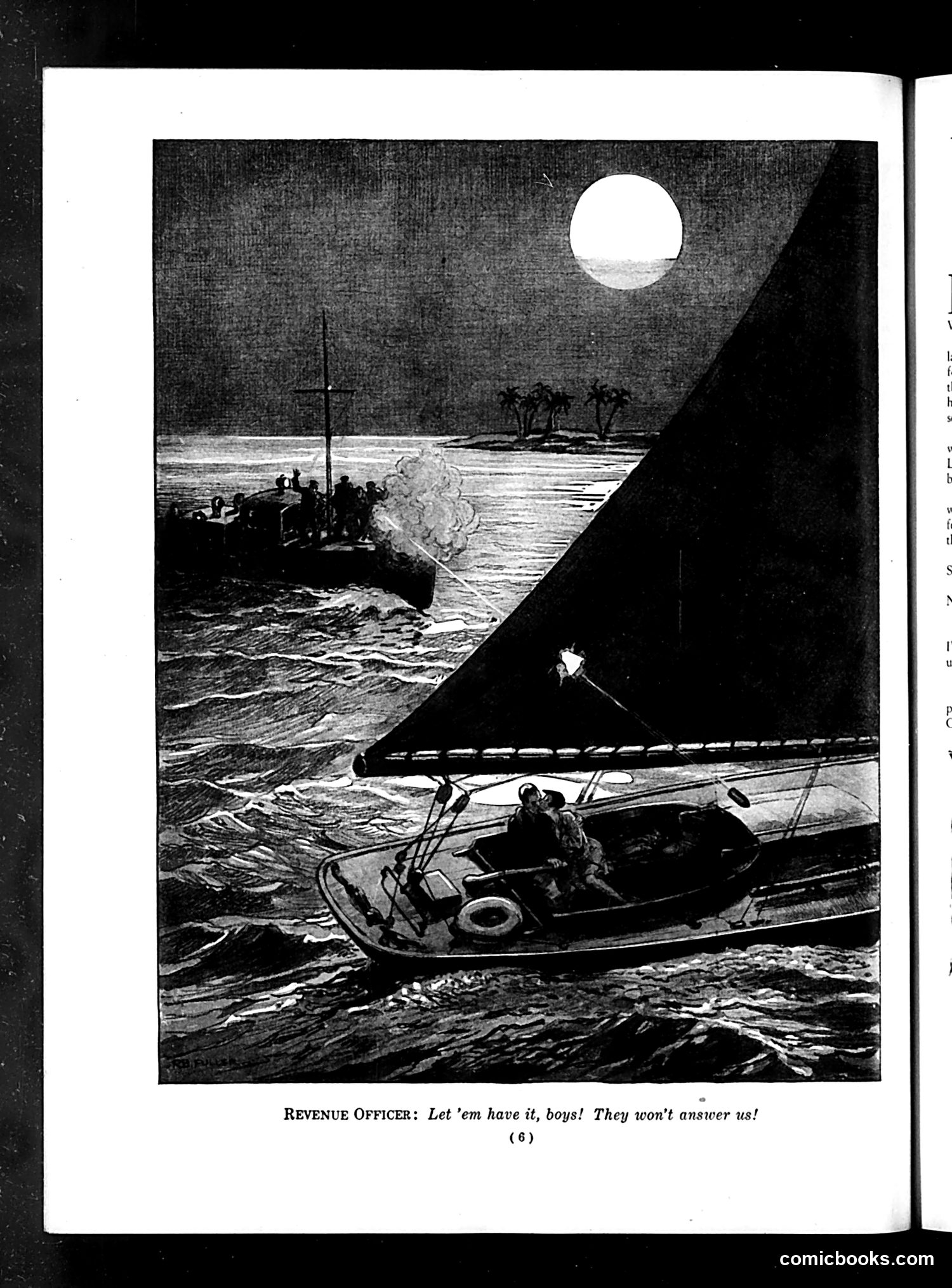
# Political Context This illustration depicts a naval military scene with a satirical caption. The image shows a small boat in the foreground (in silhouette) near a larger vessel, with moonlight illuminating a distant shoreline where palm trees are visible and another ship appears to be under fire or explosion. The caption reads: "REVENUE OFFICER: 'Let 'em have it, boys! They won't answer us!'" This appears to be satirizing enforcement efforts—likely depicting revenue officers or coast guard pursuing smugglers or illegal traders who refuse to respond to official hails. The dramatic nighttime setting and military action suggest commentary on Prohibition-era smuggling or customs enforcement, common satirical subjects in Life magazine during the 1920s-1930s. The humor lies in the aggressive pursuit of those evading revenue laws.
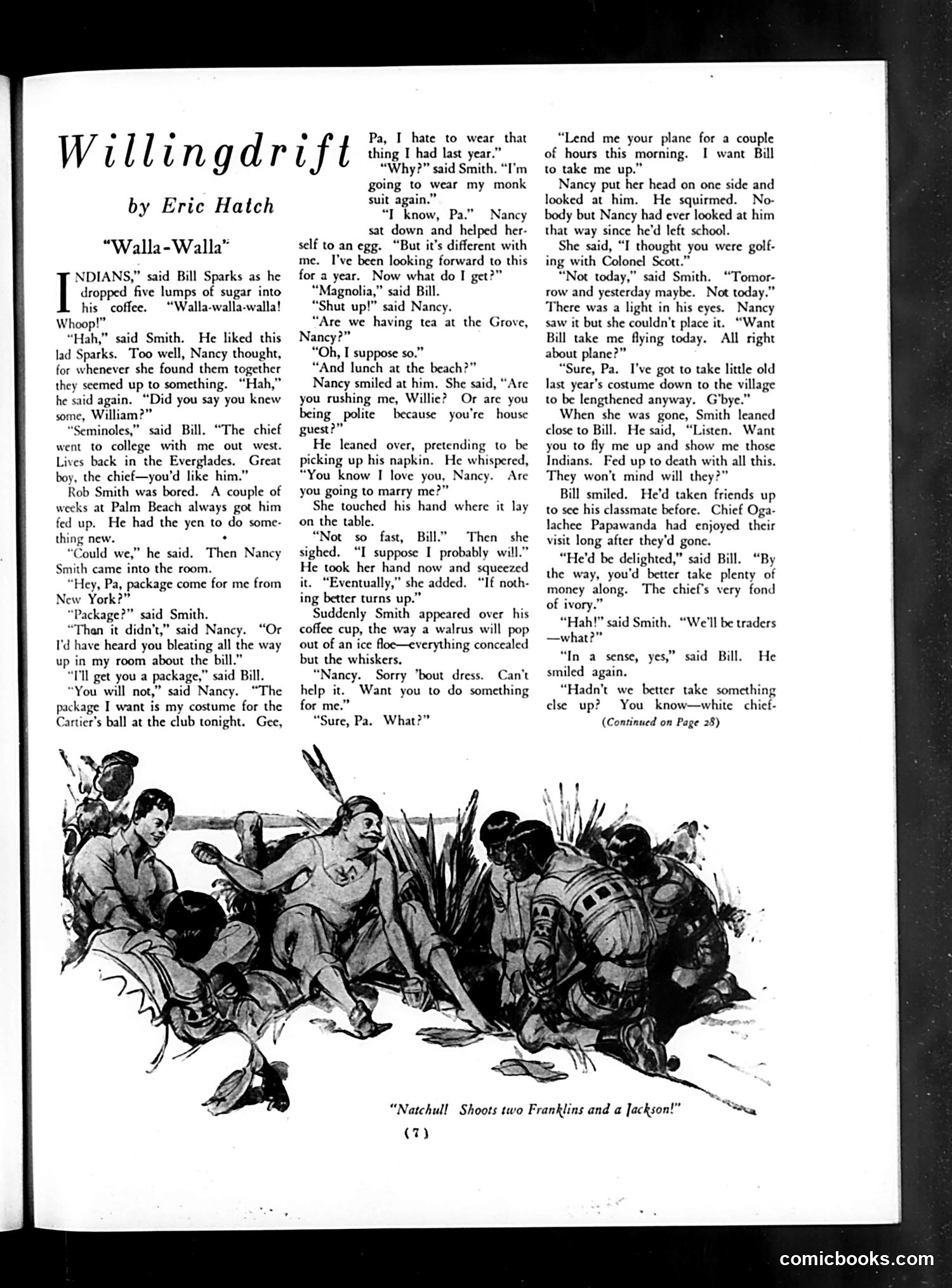
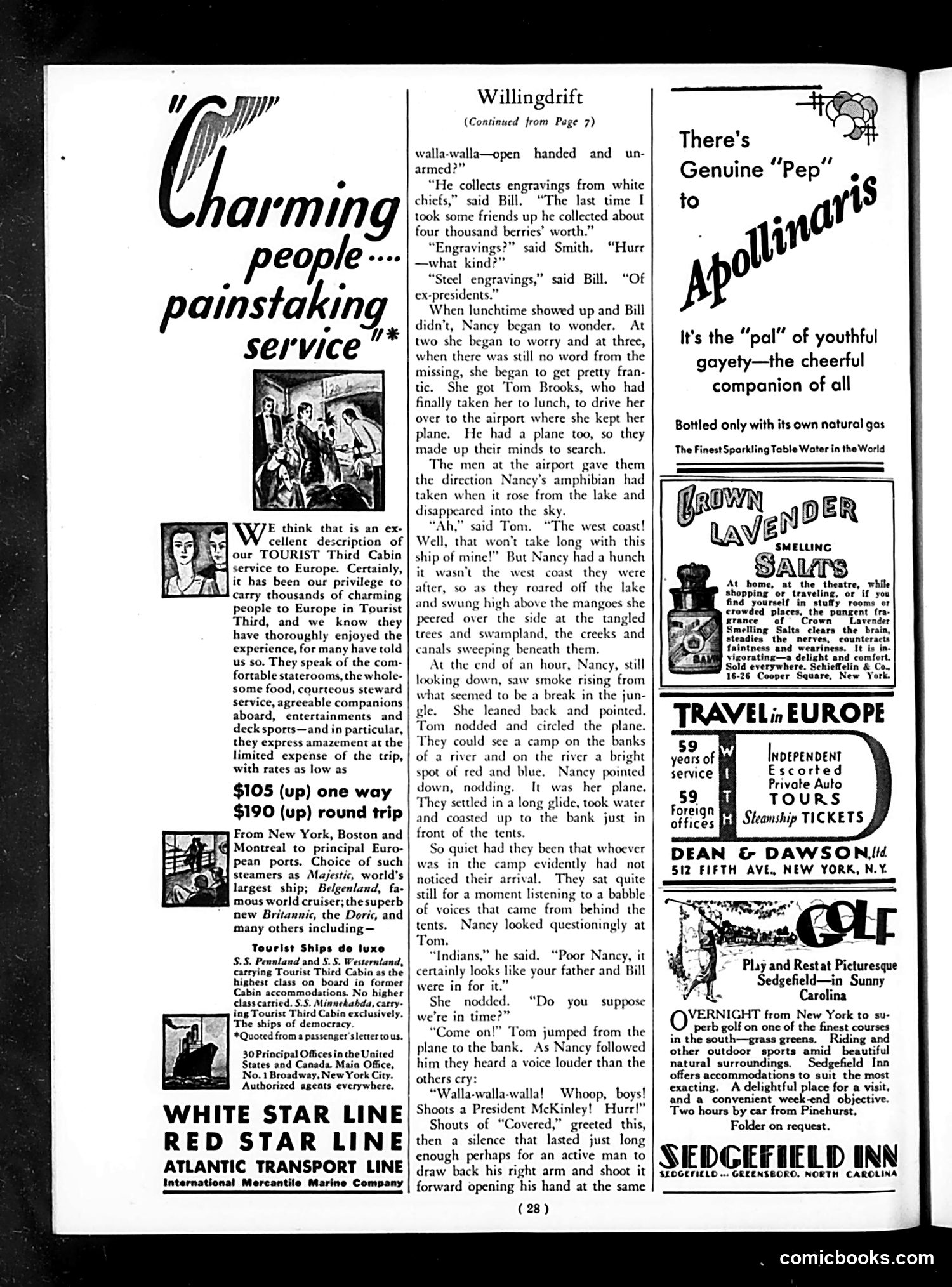
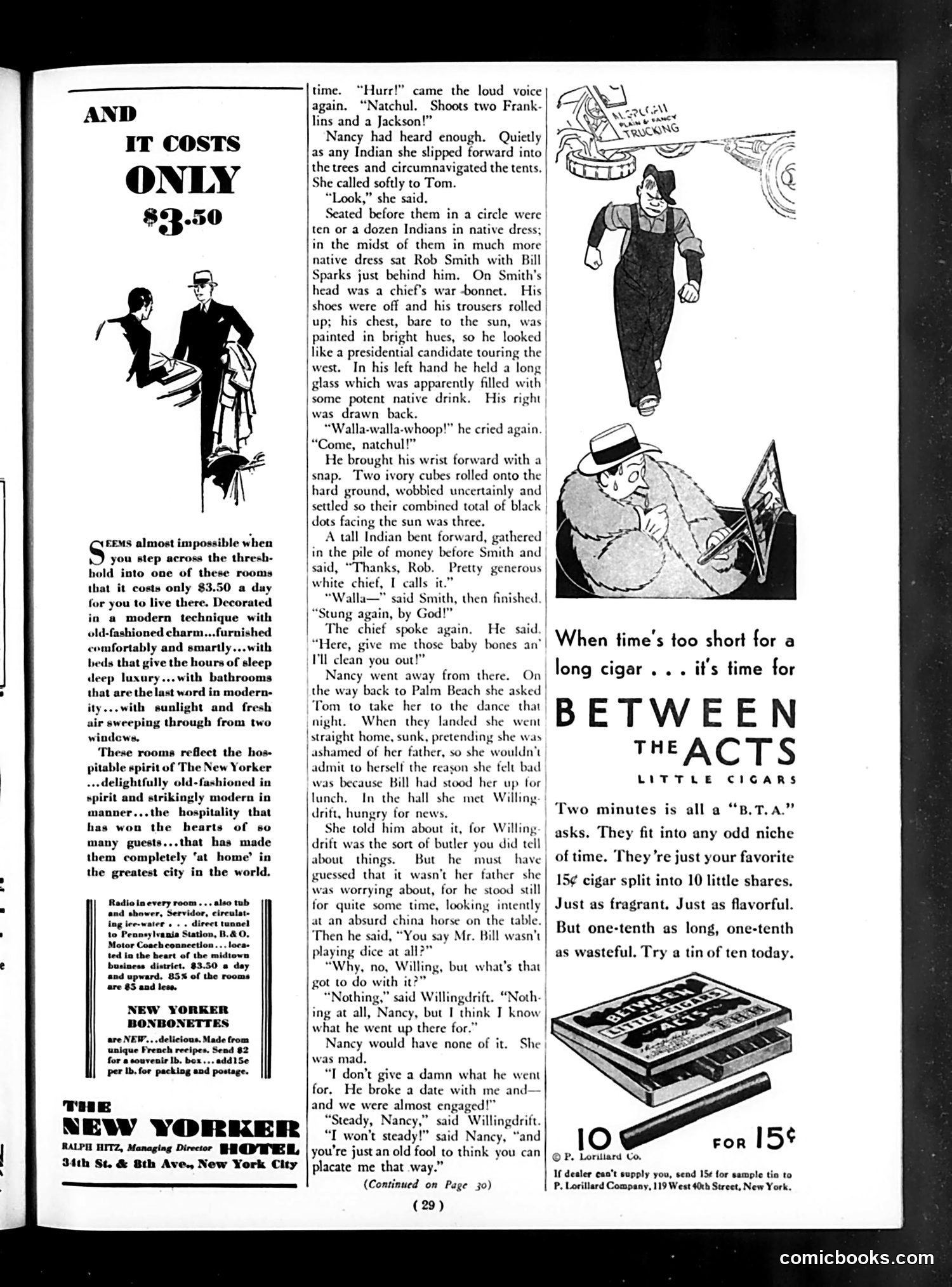
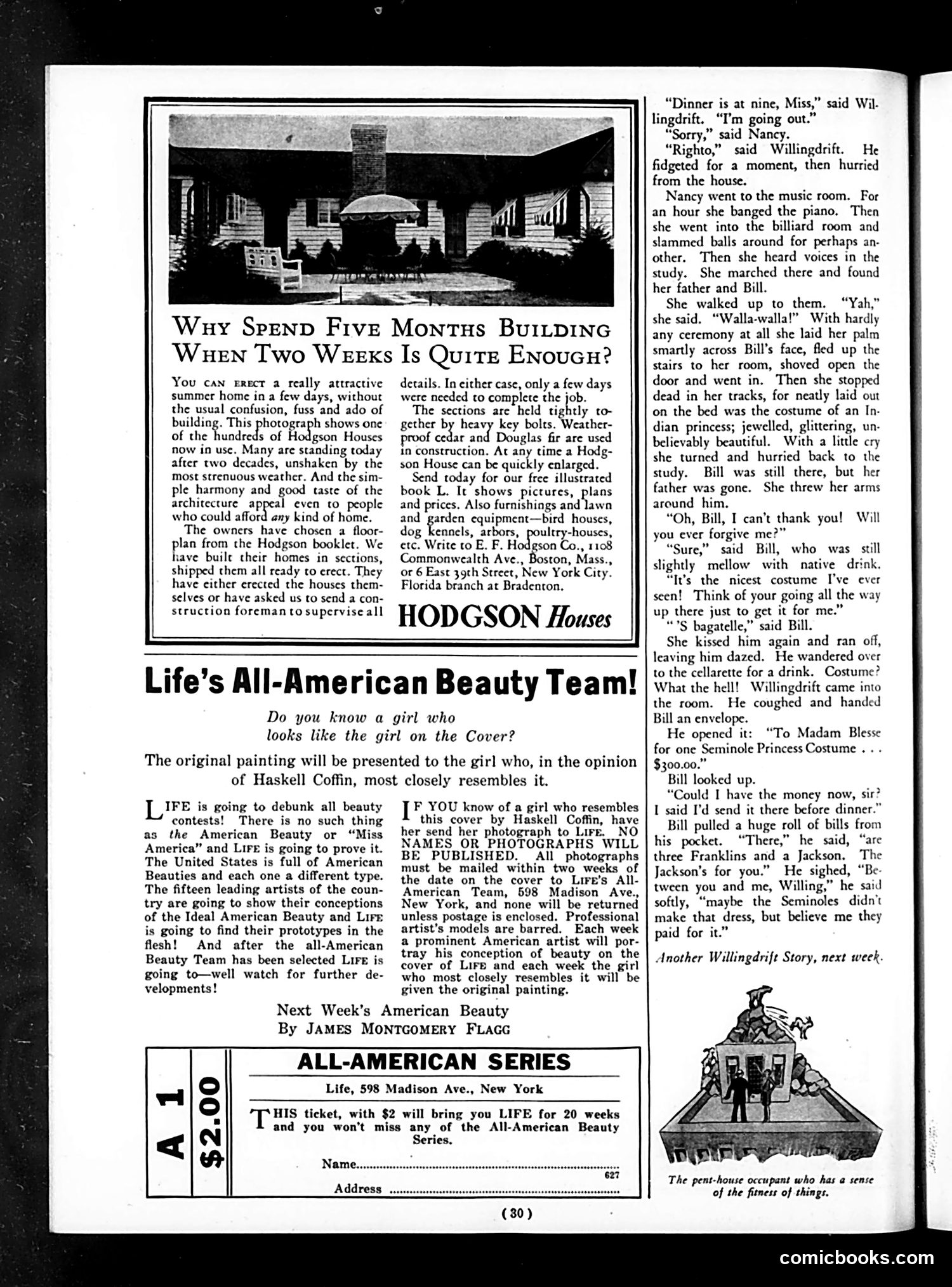
# "Willingdrift" by Eric Hatch This page contains the opening of a short story rather than political satire. The narrative follows Bill Smith and his wife Nancy, who are planning social activities—a costume ball, tea at the Grove, and a beach lunch. Bill wants to borrow Nancy's plane to impress visiting Native American chief Ogalathe and show him local Indian sites. The illustration at bottom depicts what appears to be Native Americans in traditional dress (feathered headdresses visible), captioned "Nutchull Shoots two Franklins and a Jacknot!" The story exemplifies early 20th-century American attitudes toward Native Americans as exotic curiosities for entertainment and display—treating them as tourist attractions rather than as people.
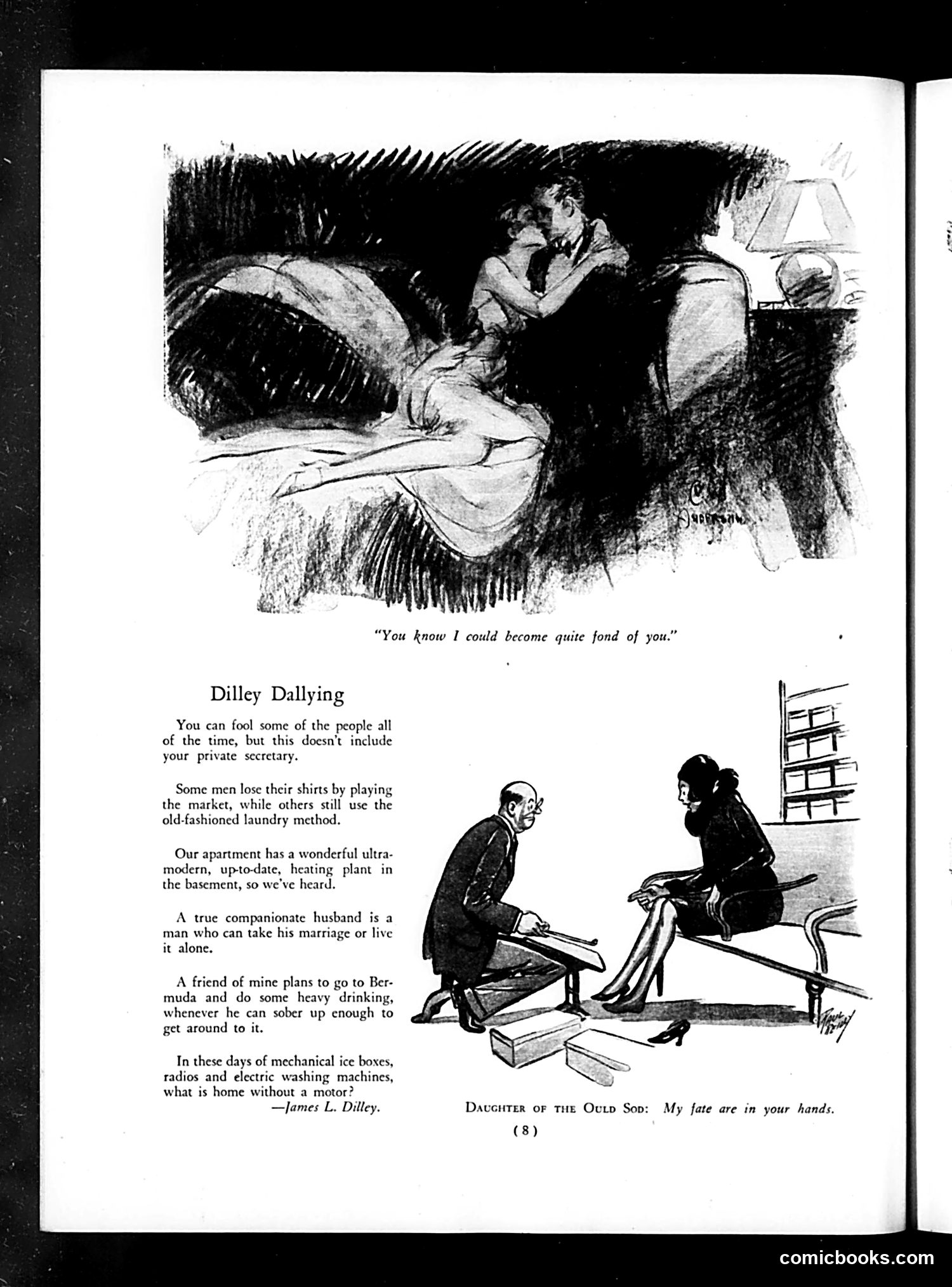
# "Dilley Dallying" - Life Magazine Satire This page contains a satirical piece by James L. Dilley critiquing modern marriage and domestic life. The top illustration shows an intimate bedroom scene with the caption "You know I could become quite fond of you"—sarcastically suggesting emotional connection in marriage. The text below uses humorous observations about marriage dynamics: men losing money in markets, the importance of heating systems in apartments, and "companionate husbands" who accept their marriages casually. A closing anecdote mocks excessive drinking in Bermuda. The lower cartoon depicts a couple—likely husband and wife—in a contentious domestic moment, with the woman saying "My fate is in your hands," suggesting marital tension or role reversal anxieties. Overall, the satire targets early 20th-century anxieties about modern marriage, domestic technology, and shifting gender relations.
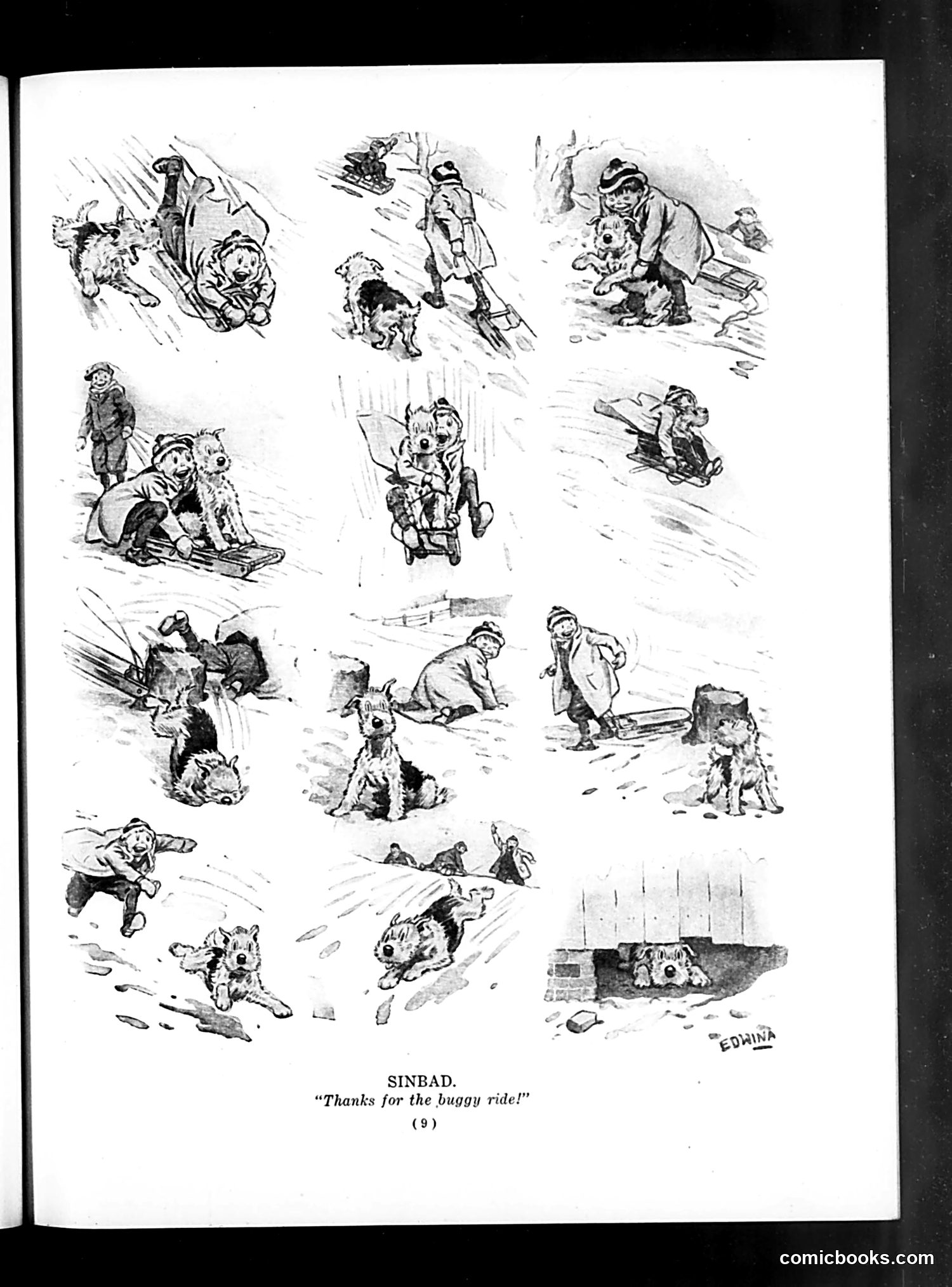
# Sinbad: "Thanks for the buggy ride!" This is a humorous strip of sketches depicting Sinbad the Sailor—the famous character from Arabian folklore—experiencing various mishaps and adventures involving a dog-drawn buggy or cart. The cartoon shows sequential vignettes of slapstick comedy: Sinbad tumbling, the dog pulling the cart, collisions, and general chaos. The title's gratitude ("Thanks for the buggy ride!") is clearly ironic—the scenes depict anything *but* a pleasant journey. The strip appears to be satirizing the famous traveler's tales associated with Sinbad's legend by reimagining his adventures in mundane, comedic circumstances. The humor relies on physical comedy and the absurdity of the legendary seafarer reduced to riding in a dog-cart disaster. The artist is signed "EDHNA" (or similar).
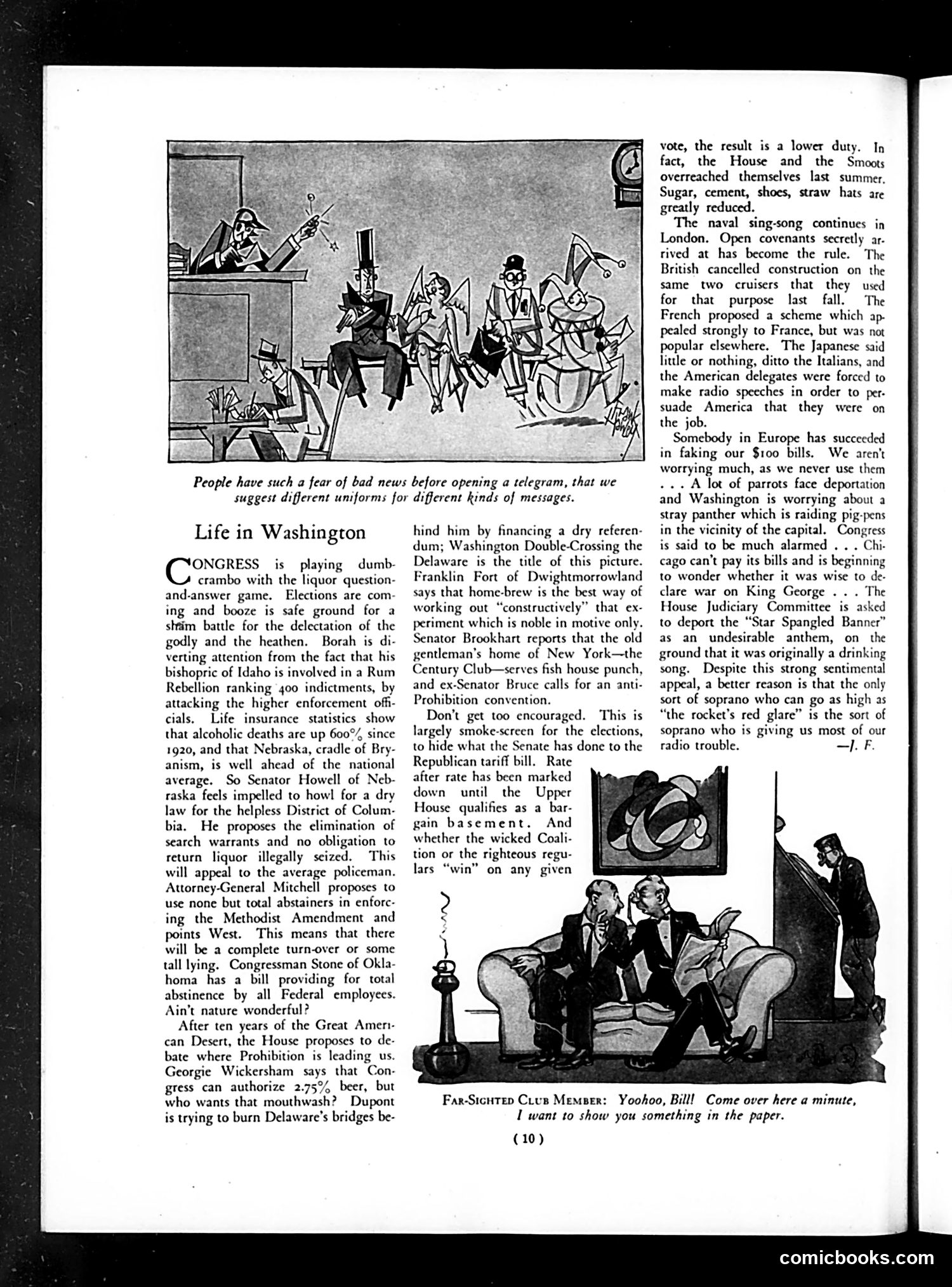
# "Life in Washington" - Political Satire, circa 1920s The top cartoon depicts Congress as chaotic musicians playing discordant instruments—satirizing legislative dysfunction. The article critiques Congressional dysfunction around Prohibition enforcement, tariff debates, and political gridlock. The bottom cartoon shows a "Fax-Sighted Club Member" approaching two men reading a newspaper, wanting to share information. The caption's joke plays on "fax-sighted" (inability to see facts clearly), mocking club members who mishear or misunderstand news. The broader article mocks Congressional hypocrisy: members debate Prohibition while some propose legalizing beer; they argue over tariffs; and leadership appears more concerned with political theater than governance. References to Senator Brookhart and various proposals suggest early 1920s legislative debates. The satire targets Washington's apparent incompetence and contradictions.