A complete issue · 36 pages · 1930
Life — February 7, 1930
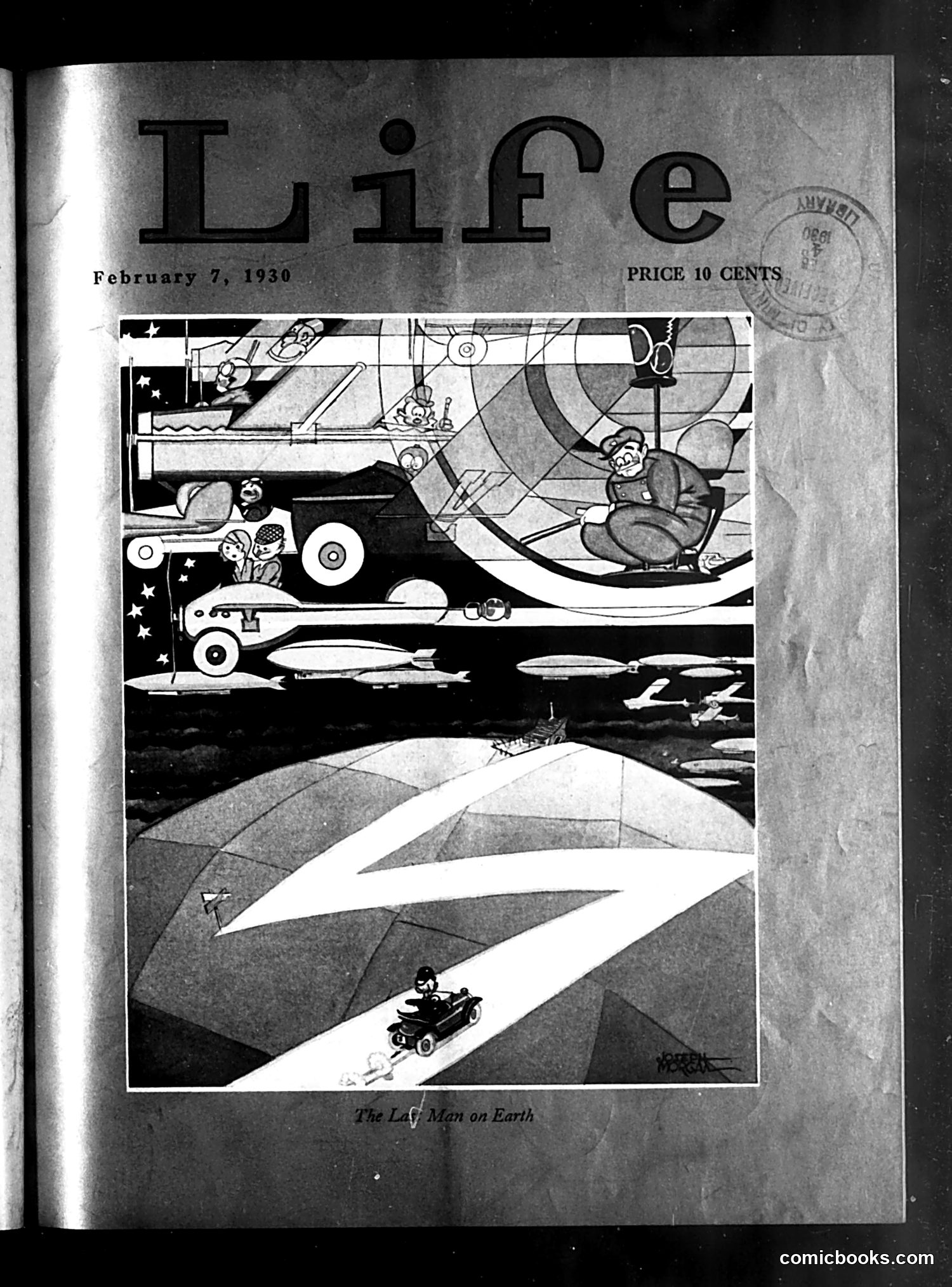
# "The Last Man on Earth" This February 1930 cartoon depicts a futuristic dystopian scenario where only one man remains on Earth. The illustration shows him navigating an abandoned landscape with robotic or mechanical beings, flying vehicles, and industrial infrastructure above. The satire likely reflects 1930s anxieties about technological advancement, mechanization, and social change during the Great Depression era. The "last man" concept suggests fears that modernization and industrialization might eliminate humanity or render individual humans obsolete. The crowded upper panels showing bustling automated activity contrast sharply with the lonely figure below, emphasizing isolation amid technological progress. This represents period concerns about whether rapid technological change would ultimately benefit or destroy human civilization—a recurring theme in early 20th-century satirical magazines.
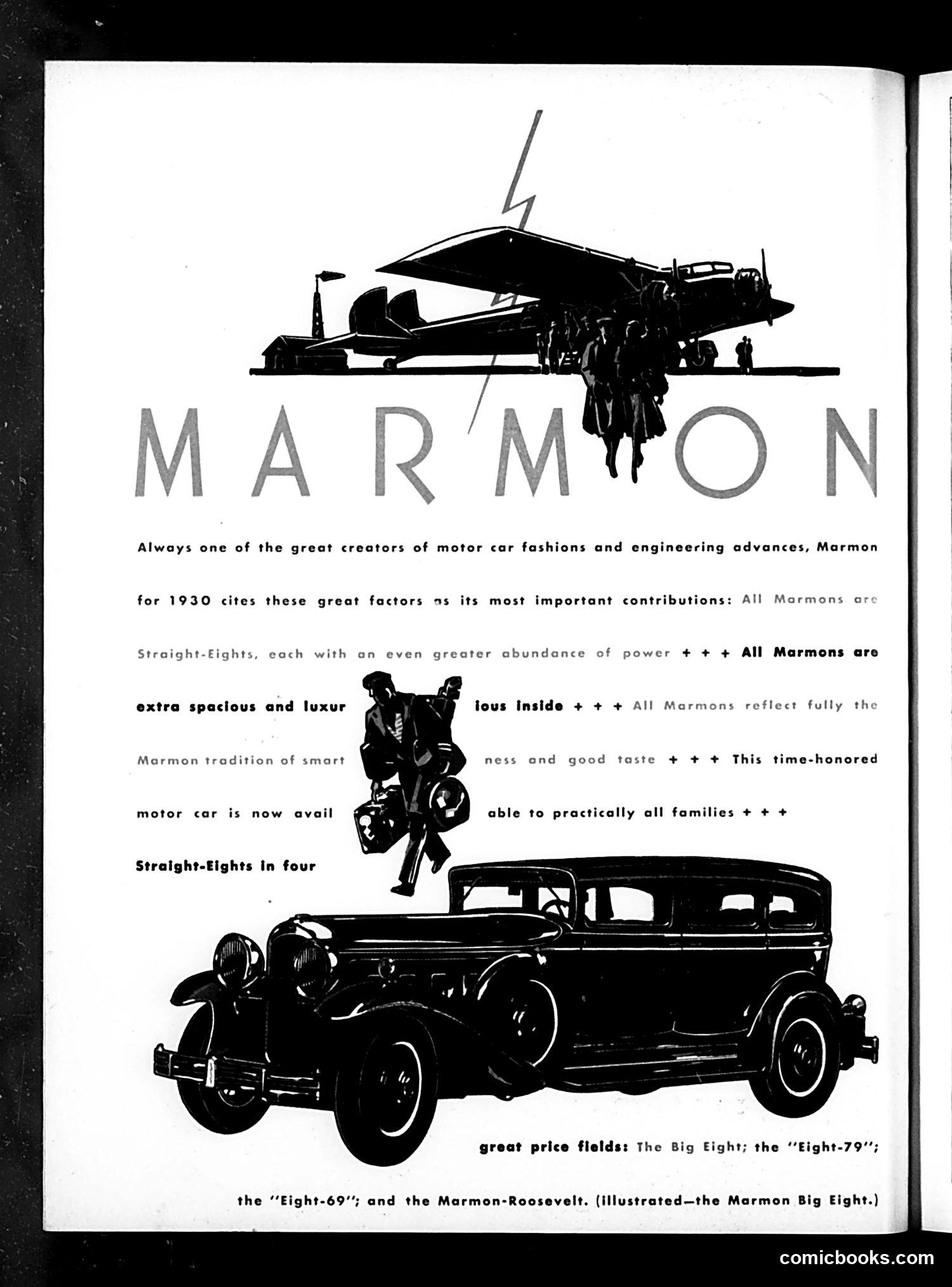
# Analysis This is **not a political cartoon or satire** — it's a **straightforward advertisement for Marmon automobiles** from 1930. The page promotes Marmon's 1930 car lineup, emphasizing their "Straight-Eight" engines with abundant power. Key selling points include luxury, spaciousness, and affordability ("available to practically all families"). The imagery shows a Marmon sedan and features a stylized airplane at the top, likely evoking modernity and engineering prowess — suggesting Marmon cars embody cutting-edge technology comparable to aviation advances. The ad names specific models: the Big Eight, Eight-79, Eight-69, and Marmon-Roosevelt. There is no satire present; this is earnest promotional content from the pre-Depression automotive market.
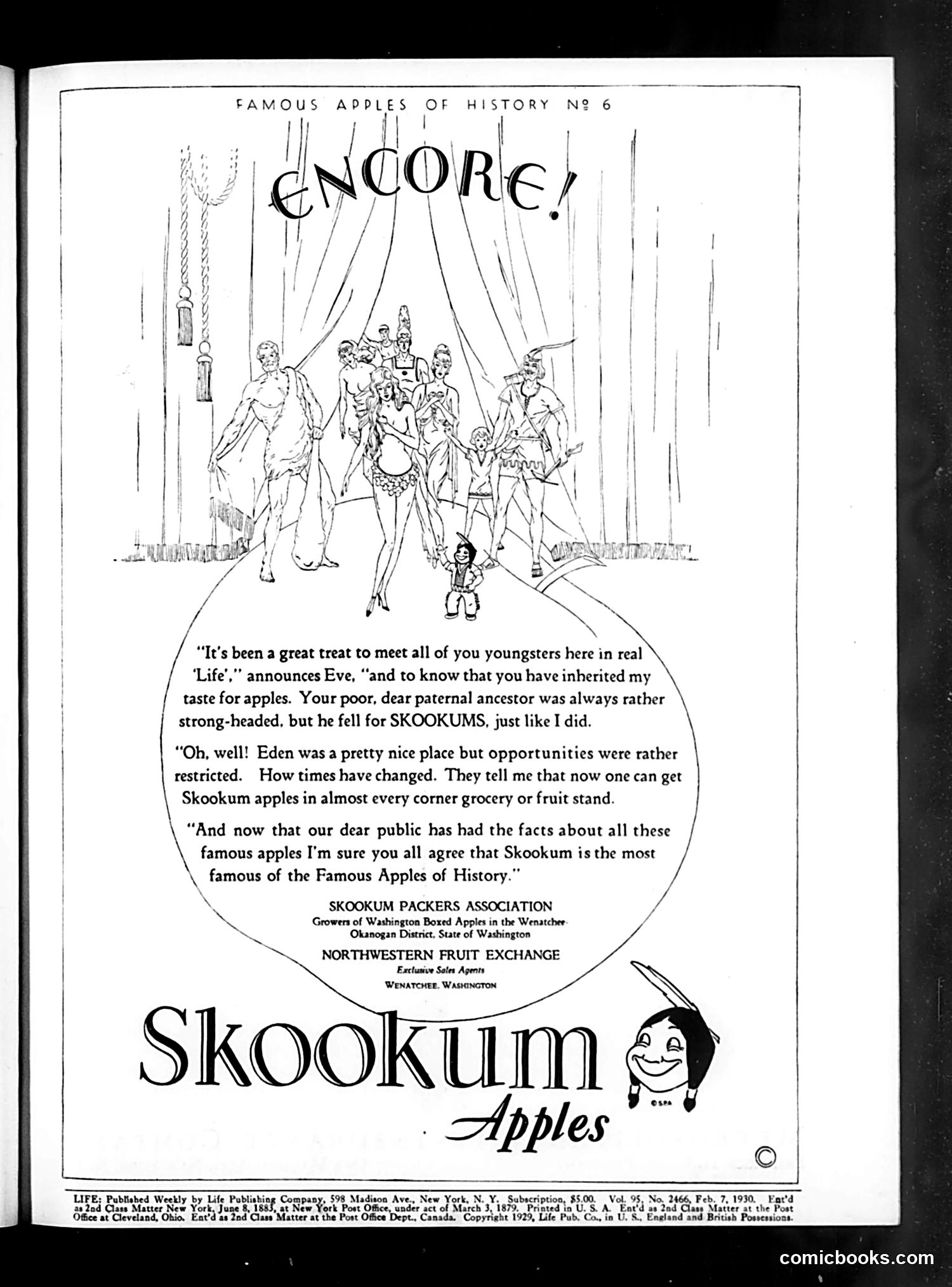
# Analysis This is primarily an **advertisement disguised as satirical content** from Life magazine (February 7, 1928). The page presents "Famous Apples of History No. 6" and features Eve from the Biblical Garden of Eden meeting modern descendants who've "inherited her taste for apples." Eve acknowledges that while Eden offered limited opportunities, modern grocers now stock Skookum apples everywhere—positioning the product as progress. The satire is gentle: it humorously compares commercial apple availability to humanity's evolution from paradise. The "Famous Apples" series appears to use historical/mythological figures to frame Skookum apples as culturally significant. **The joke:** Modern convenience has surpassed Eden itself. This is marketing wrapped in classical mythology, appealing to 1920s readers' appreciation for both wit and product promotion.
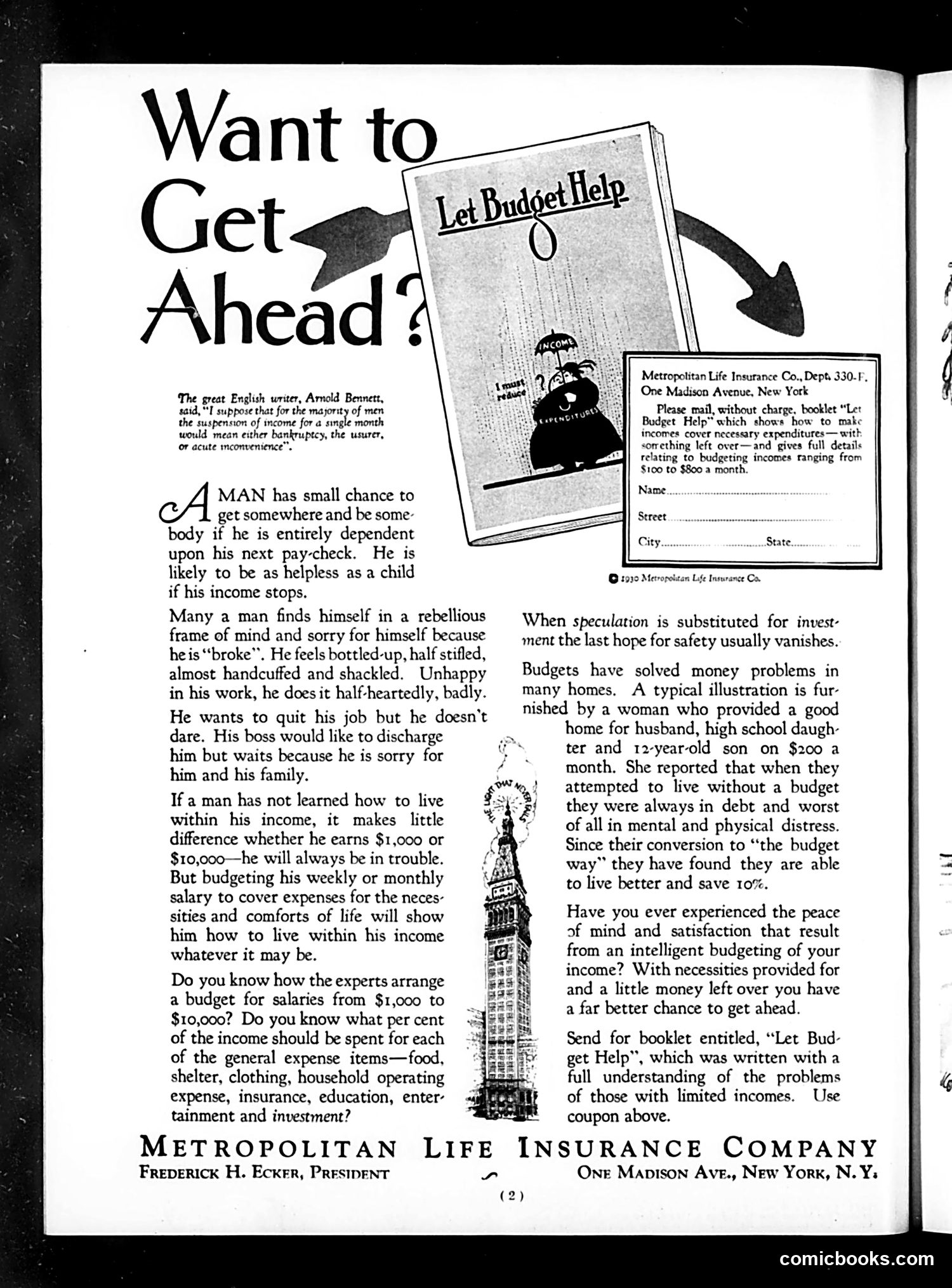
# Analysis This page is primarily **advertising**, not satire. Metropolitan Life Insurance Company presents a sponsored article promoting personal budgeting as a solution to financial instability. The content argues that men dependent on paychecks lack security and peace of mind. The advertisement promotes "Let Budget Help," a free booklet claiming to teach readers how to allocate income across necessities (food, shelter, clothing, insurance, education, entertainment, investment). A anecdote describes a family of four living on $200/month who found budgeting relieved "mental and physical distress." The page uses Arnold Bennett's epigraph about income management to lend credibility. The embedded coupon allows readers to request the booklet from Metropolitan Life's New York office. This represents early 20th-century corporate public relations—positioning insurance companies as benevolent educators addressing working-class financial anxiety.
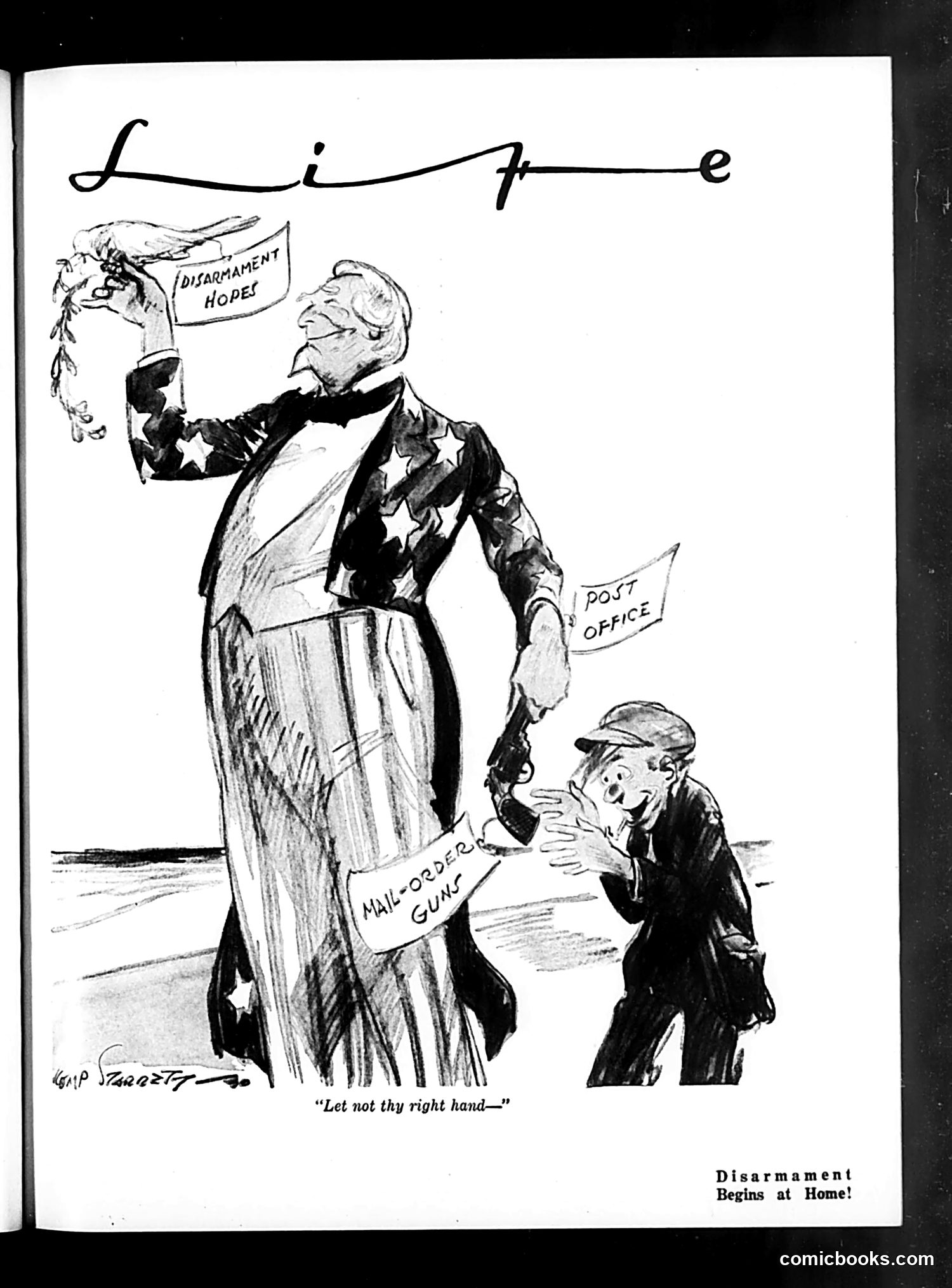
# Political Cartoon Analysis: "Life" Magazine This cartoon satirizes American disarmament policy, likely from the 1920s-30s era. Lady Liberty (representing America) holds a banner reading "Disarmament Hopes" while discarding wilted flowers. She displays a "Post Office" sign and carries a "Mail Order Guide," suggesting America's commercial interests. A small figure (possibly representing a concerned citizen or another nation) reaches toward her, captioned "Let not thy right hand—," referencing the Biblical phrase about concealing charitable acts. The satire suggests America publicly advocates disarmament while privately pursuing commercial gain and postal expansion—the right hand doesn't know what the left is doing. The "Disarmament Begins at Home!" footer implies American hypocrisy about peace while maintaining other priorities.
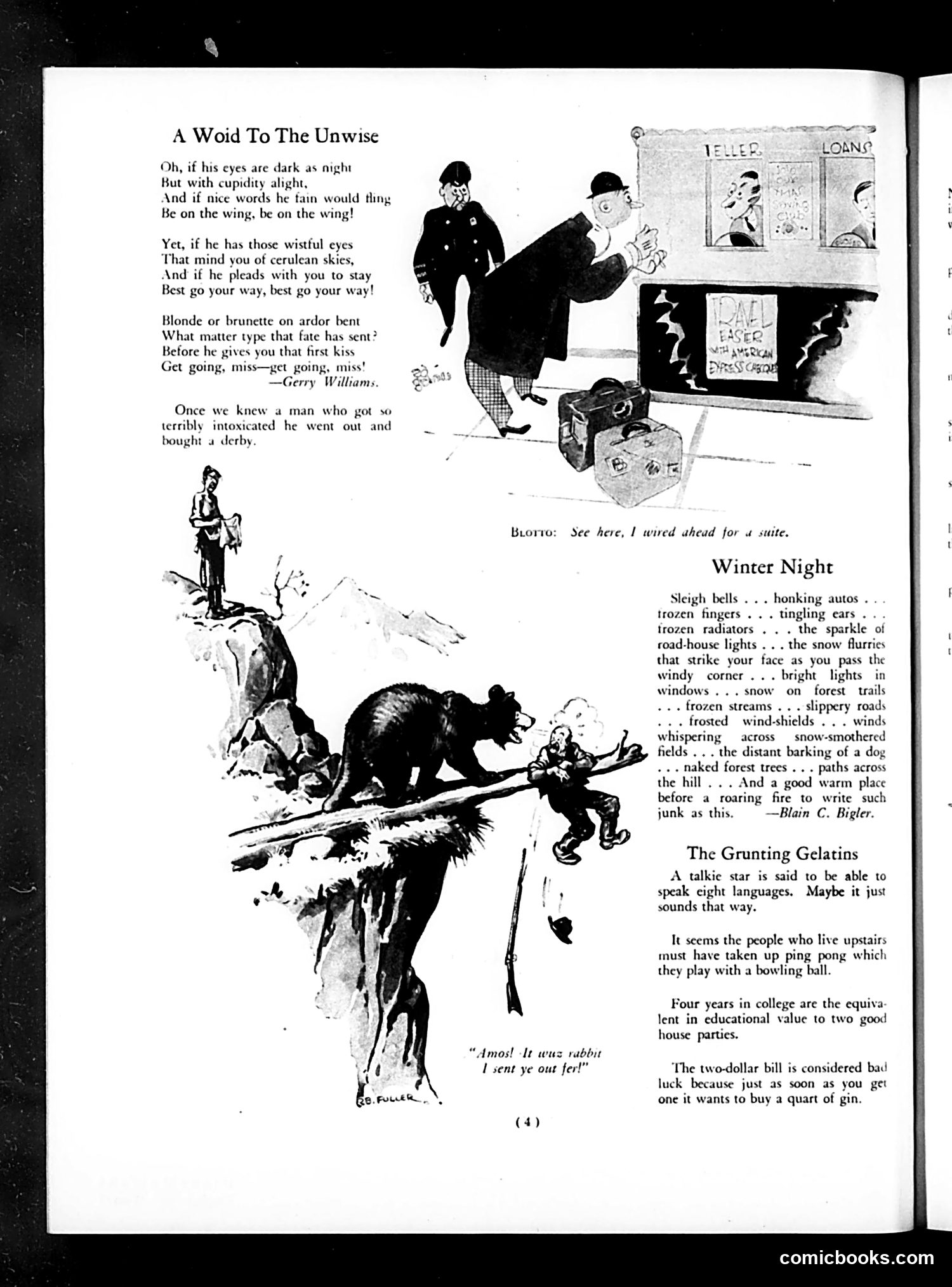
# Analysis of Life Magazine Page This page contains three separate pieces of humor and satire: **"A Word to the Unwise"** (top): A poem about romantic advice, with an accompanying cartoon showing a man at a "Money Lender" office with suitcases, apparently having borrowed money for romantic pursuits. The satire mocks impulsive young men who spend recklessly on women. **"Winter Night"** (right): A poetic description of winter imagery by Blain C. Bigler—straightforward literary content, not satirical. **"The Grunting Gelatins"** (bottom right): A humorous piece mocking wealthy people ("upstairs" residents) for playing ping-pong loudly, and making sardonic comments about college parties and cheap dates. It's lighthearted social satire about class differences and social customs. The bottom illustration depicts a bear and hunter in a wilderness scene with the caption "Amos! It wuz rabbit I sent ye out fer!"—a humorous country/rural joke about mistaken identity.
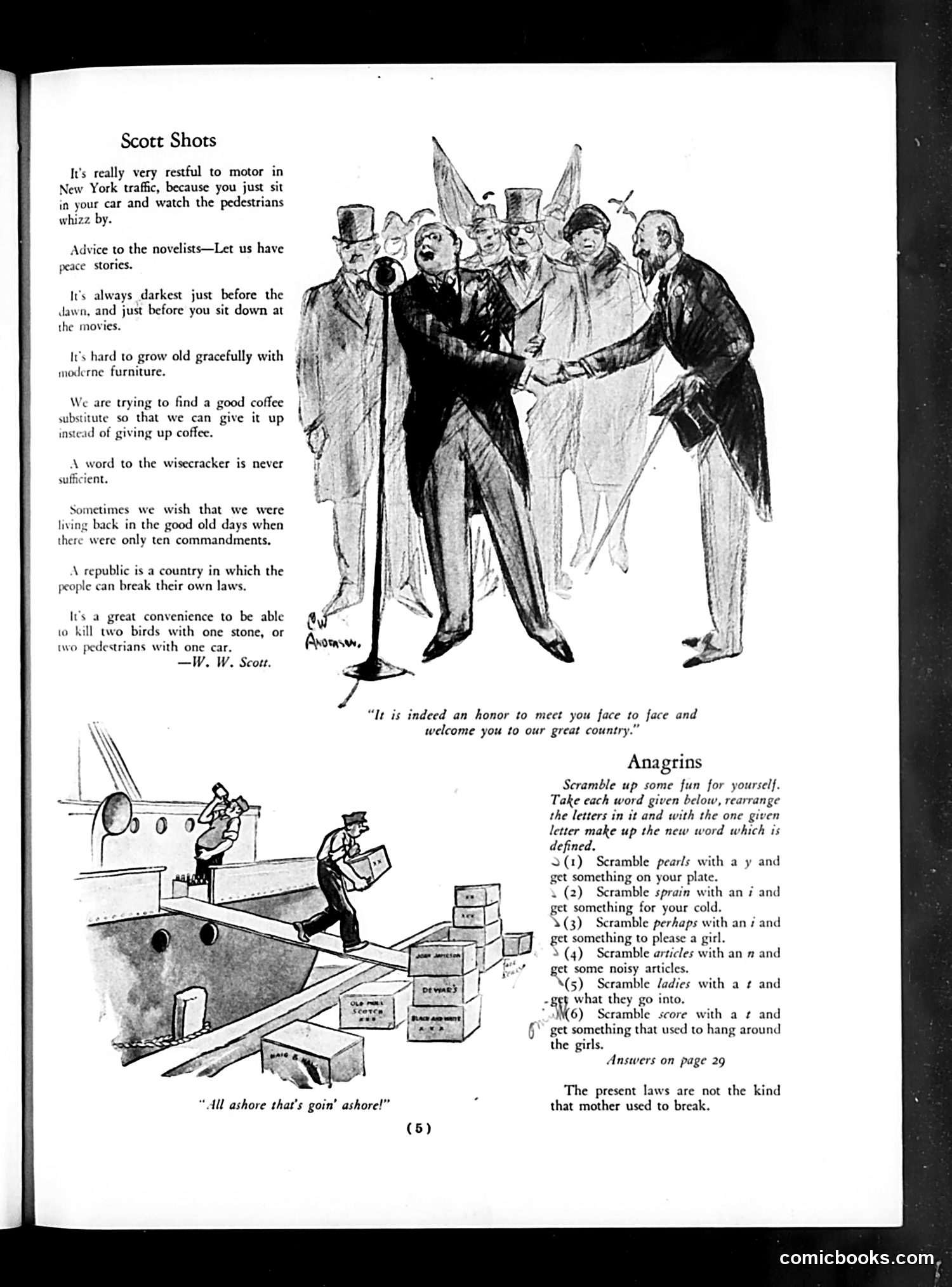
# Scott Shots & Anagrins Page Analysis **Scott Shots** (top) presents short satirical observations by W.W. Scott on modern American life. The accompanying cartoon shows men in formal dress and top hats greeting a central figure with exaggerated ceremony—likely depicting diplomatic protocol or political formality. The caption reads: "It is indeed an honor to meet you face to face and welcome you to our great country," suggesting satire of insincere official welcomes or hollow diplomatic courtesies. The observations mock various contemporary issues: traffic congestion, furniture modernization, coffee substitutes (likely wartime rationing), and legal systems. **Anagrins** (bottom) is a word-puzzle game where readers rearrange letters to form new words with defined meanings—a common magazine entertainment feature requiring no topical knowledge to solve.
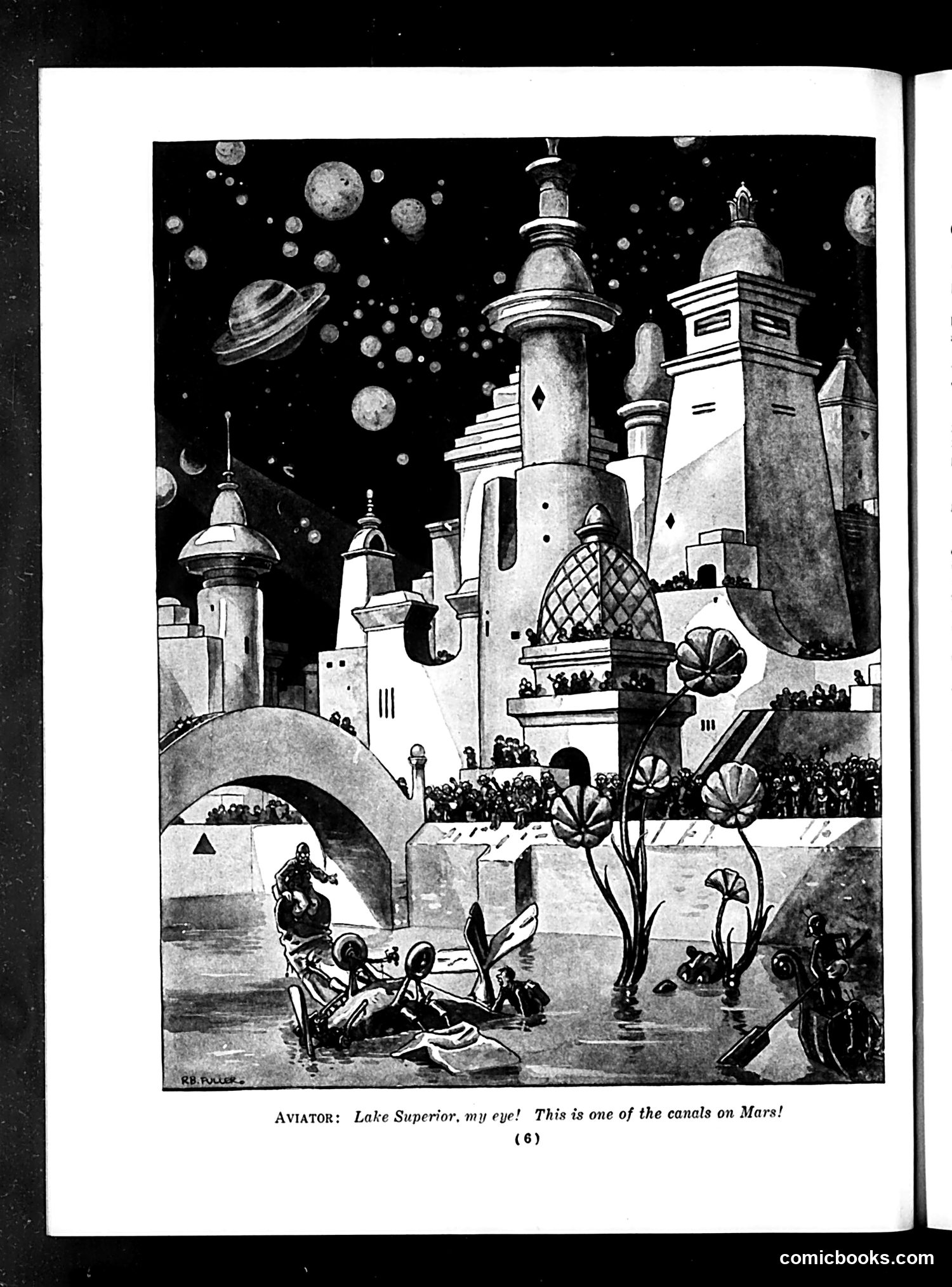
# Analysis This is a science fiction illustration depicting an imaginary Martian city. The caption reads: "AVIATOR: Lake Superior, my eye! This is one of the canals on Mars!" The satire targets contemporary astronomical speculation about Mars. In the early 20th century, astronomers (notably Percival Lowell) claimed to observe "canals" on Mars, theorizing an advanced alien civilization existed there. This illustration humorously imagines what such canals might look like—complete with futuristic architecture, crowds of inhabitants, and alien vegetation. The joke plays on the aviator's skepticism: he's so amazed by this fantastical Martian landscape that he dismissively compares it to Lake Superior, suggesting the canal system is so elaborate it seems impossible, even compared to Earth's massive freshwater lake. The artwork reflects early 20th-century optimism about space exploration and popular fascination with extraterrestrial life.
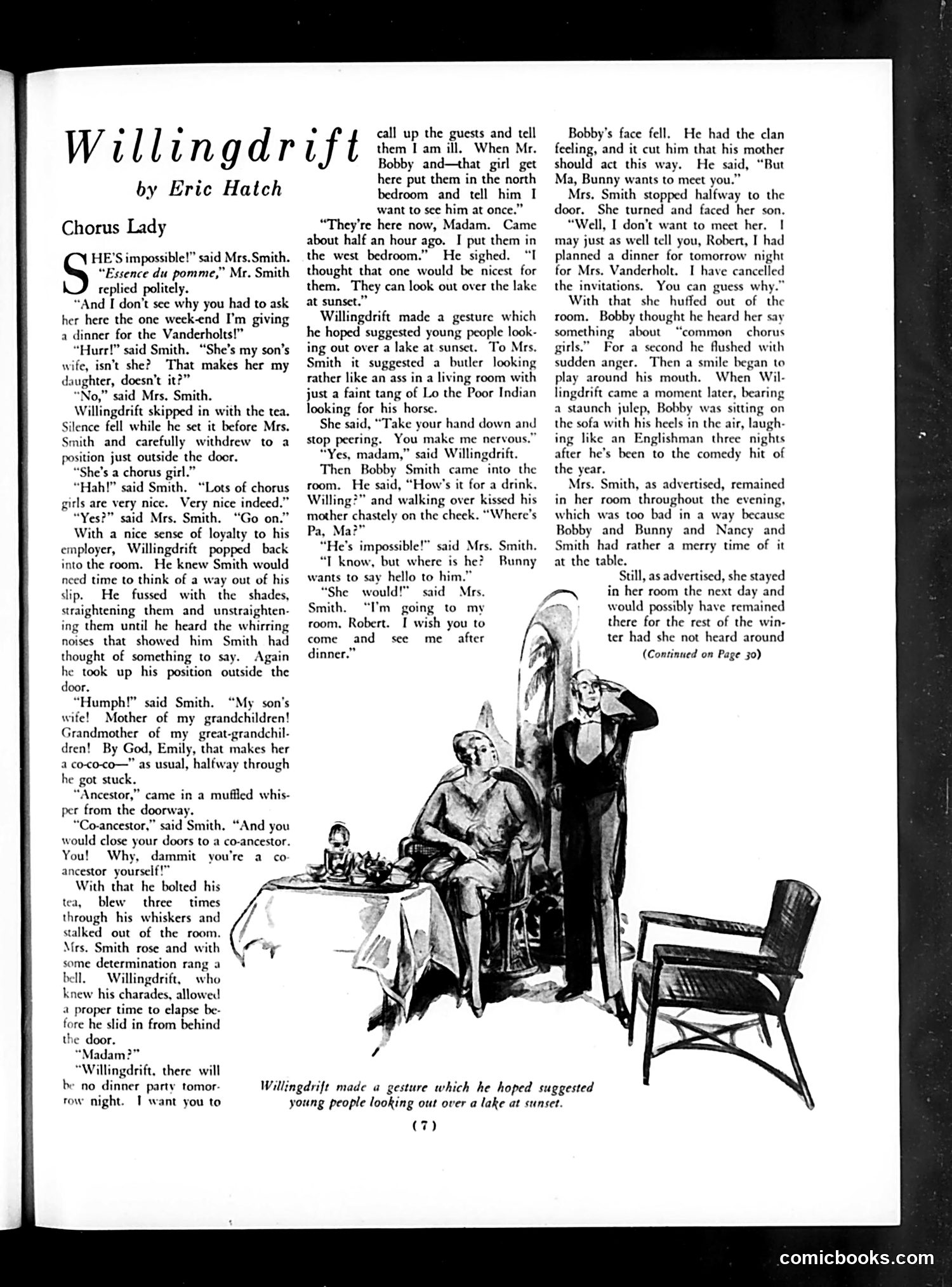
# "Willingdrift" by Eric Hatch This is a fictional short story rather than political satire. The narrative concerns a society hostess (Mrs. Smith) preparing a dinner party for wealthy guests, including people named the Vanderhilts and references to "Bunny," "Bobby," and "Nancy." The accompanying illustration shows three figures in what appears to be a drawing room—two women and a man in formal attire. The story itself focuses on domestic comedy: guest management, social hierarchies, and character interactions typical of upper-class social gatherings. There is no apparent political commentary or identifiable real-world figures being caricatured. This is entertainment fiction for Life magazine's readers, likely appealing through humor about recognizable social situations among the affluent.
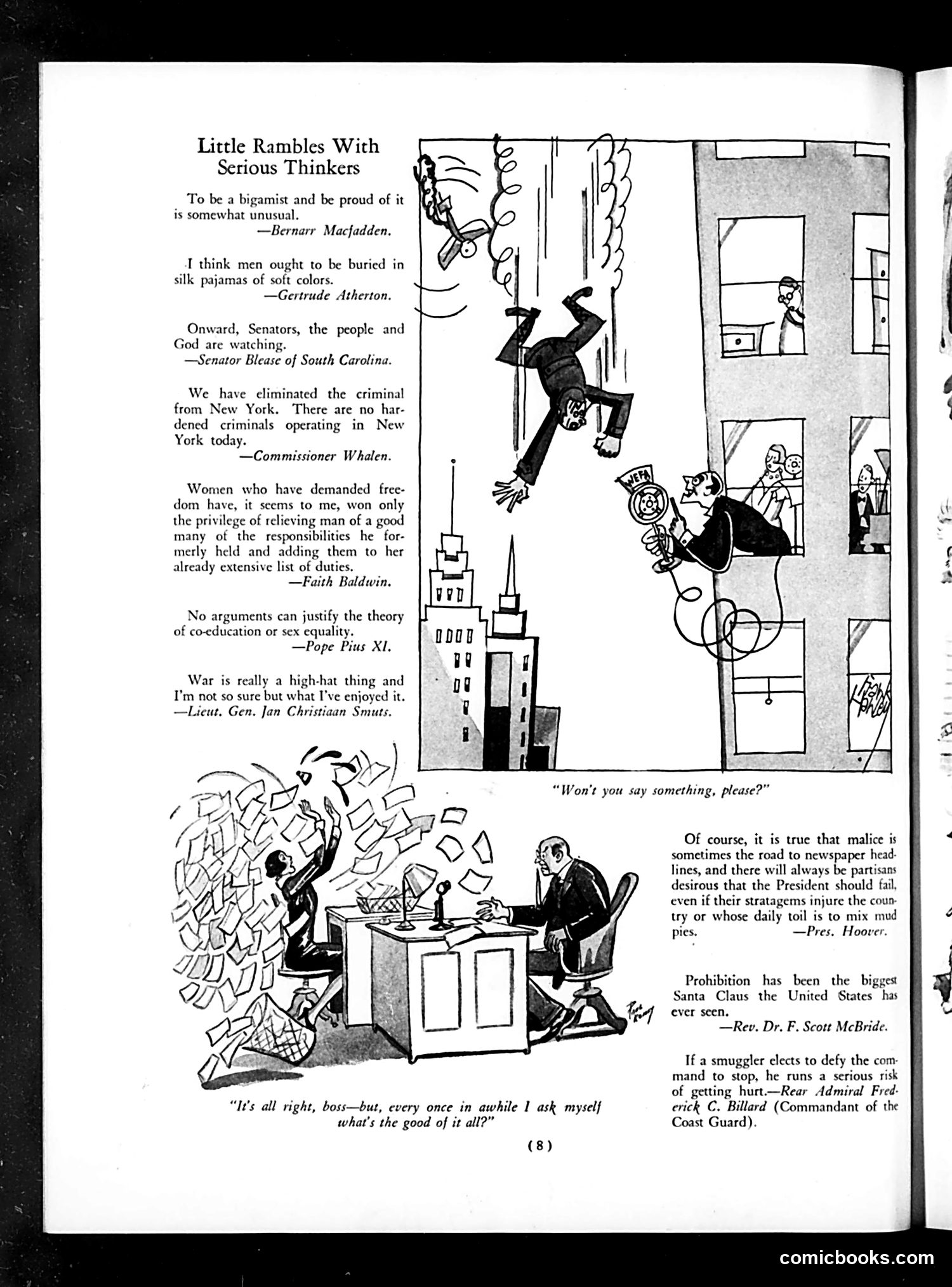
# Analysis of Life Magazine Page 8 This page presents satirical quotes and two political cartoons from what appears to be the Prohibition era (the Rev. Dr. F. Scott McBride quote about Prohibition as "the biggest Santa Claus" dates this roughly to the 1920s-early 1930s). **Top cartoon**: A man falls from a tall building while another man below holds what appears to be a target or shield, asking "Won't you say something, please?" — satirizing bureaucratic inaction during chaos. **Bottom cartoon**: Two men sit at a desk surrounded by stacks of papers, with one asking his boss "It's all right, boss—but, every once in awhile I ask myself what's the good of it all?" — mocking the futility of paperwork-heavy government administration, likely related to Prohibition enforcement's notorious inefficiency and corruption.
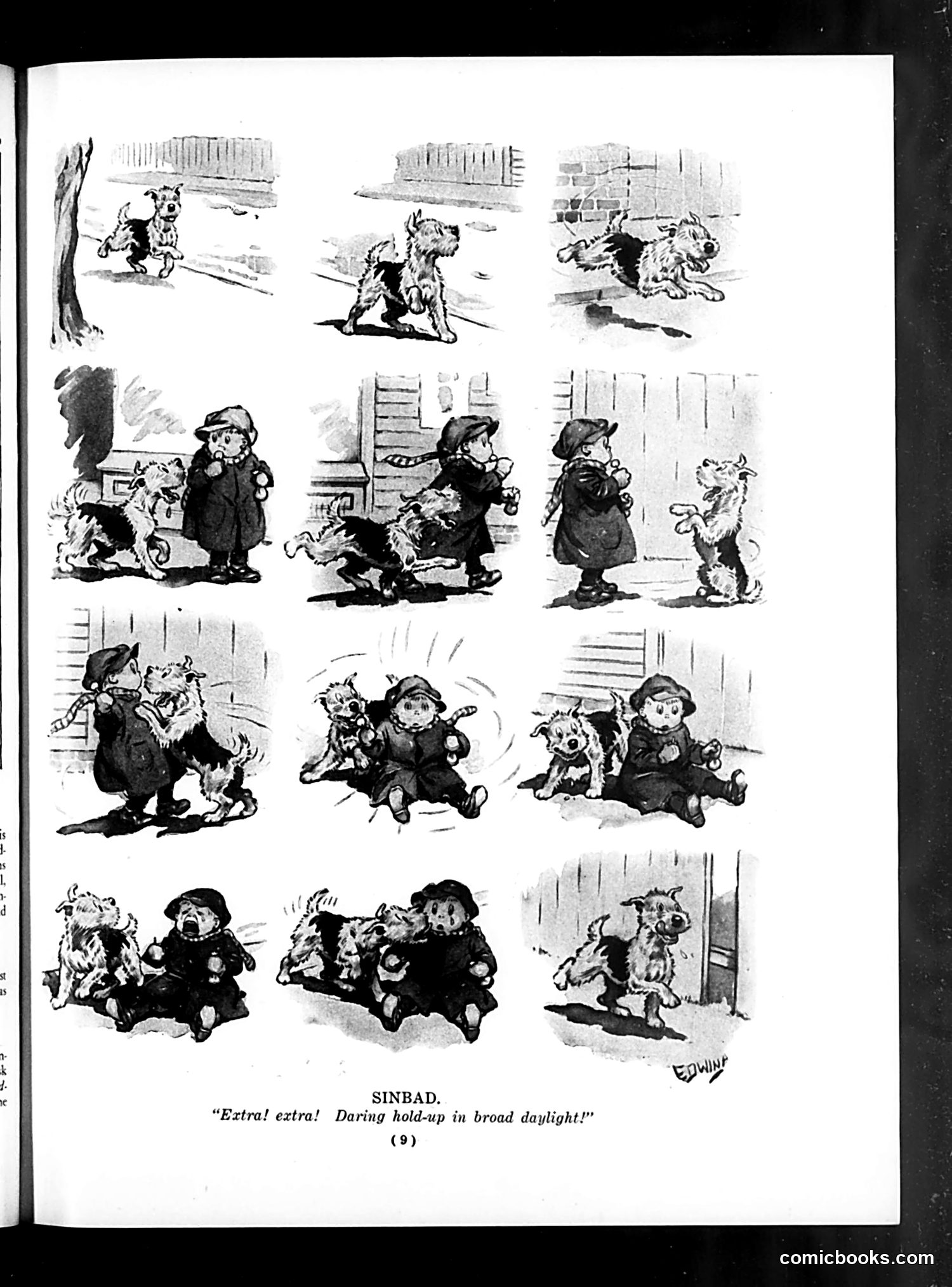
# Sinbad Comic Strip Analysis This appears to be a sequential comic strip titled "SINBAD" showing a narrative about a "daring hold-up in broad daylight." The strip depicts what seems to be a criminal robbery scenario rendered in early 20th-century illustration style. The panels show interactions between what appear to be a criminal character and civilians, progressing through various dramatic moments of confrontation. The cartoonish style and exaggerated expressions suggest satirical or comedic treatment of crime themes popular in period entertainment. Without additional context about the specific date or publication issue, the exact satirical target remains unclear, though the headline's emphasis on "broad daylight" suggests commentary on urban crime or lawlessness as a contemporary social concern worthy of humorous treatment.
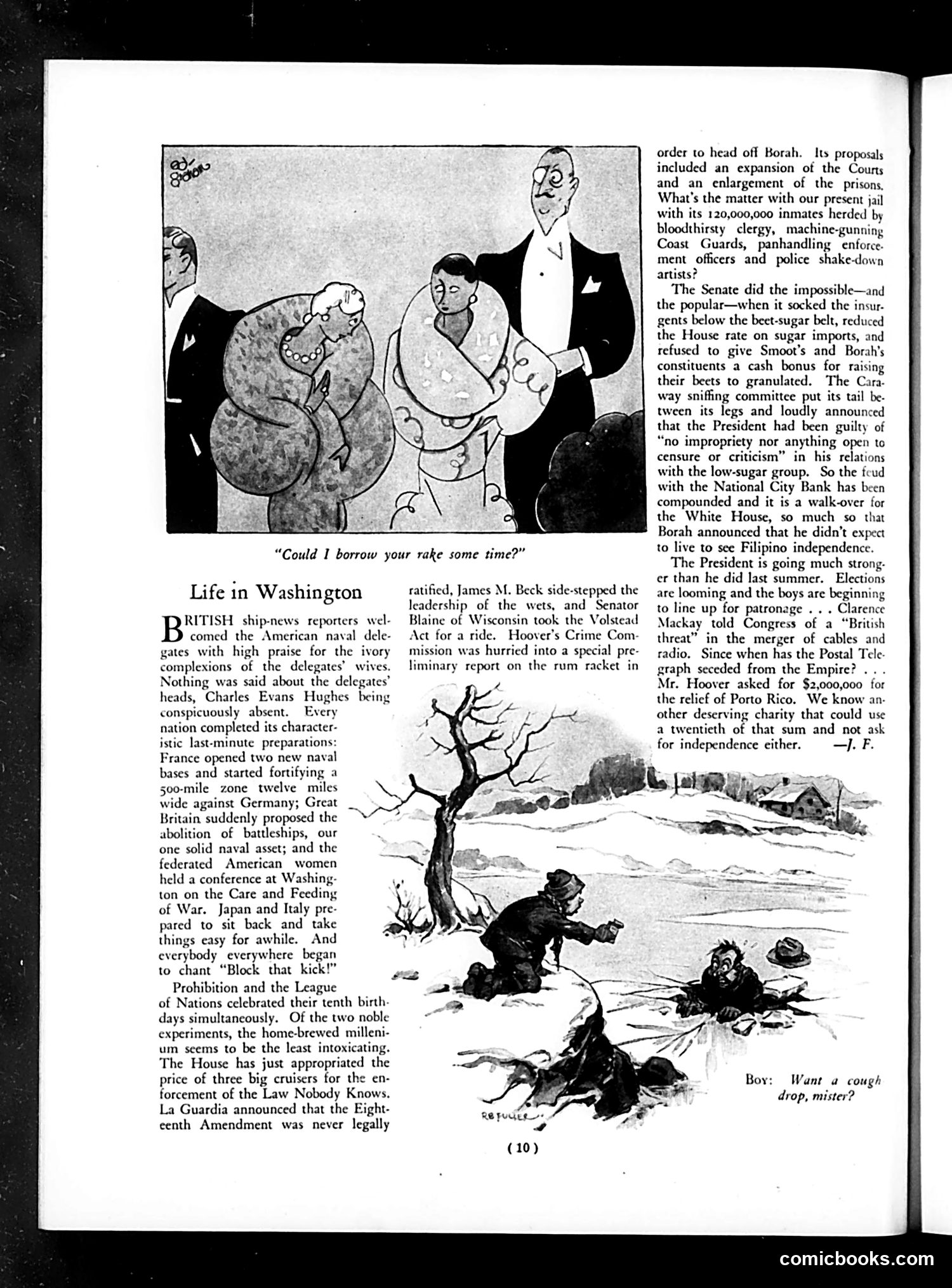
# Political Cartoon Analysis: "Life in Washington" The top cartoon satirizes political corruption and favoritism in Washington. Three portly figures in formal dress (likely politicians or bureaucrats) are shown with distended bellies containing money and valuables. One asks to "borrow your rake some time?"—a crude visual pun suggesting they're literally stuffed with ill-gotten gains they want to redistribute among themselves. The accompanying text discusses legislative absurdities: the Senate blocking sugar import duties, investigations into presidential impropriety, and debates over relief funds for Porto Rico. The bottom sketch shows impoverished citizens during what appears to be winter hardship, contrasting sharply with Washington's self-serving elite. The overall message: while ordinary Americans suffer, Washington politicians gorge themselves on corruption and trivial partisan squabbles.