A complete issue · 36 pages · 1930
Life — January 17, 1930
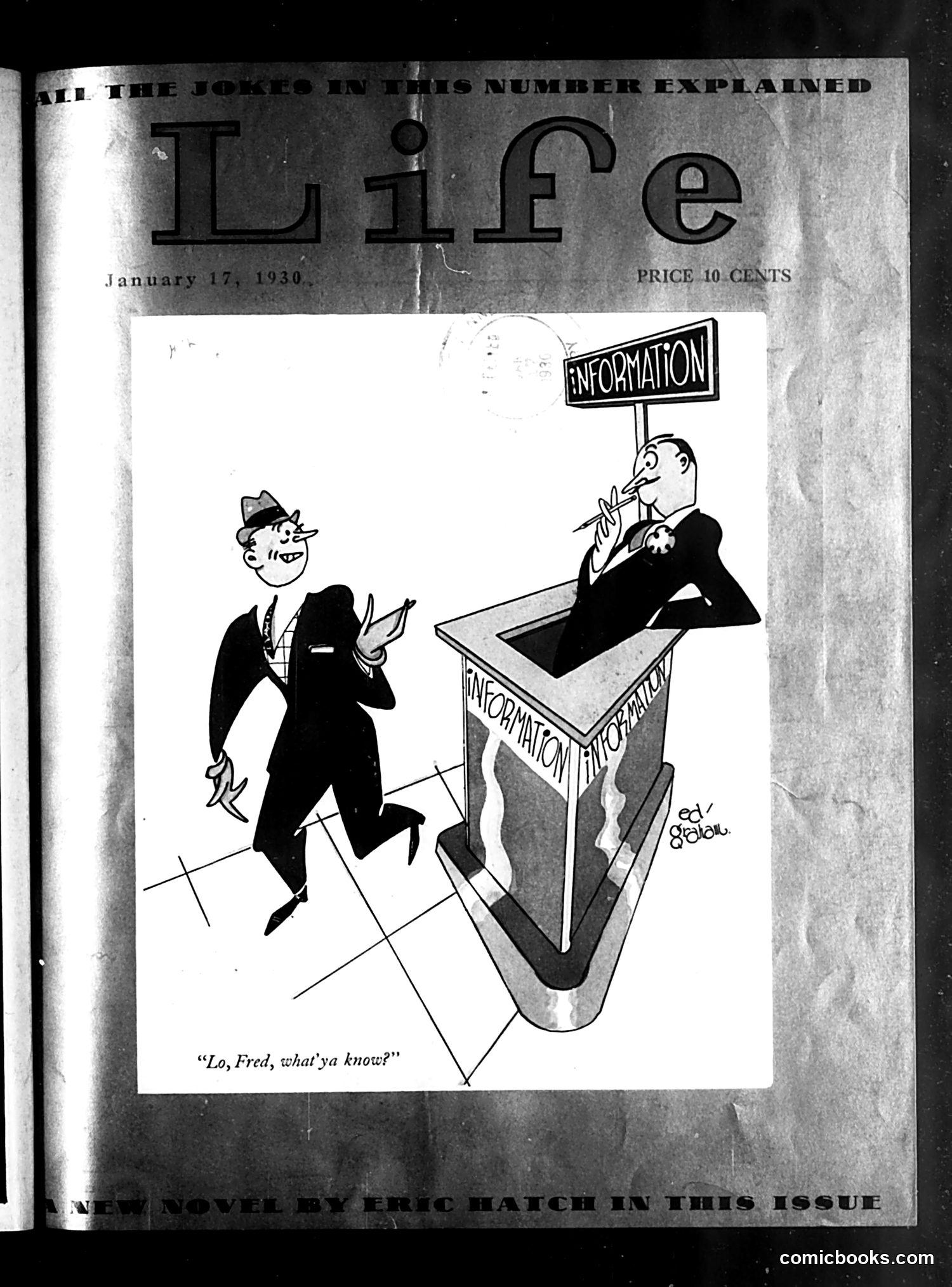
# Analysis of Life Magazine Cover (January 17, 1930) This cartoon satirizes the era's obsession with information and publicity. A man emerging from a large megaphone-labeled "INFORMATION" box asks another man, "Lo, Fred, what'ya know?" — suggesting that the first figure has literally just climbed out of the information apparatus itself. The joke targets how information had become a commodity and spectacle in the 1920s-30s, with mass media, advertising, and public relations proliferating. The cartoon mocks the disconnect between actual knowledge and the constant stream of manufactured "information" flooding public discourse. By literally embedding a man inside an information dispenser, the artist suggests people are drowning in or consumed by the information age rather than genuinely informed.

# Analysis This is primarily a **Buick automobile advertisement**, not satirical content. The page shows a promotional layout for "The New Buick" from Buick Motor Company in Flint, Michigan. The small illustration at top depicts three well-dressed figures (appearing to represent affluent consumers) examining or discussing a vehicle—a common advertising trope suggesting sophisticated taste and endorsement. The advertisement's headline—"The logical choice of discriminating families"—appeals to middle-to-upper-class readers by suggesting Buick ownership signals refinement and good judgment. The text emphasizes the car's luxury features, Fisher bodies, and valve-in-head engine as justification for the premium pricing ($1,260-$2,070). This represents typical 1920s-era automotive advertising strategy: linking product consumption to social status and family values rather than purely mechanical specifications.
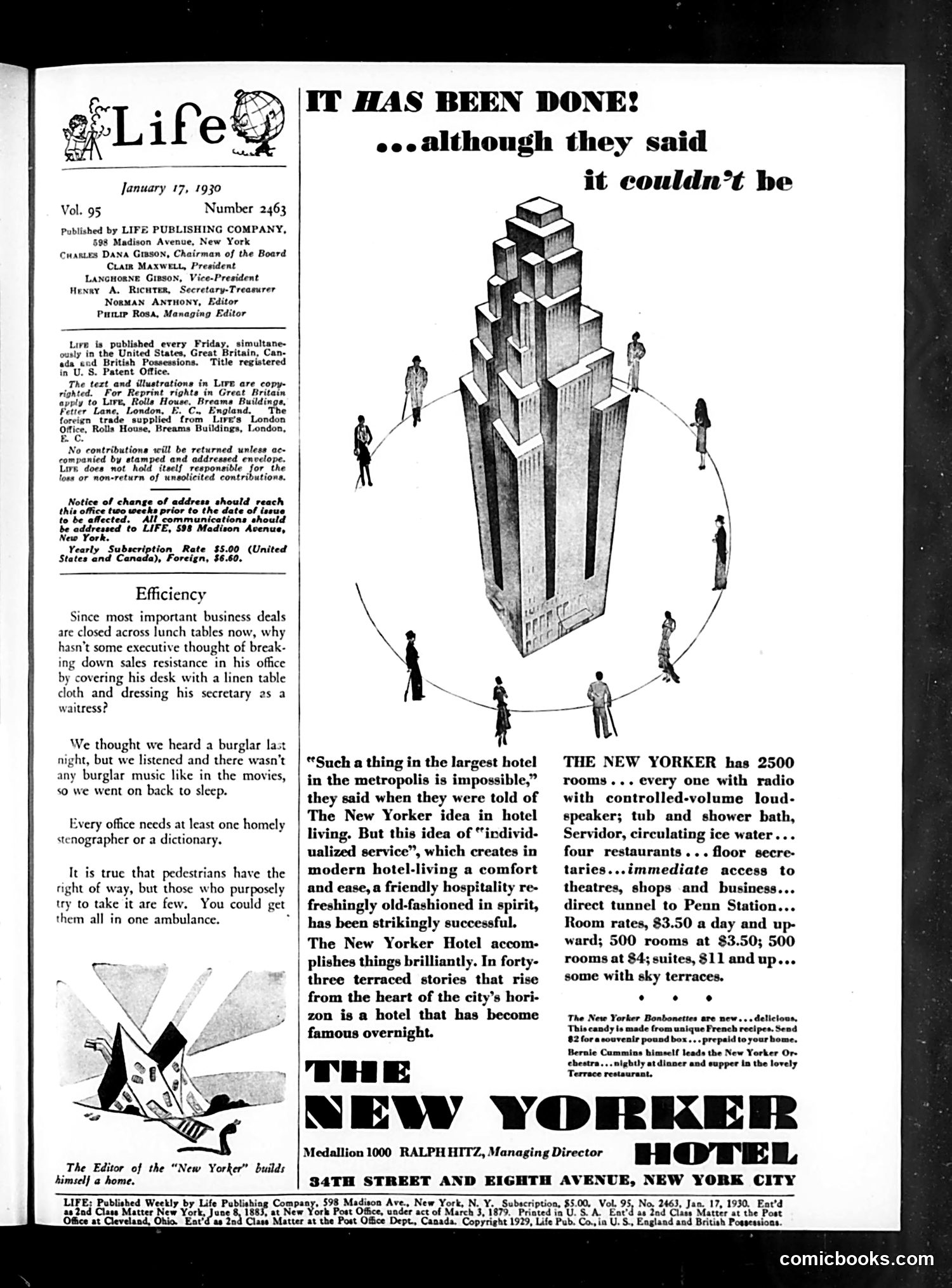
# Page Analysis: Life Magazine, January 17, 1939 This page is primarily an **advertisement for The New Yorker Hotel**, with a small humor section above it. The main cartoon shows a tall Art Deco skyscraper surrounded by tiny figures, captioned "Such a thing in the largest hotel in the metropolis is impossible," they said when told of The New Yorker idea in hotel living." **The satire**: The ad humorously claims the hotel achieved something "impossible"—offering individualized service and modern comfort in a massive 43-story building. The small figures circling the enormous tower emphasize the hotel's impressive scale while suggesting skeptics doubted such personal attention could exist in such a large structure. The page is essentially a playful advertisement leveraging self-deprecating humor to promote the hotel's innovative service model.
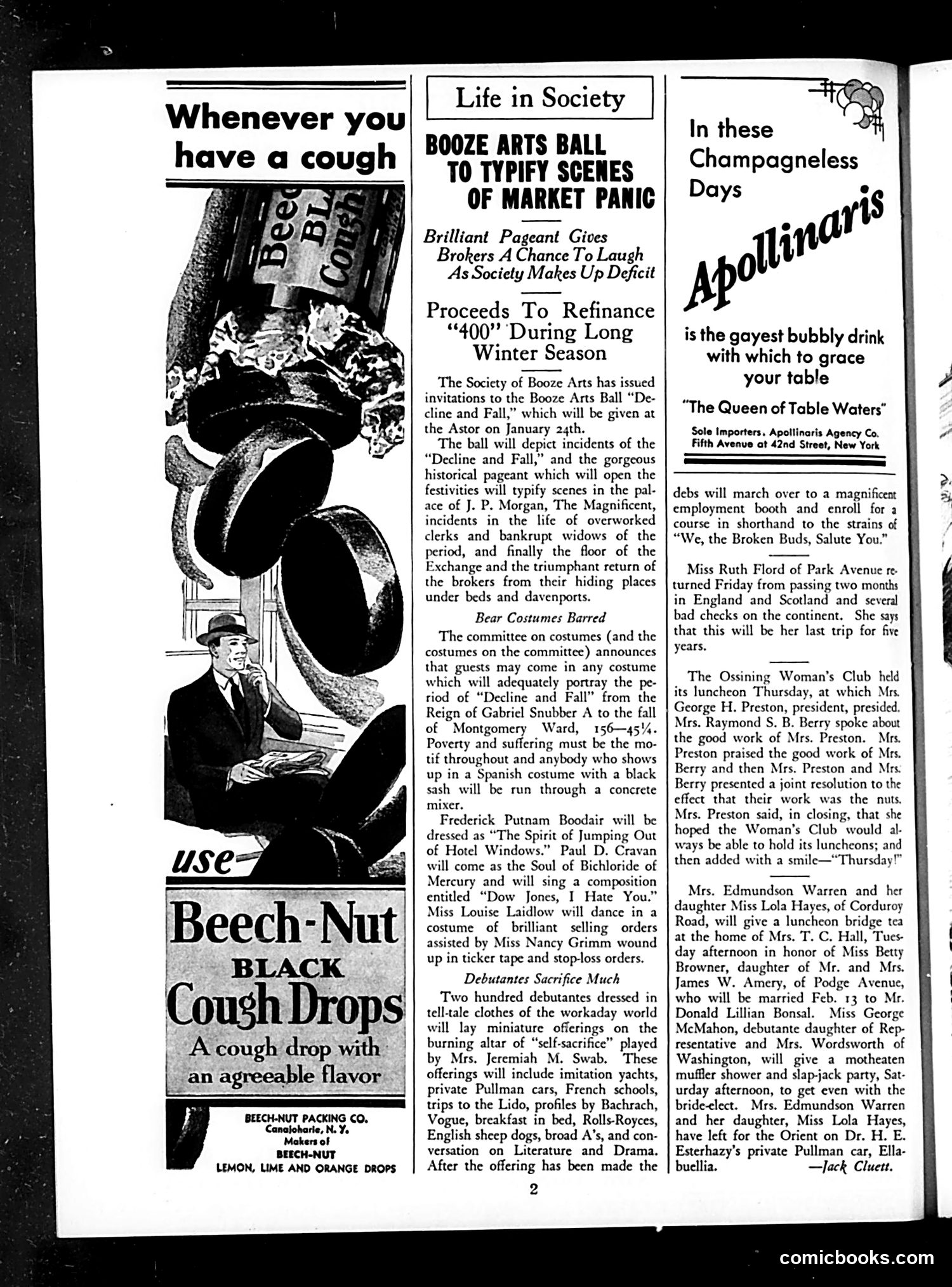
# Page Analysis This page mixes satire with advertising. The left side features a cough-drop ad using humor: a man sits beneath a towering bottle of "Beech-Nut Black Cough Drops," suggesting the product's effectiveness through exaggerated scale. The center satirizes high society through the "Booze Arts Ball"—a charity pageant depicting "Decline and Fall." The satire appears to mock wealthy New Yorkers' lavish fundraising during economic hardship (likely the 1920s stock market context referenced as "market panic"). Guests would wear historical costumes representing financial ruin, the irony being that the privileged are playacting poverty. The right side contains society notices about debutantes, weddings, and club luncheons—standard upper-class announcements. The Apollinaris advertisement promotes champagne as fashionable. Overall, the page reflects 1920s class consciousness and satirizes wealth disparity.
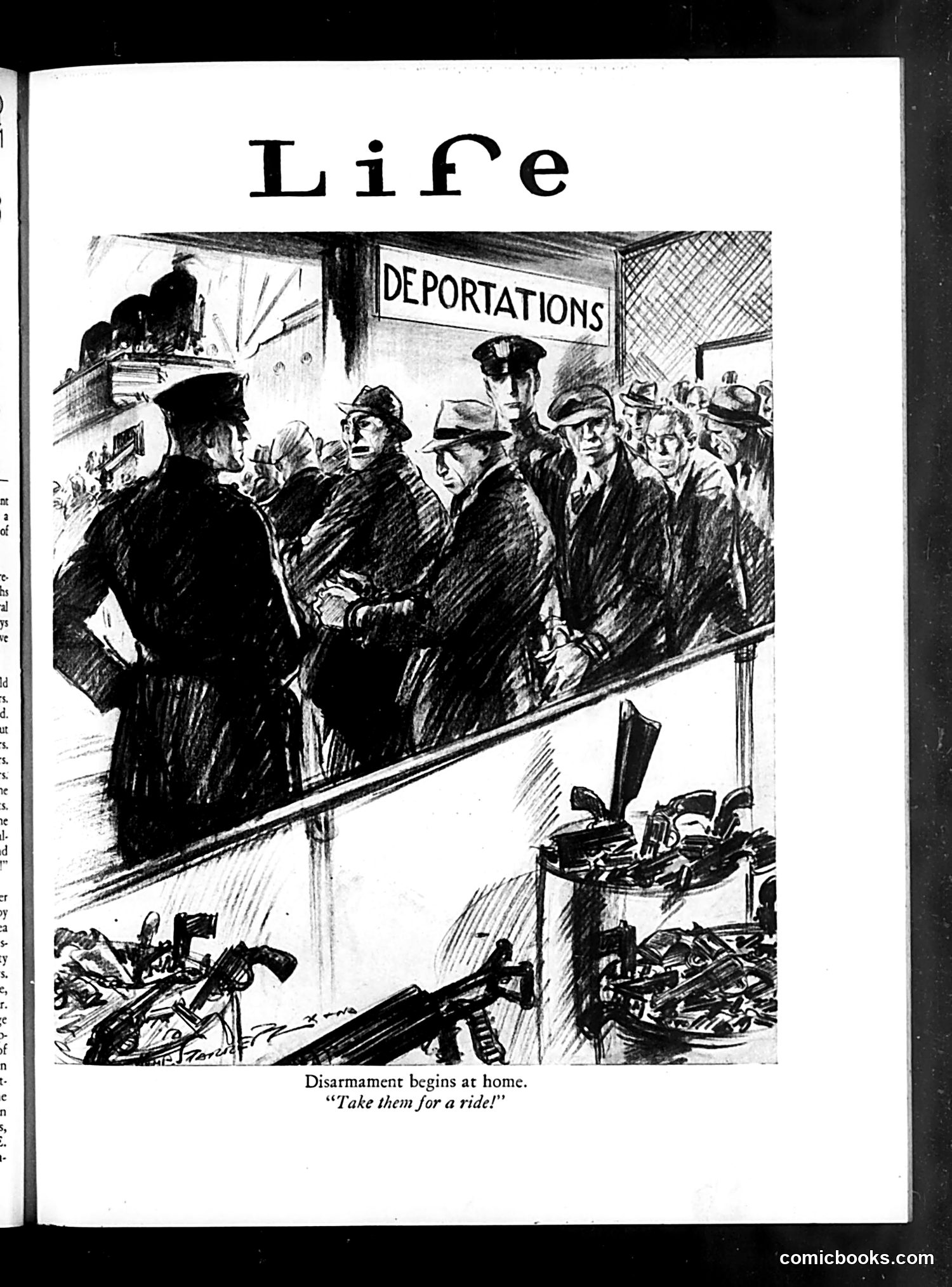
# Analysis This Life magazine page satirizes early 20th-century military disarmament efforts. The cartoon depicts a "Deportations" scene—a government office where civilians are being processed. The caption "Disarmament begins at home" with the ironic suggestion "Take them for a ride!" is dark political satire. The piled weapons in the foreground contrast with the crowd of ordinary people being deported. The joke targets the contradiction between official disarmament policies (reducing military weapons) and actual government actions—apparently forcibly removing citizens rather than genuinely pursuing peace. This likely references either pre-WWI pacifist debates or post-WWI deportation policies (the U.S. conducted deportations of "radical" immigrants in the 1920s). The satire mocks the hypocrisy of claiming peaceful intentions while using authoritarian methods against the population.
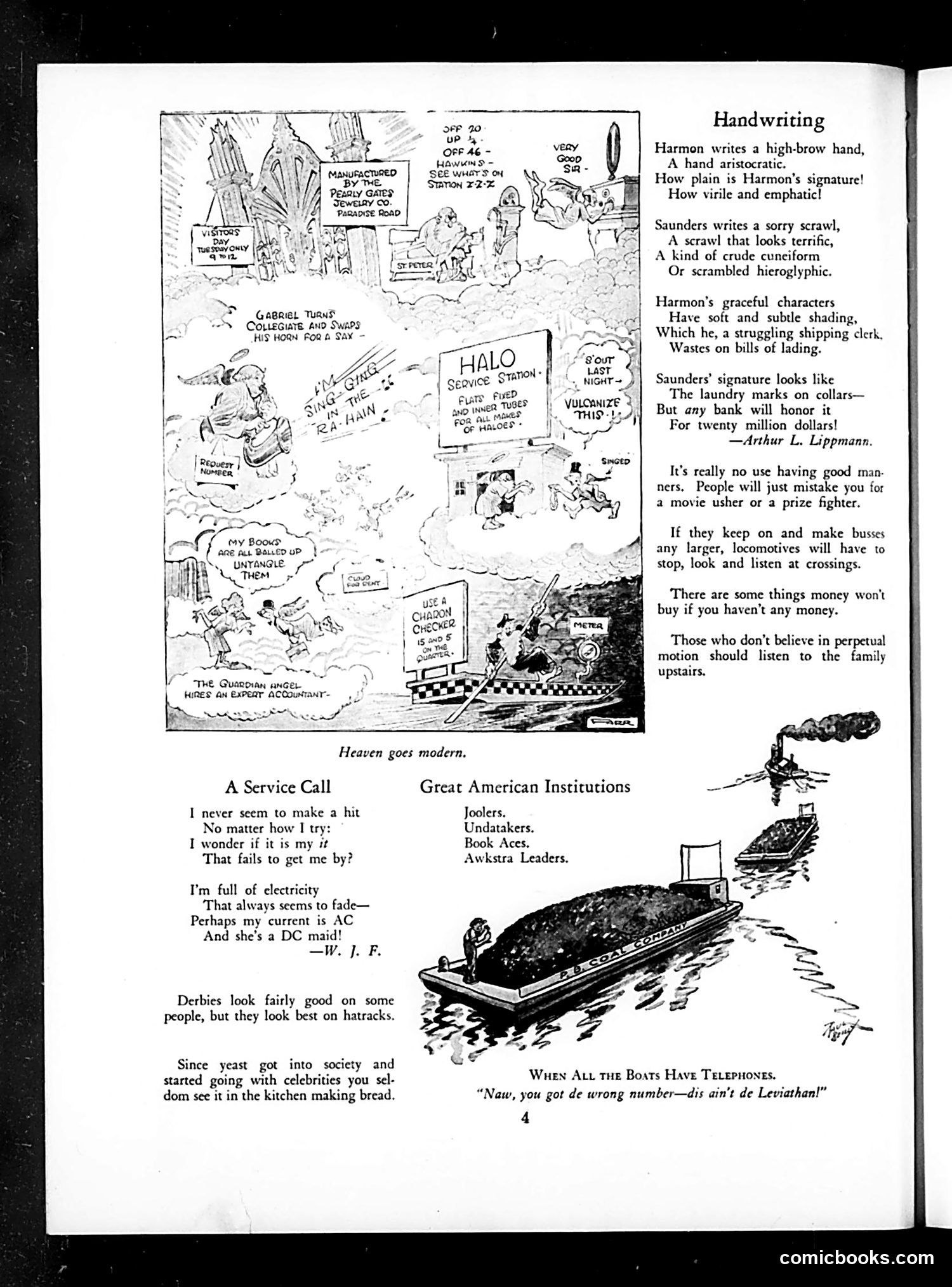
# Analysis of Life Magazine Page This page satirizes modern American life through multiple sketches and commentary. The main cartoon titled "Heaven goes modern" depicts various contemporary institutions and services, mocking their inefficiency and commercialism. References include "Halo Service Station," "Gabriel Turned Your Luggage and His Honor For a Day," and "The Guardian Angel Here on Expert Accountant" — suggesting even heavenly concepts have been commodified. The "Handwriting" section critiques business correspondence styles, contrasting "Harmon's" refined penmanship against "Saunders' " crude scrawl, with commentary by Arthur L. Lippmann about mistaken identity and social class. Additional satirical pieces mock electricity's unreliability ("A Service Call") and include a humorous afterthought about yeast becoming fashionable in society. The overall tone ridicules America's obsession with modernization, efficiency, and commercialism infiltrating all aspects of life.
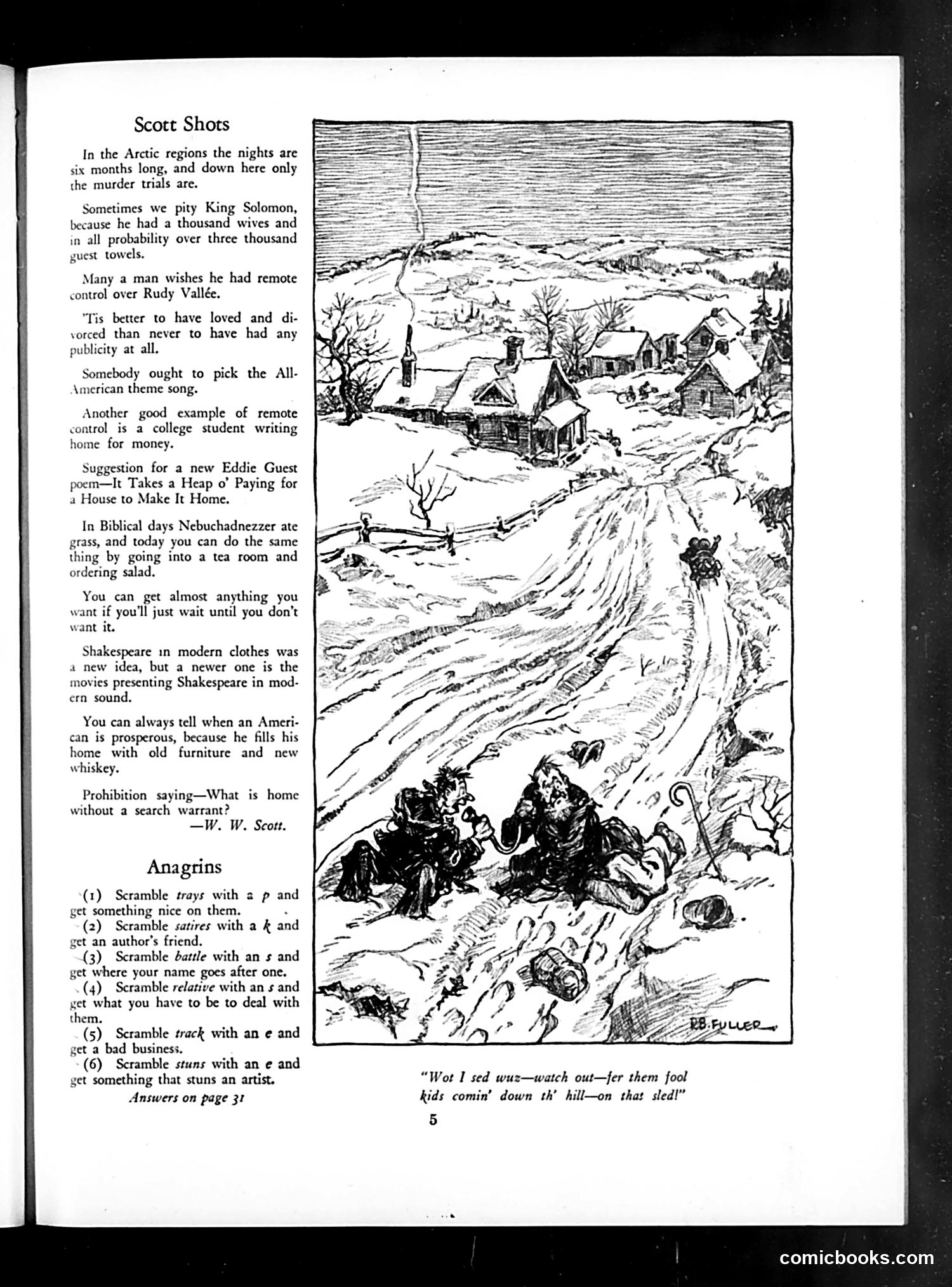
# "Scott Shorts" - A Satirical Commentary Page This page from *Life* magazine contains humorous social observations titled "Scott Shorts," followed by a winter landscape illustration showing two figures sledding down a snowy hill toward houses below. The "Scott Shorts" section offers brief satirical jabs at American society and culture—commenting on polygamy (King Solomon), divorce, remote living, college students, biblical references, consumerism, Shakespeare adaptations, and prosperity. The final prohibition-era quip about home furnishings and whiskey suggests the piece dates to the 1920s-early 1930s. Below is an "Anagrins" word puzzle section with scramble instructions. The sledding illustration's caption—"Wet I sed wuz—watch out—fer them fool kids comin' down th' hill—on that sled!"—depicts rural American vernacular and suggests dangers of winter recreation for children.
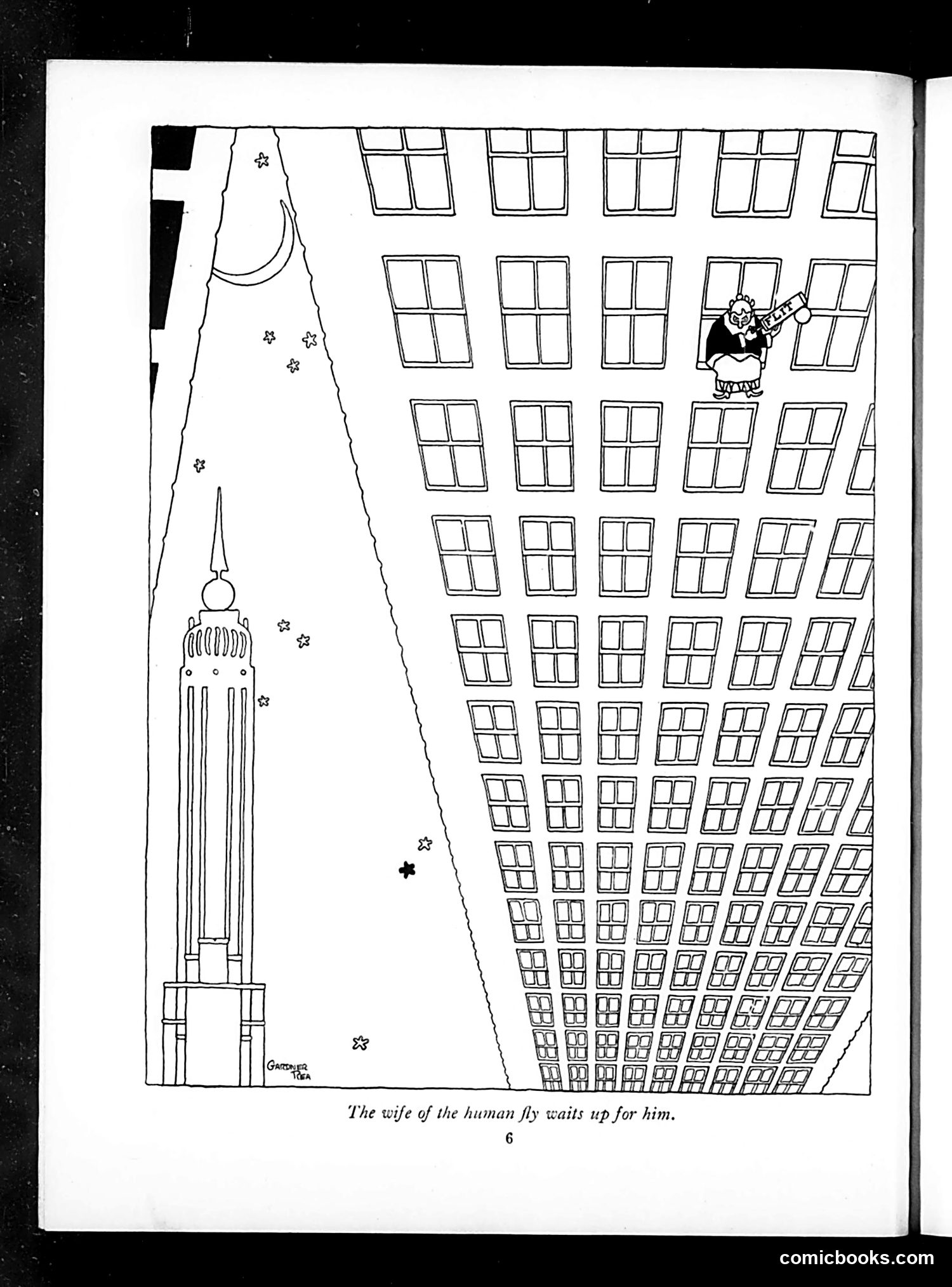
# Analysis This is a single-panel cartoon depicting a surreal, science-fiction scenario. The caption reads: "The wife of the human fly waits up for him." The cartoon shows a woman looking out a window of a tall building (resembling the Empire State or similar Art Deco skyscraper), while a man in formal attire clings to the building's exterior wall among its many windows. The night sky with stars surrounds them. The joke plays on the contemporary "human fly" phenomenon—daredevil performers who literally climbed the exteriors of buildings, a popular stunt act in the early-to-mid 20th century. The satire depicts the domestic anxiety such a dangerous occupation would create for a spouse, imagining her waiting anxiously while he performs his death-defying climbs. It's absurdist humor treating an impossible profession as mundane reality.
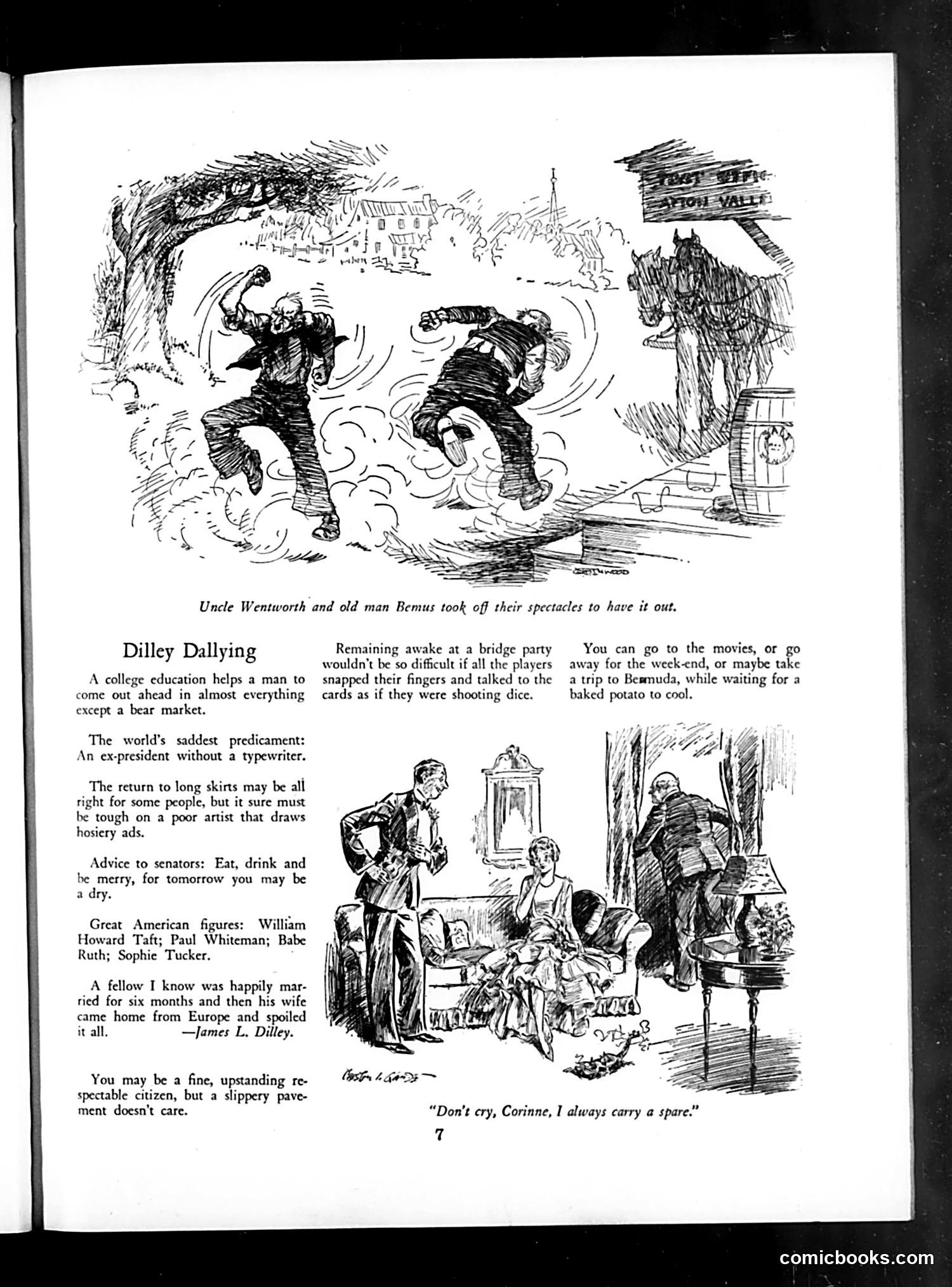
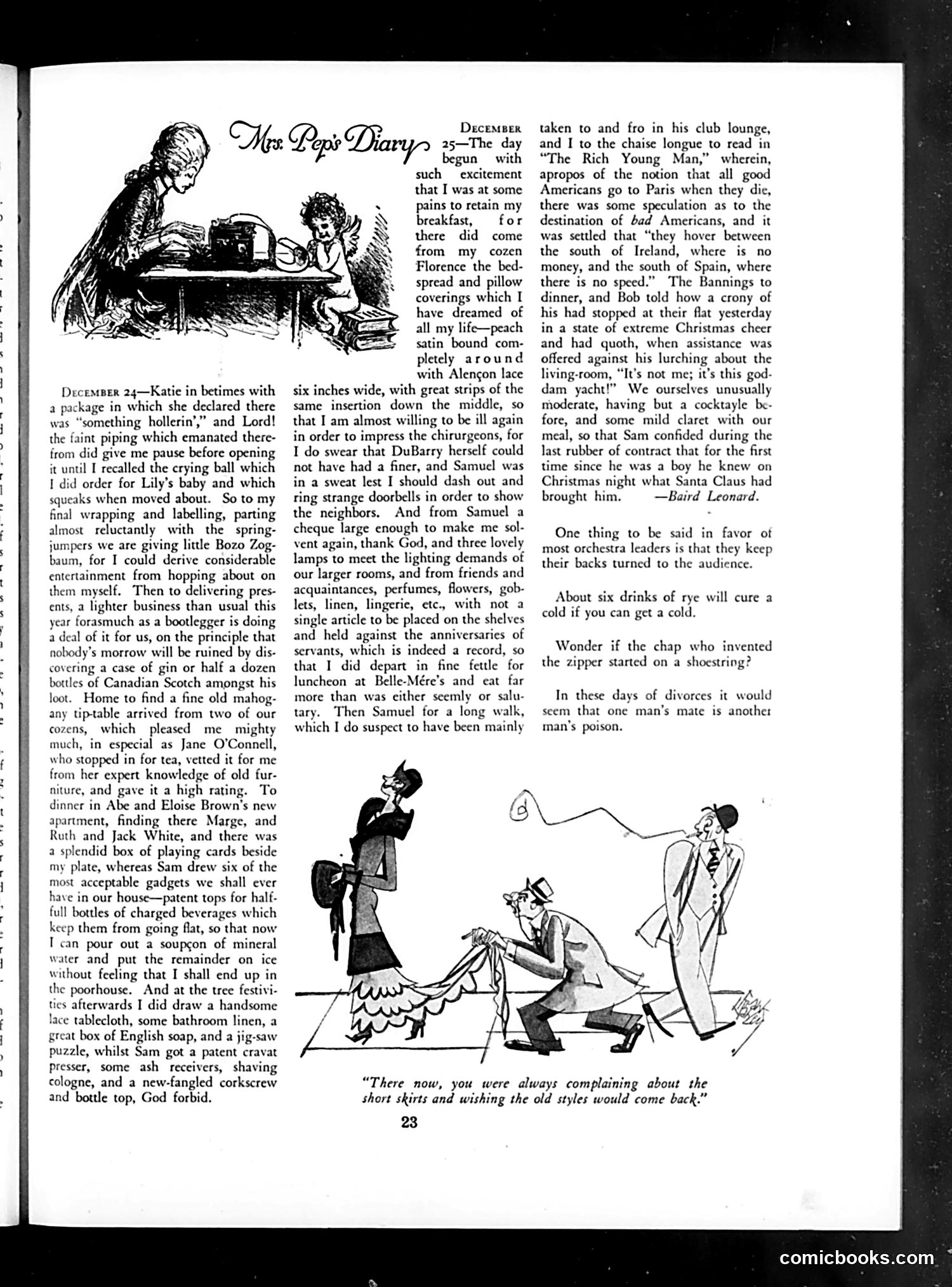
# Analysis of "Dilley Dallying" Page This page contains humor pieces and cartoon illustrations by James L. Dilley for *Life* magazine. The top cartoon depicts two men fighting energetically while onlookers watch—captioned "Uncle Wentworth and old man Bemus took off their spectacles to have it out," suggesting elderly men removing glasses before a brawl, a humorous trope about fights. The main content consists of satirical observations about American life, including jabs at ex-presidents without typewriters, long skirts' impact on artists, and senators' behavior. The lower illustration shows a domestic scene with the caption "Don't cry, Corinne, I always carry a spare," likely a joke about infidelity or marital discord. These are general social satires rather than specific political commentary—mocking contemporary mores, fashion, and human foibles.
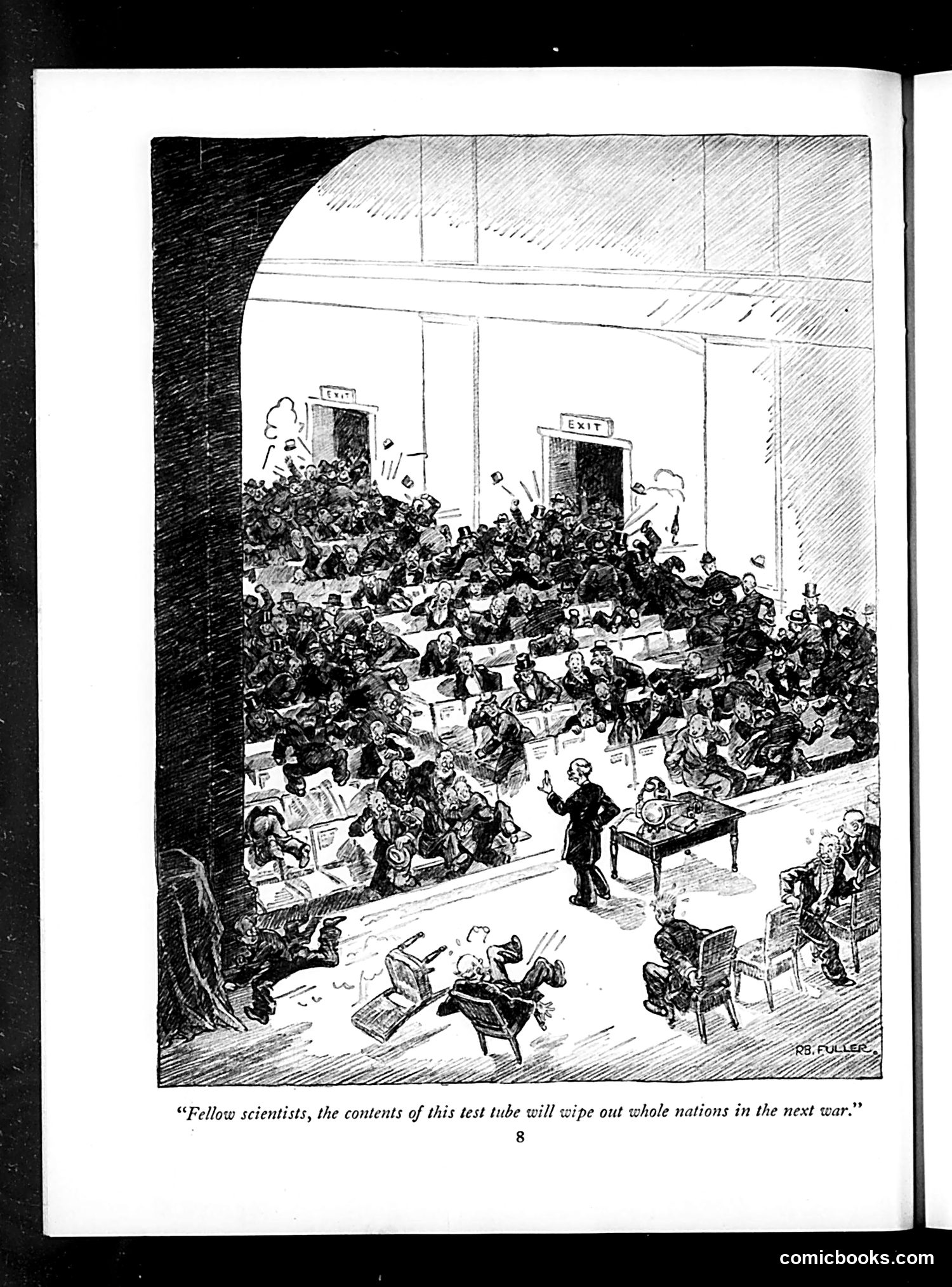
# Explanation for Modern Readers This cartoon satirizes scientific meetings and weapons development anxiety. A speaker addresses a crowded auditorium of scientists, declaring: "Fellow scientists, the contents of this test tube will wipe out whole nations in the next war." The satire works on multiple levels: it mocks both the grandiose rhetoric of scientists promoting their work and the widespread fear—likely from the interwar or early WWII period—that scientific advancement would inevitably produce devastating new weapons. The packed auditorium suggests both the era's fascination with science and growing public dread about its military applications. The artist (signed "R. FULLER") presents this as darkly comic absurdity: a scientist essentially bragging about apocalyptic potential to an audience that seems both horrified and mesmerized. The cartoon reflects contemporary anxieties about scientific progress outpacing ethical restraint.
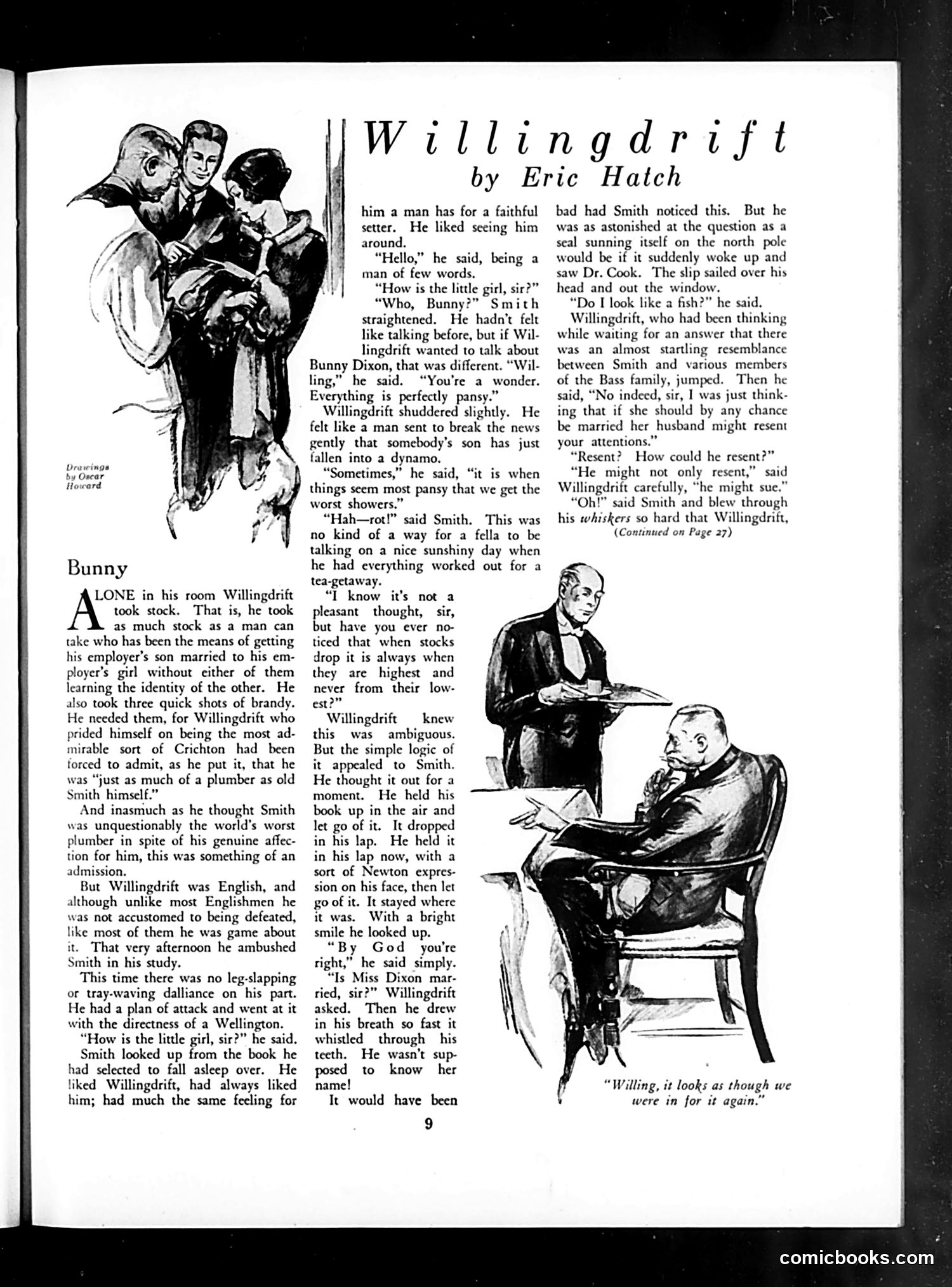
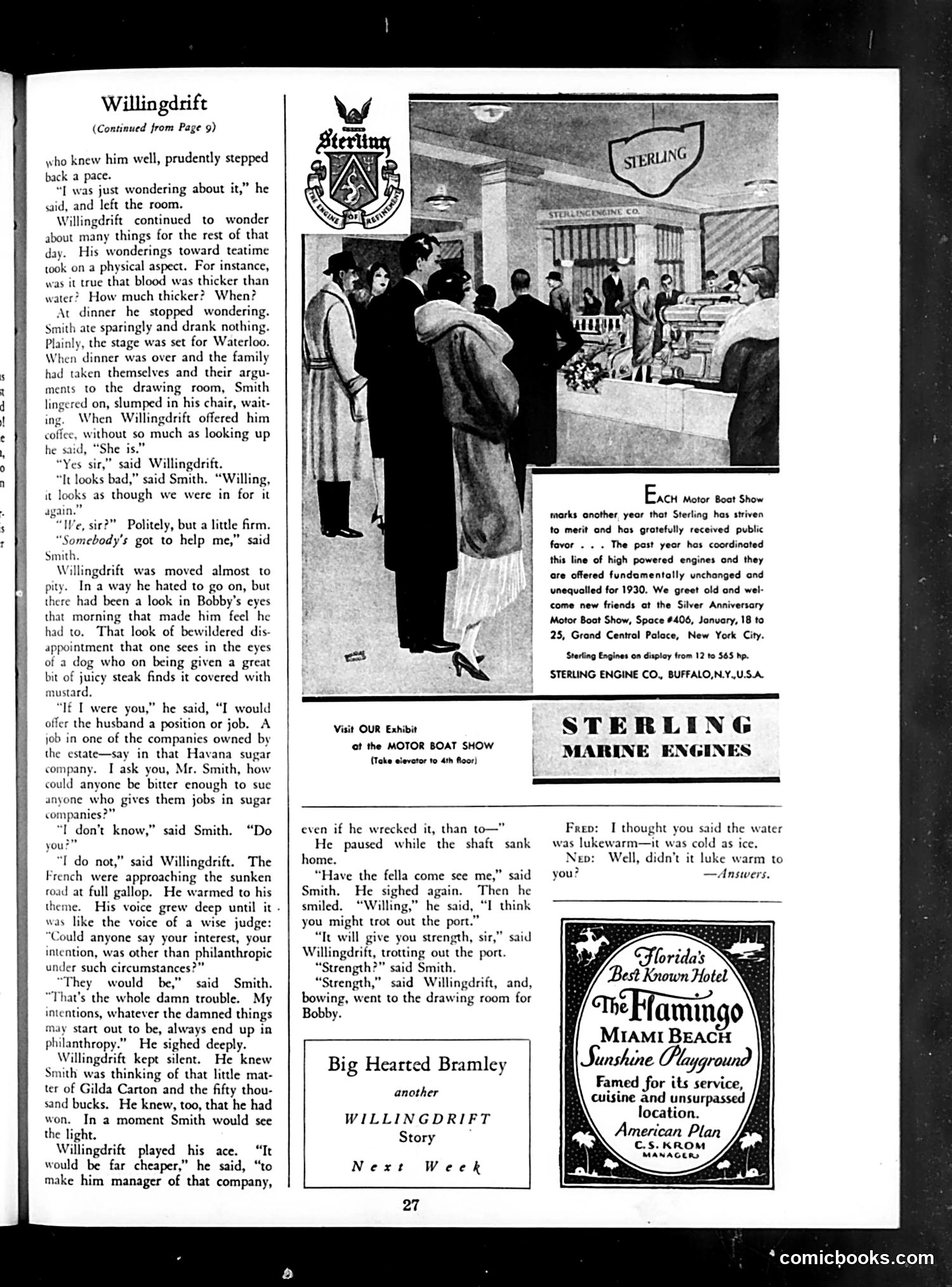
# "Willingdrift" by Eric Hatch This is a short story (not political satire) about a man named Willingdrift navigating romantic and social complications. The narrative describes his attempt to arrange his employer's son's marriage to the employer's daughter without the parties involved knowing each other's identities. The story plays on themes of class ambition and social maneuvering—Willingdrift positions himself as the "most admirable sort of Crichton" (referencing the "admirable Crichton," a perfect servant). The humor derives from his overconfidence in orchestrating others' affairs and the ironic complications that ensue when his plans unravel. The illustrations show character interactions and domestic scenes. This appears to be light fiction rather than political commentary.
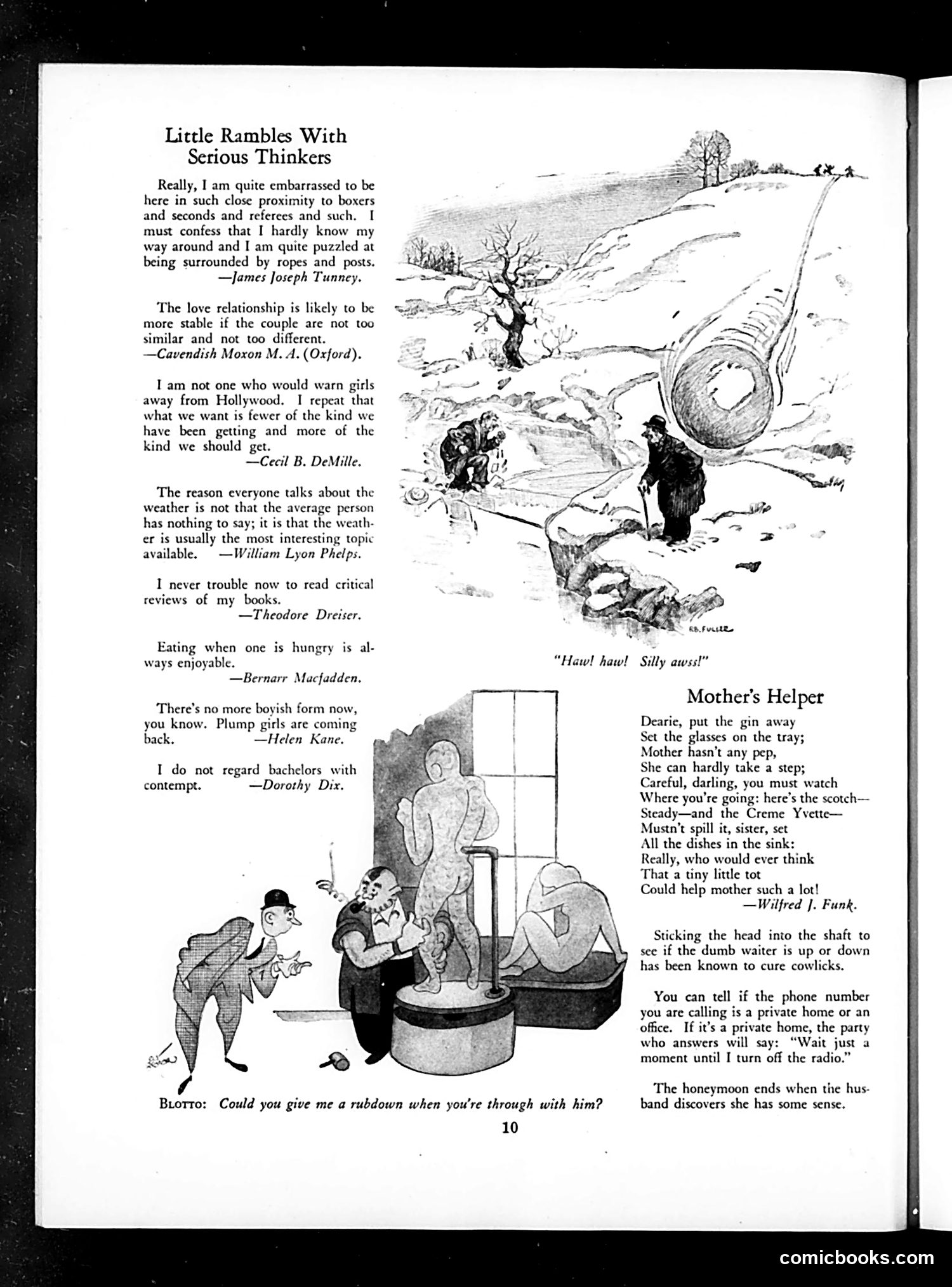
# Analysis of Life Magazine Page 10 This page contains a collection of brief satirical quotes ("Little Rambles With Serious Thinkers") paired with two cartoons. The upper cartoon depicts two figures in a snowy landscape with a large spherical object, captioned "Haul! haul! Silly awls!" The humor appears visual rather than textually explained. The lower cartoon shows a small man confronting a large woman in an interior setting, with the caption "Could you give me a rubdown when you're through with him?" — suggesting domestic/relationship humor about physical size disparity. The "Mother's Helper" poem on the right offers satirical advice to a daughter helping with household tasks, poking fun at the tedium of domestic work and the challenges of childcare. The scattered quotations mock various public figures' pretentious or mundane observations about life.